
artist
Items in this hypelist
Favorites
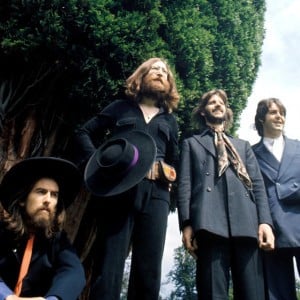
The Beatles
Artist
The Beatles recorded together for a little over seven years. Between October 1962 and May 1970, they released thirteen albums and a number of tracks issued on standalone singles. The catalogue created in that short period has sold more than that of any other group in history and its commercial success continues - the world’s best selling album during the first decade of the 21st century was a collection of The Beatles’ chart-topping singles called 1. But the group’s significance stems not just from huge sales figures. Their music has inspired generation upon generation of musicians, songwriters and producers. As Mark Ronson put it: ‘Everything we take for granted - they absolutely invented it.’ Tom Petty was a teenager during the years The Beatles’ records appeared in quick succession: ‘They were just out in front. There was The Beatles …and then there was everyone else. And everyone else could be great, but The Beatles were leading the way and that’s just irrefutably true.’ The Beatles’ story began in Liverpool in March 1957, when <a href="spotify:artist:4x1nvY2FN8jxqAFA0DA02H">John Lennon</a> (born 9 October 1940) formed a group named The Quarry Men. His life was changed by the excitement of rock ’n’ roll music - heralded by Bill Haley and His Comets, but taken to another level when Elvis Presley stormed the charts during 1956. The next year saw the arrival in the UK of hits by Little Richard, Buddy Holly and The Crickets, the Everly Brothers and, in movie theatres, the exciting rock film The Girl Can’t Help It!, featuring Eddie Cochran singing ‘Twenty Flight Rock’. Introduced to John on 6 July 1957 at a church fete in Woolton, Liverpool, <a href="spotify:artist:4STHEaNw4mPZ2tzheohgXB">Paul McCartney</a> (born 18 June 1942) sang Eddie’s song word perfect. Impressed, John invited the fifteen-year old to join his group. In February 1958, Paul’s younger school pal <a href="spotify:artist:7FIoB5PHdrMZVC3q2HE5MS">George Harrison</a> (born 25 February 1943) won his place in The Quarry Men when he impressed the others with his guitar skills, especially on the current hit instrumental ‘Raunchy’ by Bill Justis. With a constant nucleus of John, Paul and George, the group underwent a series of line-up changes and names. Having gained a dependable drummer - Pete Best - in August 1960, The Beatles made their first visit to West Germany to perform in the clubs of Hamburg. Playing long sets through the night, they spent hundreds of hours onstage during five visits to the city. Back home in Liverpool, their regular stomping ground was The Cavern Club, where they played nearly 300 times. The experience gained in Hamburg and at The Cavern helped to make The Beatles the most proficient and popular group on Merseyside. At this time, a group from Liverpool had the odds stacked against them when trying to gain a foothold in a record business focused on London. In early 1962, they had acquired an ambitious and rather refined manager, record shop boss Brian Epstein. He faced regular rejection from music companies until George Martin signed the group to EMI’s Parlophone label. By fate, The Beatles had found both the ideal manager and perfect producer. The last piece of the picture slotted into place just three weeks before recording their first single on 4 September 1962. <a href="spotify:artist:6DbJi8AcN5ANdtvJcwBSw8">Ringo Starr</a> (born 7 July 1940) was asked to take over as drummer. He had been playing with Rory Storm & The Hurricanes - another Liverpool group who played long stints in the clubs of Hamburg. Ringo’s personality, sense of humour and rock solid, inventive drumming proved to be just right for The Beatles. Their first Parlophone single was released on 5 October 1962. Both sides of the disc were original compositions - a remarkable statement of intent from a group making their first steps in the music business. In fact, George Martin had urged them to record Mitch Murray’s ‘How Do You Do It?’, which he felt was a sure-fire hit. They had reluctantly agreed, but were able to persuade George to shelve the recording in favour of their own songs ‘Love Me Do’ and ‘P.S. I Love You’. Just one example of how The Beatles’ story might have been very different with a less open-minded record producer. George Martin’s faith in The Beatles, and in John and Paul as songwriters, was soon vindicated by the release of ‘Please Please Me’ in January 1963. The single reached the top of all but one of the UK charts. It was followed by the number one ‘From Me To You’ and their first album Please Please Me, which topped the chart for 30 weeks until their next LP replaced it at number one. The debut album featured eight Lennon/McCartney compositions and six cover versions of recent American Rhythm and Blues records. The selection, a result of The Beatles’ constant search for the unusual, showed their impeccable taste. Compared to the sophisticated arrangement of an R&B original like ‘Twist And Shout’, their versions were stripped down reinventions for a four-piece beat group. George Martin has confirmed that ‘it was primarily the American Rhythm and Blues sound that was their inspiration. It’s probably what the so-called Beatles sound was, because all the black music was a tremendous influence on them.’ However, that source was unknown to the majority of their British fans. The super-confident second album With The Beatles was issued in November 1963 when the single ‘She Loves You’ was at number one. Once more, it featured eight original compositions - including ‘All My Loving’ and George Harrison’s first recorded song ‘Don’t Bother Me’ - and six cover versions. A week later, ‘I Want To Hold Your Hand’ was released and also reached number one. The group had become the biggest musical phenomenon in British show business - ever. Among the key factors that led to this success were the chemistry between the four personalities in the group, their immense charm and a daring image - nobody had worn their hair that long. Their interviews were funny and articulate, they had a charismatic presence when performing, and girls screamed and swooned over them. The term ‘Beatlemania’ was coined by the press to describe the hysteria aroused by the group but, as an appearance on The Royal Variety Show demonstrated, their popularity stretched way beyond the teenage market. What The Beatles did next was extraordinary for a British act. In February 1964, they arrived in the USA to appear on the Ed Sullivan Show. They performed to 73 million viewers, the biggest television audience to date, and with ‘I Want To Hold Your Hand’ at the top of the charts, America was suddenly held spellbound by The Beatles. As their success spread across the world, almost everything the group did from then on was unprecedented. In addition to unparalleled success on record - they held all top five positions in the American chart in the first week of April - their first movie A Hard Day’s Night was a box office hit and acclaimed for its wit, invention and unbeatable self-composed songs. Premiered in July 1964, it was perfectly timed to capitalise on their international breakthrough. They rounded off the year with Beatles For Sale and the massive hit single ‘I Feel Fine’. In 1965, they starred in the film Help!. Like their first movie, it was directed by Richard Lester and featured a brilliant batch of songs on its accompanying album. Tucked away towards the end of the LP was a performance by Paul McCartney of his composition ‘Yesterday’. Not even released as a single in the UK, it was a number one in America. It quickly became - and remains - the most covered song of all time. ‘Yesterday’ is an example of how The Beatles and their producer did not compromise; whatever best served the song was always pursued. In the case of ‘Yesterday’, the bold choice was a classical arrangement for string quartet. For the next album Rubber Soul, more studio time was made available to try out unusual instrumentation and adventurous recording techniques. The words of the songs were more mature and the vocal blend, heard on tracks such as ‘Nowhere Man’ and ‘Michelle’, is one of the album’s most distinctive qualities. The Beatles’ sound is, of course, distinguished by the character of their voices. Few groups were blessed with two powerful lead singers as versatile as John Lennon and Paul McCartney. Furthermore, George Harrison not only contributed at least one lead vocal to every album, his voice was integral to the intricate harmony vocals on many Beatles tracks. Ringo Starr usually sang a solo on albums, making such Lennon/McCartney songs as ‘Yellow Submarine’ and ‘With A Little Help From My Friends’ unimaginable without his voice. Released on the same day as Rubber Soul, 5 December 1965, ‘We Can Work It Out’/‘Day Tripper’ was the first of The Beatles’ double A-Sides. They ended another frantically busy year with their final British tour. There was a deadline to complete their next album, because concerts had been scheduled for the summer of 1966 all over the world. But this did not affect their approach to recording at all. The Revolver sessions saw the group reach a new peak of creativity in performance, songwriting and innovative studio techniques. In addition to the songwriting mastery displayed by John and Paul, the LP contained the biggest contribution to date from George with three songs. His caustic ‘Taxman’ was given the status of the album’s opening track. ‘Eleanor Rigby’ is now regarded as a fully realised masterpiece, but when released in August 1966 on Revolver and as a single coupled with ‘Yellow Submarine’, its solemn subject matter and stark arrangement were radically different. A year before, in August 1965, their appearance in front of 55,600 fans at Shea Stadium in New York had broken the record for concert attendance and box-office revenue. But live performance had become an unsatisfying charade ...and dangerous too. Who cares how lucrative it was? That had to stop. The Beatles’ final concert for a paying audience took place at Candlestick Park, San Francisco on 29 August 1966. At the end of 1966, The Beatles started work on ‘Strawberry Fields Forever’. Its long evolution showed the musical imagination and technical experimentation heard on Revolver would be continued. To stop the long wait for new material, ‘Strawberry Fields Forever’ and ‘Penny Lane’ were released in February 1967. Although songs were always credited to Lennon and McCartney, it soon became clear that whoever sang the lead vocal was usually the main composer. The double A-sided single shows how their different stylistic approaches established a perfect counterbalance. Having set themselves a task of writing about their Liverpool childhoods, John’s song is dreamy and steeped in melancholy, while Paul’s is uplifting and brimming with brilliantly observed vignettes. Many were shocked when the unconventional promotional films for both songs were broadcast. Even their moustaches and John’s spectacles were considered to be evidence of how weird The Beatles had become. The square world worried. Everyone else listened over and over until they ‘got it’. Released on 1 June 1967, the immediate artistic and commercial success of Sgt. Pepper’s Lonely Hearts Club Band vindicated the new approach taken by The Beatles. It was the album that provided the soundtrack to the so-called ‘summer of love’, but its appeal is ageless. The Beatles performed their next single ‘All You Need Is Love’ for the first time on the TV programme Our World - broadcast live to an audience of 350 million around the globe. Their place at the top of contemporary pop music was indisputable. Sadly, soon afterwards, The Beatles were shaken by the sudden death of their manager Brian Epstein in August 1967. They rallied to write and direct Magical Mystery Tour - a film shown on television in the UK at Christmas. Some of the millions who saw it, did not like it. As Paul McCartney remembered: ‘They were looking for the plum-pudding special. That’s what they were expecting, and they very much didn’t get it! We were giving it to the young kids. Why shouldn’t they see something far out?’ The music was as successful as ever. The six new songs in the film and the number one ‘Hello, Goodbye’ completed a momentous year of recording. Three more tracks from 1967 remained unreleased until they were heard in the movie Yellow Submarine premiered in 1968. The film’s imaginative animation evoked the ‘psychedelic’ spirit of Sgt. Pepper to reveal the triumph of Love over Evil. Nowadays, following a year as busy as The Beatles had in 1967, an artist would take an extended break. In fact, the group did allow themselves a little time off. The first music of 1968 came in March on their seventeenth single ‘Lady Madonna’. Soon after it was recorded, The Beatles flew to Rishikesh, India for several weeks of meditation with Maharishi Mahesh Yogi. At this remote and peaceful location, they enjoyed a prolific period of songwriting. As George Harrison explained: ‘When we came back, it became apparent that there were more songs than would make up a single album.’ Recorded in five months, the double LP The Beatles was soon known as ‘The White Album’ because of its plain white cover. ‘Hey Jude’ and ‘Revolution’ were the first songs to be heard from the sessions when they were released as a single on 30 August 1968 - the first Beatles record to be pressed with the Apple label. Never interested in repeating themselves, The Beatles took a different approach in the studio in 1968. Ringo Starr remembered: ‘On “The White Album” we ended up being a band again and that’s what I always love. I love being in a band.’ Discussing his songwriting, John Lennon reflected: ‘It was a complete reversal from Sgt. Pepper. My songs on the double album were fairly simple and basic.’ It is still astonishing to hear The Beatles moving through every style of popular music imaginable, including a pastiche of a Hollywood musical number (‘Honey Pie’), an intense blues (‘Yer Blues’) and heavy rock (‘Helter Skelter’). As with Sgt. Pepper, no singles were released from ‘The White Album’ in the UK and USA during the 1960s. But it is full of tracks that could have been huge hits, such as ‘Back In The USSR’, ‘Ob-la-di, Ob-la-da’ and ‘While My Guitar Gently Weeps’. In January 1969, while ‘The White Album’ was still at number one, The Beatles assembled to write and rehearse brand new songs for a televised live concert. The plan changed so that, in the end, their work was documented in a movie released over a year later. Its final scene showed The Beatles performing on the roof of their Apple office building in Savile Row, London with most of the audience gathered in the street below. ‘Get Back’, a number one single from the sessions at Apple, was swiftly followed by ‘The Ballad Of John And Yoko’ - a chronicle of John’s marriage to Yoko Ono and their honeymoon/‘Bed-In’ for peace in Amsterdam. Recorded mostly during the summer of 1969, the last album The Beatles made together was named after the street where EMI’s studios are located. It was a fitting tribute to the place where the majority of their songs had been recorded. The Beatles’ collaboration with producer George Martin and the engineers at Abbey Road had challenged the way that popular music was created. On many occasions this team re-wrote the rule book and set a new standard to which their contemporaries had to aspire. In contrast to the January recordings at Apple, which were ‘as live’ with no overdubs, their return to Abbey Road studios with George Martin resulted in carefully crafted tracks with ambitious musical arrangements. The album’s varied highlights include ‘Come Together’ and two songs that showed George Harrison’s songwriting had hit a peak - ‘Something’ and ‘Here Comes The Sun’. However, the character of Abbey Road is dominated by the sophisticated medley the group called ‘The Long One’. It brought the album, and The Beatles’ recording career, to an impressive conclusion. What a farewell. Measured in terms of its enormous popularity and musical ingenuity, Abbey Road now challenges the status of Sgt. Pepper Lonely Hearts Club Band as The Beatles’ greatest achievement. When the earlier set of recordings from 1969 was finally released as Let It Be in May 1970, news had already broken that the group had split up. The album’s title track and ‘The Long And Winding Road’ took the total of American number ones by The Beatles to twenty in six years - a feat unequalled by any other artist. When The Beatles began making records, no one anticipated that they would be listened to far into the future. Pop music was regarded as disposable. But the timeless appeal of The Beatles’ catalogue ensured it was built to last and highly valued. In 1979, the distinguished conductor and composer Leonard Bernstein wrote: ‘Three bars of “A Day In The Life” still sustain me, rejuvenate me, inflame my senses and sensibilities.’ There is also another dimension to the seductive power of The Beatles’ music. Filled with the spirit of the era in which it was born, it is joyous and generous. ‘All You Need Is Love’. ‘With our love - we could save the world.’ ‘The love you take is equal to the love you make.’ Tom Petty felt it: ‘We grew up with The Beatles and grew up trusting them. They could have chosen to do anything and they chose to do good, which is a great example for the rest of us.’ Kevin Howlett
Pink Floyd
Artist
Pink Floyd are one of the most successful and influential rock groups in history. The members of the group to become known as Pink Floyd came together in London, but the band’s roots were in Cambridge, in the East of England, in the early 1960s. Roger ‘Syd’ Barrett, Roger Waters and David Gilmour all grew up in Cambridge, (Roger Waters having moved there from Surrey at the age of 2), and got into music as part of the folk and beat boom of the time. Young Roger Barrett was actively encouraged in his music and art by his parents, and was successful at both while in school. He knew Roger Waters from school and met David Gilmour as a teenager, so their friendships were established long before the formation of Pink Floyd. Roger Barrett acquired the nickname 'Syd' around the ageof 14, in a reference to local bass player Sid Barrett, hence the ‘Syd’ spelling for differentiation. The Barrett family home had hosted musical collaborations from 1962 onwards, the first fruits of which became Geoff Mott and the Mottoes, including Syd on rhythm guitar. In September 1962, Roger Waters left Cambridge for London to study architecture. Syd meanwhile had won a 2-year scholarship to Cambridge School of Art, where he re-established contact with David Gilmour, swapping guitar chords at lunchtime sessions. London’s Regent Street Polytechnic had by now welcomed not only Roger Waters but Richard Wright, a Londoner, and Nick Mason, who was born in Birmingham but relocated to Hampstead at age 2. Roger and Nick responded to a college advert recruiting band members, and duly formed Sigma 6, playing guitar and drums respectively. Richard Wright also joined, playing guitar, various brass instruments and keyboards, depending on whether a piano was available. As well as Polytechnic studies, Richard was taking private lessons in musical theory and composition at the Eric Gilder School of Music, and in fact left architectural studies (and the band, now called The Abdabs) at the end of his first year, to go travelling. In Autumn 1964 Syd Barrett moved to London to attend Camberwell Art College, hooking up with Roger Waters and the Abdabs. Two of the band had just left, which left space for two guitarists: Syd, and fellow Cambridge friend Rado (‘Bob’) Klose, Roger Waters having switched to bass guitar. Originally Leonard’s Lodgers, The Spectrum Five, and latterly The Tea Set, the band finally became Pink Floyd when Richard Wright rejoined, having returned to the UK to enroll in the Royal College of Music. The new name was suggested by Syd, and was derived from two US bluesmen: Pink (born Pinkney) Anderson and Floyd Council. The 5-piece played intermittently in early 1965 as both The Tea Set and The Pink Floyd (or The Pink Floyd Sound), with the departure of Rado ‘Bob’ Klose creating the first 4-man (Barrett / Mason / Waters / Wright) lineup at live shows from May onwards, although the band continued to alternate the use of the Tea Set / Pink Floyd designation right up until March 1966. They were still a part-time band, allowing Syd to take off to France in August with David Gilmour, the pair being briefly detained by the St. Tropez police for busking (performing in the street). Pink Floyd / Tea Set’s original style was based on American blues and r’n’b, but the birth of a UK psychedelic music scene allowed them to develop Syd’s performance-based ideas into something unique. Throughout 1966 they honed their live performance skills, often developing songs into long jamming sequences, and by the end of the year Pink Floyd had become the pre-eminent ‘underground’ band. They picked up management too, and their first recordings were songs by Syd, who had established himself as the band’s creative innovator. Pink Floyd signed to EMI Records in 1967, releasing the singles Arnold Layne and See Emily Play, both written by Syd, and the album The Piper At The Gates Of Dawn, again mostly composed by Syd and considered to be one of the greatest British psychedelic albums. Arnold Layne reached No. 20 in the UK Singles Chart, and See Emily Play reached No. 6, while The Piper At The Gates Of Dawn also entered the album charts at No. 6, the first of a long line of Pink Floyd album chart successes. However, as the band began to attract a large fanbase, it became clear that Syd's fluid approach to writing, performing and recording - spontaneous, one take only, nothing repeated - was increasingly at odds with the expectations of a musical scene that was still very conservative, especially outside London. Possibly exacerbated by Syd’s frequent experimentation with psychedelic drugs, his behaviour became more erratic, to the point that the band decided to add a second guitarist for live performances. They hoped to call on Syd’s compositional abilities for studio work, similar to Brian Wilson’s role in the Beach Boys, while David Gilmour would bolster the band in live shows. David Gilmour had gigged regularly around Cambridge with various outfits, including The Ramblers, Chris Ian & The Newcomers and Jokers Wild, his first professional outfit. David moved to London in Summer 1966, and the band, now a trio, played extensively around Europe. Renamed Bullitt, they then re-invented themselves as Flowers in 1967. Already known as the best guitarist on the Cambridge scene, David had been very impressed with seeing Jimi Hendrix in a small club, and had been inspired to work even harder on his technique. The new 5-man Floyd experiment didn’t really work, and in January 1968, after a handful of shows, the band elected not to pick Syd up on the way to a Southampton University gig. Syd and Floyd officially parted company in March 1968, with the band’s management Blackhill Enterprises deciding to stick with Syd as a solo artist. The band appointed Steve O'Rourke as manager, and he remained with Pink Floyd until his death in 2003. Whilst Syd Barrett had written the bulk of the first album, only one composition by him, Jugband Blues, appeared on the second Floyd album. A Saucerful Of Secrets was released in June 1968, reaching Number 9 in the UK. Point Me At The Sky, a Waters/Gilmour composition released in December 1968, was to be the band’s last single release until Money from The Dark Side Of The Moon. The soundtrack to the film More, another UK Top 10 album in July 1969, was the band’s first collaboration with film director Barbet Schroeder. The next record, the double album Ummagumma in November 1969, was a mix of live recordings and studio experimentation by the band members, with each member recording half a side of a vinyl record as a solo project. Meanwhile, over the course of a year, Syd Barrett had recorded The Madcap Laughs, released in January 1970, with some production help from David and Roger. Atom Heart Mother, in October 1970, was Pink Floyd's first recording with an orchestra, the title track suite taking up a full vinyl LP side. Their first UK No. 1 album, staying on the charts for 18 weeks, the title was taken from a London Evening Standard headline. Roger Waters’ first work outside the band appeared in November 1970. A collaboration with Ron Geesin, (with whom Floyd had worked on Atom Heart Mother), The Body formed the soundtrack to the film of the same name. Pink Floyd appear anonymously on the track Give Birth To A Smile. November 1970 also saw the release of Barrett, the second and last album of all-original Syd Barrett songs. It was produced by David Gilmour and included Richard Wright on keyboards. Before the next album of original material, a Pink Floyd compilation album, Relics, was released in May 1971, containing several early singles and B-sides, plus one previously unreleased song Biding My Time. The band also contributed three tracks to the soundtrack of Michelangelo Antonioni’s film, Zabriskie Point. In October 1971 the band allowed director Adrian Maben to film them performing live in the amphitheatre at Pompeii. After more filming, including interviews and more performances in a Paris studio, the Pink Floyd Live At Pompeii film was finally premiered at the Edinburgh Festival in September 1972. Meddle was Pink Floyd’s longest UK chart performer to date, maintaining 82 weeks on the chart from its No. 3 debut in November 1971. It contained the LP side-long Echoes, to many the perfect encapsulation of all Floyd’s disparate elements. Nick Mason considered it "the first real Pink Floyd album. It introduced the idea of a theme that can be returned to". Developing the idea of thematic pieces, the band began to work on what would become The Dark Side of The Moon, presenting the songs from the album in concert throughout 1972. However, even though they were yet to enter the studio to record Dark Side as an album, the band took a detour to make another soundtrack album in just two weeks for Barbet Schroeder – Obscured By Clouds, to accompany the film La Vallee. The release of Pink Floyd's massively successful 1973 album, The Dark Side Of The Moon, was a watershed moment in the band's popularity. Pink Floyd had stopped issuing singles after 1968's Point Me At The Sky and was never a hit single-driven group, but Money was released as a single from The Dark Side Of The Moon, going Top 20 in the U.S. The album became the band's first No. 1 on the U.S. Charts and is one of the biggest-selling ever, worldwide. The Piper At The Gates Of Dawn and A Saucerful Of Secrets were re-presented to the public in December 1973 as a 2-LP set, A Nice Pair, repackaged in a gatefold sleeve. 1975’s Wish You Were Here is well-known for its popular title track, but also the largely instrumental song suite Shine On You Crazy Diamond, an overt tribute to Syd Barrett. It bookends the album, the recording of which was made poignant for the band by Syd’s surprise appearance in the studio. He turned up unannounced at Abbey Road studios while the group were working on Shine On, leaving his former bandmates bemused. For most of the band, it was their last meeting with Syd; Roger Waters subsequently viewed him in Harrods department store, but the two didn’t speak. The years between 1976 and 1985 saw Roger Waters asserting more control over Pink Floyd's output, concentrating on thematic albums like Animals, released in January 1977. One of the many iconic Pink Floyd images is that of an inflatable pig flying over Battersea Power Station; the pig, 'Algie', escaped during the cover shoot, subsequently coming to earth in the Kent countryside. As a side project, David released his first solo album, David Gilmour, in May 1978. Featuring Rick Wills on bass and Willie Wilson on drums and percussion, the album charted in the UK at No. 17 and the U.S. at No. 29. Using material that was extraneous to the Animals album, Richard released his first solo project, Wet Dream, in September 1978. The next Floyd release was the hugely successful The Wall. Preceded by the surprise UK & US No. 1 hit Another Brick In The Wall Part 2, the double album chronicling a rock star’s increasing alienation from the world of stardom was an instant hit. Roger Waters’ album concept extended to the stage presentation and the short run of live shows in the US and UK in 1980 (repeated in 1981 in the UK and Germany) remains in many peoples’ minds as the quintessential melding of music and theatrics in the rock idiom. Roger had written almost all of the songs, although one of them, destined to be a future Floyd classic, was a Waters / Gilmour collaboration: Comfortably Numb. The music was based on an outtake from David’s first solo album, which he tailored to fit Roger’s lyrics. Richard Wright’s relationship with Roger Waters had become increasingly rocky, and he left Pink Floyd during the Wall sessions. However, he was keen to complete the album’s live shows, so was retained as a salaried session musician during the subsequent live concerts in 1980 and 1981. The Wall became a feature film, directed by Alan Parker and starring Bob Geldof. Some of the material was re-recorded or remixed, and the movie was premiered in May 1982 at Cannes, becoming a steady seller on VHS and subsequently DVD. Pink Floyd The Wall won two BAFTA Awards in 1983 – Best Sound and Best Original Song (Another Brick In The Wall). Nick Mason’s first album under his own name was Fictitious Sports, released in 1981. A mixture of jazz and rock, the compositions were by Carla Bley, who also played keyboards. Other contributors included Robert Wyatt, Mike Mantler and Chris Spedding. In March 1983, Pink Floyd released the only album on which Richard does not appear - The Final Cut, once more a Roger Waters conceptual piece, and the band’s third UK No. 1. David's second solo album, About Face, was released in March 1984, hitting No. 21 in the UK and No. 32 in the US, going Gold. In April 1984, Richard formed a new musical duo with Dave Harris (from the band Fashion) called Zee. They signed a record deal with Atlantic Records and released one album, Identity. Roger went on to work on a further concept album, this time as a solo artist: The Pros And Cons Of Hitch Hiking. Released in May 1984, the album was followed by a 9-date solo tour of the UK and Continental Europe. One year after his bandmates' projects, Nick Mason released the album Profiles, a collaboration with Rick Fenn of 10CC. David Gilmour contributes vocals to one track. In December 1985 Roger Waters wrote to EMI and CBS (now Sony) Records, resigning from Pink Floyd. Nevertheless, when in 1986 David Gilmour and Nick Mason began recording a new Pink Floyd album, a legal dispute ensued, eventually settled out of court. After considering and rejecting many other titles, the new Pink Floyd album was released as A Momentary Lapse Of Reason in September 1987. Richard Wright contributed to the album, rejoining the band after the subsequent tour. A year later, the band released a double live album and a concert video taken from its 1988 Long Island shows, entitled Delicate Sound Of Thunder, and later recorded some instrumentals for a classic-car racing film, La Carrera Panamericana, set in Mexico and featuring David andNick as participating drivers. During the race, David and manager Steve O'Rourke (acting as his map-reader) crashed. Steve suffered a broken leg; David walked away with a few bruises. 1992 saw the box set release of Shine On. The 9-disc set included re-releases of the studio albums A Saucerful Of Secrets, Meddle, The Dark Side Of The Moon, Wish You Were Here, Animals, The Wall, and A Momentary Lapse Of Reason. A bonus disc entitled The Early Singles was also included. The band's 1994 next album, The Division Bell, the title suggested by David's friend Douglas Adams, returned Pink Floyd to the No. 1 position in the UK & US, remaining on the charts in each country for 51 weeks. The album contained Marooned, composed by David and Richard, for which the band received their first and only Grammy Award in 1995 (Best Rock Instrumental Performance). The lengthy Division Bell tour, playing to more than 5 million people, engendered the live album P*U*L*S*E in 1995, featuring songs from concerts in London, Rome, Hanover, and Modena. On January 17, 1996, the band was inducted into the Rock and Roll Hall of Fame by The Smashing Pumpkins frontman Billy Corgan. Roger Waters did not attend. Richard Wright released his second solo album, Broken China, in September 1996. Richard sings throughout, with Momentary Lapse collaborator Anthony Moore providing some lyrics, and Sinead O’Connor guesting on vocals for two tracks. A live recording of The Wall appeared in 2000, compiled from the 1980-1981 London concerts, entitled Is There Anybody Out There? The Wall Live 1980-81. In 2001, a remastered two-disc set of the band's best-known tracks entitled Echoes was released. In 2003, The Dark Side Of The Moon was issued as an SACD, featuring new cover artwork. The album was also re-released as a 180-gram, virgin vinyl pressing, including all the original album art from the original release of the album, plus a new poster. Nick Mason's book, Inside Out: A Personal History Of Pink Floyd was published in 2004 in Europe and 2005 in the U.S. Nick made public promotional appearances in a few European and American cities, giving interviews and meeting fans at book signings. Longtime Pink Floyd manager Steve O'Rourke died on October 30, 2003. David, Nick, and Richard joined together at his funeral service in Chichester Cathedral to perform Fat Old Sun and The Great Gig In The Sky. Two years later, on July 2, 2005, the Gilmour / Mason / Waters / Wright lineup took to the stage for the first time in 24 years in a one-off performance at the London Live 8 concert. Their four-song set included Breathe (plus reprise), Money, Wish You Were Here, and Comfortably Numb, with David and Roger sharing lead vocals. At the end of the band’s performance, their group hug became one of the most famous images of Live 8. Subsequent to the post-Live 8 sales boom for the participating artists, David Gilmour declared that he would donate his share of profits to charity, urging other artists and record companies to do the same. On November 16, 2005, Pink Floyd were inducted into the UK Music Hall of Fame by Pete Townshend. David and Nick attended in person; Richard was in hospital following eye surgery and Roger appeared on a video screen, from Rome. On March 6, 2006, David Gilmour released his third solo album, On An Island, which entered the charts at No. 1 in the UK and No. 6 in the US. A 3-month sold-out tour of concert venues in Europe, Canada, and the U.S. followed, performed with a band that included Richard Wright, plus Floyd regulars Dick Parry, Jon Carin, and Guy Pratt. Nick Mason joined the band for encores of Arnold Layne and Comfortably Numb at one of the Royal Albert Hall shows, which were filmed for the subsequent DVD / Blu-ray release Remember That Night. Roger ‘Syd’ Barrett died of pancreatic cancer on July 7, 2006 at Addenbrooke's Hospital in Cambridge, having suffered from diabetes for some time. His funeral was a private family affair, but his enduring influence was marked by the many heartfelt tributes recorded by fans and stars, touched by his idiosyncratic genius. On July 10, 2006, the P*U*L*S*E DVD was released, launched with a media showing and Q&A session with David, Nick and Richard. A tribute concert for Syd was held at the Barbican Centre in London on May 10, 2007. Madcap’s Last Laugh featured entertaining performances from Barrett fans such as Chrissie Hynde, Mike Heron and Nick Laird-Clowes, while an unbilled Roger Waters played an acoustic Flickering Flame. Roger had to leave before the end of the show, so was unavailable for a further surprise performance - David, Richard and Nick performing Arnold Layne to rapturous applause and a standing ovation. September 2007 saw the 40th anniversary of Pink Floyd's signing to EMI, marked by the release of a 2-CD set containing mono and stereo mixes of The Piper At The Gates Of Dawn, and a 3-CD version including the related singles, B sides and other rare recordings. On December 10 (UK) and 11 (U.S.), 2007, Pink Floyd released a new CD box set, OH BY THE WAY, containing all fourteen studio albums with original vinyl artwork plus new artwork from Storm Thorgerson. Two albums (The Dark Side Of The Moon and A Momentary Lapse Of Reason) boast remastered versions. In 2008, Sweden’s Polar Music Prize was awarded to Pink Floyd for “their monumental contribution over the decades to the fusion of art and music in the development of popular culture. Through extensive sonic experimentation, they captured the mood and spirit of a whole generation in their reflections and attitudes. When rock'n'roll developed, Pink Floyd was foremost in shaping the sounds that would influence artists for ever." Richard Wright died on September 15th had been in September 2007 with David Gilmour, at the premiere of David’s concert DVD, Remember That Night. In January 2010 the artwork for The Division Bell was used in a series of Royal Mail stamps. In March Royal Mail created a unique page of Division Bell-only stamps on their own dedicated gummed sheet, including artwork from the album. On 10th July, 2010, David Gilmour and Roger Waters played some songs together in aid of the Hoping Foundation charity, at a private concert in Kiddington, Oxfordshire, UK. Backed by a band that included Guy Pratt, Harry Waters and Andy Newmark, David and Roger performed To Know Him Is To Love Him, Wish You Were Here, Comfortably Numb, and Another Brick In The Wall, Part 2. In September 2010, Roger Waters started an 11-month long live world tour of The Wall, with a high-tech stage production that received rapturous reviews. In 2011, under the banner Why Pink Floyd?, the Pink Floyd catalogue was re-released, packaged in gatefold digipaks including new Storm Thorgerson artwork and completely remastered by James Guthrie. Three expanded versions were released, with The Dark Side Of The Moon, Wish You Were Here and The Wall receiving bonus tracks including previously unissued live recordings or demo tracks. Three multi-disc box sets were also released, again with one each dedicated to The Dark Side Of The Moon, Wish You Were Here and The Wall, all containing bonus material, surround sound mixes, new booklets and art pieces produced by Storm Thorgerson’s StormStudios. A new single-CD compilation album A Foot In The Door - The Best Of Pink Floyd –was also released. Storm Thorgerson, Pink Floyd’s longtime visual collaborator and co-founder of the Hipgnosis art studio (with Aubrey ‘Po’ Powell) died on 18th April, 2013. His visual legacy lives on in the continuing popularity of many iconic Pink Floyd images. In 2013, Roger Waters continued to present The Wall live around the world, having expanded the production to include stadiums. It played to sold-out audiences and universal acclaim.

Green Day
Artist
Bay Area trio Green Day stormed the mainstream in the early '90s with their snarling, snotty brand of three-chord pop-punk, which was delivered with a heavy dose of anarchic attitude and headline-grabbing antics. Influenced by the late-'70s punk predecessors before them, they went on to introduce a new, younger generation to the genre. Major-label breakthrough Dookie was the jewel in the crown of their '90s punk era, a modern classic regarded as one of the most defining albums of the decade. Maturing in the 21st century, the band hit a career peak with 2004's Grammy-winning international success American Idiot, a socio-political rock opera that ushered in the next stage of their evolution as one of America's most acclaimed rock bands. In 2015, 25 years after their debut, Green Day were inducted into the Rock & Roll Hall of Fame. Green Day arose from the Northern California underground punk scene. Childhood friends Billie Joe Armstrong (guitar, vocals) and Mike Dirnt (bass; born Mike Pritchard) formed their first band, Sweet Children, in Rodeo, California when they were 14 years old. By 1989, the group had added drummer Al Sobrante and changed its name to Green Day. That same year, the band independently released its first EP, 1000 Hours, which was well-received in the California hardcore punk scene. Debut full-length 39/Smooth and the Slappy EP arrived soon after in 1990. By 1991, the group had signed a contract with local independent label Lookout. Combining their first three efforts into one compilation, Green Day issued 1,039/Smoothed Out Slappy Hours for the label. Shortly after its release, the band replaced Sobrante with Tre Cool (born Frank Edwin Wright III), who became the band's permanent drummer. Throughout the early '90s, Green Day continued to attract a cult following, which only gained strength with the release of their second album, 1992's Kerplunk. The underground success of Kerplunk led to a wave of interest from major record labels, and the band eventually decided to sign with Reprise. Dookie, Green Day's major-label debut, was released in the spring of 1994. Thanks to MTV's support of the initial single, "Longview," Dookie became a major hit. The album continued to gain momentum throughout the summer, with its second single, "Basket Case," spending five weeks on top of the American modern rock charts. At the end of the summer, the band stole the show at Woodstock '94, which increased the sales of Dookie. By the time the fourth single, "When I Come Around," began its seven-week stay at number one on the modern rock charts in early 1995, Dookie had sold over five million copies in the U.S. alone; it would eventually top ten million in America, selling over 15 million copies internationally. Dookie also won the 1994 Grammy for Best Alternative Music Performance. Green Day quickly followed Dookie with Insomniac in the fall of 1995; during the summer, they hit number one again on the modern rock charts with "J.A.R.," their contribution to the Angus soundtrack. Insomniac performed well initially, entering the U.S. charts at number two and selling over two-million copies by the spring of 1996, yet none of its singles -- including the radio favorite "Brain Stew/Jaded" -- was as popular as those from Dookie. In the spring of 1996, Green Day abruptly canceled a European tour, claiming exhaustion. Following the cancellation, the band spent the rest of the year resting and writing new material before issuing Nimrod in late 1997. Three years later, their long-awaited follow-up, a refreshingly poppy record titled Warning, was released. Another long wait preceded 2004's American Idiot, an aggressive rock opera that became a surprise success -- a chart-topper around the world, a multi-platinum Grammy winner, and easily the best-reviewed album of their career. Green Day reveled in the album's success, hitting numerous award shows and performing as part of Live 8 in July 2005. That fall brought the release of Bullet in a Bible, a concert album that documented the trio's expansive Idiot live show. With their popularity and commercial viability restored, Green Day took on several small projects before returning to the studio. They contributed a cover of John Lennon's "Working Class Hero" to the charity album Instant Karma, appeared in The Simpsons Movie, and recorded an entire album of '60s-styled rock & roll under the alias of Foxboro Hot Tubs. While presenting an award at the Grammys in early 2009, the band announced the impending release of Green Day's eighth album, 21st Century Breakdown, which had been recorded with veteran producer Butch Vig. In May of 2009, 21st Century Breakdown was released, picking up where American Idiot left off as another ambitious punk rock opera. The album was a commercial success, selling over 215,000 copies in its first three days of sales. In 2009, American Idiot was adapted for the stage, and the following year, Green Day lent their talents to the original cast recording, combining a driving score with Broadway vocal arrangements. The band released the live Awesome as F**k in 2011. During the summer of 2012, Green Day unveiled their ambitious plans for the fall and winter: they would release not one but three new albums. The records -- Uno!, Dos!, Tré! -- would appear in September 2012, November 2012, and January 2013, respectively, with each individual bandmember gracing one of the album covers on his own. The first, appropriately called Uno!, was preceded by the disco-rock single "Kill the DJ" and the anthemic arena rocker "Oh Love." Uno! was set for a splashy release in September 2012, but the weekend prior to its release, Billie Joe Armstrong had an on-stage breakdown during a set Green Day played at the iHeartRadio Music Festival in Las Vegas. Days later, it was announced that Armstrong entered rehab for substance abuse; not long afterward, the band's touring plans for 2013 were canceled. Dos! arrived as scheduled in November 2012 and Tré! was moved up to a December release. Demolicious, a collection of 18 demos recorded during the making of their Uno! Dos! Tré! trilogy, showed up in time for 2014's Record Store Day release schedule. In 2015, Green Day were inducted into the Rock & Roll Hall of Fame. Following their induction, producer Rob Cavallo announced that he had started work on a new album with the trio. As they labored on the new record, Green Day released a single called "Xmas Time of the Year" for the 2015 holiday. The raucous "Bang Bang" was the first taste of their 12th record, Revolution Radio, which arrived in October 2016. The album topped the charts around the globe and featured the radio hit "Still Breathing." A year later, the group released a career-spanning compilation called Greatest Hits: God's Favorite Band, which included the previously unreleased "Back in the USA." Another retrospective release arrived in 2019, commemorating the band's 25th anniversary of playing Woodstock '94. Green Day Live!: Woodstock 1994 received a limited pressing for Record Store Day and debuted at number 156 on the Billboard 200. ~ Stephen Thomas Erlewine
Radiohead
Artist
Radiohead are a touchstone for all that is fearless and adventurous in rock, evolving from self-loathing anthems to moody prog rock suites to weathered, if shimmering ballads. Inheritors of a throne previously occupied by <a href="spotify:artist:0oSGxfWSnnOXhD2fKuz2Gy">David Bowie</a>, <a href="spotify:artist:0k17h0D3J5VfsdmQ1iZtE9">Pink Floyd</a>, and <a href="spotify:artist:2x9SpqnPi8rlE9pjHBwmSC">Talking Heads</a> (from whom they took their name), the British band spliced <a href="spotify:artist:0k17h0D3J5VfsdmQ1iZtE9">Floyd</a>'s spaciness with <a href="spotify:artist:51Blml2LZPmy7TTiAg47vQ">U2</a>'s messianic arena rock heft and bridged the gap with guitar skronk borrowed from the '80s American underground. The jagged interjections on "Creep," the band's Top Ten U.K., Top 40 U.S. breakthrough from their debut album Pablo Honey (1993), recalled <a href="spotify:artist:6zvul52xwTWzilBZl6BUbT">Pixies</a> and <a href="spotify:artist:6olE6TJLqED3rqDCT0FyPh">Nirvana</a>, but in the throes of the alternative rock explosion, Radiohead were the odd band out, seen as dour art-rock students at home and as one-hit wonders in the States. During the peak of Brit-pop, Radiohead released The Bends (1995), a leap forward that gained them some traction, but it was OK Computer (1997), a bold set fueled by film music, Krautrock, and electronica, that broke down doors for the band upon its entry at the top of the U.K. and U.S. charts. Soon, whenever rock bands dabbled in electronics, it was derived not from tightly sequenced rhythms, but rather, from glassy textures and introspection, a sensibility pioneered by the quintet. Radiohead doubled down on this aesthetic with Kid A (2000) and Amnesiac (2001), favoring minimal arrangements and elements of avant-garde jazz over concise hooks. From that point on, Radiohead have occasionally worked with conventional song structures but have been drawn toward unusual paths heard on Hail to the Thief (2003) and In Rainbows (a surprise, pay-what-you-want 2007 release), followed the next decade by The King of Limbs (2011) and A Moon Shaped Pool (2016). Inducted into the Rock & Roll Hall of Fame in 2019, Radiohead have focused primarily on catalog releases, side projects, and solo pursuits during the 2020s. Every member of Radiohead was a pupil at Oxfordshire's Abingdon School. <a href="spotify:artist:3E7aH1Yv84NoaP9JWcrMpE">Ed O'Brien</a> (guitar) and <a href="spotify:artist:2A59wav3PGiJij2rK7HQYH">Phil Selway</a> (drums) were the eldest, followed by a year by <a href="spotify:artist:4CvTDPKA6W06DRfBnZKrau">Thom Yorke</a> (vocals, guitar, piano) and <a href="spotify:artist:6bdotkIeFswBydfQqzHnKS">Colin Greenwood</a> (bass). These four musicians began playing in 1985, dubbing themselves On a Friday, and before long they added <a href="spotify:artist:6bdotkIeFswBydfQqzHnKS">Colin</a>'s younger brother <a href="spotify:artist:0z9s3P5vCzKcUBSxgBDyLU">Jonny</a>, who'd previously played in Illiterate Hands with <a href="spotify:artist:4CvTDPKA6W06DRfBnZKrau">Yorke</a>'s brother <a href="spotify:artist:6CbjCavKWLrR6J3FzUwwJI">Andy</a> and Nigel Powell. <a href="spotify:artist:0z9s3P5vCzKcUBSxgBDyLU">Jonny</a> started on keyboards but moved to guitar, yet this incarnation proved short-lived. By 1987, everyone but <a href="spotify:artist:0z9s3P5vCzKcUBSxgBDyLU">Jonny</a> left for university, where many members pursued music, but it wasn't until 1991 that the quintet regrouped and started gigging regularly in Oxford. Eventually, they came to the attention of Chris Hufford -- then best-known as the producer of shoegaze stars <a href="spotify:artist:72X6FHxaShda0XeQw3vbeF">Slowdive</a> -- who offered the group the chance to record a demo along with his partner Bryce Edge; the two soon became the band's managers. <a href="spotify:search:label%3A%22EMI%22">EMI</a> bit at the group's demo, signing them in 1991 and suggesting they change their name. On a Friday became Radiohead and they recorded their debut EP, Drill, with Hufford and Edge, releasing the record in May 1992. Next, the group entered the studio with producers Paul Kolderie and <a href="spotify:artist:1pYe8ZSmmg4LJDdLDlVh9b">Sean Slade</a> to record their full-length debut. The first fruit from these sessions was "Creep," a single released in the U.K. in September of 1992. "Creep" didn't go anywhere at first. The British music weeklies slagged it, radio didn't play it, and it limped to number 78 on the charts. Pablo Honey, the band's full-length debut, appeared in February 1993, supported by the single "Anyone Can Play Guitar," but neither release gained much traction in their native U.K. and that May's non-LP single, "Pop Is Dead," didn't help matters much, either. By that point, however, "Creep" started to gain attention in other territories. First, the song became a hit in Israel, but the bigger waves came from the United States, which was in the throes of the alternative rock revolution. Influential San Francisco radio station KITS added "Creep" to their playlist and it spread along the west coast and onto MTV as it became a genuine hit, nearly topping Billboard's Modern Rock chart and reaching 34 on the Hot 100, a big achievement for a British guitar band. A re-released "Creep" turned into a British Top Ten hit, peaking at number seven in the autumn of 1993. The band who'd had no success suddenly had more than it could handle. Radiohead kept touring Pablo Honey into 1994, but no subsequent hits were forthcoming, raising the specter of the band as a possible one-hit wonder -- a criticism that weighed heavily on the group, who were anxious to record their new songs. They received the opportunity early in 1994, entering the studio to work with producer John Leckie -- then best-known for his work with <a href="spotify:artist:1lYT0A0LV5DUfxr6doRP3d">the Stone Roses</a> -- with My Iron Lung, an EP released in late 1994, being the first music released from the sessions. Muscular and ambitious, the EP provided a good indication of what would come on 1995's The Bends. Released in March 1995, The Bends not only found Radiohead growing musically -- it was dense and expansive, without skimping on songs -- but also in reputation, as critics in the U.K. embraced the band with the audience eventually following: none of the first three singles ("High and Dry," "Fake Plastic Trees," "Just") rose above 17 on the U.K. charts but the final single, "Street Spirit (Fade Out)," wound up reaching five in early 1996. Radiohead's rise may have been assisted by the mania cultivated by Brit-pop, a term that didn't quite suit the band -- they were far artier and rock-oriented -- but nevertheless stoked interest in indie guitar bands, which the quintet certainly was. Over in the U.S., The Bends stalled out at 88 on the Billboard charts but the record gained a cult following among listeners and the band never stopped touring, taking North American opening slots for <a href="spotify:artist:4KWTAlx2RvbpseOGMEmROg">R.E.M.</a> in 1995 and <a href="spotify:artist:6ogn9necmbUdCppmNnGOdi">Alanis Morissette</a> in 1996. During 1995 and 1996, the group recorded new material with <a href="spotify:artist:0g7gHEXKEHU4snTwOZSxNO">Nigel Godrich</a> -- an engineer on The Bends sessions who was now the band's producer -- with songs slowly creeping out during the course of the year. "Lucky" showed up on War Child's 1995 charity LP The Help Album, "Talk Show Host" appeared on a B-side, and "Exit Music (For a Film)" showed up on the soundtrack to <a href="spotify:artist:7HhTERkBV4Ot14KphgBfSh">Baz Luhrmann</a>'s Romeo & Juliet. The latter showed up on OK Computer, the June 1997 album that proved pivotal in Radiohead's career. "Paranoid Android," a twitchy suite released as a single in May of that year, suggested the ambition of OK Computer -- and by reaching number three, it was the band's biggest hit to date in the U.K., placing them on the cusp of a breakthrough. A breakthrough is precisely what OK Computer turned out to be, a record that proved pivotal not just for Radiohead but for the direction of '90s rock. Greeted with enthusiastic reviews and corresponding strong sales, OK Computer closed the doors on the hedonism of Brit-pop and the dour after-effects of grunge while opening a new path to sober, adventurous art-rock where electronics co-existed with guitars. Over the next few years, the band's influence would become readily apparent, but the album made a sizable impact upon its release, too, debuting at number one in the U.K. and earning a Grammy for Best Alternative Album. Radiohead supported it with an international tour, documented in Meeting People Is Easy. By the time Meeting People Is Easy showed up in theaters, the group began work on their fourth album, once again reuniting with producer <a href="spotify:artist:0g7gHEXKEHU4snTwOZSxNO">Godrich</a>. The resulting Kid A doubled down on the experimentalism of OK Computer, embracing electronics and threading in jazz. Appearing in October in 2000, Kid A was one of the first major albums to be pirated through file-sharing services, but this bootlegging had no apparent effect on the sales of the record: it debuted at number one in the U.K. and the U.S., becoming their first American chart-topper. Once again, the album took home the prize for Best Alternative Album at the Grammys and although it didn't produce any hit singles -- indeed, no singles were released from the record -- it was certified platinum in several territories. Amnesiac, a collection of new material initiated during the Kid A sessions, appeared in June of 2001, topping the U.K. charts and reaching two in the U.S. Two singles were pulled from the album -- "Pyramid Song" and "Knives Out" -- a signal that the album was more commercially accessible than its predecessor. At the end of the year, the band issued I Might Be Wrong: Live Recordings, and by the summer of 2002, they turned their attention to recording a new album with <a href="spotify:artist:0g7gHEXKEHU4snTwOZSxNO">Godrich</a>. The resulting Hail to the Thief appeared in June of 2003, once again debuting in the upper reaches of the international charts -- number one in the U.K. and number three in the U.S. -- and the group supported the album with live dates culminating in a headlining appearance at the 2004 Coachella Festival that coincided with the release of the B-sides and remix collection COM LAG, a record that helped close out their contract with <a href="spotify:search:label%3A%22EMI%22">EMI</a>. Over the next couple of years, Radiohead entered a hiatus as individual members pursued solo projects. <a href="spotify:artist:4CvTDPKA6W06DRfBnZKrau">Yorke</a> released the heavily electronic solo collection The Eraser in 2006, and <a href="spotify:artist:0z9s3P5vCzKcUBSxgBDyLU">Jonny Greenwood</a> embarked on a side career as a composer, beginning with 2004's Bodysong and then striking a fruitful collaboration with Paul Thomas Anderson for 2007's There Will Be Blood; <a href="spotify:artist:0z9s3P5vCzKcUBSxgBDyLU">Greenwood</a> would also work on Anderson's subsequent films The Master and Inherent Vice. During all this, the group tentatively chipped away at their first post-<a href="spotify:search:label%3A%22EMI%22">EMI</a> album. Some unsuccessful sessions with Spike Stent led the band back to <a href="spotify:artist:0g7gHEXKEHU4snTwOZSxNO">Godrich</a> by the end of 2006, and the group completed recording in June of 2007. Still without a record label, they decided to release the album digitally through their official website, letting users pay whatever they wanted for a download of the album. This novel strategy acted as the album's own promotion -- most of the articles about the release claimed it was revolutionary -- and In Rainbows allegedly moved over a million downloads on the first day of its release in October 2007. In December, the album received a physical release in the U.K., followed by a January 2008 physical release in the U.S.; the record sold well, debuting at number one in the U.K., and it earned Grammys for Best Alternative Music Album and Best Boxed or Special Limited Edition Package. Radiohead toured in support of In Rainbows into 2009, during which time <a href="spotify:search:label%3A%22EMI%22">EMI</a> released Radiohead: The Best Of in June of 2008. The band took time off in 2010, which allowed <a href="spotify:artist:4CvTDPKA6W06DRfBnZKrau">Yorke</a> to form a band called <a href="spotify:artist:7tA9Eeeb68kkiG9Nrvuzmi">Atoms for Peace</a> with producer <a href="spotify:artist:0g7gHEXKEHU4snTwOZSxNO">Godrich</a> and <a href="spotify:artist:0Xl5J6iOgiQHFqgri7TF8j">Flea</a> from the <a href="spotify:artist:0L8ExT028jH3ddEcZwqJJ5">Red Hot Chili Peppers</a>. During this time, drummer <a href="spotify:artist:2A59wav3PGiJij2rK7HQYH">Phil Selway</a> released his debut solo album, Familial. By early 2011, the group finished a new album and, like In Rainbows before it, Radiohead initially released The King of Limbs digitally through their website. The downloads appeared in February, with the physical copies appearing in March; the album reportedly shifted upwards of 400,000 digital copies upon its release. That autumn brought the release of the remix album TKOL RMX 1234567, and the band continued to tour The King of Limbs material into 2012. Once the tour wrapped up, the group took some quiet time as a new round of solo projects appeared. <a href="spotify:artist:7tA9Eeeb68kkiG9Nrvuzmi">Atoms for Peace</a> released Amok in February 2013 and <a href="spotify:artist:4CvTDPKA6W06DRfBnZKrau">Yorke</a> put out Tomorrow's Modern Boxes in September 2014, just a month before <a href="spotify:artist:2A59wav3PGiJij2rK7HQYH">Selway</a> issued his second album, Weatherhouse. In the autumn of 2014, the band began work on a new album and continued to record throughout 2015, releasing only "Spectre" -- a proposed James Bond theme rejected by the filmmakers -- that year. The ninth Radiohead album, A Moon Shaped Pool, appeared on May 8, 2016, preceded earlier in the week by the singles "Burn the Witch" and "Daydreaming." Radiohead supported A Moon Shaped Pool with an international tour, and in June 2017 they celebrated the 20th anniversary of OK Computer with a double-disc reissue dubbed OK Computer: OKNOTOK 1997 2017. Featuring a host of bonus cuts and previously unreleased material, its number two showing on the U.K. chart was bolstered by a major televised live performance at Glastonbury. Over the next year, <a href="spotify:artist:2A59wav3PGiJij2rK7HQYH">Selway</a>, <a href="spotify:artist:4CvTDPKA6W06DRfBnZKrau">Yorke</a>, and <a href="spotify:artist:0z9s3P5vCzKcUBSxgBDyLU">Greenwood</a> each issued film soundtracks with the latter earning an Oscar nomination for his score to Phantom Thread. Radiohead were inducted into the Rock & Roll Hall of Fame in 2019, honored with a speech from <a href="spotify:artist:2x9SpqnPi8rlE9pjHBwmSC">Talking Heads</a>' <a href="spotify:artist:20vuBdFblWUo2FCOvUzusB">David Byrne</a>. <a href="spotify:artist:4CvTDPKA6W06DRfBnZKrau">Yorke</a> released his third solo album, Anima, that June. Two years later, Radiohead issued Kid A Mnesia, a collection of previously unreleased material from the Kid A and Amnesiac sessions. It was promoted with the singles "If You Say the Word" and "Follow Me Around." All bandmembers were active during the first half the 2020s. <a href="spotify:artist:3E7aH1Yv84NoaP9JWcrMpE">Ed O'Brien</a> released Earth under the alias <a href="spotify:artist:4CX6yOoTFQeiwL5yxuFuIG">EOB</a> in 2020. <a href="spotify:artist:4CvTDPKA6W06DRfBnZKrau">Yorke</a> and <a href="spotify:artist:0z9s3P5vCzKcUBSxgBDyLU">Jonny Greenwood</a> performed and recorded (with drummer <a href="spotify:artist:6U9Bsog9PLNE5hrw45ecDm">Tom Skinner</a>) as <a href="spotify:artist:6styCzc1Ej4NxISL0LiigM">the Smile</a> and continued separate soundtrack work. <a href="spotify:artist:6bdotkIeFswBydfQqzHnKS">Colin Greenwood</a> toured with <a href="spotify:artist:1RM5gp0RFfjpJhCYFPB30p">Nick Cave</a> and <a href="spotify:artist:0A8tch4LePxVn1Cn60wGXu">Warren Ellis</a>, and <a href="spotify:artist:2A59wav3PGiJij2rK7HQYH">Phil Selway</a> released Strange Dance, his third solo album. ~ Stephen Thomas Erlewine, Rovi

AC/DC
Artist
With a limitless supply of dirty riffs, snarling vocals, and timelessly catchy, anthemic choruses, AC/DC is one of the most important and most lasting forces in hard rock. Founded in the early '70s by Scottish-born brothers <a href="spotify:artist:635QWlHZJK2tyDEadZc6TF">Malcolm</a> and <a href="spotify:artist:6pGWDT5CTFv5uhYFPGhjmy">Angus Young</a>, the Aussie band exploded onto the international stage in 1979 with the release of their multi-platinum-selling sixth album, Highway to Hell. The death of charismatic frontman <a href="spotify:artist:62OSqVRTfWPbv9EovmbH4l">Bon Scott</a> in 1980 threatened to derail the group, but AC/DC powered through. They recruited <a href="spotify:artist:0IzJYdxaNLwrC7diSCu0iY">Geordie</a> vocalist <a href="spotify:artist:0TJOVQKoS7sbGVn8RkkvPI">Brian Johnson</a> and unleashed their most successful effort to date, Back in Black, which has become the second best-selling album in history. The band continued to help define the sound of hard rock and metal throughout the '80s, '90s, and beyond, spawning countless imitators and enjoying steady, consistent commercial success. They also became one of the best examples of arena rock, playing to enormous crowds as the years went on, and rocking as hard as ever on studio albums like 1990's pop-glinted The Razor's Edge and 2020's Power Up, both of which reached the upper tiers of multiple charts. AC/DC were formed in 1973 in Australia by guitarist <a href="spotify:artist:635QWlHZJK2tyDEadZc6TF">Malcolm Young</a> after his previous band, the Velvet Underground, collapsed (no relation to the seminal American group). With his younger brother Angus serving as lead guitarist, the band played some gigs around Sydney. Angus was only 18 at the time, and his sister suggested that he wear his school uniform on-stage; the look became the band's visual trademark. While still in Sydney, the original lineup featuring singer Dave Evans cut a single called "Can I Sit Next to You," with ex-<a href="spotify:artist:1pJEZXU2hJApJW3rM7LmMu">Easybeats</a> Harry Vanda and George Young (<a href="spotify:artist:635QWlHZJK2tyDEadZc6TF">Malcolm</a> and Angus' older brother) producing. The band moved to Melbourne the following year, where drummer <a href="spotify:artist:5XcpgxdFA6sz6lvUvzmygg">Phil Rudd</a> (formerly of <a href="spotify:artist:6MtPZrbhMjrrvDqlgPVBPU">the Coloured Balls</a>) and bassist Mark Evans joined the lineup. The band's chauffeur, <a href="spotify:artist:62OSqVRTfWPbv9EovmbH4l">Bon Scott</a>, became the lead vocalist when singer Dave Evans refused to go on-stage. Previously, <a href="spotify:artist:62OSqVRTfWPbv9EovmbH4l">Scott</a> had been vocalist for the Australian prog rock bands <a href="spotify:artist:5ni5xInnnn7IRxv2rjM91W">Fraternity</a> and <a href="spotify:artist:6gO9O0Iss2ipZuskVnmA9a">the Valentines</a>. More importantly, he helped cement the group's image as brutes -- he had several convictions for minor criminal offenses and was rejected by the Australian Army for being "socially maladjusted." AC/DC were socially maladjusted. Throughout their career they favored crude double entendres and violent imagery, all spiked with a mischievous sense of fun. The group released two albums -- High Voltage and T.N.T. -- in Australia in 1974 and 1975. Material from the two records comprised the 1976 release High Voltage in the U.S. and U.K.; the group also toured both countries. Dirty Deeds Done Dirt Cheap followed at the end of the year. In the fall of 1977, AC/DC released Let There Be Rock, which became their first album to chart in the U.S. Mark Evans left the band soon after, with <a href="spotify:artist:6DdTBSwbXwaEFZxDBXFhoO">Cliff Williams</a> taking his place. Powerage, released in spring of 1978, expanded their audience even further, thanks in no small part to their dynamic live shows (which were captured on 1978's live If You Want Blood You've Got It). What really broke the doors down for the band was the following year's Highway to Hell, which hit number 17 in the U.S. and number eight in the U.K., becoming the group's first million-seller. AC/DC's train was derailed when <a href="spotify:artist:62OSqVRTfWPbv9EovmbH4l">Bon Scott</a> died on February 19, 1980. The official coroner's report stated he had "drunk himself to death." In March, the band replaced <a href="spotify:artist:62OSqVRTfWPbv9EovmbH4l">Scott</a> with <a href="spotify:artist:0TJOVQKoS7sbGVn8RkkvPI">Brian Johnson</a>. The following month, they recorded Back in Black, which would prove to be their biggest album, selling over ten million copies in the U.S. alone. For the next few years, they were one of the largest rock bands in the world, with For Those About to Rock We Salute You topping the charts in the U.S. In 1983, <a href="spotify:artist:5XcpgxdFA6sz6lvUvzmygg">Rudd</a> left after the recording of Flick of the Switch; he was replaced by Simon Wright. With Flick of the Switch, AC/DC's commercial standing began to slip, and they weren't able to reverse their slide until 1990's The Razor's Edge, which spawned the hit "Thunderstruck." While not the commercial powerhouse they were during the late '70s and early '80s, the '90s saw AC/DC maintain their status as a top international concert draw. In the fall of 1995, their 16th album, Ballbreaker, was released. Produced by <a href="spotify:artist:1EpmQFTiJbcxzwbLpuUL8L">Rick Rubin</a>, the album received some of the most positive reviews of AC/DC's career; it also entered the American charts at number four and sold over a million copies in its first six months of release. Stiff Upper Lip followed in early 2000 with similar results. AC/DC signed a multi-album deal with <a href="spotify:search:label%3A%22Sony%22">Sony</a> in 2001 that resulted in a slew of reissues and DVDs, and they returned to the studio in 2008 for Black Ice, an all-new collection of songs that topped charts in numerous countries (including Australia, the U.S., and the U.K.) and was followed by the group's first world tour since 2001. Two years later, the band's music was featured heavily in the action movie Iron Man 2, and a compilation was released in conjunction with the film under the title Iron Man 2. As AC/DC began work on a new album with producer <a href="spotify:artist:0BG5aq4J5LuJV8kQcGJ336">Brendan O'Brien</a> in 2014, they announced that <a href="spotify:artist:635QWlHZJK2tyDEadZc6TF">Malcolm Young</a> was suffering from dementia and had left the band; his nephew <a href="spotify:artist:6IGnhji6bgknxTTpyGzK1v">Stevie Young</a> took his place at recording sessions and the accompanying 40th anniversary tour, and subsequently joined the group full-time. Just prior to the December release of Rock or Bust, drummer <a href="spotify:artist:5XcpgxdFA6sz6lvUvzmygg">Phil Rudd</a> was arrested under charges of attempting to procure a murder, threatening to kill, and possession of cannabis and methamphetamine. Although the arranged murder charges were dropped, the others remained and the drummer's future with the band was uncertain. Nevertheless, AC/DC marched forward with the release of Rock or Bust and plans for a tour in 2015. In 2017, <a href="spotify:artist:635QWlHZJK2tyDEadZc6TF">Malcolm Young</a> died in November at the age of 64. Following a two-year hiatus, the band reunited with producer <a href="spotify:artist:0BG5aq4J5LuJV8kQcGJ336">Brendan O'Brien</a> for their 17th studio album, Power Up, which became their third consecutive number one album in Australia and their third chart-topper in the U.S. ~ Stephen Thomas Erlewine, Rovi

HIM
Artist
After Finnish goth-rock band HIM began their career as His Infernal Majesty in 1991, they played one show, broke up in 1993, and then re-formed in 1995. ∙ The group has been nominated for 17 Emma Awards (the Finnish equivalent of the Grammy Awards) and won 8 times—beginning with 1997’s Newcomer of the Year honors. ∙ “Join Me in Death,” their Platinum-certified power ballad from 1999’s <i>Razorblade Romance</i>, topped the charts in both Finland and Germany. ∙ In 2004, their tuneful cover of Neil Diamond’s “Solitary Man” was a Top 10 hit in both the UK and Finland. ∙ The band has notched 18 Finnish Top 10 hits, with 7 of them reaching No. 1. ∙ <i>Dark Light</i>, released in 2006, was the first Finnish album ever to earn a Gold record in the US. ∙ In 2017, they headlined Finland’s largest metal festival, Tuska, for the first time and announced that they would be breaking up amicably after one final tour.

The Strokes
Artist
By bringing style, fun, and catchy songwriting back to rock music, the Strokes became one of the most influential bands of the early 21st century. Their direct, hooky sound -- equally inspired by classic tunesmiths like <a href="spotify:artist:3wYyutjgII8LJVVOLrGI0D">Buddy Holly</a> and the brash attitude of fellow New Yorkers <a href="spotify:artist:1nJvji2KIlWSseXRSlNYsC">the Velvet Underground</a> and <a href="spotify:artist:1co4F2pPNH8JjTutZkmgSm">Ramones</a> -- set trends even as it looked back on rock history. With their acclaimed 2001 debut, Is This It, the Strokes reinvigorated a rock scene that had spent years focused on post-grunge and nu-metal. Along with <a href="spotify:artist:4F84IBURUo98rz4r61KF70">the White Stripes</a> and <a href="spotify:artist:3TNt4aUIxgfy9aoaft5Jj2">Yeah Yeah Yeahs</a>, they helped shape the sound and look of alternative rock in the 2000s, with <a href="spotify:artist:2qk9voo8llSGYcZ6xrBzKx">Kings of Leon</a>, <a href="spotify:artist:0C0XlULifJtAgn6ZNCW2eu">the Killers</a>, and <a href="spotify:artist:4fSPtBgFPZzygkY6MehwQ7">the Libertines</a>, <a href="spotify:artist:0XNa1vTidXlvJ2gHSsRi4A">Franz Ferdinand</a>, and <a href="spotify:artist:7Ln80lUS6He07XvHI8qqHH">Arctic Monkeys</a> reflecting their impact in the U.S. and the U.K., respectively. As the decade unfolded, the Strokes embellished on their back-to-basics style, adding new wave and synth pop elements to 2003's Room on Fire and 2006's ambitious First Impressions of Earth, a trend they continued with later releases like 2013's Comedown Machine. Though they spent much of the 2010s working on individual projects, they returned with some of their most passionate-sounding music on 2020's The New Abnormal. The Strokes' roots go back to the late '90s. Singer/songwriter <a href="spotify:artist:1rAv1GhTQ2rmG94p9lU3rB">Julian Casablancas</a> (the son of Elite Model Agency Group kingpin John Casablancas), drummer Fabrizio Moretti (who began playing drums at age five), and guitarist Nick Valensi started playing together in 1997 while they attended the Dwight School, a private prep school in Manhattan. Soon thereafter, they met bassist Nikolai Fraiture, who attended the Upper East Side's Lycée Français, and added him to their ranks. At the time, the then-unnamed band's musical influences included <a href="spotify:artist:22WZ7M8sxp5THdruNY3gXt">the Doors</a>, <a href="spotify:artist:2QsynagSdAqZj3U9HgDzjD">Bob Marley</a>, <a href="spotify:artist:1nJvji2KIlWSseXRSlNYsC">the Velvet Underground</a>, and <a href="spotify:artist:02NfyD6AlLA12crYzw5YcR">Jane's Addiction</a>. In 1998, guitarist <a href="spotify:artist:1Li0eIWeMeWcOOWpImcG9H">Albert Hammond, Jr.</a> (the son of singer/songwriter <a href="spotify:artist:34E3csCxpXunPGEkOVVX2g">Albert Hammond</a>, whose songs include "It Never Rains in Southern California," "When I Need You," and "To All the Girls I've Loved Before") came from Los Angeles to attend film school at NYU and was invited into the band by <a href="spotify:artist:1rAv1GhTQ2rmG94p9lU3rB">Casablancas</a>; the two had met at L'Institut le Rosey in Switzerland when they were kids. With the addition of <a href="spotify:artist:1Li0eIWeMeWcOOWpImcG9H">Hammond, Jr.</a>, the band's style coalesced into a punk-, new wave-, and garage-inspired sound, and <a href="spotify:artist:1rAv1GhTQ2rmG94p9lU3rB">Casablancas</a> officially christened the quintet the Strokes in 1999. The group spent most of that year writing and rehearsing material in New York City's Music Building. They played their first gig at the Spiral, and word of mouth about the Strokes' incendiary live show propelled them to gigs at venues like Under the Acme and Lower East Side clubs such as Arlene Grocery, Baby Jupiter, and Luna. The Strokes' December 2000 dates at the Mercury Lounge and the Bowery Ballroom not only gained them a manager (Ryan Gentles, who booked them at those clubs) but also helped Strokes mania reach critical mass in New York. To record their three-song demo, the Strokes enlisted <a href="spotify:artist:09LiOtBPJw0anSdJcpG4y1">Gordon Raphael</a>, starting a long-running creative partnership. <a href="spotify:artist:4fd8mrtRK863BrE37LgITd">Rough Trade</a> released the group's three-song demo as The Modern Age EP in January 2001, which sparked a bidding war from which <a href="spotify:search:label%3A%22RCA%22">RCA</a> emerged as the victor. Meanwhile, the Strokes' acclaim reached the U.K. and grew to massive proportions over the course of the year, with singles like "Hard to Explain" (which debuted at number 16 in the U.K. charts) winning them a rabid British following. A side-stage slot at the NME Carling Weekender was changed to a main-stage performance for fear of people trampling each other to see the band. When the Strokes began work on their debut album, the initial sessions included Gil Norton, but creative differences with the <a href="spotify:artist:6zvul52xwTWzilBZl6BUbT">Pixies</a> producer led the band to reunite with <a href="spotify:artist:09LiOtBPJw0anSdJcpG4y1">Raphael</a>. Working in the East Village's Transporterraum studio, <a href="spotify:artist:09LiOtBPJw0anSdJcpG4y1">Raphael</a> and the Strokes recorded Is This It over the course of March and April 2001, adopting a compressed, back-to-basics sound that borrowed production techniques used by <a href="spotify:artist:1nJvji2KIlWSseXRSlNYsC">the Velvet Underground</a> and <a href="spotify:artist:1co4F2pPNH8JjTutZkmgSm">Ramones</a>. Released in Australia in July 2001 and in the U.K. that August, Is This It originally featured a Helmut Newton-esque photo of a woman's nude behind and hip with a leather-gloved hand resting on it; the U.K. chains Woolworths and HMV objected to its controversial nature, but continued to sell the album. The North American version of Is This It appeared in October 2001 with a few changes: The Strokes opted for a picture of particle collisions in the Big European Bubble Chamber on the cover and removed the track "New York City Cops," feeling the song was inappropriate in the wake of the terrorist attacks that struck New York prior to the album's release; the planned B-side, "When It Started," took its place. Is This It earned widespread critical acclaim and strong sales, reaching number two on the U.K. Albums Chart and number 33 on the Billboard 200 Albums Chart in the U.S. Over time, it achieved platinum status in countries including the U.S., the U.K., Japan, Canada, and Australia. The album also spawned the hit singles "Last Nite" and "Someday." The Strokes' profile continued to rise for the remainder of 2001 and into 2002. Is This It and the band were lauded in many ways, ranging from This Isn't It, an EP of instrumental versions of some of the album's songs performed by a mystery band called the Diff'rent Strokes to 2001 NME Carling Awards for Best New Act, Band of the Year, and Album of the Year. The band also won a Brit Award for Best International Newcomer and were nominated for the Best International Group Award. They toured extensively throughout 2002, including a series of dates that summer in New York and Detroit with <a href="spotify:artist:4F84IBURUo98rz4r61KF70">the White Stripes</a> and summer festivals at Reading and Leeds. During these shows and their dates opening for <a href="spotify:artist:22bE4uQ6baNwSHPVcDxLCe">the Rolling Stones</a>, the Strokes debuted songs they'd been writing, including "Meet Me in the Bathroom," "You Talk Way Too Much," and "The Way It Is." After finishing their touring commitments in 2002, the Strokes started work on their second album. At first, they worked with renowned producer <a href="spotify:artist:0g7gHEXKEHU4snTwOZSxNO">Nigel Godrich</a> before reuniting with <a href="spotify:artist:09LiOtBPJw0anSdJcpG4y1">Raphael</a> in May 2003. Recorded in three months, Room on Fire arrived in October 2003 with a slightly smoother sound that brought out the new wave elements of the Strokes' music. The album built on Is This It's success, reaching number four on the Billboard 200 and number two on the U.K. Album Charts. In the U.S., it achieved gold status and went platinum in the U.K. and Australia. The Strokes toured for much of 2004 and returned to the studio for album number three in early 2005. They began the sessions with <a href="spotify:artist:09LiOtBPJw0anSdJcpG4y1">Raphael</a>, but eventually completed the album with Grammy-winning producer David Kahne. Preceded by the grunge-influenced single "Juicebox," which became a Top Ten hit in the U.S. and U.K., First Impressions of Earth appeared in January 2006. A more experimental and eclectic effort than the Strokes' first two albums, it became the band's first chart-topping album in the U.K. and made the Top Five of the album charts in Canada and the U.S. Once the First Impressions of Earth tour was finished, the Strokes went on hiatus, with each member working on other projects. <a href="spotify:artist:1Li0eIWeMeWcOOWpImcG9H">Albert Hammond, Jr.</a> was the first to venture into the solo fray with Yours to Keep, which was released in late 2006 in the U.K. and in early 2007 in the U.S.; he followed it with 2008's Como Te Llama? Fabrizio Moretti played with the indie pop band <a href="spotify:artist:0aLsJXIaJ6MMCZIzaGpMaX">Little Joy</a>, whose self-titled album arrived in late 2008. Nikolai Fraiture embarked on the folky solo project <a href="spotify:artist:5G1qgnKxOcNoFvJtQMvl87">Nickel Eye</a>, and released the debut Time of the Assassins in early 2009. During this time, <a href="spotify:artist:1rAv1GhTQ2rmG94p9lU3rB">Casablancas</a> collaborated with other artists, playing Casio guitar on "Sick, Sick, Sick" from <a href="spotify:artist:4pejUc4iciQfgdX6OKulQn">Queens of the Stone Age</a>'s 2007 album Era Vulgaris and collaborating with <a href="spotify:artist:6Jrxnp0JgqmeUX1veU591p">Santigold</a> and <a href="spotify:artist:2RdwBSPQiwcmiDo9kixcl8">Pharrell</a> on the song "My Drive Thru" for a 2008 Converse Shoes ad campaign. He also recorded with <a href="spotify:artist:1f5GqyOPo0CkotzzRwviBu">the Lonely Island</a>, <a href="spotify:artist:2dBj3prW7gP9bCCOIQeDUf">Danger Mouse</a>, and <a href="spotify:artist:64tVHZVSAZhDEiOJxnb6hE">Sparklehorse</a>. At the beginning of 2009, <a href="spotify:artist:1rAv1GhTQ2rmG94p9lU3rB">Casablancas</a> and Valensi began work on the Strokes' fourth album. Progress was slow, however, and <a href="spotify:artist:1rAv1GhTQ2rmG94p9lU3rB">Casablancas</a> released his debut solo album, Phrazes for the Young, in October of that year. In 2010, the band collaborated with producer Joe Chiccarelli on some tracks, but they ultimately worked with producer and engineer Gus Oberg at <a href="spotify:artist:1Li0eIWeMeWcOOWpImcG9H">Hammond, Jr.</a>'s home studio on the majority of what would become Angles. Arriving in March 2011, the album took cues from <a href="spotify:artist:0SwO7SWeDHJijQ3XNS7xEE">MGMT</a>, <a href="spotify:artist:7K3zpFXBvPcvzhj7zlGJdO">Crystal Castles</a>, and other synth-heavy bands, and, for the first time on a Strokes album, featured backing vocals. Angles was a Top Five hit in the U.S. and U.K., and became the band's first album to hit number one in Australia. The record's lead single "Under Cover of Darkness" reached number 12 on the Billboard Alternative Songs chart. In contrast to Angles' lengthy creative process, the Strokes started making their fifth album in 2012. Working once again with Oberg, this time at Manhattan's Electric Lady studio, the group also continued Angles' collaborative songwriting on March 2013's Comedown Machine, a more streamlined, subdued affair that reunited the band with Angles producer Gus Oberg. The members of the Strokes then spent a couple of years pursuing individual projects: <a href="spotify:artist:1rAv1GhTQ2rmG94p9lU3rB">Casablancas</a> formed <a href="spotify:artist:4nUBBtLtzqZGpdiynTJbYJ">the Voidz</a>, whose politically minded debut album, Tyranny, arrived in 2014. That year, Valensi contributed to <a href="spotify:artist:2mGlvfts36oW5O7KKPzfLk">Brody Dalle</a>'s album Diploid Love, and <a href="spotify:artist:1Li0eIWeMeWcOOWpImcG9H">Hammond, Jr.</a> released his third solo album, Momentary Masters, in 2015. The group reunited in 2016 for a string of shows and Future Present Past, their first EP in 15 years and their first on <a href="spotify:artist:1rAv1GhTQ2rmG94p9lU3rB">Casablancas</a>' <a href="spotify:search:label%3A%22Cult+Records%22">Cult Records</a>. New Skin, the debut album from Valensi's band <a href="spotify:artist:4NfVXEoTZVX7rpJSZEVGLg">CRX</a>, also appeared that year. Along with playing several festivals, the Strokes started mapping out their sixth album with producer <a href="spotify:artist:1EpmQFTiJbcxzwbLpuUL8L">Rick Rubin</a> in 2017. As they worked on material for it, <a href="spotify:artist:1rAv1GhTQ2rmG94p9lU3rB">Casablancas</a> and his other band <a href="spotify:artist:4nUBBtLtzqZGpdiynTJbYJ">the Voidz</a> issued the album Virtue in 2018, while <a href="spotify:artist:1Li0eIWeMeWcOOWpImcG9H">Hammond, Jr.</a> released the Oberg-produced Francis Trouble. Preceded by shows including a 2019 New Year's Eve concert in Brooklyn and a February 2020 rally for presidential candidate Bernie Sanders, The New Abnormal arrived in 2020 and introduced a more thoughtful and confessional level to the Strokes' sound and songwriting. Recorded in California and Hawaii, the album was a critical and commercial success, becoming a Top Ten hit in several countries including the U.S. and the U.K. In 2021, The New Abnormal won the Grammy Award for Best Rock Album at the 63rd Annual Grammy Awards. In February 2023, the Strokes issued The Singles, Vol. 1, a collection of singles and B-sides from the band's first three albums. ~ Heather Phares, Rovi

The Neighbourhood
Artist
Paramore
Artist
When Paramore revealed they were recording together in January 2022 the response from music fans around the world was immediate and celebratory. In the time since the Grammy-winning, RIAA-certified multi-Platinum band released their last album, After Laughter - and Hayley Williams unveiled two lauded solo albums - Paramore have become more popular than ever. Over the last few years Paramore’s influence and popularity has snowballed, as the age of streaming organically propelled them into a position as one of the world’s biggest, most culturally compelling rock bands. For the band, who formed as teenagers in Tennessee, their 20 year trajectory has seen them grow from youthful outsiders to bonafide pop culture icons, permeating the musical landscape by inspiring a new generation of musical talent.

System of a Down
Artist
Striking a balance between '80s underground thrash metal and metallic early-'90s alternative rock, Armenian-American quartet System of a Down effectively pushed their socially conscious, politically charged messages into the mosh pits during the turn of the century's nu-metal wave. Their dark and wild style led them from a cult following to a full-blown movement with breakout hit Toxicity, which debuted at number one in 2001 and planted them at the top of the charts through the early 2000s with a pair of related albums, Mezmerize and Hypnotize. Soon afterward, the band took an extended hiatus, branching off into various solo projects while maintaining a cultural presence with sporadic concerts and continued efforts to spread awareness of the Armenian genocide. They would not return until 2020 when they released their first fresh material in 15 years, "Protect the Land" b/w "Genocidal Humanoidz," the proceeds of which went to the humanitarian needs of families displaced by the 2020 Nagorno-Karabakh war. Vocalist <a href="spotify:artist:0BEI7i5sgUuivcfwXLzFmM">Serj Tankian</a>, guitarist <a href="spotify:artist:2MqLs2L4iNhAUNwJQwjmdm">Daron Malakian</a>, bassist Shavo Odadjian, and drummer John Dolmayan formed System of a Down in Southern California in the mid-'90s. They quickly earned a strong following in Los Angeles, largely based on strong word of mouth. A three-song demo began circulating through metal collectors, and their fan base soon spread throughout not only America, but Europe and New Zealand. By the end of 1997 the group had signed to <a href="spotify:search:label%3A%22American%22">American</a>, distributed by <a href="spotify:search:label%3A%22Columbia+Records%22">Columbia Records</a>. <a href="spotify:search:label%3A%22American%22">American</a>/<a href="spotify:search:label%3A%22Columbia%22">Columbia</a> released the group's eponymous debut in the summer of 1998, securing the band opening spots on the <a href="spotify:artist:1IQ2e1buppatiN1bxUVkrk">Slayer</a> and Ozzfest tours. Carried by alternative radio hits "Sugar" and "Spiders," System eventually went platinum, leading to the September 2001 release of the even more ambitious Toxicity. Their first chart-topper, System's second effort was another heavy music triumph, shaming the majority of their nu-metal competition and running away with multi-platinum honors around the world. Featuring the singles "Chop Suey!" and "Aerials," the album would become a landmark release for the period and their defining statement. Without losing momentum, <a href="spotify:artist:2MqLs2L4iNhAUNwJQwjmdm">Malakian</a> started the <a href="spotify:search:label%3A%22eatURmusic%22">eatURmusic</a> imprint, and <a href="spotify:artist:0BEI7i5sgUuivcfwXLzFmM">Tankian</a> founded a label called <a href="spotify:search:label%3A%22Serjical+Strike%22">Serjical Strike</a>; <a href="spotify:artist:0BEI7i5sgUuivcfwXLzFmM">Tankian</a> also collaborated with Armenian avant-garde folk musician <a href="spotify:artist:13TxYlQsBj3sUlIuyqMz6g">Arto Tuncboyaciyan</a> in a project called <a href="spotify:artist:5KcAXbeH3b692beV9FSWzy">Serart</a>. In November 2002 System issued the bare-bones but no less powerful odds-n-ends set Steal This Album!, culled from the Toxicity sessions. By 2004, System of a Down was back in the studio with <a href="spotify:artist:1EpmQFTiJbcxzwbLpuUL8L">Rick Rubin</a>. The bold result of those sessions was a single epic album released in two parts. Mezmerize/Hypnotize kept System's furious creativity alive, incorporating the wild vocal melodies, lyrical passion, and rabid structural shifts that had become their trademark. Mezmerize (Pt. 1) appeared in May 2005, while Hypnotize (Pt. 2) appeared later in the year, and both hit the top of the album charts. The following year, the group went on hiatus, with <a href="spotify:artist:2MqLs2L4iNhAUNwJQwjmdm">Malakian</a> forming <a href="spotify:artist:2BUrLolMFK48vn3scYOSMf">Scars on Broadway</a>; Dolmayan opening an online comic book store and forming the group Indicator (he also briefly played with <a href="spotify:artist:2BUrLolMFK48vn3scYOSMf">Scars on Broadway</a>); Odadjian working with <a href="spotify:artist:4iCwCMnqsNZ6atvRiADgtn">RZA</a>, AcHoZeN, and <a href="spotify:artist:2GVBp7QyHckoOg7rYkLvrA">George Clinton</a>, and <a href="spotify:artist:0BEI7i5sgUuivcfwXLzFmM">Tankian</a> embarking on a solo career. While they toured off-and-on throughout the 2010s, the foursome remained split, working on their personal musical projects while continuing to raise awareness for Armenian causes. One of those -- the 2020 Nagorno-Karabakh war -- prompted System to reunite for the charity single "Protect the Land" b/w "Genocidal Humanoidz," which raised over half-a-million dollars for families displaced by the fighting. ~ Stephen Thomas Erlewine & Neil Z. Yeung, Rovi

Metallica
Artist
Metallica formed in 1981 by drummer Lars Ulrich and guitarist and vocalist James Hetfield and has become one of the most influential and commercially successful rock bands in history, having sold 120 million albums worldwide and generating more than 15 billion streams while playing to millions of fans on literally all seven continents. They have scored several multi-platinum albums, including 1991’s Metallica (commonly referred to as The Black Album), with sales of nearly 18 million copies in the United States alone, making it the best-selling album in the history of Soundscan. Metallica has also garnered numerous awards and accolades, including nine Grammy Awards, two American Music Awards, and multiple MTV Video Music Awards, and were inducted into the Rock and Roll Hall of Fame and Museum in 2009. In December 2013, Metallica made history when they performed a rare concert in Antarctica, becoming the first act to ever play all seven continents all within a year, and earning themselves a spot in the Guinness Book of World Records. Metallica’s twelfth studio album <a href="spotify:album:70uejEPPRPSLBrTRdfghP5" data-name="72 Seasons">72 Seasons</a> was released on April 14, 2023 on Metallica’s own Blackened Recordings record label, and the band is currently on the M72 Tour—a 2-year, continent spanning tour with two nights in each market and no repeat sets.

Limp Bizkit
Artist
Limp Bizkit is an infectious spirit. Any other details are merely salad dressing.

Bon Jovi
Artist
After ushering in the era of pop-metal with their 1986 blockbuster Slippery When Wet and its hit singles "You Give Love a Bad Name," "Wanted Dead or Alive," and "Living on a Prayer," Bon Jovi wound up transcending the big-haired '80s, withstanding changes in style and sound to become one of the biggest American rock bands of their time. Unlike a lot of their big-haired pop-metal peers, Bon Jovi's appeal wasn't limited to the States. Slippery When Wet, its 1988 sequel New Jersey, and 1992's Keep the Faith were all international smashes, each selling over ten million copies worldwide. Another way they differed from other MTV favorites of the late '80s lies in how Bon Jovi cannily and subtly changed their sound to fit the time. First, the group slowly lessened their reliance on arena rock guitars, emphasizing melody and ballads without rejecting hard rock. They incorporated elements of soft rock and country, moves that helped the band sustain their popularity into the 21st century. Bon Jovi took their name from lead singer <a href="spotify:artist:6h2bWHWTJL38N8dqocVaif">Jon Bon Jovi</a> (born Jon Bongiovi), who spent his adolescence playing in local Jersey bands with <a href="spotify:artist:5HTLcXvGX66kbvCeLn6NPB">David Bryan</a> (born David Rashbaum). <a href="spotify:artist:6h2bWHWTJL38N8dqocVaif">Jon</a>'s cousin Tony Bongiovi owned the celebrated New York recording studio the Power Station and <a href="spotify:artist:6h2bWHWTJL38N8dqocVaif">Jon</a> spent many hours there, working as a janitor and recording demos after hours, sometimes supported by members of <a href="spotify:artist:6Gt8nwunKGTUYQq5UqiDR2">the E Street Band</a> or <a href="spotify:artist:3jtTd1E9mBxYYU987s32Fm">Aldo Nova</a>. One of those demos, "Runaway," became a hit on local New Jersey radio and led to the formation of Bon Jovi the band: <a href="spotify:artist:6h2bWHWTJL38N8dqocVaif">Jon</a> and <a href="spotify:artist:5HTLcXvGX66kbvCeLn6NPB">Bryan</a> were supported by guitarist Dave Sabo, bassist Alec John Such, and drummer Tico Torres. "Runaway" spurred a major-label bidding war, leading to a contract with <a href="spotify:search:label%3A%22Polygram%22">Polygram</a>/<a href="spotify:search:label%3A%22Mercury%22">Mercury</a> in 1983. Before the group entered the studio, though, Bon Jovi replaced Sabo with <a href="spotify:artist:6uNjT2PKDfR7t48JKhajkh">Richie Sambora</a>, a working guitarist with a long résumé, including a stint as a member of Message. Bon Jovi released their eponymous debut album in 1984, generating a Top 40 hit with the original version of "Runaway." The following year, 7800° Fahrenheit was released and went gold, all serving as a prelude to the band's 1986 breakthrough, Slippery When Wet. <a href="spotify:artist:5W0GCoUUwU3SF6qpJanlug">Paul Stanley</a> had given <a href="spotify:artist:6h2bWHWTJL38N8dqocVaif">Jon</a> and <a href="spotify:artist:6uNjT2PKDfR7t48JKhajkh">Richie</a> the phone number of professional songwriter <a href="spotify:artist:7KgW65389e5w4xWzaVOuCg">Desmond Child</a>, and together they wrote two of the album's biggest hits in <a href="spotify:artist:6uNjT2PKDfR7t48JKhajkh">Richie</a>'s parents' basement. The trio composed 30 songs in total and auditioned them for local New Jersey and New York teenagers, basing the album's running order on their opinions. Supported by several appealing, straightforward videos that received heavy rotation on MTV, the record took off on the strength of "You Give Love a Bad Name," followed quickly by "Livin' on a Prayer" and "Wanted Dead or Alive." Those three Top Ten Hits helped propel Slippery When Wet to sales of nine million in the U.S. alone, establishing Bon Jovi as superstars in their home country. Their fame was not limited to the U.S., though, as the album also turned into a significant hit in Europe, Canada, Japan, and Australia. Bon Jovi built upon Slippery When Wet's formula with 1988's New Jersey, which shot to number one upon its release. New Jersey was only slightly less successful than its predecessor, selling five-million copies and generating two number one singles, "Bad Medicine" and "I'll Be There for You," as well as the Top Ten hits "Born to Be My Baby," "Lay Your Hands on Me," and "Living in Sin." Following the completion of an 18-month international tour, the band went on hiatus. During the time off, <a href="spotify:artist:6h2bWHWTJL38N8dqocVaif">Jon Bon Jovi</a> wrote the soundtrack for Young Guns II, which was released in 1990 as the Blaze of Glory album. The record produced two hit singles -- the number one title track and the number 12 "Miracle" -- and earned several Grammy and Oscar nominations. The following year, Bon Jovi reunited to record their fifth album, Keep the Faith, which was released in the fall of 1992. While the album didn't match the blockbuster status of its predecessors, it did produce a hit with "Bed of Roses," an adult contemporary-styled ballad that helped sustain the band's popularity. A greatest-hits album called Cross Road appeared in 1994 and yielded another Top Ten ballad, "Always." Around the same time, bassist Alec John Such left the group; Hugh McDonald, who appeared on Bon Jovi recordings stretching back as far as "Runaway," became his unofficial replacement and was featured prominently on the band's next album. Released in the fall of 1995, These Days turned into another U.S. Top Ten, as well as a popular European hit. After appearing in the 1996 film Moonlight and Valentino, <a href="spotify:artist:6h2bWHWTJL38N8dqocVaif">Jon Bon Jovi</a> released his first official solo album, Destination Anywhere, in the summer of 1997. During the tail-end of the '90s, the members of Bon Jovi engaged in different projects -- <a href="spotify:artist:6uNjT2PKDfR7t48JKhajkh">Sambora</a> released a sophomore solo set called Undiscovered Soul in 1998 -- before easing back into work in 1999 with a song for EDtv, then beginning work on a full-length record. The resulting album, Crush, appeared in 2000 and constituted something of a comeback in America thanks to the smash single "It's My Life," a cross-platform hit single with long legs. "Thank You for Loving Me" also turned into a hit, helping Crush go double platinum in the U.S. and selling eight-million copies worldwide. Bon Jovi quickly followed Crush with their eighth studio effort, Bounce, which appeared in the fall of 2002, and supported the record with another international tour. In 2003, the band re-recorded many of their most well-known songs for the acoustic-based release This Left Feels Right, which also saw an accompanying DVD in 2004. The ambitious outtakes and rarities box set 100,000,000 Bon Jovi Fans Can't Be Wrong arrived in November of that year, followed by the all-new Have a Nice Day -- the first of several albums produced by John Shanks. That record's success was aided in part by the single "Who Says You Can't Go Home," featuring guest vocals from <a href="spotify:artist:0hYxQe3AK5jBPCr5MumLHD">Sugarland</a>'s <a href="spotify:artist:2WV4xLQooFalR2cit0XSKp">Jennifer Nettles</a>, which eventually won the Grammy Award for Best Country Collaboration with Vocals -- as well as topping the charts in Japan, Australia, Europe, and Canada. The group spent the following year in the studio, putting the finishing touches on a collection of pop-infused heartland country anthems. The resulting Lost Highway, which featured duets with <a href="spotify:artist:2d3VHzlOEwXvmBdS4pzOPL">LeAnn Rimes</a> and <a href="spotify:artist:0oBEeN6BCxEgMogzThqrPf">Big & Rich</a>, arrived in the summer of 2007 and grabbed the band a healthy new country music fan base in the process. Lost Highway's cross-genre formula proved to be quite potent, securing Bon Jovi their third number one album in the U.S. The group returned to rock shortly thereafter, though, with the release in 2009 of a somber, searching album titled The Circle. One year later, Greatest Hits: The Ultimate Collection offered plenty of hits along with two new tracks, "No Apologies" and "What Do You Got?" In the first years of the 2010s, the members of Bon Jovi pursued solo projects, the most notable being <a href="spotify:artist:6uNjT2PKDfR7t48JKhajkh">Sambora</a>'s 2012 solo album Aftermath of the Lowdown. In November 2012, two months after <a href="spotify:artist:6uNjT2PKDfR7t48JKhajkh">Sambora</a>'s album, the band issued Inside Out, a live album for video, recorded at London's O2 Arena, New Jersey's MetLife Stadium, and New York's Madison Square Garden. In March 2013, Bon Jovi returned with What About Now, their first studio album in four years. In similar thematic and musical company as The Circle, it reached number one on the Billboard Top 200, along with topping the charts in Australia and Canada and reaching number two in the U.K. Despite its high debut, What About Now was their first album not to achieve gold certification in the U.S. Soon after the release of What About Now, there was evident turmoil in the Bon Jovi camp. <a href="spotify:artist:6uNjT2PKDfR7t48JKhajkh">Sambora</a> left the supporting tour in 2013, citing "personal reasons" -- he was replaced by guitarist Phil X (Phil Xenidis) -- and then Tico Torres had to undergo gallbladder surgery. Torres returned to the fold, but <a href="spotify:artist:6uNjT2PKDfR7t48JKhajkh">Sambora</a> did not. In November 2014, the guitarist and band announced they had parted ways; Phil X became his unofficial permanent replacement. Next up for Bon Jovi came 2015's Burning Bridges, a record that was dubbed a "fan album," meaning it was a collection of odds and ends intended as a stopgap as the group completed their first full-fledged post-<a href="spotify:artist:6uNjT2PKDfR7t48JKhajkh">Sambora</a> album. That record, titled This House Is Not for Sale, appeared on <a href="spotify:search:label%3A%22Island%22">Island</a> in November of 2016, and debuted at number one on the Billboard Top 200. Four years later, Bon Jovi returned with the aptly named full-length Bon Jovi 2020. Released in October 2020, the album was direct and politically charged, qualities crystalized on the pre-release singles "American Reckoning" and "Do What You Can." Alec John Such, the group's original bass player, died on June 5, 2022 at the age of 70. ~ Stephen Thomas Erlewine, Rovi

The Offspring
Artist
The Offspring have sold over 45 million albums worldwide, have released over ten studio albums and have toured relentlessly around the globe. They are widely considered to be the iconic innovators of the southern California punk rock sound. The Offspring's current line up consists of lead vocalist Dexter Holland, lead guitarist Noodles, bassist Todd Morse, drummer Brandon Pertzborn and multi-instrumentalist Jonah Nimoy
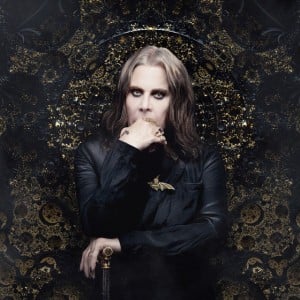
Ozzy Osbourne
Artist
If you need to read a bio to learn about who Ozzy Osbourne is, what rock have you been living under?
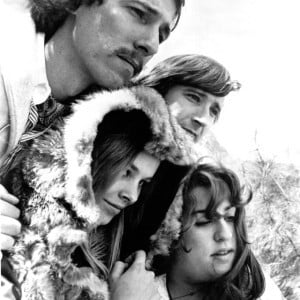
The Mamas & the Papas
Artist
One of the most important pop groups of the '60s, the Mamas & the Papas' sound was built around radiant vocal harmonies and a solid electric folk foundation, and a major part of their appeal lay in the easygoing southern California lifestyle the foursome seemingly embodied and endorsed. Their first two singles, "Monday, Monday" and "California Dreamin'," were gentle pop statements that sounded like the opening salvos in a cultural revolution, while also being calm and sweet enough to appeal to those who never thought about wearing a flower in their hair. The group's moment in the spotlight was brief, only four albums were issued during their three-year prime, but their sound was influential and lasting enough that it became emblematic of the era. The group's founder and de facto leader, <a href="spotify:artist:4O8NcI06slOnzcloI95qfe">John Phillips</a>, got his start musically in the early '60s as a member of folk music groups such as the Smoothies and <a href="spotify:artist:4uYxUVyDnN7DiEoRQnEoKN">the Journeymen</a>. The latter group, a trio with <a href="spotify:artist:5pWZfN4xVYpHheWqD8Zk5X">Dick Weissman</a> and <a href="spotify:artist:7d7AZ3CQC457bFhK0wHpSO">Scott McKenzie</a>, was one of the most promising small ensembles of the early-'60s folk music boom, but it never connected with the public despite being signed to Capitol Records. When <a href="spotify:artist:4uYxUVyDnN7DiEoRQnEoKN">the Journeymen</a> folded, <a href="spotify:artist:4O8NcI06slOnzcloI95qfe">Phillips</a> formed the New Journeymen with future screenwriter Marshall Brickman and a young model and singer named <a href="spotify:artist:6EYoen5yE52xzGz4FB20pY">Michelle Gilliam</a>; they didn't succeed any better, but <a href="spotify:artist:4O8NcI06slOnzcloI95qfe">Phillips</a> and <a href="spotify:artist:6EYoen5yE52xzGz4FB20pY">Gilliam</a> married and they also started to write songs. One that they composed jointly during this period was a catchy tune with some potential that expressed an idealized vision of California. Meanwhile, working in a different realm of the musical spectrum was a Baltimore-born singer named Cassandra Elliot, who was successful as part of New York's off-Broadway theater scene, and had made some noise in touring productions of The Music Man. She moved into folk music in partnership with <a href="spotify:artist:49lxTCrNkfwRU19p3tMHER">Tim Rose</a> -- himself an ex-associate of the Smoothies. They worked as two-thirds of a trio called the Triumverate, whose third spot was subsequently filled by Nebraska-born folksinger <a href="spotify:artist:6TPEYUCBrpWYF74YZsJyDu">James Hendricks</a>. This group eventually became the Big 3 and hit it big at New York's Bitter End, and from there went on to a brief flurry of recording activity that yielded two LPs, a handful of singles, and a brace of television commercials. Eventually, the Big 3 evolved into <a href="spotify:artist:3IpzgXQFzsMPjSW7d8okVK">the Mugwumps</a>, whose ranks included Elliot, <a href="spotify:artist:6TPEYUCBrpWYF74YZsJyDu">Hendricks</a>, <a href="spotify:artist:1EbFQk4CBE8i0v69zGPX5R">Zal Yanovsky</a>, <a href="spotify:artist:3FPF6tyBTP79pCCAJDcPft">John Sebastian</a>, and <a href="spotify:artist:7AwBBl8PDdRS8UiXZnzaQd">Denny Doherty</a>, a veteran of the Colonials in the early '60s, who later rechristened themselves <a href="spotify:artist:6dbe2att97AwGj0AL2X6F4">the Halifax Three</a> -- <a href="spotify:artist:7AwBBl8PDdRS8UiXZnzaQd">Doherty</a> and Elliot, who were pretty impressive on their own, made a dazzling pair of voices together. <a href="spotify:artist:3IpzgXQFzsMPjSW7d8okVK">The Mugwumps</a> seemed to be on the edge of a new sound, mixing electric instruments played with ever more emphasis on folk-based material -- this was concurrent with the West Coast activities of <a href="spotify:artist:3ExrAwcOqgGjt9kFRwdM76">Roger McGuinn</a>, <a href="spotify:artist:040Bv6cZTRh30LyyYVXgJX">Gene Clark</a>, and <a href="spotify:artist:59zdhVoWxSoHMc74n098Re">David Crosby</a> in <a href="spotify:artist:1PCZpxHJz7WAMF8EEq8bfc">the Byrds</a> -- but could never quite put together a sound that worked completely. They were foundering when <a href="spotify:artist:4O8NcI06slOnzcloI95qfe">Phillips</a> decided to reactivate his trio as the New Journeymen and, with Brickman gone, recruited <a href="spotify:artist:7AwBBl8PDdRS8UiXZnzaQd">Doherty</a> to sing some shows down in Washington, D.C. All of the pieces were beginning to fit together in the closing days of 1964. Meanwhile, Cass Elliot was paying her bills by singing jazz in Washington, D.C. The New Journeymen might have gone it alone, except that <a href="spotify:artist:7AwBBl8PDdRS8UiXZnzaQd">Doherty</a> brought his fellow members to see her perform. The quartet fell into place despite some resistance from <a href="spotify:artist:4O8NcI06slOnzcloI95qfe">John Phillips</a> over Elliot's sheer size as well as her strong personality and (supposedly) her voice. After getting to know each other musically and personally, they took a trip to the Caribbean (as immortalized later by the song "Creeque Alley") and hit on a sound they felt good about. The group headed to California late in 1965 and at the suggestion of <a href="spotify:artist:6xdkfNRMtBzeu7t4wyum2X">Barry McGuire</a>, late of <a href="spotify:artist:77OdfWXrYy6DcYPzmUOr6a">the New Christy Minstrels</a> and an old friend of Elliot's, who was just coming off of his biggest hit, "Eve of Destruction" on Dunhill Records, the quartet auditioned for Lou Adler, the head of the label -- they played "California Dreamin'," "Monday, Monday," and many of the other songs that ended up comprising their debut album. Adler signed them on the spot and their debut single, "California Dreamin'," was out by the start of 1966 and shooting up the charts, with their album If You Can Believe Your Eyes and Ears coming up behind it. Produced by Adler, played by the cream of the Los Angeles session crews, and with luminous vocals arranged by <a href="spotify:artist:4O8NcI06slOnzcloI95qfe">John Phillips</a>, it reached the top of the album charts and was one of the top-selling albums in the country for months. Though the group was at the pinnacle of the music world, behind the scenes there were troubles brewing, and a variety of causes led to <a href="spotify:artist:6EYoen5yE52xzGz4FB20pY">Michelle Phillips</a> leaving the band for a few months. She was replaced by singer/songwriter Jill Gibson during sessions for the group's second album. It's unclear if she appeared on 1966's self-titled album; by the time it was released, <a href="spotify:artist:4O8NcI06slOnzcloI95qfe">Phillips</a> was back in the band. Recorded with a tightly knit group of musicians who included guitarist Eric Hord and the established Los Angeles session players Larry Knechtel on keyboards, <a href="spotify:artist:5OGnIiN0VDdkwDTSXF0b56">Joe Osborne</a> on bass, and <a href="spotify:artist:5W6Vbf1DmTUOpvsXq4lQFJ">Hal Blaine</a> on drums, the album was again produced by Adler with songs written and arranged by <a href="spotify:artist:4O8NcI06slOnzcloI95qfe">John Phillips</a>. It spawned two hits "I Saw Her Again and "Words of Love," and peaked at number four on the Billboard album chart. The same crew worked on the band's third album, Deliver, which was released in 1967 and spawned three hit singles: "Dedicated to the One I Love," "Creeque Alley," and "Look Through My Window." That same year, <a href="spotify:artist:4O8NcI06slOnzcloI95qfe">John Phillips</a>' influence on popular culture reached its zenith when he and Lou Adler, with <a href="spotify:artist:6EYoen5yE52xzGz4FB20pY">Michelle Phillips</a>, <a href="spotify:artist:49JvZ17o0VaAmXaJv5kZlv">Al Kooper</a>, and a lot of others assisting, organized the Monterey International Pop Festival. The first of all the rock festivals of the '60s, the event launched the careers of dozens of mostly San Francisco-based acts nationally and beyond, including those of <a href="spotify:artist:776Uo845nYHJpNaStv1Ds4">Jimi Hendrix</a>, <a href="spotify:artist:4NgfOZCL9Ml67xzM0xzIvC">Janis Joplin</a>, <a href="spotify:artist:6qyfxCyE6JsPkcGVIOPpyl">the Electric Flag</a>, and <a href="spotify:artist:4O8NcI06slOnzcloI95qfe">Phillips</a>' old friend and <a href="spotify:artist:4uYxUVyDnN7DiEoRQnEoKN">Journeymen</a> bandmate <a href="spotify:artist:7d7AZ3CQC457bFhK0wHpSO">Scott McKenzie</a>. In honor of the festival, <a href="spotify:artist:4O8NcI06slOnzcloI95qfe">Phillips</a> had written a song called "San Francisco (Be Sure to Wear Some Flowers in Your Hair)," which he gave to <a href="spotify:artist:7d7AZ3CQC457bFhK0wHpSO">McKenzie</a> to record as his solo debut on Adler's new Ode Records label. The Mamas & the Papas closed out the festival with an exuberant set, although it was overshadowed by some of the more dynamic performances of the weekend. By the time the band were ready to record their fourth album, 1969's The Papas & the Mamas, <a href="spotify:artist:4O8NcI06slOnzcloI95qfe">John</a> and <a href="spotify:artist:6EYoen5yE52xzGz4FB20pY">Michelle Phillips</a> had built a studio of their own. The band worked there on a more downcast set of songs that reflected the end of the psychedelic era. While it did have a hit single -- "Twelve-Thirty" -- and reached the top 20, it marked the end of the band's era as hitmakers and influencers. The second single from the album, a rollicking version of the old musical number "Dream a Little Dream of Me," was issued under Cass Elliot's name instead of the band's. By the end of the year, the Mamas & the Papas had run out of steam and the group went their separate ways. Cass Elliot was the first to emerge in her own right, her larger-than-life image lending itself to pop stardom and her musical ability made her a natural, whether recording solo or in tandem with <a href="spotify:artist:2DWQX92uew7DlsgN0yD775">Dave Mason</a>. Her first venture into performing solo, in Las Vegas, wasn't a success, but by the early '70s she was on an even keel, hosting and performing on music-oriented television shows such as The Ray Stevens Show and Get It Together as well as her own specials, and also appearing in the movie H.R. Pufnstuf. <a href="spotify:artist:4O8NcI06slOnzcloI95qfe">John Phillips</a> did a solo album, The Wolf King of L.A., that was well-received critically, and <a href="spotify:artist:7AwBBl8PDdRS8UiXZnzaQd">Denny Doherty</a> undertook a solo career as well. <a href="spotify:artist:6EYoen5yE52xzGz4FB20pY">Michelle Phillips</a> concentrated on raising her and <a href="spotify:artist:4O8NcI06slOnzcloI95qfe">John</a>'s daughter, <a href="spotify:artist:4G4wyL5fut6xdMUPZzDpyJ">Chynna Phillips</a>, and saw some brief activity as a recording artist, but it was acting that kept her busy. She distinguished herself dramatically in John Milius' excellent period film Dillinger (1973). The group did reunite in the studio early in the decade to record one album, People Like Us, to help fulfill its contract; conversely, there were also lawsuits by <a href="spotify:artist:4O8NcI06slOnzcloI95qfe">John Phillips</a> against his former label over unpaid royalties, which dragged on for years. The most notable event surrounding the group, however, was the tragic death of Cass Elliot on July 29, 1974. From that day forward, the group never officially reunited, though <a href="spotify:artist:4O8NcI06slOnzcloI95qfe">John Phillips</a> occasionally organized groups (most notably in 1982 with <a href="spotify:artist:7AwBBl8PDdRS8UiXZnzaQd">Doherty</a>, while his actress/singer daughter MacKenzie and Elaine McFarlane, formerly of <a href="spotify:artist:12V5Y0dEdRroUCBr95IXO9">Spanky & Our Gang</a>, filled the women's spots) to play the oldies circuit and recycle the vintage repertory. The group's appeal, however, has lingered, as reflected in its induction into the Rock & Roll Hall of Fame in 1997. There have been multiple reissues of their original four LPs culminating in 2001 with the release of All the Leaves Are Brown, a compilation of their complete '60s studio recordings, and their hit singles can be heard over the airwaves, in movies and on TV shows on a regular basis. Their music continued to be reissued as well, with <a href="spotify:search:label%3A%22Real+Gone%22">Real Gone</a> releasing Complete Singles: 50th Anniversary Collection in 2016 and <a href="spotify:search:label%3A%22Sundazed%22">Sundazed</a> putting out the band's second album with its original mono mix in 2023. ~ Bruce Eder & Tim Sendra, Rovi
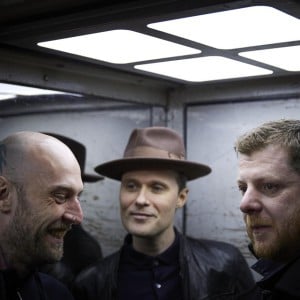
The Fratellis
Artist
A brashly melodic indie rock outfit from Glasgow, the Fratellis feature vocalist/guitarist Jon Fratelli, drummer Mince Fratelli, and bassist Barry Fratelli. The witty trio played its first show in early 2005, maintaining that the band's moniker was merely an homage to Barry's original surname (however, other rumors suggest that the Fratellis borrowed it from the nemesis family featured in Steven Spielberg's film The Goonies). Such trivia only added to the Fratellis' growing appeal upon their debut, and the band's limited-edition self-titled EP arrived in April 2006. Although few copies were pressed, the record received a helpful boost from Zane Lowe's Radio One program, which put the acoustic-driven track "Creepin Up the Backstairs" into regular rotation. Televised appearances on Later with Jools Holland and Top of the Pops followed during the early summer, while the group's second single, "Henrietta," earned the Fratellis their first U.K. Top 20 hit. "Chelsea Dagger" began climbing the U.K. Top 40 that August, and the debut album, Costello Music, finally arrived in September. Although the album failed to chart in most countries (even an American iPod commercial featuring the track "Flathead" failed to spark much interest across the pond), Costello Music enjoyed a great deal of success at home, earning the bandmates a BRIT Award and peaking at number two in their native U.K. The Fratellis returned to the British charts in 2008 with "Mistress Mabel," a track from their polished sophomore effort, Here We Stand. The band then went on hiatus for a few years; during that time, Jon formed the torchy duo Codeine Velvet Club in 2008 with Lou Hickey and released a solo album, Psycho Jukebox, in 2011. Meanwhile, Barry joined the Twang as a touring member and Mince played with Jon's backing band as well as with Throne o' Diablo. During this time, "Chelsea Dagger" also became the unofficial theme song of the National Hockey League's Chicago Blackhawks. In 2012, the Fratellis regrouped for a U.K. tour and announced in 2013 that they had recorded their third studio album in their native Glasgow. We Need Medicine arrived in October 2013. By the end of the year, they were already writing songs, some of which appeared on the Soul Crush EP, available as a free download on the band's website. The Fratellis recorded their fourth album in Los Angeles with producer Tony Hoffer (who also produced their debut); preceded by the singles "Me and the Devil" and "Baby Don't You Lie," Eyes Wide, Tongue Tied was released in August 2015. The following year, the band celebrated the tenth anniversary of Costello Music with a U.K. tour. In 2017, they began work with Hoffer on their fifth album. Preceded by the disco-tinged track "The Next Time We Wed," In Your Own Sweet Time appeared in March 2018. ~ Andrew Leahey & MacKenzie Wilson

Deftones
Artist
Formed in Sacramento, CA, in 1988, the multiplatinum GRAMMY® Award-winning Deftones are an influential alternative presence with 10 million records sold worldwide as of 2020. The quintet’s career spans three platinum albums—Adrenaline [1995], Around The Fur [1997], and White Pony [2000]—as well as a 2001 GRAMMY® Award, a gold album Deftones [2003], and countless critical plaudits. Following the success of Diamond Eyes [2010] and Koi No Yokan [2012], Gore landed at #2 on the Billboard Top 200 in 2016, moving over 71K units first week and marking their highest chart position in 13 years. Not to mention, they curated, launched, presented, and headlined their own festival, Dia De Los Deftones, in 2018. Selling out both installments to date, the eclectic lineups hosted everyone from Future and CHVRCHES to Gojira and Megan Thee Stallion. In 2020, Deftones continued their trailblazing arc as an alternative leader with their ninth full-length album, Ohms, and a thrilling full-album remix of White Pony.
Linkin Park
Artist
LINKIN PARK emerged as an innovative musical force and are one of the best-selling artists of the last twenty years. Their RIAA Diamond-certified full-length debut, <a href="spotify:album:2pKw6GERJVAD61449B1EEM" data-name="Hybrid Theory">Hybrid Theory</a>, stands out as the “best selling debut of the 21st century,” while landmark sophomore album Meteora bowed at #1 on the Billboard Top 200 before going 8X-Platinum in the U.S. The band’s worldwide sales across the entire catalog eclipses 100 million, and among numerous accolades and honors, they have garnered 2 GRAMMY® Awards, 5 American Music Awards, 4 MTV VMA Awards, 10 MTV Europe Music Awards and 3 World Music Awards. Selling out stadiums worldwide, they’ve headlined the largest festivals globally and also remain the first and only Western rock band to play a five-stadium tour in China. 2017’s <a href="spotify:album:5Eevxp2BCbWq25ZdiXRwYd" data-name="One More Light">One More Light</a> marked their fifth #1 debut on the Billboard 200. In 2020, the band celebrated their groundbreaking debut album, <a href="spotify:album:2pKw6GERJVAD61449B1EEM" data-name="Hybrid Theory">Hybrid Theory</a>, by releasing a comprehensive 20th anniversary edition super deluxe box set which features their RIAA Diamond-certified single “In The End.” In 2023, the band released <a href="spotify:album:3Q9wXhEAX7NYCPP0hxIuDz" data-name="Meteora 20th Anniversary Edition">Meteora 20th Anniversary Edition</a>, which topped the charts and featured the newly-uncovered song “Lost.” 2024 marked the release of their first greatest hits package <a href="spotify:album:1X472EvsSqH09RyrqbtyXU" data-name="Papercuts">Papercuts</a>, featuring vault track “Friendly Fire” that similarly topped both the Alternative and Rock charts. Today, LINKIN PARK’s imprint on music and culture continues to expand and magnify.
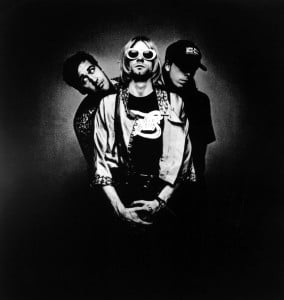
Nirvana
Artist
Nothing was ever quite the same after Nirvana. The band's second album, 1991's Nevermind, revolutionized popular music by bringing alternative rock above ground, introducing mainstream audiences to sounds and concepts that had previously existed only in shadowy record store corners and on low-frequency college radio airwaves. Nevermind's noisy, dissonant guitar rock, mumbled or howled surrealistic lyrics, and generally angsty punk attitudes were unlikely candidates for chart success, but the band undercut their grungy songs with enough pop melodicism to create a sound unlike anything average listeners had ever heard before, striking at the exact right moment to become an unprecedented success. Since Nirvana were rooted in an indie aesthetic but loved pop music, they fought their stardom while courting it, becoming some of the most notorious anti-rock stars in history. They consciously attempted to shed their audience with 1993's abrasive, <a href="spotify:artist:52ZFTGbQ9miWMX8JYBvtOO">Steve Albini</a>-produced third album In Utero, but vocalist/guitarist/songwriter <a href="spotify:artist:6pAuTi6FXi6qFQJ1dzMXQs">Kurt Cobain</a>'s growing mental health and substance abuse issues led to his death by suicide in 1994. Though Nirvana's story was cut tragically short, their legacy stands as one of the most influential in rock & roll history. <a href="spotify:artist:6pAuTi6FXi6qFQJ1dzMXQs">Kurt Cobain</a> (vocals, guitar) met <a href="spotify:artist:4BZKfXia2RPZnzCgQ2fG8M">Chris Novoselic</a> (born <a href="spotify:artist:4BZKfXia2RPZnzCgQ2fG8M">Krist Novoselic</a>) (bass) in 1985 in Aberdeen, Washington, a small logging town 100 miles away from Seattle. While <a href="spotify:artist:4BZKfXia2RPZnzCgQ2fG8M">Novoselic</a> came from a relatively stable background, <a href="spotify:artist:6pAuTi6FXi6qFQJ1dzMXQs">Cobain</a>'s childhood had been thrown into turmoil when his parents divorced when he was eight. Following the divorce, he lived at the homes of various relatives, developing a love for <a href="spotify:artist:3WrFJ7ztbogyGnTHbHJFl2">the Beatles</a> and then heavy metal in the process. Eventually, American hardcore punk worked its way into dominating his listening habits and he met <a href="spotify:artist:6aVjo0xHSiuW5hkasoYSR3">the Melvins</a>, an Olympia-based underground heavy punk band. <a href="spotify:artist:6pAuTi6FXi6qFQJ1dzMXQs">Cobain</a> began playing in punk bands like Fecal Matter, often with <a href="spotify:artist:6aVjo0xHSiuW5hkasoYSR3">the Melvins</a>' bassist <a href="spotify:artist:4IRzt4Zde0xpbbc2BtsRGm">Dale Crover</a>. Through <a href="spotify:artist:6aVjo0xHSiuW5hkasoYSR3">the Melvins</a>' leader, Buzz Osborne, <a href="spotify:artist:6pAuTi6FXi6qFQJ1dzMXQs">Cobain</a> met <a href="spotify:artist:4BZKfXia2RPZnzCgQ2fG8M">Novoselic</a>, who also had an intense interest in punk, which meant that he, like <a href="spotify:artist:6pAuTi6FXi6qFQJ1dzMXQs">Cobain</a>, felt alienated from the macho, redneck population of Aberdeen. The duo decided to form a band called the Stiff Woodies, with <a href="spotify:artist:6pAuTi6FXi6qFQJ1dzMXQs">Cobain</a> on drums, <a href="spotify:artist:4BZKfXia2RPZnzCgQ2fG8M">Novoselic</a> on bass, and a rotating cast of guitarists and vocalists. The group went through name changes as quickly as guitarists, before deciding that <a href="spotify:artist:6pAuTi6FXi6qFQJ1dzMXQs">Cobain</a> would play guitar and sing. Renamed <a href="spotify:artist:4opTS86dN9uO313J9CE8xg">Skid Row</a>, the new trio featured drummer Aaron Burkhart, who left the band by the end of 1986 and was replaced by Chad Channing. By 1987, the band was called Nirvana. Nirvana began playing parties in Olympia, gaining a cult following. Around 1987, the band made ten demos with producer <a href="spotify:artist:5WPz1DmtxRJBajeTYGiftU">Jack Endino</a>, who played the recordings to Jonathan Poneman, one of the founders of the Seattle-based indie label <a href="spotify:search:label%3A%22Sub+Pop%22">Sub Pop</a>. Poneman signed Nirvana, and in December of 1988, the band released its first single, a cover of <a href="spotify:artist:5WimOFbBnCU5wI6t5PPpEk">Shocking Blue</a>'s "Love Buzz." <a href="spotify:search:label%3A%22Sub+Pop%22">Sub Pop</a> orchestrated an effective marketing scheme, which painted the band as backwoods, logging-town hicks, which irritated <a href="spotify:artist:6pAuTi6FXi6qFQJ1dzMXQs">Cobain</a> and <a href="spotify:artist:4BZKfXia2RPZnzCgQ2fG8M">Novoselic</a>. While "Love Buzz" was fairly well-received, the band's debut album, Bleach, was what got the ball rolling. Recorded for just over $600 and released in June 1989, Bleach slowly became a hit on college radio, due to the group's consistent touring. Though Jason Everman was credited as a second guitarist on the sleeve of Bleach, he didn't appear on the record; he only toured in support of the album before leaving the band at the end of the year to join <a href="spotify:artist:5xUf6j4upBrXZPg6AI4MRK">Soundgarden</a> and then Mindfunk. Bleach sold 35,000 copies and Nirvana became favorites of college radio, the British weekly music press, and <a href="spotify:artist:5UqTO8smerMvxHYA5xsXb6">Sonic Youth</a>, <a href="spotify:artist:7LuYiSXiWs86rwWJjEEgB9">Mudhoney</a>, and <a href="spotify:artist:267VY6GX5LyU5c9M85ECZQ">Dinosaur Jr.</a>, which was enough to attract the attention of major labels. In July 1990, Nirvana recorded "Sliver"/"Dive" with <a href="spotify:artist:7LuYiSXiWs86rwWJjEEgB9">Mudhoney</a> drummer Dan Peters on drums and producer <a href="spotify:artist:0gTi2zsOHn6wtlkx66uxXM">Butch Vig</a>. The band also made a six-song demo with <a href="spotify:artist:0gTi2zsOHn6wtlkx66uxXM">Vig</a>, which was shopped to major labels, who soon began competing to sign the group. In August, they hit the road with <a href="spotify:artist:5UqTO8smerMvxHYA5xsXb6">Sonic Youth</a>'s Goo tour (including <a href="spotify:artist:4IRzt4Zde0xpbbc2BtsRGm">Crover</a> on drums). That September, <a href="spotify:artist:7mRVAzlt1fAAR9Cut6Rq8c">Dave Grohl</a>, formerly of the D.C.-based hardcore band <a href="spotify:artist:0wIhCBrT02x0GG5bKqcSAh">Scream</a>, became Nirvana's drummer and the band signed with <a href="spotify:search:label%3A%22DGC%22">DGC</a> for $287,000. Nirvana recorded their second album with <a href="spotify:artist:0gTi2zsOHn6wtlkx66uxXM">Vig</a>, completing the record in June of 1991. Nevermind was released in September, supported by a quick American tour. While <a href="spotify:search:label%3A%22DGC%22">DGC</a> was expecting a moderately successful release, in the neighborhood of 100,000 copies, Nevermind immediately became a smash hit, quickly selling out its initial shipment of 50,000 copies and creating a shortage across America. What helped the record become a success was "Smells Like Teen Spirit," a blistering four-chord rocker that was accompanied by a video that shot into heavy MTV rotation. By the beginning of 1992, "Smells Like Teen Spirit" had climbed into the American Top Ten and Nevermind bumped <a href="spotify:artist:3fMbdgg4jU18AjLCKBhRSm">Michael Jackson</a>'s much-touted comeback album Dangerous off the top of the album charts; it reached the British Top Ten shortly afterward. By February, the album had been certified triple platinum. Nirvana's success took the music industry by surprise, Nirvana included. From the moment Nirvana were met with mainstream visibility, <a href="spotify:artist:6pAuTi6FXi6qFQJ1dzMXQs">Cobain</a> used his newfound fame to relentlessly push his favorite independent artists as if their music was more important than his own. This took the form of bringing Japanese alt-pop trio <a href="spotify:artist:4ukJlDdlvuQOHZdD2NVsFD">Shonen Knife</a> on tour, covering lesser-known but formative artists like <a href="spotify:artist:0sTTw3dw3EA0c7NaZnrJd2">the Wipers</a>, <a href="spotify:artist:4wWQkHhmUNlXvhbHRUSqZW">the Vaselines</a>, and <a href="spotify:artist:2h9yQhKyqOMex3QFMVeq7F">Meat Puppets</a>, or wearing a homemade <a href="spotify:artist:1jeYbk5eqo6wgsQPjLeU5w">Daniel Johnston</a> t-shirt during television appearances and high-profile concerts. <a href="spotify:artist:6pAuTi6FXi6qFQJ1dzMXQs">Cobain</a>'s enthusiastic fandom introduced untold numbers of Nirvana fans to artists they most likely wouldn't have known to seek out on their own, and in the process, energized those artists' careers. It soon became apparent that Nirvana wasn't quite sure how to handle its success. Around the time of Nevermind's release, <a href="spotify:artist:6pAuTi6FXi6qFQJ1dzMXQs">Cobain</a> appeared on MTV's Headbangers Ball in drag; the group mocked the tradition of miming on the BBC's Top of the Pops, with <a href="spotify:artist:4BZKfXia2RPZnzCgQ2fG8M">Novoselic</a> constantly throwing his bass into the air and <a href="spotify:artist:6pAuTi6FXi6qFQJ1dzMXQs">Cobain</a> singing his live vocals in the style of Ian Curtis; and their traditional live destruction of instruments was immortalized on a Saturday Night Live performance that ended with <a href="spotify:artist:4BZKfXia2RPZnzCgQ2fG8M">Novoselic</a> and <a href="spotify:artist:7mRVAzlt1fAAR9Cut6Rq8c">Grohl</a> sharing a kiss. By early 1992, questions began to arise about the band's stability. <a href="spotify:artist:6pAuTi6FXi6qFQJ1dzMXQs">Cobain</a> married <a href="spotify:artist:4vI0xGbQl2cMnMiagUEBOj">Courtney Love</a>, the leader of the indie rock/foxcore band <a href="spotify:artist:5SHQUMAmEK5KmuSb0aDvsn">Hole</a>, in February of 1992, announcing that the couple was expecting a child. A few months later, Nirvana canceled several concerts and refused to mount a full-scale American tour during the summer. <a href="spotify:artist:6pAuTi6FXi6qFQJ1dzMXQs">Cobain</a> complained that he was suffering from chronic stomach troubles, which seemed to be confirmed when he was admitted to a Belfast hospital after a June concert. While he went through these problems,<a href="spotify:search:label%3A%22DGC%22">DGC</a> released the odds-and-ends compilation Incesticide late in 1992; the album reached number 39 U.S. and number 14 U.K. As Nirvana prepared to make their third album, they released "Oh, the Guilt" as a split single with <a href="spotify:artist:6r26MaDr8bqNALjXgYPXMa">the Jesus Lizard</a> on <a href="spotify:search:label%3A%22Touch+%26+Go+Records%22">Touch & Go Records</a>. Choosing <a href="spotify:artist:52ZFTGbQ9miWMX8JYBvtOO">Steve Albini</a> (<a href="spotify:artist:6zvul52xwTWzilBZl6BUbT">Pixies</a>, <a href="spotify:artist:1xgFexIwrf2QjbU0buCNnp">the Breeders</a>, <a href="spotify:artist:5EYkvHZuGM3pwU3DZUrrZ3">Big Black</a>, <a href="spotify:artist:6r26MaDr8bqNALjXgYPXMa">the Jesus Lizard</a>) as their producer, they recorded In Utero, in two weeks during. Februrary 1993. Later in the year, reports, including an article in Newsweek, circulated that DGC was unhappy with the forthcoming album, and making accusations that Nirvana deliberately made an uncommercial record. Both the band and the label denied such allegations. Deciding that <a href="spotify:artist:52ZFTGbQ9miWMX8JYBvtOO">Albini</a>'s production was too flat, Nirvana decided to remaster the album with <a href="spotify:artist:4KWTAlx2RvbpseOGMEmROg">R.E.M.</a> producer <a href="spotify:artist:1jBYxrGP7Ev7Qs0X5qJdDM">Scott Litt</a>, who also remixed the singles "Heart Shaped Box" and "All Apologies." In Utero was released in September of 1993 to positive reviews and strong initial sales, debuting at the top of the U.S. and U.K. charts. Nirvana supported it with an American tour, hiring former <a href="spotify:artist:39zgKjGWsiZzJ9h6gbrPFY">Germs</a> member <a href="spotify:artist:36AOO7vOYRSjm2nVgvu63E">Pat Smear</a> as an auxiliary guitarist. While the album and the tour were both successful, sales weren't quite as strong as expected, with several shows not selling out until the week of the concert. As a result, the group agreed to play MTV's acoustic Unplugged show at the end of the year, and sales of In Utero picked up after its December airing. After wrapping up their U.S. tour on January 8, 1994 with a show at Center Arena in Seattle, Nirvana embarked on a European tour in February. Following a concert in Munich on February 29, <a href="spotify:artist:6pAuTi6FXi6qFQJ1dzMXQs">Cobain</a> stayed in Rome to vacation with <a href="spotify:artist:4vI0xGbQl2cMnMiagUEBOj">Love</a>. On March 4, she awakened to find that <a href="spotify:artist:6pAuTi6FXi6qFQJ1dzMXQs">Cobain</a> had attempted suicide. When he returned to Seattle, his mental illness grew worse. <a href="spotify:artist:4vI0xGbQl2cMnMiagUEBOj">Love</a> and Nirvana's management organized an intervention program that resulted in <a href="spotify:artist:6pAuTi6FXi6qFQJ1dzMXQs">Cobain</a>'s admission to the Exodus Recovery Center in L.A. on March 30, but he left the clinic on April 1, returning to Seattle. His mother filed a missing persons report on April 4. On April 5, <a href="spotify:artist:6pAuTi6FXi6qFQJ1dzMXQs">Cobain</a> died by suicide at his Seattle home.After his death, <a href="spotify:artist:6pAuTi6FXi6qFQJ1dzMXQs">Kurt Cobain</a> was quickly anointed as a spokesman for Generation X, as well as a symbol of its tortured angst. <a href="spotify:artist:4BZKfXia2RPZnzCgQ2fG8M">Novoselic</a> and <a href="spotify:artist:7mRVAzlt1fAAR9Cut6Rq8c">Grohl</a> planned to release a double-disc live album at the end of 1994, but sorting through the tapes proved to be too painful, so MTV Unplugged in New York appeared in its place. The album debuted at the top of the British and American charts, as a home video comprised of live performances and interviews from the band's Nevermind era, titled Live! Tonight! Sold Out!, was issued at the same time (the project began prior to <a href="spotify:artist:6pAuTi6FXi6qFQJ1dzMXQs">Cobain</a>'s passing and was completed by surviving bandmembers). In 1996, MTV Unplugged in New York's electric counterpart, From the Muddy Banks of the Wishkah, was released, debuting at the top of the U.S. charts. Following <a href="spotify:artist:6pAuTi6FXi6qFQJ1dzMXQs">Cobain</a>'s death, <a href="spotify:artist:7mRVAzlt1fAAR9Cut6Rq8c">Grohl</a> formed <a href="spotify:artist:7jy3rLJdDQY21OgRLCZ9sD">the Foo Fighters</a>, releasing their self-titled debut album in 1995, followed by The Colour and the Shape in 1997 and There Is Nothing Left to Lose in 1999. <a href="spotify:artist:4BZKfXia2RPZnzCgQ2fG8M">Novoselic</a> formed the trio Sweet 75, releasing their debut in the spring of 1997, and also appeared along with former <a href="spotify:artist:30U8fYtiNpeA5KH6H87QUV">Dead Kennedys</a> frontman <a href="spotify:artist:1ddbFlSqbqp2vuJd5CuRcE">Jello Biafra</a> and former <a href="spotify:artist:5xUf6j4upBrXZPg6AI4MRK">Soundgarden</a> guitarist Kim Thayil on the 2000 live set Live from the Battle in Seattle under the name <a href="spotify:artist:0l6DIGXp0GGVDEieOA0D0P">the No W.T.O. Combo</a>. By the late '90s, <a href="spotify:artist:4BZKfXia2RPZnzCgQ2fG8M">Novoselic</a> began research for a proposed box set of previously unreleased songs from throughout Nirvana's career. The project was supposed to surface in the fall of 2001 (to coincide with the tenth anniversary release of Nevermind), but legal issues delayed its release. Finally, the Nirvana LLC partnership -- which included <a href="spotify:artist:7mRVAzlt1fAAR9Cut6Rq8c">Grohl</a>, <a href="spotify:artist:4BZKfXia2RPZnzCgQ2fG8M">Novoselic</a>, and <a href="spotify:artist:4vI0xGbQl2cMnMiagUEBOj">Love</a> -- came to an agreement and the album-length compilation Nirvana was released in October of 2002. Although that release included only one unreleased song, the long-awaited box set, titled With the Lights Out, appeared in late 2004, including three discs of rare and unreleased material plus a live DVD that featured material filmed as early as 1988. The band's 1992 set at the Reading Festival was released in 2009 as Live at Reading. The same year, <a href="spotify:search:label%3A%22Sub+Pop%22">Sub Pop</a> began a Nirvana studio album reissue campaign with Bleach; special 20th-anniversary editions of Nevermind and In Utero followed in 2011 and 2013, respectively. In 2014, Nirvana was inducted into the Rock & Roll Hall of Fame by <a href="spotify:artist:4KWTAlx2RvbpseOGMEmROg">R.E.M.</a>'s <a href="spotify:artist:2G1Lyk7bWbBBrtwyl3obNB">Michael Stipe</a>. <a href="spotify:artist:6pAuTi6FXi6qFQJ1dzMXQs">Cobain</a>'s place in the induction performance was taken by several vocalists, including Joan Jett and <a href="spotify:artist:3n8qeKQViV1waeCzZmS4Tx">Kim Gordon</a>. ~ Stephen Thomas Erlewine & Greg Prato, Rovi

Prince
Artist
"Welcome to the New Power Generation," announced Prince in "Eye No," the opening song on his 1988 album Lovesexy. Two years later, the Graffiti Bridge soundtrack contained "New Power Generation" with a group of the same name credited as background vocalists. The New Power Generation was featured on Prince's Diamonds and Pearls (1991) and The Love Symbol Album (1992), then went on to release albums credited to the group on its own, such as Goldnigga (a platform for rapping associate Tony M, 1993), Exodus (1995), and New Power Soul (1998), all of which were issued on Prince's NPG label. Despite a couple live albums, contributions to as many NPG label compilations, and a credit on 3121, New Power Generation will always be associated primarily with Prince's early-'90s output. ~ Andy Kellman

Eminem
Artist
Apart from being one of the best-selling artists in music history, Eminem is one of the greatest rappers of his generation. He's effortlessly fast, fluid, dexterous, and unpredictable, capable of pulling off long-form narratives or withering asides. And thanks to his mentor <a href="spotify:artist:6DPYiyq5kWVQS4RGwxzPC7">Dr. Dre</a>, he's had music to match with thick, muscular loops evoking the terror and paranoia conjured by his lyrics. To be certain, a great deal of the controversy Eminem courted came through in how his violent fantasias, often directed at his mother or his wife, intertwined with flights of absurdity that appealed to listeners too young to absorb the psychodramas explored on his breakthrough albums The Slim Shady LP and The Marshall Mathers LP. Eminem's commercial peak came around the time of his 2002 album The Eminem Show (which went platinum 27 times over) and with his crossover onto the big screen that same year with 8 Mile, a film that earned him acclaim for his performance and an Oscar for the film's anthem, "Lose Yourself." Eminem's journey as a living rap legend included struggles with addiction, near-constant feuding with other artists, and a celebrity status that shifted as the years went on. Through all his various changes, however, he continued growing as an artist as well as consistently hitting high commercial marks. Though critics could be unkind to efforts like 2009's Relapse or 2017's Revival, fans made sure that each new album sold at least platinum numbers and topped the charts. Instead of recycling old ideas, the rapper experimented with new production approaches, faster flows, and increasingly complex multisyllabic wordplay on projects like 2020's Music to Be Murdered By and the 2024 concept album The Death of Slim Shady (Coup de Grâce), in which he confronted and killed his alter ego. Born Marshall Mathers in the Kansas City, Missouri suburb of St. Joseph, Eminem spent his childhood between Missouri and Michigan, settling in Detroit in his teens. At the age of 14, he began rapping with a high school friend, the two adopting the names "Manix" and "M&M," which soon morphed into Eminem. Under this name, Mathers entered battle rapping, a struggle dramatized in the fictionalized 8 Mile. Initially, the predominantly Black audience didn't embrace him, but soon his skills earned him a reputation, and he was recruited to join several rap groups. The first of these was the New Jacks, and after they disbanded, he joined Soul Intent, who released a single in 1995. This track also featured <a href="spotify:artist:1W7G3vXPeISR3Oi9ggVfyE">Proof</a>, and the two rappers broke off on their own to form <a href="spotify:artist:5Qi4Bb7a8C0a00NZcA77L0">D-12</a>, a six-member crew that functioned more as a <a href="spotify:artist:34EP7KEpOjXcM2TCat1ISk">Wu-Tang</a>-styled collective than a regularly performing group. As he was struggling to establish his career, Eminem and his girlfriend Kim had a daughter, Hailey, forcing him to spend less time rapping and more time providing for his family. He assembled his first album, Infinite, which received some underground attention in 1996, not all of it positive. After its release, Eminem developed his Slim Shady alter ego, a persona that freed him to dig deep into his dark id, something he needed as he faced a number of personal upheavals, beginning with a bad split with Kim, which led him to move in with his mother and increase his use of drugs and alcohol, capped off by an unsuccessful suicide attempt. All this sturm und drang was channeled into The Slim Shady EP, which is where he first demonstrated many of the quirks that became his trademark, including his twitchy, nasal rhyming and disturbingly violent imagery. The Slim Shady EP opened many doors, the most notable being a contract with <a href="spotify:search:label%3A%22Interscope+Records%22">Interscope Records</a>. After Eminem came in second at the 1997 Rap Olympics MC Battle in Los Angeles, <a href="spotify:search:label%3A%22Interscope%22">Interscope</a> head Jimmy Iovine sought him out, giving the EP to <a href="spotify:artist:6DPYiyq5kWVQS4RGwxzPC7">Dr. Dre</a>, who proved eager to work with Eminem. They quickly cut Em's <a href="spotify:search:label%3A%22Interscope%22">Interscope</a> debut in the fall of 1998 -- during which time Marshall reconciled with Kim and married her -- and The Slim Shady LP appeared early in 1999, preceded by the single "My Name Is." Both were instant blockbusters and Eminem became a lightning rod for attention, earning praise and disdain for his violent, satirical fantasias. He quickly followed The Slim Shady LP with The Marshall Mathers LP in the summer of 2000. By this point, there was little doubt that Eminem was one of the biggest stars in pop music: the album sold almost two million copies within the first two weeks of release, but Mathers felt compelled to tweak other celebrities, provoking pop stars in his lyrics, and <a href="spotify:artist:4xtWjIlVuZwTCeqVAsgEXy">Insane Clown Posse</a>'s entourage in person, providing endless fodder for the tabloids. This gossip blended with growing criticism about his violent and homophobic lyrics, and under this fire, he reunited his old crew, <a href="spotify:artist:5Qi4Bb7a8C0a00NZcA77L0">D-12</a>, releasing an album in 2001, then touring with the group. During this furor, he had his biggest hit in the form of the moody ballad "Stan." Performed at the Grammys as a duet with <a href="spotify:artist:3PhoLpVuITZKcymswpck5b">Elton John</a>, thereby undercutting some accusations of homophobia, the song helped Eminem cross over to a middlebrow audience, setting the stage for the ultimate crossover of 2001's 8 Mile. Directed by Curtis Hanson, best known as the Oscar-nominated director of L.A. Confidential, the gritty drama fictionalized Eminem's pre-fame Detroit days and earned considerable praise, culminating in one of his biggest hits with the theme "Lose Yourself," which won Mathers an Oscar. After all this, he retreated from the spotlight to record his third album, The Eminem Show. Preceded by the single "Without Me," it turned into another huge hit, albeit not quite as strong as its predecessor, and there were some criticisms suggesting that Eminem wasn't expanding his horizons much. Encore, released late in 2004, did reach into more mature territory, notably on the anti-<a href="spotify:artist:2JZbcOAw67koOHlFTjMeGX">George W. Bush</a> "Mosh," but most of the controversy generated by the album was for behind-the-scenes events: a bus crash followed by canceled dates and a stint in rehab. Rumors of retirement flew, and the 2005 appearance of Curtain Call: The Hits did nothing to dampen them, nor did the turmoil of 2006, a year that saw Mathers remarrying and divorcing Kim within a matter of four months, as well as the shooting death of <a href="spotify:artist:1W7G3vXPeISR3Oi9ggVfyE">Proof</a> at a Detroit club. During all this, Em did some minor studio work, but he soon dropped off the radar completely, retreating to his Detroit home. He popped up here and there, most notably debuting the hip-hop channel Shade 45 for Sirius Satellite Radio in September 2008, but it wasn't until early 2009 that he mounted a comeback with Relapse, an album whose very title alluded to some of Mathers' struggles with prescription drugs, but it also announced that after an extended absence, Slim Shady was back. While not quite a blockbuster, the album went platinum, and Eminem followed it at the end of the year with an expanded version of Relapse (dubbed Relapse: Refill) that added outtakes and new recordings. Recovery, initially titled Relapse 2, was issued in June 2010. The album debuted on top of the Billboard 200 chart, where it remained for five consecutive weeks, while its leadoff single, "Not Afraid," debuted on top of the magazine's Hot 100 singles chart. The year 2010 also brought Eminem back together with <a href="spotify:artist:6DVipHzYsPlIoA0DW8Gmns">Royce da 5'9"</a> under the <a href="spotify:artist:77IURH5NC56Jn09QHi76is">Bad Meets Evil</a> moniker. In turn, June 2011's Hell: The Sequel marked the release of their first EP as a duo (barring the previous month's release of key EP track "Fastlane" as a single) and was their first batch of new material since a 1999 double A-side. After an intense period of recording, Eminem announced in August 2013 that his next solo album would be a nostalgically themed set of new material entitled The Marshall Mathers LP 2, which landed in early November. The album featured the singles "Berzerk," "Rap God," and "Survival," plus the chart-topping hit "The Monster" with <a href="spotify:artist:5pKCCKE2ajJHZ9KAiaK11H">Rihanna</a>. In 2014, new tracks landed on the double-disc set Shady XV, which celebrated the <a href="spotify:search:label%3A%22Shady%22">Shady</a> label's 15th birthday. The singles "Phenomenal" and "Kings Never Die" featuring <a href="spotify:artist:4yiQZ8tQPux8cPriYMWUFP">Gwen Stefani</a> arrived a year later, both taken from the Southpaw soundtrack. Eminem resurfaced in October 2017 with a freestyle anti-Trump rap, which didn't appear on Revival, the December 2017 album that was filled with cameos, including appearances by <a href="spotify:artist:6vWDO969PvNqNYHIOW5v0m">Beyoncé</a> ("Walk on Water"), <a href="spotify:artist:6eUKZXaKkcviH0Ku9w2n3V">Ed Sheeran</a> ("River"), and <a href="spotify:artist:1KCSPY1glIKqW2TotWuXOR">P!nk</a> ("Need Me"). His seventh straight chart-topper, it ultimately failed to match the sales heights of past efforts, despite the international success of the "River" single. The next year, without warning, Eminem issued his surprise tenth album, Kamikaze. The set featured appearances by <a href="spotify:artist:6C1ohJrd5VydigQtaGy5Wa">Joyner Lucas</a>, <a href="spotify:artist:6DVipHzYsPlIoA0DW8Gmns">Royce da 5'9"</a>, and <a href="spotify:artist:3KedxarmBCyFBevnqQHy3P">Jessie Reyez</a>, as well as "Venom," from the film of the same name. In January 2020, he repeated this surprise-release approach with 11th studio album Music to Be Murdered By. The album featured production from <a href="spotify:artist:6DPYiyq5kWVQS4RGwxzPC7">Dr. Dre</a> and cameos from the now-usual host of special guests, this time featuring <a href="spotify:artist:3ZotbHeyVQKxQCPDJuQ4SU">Q-Tip</a>, <a href="spotify:artist:6eUKZXaKkcviH0Ku9w2n3V">Ed Sheeran</a>, <a href="spotify:artist:3jK9MiCrA42lLAdMGUZpwa">Anderson .Paak</a>, and the late <a href="spotify:artist:4MCBfE4596Uoi2O4DtmEMz">Juice Wrld</a>, among many others. The set debuted at number one on the Billboard charts and was re-released in expanded form in December under the title Music to Be Murdered By: Side B. In 2021, Eminem appeared on the <a href="spotify:artist:4utLUGcTvOJFr6aqIJtYWV">Skylar Grey</a> song "Last One Standing" along with <a href="spotify:artist:6AgTAQt8XS6jRWi4sX7w49">Polo G</a> and <a href="spotify:artist:4AA474G2hRfrHyGrfyDseO">Mozzy</a>. The track was featured on the soundtrack for the film Venom: Let There Be Carnage and cracked the Top 100 of the Billboard charts. 2021 also saw Eminem opening a spaghetti restaurant in Detroit, named Mom's Spaghetti after a line from "Lose Yourself." In February 2022, he performed alongside <a href="spotify:artist:6DPYiyq5kWVQS4RGwxzPC7">Dr. Dre</a>, <a href="spotify:artist:1XkoF8ryArs86LZvFOkbyr">Mary J. Blige</a>, <a href="spotify:artist:2YZyLoL8N0Wb9xBt1NhZWg">Kendrick Lamar</a>, and others at the half-time show of Super Bowl LVI. That June, Eminem released "The King and I," a track he recorded with <a href="spotify:artist:5nLYd9ST4Cnwy6NHaCxbj8">CeeLo Green</a> for the soundtrack of <a href="spotify:artist:7HhTERkBV4Ot14KphgBfSh">Baz Luhrmann</a>'s <a href="spotify:artist:43ZHCT0cAZBISjO8DG9PnE">Elvis Presley</a> biopic, Elvis. "The King and I" was one of three new songs on Curtain Call 2, a 2022 compilation covering the singles Eminem had released since Curtain Call: The Hits. "From the D to the LBC," a collaboration with <a href="spotify:artist:7hJcb9fa4alzcOq3EaNPoG">Snoop Dogg</a>, was also featured on Curtain Call 2. In June of 2024, Eminem released his 12th studio LP The Death of Slim Shady (Coup de Grâce). The album largely centered around the concept of Marshall Mathers being kidnapped by his alter ego Slim Shady and fighting internally between these two sides of his personality. The album included production work from <a href="spotify:artist:6DPYiyq5kWVQS4RGwxzPC7">Dr. Dre</a>, <a href="spotify:artist:6GEykX11lQqp92UVOQQCC7">DJ Premier</a>, and <a href="spotify:artist:5CiGnKThu5ctn9pBxv7DGa">Benny Blanco</a>, as well as rap cameos from <a href="spotify:artist:0c173mlxpT3dSFRgMO8XPh">Big Sean</a>, <a href="spotify:artist:0sKsReKseslDlhxmbN6wLk">BabyTron</a>, <a href="spotify:artist:6U3ybJ9UHNKEdsH7ktGBZ7">JID</a>, and others. ~ Stephen Thomas Erlewine, Rovi

Black Sabbath
Artist
A metal institution whose influence cannot be overstated, Black Sabbath pioneered the genre as they constructed the framework for subsequent subgenres within metal, with entire movements rising from blueprints laid out in single Sabbath songs. From the end of the '60s and throughout the entirety of the '70s, the band became legendary for the doomy chemistry between its players: <a href="spotify:artist:6ZLTlhejhndI4Rh53vYhrY">Ozzy Osbourne</a>'s primal vocals, <a href="spotify:artist:7iA7uWUkWLpapsaaqmzRQV">Tony Iommi</a>'s seismic riffing, <a href="spotify:artist:5auXJ86A1atk0EyHgSl1zs">Bill Ward</a>'s bluntly powerful drumming, and <a href="spotify:artist:3Ezdddx6OeiOX7xLtfG48W">Geezer Butler</a>'s thunderous basslines all congealed into a sinister breed of hard rock and occult-fixated songcraft the world had never heard before. This untouchable original lineup was responsible for metal masterpieces like 1970's Paranoid, but when they splintered in 1979, Black Sabbath soldiered on with a cast of various, different singers while <a href="spotify:artist:6ZLTlhejhndI4Rh53vYhrY">Osbourne</a> applied his prince of darkness persona to a successful solo career that would span decades. There were various reunions and partial re-formations of the first Black Sabbath lineup, aiming to recapture some of their early evil energy on later period outings like 2013's 13. The band formed in 1968 under the ill-fitting name the Polka Tulk Blues Band -- <a href="spotify:artist:7iA7uWUkWLpapsaaqmzRQV">Iommi</a> and <a href="spotify:artist:5auXJ86A1atk0EyHgSl1zs">Ward</a>, who had just left the pub-blues outfit Mythology, were looking to take the genre in a more robust direction. They enlisted the services of <a href="spotify:artist:3Ezdddx6OeiOX7xLtfG48W">Butler</a> and <a href="spotify:artist:6ZLTlhejhndI4Rh53vYhrY">Osbourne</a>, both of whom had played together in a group called Rare Breed, and by the end of the year they were operating under the moniker Earth. The transition from Earth to Black Sabbath took place the following year, after <a href="spotify:artist:6ZLTlhejhndI4Rh53vYhrY">Osbourne</a> and <a href="spotify:artist:3Ezdddx6OeiOX7xLtfG48W">Butler</a> penned a song that was inspired by the 1963 <a href="spotify:artist:1W9sjfsJp3TqWFgvScMZdG">Boris Karloff</a> horror film of the same name. The resulting "Black Sabbath," a funereal slab of blast furnace-forged dread built around the augmented fourth/tritonic interval, better known as the devil's interval, would serve as the opening volley on their explosive eponymous 1970 debut. Released on <a href="spotify:search:label%3A%22Vertigo+Records%22">Vertigo Records</a>, the more progressive subsidiary of <a href="spotify:search:label%3A%22Philips%2FPhonogram%22">Philips/Phonogram</a>, the bulk of the Rodger Bain-produced LP was recorded in a single day. Only a handful of guitar overdubs -- <a href="spotify:artist:7iA7uWUkWLpapsaaqmzRQV">Iommi</a>'s signature sound was lent considerable gravitas by the fact that he tuned his guitar a half-step down to provide some slack for a pair of fingers that saw their tips removed in a factory accident -- along with the rain, thunder, and tolling bells that so effectively introduced the group to the world, would be added later. The record was released on Friday the 13th, which helped kick-start the band's reputation for populating the fertile crime scene that is history with plenty of blood spatter. Flush with eventual genre classics like "The Wizard," "N.I.B.," and the aforementioned title cut, Black Sabbath was initially dismissed by critics -- retrospective reviews were far more reverent -- but it managed to reach the U.K. Top Ten and hold court for over a year on the U.S. Top 40, eventually going certified platinum. With the surprise success of Black Sabbath, the band wasted little time in getting back into the studio. Released just seven months after their debut, Paranoid, the very antithesis of the sophomore slump, would spawn two of their biggest singles in "Iron Man" and the nervy, hard-hitting title track, the latter of which would be the band's only Top Ten hit -- the LP went straight to the top of the U.K. charts and sold over four-million copies in the U.S. Deeper yet no less immediate cuts like the air-raid siren-led, politically charged "War Pigs" and the trippy, mellow doom anthem "Planet Caravan" revealed a group that had far more creative gas in the tank than its detractors would have cared to admit. Paranoid also afforded Sabbath their first measure of controversy after an inquest was made regarding an American nurse who committed suicide while listening to the LP; for many, the name Black Sabbath would become synonymous with Satanism throughout the '70s and '80s. Sabbath continued to blow the unholy horn of plenty with albums three and four. Released in 1971, the brutish Master of Reality was certified double-platinum on the strength of fan favorites like "Sweet Leaf," "Children of the Grave," and "Into the Void," the latter two of which saw <a href="spotify:artist:7iA7uWUkWLpapsaaqmzRQV">Iommi</a> downtune three semitones in order to release even more string tension -- <a href="spotify:artist:3Ezdddx6OeiOX7xLtfG48W">Butler</a> followed suit, and the deep earth pummeling that followed has been widely cited as the auger of sludge, doom, and stoner metal. The LP also featured the <a href="spotify:artist:7iA7uWUkWLpapsaaqmzRQV">Iommi</a>-composed/<a href="spotify:artist:3Ezdddx6OeiOX7xLtfG48W">Butler</a>-penned "After Forever" which, much to the confusion of some of the band's more zealous critics, reflected the bass player's deep Catholic faith. Vol. 4, recorded in Los Angeles, arrived the following year and was the first Sabbath outing without Rodger Bain handling production duties -- <a href="spotify:artist:7iA7uWUkWLpapsaaqmzRQV">Iommi</a> and then-manager Patrick Meehan would co-produce the album. Certainly the group's most ambitious outing to date, Vol. 4 also represented Black Sabbath at their most chemically dependent -- the album's working title was Snowblind -- shipping in speaker boxes filled with cocaine, and turning their rented Bel Air house into a boozy black cauldron of rock star excess. Nevertheless, they managed to stay just-in-control long enough to piece together a dark, introspective gem of a record that didn't spawn any hits -- the caustic riff-gasm that is "Supernaut" must have charted in some other more forgiving dimension -- but still topped the album charts. Vol. 4 dutifully reflected Sabbath's debauched collective headspace at the time, but retained enough of the blue-collar might that fueled their early works to connect. Arriving in 1973, Sabbath Bloody Sabbath was another success, doubling down on the more progressive elements of Vol. 4, even going so far as to tap <a href="spotify:artist:0mkcYaXUbJUs5mJointuzB">Rick Wakeman</a> from <a href="spotify:artist:7AC976RDJzL2asmZuz7qil">Yes</a> to contribute keyboards to the track "Sabbra Cadabra." Bolstered by the now-iconic title cut as well as the punishing "Killing Yourself to Live," the LP not only resonated with fans, but elicited positive comments from mainstream critics as well, becoming Sabbath's fifth platinum album in the U.S. and earning their first silver certification in the U.K. Sabotage, released in 1975, saw the band returning to the bottom-heavy, molten-metal attack of their debut, for the most part dialing back on the orchestral flourishes and studio trickery of their last two outings. It also arrived in the midst of contentious litigation between the band and its now-former manager Meehan. Between the bruising "Hole in the Sky," the angst-fueled "Symptom of the Universe," and the nearly nine-minute epic "The Writ," the band sounded both reinvigorated and wrecked, like a bloodied beast, filled with bullets, standing on the corpse of its captor. Fans and critics were kind, but the musical climate was changing both at home and abroad, and Black Sabbath were beginning to feel the chill. By 1976 the band was undergoing an internal struggle as well, having to contend with an increasingly frustrated and chemically dependent frontman who was looking to strike out on his own. Technical Ecstasy (1976) and Never Say Die! (1978), despite going gold, suffered beneath the weight of both the band's substance abuse issues and its increasingly diminished position in popular music. Bands like <a href="spotify:artist:3RGLhK1IP9jnYFH4BRFJBS">the Clash</a> and <a href="spotify:artist:1u7kkVrr14iBvrpYnZILJR">the Sex Pistols</a> were on the rise, and Sabbath's brand of stalwart heavy blues-rock was losing favor. During the recording of Never Say Die!, <a href="spotify:artist:6ZLTlhejhndI4Rh53vYhrY">Osbourne</a> quit, eventually making his way back into the fold during the final sessions, but in 1979, after touring in support of the album, he was fired from the group for good. <a href="spotify:artist:6ZLTlhejhndI4Rh53vYhrY">Osbourne</a>'s departure and successful solo career may have signaled the end of an era for the group, but Black Sabbath weren't about to go gently into that good night. At the suggestion of the band's new manager's daughter Sharon Arden (later to become Sharon Osbourne), <a href="spotify:artist:7iA7uWUkWLpapsaaqmzRQV">Iommi</a>, <a href="spotify:artist:3Ezdddx6OeiOX7xLtfG48W">Butler</a>, and <a href="spotify:artist:5auXJ86A1atk0EyHgSl1zs">Ward</a> brought in ex-<a href="spotify:artist:6SLAMfhOi7UJI0fMztaK0m">Rainbow</a> frontman <a href="spotify:artist:4M3c7tg4BzLQ5pIOupZL65">Ronnie James Dio</a> to take over vocal duties. <a href="spotify:artist:4CYeVo5iZbtYGBN4Isc3n6">Dio</a>'s powerful voice, as idiosyncratic and iconic as <a href="spotify:artist:6ZLTlhejhndI4Rh53vYhrY">Osbourne</a>'s but with a far more wholesale appeal, proved the perfect fit for Black Sabbath 2.0. Released in 1980, Heaven and Hell was a critical and commercial success, becoming their third-highest-selling LP after Paranoid and Master of Reality. That same year, while on tour, <a href="spotify:artist:5auXJ86A1atk0EyHgSl1zs">Ward</a> had reached the apex of his alcoholism and announced that he too was leaving the group. <a href="spotify:artist:2yz2Hp6i6oqcHlzSez1P5y">Vinny Appice</a>, the younger brother of legendary <a href="spotify:artist:0vIMq3W8V63uR4Ymgm2pF1">Vanilla Fudge</a> drummer <a href="spotify:artist:0kjCvirhAHq3JMex6bqEBZ">Carmine Appice</a>, was brought in to replace him, and would appear on the group's tenth studio outing, 1981's Mob Rules. The album received mixed reviews, but still managed to go gold in the U.S. and crack the U.K. Top 40 on the strength of the fiery title track, which also appeared -- in a different version -- in the cult animated, adult-fantasy film Heavy Metal. The band's first-ever concert album, Live Evil, was released in 1983. Recorded during the group's 1982 tour in support of Mob Rules, it presented an audio snapshot of the band at the peak of its technical powers, but failed to capture the internal tensions that were bubbling beneath all of the pick slides and pyrotechnics. Citing an irreconcilable falling out with <a href="spotify:artist:7iA7uWUkWLpapsaaqmzRQV">Iommi</a> and <a href="spotify:artist:3Ezdddx6OeiOX7xLtfG48W">Butler</a>, <a href="spotify:artist:4CYeVo5iZbtYGBN4Isc3n6">Dio</a> and <a href="spotify:artist:2yz2Hp6i6oqcHlzSez1P5y">Appice</a> left the group in the middle of mixing the album and formed their own band. With the newly minted <a href="spotify:artist:4CYeVo5iZbtYGBN4Isc3n6">Dio</a> issuing Holy Diver and <a href="spotify:artist:6ZLTlhejhndI4Rh53vYhrY">Osbourne</a> dropping his third chart-topping solo LP, Bark at the Moon, Black Sabbath were at a definite crossroads. Undeterred, <a href="spotify:artist:7iA7uWUkWLpapsaaqmzRQV">Iommi</a> and <a href="spotify:artist:3Ezdddx6OeiOX7xLtfG48W">Butler</a> immediately began looking for new members with whom to start up the old machinery, eventually settling on <a href="spotify:artist:568ZhdwyaiCyOGJRtNYhWf">Deep Purple</a>'s <a href="spotify:artist:4QCflfSOonkybNw5D7GqGk">Ian Gillan</a> on vocals and a freshly sober <a href="spotify:artist:5auXJ86A1atk0EyHgSl1zs">Bill Ward</a> behind the kit. While it sold well initially, the resulting Born Again was a critical failure, a tone-deaf collection of subpar Sabbath tropes that would ultimately leave <a href="spotify:artist:7iA7uWUkWLpapsaaqmzRQV">Iommi</a> the last man standing. Even the tour in support of the album was a disaster, with <a href="spotify:artist:5auXJ86A1atk0EyHgSl1zs">Ward</a>, who relapsed during recording, being replaced by <a href="spotify:artist:2BLpGstUHxDc6vHfBEiaXm">Move</a>/<a href="spotify:artist:7jefIIksOi1EazgRTfW2Pk">ELO</a> drummer Bev Bevan, and a cringe-inducing prop malfunction providing the inspiration for the 1984 mockumentary This Is Spinal Tap's now-classic Stonehenge sequence. After the tour Bevan left, <a href="spotify:artist:4QCflfSOonkybNw5D7GqGk">Gillan</a> rejoined <a href="spotify:artist:568ZhdwyaiCyOGJRtNYhWf">Deep Purple</a>, and <a href="spotify:artist:3Ezdddx6OeiOX7xLtfG48W">Butler</a> went solo, leaving <a href="spotify:artist:7iA7uWUkWLpapsaaqmzRQV">Iommi</a> no choice but to put the band on hiatus. What followed was a long period of near-constant personnel changes, with <a href="spotify:artist:7iA7uWUkWLpapsaaqmzRQV">Iommi</a> remaining the sole original member. Issued in 1986, the bluesy Seventh Star was, for all intents and purposes, an <a href="spotify:artist:7iA7uWUkWLpapsaaqmzRQV">Iommi</a> solo album -- record company pressure forced him to add the Black Sabbath moniker to the front cover -- and 1987's Eternal Idol was the first to feature new semi-permanent vocalist <a href="spotify:artist:0i9DZzWDuQ7SvAgp3zoawd">Tony Martin</a>. Hard rock heavyweight drummer <a href="spotify:artist:6jJkOaQBQsEBBqvavgdHQT">Cozy Powell</a> joined <a href="spotify:artist:7iA7uWUkWLpapsaaqmzRQV">Iommi</a> and <a href="spotify:artist:0i9DZzWDuQ7SvAgp3zoawd">Martin</a> on 1989's Headless Cross and 1990's Viking-themed concept album Tyr, but none of the initial post-Born Again LPs had much of an impact critically or commercially. Once again, the musical paradigm was shifting away from the hard rock/heavy metal genre, and Sabbath were just trying to stay afloat. The generally well-received Dehumanizer, a Heaven and Hell/Mob Rules-era reunion with <a href="spotify:artist:3Ezdddx6OeiOX7xLtfG48W">Butler</a>, <a href="spotify:artist:4CYeVo5iZbtYGBN4Isc3n6">Dio</a>, and <a href="spotify:artist:2yz2Hp6i6oqcHlzSez1P5y">Vinny Appice</a>, provided the Black Sabbath name with a much-needed shot in the arm in 1992, and managed to sneak them back into the Top 40 both at home and overseas, but it would prove to be a one-off affair. Arriving in 1994, Cross Purposes kept <a href="spotify:artist:3Ezdddx6OeiOX7xLtfG48W">Butler</a> on board and brought back <a href="spotify:artist:0i9DZzWDuQ7SvAgp3zoawd">Martin</a> on vocals, but it failed to capitalize on any momentum left over from Dehumanizer's success, and the following year's disappointing Forbidden, the band's 18th studio LP, would be the last outing for <a href="spotify:artist:0i9DZzWDuQ7SvAgp3zoawd">Martin</a>, as well as the last studio album from the band for nearly 18 years. <a href="spotify:artist:7iA7uWUkWLpapsaaqmzRQV">Iommi</a>, <a href="spotify:artist:3Ezdddx6OeiOX7xLtfG48W">Butler</a>, <a href="spotify:artist:5auXJ86A1atk0EyHgSl1zs">Ward</a>, and <a href="spotify:artist:6ZLTlhejhndI4Rh53vYhrY">Osbourne</a> would eventually make their way back under the stage lights in 1997, culminating in the release of the Best Metal Performance Grammy Award-winning double-live LP Reunion, but it would be 16 years -- and a whole lot of <a href="spotify:artist:6ZLTlhejhndI4Rh53vYhrY">Ozzy</a>, who was eventually given his own reality television show -- before the band would bring the dark arts back to the recording studio. Released in 2013, the <a href="spotify:artist:1EpmQFTiJbcxzwbLpuUL8L">Rick Rubin</a>-produced 13, which also brought home a Grammy, this time for the single "God Is Dead?," would be Black Sabbath's final album, and in 2015, <a href="spotify:artist:6ZLTlhejhndI4Rh53vYhrY">Osbourne</a>, <a href="spotify:artist:7iA7uWUkWLpapsaaqmzRQV">Iommi</a>, and <a href="spotify:artist:3Ezdddx6OeiOX7xLtfG48W">Butler</a> (<a href="spotify:artist:5auXJ86A1atk0EyHgSl1zs">Ward</a> refused to participate) announced that their upcoming world tour would be their last. The aptly named The End Tour, which concluded in their hometown of Birmingham, saw Black Sabbath closing the coffin lid on a nearly 50-year career and cementing their legacy as the unheralded harbingers of heavy, sludge, stoner, and doom metal. A concert LP/film of the performance was released in 2017. ~ James Christopher Monger & Fred Thomas, Rovi
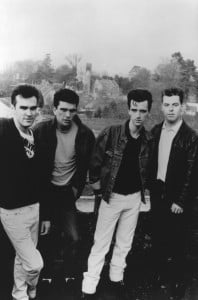
The Smiths
Artist
The Smiths were the definitive British indie rock band of the '80s, marking the end of synth-driven new wave and the beginning of the guitar rock that dominated English rock into the '90s. Sonically, the group was indebted to the British Invasion, crafting ringing, melodic three-minute pop singles, even for their album tracks. But their scope was far broader than that of a revivalist band. The group's core members, vocalist Morrissey and guitarist Johnny Marr, were obsessive rock fans inspired by the D.I.Y. ethics of punk, but they also had a fondness for girl groups, pop, and rockabilly. Morrissey and Marr also represented one of the strangest teams of collaborators in rock history. Marr was the rock traditionalist, looking like an elegant version of Keith Richards during the Smiths' heyday and meticulously layering his guitar tracks in the studio. Morrissey, on the other hand, broke from rock tradition by singing in a keening, self-absorbed croon, embracing the forlorn, romantic poetry of Oscar Wilde, publicly declaring his celibacy, and making no secret of his disgust for most of his peers. While it eventually led to the Smiths' early demise, the friction between Morrissey and Marr resulted in a flurry of singles and albums over the course of three years that provided the blueprint for British guitar rock in the following decade. Before forming the Smiths in 1982, Johnny Marr (born John Maher, October 31, 1963; guitar) had played in a variety of Manchester-based rock & roll bands, including Sister Ray, Freaky Part, White Dice, and Paris Valentinos. On occasion, Marr had come close to a record contract -- one of his bands won a competition Stiff Records held to have Nick Lowe "produce your band" -- but he never quite made the leap. Though Morrissey (born Steven Patrick Morrissey, May 22, 1959; vocals) had sung for a few weeks with the Nosebleeds and auditioned for Slaughter & the Dogs, he had primarily contented himself to being a passionate, vocal fan of both music and film. During his teens, he wrote the Melody Maker frequently, often getting his letters published. He had written the biography/tribute James Dean Isn't Dead, which was published by the local Manchester publishing house Babylon Books in the late '70s, as well as another book on the New York Dolls; he was also the president of the English New York Dolls fan club. Morrissey met Marr, who was then looking for a lyricist, through mutual friends in the spring of 1982. The pair began writing songs, eventually recording some demos with the Fall's drummer, Simon Wolstencroft. By the fall, the duo had settled on the name the Smiths and recruited Marr's schoolmate Andy Rourke as their bassist and Mike Joyce as their drummer. The Smiths made their live debut late in 1982, and by the spring of 1983, the group had earned a small but loyal following in their hometown of Manchester and had begun to make inroads in London. Rejecting a record deal with the Mancunian Factory Records, the band signed with Rough Trade for a one-off single, "Hand in Glove." With its veiled references to homosexuality and its ringing riffs, "Hand in Glove" became an underground sensation in the U.K., topping the independent charts and earning the praise of the U.K. music weeklies. Soon, Morrissey's performances became notorious as he appeared on-stage wearing a hearing aid and with gladioli stuffed in his back pockets. His interviews were becoming famous for his forthright, often contrary opinions, which helped the band become a media sensation. By the time of the group's second single, "This Charming Man," in late 1983, the Smiths had already been the subject of controversy over "Reel Around the Fountain," a song that had been aired on a BBC radio session and was alleged to condone child abuse. It was the first time that Morrissey's detached, literary, and ironic lyrics were misinterpreted and it wouldn't be the last. "This Charming Man" reached number 25 on the British charts in December of 1983, setting the stage for "What Difference Does It Make"'s peak of number 12 in February. The Smiths' rise to the upper reaches of the British charts was swift, and the passion of their fans, as well as the U.K. music press, indicated that the group had put an end to the synth-powered new wave that dominated Britain in the early '80s. After rejecting their initial stab at a first album, they released their debut, The Smiths, in the spring of 1984 to strong reviews and sales -- it peaked at number two. A few months later, the group backed '60s pop vocalist Sandie Shaw -- who Morrissey had publicly praised in an article -- on a version of "Hand in Glove" that was released and reached the Top 40. "Heaven Knows I'm Miserable Now" reached number ten, becoming their highest-charting single amid a storm of controversy about its B-side, "Suffer Little Children," which was about the notorious Moors Murders. More controversy appeared when Morrissey denounced the hunger-relief efforts of Band Aid, but the group's popularity was not affected. Though the Smiths had become the most popular new rock & roll group in Britain, the group failed to make it outside of underground and college radio in the U.S., partially because they never launched a full-scale tour. At the end of the year, "William It Was Really Nothing" became a Top 20 hit and Hatful of Hollow, a collection of B-sides, BBC sessions, and non-LP singles, went to the Top Ten, followed shortly by "How Soon Is Now," which peaked at number 24. Meat Is Murder, the band's second proper studio album, entered the British charts at number one in February of 1985, despite some criticism that it was weaker than The Smiths. Around the time of the release of Meat Is Murder, Morrissey's interviews were becoming increasingly political as he trashed the Thatcher administration and campaigned for vegetarianism; he even claimed that the Smiths were all vegetarians, and he forbade the remaining members to be photographed eating meat, even though they were still carnivores. Marr, for his part, was delving deeply into the rock & roll lifestyle and looked increasingly like a cross between Keith Richards and Brian Jones. By the time the non-LP "Shakespeare's Sister" reached number 26 in the spring of 1985, the Smiths had spawned a rash of soundalike bands, including James, who opened for the group on their spring 1985 tour, most of whom Morrissey supported. However, all of the media attention on the Smiths launched a mild backlash later in 1985, when "That Joke Isn't Funny Anymore" was pulled from Meat Is Murder and failed to reach the Top 40. "The Boy with the Thorn in His Side" revived the band's fortunes in the fall of 1985, and their third album, The Queen Is Dead, confirmed their popularity upon its release in the spring of 1986. Greeted with enthusiastic reviews and peaking at number two on the U.K. charts, The Queen Is Dead also expanded their cult following in the U.S., cracking the Top 100. Shortly before the album was completed, former Aztec Camera guitarist Craig Gannon became the band's rhythm guitarist, and he played with the band throughout their 1986 international tour, including a botched American tour. The non-LP "Panic," which was criticized as racist by some observers for its repeated refrain of "Burn down the disco...hang the DJ," reached number 11 late in the summer. A few months after its release, Marr was seriously injured in a car crash. During his recuperation, Gannon was fired from the band, as was Rourke, who was suffering from heroin addiction. Though Rourke was later reinstated, Gannon was never replaced. The Smiths may have been at the height of their popularity in early 1987, with the non-LP singles "Shoplifters of the World" and "Sheila Take a Bow" reaching number 11 and ten respectively, and the singles and B-sides compilation The World Won't Listen (revamped for U.S. release as Louder Than Bombs later in 1987) debuting at number two, but Marr was growing increasingly disenchanted with the band and the music industry. Over the course of the year, Morrissey and Marr became increasingly irritated with each other. The singer wished that Marr would stop playing with other artists like Bryan Ferry and Billy Bragg, while the guitarist was frustrated with Morrissey's devotion to '60s pop and his hesitancy to explore new musical directions. A few weeks before the fall release of Strangeways, Here We Come, Marr announced that he was leaving the Smiths. Morrissey disbanded the group shortly afterward and began a solo career, signing with Parlophone in the U.K. and staying with the Smiths' U.S. label, Reprise. Marr played as a sideman with a variety of artists, eventually forming Electronic with New Order frontman Bernard Sumner. Rourke retired from recording and Joyce became a member of the reunited Buzzcocks in 1991. Rank, a live album recorded on the Queen Is Dead tour, was released in the fall of 1988. It debuted at number two in the U.K. A widely criticized, two-part The Best of the Smiths compilation was released in 1992; the praised Singles compilation was released in 1995. Joyce and Rourke sued Morrissey and Marr in 1991, claiming they received only ten percent of the group's earnings while the songwriters received 40 percent. Rourke eventually settled out of court, but Joyce won his case in late 1996. ~ Stephen Thomas Erlewine

Guns N' Roses
Artist
Guns N' Roses are the bridge separating 1980s and 1990s hard rock, the band responsible for ushering in an era of grim, gritty rock & roll. Where such peers as <a href="spotify:artist:0cc6vw3VN8YlIcvr1v7tBL">Mötley Crüe</a> reveled in the decadence of Sunset Strip sleaze, Guns N' Roses focused on the grimy underbelly of the urban jungle, with guitarists <a href="spotify:artist:4Cqia9vrAbm7ANXbJGXsTE">Slash</a> and <a href="spotify:artist:6EZFa5zhajrKobEc3uePtM">Izzy Stradlin</a> cranking out mean riffs that matched the dark fantasies of <a href="spotify:artist:6lig3yUbu7r6VhnB8YGSlF">Axl Rose</a>, the vocalist who led GNR with a serpentine charm. <a href="spotify:artist:6lig3yUbu7r6VhnB8YGSlF">Rose</a> countered his nasty tendencies with a romantic side, one that flourished on "Sweet Child O' Mine," the soaring ballad that went to number one in 1988, turning the band into superstars in the process. Over the next few years, GNR's 1987 debut album, Appetite for Destruction, sold in monstrous numbers, with "Welcome to the Jungle" and "Paradise City" both reaching Billboard's Top Ten and "Patience," from the 1989 EP GNR Lies, also reaching that exalted position. During this peak, Guns N' Roses were lightning rods for controversy, so they avoided trouble by whiling away in the studio crafting their sequel to Appetite for Destruction, the sprawling twin albums Use Your Illusion I and Use Your Illusion II. Released simultaneously in September 1991, the Illusions still were rooted in hard rock, but <a href="spotify:artist:6lig3yUbu7r6VhnB8YGSlF">Rose</a> also pursued majestic, melodramatic balladry, a trait that reached its apotheosis in "November Rain," a ballad that became their last Top Ten hit in 1992. By that point, Guns N' Roses were no longer the paragons of grubby hard rock, not after <a href="spotify:artist:6olE6TJLqED3rqDCT0FyPh">Nirvana</a> ushered in the grunge revolution of the early '90s. The rise of alternative rock coincided with the erosion of the original GNR lineup, a slow attrition that left <a href="spotify:artist:6lig3yUbu7r6VhnB8YGSlF">Axl Rose</a> as the lone remaining founding member by the end of the '90s. He spent much of the 2000s working on his magnum opus Chinese Democracy, which he delivered in 2008, by which point the group were so out of the mainstream that they weren't even considered retro-hip. The situation would eventually change. By 2015, <a href="spotify:artist:4Cqia9vrAbm7ANXbJGXsTE">Slash</a> and bassist <a href="spotify:artist:3KEe5d2p5jKihMMvuXVhr1">Duff McKagan</a> rejoined Guns N Roses, providing the band with a core of original members that would help this be a stable lineup into the 2020s, when the group showed signs of returning to active recording status via the 2022 EP Hard Skool. Guns N' Roses released their first EP in 1986, which led to a contract with <a href="spotify:search:label%3A%22Geffen%22">Geffen</a>; the following year, the band released their debut album, Appetite for Destruction. They started to build a following with their numerous live shows, but the album didn't start selling until almost a year later, when MTV began playing "Sweet Child O' Mine." Soon, both the album and single shot to number one, and Guns N' Roses became one of the biggest bands in the world. Their debut single, "Welcome to the Jungle," was re-released and shot into the Top Ten, and "Paradise City" followed in its footsteps. By the end of 1988, they released G N' R Lies, which paired four new, acoustic-based songs (including the Top Five hit "Patience") with their first EP. G N' R Lies' inflammatory closer, "One in a Million," sparked intense controversy, as <a href="spotify:artist:6lig3yUbu7r6VhnB8YGSlF">Rose</a> slipped into misogyny, bigotry, and pure violence; essentially, he somehow managed to distill every form of prejudice and hatred into one five-minute tune. Guns N' Roses began work on the long-awaited follow-up to Appetite for Destruction at the end of 1990. In October of that year, the band fired <a href="spotify:artist:1bqTpELuDurfcMOGKvJXzl">Adler</a>, claiming that his drug dependency caused him to play poorly; he was replaced by <a href="spotify:artist:1icjlI6iYtR1JjXTJLf4gG">Matt Sorum</a> from <a href="spotify:artist:49DW3KvkyjHO35mK1JnSyS">the Cult</a>. During recording, the band added Dizzy Reed on keyboards. By the time the sessions were finished, the new album had become two new albums. After being delayed for nearly a year, the albums Use Your Illusion I and Use Your Illusion II were released in September 1991. Messy but fascinating, the records showcased a more ambitious band; while there were still a fair number of full-throttle guitar rockers, there were stabs at <a href="spotify:artist:3PhoLpVuITZKcymswpck5b">Elton John</a>-style balladry, acoustic blues, horn sections, female backup singers, ten-minute art rock epics with several different sections, and a good number of introspective, soul-searching lyrics. In short, Guns N' Roses were now making art; amazingly, they were successful at it. The albums sold very well initially, but while they had seemed destined to set the pace for the decade to come, that turned out not to be the case at all. <a href="spotify:artist:6olE6TJLqED3rqDCT0FyPh">Nirvana</a>'s Nevermind hit number one in early 1992, suddenly making Guns N' Roses -- with all of their pretensions, impressionistic videos, models, and rock star excesses -- seem very uncool. <a href="spotify:artist:6lig3yUbu7r6VhnB8YGSlF">Rose</a> handled the change by becoming a dictator, or at least a petty tyrant; his in-concert temper tantrums became legendary, even going so far as to incite a riot in Montreal. <a href="spotify:artist:6EZFa5zhajrKobEc3uePtM">Stradlin</a> left by the end of 1991, and with his departure the band lost their best songwriter; he was replaced by ex-<a href="spotify:artist:2kKd8kwqemHlbIWZ3eTgf5">Kills for Thrills</a> guitarist <a href="spotify:artist:6Ya7kAthUWvVuSQBX0oIMx">Gilby Clarke</a>. GNR didn't fully grasp the shift in hard rock until 1993, when they released an album of punk covers, The Spaghetti Incident?; it received some good reviews, but the band failed to capture the reckless spirit of not only the original versions but their own Appetite for Destruction. By the middle of 1994, there were rumors flying that GNR were about to break up, since <a href="spotify:artist:6lig3yUbu7r6VhnB8YGSlF">Rose</a> wanted to pursue a new, more industrial direction and <a href="spotify:artist:4Cqia9vrAbm7ANXbJGXsTE">Slash</a> wanted to stick with their blues-inflected hard rock. The band remained in limbo for several more years, and <a href="spotify:artist:4Cqia9vrAbm7ANXbJGXsTE">Slash</a> resurfaced in 1995 with the side project <a href="spotify:artist:4Ros83hWMCi68biw25Xyxg">Slash's Snakepit</a> and an LP, It's Five O'Clock Somewhere. <a href="spotify:artist:6lig3yUbu7r6VhnB8YGSlF">Rose</a> remained out of the spotlight, becoming a virtual recluse and doing nothing but tinkering in the studio; he also recruited various musicians -- including <a href="spotify:artist:3JTMBiL0Bmrxv41WJ8V8cu">Dave Navarro</a>, <a href="spotify:artist:0o1eC2L6gOIyKwkAtxVAWH">Tommy Stinson</a>, and ex-<a href="spotify:artist:0X380XXQSNBYuleKzav5UO">Nine Inch Nails</a> guitarist Robin Finck -- for informal jam sessions. Remaining members were infuriated by <a href="spotify:artist:6lig3yUbu7r6VhnB8YGSlF">Rose</a>'s inclusion of childhood friend Paul Huge in the new sessions when both <a href="spotify:artist:6EZFa5zhajrKobEc3uePtM">Stradlin</a> and <a href="spotify:artist:6Ya7kAthUWvVuSQBX0oIMx">Clarke</a> were excluded from rejoining the band. And a remake of <a href="spotify:artist:22bE4uQ6baNwSHPVcDxLCe">the Rolling Stones</a>' "Sympathy for the Devil" was essentially the straw that broke the camel's back, as <a href="spotify:artist:6lig3yUbu7r6VhnB8YGSlF">Rose</a> cut out some of the other members' contributions and pasted Huge over the song without consulting anyone else. By 1996, <a href="spotify:artist:4Cqia9vrAbm7ANXbJGXsTE">Slash</a> was officially out of Guns N' Roses, leaving <a href="spotify:artist:6lig3yUbu7r6VhnB8YGSlF">Rose</a> the lone remaining survivor from the group's heyday; rumors continued to swirl, and still no new material was forthcoming, though <a href="spotify:artist:6lig3yUbu7r6VhnB8YGSlF">Rose</a> did re-record Appetite for Destruction with a new lineup for rehearsal purposes. The first new original GNR song in eight years, the industrial metal track "Oh My God" finally appeared on the soundtrack to the 1999 Arnold Schwarzenegger film End of Days. Soon after, <a href="spotify:search:label%3A%22Geffen%22">Geffen</a> issued the two-disc Live Era: '87-'93. The year 2000 brought the addition of guitarists Robin Finck (of <a href="spotify:artist:0X380XXQSNBYuleKzav5UO">Nine Inch Nails</a>) and <a href="spotify:artist:0fDF0jjmdouCIeWhNnblwV">Buckethead</a>, and 2001 was greeted with Guns N' Roses' first live dates in nearly seven years, as the band (which consisted of <a href="spotify:artist:6lig3yUbu7r6VhnB8YGSlF">Rose</a> plus guitarists Finck and <a href="spotify:artist:0fDF0jjmdouCIeWhNnblwV">Buckethead</a>, bassist <a href="spotify:artist:0o1eC2L6gOIyKwkAtxVAWH">Stinson</a>, former <a href="spotify:artist:64mPnRMMeudAet0E62ypkx">Primus</a> drummer Brian "Brain" Mantia, childhood friend and guitarist Paul Huge, and longtime GNR keyboardist Dizzy Reed) played a show on New Year's Eve 2000 in Las Vegas; they also performed at the mammoth Rock in Rio festival the following month. On New Year's Eve 2001, the band played almost the exact same set as the year before. An appearance at MTV's 2002 Video Music Awards helped garner interest in the new lineup, but a rusty performance from <a href="spotify:artist:6lig3yUbu7r6VhnB8YGSlF">Rose</a> and an interview where he said his new album wasn't coming out anytime soon didn't do much to further their cause. That summer, GNR started on their first tour in almost eight years, and they managed to fulfill all of their commitments in Europe and Asia. Sadly, they caused a violent and destructive riot in Vancouver when <a href="spotify:artist:6lig3yUbu7r6VhnB8YGSlF">Rose</a> failed to show up for the first date of their North American tour. While he was up to his old shenanigans with the retooled lineup, former <a href="spotify:artist:2UazAtjfzqBF0Nho2awK4z">Stone Temple Pilots</a> vocalist <a href="spotify:artist:0RMOWaq3zw0fdgvaGRMcdA">Scott Weiland</a>, <a href="spotify:artist:4Cqia9vrAbm7ANXbJGXsTE">Slash</a>, <a href="spotify:artist:1icjlI6iYtR1JjXTJLf4gG">Sorum</a>, and <a href="spotify:artist:3KEe5d2p5jKihMMvuXVhr1">McKagan</a> formed the successful <a href="spotify:artist:7CHilrn81OdYjkh4uSVnYM">Velvet Revolver</a> in spring 2002. And so years passed and still no new GNR album, to the point where it became one joke too many. The album was long billed as Chinese Democracy, and occasionally session recordings would leak and make their way onto Internet file-sharing networks. A fascinating article written by Jeff Leeds for The New York Times, published in March 2005, revealed how tangled and costly the making of the album had become. According to the article, titled "The Most Expensive Album Never Released," <a href="spotify:artist:6lig3yUbu7r6VhnB8YGSlF">Rose</a> began work on the album in 1994 and racked up production costs of at least 13 million dollars. Producers involved with the album at one time or another included <a href="spotify:artist:71qdlkRTIt3NCSzshqqL4W">Mike Clink</a>, <a href="spotify:artist:1zf3mY5ZJ69hlt5W24EvYq">Youth</a>, Sean Beavan, and even <a href="spotify:artist:5UnZl2Izl86NC6yfVwG0CT">Roy Thomas Baker</a>. (Curiously, <a href="spotify:artist:3OsRAKCvk37zwYcnzRf5XF">Moby</a> claimed to have been offered the job as well.) <a href="spotify:artist:7yAPsqNhqqsTGsuOSZJg0i">Marco Beltrami</a> and <a href="spotify:artist:3SwPvWceyvNGebkPe2yPKD">Paul Buckmaster</a> were allegedly brought in for orchestral arrangements, and there was a revolving door of guitarists; <a href="spotify:artist:0fDF0jjmdouCIeWhNnblwV">Buckethead</a> left the band in 2004, and <a href="spotify:artist:1pfObbpsH1DmojbIUv2qfs">Ron "Bumblefoot" Thal</a> eventually took his place. In 2006, the record seemed closer to release, as <a href="spotify:artist:6lig3yUbu7r6VhnB8YGSlF">Rose</a> began surfacing in public and even took his band on the road for some shows. The music industry's biggest boondoggle finally bore fruit in 2008, when <a href="spotify:artist:6lig3yUbu7r6VhnB8YGSlF">Axl</a> unveiled an album that was well over a decade in the making. While Chinese Democracy received many rave reviews, and the critical response was positive overall, the record underperformed (its almost impossible) expectations, debuting at number three on the Billboard 200 when it came out in November. A worldwide tour followed. Guitarist <a href="spotify:artist:0eJ47F21cSoOL7T8yieuHh">DJ Ashba</a> of <a href="spotify:artist:3886aFez2HDLkio5tUzmP6">Sixx:A.M.</a> joined Guns N' Roses in 2009, and the band continued working on new material and playing shows, with some of the group's former members occasionally dropping in for guest appearances. In 2012, GNR's classic lineup was inducted into the Rock & Roll Hall of Fame, and <a href="spotify:artist:4Cqia9vrAbm7ANXbJGXsTE">Slash</a>, <a href="spotify:artist:3KEe5d2p5jKihMMvuXVhr1">McKagan</a>, <a href="spotify:artist:6Ya7kAthUWvVuSQBX0oIMx">Clarke</a>, <a href="spotify:artist:1bqTpELuDurfcMOGKvJXzl">Adler</a>, and <a href="spotify:artist:1icjlI6iYtR1JjXTJLf4gG">Sorum</a> reunited and performed a few Appetite-era songs with vocalist <a href="spotify:artist:2YZOQlBE1v44RxPEAVSdVR">Myles Kennedy</a> replacing <a href="spotify:artist:6lig3yUbu7r6VhnB8YGSlF">Rose</a>, who had declined to participate. <a href="spotify:artist:1KGFAcP7ovMYuoQuloDhOj">Bumblefoot</a> left the group in 2014, and in July 2015, <a href="spotify:artist:0eJ47F21cSoOL7T8yieuHh">Ashba</a> announced that he had departed from the band as well. In 2016, GNR embarked on the Not in This Lifetime... Tour, which featured <a href="spotify:artist:6lig3yUbu7r6VhnB8YGSlF">Rose</a> alongside a reunited lineup with guitarist <a href="spotify:artist:4Cqia9vrAbm7ANXbJGXsTE">Slash</a>, bassist <a href="spotify:artist:3KEe5d2p5jKihMMvuXVhr1">Duff McKagan</a>, and several longtime touring members. The tour, whose title was a reference to a quote <a href="spotify:artist:6lig3yUbu7r6VhnB8YGSlF">Rose</a> gave in 2012, also found original drummer <a href="spotify:artist:1bqTpELuDurfcMOGKvJXzl">Steven Adler</a> joining the band for several stops. A remastered version of Appetite for Destruction arrived in 2018 and included a previously unreleased single, "Shadow of Your Love," recorded by the original lineup. The group continued to tour throughout 2020 and 2021, debuting several songs, including "Absurd" and "Hard Skool," the latter of which worked as the title track to the 2022 EP Hard Skool. Another GNR single, "Perhaps," appeared a year later in August 2023. ~ Stephen Thomas Erlewine, Rovi
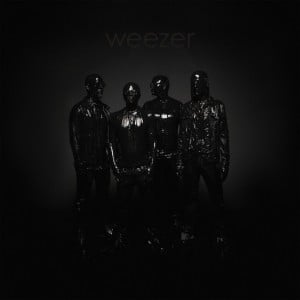
Weezer
Album · Weezer

FONTAINES D.C.
Artist
Fontaines D.C. announce details of their highly-anticipated fourth album, ROMANCE. Released on 23rd August via XL Recordings, ROMANCE is the band’s first album with producer James Ford and is without doubt their most assured, inventive and sonically adventurous record yet. ROMANCE is Fontaines D.C.s most ambitious, expansive record yet, its 11 tracks constellating ideas that have been percolating among Grian Chatten (vocals), Carlos O’Connell (guitar), Conor Curley (guitar), Conor Deegan (bass), and Tom Coll (drums) since they released Skinty Fia in 2022. These ideas crystalised while touring the U.S. and Mexico with Arctic Monkeys as the five band members shared music and found a throughline with artists that deftly build out their own sprawling creative worlds. They had time apart to build more singular visions for what future music could be: O’Connell went to Spain’s Castile-La Mancha and later became a new father, while Chatten spent time in LA, and Deegan in Paris. They laid deeper roots in London. Each member spent time pushing their boundaries – experimental riffs, chord progressions, and far-flung lyrical references without intentions for a record. After wrapping up the US arena tour in Autumn 2023, they spent a month writing together again, three weeks of pre-production in a North London studio, and a month in a chateau close to Paris, sleeping among studio equipment, completely immersed.
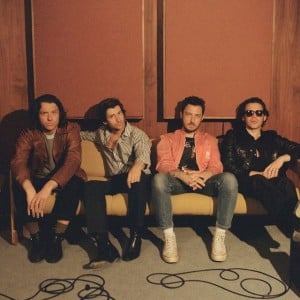
Arctic Monkeys
Artist
With their nervy and literate indie rock sound, Arctic Monkeys are a respected, adventurous, and successful group that could easily be called Britain's biggest band of the early 21st century. The band arrived with a blast in 2005, assisted by rave reviews and online word of mouth (they were one of the first bands to benefit from social media). They quickly became a sensation in the United Kingdom, where they were seen as the heir apparent to the throne left vacant by <a href="spotify:artist:2DaxqgrOhkeH0fpeiQq2f4">Oasis</a> and <a href="spotify:artist:4fSPtBgFPZzygkY6MehwQ7">the Libertines</a>. Buoyed by the single "I Bet You Look Good on the Dancefloor," their 2006 debut Whatever People Say I Am, That's What I'm Not briefly grabbed the title of fastest-selling album in British history. It landed on top of both the U.K. and U.S. rock album charts and took home the Mercury Prize. What set the group apart was <a href="spotify:artist:1ctkBmvz80MGyi72Ix055S">Alex Turner</a>, a singer/songwriter with a biting wit and grasp of English vernacular (not dissimilar to <a href="spotify:artist:7Lf3LOZp3U3u2f6cWMd3AH">Paul Weller</a>, the godfather of modern British rock). However, driven by their maverick creative spirit, Arctic Monkeys have proven highly unpredictable, reworking classic rock traditions on 2007's Favourite Worst Nightmare and beefing up their guitars with the assistance of <a href="spotify:artist:4pejUc4iciQfgdX6OKulQn">Queens of the Stone Age</a>'s <a href="spotify:artist:03xb2BUdIFzuRQ6o88yfCB">Josh Homme</a> on 2009's Humbug. Eventually, they also laced in some of the louche lounge aspects of <a href="spotify:artist:1ctkBmvz80MGyi72Ix055S">Turner</a>'s swinging side project <a href="spotify:artist:2Z7UcsdweVlRbAk5wH5fsf">the Last Shadow Puppets</a>, an evolution that began on 2018's arty Tranquility Base Hotel + Casino and deepened on its 2022 follow-up The Car. By that point, the band was a staple throughout the world. <a href="spotify:artist:1ctkBmvz80MGyi72Ix055S">Alex Turner</a> and guitarist Jamie Cook began their music careers in 2001, when the friends both received guitars for Christmas. Two years later, they began performing shows around their native Sheffield with drummer Matt Helders and bassist Andy Nicholson, two fellow students at Stocksbridge High School. A series of demo recordings followed, and Arctic Monkeys' audience swelled as fans circulated those recordings via the Internet. The musicians soon found themselves at the center of a growing media circus, with such outlets as BBC Radio examining the band's music and mounting hype. By distributing their homemade material on the Internet, Arctic Monkeys were able to build a sizable fan base without the help of a record label, effectively circumventing the usual road to superstardom. They continued to buck tradition by signing with <a href="spotify:search:label%3A%22Domino+Records%22">Domino Records</a> in 2005, eschewing a major-label's budget for <a href="spotify:search:label%3A%22Domino%22">Domino</a>'s D.I.Y. cred and hip roster (which also included <a href="spotify:artist:0XNa1vTidXlvJ2gHSsRi4A">Franz Ferdinand</a>, a touchstone for the band's sound). The smart moves paid off as Arctic Monkeys' first two singles -- "I Bet You Look Good on the Dancefloor" and "When the Sun Goes Down" -- both topped the U.K. charts. Critical reception was similarly favorable, but few could have predicted the whirlwind success of the band's debut album, which ousted <a href="spotify:artist:2DaxqgrOhkeH0fpeiQq2f4">Oasis</a>' Definitely Maybe as the fastest-selling debut in British history (a record that was broken one year later by <a href="spotify:artist:5lKZWd6HiSCLfnDGrq9RAm">Leona Lewis</a>' Spirit). Whatever People Say I Am, That's What I'm Not sold 363,735 copies during its first week alone, transforming Arctic Monkeys from underground stars into mainstream figures. Arctic Monkeys' debut sold approximately 300,000 total copies in America -- enough to warrant more media coverage. Their success continued as they released a spring EP, Who the F**k Are Arctic Monkeys, and prepared for a stateside tour. Temporary bassist Nick O'Malley was brought aboard for the band's American shows, while a fatigued Nicholson stayed at home. Nicholson then announced his official departure when the band returned home in June 2006, and O'Malley remained with Arctic Monkeys as a permanent member. That fall, the guys received the 2006 Mercury Prize and donated the accompanying money to an undisclosed charity. Additional accolades included Best British Breakthrough Act at the BRIT Awards and Best New Band at the NME Awards. NME also made a bold assertion by deeming the group's debut one of the Top Five British albums ever released. Released in April 2007, Favourite Worst Nightmare updated Arctic Monkeys' sound with louder instruments and faster tempos. The bandmates had recorded the sophomore album quickly, wishing to return to the road as soon as possible, and the speedy turnaround between records helped maintain the group's popularity at home. Favourite Worst Nightmare sold 85,000 copies during its first day of release, and all 12 tracks entered the Top 200 of the U.K. singles charts. As <a href="spotify:artist:1ctkBmvz80MGyi72Ix055S">Alex Turner</a> briefly turned his attention to a side project, <a href="spotify:artist:2Z7UcsdweVlRbAk5wH5fsf">the Last Shadow Puppets</a>, Arctic Monkeys received another Mercury Prize nomination and took home two titles at the 2008 BRIT Awards. Recording sessions for a third album commenced in early 2008 and lasted throughout the year, with producers James Ford (who previously worked with <a href="spotify:artist:1ctkBmvz80MGyi72Ix055S">Turner</a> on <a href="spotify:artist:2Z7UcsdweVlRbAk5wH5fsf">the Last Shadow Puppets</a>' album) and <a href="spotify:artist:03xb2BUdIFzuRQ6o88yfCB">Josh Homme</a> (frontman of <a href="spotify:artist:4pejUc4iciQfgdX6OKulQn">Queens of the Stone Age</a>) adding some newfound heft to the band's sound. Meanwhile, Arctic Monkeys released a concert album entitled At the Apollo -- with accompanying video footage captured on 35mm film -- before unveiling Humbug in August 2009. Humbug went platinum in the U.K. with the singles "Crying Lightning" peaking at number 12 and "Cornerstone" topping out at 94. The band hit the road that February, kicking off a multi-leg tour that ran through the rest of the year. After playing another handful of shows in early 2010, the guys took a short hiatus before reconvening with James Ford for their fourth album. Sessions began that fall, and the resulting Suck It and See arrived in spring 2011, topping the U.K. album chart and landing at number 14 on the Billboard 200. Meanwhile, <a href="spotify:artist:1ctkBmvz80MGyi72Ix055S">Turner</a> also wrote music for a Richard Ayoade film, Submarine, whose soundtrack doubled as the frontman's first solo release. In February 2012, Arctic Monkeys released a song entitled "R U Mine?" on their YouTube channel, which indicated that an album was on the way. A few months later, the band played at the London Summer Olympics opening ceremony, performing "I Bet You Look Good on the Dancefloor" and <a href="spotify:artist:3WrFJ7ztbogyGnTHbHJFl2">the Beatles</a>' "Come Together," but it wasn't until the summer of 2013 that the group's fifth album was to be revealed. Entitled AM, the record was released in September, a few months after a triumphant headlining performance at Glastonbury 2013, which was opened with the new song "Do I Wanna Know?" Both a critical and commercial success, AM topped the British charts and reached number six on the Billboard 200. It also earned the group a Mercury Prize nomination and won British Album of the Year at the BRIT Awards. Following the end of their tour in 2014, the band entered an extended hiatus, during which time the individual members pursued solo projects. In 2016, <a href="spotify:artist:1ctkBmvz80MGyi72Ix055S">Turner</a> released his second album with <a href="spotify:artist:2Z7UcsdweVlRbAk5wH5fsf">the Last Shadow Puppets</a> and toured. Arctic Monkeys resurfaced in April 2018 with the loungey Tranquility Base Hotel & Casino, a softer affair than their previous albums. Along with topping the U.K. album chart and Billboard Top Rock Albums chart, the LP became the group's fourth to earn a Mercury Prize nomination. Later that year, the band issued the TBH&C B-side "Anyways" as a single. A concert album, Live at the Royal Albert Hall, recorded during the Tranquility Base Hotel & Casino tour arrived in November 2020, with all proceeds going to benefit the War Child U.K. charity organization. Arctic Monkeys began their seventh album cycle by releasing the single "There’d Better Be a Mirrorball" in August 2022, delivering the full-length The Car in October. Continuing the slow, stylish vibe of Tranquility Base Hotel + Casino, the album was cut in a monastery on the coast of Suffolk. It hit number six on the Billboard 200, number two in the U.K., and picked up three Grammy nominations, including for Best Alternative Music Album. ~ Andrew Leahey & Stephen Thomas Erlewine, Rovi
