♬.ᐟ ─ MUSICIANS
all time favorites!! i would often dive into their biography as well. did you know, Eazy-E funded in "Make A Wish" foundation!! ⸜(。˃ ᵕ ˂ )⸝♡
Items in this hypelist
♡ — AFFECTED

Eazy-E
SAYANGKUUUU
Whether as a member of <a href="spotify:artist:4EnEZVjo3w1cwcQYePccay">N.W.A</a>, a solo act, or a label head, Eazy-E was one of the most controversial figures in gangsta rap. While his technical skills as a rapper were never the greatest, his distinctive delivery (invariably described as a high-pitched whine), over the top lyrics, and undeniable charisma made him a star. Following <a href="spotify:artist:4EnEZVjo3w1cwcQYePccay">N.W.A</a>'s breakup, E's street credibility took a major beating, though his recordings continued to sell well when they appeared; unfortunately, he was diagnosed with AIDS in 1995, and died not long after. Eric "Eazy-E" Wright was born September 7, 1964, in Compton, California, a rough part of the Los Angeles metro area. A high-school dropout, Wright turned to drug dealing to support himself, and eventually used the profits to start his own rap label, <a href="spotify:search:label%3A%22Ruthless+Records%22">Ruthless Records</a>, with partner and music-business veteran Jerry Heller. E discovered a major performing talent in the D.O.C., and recruited <a href="spotify:artist:3Mcii5XWf6E0lrY3Uky4cA">Ice Cube</a> and <a href="spotify:artist:6DPYiyq5kWVQS4RGwxzPC7">Dr. Dre</a> to write songs for his stable of artists. When their composition "Boyz-N-the Hood" was rejected by <a href="spotify:search:label%3A%22Ruthless%22">Ruthless</a> signee HBO, <a href="spotify:artist:3Mcii5XWf6E0lrY3Uky4cA">Cube</a>, <a href="spotify:artist:6DPYiyq5kWVQS4RGwxzPC7">Dre</a>, and E formed the first version of <a href="spotify:artist:4EnEZVjo3w1cwcQYePccay">N.W.A</a> to record it themselves. Their first album, N.W.A. and the Posse, was released in 1987 and largely ignored; after a few tweaks of the lineup and the rough-edged subject matter, 1988's Straight Outta Compton made <a href="spotify:artist:4EnEZVjo3w1cwcQYePccay">N.W.A</a> into superstars. E seized the opportunity to release a solo project later in the year, titled Eazy-Duz-It, which would be the only full-length album he would complete; it went on to sell well over two million copies. After <a href="spotify:artist:3Mcii5XWf6E0lrY3Uky4cA">Ice Cube</a>'s bitter departure from <a href="spotify:artist:4EnEZVjo3w1cwcQYePccay">N.W.A</a> toward the end of 1989 (precipitated in part by Heller's business tactics), Eazy-E took over his not inconsiderable share of the rapping and songwriting duties, becoming the group's dominant voice on 1991's Niggaz4life. His taste for cartoonish vulgarity began to undermine the claims of realistic inner-city reporting that the group members had used to defend themselves. Disputes between the members led to <a href="spotify:artist:4EnEZVjo3w1cwcQYePccay">N.W.A</a>'s breakup that summer, and a court battle between <a href="spotify:search:label%3A%22Ruthless%22">Ruthless</a> and <a href="spotify:artist:6DPYiyq5kWVQS4RGwxzPC7">Dre</a>'s new label, <a href="spotify:search:label%3A%22Death+Row%22">Death Row</a>, soon followed, with Eazy alleging that <a href="spotify:search:label%3A%22Death+Row%22">Death Row</a> head Suge Knight had coerced <a href="spotify:search:label%3A%22Ruthless%22">Ruthless</a> into releasing <a href="spotify:artist:6DPYiyq5kWVQS4RGwxzPC7">Dre</a> from his contract. The case was eventually thrown out, but a bitter feud between <a href="spotify:artist:6DPYiyq5kWVQS4RGwxzPC7">Dre</a> and Eazy raged for the next several years; <a href="spotify:artist:6DPYiyq5kWVQS4RGwxzPC7">Dre</a>'s seminal solo debut The Chronic made merciless fun of Eazy. E's 1992 solo EP 5150 Home 4 tha Sick sold well, but did little to dispel his increasingly cartoonish image; he found more success running the <a href="spotify:search:label%3A%22Ruthless%22">Ruthless</a> label, with a roster that included <a href="spotify:artist:1YStXHRj5phGb2LGCudZ6N">Above the Law</a>, <a href="spotify:artist:4EnEZVjo3w1cwcQYePccay">N.W.A</a> bandmate <a href="spotify:artist:4fbyGOEjViyE97W58eGEgU">MC Ren</a>, the poorly received all-female group <a href="spotify:artist:3chMMhnzIqwETgeOurCqP4">H.W.A.</a> (Hoez with Attitude), and, eventually, the lucrative <a href="spotify:artist:5spEJXLwD1sKUdC2bnOHPg">Bone Thugs-N-Harmony</a>. Eazy addressed his feud with <a href="spotify:artist:6DPYiyq5kWVQS4RGwxzPC7">Dre</a> on the 1993 EP It's On (Dr. Dre) 187um Killa, which famously included a photo of <a href="spotify:artist:6DPYiyq5kWVQS4RGwxzPC7">Dre</a> wearing makeup and sequins during his <a href="spotify:artist:3xA7r14Rok7gwRmVbrNFd9">World Class Wreckin' Cru</a> days. Still, save for dissing <a href="spotify:artist:6DPYiyq5kWVQS4RGwxzPC7">Dre</a>, Eazy didn't seem to have much to say, and despite healthy record sales, his artistic credibility was declining at an alarming rate. Eazy didn't help matters much when, in early 1993, he spoke out in support of Theodore Briseno, an L.A.P.D. officer involved in the Rodney King beating; later in the year, he paid $2,500 to attend a Republican fundraiser, which his detractors saw as a further betrayal of his roots. In early 1995, Eazy entered the hospital with respiratory difficulties, believing he had developed asthma. The diagnosis was far more serious: he had contracted AIDS. Eazy announced his plight to the public shortly thereafter, winning admiration for his straightforward attitude. Sadly, just a few weeks later, on March 26, 1995, the disease claimed his life. The record he had been working on, Str8 Off tha Streetz of Muthaphukkin Compton, was released posthumously (in unfinished form) later in the year. In 2002, on the seventh anniversary of his death, some previously unreleased material from the <a href="spotify:search:label%3A%22Ruthless%22">Ruthless</a> vaults was released as the EP Impact of a Legend, which was accompanied by a DVD. Additional posthumous compilations followed. In 2015, the critically acclaimed, Academy-Award-nominated N.W.A. biopic Straight Outta Compton was released in theaters. Focusing on the creation and rise of the seminal gangsta rap crew, Compton was dedicated to Eazy. It went on to make over $200 million worldwide at the box office and inspired a cultural resurgance for N.W.A. With increased mainstream recognition of <a href="spotify:artist:4EnEZVjo3w1cwcQYePccay">N.W.A</a>.'s legacy in the history of rap and hip-hop, Eazy received a posthumous honor for his contribution to music with his induction into the Rock 'N Roll Hall of Fame in 2016. ~ Steve Huey, Rovi
HIP-HOP/RAP

MC Ren
SAYANGKU JUGAK
MC Ren had a much less celebrated solo career than most of his former bandmates in <a href="spotify:artist:4EnEZVjo3w1cwcQYePccay">N.W.A</a>, despite enjoying some commercial success. Born Lorenzo Patterson on June 14, 1969, Ren was recruited to join <a href="spotify:artist:4EnEZVjo3w1cwcQYePccay">N.W.A</a> in 1988 while still attending high school. He was a strong presence on the group's landmark Straight Outta Compton later that year, and also wrote several tracks for <a href="spotify:artist:7B4hKK0S9QYnaoqa9OuwgX">Eazy-E</a>'s solo debut, Eazy-Duz-It. Following 1991's Niggaz4Life, <a href="spotify:artist:4EnEZVjo3w1cwcQYePccay">N.W.A</a> disbanded acrimoniously, and Ren stuck with <a href="spotify:search:label%3A%22Ruthless+Records%22">Ruthless Records</a>, kicking off his solo career with the six-song EP Kizz My Black Azz in 1992. It sold well, making the Top Ten on the R&B chart and nearly doing the same on the pop side. Ren subsequently converted to the Nation of Islam, which helped out relations with the remainder of <a href="spotify:artist:4EnEZVjo3w1cwcQYePccay">N.W.A</a>; he patched up his differences with <a href="spotify:artist:3Mcii5XWf6E0lrY3Uky4cA">Ice Cube</a> and remained neutral in the heated feud between <a href="spotify:artist:6DPYiyq5kWVQS4RGwxzPC7">Dr. Dre</a> and <a href="spotify:artist:7B4hKK0S9QYnaoqa9OuwgX">Eazy-E</a>. Meanwhile, he released his first full-length album, Shock of the Hour, in 1993 (the original title, "Life Sentence," was changed following his conversion). It hit number one on the R&B charts and sold quite well for a brief window of time. Shaken by <a href="spotify:artist:7B4hKK0S9QYnaoqa9OuwgX">Eazy-E</a>'s death from AIDS, Ren returned in 1996 with The Villain in Black, which found him working a G-funk blueprint with help from <a href="spotify:artist:1YStXHRj5phGb2LGCudZ6N">Above the Law</a>. It, too, made the R&B Top Ten, and sold respectably well without much airplay support. Ren further updated his sound on 1998's Ruthless for Life, which briefly made the R&B Top 20. During the following decade, he appeared on albums by the D.O.C. and <a href="spotify:artist:6Mo9PoU6svvhgEum7wh2Nd">Public Enemy</a> and released Renincarnated (2009). In 2015, the critically acclaimed, Academy-Award-nominated biopic Straight Outta Compton was released in theaters. It made over $200 million worldwide at the box office and inspired a cultural resurgance for <a href="spotify:artist:4EnEZVjo3w1cwcQYePccay">N.W.A</a>. With increased mainstream recognition of their legacy in the history of rap and hip-hop, Ren's former crew received another honor with their induction into the Rock 'N Roll Hall of Fame in 2016. ~ Steve Huey, Rovi

MC Eiht
OMOMOMOMO
Veteran West Coast gangsta rapper MC Eiht has dedicated much of his life to music, beginning his seminal career with Compton's Most Wanted (CMW) while only a teenager. Despite his youth, Eiht catapulted his group to nationwide recognition at the dawn of the '90s. CMW followed the lead of Ice-T and fellow Compton natives N.W.A but was relatively low profile -- neither as commercial nor as controversial as those who achieved fame beforehand -- and remained largely an underground act despite some Billboard chart placements. CMW released three albums before Eiht began his solo career in 1993 with the group's producer, DJ Slip, in tow, and "Streiht Up Menace" as his solo debut single. His debut solo album, We Come Strapped, subsequently topped Billboard's R&B album chart a year later and was certified gold. Eiht's discography with and without CMW continued to grow, and in the 2010s his reputation was rock solid, reflected in his work with both fellow veterans (DJ Quik, DJ Premier) and younger stars (Kendrick Lamar) who regarded him as an original master. Born Aaron Tyler in Los Angeles, Eiht began his career as part of CMW during the latter half of the '80s. After the single "This Is Compton" was issued on Techno Hop, home to crucial early cuts by Ice-T and King Tee, the group signed to Orpheus, who released It's a Compton Thang (1990), Straight Checkn 'Em (1991), and Music to Driveby (1992). All three hit the Billboard 200 chart and produced hit singles such as "One Time Gaffled 'Em Up," "Growin' Up in the Hood," and "Hood Took Me Under." "Streiht Up Menace" (1993), Eiht's Slip-produced debut single as a solo artist, came from the soundtrack of Menace II Society, a popular film in which Eiht appeared. Following the success of this single, Eiht signed to the Sony-distributed Epic Street imprint and entered the studio with Slip to record his full-length solo debut, We Come Strapped. Billed to "MC Eiht Featuring CMW," the album didn't really feature anyone from CMW except the rapper and producer. Nonetheless, the album debuted atop Billboard's R&B album chart despite lacking an omnipresent lead single and reached the Top Five of the Billboard 200. None of Eiht's successive albums were as commercially successful as We Come Strapped, though some, such as additional Epic releases Death Threatz (1996) and Last Man Standing (1997), and the independently released Veterans Day (2004), were arguably better. In successive years, Eiht continued to record solo projects on a frequent basis, and he also reconvened on occasion with CMW. During the 2010s, he was featured on the title track of Kendrick Lamar's Grammy-nominated Good Kid, M.A.A.D. City and in 2017 released Which Way Iz West -- his first proper album in over a decade, featuring production from DJ Premier and appearances from CMW, WC, and Kurupt, among others. ~ Jason Birchmeier & Andy Kellman
Freddie Dredd
Artist
JAZZ
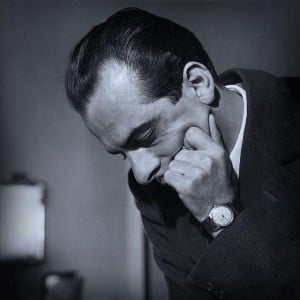
Piero Piccioni
There are few film composers in the world as prolific as Piero Piccioni. Since the early 1950s, Piccioni has been a truly innovative force in film music. In the 1950s, he composed under the name Piero Morgan, and since his first soundtrack Il Mondo Le Condanna in 1952, many directors have sought him out: Luchino Visconti, Bernardo Bertolucci, Vittorio De Sica, and many more. He scored over 300 soundtracks, blending jazz, funk, bossa, classical, and more into his vibrant music.

Henry Mancini
Artist
Henry Mancini was one of the most versatile talents in contemporary music. The Mancini name is synonymous with great motion picture & TV music, fine recordings & international concert performances. During his lifetime Mancini was nominated for 72 GRAMMY® Awards, winning 20. He was nominated for 18 Academy Awards® winning four, honored with a Golden Globe® Award & nominated for two Emmy® Awards. Mancini created many film scores including Breakfast at Tiffany’s, The Pink Panther & Days of Wine and Roses. He also wrote for a number of TV film themes, including, The Thorn Birds & The Shadow Box, as well as TV show themes including Peter Gunn &Mr. Lucky. Mancini recorded over 90 albums with styles varying from big band to jazz to pop, eight of which were certified gold by The Recording Industry Association of America®. As part of the Universal-International Studios music department, Henry contributed to over 100 films, most notably The Glenn Miller Story, The Benny Goodman Story & Orson Welles’ Touch of Evil. As an independent composer Mancini also scored TV series Peter Gunn”for writer/producer Blake Edwards, the genesis of a close relationship that lasted over 30 years & produced 26 films. Mancini conducting over 50 engagements a year, resulting in over 600 symphony performances. Among the symphony orchestras he conducted were the London Symphony Orchestra, the Israel Philharmonic, the Boston Pops, the Los Angeles Philharmonic & the Royal Philharmonic Orchestra.
☆

Lil Peep
Artist
An icon of the SoundCloud rap era that dominated the mid- to late 2010s, Lil Peep connected with his fans through both his genre-bending style and his lyrics, which vulnerably and transparently addressed issues of depression, addiction, and anxiety. A run of strong mixtapes and guest appearances generated media buzz around the rapper, his approach to life, and his music, which polarized both listeners and the press. Those who championed Lil Peep did so passionately, and his followers quickly grew into the millions. Peep would only live to see the release of one fully realized studio album, his brief 2017 debut Come Over When You're Sober, Pt. 1. The eight-song album was released shortly before the artist's untimely death just after his 21st birthday. Fans mourned the loss, and Peep's estate began posthumously releasing music the rapper had finished before his death, beginning with several singles and eventually leading to full-lengths like 2019’s Everybody’s Everything. His early mixtapes were commerically re-released as well, with 2016's Crybaby still in the charts six years after the rapper's untimely death. Lil Peep was born Gustav Elijah Åhr in 1996 in Allentown, Pennsylvania, and moved to Long Beach, New York with his family when he was four. He began making music as a teenager, eventually adopting the name Lil Peep after a nickname his mother had given him. He began releasing his self-recorded music on SoundCloud in May of 2015, beginning with the Feelz EP and continuing with mixtapes like Lil Peep, Pt. 1 and Live Forever, both released that same year. His sound stood out in part because of his gloomy and expressive lyrics, and also for its inclusion of unlikely samples and other atypical musical elements. His breakthrough mixtapes, Crybaby and Hellboy, were released in 2016, and moved even further into a unique stylistic direction, including punk- and emo-inspired guitar lines and melodies. The following year, he collaborated with <a href="spotify:artist:5g63iWaMJ2UrkZMkCC8dMi">Lil Tracy</a> on a pair of Castles EPs. <a href="spotify:artist:5g63iWaMJ2UrkZMkCC8dMi">Tracy</a> would return the favor on Peep's official debut LP, Come Over When You're Sober, Pt. 1, which featured the singles "The Brightside" and "Awful Things." Months after the album's release, Peep was discovered dead in his tour bus on November 15, 2017. In the wake of his passing, previously unreleased material began to emerge. Singles like "Spotlight," the <a href="spotify:artist:5vSQUyT33qxr1xAX2Tkf3A">Clams Casino</a>-produced "4 Gold Chains," and the <a href="spotify:artist:15UsOTVnJzReFVN1VCnxy4">XXXtentacion</a> collaboration "Falling Down" all materialized before the second Lil Peep album, Come Over When You're Sober, Pt. 2, came out in November of 2018. Various unreleased tracks leaked out over the course of 2019, and a feature-length documentary focused on the life of the departed rapper. Everybody's Everything was announced for release in November of that year. Preceding the film's premiere, an unreleased three-song project, GOTH ANGEL SINNER, appeared, and a longer soundtrack was planned for release in conjunction with the film. That album, also titled Everybody's Everything, was the second posthumous collection of Lil Peep's music and contained all three tracks from GOTH ANGEL SINNER. In addition to previously unreleased material, commercial re-releases of his early mixtapes and extended-plays were included, and eventually accumulated over 15 billion streams across various platforms. Peep's 2016 mixtape Crybaby was still performing well enough in June of 2023 to enter the Top 100 reaches of the Billboard charts. ~ Neil Z. Yeung & Fred Thomas, Rovi
XXXTENTACION
Artist
