
artists
Items in this hypelist
Music

Pitty
Artist
Kendrick Lamar
Artist

Sade
Artist

Bad Bunny
Artist

2Pac
Artist
Frank Ocean
Artist

Jão
Artist
Jão se tornou um dos nomes mais relevantes do pop no Brasil, sendo o primeiro artista solo a esgotar três datas no grandioso Allianz Parque (em seu sexto ano de carreira.) Nascido em Américo Brasiliense, pequena cidade do interior de São Paulo, sempre quis cantar para multidões - e hoje ele realiza esse sonho. Depois de LOBOS, ANTI-HERÓI e PIRATA, Jão lançou seu quarto disco, SUPER – tornando-se a maior estreia de um álbum no Spotify Brasil (14/08), somando mais de 8,4 milhões de plays no primeiro dia. Mas seu maior amor é o palco e é lá que ele se transforma e se consagra. Em 2024, deu o pontapé na SUPERTURNÊ, um sucesso absoluto de vendas e público. Além disso, Jão figura no palco dos principais festivais do Brasil e mundo, como o palco mundo do Rock in Rio, Rock in Rio Lisboa, Lollapalooza e The Town.

Louis Tomlinson
Artist
Bob Dylan
Artist

Shawn Mendes
Artist

One Direction
Artist

Pearl Jam
Artist

The Smiths
Artist
Noah Kahan
Artist
Over the past few years, 2x GRAMMY-nominated Vermont singer & songwriter Noah Kahan has exploded from his New England roots into the global mainstream and been touted as one of the biggest breakout artists. At the core of his music are vulnerable lyrics and an unfiltered yet relatable honesty, as the critically acclaimed artist pens songs straight from the heart and cracks jokes with his signature self-deprecating humor. Across three albums and an EP, Kahan has garnered global renown for his singular mix of Folk, Americana, and Rock, landing over seven billion streams, a 4x Platinum Certification for his hit single “Stick Season,” and collaborations with Post Malone, Kacey Musgraves, Brandi Carlile, and more. His widely adored, Double Platinum-Certified album, Stick Season, is inspired by his New England roots and earliest musical inspirations—from Paul Simon to Yusuf Islam (Cat Stevens)—conveying a vivid representation of what he loves, fears, and struggles with most. Kahan’s latest “We’ll All Be Here Forever World Tour” saw him performing in sold-out stadiums and arenas around the globe, including two sold-out nights at Boston's iconic Fenway Park. The shows were livestreamed to benefit his mental health initiative, The Busyhead Project, which has raised over $4 million to expand access to mental healthcare and fight stigma. His live album, Live From Fenway Park, was released following the career-defining shows as the final installment of the Stick Season chapter.

Cazuza
Artist

Radiohead
Artist
Djavan
Artist

Alcione
Artist

Gilberto Gil
Artist
Marisa Monte
Artist

Rita Lee
Artist
Rita Lee is a central figure in Brazilian rock. A former member of the seminal rock band Os Mutantes, she eventually departed from that group and began an extremely successful solo career in the rock and dance styles that have lasted for more than 30 years. The daughter of an amateur female pianist, she never took music lessons. In place of the traditional adolescent debut ball, she asked to receive a drum set. Lee formed a band with two other friends and they were quite good at vocals, backing stars like Tony Campelo, Jet Blacks, Demetrius, and Prini Lopez, when they met the brothers Arnaldo and Sérgio Dias Baptista. Adopting the name O'Seis (a pun with "the six" and the Brazilian redneck way of saying "you all"), they recorded the single "O Suicida," which was never released. When the rest of the band left for college, only three of them remained. Picking the name Os Mutantes, they backed Nana Caymmi on her then-husband's composition "Bom Dia" (Gilberto Gil). When Gil met them, he immediately knew that Os Mutantes were on the same track as the Baianos. Inviting them to accompany him at TV Record's 1967 III FMPB, they won second place for Gil's "Domingo no Parque" with the addition of Rogério Duprat conducting an orchestra with his revolutionary arrangements. The novelty of electric guitars and a generalized irreverence of the mixing of strange orchestral sounds irritated the audience a great deal; the nascent Tropicalia was coming to the world under heavy booing. Soon after, they recorded their single "O Relógio." In 1968, they performed on the album/manifesto Tropicália ou Panis et Circensis (Philips), with Nara Leão, Caetano Veloso, Gilberto Gil, Gal Costa, and Tom Zé. This was also when they recorded their first LP, Os Mutantes. In that period, during their somewhat frequent tours of Europe, they recorded an LP that was never fully released, with the exception of some tracks included on 1971's Jardim Elétrico. Also in 1968, they accompanied Caetano to TV Globo's III FIC, on his "É Proibido Proibir" and performed their "Caminhante Noturno," which won seventh place. In 1969, they participated at the IV FMPB with their "Dom Quixote" and, by Lee and Tom Zé, "2001." In the same year, they performed with the Baianos at the Sucata nightclub, Rio, and recorded their second album, also self-titled. They went to Europe, playing at Cannes, France, at the MIDEM, and in Lisbon, Portugal. In 1970, they returned to Brazil and set the show O Planeta dos Mutantes, the first multi-media experiment in Brazil. In the same year, Lee recorded her solo album, Build Up, produced by Arnaldo Baptista. Soon after, they had a stint at the Olympia in Paris, France. With bassist Liminha (now a respected studio producer) and drummer Dinho, they participated in the V FIC with "Ando Meio Desligado" (Arnaldo and Sérgio). The LP A Divina Comédia is from that year and O Jardim Elétrico (Polydor) from the next. In 1972, Lee recorded another solo album backed by the Os Mutantes, Hoje é o Primeiro Dia do Resto de Sua Vida (Philips). After releasing the Os Mutantes' No País dos Bauretz, Lee departed from the group. In fact, she was expelled as she wasn't proficient enough as an instrumentalist. Following a period of depression, during which she became locked up in her home, she decided to abandon her career. But, at the same time, she was writing the material that would make her famous as a solo artist. In 1973, she presented herself together with Lúcia Turnbull at the show Phono 73. Forming the rock band Tutti Frutti (which included Lúcia) for a series of presentations at the Teatro Ruth Escobar, they adopted the name Rita Lee & Tutti Frutti by suggestion of the record label. The band would follow her to the success in subsequent years, releasing Lee's hits "Ovelha Negra," "Agora só Falta Você," "Esse tal de Roque Enrow," "Miss Brasil 2000," and "Jardins da Babilônia." In 1974, they released Atrás do Porto tem uma Cidade (Philips). In 1975, Lúcia went out of the band and they recorded Fruto Proibido (Som Livre). In 1977, pregnant for the first time, she was arrested for having marijuana and condemned to one year of domiciliary imprisonment, when she composed with Paulo Coelho (who is now a best-selling esoteric writer) the single "Arrombou a Festa," which sold 200,000 copies. She continued to perform, under special judge permits. Elis Regina invited her to a duo performance at a special TV show at TV Bandeirantes, when they recorded "Doce de Pimenta," which Lee had composed especially for Elis. It was during this time that she unofficially married Roberto de Carvalho, who was incorporated in her band as a guitarist and composer. Soon, they departed for a tour with Gilberto Gil for Refestança, which was recorded and released as the eponymous LP. In 1978, Lee and her band recorded the LP Babilônia, when the group was dissolved under internal dissension. She then formed the group Rita Lee & Cães e Gatos, and departed for a series of shows under the same name, alluding to the members' fighting with each other. Next year's album brought "Mania de Você," her biggest hit. Lee decided not to have a band anymore. With "Lança Perfume," she achieved international recognition with even Prince Charles recognizing her as his favorite singer. In the early '80s, she made great success recording "Joujou e Balangandãs" together with João Gilberto. Her albums, openly danceable and fully committed to a commercial result, were breaking all selling records, and her shows becoming mega-productions. During the 1983 tour for Rita Lee e Roberto de Carvalho -- Flagra, she began to have health problems, fainting on-stage at one presentation. She then decided to take a rest, recording another album in that year with no supporting tours. In January 1985, she sang deceptively at the Rock in Rio festival. There were plenty of rumors accounting that she had leukemia. After another seven months in obscurity, she recorded another album that received good reviews, but was ignored by audiences. In 1986, as Lita Ree, she made true a longtime dream: to host a radio show, which was presented at São Paulo's 89 FM, and later, on Rio's Rádio Cidade. In 1987, she released Flerte Fatal under harsh criticism and fights with the press. After two more albums and still under fire of the critics, she ended the partnership with her husband, but worked with him on the film Fogo e Paixão. Later, she worked on the movie Dias Melhores Virão by Cacá Diegues, which granted her a prize at the Denzer Festival, Europe, in 1990. Impersonating the late singer/composer Raul Seixas in the short movie Tanta Estrela por Aí, she was appointed Best Male Actor by Rio's mayoralty. On TV, she worked on the soap operas Top Model and Vamp and hosted her own show, TV Leezão, a version for MTV of Rádio Amador. In 1990, she performed on her show Bossa n' Roll, which had the greatest audience that year and launched the acoustic craze. The album sold 350,000 copies. After an album recorded with her early companion Lúcia Turnbull, Lee was expressly required by Mick Jagger, who demanded personally that she open the Rolling Stones tour in Brazil. She was a great success, supplanting the Spin Doctors. After that, she toured for A Marca da Zorra, again with Roberto de Carvalho. The following year, she became the first woman and first pop icon to be awarded with the Prêmio Shell de MPB. In 1997, she received the distinguished Prêmio Sharp de Música. She followed with a CD and tour for Santa Rita de Sampa and the mega-production Acústico MTV. In 2000, she released the CD 3001. ~ Alvaro Neder

Elis Regina
Artist

Harry Styles
Artist
Legião Urbana
Artist

Marcelo D2
Artist
Charlie Brown Jr.
Artist
Formed in 1992 in Santos Beach (SãoPaulo), the name Charlie Brown came up when Chorão was driving home thinking of a name for his band and ended up running over a coconut water stand with a Peanuts Charlie Brown draw. Chorão, had an insight and believed that situation was a sign of the Universe and that embarrassed character from the Snoopy cartoon would be a cool name for the band. The Jr. (Junior) was added a little later, in the words of Chorão, "because we are children of rock", inspired by rock musicians such as Red Hot, Nirvana, Suicidal Tendencies, Raimundos, Planet Hemp, O Rappa, among others. With songs that flows some musical genres such as hardcore, skatepunk, reggae, alternative rock, rap, hiphop, and others. The CBJR appeared in 1997 with the CD Transpiração Contínua Prolongada. The album sold over 535K copies and had the hits "Proibida Pra Mim"and "Tudo Que Ela Gosta de Escutar". From this point several awards and hits were conquered and Chorão's band became the biggest Brazilian rock band and Chorão, one of the greatest rock stars in Brazil, and very much for his “straight talk”, with the fans, which he used to call “FAMILY”. In 2020, CBJR was the only Brazilian band on the top 10 last decade most played in BR, also the #1 on Spotify and Deezer and "Confisco" became the official track on Tony Hawk Pro Skate 1+2, the #1 Sports Game at #TheGameAwards. 2021 the show "Chegou Quem Faltava", recorded in 2011 was launched and celebrated by millions of brazilians.

Tim Bernardes
Artist
Cartola
Artist
Marina Lima
Artist
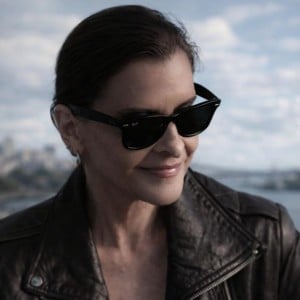
Carioca, virginiana e com alma do mundo, Marina Lima é uma mulher além de todos os tempos. Com mais de 40 anos de carreira, levou aos palcos no último ano o show "Pra Começar", em homenagem à sua canção homônima, que percorria pelos clássicos inesquecíveis da sua trajetória. Do pop ao rock, eletrônico à sofrência, hits como “Pra Começar”, “À Francesa”, “Fullgás”, “Virgem”, “Uma Noite e ½”, “Pessoa”, foram músicas que estiveram presentes no repertório que percorreu por seus 21 discos lançados e embalaram a trilha sonora de brasileiros de várias gerações. Para eternizar sua obra autoral, em abril de 2021 Marina, lançou o e-book "Marina Lima: Música e Letra", com partituras e cifras de todas as suas obras lançadas no decorrer dos 40 anos de carreira. Com direção da própria artista, o songbook foi lançado simultaneamente com o EP com 4 músicas inéditas chamado MOTIM, com produção musical da própria ao lado de Alex Fonseca. Em 2021, Marina iniciou a tour "Nas Ondas da Marina" pelo Brasil a fora, com os músicos, Alex Fonseca, Carlos Trilha e Gustavo Corsi. Em dezembro de 2022 estreou o show "Uma Noite Com Marina, Hits, Drinks & Talks" com Giovanni Bizzotto, Arthur Kunz e Renato Gonçalves no Blue Note SP, que irá correr o Brasil pelos próximos meses.

Maria Bethânia
Artist
Brazil's Maria Bethânia is one of her country's most famous, gifted, and enduring singers. After releasing her self-titled debut in 1965 for <a href="spotify:search:label%3A%22RCA%22">RCA</a>, she became one of the most prominent voices to emerge from the MPB/Tropicalia eras; she has mastered genres ranging from samba, bossa, and pop to jazz, indigenous folk, and even rock. Possessed of a slightly reedy alto that can bend to contralto, Bethânia's background as a theatrical actress infused her recorded and live performances with drama, yet retained a deeply personal, intimate connection to both her material and her audience. She has released more than 60 albums. A slate of popular outings from the 1970s including A Tua Presenca, Drama, Pássaro Da Manhã, Alibi, and Mel expanded her reputation across the globe to Europe and Asia. 1976's Doces Bárbaros documented an MPB supergroup of the same name that included Bethânia, <a href="spotify:artist:7oEkUINVIj1Nr3Wnj8tzqr">Gilberto Gil</a>, <a href="spotify:artist:7HGNYPmbDrMkylWqeFCOIQ">Caetano Veloso</a>, and <a href="spotify:artist:1b8kpp4DUwt1hWaxTiWQhD">Gal Costa</a> and become one of the best-selling albums in Brazil's history. 1997's Imitação Da Vida went to the top of the MPB charts and remains one of her best-known albums. In 2003 she released the smash Brasileirinho, a collection of pointedly Brazilian songs and styles, accompanied by <a href="spotify:artist:1hQT9TlJXMBP6Dy4lExSKn">Nana Caymmi</a>, <a href="spotify:artist:63Sb9dUDh4TVWIYC6pzwLl">Tira Poeira</a>, and <a href="spotify:artist:2LZqtMQsKjghZlfABYwaPn">Uakti</a>. In 2008 collaborated with Cuban singer <a href="spotify:artist:1h4iSQAKdvAAm07l6FX6dy">Omara Portuondo</a> on Maria Bethânia & Omara Portuondo, which garnered global acclaim. That same year, she was the subject of Georges Gachot's biographical documentary Musica E Perfume. In 2019 she issued Mangueira: A Menina Dos Meus Olhos, a celebration of the Rio samba school. Maria Bethânia Viana Teles Veloso was born in Santo Amaro da Purificação, in the state of Bahia in 1946, the sixth of eight children. She is the sister of singer/songwriter <a href="spotify:artist:7HGNYPmbDrMkylWqeFCOIQ">Caetano Veloso</a> and poet and songwriter Mabel Veloso. Her father was not musically inclined, but loved to listen to <a href="spotify:artist:7zsxdMsODmHKTbTB00t9wS">Dorival Caymmi</a> and <a href="spotify:artist:2rF7JpzIpgWtpVMuPouhIl">Noel Rosa</a>, while her mother sang almost constantly at home, becoming her daughter's first musical influence. At 13, her family moved to Salvador and she began to frequent the "university circles," intellectual groups gathering around art exhibitions and performances. The access to theater plays strengthened her desire to become an actress. At that time, a novice <a href="spotify:artist:7HGNYPmbDrMkylWqeFCOIQ">Caetano Veloso</a> had become the musical partner of the play director Álvaro Guimarães. For Guimarães's short movie Moleques de Rua, <a href="spotify:artist:7HGNYPmbDrMkylWqeFCOIQ">Veloso</a> composed a soundtrack which, according to him, should have had his sister singing in it. At 16, Bethânia initially refused, as she had never sung under such pressure. But Guimarães loved her timbre, and included her in his 1963 staging of Nelson Rodrigues' musical Boca de Ouro, where she performed a samba a cappella to introduce the play. The same year, the Velosos became acquainted with <a href="spotify:artist:7oEkUINVIj1Nr3Wnj8tzqr">Gilberto Gil</a> and <a href="spotify:artist:1b8kpp4DUwt1hWaxTiWQhD">Gal Costa</a>. <a href="spotify:artist:7HGNYPmbDrMkylWqeFCOIQ">Veloso</a> was invited to organize a Brazilian popular music show at the opening of Salvador's Teatro Vila Velha. The show, Nós, Por Exemplo, included <a href="spotify:artist:7HGNYPmbDrMkylWqeFCOIQ">Veloso</a>, Maria Bethânia, <a href="spotify:artist:7oEkUINVIj1Nr3Wnj8tzqr">Gilberto Gil</a>, and <a href="spotify:artist:1b8kpp4DUwt1hWaxTiWQhD">Gal Costa</a> (still using the name Maria da Graça). The show was a success and was re-enacted two weeks later, with the addition of <a href="spotify:artist:1gIa65d5ICT2xVWiUJ3u27">Tom Zé</a> (still using his <a href="spotify:artist:1dbp04JzZ81JXlMGupCnJ8">Antônio José</a> moniker). The success was even bigger, and the group (without <a href="spotify:artist:1gIa65d5ICT2xVWiUJ3u27">Zé</a>) soon presented another show, Nova Bossa Velha, Velha Bossa Nova. That same year, Bethânia acted alone in her musical Mora na Filosofia, directed by <a href="spotify:artist:7HGNYPmbDrMkylWqeFCOIQ">Veloso</a> and <a href="spotify:artist:7oEkUINVIj1Nr3Wnj8tzqr">Gil</a>. In January 1965, still a school student, she was surprised by the invitation to substitute for <a href="spotify:artist:64KVQ4YupSZYrGNLduVtj3">Nara Leão</a> (an established young singer who had had a problem with her vocal cords) in her highly successful show Opinião. Bethânia's opening on February 13, 1965, was very successful, and her dramatic performance of "Carcará" (<a href="spotify:artist:3TE6ZGjhmTVpLZrn9hvfBX">João do Vale</a>/José Cândido) launched her as an overnight national success, repeated during the São Paulo season. Because of the success, Guilherme Araújo, then assistant for Aluísio de Oliveira at the <a href="spotify:search:label%3A%22RCA%22">RCA</a> label, invited her, through <a href="spotify:artist:7HGNYPmbDrMkylWqeFCOIQ">Veloso</a>, to record for the label. In May of that year, Bethânia recorded her first single, and some months later, her self-titled debut LP. On September 26, 1965, the Vila Velha gang opened the show Arena Canta Bahia, at São Paulo's Teatro de Arena. In April 1966, Bethânia, invited by Guilherme Araújo, opened her show Recital. She also performed at the Barroco nightclub in Rio. Also in 1966, Bethânia performed in the show Pois É, together with <a href="spotify:artist:7oEkUINVIj1Nr3Wnj8tzqr">Gilberto Gil</a> and <a href="spotify:artist:5HlnN6xF2MD87KhGRmCRTd">Vinícius de Moraes</a>, at the Teatro Opinião. In 1967, she recorded Edu Lobo e Maria Bethânia. Through 1970, she would also be featured in the shows Yes, Nós Temos Maria Bethânia, Comigo Me Desavim, Recital Na Boite Blow Up, and Brasileiro Profissão Esperança. In 1968, as the Tropicalia movement was exploding, Bethânia performed on the LP Veloso, Gil e Bethânia (<a href="spotify:search:label%3A%22RCA%22">RCA</a>) and the solo LP Recital na Boite Barroco. In 1969 and 1970, respectively, she released the LPs Maria Bethânia and Maria Bethânia Ao Vivo. Interestingly, she has always regarded herself a "tropicalista" -- given her birth and proximity to its creators, but she also claims she was never part of the movement and her discography lends credence to this assertion. In 1971, she recorded the LP A Tua Presenca for <a href="spotify:search:label%3A%22Philips%22">Philips</a>, the first of her albums to gain notice in Europe. In July, backed by the Terra Trio, she opened her show Rosa Dos Ventos at Rio's Teatro da Praia, which yielded a live album of the same name produced by <a href="spotify:artist:2r1d0isPFggU8QaBzvAWmG">Roberto Menescal</a>. She traveled to Europe and performed at the MIDEM (Cannes, France), and in Italy, and issued the charting collaborative outing En La Fusa (Mar Del Plata) with <a href="spotify:artist:5HlnN6xF2MD87KhGRmCRTd">Vinicius de Moraes</a> and <a href="spotify:artist:7rPqFVgJYARiFsLDlN6W6y">Toquinho</a>. In 1972 she appeared, together with <a href="spotify:artist:6tOsSffQQIXmK8TqsDck8t">Chico Buarque</a> and <a href="spotify:artist:64KVQ4YupSZYrGNLduVtj3">Leão</a> in the film Quando o Carnaval Chegar. The movie's soundtrack was released in 1972 by <a href="spotify:search:label%3A%22Philips%22">Philips</a>. Bethânia wrote the lyrics for <a href="spotify:artist:7HGNYPmbDrMkylWqeFCOIQ">Caetano Veloso</a>'s song "Trampolim," released on her breakthrough 1972 album Drama. produced by <a href="spotify:artist:2r1d0isPFggU8QaBzvAWmG">Menescal</a> and arranged by Perinho de Albuquerque. Its understated melodies and jazz arrangements succeeded in making it one of her most popular albums. It marked the beginning of a classic run for the singer. She closed the year touring Italy, Germany, Austria, Denmark, and Norway. In 1973, she recorded her show Drama, Luz da Noite as a live album. In 1974, commemorating the tenth year of her career, she released the live A Cena Muda. On June 6, 1975, Bethânia performed in a live show with <a href="spotify:artist:6tOsSffQQIXmK8TqsDck8t">Chico Buarque</a>, recorded and released as Chico Buarque e Maria Bethânia Gravado ao Vivo no Canecão. In 1976, she recorded the seminal Pássaro Proibido, co-produced by her brother and Albuquerque. That July, with her sibling, <a href="spotify:artist:7oEkUINVIj1Nr3Wnj8tzqr">Gilberto Gil</a>, and <a href="spotify:artist:1b8kpp4DUwt1hWaxTiWQhD">Gal Costa</a>, she toured Brazil with the show Os Doces Bárbaros, which yielded a film by Jom Tob Azulay and a chart-topping gold-certified double album. In January of the following year she began touring a show that would become the wildly successful studio album Pássaro da Manhã. It not only registered on the charts in Europe, but earned her another gold record at home. In May 1978, Maria Bethânia e Caetano Veloso ao Vivo appeared and landed inside Brazil's Top Ten. By 1978, Bethânia was riding a wave of popularity that would establish her as a Brazilian music legend. Her classic album Alibi registered so many pre-orders it was certified gold before it even shipped, making Bethânia the first Brazilian female singer to sell one million copies of a recording. It is widely regarded as her masterpiece. In December 1979, she closed out the decade with the best-selling Mel. The 1980s began with another hit record with the low-key yet elegantly arranged Talismã. In 1981, she, <a href="spotify:artist:7HGNYPmbDrMkylWqeFCOIQ">Veloso</a>, and <a href="spotify:artist:7oEkUINVIj1Nr3Wnj8tzqr">Gil</a> participated with <a href="spotify:artist:77ZUbcdoU5KCPHNUl8bgQy">João Gilberto</a> on the latter's album Brasil, showcasing two generations of singers interpreting bossa nova. It too went gold. She also issued the solo album Alteza that stylistically followed in the footsteps of Alibi and Mel, and placed inside the Top Ten. In 1982, Bethânia's career took another turn with the album Ciclo, which branched out of her popular formula and took a new acoustic direction. She also released the best-selling concert outing Nossos Momentos, with <a href="spotify:artist:7oEkUINVIj1Nr3Wnj8tzqr">Gil</a> serving as musical director. In 1984, she released A Beira E O Mar, composed of songs written especially for her, and followed with Palco Iluminado to kick-off to her 20th anniversary tour. Bethânia re-signed with <a href="spotify:search:label%3A%22RCA%22">RCA</a> for the release of 1986's best-selling, award-winning Dezembros, which contained unpublished songs by Tom Jobim, <a href="spotify:artist:6tOsSffQQIXmK8TqsDck8t">Chico Buarque</a>, and <a href="spotify:artist:7HGNYPmbDrMkylWqeFCOIQ">Caetano Veloso</a>, and the track "Canções e Momentos," written for her by <a href="spotify:artist:3Bnq7jiU506HcPjRgQ43TM">Milton Nascimento</a>. In 1988 she issued Maria, with guest spots by <a href="spotify:artist:3FdLhnmXynPvZkbILPpB6d">Ladysmith Black Mambazo</a>, <a href="spotify:artist:3rbOOc4VJ3BFxQXKppOuQP">Jeanne Moreau</a>, and <a href="spotify:artist:1b8kpp4DUwt1hWaxTiWQhD">Gal Costa</a>. In 1989, Memória da Pele was released; it included Jose Galhardo's tango "Confesso," and <a href="spotify:artist:6tOsSffQQIXmK8TqsDck8t">Buarque</a>'s "A Mais Bonito" and was arranged by <a href="spotify:artist:5QdS83aNvQzKgj43VTdY8d">Jacques Morelenbaum</a>. In 1990 Bethânia released Cancoes E Momentos and commemorated her 25th career anniversary with the album and show 25 Anos. A year later she issued Canto Do Paje. Arranged by <a href="spotify:artist:2r1d0isPFggU8QaBzvAWmG">Menescal</a>, it was almost entirely composed of blues, ballads, and torch songs and included guest appearances from <a href="spotify:artist:1b8kpp4DUwt1hWaxTiWQhD">Costa</a>, <a href="spotify:artist:7G1GBhoKtEPnP86X2PvEYO">Nina Simone</a>, and <a href="spotify:artist:77ZUbcdoU5KCPHNUl8bgQy">João Gilberto</a>. It won critical acclaim in the U.S and Asia and charted in Brazil and Germany. In 1992, she released Olho D'água; its title track was included in a major soap opera's soundtrack. 1993's As Canções Que Você Fez Pra Mim was a tribute to songwriter <a href="spotify:artist:7fAKtXSdNInWAIf0jVUz65">Roberto Carlos</a>, and a large-scale production touring show. The album sold more than a million-and-a-half copies, making it Brazil's best-selling album that year. In 1994, she re-recorded it in Spanish as As Canciones Que Tu Hisiste Para Mi. After live and compilation offerings in 1995 and 1996, respectively (Bethânia has nearly 100 live LPs in addition to her studio catalog), she recorded Ambar for <a href="spotify:search:label%3A%22Odeon%22">Odeon</a>, followed by the live Imitação da Vida in 1997. Recorded in Los Angeles and London, it featured guest appearances by <a href="spotify:artist:5UUHefXYUqgqmROQvDmJLL">Zap Mama</a> and <a href="spotify:artist:6tOsSffQQIXmK8TqsDck8t">Buarque</a>. Bethânia closed the decade and the 20th century with A Forca Que Nunca Seca, a primarily acoustic studio album. 2001's Maricotinha showcased the singer delivering 13 intense romantic songs by composers including <a href="spotify:artist:72f733zGuCPEzCSLs9wOVi">Adriana Calcanhotto</a>, <a href="spotify:artist:3vlUveVfzPXzhiPGjHHxOH">Chico Cesar</a>, <a href="spotify:artist:4YLBdrR3DVSMncm785NH6C">Lenine</a>, and others. Arranged by <a href="spotify:artist:5Vrg75OkEQbSrKXBQUpXId">Jaime Alem</a> and co-produced by him and Guto Graça Mello, it topped the album charts at home and also charted in Asia, Germany, Spain, and Italy. In addition to an all-star cast of instrumentalists who included <a href="spotify:artist:4h0EIFGApmy9orXRysb0kO">Marcio Montarroyos</a>, it featured a guest spot by her nephew <a href="spotify:artist:57IX1XTNL4DPilyY5pQsaK">Moreno Veloso</a>. Its live companion LP, Maricotinha Ao Vivo, was released the following year, marking the restless Bethânia's debut for <a href="spotify:search:label%3A%22Biscoito+Fino%22">Biscoito Fino</a>, her non-exclusive label home. 2003's Canticos Preces Suplicas A Senhora Dos Jardins Do Ceu offered an album's worth of songs dedicated to the Virgin Mary by Western composers such as <a href="spotify:artist:5aIqB5nVVvmFsvSdExz408">J.S. Bach</a> and <a href="spotify:artist:2p0UyoPfYfI76PCStuXfOP">Franz Schubert</a>, as well as numerous others in the public domain. They were rearranged to reflect a decidedly Brazilian sound (as they were arranged by <a href="spotify:artist:7HGNYPmbDrMkylWqeFCOIQ">Veloso</a>, <a href="spotify:artist:7oEkUINVIj1Nr3Wnj8tzqr">Gil</a> and others). Though Bethânia's recordings often reflected a spiritual point of view -- thanks to her extremely active participation in the Candomble faith -- this marked her first decidedly religious offering. She followed it with 2004's Brasileirinho, a collection of songs steeped in Brazilian musical traditions, from samba, Forró, to afoxe to carnival songs, bossa, and Candomble religious sources, with lyrics from João Guimarães Rosa and Mário de Andrade, and a handpicked cast of performers who include <a href="spotify:artist:1hQT9TlJXMBP6Dy4lExSKn">Nana Caymmi</a>, <a href="spotify:artist:2LZqtMQsKjghZlfABYwaPn">Uakti</a>, <a href="spotify:artist:24ZP6P1JgCo65CEJsk2OQ2">Miucha</a>, and <a href="spotify:artist:63Sb9dUDh4TVWIYC6pzwLl">Tira Poeira</a>, to name a few. It is among her most cherished and enduring albums. It topped the charts at home and achieved sales success across the globe. Its sold-out tour resulted in a live album and a concert film directed by Bia Lessa. In 2005 she issued an album she'd long wanted to record, 2005's full-length Que Falta Voce Me Faz, featuring the songs of <a href="spotify:artist:5HlnN6xF2MD87KhGRmCRTd">Vinicius de Moraes</a>. That year she was the subject of French director Georges Gachot's full-length documentary feature film Musica E Perfume. Bethânia released two thematically linked albums in 2005 and 2006: Mar de Sophia was a tribute to Portuguese poet Sophia de Mello Breyner Andresen. Bethânia presented the writer's poems about the sea interspersed with popular Brazilian songs also centered on the sea as their common subject matter. 2006's companion Pirata showcased songs with rivers as their central character. It included <a href="spotify:artist:6u5P4S3NSj4EDNegDlOevO">Edu Lobo</a>'s "O Tempo E O Rio," <a href="spotify:artist:7HGNYPmbDrMkylWqeFCOIQ">Veloso</a>'s "Os Argonautas," the radio smash hit "Eu Que Nao Sei Quase Nada Do Mar," by <a href="spotify:artist:4HP9KltldfmkH2M2pQozzN">Ana Carolina</a> and Jorge Vercilo, and singer <a href="spotify:artist:57pVvBwa3ZCR9LsVlkLXj7">Vanessa de Mata</a>'s "Sereia De Agua Doce," all of them framed in sparse acoustically arranged charts offering simple instrumentation. In 2008, <a href="spotify:artist:11kBu957KTYoAltZHDm8gW">Buena Vista Social Club</a> singer Omara Portuando and Maria Bethânia issued a bilingual, self-titled duo outing (and accompanying DVD) featuring an all-star band led by pianist <a href="spotify:artist:0Yi6vOMIP1cqp8WppadgOu">Roberto Fonseca</a>. Along with virtually all of her albums in the 21st century, it drew global acclaim. Two more thematically linked albums closed out the singer's decade in 2009: Encantreria and Tua were both collections of intimate love songs by some of Brazil's greatest writers including <a href="spotify:artist:6fV3ZNUY8BCP45yuCWWDez">Dory Caymmi</a>, <a href="spotify:artist:72f733zGuCPEzCSLs9wOVi">Adriana Calcanhotto</a>, Roque Ferreira, <a href="spotify:artist:7lOUbhzQ1F3xcCMEcTtbO5">Arnaldo Antunes</a>, and many others. Both records landed inside the Top Five and paved the way for a tour that sold out each of its 47 appearances as well as birthing a live album and DVD. My Backyard and Oasis De Bethania both arrived in 2014; both were sets of folk, samba, Fado, torch ballads, and spiritual songs by Brazil's top composers. On both recordings, the singer was accompanied only by piano, acoustic guitar, accordion, and percussion. 2015 saw the release of a live touring version of Brasileirinho, while the 40-track DVD/audio disc box Abraçar E Agradecer appeared the following year. In 2018 Bethânia teamed with <a href="spotify:artist:3qZ2n5keOAat1SoF6bHwmb">Zeca Pagodinho</a> for the 34-track live outing De Santo Amaro a Xerém, and in 2019 returned to the studio to conceive and record Mangueira, A Menina Dos Meus Olhos, an album-length celebration of songs from the Rio carnival samba school. She toured Brazil and South America with <a href="spotify:artist:6tOsSffQQIXmK8TqsDck8t">Chico Buarque</a>. In 2020, Bethânia was co-billed as part of the compilation Vinicius de Moraes in Argentina. Further, <a href="spotify:search:label%3A%22RCA%22">RCA</a>, <a href="spotify:search:label%3A%22EMI%2FOdeon%22">EMI/Odeon</a>, and <a href="spotify:search:label%3A%22Philips%22">Philips</a> coordinated a remaster and reissue program of her vast catalog for her 75th birthday. ~ Alvaro Neder, Rovi

Tribalistas
Artist

Hozier
Artist

Lorde
Artist

Chico Buarque
Artist

Gal Costa
Artist

O Grilo
Artist
O Grilo é uma banda formada em São Paulo por Lucas Teixeira, Felipe Martins, Gabriel Cavallari e Pedro Martins. Ela carrega em si referências que vão de Manaus até o Rio de Janeiro, resultando em uma sonoridade única, rica em brasilidade. Criada em 2017, lançou seu primeiro projeto no final desse mesmo ano, o EP "Herói do Futuro", de onde saiu seu maior hit "Serenata Existencialista", viral no TikTok que se tornou um hino de amantes adolescentes. Em 2021, lançou seu primeiro álbum "Você Não Sabe de Nada" que consolidou a banda no cenário Indie Rock MPB e ocupou listas de melhores do ano como a do TMDQA e Rolling Stone. O Grilo já passou por 8 estados diferentes em seus 7 anos de história, sempre levando uma plateia fiel e apaixonada aos seus shows. O quarteto, que conquistou o coração de grandes festivais, foi convidado para duas edições do Lollapalooza (2019 e 2023) e fez uma passagem histórica pelo Palco Supernova do Rock in Rio (2022). Em 2024, O Grilo lançou seu novo álbum “TUDO ACONTECE AGORA” que vem acompanhado de um universo narrativo e visual onde uma agência de viagens fictícia é o cenário escolhido para as histórias que pretendem contar. Para dar início a mais essa jornada, a banda anuncia sua nova turnê e promete passar pelos 4 cantos do país, apresentando ao público suas músicas novas sem deixar de lado seu vasto repertório, abraçando todos os momentos de sua carreira.
Lagum
Artist
Em 2014, quatro amigos se juntaram, em Minas Gerais, para formar o Lagum, com Pedro Calais na voz, Zani (Otavio Cardoso) e Jorge (Glauco Borges) na guitarra e Chico (Francisco Jardim) no baixo. Durante a trajetória da banda, conheceram o Tio Wilson (Breno Braga), que comandava a bateria. O primeiro álbum foi lançado em 2016, "Seja o Que Eu Quiser", com as primeiras músicas autorais. Entre um álbum e outro, "Deixa" estourou nas plataformas e rádios, colocando a banda em destaque nacional. Em 2019, o segundo disco, "Coisas de Geração", veio ao mundo e levou o grupo aos palcos do Brasil e do mundo marcando a primeira grande turnê. Durante a pandemia do coronavírus, o Tio Wilson faleceu após sofrer uma parada cardiorrespiratória, causada por uma doença no coração (miocardiopatia dilatada). Em 2021, "MEMÓRIAS (de onde eu nunca fui)", que reúne as últimas gravações de Tio, foi lançado e indicado ao Grammy Latino. Em 2023, a banda lançou o EP "Fim" e seu quarto álbum, "Depois do fim", também indicado ao Grammy Latino. Outro grande lançamento deste ano foi o projeto audiovisual LAGUM AO VIVO, gravado em um show icônico em São Paulo e indicado para o Grammy Latino. Em 2024, a banda faz seu primeiro bloco de carnaval em Belo Horizonte, reunindo mais de 90 mil pessoas e partindo para uma turnê em todas as regiões do país. No final do ano, a banda entra em uma nova fase musical e artística com seu single Curva da Ladeira, explorando sonoridades diferentes, mas sua essência.
