Artists ✧・゚:
Items in this hypelist
Grupos
Arctic Monkeys
Arctic Monkeys
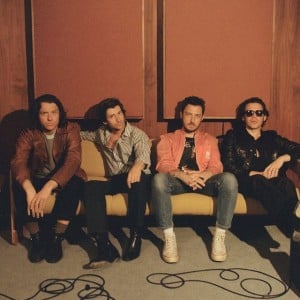
With their nervy and literate indie rock sound, Arctic Monkeys are a respected, adventurous, and successful group that could easily be called Britain's biggest band of the early 21st century. The band arrived with a blast in 2005, assisted by rave reviews and online word of mouth (they were one of the first bands to benefit from social media). They quickly became a sensation in the United Kingdom, where they were seen as the heir apparent to the throne left vacant by <a href="spotify:artist:2DaxqgrOhkeH0fpeiQq2f4">Oasis</a> and <a href="spotify:artist:4fSPtBgFPZzygkY6MehwQ7">the Libertines</a>. Buoyed by the single "I Bet You Look Good on the Dancefloor," their 2006 debut Whatever People Say I Am, That's What I'm Not briefly grabbed the title of fastest-selling album in British history. It landed on top of both the U.K. and U.S. rock album charts and took home the Mercury Prize. What set the group apart was <a href="spotify:artist:1ctkBmvz80MGyi72Ix055S">Alex Turner</a>, a singer/songwriter with a biting wit and grasp of English vernacular (not dissimilar to <a href="spotify:artist:7Lf3LOZp3U3u2f6cWMd3AH">Paul Weller</a>, the godfather of modern British rock). However, driven by their maverick creative spirit, Arctic Monkeys have proven highly unpredictable, reworking classic rock traditions on 2007's Favourite Worst Nightmare and beefing up their guitars with the assistance of <a href="spotify:artist:4pejUc4iciQfgdX6OKulQn">Queens of the Stone Age</a>'s <a href="spotify:artist:03xb2BUdIFzuRQ6o88yfCB">Josh Homme</a> on 2009's Humbug. Eventually, they also laced in some of the louche lounge aspects of <a href="spotify:artist:1ctkBmvz80MGyi72Ix055S">Turner</a>'s swinging side project <a href="spotify:artist:2Z7UcsdweVlRbAk5wH5fsf">the Last Shadow Puppets</a>, an evolution that began on 2018's arty Tranquility Base Hotel + Casino and deepened on its 2022 follow-up The Car. By that point, the band was a staple throughout the world. <a href="spotify:artist:1ctkBmvz80MGyi72Ix055S">Alex Turner</a> and guitarist Jamie Cook began their music careers in 2001, when the friends both received guitars for Christmas. Two years later, they began performing shows around their native Sheffield with drummer Matt Helders and bassist Andy Nicholson, two fellow students at Stocksbridge High School. A series of demo recordings followed, and Arctic Monkeys' audience swelled as fans circulated those recordings via the Internet. The musicians soon found themselves at the center of a growing media circus, with such outlets as BBC Radio examining the band's music and mounting hype. By distributing their homemade material on the Internet, Arctic Monkeys were able to build a sizable fan base without the help of a record label, effectively circumventing the usual road to superstardom. They continued to buck tradition by signing with <a href="spotify:search:label%3A%22Domino+Records%22">Domino Records</a> in 2005, eschewing a major-label's budget for <a href="spotify:search:label%3A%22Domino%22">Domino</a>'s D.I.Y. cred and hip roster (which also included <a href="spotify:artist:0XNa1vTidXlvJ2gHSsRi4A">Franz Ferdinand</a>, a touchstone for the band's sound). The smart moves paid off as Arctic Monkeys' first two singles -- "I Bet You Look Good on the Dancefloor" and "When the Sun Goes Down" -- both topped the U.K. charts. Critical reception was similarly favorable, but few could have predicted the whirlwind success of the band's debut album, which ousted <a href="spotify:artist:2DaxqgrOhkeH0fpeiQq2f4">Oasis</a>' Definitely Maybe as the fastest-selling debut in British history (a record that was broken one year later by <a href="spotify:artist:5lKZWd6HiSCLfnDGrq9RAm">Leona Lewis</a>' Spirit). Whatever People Say I Am, That's What I'm Not sold 363,735 copies during its first week alone, transforming Arctic Monkeys from underground stars into mainstream figures. Arctic Monkeys' debut sold approximately 300,000 total copies in America -- enough to warrant more media coverage. Their success continued as they released a spring EP, Who the F**k Are Arctic Monkeys, and prepared for a stateside tour. Temporary bassist Nick O'Malley was brought aboard for the band's American shows, while a fatigued Nicholson stayed at home. Nicholson then announced his official departure when the band returned home in June 2006, and O'Malley remained with Arctic Monkeys as a permanent member. That fall, the guys received the 2006 Mercury Prize and donated the accompanying money to an undisclosed charity. Additional accolades included Best British Breakthrough Act at the BRIT Awards and Best New Band at the NME Awards. NME also made a bold assertion by deeming the group's debut one of the Top Five British albums ever released. Released in April 2007, Favourite Worst Nightmare updated Arctic Monkeys' sound with louder instruments and faster tempos. The bandmates had recorded the sophomore album quickly, wishing to return to the road as soon as possible, and the speedy turnaround between records helped maintain the group's popularity at home. Favourite Worst Nightmare sold 85,000 copies during its first day of release, and all 12 tracks entered the Top 200 of the U.K. singles charts. As <a href="spotify:artist:1ctkBmvz80MGyi72Ix055S">Alex Turner</a> briefly turned his attention to a side project, <a href="spotify:artist:2Z7UcsdweVlRbAk5wH5fsf">the Last Shadow Puppets</a>, Arctic Monkeys received another Mercury Prize nomination and took home two titles at the 2008 BRIT Awards. Recording sessions for a third album commenced in early 2008 and lasted throughout the year, with producers James Ford (who previously worked with <a href="spotify:artist:1ctkBmvz80MGyi72Ix055S">Turner</a> on <a href="spotify:artist:2Z7UcsdweVlRbAk5wH5fsf">the Last Shadow Puppets</a>' album) and <a href="spotify:artist:03xb2BUdIFzuRQ6o88yfCB">Josh Homme</a> (frontman of <a href="spotify:artist:4pejUc4iciQfgdX6OKulQn">Queens of the Stone Age</a>) adding some newfound heft to the band's sound. Meanwhile, Arctic Monkeys released a concert album entitled At the Apollo -- with accompanying video footage captured on 35mm film -- before unveiling Humbug in August 2009. Humbug went platinum in the U.K. with the singles "Crying Lightning" peaking at number 12 and "Cornerstone" topping out at 94. The band hit the road that February, kicking off a multi-leg tour that ran through the rest of the year. After playing another handful of shows in early 2010, the guys took a short hiatus before reconvening with James Ford for their fourth album. Sessions began that fall, and the resulting Suck It and See arrived in spring 2011, topping the U.K. album chart and landing at number 14 on the Billboard 200. Meanwhile, <a href="spotify:artist:1ctkBmvz80MGyi72Ix055S">Turner</a> also wrote music for a Richard Ayoade film, Submarine, whose soundtrack doubled as the frontman's first solo release. In February 2012, Arctic Monkeys released a song entitled "R U Mine?" on their YouTube channel, which indicated that an album was on the way. A few months later, the band played at the London Summer Olympics opening ceremony, performing "I Bet You Look Good on the Dancefloor" and <a href="spotify:artist:3WrFJ7ztbogyGnTHbHJFl2">the Beatles</a>' "Come Together," but it wasn't until the summer of 2013 that the group's fifth album was to be revealed. Entitled AM, the record was released in September, a few months after a triumphant headlining performance at Glastonbury 2013, which was opened with the new song "Do I Wanna Know?" Both a critical and commercial success, AM topped the British charts and reached number six on the Billboard 200. It also earned the group a Mercury Prize nomination and won British Album of the Year at the BRIT Awards. Following the end of their tour in 2014, the band entered an extended hiatus, during which time the individual members pursued solo projects. In 2016, <a href="spotify:artist:1ctkBmvz80MGyi72Ix055S">Turner</a> released his second album with <a href="spotify:artist:2Z7UcsdweVlRbAk5wH5fsf">the Last Shadow Puppets</a> and toured. Arctic Monkeys resurfaced in April 2018 with the loungey Tranquility Base Hotel & Casino, a softer affair than their previous albums. Along with topping the U.K. album chart and Billboard Top Rock Albums chart, the LP became the group's fourth to earn a Mercury Prize nomination. Later that year, the band issued the TBH&C B-side "Anyways" as a single. A concert album, Live at the Royal Albert Hall, recorded during the Tranquility Base Hotel & Casino tour arrived in November 2020, with all proceeds going to benefit the War Child U.K. charity organization. Arctic Monkeys began their seventh album cycle by releasing the single "There’d Better Be a Mirrorball" in August 2022, delivering the full-length The Car in October. Continuing the slow, stylish vibe of Tranquility Base Hotel + Casino, the album was cut in a monastery on the coast of Suffolk. It hit number six on the Billboard 200, number two in the U.K., and picked up three Grammy nominations, including for Best Alternative Music Album. ~ Andrew Leahey & Stephen Thomas Erlewine, Rovi
Enjambre
Artist
The Doors
Artist
Paramore
Artist
The Beatles
Artist
Deftones
Artist
The Stone Roses
Artist
Måneskin
Artist
5 Seconds of Summer
Artist

- Linkin Park
Artist

- My Chemical Romance
Artist
- Radiohead
Artist

- Nirvana
Artist
- Gorillaz
Artist
Green Day
Green Day
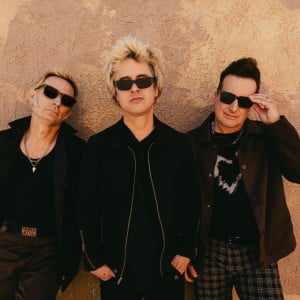
Bay Area trio Green Day stormed the mainstream in the early '90s with their snarling, snotty brand of three-chord pop-punk, which was delivered with a heavy dose of anarchic attitude and headline-grabbing antics. Influenced by the late-'70s punk predecessors before them, they went on to introduce a new, younger generation to the genre. Major-label breakthrough Dookie was the jewel in the crown of their '90s punk era, a modern classic regarded as one of the most defining albums of the decade. Maturing in the 21st century, the band hit a career peak with 2004's Grammy-winning international success American Idiot, a socio-political rock opera that ushered in the next stage of their evolution as one of America's most acclaimed rock bands. In 2015, 25 years after their debut, Green Day were inducted into the Rock & Roll Hall of Fame. Green Day arose from the Northern California underground punk scene. Childhood friends Billie Joe Armstrong (guitar, vocals) and Mike Dirnt (bass; born Mike Pritchard) formed their first band, Sweet Children, in Rodeo, California when they were 14 years old. By 1989, the group had added drummer Al Sobrante and changed its name to Green Day. That same year, the band independently released its first EP, 1000 Hours, which was well-received in the California hardcore punk scene. Debut full-length 39/Smooth and the Slappy EP arrived soon after in 1990. By 1991, the group had signed a contract with local independent label Lookout. Combining their first three efforts into one compilation, Green Day issued 1,039/Smoothed Out Slappy Hours for the label. Shortly after its release, the band replaced Sobrante with Tre Cool (born Frank Edwin Wright III), who became the band's permanent drummer. Throughout the early '90s, Green Day continued to attract a cult following, which only gained strength with the release of their second album, 1992's Kerplunk. The underground success of Kerplunk led to a wave of interest from major record labels, and the band eventually decided to sign with Reprise. Dookie, Green Day's major-label debut, was released in the spring of 1994. Thanks to MTV's support of the initial single, "Longview," Dookie became a major hit. The album continued to gain momentum throughout the summer, with its second single, "Basket Case," spending five weeks on top of the American modern rock charts. At the end of the summer, the band stole the show at Woodstock '94, which increased the sales of Dookie. By the time the fourth single, "When I Come Around," began its seven-week stay at number one on the modern rock charts in early 1995, Dookie had sold over five million copies in the U.S. alone; it would eventually top ten million in America, selling over 15 million copies internationally. Dookie also won the 1994 Grammy for Best Alternative Music Performance. Green Day quickly followed Dookie with Insomniac in the fall of 1995; during the summer, they hit number one again on the modern rock charts with "J.A.R.," their contribution to the Angus soundtrack. Insomniac performed well initially, entering the U.S. charts at number two and selling over two-million copies by the spring of 1996, yet none of its singles -- including the radio favorite "Brain Stew/Jaded" -- was as popular as those from Dookie. In the spring of 1996, Green Day abruptly canceled a European tour, claiming exhaustion. Following the cancellation, the band spent the rest of the year resting and writing new material before issuing Nimrod in late 1997. Three years later, their long-awaited follow-up, a refreshingly poppy record titled Warning, was released. Another long wait preceded 2004's American Idiot, an aggressive rock opera that became a surprise success -- a chart-topper around the world, a multi-platinum Grammy winner, and easily the best-reviewed album of their career. Green Day reveled in the album's success, hitting numerous award shows and performing as part of Live 8 in July 2005. That fall brought the release of Bullet in a Bible, a concert album that documented the trio's expansive Idiot live show. With their popularity and commercial viability restored, Green Day took on several small projects before returning to the studio. They contributed a cover of John Lennon's "Working Class Hero" to the charity album Instant Karma, appeared in The Simpsons Movie, and recorded an entire album of '60s-styled rock & roll under the alias of Foxboro Hot Tubs. While presenting an award at the Grammys in early 2009, the band announced the impending release of Green Day's eighth album, 21st Century Breakdown, which had been recorded with veteran producer Butch Vig. In May of 2009, 21st Century Breakdown was released, picking up where American Idiot left off as another ambitious punk rock opera. The album was a commercial success, selling over 215,000 copies in its first three days of sales. In 2009, American Idiot was adapted for the stage, and the following year, Green Day lent their talents to the original cast recording, combining a driving score with Broadway vocal arrangements. The band released the live Awesome as F**k in 2011. During the summer of 2012, Green Day unveiled their ambitious plans for the fall and winter: they would release not one but three new albums. The records -- Uno!, Dos!, Tré! -- would appear in September 2012, November 2012, and January 2013, respectively, with each individual bandmember gracing one of the album covers on his own. The first, appropriately called Uno!, was preceded by the disco-rock single "Kill the DJ" and the anthemic arena rocker "Oh Love." Uno! was set for a splashy release in September 2012, but the weekend prior to its release, Billie Joe Armstrong had an on-stage breakdown during a set Green Day played at the iHeartRadio Music Festival in Las Vegas. Days later, it was announced that Armstrong entered rehab for substance abuse; not long afterward, the band's touring plans for 2013 were canceled. Dos! arrived as scheduled in November 2012 and Tré! was moved up to a December release. Demolicious, a collection of 18 demos recorded during the making of their Uno! Dos! Tré! trilogy, showed up in time for 2014's Record Store Day release schedule. In 2015, Green Day were inducted into the Rock & Roll Hall of Fame. Following their induction, producer Rob Cavallo announced that he had started work on a new album with the trio. As they labored on the new record, Green Day released a single called "Xmas Time of the Year" for the 2015 holiday. The raucous "Bang Bang" was the first taste of their 12th record, Revolution Radio, which arrived in October 2016. The album topped the charts around the globe and featured the radio hit "Still Breathing." A year later, the group released a career-spanning compilation called Greatest Hits: God's Favorite Band, which included the previously unreleased "Back in the USA." Another retrospective release arrived in 2019, commemorating the band's 25th anniversary of playing Woodstock '94. Green Day Live!: Woodstock 1994 received a limited pressing for Record Store Day and debuted at number 156 on the Billboard 200. ~ Stephen Thomas Erlewine
Muse
Artist
Solistas
Lana Del Rey
Lana Del Rey
.
Billie Eilish
Billie Eilish
Billie Eilish remains one of the biggest stars to emerge in the 21st century. Her third studio album, HIT ME HARD AND SOFT features 10 tracks written and recorded in her hometown of Los Angeles, with her brother and producer FINNEAS. In 2019, her debut album WHEN WE ALL FALL ASLEEP, WHERE DO WE GO? debuted at No. 1 in 18 countries, and was the most streamed album of that year. In 2021, her sophomore album 'Happier Than Ever’ debuted at #1 in 20 countries. Both albums were critically acclaimed worldwide and were written, produced, and recorded entirely by Billie Eilish and FINNEAS. 9-time GRAMMY® Award-winning Billie Eilish has made history as the youngest artist to receive nominations and win in all the major GRAMMY® categories, receiving an award for Best New Artist, Album of the Year, Record of the Year, Song of the Year, and Best Pop Vocal Album, and is the youngest artist to write and record an official James Bond theme song, ‘No Time To Die,’ which won an Academy Award for Best Original Song in 2022. In 2023, Eilish also wrote and released the critically acclaimed song “What Was I Made For?” for the Greta Gerwig-directed motion picture Barbie, which also won Academy and Golden Globe Award for Best Original Song, two GRAMMY® Awards for Song of the Year and Best Song Written For Visual Media, and has solidified Billie Eilish yet again in the history books as the youngest person ever to win two Academy Awards.
The Weeknd
The Weeknd
The Weeknd is the alias of alternative R&B enigma-turned-pop star Abel Tesfaye, whose aching accounts of emotionally and physically toxic indulgences have translated to multi-platinum sales and Grammy recognition. The singer and songwriter made his early-2010s breakthrough with morose ballads that seemed to have no designs on mainstream appeal. Within a few years, however, Tesfaye had scored Top Ten hits with an Ariana Grande duet ("Love Me Harder"), the lead single from a major motion picture ("Earned It"), and a retro-contemporary disco-funk single ("I Can't Feel My Face"), the last of which was nominated for a Nickelodeon Kids' Choice Award despite its subject (cocaine). Tesfaye received early support from Drake and scored his first Top Ten R&B/hip-hop placement as the featured artist on the fellow Torontonian's "Crew Love," but he swiftly outgrew his status as a Drake affiliate with his own hits and a streak of appearances on high-profile tracks by Wiz Khalifa, Future, Beyoncé, and Lana Del Rey. Tesfaye debuted the Weeknd in late 2010 with three songs uploaded to YouTube. Made with producer Jeremy Rose, they served as a low-key prelude to three mixtapes self-released as free digital downloads the following year. First was with House of Balloons (March), where clear traces of radio-friendly contemporary R&B à la Trey Songz, Jeremih, the-Dream, and Drake were synthesized with the progressive left-of-center likes of Spacek and Sa-Ra. Recorded in collaboration with producers Doc McKinney and Illangelo, among others, the set garnered widespread coverage within days of its release. A similar second mixtape, Thursday (August), preceded several appearances on Drake's album Take Care. Featuring a cover of Michael Jackson's "Dirty Diana," Echoes of Silence (December) completed the trilogy just before the end of the year. The following June, "Crew Love," off Take Care, reached the Top Ten of Billboard's Hot R&B/Hip-Hop chart. A few months later, Tesfaye was featured on another charting single, Wiz Khalifa's "Remember You." After Tesfaye signed with Universal Republic, the three Weeknd mixtapes were remastered and bundled with three new songs for Trilogy, issued in November 2012. Despite consisting of material previously available for free, the set debuted at number four on the Billboard 200 chart. The following April, Tesfaye won Juno Awards in the categories of Breakthrough Artist of the Year and R&B/Soul Recording of the Year. Trilogy was certified platinum by the RIAA the next month. Kiss Land, much darker in tone than its title implied, followed in September 2013 and debuted at number two. Out of its several singles, only "Live For," featuring Drake, touched the Hot R&B/Hip-Hop chart. Tesfaye had much more success with a series of non-album singles that followed. "Often," released in 2014, was a Top Ten R&B/Hip-Hop hit. He was featured on Ariana Grande's "Love Me Harder," which reached the Top Ten of the Hot 100 and went platinum in the U.S. "Earned It," featured in Fifty Shades of Grey, repeated the same feats. In 2015, Tesfaye issued "The Hills," a booming, nightmarish ballad co-produced by Illangelo, and "Can't Feel My Face," an upbeat Max Martin collaboration, as the first two singles from Beauty Behind the Madness. Both songs topped the Hot 100. The album was issued that August and debuted at the same position. At the 58th Annual Grammy Awards, it won in the category of Best Urban Contemporary Album, while "Earned It" received the nod for Best R&B Performance. Through the end of 2015 and into 2016, Tesfaye was featured on Disclosure's "In the Night," Kanye West's "FML," Future's "Low Life," and Beyoncé's "6 Inch." "Starboy," produced by Daft Punk, was released in September 2016 as the lead single from Tesfaye's album of the same title. It became the singer's fifth Top Ten pop single prior to the November arrival of Starboy, which landed on top of the Billboard 200. The album's success was sustained with the second single, its other Daft Punk production, "I Feel It Coming." Appearances on singles by Nav, Lana Del Rey, and French Montana were scattered through 2017. The following year saw the Weeknd appear on the track "Pray for Me," with Kendrick Lamar -- one of the lead singles from the official soundtrack for Marvel's Black Panther movie. In March of 2018 he dropped a surprise EP titled My Dear Melancholy,. The release marked a return to the darker sound and aesthetic of Trilogy and featured contributions from Gesaffelstein, Skrillex, and Mike WiLL Made-It. ~ Andy Kellman
Benny Goodman
Benny Goodman
Benny Goodman was the first celebrated bandleader of the Swing Era, dubbed "The King of Swing," his popular emergence marking the beginning of the era. He was an accomplished clarinetist whose distinctive playing gave an identity both to his big band and to the smaller units he led simultaneously. The most popular figure of the first few years of the Swing Era, he continued to perform until his death 50 years later. Goodman was the son of Russian immigrants David Goodman, a tailor, and Dora Rezinsky Goodman. He first began taking clarinet lessons at ten at a synagogue, after which he joined the band at Hull House, a settlement home. He made his professional debut at 12 and dropped out of high school at 14 to become a musician. At 16, in August 1925, he joined the Ben Pollack band, with which he made his first released band recordings in December 1926. His first recordings under his own name were made in January 1928. At 20, in September 1929, he left Pollack to settle in New York and work as a freelance musician, working at recording sessions, radio dates, and in the pit bands of Broadway musicals. He also made recordings under his own name with pickup bands, first reaching the charts with "He's Not Worth Your Tears" (vocal by Scrappy Lambert) on Melotone Records in January 1931. He signed to Columbia Records in the fall of 1934 and reached the Top Ten in early 1934 with "Ain't Cha Glad?" (vocal by Jack Teagarden), "Riffin' the Scotch" (vocal by Billie Holiday), and "Ol' Pappy" (vocal by Mildred Bailey), and in the spring with "I Ain't Lazy, I'm Just Dreamin'" (vocal by Jack Teagarden). These record successes and an offer to perform at Billy Rose's Music Hall inspired Goodman to organize a permanent performing orchestra, which gave its first performance on June 1, 1934. His instrumental recording of "Moon Glow" hit number one in July, and he scored two more Top Ten hits in the fall with the instrumentals "Take My Word" and "Bugle Call Rag." After a four-and-a-half-month stay at the Music Hall, he was signed for the Saturday night Let's Dance program on NBC radio, playing the last hour of the three-hour show. During the six months he spent on the show, he scored another six Top Ten hits on Columbia, then switched to RCA Victor, for which he recorded five more Top Ten hits by the end of the year. After leaving Let's Dance, Goodman undertook a national tour in the summer of 1935. It was not particularly successful until he reached the West Coast, where his segment of Let's Dance had been heard three hours earlier than on the East Coast. His performance at the Palomar Ballroom near Los Angeles on August 21, 1935, was a spectacular success, remembered as the date on which the Swing Era began. He moved on to a six-month residency at the Congress Hotel in Chicago, beginning in November. He scored 15 Top Ten hits in 1936, including the chart-toppers "It's Been So Long," "Goody-Goody," "The Glory of Love," "These Foolish Things Remind Me of You," and "You Turned the Tables on Me" (all vocals by Helen Ward). He became the host of the radio series The Camel Caravan, which ran until the end of 1939, and in October 1936, the orchestra made its film debut in The Big Broadcast of 1937. The same month, Goodman began a residency at the Pennsylvania Hotel in New York. Goodman's next number one hit, in February 1937, featured Ella Fitzgerald on vocals and was the band's first hit with new trumpeter Harry James. It was also the first of six Top Ten hits during the year, including the chart-topping "This Year's Kisses" (vocal by Margaret McCrae). In December, the band appeared in another film, Hollywood Hotel. The peak of Goodman's renown in the 1930s came on January 16, 1938, when he performed a concert at Carnegie Hall, but he went on to score 14 Top Ten hits during the year, among them the number ones "Don't Be That Way" (an instrumental) and "I Let a Song Go out of My Heart" (vocal by Martha Tilton), as well as the thrilling instrumental "Sing, Sing, Sing (With a Swing)," which later was inducted into the Grammy Hall of Fame. By 1939, Goodman had lost such major instrumentalists as Gene Krupa and Harry James, who left to found their own bands, and he faced significant competition from newly emerged bandleaders such as Artie Shaw and Glenn Miller. But he still managed to score eight Top Ten hits during the year, including the chart-topper "And the Angels Sing" (vocal by Martha Tilton), another inductee to the Grammy Hall of Fame. He returned to Columbia Records in the fall. In November, he appeared in the Broadway musical Swingin' the Dream, leading a sextet. The show was short-lived, but it provided him with the song "Darn That Dream" (vocal by Mildred Bailey), which hit number one for him in March 1940. It was the first of only three Top Ten hits he scored in 1940, his progress slowed by illness; in July he disbanded temporarily and underwent surgery for a slipped disk, not reorganizing until October. He scored two Top Ten hits in 1941, one of which was the chart-topper "There'll Be Some Changes Made" (vocal by Louise Tobin), and he returned to radio with his own show. Among his three Top Ten hits in 1942 were the number ones "Somebody Else Is Taking My Place" (vocal by Peggy Lee) and the instrumental "Jersey Bounce." He also appeared in the film Syncopation, released in May. American entry into World War II and the onset of the recording ban called by the American Federation of Musicians in August 1942 made things difficult for all performers. Goodman managed to score a couple of Top Ten hits, including the number one "Taking a Chance on Love" (vocal by Helen Forrest), in 1943, drawn from material recorded before the start of the ban. And he used his free time to work in films, appearing in three during the year: The Powers Girl (January), Stage Door Canteen (July), and The Gang's All Here (December). Goodman disbanded in March 1944. He appeared in the film Sweet and Low-Down in September and played with a quintet in the Broadway revue Seven Lively Arts, which opened December 7 and ran 182 performances. Meanwhile, the musicians union strike was settled, freeing him to go back into the recording studio. In April 1945, his compilation album Hot Jazz reached the Top Ten on the newly instituted album charts. He reorganized his big band and scored three Top Ten hits during the year, among them "Gotta Be This or That" (vocal by Benny Goodman), which just missed hitting number one. "Symphony" (vocal by Liza Morrow) also came close to hitting number one in early 1946, and Benny Goodman Sextet Session did hit number one on the album charts in May 1946. Goodman hosted a radio series with Victor Borge in 1946-1947, and he continued to record, switching to Capitol Records. He appeared in the film A Song Is Born in October 1948 and meanwhile experimented with bebop in his big band. But in December 1949, he disbanded, though he continued to organize groups on a temporary basis for tours and recording sessions. If popular music had largely passed Goodman by as of 1950, his audience was not tired of listening to his vintage music. He discovered a recording that had been made of his 1938 Carnegie Hall concert and Columbia Records released it on LP in November 1950 as Carnegie Hall Jazz Concert, Vol. 1 & 2. It spent a year in the charts, becoming the best-selling jazz album ever up to that time, and was later inducted into the Grammy Hall of Fame. A follow-up album of airchecks, Benny Goodman 1937-1938: Jazz Concert No. 2, hit number one in December 1952. The rise of the high fidelity 12" LP led Goodman to re-record his hits for the Capitol album B.G. in Hi-Fi, which reached the Top Ten in March 1955. A year later, he had another Top Ten album of re-recordings with the soundtrack album for his film biography, The Benny Goodman Story, in which he was portrayed by Steve Allen but dubbed in his own playing. After a tour of the Far East in 1956-1957, Goodman increasingly performed overseas. His 1962 tour of the U.S.S.R. resulted in the chart album Benny Goodman in Moscow. In 1963, RCA Victor staged a studio reunion of the Benny Goodman Quartet of the 1930s, featuring Goodman, Gene Krupa, Teddy Wilson, and Lionel Hampton. The result was the 1964 chart album Together Again! Goodman recorded less frequently in his later years, though he reached the charts in 1971 with Benny Goodman Today, recorded live in Stockholm. His last album to be released before his death from a heart attack at 77 was Let's Dance, a television soundtrack, which earned a Grammy nomination for Best Jazz Instrumental Performance, Big Band. Goodman's lengthy career and his popular success especially in the 1930s and '40s has resulted in an enormous catalog. His major recordings are on Columbia and RCA Victor, but Music Masters has put out a series of archival discs from his personal collection, and many small labels have issued airchecks. The recordings continue to demonstrate Goodman's remarkable talents as an instrumentalist and as a bandleader. ~ William Ruhlmann
The Mills Brothers
The Mills Brothers
An astonishing vocal group that grew into one of the longest-lasting oldies acts in American popular music, the Mills Brothers quickly moved from novelty wonders to pop successes and continued amazing audiences for decades. Originally billed as "Four Boys and a Guitar," the group's early records came complete with a note assuring listeners that the only musical instrument they were hearing was a guitar. The caution was understandable, since the Mills Brothers were so proficient at re-creating trumpets, trombones, and saxophones with only their voices that early singles like "Tiger Rag" and "St. Louis Blues" sounded closer to a hot Dixieland combo than a vocal group. And even after the novelty wore off, the group's intricate harmonies continued charming audiences for decades. The four brothers were all born in Piqua, OH -- John, Jr. in 1910, Herbert in 1912, Harry in 1913, and Donald in 1915. Their father owned a barber shop and founded a barbershop quartet as well, called the Four Kings of Harmony. His sons obviously learned their close harmonies first-hand, and began performing around the area. At one show, Harry Mills forgot his kazoo -- the group's usual accompaniment -- and ended up trying to emulate the instrument by cupping his hand over his mouth. The brothers were surprised to hear the sound of a trumpet proceeding from Harry's mouth, so they began to work the novelty into their act, with John taking tuba, Donald trombone, and Herbert a second trumpet. The act was perfect for vaudeville, and the Mills Brothers also began broadcasting over a Cincinnati radio station during the late '20s. After moving to New York, the group became a sensation and hit it big during 1931 and early 1932 with the singles "Tiger Rag" and "Dinah" (the latter a duet with Bing Crosby). Dumbfounded listeners hardly believed the notice accompanying the records: "No musical instruments or mechanical devices used on this recording other than one guitar." Though the primitive audio of the era lent them a bit of latitude, the Mills Brothers indeed sounded exactly like they'd been backed by a small studio band. (It was, in essence, the flipside of early material by Duke Ellington's Orchestra, on which the plunger mutes of Bubber Miley and Tricky Sam Nanton resulted in horns sounding exactly like voices.) The exposure continued during 1932, with appearances in the film The Big Broadcast and more hits including "St. Louis Blues" and "Bugle Call Rag." John, Jr.'s sudden death in 1936 was a huge blow to the group, but father John, Sr. took over as bass singer and Bernard Addison became the group's guitarist. Still, the novelty appeared to wear off by the late '30s; despite duets with Ella Fitzgerald ("Dedicated to You") and Louis Armstrong ("Darling Nelly Gray"), the Mills Brothers' records weren't performing as well as they had earlier in the decade. All that changed in 1943 with the release of "Paper Doll," a sweet, intimate ballad that became one of the biggest hits of the decade -- 12 weeks on the top of the charts, and six million records sold (plus sheet music). The group made appearances in several movies during the early '40s, and hit number one again in 1944 with "You'll Always Hurt the One You Love." The influence of middle of the road pop slowly crept into their material from the '40s; by the end of the decade, the Mills Brothers began recording with traditional orchestras (usually conducted by Sy Oliver, Hal McIntyre, or Sonny Burke). In 1952, "The Glow Worm" became their last number one hit. The group soldiered on during the '50s, though John, Sr. semi-permanently retired from the group in 1956. A move from Decca to Dot brought a moderate 1958 hit, a cover of the Silhouettes' "Get a Job" that made explicit the considerable influence on doo wop exerted by early Mills Brothers records. As a trio, Herbert, Harry and Donald continued performing on the oldies circuit until Harry's death in 1982, and Herbert's in 1988. The last surviving sibling, Donald, began performing with the third generation of the family -- his son, John II -- until his own death in 1999. ~ John Bush
Frank Sinatra
Frank Sinatra
Frank Sinatra was arguably the most important musical figure of the 20th century, his only real rivals for the title being Elvis Presley and the Beatles. In a professional career lasting 60 years, he demonstrated a remarkable ability to maintain his appeal and pursue his musical goals despite countervailing trends. He came to the fore during the swing era of the 1930s and '40s, helped to define the "sing era" of the '40s and '50s, and continued to attract listeners during the rock era that began in the mid-'50s. He scored his first number one hit in 1940 and was still making million-selling recordings in 1994. This popularity was a mark of his success at singing and promoting the American popular song as it was written, particularly in the 1920s, '30s, and '40s. He was able to take the work of great theater composers of that period, such as Jerome Kern, Irving Berlin, George Gershwin, Cole Porter, and Richard Rodgers, and reinterpret their songs for later audiences in a way that led to their rediscovery and their permanent enshrinement as classics. On records and in live performances, on film, radio, and television, he consistently sang standards in a way that demonstrated their perennial appeal. The son of a fireman, Sinatra dropped out of high school in his senior year to pursue a career in music. In September 1935, he appeared as part of the vocal group the Hoboken Four on Major Bowes' Original Amateur Hour. The group won the radio show contest and toured with Bowes. Sinatra then took a job as a singing waiter and MC at the Rustic Cabin in Englewood, NJ. He was still singing there in the spring of 1939, when he was heard over the radio by trumpeter Harry James, who had recently organized his own big band after leaving Benny Goodman. James hired Sinatra, and the new singer made his first recordings on July 13, 1939. At the end of the year, Sinatra accepted an offer from the far more successful bandleader Tommy Dorsey, jumping to his new berth in January 1940. Over the next two and a half years, he was featured on 16 Top Ten hits recorded by Dorsey, among them the chart-topper "I'll Never Smile Again," later inducted into the Grammy Hall of Fame. During this period, he also performed on various radio shows with Dorsey and appeared with the band in the films Las Vegas Nights (1941) and Ship Ahoy (1942). In January 1942, he tested the waters for a solo career by recording a four-song session arranged and conducted by Axel Stordahl that included Cole Porter's "Night and Day," which became his first chart entry under his own name in March 1942. Soon after, he gave Dorsey notice. Sinatra left the Dorsey band in September 1942. The recording ban called by the American Federation of Musicians, which had begun the previous month, initially prevented him from making records, but he appeared on a 15-minute radio series, Songs By Sinatra, from October through the end of the year and also did a few live dates. His big breakthrough came due to his engagement as a support act to Benny Goodman at the Paramount Theatre in New York, which began on New Year's Eve. It made him a popular phenomenon, the first real teen idol, with school girls swooning in the aisles. RCA Victor, which had been doling out stockpiled Dorsey recordings during the strike, scored with "There Are Such Things," which had a Sinatra vocal; it hit number one in January 1943, as did "In the Blue of the Evening," another Dorsey record featuring Sinatra, in August, while a third Dorsey/Sinatra release, "It's Always You," hit the Top Five later in the year, and a fourth, "I'll Be Seeing You," reached the Top Ten in 1944. Columbia, which controlled the Harry James recordings, reissued the four-year-old "All or Nothing at All," re-billed as being by Frank Sinatra with Harry James & His Orchestra, and it hit number one in September. Meanwhile, the label had signed Sinatra as a solo artist, and in a temporary loophole to the recording ban, put him in the studio to record a cappella, backed only by a vocal chorus. This resulted in four Top Ten hits in 1943, among them "People Will Say We're in Love" from Richard Rodgers and Oscar Hammerstein II's musical Oklahoma!, and a fifth in early 1944 ("I Couldn't Sleep a Wink Last Night") before protests from the musicians union ended a cappella recording. In February 1943, Sinatra was hired by the popular radio series Your Hit Parade, on which he performed through the end of 1944. Adding to his radio duties, he appeared from June through October on Broadway Bandbox and in the fall again took up the Songs by Sinatra show, which ran through December. In January, it was expanded to a half-hour as The Frank Sinatra Show, which ran for a year and a half. In April 1943, he made his first credited appearance in a motion picture, singing "Night and Day" in Reveille with Beverly. This was followed by Higher and Higher, released in December, in which he had a small acting role, playing himself, and by Step Lively, released in July 1944, which gave him a larger part. MGM was sufficiently impressed by these performances to put him under contract. The recording ban was lifted in November 1944, and Sinatra returned to making records, beginning with a cover of Irving Berlin's "White Christmas" that was in the Top Ten before the end of the year. Among his eight recordings to peak in the Top Ten in 1945 were Jule Styne and Sammy Cahn's "Saturday Night (Is the Loneliest Night of the Week)," Johnny Mercer's "Dream," Styne and Cahn's "I Should Care," and "If I Loved You" and "You'll Never Walk Alone" from the Rodgers & Hammerstein musical Carousel. Sinatra insisted that Styne and Cahn be hired to write the songs for his first MGM musical, Anchors Aweigh, and over the course of his career, the singer recorded more songs by Cahn (a lyricist who worked with several composers) than by any other songwriter. Anchors Aweigh, in which Sinatra was paired with Gene Kelly, was released in July 1945 and went on to become the most successful film of the year. Sinatra returned to radio in September with a new show bearing an old name, Songs by Sinatra. It ran weekly for the next two seasons, concluding in June 1947. Among his eight Top Ten hits in 1946 were two that hit number one ("Oh! What It Seemed to Be" and Styne and Cahn's "Five Minutes More"), as well as "They Say It's Wonderful" and "The Girl That I Marry" from Irving Berlin's musical Annie Get Your Gun, Jerome Kern's "All Through the Day," and Kurt Weill's "September Song." He also topped the album charts with the collection The Voice of Frank Sinatra. His only film appearance for the year came in Till the Clouds Roll By, a biography of the recently deceased Kern, in which he sang "Ol' Man River." By 1947, Sinatra's early success had crested, though he continued to work steadily in several media. On radio, he returned to the cast of Your Hit Parade in September 1947, appearing on the series for the next two seasons, then had his own 15-minute show, Light-Up Time, during 1949-1950. On film, he appeared in five more movies through the end of the decade, including both big-budget MGM musicals like On the Town and minor efforts such as The Kissing Bandit. He scored eight Top Ten hits in 1947-1949, including "Mam'selle," which hit number one in May 1947, and "Some Enchanted Evening," from the Rodgers & Hammerstein musical South Pacific. He also hit the Top Ten of the album charts with 1947's Songs by Sinatra and 1948's Christmas Songs by Sinatra. Sinatra's career was in decline by the start of the '50s, but he was far from inactive. He entered the fall of 1950 with both a new radio show and his first venture into television. On radio, there was Meet Frank Sinatra, which found the singer acting as a disc jockey; it ran through the end of the season. On TV, there was The Frank Sinatra Show, a musical-variety series; it lasted until April 1952. His film work had nearly subsided, though in March 1952 came the drama Meet Danny Wilson, which tested his acting abilities and gave him the opportunity to sing such songs as Harold Arlen and Johnny Mercer's "That Old Black Magic," "I've Got a Crush on You" by George and Ira Gershwin, and "How Deep Is the Ocean?" by Irving Berlin. At Columbia Records, Sinatra came into increasing conflict with musical director Mitch Miller, who was finding success for his singers by using novelty material and gimmicky arrangements. Sinatra resisted this approach, and though he managed to score four more Top Ten hits during 1950-1951 -- among them an unlikely reading of the folk standard "Goodnight Irene" -- he and Columbia parted ways. Thus, ten years after launching his solo career, he ended 1952 without a record, film, radio, or television contract. Then he turned it all around. The first step was recording. Sinatra agreed to a long-term, boilerplate contract with Capitol Records, which had been co-founded by Johnny Mercer a decade earlier and had a roster full of faded '40s performers. In June 1953, he scored his first Top Ten hit in a year and a half with "I'm Walking Behind You." Then in August, he returned to film, playing a non-singing, featured role in the World War II drama From Here to Eternity, a performance that earned respect for his acting abilities, to the extent that he won the Academy Award for Best Supporting Actor for the part on March 25, 1954. In the fall of 1953, Sinatra began two new radio series: Rocky Fortune, a drama on which he played a detective, ran from October to March 1954; and The Frank Sinatra Show was a 15-minute, twice-a-week music series that ran for two seasons, concluding in July 1955. Meanwhile, Sinatra had begun working with arranger/conductor Nelson Riddle, a pairing that produced notable chart entries in February 1954 on both the singles and albums charts. "Young-at-Heart," which just missed hitting number one, was the singer's biggest single since 1947, and the song went on to become a standard. (The title was used for a 1955 movie in which Sinatra starred.) Then there was the 10" LP Songs for Young Lovers, the first of Sinatra's "concept" albums, on which he and Riddle revisited classic songs by Cole Porter, the Gershwins, and Rodgers and Hart in contemporary arrangements with vocal interpretations that conveyed the wit and grace of the lyrics. The album lodged in the Top Five. In July, Sinatra had another Top Ten single with Styne and Cahn's "Three Coins in the Fountain," and in September Swing Easy! matched the success of its predecessor on the LP chart. By the middle of the '50s, Sinatra had reclaimed his place as a star singer and actor; in fact, he had taken a more prominent place than he had had in the heady days of the mid-'40s. In 1955, he hit number one with the single "Learnin' the Blues" and the 12" LP In the Wee Small Hours, a ballad collection later inducted into the Grammy Hall of Fame. On September 15, 1955, he appeared in a television production of Our Town and sang "Love and Marriage" (specially written by Sammy Cahn and his new partner James Van Heusen), which became a Top Five hit. Early in 1956, he was back in the Top Ten with Cahn and Van Heusen's "(Love Is) The Tender Trap," the theme song from his new film, The Tender Trap. As part of his thematic concepts for his albums of the '50s, Sinatra alternated between records devoted to slow arrangements (In the Wee Small Hours) and those given over to dance charts (Swing Easy). By the late winter of 1956, the schedule called for another dance album, and Songs for Swingin' Lovers!, released in March, filled the bill, stopping just short of number one and going gold. The rise of rock & roll and Elvis Presley began to make the singles charts the almost-exclusive province of teen idols, but Sinatra's "Hey! Jealous Lover" (by Sammy Cahn, Kay Twomey, and Bee Walker), released in October, gave him another Top Five hit in 1957. Meanwhile, he ruled the LP charts. The Capitol singles compilation This Is Sinatra!, released in November, hit the Top Ten and went gold. Sinatra began 1957 by releasing Close to You, a ballad album with accompaniment by a string quartet, in February. It hit the Top Five, followed in May by A Swingin' Affair!, which went to number one, and another ballad album, Where Are You?, a Top Five hit after release in September. He was also represented in the LP charts in November by the soundtrack to his film Pal Joey (based on a Rodgers & Hart musical), which hit the Top Five, and by the seasonal collection A Jolly Christmas From Frank Sinatra, which eventually was certified platinum. The Joker Is Wild, another of his 1957 films, featured the Cahn-Van Heusen song "All the Way," which became a Top Five single. In October, he returned to prime time television with another series called The Frank Sinatra Show, but it lasted only one season, and subsequently he restricted his TV appearances largely to specials (of which he made many). In February 1958, Sinatra reached the Top Ten with "Witchcraft," his last single to perform that well for the next eight years. That month, Capitol released Come Fly with Me, a travel-themed rhythm album, which hit number one. The year's ballad album, Frank Sinatra Sings for Only the Lonely, released in September, also topped the charts, and it went gold. In between, Capitol released the compilation This Is Sinatra, Vol. 2, which hit the Top Ten. 1959 followed a similar pattern. Come Dance with Me! appeared in January and became a gold-selling Top Ten hit. It also won Sinatra Grammy Awards for Album of the Year and for vocal performance. Look to Your Heart, a compilation, was released in the spring and reached the Top Ten. And No One Cares, the year's ballad collection, appeared in the summer and just missed topping the charts. Sinatra gradually did less singing in his movies of the '50s, but in March 1960, he appeared in a movie version of Cole Porter's musical Can-Can, and the resulting soundtrack album hit the Top Ten. Meanwhile, Sinatra was beginning to think about the approaching end of his Capitol Records contract and to enter the studio less frequently for the company. His next regular album was a year in coming, and when it did, Nice 'n' Easy was a mid-tempo collection, breaking his pattern of alternating fast and slow albums. The wait may have caused pent-up demand; the album spent many weeks at number one and went gold. Although Sinatra had not yet completed his recording commitment to Capitol, he began in December 1960 to make recordings for his own label, which he called Reprise Records. As a result, record stores were deluged with five new Sinatra albums in 1961: in January, Capitol had Sinatra's Swingin' Session!!!; in April, Reprise was launched with the release of Ring-a-Ding Ding!; in July, Reprise followed with Sinatra Swings the same week that Capitol released Come Swing with Me!; and in October, Reprise had I Remember Tommy..., an album of songs Sinatra had sung with the Tommy Dorsey band. There was also the March compilation All the Way on Capitol, making for six releases in one year. Remarkably, they all reached the Top Ten. Meanwhile, Reprise's first single, "The Second Time Around," a song written by Cahn and Van Heusen for Bing Crosby, won Sinatra the Grammy for Record of the Year. By 1962, the market was glutted. Capitol released its last new Sinatra album, Point of No Return, as well as a compilation, and Reprise put out three new LPs, but only Reprise's Sinatra & Strings reached the Top Ten. In 1963, however, all three Reprise releases, Sinatra-Basie, The Concert Sinatra, and the gold-selling Sinatra's Sinatra, made the Top Ten. The onset of the Beatles in 1964 began to do to the LP charts what Elvis Presley had done to the singles charts in 1956, but Sinatra continued to reach the Top Ten with his albums of the mid-'60s, albeit not as consistently. Days of Wine and Roses, Moon River, and Other Academy Award Winners hit that ranking in May 1964, as did Sinatra '65 in August 1965. That same month, Sinatra mounted a commercial comeback by emphasizing his own advancing age. Nearing 50, he released September of My Years, a ballad collection keyed to the passage of time. After "It Was a Very Good Year" was drawn from the album as a single and rose into the Top 40, the LP took off for the Top Five and went gold. It was named 1965 Album of the Year at the Grammy Awards, and Sinatra also picked up a trophy for best vocal performance for "It Was a Very Good Year." In November 1965, Sinatra starred in a retrospective TV special, A Man and His Music, and released a corresponding double-LP, which reached the Top Ten and went gold. It won the 1966 Grammy for Album of the Year. Sinatra returned to number one on the singles charts for the first time in 11 years with the million-selling "Strangers in the Night" in July 1966; the song won him Grammys for Record of the Year and best vocal performance. A follow-up album named after the single topped the LP charts and went platinum. Before the end of the year, Sinatra had released two more Top Ten, gold-selling albums, Sinatra at the Sands and That's Life, the latter anchored by the title song, a Top Five single. In April 1967, Sinatra was back at number one on the singles charts with the million-selling "Somethin' Stupid," a duet with his daughter Nancy. By the late '60s, even Sinatra had trouble resisting the succeeding waves of youth-oriented rock music that topped the charts. But Frank Sinatra's Greatest Hits!, a compilation of his '60s singles successes released in August 1968, was a million-seller, and Cycles, an album of songs by contemporary writers like Joni Mitchell and Jimmy Webb, released that fall, went gold. In March 1969, Sinatra released "My Way," with a lyric specially crafted for him by Paul Anka. It quickly became a signature song for him. The single reached the Top 40, and an album of the same name hit the Top Ten and went gold. In the spring of 1971, at the age of 55, Sinatra announced his retirement. But he remained retired only until the fall of 1973, when he returned to action with a new gold-selling album and a TV special both called Ol' Blue Eyes Is Back. In this late phase of his career, Sinatra cut back on records, movies, and television in favor of live performing, particularly in Las Vegas, but also in concert halls, arenas, and stadiums around the world. He refrained from making any new studio albums for six years, then returned in March 1980 with a three-LP set, Trilogy: Past, Present, Future. The most memorable track from the gold-selling set turned out to be "Theme From New York, New York," the title song from the 1977 movie, which Sinatra's recording belatedly turned into a standard. By the early '90s, the CD era had inaugurated a wave of box set reissues, and the 1990 Christmas season found Capitol and Reprise marking Sinatra's 75th birthday by competing with the three-disc The Capitol Years and the four-disc The Reprise Collection. Both went gold, as did Reprise's one-disc highlights version, Sinatra Reprise -- The Very Good Years. Sinatra himself, meanwhile, while continuing to tour, had not made a new recording since his 1984 LP L.A. Is My Lady. In 1993, he re-signed to Capitol Records and recorded Duets, on which he re-recorded his old favorites, joined by other popular singers ranging from Tony Bennett to Bono of U2 (none of whom actually performed in the studio with him). It became his biggest-selling album, with sales over 3,000,000 copies, and was followed in 1994 by Duets II, which won the 1995 Grammy Award for Traditional Pop Performance. Sinatra finally retired from performing in his 80th year in 1995, and he died of a heart attack less than three years later. Anyone will be astonished at the sheer extent of Sinatra's success as a recording artist over 50 years, due to the changes in popular taste during that period. His popularity as a singer and his productivity has resulted in an overwhelming discography. Its major portions break down into the Columbia years (1943-1952), the Capitol years (1953-1962), and the Reprise years (1960-1981), but airchecks, film and television soundtracks, and other miscellaneous recordings swell it massively. As a movie star and as a celebrity of mixed reputation, Sinatra is so much of a 20th century icon that it is easy to overlook his real musical talents, which are the actual source of his renown. As an artist, he worked to interpret America's greatest songs and to preserve them for later generations. On his recordings, his success is apparent. ~ William Ruhlmann
AURORA
Artist
