artists i need to listen to!!

Items in this hypelist
Music
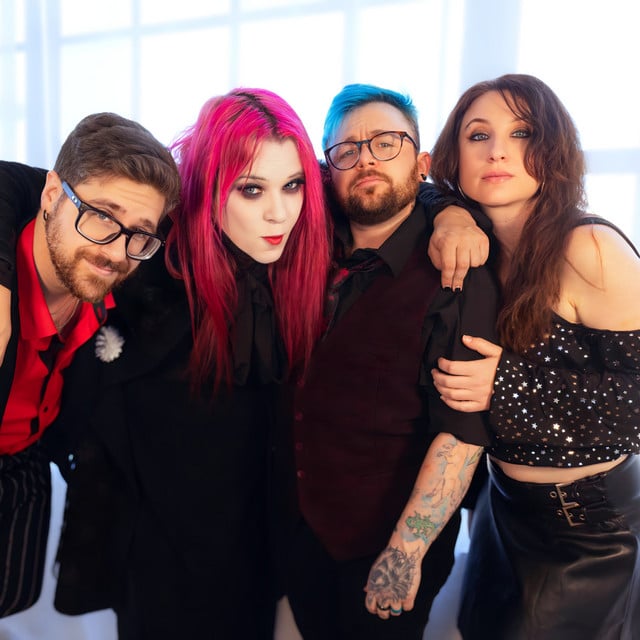
Sarah and the Safe Word
Artist
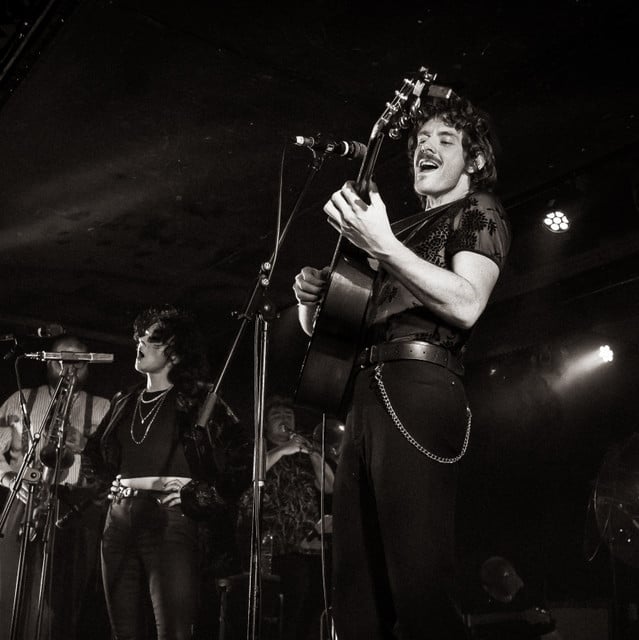
The Great Pleasure
Artist
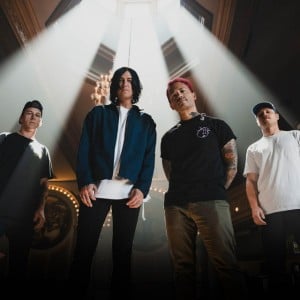
Sleeping With Sirens
Artist
Sleeping With Sirens breathe rarified air. After fourteen years, five studio albums, and thousands of shows, the band has outlasted many of their peers while crafting an undeniably unique path through modern alternative rock. With each release, the quintet — Kellin Quinn [vocals, keyboards], Jack Fowler [lead guitar], Nick Martin [rhythm guitar], Justin Hills [bass], and Matty Best [drums] - continue to hone their mix of unflinchingly honest lyricism, unforgettable riffs, and pulse-pounding percussion while boldly exploring new creative frontiers. That future-forward perspective, coupled with a deep connection to listeners, has established Sleeping With Sirens as a beacon of hope in a world desperate to find silver linings. On Complete Collapse, the band’s sixth studio album, Sleeping With Sirens cut straight to the bone, as they process life in modern times. “We’re coming to terms with the new reality we are in,” explains Quinn. “Things have changed so rapidly, and we’re all doing our best to process it. There’s a feeling of heaviness to the record, both in sound and emotion. We’re trying to figure out what’s going on and where we’re going. We’ve seen so much stagnation, but also a lot of change that wasn’t necessarily for the better. We’re realizing now that our voice, and what we’re able to say or should say, needs to come through the music. It’s not about what you can say on Instagram or Twitter, it’s about what you’re saying through your work.”
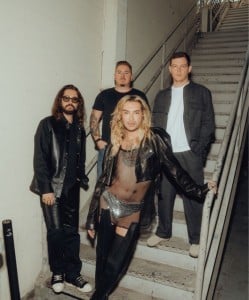
Tokio Hotel
Artist
Since their explosive debut, Tokio Hotel has risen from local heroes in Germany to global icons, captivating millions with their unique sound and powerful visuals. Formed in 2001 by twin brothers Bill and Tom Kaulitz, bassist Georg Listing and drummer Gustav Schäfer, the band quickly became a trailblazing force in the international music scene. Their first album „Schrei“ (2005) propelled them to stardom, driven by hits like „Durch den Monsun“, which became a generational anthem. Tokio Hotel’s blend of emotionally charged lyrics, atmospheric rock and electro-pop influences resonated worldwide. The group has continually evolved its sound, embracing electronic and alternative elements with albums like „Humanoid“ (2009), „Kings of Suburbia“ (2014), „Dream Machine“ (2017) and their most recent album „2001“ (2022), earning more than 70 platinum and 120 gold awards with more than 10 million records sold worldwide. With a loyal global fanbase and more than 110 national and international awards, the band is known for pushing creative boundaries. Their genre-defying style and fearless approach to music and fashion, as well as their values and courage to speak out have made them icons of individuality and equality. With sold-out tours across continents and a reputation for delivering electrifying live performances, the band has built a legacy that continues to inspire. With „Monsun“ turning 20 this year, Tokio Hotel revisits their roots while also charting new musical territory.
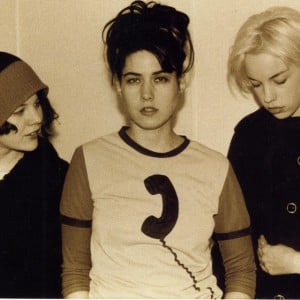
Bikini Kill
Artist
Bikini Kill is a feminist punk band that was based in Olympia, WA and Washington, DC, forming in 1990 and breaking up in 1997. Kathleen Hanna sang, Tobi Vail played drums, Billy Karren (a.k.a. Billy Boredom) played guitar and Kathi Wilcox played bass. Sometimes they switched instruments. Bikini Kill is credited with instigating the Riot Grrrl movement in the early 90's via their political lyrics, zines and confrontational live show. The band started touring in June 1991. In addition to touring the US several times, they also toured Europe, Australia and Japan. Bikini Kill recorded and released a demo tape, two EP's, two LP's and three singles. Their demo tape was self-released,while their first two records came out as a full length CD/Tape and their singles were posthumously collected on CD. Bikini Kill believed that if all girls started bands the world would change. They actively encouraged women and girls to start bands as a means of cultural resistance. Bikini Kill was inspired by seeing Babes in Toyland play live and attempted to incite female participation and build feminist community via the punk scene. They used touring as a way to create an underground network between girls who played music, put on shows and made fanzines. This independent media making and informal network created a forum for multiple female voices to be heard.
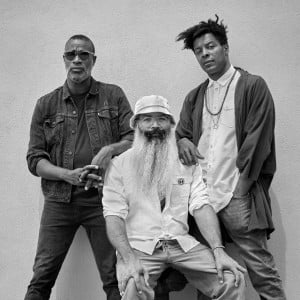
TV on the Radio
Artist
If you think about how hard it is to maintain any creative musical pursuit over time, to evolve a sound across several albums and many years, to stay fresh and engaged along the way, to aim for something beyond yourself and still have plenty to say…well, then, TV On The Radio’s 23-year run is nothing short of a miracle. Experimentation, curiosity and intention are the chromosomes that comprise the band’s DNA and, along with a little alchemy, it’s resulted in a more-than-two-decade run as one of America’s most original bands. Which is all to say that to have TV On The Radio present in the year of our lord 2024 - 20 years after their debut album, a decade since their last - is an absolute blessing. Since its inception, TV On The Radio has always been hard to categorize. But that has been by design. To be beyond contextualization, a band of contradiction: their music sounds both boundless and intimate, wandering and purposeful, songs illustrating courage and fear at once. That tension is at the heart of who they are, even as they continued to morph and evolve their sound through five albums.
Metric
Artist
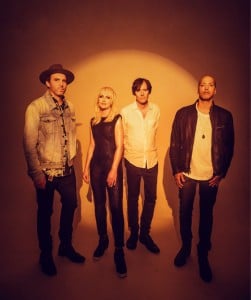
In 1998, songwriting & production duo Emily Haines & Jimmy Shaw formed <a href="spotify:artist:1rCIEwPp5OnXW0ornlSsRl" data-name="Metric">Metric</a> and left Toronto for NYC in search of like-minded artists. In 2001/2002, they were joined by drummer Joules Scott Key & bassist Joshua Winstead, and found themselves at the center of the city’s burgeoning alt-rock scene alongside bands like LCD Soundsystem, The Strokes, TV On the Radio, Yeah Yeah Yeahs, Interpol and more. Unlike their peers, Metric resisted major label offers, releasing albums that pushed boundaries on their own terms. Metric’s relentless pursuit of timeless songwriting and fiercely independent ethos have cemented their place as one of the most essential and ahead-of-the-curve bands of the last two decades. By constantly upping themselves across nine unpredictable and adventurous studio albums, the trailblazing Toronto outfit founded by Emily Haines & Jimmy Shaw is proof that you can amass an untouchable catalog without signing to a major label or changing your lineup. Their latest LP, Formentera II, out now via their label MMI & Thirty Tigers, is a testament to their singular purpose. It stands among their best and most genre-defying work and closes the 18-song cycle started by 2022’s critically acclaimed Formentera
overpass
Artist
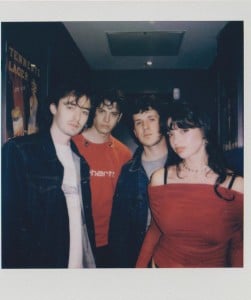
Emerging as the most exciting homegrown act to come out of the midlands in over a decade, overpass unite singer and guitarist Max, bass player Indie, guitarist Elliot and drummer Jake. The band formed through a series of serendipitous connections and a shared appreciation of arena-sized indie rock, leading them to sell out a string of ever increasing capacity shows in the UK’s second city. With a growing fanbase despite little music out, overpass continued to make waves in the Birmingham music scene, bolstering word of mouth support. “We didn’t expect to sell out shows so quickly” says Elliot, “but Birmingham’s been amazing to us.” overpass’ dedicated following feels like a refreshing counterpoint to culture’s current obsession with online metrics. “We have big dreams and goals,” Max promises. “It's great to have loads of views on a video or something. But, like, what does it actually mean? When you see loads of people in front of you singing your songs back - that’s real. It’s tangible. It’s authentic. And that’s what overpass is all about.”
Bad Religion
Artist
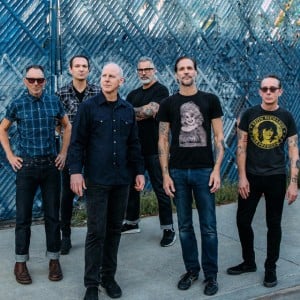
Emerging from Los Angeles in 1980, Bad Religion has become a seminal force in the punk rock scene, wielding their thought-provoking, socially conscious anthems to inspire generations of musicians and fans. Their unique blend of intellectual lyricism and melodic harmonies has earned them a reputation as trailblazers in the genre. With a steadfast creative partnership between Greg Graffin and Brett Gurewitz at its core, the band's influential discography spans over four decades, solidifying Bad Religion's legacy as a touchstone for punk rock and a driving force in shaping the music landscape.
Le Tigre
Artist
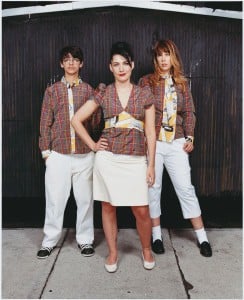
Originally conceived as the live backing band for her <a href="spotify:artist:3jCDV35GjiUGWYWKgMd9CF">Julie Ruin</a> solo project, <a href="spotify:artist:0gvHPdYxlU94W7V5MSIlFe">Bikini Kill</a> founder and quintessential riot grrrl Kathleen Hanna formed Le Tigre, another bold, feminist-oriented trio, with filmmaker Sadie Benning and zine creator Johanna Fateman in 1998. Borrowing a page from Hanna's <a href="spotify:artist:3jCDV35GjiUGWYWKgMd9CF">Julie Ruin</a> output, Le Tigre mixed punk's directness and politics with playful samples, eclectic pop, and lo-fi electronics. The group also added multimedia and performance art elements to their live shows, which often featured support from like-minded acts such as <a href="spotify:artist:4DEqd0W7IpHzQVm1oQXI0y">the Need</a>. Le Tigre arrived in late 1999 on Mr. Lady, followed by the From the Desk of Mr. Lady EP in 2001. Benning left the group to pursue her filmmaking career before the recording of Le Tigre's second album, Feminist Sweepstakes, and was replaced by J.D. Samson. Feminist Sweepstakes, which featured a more sophisticated sound and more overtly political lyrics, arrived later in 2001. Remixes followed in summer 2002. The band made a surprising leap to the majors for 2004's This Island, which was distributed through Universal. ~ Heather Phares & MacKenzie Wilson, Rovi
Lunachicks
Artist
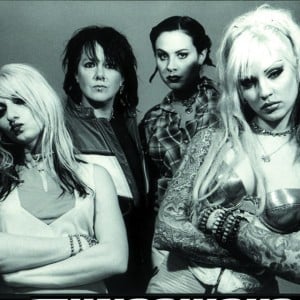
As teenagers, NYC’s legendary punk band, Lunachicks, made a name for themselves in hallowed local clubs like CBGB and The Limelight, where they caught the attention of Kim Gordon and Thurston Moore of Sonic Youth. In 1990, London-based record label Blast First released the Lunachicks’ debut album, Babysitters on Acid. Five studio CDs, a live album and countless singles later the ever touring Lunachicks saw themselves sharing the stage with such bands as The Ramones, The Offspring, Marilyn Manson, Rancid, NOFX, and The Go-Go’s and playing festivals such as The Reading festival and Warped Tour. Since the departure of rhythm guitarist Sindi in 1997, the Lunachicks have remained a quartet. Theo, Gina, Squid, and Chip (their drummer since 1994) honed their skills and matured into a tight sonic outfit without ever losing their satirical edge. The Lunachicks’ touring days ended in 2001 reuniting once in 2004 to play with Joan Jett in DC for “The March For Women’s Lives”. Since their hiatus, the band members have kept busy Theo recorded and toured with her band, "Theo and the Skyscrapers.” <a href="spotify:artist:1qjFulvl5PLIjSoCihFBvG" data-name="Gina Volpe">Gina Volpe</a> formed and fronted her power trio <a href="spotify:artist:29GuADF2SELvCfkCoAifmT" data-name="Bantam">Bantam</a>, then continued on as a solo artist who is currently releasing new music. In early 2020 Lunachicks announced a reunion but their plans for playing live again were sidelined by the pandemic and their shows were rescheduled for 2021 and 2022. Lunachicks have also recently published a memoir entitled, "Fallopian Rhapsody" (Hachette Books).
Wolf Alice
Artist
https://wolfalice.co.uk/

Neck Deep
Artist

Mom Jeans.
Artist

The Rills
Artist
Big Audio Dynamite
Artist

Motion City Soundtrack
Artist
Midtown
Artist

A Skylit Drive
Artist
Asking Alexandria
Artist

American Hi-Fi
Artist

Sham 69
Artist

Sleeper
Artist
Bratmobile
Artist
Along with <a href="spotify:artist:0gvHPdYxlU94W7V5MSIlFe">Bikini Kill</a>, Bratmobile spearheaded the riot grrrl revolution of the early 1990s, battling the long-standing dominance of men within the punk rock community to help empower a new generation of female musicians and fans. Comprised of singer Allison Wolfe, guitarist Erin Smith, and drummer Molly Neuman, Bratmobile made their debut at 1991's International Pop Underground convention, a landmark indie music festival mounted in Olympia, Washington by <a href="spotify:artist:1qHR9DMfOJQjvWLEfMZQlG">Beat Happening</a> frontman and <a href="spotify:search:label%3A%22K+Records%22">K Records</a> honcho <a href="spotify:artist:4L0x6V9ckwc4QhR069mk9M">Calvin Johnson</a>; after a handful of singles -- with members spread out between California, Washington, and Maryland, recording was a logistical nightmare -- the trio finally released an LP, Pottymouth, in 1993. 1994's The Real Janelle EP was Bratmobile's final studio date, although a July 1993 BBC broadcast was issued the following year as The Peel Session EP. In the wake of the group's demise, Neuman joined <a href="spotify:artist:6PPXzT2CUtpQ83maCsza6Q">the Peechees</a>, while Wolfe and Smith reunited in <a href="spotify:artist:1LdA2Q0GE08HyoCdjbBbxa">Cold Cold Hearts</a>. Bratmobile re-formed in March 1999 to play a series of dates as the opening act for <a href="spotify:artist:4wLIbcoqmqI4WZHDiBxeCB">Sleater-Kinney</a>; the new album Ladies, Women, and Girls was released in fall 2000. ~ Jason Ankeny, Rovi
Babes in Toyland
Artist
Babes in Toyland is about as harsh as rock music gets -- guitarist Kat Bjelland screams and thrashes her guitar to the gut-pounding, throttling beat of bassist Maureen Herman and drummer Lori Barbero. Over their two albums and two EPs, the all-female trio offer no escape from their strongly female-oriented, but not necessarily feminist, rock. Bjelland formed Babes in Toyland in 1987 in Minneapolis, after playing around San Francisco for several years in various bands that featured, at various times, Jennifer Finch of <a href="spotify:artist:2zMQOJ4Cyl4BYbw6WqaO3h">L7</a> and <a href="spotify:artist:4vI0xGbQl2cMnMiagUEBOj">Courtney Love</a> of <a href="spotify:artist:5SHQUMAmEK5KmuSb0aDvsn">Hole</a>. After releasing a single on <a href="spotify:search:label%3A%22Sub+Pop%22">Sub Pop</a>'s singles club, Babes in Toyland came to the attention of <a href="spotify:artist:5UqTO8smerMvxHYA5xsXb6">Sonic Youth</a>, who took them on a tour of Europe. Soon, they recorded their abrasive debut, Spanking Machine, with producer <a href="spotify:artist:5WPz1DmtxRJBajeTYGiftU">Jack Endino</a>; one more independent EP followed before they signed to <a href="spotify:search:label%3A%22Reprise%22">Reprise</a>. Between labels, original bassist Michelle Leon left the group. <a href="spotify:artist:5UqTO8smerMvxHYA5xsXb6">Sonic Youth</a>'s <a href="spotify:artist:4tXPSo0qk91VMP3wFxL0Fo">Lee Ranaldo</a> produced their second album, Fontanelle, which showed no signs of concession to a major label. In early 1993, the band broke up for several days before re-forming to record the Painkillers EP and hitting the road with Lollapalooza 1993. Even though Lollapalooza offered the group a boost in public exposure, they chose not to capitalize on it; instead, it took them nearly two years before they released a new record, Nemesisters, in 1995. With Babes in Toyland on hiatus, Bjelland formed <a href="spotify:artist:1s8XBVqlB7YqaI84vI8j4Q">Katastrophy Wife</a> with husband Glen Mattson; in the spring of 2000, <a href="spotify:search:label%3A%22Reprise%22">Reprise</a> issued the Babes collection Lived. The band limped on for a few years, hinting at a possible fourth record, but were often distracted by consistently breaking up and then re-forming. The group played their last official show in November 2001, and subsequently released a live recording of the gig called Minneapolism. Babes in Toyland got back together in 2014 and promised new material alongside some live shows. In the group's usual fashion, the reunion did not run smoothly, and bassist Maureen Herman was fired from the band in 2015. Although any new material failed to appear, 2016 saw the release of Redeux, a career-spanning collection that was compiled by the band themselves. ~ Stephen Thomas Erlewine, Rovi
Aiko el grupo
Artist
AIKO EL GRUPO es un grupo de Madrid formado por Tere (guitarra y voz), Lara (guitarra y voz) y Bárbara (teclados y voz). Su frescura y aplomo (y rabia) recuerdan al sonido punk-pop de grupos como <a href="spotify:artist:6K2bPQMt5xXBCfMdU5Lokj" data-name="Joanna Gruesome">Joanna Gruesome</a>, <a href="spotify:artist:0mgbAj6btHW215UxhLq1AV" data-name="Veronica Falls">Veronica Falls</a> o <a href="spotify:artist:1QFSWSYQpinYxsaAMG8jF2" data-name="Comet Gain">Comet Gain</a>, con toques del espíritu riot grrrl de grupos americanos como <a href="spotify:artist:2n6FviARgtjjimZXu18uRM" data-name="Le Tigre">Le Tigre</a>, <a href="spotify:artist:3GTaO7e3uPaG0SJR7Hxy8L" data-name="Bratmobile">Bratmobile</a> o <a href="spotify:artist:0gvHPdYxlU94W7V5MSIlFe" data-name="Bikini Kill">Bikini Kill</a>. El grupo lo formaron Tere (que también toca en <a href="spotify:artist:5tD6FNrK7Hlxlkt4pbAliC" data-name="Yawners">Yawners</a> y <a href="spotify:artist:15o4xwiKZWJ6jOFp9LeP24" data-name="Repion">Repion</a>), Lara y Bárbara, en una noche de alcohol e inspiración. Su actitud y nervio son un ejercicio de efervescencia y juventud. Estamos impacientes por ver (y escuchar) todo lo que son capaces de hacer. ••••••••••••••••••••••• AIKO EL GRUPO is based in Madrid, and is formed by Tere (guitar and vocals), Lara (guitar and vocals) and Bárbara (keyboards and vocals). Their freshness and aplomb (and anger) remind us of the punk-pop sound of groups like <a href="spotify:artist:6K2bPQMt5xXBCfMdU5Lokj" data-name="Joanna Gruesome">Joanna Gruesome</a>, <a href="spotify:artist:0mgbAj6btHW215UxhLq1AV" data-name="Veronica Falls">Veronica Falls</a> and <a href="spotify:artist:1QFSWSYQpinYxsaAMG8jF2" data-name="Comet Gain">Comet Gain</a>, with touches of the riot grrrl spirit of American groups like <a href="spotify:artist:2n6FviARgtjjimZXu18uRM" data-name="Le Tigre">Le Tigre</a>, <a href="spotify:artist:3GTaO7e3uPaG0SJR7Hxy8L" data-name="Bratmobile">Bratmobile</a> and <a href="spotify:artist:0gvHPdYxlU94W7V5MSIlFe" data-name="Bikini Kill">Bikini Kill</a>. The group was initially formed by Tere (who also plays in <a href="spotify:artist:5tD6FNrK7Hlxlkt4pbAliC" data-name="Yawners">Yawners</a> and <a href="spotify:artist:15o4xwiKZWJ6jOFp9LeP24" data-name="Repion">Repion</a>), Lara and Bárbara, in a night of alcohol and inspiration. Their attitude and nerve are an exercise in effervescence and youth. We cannot wait to see (and hear) everything they are capable of doing.
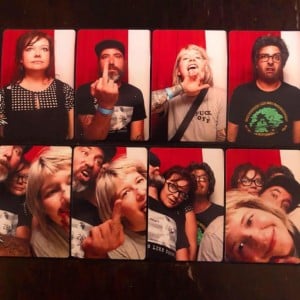
Cheap Perfume
Artist
Cheap Perfume prove that you can simultaneously smash the patriarchy and have a good time. They’re fun. They’re angry. They’re dirty, foul-mouthed and unapologetic. Through lyrics written by frontwomen Stephanie Byrne and Willow “Jane No,” Cheap Perfume explore topics of intersectional feminism, equity, sex, relationships, partying, violence and politics. The band released a music video for their latest single, “No Men,” in 2023, four years after dropping their second full-length album, “Burn It Down,” the highly anticipated follow-up to 2016’s “Nailed It.” The album includes a new recording of Cheap Perfume’s anti-fascist anthem, “It’s Okay (to Punch Nazis),” which was released as a single in 2017 and has gone viral on TikTok. Stephanie’s shout-singing and playful/aggressive stage presence excite and empower crowds who come to see Cheap Perfume perform live. Jane plays guitar and sings the melodies that balance Stephanie’s sass-talk. David “Hott Dave” Grimm’s heavy drumming and Geoff Brent’s powerful bass lines deliver straight-up punk rock that’s influenced by riot grrrl, hardcore and surf punk. Through their live shows and albums, Cheap Perfume are creating space for womxn to boldly take up.
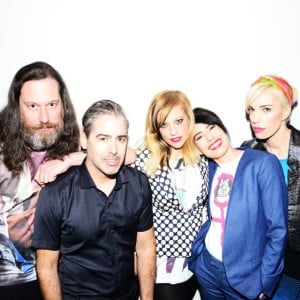
The Julie Ruin
Artist
Originally dubbed a one-off experiment by ex-<a href="spotify:artist:0gvHPdYxlU94W7V5MSIlFe">Bikini Kill</a> lead singer Kathleen Hanna, Julie Ruin released their self-titled record on the <a href="spotify:search:label%3A%22Kill+Rock+Stars%22">Kill Rock Stars</a> label in September 1998, following the breakup of <a href="spotify:artist:0gvHPdYxlU94W7V5MSIlFe">Bikini Kill</a> in February of that year. Described as Hanna's alter ego, Julie Ruin picked up where <a href="spotify:artist:0gvHPdYxlU94W7V5MSIlFe">Bikini Kill</a> left off, singing of feminism, violence, objectification, juxtaposition, and the Valley Girl Intelligentsia. Best described as lo-fi electronica, Hanna recorded and mixed the record in the closet of her Olympia, Washington apartment with Paul Schuster. Julie Ruin did not tour to promote the record. Hanna then formed the similar project <a href="spotify:artist:2n6FviARgtjjimZXu18uRM">Le Tigre</a> in 1999, but returned to Julie Ruin in 2010 as a band project with Carmine Covelli, Sara Landeau, Kathi Wilcox, and Kenny Mellman. The group's first album, Run Fast, appeared in September 2013 via <a href="spotify:search:label%3A%22Dischord+Records%22">Dischord Records</a>. The ensemble went on to tour the record but were forced to halt their plans as Hanna was battling Lyme disease. Despite ongoing difficulties, the band returned in 2016 with Hit Reset, a commanding record of jagged dance beats and spiky pop that Hanna described as being some of her most personal work to date. ~ Stacee Sledge, Rovi
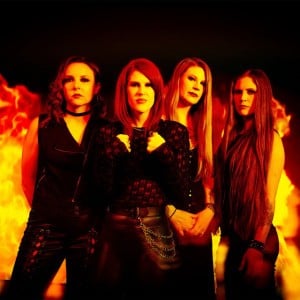
Kittie
Artist
Thrust into heavy metal stardom as teenagers since their debut release, Kittie has thrashed and conquered the heavy metal world for more than twenty years. With seven albums, over two million in sales and OzzFest co-headliners on their resume, Kittie has defied industry norms, fought back against women in rock stereotypes, and inspired generations around the globe since they appeared. Now for the first time, they are sharing their untold story about the importance of family, perseverance, and the upside-down hurricane of rock n roll that includes a rotating line up of bandmates, on-going lawsuits and the pressure to live up to the expectations that put them on the map. Kittie Origins/Evolutions is generously peppered with archival footage shot by the band, which gives you an honest and brutal look at what it takes to survive in the music industry and the price of following your dreams.
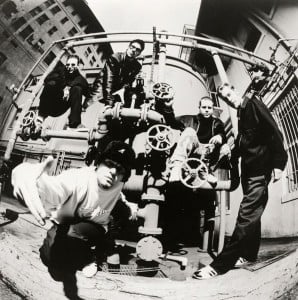
Limp Bizkit
Artist
Limp Bizkit is an infectious spirit. Any other details are merely salad dressing.
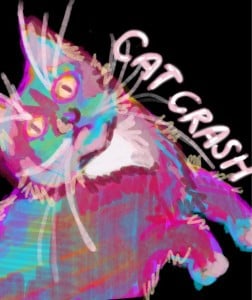
Cat Crash
Artist
WE'RE CAT CRASH AND WE'RE HERE TO KNOCK YR SOCKS OFF!!!!!!! "Enter Cat Crash, a three-piece New York/Connecticut Riot Grrrl band who is “knocking your socks off” with every beat of their music. Riot Grrrl, a genre that originated in the 1990’s, is built upon a foundation of feminism and designing spaces for self-expression while rejecting social norms and what “should be” in music. As a genre, it opens up the ground for so much more than representation within the music scene – it is activism through art and music, breaking boundaries within punk and bringing to attention female and queer voices. Cat Crash directly embodies the spirit of Riot Grrrl, breaking ground and bringing a new sound to the Connecticut music scene." - Megan Hayes, “The Dog P∅und”: Keeping the Underground Music Scene Alive in Storrs T4T4T4T baby <a href="spotify:playlist:7CimrwcXk17IFa9fZA3bjc" data-name="RIOT GRRRL'S NOT DEAD">RIOT GRRRL'S NOT DEAD</a> follow our instagram @catcrashband for updates https://linktr.ee/catcrashband
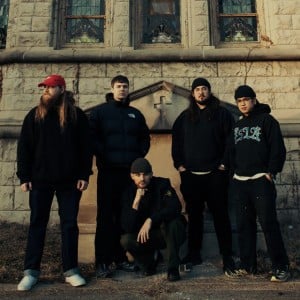
Knocked Loose
Artist
As Knocked Loose chipped away at what would become their 3rd album, they felt the pressure from all sides. Internally, there was the need to challenge themselves as songwriters while retaining the merciless intensity and unflinching honesty that have always been their calling cards. Externally, there was a whole new set of eyes on the Louisville quintet, following a banner year in which they’d brought their underground-seasoned sound to some of the world’s biggest stages such as Coachella and Bonnaroo. The creative process was arduous, writing close to 40 songs across a span of 4 years before locking in the 10 tracks that make up new LP You Won’t Go Before You’re Supposed To. In the end, vocalist Bryan Garris, guitarists Isaac Hale & Nicko Calderon, bassist Kevin Otten & drummer Kevin “Pac Sun” Kaine honed a diverse, cohesive and savagely intense album that both sums up the massive strides they’ve taken during their decade as a band, & asserts their boundless potential going forward. There’s no ceiling for hardcore in 2024 — even an outfit as uncompromising as Knocked Loose can turn up in mainstream-adjacent spaces and win over new fans. But there’s a center to what they do that will never change: uncompromising heaviness, sonically & thematically. Everywhere Knocked Loose have been is here on this record — but so is everywhere they may yet go.
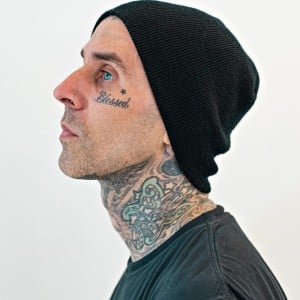
Travis Barker
Artist
<a href="spotify:artist:4exLIFE8sISLr28sqG1qNX" data-name="Travis Barker">Travis Barker</a> is an American musician and producer who has sold millions of records with his bands <a href="spotify:artist:6FBDaR13swtiWwGhX1WQsP" data-name="blink-182">blink-182</a>, <a href="spotify:artist:6f9zLIMqyEu7abKhGMFr5q" data-name="Transplants">Transplants</a>, <a href="spotify:artist:7gkRNHOOt7QfhhXf0rEnmj" data-name="+44">+44</a>, and as a solo artist. Called one of the greatest drummers of all time, Barker has since established himself as an incredibly versatile drummer, producing and making guest appearances in music projects of numerous music genres including hip-hop, alternative rock, pop, and country. Barker’s numerous solo collaborations have included <a href="spotify:artist:68DWke2VjdDmA75aJX5C57" data-name="Yelawolf">Yelawolf</a>, <a href="spotify:artist:0NbfKEOTQCcwd6o7wSDOHI" data-name="The Game">The Game</a>, <a href="spotify:artist:55Aa2cqylxrFIXC767Z865" data-name="Lil Wayne">Lil Wayne</a>, <a href="spotify:artist:74NBPbyyftqJ4SpDZ4c1Ed" data-name="Tom Morello">Tom Morello</a>, <a href="spotify:artist:4P0dddbxPil35MNN9G2MEX" data-name="Cypress Hill">Cypress Hill</a>, <a href="spotify:artist:3ipn9JLAPI5GUEo4y4jcoi" data-name="Ludacris">Ludacris</a>, <a href="spotify:artist:4iCwCMnqsNZ6atvRiADgtn" data-name="RZA">RZA</a>, <a href="spotify:artist:4Cqia9vrAbm7ANXbJGXsTE" data-name="Slash">Slash</a>, <a href="spotify:artist:77AiFEVeAVj2ORpC85QVJs" data-name="Steve Aoki">Steve Aoki</a>, DJ AM, <a href="spotify:artist:0fA0VVWsXO9YnASrzqfmYu" data-name="Kid Cudi">Kid Cudi</a>, <a href="spotify:artist:7c0XG5cIJTrrAgEC3ULPiq" data-name="Ty Dolla $ign">Ty Dolla $ign</a>, <a href="spotify:artist:7a0G4CC3dZdKAAzVRnaRGu" data-name="Prayers">Prayers</a>, <a href="spotify:artist:6KZDXtSj0SzGOV705nNeh3" data-name="Kid Ink">Kid Ink</a>, <a href="spotify:artist:4NjUYhiL8KL363WwGeLnqZ" data-name="ANTEMASQUE">ANTEMASQUE</a> and many many others. Aside from drumming and producing, he founded the clothing company/lifestyle brand Famous Stars and Straps in 1999. Companies such as DC and Zildjan cymbals have co-designed products in his name. He recently released his first memoir through Harper Collins titled Can I Say, which was a critically acclaimed New York Times bestseller. 2016 saw the return of Blink-182 with their critically acclaimed, chart-topping #1 album California coupled with their sold-out headline North American tour. ** i verify **
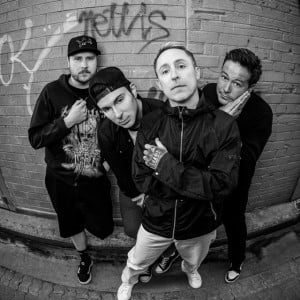
Yellowcard
Artist
Yellowcard meant it when they said goodbye. The lights dimmed on one of the most beloved pop-punk and alt-rock bands of the 2000s with intention and authenticity. Wrapping things up with a farewell tour, Yellowcard exited the “right” way, with grace, appreciation, and finality. But the story wasn’t complete. Legacy cracked the door. Healing blew it wide open. Riding a resurgence that saw the global Ocean Avenue 20th anniversary tour featured in Forbes and a reconciliation that put all four members at peace with their legacy and each other, Yellowcard just made the most ambitious and emotionally resonant record of their career. Better Days, the band’s first album in nearly a decade, was produced by blink-182’s Travis Barker, who also played drums on every track. Better Days is an unflinching reflection on gratitude, forgiveness, perspective, and purpose. Once ubiquitous on MTV and the Billboard Hot 100, the Vans Warped Tour veterans, whose first two albums produced double-platinum and gold title tracks, sound fully recharged and revitalized in 2025. William Ryan Key, Sean Mackin, Ryan Mendez, and Josh Portman have never sounded stronger. Their first release with powerhouse label Better Noise Music, Better Days is Yellowcard’s testimony that healing is a process, growth is nonlinear, and sometimes the best chapter opens after the supposed ending. This isn’t just a return. It’s a reckoning. And this time, Yellowcard is ready.
Mallory Knox
Artist
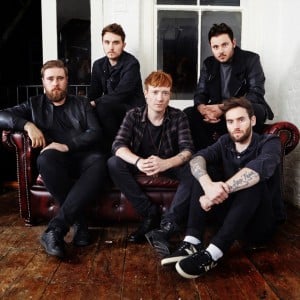
The rapid success of Mallory Knox’s debut album ‘Signals’ saw them reaching #35 in the UK Official Album Charts. Their second album ‘Asymmetry’, and latest album release ‘Wired’, have granted them two times consecutively the coveted Top 20 in the UK official Album Charts. All of Mallory Knox's singles to date having reached A-list level on MTV Rocks, Kerrang! and Scuzz TV, alongside numerous nominations at the Kerrang! Awards which has cemented them as one of the best upcoming UK Rock bands in the UK. They have played numerous tours of their own, with sold out nights at prestigious venues such as Electric Ballroom, KOKO and Roundhouse, as well as having supported bands such as <a href="spotify:artist:4NiJW4q9ichVqL1aUsgGAN" data-name="A Day To Remember">A Day To Remember</a>, <a href="spotify:artist:1Ffb6ejR6Fe5IamqA5oRUF" data-name="Bring Me The Horizon">Bring Me The Horizon</a>, <a href="spotify:artist:7k73EtZwoPs516ZxE72KsO" data-name="ONE OK ROCK">ONE OK ROCK</a>, and <a href="spotify:artist:3N8Hy6xQnQv1F1XCiyGQqA" data-name="Sleeping With Sirens">Sleeping With Sirens</a>. Music is everything to Mallory Knox. They love it so much that on the creation of their new self-titled album they didn’t want to stop writing it. Over five different sessions and 14 months of recording the band worked tirelessly, never happy with what they had and always confident that the next song they write would be even better than the last. To listen to these 12 slices of riff-wrangling majesty is to hear Mallory Knox in their truest and most cohesive form. Stripping things back to the bare basics of song-writing and not adhering to whatever sound that the people around them wanted them to make, this is classic-in-the-making British rock for the masses coming straight from the heart.
Waterparks
Artist
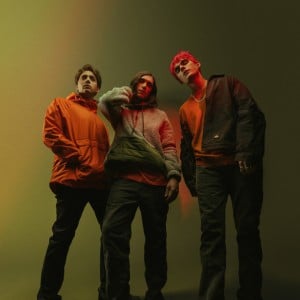
Waterparks never sit still. The Houston trio—Awsten Knight [vocals, guitar], Otto Wood [drums], and Geoff Wigington [guitar]—manically move forward, shucking and jiving between fits of rock, alternative, and electronic with pop ambition and hip-hop’s bold and blatant disregard for the rules. In 2020, the boys only pick up the pace as they ready new music after signing a new deal with 300 Entertainment. “You don’t have to stick to one thing,” exclaims Awsten. “Over the years, we’ve gotten better at switching it up. By making moves like getting with 300 (an almost exclusively hiphop oriented label) and not forfeiting our guitars once we signed the deal, I think we’re actually taking steps to help rock. Either way, fuck genres and expectations. There’s no reason to be limited.” By doing so, these musicians consistently raise the bar. 2019’s FANDOM elevated them to new critical and commercial peaks. Marking a series of career bests, it landed at #2 on the Billboard Top Alternative Albums Chart, granting their first Top 40 debut on the Billboard Top 200. KERRANG! rated it “4-out-of-5 stars,” and MTV admitted, “We have no choice but to stan.”
Nine Inch Nails
Artist
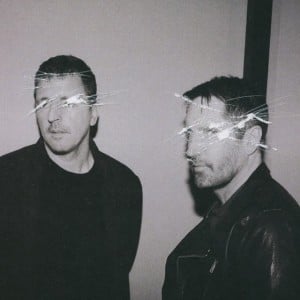
Pulling the harsh sounds of industrial rock into the mainstream, <a href="spotify:artist:0hRijdwO8UsJMudc3476ma">Trent Reznor</a> and his band Nine Inch Nails became the face of industrial music in the '90s with "Head Like a Hole," "Closer," and "Hurt" becoming hits and The Downward Spiral (1994) and The Fragile (1999) topping the charts. Nominated for over a dozen Grammys, NIN won Best Metal Performance awards in 1992 and 1996 for two tracks -- "Wish" and "Happiness in Slavery" -- from their metallic EP Broken. Extending into the 2000s, <a href="spotify:artist:0hRijdwO8UsJMudc3476ma">Reznor</a> maintained his chart success, even as the band's style shifted to incorporate atmospheric electronic elements influenced by his Oscar-winning film scores. In 2016, after decades as the only official member of the band, he welcomed English producer <a href="spotify:artist:5HARKwnZLNQBeUGsTHX2AM">Atticus Ross</a> -- his longtime film scoring partner and bandmate in side project <a href="spotify:artist:1yDbenrXWhaQij3SCpsXe7">How to Destroy Angels</a> -- as NIN's official second member. Over the next five years, the duo enjoyed a prolific period that saw additional new film scores as well as NIN projects like 2018's Bad Witch LP and a continuation of their ongoing instrumental Ghosts series which saw two new entries in 2020's Ghosts V: Together and Ghosts VI: Locusts. <a href="spotify:artist:0hRijdwO8UsJMudc3476ma">Michael Trent Reznor</a> was born May 17, 1965, in New Castle, Pennsylvania and raised in Mercer, a small town outside Pittsburgh. His parents divorced when he was six and he was raised by his maternal grandparents. As a child, <a href="spotify:artist:0hRijdwO8UsJMudc3476ma">Reznor</a> had already developed a keen interest in music. He learned to play piano, tenor sax, and tuba, playing in his school's jazz and marching bands while also acting in high-school productions of Jesus Christ Superstar and The Music Man. Outside of the classical sphere, his biggest rock influence was <a href="spotify:artist:07XSN3sPlIlB2L2XNcTwJw">Kiss</a>, whose theatricality and live shows would later inform NIN's acclaimed stage production. While studying music and computer engineering at local Allegheny College, he was a fleeting member of new wave outfit Option 30, contributing vocals and keyboards before parting ways with the band when he dropped out of school to pursue music full-time. He packed up and moved to Cleveland, Ohio with his friend <a href="spotify:artist:2Kw2smJMCoi6mk6KbscZG1">Chris Vrenna</a>, who later became a founding member of the first incarnation of NIN. While in Cleveland, <a href="spotify:artist:0hRijdwO8UsJMudc3476ma">Reznor</a> was drawn to new wave and the industrial sounds of <a href="spotify:artist:1DXylZlWbVvlckNqwvjTEt">Ministry</a> and <a href="spotify:artist:5Mu0EMEsUIVE132pNMywns">Skinny Puppy</a>. He gigged around town for a few years, playing in cover band the Urge before joining the Innocent as their keyboardist. The latter band released a single full-length, 1985's Livin' in the Street (<a href="spotify:search:label%3A%22Red+Label+Records%22">Red Label Records</a>), before <a href="spotify:artist:0hRijdwO8UsJMudc3476ma">Reznor</a> quit. He soon hooked up with synth pop group Exotic Birds, contributing keys, programming, and backing vocals, while also recruiting <a href="spotify:artist:2Kw2smJMCoi6mk6KbscZG1">Vrenna</a> on drums. Despite their brief run together, <a href="spotify:artist:0hRijdwO8UsJMudc3476ma">Reznor</a> appeared with the band in the 1987 Michael J. Fox/Joan Jett film Light of Day as a fictional band dubbed The Problems. His final roles in the local keyboardist circuit were with pop outfit Slam Bamboo -- they issued a single "White Lies"/"Cry Like a Baby" in 1988 -- and new wavers Lucky Pierre, whose vocalist <a href="spotify:artist:0HPMf4lKUQOkzxEED4bZxO">Kevin McMahon</a> would later form <a href="spotify:artist:4hILJw5uchW1ZZJO10icIz">Prick</a>, one of the first signees to <a href="spotify:artist:0hRijdwO8UsJMudc3476ma">Reznor</a>'s future record label, <a href="spotify:search:label%3A%22Nothing+Records%22">Nothing Records</a>. During these stints, <a href="spotify:artist:0hRijdwO8UsJMudc3476ma">Reznor</a> continued to work on his own material while employed as an assistant engineer and handyman at Cleveland's Right Track studio. When the shop closed for the day, owner Bart Koster allowed <a href="spotify:artist:0hRijdwO8UsJMudc3476ma">Reznor</a> to use the facilities for free. The seeds from these early recording sessions -- on which he played keyboards, drums, guitars, and samplers himself -- would grow into Nine Inch Nails' first demo, Purest Feeling. After making NIN's live debut as tour openers for <a href="spotify:artist:5Mu0EMEsUIVE132pNMywns">Skinny Puppy</a>, <a href="spotify:artist:0hRijdwO8UsJMudc3476ma">Reznor</a> shopped the demo tape around the U.S., landing a deal with indie label <a href="spotify:search:label%3A%22TVT+Records%22">TVT Records</a>. <a href="spotify:artist:0hRijdwO8UsJMudc3476ma">Reznor</a> quickly returned to the studio to polish existing Purest Feeling tracks and record some new songs. The result, 1989's Pretty Hate Machine, presented a dark, synth-soaked vision of industrial that was also hook-heavy and accessible. Combined with a lyrical focus on sex, self-loathing, betrayal, angst, and religion, these attributes would become hallmarks of <a href="spotify:artist:0hRijdwO8UsJMudc3476ma">Reznor</a>'s early-era material. Pretty Hate Machine only peaked at number 75 on the Billboard 200, but a burgeoning cult following helped maintain its chart presence and sales. Buoyed by radio and MTV airplay for singles "Down in It" and "Head Like a Hole," it became the first independent release to receive platinum certification to date. Promotion of Pretty Hate Machine kept the band (then primarily composed of <a href="spotify:artist:0hRijdwO8UsJMudc3476ma">Reznor</a>, Richard Patrick, <a href="spotify:artist:2Kw2smJMCoi6mk6KbscZG1">Chris Vrenna</a>, and various drummers/keyboardists) on the road for years, spreading NIN's fan base across genre lines by not only opening for <a href="spotify:artist:5Mu0EMEsUIVE132pNMywns">Skinny Puppy</a>, but also alternative/goth acts <a href="spotify:artist:4rjlerN21ygkIhmUv55irs">the Jesus and Mary Chain</a> and <a href="spotify:artist:7zeHJIIfNStVfxlbT72UwY">Peter Murphy</a> of <a href="spotify:artist:5N5tQ9Dx1h8Od7aRmGj7Fi">Bauhaus</a>. Their American reach expanded in 1991 when they joined inaugural Lollapalooza tour, playing alongside <a href="spotify:artist:1n65zfwYIj5kKEtNgxUlWb">Siouxsie and the Banshees</a>, <a href="spotify:artist:6Uhp7WA6sjm5ZL6Xz561de">Living Colour</a>, <a href="spotify:artist:0rpMdBzQXf7aYRnu5fDBJy">Violent Femmes</a>, <a href="spotify:artist:5tdgsNGbOvPQZjcco3yOMt">Rollins Band</a>, <a href="spotify:artist:3O3qPC1hmSp7442HYefx5w">Lords of Acid</a>, <a href="spotify:artist:02NfyD6AlLA12crYzw5YcR">Jane's Addiction</a>, and more. Days after the conclusion of Lollapalooza, NIN shipped off to Europe, opening a pair of shows for <a href="spotify:artist:3qm84nBOXUEQ2vnTfUTTFC">Guns N' Roses</a> and penetrating the German industrial market. When NIN returned to the U.S., <a href="spotify:artist:0hRijdwO8UsJMudc3476ma">Reznor</a> became embroiled in a lengthy legal feud with <a href="spotify:search:label%3A%22TVT%22">TVT</a>, which was eager to pump out another, similar-sounding hit album, constricting his creativity in the process. In secret, he signed a new deal with <a href="spotify:search:label%3A%22Interscope+Records%22">Interscope Records</a> and created the vanity label <a href="spotify:search:label%3A%22Nothing+Records%22">Nothing Records</a>. The band relocated to a new studio in Los Angeles and began recording a batch of aggressive songs inspired by punk and metal. With production by Flood and drumming by <a href="spotify:artist:0sWqGK3JhIufemsFesD8Ei">Martin Atkins</a> and <a href="spotify:artist:2Kw2smJMCoi6mk6KbscZG1">Vrenna</a>, the Broken EP landed in September 1992, peaking inside the Top Ten on the Billboard 200. In addition to the Grammy-winning single "Wish," the effort also included covers of <a href="spotify:artist:2DppeCnNtvrLfEobq9Pw5r">Adam and the Ants</a>' "(You're So) Physical" and <a href="spotify:artist:0hRijdwO8UsJMudc3476ma">Reznor</a>'s collaboration with <a href="spotify:artist:64mGp5QFpsekCRHe6RqDYz">Pigface</a>, "Suck." <a href="spotify:artist:0hRijdwO8UsJMudc3476ma">Reznor</a> enhanced his reputation as a provocateur with a widely banned music video for "Happiness in Slavery," which depicted S&M performance artist Bob Flanagan being torn apart by a machine. There was also a near-mythical, long-form clip for Broken that was never officially released commercially due to its graphic content (a torture victim is dismembered while viewing NIN videos). Bootleg versions became a prized fan commodity and a remastered version found its way onto the Internet in 2006. The Broken era came to a close with NIN's first remix EP, Fixed. Still based in the Los Angeles studio dubbed Le Pig -- coincidentally built in the same house where actress Sharon Tate was murdered by <a href="spotify:artist:1ALiu7S9gPJPSw122Ds1t2">Charles Manson</a>'s followers in 1969 -- <a href="spotify:artist:0hRijdwO8UsJMudc3476ma">Reznor</a> began work on the highly anticipated follow-up to Pretty Hate Machine. A concept album centered on the protagonist's titular descent into self-destruction, The Downward Spiral arrived in March 1994 and debuted at number two. Widely considered to be <a href="spotify:artist:0hRijdwO8UsJMudc3476ma">Reznor</a>'s masterwork, The Downward Spiral is often cited as one of the most important albums of the '90s, presenting a bleak, nihilistic version of NIN that would nonetheless break the band into the mainstream. Hit single "Closer" was a staple on both MTV and radio, despite its graphic music video and lyrical content, while "Hurt" became a live fixture for NIN, receiving a second life in 2003 through <a href="spotify:artist:6kACVPfCOnqzgfEF5ryl0x">Johnny Cash</a>'s stripped-down cover version. The Downward Spiral was anything but for the band, launching them further into the public consciousness and prompting an industry push for soundalikes <a href="spotify:artist:3V3ChkwvlWDJtMFuOKfYiB">Gravity Kills</a>, <a href="spotify:artist:5daXMUbrPh8oX9Nd4CnToG">Stabbing Westward</a>, and <a href="spotify:artist:01WjpKiWVNurV5hjIadB8C">Filter</a> on rock radio. NIN promoted the effort with the Self Destruct Tour, which featured <a href="spotify:artist:2Kw2smJMCoi6mk6KbscZG1">Vrenna</a> on drums, James Woolley on keyboards, <a href="spotify:artist:4Kpz1o4ojFuFXcyVG7Mbg5">Robin Finck</a> on guitar, and Danny Lohner on bass. Already a formidable concert presence, NIN's reputation grew with chaotic performances that often ended in destroyed equipment and serious injuries. That intense commitment to their live show reached into American living rooms in the summer of 1994 with their show-stealing, mud-covered set from Woodstock '94, which won them another Grammy for the live recording of "Happiness in Slavery." After the release of the remix album Further Down the Spiral, NIN continued to tour, supported by then-newcomers <a href="spotify:artist:2VYQTNDsvvKN9wmU5W7xpj">Marilyn Manson</a>, before joining major influence <a href="spotify:artist:0oSGxfWSnnOXhD2fKuz2Gy">David Bowie</a> on the co-headlining Dissonance Tour. During this period, <a href="spotify:artist:0hRijdwO8UsJMudc3476ma">Reznor</a> took his first step into the world of film, assembling the soundtrack to <a href="spotify:artist:0I8RdnOSymfoo59qc5qgkm">Oliver Stone</a>'s controversial movie Natural Born Killers, which included the previously unreleased NIN song "Burn," as well as edits of "Something I Can Never Have" and "A Warm Place." Another track, a cover of <a href="spotify:artist:432R46LaYsJZV2Gmc4jUV5">Joy Division</a>'s "Dead Souls," was featured on the soundtrack for The Crow. <a href="spotify:artist:0hRijdwO8UsJMudc3476ma">Reznor</a> also contributed vocals to <a href="spotify:artist:1KsASRNugxU85T0u6zSg32">Tori Amos</a>' "Past the Mission" from her album Under the Pink. After the conclusion of the Spiral era, NIN entered a period of hibernation. Although <a href="spotify:artist:0hRijdwO8UsJMudc3476ma">Reznor</a> remained active -- producing <a href="spotify:artist:2VYQTNDsvvKN9wmU5W7xpj">Marilyn Manson</a>'s breakthrough sophomore effort, Antichrist Superstar, and contributing the NIN single "The Perfect Drug" to the <a href="spotify:artist:0hRijdwO8UsJMudc3476ma">Reznor</a>-produced soundtrack to <a href="spotify:artist:2Gu6Q05ExIGwHTF43kqLBI">David Lynch</a>'s Lost Highway -- a growing case of writer's block, struggles with drug and alcohol addiction, and public pressure put a hold on album number three. Encamped at the newly constructed Nothing Studios in New Orleans, a reclusive <a href="spotify:artist:0hRijdwO8UsJMudc3476ma">Reznor</a> spent five years crafting that follow-up, which arrived in 1999. Influenced by the passing of <a href="spotify:artist:0hRijdwO8UsJMudc3476ma">Reznor</a>'s maternal grandmother, the deterioration of his friendship with <a href="spotify:artist:2VYQTNDsvvKN9wmU5W7xpj">Manson</a>, and his increasing addictions, the conceptual double-disc opus The Fragile debuted at the top of the charts and was certified double platinum within months. Meticulously produced by <a href="spotify:artist:0hRijdwO8UsJMudc3476ma">Reznor</a> and <a href="spotify:artist:7cXiglYPsrmgecDTDTVFQC">Alan Moulder</a>, the album included singles "We're in This Together," "The Day the World Went Away," "Into the Void," and "Starfuckers, Inc." The remix LP Things Falling Apart featured interpretations of Fragile tracks, as well as the unreleased "10 Miles High" and <a href="spotify:artist:5KQMtyPE8DCQNUzoNqlEsE">Gary Numan</a> cover "Cars." On the supporting Fragility tour, the NIN lineup featured <a href="spotify:artist:0hRijdwO8UsJMudc3476ma">Reznor</a>, <a href="spotify:artist:4Kpz1o4ojFuFXcyVG7Mbg5">Finck</a>, and Lohner, as well as newcomers <a href="spotify:artist:1ZVa9Tz7T3lR30I6r7mhhf">Charlie Clouser</a> on keyboards and Jerome Dillon on drums. That trek spawned a tour documentary titled And All That Could Have Been, which was accompanied by a live recording and limited-edition EP, Still, which featured stripped-down versions of NIN deep cuts, as well as previously unreleased recordings from the era. Toward the end of the Fragile years, <a href="spotify:artist:0hRijdwO8UsJMudc3476ma">Reznor</a> entered rehab after an unexpected overdose in London, putting NIN on hold until they returned in 2005. Sober and refocused, <a href="spotify:artist:0hRijdwO8UsJMudc3476ma">Reznor</a> inaugurated this new chapter with an equally hungry release, fourth LP With Teeth. Unlike prior albums, With Teeth traded gloom, frustration, and pain for outward aggression, matured emotions, and <a href="spotify:artist:0hRijdwO8UsJMudc3476ma">Reznor</a>'s first attempts at sociopolitical commentary, also marking a turning point for NIN that informed the vocal delivery, production, and collaborative spirit of the band into the next decade. In addition to production by <a href="spotify:artist:0hRijdwO8UsJMudc3476ma">Reznor</a> and <a href="spotify:artist:7cXiglYPsrmgecDTDTVFQC">Moulder</a>, the taut set featured programming by <a href="spotify:artist:5HARKwnZLNQBeUGsTHX2AM">Atticus Ross</a> and live percussion by <a href="spotify:artist:7mRVAzlt1fAAR9Cut6Rq8c">Dave Grohl</a>. In addition to being the band's second straight number one, With Teeth also included a trio of chart-topping singles: "The Hand That Feeds," "Only," and "Every Day Is Exactly the Same." A lengthy tour -- featuring the lineup of <a href="spotify:artist:0hRijdwO8UsJMudc3476ma">Reznor</a>, bassist Jeordie White (aka <a href="spotify:artist:2VYQTNDsvvKN9wmU5W7xpj">Marilyn Manson</a>'s <a href="spotify:artist:6dH1EFk5XXM2orJBljsTr9">Twiggy Ramirez</a>), keyboardist <a href="spotify:artist:6cGVZq9WhCCRkTnn4cJYOg">Alessandro Cortini</a>, guitarist Aaron North, and drummers <a href="spotify:artist:7EMrFlPVSDGQKOgtHKH28L">Josh Freese</a>/Jerome Dillon -- accompanied the release, documented on 2007's Beside You in Time. While the first decade of NIN's existence was marked by mystery and long periods of silence between major releases, the reinvigorated outfit began churning out material in earnest after With Teeth. In early 2007, a multimedia promotional effort was rolled out to earnest fans who deciphered clues found on T-shirts, websites, and strategically placed USB drives placed hidden throughout Europe. Part of a high-concept alternate reality game, they revealed a fictional story of a future dystopian America and a burgeoning resistance movement, all of which was inspired by <a href="spotify:artist:2JZbcOAw67koOHlFTjMeGX">George W. Bush</a>'s presidency and the post-9/11 Iraq invasion. This overtly political concept was at the core of Year Zero, which arrived in April on <a href="spotify:search:label%3A%22Interscope+Records%22">Interscope Records</a>. Delving deeper into digital soundscapes, <a href="spotify:artist:0hRijdwO8UsJMudc3476ma">Reznor</a> was once again joined by <a href="spotify:artist:5HARKwnZLNQBeUGsTHX2AM">Ross</a>, who was promoted from assistant to producer (a position he would hold until becoming an official member of NIN a decade later). The promotional tour took the band through Europe, Australia, the U.S., and Asia, notable for featuring NIN's first stop in mainland China at the Beijing Pop Festival that September. While a television show and movie were planned to accompany the Year Zero story, those never came to fruition. The album cycle closed with Year Zero Remixed, which featured reinterpretations by <a href="spotify:artist:0ucLPotcQNI7AViFytdhBz">Ladytron</a>, <a href="spotify:artist:5RISqKCcrhGITX2TQAPGPL">Bill Laswell</a>, <a href="spotify:artist:4A1yfFuBmBOgzv4Oe3fFHk">the Faint</a>, and rapper <a href="spotify:artist:11K0HIZKfdB6ez0VhIgxPm">Saul Williams</a>, whose third effort, 2007's The Inevitable Rise and Liberation of NiggyTardust!, was produced by <a href="spotify:artist:0hRijdwO8UsJMudc3476ma">Reznor</a>. During this prolific period, NIN also released the four-part ambient instrumental album Ghosts I-IV -- released on <a href="spotify:artist:0hRijdwO8UsJMudc3476ma">Reznor</a>'s new label, <a href="spotify:search:label%3A%22The+Null+Corporation%22">The Null Corporation</a> -- as well as the surprise album The Slip. Both 2008 efforts were available for free in their digital formats. While The Slip charted outside the Top Ten on the Billboard 200 and the single "Discipline" became another rock chart hit, Ghosts was nominated for a pair of Grammy Awards (and the track "34 Ghosts IV" would crash the mainstream in an interesting way in 2019). Continuing the direct-to-fans approach, NIN later provided live footage from their accompanying Lights in the Sky tour to online fans, who stitched the pieces together to create a documentary dubbed Another Version of the Truth. The next year, NIN embarked on another trek, the forebodingly dubbed Wave Goodbye tour. When the journey concluded, the band entered an official extended hiatus, during which time <a href="spotify:artist:0hRijdwO8UsJMudc3476ma">Reznor</a> and <a href="spotify:artist:5HARKwnZLNQBeUGsTHX2AM">Ross</a> focused on film scores for director David Fincher (2010's Oscar-winning The Social Network, 2011's The Girl with the Dragon Tattoo, and 2014's Gone Girl). The pair also formed a side project with <a href="spotify:artist:0hRijdwO8UsJMudc3476ma">Reznor</a>'s wife, Mariqueen Maandig, called <a href="spotify:artist:1yDbenrXWhaQij3SCpsXe7">How to Destroy Angels</a>. Essentially NIN with a female vocalist, the outfit released a pair of EPs in 2010 and 2012, as well as a full-length album in 2013. Months after the conclusion of their first tour, NIN returned with their eighth album. The Grammy-nominated Hesitation Marks (<a href="spotify:search:label%3A%22Columbia%22">Columbia</a>/<a href="spotify:search:label%3A%22The+Null+Corporation%22">The Null Corporation</a>) was issued in August 2013. Produced by <a href="spotify:artist:0hRijdwO8UsJMudc3476ma">Reznor</a>, <a href="spotify:artist:5HARKwnZLNQBeUGsTHX2AM">Ross</a>, and <a href="spotify:artist:7cXiglYPsrmgecDTDTVFQC">Moulder</a>, it debuted at number three on the charts and included the Top Ten single "Came Back Haunted" as well as "Copy of A" and "Everything." Guest collaborators on the album included <a href="spotify:artist:5vjTuHApbJQOo9L3Ro2KM8">Pino Palladino</a>, <a href="spotify:artist:3Dzj993UEz8Z5ovxuirzFO">Lindsey Buckingham</a>, and <a href="spotify:artist:67ACRXvvMXGf3zGJMefM63">Adrian Belew</a>. The ensuing Tension arena tour featured backup vocalists <a href="spotify:artist:75NLTo547GvC8W5gmRDLLn">Lisa Fischer</a> and Sharlotte Gibson alongside another revamped lineup that included <a href="spotify:artist:0hRijdwO8UsJMudc3476ma">Reznor</a>, <a href="spotify:artist:4Kpz1o4ojFuFXcyVG7Mbg5">Finck</a>, <a href="spotify:artist:6cGVZq9WhCCRkTnn4cJYOg">Cortini</a>, <a href="spotify:artist:5vjTuHApbJQOo9L3Ro2KM8">Palladino</a>, drummer <a href="spotify:artist:11jeKM5q8nnYr1tssNmGVO">Ilan Rubin</a>, and guitarist Josh Eustis. NIN extended the Hesitation Marks cycle into 2014 with a co-headlining tour with fellow '90s mainstays <a href="spotify:artist:5xUf6j4upBrXZPg6AI4MRK">Soundgarden</a>. That same year, NIN were nominated for induction into the Rock and Roll Hall of Fame. The following year, NIN began the rollout of remastered reissues of past albums. The Fragile appeared in instrumental form exclusively on a streaming platform, with an accompanying collection of instrumental, alternate, and unreleased songs collected as The Fragile: Deviations 1. After the completion of scores for Before the Flood and Patriots Day, <a href="spotify:artist:0hRijdwO8UsJMudc3476ma">Reznor</a> announced a multi-year project that resulted in a NIN EP/short album trilogy, which started with late 2016's Not the Actual Events. A return to the abrasive industrial of the band's earlier days, the five-song set featured the brooding track "She's Gone Away" and special guests Mariqueen Maandig, <a href="spotify:artist:7mRVAzlt1fAAR9Cut6Rq8c">Dave Grohl</a>, and <a href="spotify:artist:3JTMBiL0Bmrxv41WJ8V8cu">Dave Navarro</a>. Also, after decades of NIN liner notes reading "Nine Inch Nails is Trent Reznor," it was announced that <a href="spotify:artist:5HARKwnZLNQBeUGsTHX2AM">Ross</a> had become a permanent member of the band. In the summer of 2017, the second installment of the series arrived. Add Violence debuted in the Top 20 and spawned the radio hit "Less Than," which climbed the Mainstream Rock and Alternative Songs charts. A year later, the trilogy ended with Bad Witch, which was officially issued as the band's ninth album. Notable for lead single "God Break Down the Door" -- featuring jazz saxophone and <a href="spotify:artist:0hRijdwO8UsJMudc3476ma">Reznor</a> singing with a <a href="spotify:artist:0oSGxfWSnnOXhD2fKuz2Gy">Bowie-esque</a> croon -- Bad Witch also included vocals from <a href="spotify:artist:49DW3KvkyjHO35mK1JnSyS">the Cult</a>'s <a href="spotify:artist:6NeSLvSvSDdcPAFOrZXt5N">Ian Astbury</a> and Mariqueen Maandig on "Shit Mirror." In support of the effort, NIN embarked on a 2018 tour dubbed Cold and Black and Infinite, which reunited <a href="spotify:artist:0hRijdwO8UsJMudc3476ma">Reznor</a> with <a href="spotify:artist:4rjlerN21ygkIhmUv55irs">the Jesus and Mary Chain</a> after opening for them almost three decades prior. In 2019, NIN experienced a pop culture resurgence, reaching a fresh audience through some unlikely sources. In addition to a savvy pairing with Captain Marvel -- which saw the titular superhero donning a vintage NIN shirt throughout much of the film -- the band returned to the charts through a clever cover (a pop makeover of "Head Like a Hole" called "On a Roll," which was performed by fictional pop star <a href="spotify:artist:14scxEoUN7Dcx1m4EQ7oHe">Ashley O</a>, depicted by <a href="spotify:artist:5YGY8feqx7naU7z4HrwZM6">Miley Cyrus</a>) and a strategic sample (<a href="spotify:artist:7jVv8c5Fj3E9VhNjxT4snq">Lil Nas X</a>'s use of "34 Ghosts IV" in his record-breaking hit single "Old Town Road," which later made <a href="spotify:artist:0hRijdwO8UsJMudc3476ma">Reznor</a> and <a href="spotify:artist:5HARKwnZLNQBeUGsTHX2AM">Ross</a> Country Music Award winners). To close the year, the pair crafted a trio of very NIN-esque scores for the HBO series Watchmen. At the start of the 2020s, as the world was in the grip of a global pandemic, NIN revived their Ghosts series with the sequels Ghosts V: Together and Ghosts VI: Locusts, nearly two-dozen additions to the series inspired by the need for connection in an uncertain time. NIN were also inducted into the Rock & Roll Hall of Fame as part of the Class of 2020 (by <a href="spotify:artist:33EUXrFKGjpUSGacqEHhU4">Iggy Pop</a> no less), which would be celebrated years later as the pandemic eased. In the interim, <a href="spotify:artist:0hRijdwO8UsJMudc3476ma">Reznor</a> and <a href="spotify:artist:5HARKwnZLNQBeUGsTHX2AM">Ross</a> won another Oscar for their score to the animated film Soul, hopped onto <a href="spotify:artist:6FfjnGXMhxSsJTuGLWBDth">HEALTH</a>'s song "Isn't Everyone," and produced <a href="spotify:artist:26VFTg2z8YR0cCuwLzESi2">Halsey</a>'s Grammy-nominated If I Can't Have Love, I Want Power. In 2022, NIN were finally able to celebrate their Rock Hall induction with a historic hometown show in Cleveland that featured a surprise encore featuring Richard Patrick, <a href="spotify:artist:2Kw2smJMCoi6mk6KbscZG1">Chris Vrenna</a>, Danny Lohner, <a href="spotify:artist:6cGVZq9WhCCRkTnn4cJYOg">Alessandro Cortini</a>, <a href="spotify:artist:4Kpz1o4ojFuFXcyVG7Mbg5">Robin Finck</a>, <a href="spotify:artist:11jeKM5q8nnYr1tssNmGVO">Ilan Rubin</a>, and <a href="spotify:artist:1ZVa9Tz7T3lR30I6r7mhhf">Charlie Clouser</a>. In addition to performing a selection of early NIN classics, they even performed <a href="spotify:artist:01WjpKiWVNurV5hjIadB8C">Filter</a>'s "Hey Man Nice Shot." While NIN remained quiet through 2023, <a href="spotify:artist:0hRijdwO8UsJMudc3476ma">Reznor</a> and <a href="spotify:artist:5HARKwnZLNQBeUGsTHX2AM">Ross</a> appeared on <a href="spotify:artist:5hE6NCoobhyEu6TRSbjOJY">Fever Ray</a>'s "Even It Out" from Radical Romantics and they crafted scores for Bones and All, Empire of Light, Teenage Mutant Ninja Turtles: Mutant Mayhem, The Killer, and Challengers. ~ Neil Z. Yeung, Rovi
Tool
Artist
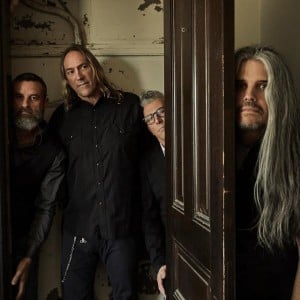
Tool established themselves as one of America's most enduring and unpredictable acts with an ever-evolving brand of muscular but mind-altering sonics, a wry sense of humor, and a mystical aesthetic that attracted a cult-like following of devoted fans with just a handful of albums spread across decades. Their greatest breakthrough was to meld dark underground metal with the ambition of art rock, crafting multi-sectioned, layered songs as if they were classical composers. While embracing the artsy, they also paid musical homage to the relentlessly bleak visions of grindcore, death metal, and thrash. Even with their post-punk influences, they executed their music with the sound and feel of prog rock, alternating between long, detailed instrumental interludes and lyrical rants in their songs. Debuting in the early '90s with Undertow, they were initially lumped in with the nu-metal contemporaries of the time, which made them a hit on rock radio with their sophomore effort, 1996's Ænima. However, they soon broke away from those associations, evolving beyond the confines of traditional song structures and song lengths, crafting epics that often clocked in past the ten-minute mark on LP head-trips Lateralus (2001) and 10,000 Days (2006). After a lengthy 13-year hiatus, they returned to the fold in 2019 with their fifth opus, the chart-topping, Grammy-nominated Fear Inoculum. In 2022, they celebrated their 30th anniversary with "Opiate²," a re-recorded version of their debut single. Formed in Los Angeles by percussionist Danny Carey, guitarist Adam Jones, vocalist Maynard James Keenan, and original bassist <a href="spotify:artist:5hiO4ZaovlkC61rjgIQkIH">Paul D'Amour</a>, Tool had a knack for conveying the strangled, oppressive angst that the alternative nation of the early '90s claimed as its own, which helped them slip into the scene during the post-<a href="spotify:artist:6olE6TJLqED3rqDCT0FyPh">Nirvana</a> era. Buffered by a prime slot on the third Lollapalooza tour in 1993, their debut full-length album, Undertow (<a href="spotify:search:label%3A%22Zoo+Entertainment%22">Zoo Entertainment</a>), rocketed to platinum status. Fervor for the band even resurrected their first effort, 1992's Opiate EP, on the Billboard charts. While they were in the studio recording a follow-up, <a href="spotify:artist:5hiO4ZaovlkC61rjgIQkIH">D'Amour</a> amicably parted ways with Tool and his spot was filled by Justin Chancellor. By the time the fresh quartet delivered their sophomore album, Ænima, in late 1996, the alternative rock mainstream was ready. The album shot to number two on the Billboard charts and was certified multi-platinum in less than a decade. Singles "Stinkfist," "Forty Six & 2," and the Grammy-winning title track were all Top Ten hits on the U.S. Rock chart, boosted by the twisted and often disturbing music videos created by Jones. After a co-headlining slot with <a href="spotify:artist:3RNrq3jvMZxD9ZyoOZbQOD">Korn</a> on Lollapalooza '97, Tool remained on the road, supporting Ænima into the next year. As nu-metal established its mainstream dominance at the close of the decade, Tool returned to the shadows. During their hiatus, Keenan formed a side project with former Tool guitar tech <a href="spotify:artist:29T1xRveILTzNfQkuqlvDf">Billy Howerdel</a>. <a href="spotify:artist:4DFhHyjvGYa9wxdHUjtDkc">A Perfect Circle</a> debuted in 2000, and their album Mer de Noms was a surprise hit. Their ensuing tour was a sold-out success as well, which only served to fuel Tool breakup rumors. To quell the speculation, they issued the stopgap B-sides/DVD set Salival late the same year. Meanwhile, in the studio, the band continued to journey down a new path that further distanced them from the mainstream. Delving deeper into their own mythos, songs grew longer, lyrics more inscrutable, and artwork increasingly psychedelic. Though they retained their pummeling, metal-oriented base, the quartet smashed the formula by further experimenting with complex time signatures, expansive atmospherics, and a classical approach to song compositions. The first taste of 21st century Tool arrived in January 2001 with the Grammy-winning single, "Schism," which was also their first song to chart on the Hot 100. Lateralus (<a href="spotify:search:label%3A%22Volcano%22">Volcano</a>) arrived that May, topping the Billboard 200. Subsequent singles "Parabola" and "Lateralus" were favorites on the U.S. Rock charts, and the album soon went multi-platinum. After another several-year sabbatical -- during which time Keenan bounced back to <a href="spotify:artist:4DFhHyjvGYa9wxdHUjtDkc">A Perfect Circle</a> -- the group returned with another chart-topper, 2006's 10,000 Days. Their most esoteric statement yet, the album spawned the singles "Vicarious," "Jambi," and U.S. Mainstream Rock number one "The Pot." Although it was also the band's lowest-selling effort to date, the record still managed to win the group their third Grammy Award for Best Recording Package. At the conclusion of touring, Tool began another extended hiatus. Although the band re-emerged for a brief summer tour in 2009, it would be another ten years before fans could hear new music. During this period, Keenan debuted his de facto solo project, <a href="spotify:artist:2pAajGWerK3ghwToNWFENS">Puscifer</a>, and returned for a third album with <a href="spotify:artist:4DFhHyjvGYa9wxdHUjtDkc">A Perfect Circle</a>. Behind the scenes, the band was also bogged down by a lawsuit that wouldn't be resolved until 2015. The next year, shaking off the cobwebs, Tool returned to the road for another quick jaunt in the U.S., kicking off another cycle of speculation from fans starved for new material. After an interminable 13-year gap between albums, Tool returned in 2019 with their epic fifth album, Fear Inoculum. Their third straight chart-topper, the set also featured their second Hot 100 placement to date, the ten-minute title track, which became the longest song to ever appear on that chart. Meanwhile, for the first time, Tool made their entire discography available for streaming; this propelled all of their past albums back to the charts, breaking records in the process. They embarked on a sold-out arena tour of the U.S. alongside <a href="spotify:artist:0Zy4ncr8h1jd7Nzr9946fD">Killing Joke</a> and capped their successful comeback with a pair of Grammy nominations for "7empest" and "Fear Inoculum." The former track scored them a Grammy in 2020 for Best Metal Performance. In March 2022, they released "Opiate²," a re-recorded version of their 1991 single "Opiate," issued to mark the 30th anniversary of their debut EP. ~ Neil Z. Yeung & Stephen Thomas Erlewine, Rovi
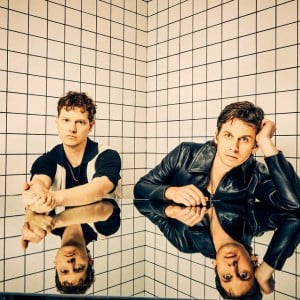
Foster the People
Artist
RIAA Diamond-certified, multi-platinum group Foster the People has become a global sensation with their vibrant dance-fueled pop music, boasting nearly 8 billion streams & 2.5 billion YouTube views. Formed in LA in 2009 by multi-instrumentalist Mark Foster, they exploded onto the scene with their 2010 debut single, “Pumped Up Kicks,” which topped Billboard’s “Alternative Songs” chart & spent 8 weeks at #3 on the Hot 100. The RIAA Diamond-certified song, with 14x Platinum sales in the US, earned a GRAMMY® nomination for “Best Pop Duo/Group Performance” & a 2012 Billboard Music Award. The song’s video also entered YouTube's Billion Views Club. Their 2011 3x Platinum debut album, Torches topped Billboard’s “Top Rock Albums” & “Top Alternative Albums” charts, and earned a GRAMMY® nomination for “Best Alternative Album.” The follow-up, Supermodel (2014), debuted at #1 on the same charts & reached #3 on the Billboard 200, featuring the Gold-certified “Coming of Age.” In 2017, they released Sacred Hearts Club, featuring 4x Platinum hit “Sit Next to Me,” which spent 20 weeks on the Billboard “Hot 100.” Their 2020 EP In the Darkest of Nights, Let the Birds Sing included the single “Lamb’s Wool.” In 2021, they celebrated Torches' 10th anniversary with Torches X & special live streamed shows. In 2024, Foster the People return with fourth studio album Paradise State of Mind, set to release on August 16. They released new single “Lost in Space,” promising more exciting projects to come.
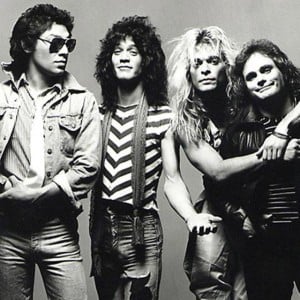
Van Halen
Artist
Built at every stage around <a href="spotify:artist:4eg6G4HaUe2ILWXKd1eaDa">Eddie Van Halen</a>'s prodigious talent and wildly inventive guitar technique, Van Halen rewrote the rules for hard rock. They did this first in the early '80s with a celebratory, party-ready pop metal sound perfected by lead vocalist <a href="spotify:artist:0KyCXNSa7ZMb5LydfKbLG3">David Lee Roth</a>'s over-the-top performance style, and pivoted slowly to a milder, more accessible (and subsequently more commercially viable) approach, especially when <a href="spotify:artist:0KyCXNSa7ZMb5LydfKbLG3">Roth</a> left the band shortly after the release of their era-defining hit album 1984 and was replaced by <a href="spotify:artist:1hXjTjJzZTXDZ75AclOo6N">Sammy Hagar</a>. Between 1985 and 1996, with <a href="spotify:artist:1hXjTjJzZTXDZ75AclOo6N">Hagar</a> on lead vocals and refined songwriting that hit all the marks for radio success, Van Halen consistently topped the charts with multi-platinum albums like 5150 and OU812. The band went into a brief hiatus after 1998's <a href="spotify:artist:703RcPLoxfMOHihd6uJxSd">Gary Cherone</a>-fronted Van Halen III, but eventually reunited with both <a href="spotify:artist:1hXjTjJzZTXDZ75AclOo6N">Hagar</a>, then <a href="spotify:artist:0KyCXNSa7ZMb5LydfKbLG3">Roth</a>, the latter of whom would sing lead on the band's final studio album, 2011's A Different Kind of Truth. The group officially ceased operations after the death of <a href="spotify:artist:4eg6G4HaUe2ILWXKd1eaDa">Eddie Van Halen</a> in 2020. The son of a Dutch bandleader, <a href="spotify:artist:4eg6G4HaUe2ILWXKd1eaDa">Eddie Van Halen</a> and his family moved from the Netherlands to Pasadena, California, in 1962, when he was seven years old and his older brother, <a href="spotify:artist:5eUWg1MYmqntpzUjzFsHI9">Alex</a>, was nine. As their father supported the family by playing in wedding bands, <a href="spotify:artist:4eg6G4HaUe2ILWXKd1eaDa">Eddie</a> and <a href="spotify:artist:5eUWg1MYmqntpzUjzFsHI9">Alex</a> continued their classical piano training. Soon, both boys were enraptured by rock & roll. <a href="spotify:artist:4eg6G4HaUe2ILWXKd1eaDa">Eddie</a> learned how to play drums and <a href="spotify:artist:5eUWg1MYmqntpzUjzFsHI9">Alex</a> took up the guitar, eventually switching instruments. The brothers began a hard rock band called <a href="spotify:artist:4w7FvYzBhOLwW4VHcAKh2q">Mammoth</a> and began playing around Pasadena, eventually meeting <a href="spotify:artist:0KyCXNSa7ZMb5LydfKbLG3">David Lee Roth</a>. At the time, <a href="spotify:artist:0KyCXNSa7ZMb5LydfKbLG3">Roth</a>, who had been raised in a wealthy Californian family, was singing in Redball Jet. Impressed by the Van Halen brothers, he joined forces with the group. Shortly afterward, bassist Michael Anthony, who was singing with Snake, became a member of <a href="spotify:artist:4w7FvYzBhOLwW4VHcAKh2q">Mammoth</a>. After discovering that another band had the rights to the name <a href="spotify:artist:4w7FvYzBhOLwW4VHcAKh2q">Mammoth</a>, the group decided to call themselves Van Halen in 1974, rejecting the proposed Rat Salade. For the next three years, Van Halen played throughout Pasadena, Santa Barbara, and Los Angeles, in both clubs and hotel bars. Their repertoire covered everything from pop and rock to disco, but they eventually worked in their own original material. Within a few years, they had become the most popular local band in Los Angeles, and <a href="spotify:artist:4eg6G4HaUe2ILWXKd1eaDa">Eddie</a> became well known for his groundbreaking technique. In 1977, <a href="spotify:artist:07XSN3sPlIlB2L2XNcTwJw">Kiss</a>' <a href="spotify:artist:5gAbCaW9OmfIqqZGLpKb3f">Gene Simmons</a> financed a demo recording session for Van Halen after seeing them at the Starwood Club. On the strength of <a href="spotify:artist:54vvdbHFYqhfG1aHAFgGZA">Simmons</a>' recommendation, Mo Ostin and Ted Templeman signed Van Halen to <a href="spotify:search:label%3A%22Warner+Bros.%22">Warner Bros.</a>, releasing the band's debut the following year. Van Halen became a hit due to strong word of mouth, constant touring, and support from AOR radio. Within three months, the album had gone gold, and five months later it went platinum. It would eventually sell over six million copies, thanks to the album rock staples "You Really Got Me," "Jamie's Cryin'," and "Runnin' with the Devil." Van Halen II, released in 1979, continued the band's success, as "Dance the Night Away" became their first Top 20 single. Women and Children First (1980) didn't have any charting singles, but was a success on the album charts, reaching number six. The band supported the album with their first headlining, international arena tour, and were quickly on their way to being superstars. Released in 1981, Fair Warning wasn't quite as popular as their previous records, yet it still peaked at number six. Diver Down, released in 1982, was a huge hit, spawning a number 12 cover of <a href="spotify:artist:0JDkhL4rjiPNEp92jAgJnS">Roy Orbison</a>'s "(Oh) Pretty Woman" and reaching number three. While all of their previous albums were successful, Van Halen didn't become superstars until 1984, when their album 1984 became an across-the-board smash. Released on New Year's Day, 1984 rocketed to number two on the strength of the number one single "Jump." Like many songs on the album, "Jump" was driven by <a href="spotify:artist:4eg6G4HaUe2ILWXKd1eaDa">Eddie</a>'s new synthesizer, and while <a href="spotify:artist:0KyCXNSa7ZMb5LydfKbLG3">Roth</a> was initially reluctant to use electronics, the expansion of the group's sound was widely praised. Throughout 1984, Van Halen gained steam, as "I'll Wait" and "Panama" became Top 15 singles and "Hot for Teacher" became a radio and MTV staple. Despite the group's breakthrough success, things were not well within the band. During their 1984 tour, each member played separate solo sets and was physically separated on the stage. <a href="spotify:artist:0KyCXNSa7ZMb5LydfKbLG3">Roth</a> was unhappy with <a href="spotify:artist:4eg6G4HaUe2ILWXKd1eaDa">Eddie</a>'s appearance on <a href="spotify:artist:3fMbdgg4jU18AjLCKBhRSm">Michael Jackson</a>'s 1983 hit "Beat It," and <a href="spotify:artist:4eg6G4HaUe2ILWXKd1eaDa">Eddie</a> grew tired of <a href="spotify:artist:0KyCXNSa7ZMb5LydfKbLG3">Roth</a>'s comic antics. In 1985, <a href="spotify:artist:0KyCXNSa7ZMb5LydfKbLG3">Roth</a> released a solo EP, Crazy from the Heat, which spawned hit covers of "California Girls" and "Just a Gigolo/I Ain't Got Nobody." When <a href="spotify:artist:0KyCXNSa7ZMb5LydfKbLG3">Roth</a> delayed the recording of Van Halen's follow-up to 1984, he was fired from the band. Most observers were taken by surprise when <a href="spotify:artist:1hXjTjJzZTXDZ75AclOo6N">Sammy Hagar</a> was named as <a href="spotify:artist:0KyCXNSa7ZMb5LydfKbLG3">Roth</a>'s replacement. The former lead singer of <a href="spotify:artist:0VdoLGGpWcDZnzep6SSTdP">Montrose</a>, <a href="spotify:artist:1hXjTjJzZTXDZ75AclOo6N">Hagar</a>'s solo career had been sporadically successful, highlighted by such arena metal hits as "Three-Lock Box" and "I Can't Drive 55." Though many critics suspected <a href="spotify:artist:1hXjTjJzZTXDZ75AclOo6N">Hagar</a> wouldn't be able to sustain Van Halen's remarkable success, his first album with the band, 1986's 5150, was a huge hit, reaching number one and spawning the hit singles "Why Can't This Be Love," "Dreams," and "Love Walks In." Released in 1988, OU812 was just as successful, earning stronger reviews than its predecessor and generating the hits "When It's Love" and "Finish What You Started." For Unlawful Carnal Knowledge, released in 1991, was another number one hit, partially due to the hit MTV video for "Right Now." Van Halen followed the album with their first live record, the double-album Van Halen Live: Right Here, Right Now in 1993. By the spring 1995 release of Balance, tensions between <a href="spotify:artist:4eg6G4HaUe2ILWXKd1eaDa">Eddie Van Halen</a> and <a href="spotify:artist:1hXjTjJzZTXDZ75AclOo6N">Sammy Hagar</a> had grown considerably. <a href="spotify:artist:4eg6G4HaUe2ILWXKd1eaDa">Eddie</a> had recently undergone well-publicized treatment for alcoholism, and <a href="spotify:artist:1hXjTjJzZTXDZ75AclOo6N">Hagar</a> was notorious for his party-hearty ways, even writing a paean to Amsterdam's hash bars with "Amsterdam" on Balance. Furthermore, the band had become subject to criticism that it simply repeated a formula. While Balance was successful, entering the charts at number one and selling two million copies shortly after its release, it stalled quickly afterward. The band wanted to release a greatest-hits collection, but <a href="spotify:artist:1hXjTjJzZTXDZ75AclOo6N">Hagar</a> balked at the idea, escalating tensions even further. Following a skirmish in 1996 over the recording of a song for the Twister soundtrack, <a href="spotify:artist:4eg6G4HaUe2ILWXKd1eaDa">Eddie</a> decided to make a change by switching singers. Van Halen began recording new material with <a href="spotify:artist:0KyCXNSa7ZMb5LydfKbLG3">Roth</a> without informing <a href="spotify:artist:1hXjTjJzZTXDZ75AclOo6N">Hagar</a>, who went ballistic upon learning of the group's reunion. According to <a href="spotify:artist:1hXjTjJzZTXDZ75AclOo6N">Hagar</a>, <a href="spotify:artist:4eg6G4HaUe2ILWXKd1eaDa">Eddie</a> fired him shortly afterward; <a href="spotify:artist:4eg6G4HaUe2ILWXKd1eaDa">Eddie</a> claimed <a href="spotify:artist:1hXjTjJzZTXDZ75AclOo6N">Hagar</a> quit. <a href="spotify:artist:0KyCXNSa7ZMb5LydfKbLG3">Roth</a> proceeded to record two new songs for Van Halen's Best Of, Vol. 1, and once the reunion became public, the rock media reacted positively to the news; MTV began airing a welcome back commercial days after the announcement. However, the reunion was not to be. Following an appearance at the MTV Music Awards, <a href="spotify:artist:4eg6G4HaUe2ILWXKd1eaDa">Eddie Van Halen</a> fired <a href="spotify:artist:0KyCXNSa7ZMb5LydfKbLG3">Roth</a> from the band, claiming that he was only on board to record two new songs. <a href="spotify:artist:0KyCXNSa7ZMb5LydfKbLG3">Roth</a> said that he was duped into recording the songs, believing that the reunion was permanent. Former <a href="spotify:artist:6w7j5wQ5AI5OQYlcM15s2L">Extreme</a> vocalist <a href="spotify:artist:703RcPLoxfMOHihd6uJxSd">Gary Cherone</a> was announced as the group's new lead singer. Though the resulting Best Of, Vol. 1 was a success, <a href="spotify:artist:4eg6G4HaUe2ILWXKd1eaDa">Eddie</a>'s reputation as a nice guy was tarnished once the entire affair was over. <a href="spotify:artist:703RcPLoxfMOHihd6uJxSd">Cherone</a>'s long-awaited debut with Van Halen, entitled Van Halen III, was finally released in March 1998. Although the album debuted high on the charts, crashing in at number three, it quickly slipped down, since the reception to the album from fans, critics, and radio was mixed. After Van Halen III proved to be the worst-selling album of Van Halen's long and illustrious career (the ensuing world tour was poorly attended as well), <a href="spotify:artist:703RcPLoxfMOHihd6uJxSd">Cherone</a> was dismissed from Van Halen in 1999. Immediately, rumors began to swirl once more of an impending <a href="spotify:artist:0KyCXNSa7ZMb5LydfKbLG3">David Lee Roth</a>/Van Halen reunion. Things were kept hush-hush in the Van Halen camp until early 2001, when <a href="spotify:artist:0KyCXNSa7ZMb5LydfKbLG3">David Lee Roth</a> went public on his website with an update, confirming that he had recorded several new songs with the band but hadn't heard back from them since the previous summer. Only a few days after <a href="spotify:artist:0KyCXNSa7ZMb5LydfKbLG3">Roth</a>'s news, <a href="spotify:artist:4eg6G4HaUe2ILWXKd1eaDa">Eddie Van Halen</a> admitted to the public that he was battling cancer, but was told by his doctors that chances were good for a complete recovery. In the summer of 2001, <a href="spotify:artist:4eg6G4HaUe2ILWXKd1eaDa">Eddie</a> told MTV News that the band's remaining members had penned a total of three albums' worth of new material and that they were still unsure of who their next singer would be. Months later, Van Halen parted ways with <a href="spotify:search:label%3A%22Warner+Bros.%22">Warner Bros.</a>, their label since 1979. The bandmembers blamed the label for promoting younger groups, while also admitting that they had not yet found <a href="spotify:artist:703RcPLoxfMOHihd6uJxSd">Cherone</a>'s replacement and were no longer considering <a href="spotify:artist:0KyCXNSa7ZMb5LydfKbLG3">Roth</a>. The next three years found various members tending to situations both personal and professional. <a href="spotify:artist:4eg6G4HaUe2ILWXKd1eaDa">Eddie</a> and longtime wife Valerie Bertinelli separated, Michael Anthony began making regular appearances with <a href="spotify:artist:1hXjTjJzZTXDZ75AclOo6N">Sammy Hagar</a>'s Warboritas, and in a surprise move, <a href="spotify:artist:0KyCXNSa7ZMb5LydfKbLG3">David Lee Roth</a> and <a href="spotify:artist:1hXjTjJzZTXDZ75AclOo6N">Hagar</a> hit the road together for the popular Heavyweight Champs of Rock & Roll Tour. In 2004, Van Halen announced that <a href="spotify:artist:1hXjTjJzZTXDZ75AclOo6N">Hagar</a> would return to the fold for an American tour in support of a new greatest-hits collection, The Best of Both Worlds. The shows were undeniably successful, but tensions were high, and <a href="spotify:artist:1hXjTjJzZTXDZ75AclOo6N">Hagar</a> and Anthony returned to the Warboritas the following year. In 2007, Van Halen were inducted into the Rock & Roll Hall of Fame and rumors of a reunion tour with <a href="spotify:artist:0KyCXNSa7ZMb5LydfKbLG3">Roth</a> began to circulate again. Those rumors were confirmed on August 17 when the group announced legitimate dates, along with a controversial lineup change that replaced Michael Anthony with <a href="spotify:artist:4eg6G4HaUe2ILWXKd1eaDa">Eddie</a>'s son Wolfgang on bass. The tour kicked off in September and went on to gross over $93 million, the most successful tour in the band's history. Riding this great success, Van Halen decided to head into the studio to cut their first album since 1998's III. Working with producer John Shanks, the band recorded the album in 2011, then launched their full-scale comeback in the early days of 2012, performing a showcase concert at Cafe Wha? on January 5, with the single "Tattoo" arriving five days later. The full-length album, A Different Kind of Truth, followed in February 2012. Greeted by generally positive reviews, the LP debuted at two on the Billboard Top 200 and saw a similar high position throughout the world; it would later be certified gold in Canada. Van Halen supported the album with a worldwide tour, which included a June 21, 2013 gig at the Tokyo Dome that was later released as a double album in 2015. Tokyo Dome Live in Concert was Van Halen's first-ever live album with <a href="spotify:artist:0KyCXNSa7ZMb5LydfKbLG3">David Lee Roth</a>. In the late 2010s, <a href="spotify:artist:4eg6G4HaUe2ILWXKd1eaDa">Eddie Van Halen</a> was once again battling cancer. He died on October 6, 2020, at the age of 65. ~ Stephen Thomas Erlewine & Greg Prato, Rovi
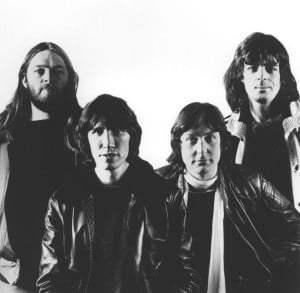
Pink Floyd
Artist
Pink Floyd are one of the most successful and influential rock groups in history. The members of the group to become known as Pink Floyd came together in London, but the band’s roots were in Cambridge, in the East of England, in the early 1960s. Roger ‘Syd’ Barrett, Roger Waters and David Gilmour all grew up in Cambridge, (Roger Waters having moved there from Surrey at the age of 2), and got into music as part of the folk and beat boom of the time. Young Roger Barrett was actively encouraged in his music and art by his parents, and was successful at both while in school. He knew Roger Waters from school and met David Gilmour as a teenager, so their friendships were established long before the formation of Pink Floyd. Roger Barrett acquired the nickname 'Syd' around the ageof 14, in a reference to local bass player Sid Barrett, hence the ‘Syd’ spelling for differentiation. The Barrett family home had hosted musical collaborations from 1962 onwards, the first fruits of which became Geoff Mott and the Mottoes, including Syd on rhythm guitar. In September 1962, Roger Waters left Cambridge for London to study architecture. Syd meanwhile had won a 2-year scholarship to Cambridge School of Art, where he re-established contact with David Gilmour, swapping guitar chords at lunchtime sessions. London’s Regent Street Polytechnic had by now welcomed not only Roger Waters but Richard Wright, a Londoner, and Nick Mason, who was born in Birmingham but relocated to Hampstead at age 2. Roger and Nick responded to a college advert recruiting band members, and duly formed Sigma 6, playing guitar and drums respectively. Richard Wright also joined, playing guitar, various brass instruments and keyboards, depending on whether a piano was available. As well as Polytechnic studies, Richard was taking private lessons in musical theory and composition at the Eric Gilder School of Music, and in fact left architectural studies (and the band, now called The Abdabs) at the end of his first year, to go travelling. In Autumn 1964 Syd Barrett moved to London to attend Camberwell Art College, hooking up with Roger Waters and the Abdabs. Two of the band had just left, which left space for two guitarists: Syd, and fellow Cambridge friend Rado (‘Bob’) Klose, Roger Waters having switched to bass guitar. Originally Leonard’s Lodgers, The Spectrum Five, and latterly The Tea Set, the band finally became Pink Floyd when Richard Wright rejoined, having returned to the UK to enroll in the Royal College of Music. The new name was suggested by Syd, and was derived from two US bluesmen: Pink (born Pinkney) Anderson and Floyd Council. The 5-piece played intermittently in early 1965 as both The Tea Set and The Pink Floyd (or The Pink Floyd Sound), with the departure of Rado ‘Bob’ Klose creating the first 4-man (Barrett / Mason / Waters / Wright) lineup at live shows from May onwards, although the band continued to alternate the use of the Tea Set / Pink Floyd designation right up until March 1966. They were still a part-time band, allowing Syd to take off to France in August with David Gilmour, the pair being briefly detained by the St. Tropez police for busking (performing in the street). Pink Floyd / Tea Set’s original style was based on American blues and r’n’b, but the birth of a UK psychedelic music scene allowed them to develop Syd’s performance-based ideas into something unique. Throughout 1966 they honed their live performance skills, often developing songs into long jamming sequences, and by the end of the year Pink Floyd had become the pre-eminent ‘underground’ band. They picked up management too, and their first recordings were songs by Syd, who had established himself as the band’s creative innovator. Pink Floyd signed to EMI Records in 1967, releasing the singles Arnold Layne and See Emily Play, both written by Syd, and the album The Piper At The Gates Of Dawn, again mostly composed by Syd and considered to be one of the greatest British psychedelic albums. Arnold Layne reached No. 20 in the UK Singles Chart, and See Emily Play reached No. 6, while The Piper At The Gates Of Dawn also entered the album charts at No. 6, the first of a long line of Pink Floyd album chart successes. However, as the band began to attract a large fanbase, it became clear that Syd's fluid approach to writing, performing and recording - spontaneous, one take only, nothing repeated - was increasingly at odds with the expectations of a musical scene that was still very conservative, especially outside London. Possibly exacerbated by Syd’s frequent experimentation with psychedelic drugs, his behaviour became more erratic, to the point that the band decided to add a second guitarist for live performances. They hoped to call on Syd’s compositional abilities for studio work, similar to Brian Wilson’s role in the Beach Boys, while David Gilmour would bolster the band in live shows. David Gilmour had gigged regularly around Cambridge with various outfits, including The Ramblers, Chris Ian & The Newcomers and Jokers Wild, his first professional outfit. David moved to London in Summer 1966, and the band, now a trio, played extensively around Europe. Renamed Bullitt, they then re-invented themselves as Flowers in 1967. Already known as the best guitarist on the Cambridge scene, David had been very impressed with seeing Jimi Hendrix in a small club, and had been inspired to work even harder on his technique. The new 5-man Floyd experiment didn’t really work, and in January 1968, after a handful of shows, the band elected not to pick Syd up on the way to a Southampton University gig. Syd and Floyd officially parted company in March 1968, with the band’s management Blackhill Enterprises deciding to stick with Syd as a solo artist. The band appointed Steve O'Rourke as manager, and he remained with Pink Floyd until his death in 2003. Whilst Syd Barrett had written the bulk of the first album, only one composition by him, Jugband Blues, appeared on the second Floyd album. A Saucerful Of Secrets was released in June 1968, reaching Number 9 in the UK. Point Me At The Sky, a Waters/Gilmour composition released in December 1968, was to be the band’s last single release until Money from The Dark Side Of The Moon. The soundtrack to the film More, another UK Top 10 album in July 1969, was the band’s first collaboration with film director Barbet Schroeder. The next record, the double album Ummagumma in November 1969, was a mix of live recordings and studio experimentation by the band members, with each member recording half a side of a vinyl record as a solo project. Meanwhile, over the course of a year, Syd Barrett had recorded The Madcap Laughs, released in January 1970, with some production help from David and Roger. Atom Heart Mother, in October 1970, was Pink Floyd's first recording with an orchestra, the title track suite taking up a full vinyl LP side. Their first UK No. 1 album, staying on the charts for 18 weeks, the title was taken from a London Evening Standard headline. Roger Waters’ first work outside the band appeared in November 1970. A collaboration with Ron Geesin, (with whom Floyd had worked on Atom Heart Mother), The Body formed the soundtrack to the film of the same name. Pink Floyd appear anonymously on the track Give Birth To A Smile. November 1970 also saw the release of Barrett, the second and last album of all-original Syd Barrett songs. It was produced by David Gilmour and included Richard Wright on keyboards. Before the next album of original material, a Pink Floyd compilation album, Relics, was released in May 1971, containing several early singles and B-sides, plus one previously unreleased song Biding My Time. The band also contributed three tracks to the soundtrack of Michelangelo Antonioni’s film, Zabriskie Point. In October 1971 the band allowed director Adrian Maben to film them performing live in the amphitheatre at Pompeii. After more filming, including interviews and more performances in a Paris studio, the Pink Floyd Live At Pompeii film was finally premiered at the Edinburgh Festival in September 1972. Meddle was Pink Floyd’s longest UK chart performer to date, maintaining 82 weeks on the chart from its No. 3 debut in November 1971. It contained the LP side-long Echoes, to many the perfect encapsulation of all Floyd’s disparate elements. Nick Mason considered it "the first real Pink Floyd album. It introduced the idea of a theme that can be returned to". Developing the idea of thematic pieces, the band began to work on what would become The Dark Side of The Moon, presenting the songs from the album in concert throughout 1972. However, even though they were yet to enter the studio to record Dark Side as an album, the band took a detour to make another soundtrack album in just two weeks for Barbet Schroeder – Obscured By Clouds, to accompany the film La Vallee. The release of Pink Floyd's massively successful 1973 album, The Dark Side Of The Moon, was a watershed moment in the band's popularity. Pink Floyd had stopped issuing singles after 1968's Point Me At The Sky and was never a hit single-driven group, but Money was released as a single from The Dark Side Of The Moon, going Top 20 in the U.S. The album became the band's first No. 1 on the U.S. Charts and is one of the biggest-selling ever, worldwide. The Piper At The Gates Of Dawn and A Saucerful Of Secrets were re-presented to the public in December 1973 as a 2-LP set, A Nice Pair, repackaged in a gatefold sleeve. 1975’s Wish You Were Here is well-known for its popular title track, but also the largely instrumental song suite Shine On You Crazy Diamond, an overt tribute to Syd Barrett. It bookends the album, the recording of which was made poignant for the band by Syd’s surprise appearance in the studio. He turned up unannounced at Abbey Road studios while the group were working on Shine On, leaving his former bandmates bemused. For most of the band, it was their last meeting with Syd; Roger Waters subsequently viewed him in Harrods department store, but the two didn’t speak. The years between 1976 and 1985 saw Roger Waters asserting more control over Pink Floyd's output, concentrating on thematic albums like Animals, released in January 1977. One of the many iconic Pink Floyd images is that of an inflatable pig flying over Battersea Power Station; the pig, 'Algie', escaped during the cover shoot, subsequently coming to earth in the Kent countryside. As a side project, David released his first solo album, David Gilmour, in May 1978. Featuring Rick Wills on bass and Willie Wilson on drums and percussion, the album charted in the UK at No. 17 and the U.S. at No. 29. Using material that was extraneous to the Animals album, Richard released his first solo project, Wet Dream, in September 1978. The next Floyd release was the hugely successful The Wall. Preceded by the surprise UK & US No. 1 hit Another Brick In The Wall Part 2, the double album chronicling a rock star’s increasing alienation from the world of stardom was an instant hit. Roger Waters’ album concept extended to the stage presentation and the short run of live shows in the US and UK in 1980 (repeated in 1981 in the UK and Germany) remains in many peoples’ minds as the quintessential melding of music and theatrics in the rock idiom. Roger had written almost all of the songs, although one of them, destined to be a future Floyd classic, was a Waters / Gilmour collaboration: Comfortably Numb. The music was based on an outtake from David’s first solo album, which he tailored to fit Roger’s lyrics. Richard Wright’s relationship with Roger Waters had become increasingly rocky, and he left Pink Floyd during the Wall sessions. However, he was keen to complete the album’s live shows, so was retained as a salaried session musician during the subsequent live concerts in 1980 and 1981. The Wall became a feature film, directed by Alan Parker and starring Bob Geldof. Some of the material was re-recorded or remixed, and the movie was premiered in May 1982 at Cannes, becoming a steady seller on VHS and subsequently DVD. Pink Floyd The Wall won two BAFTA Awards in 1983 – Best Sound and Best Original Song (Another Brick In The Wall). Nick Mason’s first album under his own name was Fictitious Sports, released in 1981. A mixture of jazz and rock, the compositions were by Carla Bley, who also played keyboards. Other contributors included Robert Wyatt, Mike Mantler and Chris Spedding. In March 1983, Pink Floyd released the only album on which Richard does not appear - The Final Cut, once more a Roger Waters conceptual piece, and the band’s third UK No. 1. David's second solo album, About Face, was released in March 1984, hitting No. 21 in the UK and No. 32 in the US, going Gold. In April 1984, Richard formed a new musical duo with Dave Harris (from the band Fashion) called Zee. They signed a record deal with Atlantic Records and released one album, Identity. Roger went on to work on a further concept album, this time as a solo artist: The Pros And Cons Of Hitch Hiking. Released in May 1984, the album was followed by a 9-date solo tour of the UK and Continental Europe. One year after his bandmates' projects, Nick Mason released the album Profiles, a collaboration with Rick Fenn of 10CC. David Gilmour contributes vocals to one track. In December 1985 Roger Waters wrote to EMI and CBS (now Sony) Records, resigning from Pink Floyd. Nevertheless, when in 1986 David Gilmour and Nick Mason began recording a new Pink Floyd album, a legal dispute ensued, eventually settled out of court. After considering and rejecting many other titles, the new Pink Floyd album was released as A Momentary Lapse Of Reason in September 1987. Richard Wright contributed to the album, rejoining the band after the subsequent tour. A year later, the band released a double live album and a concert video taken from its 1988 Long Island shows, entitled Delicate Sound Of Thunder, and later recorded some instrumentals for a classic-car racing film, La Carrera Panamericana, set in Mexico and featuring David andNick as participating drivers. During the race, David and manager Steve O'Rourke (acting as his map-reader) crashed. Steve suffered a broken leg; David walked away with a few bruises. 1992 saw the box set release of Shine On. The 9-disc set included re-releases of the studio albums A Saucerful Of Secrets, Meddle, The Dark Side Of The Moon, Wish You Were Here, Animals, The Wall, and A Momentary Lapse Of Reason. A bonus disc entitled The Early Singles was also included. The band's 1994 next album, The Division Bell, the title suggested by David's friend Douglas Adams, returned Pink Floyd to the No. 1 position in the UK & US, remaining on the charts in each country for 51 weeks. The album contained Marooned, composed by David and Richard, for which the band received their first and only Grammy Award in 1995 (Best Rock Instrumental Performance). The lengthy Division Bell tour, playing to more than 5 million people, engendered the live album P*U*L*S*E in 1995, featuring songs from concerts in London, Rome, Hanover, and Modena. On January 17, 1996, the band was inducted into the Rock and Roll Hall of Fame by The Smashing Pumpkins frontman Billy Corgan. Roger Waters did not attend. Richard Wright released his second solo album, Broken China, in September 1996. Richard sings throughout, with Momentary Lapse collaborator Anthony Moore providing some lyrics, and Sinead O’Connor guesting on vocals for two tracks. A live recording of The Wall appeared in 2000, compiled from the 1980-1981 London concerts, entitled Is There Anybody Out There? The Wall Live 1980-81. In 2001, a remastered two-disc set of the band's best-known tracks entitled Echoes was released. In 2003, The Dark Side Of The Moon was issued as an SACD, featuring new cover artwork. The album was also re-released as a 180-gram, virgin vinyl pressing, including all the original album art from the original release of the album, plus a new poster. Nick Mason's book, Inside Out: A Personal History Of Pink Floyd was published in 2004 in Europe and 2005 in the U.S. Nick made public promotional appearances in a few European and American cities, giving interviews and meeting fans at book signings. Longtime Pink Floyd manager Steve O'Rourke died on October 30, 2003. David, Nick, and Richard joined together at his funeral service in Chichester Cathedral to perform Fat Old Sun and The Great Gig In The Sky. Two years later, on July 2, 2005, the Gilmour / Mason / Waters / Wright lineup took to the stage for the first time in 24 years in a one-off performance at the London Live 8 concert. Their four-song set included Breathe (plus reprise), Money, Wish You Were Here, and Comfortably Numb, with David and Roger sharing lead vocals. At the end of the band’s performance, their group hug became one of the most famous images of Live 8. Subsequent to the post-Live 8 sales boom for the participating artists, David Gilmour declared that he would donate his share of profits to charity, urging other artists and record companies to do the same. On November 16, 2005, Pink Floyd were inducted into the UK Music Hall of Fame by Pete Townshend. David and Nick attended in person; Richard was in hospital following eye surgery and Roger appeared on a video screen, from Rome. On March 6, 2006, David Gilmour released his third solo album, On An Island, which entered the charts at No. 1 in the UK and No. 6 in the US. A 3-month sold-out tour of concert venues in Europe, Canada, and the U.S. followed, performed with a band that included Richard Wright, plus Floyd regulars Dick Parry, Jon Carin, and Guy Pratt. Nick Mason joined the band for encores of Arnold Layne and Comfortably Numb at one of the Royal Albert Hall shows, which were filmed for the subsequent DVD / Blu-ray release Remember That Night. Roger ‘Syd’ Barrett died of pancreatic cancer on July 7, 2006 at Addenbrooke's Hospital in Cambridge, having suffered from diabetes for some time. His funeral was a private family affair, but his enduring influence was marked by the many heartfelt tributes recorded by fans and stars, touched by his idiosyncratic genius. On July 10, 2006, the P*U*L*S*E DVD was released, launched with a media showing and Q&A session with David, Nick and Richard. A tribute concert for Syd was held at the Barbican Centre in London on May 10, 2007. Madcap’s Last Laugh featured entertaining performances from Barrett fans such as Chrissie Hynde, Mike Heron and Nick Laird-Clowes, while an unbilled Roger Waters played an acoustic Flickering Flame. Roger had to leave before the end of the show, so was unavailable for a further surprise performance - David, Richard and Nick performing Arnold Layne to rapturous applause and a standing ovation. September 2007 saw the 40th anniversary of Pink Floyd's signing to EMI, marked by the release of a 2-CD set containing mono and stereo mixes of The Piper At The Gates Of Dawn, and a 3-CD version including the related singles, B sides and other rare recordings. On December 10 (UK) and 11 (U.S.), 2007, Pink Floyd released a new CD box set, OH BY THE WAY, containing all fourteen studio albums with original vinyl artwork plus new artwork from Storm Thorgerson. Two albums (The Dark Side Of The Moon and A Momentary Lapse Of Reason) boast remastered versions. In 2008, Sweden’s Polar Music Prize was awarded to Pink Floyd for “their monumental contribution over the decades to the fusion of art and music in the development of popular culture. Through extensive sonic experimentation, they captured the mood and spirit of a whole generation in their reflections and attitudes. When rock'n'roll developed, Pink Floyd was foremost in shaping the sounds that would influence artists for ever." Richard Wright died on September 15th had been in September 2007 with David Gilmour, at the premiere of David’s concert DVD, Remember That Night. In January 2010 the artwork for The Division Bell was used in a series of Royal Mail stamps. In March Royal Mail created a unique page of Division Bell-only stamps on their own dedicated gummed sheet, including artwork from the album. On 10th July, 2010, David Gilmour and Roger Waters played some songs together in aid of the Hoping Foundation charity, at a private concert in Kiddington, Oxfordshire, UK. Backed by a band that included Guy Pratt, Harry Waters and Andy Newmark, David and Roger performed To Know Him Is To Love Him, Wish You Were Here, Comfortably Numb, and Another Brick In The Wall, Part 2. In September 2010, Roger Waters started an 11-month long live world tour of The Wall, with a high-tech stage production that received rapturous reviews. In 2011, under the banner Why Pink Floyd?, the Pink Floyd catalogue was re-released, packaged in gatefold digipaks including new Storm Thorgerson artwork and completely remastered by James Guthrie. Three expanded versions were released, with The Dark Side Of The Moon, Wish You Were Here and The Wall receiving bonus tracks including previously unissued live recordings or demo tracks. Three multi-disc box sets were also released, again with one each dedicated to The Dark Side Of The Moon, Wish You Were Here and The Wall, all containing bonus material, surround sound mixes, new booklets and art pieces produced by Storm Thorgerson’s StormStudios. A new single-CD compilation album A Foot In The Door - The Best Of Pink Floyd –was also released. Storm Thorgerson, Pink Floyd’s longtime visual collaborator and co-founder of the Hipgnosis art studio (with Aubrey ‘Po’ Powell) died on 18th April, 2013. His visual legacy lives on in the continuing popularity of many iconic Pink Floyd images. In 2013, Roger Waters continued to present The Wall live around the world, having expanded the production to include stadiums. It played to sold-out audiences and universal acclaim.
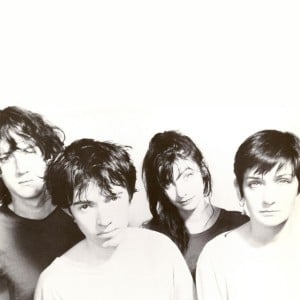
My Bloody Valentine
Artist
Like <a href="spotify:artist:1nJvji2KIlWSseXRSlNYsC">the Velvet Underground</a>, <a href="spotify:artist:5UqTO8smerMvxHYA5xsXb6">Sonic Youth</a>, and <a href="spotify:artist:4rjlerN21ygkIhmUv55irs">the Jesus and Mary Chain</a>, My Bloody Valentine redefine what noise means within the context of pop music. Led by guitarist Kevin Shields, the group started out as a doomy post-punk outfit but gradually added more melody to their sound by the time of 1988’s Isn't Anything, an album that merged the ethereal approach of <a href="spotify:artist:5Wabl1lPdNOeIn0SQ5A1mp">Cocteau Twins</a> with crushingly loud, shimmering distortion. Though My Bloody Valentine ’s notorious lack of movement onstage was branded "shoegazing" by the British music press, soon legions of other shoegazers -- <a href="spotify:artist:0WPY9nnBy01s5QOt4o4oQX">Ride</a>, <a href="spotify:artist:3ysp8GwsheDcBxP9q65lBg">Lush</a>, <a href="spotify:artist:6UYwzZChuolxsylHcZcBBP">the Boo Radleys</a>, <a href="spotify:artist:3r94PF71LWRI5K6wqclNjQ">Chapterhouse</a>, Slowdive -- dominated late '80s and early '90s British indie along with the rolling dance-influenced Madchester scene. As shoegazing reached its peak in 1991, My Bloody Valentine released Loveless, which broke new sonic ground and was hailed as a masterpiece. Loveless was such a towering achievement that following it proved difficult for the band, but even in their decades-long absence, they were profoundly influential. My Bloody Valentine’s dreamy sensuality seeped into the music of acts like <a href="spotify:artist:40Yq4vzPs9VNUrIBG5Jr2i">Smashing Pumpkins</a> and <a href="spotify:artist:5SHQUMAmEK5KmuSb0aDvsn">Hole</a> later in the ‘90s, and provided the foundation for the subsequent generations of shoegazers that sprung up in the 2000s and beyond. When they returned with 2013’s mbv, it reaffirmed that no matter how many bands they influenced, My Bloody Valentine’s beauty and mystique was theirs alone. Born in Queens, New York, Kevin Shields' family moved to Dublin, Ireland, when he was six years old. In his teens, he became obsessed with pop music, eventually playing in the punk rock band the Complex with his childhood friend Colm O'Ciosoig, whom he met in 1978 at a karate match. The group, whose repertoire consisted of <a href="spotify:artist:1u7kkVrr14iBvrpYnZILJR">Sex Pistols</a> and <a href="spotify:artist:1co4F2pPNH8JjTutZkmgSm">Ramones</a> covers, broke up when another of the band’s members, <a href="spotify:artist:1gyHRSaTY6UtNgY4Bh4EAc">Liam Ó Maonlaí</a>, left to form <a href="spotify:artist:2szQRWh2F0RUs9bkbepwok">Hothouse Flowers</a>. Shields and O'Ciosoig then formed the short-lived post-punk trio A Life in the Day. The pair formed My Bloody Valentine in 1983 with lead vocalist David Conway, taking the name from a 1981 Canadian horror film. With guitarist Stephen Ivers, in March 1983 Shields and <a href="spotify:artist:39q2YaoQu0lk4wARiey40R">Conway</a> recorded the band’s first demo in Shields’ parents’ home on a four-track recorder, with Shields and O'Ciosoig overdubbing rhythm tracks at Litton Lane Studios. On the strength of the demo, My Bloody Valentine signed with <a href="spotify:search:label%3A%22Tycoon+Records%22">Tycoon Records</a>. Ivers left the band soon after recording the demo, with <a href="spotify:artist:39q2YaoQu0lk4wARiey40R">Conway</a>’s girlfriend Tina Durkin joining as keyboardist. Finding Ireland’s music scene unreceptive to their style, My Bloody Valentine moved to the Netherlands after playing a show there, then headed to Berlin, where they released 1985's <a href="spotify:artist:5I2hMUcztc6QbzkyLskdt4">Birthday Party</a>-influenced EP This Is Your Bloody Valentine. In mid-1985, My Bloody Valentine moved to London. Not long after that, Durkin left the band, and the rest of the band started searching for a bassist. They found Debbie Googe through one of Shields’ contacts, and the band rehearsed at Salem Studios, which was owned by Fever Records. The label’s owners were impressed by the band, and that December, <a href="spotify:search:label%3A%22Fever%22">Fever</a> released Geek!, another EP that went largely ignored. In October 1986, The New Record by My Bloody Valentine EP appeared on <a href="spotify:search:label%3A%22Kaleidoscope+Sound%22">Kaleidoscope Sound</a>, the label of <a href="spotify:search:label%3A%22Creation+Records%22">Creation Records</a> co-founder Joe Foster. Foster also produced the EP, which bore a <a href="spotify:artist:4rjlerN21ygkIhmUv55irs">Jesus & Mary Chain</a> influence and reached number 22 on the U.K. Indie Chart. The EP’s success led to more frequent gigs for the band and a following outside of London. Early in 1986, My Bloody Valentine signed to <a href="spotify:artist:4FPmAi3p4T3p0AsthfqHMA">the Primitives</a>' label <a href="spotify:search:label%3A%22Lazy+Records%22">Lazy Records</a> and issued the single Sunny Sundae Smile. The first of the band’s releases to mesh airy melodies with grinding guitars, it was a Top Ten hit on the U.K. Indie Singles Chart. During the tour supporting the single’s release, <a href="spotify:artist:39q2YaoQu0lk4wARiey40R">Conway</a> left the group to become a writer. Lacking a lead vocalist, My Bloody Valentine auditioned several singers before finding Bilinda Butcher, who had played classical guitar as a child and sang mostly for fun, in April 1987. Butcher’s breathy vocals fit the group's evolving sound and featured prominently on that November’s Strawberry Wine EP, which reached number 13 on the U.K. Indie Singles chart. Released at the end of that month, the mini-album Ecstasy was quickly recorded, but provided the band its first opportunity to record in a studio properly and capture some of the innovative guitar techniques Shields had developed. Folding in elements of <a href="spotify:artist:1PCZpxHJz7WAMF8EEq8bfc">the Byrds</a> and Love as well as <a href="spotify:artist:4rjlerN21ygkIhmUv55irs">the Jesus and Mary Chain</a> into My Bloody Valentine’s sound, Ecstasy reached number 12 on the U.K. Indie Albums Chart. After My Bloody Valentine played a January 1988 show with <a href="spotify:artist:5fR6txzrEnBtoAw61jSIsN">Biff Bang Pow!</a>, the band of <a href="spotify:search:label%3A%22Creation+Records%22">Creation Records</a> founder Alan McGee, he offered the band the chance to release a single on the label. Recorded in less than a week in an East London studio, that August’s You Made Me Realise EP reflected the changes in the group’s approach: Along with borrowing some of the noisy, feedback-laden sounds of American indie rockers such as <a href="spotify:artist:5UqTO8smerMvxHYA5xsXb6">Sonic Youth</a> and <a href="spotify:artist:267VY6GX5LyU5c9M85ECZQ">Dinosaur Jr.</a>, Shields’ use of reverse reverb, alternate tunings, tremolo arm manipulations, and copious effects helped define the band’s style. Peaking at number two on the U.K. Indie Chart, You Made Me Realise was soon followed by October’s Feed Me with Your Kiss EP, another harbinger of the mix of ear-splitting noise and seductive melodies My Bloody Valentine presented on their debut album, November 1988’s Isn’t Anything. The band holed up in rural Wales to record the album, which topped the U.K. Indie Chart and was greeted with enthusiastic reviews in the U.K. music press. My Bloody Valentine's reputation had become large enough to attract the attention of <a href="spotify:search:label%3A%22Sire%22">Sire</a>/<a href="spotify:search:label%3A%22Warner+Bros.%22">Warner Bros.</a> in the U.S., who became the group's American label. By the beginning of 1989, bands that based their sound on My Bloody Valentine's droning swirl began to appear. That February, the group retreated to the studio to record Isn’t Anything’s follow-up. Shields’ exacting standards and experimental recording techniques, technical difficulties, and ailments the band struggled with (Shields and Butcher developed tinnitus, while O'Ciosoig was only able to perform a few drum patterns that were sampled to create rhythm tracks) resulted in a creative process that lasted over two years, involved 19 studios, and counted <a href="spotify:artist:7cXiglYPsrmgecDTDTVFQC">Alan Moulder</a>, Anjali Dutt, and <a href="spotify:artist:1ktqCH9OrzelCu4cpUT1oR">Laika</a>’s Guy Fixsen among the engineers who worked on it. Around the time the lengthy sessions started, <a href="spotify:search:label%3A%22Lazy+Records%22">Lazy Records</a> issued Ecstasy and Wine, a compilation of Strawberry Wine and Ecstasy, without My Bloody Valentine’s consent. In April 1990, the band resurfaced with Glider, an EP that hinted at the innovative sounds the band was creating, such as digital sampling and “glide guitar,” Shields’ term for his tremolo technique. Featuring the track “Soon,” Glider reached number two on the U.K. Indie Chart, and the band took a break from recording to tour in support of the EP in the middle of 1990. The following February, My Bloody Valentine emerged again with the Tremolo EP, a number one hit on the U.K. Indie Chart. When My Bloody Valentine's second album, Loveless, finally appeared in November 1991, it was greeted with uniformly excellent reviews and became a hit within the U.K., reaching number 24 on the charts. In America, the group made significant inroads, particularly by supporting <a href="spotify:artist:267VY6GX5LyU5c9M85ECZQ">Dinosaur Jr</a>.; the band’s European dates became known for their intense volume. Though it was soon regarded as a classic,Loveless didn't sell in numbers to recoup its reported 500,000 dollar recording cost and <a href="spotify:search:label%3A%22Creation%22">Creation</a> dropped the band from their roster (the label wouldn't fully recover until the 1994 signing of <a href="spotify:artist:2DaxqgrOhkeH0fpeiQq2f4">Oasis</a>). In October 1992, My Bloody Valentine signed with <a href="spotify:search:label%3A%22Island+Records%22">Island Records</a>, and Shields built a home studio with the advance that was completed in April 1993. That year, the band contributed a cover of <a href="spotify:artist:19eLuQmk9aCobbVDHc6eek">Louis Armstrong</a>’s “We Have All the Time in the World” to Peace Together, a charity compilation that benefitted an organization working for peace in Northern Ireland. However, technical difficulties and creative blocks hampered the group. Though Shields reportedly completed two separate albums, including pieces inspired by the U.K.’s thriving electronic music scene, My Bloody Valentine’s only other output during the ‘90s was a 1996 cover of <a href="spotify:artist:2i8ynmFv4qgRksyDlBgi6d">Wire</a>’s "Map Ref. 41°N 93°W" for Whore: Various Artists Play Wire. O'Ciosoig and Googe departed in 1995, with the former moving to America and joining <a href="spotify:artist:38u18VoGaIwVeSyVoA0eU5">Hope Sandoval & the Warm Inventions</a> and the latter forming <a href="spotify:artist:6zeIzXom65EtpRZJgGLHZj">Snowpony</a> with Katharine Gifford after spending a year driving a cab. In 1997, Butcher left following another attempt to record My Bloody Valentine’s third album. Shields spent several years collaborating with <a href="spotify:artist:267VY6GX5LyU5c9M85ECZQ">Dinosaur Jr.</a> and <a href="spotify:artist:5hAhrnb0Ch4ODwWu4tsbpi">Yo La Tengo</a> among others, became a touring member of <a href="spotify:artist:3wury2nd8idV4GecUg5xze">Primal Scream</a>, and contributed songs to the soundtrack for Sofia Coppola’s 2003 film Lost in Translation. In the late 2000s, My Bloody Valentine reunited to play their first live shows in over 15 years. These dates included a five-night residency at London's Roundhouse venue in June 2008; later that year, they played the European festival circuit as well as major North American cities and the <a href="spotify:search:label%3A%22All+Tomorrow%27s+Parties%22">All Tomorrow's Parties</a> festival they curated in Monticello, New York. In 2009 they embarked on a smaller round of dates, with dates in the Netherlands as well as the <a href="spotify:search:label%3A%22All+Tomorrow%27s+Parties%22">All Tomorrow's Parties</a> "Nightmare Before Christmas" festival that December. May 2012 saw the release of the compilation EPs 1988 - 1991, which gathered all of the band’s <a href="spotify:search:label%3A%22Creation%22">Creation</a> short-form releases as well as previously unreleased material, as well as remastered editions of Isn’t Anything and Loveless. In Februarly 2013 -- the same year Loveless was certified silver in the U.K. -- My Bloody Valentine released their third album, mbv. A surprise release initially available on the band’s website (which crashed due to the demand for the album), mbv incorporated recordings from the ‘90s, 2000s, and 2010s and blended a more electronic approach, as well as more melody, into My Bloody Valentine’s signature style. The album was widely acclaimed and reached number six on the U.K. Independent Albums Chart and number 29 on the U.K. Albums Chart. Following a 2020 collaboration with the clothing brand Supreme, My Bloody Valentine signed to <a href="spotify:search:label%3A%22Domino+Records%22">Domino Records</a>, which made the band’s entire body of work available on streaming services for the first time and reissued their albums and EPs 1988 - 1991 on CD and vinyl. ~ Stephen Thomas Erlewine & Heather Phares, Rovi
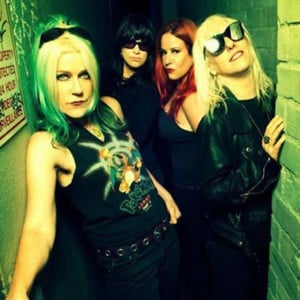
L7
Artist
Often lumped in with the Seattle scene of the early '90s, raucous punk rock band L7 emerged from the streets of Los Angeles in 1985. Owing as much to the hard-charging metal of <a href="spotify:artist:1DFr97A9HnbV3SKTJFu62M">Motörhead</a> as the no-frills punk of <a href="spotify:artist:1co4F2pPNH8JjTutZkmgSm">Ramones</a> and <a href="spotify:artist:4I37MmXKpdVBFzHXaqCGv6">Frightwig</a>, the band's sound was a collision of throat-shredding vocals, crunchy riffs, chugging rhythms, and a ferocious attitude that would influence a range of bands from <a href="spotify:artist:6olE6TJLqED3rqDCT0FyPh">Nirvana</a> to <a href="spotify:artist:7MlyHuGRHi31yYlrttDqgT">the Distillers</a>. After their first two releases, they made a break into the mainstream with 1992's <a href="spotify:artist:0gTi2zsOHn6wtlkx66uxXM">Butch Vig</a>-produced Bricks Are Heavy, which garnered L7 critical acclaim and a Top 10 single ("Pretend We're Dead"). At the end of the decade, following the release of their sixth effort, Slap-Happy, they entered an extended hiatus, returning two decades later with 2019's Scatter the Rats. The seeds for L7 (whose name was taken from a slang term in the '50s that meant someone who was a "square") were planted in 1985, when a pair of guitarist/singers, Suzi Gardner and Donita Sparks, decided to start a band. Over the next few years, the group extended their lineup to include bassist Jennifer Finch and drummer Dee Plakas, as their sound grew more and more metallic yet never lost the attack and simplicity of punk. In 1988, L7 were signed by the <a href="spotify:search:label%3A%22Epitaph%22">Epitaph</a> label, which issued their self-titled debut the same year, and the group spent the better part of the next few years touring the world. The band issued Smell the Magic for the <a href="spotify:search:label%3A%22Sub+Pop%22">Sub Pop</a> label in 1991, and formed the Rock for Choice nonprofit organization the same year. Raising money and awareness for the pro-choice movement, the organization put on several benefit shows over the years, featuring such noted performers as <a href="spotify:artist:6olE6TJLqED3rqDCT0FyPh">Nirvana</a>, <a href="spotify:artist:5SHQUMAmEK5KmuSb0aDvsn">Hole</a>, <a href="spotify:artist:1w5Kfo2jwwIPruYS2UWh56">Pearl Jam</a>, and <a href="spotify:artist:6v8FB84lnmJs434UJf2Mrm">Neil Young</a>, among others. With <a href="spotify:artist:6olE6TJLqED3rqDCT0FyPh">Nirvana</a> bringing a punk spirit to the mainstream via grunge, bands such as L7 suddenly became in demand and the quartet was signed to <a href="spotify:search:label%3A%22Slash%22">Slash</a>/<a href="spotify:search:label%3A%22Reprise%22">Reprise</a>, issuing their best-known album with the <a href="spotify:artist:0gTi2zsOHn6wtlkx66uxXM">Butch Vig</a>-produced Bricks Are Heavy (which spawned their highest charting single, "Pretend We're Dead") in April 1992. While L7's follow-up, 1994's Hungry for Stink, failed to expand the group's following, they joined the 1994 installment of U.S. alt-rock festival Lollapalooza and made cameos in <a href="spotify:artist:3qeoYI3u0hMmvcmZGvZNcx">John Waters</a>' cult film Serial Mom, delivering "Gas Chamber" as the fictional band Camel Lips. Bassist Finch left the group shortly thereafter (eventually replaced by former <a href="spotify:artist:3h1HOgVmvPlhqjz8o3LglL">Belly</a> bassist Gail Greenwood), and the group issued such further releases as 1997's The Beauty Process: Triple Platinum, 1998's Live: Omaha to Osaka, and 1999's Slap-Happy, while the band was also the subject of a 1998 concert film made by former <a href="spotify:artist:6olE6TJLqED3rqDCT0FyPh">Nirvana</a> bassist <a href="spotify:artist:4BZKfXia2RPZnzCgQ2fG8M">Krist Novoselic</a>, also titled The Beauty Process. In 2000, a 12-track retrospective collection was issued, Best of L7: The Slash Years, but for all intents and purposes the band were no longer touring and were widely believed to have ceased operations. Indeed, the following year saw L7 announce, via their website, that they would be going on "indefinite hiatus." The members continued to be musically active, however, with Sparks pursuing a solo career, with help from Plakas, under the moniker Donita Sparks & the Stellar Moments and Finch playing with the punk unit <a href="spotify:artist:6cmE6CP0FC98YMy396wIK3">the Shocker</a>. In 2014, Sparks, Gardner, Finch, and Plakas announced that the group would be reuniting. L7 played their first show in 18 years together at the Echo in Los Angeles on May 23, 2015, followed by an international tour. A crowd-funded documentary -- L7: Pretend We're Dead -- debuted in 2016, further fueling their comeback effort. Following the release of a pair of non-album singles, they issued their seventh set, 2019's Scatter the Rats. Released via Joan Jett's <a href="spotify:search:label%3A%22Blackheart+Records%22">Blackheart Records</a>, the album included the singles "Burn Baby" and "Stadium West." ~ Greg Prato & Neil Z. Yeung
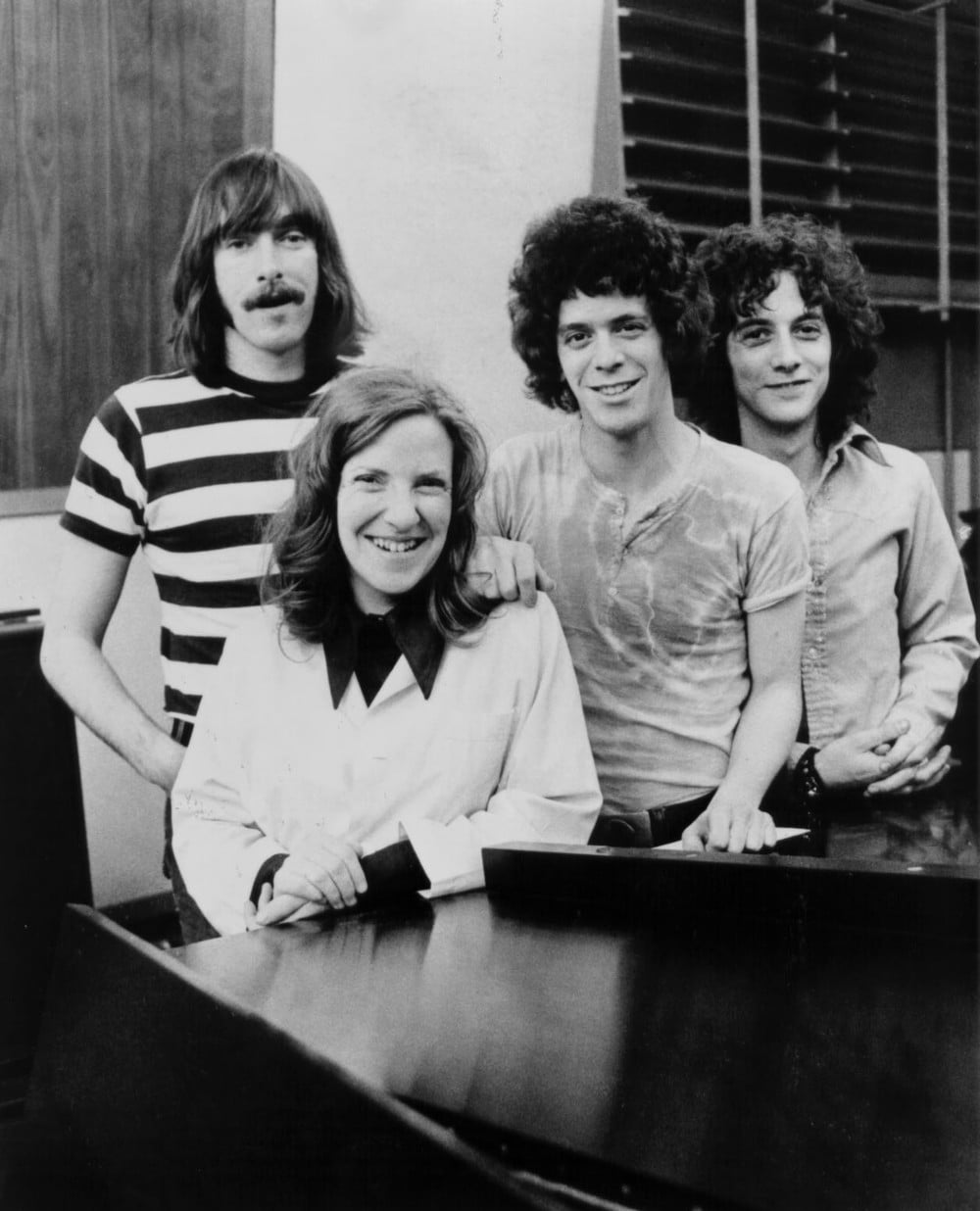
The Velvet Underground
Artist
Korn
Artist
KORN changed the world with the release of their self-titled debut album. It was a record that would pioneer a genre, while the band’s enduring success points to a larger cultural moment. The FADER notes, “There was an unexpected opening in the pop landscape and KORN articulated a generational coming-of-angst for a claustrophobic, self-surveilled consciousness. KORN became the soundtrack for a generation’s arrival as a snarling, thrashing, systemically-restrained freak show.” Since forming, KORN has sold 40 million albums worldwide, collected two GRAMMYS, toured the world countless times, and set many records in the process that will likely never be surpassed. Vocalist Jonathan Davis, guitarists James “Munky” Shaffer and Brian “Head” Welch, bassist Reginald “Fieldy” Arvizu, and drummer Ray Luzier, have continued to push the limits of the rock, alternative and metal genres, while remaining a pillar of influence for legions of fans and generations of artists around the globe. The level of KORN’s reach transcends accolades and platinum certifications. They are “a genuine movement in a way bands cannot be now,” attests The Ringer. They represent a new archetype and radical innovation, their ability to transcend genre makes barriers seem irrelevant.
Soundgarden
Artist
Soundgarden carved out a place for heavy metal in alternative rock. They were not the first band to draw upon the heavy, sludgy sounds of the '70s; the group picked up a thread left hanging by fellow Seattle rockers <a href="spotify:artist:1XIIxzmo6BNRR4QkImSdsX">Green River</a>, grunge pioneers who favored the scuzzy rock of <a href="spotify:artist:4BFMTELQyWJU1SwqcXMBm3">the Stooges</a>, and they shared <a href="spotify:artist:02NfyD6AlLA12crYzw5YcR">Jane's Addiction</a>'s love of grandiose heavy rock. Nevertheless, Soundgarden popularized metal within alternative rock, even obliterated the line separating the two subcultures. Melding the slow grind of <a href="spotify:artist:5M52tdBnJaKSvOpJGz8mfZ">Black Sabbath</a> and cinematic scope of <a href="spotify:artist:36QJpDe2go2KgaRleHCDTp">Led Zeppelin</a> with the D.I.Y. aesthetics of punk, Soundgarden played with an intelligence and ironic sense of humor that was indebted to the American underground of the mid-'80s. Their music contained a similar sense of adventure, often taking detours into psychedelia, unconventional guitar tunings, and complicated time signatures. Vocalist <a href="spotify:artist:0XHiH53dHrvbwfjYM7en7I">Chris Cornell</a> and guitarist Kim Thayil were excellent foils, with <a href="spotify:artist:0XHiH53dHrvbwfjYM7en7I">Cornell</a>'s powerful wail pushing against Thayil's winding riffs, a chemistry that gave the band a distinctive character that belonged neither to the mainstream nor the underground. This chemistry was evident from the band's start, when Soundgarden was one of the first groups to release a recording on Seattle's pioneering <a href="spotify:search:label%3A%22Sub+Pop%22">Sub Pop</a> label. Those early records built a considerable buzz, suggesting Soundgarden would be the band that broke down the commercial doors for alternative rock. That didn't turn out to be the case. They were eclipsed by the meteoric success of <a href="spotify:artist:6olE6TJLqED3rqDCT0FyPh">Nirvana</a>, fellow <a href="spotify:search:label%3A%22Sub+Pop%22">Sub Pop</a> alumni whose Nevermind became a blockbuster while Soundgarden was working on Badmotorfinger in the fall of 1991. As it turns out, Soundgarden received a boost from grunge exploding in the mainstream. Superunknown, their 1994 album, became an international smash, with its hit single "Black Hole Sun" becoming a standard of its era. The group didn't weather success well, disbanding after 1996's Down on the Upside, but their catalog endured, leading the band to reunite in 2010. Over the next few years, the group toured regularly, releasing a new album called King Animal in 2012, before <a href="spotify:artist:0XHiH53dHrvbwfjYM7en7I">Cornell</a> died tragically in 2017. For a band so heavily identified with the Seattle scene, it's ironic that two of its founding members were from the Midwest. Kim Thayil (guitar), Hiro Yamamoto (bass), and <a href="spotify:artist:3u1pd9504A11CNSlt9jdQ0">Bruce Pavitt</a> were all friends in Illinois who decided to head to Olympia, Washington, to attend college in 1981. Though none of them completed college, all of them became involved in the Washington underground music scene. <a href="spotify:artist:3u1pd9504A11CNSlt9jdQ0">Pavitt</a> was the only one who didn't play -- he founded a fanzine that later became the <a href="spotify:search:label%3A%22Sub+Pop%22">Sub Pop</a> record label. Yamamoto played in several cover bands before forming a band in 1984 with his roommate <a href="spotify:artist:0XHiH53dHrvbwfjYM7en7I">Chris Cornell</a> (vocals), a Seattle native who had previously played drums in several bands. Thayil soon joined the duo and the group named itself Soundgarden after a local Seattle sculpture. Scott Sundquist was originally the band's drummer, but he was replaced by <a href="spotify:artist:4NfvOU2TMtQhyBOW0erSDf">Matt Cameron</a> in 1986. Over the next two years, Soundgarden gradually built up a devoted cult following through their club performances. <a href="spotify:artist:3u1pd9504A11CNSlt9jdQ0">Pavitt</a> signed Soundgarden to his fledgling <a href="spotify:search:label%3A%22Sub+Pop%22">Sub Pop</a> label in the summer of 1987, releasing the single "Hunted Down" before the EP Screaming Life appeared later in the year. Screaming Life and the group's second EP, 1988's FOPP, became underground hits and earned the attention of several major labels. The band decided to sign to <a href="spotify:search:label%3A%22SST%22">SST</a> instead of a major, releasing Ultramega OK by the end of 1988. Ultramega OK received strong reviews among alternative and metal publications, and the group decided to make the leap to a major for its next album, 1989's Louder Than Love. Released on A&M Records, Louder Than Love became a word-of-mouth hit, earning positive reviews from mainstream publications, peaking at 108 on the charts, and earning a Grammy nomination. Following the album's fall 1989 release, Yamamoto left the band to return to school. Jason Everman, a former guitarist for <a href="spotify:artist:6olE6TJLqED3rqDCT0FyPh">Nirvana</a>, briefly played with the band before <a href="spotify:artist:6zZEMNr7otbq5uwYYRqVKN">Ben Shepherd</a> joined in early 1990. Soundgarden's third album, 1991's Badmotorfinger, was heavily anticipated by many industry observers as a potential breakout hit. Though it was a significant hit, reaching number 39 on the album charts, its success was overshadowed by the surprise success of <a href="spotify:artist:6olE6TJLqED3rqDCT0FyPh">Nirvana</a>'s Nevermind, which was released the same month as Badmotorfinger. Prior to Nevermind, Soundgarden had been marketed by <a href="spotify:search:label%3A%22A%26M%22">A&M</a> as a metal band, and the group had agreed to support <a href="spotify:artist:3qm84nBOXUEQ2vnTfUTTFC">Guns N' Roses</a> on the fall 1991 Use Your Illusion tour. While the tour did help sales, Soundgarden benefited primarily from the grunge explosion, whose media attention helped turn the band into stars. They were also helped by the Top Ten success of Temple of the Dog, a tribute to deceased <a href="spotify:artist:3XR64HmFo4OvexUUNW7TP0">Mother Love Bone</a> singer Andrew Wood that <a href="spotify:artist:0XHiH53dHrvbwfjYM7en7I">Cornell</a> and <a href="spotify:artist:4NfvOU2TMtQhyBOW0erSDf">Cameron</a> recorded with members of <a href="spotify:artist:1w5Kfo2jwwIPruYS2UWh56">Pearl Jam</a>. By the spring release of 1994's Superunknown, Soundgarden's following had grown considerably, which meant that the album debuted at number one upon its release. (A year before its release, <a href="spotify:artist:6zZEMNr7otbq5uwYYRqVKN">Shepherd</a> and <a href="spotify:artist:4NfvOU2TMtQhyBOW0erSDf">Cameron</a> released an eponymous album by their side project, <a href="spotify:artist:0cDULsp0aF8xxHVF7a7GwM">Hater</a>.) Superunknown became one of the most popular records of 1994, generating a genuine crossover hit with "Black Hole Sun," selling over three million copies and earning two Grammys. Soundgarden returned in 1996 with Down on the Upside, which entered the charts at number two. Despite the record's strong initial sales, it failed to generate a big hit, and was hurt by grunge's fading popularity. Soundgarden retained a sizable audience -- the album did go platinum, and they were co-headliners on the sixth Lollapalooza -- but they didn't replicate the blockbuster success of Superunknown. After completing an American tour following Lollapalooza that was plagued by rumors of internal fighting, Soundgarden announced that they were breaking up in April 1997 to pursue other interests. During the late '90s and 2000s, each member kept very busy. <a href="spotify:artist:0XHiH53dHrvbwfjYM7en7I">Cornell</a> released three solo albums, also recording and touring as <a href="spotify:artist:2ziB7fzrXBoh1HUPS6sVFn">Audioslave</a> with former members of <a href="spotify:artist:2d0hyoQ5ynDBnkvAbJKORj">Rage Against the Machine</a>. <a href="spotify:artist:4NfvOU2TMtQhyBOW0erSDf">Cameron</a> toured his <a href="spotify:artist:7ifLpnGjBGcWLDCT3lGleH">Wellwater Conspiracy</a> project, and played and recorded with <a href="spotify:artist:40Yq4vzPs9VNUrIBG5Jr2i">Smashing Pumpkins</a> and <a href="spotify:artist:1w5Kfo2jwwIPruYS2UWh56">Pearl Jam</a>. Thayil collaborated with a wide range of artists, including <a href="spotify:artist:4NfvOU2TMtQhyBOW0erSDf">Cameron</a>, <a href="spotify:artist:7mRVAzlt1fAAR9Cut6Rq8c">Dave Grohl</a>, <a href="spotify:artist:3leAD1YcOv55y1JeKEnlEt">Steve Fisk</a>, and <a href="spotify:artist:3EgMK920cIH5aLxFnJ6zSi">Boris</a>. Meanwhile, <a href="spotify:artist:6zZEMNr7otbq5uwYYRqVKN">Shepherd</a> helped out with <a href="spotify:artist:7ifLpnGjBGcWLDCT3lGleH">Wellwater Conspiracy</a>, and also played and recorded with <a href="spotify:artist:1fpXM23IoNckJ7NDAm8YJQ">Mark Lanegan</a> of <a href="spotify:artist:3Ukr3Ufjg8ygRJv7Ww887f">Screaming Trees</a>. Finally, in 2010, the band announced a reunion with a few live shows during the summer (including that year's edition of Lollapalooza) which preceded a compilation, Telephantasm, in the fall. Telephantasm was initially available as a double-disc set on September 28, with a single-disc version appearing a week later (the single-disc was also included in Guitar Hero on September 28). In 2011, Soundgarden released their first live album, Live on I-5, which featured material recorded during the band's supporting tour for Down on the Upside. All of this activity would be the prelude to Soundgarden's full-on return in 2012, when they released their sixth album, King Animal, in the fall of that year. King Animal debuted at five on the Billboard Top 200 upon its November 2012 release and the band supported it throughout the next year with a tour. <a href="spotify:artist:4NfvOU2TMtQhyBOW0erSDf">Matt Cameron</a> took a hiatus from the band in November 2013 due to commitments with <a href="spotify:artist:1w5Kfo2jwwIPruYS2UWh56">Pearl Jam</a>; former <a href="spotify:artist:1w5Kfo2jwwIPruYS2UWh56">Pearl Jam</a> drummer <a href="spotify:artist:2ACGbJEQ3zbG0fcPEmdOSP">Matt Chamberlain</a> replaced him for live dates in 2014. That year, Soundgarden celebrated the 25th anniversary of Superunknown with the release of two deluxe editions of the 1991 album: a double-disc set and a seven-disc Super Deluxe box set. During 2015, <a href="spotify:artist:0XHiH53dHrvbwfjYM7en7I">Chris Cornell</a> mentioned that Soundgarden had started working on material for a new studio set and the band made it official in 2016, announcing that they were beginning to record an album. In the meantime, the band released a deluxe reissue of Ultramega OK in March 2017 and began an American tour that April. On May 17, following the band's concert at Detroit's Fox Theater, <a href="spotify:artist:0XHiH53dHrvbwfjYM7en7I">Cornell</a> was found dead in his hotel room; he had taken his own life at the age of 52. In the wake of <a href="spotify:artist:0XHiH53dHrvbwfjYM7en7I">Cornell</a>'s death, the surviving members of Soundgarden took time to regroup. In an October 2018 interview, Thayil suggested that the remaining trio would retire the Soundgarden name but perhaps work together in some capacity. The three did perform at a <a href="spotify:artist:0XHiH53dHrvbwfjYM7en7I">Chris Cornell</a> tribute concert in January 2019, a show where vocals were handled by several singers, including <a href="spotify:artist:2sG4zTOLvjKG1PSoOyf5Ej">Brandi Carlile</a>, Taylor Momsen, and <a href="spotify:artist:6bI8H2TnlKYGJSo52wcTP4">Taylor Hawkins</a>. In July 2019, the band released their first posthumous record, the double album Live from the Artists Den, which captured a concert from 2013. ~ Stephen Thomas Erlewine, Rovi
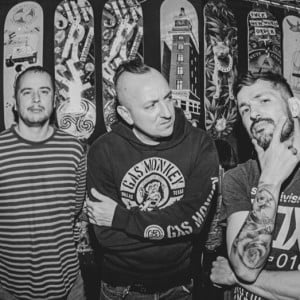
Gufi
Artist
Gufi es una banda chilena de pop punk conformada por <a href="spotify:artist:7c3k9kUFXmsCzzTvCwli0b" data-name="Tim Picchetti">Tim Picchetti</a>, Roberto Varela (Bajo) y Juan Pablo Varela (Batería). La banda se ve fuertemente influenciada por el punk californiano y por grupos como <a href="spotify:artist:6olE6TJLqED3rqDCT0FyPh" data-name="Nirvana">Nirvana</a>, <a href="spotify:artist:7oPftvlwr6VrsViSDV7fJY" data-name="Green Day">Green Day</a> y <a href="spotify:artist:6FBDaR13swtiWwGhX1WQsP" data-name="blink-182">blink-182</a>. Posee dos discos de estudio: <a href="spotify:album:0It6LpqmGgPSMdXMSXKS1w" data-name="Historias De La Calle">Historias De La Calle</a> (2005) y <a href="spotify:album:12FNuCmrZPqCFiu5mL09EC" data-name="Corazón D' Roto">Corazón D' Roto</a> (2008), y se hizo conocida por sus temas <a href="spotify:track:3A0t8Bg8kFoVuCZFiKhY9k" data-name="Eso Es Todo Lo Que Soy">Eso Es Todo Lo Que Soy</a>, <a href="spotify:track:4Dl15Nv5e6XdyzwG0hZbCJ" data-name="Paul">Paul</a> y <a href="spotify:track:7IvHuh3TYgeQa3Wj3gMrAK" data-name="Por Ella">Por Ella</a>.
Sublime
Artist
Sublime, was founded in 1988 by Eric Wilson, Bud Gaugh and Bradley Nowell. Their first self-produced album, 40oz. to Freedom, was released in 1992 and its success secured Sublime signing to MCA Records in time for the band’s 1994 sophomore album, Robbin’ the Hood, and later their self-titled third album. On May 25, 1996, however, lead vocalist and guitarist Nowell tragically passed away and the band collapsed, but the eponymous SUBLIME was still slated for a July 1996 release. On the strength of the chart-topping alternative radio hit “What I Got,” the album was certified gold by the end of 1996, selling more than 7M copies, and becoming one of the most popular reggae-punk albums in history. Sublime has gone on to sell over 18 million RIAA certified albums in the US, and their genre-defining music and their cultural influence is stronger today than ever before. In late 2023, Bradley Nowell’s son Jakob Nowell joined original Sublime members Bud Gaugh and Eric Wilson on stage for the first time to perform at a benefit concert for Bad Brains’ H.R. With an undeniable musical synergy between Nowell, Gaugh and Wilson, and overwhelming reaction and support from fans across the world, the trio decided to move forward and continue the Sublime legacy, starting a new chapter of the band with Jakob Nowell as front man. "<a href="spotify:album:2aHF9jls0PERuR58H2oaDd" data-name="Garden Grove // Ebin">Garden Grove // Ebin</a>" out now
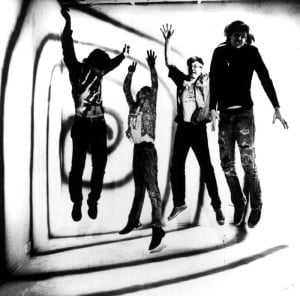
Sonic Youth
Artist
As they redefined what noise meant within rock & roll -- and what success meant for a band with experimental roots -- Sonic Youth became one of the most influential, and popular, acts to emerge from the American underground. Their inventive use of alternate tunings, dissonance, and feedback, which they combined with the intensity of hardcore punk and the performance art aesthetic of New York's avant-garde, created a new sonic landscape with an impact that lasted for decades. While 1983's Confusion Is Sex reflected the height of no wave's harsh yet hypnotic influence on their music, Sonic Youth soon added more structure and melody without sacrificing any of their edge. Their trio of independent late-'80s records -- 1986's EVOL, 1987's Sister, and 1988's Daydream Nation -- became touchstones for a generation of indie rockers, thanks to their volatile mix of experiments and accessibility. The band's growing popularity led them to sign to a major label, and with 1990's Goo and 1992's Dirty, Sonic Youth courted mainstream success (most of their albums from the '90s onward charted within the Top 100 of the Billboard 200) while maintaining their reputation as innovators and tastemakers. Later in the '90s, creative restlessness led them to make more challenging major-label albums like 1995's Washing Machine, and to release overtly experimental works on their own <a href="spotify:search:label%3A%22SYR%22">SYR</a> imprint. In the decade that followed, Sonic Youth continued to balance the different sides of their music in ways that felt true to their legacy; from 2002's introspective Murray St. to 2009's hard-hitting swan song The Eternal, they remained a band who always forged their own path. Sonic Youth's future acclaim was unthinkable when guitarists/vocalists <a href="spotify:artist:1J4ACYB6yMqd79q3rjskqs">Thurston Moore</a> and <a href="spotify:artist:4tXPSo0qk91VMP3wFxL0Fo">Lee Ranaldo</a> and bassist/vocalist <a href="spotify:artist:3n8qeKQViV1waeCzZmS4Tx">Kim Gordon</a> formed Sonic Youth in 1981. <a href="spotify:artist:1J4ACYB6yMqd79q3rjskqs">Moore</a> grew up in Bethel, Connecticut; <a href="spotify:artist:4tXPSo0qk91VMP3wFxL0Fo">Ranaldo</a> was from Long Island; and <a href="spotify:artist:3n8qeKQViV1waeCzZmS4Tx">Gordon</a> was an art student and musician from California. All three arrived in Manhattan during the height of the New York-based post-punk no wave movement. After <a href="spotify:artist:1J4ACYB6yMqd79q3rjskqs">Moore</a>'s band the Coachmen broke up, he began playing with CKM and met <a href="spotify:artist:3n8qeKQViV1waeCzZmS4Tx">Gordon</a>, who was also a member of the group. The pair became romantic and creative partners, and settled on the name Sonic Youth for their project in mid-1981. That June, the pair helped stage the Noise Festival, in which the band made their live debut. When <a href="spotify:artist:1J4ACYB6yMqd79q3rjskqs">Moore</a> saw <a href="spotify:artist:4tXPSo0qk91VMP3wFxL0Fo">Ranaldo</a> performing with avant-garde composer <a href="spotify:artist:0eiyrB0ET8AbrR5s6rrLJr">Glenn Branca</a>'s electric guitar ensemble, he invited the guitarist to join Sonic Youth. At the time, the group also featured keyboardist Anne DeMarinis and drummer Richard Edson. DeMarinis departed shortly afterward, and the quartet soon became the first band on <a href="spotify:artist:0eiyrB0ET8AbrR5s6rrLJr">Branca</a>'s <a href="spotify:search:label%3A%22Neutral+Records%22">Neutral Records</a> label. That December, Sonic Youth recorded their self-titled debut EP at a studio in Radio City Music Hall. Appearing in March 1982, Sonic Youth featured a more straightforward post-punk sound than the music they would make in the near future. When Edson left Sonic Youth to pursue an acting career, he was replaced by Bob Bert. However, creative differences between Bert and the rest of the band while on tour with <a href="spotify:artist:79S80ZWgVhIPMCHuvl6SkA">Swans</a> led to his dismissal. It was Jim Sclavunos who played most of the drums on Sonic Youth's debut album, Confusion Is Sex, which arrived in February 1983 and introduced the abrasive, no wave-inspired approach that defined most of the group's early work. A few months later Sclavunos quit, and Bert rejoined Sonic Youth in time to record the Kill Yr Idols EP, which the German label Zensor released that October. Early in 1984, <a href="spotify:artist:1J4ACYB6yMqd79q3rjskqs">Moore</a> attempted to land the band a contract with the British indie label <a href="spotify:search:label%3A%22Doublevision%22">Doublevision</a>, but the label rejected the demos. Paul Smith, one of the owners of <a href="spotify:search:label%3A%22Doublevision%22">Doublevision</a>, formed <a href="spotify:search:label%3A%22Blast+First+Records%22">Blast First Records</a> in order to release the band's music. Thanks to a deal with U.K. indie label <a href="spotify:search:label%3A%22Rough+Trade%22">Rough Trade</a>, Sonic Youth had their first label with strong distribution. During these negotiations, the cassette-only live album Sonic Death: Sonic Youth Live appeared on <a href="spotify:artist:1J4ACYB6yMqd79q3rjskqs">Moore</a>'s label <a href="spotify:search:label%3A%22Ecstatic+Peace%22">Ecstatic Peace</a>. That year, <a href="spotify:artist:3n8qeKQViV1waeCzZmS4Tx">Gordon</a> and <a href="spotify:artist:1J4ACYB6yMqd79q3rjskqs">Moore</a> also married. To make their second album, Sonic Youth worked with <a href="spotify:artist:0la2jwEnzoM8QqBkSyYvsu">Martin Bisi</a>, and expanded on improvised pieces they played in between songs while in concert. Drawing on the shadowy side of Americana and reflecting the state of the nation in the mid-'80s, Bad Moon Rising appeared in March 1985 via <a href="spotify:search:label%3A%22Blast+First%22">Blast First</a> in the U.K. and <a href="spotify:search:label%3A%22Homestead+Records%22">Homestead Records</a> in the U.S., earning strong reviews from the underground music press thanks to its combination of dissonant, feedback-drenched experiments within relatively straightforward pop song structures. Following the release of the Death Valley '69 EP, Bert was replaced by former <a href="spotify:artist:7KIFG17d5vFSPwA4QletIV">Crucifucks</a> member Steve Shelley, who became the group's permanent drummer. Bad Moon Rising's acclaim attracted significant attention, including offers from major labels. Instead, Sonic Youth decided to sign with <a href="spotify:search:label%3A%22SST%22">SST</a>, home of <a href="spotify:artist:16bN8mhtDFdegWbg0z3s10">Hüsker Dü</a> and <a href="spotify:artist:5Mhs3Eu8lU6sRCtRYsmABV">Black Flag</a>, in early 1986. The band reunited with <a href="spotify:artist:0la2jwEnzoM8QqBkSyYvsu">Bisi</a> to make that May's EVOL, a more melodic set of songs that explored themes of celebrity and also featured collaborations with <a href="spotify:artist:3aSkzI3DQrdPtYXizXnwda">Lydia Lunch</a> and <a href="spotify:artist:1MGR2y3msa1wBK06SSUNaf">Mike Watt</a>. The album made Sonic Youth a fixture on college radio, and their status grew significantly with their next album. Largely written while on tour in support of EVOL and recorded with Walter Sear at his studio Sear Sound, Sister was released in March 1987 and continued the group's refinement of their music. The album, which incorporated acoustic guitar and drew inspiration from the life and writing of sci-fi author <a href="spotify:artist:4NCU7Ke4zRYtTYe3VR5A97">Philip K. Dick</a>, was heavily praised by mainstream publications like Rolling Stone. That November, the band issued Master=Dik, an EP that included samples of <a href="spotify:artist:5a2EaR3hamoenG9rDuVn8j">Prince</a>'s "Kiss" as well as a cover of the <a href="spotify:artist:1co4F2pPNH8JjTutZkmgSm">Ramones</a>' "Beat on the Brat" featuring <a href="spotify:artist:267VY6GX5LyU5c9M85ECZQ">Dinosaur Jr.</a>'s <a href="spotify:artist:1PokjXeIq2zVosXbTEaNlx">J. Mascis</a>. Sonic Youth's true breakthrough came in 1988 with the double album Daydream Nation. Instead of editing down their song ideas, the group expanded them into free-flowing suites that better reflected their live performances. Sonic Youth recorded the album at New York's Greene Street Studio with engineer Nick Sansano, whose work with hip-hop artists including <a href="spotify:artist:6Mo9PoU6svvhgEum7wh2Nd">Public Enemy</a> impressed the band. Released on <a href="spotify:search:label%3A%22Enigma+Records%22">Enigma Records</a>, it was a tour de force that was hailed as a masterpiece when it arrived in October 1988, and generated a college radio hit in "Teenage Riot." Sonic Youth followed it with January 1989's The Whitey Album, a tongue-in-cheek tribute to <a href="spotify:artist:6tbjWDEIzxoDsBA1FuhfPW">Madonna</a> and other parts of mainstream pop culture from their side project <a href="spotify:artist:4b5AaEwEgxDuOQs6R2sbul">Ciccone Youth</a>. Despite Daydream Nation's wide acclaim, <a href="spotify:search:label%3A%22Enigma%22">Enigma</a>'s distribution and financial woes meant the album wasn't always available in stores. These factors contributed heavily to the band's decision to move to the major label <a href="spotify:search:label%3A%22DGC%22">DGC</a> in late 1989. Signing a contract that gave them complete creative control, as well as letting them function as talent seekers for the label, Sonic Youth established a precedent for alternative bands moving to majors during the '90s while preserving their artistic credibility. To make their major-label debut, the group recorded demos with <a href="spotify:artist:1PokjXeIq2zVosXbTEaNlx">Mascis</a> and <a href="spotify:artist:7AKcqr7g4ap7U8WP69yRpa">Gumball</a>'s <a href="spotify:artist:5XDN6vK4xhmUAx5VAvfP7C">Don Fleming</a>, then worked with Sansano at Sorcerer Sound and Greene Street studios on lengthy, often experimental sessions. To complete the album, Sonic Youth recruited jazz musician-turned-producer Ron Saint Germain, who helped shape the sessions' numerous overdubs into a finished product with a focused sound that didn't abandon the group's noisy aesthetic. The results were June 1990's Goo, which was a college radio hit and reached 96 on the Billboard 200 Albums chart. The band explored their relationship to pop culture further on songs such as the <a href="spotify:artist:1JfH8gevkDviqs50A5NO0L">Chuck D</a> collaboration "Kool Thing," which hit number seven on the Billboard Modern Rock Tracks chart. After Goo's release, <a href="spotify:artist:6v8FB84lnmJs434UJf2Mrm">Neil Young</a> invited Sonic Youth to open for him on his arena tour for Ragged Glory, a move that represented their first major incursion into the mainstream and also helped make <a href="spotify:artist:6v8FB84lnmJs434UJf2Mrm">Young</a> a cult figure within the alternative circles during the '90s. For their second major-label album, Dirty, Sonic Youth nodded to Seattle grunge rockers such as <a href="spotify:artist:7LuYiSXiWs86rwWJjEEgB9">Mudhoney</a> and Nirvana, both of whom Sonic Youth had supported for several years (they released a split single with <a href="spotify:artist:7LuYiSXiWs86rwWJjEEgB9">Mudhoney</a> and brought Nirvana to <a href="spotify:search:label%3A%22DGC+Records%22">DGC Records</a>). The band worked with Nevermind mixer Andy Wallace and producer <a href="spotify:artist:0gTi2zsOHn6wtlkx66uxXM">Butch Vig</a>, who helped them focus their songs into a more accessible sound. Released in July 1992, Dirty reached number 83 on the Billboard 200 Albums chart, spawned the modern rock hits "100%," "Youth Against Fascism," and "Sugar Kane," and eventually went gold. In the wake of this success, Sonic Youth were hailed as alternative rock godfathers. The band reunited with <a href="spotify:artist:0gTi2zsOHn6wtlkx66uxXM">Vig</a> for their next album, recording at Sear Sound, where they made Sister. Despite its more overtly experimental and introspective approach to songwriting and recording, 1994's Experimental Jet Set, Trash and No Star nevertheless became one of the group's highest-charting albums when it debuted at number 34 on the Billboard 200 Albums chart (and at number ten on the U.K. charts) that May. Later in 1994, <a href="spotify:artist:1J4ACYB6yMqd79q3rjskqs">Moore</a> and <a href="spotify:artist:3n8qeKQViV1waeCzZmS4Tx">Gordon</a> had their first child, a daughter named Coco Haley. The following year, Sonic Youth agreed to headline the Lollapalooza package tour. The band used the earnings to build their own studio, Lower Manhattan's Echo Canyon. Following the tour, the members of Sonic Youth took time to pursue other projects. <a href="spotify:artist:4tXPSo0qk91VMP3wFxL0Fo">Ranaldo</a> and <a href="spotify:artist:1J4ACYB6yMqd79q3rjskqs">Moore</a> both played with other experimental musicians such as <a href="spotify:artist:7Mu2uySmDN3MZinSsQ86vY">William Hooker</a>, <a href="spotify:artist:3s4oEo05Do24wMkcjXlxll">Christian Marclay</a>, and <a href="spotify:artist:1O8yrjjifkCO8txB4CxuOm">DJ Spooky</a>, while <a href="spotify:artist:1J4ACYB6yMqd79q3rjskqs">Moore</a> also released his debut solo album, 1995's Psychic Hearts. Shelley played with <a href="spotify:artist:6G7OerKc3eBO9sVkRNopFC">Cat Power</a> and <a href="spotify:artist:334Qy1s3xPYdv0esSmWgfw">Two Dollar Guitar</a> and founded the label <a href="spotify:search:label%3A%22Smells+Like+Records%22">Smells Like Records</a>, and <a href="spotify:artist:3n8qeKQViV1waeCzZmS4Tx">Gordon</a> performed with Julia Cafritz as <a href="spotify:artist:3Yrefhp7HMKXAaHHQx1P8h">Free Kitten</a> and established the fashion label X-Girl. When Sonic Youth reunited to make their next album, their music reflected <a href="spotify:artist:3n8qeKQViV1waeCzZmS4Tx">Gordon</a>'s increased presence as a guitarist and the group's focus on rangy improvisations. Recorded at Memphis' Easley Studios and co-produced by the band and John Siket (who engineered Dirty and Experimental Jet Set), Washing Machine appeared in September 1995 and featured some of Sonic Youth's longest and widest-ranging songs yet, including the 20-minute "The Diamond Sea." The album received the band's strongest reviews since Daydream Nation and peaked at number 58 on the Billboard 200 Albums chart. Also in 1995, the group released their score for the 1987 film Made in USA for the first time. For the next couple of years, Sonic Youth holed up in Echo Canyon studio working on some of their most experimental music in some time. Released on their own <a href="spotify:search:label%3A%22SYR%22">SYR</a> imprint, SYR1: Anagrama appeared in May 1997 and was followed in September by SYR2: Slaapkamers met slagroom. The following March saw the release of SYR3: Invito al ĉielo, the band's first collaboration with multi-instrumentalist/producer <a href="spotify:artist:46urSPEzIrRVqKqciwOq2f">Jim O'Rourke</a>. Sonic Youth refined some of the ideas on these EPs for their tenth album, the gently expansive A Thousand Leaves. Arriving in May 1998, the album hit number 85 on the Billboard 200 Albums chart. The following July, Sonic Youth's customized, irreplaceable gear was stolen while they were on tour in California. As they regrouped from this loss, they released SYR4: Goodbye, 20th Century, a set of works by avant-garde composers performed by the band and collaborators including <a href="spotify:artist:3s4oEo05Do24wMkcjXlxll">Christian Marclay</a> and <a href="spotify:artist:0dhWTB4YOlAXtMvVTZThlz">Wharton Tiers</a>. For their 11th album, Sonic Youth compensated for their missing gear by returning to some of their oldest instruments and filling in the gaps with new equipment. Informed by beat poetry and the band's no wave roots, May 2000's NYC Ghosts & Flowers featured performances and production by <a href="spotify:artist:46urSPEzIrRVqKqciwOq2f">O'Rourke</a>; it peaked at number 172 on the Billboard 200 Album chart. On that August's SYR5, <a href="spotify:artist:7hiBBRGcEpBft3kgoWhbSF">DJ Olive</a> and <a href="spotify:artist:0RKzY8HLNpYPo0haH86CrN">Ikue Mori</a> joined <a href="spotify:artist:3n8qeKQViV1waeCzZmS4Tx">Gordon</a> on a set of darkly abstract pieces. By August 2001, Sonic Youth were in the studio working on their next album, but sessions came to a temporary halt following the September 11 attacks (the band's studio was only a few blocks from the World Trade Center). Continuing in the reflective vein of A Thousand Leaves and NYC Ghosts & Flowers, June 2002's acclaimed Murray St. marked the group's first album with <a href="spotify:artist:46urSPEzIrRVqKqciwOq2f">O'Rourke</a> as a full-fledged member of Sonic Youth and reached number 126 on the Billboard 200. The five-piece Sonic Youth returned in June 2004 with Sonic Nurse, a more energetic and structured set of songs that hit 64 on the Billboard 200. The following year, Sonic Youth recovered some of their stolen gear, while <a href="spotify:artist:46urSPEzIrRVqKqciwOq2f">Jim O'Rourke</a> left the group to pursue other projects; former <a href="spotify:artist:3inCNiUr4R6XQ3W43s9Aqi">Pavement</a> bassist Mark Ibold took over bass duties. Late in 2005, the band issued SYR6, a recording of a benefit concert for the Anthology Film Archives that Sonic Youth had played alongside percussionist Tim Barnes. For their 14th album -- and final one for <a href="spotify:search:label%3A%22Geffen+Records%22">Geffen Records</a> -- the band returned to Sear Sound to work with producer John Agnello. Released in June 2006, Rather Ripped continued in the more song-oriented direction of Sonic Nurse and fared relatively well on the charts, peaking at 71 on the Billboard 200 and at 64 on the U.K. Albums Chart. That December, The Destroyed Room: B-Sides and Rarities featured previously unissued music. In 2008, the group resurrected the <a href="spotify:search:label%3A%22SYR%22">SYR</a> series: J'Accuse Ted Hughes arrived that April as a vinyl-only release featuring a piece from the band's performance at the first All Tomorrow's Parties festival in April 2000, while July's Andre Sider Af Sonic Youth chronicled an improvised performance at 2005's Roskilde Festival with <a href="spotify:artist:76w5atatALEaxzKTmZbefS">Mats Gustafsson</a> and <a href="spotify:artist:5UezsklPScipW64XJm7qql">Merzbow</a>. They also assembled a compilation album for Starbucks, Hits Are for Squares, featuring the previously unreleased track "Slow Revolution." Late that year, Sonic Youth signed with <a href="spotify:search:label%3A%22Matador+Records%22">Matador Records</a>. While working on their <a href="spotify:search:label%3A%22Matador%22">Matador</a> debut, Sonic Youth collaborated with <a href="spotify:artist:36QJpDe2go2KgaRleHCDTp">Led Zeppelin</a>'s <a href="spotify:artist:6RhcZuUOb20IZvR8BbdnJX">John Paul Jones</a> on an April 2009 piece celebrating choreographer Merce Cunningham's 90th birthday. Recorded quickly at the band's studio, The Eternal arrived in June 2009 and evoked the days of Sister and Daydream Nation. The album peaked at number 18 on the Billboard 200, marking their highest chart position ever; in Europe, it was awarded a silver certification. Following the album's release, Sonic Youth's members concentrated on individual projects like Shelley's <a href="spotify:search:label%3A%22Vampire+Blues%22">Vampire Blues</a> label. They also recorded the soundtrack to French director Fabrice Gobert's film Simon Werner a Disparu, which was released early in 2011 as SYR9: Simon Werner a Disparu. Late in 2011, <a href="spotify:artist:1J4ACYB6yMqd79q3rjskqs">Moore</a> and <a href="spotify:artist:3n8qeKQViV1waeCzZmS4Tx">Gordon</a> announced their impending divorce, and Sonic Youth's São Paulo date that November was their final concert before an indefinite hiatus. The band's members remained busy: Among their other projects, <a href="spotify:artist:3n8qeKQViV1waeCzZmS4Tx">Gordon</a> worked with experimental guitarist <a href="spotify:artist:6kCCUIp2jp39YUjbqEAmzL">Bill Nace</a> as <a href="spotify:artist:7iWLSJUrdU7ijowTmAHMCc">Body/Head</a>, and with <a href="spotify:artist:4mCKYeRm9x5hj3iPX6Sths">Tomorrows Tulips</a>' Alex Knost as <a href="spotify:artist:6Ycz6NH33xJcd47215Z6Xv">Glitterbust</a>; she also published her memoir, Girl in a Band and recorded as a solo artist. <a href="spotify:artist:1J4ACYB6yMqd79q3rjskqs">Moore</a> toured and recorded with acts including <a href="spotify:artist:2CFDYbcjLeFAb6Xv2T9k4F">Chelsea Light Moving</a> and continued his solo career. <a href="spotify:artist:4tXPSo0qk91VMP3wFxL0Fo">Ranaldo</a> recorded as a solo artist and with his band the Dust, which featured Shelley as well as <a href="spotify:artist:46urSPEzIrRVqKqciwOq2f">O'Rourke</a> and guitarist <a href="spotify:artist:1Baf5XU0f8BZTtCWB4fqGc">Alan Licht</a>. In addition, Shelley played with Hallogallo 2010, <a href="spotify:artist:1nQZtILyvgaFwIEfLsbrSs">Disappears</a>, and <a href="spotify:artist:4G0XDEk7RbA4BBCTs917U9">Sun Kil Moon</a>. He also ran Sonic Youth's labels <a href="spotify:search:label%3A%22SYR%22">SYR</a> and <a href="spotify:search:label%3A%22Goofin%27%22">Goofin'</a>, the latter of which released the 2012 live album Smart Bar: Chicago 1985 and 2016's Spinhead Sessions, a set of 1986 rehearsals for the group's Made in USA soundtrack. Three years later, <a href="spotify:search:label%3A%22Matador+Records%22">Matador Records</a> reissued Live at Battery Park, originally a limited-edition bonus LP included with preorders of The Eternal, as Battery Park, NYC: July 4, 2008. As the 2010s became the 2020s, the band continued to release a string of live albums and rarities collections digitally. In March 2022, <a href="spotify:search:label%3A%22Three+Lobed%22">Three Lobed</a> issued In/Out/In, a compilation of rangy pieces recorded in the 2000s that included a pair of tracks that appeared on the 2011 box set Not the Spaces You Know, But Between Them. Initially released in 2020, Live in Brooklyn 2011, which documented Sonic Youth's career-spanning final U.S. date at the Williamsburg Waterfront, was reissued in a remastered version in August 2023. The same year, <a href="spotify:artist:1J4ACYB6yMqd79q3rjskqs">Moore</a> published his memoir Sonic Life. In February 2024, <a href="spotify:search:label%3A%22Goofin%27%22">Goofin'</a> officially released a remastered edition of Walls Have Ears, a 1986 bootleg of three of Sonic Youth's 1985 shows in the U.K. that was long beloved by fans. ~ Heather Phares & Stephen Thomas Erlewine, Rovi
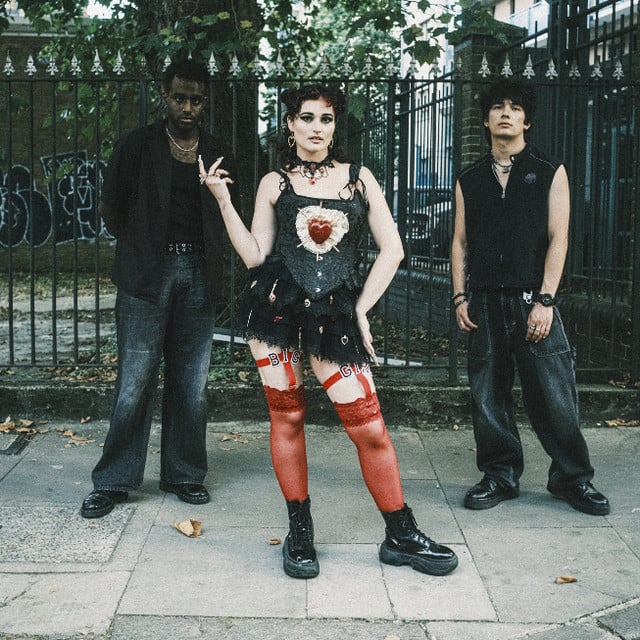
His Daughter Harry
Artist

Television
Artist
KNEECAP
Artist
Pearl Jam
Artist
+44
Artist

Pierce The Veil
Artist

The Guest List
Artist