Book for the Revolution

Items in this hypelist
To Read

Restoring the Kinship Worldview: Indigenous Voices Introduce 28 Precepts for Rebalancing Life on Planet Earth
Wahinkpe Topa (Four Arrows), Darcia Narvaez PhD · 2022
Selected speeches from Indigenous leaders around the world--necessary wisdom for our times, nourishment for our collective, and a path away from extinction toward a sustainable, interconnected future.<br/><br/>Indigenous worldviews, and the knowledge they confer, are critical for human survival and the wellbeing of future generations. Editors Wahinkpe Topa (Four Arrows) and Darcia Narvaez present 28 powerful excerpted passages from Indigenous leaders, including Mourning Dove, Robin Wall Kimmerer, Winona LaDuke, and Xiuhtezcatl Martinez. Accompanied by the editors’ own analyses, each chapter reflects the wisdom of Indigenous worldview precepts like:<br/><br/>Egalitarian rule versus hierarchical governance A fearless trust in the universe, instead of a fear-based culture The life-sustaining role of ceremony Emphasizing generosity and the greater good instead of pursuing selfish goals and for personal gain The laws of nature as the highest rules for living<br/>The editors emphasize our deep need to move away from the dominant Western paradigm--one that dictates we live without strong social purpose, fails to honor the earth as sacred, leads with the head while ignoring the heart, and places individual “rights” over collective responsibility. Restoring the Kinship Worldview is rooted in an Indigenous vision and strong social purpose that sees all life forms as sacred and sentient--that honors the wisdom of the heart, and grants equal standing to rights and responsibilities. All author proceeds from Restoring the Kinship Worldview are donated to Indigenous non-profit organizations working on behalf of Indigenous Peoples.<br/><br/>Inviting readers into a world-sense that expands beyond perceiving and conceiving to experiencing and being, Restoring the Kinship Worldview is a salve for our times, a nourishment for our collective, and a holistic orientation that will lead us away from extinction toward an integrated, sustainable future.
The World As It Is: Dispatches on the Myth of Human Progress
Chris Hedges · 2011
Drawing on two decades of experience as a war correspondent and based on his numerous columns for Truthdig, Chris Hedges presents The World As It Is, a panorama of the American empire at home and abroad, from the coarsening effect of America's War on Terror to the front lines in the Middle East and South Asia and the continuing Israeli-Palestinian conflict.<br/>Underlying his reportage is a constant struggle with the nature of war and its impact on human civilization. "War is always about betrayal," Hedges notes. "It is about betrayal of the young by the old, of cynics by idealists, and of soldiers and Marines by politicians. Society's institutions, including our religious institutions, which mold us into compliant citizens, are unmasked."
Empire of Illusion: The End of Literacy and the Triumph of Spectacle
Chris Hedges · 2009
A prescient book that forecast the culture that gave rise to Trump -- a society beholden to empty spectacle and obsession with image at the expense of reality, reason, and truth. An instant bestseller, Empire of Illusion is a striking and unsettling exploration of illusion and fantasy in contemporary American culture. Traveling to the ringside of professional wrestling bouts at Madison Square Garden, to Las Vegas to write about the pornographic film industry, and to academic conferences held by positive psychologists who claim to be able to engineer happiness, Hedges chronicles our flight from an ever-worsening reality. The cultural embrace of illusion and celebrity culture have accompanied a growing system of casino capitalism, which creates vast wealth for elites. Corporations have ruthlessly dismantled and destroyed our manufacturing base and impoverished our working class. Hedges exposes the mechanisms that undermine our democracy and divert us from the economic, environmental, political, and moral collapse around us. A culture that cannot distinguish between reality and illusion dies, Hedges argues, and we are dying now.
The Autobiography of Malcolm X
Malcolm X · 1992
ONE OF TIME’S TEN MOST IMPORTANT NONFICTION BOOKS OF THE TWENTIETH CENTURY In the searing pages of this classic autobiography, originally published in 1964, Malcolm X, the Muslim leader, firebrand, and anti-integrationist, tells the extraordinary story of his life and the growth of the Black Muslim movement. His fascinating perspective on the lies and limitations of the American Dream, and the inherent racism in a society that denies its nonwhite citizens the opportunity to dream, gives extraordinary insight into the most urgent issues of our own time. The Autobiography of Malcolm X stands as the definitive statement of a movement and a man whose work was never completed but whose message is timeless. It is essential reading for anyone who wants to understand America. Praise for The Autobiography of Malcolm X “Extraordinary . . . a brilliant, painful, important book.”—The New York Times “This book will have a permanent place in the literature of the Afro-American struggle.”—I. F. Stone

The Revolution Will Not Be Funded: Beyond the Non-Profit Industrial Complex
INCITE! Women of Color Against Violence · 2017
A trillion-dollar industry, the US non-profit sector is one of the world's largest economies. From art museums and university hospitals to think tanks and church charities, over 1.5 million organizations of staggering diversity share the tax-exempt 501(c)(3) designation, if little else. Many social justice organizations have joined this world, often blunting political goals to satisfy government and foundation mandates. But even as funding shrinks, many activists often find it difficult to imagine movement-building outside the non-profit model. The Revolution Will Not Be Funded gathers essays by radical activists, educators, and non-profit staff from around the globe who critically rethink the long-term consequences of what they call the "non-profit industrial complex." Drawing on their own experiences, the contributors track the history of non-profits and provide strategies to transform and work outside them. Urgent and visionary, The Revolution Will Not Be Funded presents a biting critique of the quietly devastating role the non-profit industrial complex plays in managing dissent.<br/><br/>Contributors. Christine E. Ahn, Robert L. Allen, Alisa Bierria, Nicole Burrowes, Communities Against Rape and Abuse (CARA), William Cordery, Morgan Cousins, Ruth Wilson Gilmore, Stephanie Guilloud, Adjoa Florência Jones de Almeida, Tiffany Lethabo King, Paul Kivel, Soniya Munshi, Ewuare Osayande, Amara H. Pérez, Project South: Institute for the Elimination of Poverty and Genocide, Dylan Rodríguez, Paula X. Rojas, Ana Clarissa Rojas Durazo, Sisters in Action for Power, Andrea Smith, Eric Tang, Madonna Thunder Hawk, Ije Ude, Craig Willse
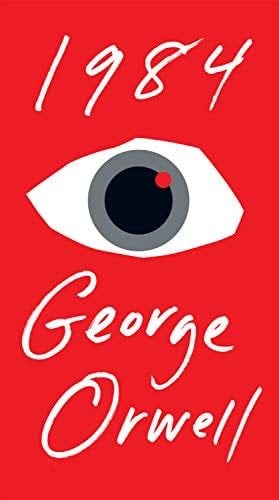
1984
George Orwell · 1961
<b>Written more than 70 years ago, <i>1984</i> was George Orwell’s chilling prophecy about the future. And while 1984 has come and gone, his dystopian vision of a government that will do anything to control the narrative is timelier than ever...<br><br><b>• Nominated as one of America’s best-loved novels by PBS’s <i>The Great American Read •</i></b><br></b><br>“<i>The Party told you to reject the evidence of your eyes and ears. It was their final, most essential command.</i>”<br><br>Winston Smith toes the Party line, rewriting history to satisfy the demands of the Ministry of Truth. With each lie he writes, Winston grows to hate the Party that seeks power for its own sake and persecutes those who dare to commit thoughtcrimes. But as he starts to think for himself, Winston can’t escape the fact that Big Brother is always watching...<br><br>A startling and haunting novel, <i>1984</i> creates an imaginary world that is completely convincing from start to finish. No one can deny the novel’s hold on the imaginations of whole generations, or the power of its admonitions—a power that seems to grow, not lessen, with the passage of time.
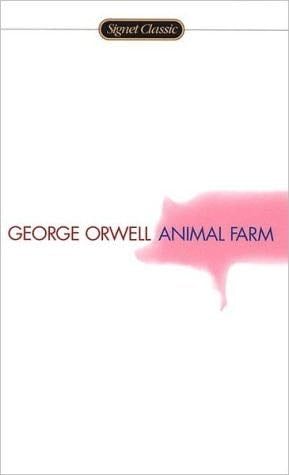
Animal Farm
George Orwell · 1996
<b>George Orwell's timeless and timely allegorical novel—a scathing satire on a downtrodden society’s blind march towards totalitarianism.<br><br>SOON TO BE A NETFLIX FILM!<br><br></b><i>“All animals are equal, but some animals are more equal than others.”</i><br><br>A farm is taken over by its overworked, mistreated animals. With flaming idealism and stirring slogans, they set out to create a paradise of progress, justice, and equality. Thus the stage is set for one of the most telling satiric fables ever penned—a razor-edged fairy tale for grown-ups that records the evolution from revolution against tyranny to a totalitarianism just as terrible. <br><br> When <i>Animal Farm</i> was first published, Stalinist Russia was seen as its target. Today it is devastatingly clear that wherever and whenever freedom is attacked, under whatever banner, the cutting clarity and savage comedy of George Orwell’s masterpiece have a meaning and message still ferociously fresh.

The New Jim Crow: Mass Incarceration in the Age of Colorblindness
Michelle Alexander · 2020
Named one of the most important nonfiction books of the 21st century by Entertainment Weekly‚Slate‚Chronicle of Higher Education‚Literary Hub, Book Riot‚ and Zora<br/>A tenth-anniversary edition of the iconic bestseller—“one of the most influential books of the past 20 years,” according to the Chronicle of Higher Education—with a new preface by the author<br/>“It is in no small part thanks to Alexander’s account that civil rights organizations such as Black Lives Matter have focused so much of their energy on the criminal justice system.”<br/>—Adam Shatz, London Review of Books<br/>Seldom does a book have the impact of Michelle Alexander’s The New Jim Crow. Since it was first published in 2010, it has been cited in judicial decisions and has been adopted in campus-wide and community-wide reads; it helped inspire the creation of the Marshall Project and the new $100 million Art for Justice Fund; it has been the winner of numerous prizes, including the prestigious NAACP Image Award; and it has spent nearly 250 weeks on the New York Times bestseller list.<br/>Most important of all, it has spawned a whole generation of criminal justice reform activists and organizations motivated by Michelle Alexander’s unforgettable argument that “we have not ended racial caste in America; we have merely redesigned it.” As the Birmingham Newsproclaimed, it is “undoubtedly the most important book published in this century about the U.S.”<br/>Now, ten years after it was first published, The New Press is proud to issue a tenth-anniversary edition with a new preface by Michelle Alexander that discusses the impact the book has had and the state of the criminal justice reform movement today.
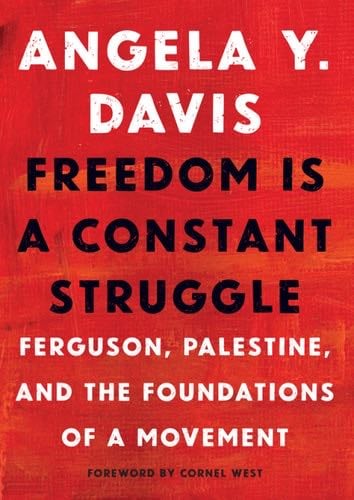
Freedom Is a Constant Struggle: Ferguson, Palestine, and the Foundations of a Movement
Angela Y. Davis · 2016
In this collection of essays, interviews, and speeches, the renowned activist examines today’s issues—from Black Lives Matter to prison abolition and more. Activist and scholar Angela Y. Davis has been a tireless fighter against oppression for decades. Now, the iconic author of Women, Race, and Class offers her latest insights into the struggles against state violence and oppression throughout history and around the world. Reflecting on the importance of black feminism, intersectionality, and prison abolitionism, Davis discusses the legacies of previous liberation struggles, from the Black Freedom Movement to the South African anti-Apartheid movement. She highlights connections and analyzes today’s struggles against state terror, from Ferguson to Palestine. Facing a world of outrageous injustice, Davis challenges us to imagine and build a movement for human liberation. And in doing so, she reminds us that “freedom is a constant struggle.” This edition of Freedom Is a Constant Struggle includes a foreword by Dr. Cornel West and an introduction by Frank Barat.

How Europe Underdeveloped Africa
Walter Rodney · 2018
<b>The classic work of political, economic, and historical analysis, powerfully introduced by Angela Davis</b><br><br>In his short life, the Guyanese intellectual Walter Rodney emerged as one of the leading thinkers and activists of the anticolonial revolution, leading movements in North America, South America, the African continent, and the Caribbean. In each locale, Rodney found himself a lightning rod for working class Black Power. His deportation catalyzed 20th century Jamaica's most significant rebellion, the 1968 Rodney riots, and his scholarship trained a generation how to think politics at an international scale. In 1980, shortly after founding of the Working People's Alliance in Guyana, the 38-year-old Rodney would be assassinated.<br><br>In his magnum opus, <i>How Europe Underdeveloped Africa</i>, Rodney incisively argues that grasping "the great divergence" between the west and the rest can only be explained as the exploitation of the latter by the former. This meticulously researched analysis of the abiding repercussions of European colonialism on the continent of Africa has not only informed decades of scholarship and activism, it remains an indispensable study for grasping global inequality today.
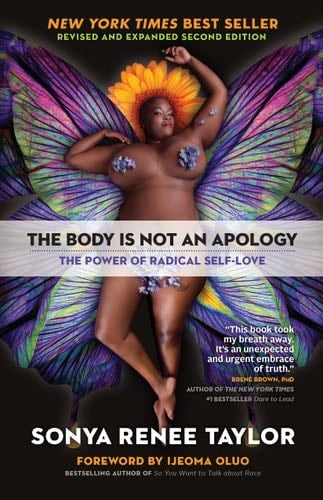
The Body Is Not an Apology, Second Edition: The Power of Radical Self-Love
Sonya Renee Taylor · 2021
"To build a world that works for everyone, we must first make the radical decision to love every facet of ourselves...'The body is not an apology' is the mantra we should all embrace."<br/>--Kimberlé Crenshaw, legal scholar and founder and Executive Director, African American Policy Forum<br/><br/>"Taylor invites us to break up with shame, to deepen our literacy, and to liberate our practice of celebrating every body and never apologizing for this body that is mine and takes care of me so well."<br/>--Alicia Garza, cocreator of the Black Lives Matter Global Network and Strategy + Partnerships Director, National Domestic Workers Alliance<br/><br/>"Her manifesto on radical self-love is life altering--required reading for anyone who struggles with body image."<br/>--Claire Foster, Foreword Review<br/><br/>Humans are a varied and divergent bunch with all manner of beliefs, morals, and bodies. Systems of oppression thrive off our inability to make peace with difference and injure the relationship we have with our own bodies.<br/><br/>The Body Is Not an Apology offers radical self-love as the balm to heal the wounds inflicted by these violent systems. World-renowned activist and poet Sonya Renee Taylor invites us to reconnect with the radical origins of our minds and bodies and celebrate our collective, enduring strength. As we awaken to our own indoctrinated body shame, we feel inspired to awaken others and to interrupt the systems that perpetuate body shame and oppression against all bodies. When we act from this truth on a global scale, we usher in the transformative opportunity of radical self-love, which is the opportunity for a more just, equitable, and compassionate world--for us all.
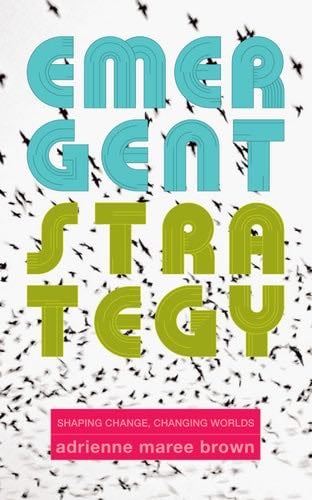
Emergent Strategy
adrienne maree brown · 2017
In the tradition of Octavia Butler, here is radical self-help, society-help, and planet-help to shape the futures we want. Change is constant. The world, our bodies, and our minds are in a constant state of flux. They are a stream of ever-mutating, emergent patterns. Rather than steel ourselves against such change, Emergent Strategy teaches us to map and assess the swirling structures and to read them as they happen, all the better to shape that which ultimately shapes us, personally and politically. A resolutely materialist spirituality based equally on science and science fiction: a wild feminist and afro-futurist ride! adrienne maree brown, co-editor of Octavia’s Brood: Science Fiction from Social Justice Movements, is a social justice facilitator, healer, and doula living in Detroit.

Loving Corrections
adrienne maree brown · 2024
New York Times-bestselling author adrienne maree brown knows we need each other more than ever, and offers “loving corrections”: a roadmap towards collective power, righting wrongs, and true belonging This selection of prescient, compassionate essays explores patterns we engage in that are rooted in limited thinking. Through a lens of “loving correction” rather than mere critique, author adrienne maree brown helps us reimagine how to hold ourselves, our loved ones, and our communities accountable by setting clear boundaries, engaging in reflection, and nurturing honest relationships. Loving Corrections is divided into two sections, with the first portion featuring new essays including “A Word for White People” and “Relinquishing the Patriarchy” and writing on topics like moving from fragility to fortitude, disability, and navigating critique within activist communities. The second section expands and updates pieces from brown's popular monthly column “Murmurations” in YES! Magazine that explore accountability—within oneself and community—with depth, inventiveness, and empathy. Along with allowing us more authentic access to ourselves and to each other, the “corrections” in the book’s title are intended to explore and break identity-based patterns including white supremacy, fragility, patriarchy, and ableism. brown also offers practical guidance on how to apologize and be accountable from our nuanced positions of power, history, and resources. Building on her previous work—especially Holding Change and We Will Not Cancel Us—brown reminds us how much we need each other: "It is only through relationship that we learn how to be, understand our impact on others and explore small shifts that may yield remarkable collective change."

Be a Revolution
Ijeoma Oluo · 2024
NATIONAL BESTSELLER From the #1 New York Times–bestselling author of So You Want to Talk About Race and Mediocre, an eye-opening and galvanizing look at the current state of anti-racist activism across America. In the #1 New York Times bestseller So You Want To Talk About Race, Ijeoma Oluo offered a vital guide for how to talk about important issues of race and racism in society. In Mediocre: The Dangerous Legacy of White Male America, she discussed the ways in which white male supremacy has had an impact on our systems, our culture, and our lives throughout American history. But now that we better understand these systems of oppression, the question is this: What can we do about them? With Be A Revolution: How Everyday People are Fighting Oppression and Changing the World—and How You Can, Too, Oluo aims to show how people across America are working to create real positive change in our structures. Looking at many of our most powerful systems—like education, media, labor, health, housing, policing, and more—she highlights what people are doing to create change for intersectional racial equity. She also illustrates various ways in which the reader can find entryways into change in these same areas, or can bring some of this important work being done elsewhere to where they live. This book aims to not only be educational, but to inspire action and change. Oluo wishes to take our conversations on race and racism out of a place of pure pain and trauma, and into a place of loving action. Be A Revolution is both an urgent chronicle of this important moment in history, as well as an inspiring and restorative call for action.

Bury My Heart at Wounded Knee: An Indian History of the American West
Dee Brown · 2012
From the Preface for the 30th Edition... <br/> <br/>We rarely know the full power of words, in print or spoken. It is my hope that time has not dulled the words herein and that they will continue through the coming generation to be as true and direct as I originally meant them to be.

King Leopold's Ghost
Adam Hochschild · 1999
The 25th Anniversary Edition, with a foreword by Barbara Kingsolver "An enthralling story . . . A work of history that reads like a novel." — Christian Science Monitor “As Hochschild’s brilliant book demonstrates, the great Congo scandal prefigured our own times . . . This book must be read and reread.” — Los Angeles Times Book Review A National Book Critics Circle Award Finalist * A New York Times Notable Book In the late nineteenth century, as the European powers were carving up Africa, King Leopold II of Belgium carried out a brutal plundering of the territory surrounding the Congo River. Ultimately slashing the area’s population by ten million, he still managed to shrewdly cultivate his reputation as a great humanitarian. A tale far richer than any novelist could invent, King Leopold’s Ghost is the horrifying account of a megalomaniac of monstrous proportions. It is also the deeply moving portrait of those who defied Leopold: African rebel leaders who fought against hopeless odds and a brave handful of missionaries, travelers, and young idealists who went to Africa for work or adventure but unexpectedly found themselves witnesses to a holocaust and participants in the twentieth century’s first great human rights movement.

The Wretched of the Earth
Frantz Fanon · 2021
The sixtieth anniversary edition of Frantz Fanon’s landmark text, now with a new introduction by Cornel West<br/>First published in 1961, and reissued in this sixtieth anniversary edition with a powerful new introduction by Cornel West, Frantz Fanon’s The Wretched of the Earth is a masterfuland timeless interrogation of race, colonialism, psychological trauma, and revolutionary struggle, and a continuing influence on movements from Black Lives Matter to decolonization. A landmark text for revolutionaries and activists, The Wretched of the Earth is an eternal touchstone for civil rights, anti-colonialism, psychiatric studies, and Black consciousness movements around the world. Alongside Cornel West’s introduction, the book features critical essays by Jean-Paul Sartre and Homi K. Bhabha. This sixtieth anniversary edition of Fanon’s most famous text stands proudly alongside such pillars of anti-colonialism and anti-racism as Edward Said’s Orientalism and The Autobiography of Malcolm X.

Becoming Abolitionists: Police, Protests, and the Pursuit of Freedom
Derecka Purnell · 2021
A NONAME BOOK CLUB PICK Named a Kirkus Reviews "Best Book of 2021" "Becoming Abolitionists is ultimately about the importance of asking questions and our ability to create answers. And in the end, Purnell makes it clear that abolition is a labor of love—one that we can accomplish together if only we decide to." —Nia Evans, Boston Review For more than a century, activists in the United States have tried to reform the police. From community policing initiatives to increasing diversity, none of it has stopped the police from killing about three people a day. Millions of people continue to protest police violence because these "solutions" do not match the problem: the police cannot be reformed. In Becoming Abolitionists, Purnell draws from her experiences as a lawyer, writer, and organizer initially skeptical about police abolition. She saw too much sexual violence and buried too many friends to consider getting rid of police in her hometown of St. Louis, let alone the nation. But the police were a placebo. Calling them felt like something, and something feels like everything when the other option seems like nothing. Purnell details how multi-racial social movements rooted in rebellion, risk-taking, and revolutionary love pushed her and a generation of activists toward abolition. The book travels across geography and time, and offers lessons that activists have learned from Ferguson to South Africa, from Reconstruction to contemporary protests against police shootings. Here, Purnell argues that police can not be reformed and invites readers to envision new systems that work to address the root causes of violence. Becoming Abolitionists shows that abolition is not solely about getting rid of police, but a commitment to create and support different answers to the problem of harm in society, and, most excitingly, an opportunity to reduce and eliminate harm in the first place.

The Big Short: Inside the Doomsday Machine
Michael Lewis · 2011
The #1 New York Times bestseller: "It is the work of our greatest financial journalist, at the top of his game. And it's essential reading."―Graydon Carter, Vanity Fair<br/>The real story of the crash began in bizarre feeder markets where the sun doesn't shine and the SEC doesn't dare, or bother, to tread: the bond and real estate derivative markets where geeks invent impenetrable securities to profit from the misery of lower- and middle-class Americans who can't pay their debts. The smart people who understood what was or might be happening were paralyzed by hope and fear; in any case, they weren't talking.<br/>Michael Lewis creates a fresh, character-driven narrative brimming with indignation and dark humor, a fitting sequel to his #1 bestseller Liar's Poker. Out of a handful of unlikely-really unlikely-heroes, Lewis fashions a story as compelling and unusual as any of his earlier bestsellers, proving yet again that he is the finest and funniest chronicler of our time.

Are Prisons Obsolete?
Angela Y. Davis
With her characteristic brilliance, grace and radical audacity, Angela Y. Davis has put the case for the latest abolition movement in American life: the abolition of the prison. As she quite correctly notes, American life is replete with abolition movements, and when they were engaged in these struggles, their chances of success seemed almost unthinkable. For generations of Americans, the abolition of slavery was sheerest illusion. Similarly,the entrenched system of racial segregation seemed to last forever, and generations lived in the midst of the practice, with few predicting its passage from custom. The brutal, exploitative (dare one say lucrative?) convict-lease system that succeeded formal slavery reaped millions to southern jurisdictions (and untold miseries for tens of thousands of men, and women). Few predicted its passing from the American penal landscape. Davis expertly argues how social movements transformed these social, political and cultural institutions, and made such practices untenable.<br/>In Are Prisons Obsolete?, Professor Davis seeks to illustrate that the time for the prison is approaching an end. She argues forthrightly for "decarceration", and argues for the transformation of the society as a whole.

We Do This 'Til We Free Us: Abolitionist Organizing and Transforming Justice (Abolitionist Papers)
Mariame Kaba · 2021
<p>New York Times Bestseller<br></p><p>"Organizing is both science and art. It is thinking through a vision, a strategy, and then figuring out who your targets are, always being concerned about power, always being concerned about how you're going to actually build power in order to be able to push your issues, in order to be able to get the target to actually move in the way that you want to." What if social transformation and liberation isn't about waiting for someone else to come along and save us? What if ordinary people have the power to collectively free ourselves? In this timely collection of essays and interviews, Mariame Kaba reflects on the deep work of abolition and transformative political struggle. With a foreword by Naomi Murakawa and chapters on seeking justice beyond the punishment system, transforming how we deal with harm and accountability, and finding hope in collective struggle for abolition, Kaba's work is deeply rooted in the relentless belief that we can fundamentally change the world. As Kaba writes, "Nothing that we do that is worthwhile is done alone."<br></p>

An Indigenous Peoples' History of the United States (REVISIONING HISTORY)
Roxanne Dunbar-Ortiz · 2015
New York Times Bestseller<br/><br/>Now part of the HBO docuseries "Exterminate All the Brutes," written and directed by Raoul Peck<br/><br/>Recipient of the American Book Award<br/><br/>The first history of the United States told from the perspective of indigenous peoples<br/><br/>Today in the United States, there are more than five hundred federally recognized Indigenous nations comprising nearly three million people, descendants of the fifteen million Native people who once inhabited this land. The centuries-long genocidal program of the US settler-colonial regimen has largely been omitted from history. Now, for the first time, acclaimed historian and activist Roxanne Dunbar-Ortizoffers a history of the United States told from the perspective of Indigenous peoples and reveals how Native Americans, for centuries, actively resisted expansion of the US empire.<br/><br/>With growing support for movements such as the campaign to abolish Columbus Day and replace it with Indigenous Peoples’ Day and the Dakota Access Pipeline protest led by the Standing Rock Sioux Tribe, An Indigenous Peoples’ History of the United States is an essential resource providing historical threads that are crucial for understanding the present. In An Indigenous Peoples’ History of the United States, Dunbar-Ortiz adroitly challenges the founding myth of the United States and shows how policy against the Indigenous peoples was colonialist and designed to seize the territories of the original inhabitants, displacing or eliminating them. And as Dunbar-Ortiz reveals, this policy was praised in popular culture, through writers like James Fenimore Cooper and Walt Whitman, and in the highest offices of government and the military. Shockingly, as the genocidal policy reached its zenith under President Andrew Jackson, its ruthlessness was best articulated by US Army general Thomas S. Jesup, who, in 1836, wrote of the Seminoles: “The country can be rid of them only by exterminating them.”<br/><br/>Spanning more than four hundred years, this classic bottom-up peoples’ history radically reframes US history and explodes the silences that have haunted our national narrative.<br/><br/>An Indigenous Peoples' History of the United States is a 2015 PEN Oakland-Josephine Miles Award for Excellence in Literature.
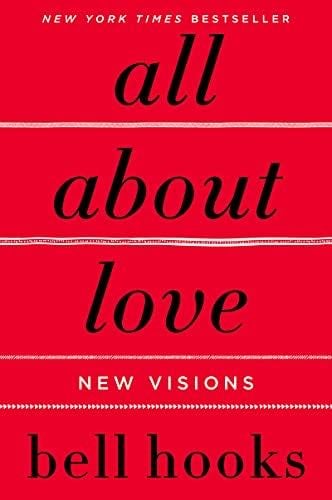
All About Love: New Visions
bell hooks · 2018
A New York Times bestseller and enduring classic, All About Love is the acclaimed first volume in feminist icon bell hooks' "Love Song to the Nation" trilogy. All About Love reveals what causes a polarized society, and how to heal the divisions that cause suffering. Here is the truth about love, and inspiration to help us instill caring, compassion, and strength in our homes, schools, and workplaces.<br/>“The word ‘love’ is most often defined as a noun, yet we would all love better if we used it as a verb,” writes bell hooks as she comes out fighting and on fire in All About Love. Here, at her most provocative and intensely personal, renowned scholar, cultural critic and feminist bell hooks offers a proactive new ethic for a society bereft with lovelessness--not the lack of romance, but the lack of care, compassion, and unity. People are divided, she declares, by society’s failure to provide a model for learning to love.<br/>As bell hooks uses her incisive mind to explore the question “What is love?” her answers strike at both the mind and heart. Razing the cultural paradigm that the ideal love is infused with sex and desire, she provides a new path to love that is sacred, redemptive, and healing for individuals and for a nation. The Utne Reader declared bell hooks one of the “100 Visionaries Who Can Change Your Life.” All About Love is a powerful, timely affirmation of just how profoundly her revelations can change hearts and minds for the better.