book wishlist

Items in this hypelist
To Read

A Happy Death
Albert Camus · 1995
The first novel from the Nobel Prize-winning author lays the foundation for The Stranger, telling the story of an Algerian clerk who kills a man in cold blood.<br/><br/>In A Happy Death, written when Albert Camus was in his early twenties and retrieved from his private papers following his death in 1960, revealed himself to an extent that he never would in his later fiction. For if A Happy Death is the study of a rule-bound being shattering the fetters of his existence, it is also a remarkably candid portrait of its author as a young man.<br/><br/>As the novel follows the protagonist, Patrice Mersault, to his victim's house -- and then, fleeing, in a journey that takes him through stages of exile, hedonism, privation, and death -it gives us a glimpse into the imagination of one of the great writers of the twentieth century. For here is the young Camus himself, in love with the sea and sun, enraptured by women yet disdainful of romantic love, and already formulating the philosophy of action and moral responsibility that would make him central to the thought of our time.<br/><br/>Translated from the French by Richard Howard
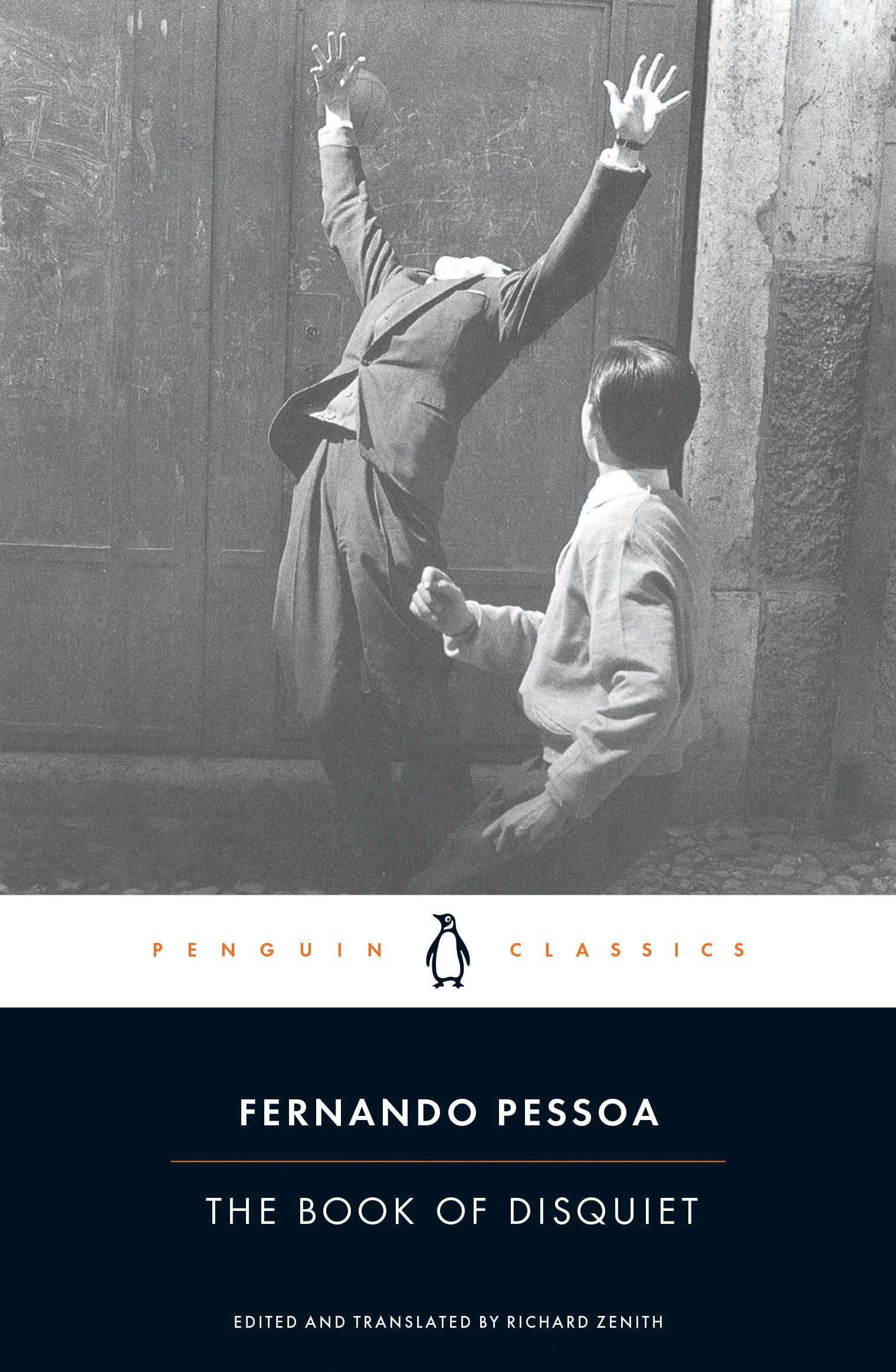
The Book of Disquiet
Fernando Pessoa · 2002
The prizewinning, complete and unabridged translation—“the best English-language version we are likely to see for a long time, if ever” (The Guardian)—of a work of unclassifiable genius: the crowning achievement of Portugal’s modern master<br/><br/>Edited, Translated, and with an Introduction by Richard Zenith, the author of the Pulitzer Prize finalist Pessoa: A Biography<br/><br/>Winner of the Calouste Gulbenkian Translation Prize for Portuguese Translation<br/><br/>A Penguin Classic<br/><br/>Fernando Pessoa was many writers in one. He attributed his prolific writings to a wide range of alternate selves, each of which had a distinct biography, ideology, and horoscope. When he died in 1935, Pessoa left behind a trunk filled with unfinished and unpublished writings, among which were the remarkable pages that make up his posthumous masterpiece, The Book of Disquiet, an astonishing work that, in George Steiner's words, "gives to Lisbon the haunting spell of Joyce's Dublin or Kafka's Prague."<br/><br/>Published for the first time some fifty years after his death, this unique collection of short, aphoristic paragraphs comprises the "autobiography" of Bernardo Soares, one of Pessoa's alternate selves. Part intimate diary, part prose poetry, part descriptive narrative, captivatingly translated by Richard Zenith, The Book of Disquiet is one of the greatest works of the twentieth century.<br/><br/>“Pessoa is a genius.” —André Aciman
The Meek One
Fyodor Dostoyevsky · 2015
'I could see that she was still terribly afraid, but I didn't soften anything; instead, seeing that she was afraid I deliberately intensified it.' In this short story, Dostoyevsky masterfully depicts desperation, greed, manipulation and suicide. Introducing Little Black Classics: 80 books for Penguin's 80th birthday. Little Black Classics celebrate the huge range and diversity of Penguin Classics, with books from around the world and across many centuries. They take us from a balloon ride over Victorian London to a garden of blossom in Japan, from Tierra del Fuego to 16th-century California and the Russian steppe. Here are stories lyrical and savage; poems epic and intimate; essays satirical and inspirational; and ideas that have shaped the lives of millions. Fyodor Dostoyevsky (1821-1881). Dostoyevsky's works available in Penguin Classics are Crime and Punishment, The Idiot, The Double, The Gambler and Other Stories, The Grand Inquisitor, Notes From The Underground, Netochka Nezvanova, The House of The Dead, The Brothers Karamazov and The Village of Stepanchikovo.

Selected Poems
Rumi · 2004
No Exit
Jean-Paul Sartre · 1958
Fantasy / Characters: 2 male 2 female<br/>Scenery: Interior<br/>No Exit was first presented in New York at the Biltmore Theatre with Claude Dauphin Annabella and Ruth Ford. Two women and one man are locked up together for eternity in one hideous room in hell. The windows are bricked up; there are no mirrors; the electric lights can never be turned off; and there is no exit. The irony of this hell is that its torture is not of the rack and fire but of the burning humiliation of each soul as it is

Of Human Freedom
Epictetus · 2010

Franny and Zooey
J. D. Salinger · 1961

Franny and Zooey
J. D. Salinger · 1961
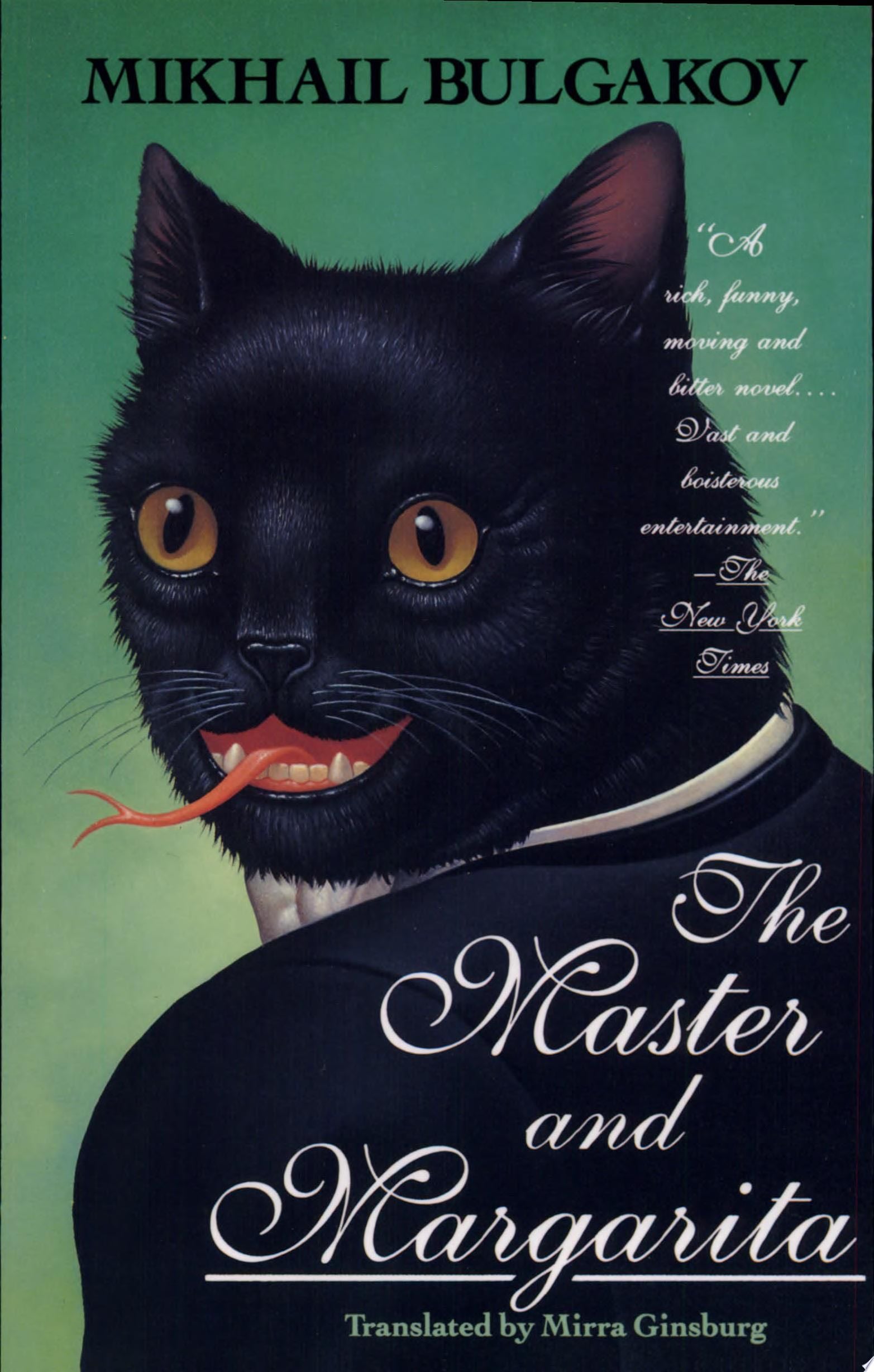
The Master and Margarita
Михаил Булгаков · 1967
<p><b>A "soaring, dazzling novel" (<i>The New York Times</i>), Mirra Ginsburg's critically-acclaimed translation of one of the most important and best-loved modern classics in world literature</b></p> <p><i>The Master and Margarita</i> has been captivating readers around the world ever since its first publication in 1967. Written during Stalin's time in power but suppressed in the Soviet Union for decades, Bulgakov's masterpiece is an ironic parable on power and its corruption, on good and evil, and on human frailty and the strength of love.</p> <p>In <i>The Master and Margarita</i>, the Devil himself pays a visit to Soviet Moscow. Accompanied by a retinue that includes the fast-talking, vodka-drinking, giant tomcat Behemoth, he sets about creating a whirlwind of chaos that soon involves the beautiful Margarita and her beloved, a distraught writer known only as the Master, and even Jesus Christ and Pontius Pilate. <i>The Master and Margarita</i> combines fable, fantasy, political satire, and slapstick comedy to create a wildly entertaining and unforgettable tale that is commonly considered the greatest novel to come out of the Soviet Union. It appears in this edition in a translation by Mirra Ginsburg that was judged "brilliant" by <i>Publishers Weekly</i>.</p>
Uncategorized
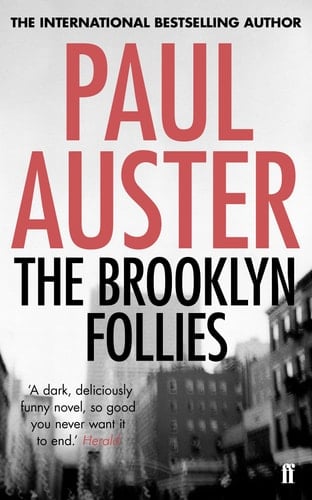
Brooklyn Follies
Paul Auster • 2011
The New York Trilogy (Penguin Classics Deluxe Edition)
Paul Auster • 2006