𝚗𝚘𝚗𝚏𝚒𝚌𝚝𝚒𝚘𝚗 𝚒 𝚘𝚠𝚗

Items in this hypelist
Books
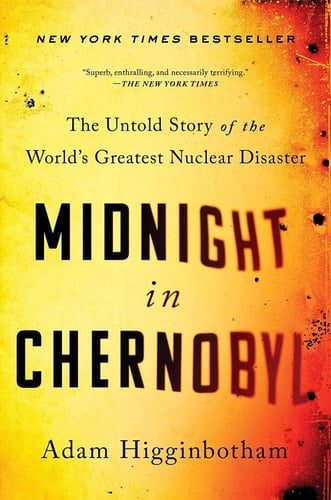
Midnight in Chernobyl The Untold Story of the World's Greatest Nuclear Disaster
Adam Higginbotham · 2019

Cultish The Language of Fanaticism
Amanda Montell · 2021

From Here to Eternity Traveling the World to Find the Good Death
Caitlin Doughty · 2018

Smoke Gets in Your Eyes And Other Lessons from the Crematory
Caitlin Doughty · 2015

Rabid: A Cultural History of the World's Most Diabolical Virus
Bill Wasik • 2012

The Radium Girls The Dark Story of America's Shining Women
Kate Moore · 2018

Off with Her Head Three Thousand Years of Demonizing Women in Power
Eleanor Herman · 2022
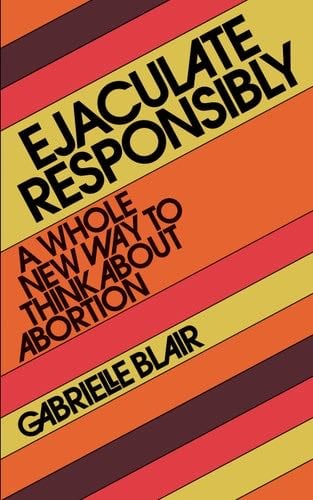
Ejaculate Responsibly: A Whole New Way to Think About Abortion
Gabrielle Stanley Blair · 2022

Why I’m No Longer Talking to White People About Race
Reni Eddo-Lodge

A Fatal Thing Happened on the Way to the Forum: Murder in Ancient Rome
Emma Southon · 2021
<P><B>An entertaining and informative look at the unique culture of crime, punishment, and killing in Ancient Rome</B></P><P> In Ancient Rome, all the best stories have one thing in common—murder. Romulus killed Remus to found the city, Caesar was assassinated to save the Republic. Caligula was butchered in the theater, Claudius was poisoned at dinner, and Galba was beheaded in the Forum. In one 50-year period, 26 emperors were murdered. </P><P> But what did killing mean in a city where gladiators fought to the death to sate a crowd? In <I>A Fatal Thing Happened on the Way to the Forum</I>, <B>Emma Southon</B> examines a trove of real-life homicides from Roman history to explore Roman culture, including how perpetrator, victim, and the act itself were regarded by ordinary people. Inside Ancient Rome's darkly fascinating history, we see how the Romans viewed life, death, and what it means to be human. </P>

The Butchering Art: Joseph Lister's Quest to Transform the Grisly World of Victorian Medicine
Lindsey Fitzharris · 2018
Winner, 2018 PEN/E.O. Wilson Prize for Literary Science Writing<br/>Short-listed for the 2018 Wellcome Book Prize<br/>A Top 10 Science Book of Fall 2017, Publishers Weekly<br/>A Best History Book of 2017, The Guardian<br/><br/>"Warning: She spares no detail!" ―Erik Larson, bestselling author of Dead Wake<br/><br/>In The Butchering Art, the historian Lindsey Fitzharris reveals the shocking world of nineteenth-century surgery and shows how it was transformed by advances made in germ theory and antiseptics between 1860 and 1875. She conjures up early operating theaters―no place for the squeamish―and surgeons, who, working before anesthesia, were lauded for their speed and brute strength. These pioneers knew that the aftermath of surgery was often more dangerous than patients’ afflictions, and they were baffled by the persistent infections that kept mortality rates stubbornly high. At a time when surgery couldn’t have been more hazardous, an unlikely figure stepped forward: a young, melancholy Quaker surgeon named Joseph Lister, who would solve the riddle and change the course of history.<br/><br/>Fitzharris dramatically reconstructs Lister’s career path to his audacious claim that germs were the source of all infection and could be countered by a sterilizing agent applied to wounds. She introduces us to Lister’s contemporaries―some of them brilliant, some outright criminal―and leads us through the grimy schools and squalid hospitals where they learned their art, the dead houses where they studied, and the cemeteries they ransacked for cadavers.<br/><br/>Eerie and illuminating, The Butchering Art celebrates the triumph of a visionary surgeon whose quest to unite science and medicine delivered us into the modern world.
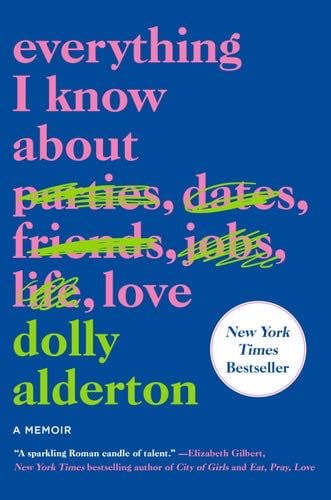
Everything I Know About Love: A Memoir
Dolly Alderton · 2021

Doppelganger
Naomi Klein · 2024

Corruptible: Who Gets Power and How It Changes Us
Brian Klaas · 2022

Wake: The Hidden History of Women-Led Slave Revolts
Rebecca Hall · 2022
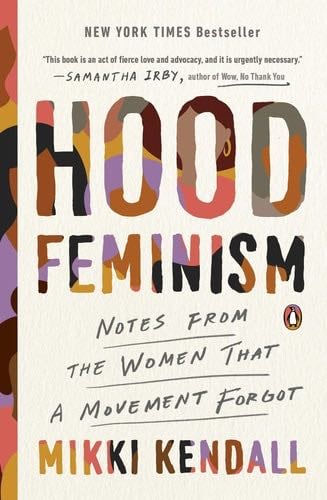
Hood Feminism: Notes from the Women That a Movement Forgot
Mikki Kendall · 2021
<b>A <i>NEW YORK TIMES</i> BESTSELLER<br><br> “<b>The fights against hunger, homelessness, poverty, health disparities, poor schools, homophobia, transphobia, and domestic violence are feminist fights. Kendall offers a feminism rooted in the livelihood of everyday women.”</b> <b>—Ibram X. Kendi, #1 <i>New York Times-</i>bestselling author of <i>How to Be an Antiracist</i>, in <i>The Atlantic</i></b><br><br>“One of the most important books of the current moment.”—<i>Time</i></b><br> <br> <b>“A rousing call to action... It should be required reading for everyone.”—Gabrielle Union, author of</b> <i><b>We’re Going to Need More Wine</b></i><br> <br> <b><br> <b>A potent and electrifying critique of today’s feminist movement announcing a fresh new voice in black feminism</b></b><br><br>Today's feminist movement has a glaring blind spot, and paradoxically, it is women. Mainstream feminists rarely talk about meeting basic needs as a feminist issue, argues Mikki Kendall, but food insecurity, access to quality education, safe neighborhoods, a living wage, and medical care are all feminist issues. All too often, however, the focus is not on basic survival for the many, but on increasing privilege for the few. That feminists refuse to prioritize these issues has only exacerbated the age-old problem of both internecine discord and women who rebuff at carrying the title. Moreover, prominent white feminists broadly suffer from their own myopia with regard to how things like race, class, sexual orientation, and ability intersect with gender. How can we stand in solidarity as a movement, Kendall asks, when there is the distinct likelihood that some women are oppressing others? <br><br>In her searing collection of essays, Mikki Kendall takes aim at the legitimacy of the modern feminist movement, arguing that it has chronically failed to address the needs of all but a few women. Drawing on her own experiences with hunger, violence, and hypersexualization, along with incisive commentary on reproductive rights, politics, pop culture, the stigma of mental health, and more, <i>Hood Feminism</i> delivers an irrefutable indictment of a movement in flux. An unforgettable debut, Kendall has written a ferocious clarion call to all would-be feminists to live out the true mandate of the movement in thought and in deed.
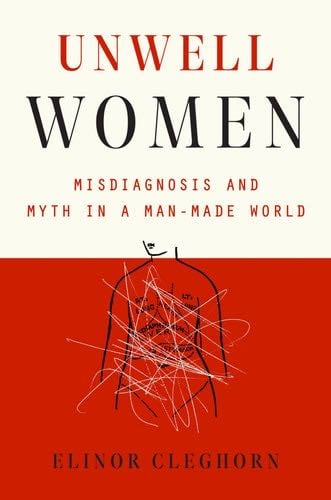
Unwell Women: Misdiagnosis and Myth in a Man-Made World
Elinor Cleghorn · 2021
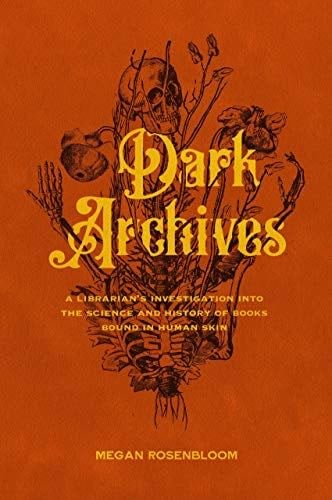
Dark Archives: A Librarian's Investigation into the Science and History of Books Bound in Human Skin
Megan Rosenbloom · 2020