Books

Items in this hypelist
Currently Reading
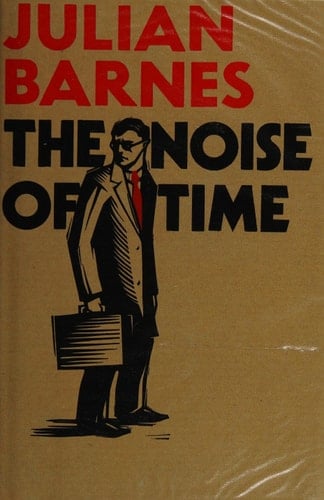
The Noise of Time
Julian Barnes · 2016
On my Palma
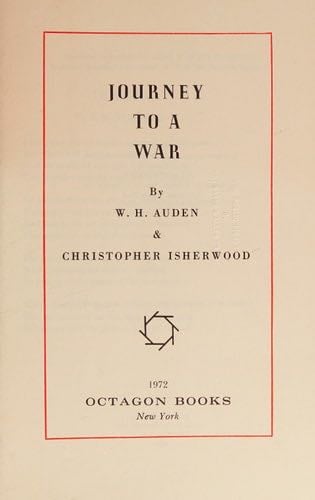
Journey to a War
W. H. Auden, Christopher Isherwood · 1972

The World of Yesterday
Stefan Zweig · 2013
By the author who inspired Wes Anderson’s film, The Grand Budapest Hotel<br/><br/>Written as both a recollection of the past and a warning for future generations, The World of Yesterday recalls the golden age of literary Vienna—its seeming permanence, its promise, and its devastating fall.<br/>Surrounded by the leading literary lights of the epoch, Stefan Zweig draws a vivid and intimate account of his life and travels through Vienna, Paris, Berlin, and London, touching on the very heart of European culture. His passionate, evocative prose paints a stunning portrait of an era that danced brilliantly on the edge of extinction.<br/>This new translation by award-winning Anthea Bell captures the spirit of Zweig’s writing in arguably his most revealing work.
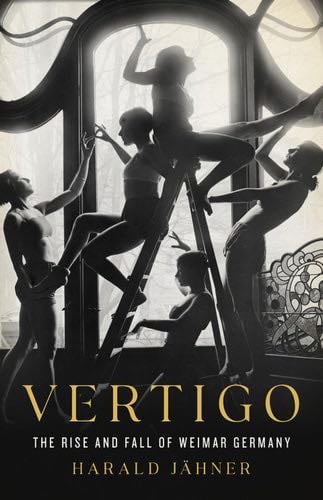
Vertigo
Harald Jähner · 2024
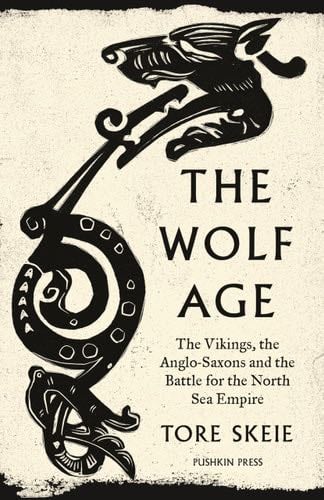
The Wolf Age: The Vikings, the Anglo-Saxons and the Battle for the North Sea Empire
Tore Skeie · 2022
<b>“Skeie’s account of ruthless conflict, political intrigue, and diplomatic machinations reads like a real-life <i>Game of Thrones</i>—without the dragons. Medieval history buffs will be riveted.” <i>--Publishers Weekly</i><br><br>Thrilling history provides a new perspective on the Viking-Anglo Saxon conflicts and brings the bloody period vividly to life, perfect for fans of Dan Jones</b><br><br>The first major book on Vikings by a Scandinavian author to be published in English, <i>The Wolf Age</i> reframes the struggle for a North Sea empire and puts readers in the mindset of Vikings, providing new insight into their goals, values, and what they chose to live and die for.<br><br>Tore Skeie ("Norway's Most Important Young Historian") takes readers on a thrilling journey through the bloody shared history of England and Scandinavia, and on across early medieval Europe, from the wild Norwegian fjords to the wealthy cities of Muslim Andalusia.<br><br>Warfare, plotting, backstabbing and bribery abound as Skeie skillfully weaves sagas and skaldic poetry with breathless dramatization as he entertainingly brings the world of the Vikings and Anglo-Saxons to vivid life.<br><br>In the eleventh century, the rulers of the lands surrounding the North Sea are all hungry for power. To get power they need soldiers, to get soldiers they need silver, and to get silver there is no better way than war and plunder.<br><br>This vicious cycle draws all the lands of the north into a brutal struggle for supremacy and survival that will shatter kingdoms and forge an empire…
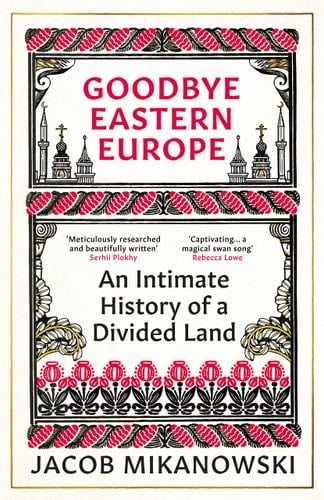
Goodbye Eastern Europe
Jacob Mikanowski · 2022
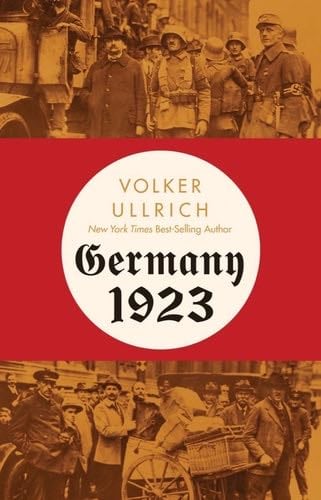
Germany 1923: Hyperinflation, Hitler's Putsch, and Democracy in Crisis
Volker Ullrich · 2023
<p>As the great Austrian writer Stefan Zweig confided in his autobiography, written in exile, "I have a pretty thorough knowledge of history, but never, to my recollection, has it produced such madness in such gigantic proportions." He was referring to the situation in Germany in 1923. It was a "year of lunacy," defined by hyperinflation, a political system on the verge of collapse, and separatist movements that threatened Germany's territorial integrity. Most significantly, Adolf Hitler launched his infamous Beer Hall Putsch in Munich-a failed coup that nonetheless drew international attention and demonstrated the Nazis' ruthless determination to seize power.</p> <p>In Germany 1923, award-winning historian Volker Ullrich draws on letters, memoirs, newspaper articles, and other sources from the time to present a captivating new history of those explosive twelve months. The crisis began when the French invaded the Ruhr Valley in January to force Germany to pay the reparations it owed under the Treaty of Versailles, which had ended the Great War. For years, German leaders had embraced inflationary policies to finance the costs of defeat, and, as Ullrich demonstrates, the invasion utterly destroyed the value of the German mark. Before the war, the exchange rate was 4.2 marks to the dollar. By November 20, 1923, a dollar was worth an incomprehensible 4.2 trillion marks, and a loaf of bread cost 200 billion. Facing the abyss, many ordinary Germans called for a national messiah. Among the figures to vie for that role was Hitler, a thirty-four-year-old veteran who possessed a uniquely malevolent personal magnetism. Although the Nazi coup in November was put down and Hitler arrested, the putsch showed just how tenuous the first German democracy, the Weimar Republic, was at its core.</p> <p>As Ullrich's panoramic narrative reveals, other Germans responded to the successive crises by launching a cultural revolution: 1923 witnessed the emergence of a multitude of new movements, from Dada to Bauhaus, and of such iconoclasts as Bertolt Brecht, George Grosz, and Franz Kafka. Yet most observers were amazed that the Weimar Republic was able to survive, and the more astute realized that the feral undercurrents unleashed could lead to much worse. Publishing a century after that fateful year, Germany 1923 is a riveting chronicle of one of the most challenging times any modern democracy has faced, one with haunting parallels to our own political moment.</p>
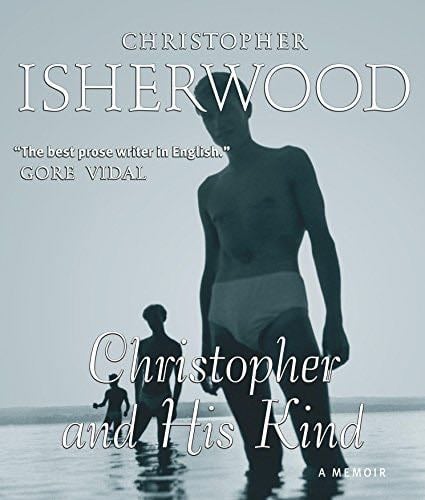
Christopher and His Kind
Christopher Isherwood · 2010
Christopher and His Kind covers the most memorable ten years in the writer’s life-from 1929, when Isherwood left England to spend a week in Berlin and decided to stay there indefinitely, to 1939, when he arrived in America. When the book was published in 1976, readers were deeply impressed by the courageous candor with which he describes his life in gay Berlin of the 1930s and his struggles to save his companion, Heinz, from the Nazis. An engrossing and dramatic story and a fascinating glimpse into a little-known world, Christopher and His Kind remains a classic in gay liberation literature and one of Isherwood’s greatest achievements.
A Demon-Haunted Land
Monica Black · 2020

The Zone of Interest (Vintage International)
Martin Amis · 2015
NOW AN ACADEMY AWARD®-WINNING MAJOR MOTION PICTURE • AN NPR BEST BOOK OF THE YEAR • From one of the most virtuosic authors in the English language: a powerful novel, written with urgency and moral force, that explores life—and love—among the Nazi bureaucrats of Auschwitz.<br/><br/>"A masterpiece.... Profound, powerful and morally urgent.... A benchmark for what serious literature can achieve." —San Francisco Chronicle<br/><br/>Martin Amis first tackled the Holocaust in 1991 with his bestselling novel Time's Arrow. He returns again to the Shoah with this astonishing portrayal of life in "the zone of interest," or "kat zet"—the Nazis' euphemism for Auschwitz. The narrative rotates among three main characters: Paul Doll, the crass, drunken camp commandant; Thomsen, nephew of Hitler's private secretary, in love with Doll's wife; and Szmul, one of the Jewish prisoners charged with disposing of the bodies. Through these three narrative threads, Amis summons a searing, profound, darkly funny portrait of the most infamous place in history.<br/><br/>An epilogue by the author elucidates Amis's reasons and method for undertaking this extraordinary project.
Three Comrades: A Novel
Erich Maria Remarque · 2013
From the acclaimed author of All Quiet on the Western Front comes Three Comrades, a harrowing novel that follows a group of friends as they cope with upheaval in Germany between World Wars I and II. The year is 1928. On the outskirts of a large German city, three young men are earning a thin and precarious living. Fully armed young storm troopers swagger in the streets. Restlessness, poverty, and violence are everywhere. For these three, friendship is the only refuge from the chaos around them. Then the youngest of them falls in love, and brings into the group a young woman who will become a comrade as well, as they are all tested in ways they can have never imagined. Written with the same overwhelming simplicity and directness that made All Quiet on the Western Front a classic, Three Comrades portrays the greatness of the human spirit, manifested through characters who must find the inner resources to live in a world they did not make, but must endure. “The world has a great writer in Erich Maria Remarque. He is a craftsman of unquestionably first rank, a man who can bend language to his will. Whether he writes of men or of inanimate nature, his touch is sensitive, firm, and sure.”—The New York Times Book Review
To Read

Johnny Got His Gun A Novel
Dalton Trumbo · 1970
Band of Brothers
Ernest Frankel
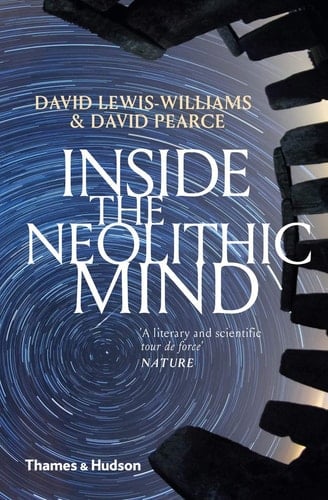
Inside the Neolithic Mind Consciousness, Cosmos and the Realm of the Gods
David Lewis-williams, David Pearce · 2018

War in Heaven
Charles Williams · 2023

The Red Tent
Anita Diamant · 1998

The Man in the High Castle
Philip K. Dick · 2011

Politics and Culture in Wilhelmine Germany: The Case of Industrial Architecture
Matthew Jefferies · 1995
- A valuable resource for students taking specialist options on Imperial Germany or the origins of modern architecture and design.This original book explores the relationship between politics and culture in turn-of-the-century Germany through the unusual medium of industrial architecture, which for a time brought together the disparate worlds of politics, art and commerce. It focuses on the efforts of reformers to improve the quality and character of the industrial workplace during the period when Germany was overtaking Britain as Europe's leading manufacturing power.

Before The Deluge
Otto Friedrich · 1992

Testament of Youth (Penguin Classics)
Vera Brittain · 2005
Giving a voice to a lost generation, this edition features a new introduction by Brittain’s biographer. Now a major motion picture starring Alicia Vikander, Kit Harington, Hayley Atwell, and Taron Egerton<br/><br/>Much of what we know and feel about the First World War we owe to Vera Brittain’s elegiac yet unsparing book, which set a standard for memoirists from Martha Gellhorn to Lillian Hellman. Abandoning her studies at Oxford in 1915 to enlist as a nurse in the armed services, Brittain served in London, in Malta, and on the Western Front. By war’s end she had lost virtually everyone she loved. Testament of Youth is both a record of what she lived through and an elegy for a vanished generation. Hailed by the Times Literary Suplement as a book that helped "both form and define the mood of its time," it speaks to any generation that has been irrevocably changed by war.<br/><br/>This edition features a new introduction by Brittain's biographer examining her struggles to write about her experiences and the book's reception in England and America.<br/><br/>For more than seventy years, Penguin has been the leading publisher of classic literature in the English-speaking world. With more than 1,700 titles, Penguin Classics represents a global bookshelf of the best works throughout history and across genres and disciplines. Readers trust the series to provide authoritative texts enhanced by introductions and notes by distinguished scholars and contemporary authors, as well as up-to-date translations by award-winning translators.

Berlin Alexanderplatz
Alfred Döblin · 2019

The Garden of the Finzi-Continis
Giorgio Bassani · 1977
The haunting, classic novel of Fascist Italy on the brink of World War II, made into an Academy Award-winning film<br/><br/>The Finzi-Continis are an aristocratic Jewish family who live an insular life behind the walls of their estate in the northern Italian city of Ferrera. The narrator, a young middle-class Jew, has been intrigued by the Finzi-Continis from boyhood and especially by the two children, Alberto and Micol. Not until he is twenty-two, in the autumn of 1938, is he invited to enter their private world, a place seemingly immune from the racial laws of Fascist Italy. Thirteen years after the war, he traces his intricate relationship with the beautiful Micol and shares the predicament of all the Ferrarese Jews on the eve of their destruction. Critically acclaimed and award-winning, The Garden of the Finzi-Continis is an unforgettable, wrenching novel that re-creates a tragic era in history.

Mr Norris Changes Trains
Christopher Isherwood · 2013
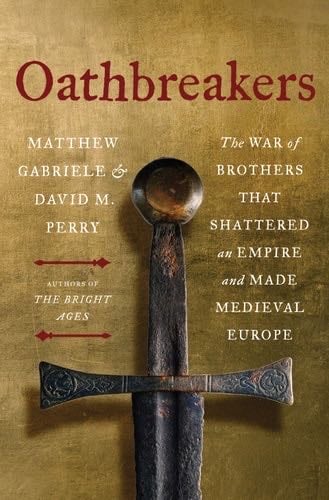
Oathbreakers
Matthew Gabriele, David M. Perry · 2024
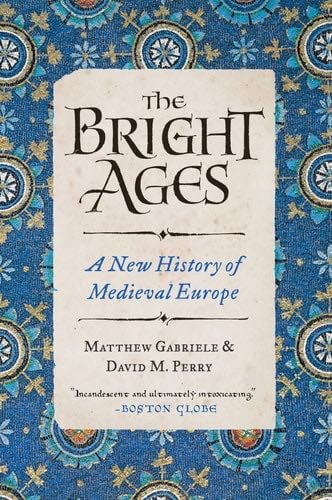
The Bright Ages
Matthew Gabriele, David M. Perry · 2022

An African History of Africa
Zeinab Badawi · 2024
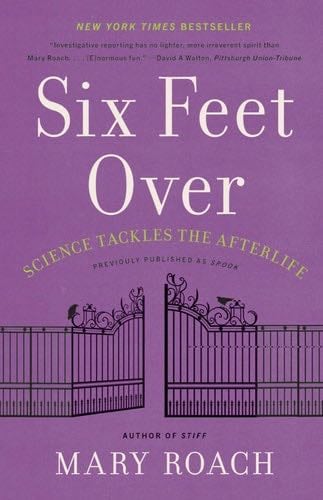
Six Feet Over: Science Tackles the Afterlife
Mary Roach · 2022
The best-selling author of Stiff and Bonk trains her considerable wit and curiosity on the human soul. "What happens when we die? Does the light just go out and that's that―the million-year nap? Or will some part of my personality, my me-ness persist? What will that feel like? What will I do all day? Is there a place to plug in my lap-top?" In an attempt to find out, Mary Roach brings her tireless curiosity to bear on an array of contemporary and historical soul-searchers: scientists, schemers, engineers, mediums, all trying to prove (or disprove) that life goes on after we die.
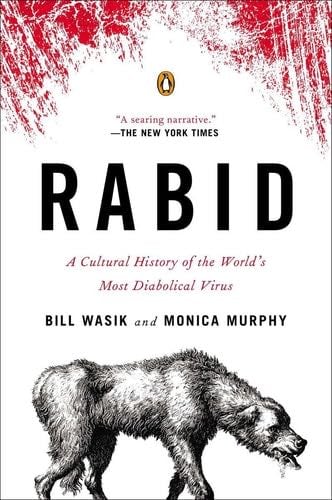
Rabid
Bill Wasik, Monica Murphy · 2013

The Golden Enclaves: A Novel (The Scholomance Book 3)
Naomi Novik · 2022
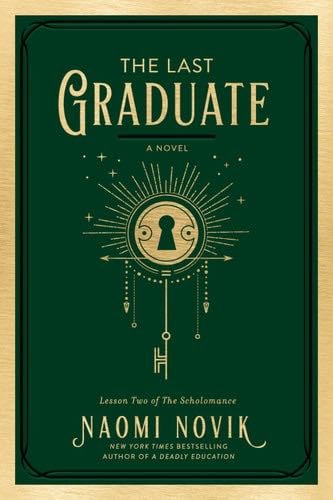
The Last Graduate: A Novel (The Scholomance Book 2)
Naomi Novik · 2021

A Prague Flaneur
Vitezslav Nezval · 2024
By spring 1938, Prague is a city increasingly on tenterhooks in expectation of an attack by Nazi Germany. Earlier that year the pressure of the situation produced a schism in the Surrealist Group in Czechoslovakia between Vítězslav Nezval, who wanted to continue to support the Soviet Union, and those who condemned Stalin’s show trials, purges, and executions. Nezval chronicles this tumultuous period by embedding it in a paean to Prague, wondering if the city, and everything about the city he loves, will survive the horrors that are about to be visited upon her. With Apollinaire serving as his guide, he introduces us to the cafés and pubs he would frequent, many of which no longer exist, the various neighborhoods he lived in as a destitute student, the parks where he sought solace, and the people he would meet on the street, musing on some of the figures central to his poetics, such as André Breton and Lautréamont. While at times lamenting the changing face of Prague and that Hitler might reduce it to rubble, Nezval takes us into the places that spontaneously spur him to reflect on the issues facing artists of the day and the precarious sociopolitical situation.<br/><br/>This translation is of the rare unexpurgated first edition and includes Nezval’s photographs and illustrations as well as an appendix that maps out the significant revisions made later, providing additional translations of the longer passages that were inserted as replacement for what was expunged from the original edition.

Crypt
Alice Roberts · 2023
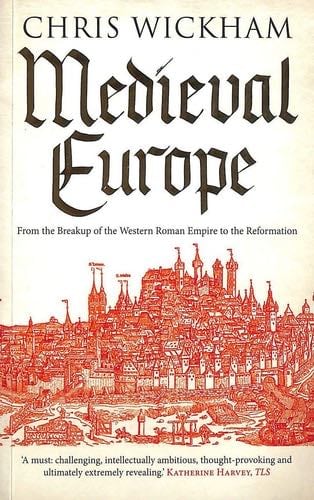
Medieval Europe
Chris Wickham · 2017

Wisconsin Chippewa Myths & Tales: And Their Relation to Chippewa Life
Victor Barnouw · 1979
<i>Wisconsin Chippewa Myths & Tales</i>, originally published in 1977, was the first collection of Chippewa folklore to provide a comparative and sociological context for the tales. These myths and tales were recorded between 1941 and 1944 by four young field workers who later became prominent anthropologists: Joseph B. Casagrande, Ernestine Friedl, Robert E. Ritzenthaler, and Victor Barnouw himself. The tales--which include stories of tricksters, animals, magical powers, and cannibal ice-giants--were told primarily by five members of the Lac Court Oreilles and Lac du Flambeau bands of Chippewa: John Mink, Prosper Guibord, Delia Oshogay, Tom Badger, and Julia Badger. <i>Wisconsin Chippewa Myths & Tales</i> is read as much for its fascinating stories as for its scholarship.

Storm of Steel: (Penguin Classics Deluxe Edition)
Ernst Junger · 2016

Medieval Bodies
Jack Hartnell · 2018

The Golden Road
William Dalrymple · 2024

The Book-Makers
Adam Smyth · 2024

Ghostways: Two Journeys in Unquiet Places
Robert Macfarlane, Stanley Donwood, Dan Richards · 2020
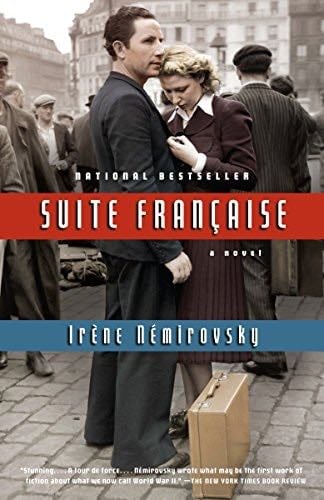
Suite Française
Irène Némirovsky · 2007
<b>NATIONAL BESTSELLER <b>•</b> The remarkable story of men and women thrown together in circumstances beyond their control during World War II<b>—a heartrending</b> "portrait of a small French town under seige, and the people trying to survive, even to live, as Hitler’s horrors march closer and closer to their doors" (<i>New York).</i><br><br>“Stunning.... A tour de force.”<i> —The New York Times Book Review<br></i></b><br>Beginning in Paris on the eve of the Nazi occupation in 1940, as Parisians flee the city, human folly surfaces in every imaginable way: a wealthy mother searches for sweets in a town without food; a couple is terrified at the thought of losing their jobs, even as their world begins to fall apart. Moving on to a provincial village now occupied by German soldiers, the locals must learn to coexist with the enemy—in their town, their homes, even in their hearts.<br><br>When Irène Némirovsky began working on <i>Suite Française</i>, she was already a highly successful writer living in Paris. But she was also a Jew, and in 1942 she was arrested and deported to Auschwitz, where she died. For sixty-four years, this novel remained hidden and unknown.
Place Bewitched and Other Stories
Nikolai Gogol · 2022
<p><b>An original selection of short fiction by Nikolai Gogol, “the Russian Dickens,” translated by the great Constance Garnett and curated by Natasha Randall, that captures the genius of one of the most daring, inventive writers of the nineteenth century.</b><i><br><br>A wounded solider vanishes into notoriety.</i><br><i>A nose is found in a loaf of bread.</i><br><i>Places—</i><i>like the Nevesky Prospect—</i><i>are not what they seem.</i><br><br>Nikolai Gogol was one of the nineteenth century’s greatest and most influential Russian writers, a realist whose acerbic observations and taste for the absurd give his writing its strange, comic voice.<br><br>In this edition of <i>A Place Bewitched and Other Stories</i>, Natasha Randall presents a new, curated collection of Gogol’s short fiction, selected from the work of Constance Garnett, one of Gogol’s earliest translators. Randall has lightly revised Garnett’s essential translations and frames the collection with a new foreword. Full of the wit of Gogol’s work, this edition is the perfect introduction to a great writer and a must for the enthusiast.</p>
Finished 2025

The Road Back A Novel
Erich Maria Remarque · 1998

A Deadly Education: A Novel (The Scholomance Book 1)
Naomi Novik · 2020
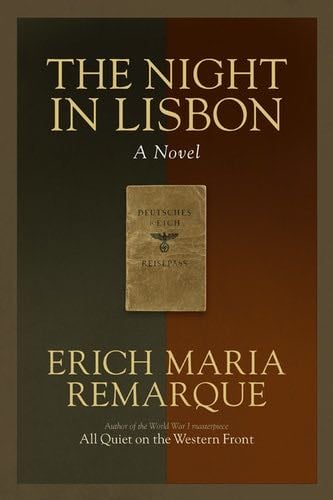
The Night in Lisbon: A Novel
Erich Maria Remarque · 2014
History and fate collide as the Nazis rise to power in The Night in Lisbon, a classic tale of survival from the renowned author of All Quiet on the Western Front. With the world slowly sliding into war, it is crucial that enemies of the Reich flee Europe at once. But so many routes are closed, and so much money is needed. Then one night in Lisbon, as a poor young refugee gazes hungrily at a boat bound for America, a stranger approaches him with two tickets and a story to tell. It is a harrowing tale of bravery and butchery, daring and death, in which the price of love is beyond measure and the legacy of evil is infinite. As the refugee listens spellbound to the desperate teller, in a matter of hours the two form a unique and unshakable bond—one that will last all their lives. “The world has a great writer in Erich Maria Remarque. He is a craftsman of unquestionably first rank, a man who can bend language to his will. Whether he writes of men or of inanimate nature, his touch is sensitive, firm, and sure.”—The New York Times Book Review

In the House of the Interpreter: A Memoir
Ngugi Wa Thiong'O · 2012
Sunrise on the Reaping (A Hunger Games Novel)
Suzanne Collins · 2025
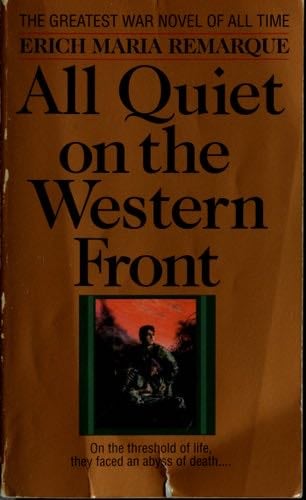
All Quiet on the Western Front: A Novel
Erich Maria Remarque · 1987
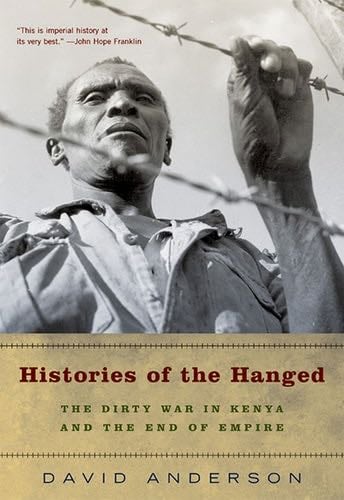
Histories of the Hanged: The Dirty War in Kenya and the End of Empire
David Anderson · 2011

Goodbye to Berlin
Christoph Isherwood · 1977
Published to coincide with the revival of "Cabaret", now opening on Broadway, "Goodbye To Berlin" is the original story of the chanteuse heroine Sally Bowles. Isherwood ironically captures life in Weimar Berlin, a city infamous for its flourishing demimonde and violent politics.
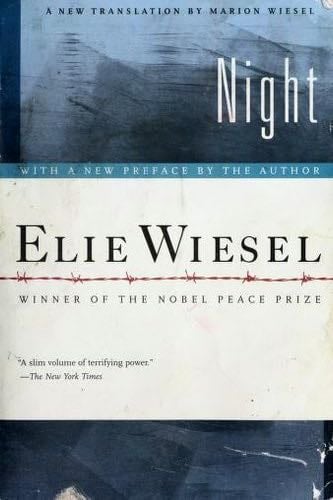
Night
Elie Wiesel · 2006
Alert: This product may be shipped with or without the inclusion of the Oprah Book Club sticker. Please note that regardless of the cover, the books are identical. Night is Elie Wiesel's masterpiece, a candid, horrific, and deeply poignant autobiographical account of his survival as a teenager in the Nazi death camps. This new translation by Marion Wiesel, Elie's wife and frequent translator, presents this seminal memoir in the language and spirit truest to the author's original intent. And in a substantive new preface, Elie reflects on the enduring importance of Night and his lifelong, passionate dedication to ensuring that the world never forgets man's capacity for inhumanity to man.<br/><br/>Night offers much more than a litany of the daily terrors, everyday perversions, and rampant sadism at Auschwitz and Buchenwald; it also eloquently addresses many of the philosophical as well as personal questions implicit in any serious consideration of what the Holocaust was, what it meant, and what its legacy is and will be.

Eighteen: A History of Britain in 18 Young Lives
Alice Loxton · 2024
'Loxton is the next big thing in history.' Dan Snow<br/>'A whirlwind of historical energy... One of the brightest new stars of popular history' Dan Jones<br/><br/>At eighteen, your life is full of possibility. You have everything to look forward to - unless you've got the plague...<br/><br/>In this unconventional and witty history, award-winning writer and broadcaster, Alice Loxton, delves into Britain’s past, exploring the country though eighteen notable figures at this formative age. From a young Empress Matilda, already changing the fate of nations, to Richard Burton, the rugby-obsessed teenager who grew up in a Welsh mining town, each journey unpicks a different era of Britain. Irreverent and full of fascinating tidbits (Did you know Chaucer began his career as a scantily clad pageboy?), Loxton shows how the way a society treats its young, reveals much about its values and foibles.<br/><br/>Seamlessly blending big history with engaging stories of royalty, explorers, writers and entertainers, Eighteen builds a rich mosaic of Britain's past, inviting a journey of discovery. Looking at the role of class, race, and raw ambition, Loxton also asks what lessons we can take for modern Britain – and why the answers might not be what you think.