Items in this hypelist
Finished

Giulio Carlo Argan: Storia dell'arte e politica dei beni culturali (Interventi) (Italian Edition)
Giulio Carlo Argan, Carlo Aymonino, Giuseppe Chiarante · 1994

The History of the City
Leonardo Benevolo · 1980

Cities for People
Jan Gehl · 2010

A Hora da Estrela
Clarice Lispector · 1995
This is one of Lispector's best books, and it gives you a deep sense of the life of one unfortunate woman, Macabéa. Macabéa is part of a huge migration in Brazil--of unemployed Northerners who try for a better life in the big cities of the Southeast. Macabéa embodies the ugliest, cruelest stereotypes that Brazilians hold about people from the North: she is unwashed, uneducated, unhealthy, and ugly. Macabéa tries to find her footing in São Paulo, but life is not kind to her

A paixão segundo G.H.
Clarice Lispector · 1996

MEMORIAS POSTUMAS DE BRAS CUBAS
Machado de Assis · 1900
The Structural Transformation of the Public Sphere
Jürgen Habermas · 2015

Avviamento alla etimologia italiana. Dizionario etimologico
Giacomo Devoto · 1995

The Death and Life of Great American Cities
Jane Jacobs · 2016

Generic City
Rem Koolhaas · 1995
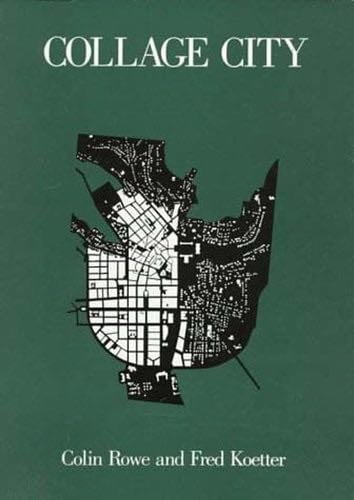
Collage City
Colin Rowe, Fred Koetter · 1984

Confianca e medo na cidade - Nova edicao (Em Portugues do Brasil)
Zygmunt Bauman · 2021

Uma Nova Agenda Para a Arquitetura - Coleção Face Norte (Em Portuguese do Brasil)
Kate Nesbitt · 2008

L'architettura della città
Aldo Rossi · 2011
Reading Habermas: Structural Transformation of the Public Sphere
Michael Hofmann · 2025

Natureza do Espaco, A: TŽcnica e Tempo, Raz‹o e Emo‹o - Cole‹o Milton Santos
Milton Santos · 2014

The Right to the City
Don Mitchell · 2012
Learning from Las Vegas
Robert Venturi, Denise Scott Brown, Steven Izenour · 1972

The Third Typology and Other Essays
Anthony Vidler · 2017
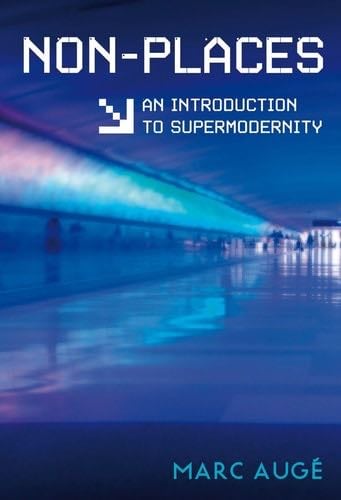
Non-Places: An Introduction to Supermodernity
Marc Auge · 2009

The Human Condition
Hannah Arendt · 2019

The Work of Art in The Age of Mechanical Reproduction
Walter Benjamin · 2009

Concerning the Spiritual in Art
Wassily Kandinsky · 1977
A pioneering work in the movement to free art from its traditional bonds to material reality, this book is one of the most important documents in the history of modern art. Written by the famous nonobjective painter Wassily Kandinsky (1866–1944), it explains Kandinsky's own theory of painting and crystallizes the ideas that were influencing many other modern artists of the period. Along with his own groundbreaking paintings, this book had a tremendous impact on the development of modern art.<br/>Kandinsky's ideas are presented in two parts. The first part, called "About General Aesthetic," issues a call for a spiritual revolution in painting that will let artists express their own inner lives in abstract, non-material terms. Just as musicians do not depend upon the material world for their music, so artists should not have to depend upon the material world for their art. In the second part, "About Painting," Kandinsky discusses the psychology of colors, the language of form and color, and the responsibilities of the artist. An Introduction by the translator, Michael T. H. Sadler, offers additional explanation of Kandinsky's art and theories, while a new Preface by Richard Stratton discusses Kandinsky's career as a whole and the impact of the book. Making the book even more valuable are nine woodcuts by Kandinsky himself that appear at the chapter headings.<br/>This English translation of Über das Geistige in der Kunst was a significant contribution to the understanding of nonobjectivism in art. It continues to be a stimulating and necessary reading experience for every artist, art student, and art patron concerned with the direction of 20th-century painting.
To Read

O Musico Cego (Em Portugues do Brasil)
Vladimir Korolenko · 2019
Of Other Spaces
Michael Foucault · 2009

Discipline and Punish
Michel Foucault · 1995

The Myth of Sisyphus
Albert Camus · 2018
A Nobel Prize-winning author delivers one of the most influential works of the twentieth century, showing a way out of despair and reaffirming the value of existence.<br/><br/>Influenced by works such as Don Juan and the novels of Kafka, these essays begin with a meditation on suicide—the question of living or not living in a universe devoid of order or meaning. With lyric eloquence, Albert Camus brilliantly presents a crucial exposition of existentialist thought.

The Outsider
Albert Camus · 2022
Albert Camus' existentialist masterpiece, now in a wonderful new Clothbound Classics edition<br/><br/>In The Outsider , his classic existentialist novel, Camus explores the alienation of an individual who refuses to conform to social norms. Meursault, his anti-hero, will not lie. When his mother dies, he refuses to show his emotions simply to satisfy the expectations of others. And when he commits a random act of violence on a sun-drenched beach near Algiers, his lack of remorse compounds his guilt in the eyes of society and the law. Yet he is as much a victim as a criminal.

Architecture and the Public World: Kenneth Frampton (Radical Thinkers in Design)
Kenneth Frampton · 2024

S, M, L, XL
Rem Koolhaas, Bruce Mau · 1997
Intentions in Architecture
Christian Norberg-Schulz · 1968

Architectural Possibilities in the Work of Eisenman
Michael Jasper · 2022

The Origin of Art
Martin Heidegger · 2024

Peter Zumthor: Thinking Architecture
Peter Zumthor · 1998
Peter Zumthor. Three Concepts
Peter Zumthor · 1997
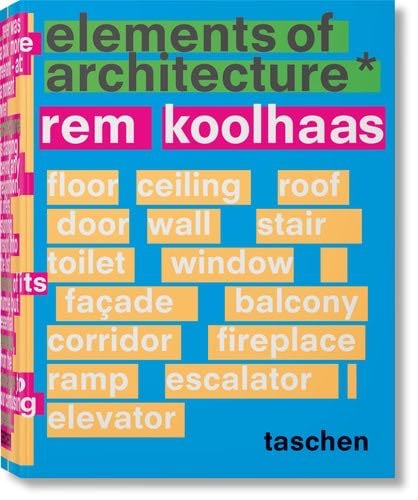
Rem Koolhaas: Elements of Architecture
Rem Koolhaas · 2018
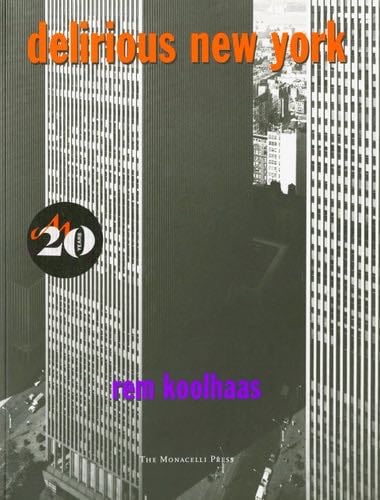
Delirious New York
Rem Koolhaas · 2014
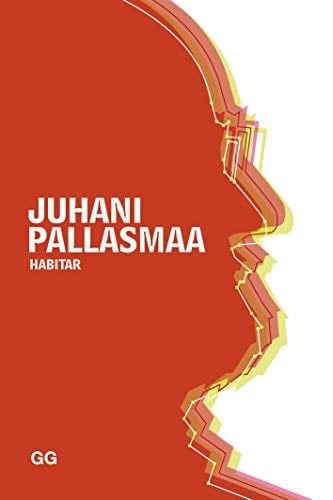
Habitar
Juhani Pallasmaa · 2017