Books

Items in this hypelist
Books

The Catcher in the Rye
J. D. Salinger · 2001

1984
George Orwell · 1961
<b>Written more than 70 years ago, <i>1984</i> was George Orwell’s chilling prophecy about the future. And while 1984 has come and gone, his dystopian vision of a government that will do anything to control the narrative is timelier than ever...<br><br><b>• Nominated as one of America’s best-loved novels by PBS’s <i>The Great American Read •</i></b><br></b><br>“<i>The Party told you to reject the evidence of your eyes and ears. It was their final, most essential command.</i>”<br><br>Winston Smith toes the Party line, rewriting history to satisfy the demands of the Ministry of Truth. With each lie he writes, Winston grows to hate the Party that seeks power for its own sake and persecutes those who dare to commit thoughtcrimes. But as he starts to think for himself, Winston can’t escape the fact that Big Brother is always watching...<br><br>A startling and haunting novel, <i>1984</i> creates an imaginary world that is completely convincing from start to finish. No one can deny the novel’s hold on the imaginations of whole generations, or the power of its admonitions—a power that seems to grow, not lessen, with the passage of time.

Dracula
Bram Stoker · 1897
During a business visit to Count Dracula's castle in Transylvania, a young English solicitor finds himself at the center of a series of horrifying incidents. Jonathan Harker is attacked by three phantom women, observes the Count's transformation from human to bat form, and discovers puncture wounds on his own neck that seem to have been made by teeth. Harker returns home upon his escape from Dracula's grim fortress, but a friend's strange malady — involving sleepwalking, inexplicable blood loss, and mysterious throat wounds — initiates a frantic vampire hunt. The popularity of Bram Stoker's 1897 horror romance is as deathless as any vampire. Its supernatural appeal has spawned a host of film and stage adaptations, and more than a century after its initial publication, it continues to hold readers spellbound.
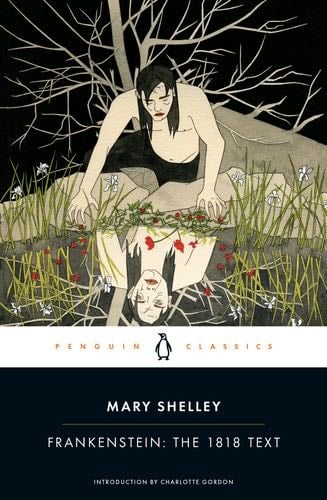
Frankenstein
Mary Shelley · 1818
<b>Mary Shelley’s classic novel, presented in its original 1818 text, with an introduction from National Book Critics Circle award-winner Charlotte Gordon</b><br> <br> <b>Nominated as one of America’s best-loved novels by PBS’s <i>The Great American Read</i></b><br> <br>The original 1818 text of <i>Frankenstein</i> preserves the hard-hitting and politically-charged aspects of Shelley’s original writing, as well as her unflinching wit and strong female voice. This edition also emphasizes Shelley’s relationship with her mother—trailblazing feminist Mary Wollstonecraft, who penned <i>A Vindication of the Rights of Woman</i>—and demonstrates her commitment to carrying forward her mother’s ideals, placing her in the context of a feminist legacy rather than the sole female in the company of male poets, including Percy Shelley and Lord Byron.<br> <br> This edition includes a new introduction and suggestions for further reading by National Book Critics Circle award-winner and Shelley expert Charlotte Gordon, literary excerpts and reviews selected by Gordon, and a chronology and essay by preeminent Shelley scholar Charles E. Robinson. <br> <br>Penguin Classics is the leading publisher of classic literature in the English-speaking world, representing a global bookshelf of the best works throughout history and across genres and disciplines. Readers trust the series to provide authoritative texts enhanced by introductions and notes by distinguished scholars and contemporary authors, as well as up-to-date translations by award-winning translators.

The Great Gatsby
F. Scott Fitzgerald · 1925
“So we beat on, boats against the current, borne back ceaselessly into the past.” ― F. Scott Fitzgerald, The Great Gatsby<br/>The Great Gatsby is a 1925 novel by American writer F. Scott Fitzgerald. Set in the Jazz Age on Long Island, the novel depicts narrator Nick Carraway's interactions with mysterious millionaire Jay Gatsby and Gatsby's obsession to reunite with his former lover, Daisy Buchanan.<br/>A youthful romance Fitzgerald had with socialite Ginevra King, and the riotous parties he attended on Long Island's North Shore in 1922 inspired the novel. Following a move to the French Riviera, he completed a rough draft in 1924. He submitted the draft to editor Maxwell Perkins, who persuaded Fitzgerald to revise the work over the following winter. After his revisions, Fitzgerald was satisfied with the text, but remained ambivalent about the book's title and considered several alternatives. The final title he desired was Under the Red, White, and Blue. Painter Francis Cugat's final cover design impressed Fitzgerald who incorporated a visual element from the art into the novel.<br/>Gatsby continues to attract popular and scholarly attention. The novel was most recently adapted to film in 2013 by director Baz Luhrmann, while contemporary scholars emphasize the novel's treatment of social class, inherited wealth compared to those who are self-made, race, environmentalism, and its cynical attitude towards the American dream. The Great Gatsby is widely considered to be a literary masterpiece and a contender for the title of the Great American Novel.<br/>A True Classic that Belongs on Every Bookshelf!
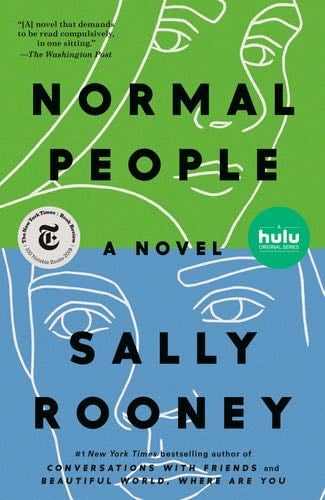
Normal People
Sally Rooney · 2019
<b>NOW AN EMMY-NOMINATED HULU ORIGINAL SERIES • <i>NEW YORK TIMES</i> BESTSELLER • LONGLISTED FOR THE BOOKER PRIZE • “A stunning novel about the transformative power of relationships” (<i>People</i>) from the author of <i>Conversations with Friends,</i> “a master of the literary page-turner” (J. Courtney Sullivan).</b><br> <br><b>“[A] novel that demands to be read compulsively, in one sitting.”—<i>The Washington Post</i></b><br><br><b>ONE OF <i>ENTERTAINMENT WEEKLY</i>’S TEN BEST NOVELS OF THE DECADE</b><br><br><b>TEN BEST BOOKS OF THE YEAR: <i>People, Slate,</i> The New York Public Library, <i>Harvard Crimson</i></b><br><br>Connell and Marianne grew up in the same small town, but the similarities end there. At school, Connell is popular and well liked, while Marianne is a loner. But when the two strike up a conversation—awkward but electrifying—something life changing begins.<br><br>A year later, they’re both studying at Trinity College in Dublin. Marianne has found her feet in a new social world while Connell hangs at the sidelines, shy and uncertain. Throughout their years at university, Marianne and Connell circle one another, straying toward other people and possibilities but always magnetically, irresistibly drawn back together. And as she veers into self-destruction and he begins to search for meaning elsewhere, each must confront how far they are willing to go to save the other.<br><br><i>Normal People</i> is the story of mutual fascination, friendship, and love. It takes us from that first conversation to the years beyond, in the company of two people who try to stay apart but find that they can’t.<br> <br><b>WINNER: The British Book Award, The Costa Book Award, The An Post Irish Novel of the Year, <i>Sunday Times </i>Young Writer of the Year Award</b><br><br><b>BEST BOOKS OF THE YEAR: <i>The New York Times</i>, <i>The New York Times Book Review, Oprah Daily, Time,</i> NPR, <i>The Washington Post, Vogue, Esquire, Glamour, Elle, Marie Claire, Vox, The Paris Review, Good Housekeeping, Town & Country</i></b>
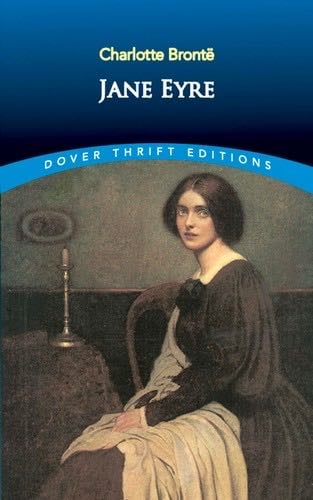
Jane Eyre
Charlotte Brontë · 2003
Charlotte Brontë characterized the eponymous heroine of her 1847 novel as being "as poor and plain as myself." Presenting a heroine with neither great beauty nor entrancing charm was an unprecendented maneuver, but Brontë's instincts proved correct, for readers of her era and ever after have taken Jane Eyre into their hearts. The author drew upon her own experience to depict Jane's struggles at Lowood, an oppressive boarding school, and her troubled career as a governess. Unlike Jane, Brontë had the advantage of a warm family circle that shared and encouraged her literary pursuits. She found immediate success with this saga of an orphan girl forced to make her way alone in the world, from Lowood School to Thornfield, the estate of the majestically moody Mr. Rochester, and beyond. A selection of the Common Core State Standards Initiative.
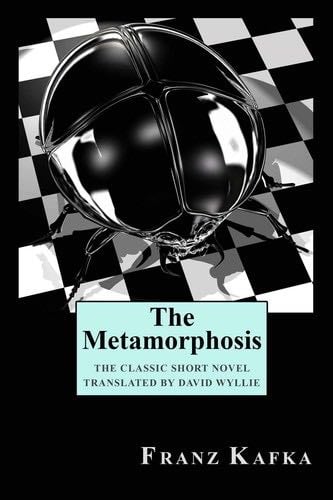
The Metamorphosis
Franz Kafka · 1972
"The Metamorphosis" (original German title: "Die Verwandlung") is a short novel by Franz Kafka, first published in 1915. It is often cited as one of the seminal works of fiction of the 20th century and is widely studied in colleges and universities across the western world. The story begins with a traveling salesman, Gregor Samsa, waking to find himself transformed into an insect.
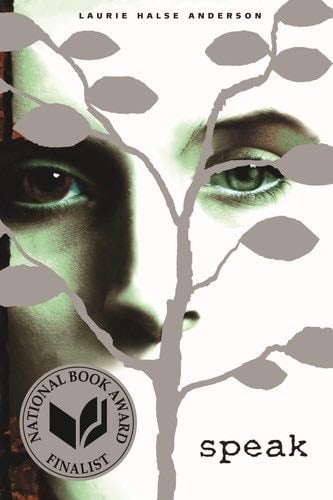
Speak
Laurie Halse Anderson · 1999
Freshman year at Merryweather High is not going well for Melinda Sordino. She busted an end-of-summer party by calling the cops, and now her friends—and even strangers—all hate her. So she stops trying, stops talking. She retreats into her head, and all the lies and hypocrisies of high school become magnified, leaving her with no desire to talk to anyone anyway. But it’s not so comfortable in her head, either—there’s something banging around in there that she doesn’t want to think about. She can’t just go on like this forever. Eventually, she’s going to have to confront the thing she’s avoiding, the thing that happened at the party, the thing that nobody but her knows. She’s going to have to speak the truth.

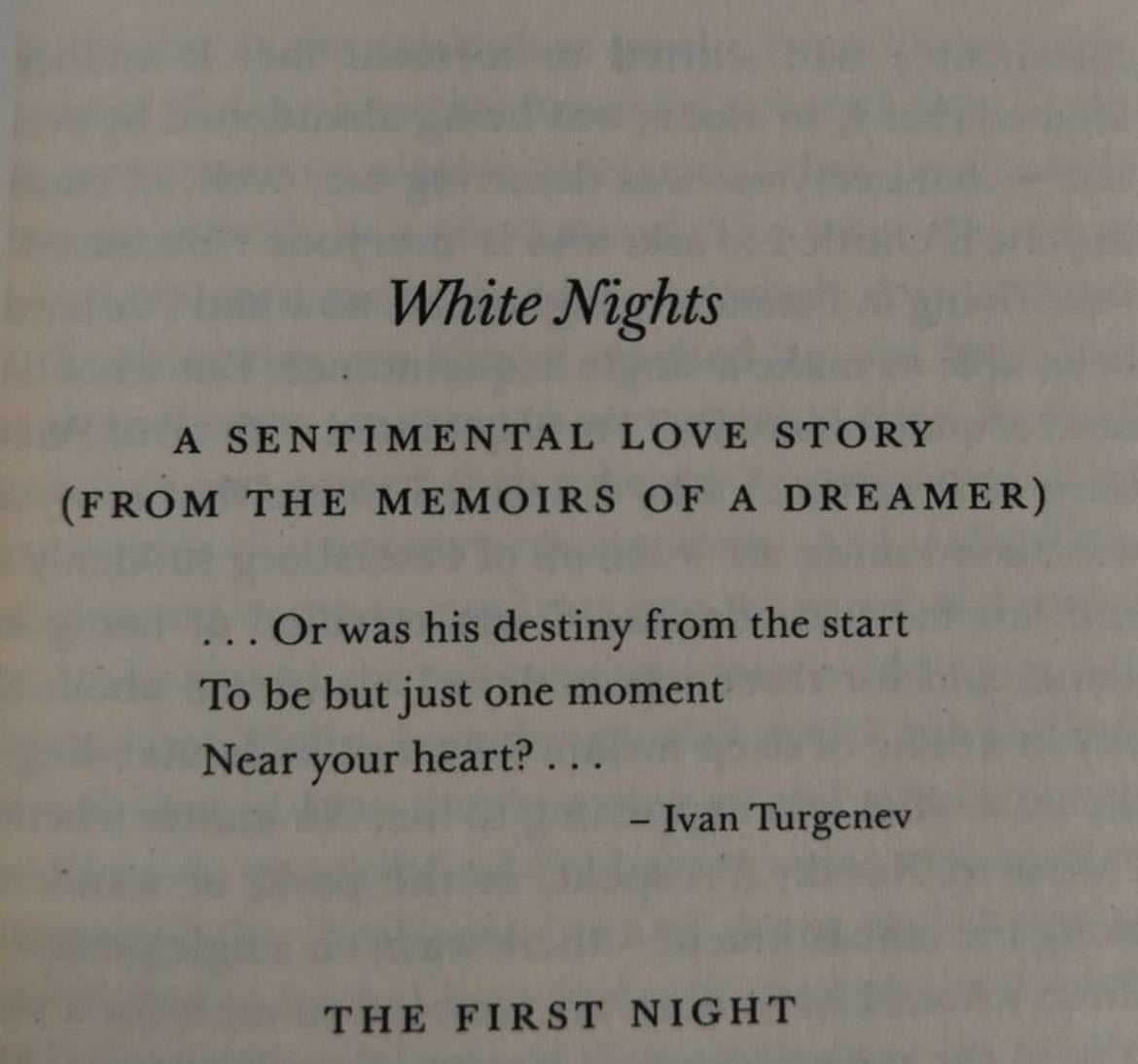
White Nights
Fyodor Dostoevsky · 1848
White Nights is the classic novella by Russian author Fyodor Dostoevsky. It follows the story of a man who is alone and isolated in St. Petersburg. He is desperate for companionship, and when he meets a young woman he believes may be his soulmate, he is filled with hope. Through his conversations with her, he attempts to understand the meaning of love, loneliness and friendship. White Nights is a timeless story of love, longing and human connection. Its beautiful prose and thought-provoking themes have resonated with readers for generations. This edition is based on the 1918 translation by Constance Garnett (1861-1946).<br/><br/>Fyodor Dostoevsky (1821-1881) was a Russian novelist, short story writer, essayist, and philosopher whose psychological depth and insight into the human condition made him one of the most celebrated authors of all time. His works, including Crime and Punishment, The Brothers Karamazov, Notes from the Underground, and The Idiot, have been translated into more than 170 languages and are considered to be some of the greatest works of literature in the world. Dostoevsky explored the depths of human emotions and experience, focusing on themes such as morality, suffering, and redemption. His works are often credited with pioneering existentialism and introducing the theme of nihilism to literature. Dostoevsky was also an influential political thinker, advocating for social justice and challenging the status quo of the time. His writing continues to inspire readers around the world and his legacy lives on as one of the greatest authors of all time.

The Stranger
Albert Camus · 1942
With the intrigue of a psychological thriller, The Stranger—Camus's masterpiece—gives us the story of an ordinary man unwittingly drawn into a senseless murder on an Algerian beach. With an Introduction by Peter Dunwoodie; translated by Matthew Ward.<br/><br/>Behind the subterfuge, Camus explores what he termed "the nakedness of man faced with the absurd" and describes the condition of reckless alienation and spiritual exhaustion that characterized so much of twentieth-century life.<br/><br/>“The Stranger is a strikingly modern text and Matthew Ward’s translation will enable readers to appreciate why Camus’s stoical anti-hero and devious narrator remains one of the key expressions of a postwar Western malaise, and one of the cleverest exponents of a literature of ambiguity.” —from the Introduction by Peter Dunwoodie<br/><br/>First published in 1946; now in translation by Matthew Ward.