Books ♡
Items in this hypelist
Books
La Segunda Guerra Mundial
Antony Beevor • 2012
La Segunda Guerra Mundial
Winston Churchill • 2004
La sociedad del espectáculo
Guy Debord • 1976
Teoria E Investigacion de La Comunicacion de Masas (Spanish Edition)
Jose Carlos Lozano Rendon • 2000
La Insoportable Levedad Del Ser
Milan Kundera • 2014
Romeo y Julieta
WILLIAM SHAKESPEARE • 2009
Hamlet by William Shakespeare
William Shakespeare • 2020
Humanist Marxism and Wittgensteinian Social Philosophy
Susan M. Easton • 1983
Ensayo sobre la lucidez
JOSE SARAMAGO • 2013
FRAGMENTOS DE UN DISCURSO AMOROSO
ROLAND BARTHES • 2013
LA METAMORFOSIS (Spanish Edition)
Franz Kafka • 2023
✨ ¡DESCUBRE UNA OBRA MAESTRA: LA METAMORFOSIS DE KAFKA! ✨<br/>Adéntrate en el fascinante mundo de Franz Kafka a través de esta obra maestra literaria que desafiará tus percepciones y te sumergirá en un laberinto de emociones y reflexiones. La metamorfosis es mucho más que una simple narración: es una exploración profunda de la identidad, la alienación y los dilemas existenciales que nos afectan a todos.<br/><br/>✍️ Sumérgete en la mente genial de Kafka y déjate llevar por la transformación de Gregorio Samsa, un viaje que te llevará a las profundidades de la condición humana y te enfrentará a cuestionamientos que resonarán en tu interior.<br/><br/>✒ Esta edición incluye, además, una nueva traducción y un prólogo.<br/><br/>✔️La metamorfosis es un clásico indiscutible que ha dejado una huella perdurable en la literatura universal. No pierdas la oportunidad de descubrir por qué esta historia sigue fascinando a lectores de todas las generaciones.
El Proceso
Franz Kafka • 1999
Mr. Vertigo
Paul Auster • 2015
DIARIO DE UN SEDUCTOR
SOREN KIERKEGAARD • 2013
La Insoportable Levedad Del Ser
Milan Kundera • 2014
Esta es una extraordinaria historia de amor, o sea de celos, de sexo, de traiciones, de muerte y también de las debilidades y paradojas de la vida cotidiana de dos parejas cuyos destinos se entrelazan irremediablemente. Guiado por la asombrosa capacidad de Milan Kundera de contar con cristalina claridad, el lector penetra fascinado en la trama compleja de actos y pensamientos que el autor va tejiendo con diabólica sabiduría en torno a sus personajes. Y el lector no puede sino terminar siendo el mismo personaje, cuando no todos a la vez. Y es que esta novela va dirigida al corazón, pero también a la cabeza del lector. En efecto, los celos de Teresa por Tomás, el terco amor de éste por ella opuesto a su irrefrenable deseo de otras mujeres, el idealismo lírico y cursi de Franz, amante de Sabina, y la necesidad de ésta, amante también de Tomás, de perseguir incansable una libertad que tan sólo la conduce a la insoportable levedad del ser, se convierten de simple anécdota en re
Noches blancas
Fiodor Dostoievski • 2007
Madrid. 19 cm. 90 p. Encuadernación en tapa blanda de editorial. Colección 'Relatos breves', numero coleccion(10). Dostoevskiï, Fiodor Mijaïlovich 1821-1881. Traducción, Rafael Cansinos Assens. Traducción de: Belye nochi. Cansinos Asséns, Rafael. 1883-1964. Relatos breves (Madrid). 10 .. Este libro es de segunda mano y tiene o puede tener marcas y señales de su anterior propietario. ISBN: 978-84-9815-694-2
Dracula
Bram Stoker • 2017
When Jonathan Harker visits Transylvania to help Count Dracula with the purchase of a London house, he makes horrifying discoveries about his client and his castle. Soon afterwards, a number of disturbing incidents unfold in England: an unmanned ship is wrecked at Whitby; strange puncture marks appear on a young woman's neck; and the inmate of a lunatic asylum raves about the imminent arrival of his 'Master'. In the ensuing battle of wits between the sinister Count Dracula and a determined group of adversaries, Bram Stoker created a masterpiece of the horror genre, probing deeply into questions of human identity and sanity, and illuminating dark corners of Victorian sexuality and desire.
The Stranger
Albert Camus • 2012
With the intrigue of a psychological thriller, The Stranger—Camus's masterpiece—gives us the story of an ordinary man unwittingly drawn into a senseless murder on an Algerian beach. With an Introduction by Peter Dunwoodie; translated by Matthew Ward. Behind the subterfuge, Camus explores what he termed "the nakedness of man faced with the absurd" and describes the condition of reckless alienation and spiritual exhaustion that characterized so much of twentieth-century life. “The Stranger is a strikingly modern text and Matthew Ward’s translation will enable readers to appreciate why Camus’s stoical anti-hero and devious narrator remains one of the key expressions of a postwar Western malaise, and one of the cleverest exponents of a literature of ambiguity.” —from the Introduction by Peter Dunwoodie First published in 1946; now in translation by Matthew Ward.
Si esto es un hombre
Primo Levi • 2018
El libro es un testimonio real de los acontecimientos que tuvieron lugar en los campos de concentración, testimonio que muestra la deshumanización y animalización progresiva del ser humano cuando se restringen sus necesidades primarias y éste intenta luchar por la supervivencia. En el texto se esboza el afán por sobrevivir, el cual está por encima de la idea de suicidio en una situación tan extrema como la reflejada por el autor. Otra nota destacada es que recorre sus páginas una gran disparidad de razas y categorías humanas.
Ensayo sobre la lucidez
JOSE SARAMAGO • 2013
Las intermitencias de la muerte
Jose Saramago • 2005
2022: AÑO SARAMAGO<br/>¿Y si la gente dejara de morirse?<br/>Una brillante sátira del Nobel de Literatura que juega con el miedo más profundo del ser humano.<br/>«Sabremos cada vez menos qué es un ser humano».<br/>Libro de las Previsiones<br/>En un país cuyo nombre no será mencionado se produce algo nunca visto desde el principio del mundo: la muerte decide suspender su trabajo letal, la gente deja de morir. La euforia colectiva se desata, pero muy pronto dará paso a la desesperación y al caos. Sobran los motivos. Si es cierto que las personas ya no mueren, eso no significa que el tiempo haya parado. El destino de los humanos será una vejez eterna.<br/>Se buscarán maneras de forzar a la muerte a matar, se corromperán las conciencias en los «acuerdos de caballeros» entre el poder político, las mafias y las familias, los ancianos serán detestados por haberse convertido en estorbos inamovibles. Hasta el día en que la muerte, vestida de mujer, vuelve para descifrar un enigma, se encuentra con un músico, oye un concierto, establece una relación, escucha de nuevo a Bach... Entonces la novela sigue como sigue la vida, con todas sus contradicciones.<br/>Arrancando de una proposición contraria a la evidencia de los hechos corrientes, José Saramago desarrolla una narrativa de gran fecundidad literaria, social y filosófica que sitúa en el centro la perplejidad del ser humano ante la impostergable finitud de la existencia. Parábola de la corta distancia que separa lo efímero y lo eterno, la historia bien podría terminar tal como empieza: «Al día siguiente no murió nadie».<br/>La crítica ha dicho:<br/>«Saramago vuelve comprensible una realidad huidiza, con parábolas sostenidas por la imaginación, la compasión y la ironía».<br/>Comité Nobel<br/>«Un hombre con una sensibilidad y una capacidad de ver y de entender que están muy por encima de lo que en general vemos y entendemos los comunes mortales».<br/>Héctor Abad Faciolince<br/>«Saramago es un ejemplo, un estilo dignísimo de vida y literatura, que demuestra la posibilidad de navegar a contracorriente [...]. Su palabra tiene el valor de un anticongelante, de un remedio personal contra los vendavales de cinismo que nos envuelven».<br/>Luis García Montero<br/>«Yo no sé, ni quiero saberlo, de dónde ha sacado Saramago ese diabólico tono narrativo, duro y piadoso a un tiempo, [...] que le permite contar tan cerca del corazón y a la vez tan cerca de la historia».<br/>Luis Landero<br/>«Saramago escribe novelas sobre los mitos para desmitificarlos, [...] siempre para abordar la realidad que le rodea, para tratar de los problemas actuales que son de todos, y para que todo quede claro desde el principio».<br/>Rafael Conte, Babelia<br/>«Como Günter Grass o Cees Nooteboom, Saramago aspira a enlazar con un público que desborde límites nacionales».<br/>El País
Tener y no tener
Ernest Hemingway • 1945
21 lecciones para el siglo XXI (Spanish Edition)
Yuval Noah Harari • 2018
Homo Deus: A Brief History of Tomorrow
Yuval Noah Harari • 2018
Sapiens: A Brief History of Humankind
Yuval Noah Harari • 2015
#1 New York Times Bestseller • New York Times Readers’ Pick: Top 100 Books of the 21st Century • The Summer Reading Pick for President Barack Obama and Bill Gates Official U.S. edition with full color illustrations throughout. From renowned historian Yuval Noah Harari comes a groundbreaking narrative of humanity’s creation and evolution—a #1 international bestseller—that explores the ways in which biology and history have defined us and enhanced our understanding of what it means to be “human.” One hundred thousand years ago, at least six different species of humans inhabited Earth. Yet today there is only one—homo sapiens. What happened to the others? And what may happen to us? Most books about the history of humanity pursue either a historical or a biological approach, but Dr. Yuval Noah Harari breaks the mold with this highly original book that begins about 70,000 years ago with the appearance of modern cognition. From examining the role evolving humans have played in the global ecosystem to charting the rise of empires, Sapiens integrates history and science to reconsider accepted narratives, connect past developments with contemporary concerns, and examine specific events within the context of larger ideas. Dr. Harari also compels us to look ahead, because over the last few decades humans have begun to bend laws of natural selection that have governed life for the past four billion years. We are acquiring the ability to design not only the world around us, but also ourselves. Where is this leading us, and what do we want to become? Featuring 27 photographs, 6 maps, and 25 illustrations/diagrams, this provocative and insightful work is sure to spark debate and is essential reading for aficionados of Jared Diamond, James Gleick, Matt Ridley, Robert Wright, and Sharon Moalem.
Nexus: A Brief History of Information Networks from the Stone Age to AI
Yuval Noah Harari • 2024
From the #1 New York Times bestselling author of Sapiens comes the groundbreaking story of how information networks have made, and unmade, our world.<br/><br/>For the last 100,000 years, we Sapiens have accumulated enormous power. But despite allour discoveries, inventions, and conquests, we now find ourselves in an existential crisis. The world is on the verge of ecological collapse. Misinformation abounds. And we are rushing headlong into the age of AI—a new information network that threatens to annihilate us. For all that we have accomplished, why are we so self-destructive?<br/><br/>Nexus looks through the long lens of human history to consider how the flow of information has shaped us, and our world. Taking us from the Stone Age, through the canonization of the Bible, early modern witch-hunts, Stalinism, Nazism, and the resurgence of populism today, Yuval Noah Harari asks us to consider the complex relationship between information and truth, bureaucracy and mythology, wisdom and power. He explores how different societies and political systems throughout history have wielded information to achieve their goals, for good and ill. And he addresses the urgent choices we face as non-human intelligence threatens our very existence.<br/><br/>Information is not the raw material of truth; neither is it a mere weapon. Nexus explores the hopeful middle ground between these extremes, and in doing so, rediscovers our shared humanity.
Vida liquida (Estadi Y Sociedad / State and Society) (Spanish Edition)
Zygmunt Bauman • 2006
Amor líquido
Zygmunt Bauman • 2012
<p>Como parte de su certero análisis de la sociedad en el mundo globalizado y de los cambios que éste impone a la condición humana, el autor analiza el amor y cómo, en la esfera creciente de lo comercial, las relaciones son pensadas en términos de costos y beneficios, es decir, de conveniencia. A través de una reflexión audaz y original Bauman revela las injusticias y las angustias de la modernidad sin ser absolutamente pesimista, con la esperanza de que es posible superar los problemas que plantea la moderna sociedad líquida.<br></p>
El arte de amar (Spanish Edition)
Erich Fromm • 2015
El arte de amar es una obra con la que Erich Fromm ha ayudado a varias generaciones a reflexionar sobre el amor y a responder a algunas preguntas aparentemente sencillas: ¿Qué significa amar? ¿Cómo desprendernos de nosotros mismos para experimentar este sentimiento? El amor no es solo una relación personal, es un rasgo de madurez que se manifiesta en diversas formas: amor erótico, amor fraternal, amor filial, amor a uno mismo... El amor no es algo pasajero y mecánico, como a veces nos induce a creer la sociedad de hoy. Muy al contrario, el amor es un arte, el fruto de un aprendizaje. Por ello, si queremos aprender a amar, debemos actuar como lo haríamos si quisiéramos aprender cualquier otro arte, ya sea música, pintura, carpintería o el arte de la medicina. O, por lo menos, no dedicar nuestra energía a buscar éxito y dinero, prestigio y poder, sino a cultivar el verdadero arte de amar.<br>
REBELION EN LA GRANJA
George Orwell • 1900
momo
Michael Ende • 2005
Momo, hardcover.
1984
George Orwell • 1961
<b>Written more than 70 years ago, <i>1984</i> was George Orwell’s chilling prophecy about the future. And while 1984 has come and gone, his dystopian vision of a government that will do anything to control the narrative is timelier than ever...<br><br><b>• Nominated as one of America’s best-loved novels by PBS’s <i>The Great American Read •</i></b><br></b><br>“<i>The Party told you to reject the evidence of your eyes and ears. It was their final, most essential command.</i>”<br><br>Winston Smith toes the Party line, rewriting history to satisfy the demands of the Ministry of Truth. With each lie he writes, Winston grows to hate the Party that seeks power for its own sake and persecutes those who dare to commit thoughtcrimes. But as he starts to think for himself, Winston can’t escape the fact that Big Brother is always watching...<br><br>A startling and haunting novel, <i>1984</i> creates an imaginary world that is completely convincing from start to finish. No one can deny the novel’s hold on the imaginations of whole generations, or the power of its admonitions—a power that seems to grow, not lessen, with the passage of time.
The Great Gatsby: Original 1925 Edition (An F. Scott Fitzgerald Classic Novel)
F Scott Fitzgerald • 2022
The Great Jazz Age Novel<br/>_______<br/>The 1925 Original Version, with Classroom History<br/>_______<br/>The Great Gatsby is considered F. Scott Fitzgerald’s magnum opus, exploring themes of decadence, idealism, social stigmas, patriarchal norms, and the deleterious effects of unencumbered wealth in capitalistic society, set against the backdrop of the Jazz Age and the Roaring Twenties. At its heart, it’s a cautionary tale, a revealing look into the darker side to the American Dream.<br/>“When I came back from the East last autumn I felt that I wanted the world to be in uniform and at a sort of moral attention forever; I wanted no more riotous excursions with privileged glimpses into the human heart. Only Gatsby, the man who gives his name to this book, was exempt from my reaction—Gatsby who represented everything for which I have an unaffected scorn. If personality is an unbroken series of successful gestures, then there was something gorgeous about him, some heightened sensitivity to the promises of life, as if he were related to one of those intricate machines that register earthquakes ten thousand miles away. This responsiveness had nothing to do with that flabby impressionability which is dignified under the name of the “creative temperament”—it was an extraordinary gift for hope, a romantic readiness such as I have never found in any other person and which it is not likely I shall ever find again. No—Gatsby turned out all right at the end; it is what preyed on Gatsby, what foul dust floated in the wake of his dreams that temporarily closed out my interest in the abortive sorrows and short-winded elations of men...”
El Diario De Ana Frank
FRANK ANA • 2012
Brand New. Ship worldwide
Humillados y ofendidos
Fiódor Dostoyevski • 2011
Orgullo y prejuicio (Edicion conmemorativa) / Pride and Prejudice (Commemorative Edition) (Spanish Edition)
Jane Austen • 2017
<b><b>Nominada por los estadounidenses como una de las 100 mejores novelas en la serie de PBS <i>The Great American Read</i></b><br><br>Penguin Clásicos publica en una cuidada edición esta obra maestra de la literatura inglesa de todos los tiempos, para conmemorar el bicentenario de la publicación original de la novela en 1813.</b><br><br>A lo largo de una trama que discurre con la precisión de un mecanismo de relojería, Jane Austen perfila una galería de personajes que conforman un perfecto y sutil retrato de la época: las peripecias de una dama empeñada en casar a sus hijas con el mejor partido de la región, los vaivenes sentimentales de las hermanas, el oportunismo de un clérigo adulador... El trazado de los caracteres y el análisis de las relaciones humanas sometidas a un rígido código de costumbres, elementos esenciales de la narrativa de la autora, alcanzan en Orgullo y prejuicio cotas de maestría insuperable.«Pero mi locura no ha sido el amor sino la vanidad.»<br><br><b>ENGLISH DESCRIPTION<br><br>Penguin Classics has published this all-time masterpiece of British literature in a special edition to commemorate the bicentennial of the original novel’s publication in 1813<br>.</b> Throughout a plot that flows with the precision of clockwork, Jane Austen profiles a gallery of characters who make up a perfect yet subtle portrait of the time: the drama of a lady determined to marry off her daughters to the biggest catches in the area, the ups and downs of the sisters, the opportunism of a sweet-talking minister… the outline of the characters and analysis of the human relationships subjected to a rigid code of customs, essential elements of the author’s narrative, reach insurmountable heights of mastery in Pride and Prejudice. <b>"But vanity, not love, has been my folly."</b>
La divina comedia (Spanish Edition)
Dante Alighieri • 2016
Obra maestra de la literatura italiana y cumbre de las letras universales. Escrita durante la primera mitad del siglo XIV, esta obra puede leerse en su sentido literal, como el viaje que realiza el propio autor por el Infierno, el Purgatorio y el Paraíso, guiado primero por el poeta romano Virgilio y después por Beatriz, la amada que Dante idealizó. Sin embargo, la obra está llena de símbolos, alegorías y un profundo sentido moral y filosófico que la vuelven inagotable y le han permitido trascender al tiempo. El iluminador prólogo de Jorge Luis Borges permite una comprensión más honda del libro.<br/><br/>A masterpiece of Italian literature written in the first half of the 14th century, La divina comedia can be read in its literal sense, as the author's trip through hell, purgatory, and paradise. However, the work is full of symbols, allegory, and profound explorations of moral philosophical explorations that have rendered it timeless.
ENSAYO SOBRE LA CEGUERA
JOSE SARAMAGO • 2015
Un hombre parado ante un semáforo en rojo se queda ciego súbitamente. Es el primer caso de una «ceguera blanca» que luego se propaga de manera fulminante. Internados en cuarentena o perdidos en la ciudad, los ciegos tendrán que enfrentarse a lo más primitivo de la naturaleza humana: la voluntad de sobrevivir a toda costa.<br/><br/>Con esas premisas, José Saramago traza una imagen aterradora y conmovedora de los tiempos de crisis. También, en el cruce de la literatura y la sabiduría, nos exhorta a los lectores a cerrar los ojos y ver más allá de las evidencias. Recuperar la lucidez y rescatar el afecto son dos propuestas fundamentales de una novela que es, además, una reflexión sobre la ética del amor y la solidaridad.
Tan Poca Vida / a Little Life
Hanya Yanagihara • 2016
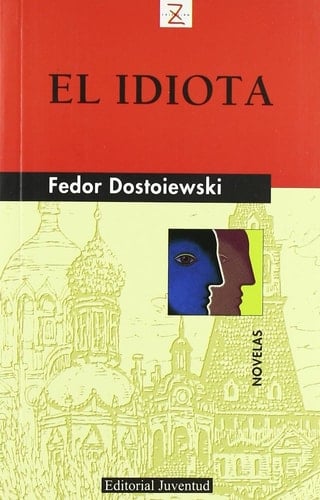
El idiota
Fiódor Dostoievski • 1987