
📖📚

Items in this hypelist
Books
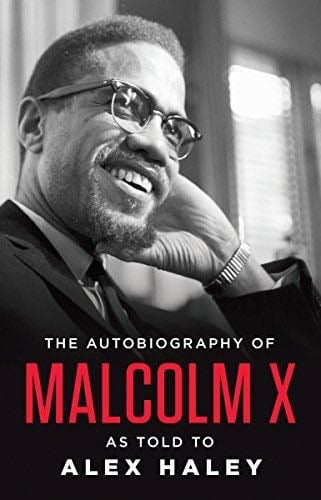
The Autobiography of Malcolm X
Malcolm X · 1992
The Kitchen Witch
Soraya • 2015
Animal Farm
George Orwell · 1996

The Revolution Will Not Be Funded: Beyond the Non-Profit Industrial Complex
INCITE! Women of Color Against Violence · 2017
A trillion-dollar industry, the US non-profit sector is one of the world's largest economies. From art museums and university hospitals to think tanks and church charities, over 1.5 million organizations of staggering diversity share the tax-exempt 501(c)(3) designation, if little else. Many social justice organizations have joined this world, often blunting political goals to satisfy government and foundation mandates. But even as funding shrinks, many activists often find it difficult to imagine movement-building outside the non-profit model. The Revolution Will Not Be Funded gathers essays by radical activists, educators, and non-profit staff from around the globe who critically rethink the long-term consequences of what they call the "non-profit industrial complex." Drawing on their own experiences, the contributors track the history of non-profits and provide strategies to transform and work outside them. Urgent and visionary, The Revolution Will Not Be Funded presents a biting critique of the quietly devastating role the non-profit industrial complex plays in managing dissent.<br/><br/>Contributors. Christine E. Ahn, Robert L. Allen, Alisa Bierria, Nicole Burrowes, Communities Against Rape and Abuse (CARA), William Cordery, Morgan Cousins, Ruth Wilson Gilmore, Stephanie Guilloud, Adjoa Florência Jones de Almeida, Tiffany Lethabo King, Paul Kivel, Soniya Munshi, Ewuare Osayande, Amara H. Pérez, Project South: Institute for the Elimination of Poverty and Genocide, Dylan Rodríguez, Paula X. Rojas, Ana Clarissa Rojas Durazo, Sisters in Action for Power, Andrea Smith, Eric Tang, Madonna Thunder Hawk, Ije Ude, Craig Willse
1984
George Orwell · 1961
<b>Written more than 70 years ago, <i>1984</i> was George Orwell’s chilling prophecy about the future. And while 1984 has come and gone, his dystopian vision of a government that will do anything to control the narrative is timelier than ever...<br><br><b>• Nominated as one of America’s best-loved novels by PBS’s <i>The Great American Read •</i></b><br></b><br>“<i>The Party told you to reject the evidence of your eyes and ears. It was their final, most essential command.</i>”<br><br>Winston Smith toes the Party line, rewriting history to satisfy the demands of the Ministry of Truth. With each lie he writes, Winston grows to hate the Party that seeks power for its own sake and persecutes those who dare to commit thoughtcrimes. But as he starts to think for himself, Winston can’t escape the fact that Big Brother is always watching...<br><br>A startling and haunting novel, <i>1984</i> creates an imaginary world that is completely convincing from start to finish. No one can deny the novel’s hold on the imaginations of whole generations, or the power of its admonitions—a power that seems to grow, not lessen, with the passage of time.

Bury My Heart at Wounded Knee: An Indian History of the American West
Dee Brown · 2012
From the Preface for the 30th Edition... <br/> <br/>We rarely know the full power of words, in print or spoken. It is my hope that time has not dulled the words herein and that they will continue through the coming generation to be as true and direct as I originally meant them to be.

An Indigenous Peoples' History of the United States (REVISIONING HISTORY)
Roxanne Dunbar-Ortiz · 2015
New York Times Bestseller<br/><br/>Now part of the HBO docuseries "Exterminate All the Brutes," written and directed by Raoul Peck<br/><br/>Recipient of the American Book Award<br/><br/>The first history of the United States told from the perspective of indigenous peoples<br/><br/>Today in the United States, there are more than five hundred federally recognized Indigenous nations comprising nearly three million people, descendants of the fifteen million Native people who once inhabited this land. The centuries-long genocidal program of the US settler-colonial regimen has largely been omitted from history. Now, for the first time, acclaimed historian and activist Roxanne Dunbar-Ortizoffers a history of the United States told from the perspective of Indigenous peoples and reveals how Native Americans, for centuries, actively resisted expansion of the US empire.<br/><br/>With growing support for movements such as the campaign to abolish Columbus Day and replace it with Indigenous Peoples’ Day and the Dakota Access Pipeline protest led by the Standing Rock Sioux Tribe, An Indigenous Peoples’ History of the United States is an essential resource providing historical threads that are crucial for understanding the present. In An Indigenous Peoples’ History of the United States, Dunbar-Ortiz adroitly challenges the founding myth of the United States and shows how policy against the Indigenous peoples was colonialist and designed to seize the territories of the original inhabitants, displacing or eliminating them. And as Dunbar-Ortiz reveals, this policy was praised in popular culture, through writers like James Fenimore Cooper and Walt Whitman, and in the highest offices of government and the military. Shockingly, as the genocidal policy reached its zenith under President Andrew Jackson, its ruthlessness was best articulated by US Army general Thomas S. Jesup, who, in 1836, wrote of the Seminoles: “The country can be rid of them only by exterminating them.”<br/><br/>Spanning more than four hundred years, this classic bottom-up peoples’ history radically reframes US history and explodes the silences that have haunted our national narrative.<br/><br/>An Indigenous Peoples' History of the United States is a 2015 PEN Oakland-Josephine Miles Award for Excellence in Literature.
