Books

Items in this hypelist
To Read

How to Be a Dictator: The Cult of Personality in the Twentieth Century
Frank Dikötter · 2022
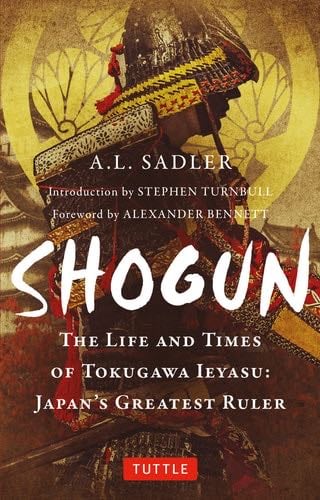
Shogun: The Life and Times of Tokugawa Ieyasu: Japan's Greatest Ruler (Tuttle Classics)
A. L. Sadler · 2022
Uncover the true history behind the critically acclaimed FX/Hulu series "SHOGUN" in this epic biography of the man who unified Medieval Japan.<br/><br/>For 700 years, Japan was ruled by military commanders who waged war against one another incessantly. Shogun tells the fascinating story of Tokugawa Ieyasu, the man who finally unified and brought lasting peace to the nation. He established a new central government which enabled his descendants to rule Japan for the next 260 years—a period in which Japanese culture as we know it today flourished.<br/><br/>The dramatic episodes retold in this book include: Ieyasu's crushing victory at the Battle of Sekigahara, the largest battle ever fought in Japan His creation of a new form of government with a centralized system of control that allowed his descendants to rule Japan peacefully for the next 15 generations Ieyasu's fateful decision to limit the spread of Christianity in Japan, ultimately banning the religion and massacring tens of thousands of ardent believers<br/>In the critically acclaimed FX/Hulu series "Shogun" audiences witness producer Hiroyuki Sanada star as military leader "Lord Yoshi Toranaga" — based on the real life of Tokugawa Ieyasu. This new edition highlights the drama and pageantry of Ieyasu's life and features a new foreword by leading Japanese military historian Alexander Bennett.

How Architecture Works: A Humanist's Toolkit
Witold Rybczynski · 2014
An essential toolkit for understanding architecture as both art form and the setting for our everyday lives<br/><br/>We spend most of our days and nights in buildings, living and working and sometimes playing. Architecture is both the setting for our everyday lives and a public art form―but it remains mysterious to most of us.<br/>In How Architecture Works, Witold Rybczynski, one of our best, most stylish critics and the winner of the Vincent Scully Prize for his writing on architecture, answers our most fundamental questions about how good―and not so good―buildings are designed and constructed. Introducing the reader to the rich and varied world of modern architecture, he reveals how architects as diverse as Frank Gehry, Renzo Piano, and Robert A. M. Stern envision and create their designs. He teaches us how to "read" plans, how buildings respond to their settings, and how the smallest detail―of a stair balustrade, for instance―can convey an architect's vision. How Architecture Works explains the central elements that make up good building design, ranging from a war memorial in London to an opera house in Saint Petersburg, from the National Museum of African American History and Culture in Washington, D.C., to a famous architect's private retreat in Princeton, New Jersey. It is an enlightening humanist's toolkit for thinking about the built environment and seeing it afresh.<br/>"Architecture, if it is any good, speaks to all of us," Rybczynski writes. This revelatory book is his grand tour of architecture today.

A Tale of Two Cities (Penguin Classics)
Charles Dickens · 2003

After Dark (Vintage International)
Haruki Murakami · 2007
From the New York Times bestselling author—a gripping novel of late night encounters that’s “hypnotically eerie, sometimes even funny, but most of all … [a book] that keeps ratcheting up the suspense” (The Washington Post Book World). Now with a new introduction by the author. Nineteen-year-old Mari is waiting out the night in an anonymous Denny’s when she meets a young man who insists he knows her older sister, thus setting her on an odyssey through the sleeping city. In the space of a single night, the lives of a diverse cast of Tokyo residents—models, prostitutes, mobsters, and musicians—collide in a world suspended between fantasy and reality. Utterly enchanting and infused with surrealism, After Dark is a thrilling account of the magical hours separating midnight from dawn.

The Stranger
Albert Camus · 1989

The Fall
Albert Camus · 1991

I'm Staying Here
Marco Balzano · 2020
A mother recounts her life story to her long-lost daughter in this sweeping WW2 historical fiction novel about a community torn between Italian fascism and German Nazism. “Spare, exquisite . . . a stunning testament to the power of words, even when they fail.” —Meg Waite Clayton, author of the international bestseller The Last Train to London In the small village of Curon in South Tyrol, seventeen-year-old Trina longs for a different life. She dedicates herself to becoming a teacher, but the year that she qualifies—1923—Mussolini’s regime abolishes the use of German as a teaching language in the annexed Austrian territory. Defying their ruthless program of forced Italianization, Trina works for a clandestine network of schools in the valley, always with the risk of capture. In spite of this new climate of fear and uncertainty, she finds love and some measure of stability with Erich, an orphaned young man and her father’s helper. Now married and a mother, Trina’s life is again thrown into uncertainty when Hitler’s Germany announces the “Great Option” in 1939, and communities in South Tyrol are invited to join the Reich and leave Italy. The town splits, and ever-increasing rifts form among its people. Those who choose to stay, like Trina and her family, are seen as traitors and spies; they can no longer leave the house without suffering abuse. Then one day Trina comes home and finds that her daughter is missing… Inspired by the striking image of the belltower rising from Lake Resia, all that remains today of the village of Curon, Marco Balzano has written a poignant WW2 historical fiction novel that beautifully interweaves great moments in history with the lives of everyday people.

Death of a Salesman
Arthur Miller · 2023
'For a salesman, there is no rock bottom to life. He don't put a bolt to a nut, he don't tell you the law or give you medicine. He's a man way out there in the blue, riding on a smile and a shoeshine.'<br/><br/>Willy Loman has been a salesman for 34 years. At 60, he is cast aside, his usefulness now exhausted. With no future to dream about he must face the crushing disappointments of his past. He takes one final brave action, but is he heroic at last?, or a self-deluding fool?
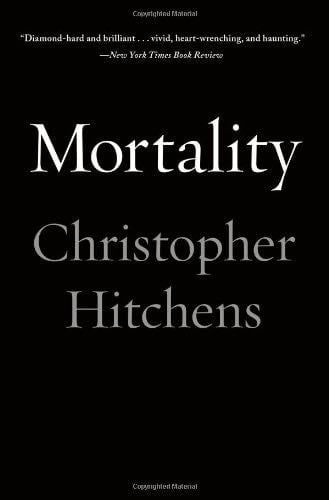
Mortality
Christopher Hitchens · 2014
On June 8, 2010, while on a book tour for his bestselling memoir, Hitch-22, Christopher Hitchens was stricken in his New York hotel room with excruciating pain in his chest and thorax. As he would later write in the first of a series of award-winning columns for Vanity Fair, he suddenly found himself being deported "from the country of the well across the stark frontier that marks off the land of malady." Over the next eighteen months, until his death in Houston on December 15, 2011, he wrote constantly and brilliantly on politics and culture, astonishing readers with his capacity for superior work even in extremis.<br/><br/>Throughout the course of his ordeal battling esophageal cancer, Hitchens adamantly and bravely refused the solace of religion, preferring to confront death with both eyes open. In this riveting account of his affliction, Hitchens poignantly describes the torments of illness, discusses its taboos, and explores how disease transforms experience and changes our relationship to the world around us. By turns personal and philosophical, Hitchens embraces the full panoply of human emotions as cancer invades his body and compels him to grapple with the enigma of death.<br/><br/>Mortality is the exemplary story of one man's refusal to cower in the face of the unknown, as well as a searching look at the human predicament. Crisp and vivid, veined throughout with penetrating intelligence, Hitchens's testament is a courageous and lucid work of literature, an affirmation of the dignity and worth of man.

Notes from the Underground
Fyodor Dostoyevsky · 2023

Nothing to Envy: Ordinary Lives in North Korea
Barbara Demick · 2010
NATIONAL BOOK AWARD FINALIST • An eye-opening account of life inside North Korea—a closed world of increasing global importance—hailed as a “tour de force of meticulous reporting” (The New York Review of Books)<br/><br/>FINALIST FOR THE NATIONAL BOOK CRITICS CIRCLE AWARD • FINALIST FOR THE BAILLIE GIFFORD WINNER OF WINNERS AWARD<br/><br/>In this landmark addition to the literature of totalitarianism, award-winning journalist Barbara Demick follows the lives of six North Korean citizens over fifteen years—a chaotic period that saw the death of Kim Il-sung, the rise to power of his son Kim Jong-il (the father of Kim Jong-un), and a devastating famine that killed one-fifth of the population.<br/><br/>Demick brings to life what it means to be living under the most repressive regime today—an Orwellian world that is by choice not connected to the Internet, where displays of affection are punished, informants are rewarded, and an offhand remark can send a person to the gulag for life. She takes us deep inside the country, beyond the reach of government censors, and through meticulous and sensitive reporting we see her subjects fall in love, raise families, nurture ambitions, and struggle for survival. One by one, we witness their profound, life-altering disillusionment with the government and their realization that, rather than providing them with lives of abundance, their country has betrayed them.<br/><br/>Praise for Nothing to Envy<br/><br/>“Provocative . . . offers extensive evidence of the author’s deep knowledge of this country while keeping its sights firmly on individual stories and human details.”—The New York Times<br/><br/>“Deeply moving . . . The personal stories are related with novelistic detail.”—The Wall Street Journal<br/><br/>“A tour de force of meticulous reporting.”—The New York Review of Books<br/><br/>“Excellent . . . humanizes a downtrodden, long-suffering people whose individual lives, hopes and dreams are so little known abroad.”—San Francisco Chronicle<br/><br/>“The narrow boundaries of our knowledge have expanded radically with the publication of Nothing to Envy. . . . Elegantly structured and written, [it] is a groundbreaking work of literary nonfiction.”—John Delury, Slate<br/><br/>“At times a page-turner, at others an intimate study in totalitarian psychology.”—The Philadelphia Inquirer
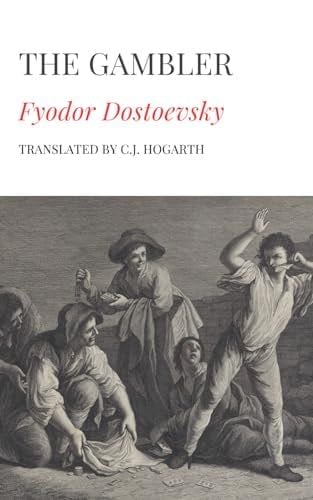
The Gambler
Fyodor Dostoevsky, C.J. Hogarth · 2019
The Gambler by Fyodor Dostoevsky is a classic novel that follows the story of Alexei Ivanovitch, a young man who falls prey to his gambling addiction. Through his descent into a world of debt and despair, Alexei is forced to confront the harsh realities of his obsession. With vivid and intense detail, Dostoevsky paints a picture of a man struggling against his own worst habits and the consequences of his reckless behavior. The Gambler is a powerful story of loss, desperation, and ultimately, redemption. This edition is based on a translation by C.J. Hogarth (1869-1942), originally published in 1917.<br/><br/>Fyodor Dostoevsky (1821-1881) was a Russian novelist, short story writer, essayist, and philosopher whose psychological depth and insight into the human condition made him one of the most celebrated authors of all time. His works, including Crime and Punishment, The Brothers Karamazov, Notes from the Underground, and The Idiot, have been translated into more than 170 languages and are considered to be some of the greatest works of literature in the world. Dostoevsky explored the depths of human emotions and experience, focusing on themes such as morality, suffering, and redemption. His works are often credited with pioneering existentialism and introducing the theme of nihilism to literature. Dostoevsky was also an influential political thinker, advocating for social justice and challenging the status quo of the time. His writing continues to inspire readers around the world and his legacy lives on as one of the greatest authors of all time.

A Tale for the Time Being: A Novel
Ruth Ozeki · 2013

Breaking Bread with the Dead: A Reader's Guide to a More Tranquil Mind
Alan Jacobs · 2020
“At a time when many Americans . . . are engaged in deep reflection about the meaning of the nation's history [this] is an exceptionally useful companion for those who want to do so with honesty and integrity.” —Shelf Awareness From the author of How to Think and The Pleasures of Reading in an Age of Distraction, a literary guide to engaging with the voices of the past to stay sane in the present W. H. Auden once wrote that "art is our chief means of breaking bread with the dead." In his brilliant and compulsively readable new treatise, Breaking Bread with the Dead, Alan Jacobs shows us that engaging with the strange and wonderful writings of the past might help us live less anxiously in the present—and increase what Thomas Pynchon once called our "personal density." Today we are battling too much information in a society changing at lightning speed, with algorithms aimed at shaping our every thought—plus a sense that history offers no resources, only impediments to overcome or ignore. The modern solution to our problems is to surround ourselves only with what we know and what brings us instant comfort. Jacobs's answer is the opposite: to be in conversation with, and challenged by, those from the past who can tell us what we never thought we needed to know. What can Homer teach us about force? How does Frederick Douglass deal with the massive blind spots of America's Founding Fathers? And what can we learn from modern authors who engage passionately and profoundly with the past? How can Ursula K. Le Guin show us truths about Virgil's female characters that Virgil himself could never have seen? In Breaking Bread with the Dead, a gifted scholar draws us into close and sympathetic engagement with texts from across the ages, including the work of Anita Desai, Henrik Ibsen, Jean Rhys, Simone Weil, Edith Wharton, Amitav Ghosh, Claude Lévi-Strauss, Italo Calvino, and many more. By hearing the voices of the past, we can expand our consciousness, our sympathies, and our wisdom far beyond what our present moment can offer.