books —
"what's the human race without something to read?.."
Items in this hypelist
To Read
Carol
Have you ever wondered why that 13-digit number on the back of a book costs $125 in the United States but is completely free in Canada and India? This book, The Global ISBN Handbook, is your 2025 guide to the International Standard Book Number. It explains everything about this global "fingerprint" for books. The ISBN is the most important cornerstone of the publishing industry. It started as a simple warehouse tool in the 1960s. Now, it is a complex digital identifier used in over 200 countries. This handbook deconstructs the entire system. It uses 15 distinct national case studies to do this. You will learn how the old 10-digit system changed to the new 13-digit one. We break down the five parts of the ISBN, from the "Bookland" prefix to the final check digit. The book explores the global governance framework, starting with the International ISBN Agency. Then, it dives deep into how different countries run their systems. You'll see the privatized, high-cost model in the United States. You'll compare it to Canada's free, government-run system. We explore the industry-led models in Brazil and Germany. We look at government-run systems in Mexico and India. We even cover the unique case of China, where the ISBN is not a simple identifier but a state-controlled publication license. The book also examines the systems in the UK , France , Russia , Japan , Australia , South Africa , Nigeria , and Egypt. Many books and websites can tell you how to get an ISBN. This handbook is the only resource that explains why the process is so different everywhere you look. It moves beyond a simple "how-to" and provides a true global analysis. It directly compares the privatized, for-profit models in the US and UK against the free, public-good systems in Canada and South Africa. You won't just learn the price; you will understand the cultural policies, market structures, and legal philosophies that shape that price. This book shows how the ISBN is a "global mirror". It reveals how a simple number can be a commercial product in one nation , a tool of cultural policy in another , and an instrument of state control in a third. This comparative insight is the missing piece for any author, publisher, or researcher trying to navigate the complex international publishing market. Disclaimer: This handbook is an independently produced resource for commentary and analysis. The author has no affiliation with the International ISBN Agency, R.R. Bowker, Library and Archives Canada, the National Press and Publication Administration, or any other national ISBN agency. This work is independently produced under the principle of nominative fair use.
El jilguero
Donna Tartt • 2017
Rimbaud
unde
1984
Have you ever wondered why that 13-digit number on the back of a book costs $125 in the United States but is completely free in Canada and India? This book, The Global ISBN Handbook, is your 2025 guide to the International Standard Book Number. It explains everything about this global "fingerprint" for books. The ISBN is the most important cornerstone of the publishing industry. It started as a simple warehouse tool in the 1960s. Now, it is a complex digital identifier used in over 200 countries. This handbook deconstructs the entire system. It uses 15 distinct national case studies to do this. You will learn how the old 10-digit system changed to the new 13-digit one. We break down the five parts of the ISBN, from the "Bookland" prefix to the final check digit. The book explores the global governance framework, starting with the International ISBN Agency. Then, it dives deep into how different countries run their systems. You'll see the privatized, high-cost model in the United States. You'll compare it to Canada's free, government-run system. We explore the industry-led models in Brazil and Germany. We look at government-run systems in Mexico and India. We even cover the unique case of China, where the ISBN is not a simple identifier but a state-controlled publication license. The book also examines the systems in the UK , France , Russia , Japan , Australia , South Africa , Nigeria , and Egypt. Many books and websites can tell you how to get an ISBN. This handbook is the only resource that explains why the process is so different everywhere you look. It moves beyond a simple "how-to" and provides a true global analysis. It directly compares the privatized, for-profit models in the US and UK against the free, public-good systems in Canada and South Africa. You won't just learn the price; you will understand the cultural policies, market structures, and legal philosophies that shape that price. This book shows how the ISBN is a "global mirror". It reveals how a simple number can be a commercial product in one nation , a tool of cultural policy in another , and an instrument of state control in a third. This comparative insight is the missing piece for any author, publisher, or researcher trying to navigate the complex international publishing market. Disclaimer: This handbook is an independently produced resource for commentary and analysis. The author has no affiliation with the International ISBN Agency, R.R. Bowker, Library and Archives Canada, the National Press and Publication Administration, or any other national ISBN agency. This work is independently produced under the principle of nominative fair use.
Nuestra parte de noche (Spanish Edition)
Mariana Enriquez • 2020
Las Ventajas De Ser Invisible
Stephen Chbosky • 2014
<p> <b>VIVIR al margen ofrece una perspectiva ÚNICA.</b> <br> <b>Pero SIEMPRE llega el momento de entrar en escena y ver el MUNDO desde dentro.</b> </p> <p>Charlie, un chico ingenuo, mordaz y solitario, acaba de empezar el instituto. Vive con sus padres, su popular hermana y un hermano mayor que está a punto de comenzar la universidad. La cosa no pinta demasiado bien el primer día de instituto cuando solo consigue hacer un amigo: un alternativo profesor de Lengua interesado en despertar el genio creativo de Charlie.</p> <p>Cuando conoce a la bella Sam y al excéntrico Patrick, unos chicos llenos de ganas de exprimir la vida al máximo, empieza a comprender lo que es crecer y hacerse adulto. Junto a ellos recorrerá caminos nuevos e inesperados: descubrirá música nueva, empezará a beber, a fumar, a salir de fiesta... e incluso se enamorará por primera vez.</p>
Carmilla (Clockwork Editions)
Joseph Sheridan Lefanu • 2019
<p><i>"To this hour the image of Carmilla returns to my memory with ambiguous alternations--sometimes the playful, languid, beautiful girl; sometimes the writhing fiend I saw in the ruined church. Sometimes, I start from a reverie, certain I heard the light step of Carmilla at the drawing-room door."</i><br></p> <p><p>Isolated in a remote mansion in a central European forest, Laura longs for companionship--until a carriage accident brings another young woman into her life: the secretive and sometimes erratic Carmilla. As Carmilla's actions become more puzzling and volatile, Laura develops bizarre symptoms, and as her health goes into decline, Laura and her father discover something monstrous.</p> <p><p>Joseph Sheridan Le Fanu's compelling tale of a young woman's seduction by a female vampire was a source of influence for Bram Stoker's <i>Dracula</i>, which it predates by over a quarter century. <i>Carmilla</i> was originally serialized from 1871 to 1872 and went on to inspire adaptations in film, opera, and beyond, including the cult classic web series by the same name.</p>
Virgin Suicides (Picador Modern Classics, 2)
Jeffrey Eugenides • 2018

El camino del artista / The Artist's Way (Spanish Edition)
Julia Cameron · 2018
La distinción criterio y bases sociales del gusto
Pierre Bourdieu • 2017
Los hermanos Karamazov / The Brothers Karamazov
Fiodor M. Dostoievski • 2017
El Idiot
Fyodor Dostoevsky • 2023

El acto de crear / The Creative Act: A Way of Being (Spanish Edition)
Rick Rubin · 2024
Emma, Jane Austen
Octopus Publishing Group • 2005
La Vegetariana / The Vegetarian
Kang Han • 2024
Books

Photographers on Photography
Henry Carroll · 2022
Uncategorized

Susan Sontag: The Complete Rolling Stone Interview
Cott Jonathan · 2013
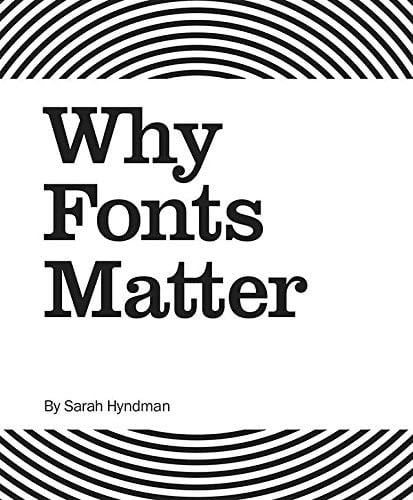
Why Fonts Matter
Sarah Hyndman · 2016
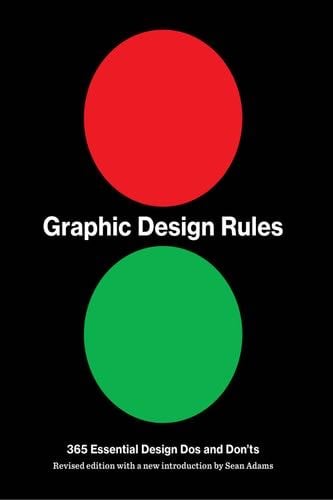
Graphic Design Rules: 365 Essential Design Dos and Don'ts
Tony Seddon, Sean Adams, Peter Dawson, John Foster · 2020
DON'T use comic sans (except ironically!) but DO worship the classic typefaces like Helvetica and Garamond. <i>Graphic Design Rules</i> is a handy guide for professional graphic designers, students, and laymen who incorporate graphic design into their job or small business. Packed with practical advice, this spirited collection of design dos and don'ts takes readers through 365 rules like knowing when to use a modular grid—and when to throw the grid out the window. All designers will appreciate tips and lessons from these highly accomplished authors, who draw on years of experience to help you create good design.

Sweet Design Memories Sanrio Days
Mana Takemura · 2008

Japanese Art After 1945: Scream Against the Sky
Alexandra Munroe · 1996

Curator Conversations
Tim Clark · 2021

The Story of Art
Ernst Hans Gombrich · 1995

El diseño del mundo
Franco pellegrini
Have you ever wondered why that 13-digit number on the back of a book costs $125 in the United States but is completely free in Canada and India? This book, The Global ISBN Handbook, is your 2025 guide to the International Standard Book Number. It explains everything about this global "fingerprint" for books. The ISBN is the most important cornerstone of the publishing industry. It started as a simple warehouse tool in the 1960s. Now, it is a complex digital identifier used in over 200 countries. This handbook deconstructs the entire system. It uses 15 distinct national case studies to do this. You will learn how the old 10-digit system changed to the new 13-digit one. We break down the five parts of the ISBN, from the "Bookland" prefix to the final check digit. The book explores the global governance framework, starting with the International ISBN Agency. Then, it dives deep into how different countries run their systems. You'll see the privatized, high-cost model in the United States. You'll compare it to Canada's free, government-run system. We explore the industry-led models in Brazil and Germany. We look at government-run systems in Mexico and India. We even cover the unique case of China, where the ISBN is not a simple identifier but a state-controlled publication license. The book also examines the systems in the UK , France , Russia , Japan , Australia , South Africa , Nigeria , and Egypt. Many books and websites can tell you how to get an ISBN. This handbook is the only resource that explains why the process is so different everywhere you look. It moves beyond a simple "how-to" and provides a true global analysis. It directly compares the privatized, for-profit models in the US and UK against the free, public-good systems in Canada and South Africa. You won't just learn the price; you will understand the cultural policies, market structures, and legal philosophies that shape that price. This book shows how the ISBN is a "global mirror". It reveals how a simple number can be a commercial product in one nation , a tool of cultural policy in another , and an instrument of state control in a third. This comparative insight is the missing piece for any author, publisher, or researcher trying to navigate the complex international publishing market. Disclaimer: This handbook is an independently produced resource for commentary and analysis. The author has no affiliation with the International ISBN Agency, R.R. Bowker, Library and Archives Canada, the National Press and Publication Administration, or any other national ISBN agency. This work is independently produced under the principle of nominative fair use.

El diseño como storytelling
Ellen Lupton, Álvaro Marcos Lantero · 2019
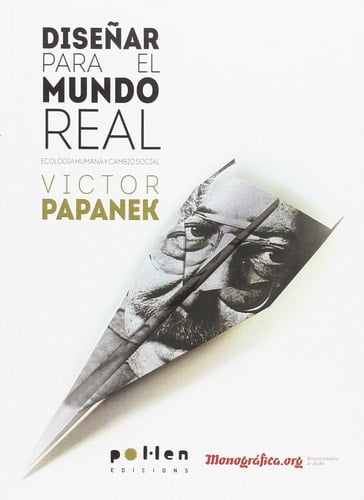
Diseñar para el mundo real: Ecología humana y cambio social (Producció Neta) (Spanish Edition)
Victor Papanek • 2014
Petra Collins: Discharge (CAPRICIOUS)
· 2015
Yoshitomo Nara
Yeewan Koon · 2020
El secreto
Donna tart
Have you ever wondered why that 13-digit number on the back of a book costs $125 in the United States but is completely free in Canada and India? This book, The Global ISBN Handbook, is your 2025 guide to the International Standard Book Number. It explains everything about this global "fingerprint" for books. The ISBN is the most important cornerstone of the publishing industry. It started as a simple warehouse tool in the 1960s. Now, it is a complex digital identifier used in over 200 countries. This handbook deconstructs the entire system. It uses 15 distinct national case studies to do this. You will learn how the old 10-digit system changed to the new 13-digit one. We break down the five parts of the ISBN, from the "Bookland" prefix to the final check digit. The book explores the global governance framework, starting with the International ISBN Agency. Then, it dives deep into how different countries run their systems. You'll see the privatized, high-cost model in the United States. You'll compare it to Canada's free, government-run system. We explore the industry-led models in Brazil and Germany. We look at government-run systems in Mexico and India. We even cover the unique case of China, where the ISBN is not a simple identifier but a state-controlled publication license. The book also examines the systems in the UK , France , Russia , Japan , Australia , South Africa , Nigeria , and Egypt. Many books and websites can tell you how to get an ISBN. This handbook is the only resource that explains why the process is so different everywhere you look. It moves beyond a simple "how-to" and provides a true global analysis. It directly compares the privatized, for-profit models in the US and UK against the free, public-good systems in Canada and South Africa. You won't just learn the price; you will understand the cultural policies, market structures, and legal philosophies that shape that price. This book shows how the ISBN is a "global mirror". It reveals how a simple number can be a commercial product in one nation , a tool of cultural policy in another , and an instrument of state control in a third. This comparative insight is the missing piece for any author, publisher, or researcher trying to navigate the complex international publishing market. Disclaimer: This handbook is an independently produced resource for commentary and analysis. The author has no affiliation with the International ISBN Agency, R.R. Bowker, Library and Archives Canada, the National Press and Publication Administration, or any other national ISBN agency. This work is independently produced under the principle of nominative fair use.
El Guardian entre el Centeno
SALINGER • 2015
My Broken Mariko
Waka Hirako • 2020
Macbeth
Have you ever wondered why that 13-digit number on the back of a book costs $125 in the United States but is completely free in Canada and India? This book, The Global ISBN Handbook, is your 2025 guide to the International Standard Book Number. It explains everything about this global "fingerprint" for books. The ISBN is the most important cornerstone of the publishing industry. It started as a simple warehouse tool in the 1960s. Now, it is a complex digital identifier used in over 200 countries. This handbook deconstructs the entire system. It uses 15 distinct national case studies to do this. You will learn how the old 10-digit system changed to the new 13-digit one. We break down the five parts of the ISBN, from the "Bookland" prefix to the final check digit. The book explores the global governance framework, starting with the International ISBN Agency. Then, it dives deep into how different countries run their systems. You'll see the privatized, high-cost model in the United States. You'll compare it to Canada's free, government-run system. We explore the industry-led models in Brazil and Germany. We look at government-run systems in Mexico and India. We even cover the unique case of China, where the ISBN is not a simple identifier but a state-controlled publication license. The book also examines the systems in the UK , France , Russia , Japan , Australia , South Africa , Nigeria , and Egypt. Many books and websites can tell you how to get an ISBN. This handbook is the only resource that explains why the process is so different everywhere you look. It moves beyond a simple "how-to" and provides a true global analysis. It directly compares the privatized, for-profit models in the US and UK against the free, public-good systems in Canada and South Africa. You won't just learn the price; you will understand the cultural policies, market structures, and legal philosophies that shape that price. This book shows how the ISBN is a "global mirror". It reveals how a simple number can be a commercial product in one nation , a tool of cultural policy in another , and an instrument of state control in a third. This comparative insight is the missing piece for any author, publisher, or researcher trying to navigate the complex international publishing market. Disclaimer: This handbook is an independently produced resource for commentary and analysis. The author has no affiliation with the International ISBN Agency, R.R. Bowker, Library and Archives Canada, the National Press and Publication Administration, or any other national ISBN agency. This work is independently produced under the principle of nominative fair use.
Los destrozos
Bret Easton Ellis • 2023


