
Books

Items in this hypelist
To Read
Schoolgirl (Modern Japanese Classics)
Osamu Dazai • 2011

A Little Life
Hanya Yanagihara • 2016
<b><i>NEW YORK TIMES</i> BESTSELLER • A stunning “portrait of the enduring grace of friendship” (<i>NPR</i>) about the families we are born into, and those that we make for ourselves. A masterful depiction of love in the twenty-first century.<br></b><br><b><b><b><b><b><b><b>NATIONAL BOOK AWARD FINALIST <b><b><b>•</b></b></b></b> MAN BOOKER PRIZE FINALIST <b>• <b><b><b><b><b> WINNER OF THE KIRKUS PRIZE</b></b></b></b></b></b></b></b></b></b></b></b><br><br><i>A Little Life</i> follows four college classmates—broke, adrift, and buoyed only by their friendship and ambition—as they move to New York in search of fame and fortune. While their relationships, which are tinged by addiction, success, and pride, deepen over the decades, the men are held together by their devotion to the brilliant, enigmatic Jude, a man scarred by an unspeakable childhood trauma. A hymn to brotherly bonds and a masterful depiction of love in the twenty-first century, Hanya Yanagihara’s stunning novel is about the families we are born into, and those that we make for ourselves.
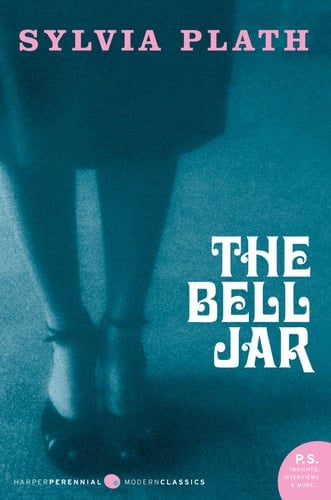
The Bell Jar (Modern Classics)
Sylvia Plath • 2005
<p><i>The Bell Jar</i> chronicles the crack-up of Esther Greenwood: brilliant, beautiful, enormously talented, and successful, but slowly going under -- maybe for the last time. Sylvia Plath masterfully draws the reader into Esther's breakdown with such intensity that Esther's insanity becomes completely real and even rational, as probable and accessible an experience as going to the movies. Such deep penetration into the dark and harrowing corners of the psyche is an extraordinary accomplishment and has made <i>The Bell Jar</i> a haunting American classic.</p> <p>This P.S. edition features an extra 16 pages of insights into the book, including author interviews, recommended reading, and more.</p>
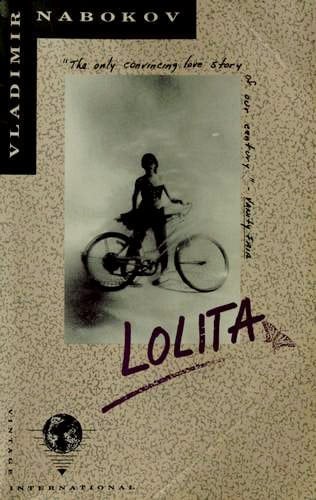
Lolita
Vladimir Nabokov • 1989
Awe and exhiliration--along with heartbreak and mordant wit--abound in <b>Lolita</b>, Nabokov's most famous and controversial novel, which tells the story of the aging Humbert Humbert's obsessive, devouring, and doomed passion for the nymphet Dolores Haze. <b>Lolita</b> is also the story of a hypercivilized European colliding with the cheerful barbarism of postwar America. Most of all, it is a meditation on love--love as outrage and hallucination, madness and transformation.
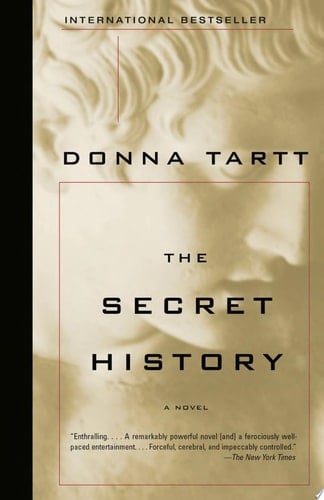
The Secret History
Donna Tartt • 1992
<b><b><b><b>ONE OF <i>TIME MAGAZINE</i>'S 100 BEST MYSTERY AND THRILLER BOOKS OF ALL TIME • </b>INTERNATIONAL BESTSELLER • A contemporary literary classic and "a<b>n accomplished psychological thriller ... absolutely chilling" (<i>Village Voice</i>)</b>, f<b>rom the Pulitzer Prize–winning author of <i>The Goldfinch.<br><br></i></b></b></b>One of <i>The Atlantic</i>’s Great American Novels of the Past 100 Years</b><br><br>Under the influence of a charismatic classics professor, a group of clever, eccentric misfits at a New England college discover a way of thought and life a world away from their banal contemporaries. But their search for the transcendent leads them down a dangerous path, beyond human constructs of morality.<br><br><b>“A remarkably powerful novel [and] a ferociously well-paced entertainment . . . Forceful, cerebral, and impeccably controlled.” —<i>The New York Times</i></b>
If We Were Villains
M. L. Rio • 2017
“Much like Donna Tartt’s The Secret History, M. L. Rio’s sparkling debut is a richly layered story of love, friendship, and obsession...will keep you riveted through its final, electrifying moments.” —Cynthia D’Aprix Sweeney, New York Times bestselling author of The Nest "Nerdily (and winningly) in love with Shakespeare...Readable, smart.” —New York Times Book Review On the day Oliver Marks is released from jail, the man who put him there is waiting at the door. Detective Colborne wants to know the truth, and after ten years, Oliver is finally ready to tell it. A decade ago: Oliver is one of seven young Shakespearean actors at Dellecher Classical Conservatory, a place of keen ambition and fierce competition. In this secluded world of firelight and leather-bound books, Oliver and his friends play the same roles onstage and off: hero, villain, tyrant, temptress, ingénue, extras. But in their fourth and final year, good-natured rivalries turn ugly, and on opening night real violence invades the students’ world of make-believe. In the morning, the fourth-years find themselves facing their very own tragedy, and their greatest acting challenge yet: convincing the police, each other, and themselves that they are innocent. If We Were Villains was named one of Bustle's Best Thriller Novels of the Year, and Mystery Scene says, "A well-written and gripping ode to the stage...A fascinating, unorthodox take on rivalry, friendship, and truth."
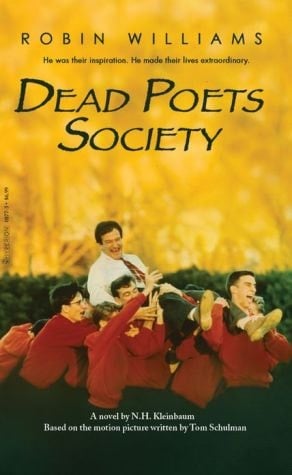
Dead Poets Society
N.H. Kleinbaum • 2012
Todd Anderson and his friends at Welton Academy can hardly believe how different life is since their new English professor, the flamboyant John Keating, has challenged them to "make your lives extraordinary! Inspired by Keating, the boys resurrect the Dead Poets Society--a secret club where, free from the constraints and expectations of school and parents, they let their passions run wild. As Keating turns the boys on to the great words of Byron, Shelley, and Keats, they discover not only the beauty of language, but the importance of making each moment count. Can the club and the individuality it inspires survive the pressure from authorities determined to destroy their dreams? But the Dead Poets pledges soon realize that their newfound freedom can have tragic consequences. Can the club and the individuality it inspires survive the pressure from authorities determined to destroy their dreams?
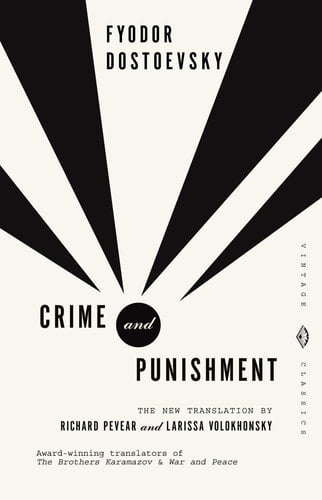
Crime and Punishment (Vintage Classics)
Fyodor Dostoevsky • 1993
<b>Hailed by <i>Washington Post Book World</i> as “the best [translation] currently available" when it was first published, this second edition of <i>Crime and Punishment </i>has been updated in honor of the 200th anniversary of Dostoevsky’s birth. • <b>ONE OF <i>TIME MAGAZINE</i>'S 100 BEST MYSTERY AND THRILLER BOOKS OF ALL TIME</b></b><br><br>With the same suppleness, energy, and range of voices that won their translation of <i>The Brothers Karamazov</i> the PEN/Book-of-the-Month Club Prize, Richard Pevear and Larissa Volokhonsky offer a brilliant translation of <i>Crime and Punishment, </i>Dostoevsky's astounding pyschological thriller, newly revised for his bicentenniel. <br><br>In <i>Crime and Punishment</i>, when Raskolnikov, an impoverished student living in the St. Petersburg of the tsars, commits an act of murder and theft, he sets into motion a story that is almost unequalled in world literature for its excruciating suspense, its atmospheric vividness, and its depth of characterization and vision. Dostoevsky’s drama of sin, guilt, and redemption transforms the sordid story of an old woman’s murder into the nineteenth century’s profoundest and most compelling philosophical novel.

Something Happened Here: an illustrated novel
Felicity Meadow • 2024
Something Happened Here was written for girls who want to, or have ever wanted to, disappear.<br/><br/>It follows the story of 17 year-old nothing, Sally Fawn, through ink sketches, poetry, and intimate narrative as she returns to her abandoned childhood home with only the desire to disappear. Home was on the derelict Highway 340 in rural Nova Scotia, Canada. Home was dirt, centipedes, and sad dogs, but not Mom. Home was Desiree, who she abruptly had to leave in 5th grade after Dad disappeared into the black Atlantic. That summer, Sally discovers that her home now belongs to someone else. A forcefully charming man named Leon Vaughn, and his jealous dog, Lady. Sally tells him that she's 18. 17 is close enough, right? Leon tells Sally that she's 19.<br/><br/>Something Happened Here reveals the untold story of an invisible girl in an invisible town in rural Nova Scotia, where crime is underreported and when someone disappears, they are forgotten forever. Something Happened Here echoes the voices of women and girls who have been silenced by abuse.<br/><br/>Your voice echoes, and it carries power.
Reading

The Da Vinci Code (Robert Langdon)
Dan Brown • 2009
This work has been selected by scholars as being culturally important, and is part of the knowledge base of civilization as we know it. This work was reproduced from the original artifact, and remains as true to the original work as possible. Therefore, you will see the original copyright references, library stamps (as most of these works have been housed in our most important libraries around the world), and other notations in the work.<br/>This work is in the public domain in the United States of America, and possibly other nations. Within the United States, you may freely copy and distribute this work, as no entity (individual or corporate) has a copyright on the body of the work.<br/>As a reproduction of a historical artifact, this work may contain missing or blurred pages, poor pictures, errant marks, etc. Scholars believe, and we concur, that this work is important enough to be preserved, reproduced, and made generally available to the public. We appreciate your support of the preservation process, and thank you for being an important part of keeping this knowledge alive and relevant.
