books

Items in this hypelist
to be read

The Lost Estate (Le Grand Meaulnes) (Penguin Classics)
Henri Alain-Fournier · 2007
<p><b>'I read it for the first time when I was seventeen and loved every page. I find its depiction of a golden time and place just as poignant now as I did then' Nick Hornby<br></b><b><br><i>The Lost Estate </i>is Robin Buss's translation of Henri Alain-Fournier's poignant study of lost love, <i>Le Grand Meaulnes</i>.</b><br><br>When Meaulnes first arrives at the local school in Sologne, everyone is captivated by his good looks, daring and charisma. But when Meaulnes disappears for several days, and returns with tales of a strange party at a mysterious house - and his love for the beautiful girl hidden within it, Yvonne de Galais - his life has been changed forever. In his restless search for his Lost Estate and the happiness he found there, Meaulnes, observed by his loyal friend Francois, may risk losing everything he ever had. Poised between youthful admiration and adult resignation, Alain-Fournier's compelling narrator carries the reader through this evocative and unbearably poignant portrayal of desperate friendship and vanished adolescence. <br><br>Robin Buss's translation of <i>Le Grand Meaulnes</i> sensitively and accurately renders Alain-Fournier's poetically charged, expressive and deceptively simple style. In his introduction, <i>New Yorker </i>writer Adam Gopnik discusses the life of Alain-Fournier, who was killed in the First World War after writing this, his only novel.<br><br>If you liked <i>Le Grand Meaulnes</i>, you might enjoy Gustave Flaubert's <i>Sentimental Education</i>, also available in Penguin Classics.</p>
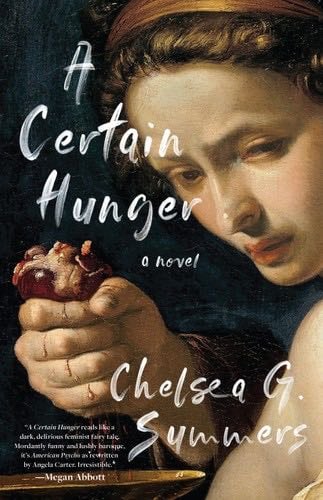
A Certain Hunger
Chelsea G. Summers · 2021
One of Vanity Fair's Books That Will Get You Through This Winter<br/>“One of the most uniquely fun and campily gory books in my recent memory... A Certain Hunger has the voice of a hard-boiled detective novel, as if metaphor-happy Raymond Chandler handed the reins over to the sexed-up femme fatale and really let her fly." ―The New York Times<br/><br/>Food critic Dorothy Daniels loves what she does. Discerning, meticulous, and very, very smart, Dorothy’s clear mastery of the culinary arts make it likely that she could, on any given night, whip up a more inspired dish than any one of the chefs she writes about. Dorothy loves sex as much as she loves food, and while she has struggled to find a long-term partner that can keep up with her, she makes the best of her single life, frequently traveling from Manhattan to Italy for a taste of both.<br/><br/>But there is something within Dorothy that’s different from everyone else, and having suppressed it long enough, she starts to embrace what makes Dorothy uniquely, terrifyingly herself. Recounting her life from a seemingly idyllic farm-to-table childhood, the heights of her career, to the moment she plunges an ice pick into a man's neck on Fire Island, Dorothy Daniels show us what happens when a woman finally embraces her superiority.<br/><br/>A satire of early foodieism, a critique of how gender is defined, and a showcase of virtuoso storytelling, Chelsea G. Summers’ A Certain Hunger introduces us to the food world’s most charming psychopath and an exciting new voice in fiction.

Slouching Towards Bethlehem: Essays (FSG Classics)
Joan Didion · 2008
Celebrated, iconic, and indispensable, Joan Didion’s first work of nonfiction, Slouching Towards Bethlehem, is considered a watershed moment in American writing. First published in 1968, the collection was critically praised as one of the “best prose written in this country.”<br/><br/>More than perhaps any other book, this collection by one of the most distinctive prose stylists of our era captures the unique time and place of Joan Didion’s focus, exploring subjects such as John Wayne and Howard Hughes, growing up in California and the nature of good and evil in a Death Valley motel room, and, especially, the essence of San Francisco’s Haight-Ashbury, the heart of the counterculture. As Joyce Carol Oates remarked: “[Didion] has been an articulate witness to the most stubborn and intractable truths of our time, a memorable voice, partly eulogistic, partly despairing; always in control.”

Perfume: The Story of a Murderer
Patrick Suskind · 2001
INTERNATIONAL BESTSELLER • Set in eighteenth-century France, the classic novel that provokes a terrifying examination of what happens when one man’s indulgence in his greatest passion—his sense of smell—leads to murder.<br/><br/>In the slums of eighteenth-century France, the infant Jean-Baptiste Grenouille is born with one sublime gift—an absolute sense of smell. As a boy, he lives to decipher the odors of Paris, and apprentices himself to a prominent perfumer who teaches him the ancient art of mixing precious oils and herbs. But Grenouille’s genius is such that he is not satisfied to stop there, and he becomes obsessed with capturing the smells of objects such as brass doorknobs and fresh-cut wood. Then one day he catches a hint of a scent that will drive him on an ever-more-terrifying quest to create the “ultimate perfume”—the scent of a beautiful young virgin. Told with dazzling narrative brilliance, Perfume is a hauntingly powerful tale of murder and sensual depravity.<br/><br/>Translated from the German by John E. Woods.
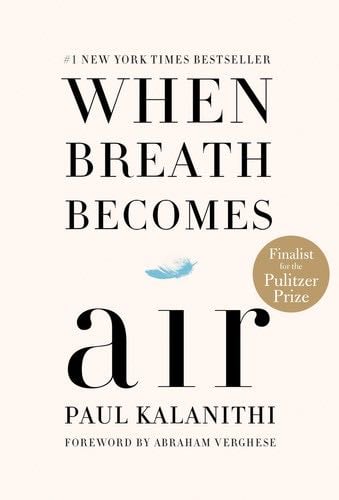
When Breath Becomes Air
Paul Kalanithi · 2016
#1 NEW YORK TIMES BESTSELLER • PULITZER PRIZE FINALIST • This inspiring, exquisitely observed memoir finds hope and beauty in the face of insurmountable odds as an idealistic young neurosurgeon attempts to answer the question, What makes a life worth living?<br/><br/>“Unmissable . . . Finishing this book and then forgetting about it is simply not an option.”—Janet Maslin, The New York Times<br/><br/>ONE OF THE BEST BOOKS OF THE YEAR: The New York Times Book Review, People, NPR, The Washington Post, Slate, Harper’s Bazaar, Time Out New York, Publishers Weekly, BookPage<br/><br/>At the age of thirty-six, on the verge of completing a decade’s worth of training as a neurosurgeon, Paul Kalanithi was diagnosed with stage IV lung cancer. One day he was a doctor treating the dying, and the next he was a patient struggling to live. And just like that, the future he and his wife had imagined evaporated. When Breath Becomes Air chronicles Kalanithi’s transformation from a naïve medical student “possessed,” as he wrote, “by the question of what, given that all organisms die, makes a virtuous and meaningful life” into a neurosurgeon at Stanford working in the brain, the most critical place for human identity, and finally into a patient and new father confronting his own mortality.<br/><br/>What makes life worth living in the face of death? What do you do when the future, no longer a ladder toward your goals in life, flattens out into a perpetual present? What does it mean to have a child, to nurture a new life as another fades away? These are some of the questions Kalanithi wrestles with in this profoundly moving, exquisitely observed memoir.<br/><br/>Paul Kalanithi died in March 2015, while working on this book, yet his words live on as a guide and a gift to us all. “I began to realize that coming face to face with my own mortality, in a sense, had changed nothing and everything,” he wrote. “Seven words from Samuel Beckett began to repeat in my head: ‘I can’t go on. I’ll go on.’” When Breath Becomes Air is an unforgettable, life-affirming reflection on the challenge of facing death and on the relationship between doctor and patient, from a brilliant writer who became both.<br/><br/>Finalist for the PEN Center USA Literary Award in Creative Nonfiction and the Books for a Better Life Award in Inspirational Memoir

The Ethics of Ambiguity
Simone de Beauvoir · 2018
From the groundbreaking author of The Second Sex comes a radical argument for ethical responsibility and freedom. In this classic introduction to existentialist thought, French philosopher Simone de Beauvoir’s The Ethics of Ambiguity simultaneously pays homage to and grapples with her French contemporaries, philosophers Jean-Paul Sartre and Maurice Merleau-Ponty, by arguing that the freedoms in existentialism carry with them certain ethical responsibilities. De Beauvoir outlines a series of “ways of being” (the adventurer, the passionate person, the lover, the artist, and the intellectual), each of which overcomes the former’s deficiencies, and therefore can live up to the responsibilities of freedom. Ultimately, de Beauvoir argues that in order to achieve true freedom, one must battle against the choices and activities of those who suppress it. The Ethics of Ambiguity is the book that launched Simone de Beauvoir’s feminist and existential philosophy. It remains a concise yet thorough examination of existence and what it means to be human.

Guns, Germs, and Steel: The Fates of Human Societies
Jared Diamond Ph.D. · 2017

The Secret History
Donna Tartt · 1992
<b><b><b><b>ONE OF <i>TIME MAGAZINE</i>'S 100 BEST MYSTERY AND THRILLER BOOKS OF ALL TIME • </b>INTERNATIONAL BESTSELLER • A contemporary literary classic and "a<b>n accomplished psychological thriller ... absolutely chilling" (<i>Village Voice</i>)</b>, f<b>rom the Pulitzer Prize–winning author of <i>The Goldfinch.<br><br></i></b></b></b>One of <i>The Atlantic</i>’s Great American Novels of the Past 100 Years</b><br><br>Under the influence of a charismatic classics professor, a group of clever, eccentric misfits at a New England college discover a way of thought and life a world away from their banal contemporaries. But their search for the transcendent leads them down a dangerous path, beyond human constructs of morality.<br><br><b>“A remarkably powerful novel [and] a ferociously well-paced entertainment . . . Forceful, cerebral, and impeccably controlled.” —<i>The New York Times</i></b>

A Short History of Nearly Everything
Bill Bryson · 2004
<b>THE #1 NATIONAL BESTSELLER • One of the world’s most beloved writers and <i>New York Times</i> bestselling author of <i>A Walk in the Woods</i> and <i>The Body</i> takes his ultimate journey—into the most intriguing and intractable questions that science seeks to answer.<br><br>“Brims with strange and amazing facts . . . destined to become a modern classic of science writing.”—<i>The New York Times</i><br></b><br>In <i>A Walk in the Woods</i>, Bill Bryson trekked the Appalachian Trail—well, most of it. In <i>A Sunburned Country</i>, he confronted some of the most lethal wildlife Australia has to offer. Now, in his biggest book, he confronts his greatest challenge: to understand—and, if possible, answer—the oldest, biggest questions we have posed about the universe and ourselves. Taking as territory everything from the Big Bang to the rise of civilization, Bryson seeks to understand how we got from there being nothing at all to there being us. <br><br>To that end, he has attached himself to a host of the world’s most advanced (and often obsessed) archaeologists, anthropologists, and mathematicians, travelling to their offices, laboratories, and field camps. He has read (or tried to read) their books, pestered them with questions, apprenticed himself to their powerful minds. <br><br><i>A Short History of Nearly Everything</i> is the record of this quest, and it is a sometimes profound, sometimes funny, and always supremely clear and entertaining adventure in the realms of human knowledge, as only Bill Bryson can render it. Science has never been more involving or entertaining.

Sapiens: A Brief History of Humankind
Yuval Harari · 2018
Official U.S. edition with full color illustrations throughout.<br/>#1 New York Times Bestseller<br/>The Summer Reading Pick for President Barack Obama, Bill Gates, and Mark Zuckerberg, now available as a beautifully packaged paperback<br/>From a renowned historian comes a groundbreaking narrative of humanity’s creation and evolution—a #1 international bestseller—that explores the ways in which biology and history have defined us and enhanced our understanding of what it means to be “human.”<br/>One hundred thousand years ago, at least six different species of humans inhabited Earth. Yet today there is only one—homo sapiens. What happened to the others? And what may happen to us?<br/>Most books about the history of humanity pursue either a historical or a biological approach, but Dr. Yuval Noah Harari breaks the mold with this highly original book that begins about 70,000 years ago with the appearance of modern cognition. From examining the role evolving humans have played in the global ecosystem to charting the rise of empires, Sapiens integrates history and science to reconsider accepted narratives, connect past developments with contemporary concerns, and examine specific events within the context of larger ideas.<br/>Dr. Harari also compels us to look ahead, because over the last few decades humans have begun to bend laws of natural selection that have governed life for the past four billion years. We are acquiring the ability to design not only the world around us, but also ourselves. Where is this leading us, and what do we want to become?<br/>Featuring 27 photographs, 6 maps, and 25 illustrations/diagrams, this provocative and insightful work is sure to spark debate and is essential reading for aficionados of Jared Diamond, James Gleick, Matt Ridley, Robert Wright, and Sharon Moalem.
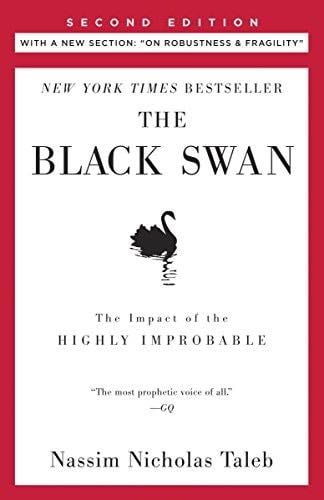
The Black Swan: Second Edition: The Impact of the Highly Improbable: With a new section: "On Robustness and Fragility" (Incerto)
Nassim Nicholas Taleb · 2010
The most influential book of the past seventy-five years: a groundbreaking exploration of everything we know about what we don’t know, now with a new section called “On Robustness and Fragility.” A black swan is a highly improbable event with three principal characteristics: It is unpredictable; it carries a massive impact; and, after the fact, we concoct an explanation that makes it appear less random, and more predictable, than it was. The astonishing success of Google was a black swan; so was 9/11. For Nassim Nicholas Taleb, black swans underlie almost everything about our world, from the rise of religions to events in our own personal lives. Why do we not acknowledge the phenomenon of black swans until after they occur? Part of the answer, according to Taleb, is that humans are hardwired to learn specifics when they should be focused on generalities. We concentrate on things we already know and time and time again fail to take into consideration what we don’t know. We are, therefore, unable to truly estimate opportunities, too vulnerable to the impulse to simplify, narrate, and categorize, and not open enough to rewarding those who can imagine the “impossible.” For years, Taleb has studied how we fool ourselves into thinking we know more than we actually do. We restrict our thinking to the irrelevant and inconsequential, while large events continue to surprise us and shape our world. In this revelatory book, Taleb will change the way you look at the world, and this second edition features a new philosophical and empirical essay, “On Robustness and Fragility,” which offers tools to navigate and exploit a Black Swan world. Taleb is a vastly entertaining writer, with wit, irreverence, and unusual stories to tell. He has a polymathic command of subjects ranging from cognitive science to business to probability theory. Elegant, startling, and universal in its applications, The Black Swan is a landmark book—itself a black swan.

Crime and Punishment (Vintage Classics)
Fyodor Dostoevsky · 1993
<b>Hailed by <i>Washington Post Book World</i> as “the best [translation] currently available" when it was first published, this second edition of <i>Crime and Punishment </i>has been updated in honor of the 200th anniversary of Dostoevsky’s birth. • <b>ONE OF <i>TIME MAGAZINE</i>'S 100 BEST MYSTERY AND THRILLER BOOKS OF ALL TIME</b></b><br><br>With the same suppleness, energy, and range of voices that won their translation of <i>The Brothers Karamazov</i> the PEN/Book-of-the-Month Club Prize, Richard Pevear and Larissa Volokhonsky offer a brilliant translation of <i>Crime and Punishment, </i>Dostoevsky's astounding pyschological thriller, newly revised for his bicentenniel. <br><br>In <i>Crime and Punishment</i>, when Raskolnikov, an impoverished student living in the St. Petersburg of the tsars, commits an act of murder and theft, he sets into motion a story that is almost unequalled in world literature for its excruciating suspense, its atmospheric vividness, and its depth of characterization and vision. Dostoevsky’s drama of sin, guilt, and redemption transforms the sordid story of an old woman’s murder into the nineteenth century’s profoundest and most compelling philosophical novel.
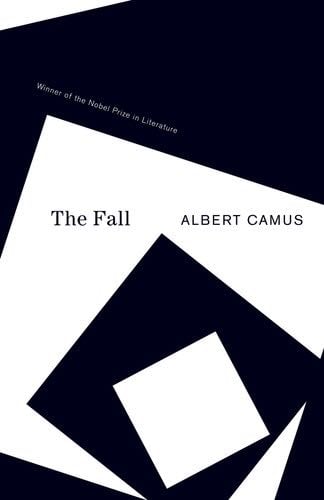
The Fall
Albert Camus · 1991
NOBEL PRIZE-WINNING AUTHOR • One of the most widely read novels of all time—from one of the best-known writers of all time—about a lawyer from Paris who brilliantly illuminates the human condition.<br/><br/>Elegantly styled, Camus' profoundly disturbing novel of a Parisian lawyer's confessions is a searing study of modern amorality.
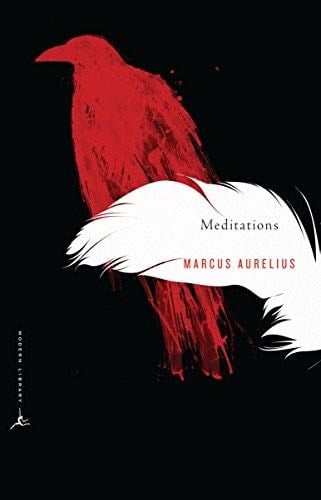
Meditations: A New Translation
Marcus Aurelius · 2003
NATIONAL BESTSELLER • “Meditations offers a glimpse into [Marcus Aurelius’s] mind, his habits, and his approach to life. . . . I think any reader would find something useful to take away from it.”—James Clear, #1 New York Times bestselling author of Atomic Habits<br/><br/>“To me, this is the greatest book ever written. . . . It is the definitive text on self-discipline, personal ethics, humility, self-actualization, and strength. . . . If you’re going to read it, you absolutely have to go with the Gregory Hays translation.”—Ryan Holiday, #1 New York Times bestselling author of The Obstacle Is the Way<br/><br/>“It is unbelievable to see how the emperor’s words have stood the test of time. . . . Read a page or two anytime you feel like the world is too much.”—Arnold Schwarzenegger, The Wall Street Journal<br/><br/>Nearly two thousand years after it was written, Meditations remains profoundly relevant for anyone seeking to lead a meaningful life.<br/><br/>Your ability to control your thoughts—treat it with respect. It’s all that protects your mind from false perceptions—false to your nature, and that of all rational beings.<br/><br/>A series of spiritual exercises filled with wisdom, practical guidance, and profound understanding of human behavior, Marcus Aurelius’s Meditations remains one of the greatest works of spiritual and ethical reflection ever written. With bite-size insights and advice on everything from living in the world to coping with adversity and interacting with others, Meditations has become required reading not only for statesmen and philosophers alike, but also for generations of readers who responded to the straightforward intimacy of his style.<br/><br/>In Gregory Hays’s translation—the first in nearly four decades—Marcus’s thoughts speak with a new immediacy. In fresh and unencumbered English, Hays vividly conveys the spareness and compression of the original Greek text. Never before have Marcus’s insights been so directly and powerfully presented.<br/><br/>With an Introduction that outlines Marcus’s life and career, the essentials of Stoic doctrine, the style and construction of the Meditations, and the work’s ongoing influence, this edition makes it possible to fully rediscover the thoughts of one of the most enlightened and intelligent leaders of any era.

The Trial (Dover Thrift Editions)
Franz Kafka · 2012

The Metamorphosis
Franz Kafka · 2009
"The Metamorphosis" (original German title: "Die Verwandlung") is a short novel by Franz Kafka, first published in 1915. It is often cited as one of the seminal works of fiction of the 20th century and is widely studied in colleges and universities across the western world. The story begins with a traveling salesman, Gregor Samsa, waking to find himself transformed into an insect.
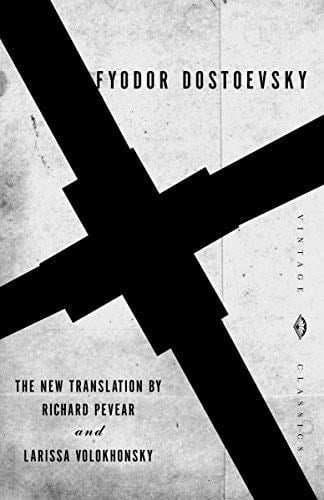
The Idiot (Vintage Classics)
Fyodor Dostoevsky · 2003
<p>Richard Pevear and Larissa Volokhonsky’s masterful translation of <b>The Idiot</b> is destined to stand with their versions of <b>Crime and Punishment, The Brothers Karamazov</b><i>, </i>and <b>Demons</b> as the definitive Dostoevsky in English.<br><br>After his great portrayal of a guilty man in <b>Crime and Punishment</b><i>,</i> Dostoevsky set out in <b>The Idiot</b> to portray a man of pure innocence. The twenty-six-year-old Prince Myshkin, following a stay of several years in a Swiss sanatorium, returns to Russia to collect an inheritance and “be among people.” Even before he reaches home he meets the dark Rogozhin, a rich merchant’s son whose obsession with the beautiful Nastasya Filippovna eventually draws all three of them into a tragic denouement. In Petersburg the prince finds himself a stranger in a society obsessed with money, power, and manipulation. Scandal escalates to murder as Dostoevsky traces the surprising effect of this “positively beautiful man” on the people around him, leading to a final scene that is one of the most powerful in all of world literature.</p>

Heart of a Dog
Mikhail Bulgakov · 1994
I first read Mikhail Bulgakov's The Master and Margarita on a balcony of the Hotel Metropole in Saigon on three summer evenings in 1971. The tropical air was heavy and full of the smells of cordite and motorcycle exhaust and rotting fish and wood-fire stoves, and the horizon flared ambiguously, perhaps from heat lightning, perhaps from bombs. Later each night, as was my custom, I would wander out into the steamy back alleys of the city, where no one ever seemed to sleep, and crouch in doorways with the people and listen to the stories of their culture and their ancestors and their ongoing lives. Bulgakov taught me to hear something in those stories that I had not yet clearly heard. One could call it, in terms that would soon thereafter gain wide currency, "magical realism". The deadpan mix of the fantastic and the realistic was at the heart of the Vietnamese mythos. It is at the heart of the present zeitgeist. And it was not invented by Gabriel Garcia Marquez, as wonderful as his One Hundred Years of Solitude is. Garcia Marquez's landmark work of magical realism was predated by nearly three decades by Bulgakov's brilliant masterpiece of a novel. That summer in Saigon a vodka-swilling, talking black cat, a coven of beautiful naked witches, Pontius Pilate, and a whole cast of benighted writers of Stalinist Moscow and Satan himself all took up permanent residence in my creative unconscious. Their presence, perhaps more than anything else from the realm of literature, has helped shape the work I am most proud of. I'm often asked for a list of favorite authors. Here is my advice. Read Bulgakov. Look around you at the new century. He will show you things you need to see.

The Power of Now: A Guide to Spiritual Enlightenment
Eckhart Tolle · 2010
Celebrating 25 Years as a New York Times Bestseller — Over 16 Million Copies Sold It’s no wonder that The Power of Now has sold over 16 million copies worldwide and has been translated into over 30 foreign languages. Much more than simple principles and platitudes, the book takes readers on an inspiring spiritual journey to find their true and deepest self and reach the ultimate in personal growth and spirituality: the discovery of truth and light. In the first chapter, Tolle introduces readers to enlightenment and its natural enemy, the mind. He awakens readers to their role as a creator of pain and shows them how to have a pain-free identity by living fully in the present. The journey is thrilling, and along the way, the author shows how to connect to the indestructible essence of our Being, “the eternal, ever-present One Life beyond the myriad forms of life that are subject to birth and death.” Featuring a new preface by the author, this paperback shows that only after regaining awareness of Being, liberated from Mind and intensely in the Now, is there Enlightenment.

The Master and Margarita
Mikhail Bulgakov · 1994
A "soaring, dazzling novel" (The New York Times), Mirra Ginsburg's critically-acclaimed translation of one of the most important and best-loved modern classics in world literature<br/>The Master and Margarita has been captivating readers around the world ever since its first publication in 1967. Written during Stalin's time in power but suppressed in the Soviet Union for decades, Bulgakov's masterpiece is an ironic parable on power and its corruption, on good and evil, and on human frailty and the strength of love.<br/><br/>In The Master and Margarita, the Devil himself pays a visit to Soviet Moscow. Accompanied by a retinue that includes the fast-talking, vodka-drinking, giant tomcat Behemoth, he sets about creating a whirlwind of chaos that soon involves the beautiful Margarita and her beloved, a distraught writer known only as the Master, and even Jesus Christ and Pontius Pilate. The Master and Margarita combines fable, fantasy, political satire, and slapstick comedy to create a wildly entertaining and unforgettable tale that is commonly considered the greatest novel to come out of the Soviet Union. It appears in this edition in a translation by Mirra Ginsburg that was judged "brilliant" by Publishers Weekly.