Books

My way to track what I am reading nowadays, and what I will read in the future. (This list is regularly updated!)
Items in this hypelist
Currently reading…
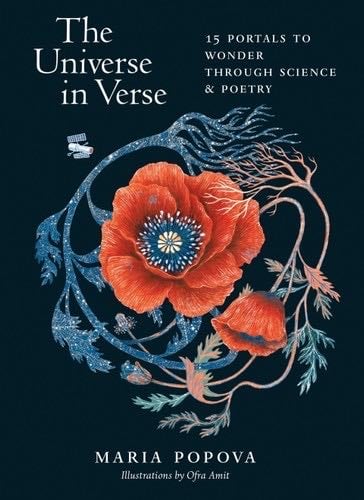
The Universe in Verse
Maria Popova · 2024
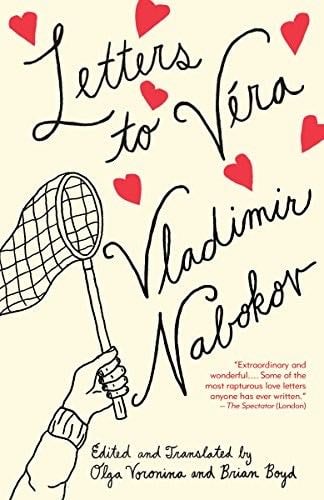
Letters to Véra (Vintage International)
Vladimir Nabokov · 2017
No marriage of a major twentieth-century writer is quite as beguiling as that of Vladimir Nabokov’s to Véra Slonim. She shared his delight at the enchantment of life’s trifles and literature’s treasures, and he rated her as having the best and quickest sense of humor of any woman he had met. From their first encounter in 1923, Vladimir’s letters to Véra chronicle a half-century-long love story, one that is playful, romantic, and memorable.<br/><br/>At the same time, the letters reveal much about their author. We see the infectious fascination with which Vladimir observed everything—animals, people, speech, landscapes and cityscapes—and glimpse his ceaseless work on his poems, plays, stories, novels, memoirs, screenplays, and translations. This delightful volume is enhanced by twenty-one photographs, as well as facsimiles of the letters and the puzzles and drawings Vladimir often sent to Véra.<br/><br/>With 8 pages of photographs and 47 illustrations in text
To be read: Memoirs and biographies
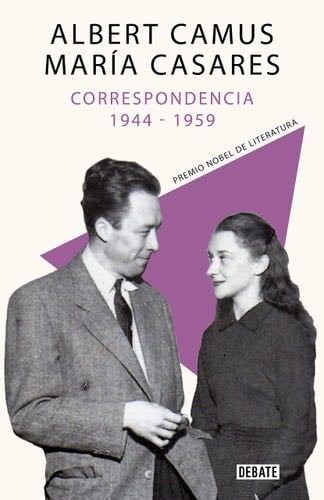
Correspondencia 1944-1959
Albert Camus, Maria Casarès · 2023
«Estas cartas nos encienden y nos transportan de principio a fin. De la correspondencia de Camus faltaba esta pieza esencial e inédita, un continente de palabras que presentíamos espléndido y que resulta ser sin duda la parte más hermosa de todas».<br/>Le Monde<br/>«Igual de lúcidos, igual de enterados, capaces de entenderlo todo y, por lo tanto, de sobreponernos a todo, lo suficientemente fuertes para vivir sin ilusiones y uniéndonos los vínculos de la tierra, los de la inteligencia, los del corazón y de la carne, nada puede, lo sé, ni sorprendernos ni separarnos».<br/>El 19 de marzo de 1944, Albert Camus y María Casares se conocieron en casa de Michel Leiris, cuando ella contaba solo veintiún años. Había comenzado su carrera dos años antes, en 1942, en el teatro de Les Mathurins. Ese mismo año Albert Camus publicaba El extranjero. Entonces, el escritor vivía solo en París, pues la guerra lo había mantenido alejado de su esposa Francine, maestra en Orán. Sensible al talento de la actriz, Camus le confió el papel de Martha para la puesta en escena de su obra El malentendido.<br/>La noche del 6 de junio, el mismo día del desembarco de Normandía, se volvieron amantes. Fue tan solo el preludio de una gran historia de amor que no tuvo su verdadero comienzo hasta 1948 y que continuó hasta la muerte accidental del escritor en enero de 1960. En medio de la vida pública y la actividad creativa de ambos, su correspondencia cruzada revela la intensidad de su relación íntima, que vivieron en la ausencia, en el disfrute de los días compartidos, en el trabajo conjunto y en la búsqueda, formulación y realización del amor verdadero.<br/>La crítica ha dicho:<br/>«En este libro vemos toda la historia literaria, teatral y política de la que el filósofo y la actriz, ambos hijos del exilio y grandes viajeros, fueron actores comprometidos».<br/>Le Nouvel Observateur<br/>«Esta correspondencia, rebosante de un amor luminoso, resulta cautivadora».<br/>Libération<br/>«Esta correspondencia se revela generosa, divertida, absoluta».<br/>Les Inrockuptibles<br/>«Sublime. Esta correspondencia revela la potencia de un amor extraordinario, que se mantuvo puro y duro como una roca durante más de quince años».<br/>L'Express<br/>«A veces experimentamos el inmenso privilegio de entrar en la intimidad de los escritores, detrás de su obra. Estas cartas son vivas, luminosas y ardientes. Raciones de felicidad que constituyen el marco y la historia de una relación amorosa excepcional».<br/>Le Devoir<br/>«Una pasión de la que nacieron cientos de cartas sublimes. Una correspondenciade paganos sensuales y brillantes. Los dos amantes quieren ser transparentes el uno para el otro, y más o menos lo consiguen».<br/>Le Point<br/>«¿Qué descubrimos? Las grandes afinidades entre Camus y Casares, afinidades intelectuales, morales y políticas».<br/>Le Figaro littéraire<br/>«Parece una vieja película en blanco y negro. Humphrey Bogart e Ingrid Bergman en un balcón del París ocupado el 6 de junio de 1944, fecha del desembarco aliado en Normandía. La primera noche de dos amantes a los que solo la muerte de él separaría, quince años después. Podría ser también el arranque de una novela romántica, pero es el punto de partida de una historia real, contada con minucioso detalle en la correspondencia entre sus protagonistas».<br/>Marc Bassets, El País
Speak Memory
Vladimir Nabokov · 1967

Flush
Virginia Woolf
“Una ventata di allegria e di comicità degna di Alice nel paese delle meraviglie” Nadia Fusini È l’inizio dell’estate del 1842 quando Flush – un cucciolo di cocker spaniel di razza purissima, manto marrone tendente all’oro, coda folta, nessun ciuffo fuori posto – varca la soglia del numero 50 di Wimpole Street, a Londra, per essere regalato a una delle più grandi poetesse inglesi, la brillante e sventurata Elizabeth Barrett. Tra i due basta un’occhiata, un lampo di riconoscimento, perché nasca un’intesa. Finché, qualche tempo dopo, nella vita tranquilla di Flush entra un rivale: il poeta Robert Browning. Leggendo la corrispondenza di Elizabeth Barrett Browning, Virginia Woolf rimane così colpita dalle descrizioni che la poetessa fa del suo cane da decidere di dedicargli una biografia. Mescolando realtà e finzione, guizzi di umorismo e lampi di autentica poesia, Woolf ricostruisce la vita di Flush, che diventa non solo il racconto del rapporto unico e straordinario che si crea tra un cane e il suo padrone, ma anche un vivido ritratto della società vittoriana e un’acuta riflessione sulla natura umana, vista attraverso lo sguardo di un cane. E scopriamo così che a Virginia Woolf si addice lo straniante sguardo dal basso, del cane, che dal sottosuolo dei sensi, più che dall’empireo dell’intelletto, raccoglie la materia della propria visione.
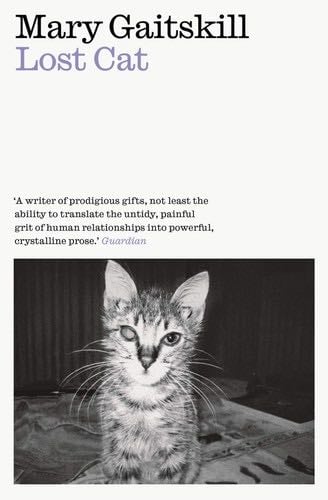
Lost Cat
Mary Gaitskill · 2020
‘Last year I lost my cat Gattino. He was very young, at seven months barely an adolescent. He is probably dead but I don’t know for certain.’<br/><br/>So begins Mary Gaitskill’s stunning book-length essay, the closest thing she has written to a memoir. Lost Cat begins with the story of how Gaitskill rescued a stray cat in Italy and brought him to live with her in the US, where he went missing.<br/><br/>As she explores the unexpected trauma of her loss, Gaitskill describes how she came to foster two siblings, Caesar and Natalia, a pair of inner-city children who spent summers and holidays with Gaitskill and her husband. The joys and ultimate difficulties of this relationship leads to a searing examination of loss, love, safety and fear. Gaitskill applies her razor-sharp writing to her most personal subjects yet.
To be read: Non-fiction

Cosmos
Carl Sagan · 2013
RETURNING TO TELEVISION AS AN ALL-NEW MINISERIES ON FOX<br/><br/>Cosmos is one of the bestselling science books of all time. In clear-eyed prose, Sagan reveals a jewel-like blue world inhabited by a life form that is just beginning to discover its own identity and to venture into the vast ocean of space. Featuring a new Introduction by Sagan’s collaborator, Ann Druyan, full color illustrations, and a new Foreword by astrophysicist Neil deGrasse Tyson, Cosmos retraces the fourteen billion years of cosmic evolution that have transformed matter into consciousness, exploring such topics as the origin of life, the human brain, Egyptian hieroglyphics, spacecraft missions, the death of the Sun, the evolution of galaxies, and the forces and individuals who helped to shape modern science.<br/><br/>Praise for Cosmos<br/><br/>“Magnificent . . . With a lyrical literary style, and a range that touches almost all aspects of human knowledge, Cosmos often seems too good to be true.”—The Plain Dealer<br/><br/>“Sagan is an astronomer with one eye on the stars, another on history, and a third—his mind’s—on the human condition.”—Newsday<br/><br/>“Brilliant in its scope and provocative in its suggestions . . . shimmers with a sense of wonder.”—The Miami Herald<br/><br/>“Sagan dazzles the mind with the miracle of our survival, framed by the stately galaxies of space.”—Cosmopolitan<br/><br/>“Enticing . . . iridescent . . . imaginatively illustrated.”—The New York Times Book Review
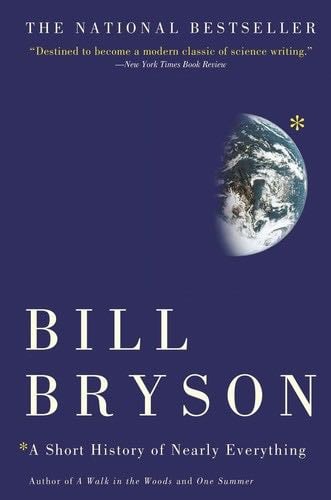
A Short History of Nearly Everything
Bill Bryson · 2004
<b>THE #1 NATIONAL BESTSELLER • One of the world’s most beloved writers and <i>New York Times</i> bestselling author of <i>A Walk in the Woods</i> and <i>The Body</i> takes his ultimate journey—into the most intriguing and intractable questions that science seeks to answer.<br><br>“Brims with strange and amazing facts . . . destined to become a modern classic of science writing.”—<i>The New York Times</i><br></b><br>In <i>A Walk in the Woods</i>, Bill Bryson trekked the Appalachian Trail—well, most of it. In <i>A Sunburned Country</i>, he confronted some of the most lethal wildlife Australia has to offer. Now, in his biggest book, he confronts his greatest challenge: to understand—and, if possible, answer—the oldest, biggest questions we have posed about the universe and ourselves. Taking as territory everything from the Big Bang to the rise of civilization, Bryson seeks to understand how we got from there being nothing at all to there being us. <br><br>To that end, he has attached himself to a host of the world’s most advanced (and often obsessed) archaeologists, anthropologists, and mathematicians, travelling to their offices, laboratories, and field camps. He has read (or tried to read) their books, pestered them with questions, apprenticed himself to their powerful minds. <br><br><i>A Short History of Nearly Everything</i> is the record of this quest, and it is a sometimes profound, sometimes funny, and always supremely clear and entertaining adventure in the realms of human knowledge, as only Bill Bryson can render it. Science has never been more involving or entertaining.
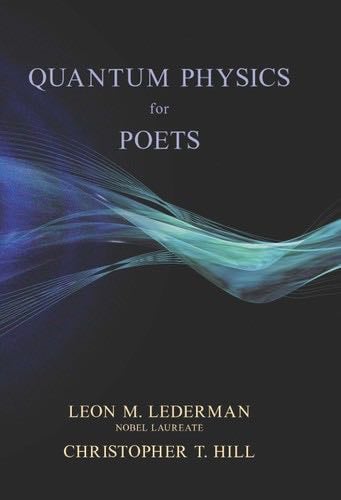
Quantum Physics for Poets
Leon M. Lederman, Christopher T. Hill · 2011
Quantum theory is the bedrock of contemporary physics and the basis of understanding matter in its tiniest dimensions and the vast universe as a whole. But for many, the theory remains an impenetrable enigma. Now, two physicists seek to remedy this situation by both drawing on their scientific expertise and their talent for communicating science to the general reader. In this lucid, informative book, designed for the curious, Lederman and Hill make the seemingly daunting subject of quantum physics accessible, appealing, and exciting. Their story is partly historical, covering the many "Eureka" moments when great scientists-Max Planck, Albert Einstein, Niels Bohr, Werner Heisenberg, Erwin Schrödinger, and others-struggled to come to grips with the bizarre realities that quantum research revealed. Although their findings were indisputably proven in experiments, they were so strange and counterintuitive that Einstein refused to accept quantum theory, despite its great success. The authors explain the many strange and even eerie aspects of quantum reality at the subatomic level, from "particles" that can be many places simultaneously and sometimes act more like waves, to the effect that a human can have on their movements by just observing them! Finally, the authors delve into quantum physics' latest and perhaps most breathtaking offshoots-field theory and string theory. The intricacies and ramifications of these two theories will give the reader much to ponder. In addition, the authors describe the diverse applications of quantum theory in its almost countless forms of modern technology throughout the world. Using eloquent analogies and illustrative examples, Quantum Physics for Poets renders even the most profound reaches of quantum theory understandable and something for us all to savor.
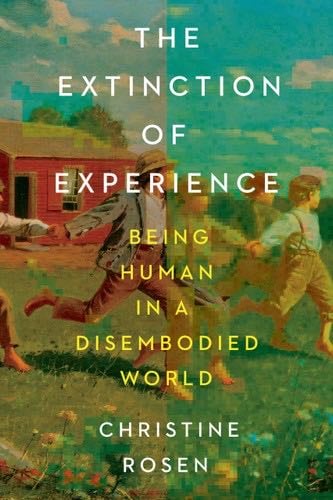
The Extinction of Experience: Being Human in a Disembodied World
Christine Rosen · 2024
Read: my recommendations and favorites

La ridícula idea de no volver a verte
Rosa Montero · 2013

The Awakening
Kate Chopin · 1899
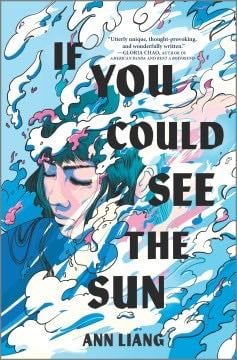
If You Could See the Sun
Ann Liang · 2022

Upstream
Mary Oliver · 2016

Winnie-the-Pooh and Other Delightful Stories (Painted Edition)
A. A. Milne, Ernest Howard Shepard · 2023

Winter Hours
Mary Oliver · 2000
To be read: fiction

Pnin
Vladimir Nabokov · 2024
One of the best-loved of Nabokov’s novels, Pnin features his funniest and most heart-rending character. Professor Timofey Pnin is a haplessly disoriented Russian émigré precariously employed on an American college campus in the 1950s. Pnin struggles to maintain his dignity through a series of comic and sad misunderstandings, all the while falling victim both to subtle academic conspiracies and to the manipulations of a deliberately unreliable narrator.Initially an almost grotesquely comic figure, Pnin gradually grows in stature by contrast with those who laugh at him. Whether taking the wrong train to deliver a lecture in a language he has not mastered or throwing a faculty party during which he learns he is losing his job, the gently preposterous hero of this enchanting novel evokes the reader’s deepest protective instinct.Serialized in The New Yorker and published in book form in 1957, Pnin brought Nabokov both his first National Book Award nomination and hitherto unprecedented popularity.
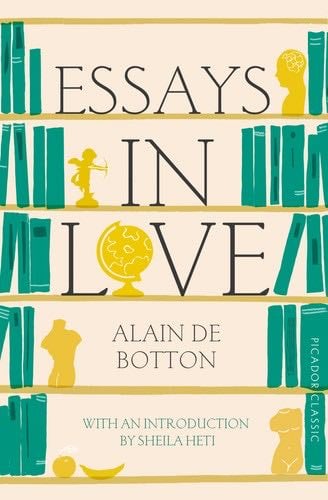
Essays In Love
Alain De Botton · 2015