books i need on the shelf NOW!

Items in this hypelist
Books
Pride and Prejudice
Jane Austen • 1813
Austen's most popular novel, the unforgettable story of Elizabeth Bennet and Mr. Darcy<br/><br/>Few have failed to be charmed by the witty and independent spirit of Elizabeth Bennet in Austen’s beloved classic Pride and Prejudice. When Elizabeth Bennet first meets eligible bachelor Fitzwilliam Darcy, she thinks him arrogant and conceited; he is indifferent to her good looks and lively mind. When she later discovers that Darcy has involved himself in the troubled relationship between his friend Bingley and her beloved sister Jane, she is determined to dislike him more than ever. In the sparkling comedy of manners that follows, Jane Austen shows us the folly of judging by first impressions and superbly evokes the friendships, gossip and snobberies of provincial middle-class life. This Penguin Classics edition, based on Austen's first edition, contains the original Penguin Classics introduction by Tony Tanner and an updated introduction and notes by Viven Jones.<br/><br/>For more than seventy years, Penguin has been the leading publisher of classic literature in the English-speaking world. With more than 1,700 titles, Penguin Classics represents a global bookshelf of the best works throughout history and across genres and disciplines. Readers trust the series to provide authoritative texts enhanced by introductions and notes by distinguished scholars and contemporary authors, as well as up-to-date translations by award-winning translators.
Brave New World
Aldous Huxley • 1932
Now more than ever: Aldous Huxley's enduring masterwork must be read and understood by anyone concerned with preserving the human spirit<br/>"A masterpiece. ... One of the most prophetic dystopian works." —Wall Street Journal<br/>Aldous Huxley's profoundly important classic of world literature, Brave New World is a searching vision of an unequal, technologically-advanced future where humans are genetically bred, socially indoctrinated, and pharmaceutically anesthetized to passively uphold an authoritarian ruling order–all at the cost of our freedom, full humanity, and perhaps also our souls. “A genius [who] who spent his life decrying the onward march of the Machine” (The New Yorker), Huxley was a man of incomparable talents: equally an artist, a spiritual seeker, and one of history’s keenest observers of human nature and civilization. Brave New World, his masterpiece, has enthralled and terrified millions of readers, and retains its urgent relevance to this day as both a warning to be heeded as we head into tomorrow and as thought-provoking, satisfying work of literature. Written in the shadow of the rise of fascism during the 1930s, Brave New World likewise speaks to a 21st-century world dominated by mass-entertainment, technology, medicine and pharmaceuticals, the arts of persuasion, and the hidden influence of elites.<br/>"Aldous Huxley is the greatest 20th century writer in English." —Chicago Tribune
Crush
Richard Siken • 2005
The 2004 winner of the Yale Younger Poets competition: a powerful, confessional, erotic collection<br/><br/>Finalist for the 2005 National Book Critics Circle Award in Poetry<br/><br/>“Siken writes about love, desire, violence, and eroticism with a cinematic brilliance and urgency that makes this one of the best books of contemporary poetry.”—Victoria Chang, Huffington Post<br/><br/>Richard Siken’s Crush, selected as the 2004 winner of the Yale Younger Poets prize, is a powerful collection of poems driven by obsession and love. Siken writes with ferocity, and his reader hurtles unstoppably with him. His poetry is confessional, gay, savage, and charged with violent eroticism. In the world of American poetry, Siken’s voice is striking.<br/><br/>In her introduction to the book, competition judge Louise Glück hails the “cumulative, driving, apocalyptic power, [and] purgatorial recklessness” of Siken’s poems. She notes, “Books of this kind dream big. . . . They restore to poetry that sense of crucial moment and crucial utterance which may indeed be the great genius of the form.”
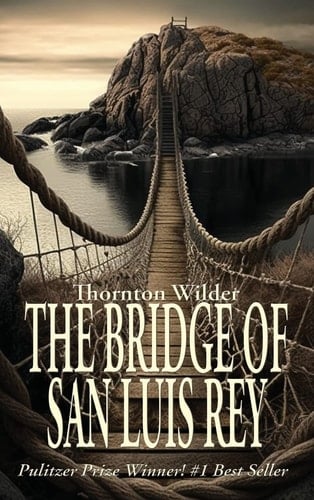
The Bridge of San Luis Rey
Thornton Wilder • 1927
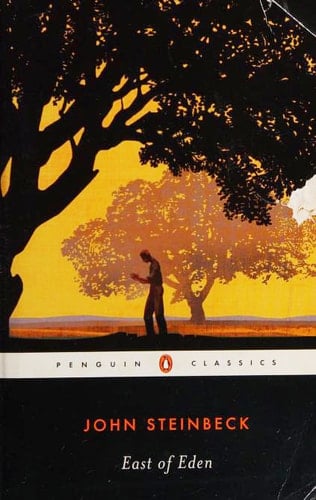
East of Eden
John Steinbeck • 1952
A masterpiece of Biblical scope, and the magnum opus of one of America’s most enduring authors<br/><br/>A Penguin Classic<br/><br/>In his journal, Nobel Prize winner John Steinbeck called East of Eden “the first book,” and indeed it has the primordial power and simplicity of myth. Set in the rich farmland of California’s Salinas Valley, this sprawling and often brutal novel follows the intertwined destinies of two families—the Trasks and the Hamiltons—whose generations helplessly reenact the fall of Adam and Eve and the poisonous rivalry of Cain and Abel.<br/><br/>The masterpiece of Steinbeck’s later years, East of Eden is a work in which Steinbeck created his most mesmerizing characters and explored his most enduring themes: the mystery of identity, the inexplicability of love, and the murderous consequences of love's absence. Adapted for the 1955 film directed by Elia Kazan introducing James Dean and read by thousands as the book that brought Oprah’s Book Club back, East of Eden has remained vitally present in American culture for over half a century.<br/><br/>This edition features an introduction by David Wyatt.<br/><br/>For more than seventy years, Penguin has been the leading publisher of classic literature in the English-speaking world. With more than 1,800 titles, Penguin Classics represents a global bookshelf of the best works throughout history and across genres and disciplines. Readers trust the series to provide authoritative texts enhanced by introductions and notes by distinguished scholars and contemporary authors, as well as up-to-date translations by award-winning translators.
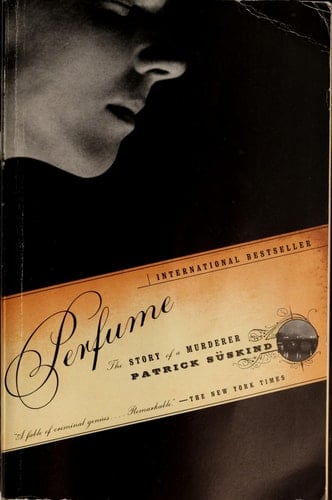
Perfume: The Story of a Murderer
Patrick Suskind • 1985
INTERNATIONAL BESTSELLER • Set in eighteenth-century France, the classic novel that provokes a terrifying examination of what happens when one man’s indulgence in his greatest passion—his sense of smell—leads to murder.<br/><br/>In the slums of eighteenth-century France, the infant Jean-Baptiste Grenouille is born with one sublime gift—an absolute sense of smell. As a boy, he lives to decipher the odors of Paris, and apprentices himself to a prominent perfumer who teaches him the ancient art of mixing precious oils and herbs. But Grenouille’s genius is such that he is not satisfied to stop there, and he becomes obsessed with capturing the smells of objects such as brass doorknobs and fresh-cut wood. Then one day he catches a hint of a scent that will drive him on an ever-more-terrifying quest to create the “ultimate perfume”—the scent of a beautiful young virgin. Told with dazzling narrative brilliance, Perfume is a hauntingly powerful tale of murder and sensual depravity.<br/><br/>Translated from the German by John E. Woods.
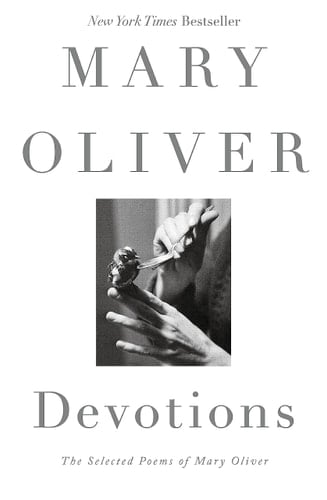
Devotions
Mary Oliver • 2017
Devotions is the definitive collection of beloved Pulitzer Prize-winning poet Mary Oliver's best work, chosen by the author herself from work spanning more than five decades of her esteemed literary career.
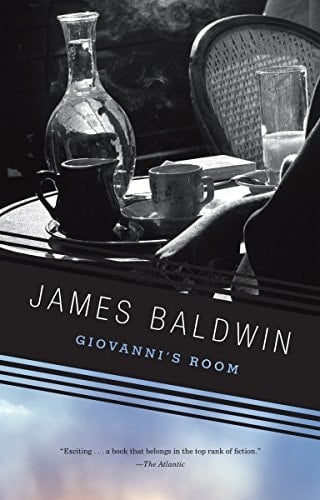
Giovanni's Room
James Baldwin • 1956
From one of the most brilliant and provocative literary figures of the past century comes a groundbreaking novel set among the bohemian bars and nightclubs of 1950s Paris, about love and the fear of love—“a book that belongs in the top rank of fiction” (The Atlantic).<br/><br/>One of The Atlantic’s Great American Novels of the Past 100 Years<br/><br/>In the 1950s Paris of American expatriates, liaisons, and violence, a young man finds himself caught between desire and conventional morality.<br/><br/>David is a young American expatriate who has just proposed marriage to his girlfriend, Hella. While she is away on a trip, David meets a bartender named Giovanni to whom he is drawn in spite of himself. Soon the two are spending the night in Giovanni’s curtainless room, which he keeps dark to protect their privacy. But Hella’s return to Paris brings the affair to a crisis, one that rapidly spirals into tragedy.<br/><br/>David struggles for self-knowledge during one long, dark night—“the night which is leading me to the most terrible morning of my life.” With a sharp, probing imagination, James Baldwin's now-classic narrative delves into the mystery of loving and creates a deeply moving story of death and passion that reveals the unspoken complexities of the human heart.
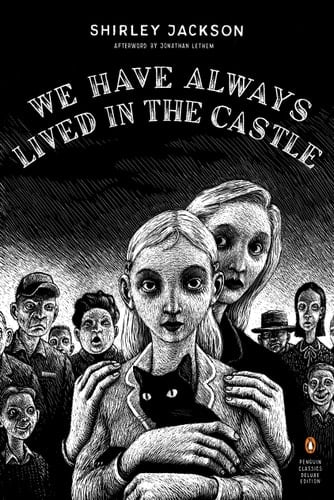
We Have Always Lived in the Castle
Shirley Jackson • 1962
<b>Shirley Jackson's beloved gothic tale of a peculiar girl named Merricat and her family's dark secret</b><br><br>Taking readers deep into a labyrinth of dark neurosis, <i>We Have Always Lived in the Castle</i> is a deliciously unsettling novel about a perverse, isolated, and possibly murderous family and the struggle that ensues when a cousin arrives at their estate. This edition features a new introduction by Jonathan Lethem.<br><br>For more than seventy years, Penguin has been the leading publisher of classic literature in the English-speaking world. With more than 1,700 titles, Penguin Classics represents a global bookshelf of the best works throughout history and across genres and disciplines. Readers trust the series to provide authoritative texts enhanced by introductions and notes by distinguished scholars and contemporary authors, as well as up-to-date translations by award-winning translators.
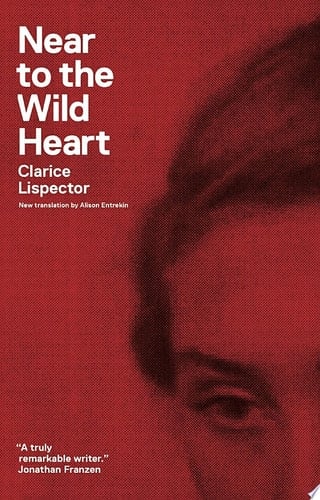
Near to the Wild Heart
Clarice Lispector • 1944
This new translation of Clarice Lispector's sensational first book tells the story of a middle class woman's life from childhood through an unhappy marriage and its dissolution to transcendence.<br/>Near to the Wild Heart, published in Rio de Janeiro in 1943, introduced Brazil to what one writer called “Hurricane Clarice”: a twenty-three-year-old girl who wrote her first book in a tiny rented room and then baptized it with a title taken from Joyce: “He was alone, unheeded, near to the wild heart of life.”<br/>The book was an unprecedented sensation ― the discovery of a genius. Narrative epiphanies and interior monologue frame the life of Joana, from her middle-class childhood through her unhappy marriage and its dissolution to transcendence, when she proclaims: “I shall arise as strong and comely as a young colt.”
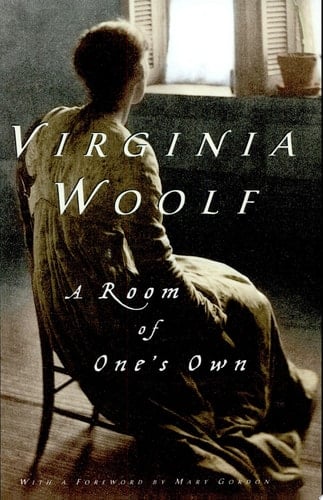
A Room of One's Own
Virginia Woolf • 1929
“I would venture to guess that Anon, who wrote so many poems without signing them, was often a woman.”<br/><br/>In A Room of One’s Own, Virginia Woolf imagines that Shakespeare had a sister—a sister equal to Shakespeare in talent, and equal in genius, but whose legacy is radically different. This imaginary woman never writes a word and dies by her own hand, her genius unexpressed. If only she had found the means to create, argues Woolf, she would have reached the same heights as her immortal sibling.<br/><br/>In this classic essay, Woolf takes on the establishment, using her gift of language to dissect the world around her and give voice to those who are without. Her message is a simple one: women must have a steady income and a room of their own in order to have the freedom to create.<br/><br/>With a Foreword by Mary Gordon
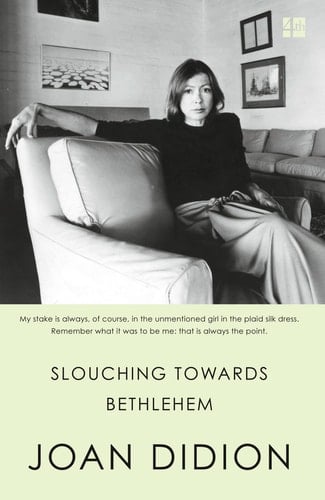
Slouching Towards Bethlehem
Joan Didion • 1968

The Stranger
Albert Camus • 1942
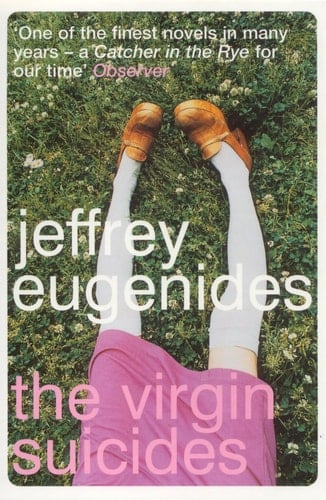
The Virgin Suicides
Jeffrey Eugenides • 1993
The shocking thing about the girls was how nearly normal they seemed when their mother let them out for the one and only date of their lives. Twenty years on, their enigmatic personalities are embalmed in the memories of the boys who worshipped them and who now recall their shared adolescence: the brassiere draped over a crucifix belonging to the promiscuous Lux; the sisters' breathtaking appearance on the night of the dance; and the sultry, sleepy street across which they watched a family disintegrate and fragile lives disappear.
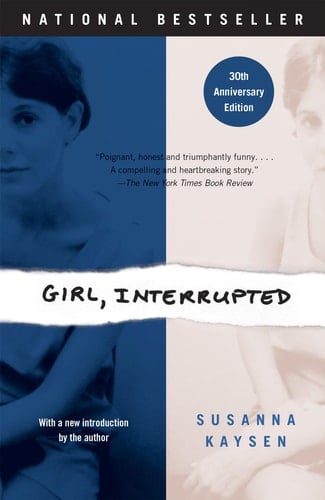
Girl, Interrupted
Susanna Kaysen • 1993
<b>30th ANNIVERSARY EDITION <b>• </b>NATIONAL BESTSELLER • In 1967, after a session with a psychiatrist she'd never seen before, eighteen-year-old Susanna Kaysen was put in a taxi and sent to McLean Hospital. Her memoir of the next two years is a "poignant, honest ... triumphantly funny ... and heartbreaking story" (<i>The New York Times Book Review</i>). <br><br><b>WITH A NEW INTRODUCTION BY THE AUTHOR <br></b></b><br>The ward for teenage girls in the McLean psychiatric hospital was as renowned for its famous clientele—Sylvia Plath, Robert Lowell, James Taylor, and Ray Charles—as for its progressive methods of treating those who could afford its sanctuary. Kaysen's memoir encompasses horror and razor-edged perception while providing vivid portraits of her fellow patients and their keepers. It is a brilliant evocation of a "parallel universe" set within the kaleidoscopically shifting landscape of the late sixties. <br><br><i>Girl, Interrupted</i> is a clear-sighted, unflinching document that gives lasting and specific dimension to our definitions of sane and insane, mental illness and recovery.
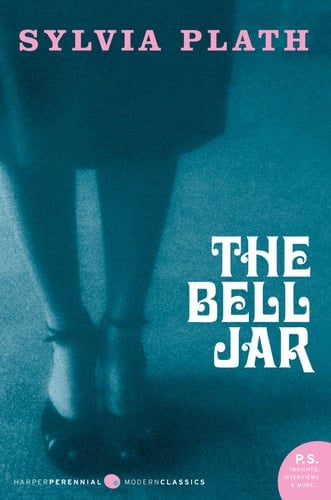
The Bell Jar
Sylvia Plath • 1963
<p><i>The Bell Jar</i> chronicles the crack-up of Esther Greenwood: brilliant, beautiful, enormously talented, and successful, but slowly going under -- maybe for the last time. Sylvia Plath masterfully draws the reader into Esther's breakdown with such intensity that Esther's insanity becomes completely real and even rational, as probable and accessible an experience as going to the movies. Such deep penetration into the dark and harrowing corners of the psyche is an extraordinary accomplishment and has made <i>The Bell Jar</i> a haunting American classic.</p> <p>This P.S. edition features an extra 16 pages of insights into the book, including author interviews, recommended reading, and more.</p>
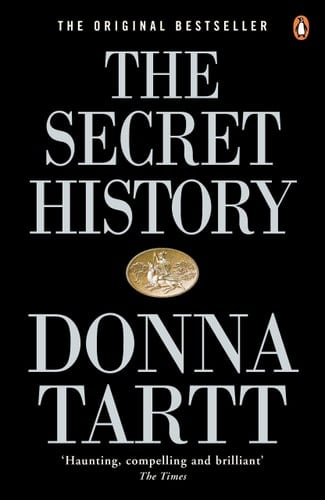
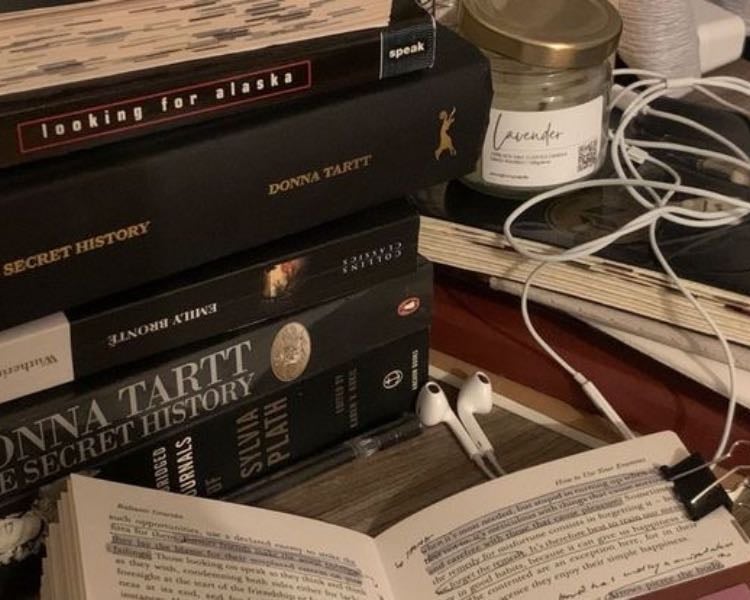
The Secret History
Donna Tartt • 1992
Front cover slightly creased
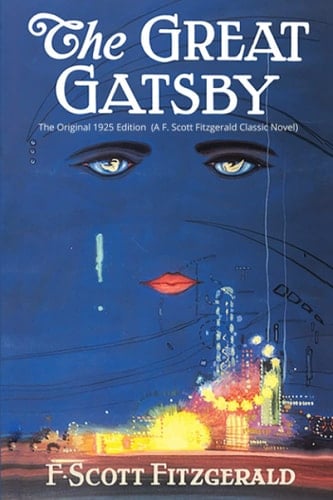
The Great Gatsby
F. Scott Fitzgerald • 1925
“So we beat on, boats against the current, borne back ceaselessly into the past.” ― F. Scott Fitzgerald, The Great Gatsby<br/>The Great Gatsby is a 1925 novel by American writer F. Scott Fitzgerald. Set in the Jazz Age on Long Island, the novel depicts narrator Nick Carraway's interactions with mysterious millionaire Jay Gatsby and Gatsby's obsession to reunite with his former lover, Daisy Buchanan.<br/>A youthful romance Fitzgerald had with socialite Ginevra King, and the riotous parties he attended on Long Island's North Shore in 1922 inspired the novel. Following a move to the French Riviera, he completed a rough draft in 1924. He submitted the draft to editor Maxwell Perkins, who persuaded Fitzgerald to revise the work over the following winter. After his revisions, Fitzgerald was satisfied with the text, but remained ambivalent about the book's title and considered several alternatives. The final title he desired was Under the Red, White, and Blue. Painter Francis Cugat's final cover design impressed Fitzgerald who incorporated a visual element from the art into the novel.<br/>Gatsby continues to attract popular and scholarly attention. The novel was most recently adapted to film in 2013 by director Baz Luhrmann, while contemporary scholars emphasize the novel's treatment of social class, inherited wealth compared to those who are self-made, race, environmentalism, and its cynical attitude towards the American dream. The Great Gatsby is widely considered to be a literary masterpiece and a contender for the title of the Great American Novel.<br/>A True Classic that Belongs on Every Bookshelf!
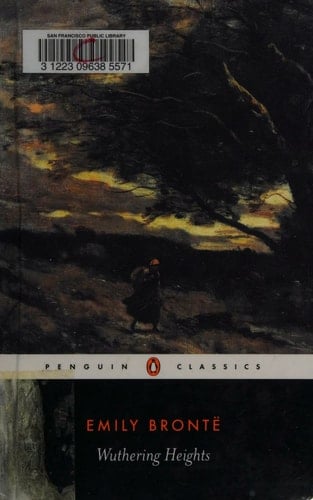
Wuthering Heights
Emily Brontë • 1847
<b>Coming soon to the big screen is Emerald Fennell’s feature film “<i>Wuthering Heights</i>,” which captures the spirit of this epic love story and stars Margot Robbie and Jacob Elordi as Catherine and Heathcliff.<br></b><br>Emily Brontë's only novel endures as a work of tremendous and far-reaching influence. The Penguin Classics edition is the definitive version of the text, edited with an introduction by Pauline Nestor.<br><br>Lockwood, the new tenant of Thrushcross Grange, situated on the bleak Yorkshire moors, is forced to seek shelter one night at Wuthering Heights, the home of his landlord. There he discovers the history of the tempestuous events that took place years before. What unfolds is the tale of the intense love between the gypsy foundling Heathcliff and Catherine Earnshaw. Catherine, forced to choose between passionate, tortured Heathcliff and gentle, well-bred Edgar Linton, surrendered to the expectations of her class. As Heathcliff's bitterness and vengeance at his betrayal is visited upon the next generation, their innocent heirs must struggle to escape the legacy of the past. <br><br>In this edition, a new preface by Lucasta Miller, author of <i>The Brontë Myth</i>, looks at the ways in which the novel has been interpreted, from Charlotte Brontë onwards. This complements Pauline Nestor's introduction, which discusses changing critical receptions of the novel, as well as Emily Brontë's influences and background.
Dead Poets Society
N.H. Kleinbaum • 1989
Todd Anderson and his friends at Welton Academy can hardly believe how different life is since their new English professor, the flamboyant John Keating, has challenged them to "make your lives extraordinary! Inspired by Keating, the boys resurrect the Dead Poets Society--a secret club where, free from the constraints and expectations of school and parents, they let their passions run wild. As Keating turns the boys on to the great words of Byron, Shelley, and Keats, they discover not only the beauty of language, but the importance of making each moment count. Can the club and the individuality it inspires survive the pressure from authorities determined to destroy their dreams? But the Dead Poets pledges soon realize that their newfound freedom can have tragic consequences. Can the club and the individuality it inspires survive the pressure from authorities determined to destroy their dreams?
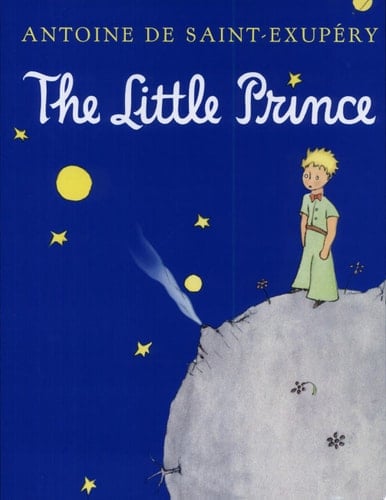
The Little Prince
Antoine de Saint-Exupéry • 1943
<p>This beloved, world-famous allegorical classic about a young prince on a quest for knowledge is an essential read for every home library.</p> <p>Combining Richard Howard's translation with restored original full-color art, this definitive English-language edition of The Little Prince will capture the hearts of readers of all ages.</p> <p>Few stories are as widely read and as universally cherished by children and adults alike as The Little Prince. When a pilot crashes in the Sahara Desert, he meets a little boy who asks him to draw a sheep. Gradually the Little Prince reveals more about himself: He comes from a small asteroid, where he lived alone until a rose grew there.</p> <p>But the rose grew demanding, and he was confused by his feelings about her. The story unfolds further from one planet to the next in a thoughtful philosophical exploration of love and the ephemeral.</p>
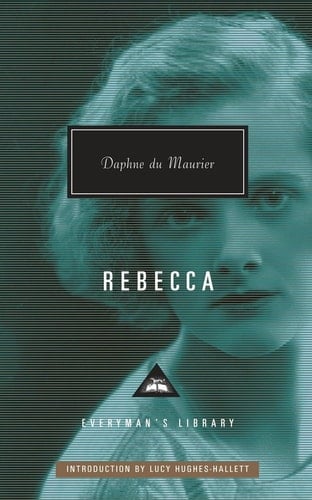
Rebecca
Daphne du Maurier • 1938