Books I read from July 2025-June 2026
Items in this hypelist
Finished
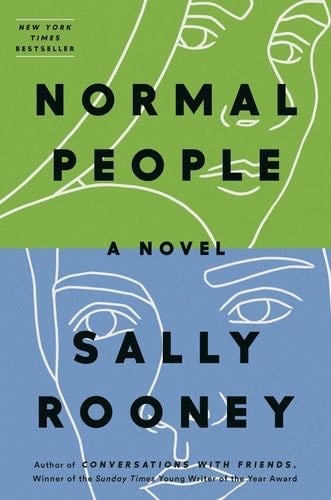
Normal People: A Novel
Sally Rooney · 2019
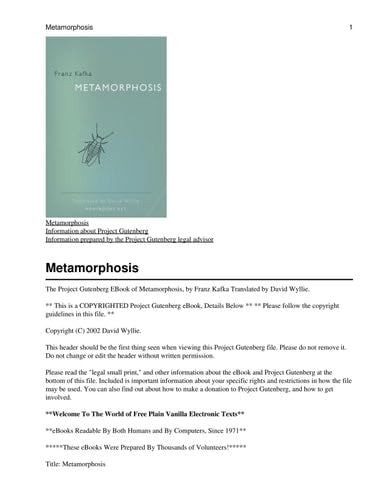
The Metamorphosis
Franz Kafka · 1972
“When Gregor Samsa woke up one morning from unsettling dreams, he found himself changed in his bed into a monstrous vermin.” With this startling, bizarre, yet surprisingly funny first sentence, Kafka begins his masterpiece, The Metamorphosis. It is the story of a young man who, transformed overnight into a giant beetlelike insect, becomes an object of disgrace to his family, an outsider in his own home, a quintessentially alienated man. A harrowing—though absurdly comic—meditation on human feelings of inadequacy, guilt, and isolation, The Metamorphosis has taken its place as one of the most widely read and influential works of twentieth-century fiction. As W.H. Auden wrote, “Kafka is important to us because his predicament is the predicament of modern man.”
Feminist Designer On the Personal and the Political in Design
Alison Place • 2023

Antony and Cleopatra
William Shakespeare

A Midsummer Night's Dream
William Shakespeare · 2003

The Taming of the Shrew (Folger Shakespeare Library)
William Shakespeare • 2004

Blue Sisters
Coco Mellors • 2025
Twelfth Night (Folger Shakespeare Library)
William Shakespeare • 2004
White Nights: Classic 1848 Illustrated Book by Dostoevsky
Fyodor Dostoevsky • 2025
Latin
The Garden of Forking Paths
Jorge Luis Borges • 2018

Chronicle of a Death Foretold
Gabriel García Márquez • 2014
Reading

The Waves
Virginia Woolf
“I am made and remade continually. Different people draw different words from me.”<br/><br/>Innovative and deeply poetic, The Waves is often regarded as Virginia Woolf’s masterpiece. It begins with six children—three boys and three girls—playing in a garden by the sea, and follows their lives as they grow up, experience friendship and love, and grapple with the death of their beloved friend Percival. Instead of describing their outward expressions of grief, Woolf draws her characters from the inside, revealing their inner lives: their aspirations, their triumphs and regrets, their awareness of unity and isolation.
The Inscrutable Americans
Anurag Mathur • 1996
Indian

Sea of Poppies
Amitav Ghosh • 2009
Guide
By R.K. Narayan
Have you ever wondered why that 13-digit number on the back of a book costs $125 in the United States but is completely free in Canada and India? This book, The Global ISBN Handbook, is your 2025 guide to the International Standard Book Number. It explains everything about this global "fingerprint" for books. The ISBN is the most important cornerstone of the publishing industry. It started as a simple warehouse tool in the 1960s. Now, it is a complex digital identifier used in over 200 countries. This handbook deconstructs the entire system. It uses 15 distinct national case studies to do this. You will learn how the old 10-digit system changed to the new 13-digit one. We break down the five parts of the ISBN, from the "Bookland" prefix to the final check digit. The book explores the global governance framework, starting with the International ISBN Agency. Then, it dives deep into how different countries run their systems. You'll see the privatized, high-cost model in the United States. You'll compare it to Canada's free, government-run system. We explore the industry-led models in Brazil and Germany. We look at government-run systems in Mexico and India. We even cover the unique case of China, where the ISBN is not a simple identifier but a state-controlled publication license. The book also examines the systems in the UK , France , Russia , Japan , Australia , South Africa , Nigeria , and Egypt. Many books and websites can tell you how to get an ISBN. This handbook is the only resource that explains why the process is so different everywhere you look. It moves beyond a simple "how-to" and provides a true global analysis. It directly compares the privatized, for-profit models in the US and UK against the free, public-good systems in Canada and South Africa. You won't just learn the price; you will understand the cultural policies, market structures, and legal philosophies that shape that price. This book shows how the ISBN is a "global mirror". It reveals how a simple number can be a commercial product in one nation , a tool of cultural policy in another , and an instrument of state control in a third. This comparative insight is the missing piece for any author, publisher, or researcher trying to navigate the complex international publishing market. Disclaimer: This handbook is an independently produced resource for commentary and analysis. The author has no affiliation with the International ISBN Agency, R.R. Bowker, Library and Archives Canada, the National Press and Publication Administration, or any other national ISBN agency. This work is independently produced under the principle of nominative fair use.
African
Efuru
Flora Nwapa • 1966
His Only Wife
Peace Adzo Medie • 2020

Things Fall Apart
Chinua Achebe • 1994
