Books I want to read
Items in this hypelist
To Read
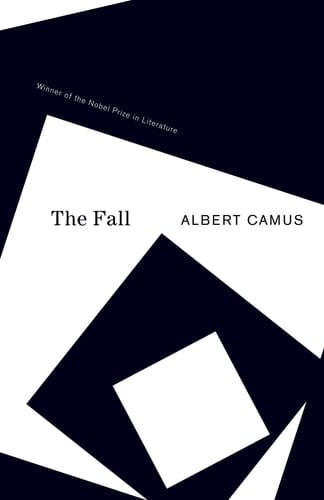
The Fall
Albert Camus • 1991
NOBEL PRIZE-WINNING AUTHOR • One of the most widely read novels of all time—from one of the best-known writers of all time—about a lawyer from Paris who brilliantly illuminates the human condition.<br/><br/>Elegantly styled, Camus' profoundly disturbing novel of a Parisian lawyer's confessions is a searing study of modern amorality.

Perfume: The Story of Murder
Patrick Suskind · 1986
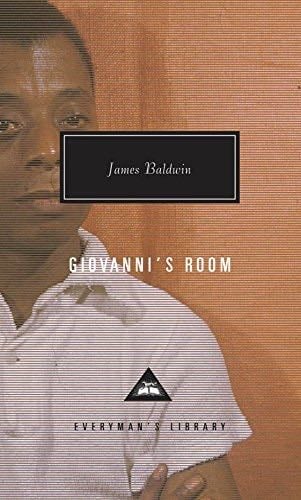
Giovanni's Room
James Baldwin · 2016
Dracula
Bram Stroker • 2023
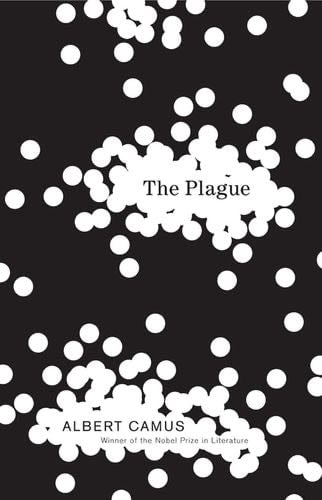
The Plague (Vintage International)
Albert Camus · 2012
“Its relevance lashes you across the face.” —Stephen Metcalf, The Los Angeles Times • “A redemptive book, one that wills the reader to believe, even in a time of despair.” —Roger Lowenstein, The Washington Post A haunting tale of human resilience and hope in the face of unrelieved horror, Albert Camus' iconic novel about an epidemic ravaging the people of a North African coastal town is a classic of twentieth-century literature. The townspeople of Oran are in the grip of a deadly plague, which condemns its victims to a swift and horrifying death. Fear, isolation and claustrophobia follow as they are forced into quarantine. Each person responds in their own way to the lethal disease: some resign themselves to fate, some seek blame, and a few, like Dr. Rieux, resist the terror. An immediate triumph when it was published in 1947, The Plague is in part an allegory of France's suffering under the Nazi occupation, and a timeless story of bravery and determination against the precariousness of human existence.

East of Eden, John Steinbeck Centennial Edition
John Steinbeck · 2002
A masterpiece of Biblical scope, and the magnum opus of one of America’s most enduring authors, in a deluxe Centennial edition<br/><br/>In his journal, Nobel Prize winner John Steinbeck called East of Eden "the first book," and indeed it has the primordial power and simplicity of myth. Set in the rich farmland of California's Salinas Valley, this sprawling and often brutal novel follows the intertwined destinies of two families—the Trasks and the Hamiltons—whose generations helplessly reenact the fall of Adam and Eve and the poisonous rivalry of Cain and Abel.<br/><br/>The masterpiece of Steinbeck’s later years, East of Eden is a work in which Steinbeck created his most mesmerizing characters and explored his most enduring themes: the mystery of identity, the inexplicability of love, and the murderous consequences of love's absence. Adapted for the 1955 film directed by Elia Kazan introducing James Dean, and read by thousands as the book that brought Oprah’s Book Club back, East of Eden has remained vitally present in American culture for over half a century. This Centennial edition, specially designed to commemorate one hundred years of Steinbeck, features french flaps and deckle-edged pages.<br/><br/>For more than sixty-five years, Penguin has been the leading publisher of classic literature in the English-speaking world. With more than 1,500 titles, Penguin Classics represents a global bookshelf of the best works throughout history and across genres and disciplines. Readers trust the series to provide authoritative texts enhanced by introductions and notes by distinguished scholars and contemporary authors, as well as up-to-date translations by award-winning translato
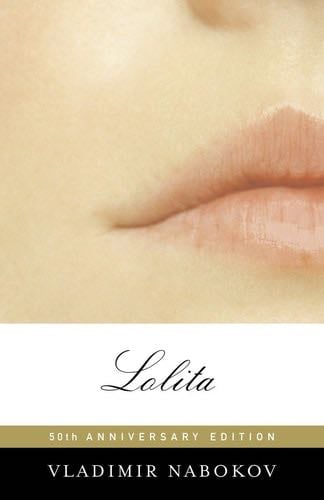
Lolita
Vladimir Nabokov · 1989
Awe and exhiliration--along with heartbreak and mordant wit--abound in <b>Lolita</b>, Nabokov's most famous and controversial novel, which tells the story of the aging Humbert Humbert's obsessive, devouring, and doomed passion for the nymphet Dolores Haze. <b>Lolita</b> is also the story of a hypercivilized European colliding with the cheerful barbarism of postwar America. Most of all, it is a meditation on love--love as outrage and hallucination, madness and transformation.
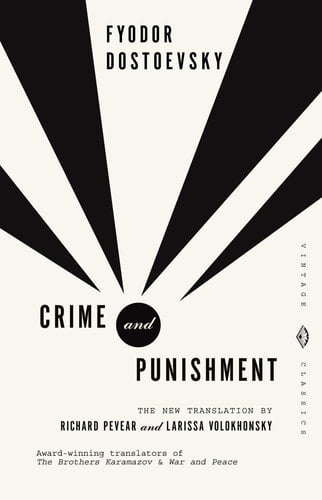
Crime and Punishment (Vintage Classics)
Fyodor Dostoevsky • 1993
<b>Hailed by <i>Washington Post Book World</i> as “the best [translation] currently available" when it was first published, this second edition of <i>Crime and Punishment </i>has been updated in honor of the 200th anniversary of Dostoevsky’s birth. • <b>ONE OF <i>TIME MAGAZINE</i>'S 100 BEST MYSTERY AND THRILLER BOOKS OF ALL TIME</b></b><br><br>With the same suppleness, energy, and range of voices that won their translation of <i>The Brothers Karamazov</i> the PEN/Book-of-the-Month Club Prize, Richard Pevear and Larissa Volokhonsky offer a brilliant translation of <i>Crime and Punishment, </i>Dostoevsky's astounding pyschological thriller, newly revised for his bicentenniel. <br><br>In <i>Crime and Punishment</i>, when Raskolnikov, an impoverished student living in the St. Petersburg of the tsars, commits an act of murder and theft, he sets into motion a story that is almost unequalled in world literature for its excruciating suspense, its atmospheric vividness, and its depth of characterization and vision. Dostoevsky’s drama of sin, guilt, and redemption transforms the sordid story of an old woman’s murder into the nineteenth century’s profoundest and most compelling philosophical novel.
The Brothers Karamazov: A Novel in Four Parts and an Epilogue
Fyodor Dostoyevsky • 2003
Fyodor Dostoyevsky's powerful meditation on faith, meaning and morality, The Brothers Karamazov is translated with an introduction and notes by David McDuff in Penguin Classics.<br/><br/>When brutal landowner Fyodor Karamazov is murdered, the lives of his sons are changed irrevocably: Mitya, the sensualist, whose bitter rivalry with his father immediately places him under suspicion for parricide; Ivan, the intellectual, whose mental tortures drive him to breakdown; the spiritual Alyosha, who tries to heal the family's rifts; and the shadowy figure of their bastard half-brother Smerdyakov. As the ensuing investigation and trial reveal the true identity of the murderer, Dostoyevsky's dark masterpiece evokes a world where the lines between innocence and corruption, good and evil, blur and everyone's faith in humanity is tested.<br/><br/>This powerful translation of The Brothers Karamazov features and introduction highlighting Dostoyevsky's recurrent themes of guilt and salvation, with a new chronology and further reading.<br/><br/>“There is no writer who better demonstrates the contradictions and fluctuations of the creative mind than Dostoyevsky, and nowhere more astonishingly than in The Brothers Karamazov.”—Joyce Carol Oates<br/><br/>“Dostoyevsky was the only psychologist from whom I had anything to learn: he belongs to the happiest windfalls of my life.”—Friedrich Nietzsche<br/><br/>“The most magnificent novel ever written.”—Sigmund Freud
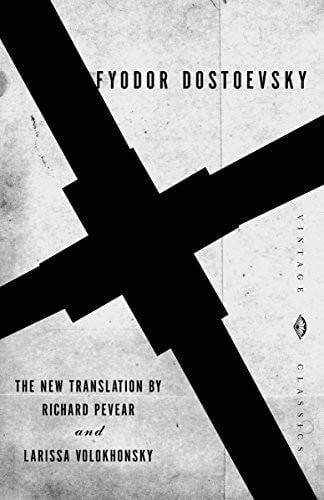
The Idiot (Vintage Classics)
Fyodor Dostoevsky · 2003
<p>Richard Pevear and Larissa Volokhonsky’s masterful translation of <b>The Idiot</b> is destined to stand with their versions of <b>Crime and Punishment, The Brothers Karamazov</b><i>, </i>and <b>Demons</b> as the definitive Dostoevsky in English.<br><br>After his great portrayal of a guilty man in <b>Crime and Punishment</b><i>,</i> Dostoevsky set out in <b>The Idiot</b> to portray a man of pure innocence. The twenty-six-year-old Prince Myshkin, following a stay of several years in a Swiss sanatorium, returns to Russia to collect an inheritance and “be among people.” Even before he reaches home he meets the dark Rogozhin, a rich merchant’s son whose obsession with the beautiful Nastasya Filippovna eventually draws all three of them into a tragic denouement. In Petersburg the prince finds himself a stranger in a society obsessed with money, power, and manipulation. Scandal escalates to murder as Dostoevsky traces the surprising effect of this “positively beautiful man” on the people around him, leading to a final scene that is one of the most powerful in all of world literature.</p>
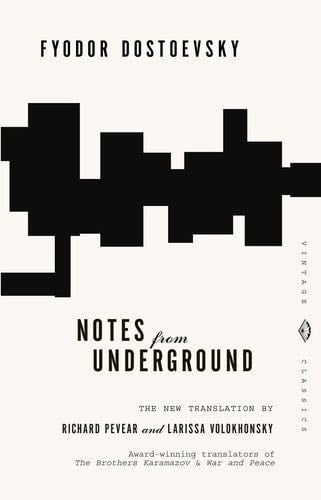
Notes from Underground (Vintage Classics)
Fyodor Dostoevsky · 1994
<b>Award-winning translators Richard Pevear and Larissa Volokhonsky give us a brilliantly faithful rendition of this classic novel, in all its tragedy and tormented comedy. In this second edition, they have updated their translation in honor of the 200th anniversary of Dostoevsky’s birth.</b> <br><br>One of the most remarkable characters in literature, the unnamed narrator of Dostoevsky's most revolutionary novel is a former official who has defiantly withdrawn into an underground existence. In full retreat from society, he scrawls a passionate, obsessive, self-contradictory narrative that serves as a devastating attack on social utopianism and an assertion of man’s essentially irrational nature.
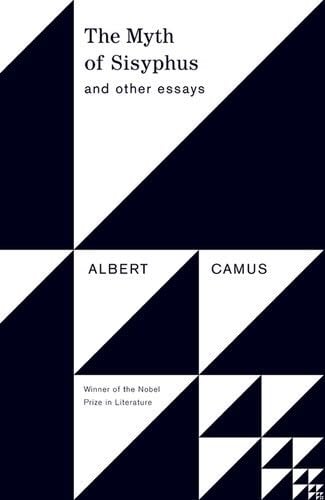
The Myth of Sisyphus And Other Essays
Albert Camus · 2012
One of the most influential works of this century, The Myth of Sisyphus and Other Essays is a crucial exposition of existentialist thought. Influenced by works such as Don Juan and the novels of Kafka, these essays begin with a meditation on suicide; the question of living or not living in a universe devoid of order or meaning. With lyric eloquence, Albert Camus brilliantly posits a way out of despair, reaffirming the value of personal existence, and the possibility of life lived with dignity and authenticity.
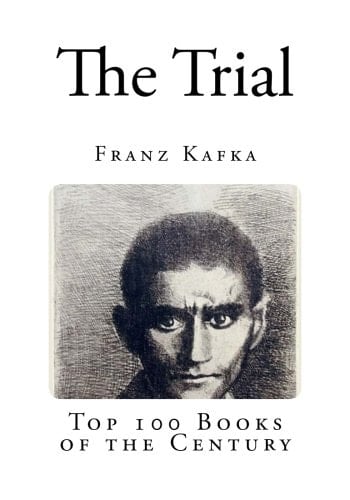
The Trial (Franz Kafka)
Franz Kafka • 2014
The TrialFranz KafkaThe Trial, original German title: Der Process, is a novel written by Franz Kafka in 1914 and 1915 but not published until 1925. One of Kafka's best-known works, it tells the story of a man arrested and prosecuted by a remote, inaccessible authority, with the nature of his crime revealed to neither him nor the reader.Like Kafka's other novels, The Trial was never completed, although it does include a chapter which brings the story to an end. Because of this, there are some inconsistencies and discontinuities in narration within the novel, such as disparities in timing.After Kafka's death in 1924 his friend and literary executor Max Brod edited the text for publication by Verlag Die Schmiede. The original manuscript is held at the Museum of Modern Literature, Marbach am Neckar, Germany. In 1999, the book was listed in Le Monde's 100 Books of the Century and as No. 2 of the Best German Novels of the Twentieth Century.

Plato: The Republic (Penguin Books for Philosophy)
Plato • 1955
Plato's "Republic" is widely acknowledged as the cornerstone of Western philosophy. Presented in the form of a dialogue between Socrates and three different interlocutors, it is an enquiry into the notion of a perfect community and the ideal individual within it. During the conversation other questions are raised: what is goodness; what is reality; what is knowledge? "The Republic" also addresses the purpose of education and the role of both women and men as 'guardians' of the people. With remarkable lucidity and deft use of allegory, Plato arrives at a depiction of a state bound by harmony and ruled by 'philosopher kings'.
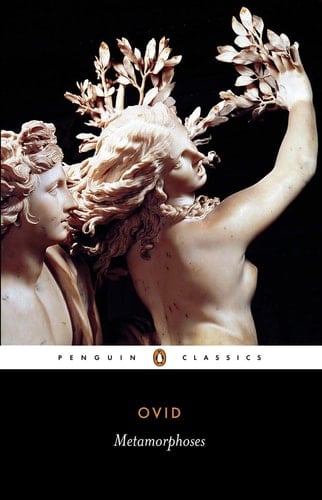
Metamorphoses (Penguin Classics)
Ovid • 2004
Ovid’s sensuous and witty poem, in an accessible translation by David Raeburn In Metamophoses, Ovid brings together a dazzling array of mythological tales, ingeniously linked by the idea of transformation—often as a result of love or lust—where men and women find themselves magically changed into new and sometimes extraordinary beings. Beginning with the creation of the world and ending with the deification of Augustus, Ovid interweaves many of the best-known myths and legends of ancient Greece and Rome, including Daedalus and Icarus, Pyramus and Thisbe, Pygmalion, Perseus and Andromeda, and the fall of Troy. Erudite but light-hearted, dramatic and yet playful, Metamorphoses has influenced writers and artists throughout the centuries from Shakespeare and Titian to Picasso and Ted Hughes. For more than seventy years, Penguin has been the leading publisher of classic literature in the English-speaking world. With more than 1,700 titles, Penguin Classics represents a global bookshelf of the best works throughout history and across genres and disciplines. Readers trust the series to provide authoritative texts enhanced by introductions and notes by distinguished scholars and contemporary authors, as well as up-to-date translations by award-winning translators.
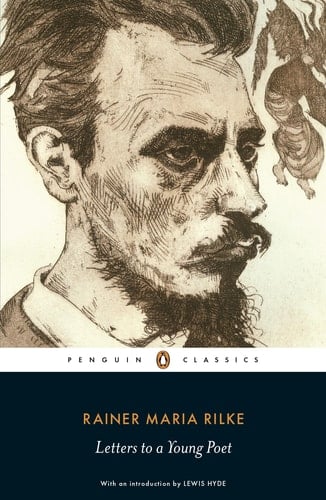
Letters to a Young Poet (Penguin Classics)
Rainer Maria Rilke • 2014
Rainer Maria Rilke’s powerfully touching letters to an aspiring young poet.<br/><br/>At the start of the twentieth century, Rainer Maria Rilke wrote a series of letters to a young officer cadet, advising him on writing, love, sex, suffering, and the nature of advice itself. These profound and lyrical letters have since become hugely influential for generations of writers and artists of all kinds, including Lady Gaga and Patti Smith. With honesty, elegance, and a deep understanding of the loneliness that often comes with being an artist, Rilke’s letters are an endless source of inspiration and comfort. Lewis Hyde’s new introduction explores the context in which these letters were written and how the author embraced his isolation as a creative force. This edition also includes Rilke’s later work The Letter from the Young Worker.<br/><br/>For more than 80 years, Penguin has been the leading publisher of classic literature in the English-speaking world. With more than 1,700 titles, Penguin Classics represents a global bookshelf of the best works throughout history and across genres and disciplines. Readers trust the series to provide authoritative texts enhanced by introductions and notes by distinguished scholars and contemporary authors, as well as up-to-date translations by award-winning translators.
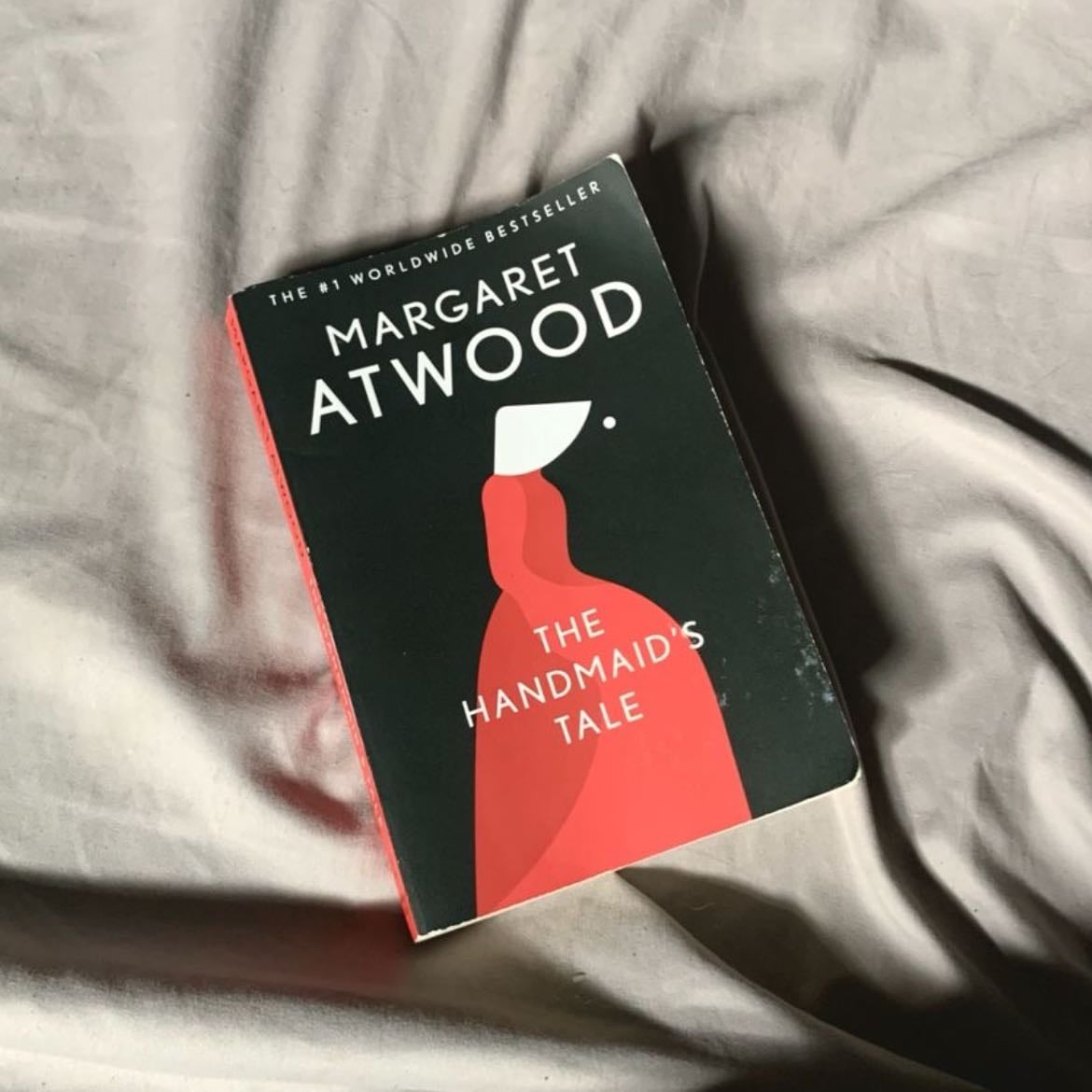
The Handmaid's Tale
Margaret Atwood · 1998
<b><b><b><b>#1 <i>NEW YORK TIMES</i> BESTSELLER </b>• An instant classic and eerily prescient cultural phenomenon, from “the patron saint of feminist dystopian fiction” (<i>The New York Times</i>) • The sixth and final season of the award-winning Hulu series starring Elisabeth Moss is now streaming</b><br><br>Look for <i>The Testaments</i>, the <b>bestselling, award-winning</b> sequel to <i>The Handmaid’s Tale<br></i></b></b><br>In Margaret Atwood’s dystopian future, environmental disasters and declining birthrates have led to a Second American Civil War. The result is the rise of the Republic of Gilead, a totalitarian regime that enforces rigid social roles and enslaves the few remaining fertile women. Offred is one of these, a Handmaid bound to produce children for one of Gilead’s commanders. Deprived of her husband, her child, her freedom, and even her own name, Offred clings to her memories and her will to survive. At once a scathing satire, an ominous warning, and a tour de force of narrative suspense, <i>The Handmaid’s Tale </i>is a modern classic.<br><br><b>Includes an introduction by Margaret Atwood</b>
The Bacchae
Euripides • 2012
Euripides turned to playwriting at a young age, achieving his first victory in the dramatic competitions of the Athenian City Dionysia in 441 b.c.e. He would be awarded this honor three more times in his life, and once more posthumously. His plays are often ironic, pessimistic, and display radical rejection of classical decorum and rules. In 408 b.c.e., Euripides left worn-torn Athens for Macedonia, upon the invitation of King Archelaus, and there he spent his last years as a confidant of the king. In his final years, he produced "The Bacchae" - one of the most produced ancient plays of the twentieth century. The play, based on the mythological story of King Pentheus of Thebes and his mother Agauë, and their punishment by the god Dionysus for refusing to worship him, was awarded first prize at the Athens City Dionysia after Euripides' death. Its popularity through the centuries is a testament to Euripides' great talent as a Greek dramatist.
The Odyssey
Homer • 2018
A New York Times Notable Book of 2018<br/><br/>"Wilson’s language is fresh, unpretentious and lean…It is rare to find a translation that is at once so effortlessly easy to read and so rigorously considered." ―Madeline Miller, author of Circe<br/>Composed at the rosy-fingered dawn of world literature almost three millennia ago, The Odyssey is a poem about violence and the aftermath of war; about wealth, poverty and power; about marriage and family; about travelers, hospitality, and the yearning for home.<br/>This fresh, authoritative translation captures the beauty of this ancient poem as well as the drama of its narrative. Its characters are unforgettable, none more so than the “complicated” hero himself, a man of many disguises, many tricks, and many moods, who emerges in this version as a more fully rounded human being than ever before.<br/>Written in iambic pentameter verse and a vivid, contemporary idiom, Emily Wilson’s Odyssey sings with a voice that echoes Homer’s music; matching the number of lines in the Greek original, the poem sails along at Homer’s swift, smooth pace.<br/>A fascinating, informative introduction explores the Bronze Age milieu that produced the epic, the poem’s major themes, the controversies about its origins, and the unparalleled scope of its impact and influence. Maps drawn especially for this volume, a pronunciation glossary, and extensive notes and summaries of each book make this is an Odyssey that will be treasured by a new generation of readers. 3 maps
The Iliad
Homer • 2024
“Wilson’s Iliad is clear and brisk, its iambic pentameter a zone of enchantment.” ―Ange Mlinko, London Review of Books<br/><br/>The greatest literary landmark of antiquity masterfully rendered by the most celebrated translator of our time.<br/>When Emily Wilson’s translation of The Odyssey appeared in 2017―revealing the ancient poem in a contemporary idiom that was “fresh, unpretentious and lean” (Madeline Miller, Washington Post)―critics lauded it as “a revelation” (Susan Chira, New York Times) and “a cultural landmark” (Charlotte Higgins, Guardian) that would forever change how Homer is read in English. Now Wilson has returned with an equally revelatory translation of Homer’s other great epic―the most revered war poem of all time.<br/>The Iliad roars with the clamor of arms, the bellowing boasts of victors, the fury and grief of loss, and the anguished cries of dying men. It sings, too, of the sublime magnitude of the world―the fierce beauty of nature and the gods’ grand schemes beyond the ken of mortals. In Wilson’s hands, this thrilling, magical, and often horrifying tale now gallops at a pace befitting its legendary battle scenes, in crisp but resonant language that evokes the poem’s deep pathos and reveals palpably real, even “complicated,” characters―both human and divine.<br/>The culmination of a decade of intense engagement with antiquity’s most surpassingly beautiful and emotionally complex poetry, Wilson’s Iliad now gives us a complete Homer for our generation. 5 maps