Classic books 🕯️📖☕️

Items in this hypelist
Romance
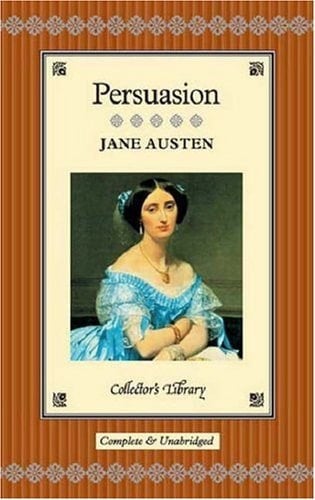
Persuasion
Jane Austen · 2004
What happens when we listen to others instead of our heart? That is the subject of Jane Austen's final novel, and her most mature work. After Anne Elliot heeds the advice of her dearest friend and breaks off her engagement to Frederick Wentworth, happiness eludes her. Eight years later, Anne remains unmarried, and her father's spendthrift ways have brought her family down materially in the world. When a newly wealthy Frederick returns from the Napoleonic Wars, Anne realizes her feelings remain unchanged. But will Frederick forgive her and offer Anne a second chance at love?

Little Women
Louisa May Alcott · 2014
<b>Louisa May Alcott's classic tale of four sisters in a deluxe hardcover edition, with beautiful cover illustrations by Anna Bond, the artist behind world-renowned stationery brand Rifle Paper Co.<br></b><br>Grown-up Meg, tomboyish Jo, timid Beth, and precocious Amy. The four March sisters couldn't be more different. But with their father away at war, and their mother working to support the family, they have to rely on one another. Whether they're putting on a play, forming a secret society, or celebrating Christmas, there's one thing they can't help wondering: Will Father return home safely?

Sense and Sensibility
Jane Austen · 2003
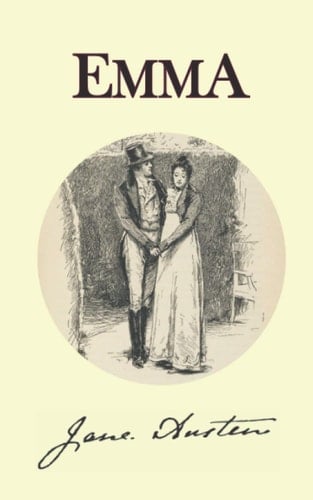
Emma
Jane Austen · 2020

Jane Eyre
Charlotte Brontë · 2022
<p>Following the death of her uncle, the orphan Jane Eyre is sent to the Lowood School, where she grows into a confident and well-educated young woman. When Jane leaves Lowood to become a governess at Thornfield Hall, she falls in love with Mr. Rochester, her pupil's guardian. But a series of eerie and terrifying events threatens to destroy her happy future.</p> <p>Featuring gripping plot twists and surprises, <i>Jane Eyre</i> offers rich insight into the life of a woman who, despite oppression and precarious circumstances, refuses to yield her sense of self to societal expectations.</p>

Pride and Prejudice (Penguin Classics)
Jane Austen · 2002
To Read

Anna Karenina
graf Leo Tolstoy · 1995

Gone With the Wind
Margaret Mitchell · 1996
Gothic

Dracula
Bram Stoker · 2000

The Picture of Dorian Gray The Original 1890 Edition
Oscar Wilde · 1890
“The books that the world calls immoral are books that show the world its own shame.” ― Oscar Wilde, The Picture of Dorian Gray<br/><br/>The Picture of Dorian Gray is a 1891 gothic and philosophical novel by Irish writer and playwright Oscar Wilde. First published as a serial story in the July 1890 issue of Lippincott's Monthly Magazine, the editors feared the story was indecent, and without Wilde's knowledge, deleted five hundred words before publication.<br/><br/>Despite that censorship, The Picture of Dorian Gray offended the moral sensibilities of British book reviewers, some of whom said that Oscar Wilde merited prosecution for violating the laws guarding the public morality. In response, Wilde aggressively defended his novel and art in correspondence with the British press.<br/><br/>Wilde revised and expanded the magazine edition of The Picture of Dorian Gray (1890) for publication as a novel; the book edition (1891) featured an aphoristic preface — an apologia about the art of the novel and the reader. The content, style and presentation of the preface made it famous in its own literary right, as social and cultural criticism. In April 1891, the editorial house Ward, Lock and Company published the revised version of The Picture of Dorian Gray.<br/><br/>A True Classic that Belongs on Every Bookshelf!
Frankenstein
Mary Shelley · 1994

Wuthering Heights (Penguin Classics)
Emily Brontë, Pauline Nestor · 2002
<b>Coming soon to the big screen is Emerald Fennell’s feature film “<i>Wuthering Heights</i>,” which captures the spirit of this epic love story and stars Margot Robbie and Jacob Elordi as Catherine and Heathcliff.<br></b><br>Emily Brontë's only novel endures as a work of tremendous and far-reaching influence. The Penguin Classics edition is the definitive version of the text, edited with an introduction by Pauline Nestor.<br><br>Lockwood, the new tenant of Thrushcross Grange, situated on the bleak Yorkshire moors, is forced to seek shelter one night at Wuthering Heights, the home of his landlord. There he discovers the history of the tempestuous events that took place years before. What unfolds is the tale of the intense love between the gypsy foundling Heathcliff and Catherine Earnshaw. Catherine, forced to choose between passionate, tortured Heathcliff and gentle, well-bred Edgar Linton, surrendered to the expectations of her class. As Heathcliff's bitterness and vengeance at his betrayal is visited upon the next generation, their innocent heirs must struggle to escape the legacy of the past. <br><br>In this edition, a new preface by Lucasta Miller, author of <i>The Brontë Myth</i>, looks at the ways in which the novel has been interpreted, from Charlotte Brontë onwards. This complements Pauline Nestor's introduction, which discusses changing critical receptions of the novel, as well as Emily Brontë's influences and background.
Uncategorized
Crime and Punishment
Fyodor Dostoevsky · 1993
<b>Hailed by <i>Washington Post Book World</i> as “the best [translation] currently available" when it was first published, this second edition of <i>Crime and Punishment </i>has been updated in honor of the 200th anniversary of Dostoevsky’s birth. • <b>ONE OF <i>TIME MAGAZINE</i>'S 100 BEST MYSTERY AND THRILLER BOOKS OF ALL TIME</b></b><br><br>With the same suppleness, energy, and range of voices that won their translation of <i>The Brothers Karamazov</i> the PEN/Book-of-the-Month Club Prize, Richard Pevear and Larissa Volokhonsky offer a brilliant translation of <i>Crime and Punishment, </i>Dostoevsky's astounding pyschological thriller, newly revised for his bicentenniel. <br><br>In <i>Crime and Punishment</i>, when Raskolnikov, an impoverished student living in the St. Petersburg of the tsars, commits an act of murder and theft, he sets into motion a story that is almost unequalled in world literature for its excruciating suspense, its atmospheric vividness, and its depth of characterization and vision. Dostoevsky’s drama of sin, guilt, and redemption transforms the sordid story of an old woman’s murder into the nineteenth century’s profoundest and most compelling philosophical novel.