Comics
Items in this hypelist
Occidentales
Blueberry
Jean-Michel Charlier
Have you ever wondered why that 13-digit number on the back of a book costs $125 in the United States but is completely free in Canada and India? This book, The Global ISBN Handbook, is your 2025 guide to the International Standard Book Number. It explains everything about this global "fingerprint" for books. The ISBN is the most important cornerstone of the publishing industry. It started as a simple warehouse tool in the 1960s. Now, it is a complex digital identifier used in over 200 countries. This handbook deconstructs the entire system. It uses 15 distinct national case studies to do this. You will learn how the old 10-digit system changed to the new 13-digit one. We break down the five parts of the ISBN, from the "Bookland" prefix to the final check digit. The book explores the global governance framework, starting with the International ISBN Agency. Then, it dives deep into how different countries run their systems. You'll see the privatized, high-cost model in the United States. You'll compare it to Canada's free, government-run system. We explore the industry-led models in Brazil and Germany. We look at government-run systems in Mexico and India. We even cover the unique case of China, where the ISBN is not a simple identifier but a state-controlled publication license. The book also examines the systems in the UK , France , Russia , Japan , Australia , South Africa , Nigeria , and Egypt. Many books and websites can tell you how to get an ISBN. This handbook is the only resource that explains why the process is so different everywhere you look. It moves beyond a simple "how-to" and provides a true global analysis. It directly compares the privatized, for-profit models in the US and UK against the free, public-good systems in Canada and South Africa. You won't just learn the price; you will understand the cultural policies, market structures, and legal philosophies that shape that price. This book shows how the ISBN is a "global mirror". It reveals how a simple number can be a commercial product in one nation , a tool of cultural policy in another , and an instrument of state control in a third. This comparative insight is the missing piece for any author, publisher, or researcher trying to navigate the complex international publishing market. Disclaimer: This handbook is an independently produced resource for commentary and analysis. The author has no affiliation with the International ISBN Agency, R.R. Bowker, Library and Archives Canada, the National Press and Publication Administration, or any other national ISBN agency. This work is independently produced under the principle of nominative fair use.
Wolverine:Logan
Have you ever wondered why that 13-digit number on the back of a book costs $125 in the United States but is completely free in Canada and India? This book, The Global ISBN Handbook, is your 2025 guide to the International Standard Book Number. It explains everything about this global "fingerprint" for books. The ISBN is the most important cornerstone of the publishing industry. It started as a simple warehouse tool in the 1960s. Now, it is a complex digital identifier used in over 200 countries. This handbook deconstructs the entire system. It uses 15 distinct national case studies to do this. You will learn how the old 10-digit system changed to the new 13-digit one. We break down the five parts of the ISBN, from the "Bookland" prefix to the final check digit. The book explores the global governance framework, starting with the International ISBN Agency. Then, it dives deep into how different countries run their systems. You'll see the privatized, high-cost model in the United States. You'll compare it to Canada's free, government-run system. We explore the industry-led models in Brazil and Germany. We look at government-run systems in Mexico and India. We even cover the unique case of China, where the ISBN is not a simple identifier but a state-controlled publication license. The book also examines the systems in the UK , France , Russia , Japan , Australia , South Africa , Nigeria , and Egypt. Many books and websites can tell you how to get an ISBN. This handbook is the only resource that explains why the process is so different everywhere you look. It moves beyond a simple "how-to" and provides a true global analysis. It directly compares the privatized, for-profit models in the US and UK against the free, public-good systems in Canada and South Africa. You won't just learn the price; you will understand the cultural policies, market structures, and legal philosophies that shape that price. This book shows how the ISBN is a "global mirror". It reveals how a simple number can be a commercial product in one nation , a tool of cultural policy in another , and an instrument of state control in a third. This comparative insight is the missing piece for any author, publisher, or researcher trying to navigate the complex international publishing market. Disclaimer: This handbook is an independently produced resource for commentary and analysis. The author has no affiliation with the International ISBN Agency, R.R. Bowker, Library and Archives Canada, the National Press and Publication Administration, or any other national ISBN agency. This work is independently produced under the principle of nominative fair use.
Saga of the Swamp Thing
Alan Moore • 2012
Before <i>Watchmen</i>, Alan Moore made his debut in the U.S. comic book industry with the revitalization of the horror comic book <i>The Swamp Thing</i>. His deconstruction of the classic monster stretched the creative boundaries of the medium and became one of the most spectacular series in comic book history.<p>With modern-day issues explored against a backdrop of horror, <i>The Swamp Thing </i>stories became commentaries on environmental, political and social issues, unflinching in their relevance. <i>Saga of the Swamp Thing Book One</i> collects issues #20-27 of this seminal series including the never-before-reprinted <i>Saga of The Swamp Thing</i> #20, where Moore takes over as writer and concludes the previous storyline.</p><p>Book One begins with the story "The Anatomy Lesson," a haunting origin story that reshapes <i>Swamp Thing </i>mythology with terrifying revelations that begin a journey of discovery and adventure that will take him across the stars and beyond.</p>
Silver Surfer Black
Donny Cates • 2019
Sandman : Death
Gaiman Neil • 2021
Batman: The Dark Knight Returns
Frank Miller • 2016
Batman The Killing Joke
Alan Moore • 2008

Elektra Lives Again
Frank Miller • 1990
Elektra: Assasin
2012
Animal Man
Grant Morrison • 2001
All Star Superman
Grant Morrison • 2011
New X-Men
Grant Morrison • 2026
Wolverine: Old Man Logan
Mark Millar • 2017
Wolverine: Weapon X
Barry Windsor-Smith • 2023
Wolverine
Chris Claremont • 2009
Sangre real
Dongzi Liu • 2010
House of M
Brian Michael Bendis • 2006
Avengers Rage of Ultron
Rick Remender • 2015
La Caste des Metabarons
Alejandro Jodorowsky • 2020

Age of Ultron
Brian Michael Bendis • 2013
Avengers : Ultron Unlimited
2022
X-Men: The Dark Phoenix Saga
Chris Claremont • 2010
X-Men: God Loves, Man Kills
Chris Claremont • 2020
X-Men: Days of Future Past
Chris Claremont • 2021
Spider-Man: The Death of Gwen Stacy
Gerry Conway • 1999
Doctor Strange: The Oath
Brian K. Vaughan • 2007
Daredevil: Guardian Devil
Kevin Smith • 2024
The Punisher: Born
Garth Ennis • 2016
The Punisher: Year One
Dan Abnett • 2009
The Punisher Welcome Back Frank
Steve Dillon • 2001
Captain America: Man Out of Time
Mark Waid • 2011
Venom: Dark Origins
2009
MARVELS
Kurt Busiek • 2018
Iron Man: Demon in a Bottle
David Michelinie • 2010
Silver Surfer: Requiem
J. Michael Straczynski • 2007
Spiderman: Blue
Jeph Loeb
Silver Surfer: Parable
Stan Lee • 1988
Hulk: The End
Peter David • 2011
Spider-Man: Kraven's Last Hunt
J. M. DeMatteis • 2014
The Incal
Alejandro Jodorowsky • 2011
Batman: Arkham Asylum
Grant Morrison • 2005
Batman: The Long Halloween
Jeph Loeb • 2013
Daredevil: Born Again
Frank Miller • 2010
Kingdom Come
Mark Waid • 2019
Batman: Year One
Frank Miller • 2007
Daredevil: Love and War
Frank Miller • 1990
The Maxx
Sam Kieth • 1998

The Sculptor
Scott McCloud • 2015
David Smith Is Giving His Life For His Art--literally. Thanks To A Deal With Death, The Young Sculptor Gets His Childhood Wish: To Sculpt Anything He Can Imagine With His Bare Hands. But Now That He Only Has 200 Days To Live, Deciding What To Create Is Harder Than He Thought, And Discovering The Love Of His Life At The 11th Hour Isn't Making It Any Easier! This Is A Story Of Desire Taken To The Edge Of Reason And Beyond; Of The Frantic, Clumsy Dance Steps Of Young Love; And A Gorgeous, Street-level Portrait Of The World's Greatest City. It's About The Small, Warm, Human Moments Of Everyday Life...and The Great Surging Forces That Lie Just Under The Surface. Scott Mccloud Wrote The Book On How Comics Work; Now He Vaults Into Great Fiction With A Breathtaking, Funny, And Unforgettable New Work--
Bone
Jeff Smith • 2004
Daredevil : Yellow
Jeph Loeb and Tim Sale • 2003
Daredevil: The Man Without Fear
Frank Miller • 2008
Squee
Jhonen Vasquez • 1998
I Feel Sick
Jhonen Vasquez • 2008
Johnny The Homicidal Maniac
Jhonen Vasquez • 2010
Maus
Art Spiegelman • 1996
V for Vendetta
Alan Moore • 2020
The Sandman
Neil Gaiman • 1989
As the story begins, an occultist attempting to capture Death to bargain for eternal life traps her younger brother Dream instead. After his 70-year imprisonment and eventual escape, Dream, also known as Morpheus, goes on a quest for his lost objects of power. On his arduous journey, Morpheus encounters Lucifer, John Constantine, and an all-powerful madman. Book One collects The Sandman #1-20.
The Sandman: Overture
Neil Gaiman • 2016
Emily the Strange
Rob Reger • 2021
Emily the Strange is not your ordinary thirteen-year-old girl--she's got a razor-sharp wit as dark as her jet-black hair, a posse of moody black cats, and famous friends in very odd places! She's got a broodingly unique way of experiencing the world, and you're invited along for the ride. Legions of fans worldwide have joined forces to make Emily a pop-culture phenomenon.
Noelia En El Pais De Los Cosos - Minaverry Ignacio
MINAVERRY • 2014
Doomsday Clock
Geoff Johns • 2020
Watchmen
Alan Moore • 1987
Zora y los hibernautas
Fernando Fernández • 1983
Los Invasores Del Cuerpo Humano
Fernando Fernández • 1977
Blake & Mortimer
Edgar P. Jacobs • 2000
Continúa la edición a mayor tamaño y con nuevo coloreado de este clásico del cómic europeo con uno de los mejores álbumes de su autor.
Asterix the Gaul
Rene Goscinny • 2011
<p><b>Multi-million-selling Asterix is much loved across the world, and there is no better way to enjoy the antics of our indomitable hero and his friends than in this great value gift edition omnibus of the first three stories. Collect all of the Asterix omnibuses to build the fabulous artwork across their spines! </b></p><p>In ASTERIX THE GAUL, we join Asterix, Obelix and co. as they try to defend one small village in Gaul from the mighty legionaries of Rome who surround them.</p><p>Disaster strikes the Gaulish village in ASTERIX AND THE GOLDEN SICKLE, as Getafix the druid breaks his golden sickle - which means no more magic potion...</p><p>In ASTERIX AND THE GOTHS, Getafix is kidnapped by the Goths, so Asterix and Obelix have to ride to the rescue and save the day!</p><p>A perfect gift for both keen Asterix fans and those who have yet to join his hilarious adventures.</p>
Les Adventures de Tintin
Hergé • 1976
The classic graphic novel. Professor Calculus is building a rocket, but Tintin quickly realizes that there are spies around every corner trying to steal the professor's design! When Professor Calculus' rocket finally takes off for the moon, Tintin and his dog Snowy are on board.
Manga
Futsuu ni Kiite Kure
Tatsuki Fujimoto
Have you ever wondered why that 13-digit number on the back of a book costs $125 in the United States but is completely free in Canada and India? This book, The Global ISBN Handbook, is your 2025 guide to the International Standard Book Number. It explains everything about this global "fingerprint" for books. The ISBN is the most important cornerstone of the publishing industry. It started as a simple warehouse tool in the 1960s. Now, it is a complex digital identifier used in over 200 countries. This handbook deconstructs the entire system. It uses 15 distinct national case studies to do this. You will learn how the old 10-digit system changed to the new 13-digit one. We break down the five parts of the ISBN, from the "Bookland" prefix to the final check digit. The book explores the global governance framework, starting with the International ISBN Agency. Then, it dives deep into how different countries run their systems. You'll see the privatized, high-cost model in the United States. You'll compare it to Canada's free, government-run system. We explore the industry-led models in Brazil and Germany. We look at government-run systems in Mexico and India. We even cover the unique case of China, where the ISBN is not a simple identifier but a state-controlled publication license. The book also examines the systems in the UK , France , Russia , Japan , Australia , South Africa , Nigeria , and Egypt. Many books and websites can tell you how to get an ISBN. This handbook is the only resource that explains why the process is so different everywhere you look. It moves beyond a simple "how-to" and provides a true global analysis. It directly compares the privatized, for-profit models in the US and UK against the free, public-good systems in Canada and South Africa. You won't just learn the price; you will understand the cultural policies, market structures, and legal philosophies that shape that price. This book shows how the ISBN is a "global mirror". It reveals how a simple number can be a commercial product in one nation , a tool of cultural policy in another , and an instrument of state control in a third. This comparative insight is the missing piece for any author, publisher, or researcher trying to navigate the complex international publishing market. Disclaimer: This handbook is an independently produced resource for commentary and analysis. The author has no affiliation with the International ISBN Agency, R.R. Bowker, Library and Archives Canada, the National Press and Publication Administration, or any other national ISBN agency. This work is independently produced under the principle of nominative fair use.
Watashitachi no Shiawase na Jikan
Yumeka Sumomo
Have you ever wondered why that 13-digit number on the back of a book costs $125 in the United States but is completely free in Canada and India? This book, The Global ISBN Handbook, is your 2025 guide to the International Standard Book Number. It explains everything about this global "fingerprint" for books. The ISBN is the most important cornerstone of the publishing industry. It started as a simple warehouse tool in the 1960s. Now, it is a complex digital identifier used in over 200 countries. This handbook deconstructs the entire system. It uses 15 distinct national case studies to do this. You will learn how the old 10-digit system changed to the new 13-digit one. We break down the five parts of the ISBN, from the "Bookland" prefix to the final check digit. The book explores the global governance framework, starting with the International ISBN Agency. Then, it dives deep into how different countries run their systems. You'll see the privatized, high-cost model in the United States. You'll compare it to Canada's free, government-run system. We explore the industry-led models in Brazil and Germany. We look at government-run systems in Mexico and India. We even cover the unique case of China, where the ISBN is not a simple identifier but a state-controlled publication license. The book also examines the systems in the UK , France , Russia , Japan , Australia , South Africa , Nigeria , and Egypt. Many books and websites can tell you how to get an ISBN. This handbook is the only resource that explains why the process is so different everywhere you look. It moves beyond a simple "how-to" and provides a true global analysis. It directly compares the privatized, for-profit models in the US and UK against the free, public-good systems in Canada and South Africa. You won't just learn the price; you will understand the cultural policies, market structures, and legal philosophies that shape that price. This book shows how the ISBN is a "global mirror". It reveals how a simple number can be a commercial product in one nation , a tool of cultural policy in another , and an instrument of state control in a third. This comparative insight is the missing piece for any author, publisher, or researcher trying to navigate the complex international publishing market. Disclaimer: This handbook is an independently produced resource for commentary and analysis. The author has no affiliation with the International ISBN Agency, R.R. Bowker, Library and Archives Canada, the National Press and Publication Administration, or any other national ISBN agency. This work is independently produced under the principle of nominative fair use.
Henshin no News
Have you ever wondered why that 13-digit number on the back of a book costs $125 in the United States but is completely free in Canada and India? This book, The Global ISBN Handbook, is your 2025 guide to the International Standard Book Number. It explains everything about this global "fingerprint" for books. The ISBN is the most important cornerstone of the publishing industry. It started as a simple warehouse tool in the 1960s. Now, it is a complex digital identifier used in over 200 countries. This handbook deconstructs the entire system. It uses 15 distinct national case studies to do this. You will learn how the old 10-digit system changed to the new 13-digit one. We break down the five parts of the ISBN, from the "Bookland" prefix to the final check digit. The book explores the global governance framework, starting with the International ISBN Agency. Then, it dives deep into how different countries run their systems. You'll see the privatized, high-cost model in the United States. You'll compare it to Canada's free, government-run system. We explore the industry-led models in Brazil and Germany. We look at government-run systems in Mexico and India. We even cover the unique case of China, where the ISBN is not a simple identifier but a state-controlled publication license. The book also examines the systems in the UK , France , Russia , Japan , Australia , South Africa , Nigeria , and Egypt. Many books and websites can tell you how to get an ISBN. This handbook is the only resource that explains why the process is so different everywhere you look. It moves beyond a simple "how-to" and provides a true global analysis. It directly compares the privatized, for-profit models in the US and UK against the free, public-good systems in Canada and South Africa. You won't just learn the price; you will understand the cultural policies, market structures, and legal philosophies that shape that price. This book shows how the ISBN is a "global mirror". It reveals how a simple number can be a commercial product in one nation , a tool of cultural policy in another , and an instrument of state control in a third. This comparative insight is the missing piece for any author, publisher, or researcher trying to navigate the complex international publishing market. Disclaimer: This handbook is an independently produced resource for commentary and analysis. The author has no affiliation with the International ISBN Agency, R.R. Bowker, Library and Archives Canada, the National Press and Publication Administration, or any other national ISBN agency. This work is independently produced under the principle of nominative fair use.
Mononoke
Have you ever wondered why that 13-digit number on the back of a book costs $125 in the United States but is completely free in Canada and India? This book, The Global ISBN Handbook, is your 2025 guide to the International Standard Book Number. It explains everything about this global "fingerprint" for books. The ISBN is the most important cornerstone of the publishing industry. It started as a simple warehouse tool in the 1960s. Now, it is a complex digital identifier used in over 200 countries. This handbook deconstructs the entire system. It uses 15 distinct national case studies to do this. You will learn how the old 10-digit system changed to the new 13-digit one. We break down the five parts of the ISBN, from the "Bookland" prefix to the final check digit. The book explores the global governance framework, starting with the International ISBN Agency. Then, it dives deep into how different countries run their systems. You'll see the privatized, high-cost model in the United States. You'll compare it to Canada's free, government-run system. We explore the industry-led models in Brazil and Germany. We look at government-run systems in Mexico and India. We even cover the unique case of China, where the ISBN is not a simple identifier but a state-controlled publication license. The book also examines the systems in the UK , France , Russia , Japan , Australia , South Africa , Nigeria , and Egypt. Many books and websites can tell you how to get an ISBN. This handbook is the only resource that explains why the process is so different everywhere you look. It moves beyond a simple "how-to" and provides a true global analysis. It directly compares the privatized, for-profit models in the US and UK against the free, public-good systems in Canada and South Africa. You won't just learn the price; you will understand the cultural policies, market structures, and legal philosophies that shape that price. This book shows how the ISBN is a "global mirror". It reveals how a simple number can be a commercial product in one nation , a tool of cultural policy in another , and an instrument of state control in a third. This comparative insight is the missing piece for any author, publisher, or researcher trying to navigate the complex international publishing market. Disclaimer: This handbook is an independently produced resource for commentary and analysis. The author has no affiliation with the International ISBN Agency, R.R. Bowker, Library and Archives Canada, the National Press and Publication Administration, or any other national ISBN agency. This work is independently produced under the principle of nominative fair use.
Hellsing
Kohta Hirano • 2023
Hellstar remina
Junji Itō • 2015
Black Paradox
Junji Ito • 2022
GYO
Junji İto • 2019
Tomie
Junji Ito • 2006
177013 Emergence Metamorphosis Henshin
BRENDA WADE • 2020
5 elementos
Jesulink • 2008
Sayonara Eri
Tatsuki Fujimoto • 2024
Look Back
Tatsuki Fujimoto • 2022
Emanon
Kenji Tsuruta • 2023
My Lesbian Experience With Loneliness
Nagata Kabi • 2017
<b>HARVEY AWARD WINNER </b> <b>The heart-rending autobiographical manga that’s taken the internet by storm! </b><i>My Lesbian Experience with Loneliness</i> is an honest and heartfelt look at one young woman’s exploration of her sexuality, mental well-being, and growing up in our modern age. Told using expressive artwork that invokes both laughter and tears, this moving and highly entertaining single volume depicts not only the artist’s burgeoning sexuality, but many other personal aspects of her life that will resonate with readers.
Onanie Master Kurosawa
Ise Katsura
Have you ever wondered why that 13-digit number on the back of a book costs $125 in the United States but is completely free in Canada and India? This book, The Global ISBN Handbook, is your 2025 guide to the International Standard Book Number. It explains everything about this global "fingerprint" for books. The ISBN is the most important cornerstone of the publishing industry. It started as a simple warehouse tool in the 1960s. Now, it is a complex digital identifier used in over 200 countries. This handbook deconstructs the entire system. It uses 15 distinct national case studies to do this. You will learn how the old 10-digit system changed to the new 13-digit one. We break down the five parts of the ISBN, from the "Bookland" prefix to the final check digit. The book explores the global governance framework, starting with the International ISBN Agency. Then, it dives deep into how different countries run their systems. You'll see the privatized, high-cost model in the United States. You'll compare it to Canada's free, government-run system. We explore the industry-led models in Brazil and Germany. We look at government-run systems in Mexico and India. We even cover the unique case of China, where the ISBN is not a simple identifier but a state-controlled publication license. The book also examines the systems in the UK , France , Russia , Japan , Australia , South Africa , Nigeria , and Egypt. Many books and websites can tell you how to get an ISBN. This handbook is the only resource that explains why the process is so different everywhere you look. It moves beyond a simple "how-to" and provides a true global analysis. It directly compares the privatized, for-profit models in the US and UK against the free, public-good systems in Canada and South Africa. You won't just learn the price; you will understand the cultural policies, market structures, and legal philosophies that shape that price. This book shows how the ISBN is a "global mirror". It reveals how a simple number can be a commercial product in one nation , a tool of cultural policy in another , and an instrument of state control in a third. This comparative insight is the missing piece for any author, publisher, or researcher trying to navigate the complex international publishing market. Disclaimer: This handbook is an independently produced resource for commentary and analysis. The author has no affiliation with the International ISBN Agency, R.R. Bowker, Library and Archives Canada, the National Press and Publication Administration, or any other national ISBN agency. This work is independently produced under the principle of nominative fair use.
Litchi Hikari Club
Usamaru Furuya • 2011
Berserk
Kentaro Miura • 2020
Hunter X Hunter
Yoshihiro Togashi • 2005
Franken-Fran
Katsuhisa Kigitsu • 2011
JoJo's Bizarre Adventure: Part 6--Stone Ocean
Hirohiko Araki • 2023
Jojo's Bizarre Adventure: Part 7-- Steel Ball Run
Hirohiko Araki • 2019
Helter Skelter
Kyôko Okazaki • 2007
Ririko, top model au faîte de sa gloire, garde le secret sur les opérations de chirurgie esthétique qu'elle a subies. Mais sa position dominante dans l'agence pour laquelle elle travaille est menacée par l'arrivée d'une jeune femme de 15 ans. Inquiète pour sa carrière, elle se transforme en criminelle...
Vinland Saga
Makoto Yukimura • 2013
20th Century Boys
Naoki Urasawa • 2018
21st century boys
Naoki Urasawa • 2010
BLAME!
Tsutomu Nihei • 2016
Chainsaw Man
Tatsuki Fujimoto • 2020
Yokohama Kaidashi Kikou
Hitoshi Ashinano • 2022
Welcome to the NHK
Tatsuhiko Takimoto • 2009
Vagabond
Takehiko Inoue • 2008
<b>Three volumes in one! A prestige treatment of Inoue’s epic samurai series with bonus content, color pages, storyboard samples and more!</b><br><br>Real-life figure Miyamoto Musashi was the most celebrated samurai of all time. The quintessential warrior-philosopher, Musashi authored <i>A Book of Five Rings</i>, a classic treatise in the canon of world philosophy and military strategy. But the path to enlightenment is an endless journey, and to get there through violent means--by way of the sword--makes mere survival an even greater challenge.<br><br><b>Invincible Under the Sun</b><br><br>At seventeen years of age, Miyamoto Musashi--still known by his childhood name, Shinmen Takezō--was a wild young brute just setting out along the way of the sword.<br><br>In the aftermath of the epic Battle of Sekigahara, Takezō finds himself a fugitive survivor on the losing side of the war. Takezō's vicious nature has made him an outcast even in his own village, and he is hunted down like an animal. At this crucial crossroads in Takezō's life, an eccentric monk and a childhood friend are the only ones who can help him find his way.
Gunm
Yukito Kishiro • 2018
The Panorama of Hell
Hideshi Hino • 1993
Hell Baby
Hideshi Hino • 1995
Death Note
Takeshi Obata E Tsugumi Ohba
Pluto
Naoki Urasawa • 2009
Lovesickness: Junji Ito Story Collection
Junji Ito • 2021
My Broken Mariko
Waka Hirako • 2020
The climber
Shin-Ichi Sakamoto • 2011

Umineko WHEN THEY CRY Episode 1: Legend of the Golden Witch
Ryukishi07 • 2014
Umineko WHEN THEY CRY Episode 2: Turn of the Golden Witch
Ryukishi07 • 2014
Umineko WHEN THEY CRY Episode 3: Banquet of the Golden Witch
Ryukishi07 • 2014
Umineko WHEN THEY CRY Episode 4: Alliance of the Golden Witch
Ryukishi07 • 2014
Umineko WHEN THEY CRY Episode 5: End of the Golden Witch
Ryukishi07 • 2015
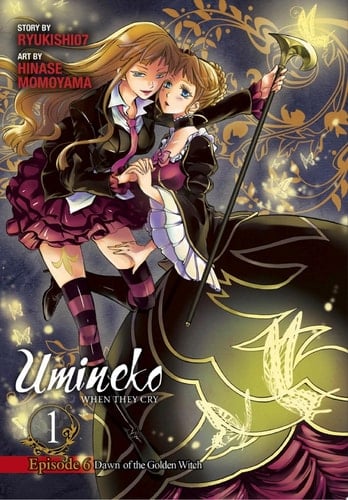
Umineko WHEN THEY CRY Episode 6: Dawn of the Golden Witch
Ryukishi07 • 2016
Umineko WHEN THEY CRY Episode 7: Requiem of the Golden Witch
Ryukishi07 • 2017

Umineko WHEN THEY CRY Episode 8: Twilight of the Golden Witch
Ryukishi07 • 2019
Yume Nikki
Have you ever wondered why that 13-digit number on the back of a book costs $125 in the United States but is completely free in Canada and India? This book, The Global ISBN Handbook, is your 2025 guide to the International Standard Book Number. It explains everything about this global "fingerprint" for books. The ISBN is the most important cornerstone of the publishing industry. It started as a simple warehouse tool in the 1960s. Now, it is a complex digital identifier used in over 200 countries. This handbook deconstructs the entire system. It uses 15 distinct national case studies to do this. You will learn how the old 10-digit system changed to the new 13-digit one. We break down the five parts of the ISBN, from the "Bookland" prefix to the final check digit. The book explores the global governance framework, starting with the International ISBN Agency. Then, it dives deep into how different countries run their systems. You'll see the privatized, high-cost model in the United States. You'll compare it to Canada's free, government-run system. We explore the industry-led models in Brazil and Germany. We look at government-run systems in Mexico and India. We even cover the unique case of China, where the ISBN is not a simple identifier but a state-controlled publication license. The book also examines the systems in the UK , France , Russia , Japan , Australia , South Africa , Nigeria , and Egypt. Many books and websites can tell you how to get an ISBN. This handbook is the only resource that explains why the process is so different everywhere you look. It moves beyond a simple "how-to" and provides a true global analysis. It directly compares the privatized, for-profit models in the US and UK against the free, public-good systems in Canada and South Africa. You won't just learn the price; you will understand the cultural policies, market structures, and legal philosophies that shape that price. This book shows how the ISBN is a "global mirror". It reveals how a simple number can be a commercial product in one nation , a tool of cultural policy in another , and an instrument of state control in a third. This comparative insight is the missing piece for any author, publisher, or researcher trying to navigate the complex international publishing market. Disclaimer: This handbook is an independently produced resource for commentary and analysis. The author has no affiliation with the International ISBN Agency, R.R. Bowker, Library and Archives Canada, the National Press and Publication Administration, or any other national ISBN agency. This work is independently produced under the principle of nominative fair use.
Death Note: Tokebetsu Yomikiri
Tsugumi Ohba • 2022
Uzumaki
Junji Ito • 2013
Tokyo Ghoul: re
Sui Ishida • 2016
Ghost In The Shell
Shirow Masamune • 2019
Zetman
Masakazu Katsura • 2004
FLCL - Furi-kuri
Gainax • 2003
Baoh Raihousha
Hirohiko Araki
Have you ever wondered why that 13-digit number on the back of a book costs $125 in the United States but is completely free in Canada and India? This book, The Global ISBN Handbook, is your 2025 guide to the International Standard Book Number. It explains everything about this global "fingerprint" for books. The ISBN is the most important cornerstone of the publishing industry. It started as a simple warehouse tool in the 1960s. Now, it is a complex digital identifier used in over 200 countries. This handbook deconstructs the entire system. It uses 15 distinct national case studies to do this. You will learn how the old 10-digit system changed to the new 13-digit one. We break down the five parts of the ISBN, from the "Bookland" prefix to the final check digit. The book explores the global governance framework, starting with the International ISBN Agency. Then, it dives deep into how different countries run their systems. You'll see the privatized, high-cost model in the United States. You'll compare it to Canada's free, government-run system. We explore the industry-led models in Brazil and Germany. We look at government-run systems in Mexico and India. We even cover the unique case of China, where the ISBN is not a simple identifier but a state-controlled publication license. The book also examines the systems in the UK , France , Russia , Japan , Australia , South Africa , Nigeria , and Egypt. Many books and websites can tell you how to get an ISBN. This handbook is the only resource that explains why the process is so different everywhere you look. It moves beyond a simple "how-to" and provides a true global analysis. It directly compares the privatized, for-profit models in the US and UK against the free, public-good systems in Canada and South Africa. You won't just learn the price; you will understand the cultural policies, market structures, and legal philosophies that shape that price. This book shows how the ISBN is a "global mirror". It reveals how a simple number can be a commercial product in one nation , a tool of cultural policy in another , and an instrument of state control in a third. This comparative insight is the missing piece for any author, publisher, or researcher trying to navigate the complex international publishing market. Disclaimer: This handbook is an independently produced resource for commentary and analysis. The author has no affiliation with the International ISBN Agency, R.R. Bowker, Library and Archives Canada, the National Press and Publication Administration, or any other national ISBN agency. This work is independently produced under the principle of nominative fair use.
Bleach
Tite Kubo • 2004
One Piece
Eiichiro Oda • 1997
<b>Join Monkey D. Luffy and his swashbuckling crew in their search for the ultimate treasure, One Piece!</b><br><br>As a child, Monkey D. Luffy dreamed of becoming King of the Pirates. But his life changed when he accidentally gained the power to stretch like rubber…at the cost of never being able to swim again! Years, later, Luffy sets off in search of the “One Piece,” said to be the greatest treasure in the world...<br><br>As a child, Monkey D. Luffy was inspired to become a pirate by listening to the tales of the buccaneer "Red-Haired" Shanks. But his life changed when Luffy accidentally ate the Gum-Gum Devil Fruit and gained the power to stretch like rubber...at the cost of never being able to swim again! Years later, still vowing to become the king of the pirates, Luffy sets out on his adventure...one guy alone in a rowboat, in search of the legendary "One Piece," said to be the greatest treasure in the world...
Naruto
Masashi Kishimoto • 2003
Manwha
Abouth Death
Have you ever wondered why that 13-digit number on the back of a book costs $125 in the United States but is completely free in Canada and India? This book, The Global ISBN Handbook, is your 2025 guide to the International Standard Book Number. It explains everything about this global "fingerprint" for books. The ISBN is the most important cornerstone of the publishing industry. It started as a simple warehouse tool in the 1960s. Now, it is a complex digital identifier used in over 200 countries. This handbook deconstructs the entire system. It uses 15 distinct national case studies to do this. You will learn how the old 10-digit system changed to the new 13-digit one. We break down the five parts of the ISBN, from the "Bookland" prefix to the final check digit. The book explores the global governance framework, starting with the International ISBN Agency. Then, it dives deep into how different countries run their systems. You'll see the privatized, high-cost model in the United States. You'll compare it to Canada's free, government-run system. We explore the industry-led models in Brazil and Germany. We look at government-run systems in Mexico and India. We even cover the unique case of China, where the ISBN is not a simple identifier but a state-controlled publication license. The book also examines the systems in the UK , France , Russia , Japan , Australia , South Africa , Nigeria , and Egypt. Many books and websites can tell you how to get an ISBN. This handbook is the only resource that explains why the process is so different everywhere you look. It moves beyond a simple "how-to" and provides a true global analysis. It directly compares the privatized, for-profit models in the US and UK against the free, public-good systems in Canada and South Africa. You won't just learn the price; you will understand the cultural policies, market structures, and legal philosophies that shape that price. This book shows how the ISBN is a "global mirror". It reveals how a simple number can be a commercial product in one nation , a tool of cultural policy in another , and an instrument of state control in a third. This comparative insight is the missing piece for any author, publisher, or researcher trying to navigate the complex international publishing market. Disclaimer: This handbook is an independently produced resource for commentary and analysis. The author has no affiliation with the International ISBN Agency, R.R. Bowker, Library and Archives Canada, the National Press and Publication Administration, or any other national ISBN agency. This work is independently produced under the principle of nominative fair use.
