
critical archive studies & the materiality of governance
Items in this hypelist
Graphic Artifacts, Digital Databases, & Material Sorting

Beyond the Lettered City Indigenous Literacies in the Andes
Joanne Rappaport · 2012
In <i>Beyond the Lettered City</i>, the anthropologist Joanne Rappaport and the art historian Tom Cummins examine the colonial imposition of alphabetic and visual literacy on indigenous groups in the northern Andes. They consider how the Andean peoples received, maintained, and subverted the conventions of Spanish literacy, often combining them with their own traditions. Indigenous Andean communities neither used narrative pictorial representation nor had alphabetic or hieroglyphic literacy before the arrival of the Spaniards. To absorb the conventions of Spanish literacy, they had to engage with European symbolic systems. Doing so altered their worldviews and everyday lives, making alphabetic and visual literacy prime tools of colonial domination. Rappaport and Cummins advocate a broad understanding of literacy, including not only reading and writing, but also interpretations of the spoken word, paintings, wax seals, gestures, and urban design. By analyzing secular and religious notarial manuals and dictionaries, urban architecture, religious images, catechisms and sermons, and the vast corpus of administrative documents produced by the colonial authorities and indigenous scribes, they expand Ángel Rama’s concept of the lettered city to encompass many of those who previously would have been considered the least literate.
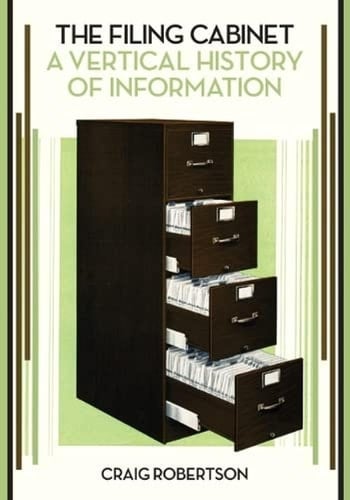
The Filing Cabinet A Vertical History of Information
Craig Robertson · 2021
<p><b>The history of how a deceptively ordinary piece of office furniture transformed our relationship with information</b><br> <br> <br> <br> The ubiquity of the filing cabinet in the twentieth-century office space, along with its noticeable absence of style, has obscured its transformative role in the histories of both information technology and work. In the first in-depth history of this neglected artifact, Craig Robertson explores how the filing cabinet profoundly shaped the way that information and data have been sorted, stored, retrieved, and used.</p> <p>Invented in the 1890s, the filing cabinet was a result of the nineteenth-century faith in efficiency. Previously, paper records were arranged haphazardly: bound into books, stacked in piles, curled into slots, or impaled on spindles. The filing cabinet organized loose papers in tabbed folders that could be sorted alphanumerically, radically changing how people accessed, circulated, and structured information.</p> <p>Robertson's unconventional history of the origins of the information age posits the filing cabinet as an information storage container, an "automatic memory" machine that contributed to a new type of information labor privileging manual dexterity over mental deliberation. Gendered assumptions about women's nimble fingers helped to naturalize the changes that brought women into the workforce as low-level clerical workers. The filing cabinet emerges from this unexpected account as a sophisticated piece of information technology and a site of gendered labor that with its folders, files, and tabs continues to shape how we interact with information and data in today's digital world.</p>

Paper Knowledge Toward a Media History of Documents
Lisa Gitelman · 2014
<i>Paper Knowledge</i> is a remarkable book about the mundane: the library card, the promissory note, the movie ticket, the PDF (Portable Document Format). It is a media history of the document. Drawing examples from the 1870s, the 1930s, the 1960s, and today, Lisa Gitelman thinks across the media that the document form has come to inhabit over the last 150 years, including letterpress printing, typing and carbon paper, mimeograph, microfilm, offset printing, photocopying, and scanning. Whether examining late nineteenth century commercial, or "job" printing, or the Xerox machine and the role of reproduction in our understanding of the document, Gitelman reveals a keen eye for vernacular uses of technology. She tells nuanced, anecdote-filled stories of the waning of old technologies and the emergence of new. Along the way, she discusses documentary matters such as the relation between twentieth-century technological innovation and the management of paper, and the interdependence of computer programming and documentation. <i>Paper Knowledge</i> is destined to set a new agenda for media studies.
The Demon of Writing Powers and Failures of Paperwork
Ben Kafka · 2020
<p><b>A history and theory of the powers, the failures, and even the pleasures of paperwork.</b></p><p>Since the middle of the eighteenth century, political thinkers of all kinds—radical and reactionary, professional and amateur—have been complaining about “bureaucracy.” But what, exactly, are they complaining about?</p><p>In <i>The Demon of Writing</i>, Ben Kafka offers a critical history and theory of one of the most ubiquitous, least understood forms of media: paperwork. States rely on records to tax and spend, protect and serve, discipline and punish. But time and again, this paperwork proves to be unreliable. Examining episodes that range from the story of a clerk who lost his job and then his mind in the French Revolution to an account of Roland Barthes's brief stint as a university administrator, Kafka reveals the powers, the failures, and even the pleasures of paperwork. Many of its complexities, he argues, have been obscured by the comic-paranoid style that characterizes much of our criticism of bureaucracy. Kafka proposes a new theory of what Karl Marx called the “bureaucratic medium.” Moving from Marx to Freud, he argues that this theory of paperwork must include both a theory of praxis and of parapraxis.</p>
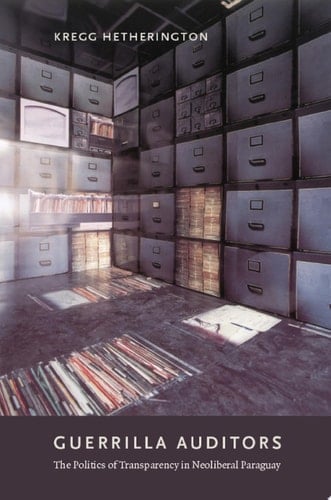
Guerrilla Auditors The Politics of Transparency in Neoliberal Paraguay
Kregg Hetherington · 2011
<i>Guerrilla Auditors</i> is an ethnographic account of the rise of information, transparency, and good governance in the post–Cold War era, and the effects of these concepts on Paraguay’s transition to democracy. Kregg Hetherington shows that the ideal of transparent information, meant to depoliticize bureaucratic procedures, has become a battleground for a new kind of politics centered on legal interpretation and the manipulation of official documents. In late-twentieth-century Paraguay, peasant land politics moved unexpectedly from the roads and fields into the documentary recesses of state bureaucracy. When peasants, bureaucrats, and development experts encountered one another in state archives, conflicts ensued about how bureaucracy ought to function, what documents are for, and who gets to narrate the past and the future of the nation. Hetherington argues that Paraguay’s neoliberal democracy is predicated, at least in part, on an exclusionary distinction between model citizens and peasants. Despite this, peasant activists have found ways to circumvent their exclusion and in so doing question the conceptual foundations of international development orthodoxy.

Paper Tiger Law, Bureaucracy and the Developmental State in Himalayan India
Nayanika Mathur · 2018
A big cat overthrows the Indian state and establishes a reign of terror over the residents of a Himalayan town. A welfare legislation aimed at providing employment and commanding a huge budget becomes 'unimplementable' in a region bedeviled by high levels of poverty and unemployment. Paper Tiger provides a lively ethnographic account of how such seemingly bizarre scenarios come to be in contemporary India. Based on eighteen months of intensive fieldwork, this book presents a unique explanation for why and how progressive laws can do what they do and not, ever-so-often, what they are supposed to do. It reveals the double-edged effects of the reforms that have been ushered in by the post-liberalization Indian state, particularly the effort to render itself more transparent and accountable. Through a meticulous detailing of everyday bureaucratic life on the Himalayan borderland, Paper Tiger makes an argument for shifting the very frames of thought through which we apprehend the workings of the developmental Indian state.
Administrative Burden Policymaking by Other Means
Pamela Herd, Donald P. Moynihan · 2019

Red Tape Bureaucracy, Structural Violence, and Poverty in India
Akhil Gupta · 2012
<i>Red Tape</i> presents a major new theory of the state developed by the renowned anthropologist Akhil Gupta. Seeking to understand the chronic and widespread poverty in India, the world's fourth largest economy, Gupta conceives of the relation between the state in India and the poor as one of structural violence. Every year this violence kills between two and three million people, especially women and girls, and lower-caste and indigenous peoples. Yet India's poor are not disenfranchised; they actively participate in the democratic project. Nor is the state indifferent to the plight of the poor; it sponsors many poverty amelioration programs.<p>Gupta conducted ethnographic research among officials charged with coordinating development programs in rural Uttar Pradesh. Drawing on that research, he offers insightful analyses of corruption; the significance of writing and written records; and governmentality, or the expansion of bureaucracies. Those analyses underlie his argument that care is arbitrary in its consequences, and that arbitrariness is systematically produced by the very mechanisms that are meant to ameliorate social suffering. What must be explained is not only why government programs aimed at providing nutrition, employment, housing, healthcare, and education to poor people do not succeed in their objectives, but also why, when they do succeed, they do so unevenly and erratically.</p>
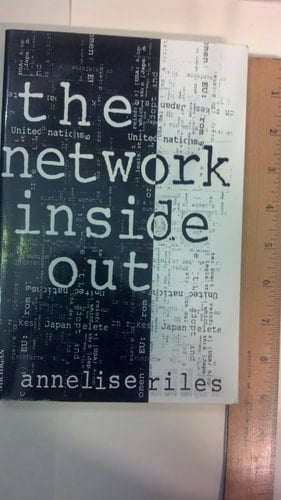
The Network Inside Out
Annelise Riles · 2000
"Networks" and other artifacts of institutional life--documents, funding proposals, newsletters, organizational charts--are such ubiquitous aspects of the "information age" that they go unnoticed to most observers. In this work, Annelise Riles takes a sophisticated theoretical approach to examine the aesthetics of these artifacts and practices, to learn what their very forms and formats can tell us about knowledge and legality in today's world.<br> The immediate subject of Riles's ethnographic work was a group of Fijian bureaucrats and activists preparing for and participating in the United Nations Fourth World Conference on Women. Participants in this meeting and the activities surrounding it understood themselves to be "focal points" in national, regional, and global "networks."<br> Starting from the premise that anthropologists are "inside" the Network, that is, that they are producers, consumers, and aesthetes, not simply observers, of the artifacts of late modern institutional life, Riles enacts a new ethnographic method for turning the network "inside out." The resulting experiment in the theory and ethnography of transnational institutional practices makes an important contribution to the anthropology of knowledge.<br> With its focus on developing a method for studying transnational phenomena, <i>The Network Inside Out</i> will appeal not only to anthropologists, but also to legal scholars and political scientists.<br> Annelise Riles is Assistant Professor, Northwestern University School of Law, Research Fellow, American Bar Foundation.<br>
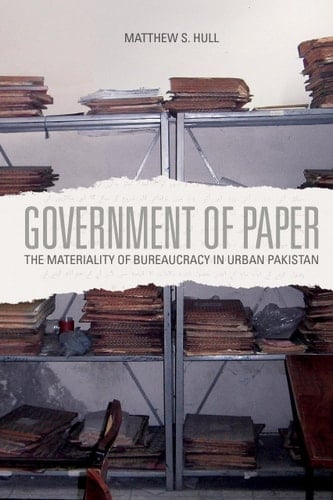
Government of Paper The Materiality of Bureaucracy in Urban Pakistan
Matthew S. Hull · 2012
“Drawing inspiration from actor-network theory, science studies, and semiotics, this brilliant book makes us completely rethink the workings of bureaucracy as analyzed by Max Weber and James Scott. Matthew Hull demonstrates convincingly how the materiality of signs truly matters for understanding the projects of ‘the state.’” - Katherine Verdery, author of <i>What was Socialism, and What Comes Next?</i><br><br>“We are used to studies of roads and rails as central material infrastructure for the making of modern states. But what of records, the reams and reams of paper that inscribe the state-in-making? This brilliant book inquires into the materiality of information in colonial and postcolonial Pakistan. This is a work of signal importance for our understanding of the everyday graphic artifacts of authority.” - Bill Maurer, author of <i>Mutual Life, Limited: Islamic Banking, Alternative Currencies, Lateral Reason</i><br><br>"This is an excellent and truly exceptional ethnography. Hull presents a theoretically sophisticated and empirically rich reading that will be an invaluable resource to scholars in the field of Anthropology and South Asian studies. The author’s focus on bureaucracy, “corruption," writing systems and urban studies (Islamabad) in a post-colonial context makes for a unique ethnographic engagement with contemporary Pakistan. In addition, Hull’s study is a refreshing voice that breaks the mold of current representation of Pakistan through the security studies paradigm." - Kamran Asdar Ali, Director, South Asia Institute, University of Texas<br><br><br><br>
Epistemic Anxieties & Street-Level Classification

When the State Meets the Street Public Service and Moral Agency
Bernardo Zacka · 2017

The Calligraphic State Textual Domination and History in a Muslim Society
Brinkley Messick · 1993
In this innovative combination of anthropology, history, and postmodern theory, Brinkley Messick examines the changing relation of writing and authority in a Muslim society from the late nineteenth century to the present. The creation and interpretation of texts, from sacred scriptures to administrative and legal contracts, are among the fundamental ways that authority is established and maintained in a complex state. Yet few scholars have explored this process and the ways in which it changes, especially outside the Western world.<br><br>Messick brings together intensive ethnography and textual analysis from a wealth of material: Islamic jurisprudence, Yemeni histories, local documents. In exploring the structure and transformation of literacy, law, and statecraft in Yemen, he raises important issues that are of comparative significance for understanding political life in other Muslim and nonwestern states as well.
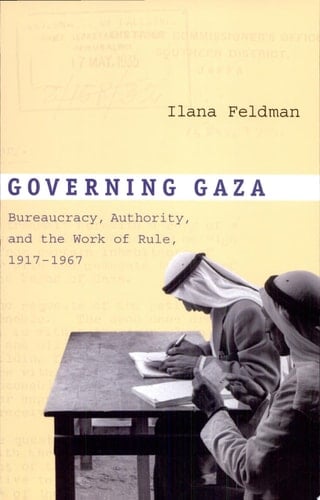
Governing Gaza Bureaucracy, Authority, and the Work of Rule, 1917–1967
Ilana Feldman · 2008
Marred by political tumult and violent conflict since the early twentieth century, Gaza has been subject to a multiplicity of rulers. Still not part of a sovereign state, it would seem too exceptional to be a revealing site for a study of government. Ilana Feldman proves otherwise. She demonstrates that a focus on the Gaza Strip uncovers a great deal about how government actually works, not only in that small geographical space but more generally. Gaza’s experience shows how important bureaucracy is for the survival of government. Feldman analyzes civil service in Gaza under the British Mandate (1917–48) and the Egyptian Administration (1948–67). In the process, she sheds light on how governing authority is produced and reproduced; how government persists, even under conditions that seem untenable; and how government affects and is affected by the people and places it governs.<p>Drawing on archival research in Gaza, Cairo, Jerusalem, and London, as well as two years of ethnographic research with retired civil servants in Gaza, Feldman identifies two distinct, and in some ways contradictory, governing practices. She illuminates mechanisms of “reiterative authority” derived from the minutiae of daily bureaucratic practice, such as the repetitions of filing procedures, the accumulation of documents, and the habits of civil servants. Looking at the provision of services, she highlights the practice of “tactical government,” a deliberately restricted mode of rule that makes limited claims about governmental capacity, shifting in response to crisis and operating without long-term planning. This practice made it possible for government to proceed without claiming legitimacy: by holding the question of legitimacy in abeyance. Feldman shows that Gaza’s governments were able to manage under, though not to control, the difficult conditions in Gaza by deploying both the regularity of everyday bureaucracy and the exceptionality of tactical practice.</p>

Colonial Bureaucracy and Contemporary Citizenship
Yael Berda · 2022
Colonial Bureaucracy and Contemporary Citizenship examines how the legacies of colonial bureaucracy continue to shape political life after empire. Focusing on the former British colonies of India, Cyprus, and Israel/Palestine, the book explores how post-colonial states use their inherited administrative legacies to classify and distinguish between loyal and suspicious subjects and manage the movement of populations, thus shaping the practical meaning of citizenship and belonging within their new boundaries. The book offers a novel institutional theory of 'hybrid bureaucracy' to explain how racialized bureaucratic practices were used by powerful administrators in state organizations to shape the making of political identity and belonging in the new states. Combining sociology and anthropology of the state with the study of institutions, this book offers new knowledge to overturn conventional understandings of bureaucracy, demonstrating that routine bureaucratic practices and persistent colonial logics continue to shape unequal political status to this day.
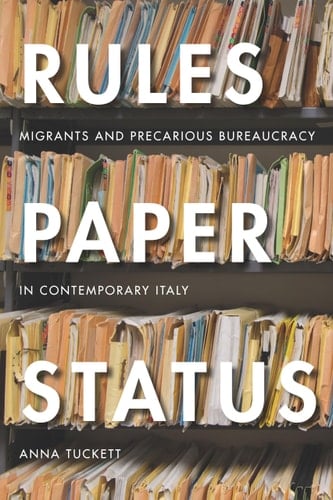
Rules, Paper, Status Migrants and Precarious Bureaucracy in Contemporary Italy
Anna Tuckett · 2018
<p>Whether motivated by humanitarianism or concern over "porous" borders, dominant commentary on migration in Europe has consistently focused on clandestine border crossings. Much less, however, is known about the everyday workings of immigration law inside borders. Drawing on in-depth ethnographic fieldwork in Italy, one of Europe's biggest receiving countries, <i>Rules, Paper, Status</i> moves away from polarized depictions to reveal how migration processes actually play out on the ground. Anna Tuckett highlights the complex processes of inclusion and exclusion produced through encounters with immigration law. </p> <p>The statuses of "legal" or "illegal," which media and political accounts use as synonyms for "good" and "bad," "worthy" and "unworthy," are not created by practices of border-crossing, but rather through legal and bureaucratic processes within borders devised by governing states. Taking migrants' interactions with immigration regimes as its starting point, this book sheds light on the productive nature of legal and bureaucratic encounters and the unintended consequences they produce. <i>Rules, Paper, Status</i> argues that successfully navigating Italian immigration bureaucracy, which is situated in an immigration regime that is both exclusionary and flexible, requires and induces culturally specific modes of behavior. Exclusionary laws, however, can transform this social and cultural learning into the very thing that endangers migrants' right to live in the country. </p>
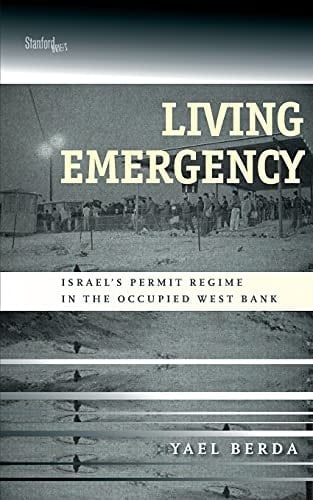
Living Emergency Israel's Permit Regime in the Occupied West Bank
Yael Berda · 2018
<p>In 1991, the Israeli government introduced emergency legislation canceling the general exit permit that allowed Palestinians to enter Israel. The directive, effective for one year, has been reissued annually ever since, turning the Occupied Territories into a closed military zone. Today, Israel's permit regime for Palestinians is one of the world's most extreme and complex apparatuses for population management. Yael Berda worked as a human rights lawyer in Jerusalem and represented more than two hundred Palestinian clients trying to obtain labor permits to enter Israel from the West Bank. With <i>Living Emergency</i>, she brings readers inside the permit regime, offering a first-hand account of how the Israeli secret service, government, and military civil administration control the Palestinian population.</p> <p>Through interviews with Palestinian laborers and their families, conversations with Israeli clerks and officials, and research into the archives and correspondence of governmental organizations, Berda reconstructs the institutional framework of the labyrinthine permit regime, illuminating both its overarching principles and its administrative practices. In an age where terrorism, crime, and immigration are perceived as intertwined security threats, she reveals how the Israeli example informs global homeland security and border control practices, creating a living emergency for targeted populations worldwide. </p>

State Terrorism and Political Identity in Indonesia Fatally Belonging
Ariel Heryanto · 2006
<p>Approximately one million innocent Indonesians were killed by their fellow nationals, neighbours and kin at the height of an anti-communist campaign in the mid-1960s. This book investigates the profound political consequences of these mass killings in Indonesia upon public life, highlighting the historical specificities of the violence and comparable incidents of identity politics in more recent times. </p> <p></p> <p>Mixing theory with empirically based analysis, the book examines how the spectre of communism and the trauma experienced in the latter half of the 1960s remain critical in understanding the dynamics of terror, coercion and consent today. Heryanto challenges the general belief that the periodic anti-communist witch-hunts of recent Indonesian history are largely a political tool used by a powerful military elite and authoritarian government. <p></p>Despite the profound importance of the 1965-6 events it remains one of most difficult and sensitive topics for public discussion in Indonesia today. State Terrorism and Political Identity in Indonesia is one of the first books to fully discuss the mass killings, shedding new light on a largely unspoken and unknown part of Indonesia's history.

Mapping National Anxieties Thailand's Southern Conflict
Duncan McCargo · 2012
<p>This latest book by award-winning researcher Duncan McCargo, one of the world's leading specialists on contemporary Thailand, builds on previous projects to elucidate new aspects of the intractable Southern conflict that has claimed more than 4500 lives since 2004. Mapping National Anxieties locates the insurgency in the context of Thailand's wider political conflicts, exploring the ambiguous relationships between the Thai state and organised religion, along with the recent resurgence of Buddhist chauvinism and nationalism. McCargo examines the way Islamic provincial councils have been drawn into the conflict, and scrutinises the special challenges the conflict has created for Thailand's media. Journalists have struggled to communicate a confusing story to an increasingly indifferent wider public.<br> <br> The book then moves beyond the crisis itself to look at ways forward, starting with the controversial National Reconciliation Commission that was established by the Thaksin Shinawatra government to propose peaceful options for reducing the violence. Another chapter explores how far Malay Muslims in Thailand's southern border provinces think of themselves as 'Thai', arguing that there is an important distinction between legal citizenship and informal understandings of what citizenship means and entails. Finally, McCargo invites readers to 'think the unthinkable' by imagining the possibility of autonomy for Thailand's deep South, and the implications for the country as a whole.</p>
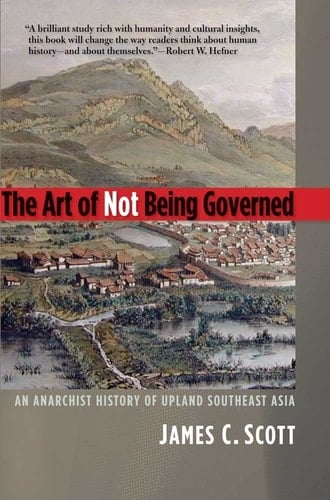
The Art of Not Being Governed An Anarchist History of Upland Southeast Asia
James C. Scott · 2009
<p>For two thousand years the disparate groups that now reside in Zomia (a mountainous region the size of Europe that consists of portions of seven Asian countries) have fled the projects of the organized state societies that surround them—slavery, conscription, taxes, corvée labor, epidemics, and warfare. This book, essentially an “anarchist history,” is the first-ever examination of the huge literature on state-making whose author evaluates why people would deliberately and reactively remain stateless. Among the strategies employed by the people of Zomia to remain stateless are physical dispersion in rugged terrain; agricultural practices that enhance mobility; pliable ethnic identities; devotion to prophetic, millenarian leaders; and maintenance of a largely oral culture that allows them to reinvent their histories and genealogies as they move between and around states.</p><p>In accessible language, James Scott, recognized worldwide as an eminent authority in Southeast Asian, peasant, and agrarian studies, tells the story of the peoples of Zomia and their unlikely odyssey in search of self-determination. He redefines our views on Asian politics, history, demographics, and even our fundamental ideas about what constitutes civilization, and challenges us with a radically different approach to history that presents events from the perspective of stateless peoples and redefines state-making as a form of “internal colonialism.” This new perspective requires a radical reevaluation of the civilizational narratives of the lowland states. Scott's work on Zomia represents a new way to think of area studies that will be applicable to other runaway, fugitive, and marooned communities, be they Gypsies, Cossacks, tribes fleeing slave raiders, Marsh Arabs, or San-Bushmen.
Street-Level Bureaucracy: Dilemmas of the Individual in Public Service, 30th Anniversary Expanded Edition
Michael Lipsky · 2010
First published in 1980, Street-Level Bureaucracy received critical acclaim for its insightful study of how public service workers, in effect, function as policy decision makers, as they wield their considerable discretion in the day-to-day implementation of public programs. Three decades later, the need to bolster the availability and effectiveness of healthcare, social services, education, and law enforcement is as urgent as ever. In this thirtieth anniversary expanded edition, Michael Lipsky revisits the territory he mapped out in the first edition to reflect on significant policy developments over the last several decades. Despite the difficulties of managing these front-line workers, he shows how street-level bureaucracies can be and regularly are brought into line with public purposes. Street-level bureaucrats―from teachers and police officers to social workers and legal-aid lawyers―interact directly with the public and so represent the frontlines of government policy. In Street-Level Bureaucracy, Lipsky argues that these relatively low-level public service employees labor under huge caseloads, ambiguous agency goals, and inadequate resources. When combined with substantial discretionary authority and the requirement to interpret policy on a case-by-case basis, the difference between government policy in theory and policy in practice can be substantial and troubling. The core dilemma of street-level bureaucrats is that they are supposed to help people or make decisions about them on the basis of individual cases, yet the structure of their jobs makes this impossible. Instead, they are forced to adopt practices such as rationing resources, screening applicants for qualities their organizations favor, "rubberstamping" applications, and routinizing client interactions by imposing the uniformities of mass processing on situations requiring human responsiveness. Occasionally, such strategies work out in favor of the client. But the cumulative effect of street-level decisions made on the basis of routines and simplifications about clients can reroute the intended direction of policy, undermining citizens' expectations of evenhanded treatment. This seminal, award-winning study tells a cautionary tale of how decisions made by overburdened workers translate into ad-hoc policy adaptations that impact peoples' lives and life opportunities. Lipsky maintains, however, that these problems are not insurmountable. Over the years, public managers have developed ways to bring street-level performance more in line with agency goals. This expanded edition of Street-Level Bureaucracy underscores that, despite its challenging nature, street-level work can be made to conform to higher expectations of public service.
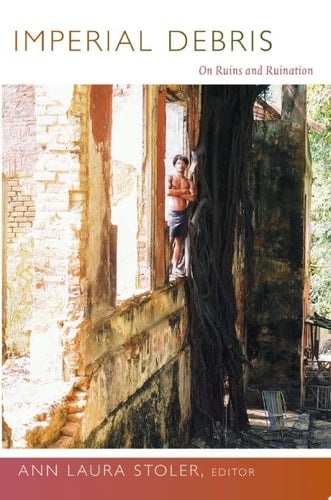
Imperial Debris On Ruins and Ruination
Ann Laura Stoler · 2013
<i>Imperial Debris</i> redirects critical focus from ruins as evidence of the past to "ruination" as the processes through which imperial power occupies the present. Ann Laura Stoler's introduction is a manifesto, a compelling call for postcolonial studies to expand its analytical scope to address the toxic but less perceptible corrosions and violent accruals of colonial aftermaths, as well as their durable traces on the material environment and people's bodies and minds. In their provocative, tightly focused responses to Stoler, the contributors explore subjects as seemingly diverse as villages submerged during the building of a massive dam in southern India, Palestinian children taught to envision and document ancestral homes razed by the Israeli military, and survival on the toxic edges of oil refineries and amid the remains of apartheid in Durban, South Africa. They consider the significance of Cold War imagery of a United States decimated by nuclear blast, perceptions of a swath of Argentina's Gran Chaco as a barbarous void, and the enduring resonance, in contemporary sexual violence, of atrocities in King Leopold's Congo. Reflecting on the physical destruction of Sri Lanka, on Detroit as a colonial metropole in relation to sites of ruination in the Amazon, and on interactions near a UNESCO World Heritage Site in the Brazilian state of Bahia, the contributors attend to present-day harms in the occluded, unexpected sites and situations where earlier imperial formations persist.<br><i><br>Contributors</i>. Ariella Azoulay, John F. Collins, Sharad Chari, E. Valentine Daniel, Gastón Gordillo, Greg Grandin, Nancy Rose Hunt, Joseph Masco, Vyjayanthi Venuturupalli Rao, Ann Laura Stoler

Along the Archival Grain Epistemic Anxieties and Colonial Common Sense
Ann Laura Stoler · 2010
<p><i>Along the Archival Grain</i> offers a unique methodological and analytic opening to the affective registers of imperial governance and the political content of archival forms. In a series of nuanced mediations on the nature of colonial documents from the nineteenth-century Netherlands Indies, Ann Laura Stoler identifies the social epistemologies that guided perception and practice, revealing the problematic racial ontologies of that confused epistemic space.</p><br><p> Navigating familiar and extraordinary paths through the lettered lives of those who ruled, she seizes on moments when common sense failed and prevailing categories no longer seemed to work. She asks not what colonial agents knew, but what happened when what they thought they knew they found they did not. Rejecting the notion that archival labor be approached as an extractive enterprise, Stoler sets her sights on archival production as a consequential act of governance, as a field of force with violent effect, and not least as a vivid space to do ethnography.</p>
Material Infrastructure, Socio-Technical Systems, & Sensory Geographies

Automating Inequality How High-Tech Tools Profile, Police, and Punish the Poor
Virginia Eubanks · 2019
<p><b><i>WINNER: </i>The 2019 Lillian Smith Book Award,</b> <b>2018 McGannon Center Book Prize, and shortlisted for the Goddard Riverside Stephan Russo Book Prize for Social Justice</b><br><br><b>Astra Taylor, author of <i>The People's Platform: </i>"The single most important book about technology you will read this year."<br></b><b><br>Dorothy Roberts, author of <i>Killing the Black Body</i>: "A must-read."</b><br><br><b>A powerful investigative look at data-based discrimination?and how technology affects civil and human rights and economic equity</b><br><br>The State of Indiana denies one million applications for healthcare, foodstamps and cash benefits in three years—because a new computer system interprets any mistake as “failure to cooperate.” In Los Angeles, an algorithm calculates the comparative vulnerability of tens of thousands of homeless people in order to prioritize them for an inadequate pool of housing resources. In Pittsburgh, a child welfare agency uses a statistical model to try to predict which children might be future victims of abuse or neglect.<br><br>Since the dawn of the digital age, decision-making in finance, employment, politics, health and human services has undergone revolutionary change. Today, automated systems—rather than humans—control which neighborhoods get policed, which families attain needed resources, and who is investigated for fraud. While we all live under this new regime of data, the most invasive and punitive systems are aimed at the poor.<br><br>In <i>Automating Inequality, </i>Virginia Eubanks systematically investigates the impacts of data mining, policy algorithms, and predictive risk models on poor and working-class people in America. The book is full of heart-wrenching and eye-opening stories, from a woman in Indiana whose benefits are literally cut off as she lays dying to a family in Pennsylvania in daily fear of losing their daughter because they fit a certain statistical profile.<br><br>The U.S. has always used its most cutting-edge science and technology to contain, investigate, discipline and punish the destitute. Like the county poorhouse and scientific charity before them, digital tracking and automated decision-making hide poverty from the middle-class public and give the nation the ethical distance it needs to make inhumane choices: which families get food and which starve, who has housing and who remains homeless, and which families are broken up by the state. In the process, they weaken democracy and betray our most cherished national values.<br><br>This deeply researched and passionate book could not be more timely.</p>
Uncategorized
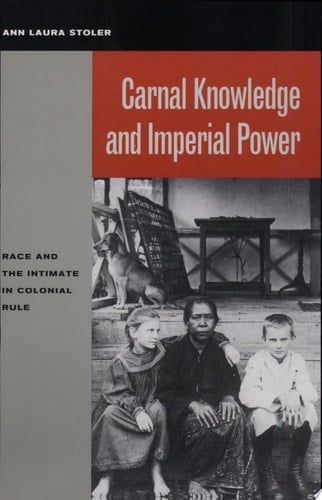
Carnal Knowledge and Imperial Power Race and the Intimate in Colonial Rule
Ann Laura Stoler · 2002
Why, Ann Laura Stoler asks, was the management of sexual arrangements and affective attachments so critical to the making of colonial categories and to what distinguished ruler from ruled? Contending that social classification is not a benign cultural act but a potent political one, Stoler shows that matters of the intimate were absolutely central to imperial politics. It was, after all, in the intimate sphere of home and servants that European children learned what they were required to learn of place and race. Gender-specific sexual sanctions, too, were squarely at the heart of imperial rule, and European supremacy was asserted in terms of national and racial virility.<br> <br> <br> <br> Stoler looks discerningly at the way cultural competencies and sensibilities entered into the construction of race in the colonial context and proposes that "cultural racism" in fact predates its postmodern discovery. Her acute analysis of colonial Indonesian society in the late nineteenth and early twentieth centuries yields insights that translate to a global, comparative perspective.

Beyond the Pale Dutch Extreme Violence in the Indonesian War of Independence, 1945-1949
Nederlands Instituut voor Militaire Historie (NIMH) · 2022
Dutch Edition/Nederlandse editie: Over de grens<br> <br> On 17 August 1945, two days after the Japanese surrender that also brought an end to the Second World War in Asia, Indonesia declared its independence. The declaration was not recognized by the Netherlands, which resorted to force in its attempt to take control of the inevitable process of decolonization. This led to four years of difficult negotiations and bitter warfare.<br> <br> In 2005, the Dutch government declared that the Netherlands should never have waged the war. The government's 1969 position on the violence used by the Dutch armed forces during the war remained unchanged, however: although there had been 'excesses', on the whole the armed forces had behaved 'correctly'. As the indications of Dutch extreme violence mounted, this official position proved increasingly difficult to maintain. In 2016, the Dutch government therefore decided to fund a broad study on the dynamics of the violence. The most important conclusions of that research programme are summarized in this book. The authors show that the Dutch armed forces used extreme violence on a structural basis, and that this was concealed both at the time and for many years after the war by the Dutch government and by society more broadly. All of this - like the entire colonial history - is at odds with the rose-tinted self-image of the Netherlands.
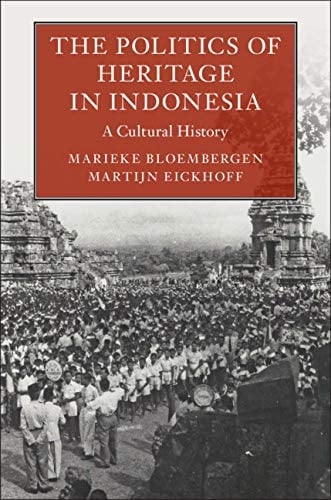
The Politics of Heritage in Indonesia A Cultural History
Marieke Bloembergen · 2020
This study offers a new approach to the history of sites, archaeology, and heritage formation in Asia, at both the local and the trans-regional levels. Starting at Hindu-Buddhist, Chinese, Islamic, colonial, and prehistoric heritage sites in Indonesia, the focus is on people's encounters and the knowledge exchange taking place across colonial and post-colonial regimes. Objects are followed as they move from their site of origin to other locations, such as the Buddhist statues from Borobudur temple, that were gifted to King Chulalongkorn of Siam. The ways in which the meaning of these objects transformed as they moved away to other sites reveal their role in parallel processes of heritage formation outside Indonesia. Calling attention to the power of the material remains of the past, Marieke Bloembergen and Martijn Eickhoff explore questions of knowledge production, the relationship between heritage and violence, and the role of sites and objects in the creation of national histories.

Along the Archival Grain Epistemic Anxieties and Colonial Common Sense
Ann Laura Stoler · 2010
<p><i>Along the Archival Grain</i> offers a unique methodological and analytic opening to the affective registers of imperial governance and the political content of archival forms. In a series of nuanced mediations on the nature of colonial documents from the nineteenth-century Netherlands Indies, Ann Laura Stoler identifies the social epistemologies that guided perception and practice, revealing the problematic racial ontologies of that confused epistemic space.</p><br><p> Navigating familiar and extraordinary paths through the lettered lives of those who ruled, she seizes on moments when common sense failed and prevailing categories no longer seemed to work. She asks not what colonial agents knew, but what happened when what they thought they knew they found they did not. Rejecting the notion that archival labor be approached as an extractive enterprise, Stoler sets her sights on archival production as a consequential act of governance, as a field of force with violent effect, and not least as a vivid space to do ethnography.</p>
Social Science and Power in Indonesia
Vedi R. Hadiz · 2005
<p>The premise of Social Science and Power in Indonesia is that the role and development of social sciences in Indonesia over the past fifty years are inextricably related to the shifting requirements of power. What is researched and what is not, which frameworks achieve paradigmatic status while others are marginalized, and which kinds of social scientists become influential while others are ignored are all matters of power. These and other important themes and issues are critically explored by some of Indonesia's foremost social scientists in this seminal work.</p>

State of Fear Policing a Postcolonial City
Joshua Barker · 2024
In <i>State of Fear</i>, Joshua Barker reckons with how fear and violence are produced and reproduced through everyday practices of rule and control. Examining the ethnographic and historical genealogies of Indonesian policing, Barker focuses on the city of Bandung, which is permeated by anxieties about security, in spite of the fact that it’s a relatively safe city according to the data. Drawing from his fieldwork there during the latter years of the authoritarian New Order regime, Barker traces the complex relationship between the state and vigilante groups like neighborhood watch patrols and street gangs. Through interviews with police officers, vigilantes, and street-level toughs, he uncovers a struggle between two visions of social control that continues to animate policing in Indonesia: the modern, bureaucratic approach favored by the state, and a territorial approach that divides the city into fiefdoms overseen by charismatic individuals of authority. Synthesizing insights from in-depth ethnographic, historical, and theoretical work, Barker reveals how authoritarianism can take root not just from the top down but also from the bottom up.
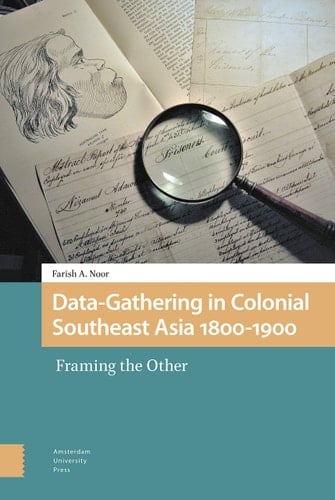
Data-gathering in Colonial Southeast Asia 1800-1900 Framing the Other
Farish A. Noor · 2020
1. This is the first broad systematic study of colonial data-mining and knowledge-production in colonial Southeast Asia that has been written. 2. This work will show how data-mining and knowledge-production in colonial Southeast Asia was intimately linked to the broader enterprise of Orientalist scholarship, and how data-collection went hand-in-hand with the construction of negative stereotypes of the native Other. I hope that this may compel scholars of/on Southeast Asia to reflect upon their own work, and the question of violence in epistemology and knowledge-building. 3. This work will be critical of the workings of colonial power in Southeast Asia, and aims to show how the conquest and colonization of Southeast Asia was not only achieved by the use of arms, but crucially also depended on the accumulation and development of a body of Orientalist/imperialist data; that is data that was instrumentalised and weaponized for the sake of rationalizing and justifying the colonial project.
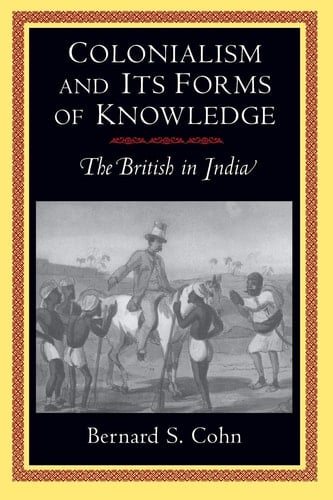
Colonialism and Its Forms of Knowledge The British in India
Bernard S. Cohn · 1996
<p>Bernard Cohn's interest in the construction of Empire as an intellectual and cultural phenomenon has set the agenda for the academic study of modern Indian culture for over two decades. His earlier publications have shown how dramatic British innovations in India, including revenue and legal systems, led to fundamental structural changes in Indian social relations. This collection of his writings in the last fifteen years discusses areas in which the colonial impact has generally been overlooked. The essays form a multifaceted exploration of the ways in which the British discovery, collection, and codification of information about Indian society contributed to colonial cultural hegemony and political control.</p><p>Cohn argues that the British Orientalists' study of Indian languages was important to the colonial project of control and command. He also asserts that an arena of colonial power that seemed most benign and most susceptible to indigenous influences--mostly law--in fact became responsible for the institutional reactivation of peculiarly British notions about how to regulate a colonial society made up of "others." He shows how the very Orientalist imagination that led to brilliant antiquarian collections, archaeological finds, and photographic forays were in fact forms of constructing an India that could be better packaged, inferiorized, and ruled. A final essay on cloth suggests how clothes have been part of the history of both colonialism and anticolonialism.</p>
