dear my music💭
Items in this hypelist
Music
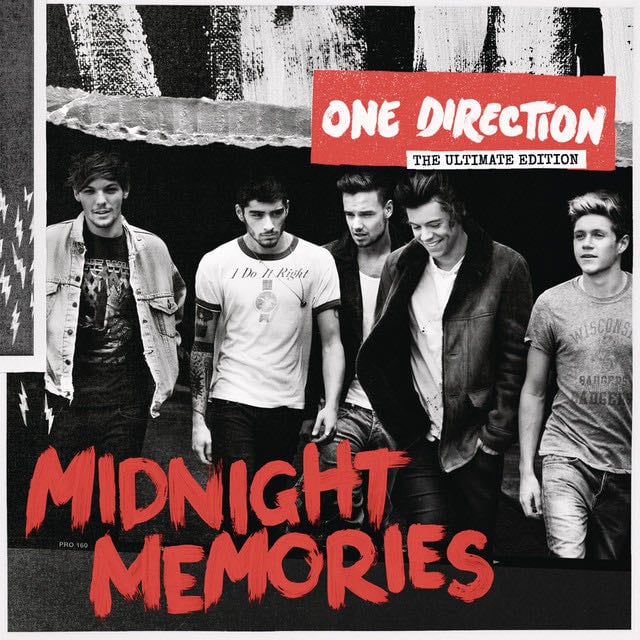
You & I
Song · One Direction
Uncategorized
The Smiths
The Smiths
The Smiths were the definitive British indie rock band of the '80s, marking the end of synth-driven new wave and the beginning of the guitar rock that dominated English rock into the '90s. Sonically, the group was indebted to the British Invasion, crafting ringing, melodic three-minute pop singles, even for their album tracks. But their scope was far broader than that of a revivalist band. The group's core members, vocalist Morrissey and guitarist Johnny Marr, were obsessive rock fans inspired by the D.I.Y. ethics of punk, but they also had a fondness for girl groups, pop, and rockabilly. Morrissey and Marr also represented one of the strangest teams of collaborators in rock history. Marr was the rock traditionalist, looking like an elegant version of Keith Richards during the Smiths' heyday and meticulously layering his guitar tracks in the studio. Morrissey, on the other hand, broke from rock tradition by singing in a keening, self-absorbed croon, embracing the forlorn, romantic poetry of Oscar Wilde, publicly declaring his celibacy, and making no secret of his disgust for most of his peers. While it eventually led to the Smiths' early demise, the friction between Morrissey and Marr resulted in a flurry of singles and albums over the course of three years that provided the blueprint for British guitar rock in the following decade. Before forming the Smiths in 1982, Johnny Marr (born John Maher, October 31, 1963; guitar) had played in a variety of Manchester-based rock & roll bands, including Sister Ray, Freaky Part, White Dice, and Paris Valentinos. On occasion, Marr had come close to a record contract -- one of his bands won a competition Stiff Records held to have Nick Lowe "produce your band" -- but he never quite made the leap. Though Morrissey (born Steven Patrick Morrissey, May 22, 1959; vocals) had sung for a few weeks with the Nosebleeds and auditioned for Slaughter & the Dogs, he had primarily contented himself to being a passionate, vocal fan of both music and film. During his teens, he wrote the Melody Maker frequently, often getting his letters published. He had written the biography/tribute James Dean Isn't Dead, which was published by the local Manchester publishing house Babylon Books in the late '70s, as well as another book on the New York Dolls; he was also the president of the English New York Dolls fan club. Morrissey met Marr, who was then looking for a lyricist, through mutual friends in the spring of 1982. The pair began writing songs, eventually recording some demos with the Fall's drummer, Simon Wolstencroft. By the fall, the duo had settled on the name the Smiths and recruited Marr's schoolmate Andy Rourke as their bassist and Mike Joyce as their drummer. The Smiths made their live debut late in 1982, and by the spring of 1983, the group had earned a small but loyal following in their hometown of Manchester and had begun to make inroads in London. Rejecting a record deal with the Mancunian Factory Records, the band signed with Rough Trade for a one-off single, "Hand in Glove." With its veiled references to homosexuality and its ringing riffs, "Hand in Glove" became an underground sensation in the U.K., topping the independent charts and earning the praise of the U.K. music weeklies. Soon, Morrissey's performances became notorious as he appeared on-stage wearing a hearing aid and with gladioli stuffed in his back pockets. His interviews were becoming famous for his forthright, often contrary opinions, which helped the band become a media sensation. By the time of the group's second single, "This Charming Man," in late 1983, the Smiths had already been the subject of controversy over "Reel Around the Fountain," a song that had been aired on a BBC radio session and was alleged to condone child abuse. It was the first time that Morrissey's detached, literary, and ironic lyrics were misinterpreted and it wouldn't be the last. "This Charming Man" reached number 25 on the British charts in December of 1983, setting the stage for "What Difference Does It Make"'s peak of number 12 in February. The Smiths' rise to the upper reaches of the British charts was swift, and the passion of their fans, as well as the U.K. music press, indicated that the group had put an end to the synth-powered new wave that dominated Britain in the early '80s. After rejecting their initial stab at a first album, they released their debut, The Smiths, in the spring of 1984 to strong reviews and sales -- it peaked at number two. A few months later, the group backed '60s pop vocalist Sandie Shaw -- who Morrissey had publicly praised in an article -- on a version of "Hand in Glove" that was released and reached the Top 40. "Heaven Knows I'm Miserable Now" reached number ten, becoming their highest-charting single amid a storm of controversy about its B-side, "Suffer Little Children," which was about the notorious Moors Murders. More controversy appeared when Morrissey denounced the hunger-relief efforts of Band Aid, but the group's popularity was not affected. Though the Smiths had become the most popular new rock & roll group in Britain, the group failed to make it outside of underground and college radio in the U.S., partially because they never launched a full-scale tour. At the end of the year, "William It Was Really Nothing" became a Top 20 hit and Hatful of Hollow, a collection of B-sides, BBC sessions, and non-LP singles, went to the Top Ten, followed shortly by "How Soon Is Now," which peaked at number 24. Meat Is Murder, the band's second proper studio album, entered the British charts at number one in February of 1985, despite some criticism that it was weaker than The Smiths. Around the time of the release of Meat Is Murder, Morrissey's interviews were becoming increasingly political as he trashed the Thatcher administration and campaigned for vegetarianism; he even claimed that the Smiths were all vegetarians, and he forbade the remaining members to be photographed eating meat, even though they were still carnivores. Marr, for his part, was delving deeply into the rock & roll lifestyle and looked increasingly like a cross between Keith Richards and Brian Jones. By the time the non-LP "Shakespeare's Sister" reached number 26 in the spring of 1985, the Smiths had spawned a rash of soundalike bands, including James, who opened for the group on their spring 1985 tour, most of whom Morrissey supported. However, all of the media attention on the Smiths launched a mild backlash later in 1985, when "That Joke Isn't Funny Anymore" was pulled from Meat Is Murder and failed to reach the Top 40. "The Boy with the Thorn in His Side" revived the band's fortunes in the fall of 1985, and their third album, The Queen Is Dead, confirmed their popularity upon its release in the spring of 1986. Greeted with enthusiastic reviews and peaking at number two on the U.K. charts, The Queen Is Dead also expanded their cult following in the U.S., cracking the Top 100. Shortly before the album was completed, former Aztec Camera guitarist Craig Gannon became the band's rhythm guitarist, and he played with the band throughout their 1986 international tour, including a botched American tour. The non-LP "Panic," which was criticized as racist by some observers for its repeated refrain of "Burn down the disco...hang the DJ," reached number 11 late in the summer. A few months after its release, Marr was seriously injured in a car crash. During his recuperation, Gannon was fired from the band, as was Rourke, who was suffering from heroin addiction. Though Rourke was later reinstated, Gannon was never replaced. The Smiths may have been at the height of their popularity in early 1987, with the non-LP singles "Shoplifters of the World" and "Sheila Take a Bow" reaching number 11 and ten respectively, and the singles and B-sides compilation The World Won't Listen (revamped for U.S. release as Louder Than Bombs later in 1987) debuting at number two, but Marr was growing increasingly disenchanted with the band and the music industry. Over the course of the year, Morrissey and Marr became increasingly irritated with each other. The singer wished that Marr would stop playing with other artists like Bryan Ferry and Billy Bragg, while the guitarist was frustrated with Morrissey's devotion to '60s pop and his hesitancy to explore new musical directions. A few weeks before the fall release of Strangeways, Here We Come, Marr announced that he was leaving the Smiths. Morrissey disbanded the group shortly afterward and began a solo career, signing with Parlophone in the U.K. and staying with the Smiths' U.S. label, Reprise. Marr played as a sideman with a variety of artists, eventually forming Electronic with New Order frontman Bernard Sumner. Rourke retired from recording and Joyce became a member of the reunited Buzzcocks in 1991. Rank, a live album recorded on the Queen Is Dead tour, was released in the fall of 1988. It debuted at number two in the U.K. A widely criticized, two-part The Best of the Smiths compilation was released in 1992; the praised Singles compilation was released in 1995. Joyce and Rourke sued Morrissey and Marr in 1991, claiming they received only ten percent of the group's earnings while the songwriters received 40 percent. Rourke eventually settled out of court, but Joyce won his case in late 1996. ~ Stephen Thomas Erlewine
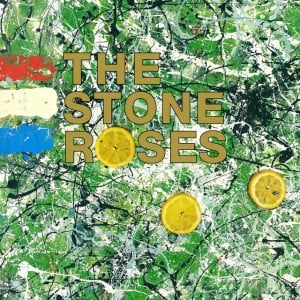
I Wanna Be Adored
I Wanna Be Adored
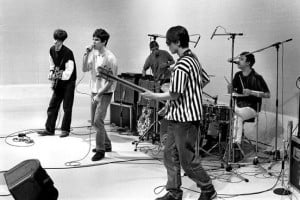
The Stone Roses
The Stone Roses
Meshing '60s-styled guitar pop with an understated '80s dance beat, the Stone Roses defined the British guitar pop scene of the late '80s and early '90s. After their eponymous 1989 debut album became an English sensation, countless other groups in the same vein became popular, including <a href="spotify:artist:5fScAXreYFnuqwOgBsJgSd">the Charlatans UK</a>, <a href="spotify:artist:66GWpx9iLxrvvfhDsG9STP">Inspiral Carpets</a>, and <a href="spotify:artist:339DNkQkuhHKEcHw6oK8f0">Happy Mondays</a>. However, the Stone Roses were never able to capitalize on the promise of their first album, waiting five years before they released their second record and slowly disintegrating in the year-and-a-half after its release. The Stone Roses emerged from the remains of English Rose, a Manchester-based band formed by schoolmates John Squire (guitar) and <a href="spotify:artist:3s398TKZNahAURRacx7oIT">Ian Brown</a> (vocals). In 1985, the Stone Roses officially formed, as <a href="spotify:artist:3G7eO5RPVtqem98Qg8kTx2">Squire</a> and <a href="spotify:artist:3s398TKZNahAURRacx7oIT">Brown</a> added drummer Reni (born Alan John Wren), guitarist Andy Couzens, and bassist Pete Garner. The group began playing warehouses around Manchester, cultivating a dedicated following rather quickly. Around this time, the group was a cross between classic British '60s guitar pop and heavy metal, with touches of goth rock. Couzens left the group in 1987, followed shortly afterward by Garner, who was replaced by <a href="spotify:artist:0LRXomnLLxPKpfrLUiD5py">Mani</a> (born Gary Mounfield) and the group recorded its first single, "So Young," which was released to little fanfare by Thin Line Records. (Pete Garner died on November 3, 2023; he was 61.) At the end of 1987, the Stone Roses released their second single, "Sally Cinnamon," which pointed the way toward the band's hook-laden, ringing guitar pop. By the fall of 1988, the band secured a contract with Silvertone Records and released "Elephant Stone," a single that set the band's catchy neo-psychedelic guitar pop in stone. Shortly after the release of "Elephant Stone," the Stone Roses' bandwagon took off in earnest. In early 1989, the group was playing sold-out gigs across Manchester and London. In May, band released their eponymous debut album, which demonstrated not only a predilection for '60s guitar hooks, but also a contemporary acid house rhythmic sensibility. The Stone Roses received rave reviews and soon a crop of similar-sounding bands appeared in the U.K. By the end of the summer, the Stone Roses were perceived as leading a wave of bands that fused rock & roll and acid house culture. "She Bangs the Drums," the third single pulled from the debut, became the group's first Top 40 single at the end of the summer. In November, the group had its first Top Ten hit when "Fool's Gold" climbed to number eight. By the end of the year, the band had moved from selling out clubs to selling out large theaters in the U.K. For the first half of 1990, re-releases of the band's earlier singles clogged the charts. They returned in July 1990 with the single "One Love," which entered the charts at number four. Prior to the release of "One Love," the Stone Roses organized their own festival at Spike Island in Widnes. The concert drew over 30,000 people and would prove to be their last concert in England for five years. After Spike Island, the group became embroiled in a vicious legal battle with Silvertone Records -- the band wanted to leave the label but Silvertone took out a court injunction against them, preventing the group from releasing any new material. For the next two years, they fought Silvertone while allegedly preparing the follow-up to their debut album. However, the Stone Roses did next to nothing as the court case rolled on. In the meantime, several major record labels began negotiating with the band in secret. In March of 1991, the lawsuit went to court. Two months later, the band won its case against Silvertone and signed a multi-million deal with <a href="spotify:search:label%3A%22Geffen+Records%22">Geffen Records</a>. For the next three years, the Stone Roses worked sporadically on their second album, leaving behind scores of uncompleted tapes. During these years, the group kept a low profile in the press but that wasn't to preserve the mystique -- they simply weren't doing much of anything besides watching football. Finally, in the spring of 1994, <a href="spotify:search:label%3A%22Geffen%22">Geffen</a> demanded that the group finish the album and the band complied, completing the record, titled Second Coming, in the fall. "Love Spreads," the Stone Roses' comeback single, was debuted on Radio One in early November. The single received lukewarm reviews and entered the charts at number two, not the expected number one. Second Coming received mixed reviews and only spent a few weeks in the Top Ten. The Stone Roses planned an international tour in early 1995 to support the album, but the plans kept unraveling at the last minute. Before they could set out on tour, Reni left the band, leaving the group without a drummer. He was replaced by Robbie Maddix, who had previously played in <a href="spotify:artist:3qSJ0u8E2oU5FRu4jeC5qW">Rebel MC</a>. After Maddix joined the band, they embarked on a short American tour at the conclusion of which John Squire broke his collarbone in a bike accident. <a href="spotify:artist:3G7eO5RPVtqem98Qg8kTx2">Squire</a>'s accident forced them to cancel a headlining spot at the 25th Glastonbury Festival, which would have been their first concert in the U.K. in five years. As <a href="spotify:artist:3G7eO5RPVtqem98Qg8kTx2">Squire</a> recuperated, the Stone Roses continued to sink in popularity and respect -- even as their peers, <a href="spotify:artist:5fScAXreYFnuqwOgBsJgSd">the Charlatans</a> and former <a href="spotify:artist:339DNkQkuhHKEcHw6oK8f0">Happy Mondays</a> vocalist <a href="spotify:artist:3ONSkkEnOSZVNogu98dvTY">Shaun Ryder</a>, made unexpectedly triumphant comebacks. The band added a keyboardist to the lineup prior to their U.K. tour at the end of 1995; it was the first British tour since 1990. In the spring of 1996, <a href="spotify:artist:3G7eO5RPVtqem98Qg8kTx2">Squire</a> announced that he was leaving the band he'd founded in order to form a new, more active group. The Stone Roses announced their intention to carry on with a new guitarist, but by October of that year the group was finished. <a href="spotify:artist:3G7eO5RPVtqem98Qg8kTx2">Squire</a>'s new band, <a href="spotify:artist:3mbVe260Kgvs1P8YFcCyY7">Seahorses</a>, released its debut album in June 1997, while <a href="spotify:artist:3s398TKZNahAURRacx7oIT">Brown</a> began a solo career in 1998 with Unfinished Monkey Business. <a href="spotify:artist:0LRXomnLLxPKpfrLUiD5py">Mani</a> joined <a href="spotify:artist:3wury2nd8idV4GecUg5xze">Primal Scream</a> as full-time bassist, although he also played on several tours by <a href="spotify:artist:21UJ7PRWb3Etgsu99f8yo8">Stereophonics</a>. Aside from continual denials from <a href="spotify:artist:3G7eO5RPVtqem98Qg8kTx2">Squire</a> and others that no reunion was forthcoming, there was no news about the Stone Roses for close to 15 years, until 2011. During the early part of the year -- after an emotional reunion of <a href="spotify:artist:3s398TKZNahAURRacx7oIT">Brown</a> and <a href="spotify:artist:3G7eO5RPVtqem98Qg8kTx2">Squire</a> at the funeral for <a href="spotify:artist:0LRXomnLLxPKpfrLUiD5py">Mani</a>'s mother -- rumors swirled that the Roses would be back for at least one show. Then, in October 2011, the band announced a full reunion, including tour dates that began with a three-show appearance in Manchester in late June of 2012, and extended through the entire festival season. By December, a recording contract had also been announced, with the band's future recordings appearing on <a href="spotify:search:label%3A%22Universal%22">Universal</a> in Great Britain and <a href="spotify:search:label%3A%22Columbia%22">Columbia</a> in the United States. Four years after those contracts were signed, the first fruits from recording sessions at <a href="spotify:artist:04ouBKIoUizgF9j6v6TWR8">Paul Epworth</a>'s studios appeared. In May 2016, the band released the single All for One," the first new material from the four-piece in some 21 years. ~ Stephen Thomas Erlewine, Rovi
Futile Devices (Doveman remix)
Futile Devices (Doveman remix)
Sweater Weather
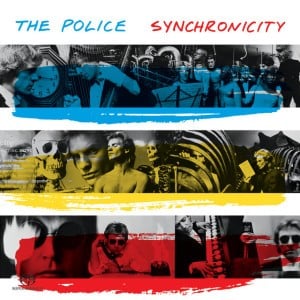
Every Breath You Take
Every Breath You Take
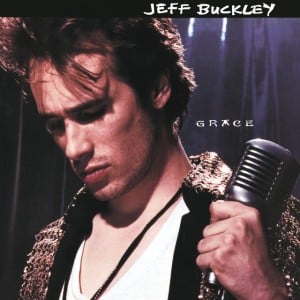
Lover, You Should've Come Over
Lover, You Should've Come Over
Oasis
Artist