Drogas
Items in this hypelist
Soundtracks
Red Hot Chili Peppers
Red Hot Chili Peppers
We went in search of ourselves as the band that we have somehow always been. Just for the fun of it we jammed and learned some old songs. Before long we started the mysterious process of building new songs. A beautiful bit of chemistry meddling that had befriended us hundreds of times along the way. Once we found that slip stream of sound and vision, we just kept mining. With time turned into an elastic waist band of oversized underwear, we had no reason to stop writing and rocking. It felt like a dream. When all was said and done, our moody love for each other and the magic of music had gifted us with more songs than we knew what to do with. Well we figured it out. 2 double albums released back to back. The second of which is easily as meaningful as the first or should that be reversed. 'Return of the Dream Canteen' is everything we are and ever dreamed of being. It’s packed. Made with the blood of our hearts, yours truly, the Red Hot Chili Peppers.
The Smiths
The Smiths
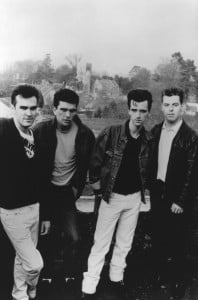
The Smiths were the definitive British indie rock band of the '80s, marking the end of synth-driven new wave and the beginning of the guitar rock that dominated English rock into the '90s. Sonically, the group was indebted to the British Invasion, crafting ringing, melodic three-minute pop singles, even for their album tracks. But their scope was far broader than that of a revivalist band. The group's core members, vocalist Morrissey and guitarist Johnny Marr, were obsessive rock fans inspired by the D.I.Y. ethics of punk, but they also had a fondness for girl groups, pop, and rockabilly. Morrissey and Marr also represented one of the strangest teams of collaborators in rock history. Marr was the rock traditionalist, looking like an elegant version of Keith Richards during the Smiths' heyday and meticulously layering his guitar tracks in the studio. Morrissey, on the other hand, broke from rock tradition by singing in a keening, self-absorbed croon, embracing the forlorn, romantic poetry of Oscar Wilde, publicly declaring his celibacy, and making no secret of his disgust for most of his peers. While it eventually led to the Smiths' early demise, the friction between Morrissey and Marr resulted in a flurry of singles and albums over the course of three years that provided the blueprint for British guitar rock in the following decade. Before forming the Smiths in 1982, Johnny Marr (born John Maher, October 31, 1963; guitar) had played in a variety of Manchester-based rock & roll bands, including Sister Ray, Freaky Part, White Dice, and Paris Valentinos. On occasion, Marr had come close to a record contract -- one of his bands won a competition Stiff Records held to have Nick Lowe "produce your band" -- but he never quite made the leap. Though Morrissey (born Steven Patrick Morrissey, May 22, 1959; vocals) had sung for a few weeks with the Nosebleeds and auditioned for Slaughter & the Dogs, he had primarily contented himself to being a passionate, vocal fan of both music and film. During his teens, he wrote the Melody Maker frequently, often getting his letters published. He had written the biography/tribute James Dean Isn't Dead, which was published by the local Manchester publishing house Babylon Books in the late '70s, as well as another book on the New York Dolls; he was also the president of the English New York Dolls fan club. Morrissey met Marr, who was then looking for a lyricist, through mutual friends in the spring of 1982. The pair began writing songs, eventually recording some demos with the Fall's drummer, Simon Wolstencroft. By the fall, the duo had settled on the name the Smiths and recruited Marr's schoolmate Andy Rourke as their bassist and Mike Joyce as their drummer. The Smiths made their live debut late in 1982, and by the spring of 1983, the group had earned a small but loyal following in their hometown of Manchester and had begun to make inroads in London. Rejecting a record deal with the Mancunian Factory Records, the band signed with Rough Trade for a one-off single, "Hand in Glove." With its veiled references to homosexuality and its ringing riffs, "Hand in Glove" became an underground sensation in the U.K., topping the independent charts and earning the praise of the U.K. music weeklies. Soon, Morrissey's performances became notorious as he appeared on-stage wearing a hearing aid and with gladioli stuffed in his back pockets. His interviews were becoming famous for his forthright, often contrary opinions, which helped the band become a media sensation. By the time of the group's second single, "This Charming Man," in late 1983, the Smiths had already been the subject of controversy over "Reel Around the Fountain," a song that had been aired on a BBC radio session and was alleged to condone child abuse. It was the first time that Morrissey's detached, literary, and ironic lyrics were misinterpreted and it wouldn't be the last. "This Charming Man" reached number 25 on the British charts in December of 1983, setting the stage for "What Difference Does It Make"'s peak of number 12 in February. The Smiths' rise to the upper reaches of the British charts was swift, and the passion of their fans, as well as the U.K. music press, indicated that the group had put an end to the synth-powered new wave that dominated Britain in the early '80s. After rejecting their initial stab at a first album, they released their debut, The Smiths, in the spring of 1984 to strong reviews and sales -- it peaked at number two. A few months later, the group backed '60s pop vocalist Sandie Shaw -- who Morrissey had publicly praised in an article -- on a version of "Hand in Glove" that was released and reached the Top 40. "Heaven Knows I'm Miserable Now" reached number ten, becoming their highest-charting single amid a storm of controversy about its B-side, "Suffer Little Children," which was about the notorious Moors Murders. More controversy appeared when Morrissey denounced the hunger-relief efforts of Band Aid, but the group's popularity was not affected. Though the Smiths had become the most popular new rock & roll group in Britain, the group failed to make it outside of underground and college radio in the U.S., partially because they never launched a full-scale tour. At the end of the year, "William It Was Really Nothing" became a Top 20 hit and Hatful of Hollow, a collection of B-sides, BBC sessions, and non-LP singles, went to the Top Ten, followed shortly by "How Soon Is Now," which peaked at number 24. Meat Is Murder, the band's second proper studio album, entered the British charts at number one in February of 1985, despite some criticism that it was weaker than The Smiths. Around the time of the release of Meat Is Murder, Morrissey's interviews were becoming increasingly political as he trashed the Thatcher administration and campaigned for vegetarianism; he even claimed that the Smiths were all vegetarians, and he forbade the remaining members to be photographed eating meat, even though they were still carnivores. Marr, for his part, was delving deeply into the rock & roll lifestyle and looked increasingly like a cross between Keith Richards and Brian Jones. By the time the non-LP "Shakespeare's Sister" reached number 26 in the spring of 1985, the Smiths had spawned a rash of soundalike bands, including James, who opened for the group on their spring 1985 tour, most of whom Morrissey supported. However, all of the media attention on the Smiths launched a mild backlash later in 1985, when "That Joke Isn't Funny Anymore" was pulled from Meat Is Murder and failed to reach the Top 40. "The Boy with the Thorn in His Side" revived the band's fortunes in the fall of 1985, and their third album, The Queen Is Dead, confirmed their popularity upon its release in the spring of 1986. Greeted with enthusiastic reviews and peaking at number two on the U.K. charts, The Queen Is Dead also expanded their cult following in the U.S., cracking the Top 100. Shortly before the album was completed, former Aztec Camera guitarist Craig Gannon became the band's rhythm guitarist, and he played with the band throughout their 1986 international tour, including a botched American tour. The non-LP "Panic," which was criticized as racist by some observers for its repeated refrain of "Burn down the disco...hang the DJ," reached number 11 late in the summer. A few months after its release, Marr was seriously injured in a car crash. During his recuperation, Gannon was fired from the band, as was Rourke, who was suffering from heroin addiction. Though Rourke was later reinstated, Gannon was never replaced. The Smiths may have been at the height of their popularity in early 1987, with the non-LP singles "Shoplifters of the World" and "Sheila Take a Bow" reaching number 11 and ten respectively, and the singles and B-sides compilation The World Won't Listen (revamped for U.S. release as Louder Than Bombs later in 1987) debuting at number two, but Marr was growing increasingly disenchanted with the band and the music industry. Over the course of the year, Morrissey and Marr became increasingly irritated with each other. The singer wished that Marr would stop playing with other artists like Bryan Ferry and Billy Bragg, while the guitarist was frustrated with Morrissey's devotion to '60s pop and his hesitancy to explore new musical directions. A few weeks before the fall release of Strangeways, Here We Come, Marr announced that he was leaving the Smiths. Morrissey disbanded the group shortly afterward and began a solo career, signing with Parlophone in the U.K. and staying with the Smiths' U.S. label, Reprise. Marr played as a sideman with a variety of artists, eventually forming Electronic with New Order frontman Bernard Sumner. Rourke retired from recording and Joyce became a member of the reunited Buzzcocks in 1991. Rank, a live album recorded on the Queen Is Dead tour, was released in the fall of 1988. It debuted at number two in the U.K. A widely criticized, two-part The Best of the Smiths compilation was released in 1992; the praised Singles compilation was released in 1995. Joyce and Rourke sued Morrissey and Marr in 1991, claiming they received only ten percent of the group's earnings while the songwriters received 40 percent. Rourke eventually settled out of court, but Joyce won his case in late 1996. ~ Stephen Thomas Erlewine
Weezer
Weezer
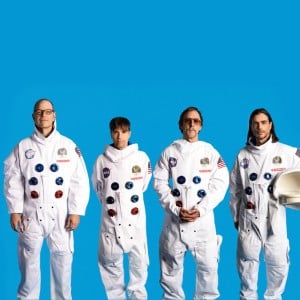
When Weezer producer (and former Cars frontman) Ric Ocasek first heard Weezer’s demo tape in late 1993, he couldn’t quite figure out where the band was coming from. Musing to <i>Rolling Stone</i> years later, he said it felt a little like metal, but the lyrics were smart and nerdy. The songs were catchy, but the sound was powerful and super loud. He found himself wondering about their hair: Would it be short and studious, or long and rock ’n’ roll?<br> More than 25 years later, Weezer remains something of an enigma, a blend of big, joyful arena rock with shy-guy reticence, goofy humor with obsessively precise pop craft. Where some bands gave it to you live and direct from the heart, Weezer was methodical: One of the band’s early T-shirt designs memorably read, “If it’s too loud, turn it down,” while frontman Rivers Cuomo has proudly described organizing his songs using that most un-rock-'n'-roll of tools: spreadsheets.<br> Formed in California in 1992, the band debuted with 1994’s <i>Weezer</i> (a.k.a. “The Blue Album”), an album whose big hooks (“Say It Ain't So,” “Undone — The Sweater Song”) and sweet disposition (“Buddy Holly”) made it an instant antidote to the angst of grunge. Following a rocky adjustment, they returned in 1996 with <i>Pinkerton</i>, a moody, noisy, self-loathing record that came to be embraced as a cult classic.<br> After a nearly five-year break, during which they slid quietly off the radar (and bassist Matt Sharp left to form The Rentals), the band released 2001’s <i>Weezer</i> (a.k.a. “The Green Album”), igniting a period of factory-like productivity that saw them frequently turning out albums of charming, polished, and slightly eccentric power pop. In 2018, after a six-month Twitter campaign launched by a 14-year-old fan, Weezer released a cover of Toto’s 1982 smash “Africa”—a perfect expression of both their commitment to and their utterly carefree attitude toward their place in the culture. “The lyrics seem like he’s just rambling off the top of his head and they don’t really make sense but nobody seems to mind,” Cuomo told Apple Music. “I’ll spend weeks working on lyrics and it’s like, ‘Maybe people don’t really care.’” It sparked their first covers album, <i>Weezer</i> (a.k.a. “The Teal Album”), which was followed a month later by <i>Weezer</i> (a.k.a. “The Black Album”).
Gorillaz
Gorillaz
Created by musician Damon Albarn and artist Jamie Hewlett, Gorillaz is singer 2D, bassist Murdoc Niccals, drummer Russel Hobbs and guitarist Noodle. The BRIT and Grammy-winning virtual band formed following a collision of mishaps, meetings and pure luck to blow up a pre-digital world with their colourful backstory and ground-breaking virtual ways. Based at Kong Studios in West London, Gorillaz settled into a life of musical innovation with an eye-wateringly exciting roster of collaborators, a list that includes musical legends, geniuses and future stars from Elton John to Little Simz, MF Doom to Jean-Michel Jarre, Grace Jones to Bad Bunny, Kali Uchis to Sidiki Diabaté, plus so many more. Gorillaz (2001), Demon Days (2005), Plastic Beach (2010), The Fall (2011), Humanz (2017), The Now Now (2018), Song Machine: Season One – Strange Timez (2020) and Cracker Island (2023), Gorillaz is a truly global phenomenon, achieving success in entirely new and unique ways, touring the world and winning numerous awards including the coveted Jim Henson Creativity Honor, along the way. Cracker Island, their latest album, is an energetic, upbeat, genre-expanding collection of 10 tracks featuring yet another stellar line-up of artist collaborators: Stevie Nicks, Adeleye Omotayo, Thundercat, Tame Impala, Bad Bunny, Bootie Brown and Beck. The band is recognised by The Guinness Book Of World Records as the planet’s Most Successful Virtual Act www.gorillaz.com
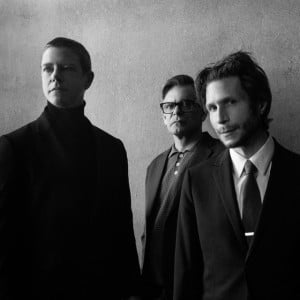
Interpol
Interpol
Interpol began in New York in 1997, when guitarist Daniel Kessler recruited bassist Carlos Dengler and singer/guitarist Paul Banks to form a band. In 2002, with Sam Fogarino on drums, the band signed to Matador records and released <a href="spotify:album:4sW8Eql2e2kdRP1A1R1clG" data-name="Turn On The Bright Lights">Turn On The Bright Lights</a> which made it to 10th position on NME’s list of 2002’s top releases and Pitchfork named it the year’s #1 album. Over the next decade and a half Interpol would go on to wide critical and commercial acclaim, with five subsequent high charting records on the Billboard 200; earning rave reviews across the map from Rolling Stone to TIME; performing on late night television shows including The Late Show with David Letterman and Conan and playing major festivals like Coachella and Glastonbury and headlining Mexico’s Corona Capital. The band (Banks, Kessler and Fogarino) have just finished recording 'The Other Side of Make-Believe,' their latest studio album with legendary production duo Flood & Moulder, out on Matador Records, worldwide, July 15th. Pre-save the new album here: https://interpol.ffm.to/tosomb
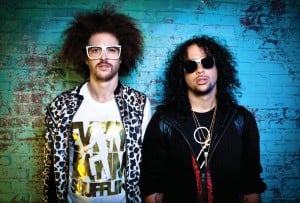
LMFAO
LMFAO
An electro-rap duo from Los Angeles, CA, LMFAO made their major-label debut in 2008. Comprised of producers, DJs, and clothing designers Redfoo and Sky Blu (the son and grandson, respectively, of Motown impresario Berry Gordy), LMFAO worked the club circuit for years before making their major-label debut in 2008 with the single "I'm in Miami Bitch," a song inspired by their first experience at the Winter Music Conference. In the wake of the single's release on Interscope and its hitting the charts in several countries, LMFAO toured the American club circuit and prepared their full-length album debut, Party Rock, which was released in July 2009. "La La La" and "Shots" (featuring Lil Jon) also charted, and LMFAO placed songs on Jersey Shore and Kourtney and Khloé Take Miami. In 2010, the duo featured on a worldwide Top Ten hit, David Guetta's "Gettin' Over You." Their next single as LMFAO was the suitably anthemic "Party Rock Anthem," which topped the charts in more than ten countries during 2011, including the U.S. The follow-up full-length, Sorry for Party Rocking, was released in June 2011. ~ Jason Birchmeier
Blur
Blur
Death to the Pixies
Death to the Pixies
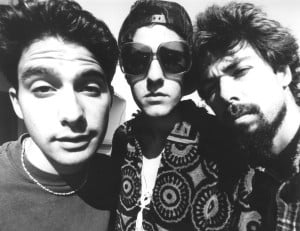
Beastie Boys
Beastie Boys
Beastie Boys crashed into the mainstream in the mid-'80s rapping about "The New Style" and yelling "(You Gotta) Fight for Your Right (To Party!)," their brash hedonism striking a chord with hip-hop fans and suburban metalheads alike. This loud, obnoxious blend of hard rock and rap, showcased on their debut Licensed to Ill, wound up having a lasting impact, but the trio of Adam Yauch, Adam Horovitz, and Mike Diamond were young punks and restless artists. They soon abandoned pounding, aggressive rap-rock for the dense sampladelic vistas of Paul's Boutique, their 1989 collaboration with <a href="spotify:artist:4SpGhmdFn74C0Q7D2BhUVG">the Dust Brothers</a>. Paul's Boutique stalled the trio's commercial momentum but it became an album revered by hip-hop aficionados, pointing the way to the genre-bending, self-referential pop culture of '90s pop. Beastie Boys played a vital role in that decade, starting with 1992's punk-rap-jazz fusion Check Your Head, which gave them another Top Ten album and established the group as alternative rock icons. Ill Communication consolidated the group's comeback in 1994, thanks in no small part to the hit "Sabotage," accompanied by a campily retro video directed by Spike Jonze. Music videos, many directed by Yauch under his Nathanial Hornblower pseudonym, were a crucial component of Beastie Boys' popularity, as was their <a href="spotify:search:label%3A%22Grand+Royal%22">Grand Royal</a> empire -- it spanned a record label and a much-revered but short-lived magazine -- and their activism, a social engagement spearheaded by Yauch co-organizing the Tibetan Freedom Concerts in the late '90s. After the 1998 chart-topper Hello Nasty, Beastie Boys' productivity slowed in the 2000s as the trio settled into an eccentric middle age, balancing the old-school salute To the 5 Boroughs with the soul-jazz instrumental 2007 LP The Mix-Up. As the trio worked on their eighth studio album, Yauch was diagnosed with cancer. The group finished and released Hot Sauce Committee, Pt. 2 in May 2011; he was dead a year later. Horowitz and Diamond stopped working as Beastie Boys, although they reconvened to tell their story through Beastie Boys Book in 2018, which was followed by the Jonze-directed documentary Beastie Boys Story in 2020. All three members of the Beastie Boys -- Mike D (b. Mike Diamond, November 20, 1966), MCA (b. Adam Yauch, August 5, 1965; d. May 4, 2012), and Ad-Rock (born Adam Horovitz, October 31, 1967) -- came from middle-class Jewish families in New York and had become involved in the city's punk underground when they were teenagers in the early '80s. Diamond and Yauch formed the Beastie Boys with drummer Kate Schellenbach and guitarist John Berry in 1981, and the group began playing underground clubs around New York. The following year, the Beasties released the 7" EP Pollywog Stew on the indie label <a href="spotify:search:label%3A%22Rat+Cage%22">Rat Cage</a> to little attention. That same year, the band met Horovitz, who had formed the hardcore group the Young and the Useless. By early 1983, Schellenbach and Berry had left the group -- they would later join <a href="spotify:artist:1EcRE2Nnqg2spdn2otakhg">Luscious Jackson</a> and Thwig, respectively -- and Horovitz had joined the Beasties. The revamped group released the rap record "Cookie Puss" as a 12" single later in 1983. Based on a prank phone call the group made to Carvel Ice Cream, the single became an underground hit in New York. By early 1984, however, they had abandoned punk and turned their attention to rap. In 1984, the Beasties joined forces with producer <a href="spotify:artist:1EpmQFTiJbcxzwbLpuUL8L">Rick Rubin</a>, a heavy metal and hip-hop fan who had then-recently founded <a href="spotify:search:label%3A%22Def+Jam+Records%22">Def Jam Records</a> with fellow New York University student <a href="spotify:artist:7HXSDsfCgKWhoeWD31IdWw">Russell Simmons</a>. <a href="spotify:search:label%3A%22Def+Jam%22">Def Jam</a> officially signed the Beastie Boys in 1985, and that year they had a hit single from the soundtrack to Krush Groove with "She's on It," a rap track that sampled <a href="spotify:artist:711MCceyCBcFnzjGY4Q7Un">AC/DC</a>'s "Back in Black" and suggested the approach of the group's forthcoming debut album. The Beasties received their first significant national exposure later in 1985, when they opened for <a href="spotify:artist:6tbjWDEIzxoDsBA1FuhfPW">Madonna</a> on her Virgin tour. The Beasties taunted the audience with profanity and were generally poorly received. One other major tour, as the openers for <a href="spotify:artist:3CQIn7N5CuRDP8wEI7FiDA">Run-D.M.C.</a>'s ill-fated Raisin' Hell trek, followed before Licensed to Ill was released late in 1986. An amalgam of street beats, metal riffs, b-boy jokes, and satire, Licensed to Ill was interpreted as a mindless, obnoxious party record by many critics and conservative action groups. That didn't stop the album from becoming the fastest-selling debut in <a href="spotify:search:label%3A%22Columbia+Records%22">Columbia Records</a>' history, however, as it sold over 750,000 copies in its first six weeks. Much of the album's success was due to "Fight for Your Right (To Party)," which became a massive crossover single. In fact, Licensed to Ill became the biggest-selling rap album of the '80s, which generated much criticism from certain hip-hop fans who believed that the Beasties were merely cultural pirates. On the other side of the coin, the group was being attacked from various factions on both the left and the right, who claimed the Beasties' lyrics were violent and sexist and that their concerts -- which featured female audience members dancing in go-go cages and a giant inflatable penis, similar to what <a href="spotify:artist:22bE4uQ6baNwSHPVcDxLCe">the Stones</a> used in their mid-'70s concerts -- caused even more outrage. Throughout their 1987 tour, they were plagued with arrests and lawsuits, and were accused of inciting crime. While much of the Beasties' exaggeratedly obnoxious behavior started out as a joke, it became a self-parody by the end of 1987, so it wasn't a surprise that the group decided to revamp its sound and image during the next two years. During 1988, the Beasties became involved in a bitter lawsuit with <a href="spotify:search:label%3A%22Def+Jam%22">Def Jam</a> and <a href="spotify:artist:1EpmQFTiJbcxzwbLpuUL8L">Rick Rubin</a>, who claimed he was responsible for their success and threatened to release outtakes as their second album. The Beasties finally broke away by the end of the year and relocated to California, where they signed with <a href="spotify:search:label%3A%22Capitol%22">Capitol</a>. While in California, they met the production team <a href="spotify:artist:4SpGhmdFn74C0Q7D2BhUVG">the Dust Brothers</a>, and they convinced the duo to use their prospective debut album as the basis for the Beasties' second album, Paul's Boutique. Densely layered with interweaving samples and pop culture references, the retro-funk-psychedelia of Paul's Boutique was entirely different than Licensed to Ill, and many observers weren't quite sure what to make of it. Several publications gave it rave reviews, but when it failed to produce a single bigger than the number 36 "Hey Ladies," it was quickly forgotten about. Despite its poor commercial performance, Paul's Boutique gained a cult following, and its cut-and-paste sample techniques would later be hailed as visionary, especially after <a href="spotify:artist:4SpGhmdFn74C0Q7D2BhUVG">the Dust Brothers</a> altered the approach for <a href="spotify:artist:3vbKDsSS70ZX9D2OcvbZmS">Beck</a>'s acclaimed 1996 album, Odelay. Still, the record was declared a disaster in the early '90s, but that didn't prevent the Beasties from building their own studio and founding their own record label, <a href="spotify:search:label%3A%22Grand+Royal%22">Grand Royal</a>, for their next record, Check Your Head. Alternating between old-school hip-hop, raw amateur-ish funk, and hardcore punk, Check Your Head was less accomplished than Paul's Boutique, but equally diverse. Furthermore, the burgeoning cult around the Beasties made the album a surprise Top Ten hit upon its spring 1992 release. "Jimmy James," "Pass the Mic," and "So Whatcha Want" were bigger hits on college and alternative rock radio than they were on rap radio, and the group suddenly became hip again. Early in 1994, they collected their early punk recordings on the compilation Some Old Bullshit, which was followed in June by their fourth album, Ill Communication. Essentially an extension of Check Your Head, the record debuted at number one upon its release, and the singles "Sabotage" and "Sure Shot" helped send it to double-platinum status. During the summer of 1994, they co-headlined the fourth Lollapalooza festival with <a href="spotify:artist:40Yq4vzPs9VNUrIBG5Jr2i">the Smashing Pumpkins</a>. That same year, <a href="spotify:search:label%3A%22Grand+Royal%22">Grand Royal</a> became a full-fledged record label as it released <a href="spotify:artist:1EcRE2Nnqg2spdn2otakhg">Luscious Jackson</a>'s acclaimed debut album, Natural Ingredients. The Beasties' <a href="spotify:search:label%3A%22Grand+Royal%22">Grand Royal</a> magazine was also launched that year. Over the next few years, the Beasties remained quiet as they concentrated on political causes and the machinations of their record label. In 1996, they released the hardcore EP Aglio e Olio and the instrumental soul-jazz and funk collection The In Sound from Way Out! Also that year, Adam Yauch organized a two-day festival to raise awareness about the plight of Tibet, and the festival went on to become an annual event. The Beastie Boys' long-awaited fifth LP, Hello Nasty, finally appeared during the summer of 1998 and became their third chart-topping album. A longer wait preceded release of their next record, To the 5 Boroughs, which appeared in mid-2004. In 2005, <a href="spotify:search:label%3A%22Capitol%22">Capitol</a> issued Solid Gold Hits, a 15-track survey of the Beasties' lengthy career. One year later, the band released a concert film titled Awesome: I Fuckin' Shot That!, which had been pieced together from footage shot by 50 DV and Hi-8 cameras that had been distributed to fans. The DVD version appeared in July of that year. An instrumental album, The Mix-Up, continued the band's prolific activity in 2007 and garnered a Grammy Award the following year. The Beastie Boys returned to rap with Hot Sauce Committee, Pt. 1, parts of which were previewed during the band's performance at the 2009 Bonnaroo Festival, but the album ended up unreleased in the wake of Yauch's announcement that he had cancer. He underwent successful surgery and radiation treatment, and the band announced late in 2010 that Hot Sauce Committee, Pt. 2 (including virtually all the material intended for the first volume) would be released in 2011. They made good on their promise; the album appeared in May, and was positively received both critically and commercially. One year later, however, in May of 2012, Yauch finally succumbed to cancer. ~ Stephen Thomas Erlewine, Rovi
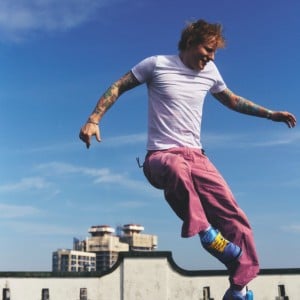
Ed Sheeran
Ed Sheeran
Idiosyncratic pop singer Ed Sheeran borrows from any style that crosses his path, molding genres to fit a musical character all his own that's charming, personable, and popular on a global scale. Elements of folk, hip-hop, pop, dance, soul, and rock can be heard in his big hits "The A Team," "Sing," "Thinking Out Loud," and "Shape of You" -- which gives him a broad appeal among different demographics. It also helped elevate him to international acclaim not long after the release of his 2011 debut LP, +, and took 2014's x and 2017's ÷ to the top of both the U.K. albums chart and the Billboard 200. Sheeran maintained his stardom with savvy collaborations -- his 2019 album No. 6 Collaborations Project featured an eclectic roster including <a href="spotify:artist:6LuN9FCkKOj5PcnpouEgny">Khalid</a>, <a href="spotify:artist:4nDoRrQiYLoBzwC5BhVJzF">Camila Cabello</a>, <a href="spotify:artist:4kYSro6naA4h99UJvo89HB">Cardi B</a>, <a href="spotify:artist:1uNFoZAHBGtllmzznpCI3s">Justin Bieber</a>, <a href="spotify:artist:4YLtscXsxbVgi031ovDDdh">Chris Stapleton</a>, and <a href="spotify:artist:0du5cEVh5yTK9QJze8zA0C">Bruno Mars</a> -- and by continuing to write candidly about his life: his 2021 album = was filled with songs about being a new father. Sheeran's musical explorations continued on -, a 2023 album that featured several tracks co-written and co-produced by <a href="spotify:artist:2hSyEBc9TBb9j38FOCdkIf">Aaron Dessner</a> of <a href="spotify:artist:2cCUtGK9sDU2EoElnk0GNB">the National</a>, and its swiftly released companion Autumn Variations. When Ed Sheeran released +, he had just turned 20. He had been playing music since he was a child in Framlingham, Suffolk -- he was born in Halifax, West Yorkshire but his family moved when he was young -- enthralled by the classic rock he heard around the house. Sheeran started writing music in his early teens, recording a self-made album called Spinning Man when he was 13 in 2004. In addition to making music at home -- he put out an EP titled The Orange Room in 2005 -- he'd busk on the streets and play whatever stage he could find. When he was 16, he dropped out of school and moved to London so he could make a go of a professional career, landing work as a guitar tech for Nizlopi, gigging whenever he could, and auditioning unsuccessfully for the ITV series Britannia High. The self-released EP You Need Me arrived in 2009 -- it followed 2006's eponymous EP and 2007's Want Some? -- but his momentum started to build in 2010 thanks to the EPs Loose Change and Songs I Wrote with Amy and, especially, performance videos he posted to YouTube. Sheeran started to generate considerable buzz -- <a href="spotify:artist:7LnaAXbDVIL75IVPnndf7w">Jamie Foxx</a> invited him to appear on his Sirius/XM radio show -- and he landed a deal with <a href="spotify:search:label%3A%22Asylum+Records%22">Asylum Records</a> in late 2010. After a final independent EP, No. 5 Collaborations, arrived in January 2011, he signed a contract with <a href="spotify:artist:3PhoLpVuITZKcymswpck5b">Elton John</a>'s management team. All of this laid the groundwork for a busy 2011. Sheeran entered the studio with <a href="spotify:artist:20twLKFb2Nhd8duUH0k2DJ">Jake Gosling</a> to record his major-label debut. Its first single, "The A Team," arrived in June 2011, entering the charts at number three. August brought "You Need Me, I Don't Need You," setting the stage for the September release of +. Assisted by the success of November's single "Lego House," the record became a huge hit in the U.K., a fact underscored by his win of British Breakthrough in the 2012 Brit Awards. Sheeran's success soon spread to Australia, Europe, Canada, and then the United States. He received a boost in the U.S. by opening for <a href="spotify:artist:3rIZMv9rysU7JkLzEaC5Jp">Snow Patrol</a> in 2012, but that paled in comparison to the exposure he received opening for <a href="spotify:artist:06HL4z0CvFAxyc27GXpf02">Taylor Swift</a> on her Red tour in 2013. His endorsement from <a href="spotify:artist:06HL4z0CvFAxyc27GXpf02">Swift</a>, combined with his landing of the closing credits song "I See Fire" for The Hobbit: The Desolation of Smaug, set Sheeran up for an eventful 2014. Along with reuniting with <a href="spotify:artist:20twLKFb2Nhd8duUH0k2DJ">Jake Gosling</a>, Sheeran worked with <a href="spotify:artist:1EpmQFTiJbcxzwbLpuUL8L">Rick Rubin</a> and <a href="spotify:artist:2RdwBSPQiwcmiDo9kixcl8">Pharrell</a> for X, the sophomore set that arrived in June 2014. X debuted at number one on both sides of the Atlantic and generated the huge hits "Thinking Out Loud" and "Sing," success that helped Sheeran secure a win for Album of the Year in the 2015 Brit Awards, along with the trophy for Best Male Solo Artist. His success wasn't limited to Britain. X was the second biggest-selling album in the world in 2015, coming in behind <a href="spotify:artist:4dpARuHxo51G3z768sgnrY">Adele</a>'s 25, and "Thinking Out Loud" took home the Grammys for Song of the Year and Best Pop Solo Performance in 2016. Sheeran spent the majority of 2016 recuperating and recording his third album with executive producer <a href="spotify:artist:5CiGnKThu5ctn9pBxv7DGa">Benny Blanco</a>. Early in 2017, he released two singles, "Castle on the Hill" and "Shape of You," with the latter reaching number one on the charts throughout the world. Their parent album, ÷, appeared in March. ÷ topped the pop charts in over 20 territories, including the U.K. and U.S., and it generated another international hit in "Galway Girl." Ed Sheeran's massive popularity was confirmed in June 2017, when he was awarded an MBE on the occasion of the Queen's Birthday Honours. Over the next year, Sheeran stayed busy touring. He also picked up several more accolades including winning the Grammy Award for Best Pop Vocal Album for ÷ and Best Pop Solo Performance for "Shape of You." In 2019, he paired with <a href="spotify:artist:1uNFoZAHBGtllmzznpCI3s">Justin Bieber</a> for the single "I Don't Care." It was the first of a series of duets which Sheeran collected on No. 6 Collaborations Project. The album appeared on July 12, 2019 and topped numerous charts just a few weeks after the release of Yesterday, a Danny Boyle film set in an alternate world where <a href="spotify:artist:3WrFJ7ztbogyGnTHbHJFl2">the Beatles</a> never existed that featured Sheeran in a pivotal role. No. 6 Collaborations Project went on to be nominated for a Grammy in the Best Pop Vocal Album category. In December 2020, Sheeran offered up the acoustic non-album single, "Afterglow" as a Christmas gift to his fans. Sheeran returned with "Bad Habits" in June 2021; the single topped the charts in nearly every country, save the U.S., where it peaked at two. The track was the first single from his fifth album, =. Arriving in October 2021, the record found Sheeran grappling with fatherhood and featured songwriting collaborations from <a href="spotify:artist:4bUqnkrDrb4f7rqmDR9yDu">Foy Vance</a>, <a href="spotify:artist:7bhMBjjQhgPX0q9S4Ajncn">Ben Kweller</a>, and <a href="spotify:artist:32opPqLCT3sF24Aso7wTXw">Natalie Hemby</a>, among others. It continued Sheeran's streak of number one albums in the U.K. and was equally successful internationally. That December, he joined <a href="spotify:artist:3PhoLpVuITZKcymswpck5b">Elton John</a> for the holiday song "Merry Christmas," which topped the U.K. singles chart and Billboard's Adult Contemporary chart. The single was also included on a Christmas edition of =, as well as <a href="spotify:artist:3PhoLpVuITZKcymswpck5b">John</a>'s The Lockdown Sessions. Sheeran then collaborated with Colombian singer <a href="spotify:artist:1vyhD5VmyZ7KMfW5gqLgo5">J Balvin</a> on 2021's "Sigue" and 2022's "Forever My Love." Also in 2022, he scored a Top Ten U.K. hit with the Pokémon-related "Celestial" before kicking off 2023 with "F64," a heartfelt tribute to the late British music entrepreneur Jamal Edwards. Sheeran launched the cycle for his fifth album in early 2023 with the release of the singles "Eyes Closed" and "Boat." Both songs were included on -, a record that featured several collaborations with <a href="spotify:artist:2hSyEBc9TBb9j38FOCdkIf">Aaron Dessner</a> of <a href="spotify:artist:2cCUtGK9sDU2EoElnk0GNB">the National</a>, along with work by <a href="spotify:artist:1rjeVTt9Ra1ldvN7SpeK0G">Max Martin</a>, Shellback, and <a href="spotify:artist:4bUqnkrDrb4f7rqmDR9yDu">Foy Vance</a>. Four months after - debuted at number one in the U.K. and number two in the U.S., Sheeran released Autumn Variations, an album recorded with <a href="spotify:artist:2hSyEBc9TBb9j38FOCdkIf">Dessner</a> as producer. - earned a Best Pop Vocal Album nomination at the 66th Grammy Awards. ~ Stephen Thomas Erlewine, Rovi
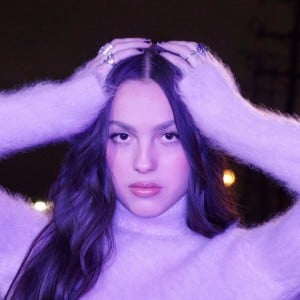
Olivia Rodrigo
Olivia Rodrigo
By bringing the authenticity of her life to her relatable songs, Olivia Rodrigo has achieved record-breaking success. Her 2021 smash hit "Driver's License" and subsequent singles "Deja Vu" and "Good 4 U" made the singer/songwriter the youngest artist ever to top the Billboard Hot 100, and the first artist to have their first three singles debut in the Top Ten of that chart. These extraordinarily popular songs paved the way for Rodrigo's multi-platinum, Grammy-winning debut album, Sour. Its heartbroken, defiant, and witty mix of pop, folk, and alternative rock captured the highs and lows of a young woman fearlessly expressing who she is, how she feels, and what she wants -- themes she approached with more maturity on 2023's Grammy-nominated GUTS and its chart-topping single "Vampire." While growing up in Temecula, California, Rodrigo's first love was singing. She started vocal lessons in kindergarten and took up piano soon after; by age 12, she was playing guitar. At the suggestion of her vocal coach, she pursued acting, and she appeared in productions at her elementary and middle schools -- experiences that led her to seek professional acting jobs. In 2016, she was cast as Paige Olvera in in the Disney Channel series Bizaardvark. It was an opportunity that led to Rodrigo winning the lead role of Nini Salazar-Roberts in the Disney+ series High School Musical: The Musical: The Series, a mockumentary-style show that follows the on- and off-stage drama that happens when the student body of East High puts on a production of High School Musical: The Musical. When the show's creators -- which included writer and Broadway librettist Tim Federle -- learned Rodrigo was a songwriter, they encouraged her to pen original songs for the series. Written in Rodrigo's living room during finals week of her sophomore year, "All I Want" garnered millions of streams after the show's debut in November 2019 and entered the U.S. and Canada Hot 100 singles charts in January 2020. Rodrigo also collaborated with her co-star <a href="spotify:artist:4VdV2qRAYBLINR6uU72V1J">Joshua Bassett</a> on the duet "Just for a Moment." In the wake of High School Musical: The Musical: The Series' success, she continued to work on her own music with producer Dan Nigro (who also collaborated with <a href="spotify:artist:6sFIWsNpZYqfjUpaCgueju">Carly Rae Jepsen</a> and <a href="spotify:artist:7pyhre5oEEFMqcgMEvJY7q">Sky Ferreira</a>), looking to the confessional songwriting of <a href="spotify:artist:3g2kUQ6tHLLbmkV7T4GPtL">Fiona Apple</a>, <a href="spotify:artist:1r1uxoy19fzMxunt3ONAkG">Phoebe Bridgers</a>, and especially <a href="spotify:artist:06HL4z0CvFAxyc27GXpf02">Taylor Swift</a> for inspiration. After she signed with <a href="spotify:search:label%3A%22Interscope+%22">Interscope </a>and <a href="spotify:search:label%3A%22Geffen%22">Geffen</a> in 2020, Rodrigo's debut single, "Driver's License," arrived in January 2021 and quickly topped charts around the world. This included the Billboard Hot 100, making her the youngest artist to debut at number one on that chart. Along with breaking several streaming records, the single was a multi-platinum success in the U.S. and Canada and went platinum in several other countries. That April, her second single, "Deja Vu," appeared, and its debut at number eight on the Billboard Hot 100 made her the first artist in history to have her first two singles debut within the Top Ten. A third single, "Good 4 U," arrived in May. Like "Driver's License," it topped the Billboard Hot 100, and Rodrigo became the first artist in Billboard's history to have their first three singles debut in the Top Ten of that chart. In turn, May 2021's Sour became the first debut album to feature two singles that topped the Billboard Hot 100 upon release. Initially intended to be an EP, the album mixed pop, alt-rock, and folk and took inspiration from <a href="spotify:artist:0cQbJU1aAzvbEmTuljWLlF">No Doubt</a>, <a href="spotify:artist:4F84IBURUo98rz4r61KF70">the White Stripes</a>, <a href="spotify:artist:6ogn9necmbUdCppmNnGOdi">Alanis Morrissette</a>, and <a href="spotify:artist:70kkdajctXSbqSMJbQO424">Kacey Musgraves</a>, among others. Co-written by Rodrigo and Nigro, Sour was hailed for its genre-defying sound and candid songwriting. It was a massive global success, becoming the second best-selling album in the world in 2021. In the U.S., Sour debuted at number one on the Billboard 200 Albums Chart, ultimately spending five weeks total in that spot (an accomplishment that made it 2021's longest-running number one album by a female artist) and 52 weeks in the Top Ten, earning multiple platinum certifications along the way. Shortly after Sour's release, all of its tracks appeared in the Top 30 of the Billboard Hot 100, with "Traitor" becoming its fourth single to debut in the Top Ten. In the U.K., Sour debuted at number one the same week "Good 4 U" topped the U.K. Singles chart, making Rodrigo the youngest solo artist to have the top-selling release on both charts. The album also topped the charts in Canada, Australia, and New Zealand, where it spent ten consecutive weeks in the peak position. As Sour broke chart records, Rodrigo's concert film Sour Prom premiered in June 2021. That December, she launched her world tour, performed in Hope for the Holidays, Musicians on Call's second annual virtual concert for hospital patients, won the People's Choice Award for Album of the Year, and was named Time Magazine's Entertainer of the Year. Sour and Rodrigo's accolades continued into 2022. At that year's Grammy Awards, she won the awards for Best New Artist, Best Pop Solo Performance for "Driver's License," and Best Pop Vocal album for Sour (Rodrigo was nominated in all four of the general Grammy categories, making her the second-youngest artist after <a href="spotify:artist:6qqNVTkY8uBg9cP3Jd7DAH">Billie Eilish</a> to earn this recognition). She also won the Juno Award for International Album of the Year; the Brit Award for International Song of the Year; seven Billboard Music Awards including Top Billboard 200 album, Top New Artist, and Top Female Artist; and the ASCAP Award for Songwriter of the Year. March 2022 saw the premiere of Driving Home 2 U, a documentary chronicling the creation of Sour. That April, Rodrigo kicked off her first headlining concert tour. She covered <a href="spotify:artist:0p4nmQO2msCgU4IF37Wi3j">Avril Lavigne</a>'s "Complicated" at every show, and <a href="spotify:artist:0p4nmQO2msCgU4IF37Wi3j">Lavigne</a> joined her in performing the song at the Toronto date. At her Glastonbury Festival appearance that June, Rodrigo and <a href="spotify:artist:13saZpZnCDWOI9D4IJhp1f">Lily Allen</a> performed "Fuck You" as a response to the overruling of Roe v. Wade by the U.S. Supreme Court. In September 2022, Rodrigo departed High School Musical: The Musical: The Series at the end of its third season. At the end of the year and into 2023, Rodrigo did more charity work, participating in the third annual Venture Into Cures virtual fundraising event for families with epidermolysis bullosa and other rare diseases, the third annual Musicians on Call virtual concert, and the MusiCares Foundation Charity Relief Auction. She released "Vampire," her first single in two years, that June. Her third single to debut at number one on the Billboard Hot 100, it also topped the charts in the U.K., Australia, Ireland, Canada, and New Zealand. That song and August's multinational Top Ten hit "Bad Idea Right?" appeared on September 2023's GUTS. Produced by Nigro and recorded at his garage studio, Rodrigo's second album built on Sour's wry rock and sweeping ballads as she took stock of her tumultuous teen years. The album once again topped the U.S. and U.K. charts as well as those of 12 other countries, while all of its songs appeared in the Top 40 of the Hot 100 Singles Chart in the U.S. GUTS was also nominated for Album of the Year and Best Pop Vocal Album at the 66th Grammy Awards. That November, Rodrigo's "Can't Catch Me Now" appeared on Music from and Inspired by the Hunger Games: The Ballad of Songbirds & Snakes; the song ultimately won the 2023 Hollywood Music in Media Award for Best Original Song in a Sci-Fi, Fantasy, or Horror Film. Later in November, the four bonus tracks featured on limited edition vinyl releases of the album were issued as the vinyl EP That November, Rodrigo's "Can't Catch Me Now" appeared on Music from and Inspired by the Hunger Games: The Ballad of Songbirds & Snakes; the song ultimately won the 2023 Hollywood Music in Media Award for Best Original Song in a Sci-Fi, Fantasy, or Horror Film. Later in November, the four bonus tracks featured on limited edition vinyl releases of the album were issued as the vinyl EP GUTS: The Secret Tracks for Record Store Day Black Friday. While on tour in March 2024, Rodrigo released GUTS (spilled), a deluxe edition of the album with five bonus tracks. The following month, she made a surprise appearance at Coachella, performing "Bathwater" with <a href="spotify:artist:0cQbJU1aAzvbEmTuljWLlF">No Doubt</a> during their set. Rodrigo and Nigro were also named ASCAP's 2024 Pop Music Songwriters of the Year, marking their second time winning the award. ~ Heather Phares, Rovi
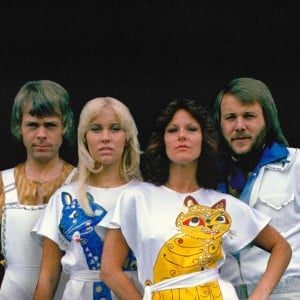
ABBA
ABBA
ABBA, whose name is made up of the initials of the four members’ first names – Agnetha Fältskog, Björn Ulvaeus, Benny Andersson and Anni-Frid “Frida” Lyngstad – was one of the biggest pop groups of the 1970s. Forming in 1972, the Swedish band burst onto the world stage two years later with their mega-hit ‘Waterloo’. With Björn and Benny as ambitious and ingenious writers/producers – their forceful manager Stig Anderson sometimes helping out with the lyrics – and Agnetha and Frida providing their compelling and emotionally charged vocals, the group was a powerful presence on the pop scene, conquering the world with hits such as ‘SOS’, ‘Mamma Mia’, ‘Fernando’, ‘Dancing Queen’, ‘Take A Chance On Me’, ‘Chiquitita’, ‘The Winner Takes It All’ and ‘Super Trouper’. Disbanding in 1982, the extraordinary success of the 1992 compilation ABBA Gold brought them back in the public consciousness, where they have remained ever since.
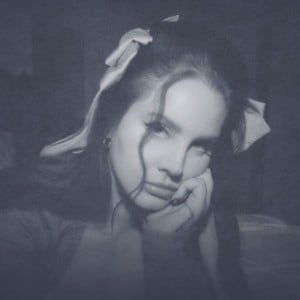
Lana Del Rey
Lana Del Rey
.
Favorites
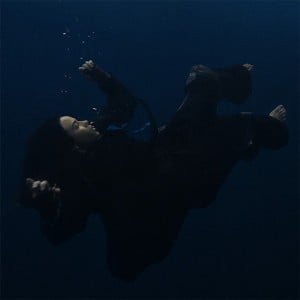
Billie Eilish
Billie Eilish
Billie Eilish remains one of the biggest stars to emerge in the 21st century. Her third studio album, HIT ME HARD AND SOFT features 10 tracks written and recorded in her hometown of Los Angeles, with her brother and producer FINNEAS. In 2019, her debut album WHEN WE ALL FALL ASLEEP, WHERE DO WE GO? debuted at No. 1 in 18 countries, and was the most streamed album of that year. In 2021, her sophomore album 'Happier Than Ever’ debuted at #1 in 20 countries. Both albums were critically acclaimed worldwide and were written, produced, and recorded entirely by Billie Eilish and FINNEAS. 9-time GRAMMY® Award-winning Billie Eilish has made history as the youngest artist to receive nominations and win in all the major GRAMMY® categories, receiving an award for Best New Artist, Album of the Year, Record of the Year, Song of the Year, and Best Pop Vocal Album, and is the youngest artist to write and record an official James Bond theme song, ‘No Time To Die,’ which won an Academy Award for Best Original Song in 2022. In 2023, Eilish also wrote and released the critically acclaimed song “What Was I Made For?” for the Greta Gerwig-directed motion picture Barbie, which also won Academy and Golden Globe Award for Best Original Song, two GRAMMY® Awards for Song of the Year and Best Song Written For Visual Media, and has solidified Billie Eilish yet again in the history books as the youngest person ever to win two Academy Awards.
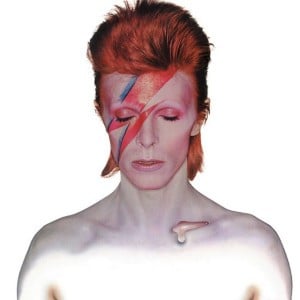
David Bowie
David Bowie
Everyone has a David Bowie that they fell in love with first—the otherworldly outsider Ziggy Stardust, the electronic adventurer, the wild-eyed glam pioneer, the enigmatic storyteller. But it was Bowie's ability to reinvent himself so vividly that captivated us again and again. Driven by boundless imagination, David Bowie was a multifaceted music icon, a social provocateur, a force in fashion, and a gifted actor whose unique personas and perspectives traveled with him through the decades. From the moment his homesick astronaut captured the spotlight in the late ‘60s to his exploratory, jazz-influenced <i>Blackstar</i> almost 50 years later, he excelled and innovated with turns in pop, glam, punk, soul, hard rock, and electronic music. And even though Bowie released vital albums throughout his life—and will forever embody the most artful edge of rock ’n’ roll—he was more than just the music he made. Bowie's fearlessness inspired us to celebrate the complexity and beauty of being completely ourselves.
Weezer
Weezer
When Weezer producer (and former Cars frontman) Ric Ocasek first heard Weezer’s demo tape in late 1993, he couldn’t quite figure out where the band was coming from. Musing to <i>Rolling Stone</i> years later, he said it felt a little like metal, but the lyrics were smart and nerdy. The songs were catchy, but the sound was powerful and super loud. He found himself wondering about their hair: Would it be short and studious, or long and rock ’n’ roll?<br> More than 25 years later, Weezer remains something of an enigma, a blend of big, joyful arena rock with shy-guy reticence, goofy humor with obsessively precise pop craft. Where some bands gave it to you live and direct from the heart, Weezer was methodical: One of the band’s early T-shirt designs memorably read, “If it’s too loud, turn it down,” while frontman Rivers Cuomo has proudly described organizing his songs using that most un-rock-'n'-roll of tools: spreadsheets.<br> Formed in California in 1992, the band debuted with 1994’s <i>Weezer</i> (a.k.a. “The Blue Album”), an album whose big hooks (“Say It Ain't So,” “Undone — The Sweater Song”) and sweet disposition (“Buddy Holly”) made it an instant antidote to the angst of grunge. Following a rocky adjustment, they returned in 1996 with <i>Pinkerton</i>, a moody, noisy, self-loathing record that came to be embraced as a cult classic.<br> After a nearly five-year break, during which they slid quietly off the radar (and bassist Matt Sharp left to form The Rentals), the band released 2001’s <i>Weezer</i> (a.k.a. “The Green Album”), igniting a period of factory-like productivity that saw them frequently turning out albums of charming, polished, and slightly eccentric power pop. In 2018, after a six-month Twitter campaign launched by a 14-year-old fan, Weezer released a cover of Toto’s 1982 smash “Africa”—a perfect expression of both their commitment to and their utterly carefree attitude toward their place in the culture. “The lyrics seem like he’s just rambling off the top of his head and they don’t really make sense but nobody seems to mind,” Cuomo told Apple Music. “I’ll spend weeks working on lyrics and it’s like, ‘Maybe people don’t really care.’” It sparked their first covers album, <i>Weezer</i> (a.k.a. “The Teal Album”), which was followed a month later by <i>Weezer</i> (a.k.a. “The Black Album”).
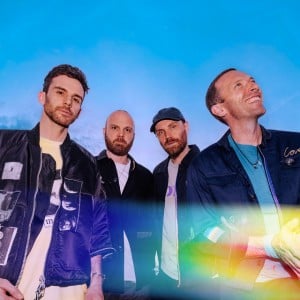
Coldplay
Coldplay
Coldplay formed in London in late 1997. The band have gone on to become one of the most popular acts in the world, selling more than 100 million albums and releasing a long line of hits such as Yellow, Clocks, Fix You, Paradise, Viva La Vida, A Sky Full Of Stars, Hymn For The Weekend, Something Just Like This and Higher Power. The band’s acclaimed Music Of The Spheres World Tour, which began in 2022, is taking them to stadiums around the globe, with more than 9 million tickets already sold. The tour is accompanied by a comprehensive set of sustainability initiatives which include a show powered by 100% renewable energy in almost all locations; the world’s first tourable battery system; kinetic dancefloors allowing fans to help power the show; solar panels and wind turbines at every venue; incentives to encourage fans to travel by green transport; and one tree planted for every ticket sold. The band recently gave an update on the sustainability initiatives, revealing that their current tour has so far produced 59% less CO2e emissions than their previous stadium tour in 2016/17, and that 7 million trees have already been planted (one for each concert goer). Their tenth album, Moon Music, lands on October 4, 2024. Moon Music is Coldplay’s first album since 2021’s Music Of The Spheres, which spawned the US Number One single with BTS, My Universe, and was nominated for Album of the Year at the Grammy Awards. Music Of The Spheres has accumulated over 4 billion streams.
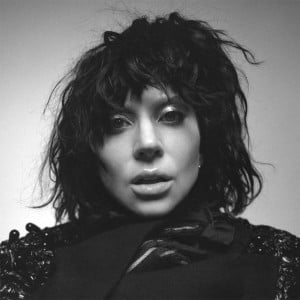
Lady Gaga
Lady Gaga
Academy Award and 14-time GRAMMY-winner Lady Gaga is a one-of-a-kind artist and performer. She has amassed an outstanding 110 million global album sales, 175 billion streams, and 758 million song consumption units, making her one of the best-selling musicians of all time. Her most recent pop album, Chromatica, became her sixth consecutive #1 on the Billboard 200 chart, making her the first female artist to achieve this over a ten-year period (2011-2020). Gaga's collaboration with Ariana Grande on “Rain On Me” had the biggest Spotify debut of 2020, reaching #1 on the Global and US Spotify Charts. In 2023, her debut single “Just Dance” became her third diamond-certified single by the RIAA, joining "Bad Romance" and "Poker Face." In 2018, she won an Academy Award for Best Original Song for “Shallow,” featured on the soundtrack of Best Picture nominee A Star is Born (2018), in addition to claiming a Golden Globe, a Critics’ Choice Award, and four GRAMMYs for both “Shallow” and “I’ll Never Love Again,” also from the same soundtrack. Lady Gaga knows no bounds, from producing her classic pop hits to exploring the classic American Songbook with her albums Cheek to Cheek and Love For Sale with Tony Bennett, both #1 albums. Beyond music, she excels in business as the founder of Haus Labs and thrives as an actress (A Star Is Born, House of Gucci, Joker: Folie à Deux), as well as a passionate activist for mental health and LGBTQ+ rights through her Born This Way Foundation.
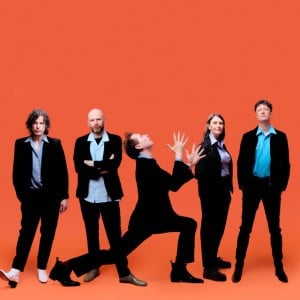
Franz Ferdinand
Franz Ferdinand
With their sharply stylish mix of rock and dance music, Franz Ferdinand have brought a wry sophistication to indie rock while becoming one of the U.K.'s most popular bands. The Glasgow-based group arrived in the wake of the early-2000s rock revival, with bands such as <a href="spotify:artist:0epOFNiUfyON9EYx7Tpr6V">the Strokes</a> and <a href="spotify:artist:4fSPtBgFPZzygkY6MehwQ7">the Libertines</a> reminding listeners just how refreshing -- and evergreen -- hook-driven guitar music could be. While Franz Ferdinand had a kinship with those acts, their lineage also included the arch, angular post-punk of bands such as <a href="spotify:artist:2i8ynmFv4qgRksyDlBgi6d">Wire</a> and the witty, funky jangle of fellow Glaswegians <a href="spotify:artist:2u7xZP39dtED9EuRX9MUwu">Orange Juice</a>. From the beginning, the group had a flair for translating arty, unexpected references into widely appealing music and visuals, whether it was the Russian Constructivism-inspired artwork that graced their early releases or the <a href="spotify:artist:0Wxy5Qka8BN9crcFkiAxSR">Howlin' Wolf</a> homage in the guitar solos of 2004's smash single "Take Me Out." After laying the groundwork for their sound with that year's Mercury Prize-winning, platinum-selling, Grammy-nominated debut album Franz Ferdinand, the band soon branched out. On 2005's You Could Have It So Much Better, they added more nuance to their style, then explored dub on 2009's Tonight and disco on 2018's sleek Always Ascending. Franz Ferdinand further embellished their sound in the 2020s, bringing vintage glam influences on the new songs included on 2022's best-of Hits to the Head and 2025's full-length The Human Fear. Prior to forming Franz Ferdinand, singer/guitarist <a href="spotify:artist:43tffeOxONSbTQ888To7bE">Alex Kapranos</a> played in bands such as the Karelia and <a href="spotify:artist:0EB6K2787E4Vf9TYie1qEI">Yummy Fur</a> (the latter of which also featured drummer Paul Thomson). In late 2001, and bassist Bob Hardy began working on music together when they met Nick McCarthy, a classically trained pianist and double bass player who originally played drums for the group despite no prior experience as a drummer. The trio had rehearsed at McCarthy's house for a while when they started playing with Thomson, who felt like playing guitar instead of drums. Eventually, McCarthy and Thomson switched instruments and the band switched practice spaces, moving to an abandoned warehouse that they named the Chateau. Taking their name from the Austro-Hungarian Archduke whose murder sparked World War I (and hoping they'd have a similarly world-changing effect on music), Franz Ferdinand rehearsed at the Chateau and held rave-like events incorporating music and art (Hardy graduated from the Glasgow School of Art, and Thomson also posed as a life model there). The band needed a new rehearsal space once their illicit art parties were discovered by the police, and they found one in a Victorian courthouse and jail. By mid-2002, Franz Ferdinand had recorded an EP's worth of material that they intended to release themselves, but word of mouth about the band spread and they signed to <a href="spotify:search:label%3A%22Domino%22">Domino</a> in May 2003. Soon after, the band decamped to Malmö, Sweden to work with producer Tore Johansson at Gula Studios. Their spiky debut single "Darts of Pleasure" arrived that September and reached number 44 on the U.K. Singles chart. Franz Ferdinand spent the rest of the year supporting groups such as <a href="spotify:artist:5UVftEhSsIg0kkXlmfhB6M">Hot Hot Heat</a> and <a href="spotify:artist:3WaJSfKnzc65VDgmj2zU8B">Interpol</a>, and in November the Darts of Pleasure EP became their first U.S. release. The following January, the band's second single Take Me Out became a top five hit in the U.K., propelling them to greater popularity and laying the groundwork for their debut album. Arriving in February 2004, Franz Ferdinand fleshed out the wiry fusion of post-punk and disco of the band's singles. It hit number three on the U.K. Albums chart and spawned the additional hit singles "The Dark of the Matinée" and "Michael." In September 2004, the album won the Mercury Prize over such artists as <a href="spotify:artist:4GvOygVQquMaPm8oAc0vXi">the Streets</a>, <a href="spotify:artist:4YrKBkKSVeqDamzBPWVnSJ">Basement Jaxx</a>, and <a href="spotify:artist:53A0W3U0s8diEn9RhXQhVz">Keane</a>. Franz Ferdinand also fared well internationally, becoming a top 20 hit in Australia and several European countries. In the U.S., the band's consistent touring and frequent airplay of "Take Me Out" boosted the album to number 32 on the Billboard 200 Albums chart and, ultimately, sales of over a million copies. In 2005, the accolades for the band and their debut album continued to roll in: <a href="spotify:artist:43tffeOxONSbTQ888To7bE">Kapranos</a> and company won the Brit Awards for Best British Group and Best British Rock Act, while Franz Ferdinand earned a Grammy nomination for Best Alternative Album and "Take Me Out" was nominated for Best Rock Performance by a Duo or Group with Vocal. By that time, Franz Ferdinand was already working on their second album with producer Rich Costey in Glasgow and New York City. Released in September 2005, You Could Have It So Much Better broadened the band's sound with piano ballads and <a href="spotify:artist:3WrFJ7ztbogyGnTHbHJFl2">Beatles</a>que pop. The album was another success, becoming the group's first number one album and notching four top 30 singles in the U.K., and was a top ten hit internationally. In the U.S., it peaked at number eight and was certified gold. You Could Have It So Much Better also received critical acclaim as well as nominations for several Brit Awards and Grammy Awards, including Best Alternative Album and Best Rock Performance by a Duo or Group for its lead single "Do You Want To." The band rounded out the year by collaborating with <a href="spotify:artist:4XYH5Be5pn1qkxhfaID3J5">Jane Birkin</a> on a cover of <a href="spotify:artist:01C9OoXDvCKkGcf735Tcfo">Serge Gainsbourg</a>'s "Sorry Angel" for the tribute album Monsieur Gainsbourg Revisited. Though Franz Ferdinand began writing songs for their third album in 2005, they scrapped them for a fresh set that they planned to make into a "dirty pop" concept album. Opting for a dance- and pop-influenced direction, the band worked with producer <a href="spotify:artist:1PXStuNqw9YDsim4EhMSq7">Dan Carey</a>, who counted <a href="spotify:artist:4RVnAU35WRWra6OZ3CbbMA">Kylie Minogue</a>, <a href="spotify:artist:2K13AVg3bFpHSxDM1vJ0qA">CSS</a>, <a href="spotify:artist:37uLId6Z5ZXCx19vuruvv5">Hot Chip</a>, and <a href="spotify:artist:13saZpZnCDWOI9D4IJhp1f">Lily Allen</a> among his clients. Recorded in <a href="spotify:artist:1PXStuNqw9YDsim4EhMSq7">Carey</a>'s London studio as well as the old town hall of Govan, Scotland, February 2009's Tonight traced the ups and downs of a night out with songs that nodded to dub, new wave, and dance music. Featuring the singles "Ulysses" and "No You Girls," the album debuted at number two in the U.K. and number nine in the U.S., and reached the top ten in Japan, Australia, and several other countries. That June, the band released Blood, an album featuring dub-inspired remixes of Tonight's songs. In 2010, Franz Ferdinand contributed a version of "The Lobster Quadrille" to the Alice in Wonderland soundtrack and worked with <a href="spotify:artist:264YmdiSc68XVog9LYQ8na">Marion Cotillard</a> on "The Eyes of Mars," a song that appeared in a Dior advertising campaign. That year, <a href="spotify:artist:43tffeOxONSbTQ888To7bE">Kapranos</a> and McCarthy also appeared on <a href="spotify:artist:5Qlt3zQ63Z99mNhuun0JAT">Edwyn Collins</a>' album Losing Sleep. For 2011's Record Store Day, Franz Ferdinand issued the Covers EP, which featured versions of Tonight songs by artists including <a href="spotify:artist:066X20Nz7iquqkkCW6Jxy6">LCD Soundsystem</a>, <a href="spotify:artist:4EF5vIcCYKMM61oYOG2Tqa">ESG</a>, and <a href="spotify:artist:1gkSl4XpHIHI4I1WQbfXOE">Peaches</a>. While making their fourth album, Franz Ferdinand took their time, beginning the writing process in 2010 and debuting new songs during a string of 2012 shows. The band worked in studios in Glasgow, London and Stockholm with a large cast of contributors, including <a href="spotify:artist:37uLId6Z5ZXCx19vuruvv5">Hot Chip</a>'s <a href="spotify:artist:380fnmlGnkyueBMqGWx2k5">Joe Goddard</a> and <a href="spotify:artist:6zclVXoEfp3nFq4dOgqgOX">Alexis Taylor</a>, <a href="spotify:artist:6u11Qbko2N2hP4lTBYjX86">Peter Björn & John</a>'s Björn Yttling, <a href="spotify:artist:0mgbAj6btHW215UxhLq1AV">Veronica Falls</a>' Roxanne Clifford, and DJ <a href="spotify:artist:49gaZqfow2v8EEQmjGyEIw">Todd Terje</a>. Arriving in August 2013, Right Thoughts Right Words Right Action merged the dance and indie sounds of the band's previous albums with an optimistic outlook. Once again, the album was a top ten hit in many countries -- it reached number two in the band's homeland of Scotland and number six in the U.K. -- and peaked at number 24 in the U.S. Meanwhile, the single "Right Action" hit number 39 on the U.K. Indie chart and number 28 on the Billboard Alternative Songs chart in the U.S. Franz Ferdinand then collaborated with <a href="spotify:artist:7pwjGKaqnfkvS7eQbHaqyH">Sparks</a> as <a href="spotify:artist:0OnPrsDBROxkpC3qbFnL6L">FFS</a> and released their self-titled album in June 2015. The following year, McCarthy left the band. Also in 2016, Franz Ferdinand contributed "Demagogue" to the 30 Days, 50 Songs project against the candidacy of Donald Trump in that year's U.S. presidential election, while <a href="spotify:artist:43tffeOxONSbTQ888To7bE">Kapranos</a> appeared in the Glasgow music scene documentary Lost in France. In 2017, Franz Ferdinand added guitarist Dino Bardot (another former member of <a href="spotify:artist:0EB6K2787E4Vf9TYie1qEI">Yummy Fur</a> as well as <a href="spotify:artist:1JEwJAGMlP6JvUkZ5OXkvy">1990s</a>) and <a href="spotify:artist:1WIjei769mW4VVrM9VsauL">Miaoux Miaoux</a> keyboardist Julian Corrie to the fold and made their live debut as a quintet. The band also went into the studio that year with producer Philippe Zdar to record their fifth album, February 2018's Always Ascending. Leaning further into Franz Ferdinand's dance inclinations, it was another Top Ten hit in Scotland and the U.K. and peaked at 59 in the U.S. Thomson left the band in 2021, with Audrey Tait stepping in behind the drumkit. In March 2022, Franz Ferdinand released the best-of Hits to the Head. Inspired by classic greatest-hits collections like Changesbowie, it featured two new songs, "Curious" and "Billy Goodbye." Around the time of the collection's release, the band performed at the fundraising concert Night for Ukraine. For January 2025's The Human Fear, <a href="spotify:artist:43tffeOxONSbTQ888To7bE">Kapranos</a> co-wrote songs with Hardy, Corrie, and Bardot that touched on existential worries about fatherhood, identity, and love. Working with Right Thoughts Right Words Right Action engineer Mark Ralph as producer, Franz Ferdinand added punchy glam rock influences to their bracing style. ~ Heather Phares, Rovi
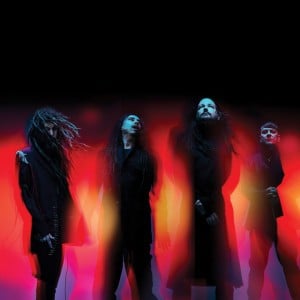
Korn
Korn
KORN changed the world with the release of their self-titled debut album. It was a record that would pioneer a genre, while the band’s enduring success points to a larger cultural moment. The FADER notes, “There was an unexpected opening in the pop landscape and KORN articulated a generational coming-of-angst for a claustrophobic, self-surveilled consciousness. KORN became the soundtrack for a generation’s arrival as a snarling, thrashing, systemically-restrained freak show.” Since forming, KORN has sold 40 million albums worldwide, collected two GRAMMYS, toured the world countless times, and set many records in the process that will likely never be surpassed. Vocalist Jonathan Davis, guitarists James “Munky” Shaffer and Brian “Head” Welch, bassist Reginald “Fieldy” Arvizu, and drummer Ray Luzier, have continued to push the limits of the rock, alternative and metal genres, while remaining a pillar of influence for legions of fans and generations of artists around the globe. The level of KORN’s reach transcends accolades and platinum certifications. They are “a genuine movement in a way bands cannot be now,” attests The Ringer. They represent a new archetype and radical innovation, their ability to transcend genre makes barriers seem irrelevant.
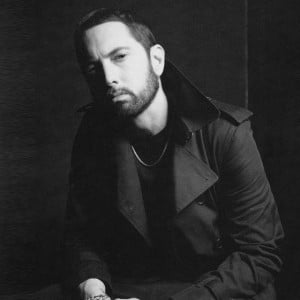
Eminem
Eminem
Apart from being one of the best-selling artists in music history, Eminem is one of the greatest rappers of his generation. He's effortlessly fast, fluid, dexterous, and unpredictable, capable of pulling off long-form narratives or withering asides. And thanks to his mentor <a href="spotify:artist:6DPYiyq5kWVQS4RGwxzPC7">Dr. Dre</a>, he's had music to match with thick, muscular loops evoking the terror and paranoia conjured by his lyrics. To be certain, a great deal of the controversy Eminem courted came through in how his violent fantasias, often directed at his mother or his wife, intertwined with flights of absurdity that appealed to listeners too young to absorb the psychodramas explored on his breakthrough albums The Slim Shady LP and The Marshall Mathers LP. Eminem's commercial peak came around the time of his 2002 album The Eminem Show (which went platinum 27 times over) and with his crossover onto the big screen that same year with 8 Mile, a film that earned him acclaim for his performance and an Oscar for the film's anthem, "Lose Yourself." Eminem's journey as a living rap legend included struggles with addiction, near-constant feuding with other artists, and a celebrity status that shifted as the years went on. Through all his various changes, however, he continued growing as an artist as well as consistently hitting high commercial marks. Though critics could be unkind to efforts like 2009's Relapse or 2017's Revival, fans made sure that each new album sold at least platinum numbers and topped the charts. Instead of recycling old ideas, the rapper experimented with new production approaches, faster flows, and increasingly complex multisyllabic wordplay on projects like 2020's Music to Be Murdered By and the 2024 concept album The Death of Slim Shady (Coup de Grâce), in which he confronted and killed his alter ego. Born Marshall Mathers in the Kansas City, Missouri suburb of St. Joseph, Eminem spent his childhood between Missouri and Michigan, settling in Detroit in his teens. At the age of 14, he began rapping with a high school friend, the two adopting the names "Manix" and "M&M," which soon morphed into Eminem. Under this name, Mathers entered battle rapping, a struggle dramatized in the fictionalized 8 Mile. Initially, the predominantly Black audience didn't embrace him, but soon his skills earned him a reputation, and he was recruited to join several rap groups. The first of these was the New Jacks, and after they disbanded, he joined Soul Intent, who released a single in 1995. This track also featured <a href="spotify:artist:1W7G3vXPeISR3Oi9ggVfyE">Proof</a>, and the two rappers broke off on their own to form <a href="spotify:artist:5Qi4Bb7a8C0a00NZcA77L0">D-12</a>, a six-member crew that functioned more as a <a href="spotify:artist:34EP7KEpOjXcM2TCat1ISk">Wu-Tang</a>-styled collective than a regularly performing group. As he was struggling to establish his career, Eminem and his girlfriend Kim had a daughter, Hailey, forcing him to spend less time rapping and more time providing for his family. He assembled his first album, Infinite, which received some underground attention in 1996, not all of it positive. After its release, Eminem developed his Slim Shady alter ego, a persona that freed him to dig deep into his dark id, something he needed as he faced a number of personal upheavals, beginning with a bad split with Kim, which led him to move in with his mother and increase his use of drugs and alcohol, capped off by an unsuccessful suicide attempt. All this sturm und drang was channeled into The Slim Shady EP, which is where he first demonstrated many of the quirks that became his trademark, including his twitchy, nasal rhyming and disturbingly violent imagery. The Slim Shady EP opened many doors, the most notable being a contract with <a href="spotify:search:label%3A%22Interscope+Records%22">Interscope Records</a>. After Eminem came in second at the 1997 Rap Olympics MC Battle in Los Angeles, <a href="spotify:search:label%3A%22Interscope%22">Interscope</a> head Jimmy Iovine sought him out, giving the EP to <a href="spotify:artist:6DPYiyq5kWVQS4RGwxzPC7">Dr. Dre</a>, who proved eager to work with Eminem. They quickly cut Em's <a href="spotify:search:label%3A%22Interscope%22">Interscope</a> debut in the fall of 1998 -- during which time Marshall reconciled with Kim and married her -- and The Slim Shady LP appeared early in 1999, preceded by the single "My Name Is." Both were instant blockbusters and Eminem became a lightning rod for attention, earning praise and disdain for his violent, satirical fantasias. He quickly followed The Slim Shady LP with The Marshall Mathers LP in the summer of 2000. By this point, there was little doubt that Eminem was one of the biggest stars in pop music: the album sold almost two million copies within the first two weeks of release, but Mathers felt compelled to tweak other celebrities, provoking pop stars in his lyrics, and <a href="spotify:artist:4xtWjIlVuZwTCeqVAsgEXy">Insane Clown Posse</a>'s entourage in person, providing endless fodder for the tabloids. This gossip blended with growing criticism about his violent and homophobic lyrics, and under this fire, he reunited his old crew, <a href="spotify:artist:5Qi4Bb7a8C0a00NZcA77L0">D-12</a>, releasing an album in 2001, then touring with the group. During this furor, he had his biggest hit in the form of the moody ballad "Stan." Performed at the Grammys as a duet with <a href="spotify:artist:3PhoLpVuITZKcymswpck5b">Elton John</a>, thereby undercutting some accusations of homophobia, the song helped Eminem cross over to a middlebrow audience, setting the stage for the ultimate crossover of 2001's 8 Mile. Directed by Curtis Hanson, best known as the Oscar-nominated director of L.A. Confidential, the gritty drama fictionalized Eminem's pre-fame Detroit days and earned considerable praise, culminating in one of his biggest hits with the theme "Lose Yourself," which won Mathers an Oscar. After all this, he retreated from the spotlight to record his third album, The Eminem Show. Preceded by the single "Without Me," it turned into another huge hit, albeit not quite as strong as its predecessor, and there were some criticisms suggesting that Eminem wasn't expanding his horizons much. Encore, released late in 2004, did reach into more mature territory, notably on the anti-<a href="spotify:artist:2JZbcOAw67koOHlFTjMeGX">George W. Bush</a> "Mosh," but most of the controversy generated by the album was for behind-the-scenes events: a bus crash followed by canceled dates and a stint in rehab. Rumors of retirement flew, and the 2005 appearance of Curtain Call: The Hits did nothing to dampen them, nor did the turmoil of 2006, a year that saw Mathers remarrying and divorcing Kim within a matter of four months, as well as the shooting death of <a href="spotify:artist:1W7G3vXPeISR3Oi9ggVfyE">Proof</a> at a Detroit club. During all this, Em did some minor studio work, but he soon dropped off the radar completely, retreating to his Detroit home. He popped up here and there, most notably debuting the hip-hop channel Shade 45 for Sirius Satellite Radio in September 2008, but it wasn't until early 2009 that he mounted a comeback with Relapse, an album whose very title alluded to some of Mathers' struggles with prescription drugs, but it also announced that after an extended absence, Slim Shady was back. While not quite a blockbuster, the album went platinum, and Eminem followed it at the end of the year with an expanded version of Relapse (dubbed Relapse: Refill) that added outtakes and new recordings. Recovery, initially titled Relapse 2, was issued in June 2010. The album debuted on top of the Billboard 200 chart, where it remained for five consecutive weeks, while its leadoff single, "Not Afraid," debuted on top of the magazine's Hot 100 singles chart. The year 2010 also brought Eminem back together with <a href="spotify:artist:6DVipHzYsPlIoA0DW8Gmns">Royce da 5'9"</a> under the <a href="spotify:artist:77IURH5NC56Jn09QHi76is">Bad Meets Evil</a> moniker. In turn, June 2011's Hell: The Sequel marked the release of their first EP as a duo (barring the previous month's release of key EP track "Fastlane" as a single) and was their first batch of new material since a 1999 double A-side. After an intense period of recording, Eminem announced in August 2013 that his next solo album would be a nostalgically themed set of new material entitled The Marshall Mathers LP 2, which landed in early November. The album featured the singles "Berzerk," "Rap God," and "Survival," plus the chart-topping hit "The Monster" with <a href="spotify:artist:5pKCCKE2ajJHZ9KAiaK11H">Rihanna</a>. In 2014, new tracks landed on the double-disc set Shady XV, which celebrated the <a href="spotify:search:label%3A%22Shady%22">Shady</a> label's 15th birthday. The singles "Phenomenal" and "Kings Never Die" featuring <a href="spotify:artist:4yiQZ8tQPux8cPriYMWUFP">Gwen Stefani</a> arrived a year later, both taken from the Southpaw soundtrack. Eminem resurfaced in October 2017 with a freestyle anti-Trump rap, which didn't appear on Revival, the December 2017 album that was filled with cameos, including appearances by <a href="spotify:artist:6vWDO969PvNqNYHIOW5v0m">Beyoncé</a> ("Walk on Water"), <a href="spotify:artist:6eUKZXaKkcviH0Ku9w2n3V">Ed Sheeran</a> ("River"), and <a href="spotify:artist:1KCSPY1glIKqW2TotWuXOR">P!nk</a> ("Need Me"). His seventh straight chart-topper, it ultimately failed to match the sales heights of past efforts, despite the international success of the "River" single. The next year, without warning, Eminem issued his surprise tenth album, Kamikaze. The set featured appearances by <a href="spotify:artist:6C1ohJrd5VydigQtaGy5Wa">Joyner Lucas</a>, <a href="spotify:artist:6DVipHzYsPlIoA0DW8Gmns">Royce da 5'9"</a>, and <a href="spotify:artist:3KedxarmBCyFBevnqQHy3P">Jessie Reyez</a>, as well as "Venom," from the film of the same name. In January 2020, he repeated this surprise-release approach with 11th studio album Music to Be Murdered By. The album featured production from <a href="spotify:artist:6DPYiyq5kWVQS4RGwxzPC7">Dr. Dre</a> and cameos from the now-usual host of special guests, this time featuring <a href="spotify:artist:3ZotbHeyVQKxQCPDJuQ4SU">Q-Tip</a>, <a href="spotify:artist:6eUKZXaKkcviH0Ku9w2n3V">Ed Sheeran</a>, <a href="spotify:artist:3jK9MiCrA42lLAdMGUZpwa">Anderson .Paak</a>, and the late <a href="spotify:artist:4MCBfE4596Uoi2O4DtmEMz">Juice Wrld</a>, among many others. The set debuted at number one on the Billboard charts and was re-released in expanded form in December under the title Music to Be Murdered By: Side B. In 2021, Eminem appeared on the <a href="spotify:artist:4utLUGcTvOJFr6aqIJtYWV">Skylar Grey</a> song "Last One Standing" along with <a href="spotify:artist:6AgTAQt8XS6jRWi4sX7w49">Polo G</a> and <a href="spotify:artist:4AA474G2hRfrHyGrfyDseO">Mozzy</a>. The track was featured on the soundtrack for the film Venom: Let There Be Carnage and cracked the Top 100 of the Billboard charts. 2021 also saw Eminem opening a spaghetti restaurant in Detroit, named Mom's Spaghetti after a line from "Lose Yourself." In February 2022, he performed alongside <a href="spotify:artist:6DPYiyq5kWVQS4RGwxzPC7">Dr. Dre</a>, <a href="spotify:artist:1XkoF8ryArs86LZvFOkbyr">Mary J. Blige</a>, <a href="spotify:artist:2YZyLoL8N0Wb9xBt1NhZWg">Kendrick Lamar</a>, and others at the half-time show of Super Bowl LVI. That June, Eminem released "The King and I," a track he recorded with <a href="spotify:artist:5nLYd9ST4Cnwy6NHaCxbj8">CeeLo Green</a> for the soundtrack of <a href="spotify:artist:7HhTERkBV4Ot14KphgBfSh">Baz Luhrmann</a>'s <a href="spotify:artist:43ZHCT0cAZBISjO8DG9PnE">Elvis Presley</a> biopic, Elvis. "The King and I" was one of three new songs on Curtain Call 2, a 2022 compilation covering the singles Eminem had released since Curtain Call: The Hits. "From the D to the LBC," a collaboration with <a href="spotify:artist:7hJcb9fa4alzcOq3EaNPoG">Snoop Dogg</a>, was also featured on Curtain Call 2. In June of 2024, Eminem released his 12th studio LP The Death of Slim Shady (Coup de Grâce). The album largely centered around the concept of Marshall Mathers being kidnapped by his alter ego Slim Shady and fighting internally between these two sides of his personality. The album included production work from <a href="spotify:artist:6DPYiyq5kWVQS4RGwxzPC7">Dr. Dre</a>, <a href="spotify:artist:6GEykX11lQqp92UVOQQCC7">DJ Premier</a>, and <a href="spotify:artist:5CiGnKThu5ctn9pBxv7DGa">Benny Blanco</a>, as well as rap cameos from <a href="spotify:artist:0c173mlxpT3dSFRgMO8XPh">Big Sean</a>, <a href="spotify:artist:0sKsReKseslDlhxmbN6wLk">BabyTron</a>, <a href="spotify:artist:6U3ybJ9UHNKEdsH7ktGBZ7">JID</a>, and others. ~ Stephen Thomas Erlewine, Rovi
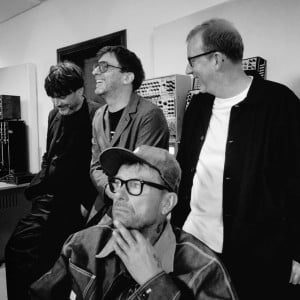
Blur
Blur
Initially, Blur were one of the multitude of British bands that appeared in the wake of the Stone Roses, mining the same swirling, pseudo-psychedelic guitar pop, only with louder guitars. Following an image makeover in the mid-'90s, the group emerged as the most popular band in the U.K., establishing itself as heir to the English guitar pop tradition of the Kinks, the Small Faces, the Who, the Jam, Madness, and the Smiths. In the process, the group broke down the doors for a new generation of guitar bands that became labeled as Brit-pop. With Damon Albarn's wry lyrics and the group's mastery of British pop tradition, Blur were the leader of Brit-pop, but they quickly became confined by the movement; since they were its biggest band, they nearly died when the movement itself died. Through some reinvention, Blur reclaimed their position as an art pop band in the late '90s by incorporating indie rock and lo-fi influences, which finally gave them their elusive American success in 1997. But the band's legacy remained in Britain, where they helped revitalize guitar pop by skillfully updating the country's pop traditions. Originally called Seymour, the group was formed in London in 1989 by vocalist/keyboardist Albarn along with guitarist Graham Coxon and bassist Alex James, with drummer Dave Rowntree joining the lineup shortly afterward. After performing a handful of gigs and recording a demo tape, the band signed to Food Records, a subsidiary of EMI run by journalist Andy Ross and former Teardrop Explodes keyboardist Dave Balfe. Balfe and Ross suggested that the band change its name, submitting a list of alternate names for the group's approval. From that list, the group took the name Blur. "She's So High," the group's first single, made it into the Top 50 while the follow-up, "There's No Other Way," went Top Ten. Both singles were included on their 1991 Stephen Street-produced debut album, Leisure. Although it received favorable reviews, the album fit neatly into the dying Manchester pop scene, causing some journalists to dismiss the band as manufactured teen idols. For the next two years, Blur struggled to distance themselves from the scene associated with the sound of their first album. Released in 1992, the snarling "Pop Scene" was Blur's first attempt at changing their musical direction. A brash, spiteful rocker driven by horns, the neo-mod single was punkier than anything the band had previously recorded and its hooks were more immediate and catchy. Despite Blur's clear artistic growth, "Pop Scene" didn't fit into the climate of British pop and American grunge in 1992 and failed to make an impression on the U.K. charts. Following the single's commercial failure, the group began work on its second album, Modern Life Is Rubbish, a process that would take nearly a year and a half. XTC's Andy Partridge was originally slated to produce Modern Life Is Rubbish, but the relationship between Blur and Partridge quickly soured, so Street was again brought in to produce the band. After spending nearly a year in the studio, the band delivered the album to Food. The record company rejected it, declaring that it needed a hit single. Blur went back into the studio and recorded Albarn's "For Tomorrow," which would turn out to be a British hit. Food was ready to release the record, but the group's U.S. record company, SBK, believed there was no American hit single on the record and asked them to return to the studio. Blur complied and recorded "Chemical World," which pleased SBK for a short while; the song would become a minor alternative hit in the U.S. and charted at number 28 in the U.K. Modern Life Is Rubbish was set for release in the spring of 1993 when SBK asked Blur to re-record the album with producer Butch Vig (Nirvana, Sonic Youth). The band refused and the record was released in May in Britain; it appeared in the United States that fall. Modern Life Is Rubbish received good reviews in Britain, peaking at number 15 on the charts, yet it failed to make much of an impression in the U.S. Modern Life Is Rubbish turned out to be a dry run for Blur's breakthrough album, Parklife. Released in April 1994, Parklife entered the charts at number one and catapulted the band to stardom in Britain. The stylized new wave dance-pop single "Girls and Boys" entered the charts at number five; the single managed to spend 15 weeks on the U.S. charts, peaking at number 52, but the album never cracked the charts. It was a completely different story in England, as Blur had a string of hit singles, including the ballad "To the End" and the mod anthem "Parklife," which featured narration by Phil Daniels, the star of the film version of the Who's Quadrophenia. With the success of Parklife, Blur opened the door for a flood of British indie guitar bands that dominated British pop culture in the mid-'90s. Oasis, Elastica, Pulp, the Boo Radleys, Supergrass, Gene, Echobelly, Menswear, and numerous other bands all benefited from the band's success. By the beginning of 1995, Parklife had gone triple platinum and Blur had become superstars. The group spent the first half of 1995 recording its fourth album and playing various one-off concerts, including a sold-out stadium show. Blur released "Country House," the first single from their new album, in August amidst a flurry of media attention because Albarn had the single's release moved up a week to compete with the release of "Roll with It," a new single from Blur's chief rival, Oasis. The strategy backfired. Although Blur won the battle, with "Country House" becoming the group's first number one single, they ultimately lost the war, as Oasis became Britain's biggest band with their second album, (What's the Story) Morning Glory?, completely overshadowing the follow-up to Parklife, The Great Escape. While The Great Escape entered the U.K. charts at number one and earned overwhelmingly positive reviews, it sold in smaller numbers, and by the beginning of 1996, Blur were seen as has-beens, especially since they once again failed to break the American market, where Oasis had been particularly successful. In the face of negative press and weak public support, Blur nearly broke up in early 1996, but they instead decided to spend the entire year out of the spotlight. By the end of the year, Albarn was declaring that he was no longer interested in British music and was fascinated with American indie rock, a genre that Graham Coxon had been supporting for years. These influences manifested themselves on Blur's fifth album, Blur, which was released in February of 1997 to generally positive reviews. The band's reinvention wasn't greeted warmly in the U.K. -- the album and its first single, "Beetlebum," debuted at number one and quickly fell down the charts -- as Blur's mass audience didn't completely accept their new incarnation. However, the band's revamped sound earned them an audience in the U.S., where Blur received strong reviews and became a moderate hit, thanks largely to the popularity of the single "Song 2." The success in America eventually seeped over to Britain, and by the spring, the album had bounced back up the charts. 13 followed in 1999. Albarn stepped out with the hip-hop/pop cartoon group Gorillaz in 2000, a collaboration with artist Jamie Hewlett that soon eclipsed the popularity of Blur internationally. Coxon departed during the recording of Blur's next album, with Albarn stepping in on guitar. One last album, Think Tank, appeared in 2003 but the bandmembers went their separate ways after its release, with Albarn turning toward Gorillaz and other creative projects. Blur wound up reuniting for a tour of the U.K. in 2009, preceded by the career retrospective Midlife. From there, Blur pursued a halting reunion. They played a number of high-profile gigs in 2009, including headlining Glastonbury, then in 2010 a documentary of the band's history called No Distance Left to Run appeared. Along with it came "Fool's Day," a limited-edition single timed to coincide with 2010's Record Store Day. 2011 turned out to be quiet, but 2012 was a bustling year for Blur, with the band delving deep into their past for the exhaustive box set Blur 21, which contained double-disc reissues of all of their seven studio albums plus four discs of unreleased material and three DVDs. Along with this box came "Under the Westway/The Puritan," a single to support the box and the group's headlining spot at the closing Olympic ceremonies in August 2012. That concert at Hyde Park was released digitally the following week as Parklive; it later came out as a physical release that year. Blur continued to play shows into 2013; one of these included a gig in Hong Kong that was cancelled. The band used the downtime to record a bunch of material that lay unused until Coxon started working with producer Stephen Street to turn them into completed tracks in November of 2014. Soon, a full album came into shape. Blur announced the release of this record, now entitled The Magic Whip, for April of 2015. ~ Stephen Thomas Erlewine
Death to the Pixies
Death to the Pixies
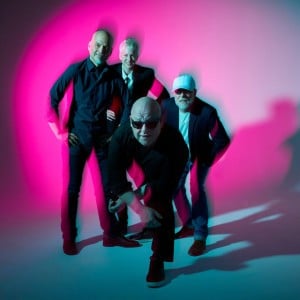
Pixies
Pixies
Pixies have been acclaimed as the most influential, pioneering band of the late 80s alt/rock movement, having served as a major influence for artists like Nirvana, Pearl Jam, Radiohead, the Strokes, Weezer, and many more. And today, a whole new generation of music fans has been discovering and embracing the band’s “loudquietloud” signature sound. Quirky, catchy melodies have always been Pixies’ calling card; seven genre-defining studio albums, including the Gold-certified Surfer Rosa, and the iconic Platinum Doolittle, considered one of the all-time, quintessential alt/rock albums. Sell-out crowds all over the globe, Pixies’ live shows are unadulterated magic, simultaneously electrifying and lo-fi. Seventy-five minutes of the band playing anything they want, in whatever order they want, the classics and the new gems. And no two Pixies shows are ever the same. 2024 is a momentous year for Pixies. 35 years since Doolittle catapulted the band into the UK Top Ten, and 20 years since their celebrated reformation at Coachella, Pixies are deep into their second act. Bigger than ever, playing to fans spanning multiple generations, and in the midst of their most creative purple patch. Black Francis, Joey Santiago, David Lovering and British bassist Emma Richardson are as busy as ever.
Limp Bizkit
Limp Bizkit
Limp Bizkit is an infectious spirit. Any other details are merely salad dressing.
Radiohead
Radiohead
Radiohead are a touchstone for all that is fearless and adventurous in rock, evolving from self-loathing anthems to moody prog rock suites to weathered, if shimmering ballads. Inheritors of a throne previously occupied by <a href="spotify:artist:0oSGxfWSnnOXhD2fKuz2Gy">David Bowie</a>, <a href="spotify:artist:0k17h0D3J5VfsdmQ1iZtE9">Pink Floyd</a>, and <a href="spotify:artist:2x9SpqnPi8rlE9pjHBwmSC">Talking Heads</a> (from whom they took their name), the British band spliced <a href="spotify:artist:0k17h0D3J5VfsdmQ1iZtE9">Floyd</a>'s spaciness with <a href="spotify:artist:51Blml2LZPmy7TTiAg47vQ">U2</a>'s messianic arena rock heft and bridged the gap with guitar skronk borrowed from the '80s American underground. The jagged interjections on "Creep," the band's Top Ten U.K., Top 40 U.S. breakthrough from their debut album Pablo Honey (1993), recalled <a href="spotify:artist:6zvul52xwTWzilBZl6BUbT">Pixies</a> and <a href="spotify:artist:6olE6TJLqED3rqDCT0FyPh">Nirvana</a>, but in the throes of the alternative rock explosion, Radiohead were the odd band out, seen as dour art-rock students at home and as one-hit wonders in the States. During the peak of Brit-pop, Radiohead released The Bends (1995), a leap forward that gained them some traction, but it was OK Computer (1997), a bold set fueled by film music, Krautrock, and electronica, that broke down doors for the band upon its entry at the top of the U.K. and U.S. charts. Soon, whenever rock bands dabbled in electronics, it was derived not from tightly sequenced rhythms, but rather, from glassy textures and introspection, a sensibility pioneered by the quintet. Radiohead doubled down on this aesthetic with Kid A (2000) and Amnesiac (2001), favoring minimal arrangements and elements of avant-garde jazz over concise hooks. From that point on, Radiohead have occasionally worked with conventional song structures but have been drawn toward unusual paths heard on Hail to the Thief (2003) and In Rainbows (a surprise, pay-what-you-want 2007 release), followed the next decade by The King of Limbs (2011) and A Moon Shaped Pool (2016). Inducted into the Rock & Roll Hall of Fame in 2019, Radiohead have focused primarily on catalog releases, side projects, and solo pursuits during the 2020s. Every member of Radiohead was a pupil at Oxfordshire's Abingdon School. <a href="spotify:artist:3E7aH1Yv84NoaP9JWcrMpE">Ed O'Brien</a> (guitar) and <a href="spotify:artist:2A59wav3PGiJij2rK7HQYH">Phil Selway</a> (drums) were the eldest, followed by a year by <a href="spotify:artist:4CvTDPKA6W06DRfBnZKrau">Thom Yorke</a> (vocals, guitar, piano) and <a href="spotify:artist:6bdotkIeFswBydfQqzHnKS">Colin Greenwood</a> (bass). These four musicians began playing in 1985, dubbing themselves On a Friday, and before long they added <a href="spotify:artist:6bdotkIeFswBydfQqzHnKS">Colin</a>'s younger brother <a href="spotify:artist:0z9s3P5vCzKcUBSxgBDyLU">Jonny</a>, who'd previously played in Illiterate Hands with <a href="spotify:artist:4CvTDPKA6W06DRfBnZKrau">Yorke</a>'s brother <a href="spotify:artist:6CbjCavKWLrR6J3FzUwwJI">Andy</a> and Nigel Powell. <a href="spotify:artist:0z9s3P5vCzKcUBSxgBDyLU">Jonny</a> started on keyboards but moved to guitar, yet this incarnation proved short-lived. By 1987, everyone but <a href="spotify:artist:0z9s3P5vCzKcUBSxgBDyLU">Jonny</a> left for university, where many members pursued music, but it wasn't until 1991 that the quintet regrouped and started gigging regularly in Oxford. Eventually, they came to the attention of Chris Hufford -- then best-known as the producer of shoegaze stars <a href="spotify:artist:72X6FHxaShda0XeQw3vbeF">Slowdive</a> -- who offered the group the chance to record a demo along with his partner Bryce Edge; the two soon became the band's managers. <a href="spotify:search:label%3A%22EMI%22">EMI</a> bit at the group's demo, signing them in 1991 and suggesting they change their name. On a Friday became Radiohead and they recorded their debut EP, Drill, with Hufford and Edge, releasing the record in May 1992. Next, the group entered the studio with producers Paul Kolderie and <a href="spotify:artist:1pYe8ZSmmg4LJDdLDlVh9b">Sean Slade</a> to record their full-length debut. The first fruit from these sessions was "Creep," a single released in the U.K. in September of 1992. "Creep" didn't go anywhere at first. The British music weeklies slagged it, radio didn't play it, and it limped to number 78 on the charts. Pablo Honey, the band's full-length debut, appeared in February 1993, supported by the single "Anyone Can Play Guitar," but neither release gained much traction in their native U.K. and that May's non-LP single, "Pop Is Dead," didn't help matters much, either. By that point, however, "Creep" started to gain attention in other territories. First, the song became a hit in Israel, but the bigger waves came from the United States, which was in the throes of the alternative rock revolution. Influential San Francisco radio station KITS added "Creep" to their playlist and it spread along the west coast and onto MTV as it became a genuine hit, nearly topping Billboard's Modern Rock chart and reaching 34 on the Hot 100, a big achievement for a British guitar band. A re-released "Creep" turned into a British Top Ten hit, peaking at number seven in the autumn of 1993. The band who'd had no success suddenly had more than it could handle. Radiohead kept touring Pablo Honey into 1994, but no subsequent hits were forthcoming, raising the specter of the band as a possible one-hit wonder -- a criticism that weighed heavily on the group, who were anxious to record their new songs. They received the opportunity early in 1994, entering the studio to work with producer John Leckie -- then best-known for his work with <a href="spotify:artist:1lYT0A0LV5DUfxr6doRP3d">the Stone Roses</a> -- with My Iron Lung, an EP released in late 1994, being the first music released from the sessions. Muscular and ambitious, the EP provided a good indication of what would come on 1995's The Bends. Released in March 1995, The Bends not only found Radiohead growing musically -- it was dense and expansive, without skimping on songs -- but also in reputation, as critics in the U.K. embraced the band with the audience eventually following: none of the first three singles ("High and Dry," "Fake Plastic Trees," "Just") rose above 17 on the U.K. charts but the final single, "Street Spirit (Fade Out)," wound up reaching five in early 1996. Radiohead's rise may have been assisted by the mania cultivated by Brit-pop, a term that didn't quite suit the band -- they were far artier and rock-oriented -- but nevertheless stoked interest in indie guitar bands, which the quintet certainly was. Over in the U.S., The Bends stalled out at 88 on the Billboard charts but the record gained a cult following among listeners and the band never stopped touring, taking North American opening slots for <a href="spotify:artist:4KWTAlx2RvbpseOGMEmROg">R.E.M.</a> in 1995 and <a href="spotify:artist:6ogn9necmbUdCppmNnGOdi">Alanis Morissette</a> in 1996. During 1995 and 1996, the group recorded new material with <a href="spotify:artist:0g7gHEXKEHU4snTwOZSxNO">Nigel Godrich</a> -- an engineer on The Bends sessions who was now the band's producer -- with songs slowly creeping out during the course of the year. "Lucky" showed up on War Child's 1995 charity LP The Help Album, "Talk Show Host" appeared on a B-side, and "Exit Music (For a Film)" showed up on the soundtrack to <a href="spotify:artist:7HhTERkBV4Ot14KphgBfSh">Baz Luhrmann</a>'s Romeo & Juliet. The latter showed up on OK Computer, the June 1997 album that proved pivotal in Radiohead's career. "Paranoid Android," a twitchy suite released as a single in May of that year, suggested the ambition of OK Computer -- and by reaching number three, it was the band's biggest hit to date in the U.K., placing them on the cusp of a breakthrough. A breakthrough is precisely what OK Computer turned out to be, a record that proved pivotal not just for Radiohead but for the direction of '90s rock. Greeted with enthusiastic reviews and corresponding strong sales, OK Computer closed the doors on the hedonism of Brit-pop and the dour after-effects of grunge while opening a new path to sober, adventurous art-rock where electronics co-existed with guitars. Over the next few years, the band's influence would become readily apparent, but the album made a sizable impact upon its release, too, debuting at number one in the U.K. and earning a Grammy for Best Alternative Album. Radiohead supported it with an international tour, documented in Meeting People Is Easy. By the time Meeting People Is Easy showed up in theaters, the group began work on their fourth album, once again reuniting with producer <a href="spotify:artist:0g7gHEXKEHU4snTwOZSxNO">Godrich</a>. The resulting Kid A doubled down on the experimentalism of OK Computer, embracing electronics and threading in jazz. Appearing in October in 2000, Kid A was one of the first major albums to be pirated through file-sharing services, but this bootlegging had no apparent effect on the sales of the record: it debuted at number one in the U.K. and the U.S., becoming their first American chart-topper. Once again, the album took home the prize for Best Alternative Album at the Grammys and although it didn't produce any hit singles -- indeed, no singles were released from the record -- it was certified platinum in several territories. Amnesiac, a collection of new material initiated during the Kid A sessions, appeared in June of 2001, topping the U.K. charts and reaching two in the U.S. Two singles were pulled from the album -- "Pyramid Song" and "Knives Out" -- a signal that the album was more commercially accessible than its predecessor. At the end of the year, the band issued I Might Be Wrong: Live Recordings, and by the summer of 2002, they turned their attention to recording a new album with <a href="spotify:artist:0g7gHEXKEHU4snTwOZSxNO">Godrich</a>. The resulting Hail to the Thief appeared in June of 2003, once again debuting in the upper reaches of the international charts -- number one in the U.K. and number three in the U.S. -- and the group supported the album with live dates culminating in a headlining appearance at the 2004 Coachella Festival that coincided with the release of the B-sides and remix collection COM LAG, a record that helped close out their contract with <a href="spotify:search:label%3A%22EMI%22">EMI</a>. Over the next couple of years, Radiohead entered a hiatus as individual members pursued solo projects. <a href="spotify:artist:4CvTDPKA6W06DRfBnZKrau">Yorke</a> released the heavily electronic solo collection The Eraser in 2006, and <a href="spotify:artist:0z9s3P5vCzKcUBSxgBDyLU">Jonny Greenwood</a> embarked on a side career as a composer, beginning with 2004's Bodysong and then striking a fruitful collaboration with Paul Thomas Anderson for 2007's There Will Be Blood; <a href="spotify:artist:0z9s3P5vCzKcUBSxgBDyLU">Greenwood</a> would also work on Anderson's subsequent films The Master and Inherent Vice. During all this, the group tentatively chipped away at their first post-<a href="spotify:search:label%3A%22EMI%22">EMI</a> album. Some unsuccessful sessions with Spike Stent led the band back to <a href="spotify:artist:0g7gHEXKEHU4snTwOZSxNO">Godrich</a> by the end of 2006, and the group completed recording in June of 2007. Still without a record label, they decided to release the album digitally through their official website, letting users pay whatever they wanted for a download of the album. This novel strategy acted as the album's own promotion -- most of the articles about the release claimed it was revolutionary -- and In Rainbows allegedly moved over a million downloads on the first day of its release in October 2007. In December, the album received a physical release in the U.K., followed by a January 2008 physical release in the U.S.; the record sold well, debuting at number one in the U.K., and it earned Grammys for Best Alternative Music Album and Best Boxed or Special Limited Edition Package. Radiohead toured in support of In Rainbows into 2009, during which time <a href="spotify:search:label%3A%22EMI%22">EMI</a> released Radiohead: The Best Of in June of 2008. The band took time off in 2010, which allowed <a href="spotify:artist:4CvTDPKA6W06DRfBnZKrau">Yorke</a> to form a band called <a href="spotify:artist:7tA9Eeeb68kkiG9Nrvuzmi">Atoms for Peace</a> with producer <a href="spotify:artist:0g7gHEXKEHU4snTwOZSxNO">Godrich</a> and <a href="spotify:artist:0Xl5J6iOgiQHFqgri7TF8j">Flea</a> from the <a href="spotify:artist:0L8ExT028jH3ddEcZwqJJ5">Red Hot Chili Peppers</a>. During this time, drummer <a href="spotify:artist:2A59wav3PGiJij2rK7HQYH">Phil Selway</a> released his debut solo album, Familial. By early 2011, the group finished a new album and, like In Rainbows before it, Radiohead initially released The King of Limbs digitally through their website. The downloads appeared in February, with the physical copies appearing in March; the album reportedly shifted upwards of 400,000 digital copies upon its release. That autumn brought the release of the remix album TKOL RMX 1234567, and the band continued to tour The King of Limbs material into 2012. Once the tour wrapped up, the group took some quiet time as a new round of solo projects appeared. <a href="spotify:artist:7tA9Eeeb68kkiG9Nrvuzmi">Atoms for Peace</a> released Amok in February 2013 and <a href="spotify:artist:4CvTDPKA6W06DRfBnZKrau">Yorke</a> put out Tomorrow's Modern Boxes in September 2014, just a month before <a href="spotify:artist:2A59wav3PGiJij2rK7HQYH">Selway</a> issued his second album, Weatherhouse. In the autumn of 2014, the band began work on a new album and continued to record throughout 2015, releasing only "Spectre" -- a proposed James Bond theme rejected by the filmmakers -- that year. The ninth Radiohead album, A Moon Shaped Pool, appeared on May 8, 2016, preceded earlier in the week by the singles "Burn the Witch" and "Daydreaming." Radiohead supported A Moon Shaped Pool with an international tour, and in June 2017 they celebrated the 20th anniversary of OK Computer with a double-disc reissue dubbed OK Computer: OKNOTOK 1997 2017. Featuring a host of bonus cuts and previously unreleased material, its number two showing on the U.K. chart was bolstered by a major televised live performance at Glastonbury. Over the next year, <a href="spotify:artist:2A59wav3PGiJij2rK7HQYH">Selway</a>, <a href="spotify:artist:4CvTDPKA6W06DRfBnZKrau">Yorke</a>, and <a href="spotify:artist:0z9s3P5vCzKcUBSxgBDyLU">Greenwood</a> each issued film soundtracks with the latter earning an Oscar nomination for his score to Phantom Thread. Radiohead were inducted into the Rock & Roll Hall of Fame in 2019, honored with a speech from <a href="spotify:artist:2x9SpqnPi8rlE9pjHBwmSC">Talking Heads</a>' <a href="spotify:artist:20vuBdFblWUo2FCOvUzusB">David Byrne</a>. <a href="spotify:artist:4CvTDPKA6W06DRfBnZKrau">Yorke</a> released his third solo album, Anima, that June. Two years later, Radiohead issued Kid A Mnesia, a collection of previously unreleased material from the Kid A and Amnesiac sessions. It was promoted with the singles "If You Say the Word" and "Follow Me Around." All bandmembers were active during the first half the 2020s. <a href="spotify:artist:3E7aH1Yv84NoaP9JWcrMpE">Ed O'Brien</a> released Earth under the alias <a href="spotify:artist:4CX6yOoTFQeiwL5yxuFuIG">EOB</a> in 2020. <a href="spotify:artist:4CvTDPKA6W06DRfBnZKrau">Yorke</a> and <a href="spotify:artist:0z9s3P5vCzKcUBSxgBDyLU">Jonny Greenwood</a> performed and recorded (with drummer <a href="spotify:artist:6U9Bsog9PLNE5hrw45ecDm">Tom Skinner</a>) as <a href="spotify:artist:6styCzc1Ej4NxISL0LiigM">the Smile</a> and continued separate soundtrack work. <a href="spotify:artist:6bdotkIeFswBydfQqzHnKS">Colin Greenwood</a> toured with <a href="spotify:artist:1RM5gp0RFfjpJhCYFPB30p">Nick Cave</a> and <a href="spotify:artist:0A8tch4LePxVn1Cn60wGXu">Warren Ellis</a>, and <a href="spotify:artist:2A59wav3PGiJij2rK7HQYH">Phil Selway</a> released Strange Dance, his third solo album. ~ Stephen Thomas Erlewine, Rovi
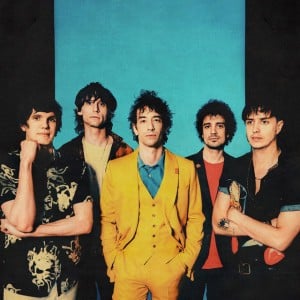
The Strokes
The Strokes
By bringing style, fun, and catchy songwriting back to rock music, the Strokes became one of the most influential bands of the early 21st century. Their direct, hooky sound -- equally inspired by classic tunesmiths like <a href="spotify:artist:3wYyutjgII8LJVVOLrGI0D">Buddy Holly</a> and the brash attitude of fellow New Yorkers <a href="spotify:artist:1nJvji2KIlWSseXRSlNYsC">the Velvet Underground</a> and <a href="spotify:artist:1co4F2pPNH8JjTutZkmgSm">Ramones</a> -- set trends even as it looked back on rock history. With their acclaimed 2001 debut, Is This It, the Strokes reinvigorated a rock scene that had spent years focused on post-grunge and nu-metal. Along with <a href="spotify:artist:4F84IBURUo98rz4r61KF70">the White Stripes</a> and <a href="spotify:artist:3TNt4aUIxgfy9aoaft5Jj2">Yeah Yeah Yeahs</a>, they helped shape the sound and look of alternative rock in the 2000s, with <a href="spotify:artist:2qk9voo8llSGYcZ6xrBzKx">Kings of Leon</a>, <a href="spotify:artist:0C0XlULifJtAgn6ZNCW2eu">the Killers</a>, and <a href="spotify:artist:4fSPtBgFPZzygkY6MehwQ7">the Libertines</a>, <a href="spotify:artist:0XNa1vTidXlvJ2gHSsRi4A">Franz Ferdinand</a>, and <a href="spotify:artist:7Ln80lUS6He07XvHI8qqHH">Arctic Monkeys</a> reflecting their impact in the U.S. and the U.K., respectively. As the decade unfolded, the Strokes embellished on their back-to-basics style, adding new wave and synth pop elements to 2003's Room on Fire and 2006's ambitious First Impressions of Earth, a trend they continued with later releases like 2013's Comedown Machine. Though they spent much of the 2010s working on individual projects, they returned with some of their most passionate-sounding music on 2020's The New Abnormal. The Strokes' roots go back to the late '90s. Singer/songwriter <a href="spotify:artist:1rAv1GhTQ2rmG94p9lU3rB">Julian Casablancas</a> (the son of Elite Model Agency Group kingpin John Casablancas), drummer Fabrizio Moretti (who began playing drums at age five), and guitarist Nick Valensi started playing together in 1997 while they attended the Dwight School, a private prep school in Manhattan. Soon thereafter, they met bassist Nikolai Fraiture, who attended the Upper East Side's Lycée Français, and added him to their ranks. At the time, the then-unnamed band's musical influences included <a href="spotify:artist:22WZ7M8sxp5THdruNY3gXt">the Doors</a>, <a href="spotify:artist:2QsynagSdAqZj3U9HgDzjD">Bob Marley</a>, <a href="spotify:artist:1nJvji2KIlWSseXRSlNYsC">the Velvet Underground</a>, and <a href="spotify:artist:02NfyD6AlLA12crYzw5YcR">Jane's Addiction</a>. In 1998, guitarist <a href="spotify:artist:1Li0eIWeMeWcOOWpImcG9H">Albert Hammond, Jr.</a> (the son of singer/songwriter <a href="spotify:artist:34E3csCxpXunPGEkOVVX2g">Albert Hammond</a>, whose songs include "It Never Rains in Southern California," "When I Need You," and "To All the Girls I've Loved Before") came from Los Angeles to attend film school at NYU and was invited into the band by <a href="spotify:artist:1rAv1GhTQ2rmG94p9lU3rB">Casablancas</a>; the two had met at L'Institut le Rosey in Switzerland when they were kids. With the addition of <a href="spotify:artist:1Li0eIWeMeWcOOWpImcG9H">Hammond, Jr.</a>, the band's style coalesced into a punk-, new wave-, and garage-inspired sound, and <a href="spotify:artist:1rAv1GhTQ2rmG94p9lU3rB">Casablancas</a> officially christened the quintet the Strokes in 1999. The group spent most of that year writing and rehearsing material in New York City's Music Building. They played their first gig at the Spiral, and word of mouth about the Strokes' incendiary live show propelled them to gigs at venues like Under the Acme and Lower East Side clubs such as Arlene Grocery, Baby Jupiter, and Luna. The Strokes' December 2000 dates at the Mercury Lounge and the Bowery Ballroom not only gained them a manager (Ryan Gentles, who booked them at those clubs) but also helped Strokes mania reach critical mass in New York. To record their three-song demo, the Strokes enlisted <a href="spotify:artist:09LiOtBPJw0anSdJcpG4y1">Gordon Raphael</a>, starting a long-running creative partnership. <a href="spotify:artist:4fd8mrtRK863BrE37LgITd">Rough Trade</a> released the group's three-song demo as The Modern Age EP in January 2001, which sparked a bidding war from which <a href="spotify:search:label%3A%22RCA%22">RCA</a> emerged as the victor. Meanwhile, the Strokes' acclaim reached the U.K. and grew to massive proportions over the course of the year, with singles like "Hard to Explain" (which debuted at number 16 in the U.K. charts) winning them a rabid British following. A side-stage slot at the NME Carling Weekender was changed to a main-stage performance for fear of people trampling each other to see the band. When the Strokes began work on their debut album, the initial sessions included Gil Norton, but creative differences with the <a href="spotify:artist:6zvul52xwTWzilBZl6BUbT">Pixies</a> producer led the band to reunite with <a href="spotify:artist:09LiOtBPJw0anSdJcpG4y1">Raphael</a>. Working in the East Village's Transporterraum studio, <a href="spotify:artist:09LiOtBPJw0anSdJcpG4y1">Raphael</a> and the Strokes recorded Is This It over the course of March and April 2001, adopting a compressed, back-to-basics sound that borrowed production techniques used by <a href="spotify:artist:1nJvji2KIlWSseXRSlNYsC">the Velvet Underground</a> and <a href="spotify:artist:1co4F2pPNH8JjTutZkmgSm">Ramones</a>. Released in Australia in July 2001 and in the U.K. that August, Is This It originally featured a Helmut Newton-esque photo of a woman's nude behind and hip with a leather-gloved hand resting on it; the U.K. chains Woolworths and HMV objected to its controversial nature, but continued to sell the album. The North American version of Is This It appeared in October 2001 with a few changes: The Strokes opted for a picture of particle collisions in the Big European Bubble Chamber on the cover and removed the track "New York City Cops," feeling the song was inappropriate in the wake of the terrorist attacks that struck New York prior to the album's release; the planned B-side, "When It Started," took its place. Is This It earned widespread critical acclaim and strong sales, reaching number two on the U.K. Albums Chart and number 33 on the Billboard 200 Albums Chart in the U.S. Over time, it achieved platinum status in countries including the U.S., the U.K., Japan, Canada, and Australia. The album also spawned the hit singles "Last Nite" and "Someday." The Strokes' profile continued to rise for the remainder of 2001 and into 2002. Is This It and the band were lauded in many ways, ranging from This Isn't It, an EP of instrumental versions of some of the album's songs performed by a mystery band called the Diff'rent Strokes to 2001 NME Carling Awards for Best New Act, Band of the Year, and Album of the Year. The band also won a Brit Award for Best International Newcomer and were nominated for the Best International Group Award. They toured extensively throughout 2002, including a series of dates that summer in New York and Detroit with <a href="spotify:artist:4F84IBURUo98rz4r61KF70">the White Stripes</a> and summer festivals at Reading and Leeds. During these shows and their dates opening for <a href="spotify:artist:22bE4uQ6baNwSHPVcDxLCe">the Rolling Stones</a>, the Strokes debuted songs they'd been writing, including "Meet Me in the Bathroom," "You Talk Way Too Much," and "The Way It Is." After finishing their touring commitments in 2002, the Strokes started work on their second album. At first, they worked with renowned producer <a href="spotify:artist:0g7gHEXKEHU4snTwOZSxNO">Nigel Godrich</a> before reuniting with <a href="spotify:artist:09LiOtBPJw0anSdJcpG4y1">Raphael</a> in May 2003. Recorded in three months, Room on Fire arrived in October 2003 with a slightly smoother sound that brought out the new wave elements of the Strokes' music. The album built on Is This It's success, reaching number four on the Billboard 200 and number two on the U.K. Album Charts. In the U.S., it achieved gold status and went platinum in the U.K. and Australia. The Strokes toured for much of 2004 and returned to the studio for album number three in early 2005. They began the sessions with <a href="spotify:artist:09LiOtBPJw0anSdJcpG4y1">Raphael</a>, but eventually completed the album with Grammy-winning producer David Kahne. Preceded by the grunge-influenced single "Juicebox," which became a Top Ten hit in the U.S. and U.K., First Impressions of Earth appeared in January 2006. A more experimental and eclectic effort than the Strokes' first two albums, it became the band's first chart-topping album in the U.K. and made the Top Five of the album charts in Canada and the U.S. Once the First Impressions of Earth tour was finished, the Strokes went on hiatus, with each member working on other projects. <a href="spotify:artist:1Li0eIWeMeWcOOWpImcG9H">Albert Hammond, Jr.</a> was the first to venture into the solo fray with Yours to Keep, which was released in late 2006 in the U.K. and in early 2007 in the U.S.; he followed it with 2008's Como Te Llama? Fabrizio Moretti played with the indie pop band <a href="spotify:artist:0aLsJXIaJ6MMCZIzaGpMaX">Little Joy</a>, whose self-titled album arrived in late 2008. Nikolai Fraiture embarked on the folky solo project <a href="spotify:artist:5G1qgnKxOcNoFvJtQMvl87">Nickel Eye</a>, and released the debut Time of the Assassins in early 2009. During this time, <a href="spotify:artist:1rAv1GhTQ2rmG94p9lU3rB">Casablancas</a> collaborated with other artists, playing Casio guitar on "Sick, Sick, Sick" from <a href="spotify:artist:4pejUc4iciQfgdX6OKulQn">Queens of the Stone Age</a>'s 2007 album Era Vulgaris and collaborating with <a href="spotify:artist:6Jrxnp0JgqmeUX1veU591p">Santigold</a> and <a href="spotify:artist:2RdwBSPQiwcmiDo9kixcl8">Pharrell</a> on the song "My Drive Thru" for a 2008 Converse Shoes ad campaign. He also recorded with <a href="spotify:artist:1f5GqyOPo0CkotzzRwviBu">the Lonely Island</a>, <a href="spotify:artist:2dBj3prW7gP9bCCOIQeDUf">Danger Mouse</a>, and <a href="spotify:artist:64tVHZVSAZhDEiOJxnb6hE">Sparklehorse</a>. At the beginning of 2009, <a href="spotify:artist:1rAv1GhTQ2rmG94p9lU3rB">Casablancas</a> and Valensi began work on the Strokes' fourth album. Progress was slow, however, and <a href="spotify:artist:1rAv1GhTQ2rmG94p9lU3rB">Casablancas</a> released his debut solo album, Phrazes for the Young, in October of that year. In 2010, the band collaborated with producer Joe Chiccarelli on some tracks, but they ultimately worked with producer and engineer Gus Oberg at <a href="spotify:artist:1Li0eIWeMeWcOOWpImcG9H">Hammond, Jr.</a>'s home studio on the majority of what would become Angles. Arriving in March 2011, the album took cues from <a href="spotify:artist:0SwO7SWeDHJijQ3XNS7xEE">MGMT</a>, <a href="spotify:artist:7K3zpFXBvPcvzhj7zlGJdO">Crystal Castles</a>, and other synth-heavy bands, and, for the first time on a Strokes album, featured backing vocals. Angles was a Top Five hit in the U.S. and U.K., and became the band's first album to hit number one in Australia. The record's lead single "Under Cover of Darkness" reached number 12 on the Billboard Alternative Songs chart. In contrast to Angles' lengthy creative process, the Strokes started making their fifth album in 2012. Working once again with Oberg, this time at Manhattan's Electric Lady studio, the group also continued Angles' collaborative songwriting on March 2013's Comedown Machine, a more streamlined, subdued affair that reunited the band with Angles producer Gus Oberg. The members of the Strokes then spent a couple of years pursuing individual projects: <a href="spotify:artist:1rAv1GhTQ2rmG94p9lU3rB">Casablancas</a> formed <a href="spotify:artist:4nUBBtLtzqZGpdiynTJbYJ">the Voidz</a>, whose politically minded debut album, Tyranny, arrived in 2014. That year, Valensi contributed to <a href="spotify:artist:2mGlvfts36oW5O7KKPzfLk">Brody Dalle</a>'s album Diploid Love, and <a href="spotify:artist:1Li0eIWeMeWcOOWpImcG9H">Hammond, Jr.</a> released his third solo album, Momentary Masters, in 2015. The group reunited in 2016 for a string of shows and Future Present Past, their first EP in 15 years and their first on <a href="spotify:artist:1rAv1GhTQ2rmG94p9lU3rB">Casablancas</a>' <a href="spotify:search:label%3A%22Cult+Records%22">Cult Records</a>. New Skin, the debut album from Valensi's band <a href="spotify:artist:4NfVXEoTZVX7rpJSZEVGLg">CRX</a>, also appeared that year. Along with playing several festivals, the Strokes started mapping out their sixth album with producer <a href="spotify:artist:1EpmQFTiJbcxzwbLpuUL8L">Rick Rubin</a> in 2017. As they worked on material for it, <a href="spotify:artist:1rAv1GhTQ2rmG94p9lU3rB">Casablancas</a> and his other band <a href="spotify:artist:4nUBBtLtzqZGpdiynTJbYJ">the Voidz</a> issued the album Virtue in 2018, while <a href="spotify:artist:1Li0eIWeMeWcOOWpImcG9H">Hammond, Jr.</a> released the Oberg-produced Francis Trouble. Preceded by shows including a 2019 New Year's Eve concert in Brooklyn and a February 2020 rally for presidential candidate Bernie Sanders, The New Abnormal arrived in 2020 and introduced a more thoughtful and confessional level to the Strokes' sound and songwriting. Recorded in California and Hawaii, the album was a critical and commercial success, becoming a Top Ten hit in several countries including the U.S. and the U.K. In 2021, The New Abnormal won the Grammy Award for Best Rock Album at the 63rd Annual Grammy Awards. In February 2023, the Strokes issued The Singles, Vol. 1, a collection of singles and B-sides from the band's first three albums. ~ Heather Phares, Rovi
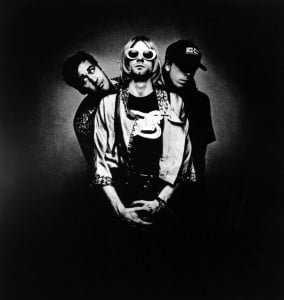
Nirvana
Nirvana
Nothing was ever quite the same after Nirvana. The band's second album, 1991's Nevermind, revolutionized popular music by bringing alternative rock above ground, introducing mainstream audiences to sounds and concepts that had previously existed only in shadowy record store corners and on low-frequency college radio airwaves. Nevermind's noisy, dissonant guitar rock, mumbled or howled surrealistic lyrics, and generally angsty punk attitudes were unlikely candidates for chart success, but the band undercut their grungy songs with enough pop melodicism to create a sound unlike anything average listeners had ever heard before, striking at the exact right moment to become an unprecedented success. Since Nirvana were rooted in an indie aesthetic but loved pop music, they fought their stardom while courting it, becoming some of the most notorious anti-rock stars in history. They consciously attempted to shed their audience with 1993's abrasive, <a href="spotify:artist:52ZFTGbQ9miWMX8JYBvtOO">Steve Albini</a>-produced third album In Utero, but vocalist/guitarist/songwriter <a href="spotify:artist:6pAuTi6FXi6qFQJ1dzMXQs">Kurt Cobain</a>'s growing mental health and substance abuse issues led to his death by suicide in 1994. Though Nirvana's story was cut tragically short, their legacy stands as one of the most influential in rock & roll history. <a href="spotify:artist:6pAuTi6FXi6qFQJ1dzMXQs">Kurt Cobain</a> (vocals, guitar) met <a href="spotify:artist:4BZKfXia2RPZnzCgQ2fG8M">Chris Novoselic</a> (born <a href="spotify:artist:4BZKfXia2RPZnzCgQ2fG8M">Krist Novoselic</a>) (bass) in 1985 in Aberdeen, Washington, a small logging town 100 miles away from Seattle. While <a href="spotify:artist:4BZKfXia2RPZnzCgQ2fG8M">Novoselic</a> came from a relatively stable background, <a href="spotify:artist:6pAuTi6FXi6qFQJ1dzMXQs">Cobain</a>'s childhood had been thrown into turmoil when his parents divorced when he was eight. Following the divorce, he lived at the homes of various relatives, developing a love for <a href="spotify:artist:3WrFJ7ztbogyGnTHbHJFl2">the Beatles</a> and then heavy metal in the process. Eventually, American hardcore punk worked its way into dominating his listening habits and he met <a href="spotify:artist:6aVjo0xHSiuW5hkasoYSR3">the Melvins</a>, an Olympia-based underground heavy punk band. <a href="spotify:artist:6pAuTi6FXi6qFQJ1dzMXQs">Cobain</a> began playing in punk bands like Fecal Matter, often with <a href="spotify:artist:6aVjo0xHSiuW5hkasoYSR3">the Melvins</a>' bassist <a href="spotify:artist:4IRzt4Zde0xpbbc2BtsRGm">Dale Crover</a>. Through <a href="spotify:artist:6aVjo0xHSiuW5hkasoYSR3">the Melvins</a>' leader, Buzz Osborne, <a href="spotify:artist:6pAuTi6FXi6qFQJ1dzMXQs">Cobain</a> met <a href="spotify:artist:4BZKfXia2RPZnzCgQ2fG8M">Novoselic</a>, who also had an intense interest in punk, which meant that he, like <a href="spotify:artist:6pAuTi6FXi6qFQJ1dzMXQs">Cobain</a>, felt alienated from the macho, redneck population of Aberdeen. The duo decided to form a band called the Stiff Woodies, with <a href="spotify:artist:6pAuTi6FXi6qFQJ1dzMXQs">Cobain</a> on drums, <a href="spotify:artist:4BZKfXia2RPZnzCgQ2fG8M">Novoselic</a> on bass, and a rotating cast of guitarists and vocalists. The group went through name changes as quickly as guitarists, before deciding that <a href="spotify:artist:6pAuTi6FXi6qFQJ1dzMXQs">Cobain</a> would play guitar and sing. Renamed <a href="spotify:artist:4opTS86dN9uO313J9CE8xg">Skid Row</a>, the new trio featured drummer Aaron Burkhart, who left the band by the end of 1986 and was replaced by Chad Channing. By 1987, the band was called Nirvana. Nirvana began playing parties in Olympia, gaining a cult following. Around 1987, the band made ten demos with producer <a href="spotify:artist:5WPz1DmtxRJBajeTYGiftU">Jack Endino</a>, who played the recordings to Jonathan Poneman, one of the founders of the Seattle-based indie label <a href="spotify:search:label%3A%22Sub+Pop%22">Sub Pop</a>. Poneman signed Nirvana, and in December of 1988, the band released its first single, a cover of <a href="spotify:artist:5WimOFbBnCU5wI6t5PPpEk">Shocking Blue</a>'s "Love Buzz." <a href="spotify:search:label%3A%22Sub+Pop%22">Sub Pop</a> orchestrated an effective marketing scheme, which painted the band as backwoods, logging-town hicks, which irritated <a href="spotify:artist:6pAuTi6FXi6qFQJ1dzMXQs">Cobain</a> and <a href="spotify:artist:4BZKfXia2RPZnzCgQ2fG8M">Novoselic</a>. While "Love Buzz" was fairly well-received, the band's debut album, Bleach, was what got the ball rolling. Recorded for just over $600 and released in June 1989, Bleach slowly became a hit on college radio, due to the group's consistent touring. Though Jason Everman was credited as a second guitarist on the sleeve of Bleach, he didn't appear on the record; he only toured in support of the album before leaving the band at the end of the year to join <a href="spotify:artist:5xUf6j4upBrXZPg6AI4MRK">Soundgarden</a> and then Mindfunk. Bleach sold 35,000 copies and Nirvana became favorites of college radio, the British weekly music press, and <a href="spotify:artist:5UqTO8smerMvxHYA5xsXb6">Sonic Youth</a>, <a href="spotify:artist:7LuYiSXiWs86rwWJjEEgB9">Mudhoney</a>, and <a href="spotify:artist:267VY6GX5LyU5c9M85ECZQ">Dinosaur Jr.</a>, which was enough to attract the attention of major labels. In July 1990, Nirvana recorded "Sliver"/"Dive" with <a href="spotify:artist:7LuYiSXiWs86rwWJjEEgB9">Mudhoney</a> drummer Dan Peters on drums and producer <a href="spotify:artist:0gTi2zsOHn6wtlkx66uxXM">Butch Vig</a>. The band also made a six-song demo with <a href="spotify:artist:0gTi2zsOHn6wtlkx66uxXM">Vig</a>, which was shopped to major labels, who soon began competing to sign the group. In August, they hit the road with <a href="spotify:artist:5UqTO8smerMvxHYA5xsXb6">Sonic Youth</a>'s Goo tour (including <a href="spotify:artist:4IRzt4Zde0xpbbc2BtsRGm">Crover</a> on drums). That September, <a href="spotify:artist:7mRVAzlt1fAAR9Cut6Rq8c">Dave Grohl</a>, formerly of the D.C.-based hardcore band <a href="spotify:artist:0wIhCBrT02x0GG5bKqcSAh">Scream</a>, became Nirvana's drummer and the band signed with <a href="spotify:search:label%3A%22DGC%22">DGC</a> for $287,000. Nirvana recorded their second album with <a href="spotify:artist:0gTi2zsOHn6wtlkx66uxXM">Vig</a>, completing the record in June of 1991. Nevermind was released in September, supported by a quick American tour. While <a href="spotify:search:label%3A%22DGC%22">DGC</a> was expecting a moderately successful release, in the neighborhood of 100,000 copies, Nevermind immediately became a smash hit, quickly selling out its initial shipment of 50,000 copies and creating a shortage across America. What helped the record become a success was "Smells Like Teen Spirit," a blistering four-chord rocker that was accompanied by a video that shot into heavy MTV rotation. By the beginning of 1992, "Smells Like Teen Spirit" had climbed into the American Top Ten and Nevermind bumped <a href="spotify:artist:3fMbdgg4jU18AjLCKBhRSm">Michael Jackson</a>'s much-touted comeback album Dangerous off the top of the album charts; it reached the British Top Ten shortly afterward. By February, the album had been certified triple platinum. Nirvana's success took the music industry by surprise, Nirvana included. From the moment Nirvana were met with mainstream visibility, <a href="spotify:artist:6pAuTi6FXi6qFQJ1dzMXQs">Cobain</a> used his newfound fame to relentlessly push his favorite independent artists as if their music was more important than his own. This took the form of bringing Japanese alt-pop trio <a href="spotify:artist:4ukJlDdlvuQOHZdD2NVsFD">Shonen Knife</a> on tour, covering lesser-known but formative artists like <a href="spotify:artist:0sTTw3dw3EA0c7NaZnrJd2">the Wipers</a>, <a href="spotify:artist:4wWQkHhmUNlXvhbHRUSqZW">the Vaselines</a>, and <a href="spotify:artist:2h9yQhKyqOMex3QFMVeq7F">Meat Puppets</a>, or wearing a homemade <a href="spotify:artist:1jeYbk5eqo6wgsQPjLeU5w">Daniel Johnston</a> t-shirt during television appearances and high-profile concerts. <a href="spotify:artist:6pAuTi6FXi6qFQJ1dzMXQs">Cobain</a>'s enthusiastic fandom introduced untold numbers of Nirvana fans to artists they most likely wouldn't have known to seek out on their own, and in the process, energized those artists' careers. It soon became apparent that Nirvana wasn't quite sure how to handle its success. Around the time of Nevermind's release, <a href="spotify:artist:6pAuTi6FXi6qFQJ1dzMXQs">Cobain</a> appeared on MTV's Headbangers Ball in drag; the group mocked the tradition of miming on the BBC's Top of the Pops, with <a href="spotify:artist:4BZKfXia2RPZnzCgQ2fG8M">Novoselic</a> constantly throwing his bass into the air and <a href="spotify:artist:6pAuTi6FXi6qFQJ1dzMXQs">Cobain</a> singing his live vocals in the style of Ian Curtis; and their traditional live destruction of instruments was immortalized on a Saturday Night Live performance that ended with <a href="spotify:artist:4BZKfXia2RPZnzCgQ2fG8M">Novoselic</a> and <a href="spotify:artist:7mRVAzlt1fAAR9Cut6Rq8c">Grohl</a> sharing a kiss. By early 1992, questions began to arise about the band's stability. <a href="spotify:artist:6pAuTi6FXi6qFQJ1dzMXQs">Cobain</a> married <a href="spotify:artist:4vI0xGbQl2cMnMiagUEBOj">Courtney Love</a>, the leader of the indie rock/foxcore band <a href="spotify:artist:5SHQUMAmEK5KmuSb0aDvsn">Hole</a>, in February of 1992, announcing that the couple was expecting a child. A few months later, Nirvana canceled several concerts and refused to mount a full-scale American tour during the summer. <a href="spotify:artist:6pAuTi6FXi6qFQJ1dzMXQs">Cobain</a> complained that he was suffering from chronic stomach troubles, which seemed to be confirmed when he was admitted to a Belfast hospital after a June concert. While he went through these problems,<a href="spotify:search:label%3A%22DGC%22">DGC</a> released the odds-and-ends compilation Incesticide late in 1992; the album reached number 39 U.S. and number 14 U.K. As Nirvana prepared to make their third album, they released "Oh, the Guilt" as a split single with <a href="spotify:artist:6r26MaDr8bqNALjXgYPXMa">the Jesus Lizard</a> on <a href="spotify:search:label%3A%22Touch+%26+Go+Records%22">Touch & Go Records</a>. Choosing <a href="spotify:artist:52ZFTGbQ9miWMX8JYBvtOO">Steve Albini</a> (<a href="spotify:artist:6zvul52xwTWzilBZl6BUbT">Pixies</a>, <a href="spotify:artist:1xgFexIwrf2QjbU0buCNnp">the Breeders</a>, <a href="spotify:artist:5EYkvHZuGM3pwU3DZUrrZ3">Big Black</a>, <a href="spotify:artist:6r26MaDr8bqNALjXgYPXMa">the Jesus Lizard</a>) as their producer, they recorded In Utero, in two weeks during. Februrary 1993. Later in the year, reports, including an article in Newsweek, circulated that DGC was unhappy with the forthcoming album, and making accusations that Nirvana deliberately made an uncommercial record. Both the band and the label denied such allegations. Deciding that <a href="spotify:artist:52ZFTGbQ9miWMX8JYBvtOO">Albini</a>'s production was too flat, Nirvana decided to remaster the album with <a href="spotify:artist:4KWTAlx2RvbpseOGMEmROg">R.E.M.</a> producer <a href="spotify:artist:1jBYxrGP7Ev7Qs0X5qJdDM">Scott Litt</a>, who also remixed the singles "Heart Shaped Box" and "All Apologies." In Utero was released in September of 1993 to positive reviews and strong initial sales, debuting at the top of the U.S. and U.K. charts. Nirvana supported it with an American tour, hiring former <a href="spotify:artist:39zgKjGWsiZzJ9h6gbrPFY">Germs</a> member <a href="spotify:artist:36AOO7vOYRSjm2nVgvu63E">Pat Smear</a> as an auxiliary guitarist. While the album and the tour were both successful, sales weren't quite as strong as expected, with several shows not selling out until the week of the concert. As a result, the group agreed to play MTV's acoustic Unplugged show at the end of the year, and sales of In Utero picked up after its December airing. After wrapping up their U.S. tour on January 8, 1994 with a show at Center Arena in Seattle, Nirvana embarked on a European tour in February. Following a concert in Munich on February 29, <a href="spotify:artist:6pAuTi6FXi6qFQJ1dzMXQs">Cobain</a> stayed in Rome to vacation with <a href="spotify:artist:4vI0xGbQl2cMnMiagUEBOj">Love</a>. On March 4, she awakened to find that <a href="spotify:artist:6pAuTi6FXi6qFQJ1dzMXQs">Cobain</a> had attempted suicide. When he returned to Seattle, his mental illness grew worse. <a href="spotify:artist:4vI0xGbQl2cMnMiagUEBOj">Love</a> and Nirvana's management organized an intervention program that resulted in <a href="spotify:artist:6pAuTi6FXi6qFQJ1dzMXQs">Cobain</a>'s admission to the Exodus Recovery Center in L.A. on March 30, but he left the clinic on April 1, returning to Seattle. His mother filed a missing persons report on April 4. On April 5, <a href="spotify:artist:6pAuTi6FXi6qFQJ1dzMXQs">Cobain</a> died by suicide at his Seattle home.After his death, <a href="spotify:artist:6pAuTi6FXi6qFQJ1dzMXQs">Kurt Cobain</a> was quickly anointed as a spokesman for Generation X, as well as a symbol of its tortured angst. <a href="spotify:artist:4BZKfXia2RPZnzCgQ2fG8M">Novoselic</a> and <a href="spotify:artist:7mRVAzlt1fAAR9Cut6Rq8c">Grohl</a> planned to release a double-disc live album at the end of 1994, but sorting through the tapes proved to be too painful, so MTV Unplugged in New York appeared in its place. The album debuted at the top of the British and American charts, as a home video comprised of live performances and interviews from the band's Nevermind era, titled Live! Tonight! Sold Out!, was issued at the same time (the project began prior to <a href="spotify:artist:6pAuTi6FXi6qFQJ1dzMXQs">Cobain</a>'s passing and was completed by surviving bandmembers). In 1996, MTV Unplugged in New York's electric counterpart, From the Muddy Banks of the Wishkah, was released, debuting at the top of the U.S. charts. Following <a href="spotify:artist:6pAuTi6FXi6qFQJ1dzMXQs">Cobain</a>'s death, <a href="spotify:artist:7mRVAzlt1fAAR9Cut6Rq8c">Grohl</a> formed <a href="spotify:artist:7jy3rLJdDQY21OgRLCZ9sD">the Foo Fighters</a>, releasing their self-titled debut album in 1995, followed by The Colour and the Shape in 1997 and There Is Nothing Left to Lose in 1999. <a href="spotify:artist:4BZKfXia2RPZnzCgQ2fG8M">Novoselic</a> formed the trio Sweet 75, releasing their debut in the spring of 1997, and also appeared along with former <a href="spotify:artist:30U8fYtiNpeA5KH6H87QUV">Dead Kennedys</a> frontman <a href="spotify:artist:1ddbFlSqbqp2vuJd5CuRcE">Jello Biafra</a> and former <a href="spotify:artist:5xUf6j4upBrXZPg6AI4MRK">Soundgarden</a> guitarist Kim Thayil on the 2000 live set Live from the Battle in Seattle under the name <a href="spotify:artist:0l6DIGXp0GGVDEieOA0D0P">the No W.T.O. Combo</a>. By the late '90s, <a href="spotify:artist:4BZKfXia2RPZnzCgQ2fG8M">Novoselic</a> began research for a proposed box set of previously unreleased songs from throughout Nirvana's career. The project was supposed to surface in the fall of 2001 (to coincide with the tenth anniversary release of Nevermind), but legal issues delayed its release. Finally, the Nirvana LLC partnership -- which included <a href="spotify:artist:7mRVAzlt1fAAR9Cut6Rq8c">Grohl</a>, <a href="spotify:artist:4BZKfXia2RPZnzCgQ2fG8M">Novoselic</a>, and <a href="spotify:artist:4vI0xGbQl2cMnMiagUEBOj">Love</a> -- came to an agreement and the album-length compilation Nirvana was released in October of 2002. Although that release included only one unreleased song, the long-awaited box set, titled With the Lights Out, appeared in late 2004, including three discs of rare and unreleased material plus a live DVD that featured material filmed as early as 1988. The band's 1992 set at the Reading Festival was released in 2009 as Live at Reading. The same year, <a href="spotify:search:label%3A%22Sub+Pop%22">Sub Pop</a> began a Nirvana studio album reissue campaign with Bleach; special 20th-anniversary editions of Nevermind and In Utero followed in 2011 and 2013, respectively. In 2014, Nirvana was inducted into the Rock & Roll Hall of Fame by <a href="spotify:artist:4KWTAlx2RvbpseOGMEmROg">R.E.M.</a>'s <a href="spotify:artist:2G1Lyk7bWbBBrtwyl3obNB">Michael Stipe</a>. <a href="spotify:artist:6pAuTi6FXi6qFQJ1dzMXQs">Cobain</a>'s place in the induction performance was taken by several vocalists, including Joan Jett and <a href="spotify:artist:3n8qeKQViV1waeCzZmS4Tx">Kim Gordon</a>. ~ Stephen Thomas Erlewine & Greg Prato, Rovi
twenty one pilots
twenty one pilots
twenty one pilots
twenty one pilots
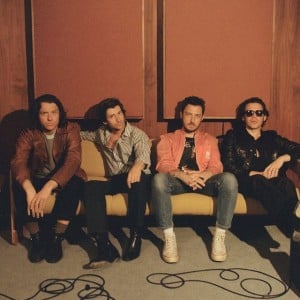
Arctic Monkeys
Arctic Monkeys
With their nervy and literate indie rock sound, Arctic Monkeys are a respected, adventurous, and successful group that could easily be called Britain's biggest band of the early 21st century. The band arrived with a blast in 2005, assisted by rave reviews and online word of mouth (they were one of the first bands to benefit from social media). They quickly became a sensation in the United Kingdom, where they were seen as the heir apparent to the throne left vacant by <a href="spotify:artist:2DaxqgrOhkeH0fpeiQq2f4">Oasis</a> and <a href="spotify:artist:4fSPtBgFPZzygkY6MehwQ7">the Libertines</a>. Buoyed by the single "I Bet You Look Good on the Dancefloor," their 2006 debut Whatever People Say I Am, That's What I'm Not briefly grabbed the title of fastest-selling album in British history. It landed on top of both the U.K. and U.S. rock album charts and took home the Mercury Prize. What set the group apart was <a href="spotify:artist:1ctkBmvz80MGyi72Ix055S">Alex Turner</a>, a singer/songwriter with a biting wit and grasp of English vernacular (not dissimilar to <a href="spotify:artist:7Lf3LOZp3U3u2f6cWMd3AH">Paul Weller</a>, the godfather of modern British rock). However, driven by their maverick creative spirit, Arctic Monkeys have proven highly unpredictable, reworking classic rock traditions on 2007's Favourite Worst Nightmare and beefing up their guitars with the assistance of <a href="spotify:artist:4pejUc4iciQfgdX6OKulQn">Queens of the Stone Age</a>'s <a href="spotify:artist:03xb2BUdIFzuRQ6o88yfCB">Josh Homme</a> on 2009's Humbug. Eventually, they also laced in some of the louche lounge aspects of <a href="spotify:artist:1ctkBmvz80MGyi72Ix055S">Turner</a>'s swinging side project <a href="spotify:artist:2Z7UcsdweVlRbAk5wH5fsf">the Last Shadow Puppets</a>, an evolution that began on 2018's arty Tranquility Base Hotel + Casino and deepened on its 2022 follow-up The Car. By that point, the band was a staple throughout the world. <a href="spotify:artist:1ctkBmvz80MGyi72Ix055S">Alex Turner</a> and guitarist Jamie Cook began their music careers in 2001, when the friends both received guitars for Christmas. Two years later, they began performing shows around their native Sheffield with drummer Matt Helders and bassist Andy Nicholson, two fellow students at Stocksbridge High School. A series of demo recordings followed, and Arctic Monkeys' audience swelled as fans circulated those recordings via the Internet. The musicians soon found themselves at the center of a growing media circus, with such outlets as BBC Radio examining the band's music and mounting hype. By distributing their homemade material on the Internet, Arctic Monkeys were able to build a sizable fan base without the help of a record label, effectively circumventing the usual road to superstardom. They continued to buck tradition by signing with <a href="spotify:search:label%3A%22Domino+Records%22">Domino Records</a> in 2005, eschewing a major-label's budget for <a href="spotify:search:label%3A%22Domino%22">Domino</a>'s D.I.Y. cred and hip roster (which also included <a href="spotify:artist:0XNa1vTidXlvJ2gHSsRi4A">Franz Ferdinand</a>, a touchstone for the band's sound). The smart moves paid off as Arctic Monkeys' first two singles -- "I Bet You Look Good on the Dancefloor" and "When the Sun Goes Down" -- both topped the U.K. charts. Critical reception was similarly favorable, but few could have predicted the whirlwind success of the band's debut album, which ousted <a href="spotify:artist:2DaxqgrOhkeH0fpeiQq2f4">Oasis</a>' Definitely Maybe as the fastest-selling debut in British history (a record that was broken one year later by <a href="spotify:artist:5lKZWd6HiSCLfnDGrq9RAm">Leona Lewis</a>' Spirit). Whatever People Say I Am, That's What I'm Not sold 363,735 copies during its first week alone, transforming Arctic Monkeys from underground stars into mainstream figures. Arctic Monkeys' debut sold approximately 300,000 total copies in America -- enough to warrant more media coverage. Their success continued as they released a spring EP, Who the F**k Are Arctic Monkeys, and prepared for a stateside tour. Temporary bassist Nick O'Malley was brought aboard for the band's American shows, while a fatigued Nicholson stayed at home. Nicholson then announced his official departure when the band returned home in June 2006, and O'Malley remained with Arctic Monkeys as a permanent member. That fall, the guys received the 2006 Mercury Prize and donated the accompanying money to an undisclosed charity. Additional accolades included Best British Breakthrough Act at the BRIT Awards and Best New Band at the NME Awards. NME also made a bold assertion by deeming the group's debut one of the Top Five British albums ever released. Released in April 2007, Favourite Worst Nightmare updated Arctic Monkeys' sound with louder instruments and faster tempos. The bandmates had recorded the sophomore album quickly, wishing to return to the road as soon as possible, and the speedy turnaround between records helped maintain the group's popularity at home. Favourite Worst Nightmare sold 85,000 copies during its first day of release, and all 12 tracks entered the Top 200 of the U.K. singles charts. As <a href="spotify:artist:1ctkBmvz80MGyi72Ix055S">Alex Turner</a> briefly turned his attention to a side project, <a href="spotify:artist:2Z7UcsdweVlRbAk5wH5fsf">the Last Shadow Puppets</a>, Arctic Monkeys received another Mercury Prize nomination and took home two titles at the 2008 BRIT Awards. Recording sessions for a third album commenced in early 2008 and lasted throughout the year, with producers James Ford (who previously worked with <a href="spotify:artist:1ctkBmvz80MGyi72Ix055S">Turner</a> on <a href="spotify:artist:2Z7UcsdweVlRbAk5wH5fsf">the Last Shadow Puppets</a>' album) and <a href="spotify:artist:03xb2BUdIFzuRQ6o88yfCB">Josh Homme</a> (frontman of <a href="spotify:artist:4pejUc4iciQfgdX6OKulQn">Queens of the Stone Age</a>) adding some newfound heft to the band's sound. Meanwhile, Arctic Monkeys released a concert album entitled At the Apollo -- with accompanying video footage captured on 35mm film -- before unveiling Humbug in August 2009. Humbug went platinum in the U.K. with the singles "Crying Lightning" peaking at number 12 and "Cornerstone" topping out at 94. The band hit the road that February, kicking off a multi-leg tour that ran through the rest of the year. After playing another handful of shows in early 2010, the guys took a short hiatus before reconvening with James Ford for their fourth album. Sessions began that fall, and the resulting Suck It and See arrived in spring 2011, topping the U.K. album chart and landing at number 14 on the Billboard 200. Meanwhile, <a href="spotify:artist:1ctkBmvz80MGyi72Ix055S">Turner</a> also wrote music for a Richard Ayoade film, Submarine, whose soundtrack doubled as the frontman's first solo release. In February 2012, Arctic Monkeys released a song entitled "R U Mine?" on their YouTube channel, which indicated that an album was on the way. A few months later, the band played at the London Summer Olympics opening ceremony, performing "I Bet You Look Good on the Dancefloor" and <a href="spotify:artist:3WrFJ7ztbogyGnTHbHJFl2">the Beatles</a>' "Come Together," but it wasn't until the summer of 2013 that the group's fifth album was to be revealed. Entitled AM, the record was released in September, a few months after a triumphant headlining performance at Glastonbury 2013, which was opened with the new song "Do I Wanna Know?" Both a critical and commercial success, AM topped the British charts and reached number six on the Billboard 200. It also earned the group a Mercury Prize nomination and won British Album of the Year at the BRIT Awards. Following the end of their tour in 2014, the band entered an extended hiatus, during which time the individual members pursued solo projects. In 2016, <a href="spotify:artist:1ctkBmvz80MGyi72Ix055S">Turner</a> released his second album with <a href="spotify:artist:2Z7UcsdweVlRbAk5wH5fsf">the Last Shadow Puppets</a> and toured. Arctic Monkeys resurfaced in April 2018 with the loungey Tranquility Base Hotel & Casino, a softer affair than their previous albums. Along with topping the U.K. album chart and Billboard Top Rock Albums chart, the LP became the group's fourth to earn a Mercury Prize nomination. Later that year, the band issued the TBH&C B-side "Anyways" as a single. A concert album, Live at the Royal Albert Hall, recorded during the Tranquility Base Hotel & Casino tour arrived in November 2020, with all proceeds going to benefit the War Child U.K. charity organization. Arctic Monkeys began their seventh album cycle by releasing the single "There’d Better Be a Mirrorball" in August 2022, delivering the full-length The Car in October. Continuing the slow, stylish vibe of Tranquility Base Hotel + Casino, the album was cut in a monastery on the coast of Suffolk. It hit number six on the Billboard 200, number two in the U.K., and picked up three Grammy nominations, including for Best Alternative Music Album. ~ Andrew Leahey & Stephen Thomas Erlewine, Rovi


