Fashion Books

Items in this hypelist
Finished
Overdressed
Elizabeth L. Cline · 2013
<b>“Overdressed does for T-shirts and leggings what <i>Fast Food Nation </i>did for burgers and fries.”</b><br><b>—Katha Pollitt</b><br> <br>Cheap fashion has fundamentally changed the way most Americans dress. Stores ranging from discounters like Target to traditional chains like JCPenney now offer the newest trends at unprecedentedly low prices. And we have little reason to keep wearing and repairing the clothes we already own when styles change so fast and it’s cheaper to just buy more.<br> <br>Cline sets out to uncover the true nature of the cheap fashion juggernaut. What are we doing with all these cheap clothes? And more important, what are they doing to us, our society, our environment, and our economic well-being?
Vivienne Westwood
Vivienne Westwood, Ian Kelly · 2014
<p>Vivienne Westwood is one of the icons of our age. Fashion designer, activist, co-creator of punk, global brand and grandmother; a true legend. Her career successfully spanned five decades and her work has influenced millions of people across the world.<br><br>For the first and only time, Vivienne Westwood has written a personal memoir, collaborating with award-winning biographer Ian Kelly, to describe the events, people and ideas that have shaped her extraordinary life.<br><br>Told in all its glamour and glory, and with her unique voice, unexpected perspective and passionate honesty, this is her story.</p>
Worn
Sofi Thanhauser · 2022
<b><b>A<i> NEW YORKER</i> BEST BOOK OF THE YEAR <b>• </b>A sweeping and captivatingly told history of clothing and the stuff it is made of—an unparalleled deep-dive into how everyday garments have transformed our lives, our societies, and our planet.</b><br><br>“We learn that, if we were a bit more curious about our clothes, they would offer us rich, interesting and often surprising insights into human history...a deep and sustained inquiry into the origins of what we wear, and what we have worn for the past 500 years." —<i>The Washington Post</i></b><br><br>In this panoramic social history, Sofi Thanhauser brilliantly tells five stories—Linen, Cotton, Silk, Synthetics, Wool—about the clothes we wear and where they come from, illuminating our world in unexpected ways. She takes us from the opulent court of Louis XIV to the labor camps in modern-day Chinese-occupied Xinjiang. We see how textiles were once dyed with lichen, shells, bark, saffron, and beetles, displaying distinctive regional weaves and knits, and how the modern Western garment industry has refashioned our attire into the homogenous and disposable uniforms popularized by fast-fashion brands. <br><br>Thanhauser makes clear how the clothing industry has become one of the planet’s worst polluters and how it relies on chronically underpaid and exploited laborers. But she also shows us how micro-communities, textile companies, and clothing makers in every corner of the world are rediscovering ancestral and ethical methods for making what we wear. <br><br>Drawn from years of intensive research and reporting from around the world, and brimming with fascinating stories, <i>Worn</i> reveals to us that our clothing comes not just from the countries listed on the tags or ready-made from our factories. It comes, as well, from deep in our histories.
Fashionopolis
Dana Thomas · 2019
'A gripping blockbuster... Thomas researches meticulously and writes with simmering even-handed anger' <i>TELEGRAPH</i>. <br><b><i>Fashionopolis</i> is the definitive book on the cost of fast fashion, and a blueprint for how we get to a more sustainable future. </b><br><br>Fashion has blighted our planet. Today, one out of six people on earth work in fashion, churning out 100 billion garments a year. Yet 98 percent of them do not earn a living wage, and 2.1 billion tonnes of clothing is thrown away annually. The clothing industry's exploitation of fellow humans and the environment has reached epic levels. What should we do?<br><br>Bestselling author and veteran journalist Dana Thomas has travelled the globe to find the answers. In <i>Fashionopolis</i>, she details the damage wrought by fashion's behemoths, and celebrates the visionaries – including activists, artisans, designers, and tech entrepreneurs – fighting for change.<br><br>We all have been casual about our clothes. It's time to get dressed with intention. <i>Fashionopolis</i> is the first comprehensive look at how to start.<br><br><b>Reviews: </b><br><br>'Fascinating... Powerful... Thomas has succeeded in calling attention to the major problems of the fashion industry' <i><b>New York Times</b></i><br><br>'Thomas takes a story most of us think we know, but tells it better and in compelling, readable detail' <i><b>The Times</b></i><br><br>'Engaging and thorough... <i>Fashionopolis</i> has implications beyond cloth and thread' <i><b>Financial Times</b></i><br><br>'Thomas is a conscientious reporter – as evidenced in her research, which is studded with statistics' <i><b>Times Literary Supplement</b></i>
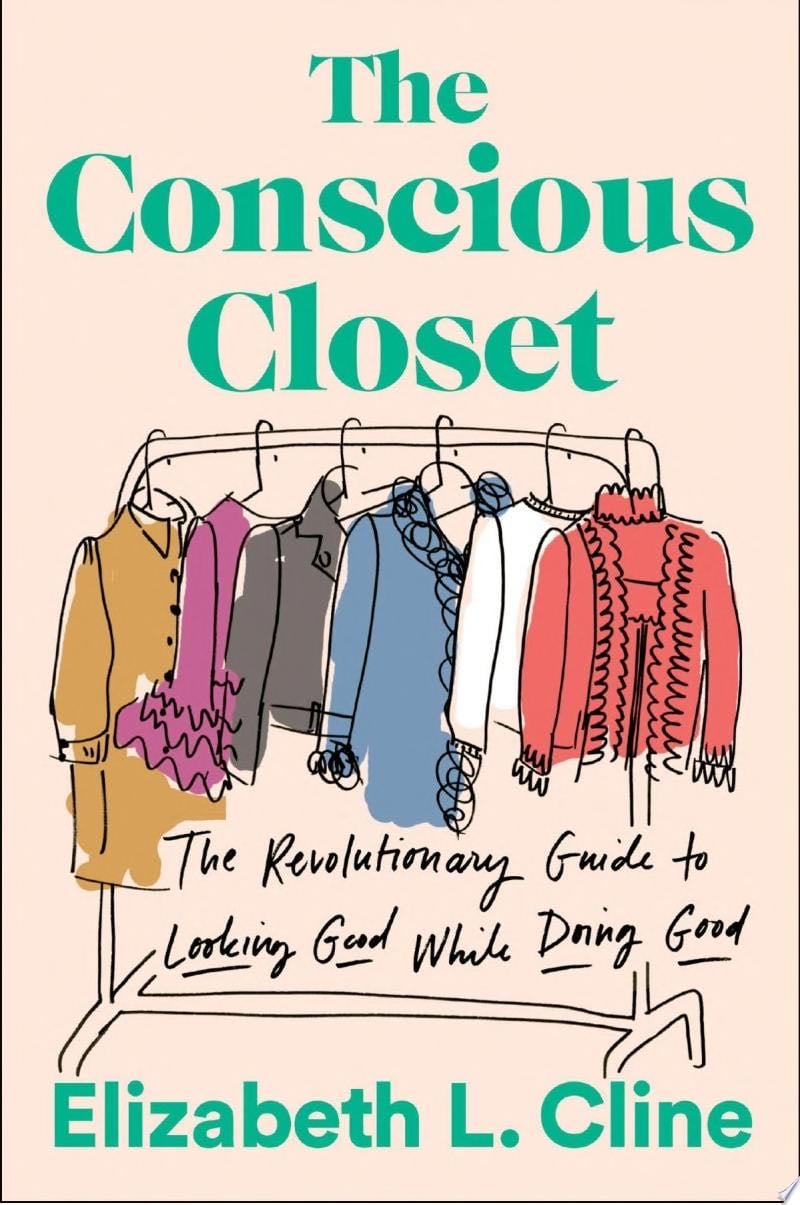
The Conscious Closet
Elizabeth L. Cline · 2019
<b>From journalist, fashionista, and clothing resale expert Elizabeth L. Cline, “the Michael Pollan of fashion,”* comes the definitive guide to building an ethical, sustainable wardrobe you'll love.</b><br><br>Clothing is one of the most personal expressions of who we are. In her landmark investigation <i>Overdressed: The Shockingly High Cost of Cheap Fashion,</i> Elizabeth L. Cline first revealed fast fashion’s hidden toll on the environment, garment workers, and even our own satisfaction with our clothes. <i>The Conscious Closet </i>shows exactly what we can do about it.<br><br> Whether your goal is to build an effortless capsule wardrobe, keep up with trends without harming the environment, buy better quality, seek out ethical brands, or all of the above, <i>The Conscious Closet</i> is packed with the vital tools you need. Elizabeth delves into fresh research on fashion’s impacts and shows how we can leverage our everyday fashion choices to change the world through style. Inspired by her own revelatory journey getting off the fast-fashion treadmill, Elizabeth shares exactly how to build a more ethical wardrobe, starting with a mindful closet clean-out and donating, swapping, or selling the clothes you don't love to make way for the closet of your dreams. <br><br> <i>The Conscious Closet </i>is not just a style guide. It is a call to action to transform one of the most polluting industries on earth—fashion—into a force for good. Readers will learn where our clothes are made and how they’re made, before connecting to a global and impassioned community of stylish fashion revolutionaries. In <i>The Conscious Closet, </i>Elizabeth<i> </i>shows us how we can start to truly love and understand our clothes again—without sacrificing the environment, our morals, or our style in the process.<br><br>*Michelle Goldberg, <i>Newsweek/The Daily Beast</i>
To Read
The Anatomy of Fashion
Colin McDowell · 2013
Why do we dress the way we do? How has fashion changed and evolved over the centuries? How did the 3-piece suit come about? Why have hemlines risen and fallen over time? In <i>The Anatomy of Fashion</i>, respected fashion commentator Colin McDowell goes beyond standard fashion histories and narrative surveys to answer these questions and many more.<br><br>The book's unique structure takes the reader from head to toe in sections such as `The Body Unclothed,? `Materials and Texture,? `Head to Waist,? `Hips to Feet,? `Looks and Themes in Dress,? and more. Visually rich, with over 500 photographs, illustrations, paintings, and film stills, the book includes work by designers and labels such as Ralph Lauren, Chanel, Yves Saint Laurent, Alexander McQueen, Versace, Carhartt, Diesel and more.<br><br>The book's dynamic structure and layout are equally suited for browsing and for serious reference, but The Anatomy of Fashion is not simply a picture book. It is a sourcebook by one of the world's leading fashion scholars that seeks nothing less than a thorough analysis of the roots of every aspect of fashion today.

Iris Apfel: Colorful
IRIS. APFEL · 2024

How to Wear Everything
Kay Barron · 2024
<p><b>A TIMELESS, WITTY, NO-NONSENSE GUIDE TO DRESSING FOR EVERYWHERE AND EVERYTHING – FROM NET-A-PORTER FASHION DIRECTOR KAY BARRON</b><br><br></p><p>----<br><br> <b>What we wear matters.</b> <br><br>It matters because looking, and therefore feeling, like yourself is essential. <br>Clothes can be the difference between a good day and a bad day. <br>Clothes have the power to make your mood ten times worse or one hundred times better.<br><br> <b>Clothes should give you confidence, and never make you doubt yourself.</b><br><br> Whether you already have a go-to look or feel overwhelmed by choice, <i>How to Wear Everything </i>covers <b>where to start, what you need and what you absolutely do not </b>– <b>whatever your age, body type or budget.</b><br><br> Highlights include:<br><br>- Mastering timeless classics that you will want to wear forever<br>- What to pack and (more importantly) not pack on holiday<br>- Shopping secondhand and vintage like a pro<br>- How to find <i>the </i>perfect jeans for your shape<br><br>A fun, reassuring, no-nonsense guide, with tips and tricks from the super-stylish, including <b>Sarah Jessica Parker, Law Roach, Monica Bellucci</b> and <b>Nicky Zimmermann</b>, <i>How to Wear Everything</i> reveals the fashion industry's best-kept secret: getting dressed is not that hard.</p>

Why Fashion Matters
Frances Corner · 2014
<p>An illuminating introduction to the expanding influence of fashion from the perspectives of design, technology, sustainability, and business</p> Fashion matters for the economy, to society, and to each of us personally. Faster than anything else, what we wear tells the story of who we are—or who we want to be. It is the most immediate form of self-expression.<br> <br> Yet even as fashion touches the lives of each and every one of us, its influence and the vast creative industry that it supports can seem mysterious to outsiders. In Why Fashion Matters Frances Corner, Head of London College of Fashion, guides readers into the dizzying world of this rapidly expanding, increasingly global, always exciting industry.<br> <br> In provocative and intriguing entries, Corner teases out the glorious intricacies and contradictions of an industry that simultaneously values technology and craft; timeless style and fast fashion; the bespoke and the mass-market; consumption and sustainability; cold, hard numbers; and creative expression. From “Shop 'til We Drop” to “The White Shirt” to “The One Trillion Dollar Business” each entry offers a unique avenue into fashion and its impact, both positive and negative, on lives around the globe.