✶⋆.˚ fav albums

Items in this hypelist
Music
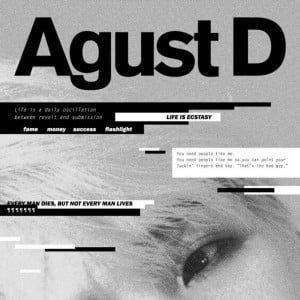
Agust D
Album

2 Cool 4 Skool
Album
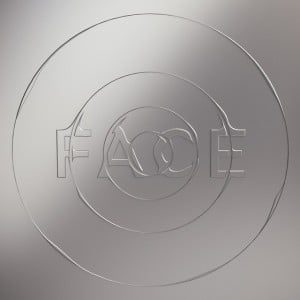
FACE
Album
Debut
Album · Björk

Dark & Wild
Album
BE
Album · BTS
The Most Beautiful Moment in Life Pt.1
Album · BTS
Vespertine
Album · Björk
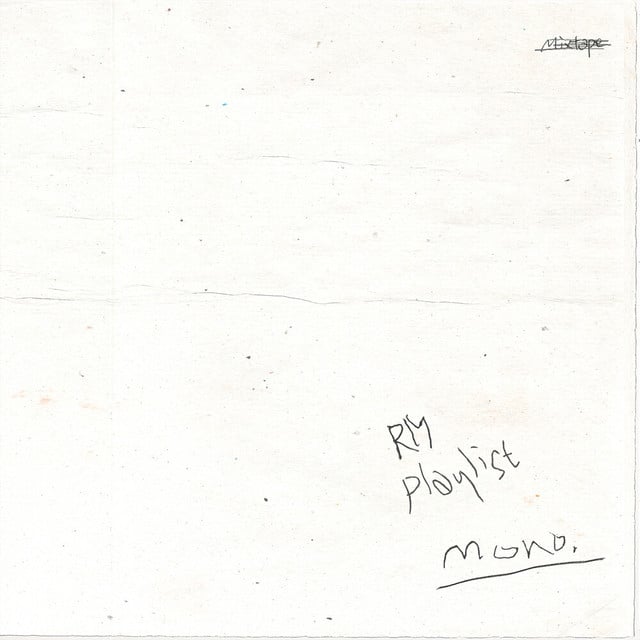
mono.
Album · RM

Layover
Album · V

This Is How Tomorrow Moves
Album
There was a time, not so long ago, when things felt relatively simple for Beatrice Laus: She’d write and record songs in her London bedroom, she’d post them online, the world would come to her or it wouldn’t. But it did—very much so. To such an extent and at such a dizzying clip that, still 23 and just two albums into her career, the Up Next alum found herself taking a meeting with Rick Rubin—part mystic, part producer, part institution. “I think we just wanted to meet each other,” she tells Apple Music. “The entire meeting was about life and just catching up. It was almost like a therapy session. I think at the end I was like, ‘Oh, I’ve been making some songs. Do you want to hear them?’” Those songs became part of <i>This Is How Tomorrow Moves</i>, a lush and supremely confident third full-length that Laus would go on to record with Rubin at Shangri-La, his legendary studio in Malibu—a long way from said London bedroom. It’s an album about self-realization and growing up, written in the aftermath of a breakup, as Laus—fully online and in the public eye, on tour and away from home—came to terms with a life that had become unrecognizable to her. “I really needed music to help me understand what my brain was going through,” she says. “I just had so much to say. I didn’t really think about the way it sounded. You know when you really badly need to go to the toilet? That’s what it felt like: I really badly needed to write a song.” At Shangri-La, Rubin encouraged Laus to see and hear what she’d written in its simplest and clearest emotional terms. Though she still takes plenty of inspiration from a wide swath of ’90s alt-rock and pop (“Post,” the Incubus-like “Take a Bite”), she is equally at home here at the center of a spare piano ballad (“Girl Song”) as she is amid the fanfare of an incandescent indie-folk cut (“Ever Seen”). It’s the sound of an artist finding clarity and herself, an artist leveling up. “I think being in a space like Shangri-La, and knowing that you’re making this record with Rick, it definitely kind of kicks you,” she says. “Like, ‘All right, it’s time to shine.’” Read on as Laus takes us inside a few highlights from the album. <b>“Girl Song”</b> “I think you can argue that ‘Girl Song,’ out of all the songs on the record, is the most tragic. I wrote it because I’m still trying to figure that one out, just in terms of growing up and loving myself and the way I look and physical appearance and all that mumbo jumbo. But it sits at number six, just because I just felt like it was perfect. It had to be perfectly in the middle of the record because it didn’t suit the beginning or the end. It was just how I felt at that moment.” <b>“Beaches”</b> “I wrote ‘Beaches’ because of how terrified I was getting into this. I am the sort of person that values feeling comfortable and loyalty and trusting people around me, not changing a lot of things. But I would’ve been an idiot if I had said no [to Rubin]. I remember my boyfriend being like, ‘Are you crazy? You have to go.’ I’m so used to making music back at home, not in a massive, fancy place.” <b>“The Man Who Left Too Soon”</b> “I actually wrote it in LA, in my hotel room. I’ve never really experienced death in family. I always wondered how that felt like. My current boyfriend, unfortunately, lost his dad around his twenties; I really got to see how that would feel like and how that would affect someone. I wanted to write about it so I can understand what that would mean to other people and what that would mean to him and what that would mean to me.” <b>“This Is How It Went”</b> “It makes me so anxious: A very intense thing happened to me, and I needed to write about it. I have to say all this shit.”
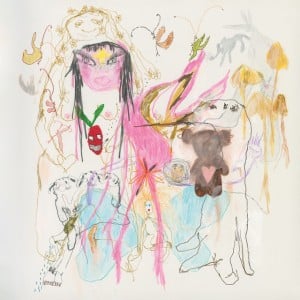
Beatopia
Album

Interlude: Wings
Song
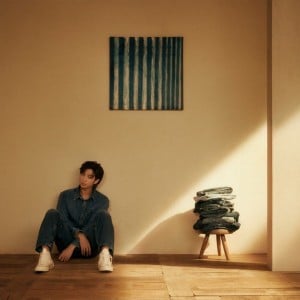
Indigo
Album
First came devastation: In June 2022, BTS, the biggest band on the planet, announced an indefinite hiatus. A month later, J-Hope became the first member of the septet to release a debut solo album, <i>Jack in the Box</i>, which charmed BTS’s fandom, ARMY, with its ambitious rap-rock. JIN released the pop-rock single “The Astronaut,” co-written by Coldplay’s Chris Martin. Jung Kook featured on an inescapable Charlie Puth bubblegum pop hit, “Left and Right.” It seemed as though, like clockwork, each member would endeavor to make a name for themselves. So where did that leave RM? BTS’s leader—known for his penchant towards the literary, artistic, innovative—had yet to release any solo material. The pressure was on: BTS was the first K-pop boy band to truly break in the West, to access the same sort of global ubiquity afforded Anglophonic boy bands, and as its frontperson, surely he’d bear the brunt of Justin Timberlake, Harry Styles, and Michael Jackson comparisons? Was the world waiting for him to step out, eclipsing the careers of others in the process? If that is the case, RM’s elected to ignore such expectation. <i>Indigo</i>, his debut LP and first release since the band’s break, is an experimentalist’s dream. Eight of the ten tracks feature artists from all walks of life, each telling their own story about his experiences. The soulful hip-hop of opener “Yun” features Erykah Badu; the life-affirming retro-pop of “Still Life” has Anderson .Paak. The ebullient K-pop-rap of “All Day” boasts TABLO of the group Epik High, genre progenitors who laid the framework for BTS, while “Closer” is a Y2K R&B slow-burn with up-and-comers Paul Blanco and Mahalia. Each track is meticulously crafted to showcase not only RM’s flow (he’s best known as a rapper, after all), but also his breathy baritone, like in the disco banger “Hectic,” featuring Colde. <i>Indigo</i> is not RM’s first time in the solo arena—there was the hard hip-hop of 2015’s self-titled debut mixtape and the considerably more intimate <i>Mono.</i> in 2018, with its space-rock production (“Forever Rain”) and restrained piano (“Tokyo”). But this album—one RM worked on secretly for four years—is something else entirely. It is a bandleader’s meditative step toward a new kind of career, one where he can express his truest self through collaborative songwriting. It’s a thrill, a maturation, and confirmation that RM stands strong—both within his group and outside of it.

Right Place, Wrong Person
Album

ARIRANG
Album · BTS
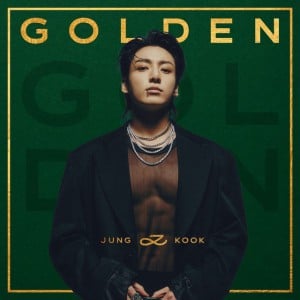
GOLDEN
Album