fave singers
Items in this hypelist
Favorites
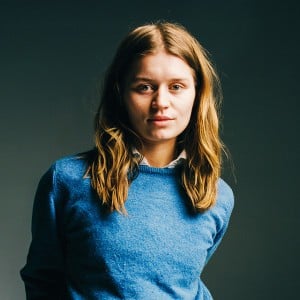
girl in red
girl in red
i’m marie and i’m a one girl band making tunes ;)
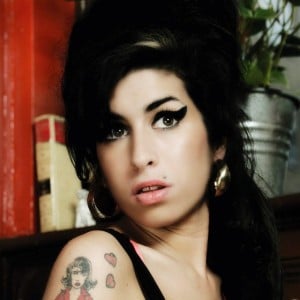
Amy Winehouse
Amy Winehouse
Amy Winehouse was one of the U.K.'s flagship vocalists during the 2000s. While the British press and tabloids seemed to focus on her rowdy behavior and tragic end, fans and critics alike embraced her rugged charm, brash sense of humor, and distinctively soulful and jazzy vocals. Her platinum-selling, Mercury Prize-nominated album Frank (2003) elicited comparisons ranging from <a href="spotify:artist:1YzCsTRb22dQkh9lghPIrp">Billie Holiday</a> and <a href="spotify:artist:1bgyxtWjZwA5PQlDsvs9b8">Sarah Vaughan</a> to <a href="spotify:artist:4ylR3zwA0zaapAu94fktwa">Macy Gray</a> and <a href="spotify:artist:2Mu5NfyYm8n5iTomuKAEHl">Lauryn Hill</a>, introducing her unmistakable voice and deeply personal songwriting to the masses. However, it wasn't until 2006 that Winehouse truly landed on the global stage with her sophomore full-length, Back to Black. Teamed with producer <a href="spotify:artist:3hv9jJF3adDNsBSIQDqcjp">Mark Ronson</a>, she crafted a nostalgic, throwback sound heard on hit singles "Rehab" and "You Know I'm No Good." One of the best-selling albums in U.K. history, the set earned Winehouse a record-making five Grammy Awards in 2008. The album would be her last; she passed away in London on July 23, 2011, at the age of 27. Born to a taxi-driving father and a pharmacist mother, Winehouse grew up in the Southgate area of northern London. Her upbringing was filled with jazz. Many of the uncles on her mother's side were professional jazz musicians, and her paternal grandmother was romantically involved with British jazz legend <a href="spotify:artist:2vsL5bsgAVKdkb0wHeSy0x">Ronnie Scott</a> at one time. At home, she listened to and absorbed her parents' selection of greats: <a href="spotify:artist:32LHRiof0sa4taYew9i3Fa">Dinah Washington</a>, <a href="spotify:artist:5V0MlUE1Bft0mbLlND7FJz">Ella Fitzgerald</a>, and <a href="spotify:artist:1Mxqyy3pSjf8kZZL4QVxS0">Frank Sinatra</a>, among others. However, in her teens, she was drawn to the rebellious spirit of <a href="spotify:artist:0TImkz4nPqjegtVSMZnMRq">TLC</a>, <a href="spotify:artist:7wqtxqI3eo7Gn1P7SpP6cQ">Salt-N-Pepa</a>, and other American R&B and hip-hop acts of the time. At the age of 16, after she had been expelled from London's Sylvia Young Theatre School, she caught her first break when pop singer <a href="spotify:artist:5OfPn2V9E04qhNiYHNvMJe">Tyler James</a>, a schoolmate and close friend, passed on her demo tape to his A&R representative, who was searching for a jazz vocalist. That opportunity led to her recording contract with <a href="spotify:search:label%3A%22Island+Records%22">Island Records</a>. By the end of 2003, when she was 20 years old, <a href="spotify:search:label%3A%22Island%22">Island</a> had released her debut album, Frank. With contributions from hip-hop producer/keyboardist <a href="spotify:artist:0rlS0SzVFk8BoiAW0fGBbN">Salaam Remi</a>, Winehouse's amalgam of jazz, pop, soul, and hip-hop received rave reviews. The album was nominated for the 2004 Mercury Music Prize as well as two Brit Awards, and its lead single, "Stronger Than Me," won an Ivor Novello Award for Best Contemporary Song. Following Winehouse's debut, the accolades and inquiring interviews appeared concurrently in the press with her tempestuous public life. Several times she showed up to her club or TV performances too drunk to sing an entire set. In 2006, her management company finally suggested that she enter rehab for alcohol abuse, but instead, she dumped the company and transcribed the ordeal into the U.K. Top Ten hit "Rehab," the lead single for her second, critically acclaimed album, Back to Black. With evocative productions from <a href="spotify:artist:0rlS0SzVFk8BoiAW0fGBbN">Salaam Remi</a> and British DJ/multi-instrumentalist <a href="spotify:artist:3hv9jJF3adDNsBSIQDqcjp">Mark Ronson</a>, the album somewhat abandoned jazz, delving into the sounds of '50s/'60s-era girl group harmonies, rock & roll, and soul. The fanfare over the release was so great that it started to spill over onto U.S. shores; several rappers and DJs made their own remixes of various songs, not to mention covers by <a href="spotify:artist:5a2EaR3hamoenG9rDuVn8j">Prince</a> and <a href="spotify:artist:7Ln80lUS6He07XvHI8qqHH">the Arctic Monkeys</a>. One month after Winehouse won Best Female Artist at the Brit Awards in February 2007, <a href="spotify:search:label%3A%22Universal%22">Universal</a> released Back to Black in the U.S. The LP charted higher than any other American debut by a British female recording artist before it, and it remained in the Top Ten for several months, selling a million copies by the end of that summer. Just as in the U.K., she became the talk of the town, landing on the covers of Rolling Stone and Spin magazines. Not long afterward, though, Winehouse canceled her North American tour. Early reports revealed that she was entering rehab for addiction, but her new management denied the claims, stating it was due to severe exhaustion. Her erratic behavior kept her and her new husband, Blake Fielder-Civil, in the tabloids constantly, on and off stages on both sides of the Atlantic, but in late 2007, American fans were finally given a chance to hear Winehouse's early work, with a slightly abbreviated (two songs removed and one added) version of Frank. Unfortunately, the next four years were filled with drama, disappointment, and very little music. By 2009, her marriage had ended in divorce, she had repeatedly been arrested on assault charges and/or public order offenses, and her struggles with substance abuse and mental health issues were tragically played out in the press. Public performances turned into incoherent disasters, the worst of them posted to video-sharing sites for all to see. A track on the <a href="spotify:artist:3rxIQc9kWT6Ueg4BhnOwRK">Quincy Jones</a> tribute Q: Soul Bossa Nostra appeared in 2010, while a duet with <a href="spotify:artist:2lolQgalUvZDfp5vvVtTYV">Tony Bennett</a> was announced in early 2011, but a planned follow-up to Back to Black would never make it past the demo stage. Winehouse was found dead in her Camden, London apartment on July 23, 2011. The coroner's report, delivered three months later, revealed that her blood alcohol content had reached a potentially fatal level. Nearly two months after her death, Winehouse's first posthumous appearance was released on <a href="spotify:artist:2lolQgalUvZDfp5vvVtTYV">Tony Bennett</a>'s Duets II, where she sang with him on "Body and Soul." Near the end of 2011, her family's foundation announced the release of Lioness: Hidden Treasures, a posthumous compilation featuring recordings from throughout her career (although a few of the arrangements were recorded after her death). A year after Lioness came At the BBC, a deluxe CD/DVD set -- available both as a four-disc box and a smaller two-disc compilation -- rounding up all of her live performances for the British Broadcasting Company. In the summer of 2015, Amy, a documentary by director Asif Kapadia, told her story through photographs, archival footage (in the studio and out), and music. Much of this material had not been available previously. It also contained interviews with friends, family, musical collaborators, and the late singer. That October, a soundtrack was issued that alternated previously released and unreleased Winehouse material with pieces from the film's score. In 2021, another posthumous collection was released as a Record Store Day vinyl exclusive. Remixes collected rare cuts from throughout her career, including takes by <a href="spotify:artist:37uLId6Z5ZXCx19vuruvv5">Hot Chip</a> and <a href="spotify:artist:49GY4uPAwdlk5lSGtfKWYl">MJ Cole</a>, as well as guest verses by the likes of <a href="spotify:artist:3nFkdlSjzX9mRTtwJOzDYB">Jay-Z</a> and <a href="spotify:artist:6FD0unjzGQhX3b6eMccMJe">Ghostface Killah</a>. ~ Cyril Cordor & Neil Z. Yeung, Rovi

Sade
Sade
Since debuting with the Top Ten U.K. hit "Your Love Is King" (1984), Sade have remained, across four ensuing decades of intermittent activity, shrewd synthesists of classic jazz, cutting-edge R&B, and mature pop. Although they're known most for stylishly seductive ballads, including the international hits "Smooth Operator" (1984), "The Sweetest Taboo" (1985), "No Ordinary Love" (1992), and "By Your Side" (2000), they've also recorded poignant songs regarding slavery, immigration, parenthood out of wedlock, and everyday struggles, often through Sade Adu's third-person narratives. From Diamond Life (1984) through Soldier of Love (2010), breaks between Sade albums have increased in duration from a year-and-a-half to a decade, but each return has been warmly greeted. All six of Sade's albums have entered the U.K. Top 20, placed within the U.S. Top Ten, and in both countries have achieved platinum status. Additionally, Sade are four-time Grammy winners, having invalidated the Best New Artist curse with subsequent wins for "No Ordinary Love," Lovers Rock, and "Soldier of Love." Seven years after the latter took the award for Best R&B Performance, they returned with contributions to the soundtracks of A Wrinkle in Time and Widows. Sade are named after singer and songwriter Helen Folasade Adu. Born in Ibadan, Oyo State, Nigeria, Adu moved with her mother and brother to southeast England outside Colchester at the age of four. A lover of early-'70s soul, Adu tentatively became involved with music after enrolling at Saint Martin's School of Art to study fashion, when friends asked her to help with their group's vocals. After she finished her course work in 1981, she joined the band Pride and into 1983 toured the U.K. with the act. Their gigs eventually featured a mini-set during which Adu was granted the spotlight, backed by some of her bandmates on intimate jazz-inspired material. These segments, specifically "Smooth Operator" -- composed by Adu and the band's Ray St. John -- drew attention from label representatives. Adu was pursued as a solo act, but she signed with <a href="spotify:search:label%3A%22Epic%22">Epic</a> after demanding to bring along some of her partners in Pride: bassist Paul S. Denman, keyboardist Andrew Hale, and saxophonist and guitarist <a href="spotify:artist:2OOsPeiMEpk3JKFqUT9OAN">Stuart Matthewman</a>. The London-based quartet made their recorded debut in February 1984 with the controlled yet expressive ballad "Your Love Is King," which soon entered the U.K. singles chart and the following month peaked at number six. Another single, the down-but-not-out soul anthem "When Am I Going to Make a Living," preceded the July release of the full-length Diamond Life. Produced by Robin Millar, the album was written primarily by Adu and <a href="spotify:artist:2OOsPeiMEpk3JKFqUT9OAN">Matthewman</a> in tandem, finished off with a cover of <a href="spotify:artist:7JLwBH0X2G8tgHceqvOu5B">Timmy Thomas</a>' 1972 hit "Why Can't We Live Together." Reinforced with the number 19 U.K. single "Smooth Operator," Diamond Life -- itself falling just short of the top spot on the U.K. albums chart -- became one of the biggest mid-'80s debuts. In the U.S., it was issued on <a href="spotify:search:label%3A%22Epic%22">Epic</a> subsidiary Portrait in early 1985 and reached number five that June, with "Smooth Operator" doing most of the heavy lifting as a crossover smash that climbed to number five on the pop and R&B charts and topped the adult contemporary chart. Diamond Life eventually went quadruple platinum in the U.K. and U.S. and earned sales certifications in several other territories. Sade continued to gradually refine and expand their cosmopolitan mix of jazz, R&B, and pop, and continuously decelerated their writing and recording process. Working again with Robin Millar, they started recording their second album around the time Diamond Life was distributed in the U.S., issuing it internationally that November as Promise. On its way to international multi-platinum success, Promise topped the U.K. and U.S. pop charts, led by "The Sweetest Taboo," which went Top 40 U.K. and peaked at number five in the U.S. the week after the band won Best New Artist at the 28th Annual Grammy Awards. Shortly thereafter, "Never as Good as the First Time" strengthened their hold on urban and adult contemporary radio. Despite a gap of nearly two-and-a-half years between full-lengths, Sade remained a major commercial force with third album Stronger Than Pride. This time, production was handled by the band with help from Mike Pela and Ben Rogan, established Sade associates who played comparatively minor roles beforehand. Carrying some of the band's airiest arrangements and deepest rhythms -- exemplified respectively by the title song and "Paradise," two of its four singles -- the album climbed to the third spot on the U.K. and U.S. charts. A longer studio-release break ensued and was broken in October 1992 with Love Deluxe, produced by the band with Pela. More electronic and atmospheric than the band's previous albums, it entered the Top Ten in the U.K. and missed the top of the U.S. chart by two slots. "Feel No Pain," "Kiss of Life," and the pulsing trip-hop precursor "Cherish the Day" all charted, but the LP's biggest single was easily its first, "No Ordinary Love" -- it hit number 14 in the U.K. and U.S. and won another Grammy award, this time for Best R&B Performance by a Duo or Group with Vocal. The song had a lingering effect strong enough to keep the parent release on the Billboard 200 for almost two years. The band responded in kind with their longest hiatus to that point. In 1996, <a href="spotify:artist:2OOsPeiMEpk3JKFqUT9OAN">Matthewman</a> resurfaced as a co-writer and co-producer on Maxwell's Urban Hang Suite, thereby beginning a lasting close association with the album's maverick namesake. Later that year, <a href="spotify:artist:2OOsPeiMEpk3JKFqUT9OAN">Matthewman</a>, Denman, and Hale released Sweetback, titled after the name of their new side project. Maxwell, <a href="spotify:artist:4hVcxmC7igpot32EzQf7IR">Amel Larrieux</a>, and <a href="spotify:artist:6ZcRUVs3I5U8EOnm9ZdCsO">Bahamadia</a> were among the guests on the album, a stylistic successor to Love Deluxe that went a little farther out with no concern for hitmaking. Toward the end of the decade, Sade reconvened to record their fifth album, Lovers Rock. Distinguished by some dubwise rhythms and a greater emphasis on <a href="spotify:artist:2OOsPeiMEpk3JKFqUT9OAN">Matthewman</a>'s acoustic guitar, the LP cracked the U.K. Top 20 and was yet another number three U.S. hit upon its November 2000 arrival, supported with "By Your Side" (number 17 U.K. pop, number 75 U.S. pop). The Recording Academy awarded it Best Pop Vocal Album at the 44th Annual Grammy Awards. Following a customary album-promoting tour, the band appeased fans in February 2002 with Lovers Live. A second project from <a href="spotify:artist:7fJy3VGVUCNVGrVrI1nv6x">Sweetback</a>, Stage [2], followed two years later. In December 2009, "Soldier of Love" ended a period of silence during which Adu raised her daughter and was honored with an OBE (Order of the British Empire). The song's stark, swaggering theatricality made it feel like more of an event more than any other Sade re-entry. An album of the same title was released the following February, entering the U.K. chart at number four and the U.S. chart at the top. The song made the band Grammy winners for a fourth time, again taking the award for Best R&B Performance by a Duo or Group with Vocal. A 2011 catalog release, The Ultimate Collection, summarized the band's discography and included a handful of previously unreleased songs. Seven years passed before Sade released new recordings, both of which were made for soundtracks: "Flower of the Universe" for <a href="spotify:artist:3xvaSlT4xsyk6lY1ESOspO">Disney</a>'s A Wrinkle in Time, and "The Big Unknown" for Widows. ~ Andy Kellman, Rovi

Laufey
Artist
“As a musician, my goal is to bring jazz and classical music to my generation,” declares GRAMMY-winning composer, singer, producer, and multi-instrumentalist Laufey. In 2022, the Icelandic-Chinese artist’s trailblazing approach paid off, with a performance on Jimmy Kimmel LIVE! in support of her debut album Everything I Know About Love, sold out tours of North America, Asia, and Australia, and she was the most streamed jazz artist on Spotify. The Los Angeles-based Laufey (pronounced lāy-vāy) continued her story by writing and recording Bewitched, her second album. Inspired by jazz greats and classical masters while possessing a point of view that could only be conveyed by a 21st-century twentysomething, Bewitched represents an expansion of Laufey’s sonic palette. Tracks like the breezy bossa nova cut “From the Start” and the smoldering string-assisted ballad “Promise” have classic songcraft and intricate arrangements that make them feel instantly timeless, while Laufey’s conversational lyrics give her music a relatability to the next generation of jazz and classical aficionados. The album has gone on to break the record as the biggest debut for a jazz album on Spotify in history and earned a 2024 GRAMMY win for "Best Traditional Pop Vocal Album." Laufey’s self-assured musicianship and deeply felt lyrics take the idea of “classic” music, whether it’s slotted as classical or jazz—or even chart-topping pop—and humanize it, creating a deep-seated connection.