
Favs💌
Items in this hypelist
Favorites

GOT7
GOT7
Debuted on January 16th, 2014, GOT7 is a self-producing K-Pop group. Being nominated as Top Social Artist at Billboard Music Awards and charting #1 on iTunes in 42 different countries, the seven membered group is identified as a global K-Pop artist with worldwide audience. On top of active projects by each of the members, the group has been partnering up with Warner Music Korea since a single ‘Encore’ release in 2021.
Imagine Dragons
Artist
Coldplay
Artist
Daniel Caesar
Artist
Oasis
Artist
The Poles
Artist
DPR LIVE
Artist
DPR IAN
Artist

Roupa Nova
Roupa Nova
Uma trajetória aplaudida de pé por quem conhece a história da única banda com 4 décadas de estrada e a mesma formação desde o início em atividade no Brasil (Paulinho em memória). Mais de 20 milhões de cópias vendidas, 38 discos lançados e 35 temas de novela e números que impressionam. Considerado um dos melhores shows nacionais, Roupa Nova atrai para suas apresentações um público dos mais diversos. São gerações que atravessaram as mudanças na música e seguem fiéis em cada palco que pisam Cleberson, Feghali, Kiko, Nando, Paulinho (in memorian) e Serginho. Tudo começou em 1980 quando foram chamados para gravar um tema de final de ano da rádio Cidade. Mariozinho Rocha, produtor naquela ocasião, sugeriu que o nome da banda mudasse para o que hoje é um nome conhecido e amado por todo Brasil. Quando o assunto é trilha de novela, Roupa Nova é recordista, são responsáveis por tocar o “Tema da Vitória”, composto e arranjado por Eduardo Souto Neto, que mais tarde se tornaria tema de Ayrton Senna, pela música tema do “Xou da Xuxa” e do “Vídeo Show”, todos da Rede Globo, além do “Rock in Rio”. Nas canções mais famosas estão Whisky a Go-Go, Dona, Volta pra Mim, Anjo, Seguindo no Trem Azul, A Viagem, Coração Pirata, entre muitas outras. Oficialmente fazendo parte da banda, Fabio Nestares entra para somar, e passa a ser o sétimo Roupa Nova, assumindo os vocais ao lado dos demais integrantes.

Tribalistas
Artist

The Neighbourhood
Artist

wave to earth
Artist
Antônio Carlos Jobim
Um dos maiores compositores brasileiros, criador de clássicos.
Vinicius de Moraes
Vinicius de Moraes
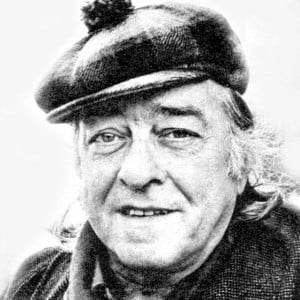
Vinícius de Moraes was a fundamental figure in Brazilian music. As a poet, he wrote lyrics for a great number of songs that became all-time bossa nova and samba classics. As a composer, he wrote some good music, and as an interpreter, he left several important albums. From a musical family, he began very early to write poetry. At 14 he became friends with the brothers Paulo and Haroldo Tapajós. With Haroldo, he composed the fox song "Loura ou Morena," recorded by the two brothers in 1932 with success for Columbia. In 1929 de Moraes enrolled in law school in Catete, Rio. Between 1932 and 1933 he wrote lyrics for ten songs that were recorded by his partners: seven with Haroldo Tapajós, two with Paulo, and one with J. Medina (which was recorded by João Petra de Barros). In 1933 he finished his college studies and released his first book, O Caminho Para a Distância. In 1935 he had his second book (Forma e Exegese) awarded, and in the next year, he became a cinema censor for the health and education cabinet. In 1936 he wrote Ariana, a Mulher and in 1938 headed to England, with an English government scholarship to study literature at Oxford University, and wrote Novos Poemas. At that time he was married by proxy. With the development of World War I, he returned to Rio. In 1941 he began to write film reviews and critiques. Two years later he joined Brazil's diplomatic service, Itamaraty, also releasing the book Cinco Elegias. In 1946 he was sent to Los Angeles in his first diplomatic assignment as vice consul and released Poemas, Sonetos e Baladas. In 1950 he returned to Brazil due to his father's death. His first samba (with <a href="spotify:artist:34Xo0W7OEWIKuFjODo0Eje">Antônio Maria</a>) is from 1953, "Quando Tu Passas por Mim," a year in which he moved to France as Brazil's embassy second secretary. His play Orfeu da Conceição won the IV São Paulo Centennial Contest in 1954. In 1955 he wrote lyrics for some of Cláudio Santoro's chamber music pieces. That next year he staged Orfeu da Conceição, which was filmed by French writer Marcel Camus. He was then introduced to an unknown pianist, <a href="spotify:artist:3pO5VjZ4wOHCMBXOvbMISG">Antonio Carlos Jobim</a>, who was commissioned with writing the music for the play. <a href="spotify:artist:3pO5VjZ4wOHCMBXOvbMISG">Jobim</a> composed "Se Todos Fossem Iguais a Você," "Um Nome de Mulher," and several others, recorded by Odeon with <a href="spotify:artist:174ThXFgQg2VCq9r3m8ceb">Luiz Bonfá</a> and others. Following a return to Paris in 1956 and another diplomatic assignment at Montevideo, Uruguay, in 1957 (when released Livro de Sonetos, followed by Novos Poemas II in 1959), he stayed there until 1960. In 1958 <a href="spotify:artist:5w4qi7KMTWcV7sgXgVoPwW">Elizeth Cardoso</a> released her album, marking the beginning of bossa nova. She included on it five compositions by the duo Tom & Vinícius: "Canção do Amor Demais," "Chega de Saudade," "Outra Vez," "Luciana," and "Estrada Branca." The album also brought <a href="spotify:artist:77ZUbcdoU5KCPHNUl8bgQy">João Gilberto</a> and his "different beat" onto two tracks, "Chega de Saudade" and "Outra Vez." The careers of all of them had great impetus after that record, and the songs written by Tom & Vinícius became disputed by singers. In 1959 the movie Orfeu do Carnaval, based on the play Orfeu da Conceição, was awarded with the Golden Palm at the international movie festival of Cannes, France, and, in Hollywood, as the best foreign movie. In that time, he and <a href="spotify:artist:3pO5VjZ4wOHCMBXOvbMISG">Jobim</a> composed "Eu Sei Que Vou Te Amar" and "Amor em Paz." In 1960 he wrote O Amor dos Homens. In 1961 he composed with <a href="spotify:artist:3LokxmaXXZpL7sLZASDzCS">Carlos Lyra</a> "Coisa Mais Linda," "Primeira Namorada," "Nada Como Ter Amor," and "Você e Eu." In 1962 he wrote (together with <a href="spotify:artist:0pMRwfwerzk1N0cUov351R">Pixinguinha</a>) the soundtrack for the movie Sol Sobre a Lama (Alex Viany), which included "Lamento"; he also met <a href="spotify:artist:0VSgciOd32tP2Yna1w4vDr">Baden Powell</a> and wrote with him "Samba da Bênção," "Só por Amor," "Canção de Amor e Paz," "Pra Que Chorar," "Deixa," "Samba em Prelúdio," "Apelo," "Berimbau," "Consolação," and other great classics. After <a href="spotify:artist:0VSgciOd32tP2Yna1w4vDr">Powell</a>'s return from Bahia, where he dedicated himself to research the Bahian folklore, they composed the series known as the Afro-sambas: "Samba de Oxossi," "Canto de Xangô," "Canto de Ossanha," and others. With <a href="spotify:artist:3LokxmaXXZpL7sLZASDzCS">Carlos Lyra</a> he wrote "Marcha da Quarta-Feira de Cinzas" and "Minha Namorada," included in his play Pobre Menina Rica. In August 1962, together with <a href="spotify:artist:3pO5VjZ4wOHCMBXOvbMISG">Jobim</a>, <a href="spotify:artist:77ZUbcdoU5KCPHNUl8bgQy">João Gilberto</a>, and <a href="spotify:artist:1FbL4RGqW5gvZ2kZNGdfpA">Os Cariocas</a>, he opened the show Encontro at the Au Bon Gourmet nightclub (Rio). That show represented the first audition of "Garota de Ipanema," "Insensatez," "Ela é Carioca," "Só Danço Samba," "Samba do Avião" (all with <a href="spotify:artist:3pO5VjZ4wOHCMBXOvbMISG">Jobim</a>), and "Samba da Bênção." The same nightclub presented his play Pobre Menina Rica, which had music by <a href="spotify:artist:3LokxmaXXZpL7sLZASDzCS">Carlos Lyra</a> ("Sabe Você," "Primavera," and "Pau-de-Arara"). The play launched the career of <a href="spotify:artist:64KVQ4YupSZYrGNLduVtj3">Nara Leão</a>. He also released Para Viver um Grande Amor. In the next year he met <a href="spotify:artist:6u5P4S3NSj4EDNegDlOevO">Edu Lobo</a>, with whom he would write "Arrastão" (which would win the I FMPB in 1965 with <a href="spotify:artist:0yFvXd36g5sNKYDi0Kkvl8">Elis Regina</a>'s interpretation), "Zambi," and "Canção do Amanhecer." Returning to Paris, he worked for UNESCO until 1964. Meeting <a href="spotify:artist:0fSXB6V1mhguJCAN7pLzu6">Francis Hime</a> upon returning to Brazil, they composed "Saudade de Amar," "Sem Mais Adeus," and "Eu Te Amo, Amor." Together with <a href="spotify:artist:7zsxdMsODmHKTbTB00t9wS">Dorival Caymmi</a> he presented a show at the Zum-Zum nightclub, which was a major success. Recorded live, it was released by Elenco. <a href="spotify:artist:177N2fB1WvNBCQ4epjMQ3O">Quarteto em Cy</a>, four singing sisters he discovered, was launched at that show. At the I FMPB, "Valsa do Amor Que Não Vem" (together with <a href="spotify:artist:0VSgciOd32tP2Yna1w4vDr">Baden Powell</a>) won second place in the interpretation of <a href="spotify:artist:5w4qi7KMTWcV7sgXgVoPwW">Elizeth Cardoso</a>. He collaborated on the script of the movie Garota de Ipanema and had a second season for his show with <a href="spotify:artist:7zsxdMsODmHKTbTB00t9wS">Dorival Caymmi</a>. Also in 1965 he released O Mergulhador. In 1966 he participated (with <a href="spotify:artist:3f5VCwd57gZsqMad28jyLV">Maria Bethânia</a> and <a href="spotify:artist:7oEkUINVIj1Nr3Wnj8tzqr">Gilberto Gil</a>) in the show Pois É at the Teatro Opinião, which presented <a href="spotify:artist:7oEkUINVIj1Nr3Wnj8tzqr">Gil</a>'s compositions. His "Samba da Bênção" (with <a href="spotify:artist:0VSgciOd32tP2Yna1w4vDr">Baden</a>) was included on the soundtrack of Claude Lelouch's movie Un Homme et une Femme, winner of the Cannes movie festival. He also wrote Para uma Menina com uma Flor. In 1968 he was summarily fired after 26 years of work from the Itamaraty by the discretionary powers of military dictatorship. In that year, he toured extensively through Europe (with <a href="spotify:artist:6tOsSffQQIXmK8TqsDck8t">Chico Buarque</a> and <a href="spotify:artist:64KVQ4YupSZYrGNLduVtj3">Nara Leão</a>) and Argentina (with <a href="spotify:artist:7zsxdMsODmHKTbTB00t9wS">Dorival Caymmi</a>, <a href="spotify:artist:177N2fB1WvNBCQ4epjMQ3O">Quarteto em Cy</a>, <a href="spotify:artist:0VSgciOd32tP2Yna1w4vDr">Baden Powell</a>, and <a href="spotify:artist:55PO0aYAH6lYKr0SqYR3Z9">Oscar Castro-Neves</a>). In 1969 he performed at Punta del Este, Uruguay, with <a href="spotify:artist:2S5INEKtRSZPRx3JhjEZF5">Maria Creuza</a> and <a href="spotify:artist:6fV3ZNUY8BCP45yuCWWDez">Dori Caymmi</a>. In that year he also became the partner of <a href="spotify:artist:7rPqFVgJYARiFsLDlN6W6y">Toquinho</a> (de Moraes' most frequent partner and biggest friend, they would record 20 LPs together), with whom, along with <a href="spotify:artist:2it164hfV4gOIjzfGz7Q05">Marília Medalha</a>, he opened a show in 1970 at the Teatro Castro Alves (Salvador). Also with them, he performed at the La Fusa nightclub (Buenos Aires, Argentina); in January 1971 <a href="spotify:artist:7rPqFVgJYARiFsLDlN6W6y">Toquinho</a> and de Moraes would again perform there, this time with <a href="spotify:artist:3f5VCwd57gZsqMad28jyLV">Maria Bethânia</a>. Still in 1970, taking a hit by <a href="spotify:artist:5m3gnxcM2reIB8tyTtx8vC">Garoto</a> written 20 years before, he wrote (together with <a href="spotify:artist:6tOsSffQQIXmK8TqsDck8t">Chico Buarque</a>) the lyrics for "Gente Humilde." His book Arca de Noé would yield ten years later several TV stagings with music by <a href="spotify:artist:7rPqFVgJYARiFsLDlN6W6y">Toquinho</a>, which was released on two LPs: A Arca de Noé (Ariola, 1980) and A Arca de Noé, Vol. 2 (Ariola, 1981). In 1971 an LP with his compositions (with <a href="spotify:artist:7rPqFVgJYARiFsLDlN6W6y">Toquinho</a>) "Tarde em Itapoã" and "Como Dizia o Poeta" was released by RGE with great success. It brought a great number of invitations for touring in Brazil and abroad. Always successful the duo came out with "Maria-vai-Com-as-Outras," "Testamento" (1971), "Regra Três" (1972), and others. With <a href="spotify:artist:7rPqFVgJYARiFsLDlN6W6y">Toquinho</a> and <a href="spotify:artist:6UKz2oYWzE0ZBnciztCown">Clara Nunes</a>, he presented the 1973 show O Poeta, a Moça e o Violão at the Teatro Castro Alves, Bahia. ~ Alvaro Neder, Rovi

BOYNEXTDOOR
Artist

NewJeans
Artist
IU
Artist
TOMORROW X TOGETHER
Artist

BTS
BTS
Record-breaking South Korean boy band BTS (aka Bangtan Boys) balance an energetic blend of dance-pop and hip-hop with deeply introspective lyrics, which helped them build a devoted global following while also becoming the most successful K-pop act in U.S. chart history. Debuting in the early 2010s with their Skool trilogy, they steadily expanded their audience until breaking into the mainstream consciousness with the Love Yourself series. In May 2018, their third official full-length, Love Yourself: Tear, topped the Billboard 200, becoming the first K-pop to hit number one in the U.S. and the highest-charting album by an Asian act to date. Formed by producer Bang Si Hyuk, the septet's lineup includes RM (Kim Namjoon), team leader and rapper; Jin (Kim Seokjin), singer; Suga (Min Yoongi), rapper; J-Hope (Jung Hoseok), rapper and choreographer; Jimin Park, singer and choreographer; V (Kim Taehyung), singer; and Jungkook Jeon, singer, rapper, and choreographer. In addition to production and composition, the members of BTS also write their own lyrics, which tackle topics like mental health, self-acceptance, and empowerment. With their youthful blend of club-worthy dance anthems, stirring love ballads, and aggressive rapping, BTS connected with a devoted fan base (dubbed "ARMY") and set themselves apart from the K-pop industrial machine when they debuted in 2013 with the first installment of their "School Trilogy" series, 2 Cool 4 Skool. A few months later, they released the second EP of the saga, O!RUL8,2? The trilogy was completed with Skool Luv Affair, which was released around Valentine's Day in 2014. Later that year, BTS released their full-length debut album, Dark & Wild, featuring the single "Danger." As their fan base grew and international tours sold out, they released The Most Beautiful Moment in Life, Pt. 1 in April 2015 and the follow-up, Pt. 2, some months later in November. They embarked on a massive world tour as The Most Beautiful Moment in Life, Pt. 2 topped a record-setting six international music charts, including Billboard's World Albums chart. After four weeks, they set a record as the first K-pop act to achieve such a feat. The group continued to break records with the release of their sophomore LP, Wings. Released in late 2016, Wings not only became the first BTS effort to debut atop both the Korean album and song charts, but they were the third K-pop act to land in the Canadian Hot 100. However, the album's impact was most apparent on the Billboard charts. The best showing to date for a K-pop act, Wings debuted in the Top 30 of the Billboard 200 -- both their highest U.S. chart debut and most sales to date -- becoming the first K-pop artists with three albums to enter the main album charts (Wings became their sixth Top Three hit -- and second number one -- on the World Albums chart). They also became the first K-pop act to spend four weeks on the charts. Wings continued the artistic and creative growth for the septet, featuring seven solo tracks that showcased the personality of each member. Four months later, BTS re-released the album as You Never Walk Alone. The updated version added four new songs to the original Wings track listing, including the singles "Spring Day" and "Not Today." With their presence in the United States continuing to expand, the group went on to win the Top Social Artist Award at the 2017 Billboard Music Awards. Their fifth EP, Love Yourself: Her, arrived that September and became the first K-pop album to debut in the Billboard 200's Top Ten, entering the chart at number seven. In early 2018, BTS received their first double-platinum certifications in Japan and became the first Korean act to receive two gold certifications in the U.S. That spring, they issued their third Japanese LP, Face Yourself, which featured Japanese versions of tracks from Wings and Love Yourself: Her. The set -- which included just two previously unreleased songs -- debuted just outside the Top 40 on the Billboard 200. The next month, BTS released their third official full-length, Love Yourself: Tear, which included the single "Fake Love." Days later, they returned to the Billboard Music Awards, performing and winning Top Social Artist for the second year in a row. Their Billboard success continued when Love Yourself: Tear soared to the top of the Billboard 200, becoming the first foreign-language chart-topper on the U.S. chart in over a decade. BTS repeated the feat that summer with the conclusion to the trilogy, Love Yourself: Answer. The chart-topping compilation featured a handful of new tracks, including lead single "Idol," packaged with previously released songs from Her and Tear, as well as some remixes and a Nicki Minaj-assisted version of "Idol." Riding the international success of the Love Yourself series, the boys closed the era with a sold-out global stadium tour, which primed them for the start of the next BTS wave: Map of the Soul. The first single from the album, "Persona," showcased a solo RM referencing both Carl Jung and BTS' own 2014 track "Intro: Skool Luv Affair," while the follow-up "Boy With Luv" recruited American singer Halsey. ~ Neil Z. Yeung
Djavan
Djavan
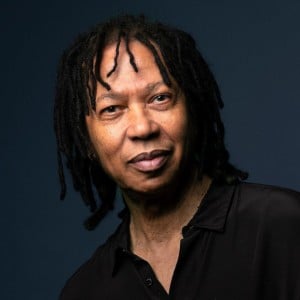
Djavan entrou para o mundo da música ainda jovem, aprendendo violão sozinho através de revistas que circulavam em sua cidade natal, Maceió. Aos 18, já animava bailes locais com sua banda. Aos 23, começou a cantar em boates famosas do Rio de Janeiro. Em 3 anos, compôs mais de 60 músicas. Com uma delas, "Fato Consumado", conquistou o 2° lugar no Festival Abertura, em 1975. Pouco depois, grava um disco, o primeiro de uma longa discografia que o posicionou entre os maiores artistas brasileiros. Foi parceiro de grandes artistas como Chico Buarque, Aldir Blanc e Gilberto Gil. Teve composições gravadas por intérpretes como Gal Costa, Maria Bethânia, Roberto Carlos e Caetano Veloso. Em 1982, "Flor-de-lis" é sua primeira música a ganhar versão em inglês, sob o título de “Upside Down”, na voz da diva norte-americana Carmen McRae. A potência de seu trabalho o levou a Los Angeles, onde gravou discos com produção assinada por Ronnie Foster, grande nome da Soul Music. Elogios como os do produtor Quincy Jones refletem o prestígio que Djavan adquiriu internacionalmente, além de gravações ao lado de artistas como Stevie Wonder, Paco de Lucía e Jorge Drexler. Cantor, compositor, músico, arranjador, produtor e criador de estilo próprio, Djavan inova ao misturar ritmos, do samba sincopado ao pop, jazz, blues e baladas. Em mais de 45 anos de carreira, seguiu sua essência poética, imprimindo sua marca em discos e shows que lhe renderam diversos prêmios, entre eles 4 Grammys Latinos.
