Feminist books

Items in this hypelist
Linguistics and literature
Against Interpretation
Susan Sontag • 2013
Genere, disabilità, linguaggio
Marina Brambilla • 2021

Unspeakable Things Unspoken
Toni Morrison

The Cambridge Companion to Feminist Literary Theory
Rooney, Ellen • 2006
Scritture femminili e Storia
Laura Guidi • 2004
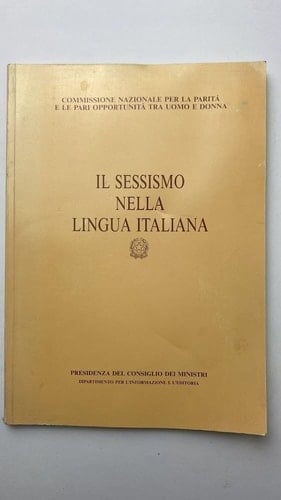
Il sessismo nella lingua italiana
Alma Sabatini • 1993
Politics and sociology

La servitù delle donne
John Stuart Mill • 2011

Marxism and the Oppression Of Women
Lise Vogel • 1987

On Women
Susan Sontag • 2023
A pithy and brilliant introduction to Susan Sontag’s writing on women, gathering early essays on aging, equality, beauty, sexuality, and fascism<br/><br/>Susan Sontag was one of the most formidable, original, and influential thinkers of the last century. “The most interesting ideas are heresies,” she remarked, and indeed, her writing rejects the familiar and refuses party lines.<br/><br/>On Women presents seven essays and exchanges, spanning a range of subjects: the challenges and humiliations women face as they age; the relationship between women’s liberation and class struggle; beauty, which Sontag calls “that over-rich brew of so many familiar opposites”; feminism; fascism; and film. Taken together, these pieces―relentlessly curious, historically precise, politically robust, and allergic to easy categorization Sontag’s inimitable mind at work.
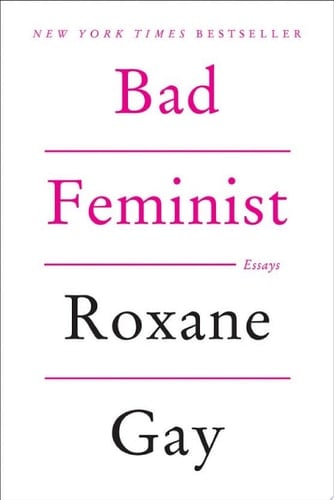
Bad Feminist: Essays
Roxane Gay • 2014
<p>"Roxane Gay is so great at weaving the intimate and personal with what is most bewildering and upsetting at this moment in culture. She is always looking, always thinking, always passionate, always careful, always right there."—Sheila Heti, author of How Should a Person Be?<br></p><p>A New York Times Bestseller<br></p><p>Best Book of the Year: NPR • Boston Globe • Newsweek • Time Out New York • Oprah.com • Miami Herald • Book Riot • Buzz Feed • Globe and Mail (Toronto) • The Root • Shelf Awareness<br></p><p>A collection of essays spanning politics, criticism, and feminism from one of the most-watched cultural observers of her generation<br></p><p>In these funny and insightful essays, Gay takes us through the journey of her evolution as a woman ( Sweet Valley High ) of color ( The Help ) while also taking readers on a ride through culture of the last few years ( Girls, Django in Chains ) and commenting on the state of feminism today (abortion, Chris Brown). The portrait that emerges is not only one of an incredibly insightful woman continually growing to understand herself and our society, but also one of our culture.<br></p><p>Bad Feminist is a sharp, funny, and spot-on look at the ways in which the culture we consume becomes who we are, and an inspiring call-to-arms of all the ways we still need to do better, coming from one of our most interesting and important cultural critics.<br></p>
Dear Ijeawele, or A Feminist Manifesto in Fifteen Suggestions
Chimamanda Ngozi Adichie • 2017
NATIONAL BESTSELLER • The award-winning author of We Should All Be Feminists and Americanah gives us this powerful statement about feminism today—written as a letter to a friend. A few years ago, Chimamanda Ngozi Adichie received a letter from a childhood friend, a new mother who wanted to know how to raise her baby girl to be a feminist. Dear Ijeawele is Adichie’s letter of response: fifteen invaluable suggestions—direct, wryly funny, and perceptive—for how to empower a daughter to become a strong, independent woman. Filled with compassionate guidance and advice, it gets right to the heart of sexual politics in the twenty-first century, and starts a new and urgently needed conversation about what it really means to be a woman today. A Skimm Reads Pick ● An NPR Best Book of the Year
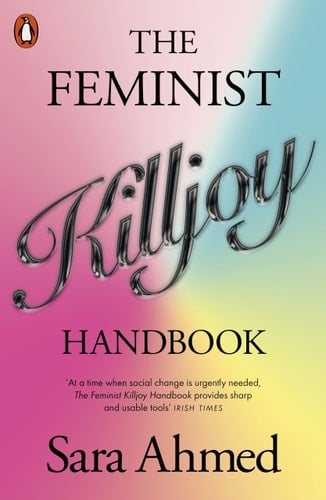
The Feminist Killjoy Handbook
Sara Ahmed • 2024

How We Get Free: Black Feminism and the Combahee River Collective
Keeanga-Yamahtta Taylor • 2017
Black feminists remind us “that America’s destiny is inseparable from how it treats [black women] and the nation ignores this truth at its peril” (The New York Review of Books). Winner of the 2018 Lambda Literary Award for LGBTQ Nonfiction “If Black women were free, it would mean that everyone else would have to be free.” —Combahee River Collective Statement The Combahee River Collective, a path-breaking group of radical black feminists, was one of the most important organizations to develop out of the antiracist and women’s liberation movements of the 1960s and 70s. In this collection of essays and interviews edited by activist-scholar Keeanga-Yamahtta Taylor, founding members of the organization and contemporary activists reflect on the legacy of its contributions to Black feminism and its impact on today’s struggles. “A striking collection that should be immediately added to the Black feminist canon.” —Bitch Media “An essential book for any feminist library.” —Library Journal “As white feminism has gained an increasing amount of coverage, there are still questions as to how black and brown women’s needs are being addressed. This book, through a collection of interviews with prominent black feminists, provides some answers.” —The Independent “For feminists of all kinds, astute scholars, or anyone with a passion for social justice, How We Get Free is an invaluable work.” —Ethnic and Racial Studies Journal
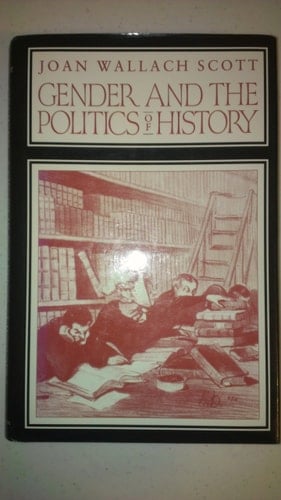
Gender and the politics of history (Gender & Culture)
Joan Wallach Scott • 1988
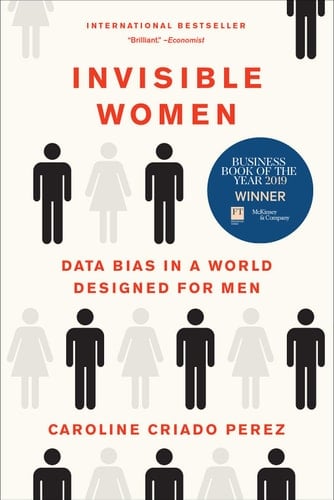
Invisible Women: Data Bias in a World Designed for Men
Caroline Criado Perez • 2021
The landmark, prize-winning, international bestselling examination of how a gender gap in data perpetuates bias and disadvantages women.<br/><br/>#1 International Bestseller * Winner of the Financial Times and McKinsey Business Book of the Year Award * Winner of the Royal Society Science Book Prize<br/><br/>Data is fundamental to the modern world. From economic development to health care to education and public policy, we rely on numbers to allocate resources and make crucial decisions. But because so much data fails to take into account gender, because it treats men as the default and women as atypical, bias and discrimination are baked into our systems.<br/><br/>And women pay tremendous costs for this insidious bias: in time, in money, and often with their lives.<br/><br/>Celebrated feminist advocate Caroline Criado Perez investigates this shocking root cause of gender inequality in Invisible Women. Examining the home, the workplace, the public square, the doctor’s office, and more, Criado Perez unearths a dangerous pattern in data and its consequences on women’s lives.<br/><br/>Product designers use a “one-size-fits-all” approach to everything from pianos to cell phones to voice recognition software, when in fact this approach is designed to fit men. Cities prioritize men’s needs when designing public transportation, roads, and even snow removal, neglecting to consider women’s safety or unique responsibilities and travel patterns. And in medical research, women have largely been excluded from studies and textbooks, leaving them chronically misunderstood, mistreated, and misdiagnosed.<br/><br/>Built on hundreds of studies in the United States, in the United Kingdom, and around the world, and written with energy, wit, and sparkling intelligence, this is a groundbreaking, highly readable exposé that will change the way you look at the world.
Dear Ijeawele, or A Feminist Manifesto in Fifteen Suggestions
Chimamanda Ngozi Adichie • 2017
NATIONAL BESTSELLER • The award-winning author of We Should All Be Feminists and Americanah gives us this powerful statement about feminism today—written as a letter to a friend. A few years ago, Chimamanda Ngozi Adichie received a letter from a childhood friend, a new mother who wanted to know how to raise her baby girl to be a feminist. Dear Ijeawele is Adichie’s letter of response: fifteen invaluable suggestions—direct, wryly funny, and perceptive—for how to empower a daughter to become a strong, independent woman. Filled with compassionate guidance and advice, it gets right to the heart of sexual politics in the twenty-first century, and starts a new and urgently needed conversation about what it really means to be a woman today. A Skimm Reads Pick ● An NPR Best Book of the Year
Bad Feminist: Essays
Roxane Gay • 2014
<p>"Roxane Gay is so great at weaving the intimate and personal with what is most bewildering and upsetting at this moment in culture. She is always looking, always thinking, always passionate, always careful, always right there."—Sheila Heti, author of How Should a Person Be?<br></p><p>A New York Times Bestseller<br></p><p>Best Book of the Year: NPR • Boston Globe • Newsweek • Time Out New York • Oprah.com • Miami Herald • Book Riot • Buzz Feed • Globe and Mail (Toronto) • The Root • Shelf Awareness<br></p><p>A collection of essays spanning politics, criticism, and feminism from one of the most-watched cultural observers of her generation<br></p><p>In these funny and insightful essays, Gay takes us through the journey of her evolution as a woman ( Sweet Valley High ) of color ( The Help ) while also taking readers on a ride through culture of the last few years ( Girls, Django in Chains ) and commenting on the state of feminism today (abortion, Chris Brown). The portrait that emerges is not only one of an incredibly insightful woman continually growing to understand herself and our society, but also one of our culture.<br></p><p>Bad Feminist is a sharp, funny, and spot-on look at the ways in which the culture we consume becomes who we are, and an inspiring call-to-arms of all the ways we still need to do better, coming from one of our most interesting and important cultural critics.<br></p>
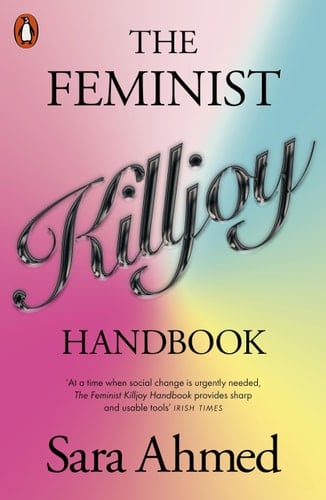
The Feminist Killjoy Handbook
Sara Ahmed • 2024

The Woman Question
Eleanor Marx
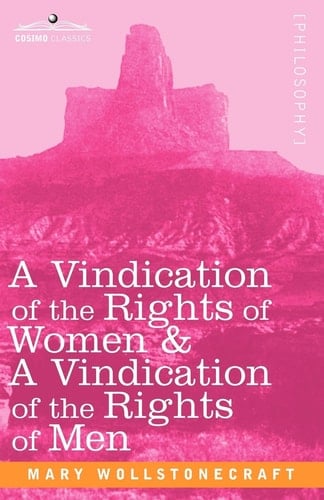
A Vindication of the Rights of Women & a Vindication of the Rights of Men
Mary Wollstonecraft • 2008
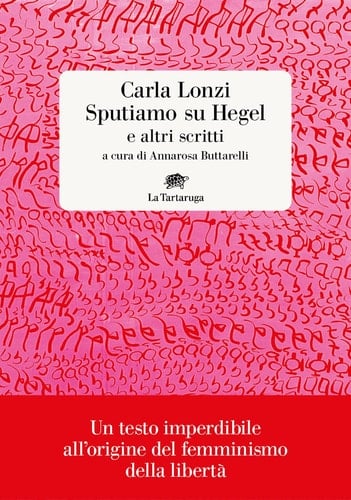
SPUTIAMO SU HEGEL
unde
Sister Outsider
Audre Lorde • 2012
Presenting the essential writings of black lesbian poet and feminist writer Audre Lorde, Sister Outsider celebrates an influential voice in twentieth-century literature. “[Lorde's] works will be important to those truly interested in growing up sensitive, intelligent, and aware.”—The New York Times In this charged collection of fifteen essays and speeches, Lorde takes on sexism, racism, ageism, homophobia, and class, and propounds social difference as a vehicle for action and change. Her prose is incisive, unflinching, and lyrical, reflecting struggle but ultimately offering messages of hope. This commemorative edition includes a new foreword by Lorde-scholar and poet Cheryl Clarke, who celebrates the ways in which Lorde's philosophies resonate more than twenty years after they were first published. These landmark writings are, in Lorde's own words, a call to “never close our eyes to the terror, to the chaos which is Black which is creative which is female which is dark which is rejected which is messy which is . . . ”
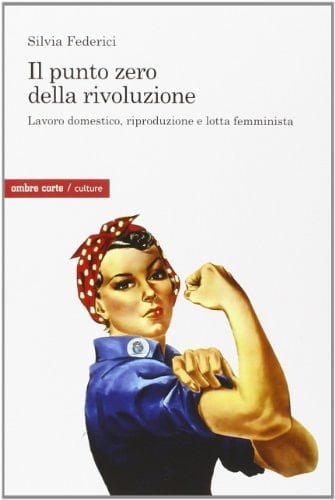
Il punto zero della rivoluzione. Lavoro domestico, riproduzione e lotta femminista
Silvia Federici • unde

Populismo e questione di genere
Antonella Cammarota, Milena Meo
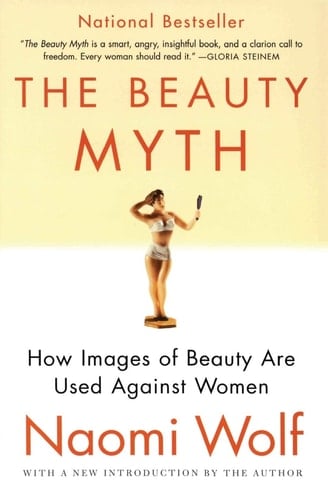
The Beauty Myth: How Images of Beauty Are Used Against Women
Naomi Wolf • 2002
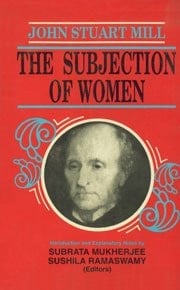
John Stuart Mill: The Subjection of Women
John Stuart Mill • 1995
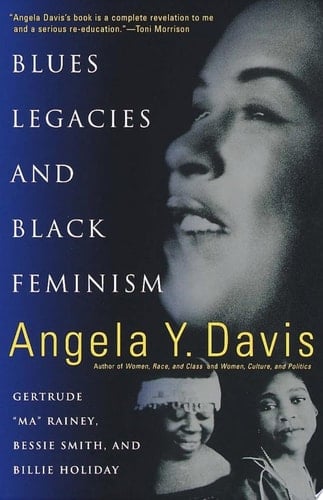
Blues Legacies and Black Feminism: Gertrude "Ma" Rainey, Bessie Smith, and Billie Holiday
Angela Y. Davis • 1999
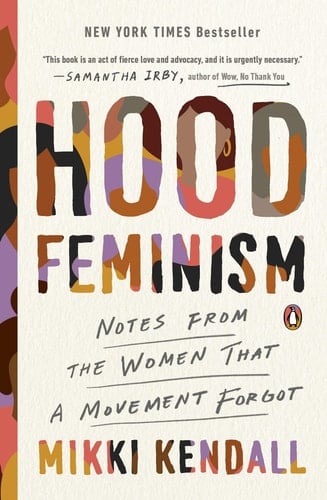
Hood Feminism: Notes from the Women That a Movement Forgot
Mikki Kendall • 2021
<b>A <i>NEW YORK TIMES</i> BESTSELLER<br><br> “<b>The fights against hunger, homelessness, poverty, health disparities, poor schools, homophobia, transphobia, and domestic violence are feminist fights. Kendall offers a feminism rooted in the livelihood of everyday women.”</b> <b>—Ibram X. Kendi, #1 <i>New York Times-</i>bestselling author of <i>How to Be an Antiracist</i>, in <i>The Atlantic</i></b><br><br>“One of the most important books of the current moment.”—<i>Time</i></b><br> <br> <b>“A rousing call to action... It should be required reading for everyone.”—Gabrielle Union, author of</b> <i><b>We’re Going to Need More Wine</b></i><br> <br> <b><br> <b>A potent and electrifying critique of today’s feminist movement announcing a fresh new voice in black feminism</b></b><br><br>Today's feminist movement has a glaring blind spot, and paradoxically, it is women. Mainstream feminists rarely talk about meeting basic needs as a feminist issue, argues Mikki Kendall, but food insecurity, access to quality education, safe neighborhoods, a living wage, and medical care are all feminist issues. All too often, however, the focus is not on basic survival for the many, but on increasing privilege for the few. That feminists refuse to prioritize these issues has only exacerbated the age-old problem of both internecine discord and women who rebuff at carrying the title. Moreover, prominent white feminists broadly suffer from their own myopia with regard to how things like race, class, sexual orientation, and ability intersect with gender. How can we stand in solidarity as a movement, Kendall asks, when there is the distinct likelihood that some women are oppressing others? <br><br>In her searing collection of essays, Mikki Kendall takes aim at the legitimacy of the modern feminist movement, arguing that it has chronically failed to address the needs of all but a few women. Drawing on her own experiences with hunger, violence, and hypersexualization, along with incisive commentary on reproductive rights, politics, pop culture, the stigma of mental health, and more, <i>Hood Feminism</i> delivers an irrefutable indictment of a movement in flux. An unforgettable debut, Kendall has written a ferocious clarion call to all would-be feminists to live out the true mandate of the movement in thought and in deed.
Men Explain Things to Me
Rebecca Solnit • 2014
<ul> <li>Collection is based around an essay— Men Explain Things to Me —which was shared virally in 2008 </li></ul>
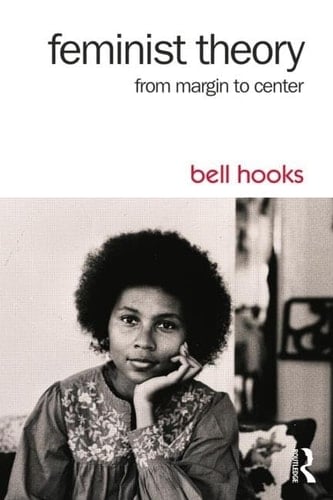
Feminist Theory: From Margin to Center
bell hooks • 2014
When Feminist Theory: From Margin to Center was first published in 1984, it was welcomed and praised by feminist thinkers who wanted a new vision. Even so, individual readers frequently found the theory "unsettling" or "provocative." Today, the blueprint for feminist movement presented in the book remains as provocative and relevant as ever. Written in hooks's characteristic direct style, Feminist Theory embodies the hope that feminists can find a common language to spread the word and create a mass, global feminist movement.
Freedom Is a Constant Struggle: Ferguson, Palestine, and the Foundations of a Movement
Angela Y. Davis • 2016
In this collection of essays, interviews, and speeches, the renowned activist examines today’s issues—from Black Lives Matter to prison abolition and more. Activist and scholar Angela Y. Davis has been a tireless fighter against oppression for decades. Now, the iconic author of Women, Race, and Class offers her latest insights into the struggles against state violence and oppression throughout history and around the world. Reflecting on the importance of black feminism, intersectionality, and prison abolitionism, Davis discusses the legacies of previous liberation struggles, from the Black Freedom Movement to the South African anti-Apartheid movement. She highlights connections and analyzes today’s struggles against state terror, from Ferguson to Palestine. Facing a world of outrageous injustice, Davis challenges us to imagine and build a movement for human liberation. And in doing so, she reminds us that “freedom is a constant struggle.” This edition of Freedom Is a Constant Struggle includes a foreword by Dr. Cornel West and an introduction by Frank Barat.
Women, Race & Class
Angela Y. Davis • 1983
From one of our most important scholars and civil rights activist icon, a powerful study of the women’s liberation movement and the tangled knot of oppression facing Black women.<br/><br/>“Angela Davis is herself a woman of undeniable courage. She should be heard.”—The New York Times<br/><br/>Angela Davis provides a powerful history of the social and political influence of whiteness and elitism in feminism, from abolitionist days to the present, and demonstrates how the racist and classist biases of its leaders inevitably hampered any collective ambitions. While Black women were aided by some activists like Sarah and Angelina Grimke and the suffrage cause found unwavering support in Frederick Douglass, many women played on the fears of white supremacists for political gain rather than take an intersectional approach to liberation. Here, Davis not only contextualizes the legacy and pitfalls of civil and women’s rights activists, but also discusses Communist women, the murder of Emmitt Till, and Margaret Sanger’s racism. Davis shows readers how the inequalities between Black and white women influence the contemporary issues of rape, reproductive freedom, housework and child care in this bold and indispensable work.
Undoing Gender
Judith Butler • 2004
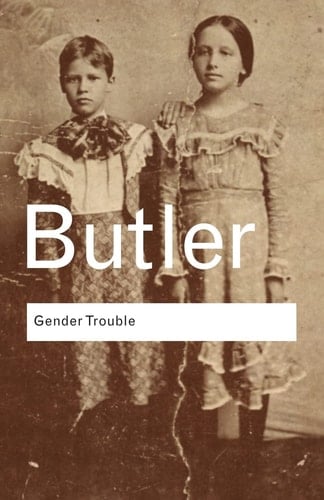
Gender Trouble: Feminism and the Subversion of Identity (Routledge Classics)
Judith Butler • 2006
One of the most talked-about scholarly works of the past fifty years, Judith Butler’s Gender Trouble is as celebrated as it is controversial.<br/>Arguing that traditional feminism is wrong to look to a natural, 'essential' notion of the female, or indeed of sex or gender, Butler starts by questioning the category 'woman' and continues in this vein with examinations of 'the masculine' and 'the feminine'. Best known however, but also most often misinterpreted, is Butler's concept of gender as a reiterated social performance rather than the expression of a prior reality.<br/>Thrilling and provocative, few other academic works have roused passions to the same extent.
Feminism is for Everybody
Bell Hooks • 2000
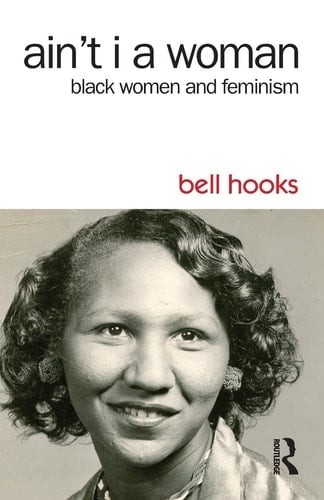
Ain't I a Woman: Black Women and Feminism
bell hooks • 2014
Woman Hating
Andrea Dworkin • 1991
We Should All Be Feminists
Chimamanda Ngozi Adichie • 2015
NEW YORK TIMES BESTSELLER • The highly acclaimed, provocative essay on feminism and sexual politics—from the award-winning author of Americanah<br/><br/>"A call to action, for all people in the world, to undo the gender hierarchy." —Medium<br/><br/>In this personal, eloquently-argued essay—adapted from the much-admired TEDx talk of the same name—Chimamanda Ngozi Adichie offers readers a unique definition of feminism for the twenty-first century. Drawing extensively on her own experiences and her deep understanding of the often masked realities of sexual politics, here is one remarkable author’s exploration of what it means to be a woman now—and an of-the-moment rallying cry for why we should all be feminists.
Technology
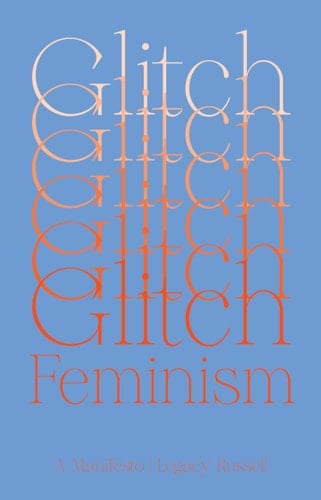
Glitch Feminism: A Manifesto
Legacy Russell • 2020
Biography

Taci, anzi parla. Diario di una femminista
unknown author • unde
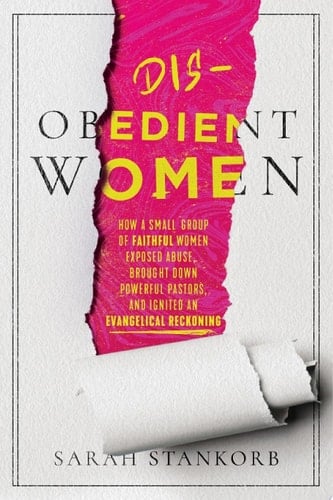
Disobedient Women
Sarah Stankorb • 2023

Memorie di una ragazza perbene
Simone de Beauvoir • 2014
Economics
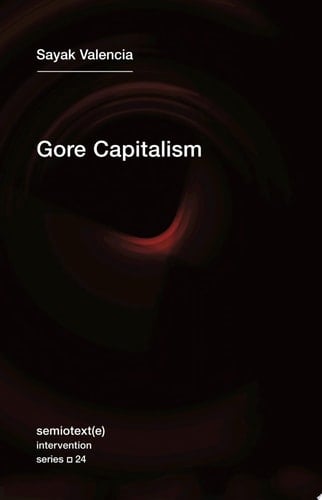
Gore Capitalism (Semiotext(e) / Intervention Series)
Sayak Valencia • 2018
An analysis of contemporary violence as the new commodity of today's hyper-consumerist stage of capitalism.<br/>“Death has become the most profitable business in existence.”<br/>—from Gore Capitalism<br/>Written by the Tijuana activist intellectual Sayak Valencia, Gore Capitalism is a crucial essay that posits a decolonial, feminist philosophical approach to the outbreak of violence in Mexico and, more broadly, across the global regions of the Third World. Valencia argues that violence itself has become a product within hyper-consumerist neoliberal capitalism, and that tortured and mutilated bodies have become commodities to be traded and utilized for profit in an age of impunity and governmental austerity.<br/>In a lucid and transgressive voice, Valencia unravels the workings of the politics of death in the context of contemporary networks of hyper-consumption, the ups and downs of capital markets, drug trafficking, narcopower, and the impunity of the neoliberal state. She looks at the global rise of authoritarian governments, the erosion of civil society, the increasing violence against women, the deterioration of human rights, and the transformation of certain cities and regions into depopulated, ghostly settings for war. She offers a trenchant critique of masculinity and gender constructions in Mexico, linking their misogynist force to the booming trade in violence.<br/>This book is essential reading for anyone seeking to analyze the new landscapes of war. It provides novel categories that allow us to deconstruct what is happening, while proposing vital epistemological tools developed in the convulsive Third World border space of Tijuana.
Women and Human Development
Martha C. Nussbaum • 2000
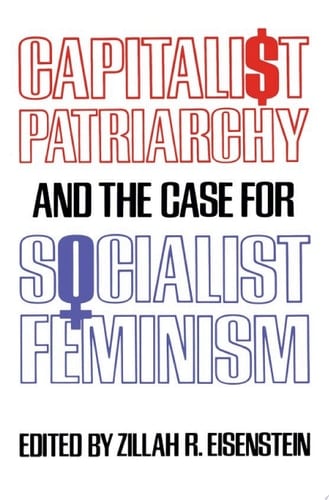
Capitalist Patriarchy and the Case for Socialist Feminism
Zillah R. Eisenstein • 2019
History
Women in the Stalin Era
Melanie Ilic • 2001
Theories
Feminism for the 99%
Cinzia Arruzza • 2019
<b>The organizers of the International Women’s Strike “cut through the corporate feminist ‘<i>Lean In</i>’ noise to offer a feminism rooted not just in intersectionality . . . but also in economic justice”—for readers of Roxane Gay and Rebecca Solnit (<i>Vogue</i>).</b><br> <b> </b><br> <b>Feminism shouldn’t start—or stop—with seeing women represented at the top of society. It should start with the 99%.</b><br><br> Unaffordable housing, poverty wages, inadequate healthcare, border policing, climate change—these are not what you ordinarily hear feminists talking about. But aren’t they the biggest issues for the vast majority of women around the globe?<br><br> Taking as its inspiration the new wave of feminist militancy that has erupted globally, this manifesto makes a simple but powerful case: feminism shouldn’t start—or stop—with the drive to have women represented at the top of their professions. It must focus on those at the bottom, and fight for the world they deserve. And that means targeting capitalism. Feminism must be anticapitalist, eco-socialist and antiracist.
The Oxford Handbook of Feminist Theory (Oxford Handbooks)
Lisa Disch • 2018

Handbook of Feminist Research: Theory and Praxis
2006
Feminist Thought
Rosemarie Tong • 2018
The SAGE Handbook of Feminist Theory
Boris Kozolchyk • 2014