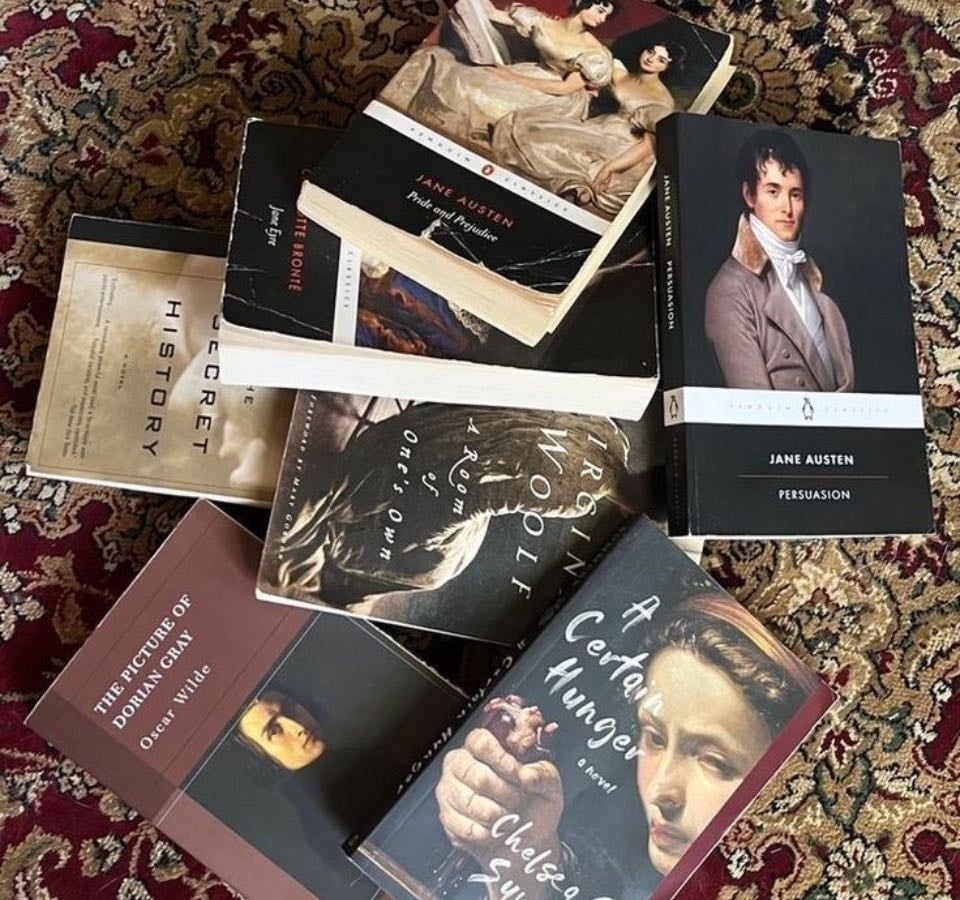
Livros
Indicações que eu resolvi juntar em um só lugar:)
Items in this hypelist
To Read
A guerra da Papoula: (A Guerra da Papoula ? Vol. 1)
_ • unde
As malditas
Camila Sosa Villada • 2025
É sempre a hora da nossa morte amém
Mariana Salomão Carrara • 2021
SE EU FOSSE CAPAZ DE AMAR
REBECA DANTAS • 2024
Lavoura arcaica
Raduan Nassar • 2005
Contos de cães e maus lobos
Valter Hugo Mãe • 2015
Um Defeito De Cor
Ana Maria Gonçalves • 2006
Orgulho e preconceito e nós duas
Rachael Lippincott • 2023
O caso Alaska Sanders
Joël Dicker • 2022
As garotas que eu fui
Tess Sharpe • 2022
Querido coração Cartas de um poeta para emoções doloridas
Pedro Salomão • 2022
Pão dos anjos: A história da minha vida
Patti Smith • 2026
Se ao Menos - Liberte-se do Arrependimento e Viva Melhor a partir dos Conhecimentos da Ciencia Cognitiva (Em Portugues do Brasil)
Robert L. Leahy • 2019
Amêndoas
unknown • 2023
O Retrato de Dorian Gray
Oscar Wilde • 2020
Olhai os lírios do campo
Erico Veríssimo • 2005
É assim que se perde a guerra do tempo
Amal El-Mohtar • 2021
Suicidas
Raphael Montes • 2017
Antes que o café esfrie
Toshikazu Kawaguchi • 2022
Nunca Minta
Freida McFadden • 2025
O jardim das borboletas
Dot Hutchison • 2017
A história que nunca vivemos
Lucas Rocha • 2024
Bunny A Novel
Mona Awad • 2020
De quatro
Miranda July • 2024
Crônica de uma morte anunciada
Gabriel García Márquez • 2020
A CONSULTA
_ • unde
Os abismos
Pilar Quintana • 2022
Um amor incômodo
Elena Ferrante • 2017
O amante
Marguerite Duras • 2020
Minha sombria Vanessa
Kate Elizabeth Russell • 2020
Quarto de despejo diário de uma favelada
Carolina Maria de Jesus • 2014
A cachorra
Pilar Quintana • 2020
Ensaio sobre a cegueira
José Saramago • 2021
A casa dos espiritos
Isabel Allende • 2013
O senhor das moscas
William Golding • 1954
Grande sertão veredas
João Guimarães Rosa • 2019
Cem anos de solidão
Gabriel García Márquez • 2017
O velho e o mar
Ernest Hemingway • 2013
Suíte Tóquio
Giovana Madalosso • 2020
Olhos d'água
Conceição Evaristo • 2016
Dias de abandono
Elena Ferrante • 2016
A filha perdida
Elena Ferrante • 2016
A Canção de Aquiles
Madeline Miller • 2024
Flores para Algernon
Daniel Keyes • 2018
Torto arado
Itamar Vieira Junior • 2018
Oxe, baby (Portuguese Edition)
Elayne Baeta • 2021
Como Nasce e Morre o Fascismo (Em Portugues do Brasil)
Clara Zetkin • 2019
Antifa
Mark Bray • 2017
Cartas a um jovem poeta
Rainer Maria Rilke • 2024
Lutas e metamorfoses de uma mulher
Édouard Louis • 2023
Como Esmagar o Fascismo (Em Portugues do Brasil)
Leon Trotski • 2021
Fascismo eterno
Umberto Eco • 2019
COMER, REZAR, AMAR
Elizabeth Gilbert • 2009
Desenhos ocultos
Jason Rekulak • 2022
Apuntes para John
Joan Didion • 2025
O Sol é para Todos
_ • 2015
A Toca das Raposas
Nora Sakavic • 2024
Poesia Reunida
MARTHA MEDEIROS • 1999
O apanhador no campo de centeio
J. D. Salinger • 2020
Uma Aprendizagem ou o Livro dos Prazeres
Clarice Lispector • 1998
O sorriso da hiena
Gustavo Ávila • 2017
A paixão segundo G.H.
Clarice Lispector • 2019
Eu que nunca conheci os homens
Jacqueline Harpman • 2021
A idiota
Elif Batuman • 2021
Dias perfeitos
Raphael Montes • 2014
Persuasão
Jane Austen • 2022
A METAMORFOSE
FRANZ KAFKA • 2023
Em outra vida, talvez?
Taylor Jenkins Reid • 2018
Sociopata: minha história
Patric Gagne • 2024
Impostora
R.F. Kuang • 2023
A verdade sobre o caso Harry Quebert
Joël Dicker • 2014
O Labirinto Do Fauno
Guillermo del Toro • 2019
Sobre Minha Filha
Kim Hye-jin • 2022
A Princesa e o Queijo Quente
Deya Muniz • 2023
O Fim da Infância
Arthur C. Clarke • 2015
A insustentável leveza do ser
Milan Kundera • 2022
MEMÓRIAS DO SUBSOLO
Fiódor Dostoiévski • 2020
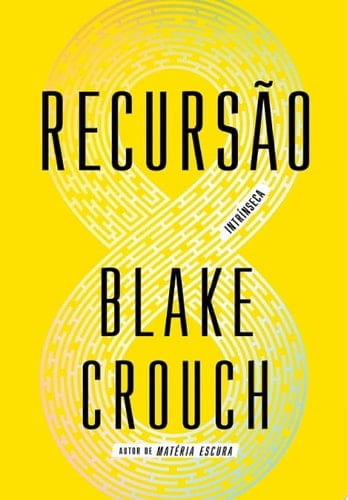
Recursão
Blake Crouch • 2020
Mulheres negras não deveriam morrer exaustas
Jayne Allen • 2022
Se Deus me chamar não vou
Mariana Salomão Carrara • 2019
Pequena coreografia do adeus
Aline Bei • 2021
O telefone preto e outras histórias
Joe Hill • 2022
A anatomia do crime
Val McDermid • 2023
Sobreviva a noite. E se essa carona fosse a sua ultima (Em Portugues do Brasil)
Joao Rodrigues e Riley Sager • 2019
O último mandamento
Scott Shepherd • 2023
Jantar secreto
Raphael Montes • 2016
Entre quatro paredes
B. A. Paris • 2018
As irmãs Blue
Coco Mellors • 2024
Convenience Store Woman
Sayaka Murata • 2019
The Book of Goose
Yiyun Li • 2022
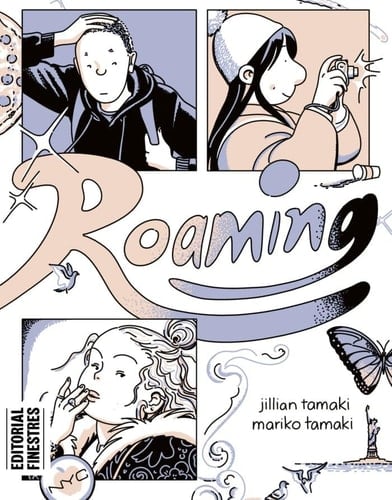
Roaming
Mariko Tamaki • 2023
Ela fica com a garota
Rachael Lippincott • 2022
After Dark
Haruki Murakami • 2007
Existo, existo, existo dezessete tropeços na morte
Maggie O'Farrell • 2021
Presságios do amor
Alexandria Bellefleur • 2019
Sua Alteza Real (Royals 2)
Rachel Hawkins • 2020
Meninas selvagens
Rory Power • 2020
A jogada do amor
Kelly Quindlen • 2022
Lembre-se de nós
Alyson Derrick • 2023
Tudo sobre o amor novas perspectivas
bell hooks • 2021

The Girl Who Bit Me: A Spicy Sapphic Vampire Romance
Valerie Hunter • 2026
O paciente
Jasper DeWitt • 2021
Memórias de um amor inesperado
Ciara Smyth • 2023
A hora da estrela
Clarice Lispector • 2017
David Copperfield (Centaur Classics) [The 100 greatest novels of all time - #64]
Charles Dickens • 2016
Cartas a um jovem poeta
Rainer Maria Rilke • 2024
Mrs.Dalloway
Virginia Woolf • 2020
Violeta
Isabel Allende • 2022
Fique comigo
Ayòbámi Adébáyò • 2018
Convenience Store Woman
Sayaka Murata • 2019
Incidental Inventions
Elena Ferrante • 2019
As Brumas de Avalon
Marion Zimmer Bradley • 1989
Complexo de Cinderela
Colette Dowling • 1999
Sintomas – e o que mais aprendi quando o amor me decepcionou (o novo livro de Marcela Ceribelli)
Marcela Ceribelli • 2025
livro mulheres mitos e deusas martha robles 2019
Unknown • 1900
Tudo O Que Voce Precisa Saber Sobre Psicologia (em Portugues Do Brasil)
Paul Kleinman • 2015
Cartas de um terapeuta para seus momentos de crise
Alexandre Coimbra Amaral • 2020
Coleção Saberes - 100 minutos para entender Platão
Astral Cultural • 2019
Coleção saberes - 100 minutos para entender Aristóteles
Ricardo Piccinato • 2020
Coleção Saberes - 100 minutos para entender Lacan
Astral Cultural • 2022
Coleção Saberes - 100 minutos para entender Freud
Astral Cultural • 2022
Coleção Saberes - 100 minutos para entender Jung
Astral Cultural • 2022
Anon: era uma mulher...
Virginia Woolf • 2024
Herdeiras do mar
Mary Lynn Bracht • 2020
Lembre-se de nós
Alyson Derrick • 2023
Água fresca para as flores
Valérie Perrin • 2022
Três
Valérie Perrin • 2023
Foi um péssimo dia
Natalia Borges Polesso • 2023
Você, de novo
Kate Goldbeck • 2024
Slewfoot A Tale of Bewitchery
Brom • 2023
Belo mundo, onde você está
Sally Rooney • 2019
Tudo o que eu sei sobre o amor
Dolly Alderton • 2022
Todo dia a mesma noite (série da Netflix)
Daniela Arbex • 2018
Misery
Stephen King • 2016
Os dois morrem no final
Adam Silvera • 2021
Everyone in This Room Will Someday Be Dead A Novel
Emily Austin • 2022
De quatro
Miranda July • 2024
Boulder Eva Baltasar
Eva Baltasar • 2024
Sunburn
Chloe Michelle Howarth • 2023
Sobre a brevidade da vida
Sêneca • 2006
Caim romance
José Saramago • 2010
Fascismo
Textos fundamentais e históricos do século XX
Have you ever wondered why that 13-digit number on the back of a book costs $125 in the United States but is completely free in Canada and India? This book, The Global ISBN Handbook, is your 2025 guide to the International Standard Book Number. It explains everything about this global "fingerprint" for books. The ISBN is the most important cornerstone of the publishing industry. It started as a simple warehouse tool in the 1960s. Now, it is a complex digital identifier used in over 200 countries. This handbook deconstructs the entire system. It uses 15 distinct national case studies to do this. You will learn how the old 10-digit system changed to the new 13-digit one. We break down the five parts of the ISBN, from the "Bookland" prefix to the final check digit. The book explores the global governance framework, starting with the International ISBN Agency. Then, it dives deep into how different countries run their systems. You'll see the privatized, high-cost model in the United States. You'll compare it to Canada's free, government-run system. We explore the industry-led models in Brazil and Germany. We look at government-run systems in Mexico and India. We even cover the unique case of China, where the ISBN is not a simple identifier but a state-controlled publication license. The book also examines the systems in the UK , France , Russia , Japan , Australia , South Africa , Nigeria , and Egypt. Many books and websites can tell you how to get an ISBN. This handbook is the only resource that explains why the process is so different everywhere you look. It moves beyond a simple "how-to" and provides a true global analysis. It directly compares the privatized, for-profit models in the US and UK against the free, public-good systems in Canada and South Africa. You won't just learn the price; you will understand the cultural policies, market structures, and legal philosophies that shape that price. This book shows how the ISBN is a "global mirror". It reveals how a simple number can be a commercial product in one nation , a tool of cultural policy in another , and an instrument of state control in a third. This comparative insight is the missing piece for any author, publisher, or researcher trying to navigate the complex international publishing market. Disclaimer: This handbook is an independently produced resource for commentary and analysis. The author has no affiliation with the International ISBN Agency, R.R. Bowker, Library and Archives Canada, the National Press and Publication Administration, or any other national ISBN agency. This work is independently produced under the principle of nominative fair use.
As mulheres-leão de Teerã
Marjan Kamali
Have you ever wondered why that 13-digit number on the back of a book costs $125 in the United States but is completely free in Canada and India? This book, The Global ISBN Handbook, is your 2025 guide to the International Standard Book Number. It explains everything about this global "fingerprint" for books. The ISBN is the most important cornerstone of the publishing industry. It started as a simple warehouse tool in the 1960s. Now, it is a complex digital identifier used in over 200 countries. This handbook deconstructs the entire system. It uses 15 distinct national case studies to do this. You will learn how the old 10-digit system changed to the new 13-digit one. We break down the five parts of the ISBN, from the "Bookland" prefix to the final check digit. The book explores the global governance framework, starting with the International ISBN Agency. Then, it dives deep into how different countries run their systems. You'll see the privatized, high-cost model in the United States. You'll compare it to Canada's free, government-run system. We explore the industry-led models in Brazil and Germany. We look at government-run systems in Mexico and India. We even cover the unique case of China, where the ISBN is not a simple identifier but a state-controlled publication license. The book also examines the systems in the UK , France , Russia , Japan , Australia , South Africa , Nigeria , and Egypt. Many books and websites can tell you how to get an ISBN. This handbook is the only resource that explains why the process is so different everywhere you look. It moves beyond a simple "how-to" and provides a true global analysis. It directly compares the privatized, for-profit models in the US and UK against the free, public-good systems in Canada and South Africa. You won't just learn the price; you will understand the cultural policies, market structures, and legal philosophies that shape that price. This book shows how the ISBN is a "global mirror". It reveals how a simple number can be a commercial product in one nation , a tool of cultural policy in another , and an instrument of state control in a third. This comparative insight is the missing piece for any author, publisher, or researcher trying to navigate the complex international publishing market. Disclaimer: This handbook is an independently produced resource for commentary and analysis. The author has no affiliation with the International ISBN Agency, R.R. Bowker, Library and Archives Canada, the National Press and Publication Administration, or any other national ISBN agency. This work is independently produced under the principle of nominative fair use.
A Cordeirinha
Lucy Rose
Have you ever wondered why that 13-digit number on the back of a book costs $125 in the United States but is completely free in Canada and India? This book, The Global ISBN Handbook, is your 2025 guide to the International Standard Book Number. It explains everything about this global "fingerprint" for books. The ISBN is the most important cornerstone of the publishing industry. It started as a simple warehouse tool in the 1960s. Now, it is a complex digital identifier used in over 200 countries. This handbook deconstructs the entire system. It uses 15 distinct national case studies to do this. You will learn how the old 10-digit system changed to the new 13-digit one. We break down the five parts of the ISBN, from the "Bookland" prefix to the final check digit. The book explores the global governance framework, starting with the International ISBN Agency. Then, it dives deep into how different countries run their systems. You'll see the privatized, high-cost model in the United States. You'll compare it to Canada's free, government-run system. We explore the industry-led models in Brazil and Germany. We look at government-run systems in Mexico and India. We even cover the unique case of China, where the ISBN is not a simple identifier but a state-controlled publication license. The book also examines the systems in the UK , France , Russia , Japan , Australia , South Africa , Nigeria , and Egypt. Many books and websites can tell you how to get an ISBN. This handbook is the only resource that explains why the process is so different everywhere you look. It moves beyond a simple "how-to" and provides a true global analysis. It directly compares the privatized, for-profit models in the US and UK against the free, public-good systems in Canada and South Africa. You won't just learn the price; you will understand the cultural policies, market structures, and legal philosophies that shape that price. This book shows how the ISBN is a "global mirror". It reveals how a simple number can be a commercial product in one nation , a tool of cultural policy in another , and an instrument of state control in a third. This comparative insight is the missing piece for any author, publisher, or researcher trying to navigate the complex international publishing market. Disclaimer: This handbook is an independently produced resource for commentary and analysis. The author has no affiliation with the International ISBN Agency, R.R. Bowker, Library and Archives Canada, the National Press and Publication Administration, or any other national ISBN agency. This work is independently produced under the principle of nominative fair use.
Não Se Cobre Tanto
Ellen Hendriksen
Have you ever wondered why that 13-digit number on the back of a book costs $125 in the United States but is completely free in Canada and India? This book, The Global ISBN Handbook, is your 2025 guide to the International Standard Book Number. It explains everything about this global "fingerprint" for books. The ISBN is the most important cornerstone of the publishing industry. It started as a simple warehouse tool in the 1960s. Now, it is a complex digital identifier used in over 200 countries. This handbook deconstructs the entire system. It uses 15 distinct national case studies to do this. You will learn how the old 10-digit system changed to the new 13-digit one. We break down the five parts of the ISBN, from the "Bookland" prefix to the final check digit. The book explores the global governance framework, starting with the International ISBN Agency. Then, it dives deep into how different countries run their systems. You'll see the privatized, high-cost model in the United States. You'll compare it to Canada's free, government-run system. We explore the industry-led models in Brazil and Germany. We look at government-run systems in Mexico and India. We even cover the unique case of China, where the ISBN is not a simple identifier but a state-controlled publication license. The book also examines the systems in the UK , France , Russia , Japan , Australia , South Africa , Nigeria , and Egypt. Many books and websites can tell you how to get an ISBN. This handbook is the only resource that explains why the process is so different everywhere you look. It moves beyond a simple "how-to" and provides a true global analysis. It directly compares the privatized, for-profit models in the US and UK against the free, public-good systems in Canada and South Africa. You won't just learn the price; you will understand the cultural policies, market structures, and legal philosophies that shape that price. This book shows how the ISBN is a "global mirror". It reveals how a simple number can be a commercial product in one nation , a tool of cultural policy in another , and an instrument of state control in a third. This comparative insight is the missing piece for any author, publisher, or researcher trying to navigate the complex international publishing market. Disclaimer: This handbook is an independently produced resource for commentary and analysis. The author has no affiliation with the International ISBN Agency, R.R. Bowker, Library and Archives Canada, the National Press and Publication Administration, or any other national ISBN agency. This work is independently produced under the principle of nominative fair use.
Você me ensinou mais sobre a dor do que qualquer outra coisa
Lucas Lopes
Have you ever wondered why that 13-digit number on the back of a book costs $125 in the United States but is completely free in Canada and India? This book, The Global ISBN Handbook, is your 2025 guide to the International Standard Book Number. It explains everything about this global "fingerprint" for books. The ISBN is the most important cornerstone of the publishing industry. It started as a simple warehouse tool in the 1960s. Now, it is a complex digital identifier used in over 200 countries. This handbook deconstructs the entire system. It uses 15 distinct national case studies to do this. You will learn how the old 10-digit system changed to the new 13-digit one. We break down the five parts of the ISBN, from the "Bookland" prefix to the final check digit. The book explores the global governance framework, starting with the International ISBN Agency. Then, it dives deep into how different countries run their systems. You'll see the privatized, high-cost model in the United States. You'll compare it to Canada's free, government-run system. We explore the industry-led models in Brazil and Germany. We look at government-run systems in Mexico and India. We even cover the unique case of China, where the ISBN is not a simple identifier but a state-controlled publication license. The book also examines the systems in the UK , France , Russia , Japan , Australia , South Africa , Nigeria , and Egypt. Many books and websites can tell you how to get an ISBN. This handbook is the only resource that explains why the process is so different everywhere you look. It moves beyond a simple "how-to" and provides a true global analysis. It directly compares the privatized, for-profit models in the US and UK against the free, public-good systems in Canada and South Africa. You won't just learn the price; you will understand the cultural policies, market structures, and legal philosophies that shape that price. This book shows how the ISBN is a "global mirror". It reveals how a simple number can be a commercial product in one nation , a tool of cultural policy in another , and an instrument of state control in a third. This comparative insight is the missing piece for any author, publisher, or researcher trying to navigate the complex international publishing market. Disclaimer: This handbook is an independently produced resource for commentary and analysis. The author has no affiliation with the International ISBN Agency, R.R. Bowker, Library and Archives Canada, the National Press and Publication Administration, or any other national ISBN agency. This work is independently produced under the principle of nominative fair use.
Parece que estou sempre em busca de algo
Cecília
Have you ever wondered why that 13-digit number on the back of a book costs $125 in the United States but is completely free in Canada and India? This book, The Global ISBN Handbook, is your 2025 guide to the International Standard Book Number. It explains everything about this global "fingerprint" for books. The ISBN is the most important cornerstone of the publishing industry. It started as a simple warehouse tool in the 1960s. Now, it is a complex digital identifier used in over 200 countries. This handbook deconstructs the entire system. It uses 15 distinct national case studies to do this. You will learn how the old 10-digit system changed to the new 13-digit one. We break down the five parts of the ISBN, from the "Bookland" prefix to the final check digit. The book explores the global governance framework, starting with the International ISBN Agency. Then, it dives deep into how different countries run their systems. You'll see the privatized, high-cost model in the United States. You'll compare it to Canada's free, government-run system. We explore the industry-led models in Brazil and Germany. We look at government-run systems in Mexico and India. We even cover the unique case of China, where the ISBN is not a simple identifier but a state-controlled publication license. The book also examines the systems in the UK , France , Russia , Japan , Australia , South Africa , Nigeria , and Egypt. Many books and websites can tell you how to get an ISBN. This handbook is the only resource that explains why the process is so different everywhere you look. It moves beyond a simple "how-to" and provides a true global analysis. It directly compares the privatized, for-profit models in the US and UK against the free, public-good systems in Canada and South Africa. You won't just learn the price; you will understand the cultural policies, market structures, and legal philosophies that shape that price. This book shows how the ISBN is a "global mirror". It reveals how a simple number can be a commercial product in one nation , a tool of cultural policy in another , and an instrument of state control in a third. This comparative insight is the missing piece for any author, publisher, or researcher trying to navigate the complex international publishing market. Disclaimer: This handbook is an independently produced resource for commentary and analysis. The author has no affiliation with the International ISBN Agency, R.R. Bowker, Library and Archives Canada, the National Press and Publication Administration, or any other national ISBN agency. This work is independently produced under the principle of nominative fair use.
Entre Noites & Fins de Semana
Have you ever wondered why that 13-digit number on the back of a book costs $125 in the United States but is completely free in Canada and India? This book, The Global ISBN Handbook, is your 2025 guide to the International Standard Book Number. It explains everything about this global "fingerprint" for books. The ISBN is the most important cornerstone of the publishing industry. It started as a simple warehouse tool in the 1960s. Now, it is a complex digital identifier used in over 200 countries. This handbook deconstructs the entire system. It uses 15 distinct national case studies to do this. You will learn how the old 10-digit system changed to the new 13-digit one. We break down the five parts of the ISBN, from the "Bookland" prefix to the final check digit. The book explores the global governance framework, starting with the International ISBN Agency. Then, it dives deep into how different countries run their systems. You'll see the privatized, high-cost model in the United States. You'll compare it to Canada's free, government-run system. We explore the industry-led models in Brazil and Germany. We look at government-run systems in Mexico and India. We even cover the unique case of China, where the ISBN is not a simple identifier but a state-controlled publication license. The book also examines the systems in the UK , France , Russia , Japan , Australia , South Africa , Nigeria , and Egypt. Many books and websites can tell you how to get an ISBN. This handbook is the only resource that explains why the process is so different everywhere you look. It moves beyond a simple "how-to" and provides a true global analysis. It directly compares the privatized, for-profit models in the US and UK against the free, public-good systems in Canada and South Africa. You won't just learn the price; you will understand the cultural policies, market structures, and legal philosophies that shape that price. This book shows how the ISBN is a "global mirror". It reveals how a simple number can be a commercial product in one nation , a tool of cultural policy in another , and an instrument of state control in a third. This comparative insight is the missing piece for any author, publisher, or researcher trying to navigate the complex international publishing market. Disclaimer: This handbook is an independently produced resource for commentary and analysis. The author has no affiliation with the International ISBN Agency, R.R. Bowker, Library and Archives Canada, the National Press and Publication Administration, or any other national ISBN agency. This work is independently produced under the principle of nominative fair use.
A Morte de Ivan Ilitch A Morte de Ivan Ilitch (2
Liev Tolstói
Have you ever wondered why that 13-digit number on the back of a book costs $125 in the United States but is completely free in Canada and India? This book, The Global ISBN Handbook, is your 2025 guide to the International Standard Book Number. It explains everything about this global "fingerprint" for books. The ISBN is the most important cornerstone of the publishing industry. It started as a simple warehouse tool in the 1960s. Now, it is a complex digital identifier used in over 200 countries. This handbook deconstructs the entire system. It uses 15 distinct national case studies to do this. You will learn how the old 10-digit system changed to the new 13-digit one. We break down the five parts of the ISBN, from the "Bookland" prefix to the final check digit. The book explores the global governance framework, starting with the International ISBN Agency. Then, it dives deep into how different countries run their systems. You'll see the privatized, high-cost model in the United States. You'll compare it to Canada's free, government-run system. We explore the industry-led models in Brazil and Germany. We look at government-run systems in Mexico and India. We even cover the unique case of China, where the ISBN is not a simple identifier but a state-controlled publication license. The book also examines the systems in the UK , France , Russia , Japan , Australia , South Africa , Nigeria , and Egypt. Many books and websites can tell you how to get an ISBN. This handbook is the only resource that explains why the process is so different everywhere you look. It moves beyond a simple "how-to" and provides a true global analysis. It directly compares the privatized, for-profit models in the US and UK against the free, public-good systems in Canada and South Africa. You won't just learn the price; you will understand the cultural policies, market structures, and legal philosophies that shape that price. This book shows how the ISBN is a "global mirror". It reveals how a simple number can be a commercial product in one nation , a tool of cultural policy in another , and an instrument of state control in a third. This comparative insight is the missing piece for any author, publisher, or researcher trying to navigate the complex international publishing market. Disclaimer: This handbook is an independently produced resource for commentary and analysis. The author has no affiliation with the International ISBN Agency, R.R. Bowker, Library and Archives Canada, the National Press and Publication Administration, or any other national ISBN agency. This work is independently produced under the principle of nominative fair use.
Em período de experiência
Have you ever wondered why that 13-digit number on the back of a book costs $125 in the United States but is completely free in Canada and India? This book, The Global ISBN Handbook, is your 2025 guide to the International Standard Book Number. It explains everything about this global "fingerprint" for books. The ISBN is the most important cornerstone of the publishing industry. It started as a simple warehouse tool in the 1960s. Now, it is a complex digital identifier used in over 200 countries. This handbook deconstructs the entire system. It uses 15 distinct national case studies to do this. You will learn how the old 10-digit system changed to the new 13-digit one. We break down the five parts of the ISBN, from the "Bookland" prefix to the final check digit. The book explores the global governance framework, starting with the International ISBN Agency. Then, it dives deep into how different countries run their systems. You'll see the privatized, high-cost model in the United States. You'll compare it to Canada's free, government-run system. We explore the industry-led models in Brazil and Germany. We look at government-run systems in Mexico and India. We even cover the unique case of China, where the ISBN is not a simple identifier but a state-controlled publication license. The book also examines the systems in the UK , France , Russia , Japan , Australia , South Africa , Nigeria , and Egypt. Many books and websites can tell you how to get an ISBN. This handbook is the only resource that explains why the process is so different everywhere you look. It moves beyond a simple "how-to" and provides a true global analysis. It directly compares the privatized, for-profit models in the US and UK against the free, public-good systems in Canada and South Africa. You won't just learn the price; you will understand the cultural policies, market structures, and legal philosophies that shape that price. This book shows how the ISBN is a "global mirror". It reveals how a simple number can be a commercial product in one nation , a tool of cultural policy in another , and an instrument of state control in a third. This comparative insight is the missing piece for any author, publisher, or researcher trying to navigate the complex international publishing market. Disclaimer: This handbook is an independently produced resource for commentary and analysis. The author has no affiliation with the International ISBN Agency, R.R. Bowker, Library and Archives Canada, the National Press and Publication Administration, or any other national ISBN agency. This work is independently produced under the principle of nominative fair use.
Emma
Jane Austem
Have you ever wondered why that 13-digit number on the back of a book costs $125 in the United States but is completely free in Canada and India? This book, The Global ISBN Handbook, is your 2025 guide to the International Standard Book Number. It explains everything about this global "fingerprint" for books. The ISBN is the most important cornerstone of the publishing industry. It started as a simple warehouse tool in the 1960s. Now, it is a complex digital identifier used in over 200 countries. This handbook deconstructs the entire system. It uses 15 distinct national case studies to do this. You will learn how the old 10-digit system changed to the new 13-digit one. We break down the five parts of the ISBN, from the "Bookland" prefix to the final check digit. The book explores the global governance framework, starting with the International ISBN Agency. Then, it dives deep into how different countries run their systems. You'll see the privatized, high-cost model in the United States. You'll compare it to Canada's free, government-run system. We explore the industry-led models in Brazil and Germany. We look at government-run systems in Mexico and India. We even cover the unique case of China, where the ISBN is not a simple identifier but a state-controlled publication license. The book also examines the systems in the UK , France , Russia , Japan , Australia , South Africa , Nigeria , and Egypt. Many books and websites can tell you how to get an ISBN. This handbook is the only resource that explains why the process is so different everywhere you look. It moves beyond a simple "how-to" and provides a true global analysis. It directly compares the privatized, for-profit models in the US and UK against the free, public-good systems in Canada and South Africa. You won't just learn the price; you will understand the cultural policies, market structures, and legal philosophies that shape that price. This book shows how the ISBN is a "global mirror". It reveals how a simple number can be a commercial product in one nation , a tool of cultural policy in another , and an instrument of state control in a third. This comparative insight is the missing piece for any author, publisher, or researcher trying to navigate the complex international publishing market. Disclaimer: This handbook is an independently produced resource for commentary and analysis. The author has no affiliation with the International ISBN Agency, R.R. Bowker, Library and Archives Canada, the National Press and Publication Administration, or any other national ISBN agency. This work is independently produced under the principle of nominative fair use.
Petisco
Carolina Barboza
Have you ever wondered why that 13-digit number on the back of a book costs $125 in the United States but is completely free in Canada and India? This book, The Global ISBN Handbook, is your 2025 guide to the International Standard Book Number. It explains everything about this global "fingerprint" for books. The ISBN is the most important cornerstone of the publishing industry. It started as a simple warehouse tool in the 1960s. Now, it is a complex digital identifier used in over 200 countries. This handbook deconstructs the entire system. It uses 15 distinct national case studies to do this. You will learn how the old 10-digit system changed to the new 13-digit one. We break down the five parts of the ISBN, from the "Bookland" prefix to the final check digit. The book explores the global governance framework, starting with the International ISBN Agency. Then, it dives deep into how different countries run their systems. You'll see the privatized, high-cost model in the United States. You'll compare it to Canada's free, government-run system. We explore the industry-led models in Brazil and Germany. We look at government-run systems in Mexico and India. We even cover the unique case of China, where the ISBN is not a simple identifier but a state-controlled publication license. The book also examines the systems in the UK , France , Russia , Japan , Australia , South Africa , Nigeria , and Egypt. Many books and websites can tell you how to get an ISBN. This handbook is the only resource that explains why the process is so different everywhere you look. It moves beyond a simple "how-to" and provides a true global analysis. It directly compares the privatized, for-profit models in the US and UK against the free, public-good systems in Canada and South Africa. You won't just learn the price; you will understand the cultural policies, market structures, and legal philosophies that shape that price. This book shows how the ISBN is a "global mirror". It reveals how a simple number can be a commercial product in one nation , a tool of cultural policy in another , and an instrument of state control in a third. This comparative insight is the missing piece for any author, publisher, or researcher trying to navigate the complex international publishing market. Disclaimer: This handbook is an independently produced resource for commentary and analysis. The author has no affiliation with the International ISBN Agency, R.R. Bowker, Library and Archives Canada, the National Press and Publication Administration, or any other national ISBN agency. This work is independently produced under the principle of nominative fair use.
De volta para você
Clare Lydon
Have you ever wondered why that 13-digit number on the back of a book costs $125 in the United States but is completely free in Canada and India? This book, The Global ISBN Handbook, is your 2025 guide to the International Standard Book Number. It explains everything about this global "fingerprint" for books. The ISBN is the most important cornerstone of the publishing industry. It started as a simple warehouse tool in the 1960s. Now, it is a complex digital identifier used in over 200 countries. This handbook deconstructs the entire system. It uses 15 distinct national case studies to do this. You will learn how the old 10-digit system changed to the new 13-digit one. We break down the five parts of the ISBN, from the "Bookland" prefix to the final check digit. The book explores the global governance framework, starting with the International ISBN Agency. Then, it dives deep into how different countries run their systems. You'll see the privatized, high-cost model in the United States. You'll compare it to Canada's free, government-run system. We explore the industry-led models in Brazil and Germany. We look at government-run systems in Mexico and India. We even cover the unique case of China, where the ISBN is not a simple identifier but a state-controlled publication license. The book also examines the systems in the UK , France , Russia , Japan , Australia , South Africa , Nigeria , and Egypt. Many books and websites can tell you how to get an ISBN. This handbook is the only resource that explains why the process is so different everywhere you look. It moves beyond a simple "how-to" and provides a true global analysis. It directly compares the privatized, for-profit models in the US and UK against the free, public-good systems in Canada and South Africa. You won't just learn the price; you will understand the cultural policies, market structures, and legal philosophies that shape that price. This book shows how the ISBN is a "global mirror". It reveals how a simple number can be a commercial product in one nation , a tool of cultural policy in another , and an instrument of state control in a third. This comparative insight is the missing piece for any author, publisher, or researcher trying to navigate the complex international publishing market. Disclaimer: This handbook is an independently produced resource for commentary and analysis. The author has no affiliation with the International ISBN Agency, R.R. Bowker, Library and Archives Canada, the National Press and Publication Administration, or any other national ISBN agency. This work is independently produced under the principle of nominative fair use.
Eu que nunca conheci os homens
Jacqueline Harpman • 2021
Memorial A Novel
Bryan Washington • 2020
Perto do coração selvagem
Clarice Lispector • 2019
Tudo pode ser roubado
Giovana Madalosso • 2018
A pediatra
Andréa del Fuego • 2021
A história secreta
Donna Tartt • 1992
New Animal
Ella Baxter • 2022
Interesting Facts about Space
Emily Austin • 2024
Como arruinar um casamento
Alison Espach • 2025
Café Tangerinn
Emanuela Anechoum • 2025
A sentença
Louise Erdrich • 2024
Primeiro eu tive que morrer
Lorena Portela • 2024
Todo mundo aqui vai morrer um dia
Emily Austin • 2025
A Suíça
Jen Beagin • 2025
O MASSACRE DA FAMÍLIA HOPE
RILEY SAGER • 2024
O céu da meia-noite
Lily Brooks-Dalton • 2021
Melhor não contar
Tatiana Salem Levy • 2024
De amor tenho vivido 50 poemas
Hilda Hilst • 2018
E como você se sente em relação a isso? Tudo que você sempre (nunca) quis saber sobre terapia
Joshua Fletcher • 2024
A gente mira no amor e acerta na solidão
Ana Suy • 2022
Cartas a um jovem terapeuta: Reflexões para psicoterapeutas, aspirantes e curiosos
Contardo Calligaris • 2019
Coleção Saberes - 100 minutos para entender Nietzsche
Astral Cultural • 2022
A morte é um dia que vale a pena viver
Ana Claudia de Lima Quintana Arantes • 2019
Calibã e a bruxa mulheres, corpo e acumulação primitiva
Silvia Federici • 2017
Quando Deus era mulher
Merlin Stone • 2022
A Criação do Patriarcado
Gerda Lerner • 2019
A Sibila (Portuguese Edition)
Agustina Bessa-Luís • 2017
Meridiana
Eliana Alves Cruz • 2025
No rastro da mentira
Amy Tintera • 2026
Assassinato na família
Cara Hunter • 2025
A amiga maldita
Beatrice Salvioni • 2024
Mandíbula
Mónica Ojeda • 2024
Hibisco roxo
Chimamanda Ngozi Adichie • 2016
O meu pé de laranja lima
José Mauro de Vasconcelos • 2017
Radio Silence
Alice Oseman • 2017
Sexo no cativeiro (Nova edição) Como manter a paixão nos relacionamentos
Esther Perel • 2018
1984
George Orwell • 1950
O ano em que morri em Nova York
Milly Lacombe • 2017
Paixão Simples
Annie Ernaux • 2023
Nada a dizer
Elvira Vigna Lehmann • 2010
Eu receberia as piores notícias dos seus lindos lábios (Nova edição)
Marçal Aquino • 2025
Sete anos e um dia
Elvira Vigna • 2025
Política Para não ser idiota
Mario Sergio Cortella • 2010
O amor que sinto agora
Leila Ferreira • 2018
O caminho de casa
Yaa Gyasi • 2017
Do amor e outros demônios
Gabriel García Márquez • 2000
Eu, Tituba Bruxa negra de Salem
Maryse Condé • 2019
Ciranda de pedra
Lygia Fagundes Telles • 2009
É tempo de morangos - Reflexões sobre livros
Bruna Martiolli • 2026
Enterrem nossos ossos à meia-noite
V. E. Schwab • 2025
MEDO DE DAR CERTO
NATÁLIA SOUSA • 2025
ARMADILHAS DA QUÍMICA AMOROSA: APRENDA COM A TERAPIA DO ESQUEMA A IDENTIFICÁ-LAS E ENCONTRE
unknown author • unde
Mata doce romance
Luciany Aparecida • 2023
Mesmo Rio
Elisama Santos • 2022
Salvar o fogo
Itamar Vieira Junior • 2023
Santo de casa
Stefano Volp • 2025
O cozer das pedras, o roer dos ossos
Patrick Torres • 2023
Caderno de ossos
Julia Codo • 2025
HOJE FALEI DE NÓS DOIS PARA UM ESTRANHO ENQUANTO ESPERAVA O ÔNIBUS
VINI QUEIROZ • 2024
Leia um café e tome uma poesia: antes que esfrie (Portuguese Edition)
Prof Fagner Mera • 2024
ATRAVESSAR DISTÂNCIAS PARA ALCANÇAR O QUE SEMPRE ESTEVE PERTO
ZACK MAGIEZI • 2024
Sei Porque Canta o Pássaro na Gaiola (Portuguese Edition)
Maya Angelou • 2017
O peso do pássaro morto
Aline Bei • 2017
Cidadã de segunda classe
Buchi Emecheta • 2021
O tempo das cerejas
Montserrat Roig • 2025
O efeito Urano
Fernanda Young • 2025
Bem-vindos à Livraria Hyunam-Dong
Hwang Bo-reum • 2024
Água Viva
Clarice Lispector • 2012
Noites brancas
Fiódor Dostoiévksi • 2020
Operação impensável
Vanessa Barbara • 2015
Agir e Pensar como um Gato
Stéphane Garnier • 2019
Sobre o sentido da vida
Viktor E. Frankl • 2021
O Que Ainda N�o Consegui Dizer Na Terapia - As Verdades Que Precisamos Encarar Para Curar Nossas (Portuguese Edition)
Michelle M. May • 2017
Eu só existo no olhar do outro?
Ana Suy • 2025
irmãos Karamázov, Os
Fiódor Dostoiévski • 2012
Capitães da areia
Jorge Amado • 2008
Filhos Adultos de Pais Emocionalmente Imaturos
Emma William • 2022
Livro do desassossego
Fernando Pessoa • 2020
Lugar feliz
Emily Henry • 2023
Coisas Presentes Demais (Portuguese Edition)
Fl�via P�ret • 2017
Não fossem as sílabas do sábado
Mariana Salomão Carrara • 2022
Tempo-abstrato
Amanda Pickler • 2024
Primeiro Amor
Ivan Turguêniev • 2020
Triste Tigre
Neige Sinno • 2025
A filha primitiva
Vanessa Passos • 2022
Trilogia de Copenhagen Infância, Juventude e Dependência
Tove Ditlevsen • 2023
Mau hábito
Alana Portero • 2024
Caderno proibido
Alba de Céspedes • 2022
Non-fiction
A hora da estrela
Clarice Lispector • 2017
Uma Aprendizagem ou o Livro dos Prazeres
Clarice Lispector • 1998
Olhai os lírios do campo
Erico Veríssimo • 2005
Cartas a um jovem poeta
Rainer Maria Rilke • 2024
Tudo sobre o amor novas perspectivas
bell hooks • 2021
David Copperfield (Centaur Classics) [The 100 greatest novels of all time - #64]
Charles Dickens • 2016
Classics
A cabeça do santo
Socorro Acioli • 2014
Grande sertão veredas
João Guimarães Rosa • 2019
O senhor das moscas
William Golding • 1954
A redoma de vidro
Sylvia Plath • 2019
A hora da estrela
Clarice Lispector • 2017
O Retrato de Dorian Gray
Oscar Wilde • 2020
O Labirinto Do Fauno
Guillermo del Toro • 2019
A natureza da mordida
Carla Madeira • 2022
Sobre a brevidade da vida
Sêneca • 2006
Uma Aprendizagem ou o Livro dos Prazeres
Clarice Lispector • 1998
A METAMORFOSE
FRANZ KAFKA • 2023
Perto do coração selvagem
Clarice Lispector • 2019
Ensaio sobre a cegueira
José Saramago • 2021
Fiction
O sorriso da hiena
Gustavo Ávila • 2017
Os sete maridos de Evelyn Hugo
Taylor Jenkins Reid • 2019
Maus I: A Survivor's Tale My Father Bleeds History
Art Spiegelman • 1986
Dias perfeitos
Raphael Montes • 2014
A METAMORFOSE
FRANZ KAFKA • 2023
Emma
Jane Austem
Have you ever wondered why that 13-digit number on the back of a book costs $125 in the United States but is completely free in Canada and India? This book, The Global ISBN Handbook, is your 2025 guide to the International Standard Book Number. It explains everything about this global "fingerprint" for books. The ISBN is the most important cornerstone of the publishing industry. It started as a simple warehouse tool in the 1960s. Now, it is a complex digital identifier used in over 200 countries. This handbook deconstructs the entire system. It uses 15 distinct national case studies to do this. You will learn how the old 10-digit system changed to the new 13-digit one. We break down the five parts of the ISBN, from the "Bookland" prefix to the final check digit. The book explores the global governance framework, starting with the International ISBN Agency. Then, it dives deep into how different countries run their systems. You'll see the privatized, high-cost model in the United States. You'll compare it to Canada's free, government-run system. We explore the industry-led models in Brazil and Germany. We look at government-run systems in Mexico and India. We even cover the unique case of China, where the ISBN is not a simple identifier but a state-controlled publication license. The book also examines the systems in the UK , France , Russia , Japan , Australia , South Africa , Nigeria , and Egypt. Many books and websites can tell you how to get an ISBN. This handbook is the only resource that explains why the process is so different everywhere you look. It moves beyond a simple "how-to" and provides a true global analysis. It directly compares the privatized, for-profit models in the US and UK against the free, public-good systems in Canada and South Africa. You won't just learn the price; you will understand the cultural policies, market structures, and legal philosophies that shape that price. This book shows how the ISBN is a "global mirror". It reveals how a simple number can be a commercial product in one nation , a tool of cultural policy in another , and an instrument of state control in a third. This comparative insight is the missing piece for any author, publisher, or researcher trying to navigate the complex international publishing market. Disclaimer: This handbook is an independently produced resource for commentary and analysis. The author has no affiliation with the International ISBN Agency, R.R. Bowker, Library and Archives Canada, the National Press and Publication Administration, or any other national ISBN agency. This work is independently produced under the principle of nominative fair use.
Impostora
R.F. Kuang • 2023
A verdade sobre o caso Harry Quebert
Joël Dicker • 2014
O Labirinto Do Fauno
Guillermo del Toro • 2019
A Princesa e o Queijo Quente
Deya Muniz • 2023
O telefone preto e outras histórias
Joe Hill • 2022
Sobreviva a noite. E se essa carona fosse a sua ultima (Em Portugues do Brasil)
Joao Rodrigues e Riley Sager • 2019
O último mandamento
Scott Shepherd • 2023
Jantar secreto
Raphael Montes • 2016
A natureza da mordida
Carla Madeira • 2022
Entre quatro paredes
B. A. Paris • 2018
Antes que o café esfrie
Toshikazu Kawaguchi • 2022
Sua Alteza Real (Royals 2)
Rachel Hawkins • 2020
A guerra da Papoula: (A Guerra da Papoula ? Vol. 1)
_ • unde
O Retrato de Dorian Gray
Oscar Wilde • 2020
Meninas selvagens
Rory Power • 2020
O céu da meia-noite
Lily Brooks-Dalton • 2021
Suicidas
Raphael Montes • 2017
Romance
Orgulho e preconceito e nós duas
Rachael Lippincott • 2023
A natureza da mordida
Carla Madeira • 2022
Perto do coração selvagem
Clarice Lispector • 2019
A redoma de vidro
Sylvia Plath • 2019
O Retrato de Dorian Gray
Oscar Wilde • 2020
A Princesa e o Queijo Quente
Deya Muniz • 2023
Os sete maridos de Evelyn Hugo
Taylor Jenkins Reid • 2019
Sua Alteza Real (Royals 2)
Rachel Hawkins • 2020
Pessoas normais
Sally Rooney • 2019
Sobre a brevidade da vida
Sêneca • 2006
Tempo-abstrato
Amanda Pickler • 2024
Crime
As garotas que eu fui
Tess Sharpe • 2022
Desenhos ocultos
Jason Rekulak • 2022
O caso Alaska Sanders
Joël Dicker • 2022
O jardim das borboletas
Dot Hutchison • 2017
A verdade sobre o caso Harry Quebert
Joël Dicker • 2014
O sorriso da hiena
Gustavo Ávila • 2017
Dias perfeitos
Raphael Montes • 2014
O telefone preto e outras histórias
Joe Hill • 2022
A anatomia do crime
Val McDermid • 2023
Jantar secreto
Raphael Montes • 2016
Entre quatro paredes
B. A. Paris • 2018
O paciente
Jasper DeWitt • 2021
Suicidas
Raphael Montes • 2017
O MASSACRE DA FAMÍLIA HOPE
RILEY SAGER • 2024
Sociopata: minha história
Patric Gagne • 2024
Minha sombria Vanessa
Kate Elizabeth Russell • 2020
Nunca Minta
Freida McFadden • 2025
No rastro da mentira
Amy Tintera • 2026
Assassinato na família
Cara Hunter • 2025
Identidade Negra
Torto arado
Itamar Vieira Junior • 2018
Mulheres negras não deveriam morrer exaustas
Jayne Allen • 2022
Tudo sobre o amor novas perspectivas
bell hooks • 2021
Um Defeito De Cor
Ana Maria Gonçalves • 2006
O caminho de casa
Yaa Gyasi • 2017
Eu, Tituba Bruxa negra de Salem
Maryse Condé • 2019
Eu, Tituba Bruxa negra de Salem
Maryse Condé • 2019
Mata doce romance
Luciany Aparecida • 2023
Sei Porque Canta o Pássaro na Gaiola (Portuguese Edition)
Maya Angelou • 2017
Mulheres
Melhor não contar
Tatiana Salem Levy • 2024
Nada a dizer
Elvira Vigna Lehmann • 2010
As garotas que eu fui
Tess Sharpe • 2022
A filha perdida
Elena Ferrante • 2016
A redoma de vidro
Sylvia Plath • 2019
Eu, Tituba Bruxa negra de Salem
Maryse Condé • 2019
A paixão segundo G.H.
Clarice Lispector • 2019
Eu que nunca conheci os homens
Jacqueline Harpman • 2021
Wild and Wicked Things
Francesca May • 2022
Lutas e metamorfoses de uma mulher
Édouard Louis • 2023
Se Deus me chamar não vou
Mariana Salomão Carrara • 2019
Pequena coreografia do adeus
Aline Bei • 2021
A natureza da mordida
Carla Madeira • 2022
The Book of Goose
Yiyun Li • 2022
Os sete maridos de Evelyn Hugo
Taylor Jenkins Reid • 2019
Tudo sobre o amor novas perspectivas
bell hooks • 2021
Fique comigo
Ayòbámi Adébáyò • 2018
Convenience Store Woman
Sayaka Murata • 2019
A amiga maldita
Beatrice Salvioni • 2024
As Brumas de Avalon
Marion Zimmer Bradley • 1989
A Criação do Patriarcado
Gerda Lerner • 2019
Sintomas – e o que mais aprendi quando o amor me decepcionou (o novo livro de Marcela Ceribelli)
Marcela Ceribelli • 2025
livro mulheres mitos e deusas martha robles 2019
Unknown • 1900
Quando Deus era mulher
Merlin Stone • 2022
Pessoas normais
Sally Rooney • 2019
As irmãs Blue
Coco Mellors • 2024
Em período de experiência
Have you ever wondered why that 13-digit number on the back of a book costs $125 in the United States but is completely free in Canada and India? This book, The Global ISBN Handbook, is your 2025 guide to the International Standard Book Number. It explains everything about this global "fingerprint" for books. The ISBN is the most important cornerstone of the publishing industry. It started as a simple warehouse tool in the 1960s. Now, it is a complex digital identifier used in over 200 countries. This handbook deconstructs the entire system. It uses 15 distinct national case studies to do this. You will learn how the old 10-digit system changed to the new 13-digit one. We break down the five parts of the ISBN, from the "Bookland" prefix to the final check digit. The book explores the global governance framework, starting with the International ISBN Agency. Then, it dives deep into how different countries run their systems. You'll see the privatized, high-cost model in the United States. You'll compare it to Canada's free, government-run system. We explore the industry-led models in Brazil and Germany. We look at government-run systems in Mexico and India. We even cover the unique case of China, where the ISBN is not a simple identifier but a state-controlled publication license. The book also examines the systems in the UK , France , Russia , Japan , Australia , South Africa , Nigeria , and Egypt. Many books and websites can tell you how to get an ISBN. This handbook is the only resource that explains why the process is so different everywhere you look. It moves beyond a simple "how-to" and provides a true global analysis. It directly compares the privatized, for-profit models in the US and UK against the free, public-good systems in Canada and South Africa. You won't just learn the price; you will understand the cultural policies, market structures, and legal philosophies that shape that price. This book shows how the ISBN is a "global mirror". It reveals how a simple number can be a commercial product in one nation , a tool of cultural policy in another , and an instrument of state control in a third. This comparative insight is the missing piece for any author, publisher, or researcher trying to navigate the complex international publishing market. Disclaimer: This handbook is an independently produced resource for commentary and analysis. The author has no affiliation with the International ISBN Agency, R.R. Bowker, Library and Archives Canada, the National Press and Publication Administration, or any other national ISBN agency. This work is independently produced under the principle of nominative fair use.
Anon: era uma mulher...
Virginia Woolf • 2024
Calibã e a bruxa mulheres, corpo e acumulação primitiva
Silvia Federici • 2017
Complexo de Cinderela
Colette Dowling • 1999
Incidental Inventions
Elena Ferrante • 2019
Trilogia de Copenhagen Infância, Juventude e Dependência
Tove Ditlevsen • 2023
Eu, Tituba Bruxa negra de Salem
Maryse Condé • 2019
Operação impensável
Vanessa Barbara • 2015
Triste Tigre
Neige Sinno • 2025
Violeta
Isabel Allende • 2022
A filha primitiva
Vanessa Passos • 2022
Mau hábito
Alana Portero • 2024
Caderno proibido
Alba de Céspedes • 2022
Bruxaria
Wild and Wicked Things
Francesca May • 2022
As Brumas de Avalon
Marion Zimmer Bradley • 1989
Calibã e a bruxa mulheres, corpo e acumulação primitiva
Silvia Federici • 2017
Slewfoot A Tale of Bewitchery
Brom • 2023
Eu, Tituba Bruxa negra de Salem
Maryse Condé • 2019
Sáfico
Lembre-se de nós
Alyson Derrick • 2023
Orgulho e preconceito e nós duas
Rachael Lippincott • 2023
As garotas que eu fui
Tess Sharpe • 2022
A Princesa e o Queijo Quente
Deya Muniz • 2023
Oxe, baby (Portuguese Edition)
Elayne Baeta • 2021
Memórias de um amor inesperado
Ciara Smyth • 2023
Você, de novo
Kate Goldbeck • 2024
Wild and Wicked Things
Francesca May • 2022
Ela fica com a garota
Rachael Lippincott • 2022
Presságios do amor
Alexandria Bellefleur • 2019
Os sete maridos de Evelyn Hugo
Taylor Jenkins Reid • 2019
Sua Alteza Real (Royals 2)
Rachel Hawkins • 2020
Meninas selvagens
Rory Power • 2020
A jogada do amor
Kelly Quindlen • 2022
Lembre-se de nós
Alyson Derrick • 2023

The Girl Who Bit Me: A Spicy Sapphic Vampire Romance
Valerie Hunter • 2026
A Suíça
Jen Beagin • 2025
Foi um péssimo dia
Natalia Borges Polesso • 2023
Todo mundo aqui vai morrer um dia
Emily Austin • 2025
Interesting Facts about Space
Emily Austin • 2024
Everyone in This Room Will Someday Be Dead A Novel
Emily Austin • 2022
De quatro
Miranda July • 2024
Boulder Eva Baltasar
Eva Baltasar • 2024
Em período de experiência
Have you ever wondered why that 13-digit number on the back of a book costs $125 in the United States but is completely free in Canada and India? This book, The Global ISBN Handbook, is your 2025 guide to the International Standard Book Number. It explains everything about this global "fingerprint" for books. The ISBN is the most important cornerstone of the publishing industry. It started as a simple warehouse tool in the 1960s. Now, it is a complex digital identifier used in over 200 countries. This handbook deconstructs the entire system. It uses 15 distinct national case studies to do this. You will learn how the old 10-digit system changed to the new 13-digit one. We break down the five parts of the ISBN, from the "Bookland" prefix to the final check digit. The book explores the global governance framework, starting with the International ISBN Agency. Then, it dives deep into how different countries run their systems. You'll see the privatized, high-cost model in the United States. You'll compare it to Canada's free, government-run system. We explore the industry-led models in Brazil and Germany. We look at government-run systems in Mexico and India. We even cover the unique case of China, where the ISBN is not a simple identifier but a state-controlled publication license. The book also examines the systems in the UK , France , Russia , Japan , Australia , South Africa , Nigeria , and Egypt. Many books and websites can tell you how to get an ISBN. This handbook is the only resource that explains why the process is so different everywhere you look. It moves beyond a simple "how-to" and provides a true global analysis. It directly compares the privatized, for-profit models in the US and UK against the free, public-good systems in Canada and South Africa. You won't just learn the price; you will understand the cultural policies, market structures, and legal philosophies that shape that price. This book shows how the ISBN is a "global mirror". It reveals how a simple number can be a commercial product in one nation , a tool of cultural policy in another , and an instrument of state control in a third. This comparative insight is the missing piece for any author, publisher, or researcher trying to navigate the complex international publishing market. Disclaimer: This handbook is an independently produced resource for commentary and analysis. The author has no affiliation with the International ISBN Agency, R.R. Bowker, Library and Archives Canada, the National Press and Publication Administration, or any other national ISBN agency. This work is independently produced under the principle of nominative fair use.
De volta para você
Clare Lydon
Have you ever wondered why that 13-digit number on the back of a book costs $125 in the United States but is completely free in Canada and India? This book, The Global ISBN Handbook, is your 2025 guide to the International Standard Book Number. It explains everything about this global "fingerprint" for books. The ISBN is the most important cornerstone of the publishing industry. It started as a simple warehouse tool in the 1960s. Now, it is a complex digital identifier used in over 200 countries. This handbook deconstructs the entire system. It uses 15 distinct national case studies to do this. You will learn how the old 10-digit system changed to the new 13-digit one. We break down the five parts of the ISBN, from the "Bookland" prefix to the final check digit. The book explores the global governance framework, starting with the International ISBN Agency. Then, it dives deep into how different countries run their systems. You'll see the privatized, high-cost model in the United States. You'll compare it to Canada's free, government-run system. We explore the industry-led models in Brazil and Germany. We look at government-run systems in Mexico and India. We even cover the unique case of China, where the ISBN is not a simple identifier but a state-controlled publication license. The book also examines the systems in the UK , France , Russia , Japan , Australia , South Africa , Nigeria , and Egypt. Many books and websites can tell you how to get an ISBN. This handbook is the only resource that explains why the process is so different everywhere you look. It moves beyond a simple "how-to" and provides a true global analysis. It directly compares the privatized, for-profit models in the US and UK against the free, public-good systems in Canada and South Africa. You won't just learn the price; you will understand the cultural policies, market structures, and legal philosophies that shape that price. This book shows how the ISBN is a "global mirror". It reveals how a simple number can be a commercial product in one nation , a tool of cultural policy in another , and an instrument of state control in a third. This comparative insight is the missing piece for any author, publisher, or researcher trying to navigate the complex international publishing market. Disclaimer: This handbook is an independently produced resource for commentary and analysis. The author has no affiliation with the International ISBN Agency, R.R. Bowker, Library and Archives Canada, the National Press and Publication Administration, or any other national ISBN agency. This work is independently produced under the principle of nominative fair use.
A Cordeirinha
Lucy Rose
Have you ever wondered why that 13-digit number on the back of a book costs $125 in the United States but is completely free in Canada and India? This book, The Global ISBN Handbook, is your 2025 guide to the International Standard Book Number. It explains everything about this global "fingerprint" for books. The ISBN is the most important cornerstone of the publishing industry. It started as a simple warehouse tool in the 1960s. Now, it is a complex digital identifier used in over 200 countries. This handbook deconstructs the entire system. It uses 15 distinct national case studies to do this. You will learn how the old 10-digit system changed to the new 13-digit one. We break down the five parts of the ISBN, from the "Bookland" prefix to the final check digit. The book explores the global governance framework, starting with the International ISBN Agency. Then, it dives deep into how different countries run their systems. You'll see the privatized, high-cost model in the United States. You'll compare it to Canada's free, government-run system. We explore the industry-led models in Brazil and Germany. We look at government-run systems in Mexico and India. We even cover the unique case of China, where the ISBN is not a simple identifier but a state-controlled publication license. The book also examines the systems in the UK , France , Russia , Japan , Australia , South Africa , Nigeria , and Egypt. Many books and websites can tell you how to get an ISBN. This handbook is the only resource that explains why the process is so different everywhere you look. It moves beyond a simple "how-to" and provides a true global analysis. It directly compares the privatized, for-profit models in the US and UK against the free, public-good systems in Canada and South Africa. You won't just learn the price; you will understand the cultural policies, market structures, and legal philosophies that shape that price. This book shows how the ISBN is a "global mirror". It reveals how a simple number can be a commercial product in one nation , a tool of cultural policy in another , and an instrument of state control in a third. This comparative insight is the missing piece for any author, publisher, or researcher trying to navigate the complex international publishing market. Disclaimer: This handbook is an independently produced resource for commentary and analysis. The author has no affiliation with the International ISBN Agency, R.R. Bowker, Library and Archives Canada, the National Press and Publication Administration, or any other national ISBN agency. This work is independently produced under the principle of nominative fair use.
Sunburn
Chloe Michelle Howarth • 2023
Enterrem nossos ossos à meia-noite
V. E. Schwab • 2025
Tempo-abstrato
Amanda Pickler • 2024
Pra causar crises existenciais específicas
Melhor não contar
Tatiana Salem Levy • 2024
As malditas
Camila Sosa Villada • 2025
É sempre a hora da nossa morte amém
Mariana Salomão Carrara • 2021
SE EU FOSSE CAPAZ DE AMAR
REBECA DANTAS • 2024

Obra completa de Alberto Caeiro
Jerónimo Pizarro • 2019

O Guardador de Rebanhos
Fernando Pessoa • 2020

Diário dos desassossegos
José Roberto de Amorim • 2016
Paixão Simples
Annie Ernaux • 2023
Querido coração Cartas de um poeta para emoções doloridas
Pedro Salomão • 2022
Eu que nunca conheci os homens
Jacqueline Harpman • 2021
Se ao Menos - Liberte-se do Arrependimento e Viva Melhor a partir dos Conhecimentos da Ciencia Cognitiva (Em Portugues do Brasil)
Robert L. Leahy • 2019
Como arruinar um casamento
Alison Espach • 2025
A idiota
Elif Batuman • 2021
A pediatra
Andréa del Fuego • 2021
Bunny A Novel
Mona Awad • 2020
Mandíbula
Mónica Ojeda • 2024
Crônica de uma morte anunciada
Gabriel García Márquez • 2020
Um amor incômodo
Elena Ferrante • 2017
A CONSULTA
_ • unde
Os abismos
Pilar Quintana • 2022
Minha sombria Vanessa
Kate Elizabeth Russell • 2020
O amante
Marguerite Duras • 2020
O Estrangeiro
Albert Camus • 2001
Lutas e metamorfoses de uma mulher
Édouard Louis • 2023
O caminho de casa
Yaa Gyasi • 2017
Poesia Reunida
MARTHA MEDEIROS • 1999
O Que o sol faz com as flores
Rupi Kaur • 2018
Sobre Minha Filha
Kim Hye-jin • 2022
O Fim da Infância
Arthur C. Clarke • 2015
A insustentável leveza do ser
Milan Kundera • 2022
MEMÓRIAS DO SUBSOLO
Fiódor Dostoiévski • 2020
Recursão
Blake Crouch • 2020
A natureza da mordida
Carla Madeira • 2022
As irmãs Blue
Coco Mellors • 2024
Antes que o café esfrie
Toshikazu Kawaguchi • 2022
Convenience Store Woman
Sayaka Murata • 2019
Memorial A Novel
Bryan Washington • 2020
The Book of Goose
Yiyun Li • 2022

Roaming
Mariko Tamaki • 2023
After Dark
Haruki Murakami • 2007
Existo, existo, existo dezessete tropeços na morte
Maggie O'Farrell • 2021
Incidental Inventions
Elena Ferrante • 2019
Foi um péssimo dia
Natalia Borges Polesso • 2023
Belo mundo, onde você está
Sally Rooney • 2019
Pessoas normais
Sally Rooney • 2019
Todo dia a mesma noite (série da Netflix)
Daniela Arbex • 2018
Misery
Stephen King • 2016
Os dois morrem no final
Adam Silvera • 2021
A redoma de vidro
Sylvia Plath • 2019
Não Se Cobre Tanto
Ellen Hendriksen
Have you ever wondered why that 13-digit number on the back of a book costs $125 in the United States but is completely free in Canada and India? This book, The Global ISBN Handbook, is your 2025 guide to the International Standard Book Number. It explains everything about this global "fingerprint" for books. The ISBN is the most important cornerstone of the publishing industry. It started as a simple warehouse tool in the 1960s. Now, it is a complex digital identifier used in over 200 countries. This handbook deconstructs the entire system. It uses 15 distinct national case studies to do this. You will learn how the old 10-digit system changed to the new 13-digit one. We break down the five parts of the ISBN, from the "Bookland" prefix to the final check digit. The book explores the global governance framework, starting with the International ISBN Agency. Then, it dives deep into how different countries run their systems. You'll see the privatized, high-cost model in the United States. You'll compare it to Canada's free, government-run system. We explore the industry-led models in Brazil and Germany. We look at government-run systems in Mexico and India. We even cover the unique case of China, where the ISBN is not a simple identifier but a state-controlled publication license. The book also examines the systems in the UK , France , Russia , Japan , Australia , South Africa , Nigeria , and Egypt. Many books and websites can tell you how to get an ISBN. This handbook is the only resource that explains why the process is so different everywhere you look. It moves beyond a simple "how-to" and provides a true global analysis. It directly compares the privatized, for-profit models in the US and UK against the free, public-good systems in Canada and South Africa. You won't just learn the price; you will understand the cultural policies, market structures, and legal philosophies that shape that price. This book shows how the ISBN is a "global mirror". It reveals how a simple number can be a commercial product in one nation , a tool of cultural policy in another , and an instrument of state control in a third. This comparative insight is the missing piece for any author, publisher, or researcher trying to navigate the complex international publishing market. Disclaimer: This handbook is an independently produced resource for commentary and analysis. The author has no affiliation with the International ISBN Agency, R.R. Bowker, Library and Archives Canada, the National Press and Publication Administration, or any other national ISBN agency. This work is independently produced under the principle of nominative fair use.
Parece que estou sempre em busca de algo
Cecília
Have you ever wondered why that 13-digit number on the back of a book costs $125 in the United States but is completely free in Canada and India? This book, The Global ISBN Handbook, is your 2025 guide to the International Standard Book Number. It explains everything about this global "fingerprint" for books. The ISBN is the most important cornerstone of the publishing industry. It started as a simple warehouse tool in the 1960s. Now, it is a complex digital identifier used in over 200 countries. This handbook deconstructs the entire system. It uses 15 distinct national case studies to do this. You will learn how the old 10-digit system changed to the new 13-digit one. We break down the five parts of the ISBN, from the "Bookland" prefix to the final check digit. The book explores the global governance framework, starting with the International ISBN Agency. Then, it dives deep into how different countries run their systems. You'll see the privatized, high-cost model in the United States. You'll compare it to Canada's free, government-run system. We explore the industry-led models in Brazil and Germany. We look at government-run systems in Mexico and India. We even cover the unique case of China, where the ISBN is not a simple identifier but a state-controlled publication license. The book also examines the systems in the UK , France , Russia , Japan , Australia , South Africa , Nigeria , and Egypt. Many books and websites can tell you how to get an ISBN. This handbook is the only resource that explains why the process is so different everywhere you look. It moves beyond a simple "how-to" and provides a true global analysis. It directly compares the privatized, for-profit models in the US and UK against the free, public-good systems in Canada and South Africa. You won't just learn the price; you will understand the cultural policies, market structures, and legal philosophies that shape that price. This book shows how the ISBN is a "global mirror". It reveals how a simple number can be a commercial product in one nation , a tool of cultural policy in another , and an instrument of state control in a third. This comparative insight is the missing piece for any author, publisher, or researcher trying to navigate the complex international publishing market. Disclaimer: This handbook is an independently produced resource for commentary and analysis. The author has no affiliation with the International ISBN Agency, R.R. Bowker, Library and Archives Canada, the National Press and Publication Administration, or any other national ISBN agency. This work is independently produced under the principle of nominative fair use.
Você me ensinou mais sobre a dor do que qualquer outra coisa
Lucas Lopes
Have you ever wondered why that 13-digit number on the back of a book costs $125 in the United States but is completely free in Canada and India? This book, The Global ISBN Handbook, is your 2025 guide to the International Standard Book Number. It explains everything about this global "fingerprint" for books. The ISBN is the most important cornerstone of the publishing industry. It started as a simple warehouse tool in the 1960s. Now, it is a complex digital identifier used in over 200 countries. This handbook deconstructs the entire system. It uses 15 distinct national case studies to do this. You will learn how the old 10-digit system changed to the new 13-digit one. We break down the five parts of the ISBN, from the "Bookland" prefix to the final check digit. The book explores the global governance framework, starting with the International ISBN Agency. Then, it dives deep into how different countries run their systems. You'll see the privatized, high-cost model in the United States. You'll compare it to Canada's free, government-run system. We explore the industry-led models in Brazil and Germany. We look at government-run systems in Mexico and India. We even cover the unique case of China, where the ISBN is not a simple identifier but a state-controlled publication license. The book also examines the systems in the UK , France , Russia , Japan , Australia , South Africa , Nigeria , and Egypt. Many books and websites can tell you how to get an ISBN. This handbook is the only resource that explains why the process is so different everywhere you look. It moves beyond a simple "how-to" and provides a true global analysis. It directly compares the privatized, for-profit models in the US and UK against the free, public-good systems in Canada and South Africa. You won't just learn the price; you will understand the cultural policies, market structures, and legal philosophies that shape that price. This book shows how the ISBN is a "global mirror". It reveals how a simple number can be a commercial product in one nation , a tool of cultural policy in another , and an instrument of state control in a third. This comparative insight is the missing piece for any author, publisher, or researcher trying to navigate the complex international publishing market. Disclaimer: This handbook is an independently produced resource for commentary and analysis. The author has no affiliation with the International ISBN Agency, R.R. Bowker, Library and Archives Canada, the National Press and Publication Administration, or any other national ISBN agency. This work is independently produced under the principle of nominative fair use.
A Morte de Ivan Ilitch A Morte de Ivan Ilitch (2
Liev Tolstói
Have you ever wondered why that 13-digit number on the back of a book costs $125 in the United States but is completely free in Canada and India? This book, The Global ISBN Handbook, is your 2025 guide to the International Standard Book Number. It explains everything about this global "fingerprint" for books. The ISBN is the most important cornerstone of the publishing industry. It started as a simple warehouse tool in the 1960s. Now, it is a complex digital identifier used in over 200 countries. This handbook deconstructs the entire system. It uses 15 distinct national case studies to do this. You will learn how the old 10-digit system changed to the new 13-digit one. We break down the five parts of the ISBN, from the "Bookland" prefix to the final check digit. The book explores the global governance framework, starting with the International ISBN Agency. Then, it dives deep into how different countries run their systems. You'll see the privatized, high-cost model in the United States. You'll compare it to Canada's free, government-run system. We explore the industry-led models in Brazil and Germany. We look at government-run systems in Mexico and India. We even cover the unique case of China, where the ISBN is not a simple identifier but a state-controlled publication license. The book also examines the systems in the UK , France , Russia , Japan , Australia , South Africa , Nigeria , and Egypt. Many books and websites can tell you how to get an ISBN. This handbook is the only resource that explains why the process is so different everywhere you look. It moves beyond a simple "how-to" and provides a true global analysis. It directly compares the privatized, for-profit models in the US and UK against the free, public-good systems in Canada and South Africa. You won't just learn the price; you will understand the cultural policies, market structures, and legal philosophies that shape that price. This book shows how the ISBN is a "global mirror". It reveals how a simple number can be a commercial product in one nation , a tool of cultural policy in another , and an instrument of state control in a third. This comparative insight is the missing piece for any author, publisher, or researcher trying to navigate the complex international publishing market. Disclaimer: This handbook is an independently produced resource for commentary and analysis. The author has no affiliation with the International ISBN Agency, R.R. Bowker, Library and Archives Canada, the National Press and Publication Administration, or any other national ISBN agency. This work is independently produced under the principle of nominative fair use.
Petisco
Carolina Barboza
Have you ever wondered why that 13-digit number on the back of a book costs $125 in the United States but is completely free in Canada and India? This book, The Global ISBN Handbook, is your 2025 guide to the International Standard Book Number. It explains everything about this global "fingerprint" for books. The ISBN is the most important cornerstone of the publishing industry. It started as a simple warehouse tool in the 1960s. Now, it is a complex digital identifier used in over 200 countries. This handbook deconstructs the entire system. It uses 15 distinct national case studies to do this. You will learn how the old 10-digit system changed to the new 13-digit one. We break down the five parts of the ISBN, from the "Bookland" prefix to the final check digit. The book explores the global governance framework, starting with the International ISBN Agency. Then, it dives deep into how different countries run their systems. You'll see the privatized, high-cost model in the United States. You'll compare it to Canada's free, government-run system. We explore the industry-led models in Brazil and Germany. We look at government-run systems in Mexico and India. We even cover the unique case of China, where the ISBN is not a simple identifier but a state-controlled publication license. The book also examines the systems in the UK , France , Russia , Japan , Australia , South Africa , Nigeria , and Egypt. Many books and websites can tell you how to get an ISBN. This handbook is the only resource that explains why the process is so different everywhere you look. It moves beyond a simple "how-to" and provides a true global analysis. It directly compares the privatized, for-profit models in the US and UK against the free, public-good systems in Canada and South Africa. You won't just learn the price; you will understand the cultural policies, market structures, and legal philosophies that shape that price. This book shows how the ISBN is a "global mirror". It reveals how a simple number can be a commercial product in one nation , a tool of cultural policy in another , and an instrument of state control in a third. This comparative insight is the missing piece for any author, publisher, or researcher trying to navigate the complex international publishing market. Disclaimer: This handbook is an independently produced resource for commentary and analysis. The author has no affiliation with the International ISBN Agency, R.R. Bowker, Library and Archives Canada, the National Press and Publication Administration, or any other national ISBN agency. This work is independently produced under the principle of nominative fair use.
A história secreta
Donna Tartt • 1992
De quatro
Miranda July • 2024
New Animal
Ella Baxter • 2022
Café Tangerinn
Emanuela Anechoum • 2025
Primeiro eu tive que morrer
Lorena Portela • 2024
De amor tenho vivido 50 poemas
Hilda Hilst • 2018
Anon: era uma mulher...
Virginia Woolf • 2024
Calibã e a bruxa mulheres, corpo e acumulação primitiva
Silvia Federici • 2017
Quando Deus era mulher
Merlin Stone • 2022
A Sibila (Portuguese Edition)
Agustina Bessa-Luís • 2017
O ano em que morri em Nova York
Milly Lacombe • 2017
O amor que sinto agora
Leila Ferreira • 2018
O tempo das cerejas
Montserrat Roig • 2025
Eu receberia as piores notícias dos seus lindos lábios (Nova edição)
Marçal Aquino • 2025
Ciranda de pedra
Lygia Fagundes Telles • 2009
É tempo de morangos - Reflexões sobre livros
Bruna Martiolli • 2026
MEDO DE DAR CERTO
NATÁLIA SOUSA • 2025
HOJE FALEI DE NÓS DOIS PARA UM ESTRANHO ENQUANTO ESPERAVA O ÔNIBUS
VINI QUEIROZ • 2024
Leia um café e tome uma poesia: antes que esfrie (Portuguese Edition)
Prof Fagner Mera • 2024
ATRAVESSAR DISTÂNCIAS PARA ALCANÇAR O QUE SEMPRE ESTEVE PERTO
ZACK MAGIEZI • 2024
Parece que estou sempre em busca de algo
Cecília
Have you ever wondered why that 13-digit number on the back of a book costs $125 in the United States but is completely free in Canada and India? This book, The Global ISBN Handbook, is your 2025 guide to the International Standard Book Number. It explains everything about this global "fingerprint" for books. The ISBN is the most important cornerstone of the publishing industry. It started as a simple warehouse tool in the 1960s. Now, it is a complex digital identifier used in over 200 countries. This handbook deconstructs the entire system. It uses 15 distinct national case studies to do this. You will learn how the old 10-digit system changed to the new 13-digit one. We break down the five parts of the ISBN, from the "Bookland" prefix to the final check digit. The book explores the global governance framework, starting with the International ISBN Agency. Then, it dives deep into how different countries run their systems. You'll see the privatized, high-cost model in the United States. You'll compare it to Canada's free, government-run system. We explore the industry-led models in Brazil and Germany. We look at government-run systems in Mexico and India. We even cover the unique case of China, where the ISBN is not a simple identifier but a state-controlled publication license. The book also examines the systems in the UK , France , Russia , Japan , Australia , South Africa , Nigeria , and Egypt. Many books and websites can tell you how to get an ISBN. This handbook is the only resource that explains why the process is so different everywhere you look. It moves beyond a simple "how-to" and provides a true global analysis. It directly compares the privatized, for-profit models in the US and UK against the free, public-good systems in Canada and South Africa. You won't just learn the price; you will understand the cultural policies, market structures, and legal philosophies that shape that price. This book shows how the ISBN is a "global mirror". It reveals how a simple number can be a commercial product in one nation , a tool of cultural policy in another , and an instrument of state control in a third. This comparative insight is the missing piece for any author, publisher, or researcher trying to navigate the complex international publishing market. Disclaimer: This handbook is an independently produced resource for commentary and analysis. The author has no affiliation with the International ISBN Agency, R.R. Bowker, Library and Archives Canada, the National Press and Publication Administration, or any other national ISBN agency. This work is independently produced under the principle of nominative fair use.
O Sol é para Todos
_ • 2015
Sei Porque Canta o Pássaro na Gaiola (Portuguese Edition)
Maya Angelou • 2017
O peso do pássaro morto
Aline Bei • 2017
Cidadã de segunda classe
Buchi Emecheta • 2021
A Toca das Raposas
Nora Sakavic • 2024
Sete anos e um dia
Elvira Vigna • 2025
O efeito Urano
Fernanda Young • 2025
Operação impensável
Vanessa Barbara • 2015
irmãos Karamázov, Os
Fiódor Dostoiévski • 2012
Capitães da areia
Jorge Amado • 2008
Filhos Adultos de Pais Emocionalmente Imaturos
Emma William • 2022
Livro do desassossego
Fernando Pessoa • 2020
Primeiro Amor
Ivan Turguêniev • 2020
Se Deus me chamar não vou
Mariana Salomão Carrara • 2019
Caderno proibido
Alba de Céspedes • 2022
Comics
Persepolis Marjane Satrapi
Marjane Satrapi • 2007
Maus I: A Survivor's Tale My Father Bleeds History
Art Spiegelman • 1986
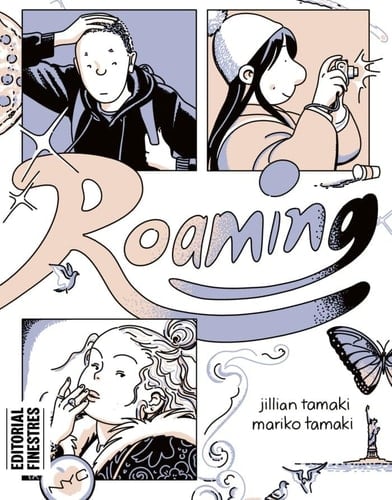
Roaming
Mariko Tamaki • 2023
Fascismo??? Aqui não!
Como Esmagar o Fascismo (Em Portugues do Brasil)
Leon Trotski • 2021
Fascismo eterno
Umberto Eco • 2019
Política Para não ser idiota
Mario Sergio Cortella • 2010
Como Nasce e Morre o Fascismo (Em Portugues do Brasil)
Clara Zetkin • 2019
Antifa
Mark Bray • 2017
Como Esmagar o Fascismo (Em Portugues do Brasil)
Leon Trotski • 2021
Maus I: A Survivor's Tale My Father Bleeds History
Art Spiegelman • 1986
Fascismo
Textos fundamentais e históricos do século XX
Have you ever wondered why that 13-digit number on the back of a book costs $125 in the United States but is completely free in Canada and India? This book, The Global ISBN Handbook, is your 2025 guide to the International Standard Book Number. It explains everything about this global "fingerprint" for books. The ISBN is the most important cornerstone of the publishing industry. It started as a simple warehouse tool in the 1960s. Now, it is a complex digital identifier used in over 200 countries. This handbook deconstructs the entire system. It uses 15 distinct national case studies to do this. You will learn how the old 10-digit system changed to the new 13-digit one. We break down the five parts of the ISBN, from the "Bookland" prefix to the final check digit. The book explores the global governance framework, starting with the International ISBN Agency. Then, it dives deep into how different countries run their systems. You'll see the privatized, high-cost model in the United States. You'll compare it to Canada's free, government-run system. We explore the industry-led models in Brazil and Germany. We look at government-run systems in Mexico and India. We even cover the unique case of China, where the ISBN is not a simple identifier but a state-controlled publication license. The book also examines the systems in the UK , France , Russia , Japan , Australia , South Africa , Nigeria , and Egypt. Many books and websites can tell you how to get an ISBN. This handbook is the only resource that explains why the process is so different everywhere you look. It moves beyond a simple "how-to" and provides a true global analysis. It directly compares the privatized, for-profit models in the US and UK against the free, public-good systems in Canada and South Africa. You won't just learn the price; you will understand the cultural policies, market structures, and legal philosophies that shape that price. This book shows how the ISBN is a "global mirror". It reveals how a simple number can be a commercial product in one nation , a tool of cultural policy in another , and an instrument of state control in a third. This comparative insight is the missing piece for any author, publisher, or researcher trying to navigate the complex international publishing market. Disclaimer: This handbook is an independently produced resource for commentary and analysis. The author has no affiliation with the International ISBN Agency, R.R. Bowker, Library and Archives Canada, the National Press and Publication Administration, or any other national ISBN agency. This work is independently produced under the principle of nominative fair use.
Biography
Os sete maridos de Evelyn Hugo
Taylor Jenkins Reid • 2019
LGBT
Orgulho e preconceito e nós duas
Rachael Lippincott • 2023
As garotas que eu fui
Tess Sharpe • 2022
A Princesa e o Queijo Quente
Deya Muniz • 2023
Sua Alteza Real (Royals 2)
Rachel Hawkins • 2020
Os sete maridos de Evelyn Hugo
Taylor Jenkins Reid • 2019
Oxe, baby (Portuguese Edition)
Elayne Baeta • 2021
A jogada do amor
Kelly Quindlen • 2022
É assim que se perde a guerra do tempo
Amal El-Mohtar • 2021
Memórias de um amor inesperado
Ciara Smyth • 2023
Em período de experiência
Have you ever wondered why that 13-digit number on the back of a book costs $125 in the United States but is completely free in Canada and India? This book, The Global ISBN Handbook, is your 2025 guide to the International Standard Book Number. It explains everything about this global "fingerprint" for books. The ISBN is the most important cornerstone of the publishing industry. It started as a simple warehouse tool in the 1960s. Now, it is a complex digital identifier used in over 200 countries. This handbook deconstructs the entire system. It uses 15 distinct national case studies to do this. You will learn how the old 10-digit system changed to the new 13-digit one. We break down the five parts of the ISBN, from the "Bookland" prefix to the final check digit. The book explores the global governance framework, starting with the International ISBN Agency. Then, it dives deep into how different countries run their systems. You'll see the privatized, high-cost model in the United States. You'll compare it to Canada's free, government-run system. We explore the industry-led models in Brazil and Germany. We look at government-run systems in Mexico and India. We even cover the unique case of China, where the ISBN is not a simple identifier but a state-controlled publication license. The book also examines the systems in the UK , France , Russia , Japan , Australia , South Africa , Nigeria , and Egypt. Many books and websites can tell you how to get an ISBN. This handbook is the only resource that explains why the process is so different everywhere you look. It moves beyond a simple "how-to" and provides a true global analysis. It directly compares the privatized, for-profit models in the US and UK against the free, public-good systems in Canada and South Africa. You won't just learn the price; you will understand the cultural policies, market structures, and legal philosophies that shape that price. This book shows how the ISBN is a "global mirror". It reveals how a simple number can be a commercial product in one nation , a tool of cultural policy in another , and an instrument of state control in a third. This comparative insight is the missing piece for any author, publisher, or researcher trying to navigate the complex international publishing market. Disclaimer: This handbook is an independently produced resource for commentary and analysis. The author has no affiliation with the International ISBN Agency, R.R. Bowker, Library and Archives Canada, the National Press and Publication Administration, or any other national ISBN agency. This work is independently produced under the principle of nominative fair use.
Meninas selvagens
Rory Power • 2020
Enterrem nossos ossos à meia-noite
V. E. Schwab • 2025
Horror
Suicidas
Raphael Montes • 2017
O jardim das borboletas
Dot Hutchison • 2017
Minha sombria Vanessa
Kate Elizabeth Russell • 2020
Assassinato na família
Cara Hunter • 2025
Dias perfeitos
Raphael Montes • 2014
A verdade sobre o caso Harry Quebert
Joël Dicker • 2014
O telefone preto e outras histórias
Joe Hill • 2022
A anatomia do crime
Val McDermid • 2023
Sobreviva a noite. E se essa carona fosse a sua ultima (Em Portugues do Brasil)
Joao Rodrigues e Riley Sager • 2019
O último mandamento
Scott Shepherd • 2023
Jantar secreto
Raphael Montes • 2016
Entre quatro paredes
B. A. Paris • 2018
O paciente
Jasper DeWitt • 2021
O sorriso da hiena
Gustavo Ávila • 2017
O MASSACRE DA FAMÍLIA HOPE
RILEY SAGER • 2024
O caso Alaska Sanders
Joël Dicker • 2022
Fantasy
O Labirinto Do Fauno
Guillermo del Toro • 2019
Pra ouvir minha criança interior❤️🩹
Sobre Minha Filha
Kim Hye-jin • 2022
Ciranda de pedra
Lygia Fagundes Telles • 2009
Caderno de ossos
Julia Codo • 2025
O Labirinto Do Fauno
Guillermo del Toro • 2019
Tudo o que eu sei sobre o amor
Dolly Alderton • 2022
O Que o sol faz com as flores
Rupi Kaur • 2018
Filhos Adultos de Pais Emocionalmente Imaturos
Emma William • 2022
O tempo das cerejas
Montserrat Roig • 2025
O caminho de casa
Yaa Gyasi • 2017
A Sibila (Portuguese Edition)
Agustina Bessa-Luís • 2017
Mata doce romance
Luciany Aparecida • 2023
Mesmo Rio
Elisama Santos • 2022
Salvar o fogo
Itamar Vieira Junior • 2023
Meridiana
Eliana Alves Cruz • 2025
Apuntes para John
Joan Didion • 2025
Santo de casa
Stefano Volp • 2025
O cozer das pedras, o roer dos ossos
Patrick Torres • 2023
Se Deus me chamar não vou
Mariana Salomão Carrara • 2019
De um fim de semana
O velho e o mar
Ernest Hemingway • 2013
A filha perdida
Elena Ferrante • 2016
Lavoura arcaica
Raduan Nassar • 2005
Contos de cães e maus lobos
Valter Hugo Mãe • 2015
Caim romance
José Saramago • 2010
Me deixa,eu sou sensível e penso demais
As malditas
Camila Sosa Villada • 2025
SE EU FOSSE CAPAZ DE AMAR
REBECA DANTAS • 2024
O amor que sinto agora
Leila Ferreira • 2018
Eu que nunca conheci os homens
Jacqueline Harpman • 2021
O Sol é para Todos
_ • 2015
Anon: era uma mulher...
Virginia Woolf • 2024
Belo mundo, onde você está
Sally Rooney • 2019
Pessoas normais
Sally Rooney • 2019
Tudo o que eu sei sobre o amor
Dolly Alderton • 2022
Café Tangerinn
Emanuela Anechoum • 2025
Herdeiras do mar
Mary Lynn Bracht • 2020
Melhor não contar
Tatiana Salem Levy • 2024
Cidadã de segunda classe
Buchi Emecheta • 2021
O ano em que morri em Nova York
Milly Lacombe • 2017
Paixão Simples
Annie Ernaux • 2023
Água Viva
Clarice Lispector • 2012
O peso do pássaro morto
Aline Bei • 2017
Bem-vindos à Livraria Hyunam-Dong
Hwang Bo-reum • 2024
Mrs.Dalloway
Virginia Woolf • 2020
Noites brancas
Fiódor Dostoiévksi • 2020
Psicologia
Se ao Menos - Liberte-se do Arrependimento e Viva Melhor a partir dos Conhecimentos da Ciencia Cognitiva (Em Portugues do Brasil)
Robert L. Leahy • 2019
E como você se sente em relação a isso? Tudo que você sempre (nunca) quis saber sobre terapia
Joshua Fletcher • 2024
Mata doce romance
Luciany Aparecida • 2023
A morte é um dia que vale a pena viver
Ana Claudia de Lima Quintana Arantes • 2019
Cartas de um terapeuta para seus momentos de crise
Alexandre Coimbra Amaral • 2020
Coleção Saberes - 100 minutos para entender Nietzsche
Astral Cultural • 2022
Coleção saberes - 100 minutos para entender Aristóteles
Ricardo Piccinato • 2020
Coleção Saberes - 100 minutos para entender Freud
Astral Cultural • 2022
Coleção Saberes - 100 minutos para entender Jung
Astral Cultural • 2022
A gente mira no amor e acerta na solidão
Ana Suy • 2022
Talvez você deva conversar com alguém uma terapeuta, o terapeuta dela e a vida de todos nós
Lori Gottlieb • 2021
Não Se Cobre Tanto
Ellen Hendriksen
Have you ever wondered why that 13-digit number on the back of a book costs $125 in the United States but is completely free in Canada and India? This book, The Global ISBN Handbook, is your 2025 guide to the International Standard Book Number. It explains everything about this global "fingerprint" for books. The ISBN is the most important cornerstone of the publishing industry. It started as a simple warehouse tool in the 1960s. Now, it is a complex digital identifier used in over 200 countries. This handbook deconstructs the entire system. It uses 15 distinct national case studies to do this. You will learn how the old 10-digit system changed to the new 13-digit one. We break down the five parts of the ISBN, from the "Bookland" prefix to the final check digit. The book explores the global governance framework, starting with the International ISBN Agency. Then, it dives deep into how different countries run their systems. You'll see the privatized, high-cost model in the United States. You'll compare it to Canada's free, government-run system. We explore the industry-led models in Brazil and Germany. We look at government-run systems in Mexico and India. We even cover the unique case of China, where the ISBN is not a simple identifier but a state-controlled publication license. The book also examines the systems in the UK , France , Russia , Japan , Australia , South Africa , Nigeria , and Egypt. Many books and websites can tell you how to get an ISBN. This handbook is the only resource that explains why the process is so different everywhere you look. It moves beyond a simple "how-to" and provides a true global analysis. It directly compares the privatized, for-profit models in the US and UK against the free, public-good systems in Canada and South Africa. You won't just learn the price; you will understand the cultural policies, market structures, and legal philosophies that shape that price. This book shows how the ISBN is a "global mirror". It reveals how a simple number can be a commercial product in one nation , a tool of cultural policy in another , and an instrument of state control in a third. This comparative insight is the missing piece for any author, publisher, or researcher trying to navigate the complex international publishing market. Disclaimer: This handbook is an independently produced resource for commentary and analysis. The author has no affiliation with the International ISBN Agency, R.R. Bowker, Library and Archives Canada, the National Press and Publication Administration, or any other national ISBN agency. This work is independently produced under the principle of nominative fair use.
Cartas a um jovem terapeuta: Reflexões para psicoterapeutas, aspirantes e curiosos
Contardo Calligaris • 2019
Coleção Saberes - 100 minutos para entender Lacan
Astral Cultural • 2022
Coleção Saberes - 100 minutos para entender Platão
Astral Cultural • 2019
Tudo O Que Voce Precisa Saber Sobre Psicologia (em Portugues Do Brasil)
Paul Kleinman • 2015
Filhos Adultos de Pais Emocionalmente Imaturos
Emma William • 2022
Eu só existo no olhar do outro?
Ana Suy • 2025
O Que Ainda N�o Consegui Dizer Na Terapia - As Verdades Que Precisamos Encarar Para Curar Nossas (Portuguese Edition)
Michelle M. May • 2017
Sobre o sentido da vida
Viktor E. Frankl • 2021
MEDO DE DAR CERTO
NATÁLIA SOUSA • 2025
ARMADILHAS DA QUÍMICA AMOROSA: APRENDA COM A TERAPIA DO ESQUEMA A IDENTIFICÁ-LAS E ENCONTRE
unknown author • unde
Mesmo Rio
Elisama Santos • 2022
Salvar o fogo
Itamar Vieira Junior • 2023
Meridiana
Eliana Alves Cruz • 2025
Apuntes para John
Joan Didion • 2025
Santo de casa
Stefano Volp • 2025
O cozer das pedras, o roer dos ossos
Patrick Torres • 2023
Caderno de ossos
Julia Codo • 2025
Agir e Pensar como um Gato
Stéphane Garnier • 2019
1984
George Orwell • 1950
Capitães da areia
Jorge Amado • 2008
Sexo no cativeiro (Nova edição) Como manter a paixão nos relacionamentos
Esther Perel • 2018
Você não esta sozinha🥹
SE EU FOSSE CAPAZ DE AMAR
REBECA DANTAS • 2024
O amor que sinto agora
Leila Ferreira • 2018
Não fossem as sílabas do sábado
Mariana Salomão Carrara • 2022
Radio Silence
Alice Oseman • 2017
Lugar feliz
Emily Henry • 2023
Livro do desassossego
Fernando Pessoa • 2020
Filhos Adultos de Pais Emocionalmente Imaturos
Emma William • 2022
Paixão Simples
Annie Ernaux • 2023
O caminho de casa
Yaa Gyasi • 2017
Ciranda de pedra
Lygia Fagundes Telles • 2009
A Sibila (Portuguese Edition)
Agustina Bessa-Luís • 2017
Coisas Presentes Demais (Portuguese Edition)
Fl�via P�ret • 2017
Bel Rodrigues🔪😺
As mulheres-leão de Teerã
Marjan Kamali
Have you ever wondered why that 13-digit number on the back of a book costs $125 in the United States but is completely free in Canada and India? This book, The Global ISBN Handbook, is your 2025 guide to the International Standard Book Number. It explains everything about this global "fingerprint" for books. The ISBN is the most important cornerstone of the publishing industry. It started as a simple warehouse tool in the 1960s. Now, it is a complex digital identifier used in over 200 countries. This handbook deconstructs the entire system. It uses 15 distinct national case studies to do this. You will learn how the old 10-digit system changed to the new 13-digit one. We break down the five parts of the ISBN, from the "Bookland" prefix to the final check digit. The book explores the global governance framework, starting with the International ISBN Agency. Then, it dives deep into how different countries run their systems. You'll see the privatized, high-cost model in the United States. You'll compare it to Canada's free, government-run system. We explore the industry-led models in Brazil and Germany. We look at government-run systems in Mexico and India. We even cover the unique case of China, where the ISBN is not a simple identifier but a state-controlled publication license. The book also examines the systems in the UK , France , Russia , Japan , Australia , South Africa , Nigeria , and Egypt. Many books and websites can tell you how to get an ISBN. This handbook is the only resource that explains why the process is so different everywhere you look. It moves beyond a simple "how-to" and provides a true global analysis. It directly compares the privatized, for-profit models in the US and UK against the free, public-good systems in Canada and South Africa. You won't just learn the price; you will understand the cultural policies, market structures, and legal philosophies that shape that price. This book shows how the ISBN is a "global mirror". It reveals how a simple number can be a commercial product in one nation , a tool of cultural policy in another , and an instrument of state control in a third. This comparative insight is the missing piece for any author, publisher, or researcher trying to navigate the complex international publishing market. Disclaimer: This handbook is an independently produced resource for commentary and analysis. The author has no affiliation with the International ISBN Agency, R.R. Bowker, Library and Archives Canada, the National Press and Publication Administration, or any other national ISBN agency. This work is independently produced under the principle of nominative fair use.
Poesia reunida🤍

Obra completa de Alberto Caeiro
Jerónimo Pizarro • 2019

O Guardador de Rebanhos
Fernando Pessoa • 2020

Diário dos desassossegos
José Roberto de Amorim • 2016