Intelligent may
Items in this hypelist
To Read
Digital Bank
Chris Skinner • 2017
Machine, Platform, Crowd Harnessing Our Digital Future
Andrew McAfee • 2017
Thinking, Fast and Slow
Daniel Kahneman • 2013
*Major New York Times Bestseller<br/>*More than 2.6 million copies sold<br/>*One of The New York Times Book Review's ten best books of the year<br/>*Selected by The Wall Street Journal as one of the best nonfiction books of the year<br/>*Presidential Medal of Freedom Recipient<br/>*Daniel Kahneman's work with Amos Tversky is the subject of Michael Lewis's best-selling The Undoing Project: A Friendship That Changed Our Minds<br/><br/>In his mega bestseller, Thinking, Fast and Slow, Daniel Kahneman, world-famous psychologist and winner of the Nobel Prize in Economics, takes us on a groundbreaking tour of the mind and explains the two systems that drive the way we think.<br/><br/>System 1 is fast, intuitive, and emotional; System 2 is slower, more deliberative, and more logical. The impact of overconfidence on corporate strategies, the difficulties of predicting what will make us happy in the future, the profound effect of cognitive biases on everything from playing the stock market to planning our next vacation―each of these can be understood only by knowing how the two systems shape our judgments and decisions.<br/><br/>Engaging the reader in a lively conversation about how we think, Kahneman reveals where we can and cannot trust our intuitions and how we can tap into the benefits of slow thinking. He offers practical and enlightening insights into how choices are made in both our business and our personal lives―and how we can use different techniques to guard against the mental glitches that often get us into trouble. Topping bestseller lists for almost ten years, Thinking, Fast and Slow is a contemporary classic, an essential book that has changed the lives of millions of readers.
AI 2041 Ten Visions for Our Future
Kai-Fu Lee • 2024
Superintelligence Paths, Dangers, Strategies
Nick Bostrom • 2016
Life 3.0 Being Human in the Age of Artificial Intelligence
Max Tegmark • 2018
<b><i>NEW YORK TIMES</i> BESTSELLER • How will Artificial Intelligence affect crime, war, justice, jobs, society and our very sense of being human? The rise of AI has the potential to transform our future more than any other technology—and there’s nobody better qualified or situated to explore that future than Max Tegmark, an MIT professor who’s helped mainstream research on how to keep AI beneficial.</b><br> <br> How can we grow our prosperity through automation without leaving people lacking income or purpose? What career advice should we give today’s kids? How can we make future AI systems more robust, so that they do what we want without crashing, malfunctioning or getting hacked? Should we fear an arms race in lethal autonomous weapons? Will machines eventually outsmart us at all tasks, replacing humans on the job market and perhaps altogether? Will AI help life flourish like never before or give us more power than we can handle?<br> <br> What sort of future do <i>you</i> want? This book empowers you to join what may be the most important conversation of our time. It doesn’t shy away from the full range of viewpoints or from the most controversial issues—from superintelligence to meaning, consciousness and the ultimate physical limits on life in the cosmos.
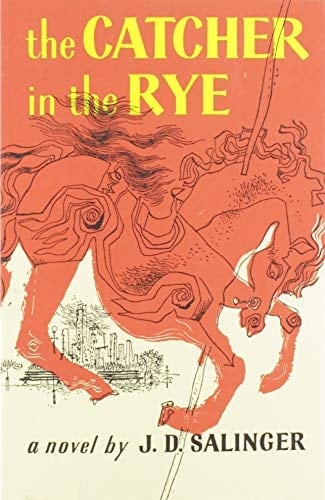
The Catcher in the Rye
J. D. Salinger · 2001

The Picture of Dorian Gray The Original 1890 Edition
Oscar Wilde · 1890
“The books that the world calls immoral are books that show the world its own shame.” ― Oscar Wilde, The Picture of Dorian Gray<br/><br/>The Picture of Dorian Gray is a 1891 gothic and philosophical novel by Irish writer and playwright Oscar Wilde. First published as a serial story in the July 1890 issue of Lippincott's Monthly Magazine, the editors feared the story was indecent, and without Wilde's knowledge, deleted five hundred words before publication.<br/><br/>Despite that censorship, The Picture of Dorian Gray offended the moral sensibilities of British book reviewers, some of whom said that Oscar Wilde merited prosecution for violating the laws guarding the public morality. In response, Wilde aggressively defended his novel and art in correspondence with the British press.<br/><br/>Wilde revised and expanded the magazine edition of The Picture of Dorian Gray (1890) for publication as a novel; the book edition (1891) featured an aphoristic preface — an apologia about the art of the novel and the reader. The content, style and presentation of the preface made it famous in its own literary right, as social and cultural criticism. In April 1891, the editorial house Ward, Lock and Company published the revised version of The Picture of Dorian Gray.<br/><br/>A True Classic that Belongs on Every Bookshelf!
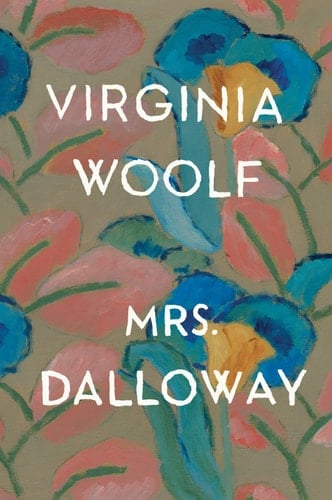
Mrs. Dalloway
Virginia Woolf · 1990

The Great Gatsby The Original 1925 Edition
Francis Scott Fitzgerald · 2021
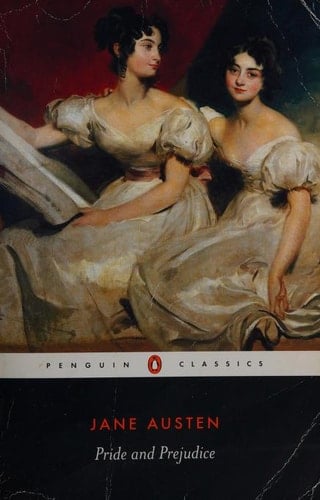
Pride and Prejudice (Penguin Classics)
Jane Austen · 1813

Catch-22
Joseph Heller · 2011
Anna Karenina
Leo Tolstoy · 2014

The Bell Jar
Sylvia Plath · 2005
<p><i>The Bell Jar</i> chronicles the crack-up of Esther Greenwood: brilliant, beautiful, enormously talented, and successful, but slowly going under -- maybe for the last time. Sylvia Plath masterfully draws the reader into Esther's breakdown with such intensity that Esther's insanity becomes completely real and even rational, as probable and accessible an experience as going to the movies. Such deep penetration into the dark and harrowing corners of the psyche is an extraordinary accomplishment and has made <i>The Bell Jar</i> a haunting American classic.</p> <p>This P.S. edition features an extra 16 pages of insights into the book, including author interviews, recommended reading, and more.</p>
More Days at the Morisaki Bookshop A Novel
Satoshi Yagisawa • 2024
Days at the Morisaki Bookshop A Novel
Satoshi Yagisawa • 2023
Animal Farm: 75th Anniversary Edition
George Orwell • 2004
1984
George Orwell • 2013
75th ANNIVERSARY EDITION “Orwell saw, to his credit, that the act of falsifying reality is only secondarily a way of changing perceptions. It is, above all, a way of asserting power.”—The New Yorker In 1984, London is a grim city in the totalitarian state of Oceania where Big Brother is always watching you and the Thought Police can practically read your mind. Winston Smith is a man in grave danger for the simple reason that his memory still functions. Drawn into a forbidden love affair, Winston finds the courage to join a secret revolutionary organization called The Brotherhood, dedicated to the destruction of the Party. Together with his beloved Julia, he hazards his life in a deadly match against the powers that be. Lionel Trilling said of Orwell’s masterpiece “1984 is a profound, terrifying, and wholly fascinating book. It is a fantasy of the political future, and like any such fantasy, serves its author as a magnifying device for an examination of the present.” Though the year 1984 now exists in the past, Orwell’s dystopian classic remains an urgent call for the individual willing to speak truth to power.
Uncategorized
Prisoners of Geography Our World Explained in 12 Simple Maps (Illustrated Young Readers Edition)
Tim Marshall • 2021
Blockchain Revolution
Alex Tapscott Don Tapscott • 2017
Freakonomics A Rogue Economist Explores the Hidden Side of Everything
Steven D. Levitt • 2020