lecturas pendientes

Items in this hypelist
Otros

INDIGNO DE SER HUMANO
unde
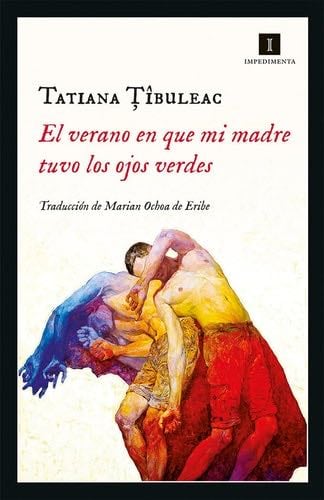
El verano en que mi madre tuvo los ojos verdes
Tatiana Tibuleac · 2019

Tortura blanca. Entrevistas con mujeres iraníes encarceladas
Narges Mohammadi · 2023
Escritores Argentinos 🇦🇷

Pizarnik, poesía completa
Poesía
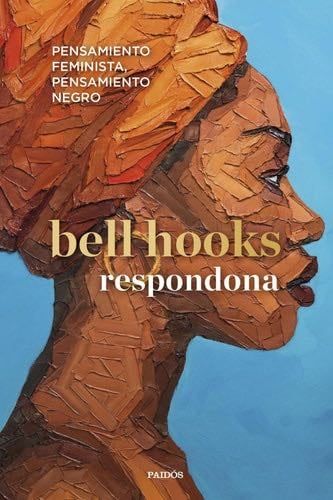
Respondona (Ed. Argentina)
bell hooks, Montserrat Asensio Fernández · 2023
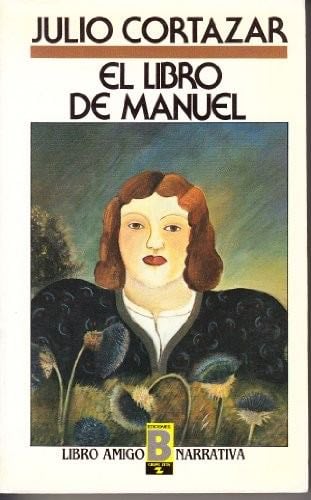
El Libro De Manuel
Cortazar · 2001

Julio Cortazar
Evelyn Picon Garfield · 1975
A critical study of the novels, short stories, collage-books, and poetry of the distinguished Argentine writer, emphasizing recurring ideas and attitudes and assessing Cortazar's impact on Latin American literature
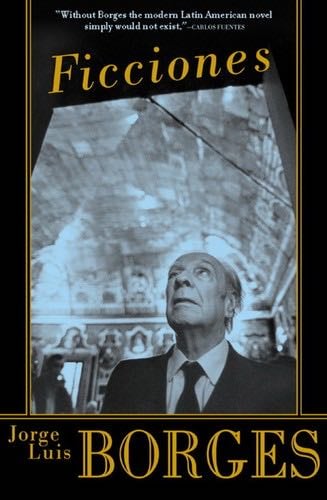
Ficciones
Jorge Luis Borges · 2015
“These brief Ficciones have to be read one at a time, and slowly; then they throb with uncanny and haunting power.” —The Atlantic Monthly The seventeen pieces in Ficciones demonstrate the gargantuan powers of imagination, intelligence, and style of one of the greatest writers of this or any other century. Borges sends us on a journey into a compelling, bizarre, and profoundly resonant realm; we enter the fearful sphere of Pascal’s abyss, the surreal and literal labyrinth of books, and the iconography of eternal return. More playful and approachable than the fictions themselves are Borges’s Prologues, brief elucidations that offer the uninitiated a passageway into the whirlwind of Borges’s genius and mirror the precision and potency of his intellect and inventiveness, his piercing irony, his skepticism, and his obsession with fantasy. To enter the worlds in Ficciones is to enter the mind of Jorge Luis Borges, wherein lies Heaven, Hell, and everything in between.
El Aleph / The Aleph (Spanish Edition)
Jorge Luis Borges · 2012
Books

el valor de la imperfección: la crítica de dostoyevski al utopismo
Poemas 🤎

Federico Garcia Lorca
Karen Genschow · 2011
poemas de amor que escribí mientras dormías (Spanish Edition)
rowan everly · 2023

Veinte poemas de amor y una canción desesperada (Spanish Edition)
Pablo Neruda · 2020
Veinte poemas de amor y una canción desesperad" es una de las más célebres obras del poeta chileno Pablo Neruda (1904-1973). Publicado en 1924, el poemario lanzó a su autor a la fama con apenas 19 años de edad, y es una de las obras literarias de mayor renombre del siglo XX en la lengua castellana. El libro pertenece a la época de juventud del poeta, ya que fue escrito y publicado cuando no contaba aún con veinte años. Su origen se suele explicar como una evolución consciente de su poética que trata de salirse de los moldes del modernismo que dominaban sus primeras composiciones y su primer libro, Crepusculario. La obra está compuesta por veinte poemas de temática amorosa, más un poema final titulado La canción desesperada. A excepción de este último, los poemas no tienen título. Aunque el poemario esté basado en experiencias amorosas reales del joven Neruda, es un libro de amor que no se dirige a una sola amante. El poeta ha mezclado en sus versos las características físicas de varias mujeres reales de su primera juventud para crear una imagen de la amada irreal que no corresponde a ninguna de ellas en concreto, sino que representa una idea puramente poética de su objeto amoroso.
Psicología y Psicoanálisis

Civilization and Its Discontents
Sigmund Freud · 2010
Freud’s seminal volume of twentieth-century cultural thought grounded in psychoanalytic theory, now with a new introduction by Christopher Hitchens. Written in the decade before Freud’s death, Civilization and Its Discontents may be his most famous and most brilliant work. It has been praised, dissected, lambasted, interpreted, and reinterpreted. Originally published in 1930, it seeks to answer several questions fundamental to human society and its organization: What influences led to the creation of civilization? Why and how did it come to be? What determines civilization’s trajectory? Freud’s theories on the effect of the knowledge of death on human existence and the birth of art are central to his work. Of the various English translations of Freud’s major works to appear in his lifetime, only Norton’s Standard Edition, under the general editorship of James Strachey, was authorized by Freud himself. This new edition includes both an introduction by the renowned cultural critic and writer Christopher Hitchens as well as Peter Gay’s classic biographical note on Freud.

The Ego and the Id
Sigmund Freud · 2022

The Undiscovered Self: With Symbols and the Interpretation of Dreams (Jung Extracts, 31)
C. G. Jung · 2010
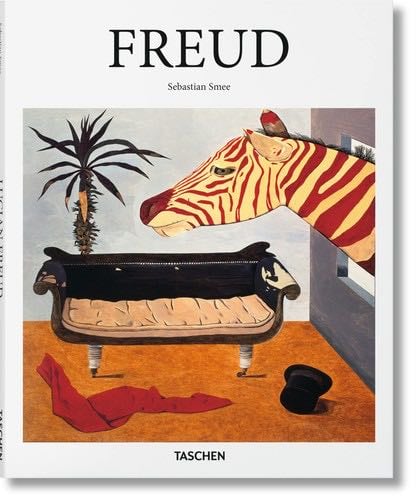
Freud
Sebastian Smee · 2015
Lucian Freud (1922–2011) was interested in the telling of truths. Always operating outside the main currents of 20th-century art, the esteemed portrait painter observed his subjects with the regimen and precision of a laboratory scientist. He recorded not only the blotches, bruises, and swellings of the living body, but also, beneath the flaws and folds of flesh, the microscopic details of what lies within: the sensation, the emotion, the intelligence, the bloom, and the inevitable, unstoppable decay.<br/><br/>Despite rejecting parallels between him and his renowned grandfather, the correlation between Lucian Freud’s sitting process for portraiture and Sigmund Freud’s psychotherapy sessions is a fascinating element to this figurative oeuvre. Despite the thickness of the impasto surfaces, Freud’s portraits of subjects as varied as the Queen, Kate Moss, and an obese job center supervisor penetrate the physicality of the body with a direct and often disarming insight. The result is as much a psychological interrogation as it is an uneasy examination of the relationship between artist and model.<br/><br/>This book brings together some of Freud’s most outstanding and unapologetic portraits, to introduce an artist widely considered one of the finest masters of the human form.