lerei & já lidos
Items in this hypelist
Finished
Estilhaçe-me
Tahereh Mafi
Have you ever wondered why that 13-digit number on the back of a book costs $125 in the United States but is completely free in Canada and India? This book, The Global ISBN Handbook, is your 2025 guide to the International Standard Book Number. It explains everything about this global "fingerprint" for books. The ISBN is the most important cornerstone of the publishing industry. It started as a simple warehouse tool in the 1960s. Now, it is a complex digital identifier used in over 200 countries. This handbook deconstructs the entire system. It uses 15 distinct national case studies to do this. You will learn how the old 10-digit system changed to the new 13-digit one. We break down the five parts of the ISBN, from the "Bookland" prefix to the final check digit. The book explores the global governance framework, starting with the International ISBN Agency. Then, it dives deep into how different countries run their systems. You'll see the privatized, high-cost model in the United States. You'll compare it to Canada's free, government-run system. We explore the industry-led models in Brazil and Germany. We look at government-run systems in Mexico and India. We even cover the unique case of China, where the ISBN is not a simple identifier but a state-controlled publication license. The book also examines the systems in the UK , France , Russia , Japan , Australia , South Africa , Nigeria , and Egypt. Many books and websites can tell you how to get an ISBN. This handbook is the only resource that explains why the process is so different everywhere you look. It moves beyond a simple "how-to" and provides a true global analysis. It directly compares the privatized, for-profit models in the US and UK against the free, public-good systems in Canada and South Africa. You won't just learn the price; you will understand the cultural policies, market structures, and legal philosophies that shape that price. This book shows how the ISBN is a "global mirror". It reveals how a simple number can be a commercial product in one nation , a tool of cultural policy in another , and an instrument of state control in a third. This comparative insight is the missing piece for any author, publisher, or researcher trying to navigate the complex international publishing market. Disclaimer: This handbook is an independently produced resource for commentary and analysis. The author has no affiliation with the International ISBN Agency, R.R. Bowker, Library and Archives Canada, the National Press and Publication Administration, or any other national ISBN agency. This work is independently produced under the principle of nominative fair use.
A hipótese do amor
Ali Hazelwood • 2022
A conta-gotas
Ana Carolina Carvalho • 2020
Coisas óbvias sobre o amor
Elayne Baeta • 2024
Amanhecer
Stephenie Meyer • 2012

Eclipse
Stephenie Meyer • 2007
Lua nova
Stephenie Meyer • 2012
Crepúsculo
Stephenie Meyer • 2015
Invisível
Eloy Moreno • 2022
Becos da memória
Conceição Evaristo • 2017
Confissões de um amigo imaginário
Michelle Cuevas • 2016
A bruxa não vai para a fogueira neste livro
Amanda Lovelace • 2018
Ainda sou eu
Jojo Moyes • 2018
Depois de você
Jojo Moyes • 2016
A esperança
Suzanne Collins • 2012
Em chamas
Suzanne Collins • 2011
Jogos vorazes
Suzanne Collins • 2008
O Primeiro a Morrer no Final
Adam Silvera • 2023
Agora e para sempre, Lara Jean
Jenny Han • 2017
P.S.: Ainda amo você
Jenny Han • 2016
Para todos os garotos que já amei
Jenny Han • 2015
Coisas óbvias sobre o amor
Elayne Baeta • 2024
Uma família feliz
Raphael Montes • 2024
Como eu era antes de você
Jojo Moyes • 2013
Suzy e as águas-vivas
Ali Benjamin • 2016
Kafka e a boneca viajante
Jordi Sierra i Fabra • 2009
Suicidas
Raphael Montes • 2017
Jantar secreto
Raphael Montes • 2016
A hora da estrela
Clarice Lispector • 2020
O canto mais escuro da floresta
Holly Black • 2017
Nova antologia poética
Vinícius de Moraes • 2005
A metamorfose
Franz Kafka • 1997
A Rainha do Nada (Portuguese Edition)
Holly Black • 2022
O rei perverso
Holly Black • 2020
O príncipe cruel
Holly Black • 2018
A Biblioteca da Meia-Noite
Matt Haig • 2021
Se você me entende, por favor me explica
Pedro Salomão • 2020
Vermelho, branco e sangue azul
Casey McQuiston • 2021
O lado feio do amor
Colleen Hoover • 2015
Em busca de Cinderela / Em busca da perfeição
Colleen Hoover • 2022
Sem esperança (Vol. 2 Hopeless)
Colleen Hoover • 2022
Your Name
Makoto Shinkai
Have you ever wondered why that 13-digit number on the back of a book costs $125 in the United States but is completely free in Canada and India? This book, The Global ISBN Handbook, is your 2025 guide to the International Standard Book Number. It explains everything about this global "fingerprint" for books. The ISBN is the most important cornerstone of the publishing industry. It started as a simple warehouse tool in the 1960s. Now, it is a complex digital identifier used in over 200 countries. This handbook deconstructs the entire system. It uses 15 distinct national case studies to do this. You will learn how the old 10-digit system changed to the new 13-digit one. We break down the five parts of the ISBN, from the "Bookland" prefix to the final check digit. The book explores the global governance framework, starting with the International ISBN Agency. Then, it dives deep into how different countries run their systems. You'll see the privatized, high-cost model in the United States. You'll compare it to Canada's free, government-run system. We explore the industry-led models in Brazil and Germany. We look at government-run systems in Mexico and India. We even cover the unique case of China, where the ISBN is not a simple identifier but a state-controlled publication license. The book also examines the systems in the UK , France , Russia , Japan , Australia , South Africa , Nigeria , and Egypt. Many books and websites can tell you how to get an ISBN. This handbook is the only resource that explains why the process is so different everywhere you look. It moves beyond a simple "how-to" and provides a true global analysis. It directly compares the privatized, for-profit models in the US and UK against the free, public-good systems in Canada and South Africa. You won't just learn the price; you will understand the cultural policies, market structures, and legal philosophies that shape that price. This book shows how the ISBN is a "global mirror". It reveals how a simple number can be a commercial product in one nation , a tool of cultural policy in another , and an instrument of state control in a third. This comparative insight is the missing piece for any author, publisher, or researcher trying to navigate the complex international publishing market. Disclaimer: This handbook is an independently produced resource for commentary and analysis. The author has no affiliation with the International ISBN Agency, R.R. Bowker, Library and Archives Canada, the National Press and Publication Administration, or any other national ISBN agency. This work is independently produced under the principle of nominative fair use.
Um caso perdido (Vol. 1 Hopeless)
Colleen Hoover • 2022
O Amor Não é Óbvio
unde
Todos quieren a Daisy Jones / Daisy Jones & The Six
Taylor Jenkins Reid • 2020
Harry Potter e o prisioneiro de Azkaban
J. K. Rowling • 2000
Sísifo desce a montanha
Affonso Romano de Sant'Anna • 2011
As crônicas de Bane
Cassandra Clare • 2015
Os pergaminhos vermelhos da magia - As maldições ancestrais - vol. 1
Cassandra Clare • 2019
Cidade do fogo celestial - Instrumentos mortais - vol. 6
Cassandra Clare • 2014
Cidade das Almas Perdidas (Em Portugues do Brasil)
_ • 2013
A Cidade dos Anjos Caídos Caçadores de Sombras 4 (Portuguese Edition)
unde
Cidade de vidro - Os instrumentos mortais vol. 3
Cassandra Clare • 2013
Cidade das cinzas
Cassandra Clare • 2013
Cidade dos ossos os instrumentos mortais
Cassandra Clare • 2010
Para todos os desajustados do planeta
Romeu Carvalho
Have you ever wondered why that 13-digit number on the back of a book costs $125 in the United States but is completely free in Canada and India? This book, The Global ISBN Handbook, is your 2025 guide to the International Standard Book Number. It explains everything about this global "fingerprint" for books. The ISBN is the most important cornerstone of the publishing industry. It started as a simple warehouse tool in the 1960s. Now, it is a complex digital identifier used in over 200 countries. This handbook deconstructs the entire system. It uses 15 distinct national case studies to do this. You will learn how the old 10-digit system changed to the new 13-digit one. We break down the five parts of the ISBN, from the "Bookland" prefix to the final check digit. The book explores the global governance framework, starting with the International ISBN Agency. Then, it dives deep into how different countries run their systems. You'll see the privatized, high-cost model in the United States. You'll compare it to Canada's free, government-run system. We explore the industry-led models in Brazil and Germany. We look at government-run systems in Mexico and India. We even cover the unique case of China, where the ISBN is not a simple identifier but a state-controlled publication license. The book also examines the systems in the UK , France , Russia , Japan , Australia , South Africa , Nigeria , and Egypt. Many books and websites can tell you how to get an ISBN. This handbook is the only resource that explains why the process is so different everywhere you look. It moves beyond a simple "how-to" and provides a true global analysis. It directly compares the privatized, for-profit models in the US and UK against the free, public-good systems in Canada and South Africa. You won't just learn the price; you will understand the cultural policies, market structures, and legal philosophies that shape that price. This book shows how the ISBN is a "global mirror". It reveals how a simple number can be a commercial product in one nation , a tool of cultural policy in another , and an instrument of state control in a third. This comparative insight is the missing piece for any author, publisher, or researcher trying to navigate the complex international publishing market. Disclaimer: This handbook is an independently produced resource for commentary and analysis. The author has no affiliation with the International ISBN Agency, R.R. Bowker, Library and Archives Canada, the National Press and Publication Administration, or any other national ISBN agency. This work is independently produced under the principle of nominative fair use.
O jogo do amor/ódio
Sally Thorne • 2017
Os dois morrem no final
Adam Silvera • 2021
Corte de chamas prateadas (Vol. 4 Corte de espinhos e rosas)
unde
Corte de espinhos e rosas
Sarah J. Maas • 2020
Anne de Green Gables
Lucy Maud Montgomery • 2020
Honestamente: sinceramente?
Bruna Zielinski • 2021
Um Caminho Para A Liberdade
Jojo Moyes • 2019
A culpa é das estrelas
John Green • 2012
O Pequeno Príncipe
Antoine de Saint-Exupéry • 2023
O Que o sol faz com as flores
Rupi Kaur • 2018
Eu Destilo Melanina e Mel (Em Portugues do Brasil)
Upile Chisala • 2019
O BGA
Roald Dahl • 2016
adeus conto de fadas
Leonardo Brasiliense • 2009
Outros Jeitos de Usar a Boca
Rupi Kaur • 2017
Jamais peço desculpas por me derramar
Ryane Leão • 2019
De férias com você
Emily Henry • 2022
Textos cruéis demais para serem lidos rapidamente
Igor Pires • 2017
Leitura de verão
Emily Henry • 2022
Até o verão terminar
Colleen Hoover • 2022
Tudo que já nadei ressaca quebra-mar marolinhas
Leticia Novaes • 2021
Por lugares incríveis
Jennifer Niven • 2015
Segundo clichê
Line Cunha
Have you ever wondered why that 13-digit number on the back of a book costs $125 in the United States but is completely free in Canada and India? This book, The Global ISBN Handbook, is your 2025 guide to the International Standard Book Number. It explains everything about this global "fingerprint" for books. The ISBN is the most important cornerstone of the publishing industry. It started as a simple warehouse tool in the 1960s. Now, it is a complex digital identifier used in over 200 countries. This handbook deconstructs the entire system. It uses 15 distinct national case studies to do this. You will learn how the old 10-digit system changed to the new 13-digit one. We break down the five parts of the ISBN, from the "Bookland" prefix to the final check digit. The book explores the global governance framework, starting with the International ISBN Agency. Then, it dives deep into how different countries run their systems. You'll see the privatized, high-cost model in the United States. You'll compare it to Canada's free, government-run system. We explore the industry-led models in Brazil and Germany. We look at government-run systems in Mexico and India. We even cover the unique case of China, where the ISBN is not a simple identifier but a state-controlled publication license. The book also examines the systems in the UK , France , Russia , Japan , Australia , South Africa , Nigeria , and Egypt. Many books and websites can tell you how to get an ISBN. This handbook is the only resource that explains why the process is so different everywhere you look. It moves beyond a simple "how-to" and provides a true global analysis. It directly compares the privatized, for-profit models in the US and UK against the free, public-good systems in Canada and South Africa. You won't just learn the price; you will understand the cultural policies, market structures, and legal philosophies that shape that price. This book shows how the ISBN is a "global mirror". It reveals how a simple number can be a commercial product in one nation , a tool of cultural policy in another , and an instrument of state control in a third. This comparative insight is the missing piece for any author, publisher, or researcher trying to navigate the complex international publishing market. Disclaimer: This handbook is an independently produced resource for commentary and analysis. The author has no affiliation with the International ISBN Agency, R.R. Bowker, Library and Archives Canada, the National Press and Publication Administration, or any other national ISBN agency. This work is independently produced under the principle of nominative fair use.
Corte de asas e ruína
Sarah J. Maas • 2020
Heartstopper
Alice Oseman • 2021
Heartstopper
Alice Oseman • 2020
<b>Boy meets boy. Boys become friends. Boys fall in love. A sweet and charming coming-of-age story that explores friendship, love, and coming out. <p><b>"Absolutely delightful. Sweet, romantic, kind. Beautifully paced. I loved this book." -- Rainbow Rowell, author of <i>Carry On</i></b></b><br></br>Shy and softhearted Charlie Spring sits next to rugby player Nick Nelson in class one morning. A warm and intimate friendship follows, and that soon develops into something more for Charlie, who doesn't think he has a chance. <p>But Nick is struggling with feelings of his own, and as the two grow closer and take on the ups and downs of high school, they come to understand the surprising and delightful ways in which love works.<br>
As mil partes do meu coração
Colleen Hoover • 2018
Cidade da Lua Crescente - Casa de terra e sangue Vol. 1 (Em Portugues do Brasil)
_ • 2019
As vantagens de ser invisível
Stephen Chbosky • 2020
Eu tenho sérios poemas mentais
Pedro Salomão • 2018
Corte de névoa e fúria
Sarah J. Maas • 2020
Anne de Avonlea
Lucy Maud Montgomery • 2020
Todas as suas imperfeições
Colleen Hoover • 2022
Quente Como o Inferno (Portuguese Edition)
Marcela Talavus • 2021
Adicto
Gabriela Paraizo • 2020
História é tudo que me deixou
Adam Silvera • 2022
Enquanto eu não te encontro
Pedro Rhuas • 2021
Quanta Coisa Pode Estar Logo Ali
Lola Salgado • 2020
Polêmico!
Anya Mikhaela • 2021
Todas as coisas que eu te escreveria se pudesse
Igor Pires • 2021
To Read
Sol da Meia-Noite
Stephenie Meyer • 2020
A morte é um dia que vale a pena viver
Ana Claudia de Lima Quintana Arantes • 2019
A alegria espera por voce (Em Portugues do Brasil)
Upile Chisala • 2019
Queria ter ficado mais
Cecilia Arbolave • 2015
As coisas que nunca superamos (Em Portugues do Brasil)
Lucy Score • 2019
A voz de Archer
unknown author • 2023
A Longa Marcha. Os Livros de Bachman (Em Portugues do Brasil)
Stephen King e Richard Bachman • 2019
Flores para Algernon
Daniel Keyes • 2004
A hipótese do amor
Ali Hazelwood • 2022
Saboroso cadáver
Agustina Bazterrica • 2022
Serei sempre o teu abrigo
Valter Hugo Mãe • 2020
O relógio de Nina
Mari Mendes • 2025
Em outra vida, talvez?
Taylor Jenkins Reid • 2018
O peso do pássaro morto
Aline Bei • 2017
Carta a meu pai
Franz Kafka • 2000
Mulherzinhas
Louisa May Alcott • 2019
Um amor incômodo
Elena Ferrante • 2017
Deus na escuridão
Valter Hugo Mãe • 2024
Sem ar
Jennifer Niven • 2021
Complicado e perfeitinho
Renan Bittencourt • 2024
Como água para chocolate
Laura Esquivel • 2017
Olhai os lírios do campo
Erico Veríssimo • 2005
Cartas a um jovem poeta
Rainer Maria Rilke • 2024
Meu quintal é maior do que o mundo antologia
Manoel de Barros • 2015
Memórias Póstumas de Brás Cubas
Joaquim Machado De Assis • 2014
Laços de família
Clarice Lispector • 2020
Capitães da areia
Jorge Amado • 2008
Este é um corpo que cai mas continua dançando
Igor Pires • 2024
O meu pé de laranja lima
José Mauro de Vasconcelos • 2017
O filho de mil homens
Valter Hugo Mãe • 2016
Vamos falar de amor
Natasha Lunn • 2022

Relatos de um gato viajante
Hiro Arikawa • 2017

Cem anos de solidão
Gabriel García Márquez • 2019

It: A Coisa (Em Portugues do Brasil)
Stephen King • 2014
Tudo o Que Sei Sobre o Amor: Edição Especial
Dolly Alderton • 2021

Minha avó pede desculpas
Fredrik Backman • 2018

A lanterna das memórias perdidas
2023
Bem-vindos à livraria Hyunam-dong
Hwang Bo-Reum • 2023

Chocolate quente às quintas-feiras
Michiko Aoyama • 2024
HOJE FALEI DE NÓS DOIS PARA UM ESTRANHO ENQUANTO ESPERAVA O ÔNIBUS
VINI QUEIROZ • 2024

SE EU FOSSE CAPAZ DE AMAR
REBECA DANTAS • 2024
Acreditar em mim é a minha única possibilidade de existir
Sofia Oliveira • 2024
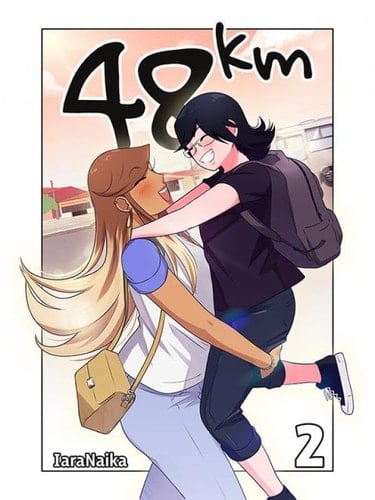
48 KM - VOL. 2
IARA NAIKA • 2024

Fragmentos de um discurso amoroso
Roland Barthes • 2018
Canção para ninar menino grande
Conceição Evaristo • 2022
Anos De Vidro
Baldi, Mateus • 2025
O avesso da pele
Jeferson Tenório • 2021
Torto arado
Itamar Vieira Junior • 2024
Pequena coreografia do adeus
Aline Bei • 2021
O amor não mora na urgência do outro
Luana Carvalho • 2024
Olhos d'água
Conceição Evaristo • 2016
Atravesso meu peito ao teu (sobre o amor)
Letícia Tavares
Have you ever wondered why that 13-digit number on the back of a book costs $125 in the United States but is completely free in Canada and India? This book, The Global ISBN Handbook, is your 2025 guide to the International Standard Book Number. It explains everything about this global "fingerprint" for books. The ISBN is the most important cornerstone of the publishing industry. It started as a simple warehouse tool in the 1960s. Now, it is a complex digital identifier used in over 200 countries. This handbook deconstructs the entire system. It uses 15 distinct national case studies to do this. You will learn how the old 10-digit system changed to the new 13-digit one. We break down the five parts of the ISBN, from the "Bookland" prefix to the final check digit. The book explores the global governance framework, starting with the International ISBN Agency. Then, it dives deep into how different countries run their systems. You'll see the privatized, high-cost model in the United States. You'll compare it to Canada's free, government-run system. We explore the industry-led models in Brazil and Germany. We look at government-run systems in Mexico and India. We even cover the unique case of China, where the ISBN is not a simple identifier but a state-controlled publication license. The book also examines the systems in the UK , France , Russia , Japan , Australia , South Africa , Nigeria , and Egypt. Many books and websites can tell you how to get an ISBN. This handbook is the only resource that explains why the process is so different everywhere you look. It moves beyond a simple "how-to" and provides a true global analysis. It directly compares the privatized, for-profit models in the US and UK against the free, public-good systems in Canada and South Africa. You won't just learn the price; you will understand the cultural policies, market structures, and legal philosophies that shape that price. This book shows how the ISBN is a "global mirror". It reveals how a simple number can be a commercial product in one nation , a tool of cultural policy in another , and an instrument of state control in a third. This comparative insight is the missing piece for any author, publisher, or researcher trying to navigate the complex international publishing market. Disclaimer: This handbook is an independently produced resource for commentary and analysis. The author has no affiliation with the International ISBN Agency, R.R. Bowker, Library and Archives Canada, the National Press and Publication Administration, or any other national ISBN agency. This work is independently produced under the principle of nominative fair use.
Acho que vamos todas para o céu
Júlia da Silva Moreira
Have you ever wondered why that 13-digit number on the back of a book costs $125 in the United States but is completely free in Canada and India? This book, The Global ISBN Handbook, is your 2025 guide to the International Standard Book Number. It explains everything about this global "fingerprint" for books. The ISBN is the most important cornerstone of the publishing industry. It started as a simple warehouse tool in the 1960s. Now, it is a complex digital identifier used in over 200 countries. This handbook deconstructs the entire system. It uses 15 distinct national case studies to do this. You will learn how the old 10-digit system changed to the new 13-digit one. We break down the five parts of the ISBN, from the "Bookland" prefix to the final check digit. The book explores the global governance framework, starting with the International ISBN Agency. Then, it dives deep into how different countries run their systems. You'll see the privatized, high-cost model in the United States. You'll compare it to Canada's free, government-run system. We explore the industry-led models in Brazil and Germany. We look at government-run systems in Mexico and India. We even cover the unique case of China, where the ISBN is not a simple identifier but a state-controlled publication license. The book also examines the systems in the UK , France , Russia , Japan , Australia , South Africa , Nigeria , and Egypt. Many books and websites can tell you how to get an ISBN. This handbook is the only resource that explains why the process is so different everywhere you look. It moves beyond a simple "how-to" and provides a true global analysis. It directly compares the privatized, for-profit models in the US and UK against the free, public-good systems in Canada and South Africa. You won't just learn the price; you will understand the cultural policies, market structures, and legal philosophies that shape that price. This book shows how the ISBN is a "global mirror". It reveals how a simple number can be a commercial product in one nation , a tool of cultural policy in another , and an instrument of state control in a third. This comparative insight is the missing piece for any author, publisher, or researcher trying to navigate the complex international publishing market. Disclaimer: This handbook is an independently produced resource for commentary and analysis. The author has no affiliation with the International ISBN Agency, R.R. Bowker, Library and Archives Canada, the National Press and Publication Administration, or any other national ISBN agency. This work is independently produced under the principle of nominative fair use.
A construção
Andressa Marques • 2024
Primeiro eu tive que morrer
Lorena Portela • 2024


