Libros de Daria

Items in this hypelist
To Read
Ana Karenina texto completo, con índice activo
León Tolstoi • 2013
REBELION EN LA GRANJA
George Orwell • 1900
Meridiano de sangre
Cormac McCarthy
Have you ever wondered why that 13-digit number on the back of a book costs $125 in the United States but is completely free in Canada and India? This book, The Global ISBN Handbook, is your 2025 guide to the International Standard Book Number. It explains everything about this global "fingerprint" for books. The ISBN is the most important cornerstone of the publishing industry. It started as a simple warehouse tool in the 1960s. Now, it is a complex digital identifier used in over 200 countries. This handbook deconstructs the entire system. It uses 15 distinct national case studies to do this. You will learn how the old 10-digit system changed to the new 13-digit one. We break down the five parts of the ISBN, from the "Bookland" prefix to the final check digit. The book explores the global governance framework, starting with the International ISBN Agency. Then, it dives deep into how different countries run their systems. You'll see the privatized, high-cost model in the United States. You'll compare it to Canada's free, government-run system. We explore the industry-led models in Brazil and Germany. We look at government-run systems in Mexico and India. We even cover the unique case of China, where the ISBN is not a simple identifier but a state-controlled publication license. The book also examines the systems in the UK , France , Russia , Japan , Australia , South Africa , Nigeria , and Egypt. Many books and websites can tell you how to get an ISBN. This handbook is the only resource that explains why the process is so different everywhere you look. It moves beyond a simple "how-to" and provides a true global analysis. It directly compares the privatized, for-profit models in the US and UK against the free, public-good systems in Canada and South Africa. You won't just learn the price; you will understand the cultural policies, market structures, and legal philosophies that shape that price. This book shows how the ISBN is a "global mirror". It reveals how a simple number can be a commercial product in one nation , a tool of cultural policy in another , and an instrument of state control in a third. This comparative insight is the missing piece for any author, publisher, or researcher trying to navigate the complex international publishing market. Disclaimer: This handbook is an independently produced resource for commentary and analysis. The author has no affiliation with the International ISBN Agency, R.R. Bowker, Library and Archives Canada, the National Press and Publication Administration, or any other national ISBN agency. This work is independently produced under the principle of nominative fair use.
Como ganar amigos e influenciar a las personas
Have you ever wondered why that 13-digit number on the back of a book costs $125 in the United States but is completely free in Canada and India? This book, The Global ISBN Handbook, is your 2025 guide to the International Standard Book Number. It explains everything about this global "fingerprint" for books. The ISBN is the most important cornerstone of the publishing industry. It started as a simple warehouse tool in the 1960s. Now, it is a complex digital identifier used in over 200 countries. This handbook deconstructs the entire system. It uses 15 distinct national case studies to do this. You will learn how the old 10-digit system changed to the new 13-digit one. We break down the five parts of the ISBN, from the "Bookland" prefix to the final check digit. The book explores the global governance framework, starting with the International ISBN Agency. Then, it dives deep into how different countries run their systems. You'll see the privatized, high-cost model in the United States. You'll compare it to Canada's free, government-run system. We explore the industry-led models in Brazil and Germany. We look at government-run systems in Mexico and India. We even cover the unique case of China, where the ISBN is not a simple identifier but a state-controlled publication license. The book also examines the systems in the UK , France , Russia , Japan , Australia , South Africa , Nigeria , and Egypt. Many books and websites can tell you how to get an ISBN. This handbook is the only resource that explains why the process is so different everywhere you look. It moves beyond a simple "how-to" and provides a true global analysis. It directly compares the privatized, for-profit models in the US and UK against the free, public-good systems in Canada and South Africa. You won't just learn the price; you will understand the cultural policies, market structures, and legal philosophies that shape that price. This book shows how the ISBN is a "global mirror". It reveals how a simple number can be a commercial product in one nation , a tool of cultural policy in another , and an instrument of state control in a third. This comparative insight is the missing piece for any author, publisher, or researcher trying to navigate the complex international publishing market. Disclaimer: This handbook is an independently produced resource for commentary and analysis. The author has no affiliation with the International ISBN Agency, R.R. Bowker, Library and Archives Canada, the National Press and Publication Administration, or any other national ISBN agency. This work is independently produced under the principle of nominative fair use.
La Guerra y la Paz
Leo Tolstoy • 2008
Madam Bovary
Gustave Flaubert • 2017
Mientras Agonizo
William Faulkner • 2020
El ruido y la furia
William Faulkner • 2005
Goya
Pierre Gassier • 1989
Aullido Y otros poemas
Allen Ginsberg • 2019
TRAMPA 22
Joseph Heller • 2021
La Iliada
Homer • 2015
Daisy Miller
Henry James • 1995
<p>Daisy Miller is a fascinating portrait of a young woman from Schenectady, New York, who, traveling in Europe, runs afoul of the socially pretentious American expatriate community in Rome. First published in 1878, the novella brought American novelist Henry James (1843–1916), then living in London, his first international success. Like many of James' early works, it portrays a venturesome American girl in the treacherous waters of European society — a theme that would culminate in his 1881 masterpiece, <i>The Portrait of a Lady</i>.<br> On the surface, <i>Daisy Miller</i> unfolds a simple story of a young American girl's willful yet innocent flirtation with a young Italian, and its unfortunate consequences. But throughout the narrative, James contrasts American customs and values with European manners and morals in a tale rich in psychological and social insight. A vivid portrayal of Americans abroad and a telling encounter between the values of the Old and New World, <i>Daisy Miller</i> is an ideal introduction to the work of one of America's greatest writers of fiction.</p>
LA METAMORFOSIS (Spanish Edition)
Franz Kafka • 2023
✨ ¡DESCUBRE UNA OBRA MAESTRA: LA METAMORFOSIS DE KAFKA! ✨<br/>Adéntrate en el fascinante mundo de Franz Kafka a través de esta obra maestra literaria que desafiará tus percepciones y te sumergirá en un laberinto de emociones y reflexiones. La metamorfosis es mucho más que una simple narración: es una exploración profunda de la identidad, la alienación y los dilemas existenciales que nos afectan a todos.<br/><br/>✍️ Sumérgete en la mente genial de Kafka y déjate llevar por la transformación de Gregorio Samsa, un viaje que te llevará a las profundidades de la condición humana y te enfrentará a cuestionamientos que resonarán en tu interior.<br/><br/>✒ Esta edición incluye, además, una nueva traducción y un prólogo.<br/><br/>✔️La metamorfosis es un clásico indiscutible que ha dejado una huella perdurable en la literatura universal. No pierdas la oportunidad de descubrir por qué esta historia sigue fascinando a lectores de todas las generaciones.
LA CRITICA DE LA RAZON PURA DE KANT
Theodor W. Adorno • 2015
Los Vagabundos del Dharma
Jack Kerouac • 2001
Alguien voló sobre el nido del cuco
Ken Kesey • 1980
Hijos y amantes
D. H. Lawrence • 2011
La muerte en Venecia
Thomas Mann • 2020
Moby-Dick
Herman Melville • 2016
La muerte de un viajante
Arthur Miller • 2010
1984
George Orwell • 2013
75th ANNIVERSARY EDITION “Orwell saw, to his credit, that the act of falsifying reality is only secondarily a way of changing perceptions. It is, above all, a way of asserting power.”—The New Yorker In 1984, London is a grim city in the totalitarian state of Oceania where Big Brother is always watching you and the Thought Police can practically read your mind. Winston Smith is a man in grave danger for the simple reason that his memory still functions. Drawn into a forbidden love affair, Winston finds the courage to join a secret revolutionary organization called The Brotherhood, dedicated to the destruction of the Party. Together with his beloved Julia, he hazards his life in a deadly match against the powers that be. Lionel Trilling said of Orwell’s masterpiece “1984 is a profound, terrifying, and wholly fascinating book. It is a fantasy of the political future, and like any such fantasy, serves its author as a magnifying device for an examination of the present.” Though the year 1984 now exists in the past, Orwell’s dystopian classic remains an urgent call for the individual willing to speak truth to power.
La campana de cristal
Sylvia Plath • 2025
Los Hermanos Karamazov
Fedor Dostoiewski • 2015
Diario del año de la peste
Daniel Defoe • 2020
El rojo emblema del valor
Stephen Crane • 2003
El Corazon de Las Tinieblas
Joseph Conrad • 2006
Ciudad de cristal
Paul Auster • 2017
Sensatez y sentimiento
Jane Austen • 1997
La Divina Comedia (Spanish Edition)
Dante Alighieri • 2015
La larga marcha
Stephen King • 2003
La Maquina Del Tiempo
H. G. Wells • 2017
La casa de los muertos
Fedor Dostoyevski • 1975
Segunda parte
Back Lash
Susan Faludi
Have you ever wondered why that 13-digit number on the back of a book costs $125 in the United States but is completely free in Canada and India? This book, The Global ISBN Handbook, is your 2025 guide to the International Standard Book Number. It explains everything about this global "fingerprint" for books. The ISBN is the most important cornerstone of the publishing industry. It started as a simple warehouse tool in the 1960s. Now, it is a complex digital identifier used in over 200 countries. This handbook deconstructs the entire system. It uses 15 distinct national case studies to do this. You will learn how the old 10-digit system changed to the new 13-digit one. We break down the five parts of the ISBN, from the "Bookland" prefix to the final check digit. The book explores the global governance framework, starting with the International ISBN Agency. Then, it dives deep into how different countries run their systems. You'll see the privatized, high-cost model in the United States. You'll compare it to Canada's free, government-run system. We explore the industry-led models in Brazil and Germany. We look at government-run systems in Mexico and India. We even cover the unique case of China, where the ISBN is not a simple identifier but a state-controlled publication license. The book also examines the systems in the UK , France , Russia , Japan , Australia , South Africa , Nigeria , and Egypt. Many books and websites can tell you how to get an ISBN. This handbook is the only resource that explains why the process is so different everywhere you look. It moves beyond a simple "how-to" and provides a true global analysis. It directly compares the privatized, for-profit models in the US and UK against the free, public-good systems in Canada and South Africa. You won't just learn the price; you will understand the cultural policies, market structures, and legal philosophies that shape that price. This book shows how the ISBN is a "global mirror". It reveals how a simple number can be a commercial product in one nation , a tool of cultural policy in another , and an instrument of state control in a third. This comparative insight is the missing piece for any author, publisher, or researcher trying to navigate the complex international publishing market. Disclaimer: This handbook is an independently produced resource for commentary and analysis. The author has no affiliation with the International ISBN Agency, R.R. Bowker, Library and Archives Canada, the National Press and Publication Administration, or any other national ISBN agency. This work is independently produced under the principle of nominative fair use.
La casa de los siete tejados
Nathaniel . . . [et al. Hawthorne • 2015
Fanshawe
Nathaniel Hawthorne • 2020
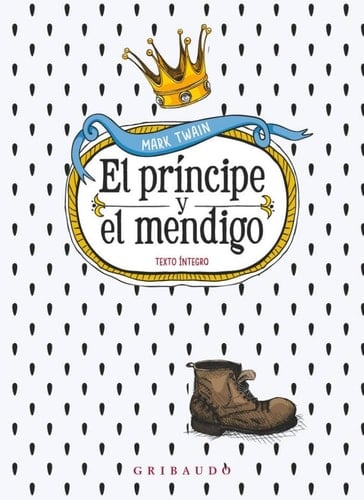
El Principe Y El Mendigo
Mark Twain • 2024
Lo Que El Viento Se Llevó
Margaret Mitchell • 2019
Julio Cesar
William Shakespeare • 2018
El quinto en discordia
Robertson Davies • 2006
Mas Alla Del Bien Y El Mal
NIETZSCHE FRIEDRICH • 2014
Lo que no tiene nombre
Piedad Bonnett • 2013
El Ego Es El Enemigo / Ego Is the Enemy
Ryan Holiday • 2017
La llamada de lo salvaje
Jack London • 2023
La letra escarlata
Nathaniel Hawthorne • 2006

Persiguiendo a Cacciato
Tim O'Brien • 2017
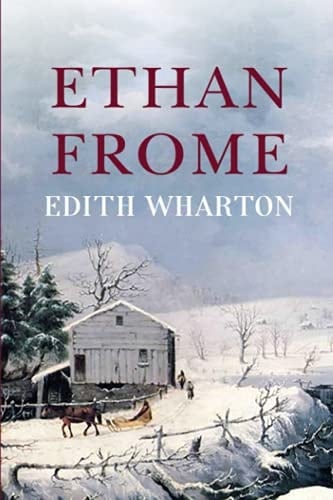
Ethan Frome
Edith Wharton • 2015
La isla del Dr. Moreau
H. G. Wells • 2023
Desayuno de campeones
Kurt Vonnegut • 2022
El Arte de la Guerra
Sun Tzu • 2018
Aventuras de Huckleberry Finn
Mark Twain • 2010
Henry & glenn for ever
El Gatopardo
Giuseppe Tomasi di Lampedusa • 2019

Walden (AmazonClassics Edition)
Henry David Thoreau • 2017
El Príncipe: Maquiavelo
Literatura Pública • 2021

La náusea
Jean-Paul Sartre • unde
Las uvas de la ira
John Steinbeck • 2019
Ángulo de reposo
Wallace Stegner • 2009
El archipielago Gulag
Alexandr Solzhenithyn
Have you ever wondered why that 13-digit number on the back of a book costs $125 in the United States but is completely free in Canada and India? This book, The Global ISBN Handbook, is your 2025 guide to the International Standard Book Number. It explains everything about this global "fingerprint" for books. The ISBN is the most important cornerstone of the publishing industry. It started as a simple warehouse tool in the 1960s. Now, it is a complex digital identifier used in over 200 countries. This handbook deconstructs the entire system. It uses 15 distinct national case studies to do this. You will learn how the old 10-digit system changed to the new 13-digit one. We break down the five parts of the ISBN, from the "Bookland" prefix to the final check digit. The book explores the global governance framework, starting with the International ISBN Agency. Then, it dives deep into how different countries run their systems. You'll see the privatized, high-cost model in the United States. You'll compare it to Canada's free, government-run system. We explore the industry-led models in Brazil and Germany. We look at government-run systems in Mexico and India. We even cover the unique case of China, where the ISBN is not a simple identifier but a state-controlled publication license. The book also examines the systems in the UK , France , Russia , Japan , Australia , South Africa , Nigeria , and Egypt. Many books and websites can tell you how to get an ISBN. This handbook is the only resource that explains why the process is so different everywhere you look. It moves beyond a simple "how-to" and provides a true global analysis. It directly compares the privatized, for-profit models in the US and UK against the free, public-good systems in Canada and South Africa. You won't just learn the price; you will understand the cultural policies, market structures, and legal philosophies that shape that price. This book shows how the ISBN is a "global mirror". It reveals how a simple number can be a commercial product in one nation , a tool of cultural policy in another , and an instrument of state control in a third. This comparative insight is the missing piece for any author, publisher, or researcher trying to navigate the complex international publishing market. Disclaimer: This handbook is an independently produced resource for commentary and analysis. The author has no affiliation with the International ISBN Agency, R.R. Bowker, Library and Archives Canada, the National Press and Publication Administration, or any other national ISBN agency. This work is independently produced under the principle of nominative fair use.
Babbit
Sinclair Lewis • 2016
Frankenstein
Mery Shelly
Magbet
William Shakespeare • 2021
Romeo y Julieta
William Shakespeare • 2015
Azabache
Anna Sewell • 2013
El Corazon Delator
Edgar Allen Poe • 2016
El ser y la nada ensayo de ontología y fenomenología
Jean-Paul Sartre • 2004
En inglés
On Moral Fiction
John Gardner • 1979
The Chess Garden
Brooks P. Hansen • 2016
Rule of the Bone
Russell Banks • 1995
Our American Cousin
Tom Taylor • 2020
The New Confessions of an Economic Hit Man
John Perkins • 2016
The Sportswriter
Richard Ford • 1996