Música clásica
Items in this hypelist
Classical
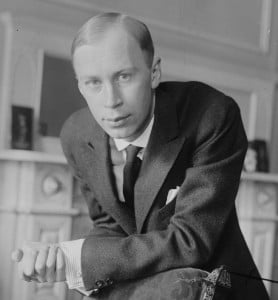
Sergei Prokofiev
Artist
By breathing new life into the symphony, sonata, and concerto, Sergey Prokofiev emerged as one of the truly original musical voices of the 20th century. Bridging the worlds of pre-revolutionary Russia and the Stalinist Soviet Union, Prokofiev enjoyed a successful worldwide career as a composer and pianist. As in the case of most other Soviet-era composers, his creative life and his music suffered under the duress of official Party strictures. Despite the detrimental personal and professional effects of such outside influences, Prokofiev continued to produce music marked by a singular skill, inventiveness, and élan until the end of his career. As an only child (his sisters had died in infancy), Prokofiev lived a comfortable, privileged life, which gave him a heightened sense of self-worth and an indifference to criticism, an attitude that would change as he matured. His mother taught him piano, and he began composing around the age of five. He eventually took piano, theory, and composition lessons from <a href="spotify:artist:2wk53EBcWhriq03tl5nDYV">Reyngol'd Gliere</a>, then enrolled at the St. Petersburg Conservatory when he was 13. He took theory with <a href="spotify:artist:7t5qhn89RAzTepqZBB4uob">Lyadov</a>, orchestration with <a href="spotify:artist:2kXJ68O899XvWOBdpzlXgs">Rimsky-Korsakov</a>, and became lifelong friends with <a href="spotify:artist:07yD267mZTiHoptqdYd5mc">Nicolai Myaskovsky</a>. After graduating, he began performing in St. Petersburg and in Moscow, then in Western Europe, all the while writing more and more music. Prokofiev's earliest renown, therefore, came as a result of both his formidable pianistic technique and the works he wrote to show it off. He sprang onto the Russian musical scene with works like the Sarcasms, Op. 17 (1912-1914) and Visions fugitives, Op. 22 (1915-1917), and his first few piano sonatas. He also wrote orchestral works, concertos, and operas, and met with Diaghilev about producing ballets. The years immediately after the Revolution were spent in the U.S., where Prokofiev tried to follow <a href="spotify:artist:0Kekt6CKSo0m5mivKcoH51">Rachmaninov</a>'s lead and make his way as a pianist/composer. His commission for The Love for Three Oranges came from the Chicago Opera in 1919, but overall Prokofiev was disappointed by his American reception, and he returned to Europe in 1922. He married singer Lina Llubera in 1923, and the couple moved to Paris. He continued to compose on commission, meeting with mixed success from both critics and the public. He had maintained contact with the Soviet Union, and even toured there in 1927. The Love for Three Oranges was part of the Soviet opera repertory, and the government commissioned the music for the film Lieutenant Kijé and other pieces. In 1936, he decided to return to the Soviet Union with his wife and two sons. Most of his compositions from just after his return, including many for children, were written with the political atmosphere in mind. One work which wasn't was the 1936 ballet Romeo and Juliet, which became an international success. He attempted another opera in 1939, Semyon Kotko, but was met with hostility from cultural ideologues. During World War II, Prokofiev and other artists were evacuated from Moscow. He spent the time in various places within the U.S.S.R. and produced propaganda music, but also violin sonatas, his "War Sonatas" for piano, the String Quartet No. 2, the opera War and Peace, and the ballet Cinderella. In 1948, with the resolution that criticized almost all Soviet composers, several of Prokofiev's works were banned from performance. His health declined and he became more insecure. The composer's last creative efforts were directed largely toward the production of "patriotic" and "national" works, typified by the cantata Flourish, Mighty Homeland (1947), and yet Prokofiev also continued to produce worthy if lesser-known works like the underrated ballet The Stone Flower (1943). In a rather bitter coincidence, Prokofiev died on March 5, 1953, the same day as Joseph Stalin. ~ TiVo Staff, Rovi
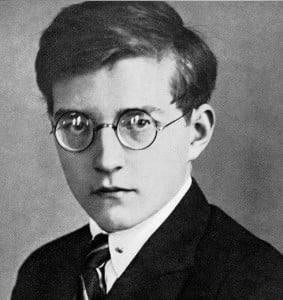
Dmitri Shostakovich
Artist
Dmitry Shostakovich was a Russian composer whose symphonies and quartets, numbering 15 each, are among the greatest examples from the 20th century of these classic forms. His style evolved from the brash humor and experimental character of his first period, exemplified by the operas The Nose and Lady Macbeth of Mtsensk, into both the more introverted melancholy and nationalistic fervor of his second phase (the Symphonies No. 5 and No. 7, "Leningrad"), and finally into the defiant and bleak mood of his last period (exemplified by the Symphony No. 14 and Quartet No. 15). Early in his career his music showed the influence of <a href="spotify:artist:4kHtgiRnpmFIV5Tm4BIs8l">Prokofiev</a> and <a href="spotify:artist:7ie36YytMoKtPiL7tUvmoE">Stravinsky</a>, especially in his prodigious and highly successful First Symphony. He could effectively communicate a melancholic depth and profound sense of anguish, as one hears in many of his symphonies, concertos, and quartets. Solomon Volkov, in his controversial Testimony: The Memoirs of Dmitri Shostakovich explains the composer's seeming bombast as deft satire of the pomposity of the Soviet state, pointing to the "forced rejoicing" of Fifth Symphony's ending. Typical traits of Shostakovich's style include short, reiterated melodic or rhythmic figures, motifs of one or two pitches or intervals, and lugubrious and manic string writing. Shostakovich was born in St. Petersburg in 1906 and educated at the Petrograd Conservatory. The acid style of his early Lady Macbeth of Mtsensk irritated Stalin, and Shostakovich was attacked in the Soviet press. Fearing imprisonment, he withdrew his already rehearsed Fourth Symphony; his Fifth Symphony (1937) carried the subtitle "A Soviet Artist's Reply to Just Criticism." It is more ingenious than most critics have fathomed, for it managed to satisfy both the backward tastes of the party censors and those of more demanding aesthetes in the West. The 1941 German invasion of Russia inspired the composer's Seventh Symphony, subtitled "Leningrad." Impressed by the symphony's epic-heroic character, <a href="spotify:artist:4xpgBZSojKNEQqQHXrwSXA">Toscanini</a>, <a href="spotify:artist:4wPH3awoVXijuEmNElbpmt">Koussevitzky</a>, and <a href="spotify:artist:52sDxFX9DvIxUupTy8f1yx">Stokowski</a> vied for the Western Hemisphere premiere; the score had to be microfilmed, flown to Teheran, driven to Cairo, and flown out. The work became an enormous success the world over, but eventually fell into obscurity. Still, the composer had for a time become a worldwide celebrity, his picture even appearing on the cover of Time. Shostakovich ran afoul of the government again in 1948, when an infamous decree was issued by the Central Committee of the Communist Party accusing Shostakovich, <a href="spotify:artist:4kHtgiRnpmFIV5Tm4BIs8l">Prokofiev</a>, and other prominent composers of "formalist perversions." For some time he wrote mostly works glorifying Soviet life or history. Artistic repression diminished in post-Stalinist Russia, but curiously Shostakovich still drew in his modernist horns until the Thirteenth Symphony, "Babi Yar," a 1962 work based on poems by Yevgeny Yevtushenko. The work provoked major controversy because of its first movement's subject: Russian oppression of the Jews. In 1966 Shostakovich wrote his Second Cello Concerto, a work on an even higher level than his solid First, but one that did not capture as much attention from either artists or the public. That year, Shostakovich was diagnosed with a serious heart condition. He continued to compose, his works growing more sparsely scored and darker, the subject of death becoming prominent. His Fourteenth Symphony (1969), really a collection of songs on texts by Lorca, <a href="spotify:artist:34vSiQ25HNBVUcmydy6I3r">Apollinaire</a>, Küchelbecker, and <a href="spotify:artist:3Hi358y9qFZBsYQUS5rASJ">Rilke</a>, is a death-obsessed work of considerable dissonance and showing little regard for the Socialist Realism still demanded by the state. Shostakovich died on August 9, 1975. ~ Rovi Staff, Rovi

Hungarian Rhapsody No. 2 in C-Sharp Minor, S. 244/2
Song
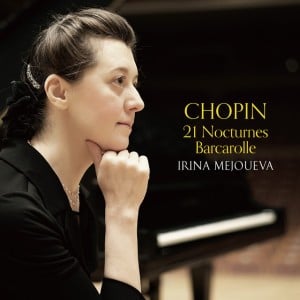
Nocturne in C Minor, Op. posth.
Song
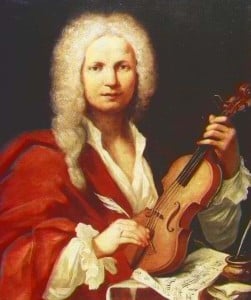
Antonio Vivaldi
Artist
The creator of hundreds of spirited, extroverted instrumental works, Italian composer Antonio Vivaldi is widely recognized as the master of the Baroque instrumental concerto, which he perfected and popularized more than any of his contemporaries. Vivaldi's kinetic rhythms, fluid melodies, bright instrumental effects, and extensions of instrumental technique make his some of the most enjoyable of Baroque music. He was highly influential among his contemporaries and successors: even as esteemed a figure as <a href="spotify:artist:5aIqB5nVVvmFsvSdExz408">Johann Sebastian Bach</a> adapted some of Vivaldi's music. Vivaldi's variable textures and dramatic effects initiated the shift toward what became the Classical style; a deeper understanding of his music begins with the realization that, compared with <a href="spotify:artist:5aIqB5nVVvmFsvSdExz408">Bach</a> and even <a href="spotify:artist:1QL7yTHrdahRMpvNtn6rI2">Handel</a>, he was Baroque music's arch progressive. Though not as familiar as his concerti, Vivaldi's stage and choral music is still of value; his sometimes bouncy, sometimes lyrical Gloria in D major (1708) has remained a perennial favorite. His operas were widely performed in his own time. Details regarding Vivaldi's early life are few. His father was a violinist in the Cathedral of Venice's orchestra and probably Antonio's first teacher. There is much speculation about other teachers, such as <a href="spotify:artist:5dmMpIyAVaH6b9FLFgWPrF">Corelli</a>, but no evidence to support this. Vivaldi studied for the priesthood as a young man and was ordained in 1703. He was known for much of his career as "il prete rosso" (the red-haired priest), but soon after his ordination he declined to take on his ecclesiastical duties. Later in life he cited ill health as the reason, but other motivations have been proposed; perhaps Vivaldi simply wanted to explore new opportunities as a composer. It didn't take him long. Landing a job as a violin teacher at a girls' orphanage in Venice (where he would work in one capacity or another during several stretches of his life), he published a set of trio sonatas and another of violin sonatas. Word of his abilities spread throughout Europe, and in 1711 an Amsterdam publisher released a set of Vivaldi's concertos for one or more violins with orchestra under the title L'estro armonico (Harmonic Inspiration). These were best-sellers (it was this group of concertos that spurred <a href="spotify:artist:5aIqB5nVVvmFsvSdExz408">Bach</a>'s transcriptions), and Vivaldi followed them up with several more equally successful concerto sets. Perhaps the most prolific of all the great European composers, he once boasted that he could compose a concerto faster than a copyist could ready the individual parts for the players in the orchestra. He began to compose operas, worked from 1718 to 1720 in the court of the German principality of Hessen-Darmstadt, and traveled in Austria and perhaps Bohemia. Throughout his career, he had his choice of commissions from nobility and the highest members of society, the ability to use the best performers, and enough business savvy to try to control the publication of his works, although due to his popularity, many were published without his consent. Later in life Vivaldi was plagued by rumors of a sexual liaison with one of his vocal students, and he was censured by ecclesiastical authorities. His Italian career on the rocks, he headed for Vienna. He died there and was buried as a pauper in 1741, although at the height of his career his publications had earned him a comfortable living.
Für Elise
The Transcendent Initiative

Franz Liszt
Artist

Tchaikovsky: Piano Concerto No.1
Album · Evgeny Kissin, Berliner Philharmoniker, Herbert von Karajan
Cinq Morceaux de fantaisie, op. 3 no. 2: Prélude in C-sharp minor
Cinq Morceaux de fantaisie, op. 3 no. 2: Prélude in C-sharp minor
Fantasie-impromptu in C-sharp Minor, Op. 66 No. 4
Fantasie-impromptu in C-sharp Minor, Op. 66 No. 4
Danse macabre in G minor, Op. 40
Danse macabre in G minor, Op. 40
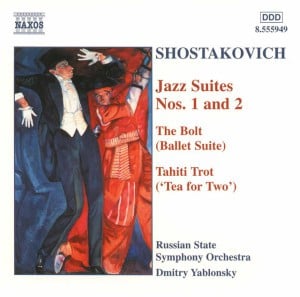
Jazz Suite No. 2: VI. Waltz No. 2
Jazz Suite No. 2: VI. Waltz No. 2
Niccolo Paganini 24 Caprices - Op. 1 No. 2 in B minor
Niccolo Paganini 24 Caprices - Op. 1 No. 2 in B minor
Pyotr Ilyich Tchaikovsky
Artist
Sergei Rachmaninoff
Artist
Favorites
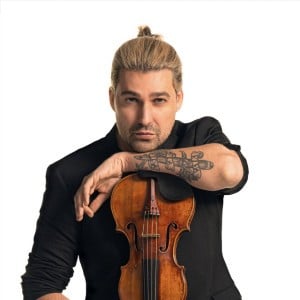
David Garrett
Artist
Having picked up his first violin at age 4, David made his stage debut at the age of 10 and became the youngest-ever artist to sign with the prestigious Deutsche Grammophon at the age of 13. As a child he worked with conductors legends like Zubin Mehta, Claudio Abbado and Yehudi Menuhin. At the age of merely 15 he recorded all 24 of Paganini’s Caprices. Yehudi Menuhin has even praised him as “the greatest violinist of his generation”. At this very point of his career, he opted for honing and broadening his skills, enrolling at the Juilliard School in New York: he became a student of Itzhak Perlman. After his graduation and continuing to this day David has been working with the most exceptional conductors in the classical field such as Zubin Mehta, Christoph Eschenbach and Riccardo Chailly. In addition, he plays with the most distinguished orchestras. Within his more than 10 years of international crossover career David outdid himself repeatedly. A Paganini among pop stars and a Jimi Hendrix among violinists, David is the “Devil’s Violinist” of our age, an international superstar who blurs the lines between Mozart and Metallica. With his programme “Unlimited” David toured worldwide including a concert at Arena di Verona (Sep. 2019) which is available on DVD. 2022 he toured with the programm "Alive - my soundtrack". November 2022 the release of the new album "Iconic" at Deutsche Grammophon.
Cordelia
Cordelia
The Forsaken Waltz
The Forsaken Waltz
Enemies to Lovers
Enemies to Lovers
Joshua Kyan Aalampour
Joshua Kyan Aalampour
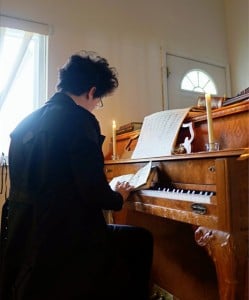
Hello, my name is Joshua Kyan Aalampour. I’m a 23-year-old self-taught classical composer. I’m not a classically trained musician and my passion for music began when I was 16 years old in 2017. I originally started out of spite because a piano teacher told me I'd never be able to play after I couldn't sight read at our first lesson. I wanted to prove her wrong, so I began practicing for an average of 6 hours a day using MIDI videos on the internet. However, within about 2 weeks I had accidentally composed something and became obsessed. I no longer cared for proving that teacher wrong because I had made a new lifelong friend - music. My life has completely changed since. I am also running a personal experiment with my art. I view life as a personal film, and my music serves as its score. Just as movies assign leitmotifs to characters and ideas, evolving them as the story unfolds, I’ve composed personal leitmotifs that represent different aspects of my life. These leitmotifs appear across my works. My compositions are deeply self-referential and are filled with easter eggs. As I grow, so will these themes, evolving throughout my lifetime until the final note is played. I hope you enjoy my art.
Camelia
Album · Juan Arenosa