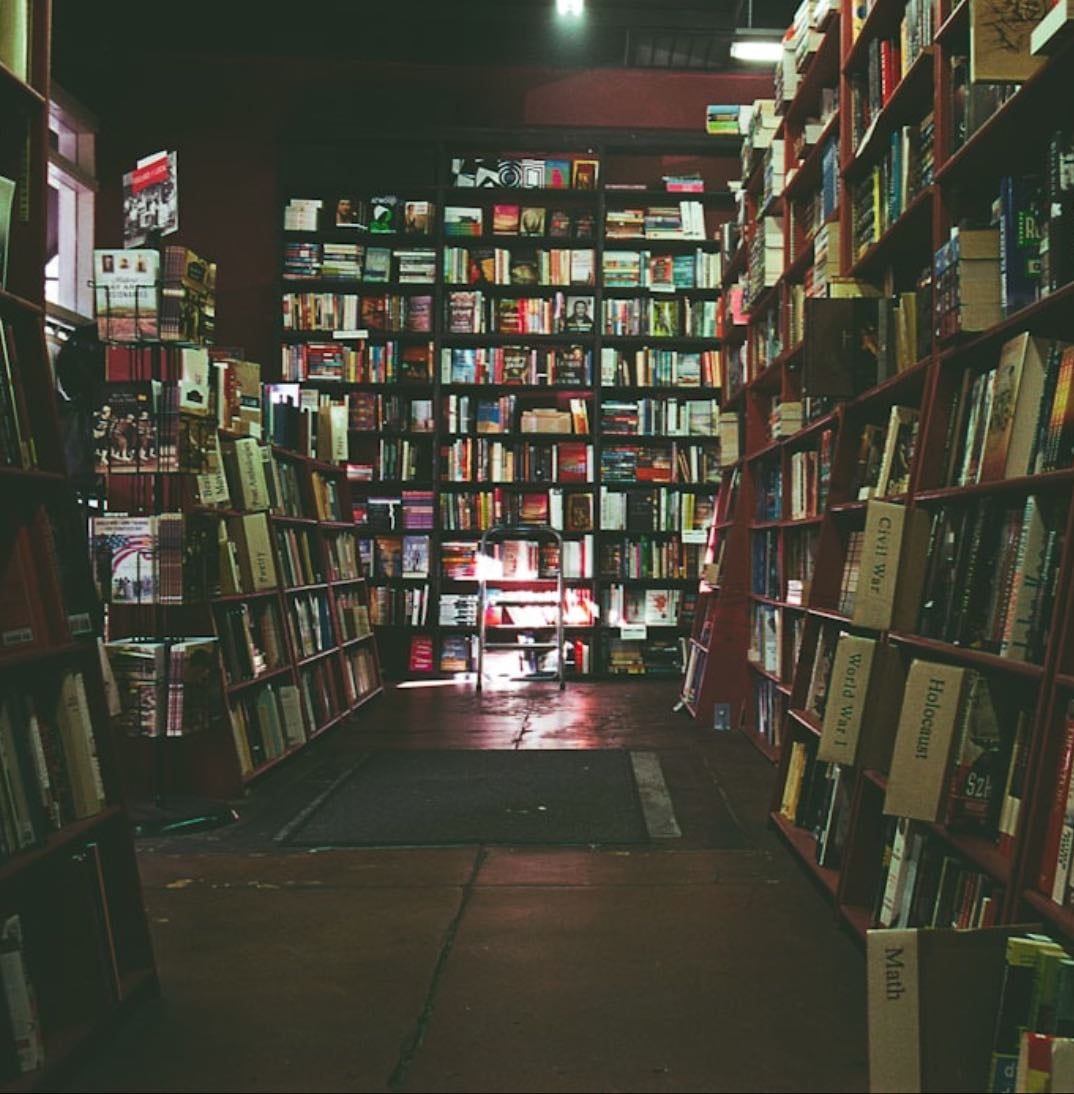
mi libreria

Items in this hypelist
literatura fantástica/ficción
Infinity Blade: El despertar
Brandon Sanderson
Have you ever wondered why that 13-digit number on the back of a book costs $125 in the United States but is completely free in Canada and India? This book, The Global ISBN Handbook, is your 2025 guide to the International Standard Book Number. It explains everything about this global "fingerprint" for books. The ISBN is the most important cornerstone of the publishing industry. It started as a simple warehouse tool in the 1960s. Now, it is a complex digital identifier used in over 200 countries. This handbook deconstructs the entire system. It uses 15 distinct national case studies to do this. You will learn how the old 10-digit system changed to the new 13-digit one. We break down the five parts of the ISBN, from the "Bookland" prefix to the final check digit. The book explores the global governance framework, starting with the International ISBN Agency. Then, it dives deep into how different countries run their systems. You'll see the privatized, high-cost model in the United States. You'll compare it to Canada's free, government-run system. We explore the industry-led models in Brazil and Germany. We look at government-run systems in Mexico and India. We even cover the unique case of China, where the ISBN is not a simple identifier but a state-controlled publication license. The book also examines the systems in the UK , France , Russia , Japan , Australia , South Africa , Nigeria , and Egypt. Many books and websites can tell you how to get an ISBN. This handbook is the only resource that explains why the process is so different everywhere you look. It moves beyond a simple "how-to" and provides a true global analysis. It directly compares the privatized, for-profit models in the US and UK against the free, public-good systems in Canada and South Africa. You won't just learn the price; you will understand the cultural policies, market structures, and legal philosophies that shape that price. This book shows how the ISBN is a "global mirror". It reveals how a simple number can be a commercial product in one nation , a tool of cultural policy in another , and an instrument of state control in a third. This comparative insight is the missing piece for any author, publisher, or researcher trying to navigate the complex international publishing market. Disclaimer: This handbook is an independently produced resource for commentary and analysis. The author has no affiliation with the International ISBN Agency, R.R. Bowker, Library and Archives Canada, the National Press and Publication Administration, or any other national ISBN agency. This work is independently produced under the principle of nominative fair use.
Asesino de brujas La bruja blanca
Shelby Mahurin • 2020
Harry Potter y el prisionero de Azkaban
J.K. Rowling • 2015
Ángeles Caídos
Susan Ee • 2014
Conflicto cósmico
Elena G. White • 2001
Juego de tronos
George R. R. Martin • 2012
El mundo del mañana
Susan Ee • 2021
literatura thriller/misterio
El aspecto del diablo
Craig Russell • 2019
El psicoanalista
John Katzenbach • 2018
Santa María de las flores negras
Hernán Rivera Letelier • 2007
Muerte en el Nilo
Agatha Christie • 2017
literatura romántica
Mi corazón en los días grises
Jasmine Warga • 2015
¿Puedo soñar contigo?
Blue Jeans • 2016
Un beso en París
Stephanie Perkins • 2021
La razón de estar contigo
William Bruce Cameron • 2017
Canción para caminar sobre las aguas
Hernán Rivera Letelier • 2017
Escucharas mi corazón
Alessio Puleo • 2013
literatura juvenil contemporánea
¡Buenos dias, princesa!
Blue Jeans (Novelist) • 2015
Dos chicos besándose
David Levithan • 2015
Wonder: La lección de August
R. J. Palacio • 2019
El Arte De Ser Normal
Lisa Williamson • 2013
El mundo encantado de Ela
Gail Carson Levine • 2005
Fangirl
Rainbow Rowell • 2018
Pulsaciones
Francesc Miralles • 2013
Ciudades de papel
John Green • 2014
Melocotón loco
Megan Maxwell • 2022
No sonrías que me enamoro
Blue Jeans • 2014
El cuaderno de Mayra
Marco Antonio De la Parra • 2012
Anhelo
Tracy Wolff • 2022
Mil veces hasta siempre
John Green • 2017
literatura latinoamericana/contemporánea
El plan infinito
Isabel Allende • 2016
Mi negro pasado
Laura Esquivel • 2019
Pantaleon y las visitadoras
Mario VARGAS LLOSA • 1992
La Reina Isabel cantaba rancheras
Hernán Rivera Letelier • 2009
El niño que enloqueció de amor
Eduardo Barrios • 2009
Tan poca vida
Hanya Yanagihara • 2016
literatura infantil
Charlie Y la Fábrica de Chocolate
Roald Dahl • 2016
La Porota
Hernán Del Solar • 11-1
La gran Gilly Hopkins
Katherine Paterson • 1987
El Gran Gigante Bonachon
ROALD DAHL • 2014
Otto es un rinoceronte
Ole Lund Kirkegaard • 1994
literatura clásica/universal
Rojo y negro
Stendhal • 2019
Francisco de Quevedo
Francisco de Quevedo • 2003
El Retrato de Dorian Gray
Oscar Wilde • 2019
Mujercitas
Louisa May Alcott • 2019
Sensatez y sentimiento
Jane Austen • 2014
Un mundo feliz
Aldous Huxley • 2016
1984
George Orwell • 2013
75th ANNIVERSARY EDITION “Orwell saw, to his credit, that the act of falsifying reality is only secondarily a way of changing perceptions. It is, above all, a way of asserting power.”—The New Yorker In 1984, London is a grim city in the totalitarian state of Oceania where Big Brother is always watching you and the Thought Police can practically read your mind. Winston Smith is a man in grave danger for the simple reason that his memory still functions. Drawn into a forbidden love affair, Winston finds the courage to join a secret revolutionary organization called The Brotherhood, dedicated to the destruction of the Party. Together with his beloved Julia, he hazards his life in a deadly match against the powers that be. Lionel Trilling said of Orwell’s masterpiece “1984 is a profound, terrifying, and wholly fascinating book. It is a fantasy of the political future, and like any such fantasy, serves its author as a magnifying device for an examination of the present.” Though the year 1984 now exists in the past, Orwell’s dystopian classic remains an urgent call for the individual willing to speak truth to power.
La Divina Comedia
Dante Alighieri • 2016
Orgullo y prejuicio
Jane Austen • 2017
El padrino
Mario Puzo • 2001
Don Juan Tenorio
José Zorrilla • 2020
Farenheit 451
RAY BRADBURY • 2019
El túnel
Ernesto Sabato • 2010
historia/política/documentos
Grandes documentos de la historia 1, 2 y 3
Have you ever wondered why that 13-digit number on the back of a book costs $125 in the United States but is completely free in Canada and India? This book, The Global ISBN Handbook, is your 2025 guide to the International Standard Book Number. It explains everything about this global "fingerprint" for books. The ISBN is the most important cornerstone of the publishing industry. It started as a simple warehouse tool in the 1960s. Now, it is a complex digital identifier used in over 200 countries. This handbook deconstructs the entire system. It uses 15 distinct national case studies to do this. You will learn how the old 10-digit system changed to the new 13-digit one. We break down the five parts of the ISBN, from the "Bookland" prefix to the final check digit. The book explores the global governance framework, starting with the International ISBN Agency. Then, it dives deep into how different countries run their systems. You'll see the privatized, high-cost model in the United States. You'll compare it to Canada's free, government-run system. We explore the industry-led models in Brazil and Germany. We look at government-run systems in Mexico and India. We even cover the unique case of China, where the ISBN is not a simple identifier but a state-controlled publication license. The book also examines the systems in the UK , France , Russia , Japan , Australia , South Africa , Nigeria , and Egypt. Many books and websites can tell you how to get an ISBN. This handbook is the only resource that explains why the process is so different everywhere you look. It moves beyond a simple "how-to" and provides a true global analysis. It directly compares the privatized, for-profit models in the US and UK against the free, public-good systems in Canada and South Africa. You won't just learn the price; you will understand the cultural policies, market structures, and legal philosophies that shape that price. This book shows how the ISBN is a "global mirror". It reveals how a simple number can be a commercial product in one nation , a tool of cultural policy in another , and an instrument of state control in a third. This comparative insight is the missing piece for any author, publisher, or researcher trying to navigate the complex international publishing market. Disclaimer: This handbook is an independently produced resource for commentary and analysis. The author has no affiliation with the International ISBN Agency, R.R. Bowker, Library and Archives Canada, the National Press and Publication Administration, or any other national ISBN agency. This work is independently produced under the principle of nominative fair use.
La guerra con Chile en sus documentos
Fernando Lecaros
Have you ever wondered why that 13-digit number on the back of a book costs $125 in the United States but is completely free in Canada and India? This book, The Global ISBN Handbook, is your 2025 guide to the International Standard Book Number. It explains everything about this global "fingerprint" for books. The ISBN is the most important cornerstone of the publishing industry. It started as a simple warehouse tool in the 1960s. Now, it is a complex digital identifier used in over 200 countries. This handbook deconstructs the entire system. It uses 15 distinct national case studies to do this. You will learn how the old 10-digit system changed to the new 13-digit one. We break down the five parts of the ISBN, from the "Bookland" prefix to the final check digit. The book explores the global governance framework, starting with the International ISBN Agency. Then, it dives deep into how different countries run their systems. You'll see the privatized, high-cost model in the United States. You'll compare it to Canada's free, government-run system. We explore the industry-led models in Brazil and Germany. We look at government-run systems in Mexico and India. We even cover the unique case of China, where the ISBN is not a simple identifier but a state-controlled publication license. The book also examines the systems in the UK , France , Russia , Japan , Australia , South Africa , Nigeria , and Egypt. Many books and websites can tell you how to get an ISBN. This handbook is the only resource that explains why the process is so different everywhere you look. It moves beyond a simple "how-to" and provides a true global analysis. It directly compares the privatized, for-profit models in the US and UK against the free, public-good systems in Canada and South Africa. You won't just learn the price; you will understand the cultural policies, market structures, and legal philosophies that shape that price. This book shows how the ISBN is a "global mirror". It reveals how a simple number can be a commercial product in one nation , a tool of cultural policy in another , and an instrument of state control in a third. This comparative insight is the missing piece for any author, publisher, or researcher trying to navigate the complex international publishing market. Disclaimer: This handbook is an independently produced resource for commentary and analysis. The author has no affiliation with the International ISBN Agency, R.R. Bowker, Library and Archives Canada, the National Press and Publication Administration, or any other national ISBN agency. This work is independently produced under the principle of nominative fair use.
Historia secreta de Chile 2
Jorge Marcos Baradit Morales • 2016
Historia secreta de Chile
Jorge Baradit • 2015
Chilenas rebeldes
María José Cumplido • 2018
El Mundo Pintoresco 9
Grolier Interactive, Incorporated • 1986
Andinia La catedral antártica
Francisco Ortega • 2017
Napoleón Bonaparte
C.A. Sainte- Beuve • 2018
Historia secreta de Chile 3
Jorge Marcos Baradit Morales • 2017
Archivos secretos documentos desclasificados de la CIA
unknown • 1999
psicología/ensayo
Psicología de la vida erótica
Sigmund Freud • 2024
Uno Siempre Cambia Al Amor De Su Vida
ANDRADE • 2013
La ley del espejo
Yoshinori Noguchi • 2021
Elegí vivir El accidente que marco mi vida y el camino de mi rehabilitacion
Daniela García • 2014
Juventud En Extasis 2
Carlos Cuauhtémoc Sánchez • 2018
Juan Salvador Gaviota
Richard Bach • 2017
otros
Comando
Peter Young • 1971
Have you ever wondered why that 13-digit number on the back of a book costs $125 in the United States but is completely free in Canada and India? This book, The Global ISBN Handbook, is your 2025 guide to the International Standard Book Number. It explains everything about this global "fingerprint" for books. The ISBN is the most important cornerstone of the publishing industry. It started as a simple warehouse tool in the 1960s. Now, it is a complex digital identifier used in over 200 countries. This handbook deconstructs the entire system. It uses 15 distinct national case studies to do this. You will learn how the old 10-digit system changed to the new 13-digit one. We break down the five parts of the ISBN, from the "Bookland" prefix to the final check digit. The book explores the global governance framework, starting with the International ISBN Agency. Then, it dives deep into how different countries run their systems. You'll see the privatized, high-cost model in the United States. You'll compare it to Canada's free, government-run system. We explore the industry-led models in Brazil and Germany. We look at government-run systems in Mexico and India. We even cover the unique case of China, where the ISBN is not a simple identifier but a state-controlled publication license. The book also examines the systems in the UK , France , Russia , Japan , Australia , South Africa , Nigeria , and Egypt. Many books and websites can tell you how to get an ISBN. This handbook is the only resource that explains why the process is so different everywhere you look. It moves beyond a simple "how-to" and provides a true global analysis. It directly compares the privatized, for-profit models in the US and UK against the free, public-good systems in Canada and South Africa. You won't just learn the price; you will understand the cultural policies, market structures, and legal philosophies that shape that price. This book shows how the ISBN is a "global mirror". It reveals how a simple number can be a commercial product in one nation , a tool of cultural policy in another , and an instrument of state control in a third. This comparative insight is the missing piece for any author, publisher, or researcher trying to navigate the complex international publishing market. Disclaimer: This handbook is an independently produced resource for commentary and analysis. The author has no affiliation with the International ISBN Agency, R.R. Bowker, Library and Archives Canada, the National Press and Publication Administration, or any other national ISBN agency. This work is independently produced under the principle of nominative fair use.
El verbo Kaifman
Francisco Ortega • 2017
El fin de los tiempos
Susan Ee • 2021
En el borde del mundo
Juan Guzmán Tapia • 2006
Jasy
Florencia Bonelli • 2014