Artistas que me gustan💗
Mis artistas favs 👀🔥
Items in this hypelist
Favorites

Deftones
Artist · Deftones
Soda Stereo
Artist
Soda Stereo were one of the most important Argentine pop/rock bands of the '80s and early '90s. Created as a trio in 1982, the band was formed by guitarist/vocalist Gustavo Cerati, bass player Zeta Bosio (born Héctor Bosio), and drummer Charly Alberti (born Carlos Ficcichia). Their influence spread to the rest of Latin America during the band's heyday, and a successful reunion in 2007 proved the endurance of Soda Stereo's popular sound. The group was initially influenced by new wave music and such bands as the Police, Television, and Talking Heads. Like those groups, Soda Stereo embraced an ever-changing style that was based on pop but often explored elements of new wave, ska, reggae, soul, noise rock, and electronica. Image was also important to the band, whose members concerned themselves with video clips, shows, clothing, and graphic design. It's impossible to explain the renaissance of the Argentine rock movement in the early '80s without mentioning the return of democracy after seven years of military government in 1983. Although Soda Stereo did not sing about political topics, they emerged alongside a new political situation, which aligned them with bands like Virus and Los Twist. Out of all the bands that emerged from that post-dictatorial rule government, Soda Stereo were by far the most popular and enduring. With their first album, 1984's self-titled Soda Stereo, they reached national success with ironic lyrics and a mix of pop, reggae, ska, and new wave. The following album, Nada Personal, strengthened the popularity of the band with songs like "Nada Personal" and "Cuando Pase el Temblor," which helped open the doors of the Latin American musical market. Such success was amplified in 1986 when they released Signos, one of the best albums of their career. National press outlets began to take them seriously, and Soda Stereo embarked on an extensive tour through Latin America that resulted in the live album Ruido Blanco. In 1988, the band traveled to New York to record their fifth album, Doble Vida, which was produced by David Bowie's guitarist Carlos Alomar. The trio used horn arrangements to inject the album with elements of soul music. The record was followed by the EP Languis, a minor work that did well commercially. The year 1990 represented a successful upgrade in Soda Stereo's career. With its emphasis on raw guitars, Cancion Animal signified a change in the band's sound and helped their popularity reach its peak. An important part of that change was due to the inclusion of Daniel Melero, an Argentine techno/pop pioneer who renewed the band's sound and attitude. He was dubbed "Soda's fourth" during those times. By the end of 1991, the band had played to 250,000 people in Buenos Aires' streets and edited the EP Rex Mix, which contained some songs extracted from live shows and a new studio track. In the beginning of 1992, Gustavo Cerati and Daniel Melero released the delicate duo album Colores Santos, which combined some experimentation with synth pop songs. The overly experimental Dynamo also arrived in 1992 and proved to be Soda Stereo's most controversial work, as well as the lowest seller of their career. After that the band reached an impasse with some solo projects, such as Cerati's Amor Amarillo. Dissolution rumors began to make the rounds, but the band soldiered onward for several more years. In 1995, they were on the road again, releasing their calmest and most relaxed work, Sueño Stereo, followed by an MTV Unplugged album entitled Comfort y Música Para Volar. The acoustic-oriented release juxtaposed classic songs performed live (with some electric instrumentation) with several outtakes from the last studio album. However, personal problems between the members had increased with 15 years of coexistence, and the band embarked on its farewell tour in 1997. One decade later, Soda Stereo reunited for a string of highly successful shows, two of which were documented on the live albums Gira: Me Veras Volver 1 and Gira: Me Veras Volver 2. Sadly, after mounting a successful solo career, Gustavo Cerati had a stroke that left him with brain damage after a concert in Caracas in May 2010; he lingered in a coma for more than four years before passing in September 2014. The platinum Sep7imo Dia, an album of remixed Soda Stereo songs used in a series of tributes produced by Cirque du Soleil, was issued in 2017. ~ Iván Adaime
Caifanes
Artist
Caifanes ha vivido intensa y apasionadamente su camino desde 1986 La evolución y los cambios siempre han sido y seguirán siendo parte de su historia, pero sus constantes permanecen: la música y la entrañable magia que varias generaciones comparten y llevan tatuadas en el corazón. Esa conexión sigue siendo tan poderosa hoy como en su inicio. Para los jóvenes su música es nueva; para los mayores, esas canciones son ya parte de la banda sonora de sus vidas. La pasión y entrega con la que escuchan y unen sus voces con la banda, permanecen intactas y más fuertes que nunca. Caifanes es una banda que creó su propio espacio, un lugar donde la pasión y libertad absoluta siempre han sido imprescindibles. Hay quienes quisieran encajonar o definir a Caifanes. Ese empeño fue, es y seguirá siendo imposible. Son un grupo actual, innovador y sorprendete hoy, tanto como en sus orígenes. Una banda atemporal que continúa su camino con poderosos y emotivos conciertos.
Gustavo Cerati
Artist
Argentine rock legend Gustavo Cerati is a towering figure in popular Latin music. He was the frontman of <a href="spotify:artist:7An4yvF7hDYDolN4m5zKBp">Soda Stereo</a>, the most influential rock en español band of the '80s and early '90s -- arguably of all time -- and he went on to mount a compelling solo career that only furthered his mystique. Chiefly a guitarist, vocalist, songwriter, and producer, though graced with additional musical abilities, Cerati likely will always be most revered for his work with <a href="spotify:artist:7An4yvF7hDYDolN4m5zKBp">Soda Stereo</a>. The trio formed in the early '80s and steadily rose to dizzying heights of popularity throughout Latin America. Their frequent concert tours filled stadiums and arenas from Buenos Aires to Los Angeles, and when the band finally called it quits in 1997 with a grand farewell tour, Latin music suffered a significant loss. Without question, there was no rock en español band the scale of <a href="spotify:artist:7An4yvF7hDYDolN4m5zKBp">Soda Stereo</a>, and so it was with both hopefulness and apprehension that fans awaited Cerati's debut as a solo artist. Granted, he'd released a solo album during <a href="spotify:artist:7An4yvF7hDYDolN4m5zKBp">Soda Stereo</a>'s early-'90s hiatus, Amor Amarillo (1994), but it was no preparation for what he himself considered his official solo debut, Bocanada (1999). An intensely ambitious album incorporating guitar rock, electronica, and orchestral arrangements, Bocanada was a prodigious undertaking, one that earned Cerati both acclaim and scorn -- acclaim from those who saw it as a masterstroke, and scorn from those who disdained his increasingly evident artistic pretensions, furthermore holding his whimsical nature responsible for the dissolution of <a href="spotify:artist:7An4yvF7hDYDolN4m5zKBp">Soda Stereo</a>. Nevertheless, Cerati refused to curb his ambitions, releasing a trio of albums in 2002 that explored various stylistic avenues: + Bien, an ambient film soundtrack; 11 Episodios Sinfónicos, an orchestral concert performance; and Siempre Es Hoy, an electronic rock album. However, just when it seemed as though Cerati's experimentation had alienated an ever-growing segment of his audience, he returned to his roots in 2006 with Ahí Vamos, a surging guitar rock album that was showered with praise from all corners and promptly ushered him back into the Latin music mainstream. Born August 11, 1959, in Buenos Aires, Argentina, Gustavo Adrián Cerati Clark was musically influenced early in his life by classic rock artists such as <a href="spotify:artist:3WrFJ7ztbogyGnTHbHJFl2">the Beatles</a>, <a href="spotify:artist:0oSGxfWSnnOXhD2fKuz2Gy">David Bowie</a>, <a href="spotify:artist:0k17h0D3J5VfsdmQ1iZtE9">Pink Floyd</a>, <a href="spotify:artist:7M1FPw29m5FbicYzS2xdpi">King Crimson</a>, and <a href="spotify:artist:36QJpDe2go2KgaRleHCDTp">Led Zeppelin</a>. In 1982, he formed <a href="spotify:artist:7An4yvF7hDYDolN4m5zKBp">Soda Stereo</a> with Zeta Bosio (bass; born Héctor Bosio) and Charly Alberti (drums; born Carlos Ficcichia); Cerati played guitar, sang lead vocals, and was the band's primary songwriter. Influenced by the new wave of the day, including such acts as <a href="spotify:artist:2BGRfQgtzikz1pzAD0kaEn">Elvis Costello</a>, <a href="spotify:artist:2qT62DYO8Ajb276vUJmvhz">XTC</a>, and especially <a href="spotify:artist:5NGO30tJxFlKixkPSgXcFE">the Police</a>, <a href="spotify:artist:7An4yvF7hDYDolN4m5zKBp">Soda Stereo</a> worked the underground rock circuit of Buenos Aires for a couple years, recording some demos and playing at bars. Keep in mind that all of this was happening around the time that Raúl Alfonsín was elected president of Argentina in 1983, thereby bringing to an end the traumatic military rule that had plagued the country for almost a decade and consequently bringing about an exciting atmosphere of freedom and hope for a brighter future. In August 1983, <a href="spotify:artist:7An4yvF7hDYDolN4m5zKBp">Soda Stereo</a> signed to <a href="spotify:search:label%3A%22CBS+Records%22">CBS Records</a>, which released the band's eponymous debut album the following year. Produced by Federico Moura, the lead vocalist of the renowned Argentine rock band <a href="spotify:artist:0G7A5LzQAs2egiQl7hO5tV">Virus</a>, Soda Stereo (1984) showcased the band's new wave influences well, as songs such as "¿Por Que No Puedo Ser del Jet Set?" incorporated a heavy dose of ska, in addition to rock and pop. <a href="spotify:artist:7An4yvF7hDYDolN4m5zKBp">Soda Stereo</a> returned the following year with their breakthrough album, Nada Personal (1985), which featured a much more developed, increasingly distinct style of music. The album boasted a significant hit, "Cuando Pase el Temblor," and garnered a lot of adoration for the band throughout Argentina, notably among critics. And if Nada Personal established <a href="spotify:artist:7An4yvF7hDYDolN4m5zKBp">Soda Stereo</a> nationally, their following album, Signos, established them internationally, specifically in the neighboring countries of South America. Signos continued the musical development that had been well evident on Nada Personal, including contributions from Fabián Von Quintiero (keyboards), <a href="spotify:artist:6Hngy3cPnHG2DO493ZxSya">Richard Coleman</a> (guitar), and Celsa Mel Gowland (vocals). These outside contributions helped facilitate a bigger sound for the band, that is, a stadium-sized sound à la <a href="spotify:artist:51Blml2LZPmy7TTiAg47vQ">U2</a>, which made their concerts monumental experiences, as documented on Ruido Blanco (1987), a live album recorded during the supporting tour for Signos, comprised of performances in Argentina, Chile, Peru, Mexico, and Venezuela. Now the most popular and arguably most important rock band in Latin America, <a href="spotify:artist:7An4yvF7hDYDolN4m5zKBp">Soda Stereo</a> traveled to New York City to record their next album, Doble Vida (1988). They worked there with Carlos Alomar, best known as <a href="spotify:artist:0oSGxfWSnnOXhD2fKuz2Gy">David Bowie</a>'s guitarist throughout the mid- to late '70s, a fruitful time period that includes such classic albums as Station to Station (1976), Low (1977), and Heroes (1977). Alomar, a Puerto Rican, is less well known for his session work, which by this point in time included collaborations with <a href="spotify:artist:33EUXrFKGjpUSGacqEHhU4">Iggy Pop</a>, <a href="spotify:artist:4STHEaNw4mPZ2tzheohgXB">Paul McCartney</a>, and <a href="spotify:artist:0GByy3DcfbQwDvXGCWmzv9">the Pretenders</a>. Quickly selling over a million copies, Doble Vida spawned a number of hits, including "Lo Que Sangra (La Cúpula)," "Corazón Delator," and "En la Ciudad de la Furia," and maintained <a href="spotify:artist:7An4yvF7hDYDolN4m5zKBp">Soda Stereo</a>'s massive following throughout Latin America. The band performed some fittingly massive concerts around this time, notably before an audience of 25,000 people at El Estadio Obras Sanitarias in Buenos Aires and also before an audience of 150,000 people at El Festival Tres Días por la Democracia. Moreover, <a href="spotify:artist:7An4yvF7hDYDolN4m5zKBp">Soda Stereo</a> toured throughout Argentina, playing roughly 30 shows before an estimated 270,000 people total, and they then toured Latin America before culminating their road show in December 1989 with two performances at the Palace in Los Angeles. That same year they also released an EP, Languis, which included a new song, "Mundo de Quimeras," in addition to new versions of three songs from Doble Vida. <a href="spotify:artist:7An4yvF7hDYDolN4m5zKBp">Soda Stereo</a> returned to the studio in 1990 following their whirlwind tour of the Americas, and the result, released later in the year, was Canción Animal, widely cited as their greatest album. It was conceived with the input of <a href="spotify:artist:5ohM2ZA35IpUZNIAiK4RoY">Daniel Melero</a>, Andrea Alvarez, and Tweety González, all of whom were major Argentine rock figures of the time, and the decision was made to record an album that would be rawer and more guitar-driven than the heavily produced -- some would say, over-produced -- Doble Vida. Needless to say, Canción Animal was a hit, boasting what would become the band's signature song, "De Musica Ligera," and a tour, titled Gira Animal, ensued, taking them all the way to Europe. An EP of mostly remixes, Rex Mix (1991), bought time in the marketplace while the band took a much-deserved rest. Cerati resurfaced in 1992, however, with an experimental electronica album he'd recorded with <a href="spotify:artist:5ohM2ZA35IpUZNIAiK4RoY">Melero</a>, Colores Santos. Reception was mixed for the uneven album, which is perhaps most notable for the inclusion of "Tu Medicina," a song dedicated to Cerati's father, who had recently died. That same year, he married Chilean model Cecilia Amenábar, with whom he had two children, Lisa and Benito (the couple would later divorce in 2002). When <a href="spotify:artist:7An4yvF7hDYDolN4m5zKBp">Soda Stereo</a> did regroup, they recorded Dynamo (1993), which they debuted over the course of six concerts at El Estadio Obras Sanitarias in September 1992, before embarking on their sixth tour of Latin America. <a href="spotify:artist:7An4yvF7hDYDolN4m5zKBp">Soda Stereo</a>'s most adventurous album to date, Dynamo fared poorly. Longtime fans didn't appreciate the experimental aspects of the album, and the band's overall direction, increasingly driven by <a href="spotify:artist:5ohM2ZA35IpUZNIAiK4RoY">Melero</a>, who not only contributed musically but was also co-writing the songs, seemed clearly questionable. And so it was perhaps unsurprising when the band took a break, with Cerati taking the time to record an album of his own. Amor Amarillo (1994), co-produced by Bosio, was a refreshingly straightforward guitar rock album, a stark contrast to Dynamo; whereas that album had been willfully challenging and often overwrought in its pretensions, this one was easily enjoyable and calm in its outlook. It features several highlights, yet perhaps most notable are the personal ones: "Lisa" is titled after Cerati's first child, whom he was expecting during the album's conception, and "Te Llevo Para Que Me Lleves" is a duet with his new wife, Cecilia -- such intimacy is a world apart from the larger-than-life tenor of <a href="spotify:artist:7An4yvF7hDYDolN4m5zKBp">Soda Stereo</a>. Moreover, there's a rare cover song here, "Bajan," originally performed by Argentine rock legend <a href="spotify:artist:1MuQ2m2tg7naeRGAOxYZer">Luis Alberto Spinetta</a>, whose son <a href="spotify:artist:4Dcz7srpGyeBFxFpQTxlvC">Dante</a> was concurrently establishing himself musically as part of the popular rock-rap duo <a href="spotify:artist:2Rc3Tb5XUPF1YlnQwuPgjg">Illya Kuryaki and the Valderramas</a>. Following his solo debut, Cerati regrouped with <a href="spotify:artist:7An4yvF7hDYDolN4m5zKBp">Soda Stereo</a> to record what would be the band's last studio album, Sueño Stereo (1995). A humbler album than Dynamo, and consequently more commercially successful, shoring up the band's massive following in the process, Sueño Stereo was nonetheless ambitious in scope, certainly more so than the relatively easygoing Amor Amarillo had been. For instance, both Cerati and Bosio contributed electronics of various kinds, including samples, while studio musicians contributed viola, violin, cello, Rhodes piano, and trumpet. Hit singles mounted, namely "Paseando por Roma," "Zoom," and "Ella Usó Mi Cabeza Como un Revólver," and the band again hit the road, touring Latin America and then the United States. Amid all of the excitement surrounding <a href="spotify:artist:7An4yvF7hDYDolN4m5zKBp">Soda Stereo</a>'s comeback, the band filmed an MTV Unplugged performance that featured a memorable duet with <a href="spotify:artist:56WwKhBsxrWjpwXvJVLAjZ">Andrea Echeverri</a> of <a href="spotify:artist:3MqjsWDLhq8SyY6N3PE8yW">Aterciopelados</a>. Released as Comfort y Música Para Volar (1996), the album included outtakes from Sueño Stereo in addition to choice recordings from the <a href="spotify:search:label%3A%22MTV%22">MTV</a> special. On May 1, 1997, the bandmembers held a press conference and announced that <a href="spotify:artist:7An4yvF7hDYDolN4m5zKBp">Soda Stereo</a> would be breaking up for good following a farewell tour. Finally, on September 20, the band performed its final concert, a grand spectacle in Buenos Aires at El Estadio de River Plate before over 70,000 people. A pair of live albums, El Ultimo Concierto, Pt. A and Pt. B (1997), were issued as documents of this final tour, as was a two-disc best-of compilation, Chau Soda (1997). Numerous back-catalog releases followed in the years to come. Before Cerati officially commenced his solo career, he toyed around for a while. First, he initiated a Spanish-language tribute album to <a href="spotify:artist:5NGO30tJxFlKixkPSgXcFE">the Police</a>, Outlandos d'Americas (1998), that included participation from that band's guitarist, <a href="spotify:artist:3rHBApuFwaJy65f7vWQJLr">Andy Summers</a>. Then he continued to explore his interest in electronica, forming a duo with <a href="spotify:artist:3eggN2lF4MlJJHGajbkJqB">Flavio Etcheto</a>, <a href="spotify:artist:17OxMkzYjYKQ9H86vNh4ik">Ocio</a>, and releasing an album, Medida Universal (1999). It wasn't long, however, before he unveiled what he considered his official solo debut, Bocanada (1999). An intensely ambitious album incorporating guitar rock, electronica, orchestral arrangements, and even a slight conceptual bent in spots, Bocanada was a prodigious undertaking, albeit one that inevitably upset the more fickle segment of his <a href="spotify:artist:7An4yvF7hDYDolN4m5zKBp">Soda Stereo</a> fan base, some of whom blamed his whimsy for the band's dissolution. Nevertheless, Bocanada is an undeniable masterstroke -- baroque, certainly, yet poetic and beautiful, especially its opening third. Credited musicians on the album include <a href="spotify:artist:3eggN2lF4MlJJHGajbkJqB">Flavio Etcheto</a> (keyboards), <a href="spotify:artist:54YdJC33Ztc1CNIuodmyUb">Leo García</a> (vocals), Fernando Nalé (bass), Martín Carrizo (drums), and Alejandro Terán (orchestral arrangements). Critics praised Bocanada, and Cerati embarked on an international tour that took him all over Latin America as well as to the United States and Spain. Needless to say, his solo career was off to a dashing start. After composing a soundtrack to a film in which he acted, Eduardo Capilla's experimental + Bien (2002), and performing a regal orchestral concert arranged by Alejandro Terán, released as 11 Episodios Sinfónicos (2002), Cerati released his official follow-up to Bocanada, Siempre Es Hoy (2002), at the end of a productive year. Bolder in its experimentation, Siempre Es Hoy abandoned the orchestral flourishes and the cool majesty of Bocanada for hard-hitting beats informed by co-producers Sacha Triujeque and Toy Hernández, resulting in a forward-looking style of electronic rock. Contributing musicians included <a href="spotify:artist:3eggN2lF4MlJJHGajbkJqB">Flavio Etcheto</a> (electronics), Fernando Nalé (bass), <a href="spotify:artist:0gJgTQEVl62dN80lQbOBK5">Leandro Fresco</a> (keyboards, vocals), Pedro Moscuzza (drums), and DJ Zucker (turntablism). Touring commenced around the time of the album's release, again stretching all the way through Latin America to the United States, and Cerati presented the album in March 2003 at El Estadio Luna Park in Buenos Aires, later presenting it again with three shows in September at El Teatro Gran Rex. Reversiones/Siempre Es Hoy (2003), a double-CD collection of various remixes, complemented the original album, and Canciones Elegidas 93-04 (2004), a CD/DVD retrospective compilation, capped off Cerati's on-and-off decade as a solo artist. A long layoff built up palpable anticipation for Cerati's next album, Ahí Vamos (2006), which went platinum in Argentina before it was even released, based solely upon advance orders. Whereas Siempre Es Hoy had been boldly experimental and indulgent, sometimes to a fault, Ahí Vamos was intended to be a crowd-pleaser. It featured surging guitar rock à la Canción Animal-era <a href="spotify:artist:7An4yvF7hDYDolN4m5zKBp">Soda Stereo</a>. The throwback approach was facilitated by involvement from a long list of past musical associates of Cerati, including <a href="spotify:artist:6Hngy3cPnHG2DO493ZxSya">Richard Coleman</a>, Fernando Nalé, <a href="spotify:artist:0gJgTQEVl62dN80lQbOBK5">Leandro Fresco</a>, Tweety González, <a href="spotify:artist:5eDmFLHBUEHilbKRltnTdB">Emmanuel Cauvet</a>, <a href="spotify:artist:4ttOol0gPD8eTWKuAYK0PP">Fernando Samalea</a>, Pedro Moscuzza, Bolsa Gonzalez, <a href="spotify:artist:3eggN2lF4MlJJHGajbkJqB">Flavio Etcheto</a>, and <a href="spotify:artist:0ncK4aJkxd0iHvEbcpbEzk">Capri</a>. Moreover, Cerati employed studio legends Héctor Castillo and Howie Weinberg for engineering and mastering, respectively, thus giving the album a comfortable sheen. Ahí Vamos struck a chord with longtime fans, of course, as even those upset by Cerati's detours into electronica were brought back into the fold. Critics were similarly enthralled, and in turn, the album ended up winning a couple Latin Grammys (Best Rock Vocal Album; Best Rock Song, for "Crimen"). A long and winding tour commenced in June 2006 and carried on throughout the remainder of the year, as Cerati made all his usual stops throughout the Latin continuum and even performed in London for the first time. Gustavo Cerati didn't wait too long to resume recording for another solo album, and Fuerza Natural appeared in September 2009. A stylistic detour, it was largely acoustic and captured a folkier side of Cerati. The album sold well in Argentina, as well as all over the world, and won a Latin Grammy for Best Rock Album. Its success for Cerati was marred by health problems, however. After a concert in Caracas in May 2010, Cerati had a stroke that left him with brain damage; he lingered in a coma for more than four years before passing in September 2014, robbing the music world of one of its greatest talents. ~ Jason Birchmeier, Rovi
Lana Del Rey
Artist
.
BTS
Artist
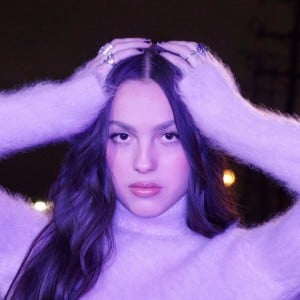
Olivia Rodrigo
Artist
By bringing the authenticity of her life to her relatable songs, Olivia Rodrigo has achieved record-breaking success. Her 2021 smash hit "Driver's License" and subsequent singles "Deja Vu" and "Good 4 U" made the singer/songwriter the youngest artist ever to top the Billboard Hot 100, and the first artist to have their first three singles debut in the Top Ten of that chart. These extraordinarily popular songs paved the way for Rodrigo's multi-platinum, Grammy-winning debut album, Sour. Its heartbroken, defiant, and witty mix of pop, folk, and alternative rock captured the highs and lows of a young woman fearlessly expressing who she is, how she feels, and what she wants -- themes she approached with more maturity on 2023's Grammy-nominated GUTS and its chart-topping single "Vampire." While growing up in Temecula, California, Rodrigo's first love was singing. She started vocal lessons in kindergarten and took up piano soon after; by age 12, she was playing guitar. At the suggestion of her vocal coach, she pursued acting, and she appeared in productions at her elementary and middle schools -- experiences that led her to seek professional acting jobs. In 2016, she was cast as Paige Olvera in in the Disney Channel series Bizaardvark. It was an opportunity that led to Rodrigo winning the lead role of Nini Salazar-Roberts in the Disney+ series High School Musical: The Musical: The Series, a mockumentary-style show that follows the on- and off-stage drama that happens when the student body of East High puts on a production of High School Musical: The Musical. When the show's creators -- which included writer and Broadway librettist Tim Federle -- learned Rodrigo was a songwriter, they encouraged her to pen original songs for the series. Written in Rodrigo's living room during finals week of her sophomore year, "All I Want" garnered millions of streams after the show's debut in November 2019 and entered the U.S. and Canada Hot 100 singles charts in January 2020. Rodrigo also collaborated with her co-star <a href="spotify:artist:4VdV2qRAYBLINR6uU72V1J">Joshua Bassett</a> on the duet "Just for a Moment." In the wake of High School Musical: The Musical: The Series' success, she continued to work on her own music with producer Dan Nigro (who also collaborated with <a href="spotify:artist:6sFIWsNpZYqfjUpaCgueju">Carly Rae Jepsen</a> and <a href="spotify:artist:7pyhre5oEEFMqcgMEvJY7q">Sky Ferreira</a>), looking to the confessional songwriting of <a href="spotify:artist:3g2kUQ6tHLLbmkV7T4GPtL">Fiona Apple</a>, <a href="spotify:artist:1r1uxoy19fzMxunt3ONAkG">Phoebe Bridgers</a>, and especially <a href="spotify:artist:06HL4z0CvFAxyc27GXpf02">Taylor Swift</a> for inspiration. After she signed with <a href="spotify:search:label%3A%22Interscope+%22">Interscope </a>and <a href="spotify:search:label%3A%22Geffen%22">Geffen</a> in 2020, Rodrigo's debut single, "Driver's License," arrived in January 2021 and quickly topped charts around the world. This included the Billboard Hot 100, making her the youngest artist to debut at number one on that chart. Along with breaking several streaming records, the single was a multi-platinum success in the U.S. and Canada and went platinum in several other countries. That April, her second single, "Deja Vu," appeared, and its debut at number eight on the Billboard Hot 100 made her the first artist in history to have her first two singles debut within the Top Ten. A third single, "Good 4 U," arrived in May. Like "Driver's License," it topped the Billboard Hot 100, and Rodrigo became the first artist in Billboard's history to have their first three singles debut in the Top Ten of that chart. In turn, May 2021's Sour became the first debut album to feature two singles that topped the Billboard Hot 100 upon release. Initially intended to be an EP, the album mixed pop, alt-rock, and folk and took inspiration from <a href="spotify:artist:0cQbJU1aAzvbEmTuljWLlF">No Doubt</a>, <a href="spotify:artist:4F84IBURUo98rz4r61KF70">the White Stripes</a>, <a href="spotify:artist:6ogn9necmbUdCppmNnGOdi">Alanis Morrissette</a>, and <a href="spotify:artist:70kkdajctXSbqSMJbQO424">Kacey Musgraves</a>, among others. Co-written by Rodrigo and Nigro, Sour was hailed for its genre-defying sound and candid songwriting. It was a massive global success, becoming the second best-selling album in the world in 2021. In the U.S., Sour debuted at number one on the Billboard 200 Albums Chart, ultimately spending five weeks total in that spot (an accomplishment that made it 2021's longest-running number one album by a female artist) and 52 weeks in the Top Ten, earning multiple platinum certifications along the way. Shortly after Sour's release, all of its tracks appeared in the Top 30 of the Billboard Hot 100, with "Traitor" becoming its fourth single to debut in the Top Ten. In the U.K., Sour debuted at number one the same week "Good 4 U" topped the U.K. Singles chart, making Rodrigo the youngest solo artist to have the top-selling release on both charts. The album also topped the charts in Canada, Australia, and New Zealand, where it spent ten consecutive weeks in the peak position. As Sour broke chart records, Rodrigo's concert film Sour Prom premiered in June 2021. That December, she launched her world tour, performed in Hope for the Holidays, Musicians on Call's second annual virtual concert for hospital patients, won the People's Choice Award for Album of the Year, and was named Time Magazine's Entertainer of the Year. Sour and Rodrigo's accolades continued into 2022. At that year's Grammy Awards, she won the awards for Best New Artist, Best Pop Solo Performance for "Driver's License," and Best Pop Vocal album for Sour (Rodrigo was nominated in all four of the general Grammy categories, making her the second-youngest artist after <a href="spotify:artist:6qqNVTkY8uBg9cP3Jd7DAH">Billie Eilish</a> to earn this recognition). She also won the Juno Award for International Album of the Year; the Brit Award for International Song of the Year; seven Billboard Music Awards including Top Billboard 200 album, Top New Artist, and Top Female Artist; and the ASCAP Award for Songwriter of the Year. March 2022 saw the premiere of Driving Home 2 U, a documentary chronicling the creation of Sour. That April, Rodrigo kicked off her first headlining concert tour. She covered <a href="spotify:artist:0p4nmQO2msCgU4IF37Wi3j">Avril Lavigne</a>'s "Complicated" at every show, and <a href="spotify:artist:0p4nmQO2msCgU4IF37Wi3j">Lavigne</a> joined her in performing the song at the Toronto date. At her Glastonbury Festival appearance that June, Rodrigo and <a href="spotify:artist:13saZpZnCDWOI9D4IJhp1f">Lily Allen</a> performed "Fuck You" as a response to the overruling of Roe v. Wade by the U.S. Supreme Court. In September 2022, Rodrigo departed High School Musical: The Musical: The Series at the end of its third season. At the end of the year and into 2023, Rodrigo did more charity work, participating in the third annual Venture Into Cures virtual fundraising event for families with epidermolysis bullosa and other rare diseases, the third annual Musicians on Call virtual concert, and the MusiCares Foundation Charity Relief Auction. She released "Vampire," her first single in two years, that June. Her third single to debut at number one on the Billboard Hot 100, it also topped the charts in the U.K., Australia, Ireland, Canada, and New Zealand. That song and August's multinational Top Ten hit "Bad Idea Right?" appeared on September 2023's GUTS. Produced by Nigro and recorded at his garage studio, Rodrigo's second album built on Sour's wry rock and sweeping ballads as she took stock of her tumultuous teen years. The album once again topped the U.S. and U.K. charts as well as those of 12 other countries, while all of its songs appeared in the Top 40 of the Hot 100 Singles Chart in the U.S. GUTS was also nominated for Album of the Year and Best Pop Vocal Album at the 66th Grammy Awards. That November, Rodrigo's "Can't Catch Me Now" appeared on Music from and Inspired by the Hunger Games: The Ballad of Songbirds & Snakes; the song ultimately won the 2023 Hollywood Music in Media Award for Best Original Song in a Sci-Fi, Fantasy, or Horror Film. Later in November, the four bonus tracks featured on limited edition vinyl releases of the album were issued as the vinyl EP That November, Rodrigo's "Can't Catch Me Now" appeared on Music from and Inspired by the Hunger Games: The Ballad of Songbirds & Snakes; the song ultimately won the 2023 Hollywood Music in Media Award for Best Original Song in a Sci-Fi, Fantasy, or Horror Film. Later in November, the four bonus tracks featured on limited edition vinyl releases of the album were issued as the vinyl EP GUTS: The Secret Tracks for Record Store Day Black Friday. While on tour in March 2024, Rodrigo released GUTS (spilled), a deluxe edition of the album with five bonus tracks. The following month, she made a surprise appearance at Coachella, performing "Bathwater" with <a href="spotify:artist:0cQbJU1aAzvbEmTuljWLlF">No Doubt</a> during their set. Rodrigo and Nigro were also named ASCAP's 2024 Pop Music Songwriters of the Year, marking their second time winning the award. ~ Heather Phares, Rovi
Pop
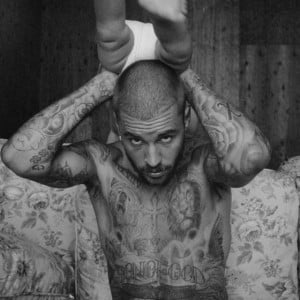
Justin Bieber
Artist
Justin's recent album JUSTICE includes the chart-topping global smashes "Peaches feat. Daniel Caesar & Giveon", “Holy” feat. Chance The Rapper, “Lonely” feat. Benny Blanco, “Anyone,” and “Hold On." The album also features guest appearances from The Kid LAROI, Dominic Fike, Khalid, Beam, Burna Boy, Lil Uzi Vert, Jaden, Quavo + more. The JUSTICE campaign has reasserted Justin’s dominance as a live performer; from his triumphant return to the live stage with his T-Mobile-sponsored NYE livestream concert, to his record breaking TikTok performance “Journals Live” to his stunning AR-assisted performance for Spotify, to his epic Nickelodeon Kids' Choice Awards set and this week’s blockbuster NPR Tiny Desk Concert, Justin has delivered undeniable, show stopping performances. Along the way, Justin has appeared as musical guest twice on Saturday Night Live, performed on The American Music Awards, The People’s Choice Awards, and much more. With over 86 billion career streams and over 78 million albums sold worldwide, Justin Bieber continues to reign as one of the biggest artists in the world. Bieber is the #1 artist on Spotify with over 75 million monthly listeners!
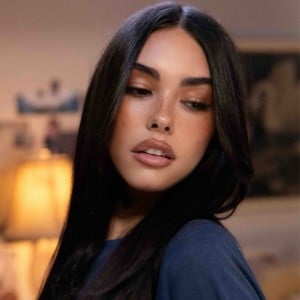
Madison Beer
Artist
Madison Beer is a platinum-selling, 2x GRAMMY-nominated singer, songwriter, producer, and author. Since debuting at 12, she has built an impressive resume by 25, becoming a dynamic multi-hyphenate with visceral vocals that honestly portray the human experience. Her second studio album, Silence Between Songs (2023), earned her first GRAMMY nomination for Best Immersive Album and secured her second consecutive spot on the Billboard 200, following Life Support (2021). In April 2023, Madison showcased another side of her artistry with her memoir, The Half Of It, an unflinching account of self-love and personal growth over a decade in the spotlight. That year, she also released singles, most notably "Spinnin" and "Sweet Relief". The "Sweet Relief" music video quickly hit a million views, while "Spinnin" inspired her third headlining tour. The Spinnin Tour, spanning 60 dates across the US, EU, UK, and AUS, included stops at iconic venues like Radio City Music Hall and The Greek Theater. Recently, Madison earned a second GRAMMY nomination for "Make You Mine" Best Dance Pop Recording. Since April 2024, it’s topped Billboard’s Dance Airplay chart, marking her first solo #1. She followed with "15 MINUTES", another chart-topping Dance Radio hit, earning back-to-back #1s. A true creative force, Madison writes, produces, directs, and designs with uncompromising authenticity. With an audience of over 78M on social media, Madison is one of the most influential voices of her generation.
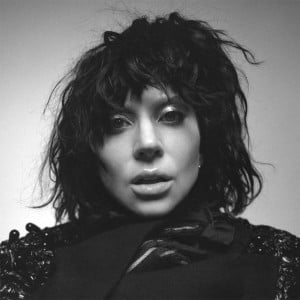
Lady Gaga
Artist
Academy Award and 14-time GRAMMY-winner Lady Gaga is a one-of-a-kind artist and performer. She has amassed an outstanding 110 million global album sales, 175 billion streams, and 758 million song consumption units, making her one of the best-selling musicians of all time. Her most recent pop album, Chromatica, became her sixth consecutive #1 on the Billboard 200 chart, making her the first female artist to achieve this over a ten-year period (2011-2020). Gaga's collaboration with Ariana Grande on “Rain On Me” had the biggest Spotify debut of 2020, reaching #1 on the Global and US Spotify Charts. In 2023, her debut single “Just Dance” became her third diamond-certified single by the RIAA, joining "Bad Romance" and "Poker Face." In 2018, she won an Academy Award for Best Original Song for “Shallow,” featured on the soundtrack of Best Picture nominee A Star is Born (2018), in addition to claiming a Golden Globe, a Critics’ Choice Award, and four GRAMMYs for both “Shallow” and “I’ll Never Love Again,” also from the same soundtrack. Lady Gaga knows no bounds, from producing her classic pop hits to exploring the classic American Songbook with her albums Cheek to Cheek and Love For Sale with Tony Bennett, both #1 albums. Beyond music, she excels in business as the founder of Haus Labs and thrives as an actress (A Star Is Born, House of Gucci, Joker: Folie à Deux), as well as a passionate activist for mental health and LGBTQ+ rights through her Born This Way Foundation.
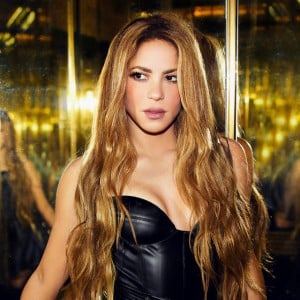
Shakira
Artist
Colombian singer-songwriter Shakira has sold over 80 million records worldwide and won numerous awards including three GRAMMYs and eleven Latin GRAMMYs. At the age of 18, she founded the Pies Descalzos (Barefoot) Foundation which provides education and nutrition to over 6,000 impoverished children in Colombia. In October 2011, Shakira was named a member of President Obama’s Advisory Commission on Educational Excellence for Hispanics. She served as coach on the 4th and 6th season of NBC's hit reality vocal competition series "The Voice". Her tenth studio album "Shakira" was released in 2014, featuring hits such as "Can’t Remember to Forget You," with Rihanna and "La La La (Brazil 2014)" which she performed at the finals of Fifa's World Cup 2014 in Brazil. In 2016, she starred as Gazelle in Disney’s record-breaking film "Zootopia," as well as contributing to its soundtrack with "Try Everything". She also launched "La Bicicleta" with fellow Colombian artist Carlos Vives, which remained #1 for 18 consecutive weeks in Colombia. It was followed up by "Chantaje" feat. Maluma. With over 2 billion views on YouTube, it is one of the platform’s biggest Latin hits in history. In November 2018 she wrapped her hugely successful El Dorado World Tour. 2019 saw the release of the concert film Shakira in Concert: El Dorado World Tour, which was shown in cinemas worldwide for one-night only. She performed at Super Bowl LIV in Miami and is currently working on new music.
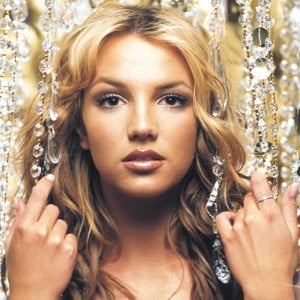
Britney Spears
Artist
Multi-platinum, Grammy Award-winning pop icon Britney Spears is one of the most successful and celebrated entertainers in pop history with nearly 150 million records worldwide. In the U.S. alone, she has sold more than 70 million albums, singles and songs, according to Nielsen Music. Born in Mississippi and raised in Louisiana, Spears became a household name as a teenager when she released her first single “…Baby One More Time,” a Billboard Hot 100 No. 1 smash and international hit that broke sales records with more than 20 million copies sold worldwide and is currently 14x Platinum in the U.S. Her musical career boasts countless awards and accolades, including six Billboard Music Awards and Billboard’s Millennium Award, which recognizes outstanding career achievements and influence in the music industry as well as an American Music Award and the 2011 MTV Video Vanguard Award. So far, Spears has earned a total of six No.1-debuting albums on the Billboard 200 chart and 22 top 40 hit singles on the Billboard Hot 100 — four of which went to No. 1. Spears has been nominated for eight Grammy Awards and won for Best Dance Recording in 2005. Her cutting-edge pop concert Las Vegas residency, “Britney: Piece of Me,” at Planet Hollywood Resort & Casino has been voted “Best Show in Las Vegas” and “Best Bachelorette Show in Las Vegas.” Spears also has been creating fragrances for over ten years, and currently has over 20 fragrances available in over 85 countries around the world.
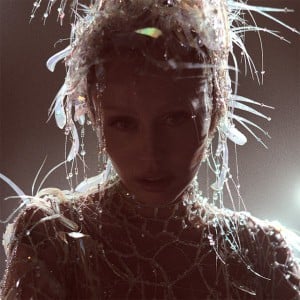
Miley Cyrus
Artist
Miley Cyrus has captivated generations, from shaping childhoods as Hannah Montana to smashing walls with “Wrecking Ball.” Miley’s music career is unique, constantly experimenting with new sounds and known as a chameleon across genres. At the 2024 GRAMMYs, she performed "Flowers," 2023’s top-selling single, winning Best Pop Solo Performance and Record of the Year. In 2025, her collaboration with Beyoncé won the Grammy for Best Country Duo Performance. Miley has earned numerous platinum and diamond songs and albums throughout her career. Her eighth album, Endless Summer Vacation, dominated the charts, and she has now moved onto her ninth studio album, Something Beautiful, set for May 2025. Miley has fronted campaigns for Gucci and Dolce & Gabbana as well as countless magazine covers globally including British Vogue. She co-hosted “Miley's New Year’s Eve Party” with godmother Dolly Parton, drawing millions of viewers and expanded her multimedia presence by starring in a popular Black Mirror episode. Miley has expressed a desire to act again, saying the role must be either an extension of herself or a character “with a personality that can conquer [her] own”. Through her Happy Hippie Foundation, Miley has raised millions for homeless youth, especially those identifying as LGBTQ+. In 2024, she launched the Miley Cyrus Foundation, supporting mothers in all their diversity. Miley’s continuous impact in music and culture will resonate for years to come.
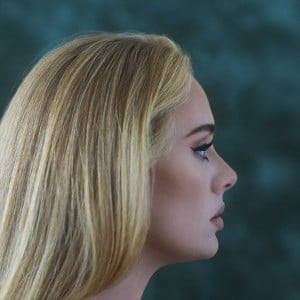
Adele
Artist
Since the release of her debut album ‘19’, in 2008, Adele has become one of the most successful British artists of her generation. Her critically acclaimed debut album garnered over 6.5 million sales worldwide whilst the album has gone 8x Platinum in the UK. At the age of 19, Adele became the first-ever recipient of the BRITS Critics’ Choice Award. The accolades received by Adele only multiplied as the following year saw her claim Best New Artist and Best Female Pop Vocal Performance at the GRAMMYs. As Adele embarks on her next chapter, she holds 15 GRAMMYs, 9 BRITS, 18 Billboard Awards, 2 IVORs, 1 Golden Globe, 1 Academy Award and 5 American Music Awards under her belt. The British singer-songwriter has received 11.5 million Album sales in the UK alone and 48 million Worldwide Album sales.
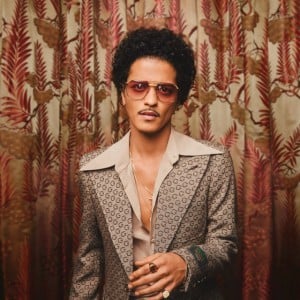
Bruno Mars
Artist
15x time GRAMMY Award winner Bruno Mars is one of the best-selling artists of all time. DOO-WOPS & HOOLIGANS marked the landmark debut of a remarkable new artist. The album – which peaked at #3 on the Billboard 200 – has gone on to achieve global album equivalent sales of 15.5 million. Now boasting more than 7.8 billion total streams, DOO-WOPS & HOOLIGANS is certified RIAA 6X platinum, the longest-charting debut album on Top 200 and #4 longest-running of all time. His most recent album, the critically acclaimed, 3x platinum-certified 24K MAGIC, made an impressive debut atop Billboard’s “Top Digital Albums” and “Top R&B/Hip-Hop Albums” charts upon its 2016 arrival. The album includes the 7x platinum-certified, #1 single, “That’s What I Like” – Mars’ seventh “Hot 100” chart-topper and first-ever #1 on the “Hot R&B Songs” chart, affirming him as one of the few artists to have written and produced each of his #1 hits as well as to have a #1 song on the “Hot 100” from each of his first three studio albums. Among his truly countless accolades, Mars is a 4x Guinness World Record holder, with his milestone 2015 NFL Super Bowl Halftime Show drawing a record-breaking total viewership of over 115.3 million. Mars also holds the world record as the “First Male Artist to Achieve Three 10 Million Selling Singles”, while 2016’s 2x GRAMMY® Award-winning, worldwide #1 collaboration with Mark Ronson, “Uptown Funk,” made history for the “Most Weeks at #1 on the U.S. Digital Song Sales” chart.
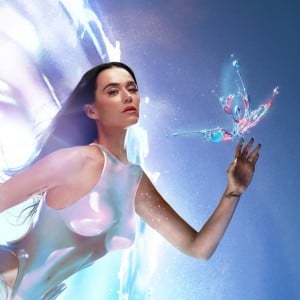
Katy Perry
Artist
In her 12 years with Capitol, Katy has racked up a cumulative 50 billion streams alongside worldwide sales of over 47.5 million adjusted albums and 135 million tracks. With the singles “Roar," “Firework,” and “Dark Horse” each surpassing the 10 million threshold including song sales and streams, Katy became the first artist to earn three RIAA Digital Single Diamond Awards. Katy is one of only five artists in history to have topped 100 million certified units with their digital singles – and the first-ever Capitol Records recording artist to join the elite RIAA 100 Million Certified Songs club. She was the first to reach 100 million followers on Twitter. Katy’s 2015 Super Bowl performance is the highest-rated in the event’s history. Katy was the first female artist to have four videos surpass a billion views each. Her videos for “Firework”, “Last Friday Night” and “Bon Appetit” have over one billion views, while “Dark Horse” has surpassed the two billion mark. “Roar” now has over three billion views. Her summer 2019 single, “Never Really Over,” off her latest album SMILE, is certified PLATINUM and was the biggest streaming launch of Katy’s musical career. 2020’s SMILE release has sold over 1.25 million adjusted albums, with nearly 2 Billion combined streams to date.
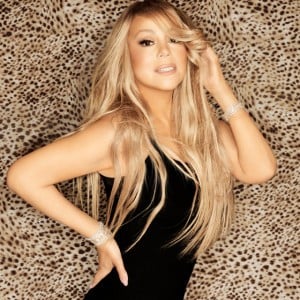
Mariah Carey
Artist
Mariah Carey is the best-selling female artist of all time with more than 200 million albums sold to date and 19 Billboard Hot 100 #1 singles (18 self-penned), more than any solo artist in history. An inductee to the Songwriters Hall of Fame, Carey is a singer/songwriter/producer recognized with multiple Grammy Awards, American Music Awards, three Guinness World Record titles, Billboard’s “Artist of the Decade” and “Icon Award,” the World Music Award for “World's Best Selling Female Artist of the Millennium,” the Ivor Novello Award for “PRS for Music Special International Award,” and BMI’s “Icon Award” for her outstanding achievements in songwriting, to name a few. Carey’s ongoing impact has transcended the music industry. In 2009, Carey was recognized with the Breakthrough Performance Award at the Palm Spring International Film Festival for her critically acclaimed role in Lee Daniels’ “Precious.” Carey went on to appear in Daniels’ ensemble piece “The Butler” (2013). A Congressional Award recipient, Carey has generously donated her time and energy to a range of philanthropic causes near to her heart including Save the Music, the Make-A-Wish Foundation, World Hunger Relief, and the Elton John AIDS Foundation, among many others. A tremendous supporter of children’s charities, both domestic and international, Carey founded Camp Mariah in partnership with the Fresh Air Fund, a retreat for inner city children to explore career development.
Ariana Grande
Artist
Armed with a mesmerizing, nimble soprano—and a vocal register often likened to Mariah Carey’s and Christina Aguilera’s—Ariana Grande began her career as a child star on Broadway and Nickelodeon before transforming into a pop and R&B powerhouse. Instantly recognizable thanks to her signature ponytail, cat ears, babydoll dresses, and breezy self-confidence, her slyly sexual personal brand has, like that of the Spice Girls before her, become an iconic image of young female power. But Grande is more than a symbol: Over the course of several albums and scores of hit singles—beginning with 2013’s “The Way” (featuring Mac Miler) through The Weeknd-assisted “Love Me Harder” and “Break Free” (featuring Zedd)—she has consistently outshined her male collaborators and deftly parlayed her stardom into activism. An LGBTQ advocate and outspoken feminist (“I’m tired of living in a world where women are mostly referred to as a man’s past, present, or future PROPERTY,” she tweeted in 2016), she uses her platform to confront issues like misogyny, sexism, homophobia, and bullying, spreading a message of love over all. Nowhere was this more clear than in May 2017: After terrorists attacked her concert in Manchester, England, killing 22 and injuring hundreds, Grande continued her tour. "Perspective changes your life,” she told Beats 1’s Ebro Darden. "You want to stay in the moment and try not to give into fear, because obviously the whole point of finishing the tour was being there for my fans. You want to set the same example and keep going.” And that she did: Her Max Martin-produced smash “No Tears Left to Cry,” an escapist dance-floor triumph released a year after the attack, sends a message of hope and healing, with a dose of hear-me-roar attitude.
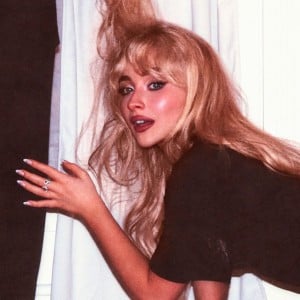
Sabrina Carpenter
Artist
Sabrina Carpenter has enchanted an audience of millions as a singer, songwriter, actress and style icon. With her music, she has delivered one anthem after another on stage and in the studio, earning multiple gold and platinum certifications, and performing to sold out crowds around the world. On-screen, she has generated mega-fandom through starring roles on television and film. She is signed to Island Records, where she debuted her acclaimed Gold-certified fifth studio album, emails i can’t send, which appeared on many “Best Of 2022” lists including Rolling Stone and Billboard. In April 2024, Sabrina debuted at Coachella and released her single “Espresso,” which swiftly climbed to #1 on the UK and Australian charts, reached the Top 5 in the US, and hit #1 globally on Spotify, amassing over 200M streams in its first month. Following this, her second single, “Please Please Please,” released in June, soared to #1 on Spotify’s Global and US charts, Apple Music, and eventually the Billboard Hot 100, where it debuted at #2 before reaching #1. In August, she released her highly anticipated sixth studio album, Short n’ Sweet, which instantly received critical acclaim from the likes of the New York Times, Rolling Stone, Pitchfork, and Variety. The album debuted at #1 on the Billboard 200, making it the 3rd biggest first week debut in the US in 2024. Short n' Sweet also topped the charts around the world, reaching #1 in UK, Canada, Australia, Spain, and France.
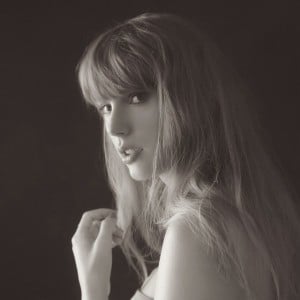
Taylor Swift
Artist
Taylor Swift is that rarest of pop phenomena: a superstar who managed to completely cross over from country to the mainstream. Others have performed similar moves -- notably, <a href="spotify:artist:32vWCbZh0xZ4o9gkz4PsEU">Dolly Parton</a> and <a href="spotify:artist:5W5bDNCqJ1jbCgTxDD0Cb3">Willie Nelson</a> both became enduring pop culture icons based on their 1970s work -- but Swift shed her country roots like they were a second skin; it was a necessary molting to reveal she was perhaps the sharpest, savviest populist singer/songwriter of her generation, one who could harness the zeitgeist, make it personal and, just as impressively, perform the reverse. These skills were evident on her earliest hits, especially the neo-tribute "Tim McGraw," but her second album, 2008's Fearless, showcased a songwriter discovering who she was and, in the process, finding a mass audience. Fearless wound up having considerable legs not only in the U.S., where it racked up six platinum singles on the strength of the Top Ten hits "Love Story" and "You Belong with Me," but throughout the world, performing particularly well in the U.K., Canada, and Australia. Speak Now, delivered almost two years later, consolidated that success and moved Swift into the stratosphere of superstardom. Her popularity only increased over her next three albums -- Red (2012), 1989 (2014), Reputation (2017) -- and found her moving assuredly into a pop realm where she already belonged. Even when she scaled back her approach with 2020's stripped-down sibling releases folklore and Evermore, she remained atop the pop world, a position she maintained with re-recordings of her back catalog along with Midnights, a moody album released in 2022. This sense of confidence had been apparent in Taylor Swift since the beginning. The daughter of two bankers -- her father, Scott Kingsley Swift, worked at Merrill Lynch; her mother, Andrea, spent time as a mutual fund marketing executive -- Swift was born in Reading, Pennsylvania, and raised in suburban Wyomissing. She began to show interest in music at the age of nine, and <a href="spotify:artist:5e4Dhzv426EvQe3aDb64jL">Shania Twain</a> wound up as her biggest formative influence. Swift started to work regularly at local talent contests, eventually winning a chance to open for <a href="spotify:artist:6UpFUXmXvDV7Qj1SPymamh">Charlie Daniels</a>. Soon, she learned how to play guitar and began writing songs, signing a music management deal with Dan Dymtrow; her family relocated to Nashville with the intent of furthering her music career. She was just 14 years old but on the radar of the music industry, signing a development deal with <a href="spotify:search:label%3A%22RCA+Records%22">RCA Records</a> in 2004. Swift sharpened her skills with a variety of professional songwriters, forming the strongest connections with <a href="spotify:artist:7pcKyVIatvXoHdZRr4Q3vT">Liz Rose</a>. Taylor's original songs earned her a deal with Sony/ATV Music Publishing, but not long after that 2004 deal she parted ways with Dymtrow and <a href="spotify:search:label%3A%22RCA%22">RCA</a>, all with the intent of launching her recording career now, not later. Things started moving swiftly once Swift came to the attention of Scott Borchetta, a former <a href="spotify:search:label%3A%22DreamWorks+Records%22">DreamWorks Records</a> exec about to launch <a href="spotify:search:label%3A%22Big+Machine+Records%22">Big Machine Records</a>. Borchetta saw Swift perform at a songwriters showcase at the Bluebird Cafe and he signed her to <a href="spotify:search:label%3A%22Big+Machine%22">Big Machine</a> in 2005; shortly afterward, she started work on her debut with producer Nathan Chapman, who'd previously helmed demos for Taylor. Boasting original song credits on every one of the record's 11 songs (she penned three on her own), Taylor Swift appeared in October 2006 to strong reviews and Swift made sure to work the album hard, appearing at every radio or television event offered and marshaling a burgeoning fan base through the use of MySpace. "Tim McGraw," the first song from the album, did well, but "Teardrops on My Guitar" and "Our Song" did better on both the pop and country charts, where she racked up five consecutive Top Ten singles. Other successes followed in the wake of the debut -- a Grammy nomination for Best New Artist (she lost to <a href="spotify:artist:6Q192DXotxtaysaqNPy5yR">Amy Winehouse</a>), stopgap EPs of Christmas songs -- but Swift concentrated on delivering her sophomore set, Fearless. Appearing in November 2008, Fearless was certified gold by the RIAA in its first week of release, and the record gained momentum throughout 2009, earning several platinum certifications as "Love Story," "White Horse," "You Belong with Me," "Fifteen," and "Fearless" all scaled the upper reaches of the country charts while "You Belong with Me" nearly topped Billboard's Hot 100. Along with the success came some headlines, first in the form of an infamous appearance at the 2009 MTV Video Music Awards where her acceptance speech was interrupted by <a href="spotify:artist:5K4W6rqBFWDnAN6FQUkS6x">Kanye West</a>, who burst on-stage to declare that Swift's rival <a href="spotify:artist:6vWDO969PvNqNYHIOW5v0m">Beyoncé</a> deserved the award more, but her romances also started gaining attention, notably a liaison with Twilight star Taylor Lautner, who appeared with the singer in the 2009 film Valentine's Day. Her flirtation with the silver screen proved brief, as she then poured herself into her third album, Speak Now. Released in October 2010, Speak Now was another massive first-week smash that refused to lose momentum. Hit singles like "Mine" and "Mean," which won two Grammy Awards, played a big factor in its success not just on the country charts but on pop radio as well. Following a 2011 live album called World Tour Live: Speak Now, Swift turned toward following a pop path on her fourth album, hiring such mainstream musicians as <a href="spotify:artist:045EiHd7X7cCjlamF0LV2M">Dan Wilson</a>, <a href="spotify:artist:7qKoy46vPnmIxKCN6ewBG4">Butch Walker</a>, and <a href="spotify:artist:26dSoYclwsYLMAKD3tpOr4">Britney Spears</a> producer <a href="spotify:artist:4e1KgW8FCqVytLFSzEYEKo">Max Martin</a>. This mainstream pulse was evident on "We Are Never Ever Getting Back Together," the first single from Red. Upon its October 2012 release, Red shattered expectations by selling over a million copies in its first week, a notable achievement that was doubly impressive in an era of declining sales. Once again, Swift's album had legs: it was certified platinum four times in the U.S. and its international sales outstripped those of Speak Now. She supported Red with an international tour in 2013 and more hits came, including "I Knew You Were Trouble" and "22." As Swift geared up for the release of her fifth album in 2014, she made it clear that 1989 was designed as her first "documented, official" pop album and that there would be no country marketing push for the record. "Shake It Off," an ebullient dance-pop throwback, hit number one upon its August 2014 release. When 1989 appeared in late October 2014, it once again shot to number one and became her third straight album to sell one million copies in its first week (a new record for any artist). Swift gathered many awards during the subsequent year, including Billboard's Woman of the Year, the Award for Excellence at the American Music Awards, and a special 50th Anniversary Milestone Award from the CMAs. Her 1989 World Tour crossed Asia, North America, and Europe during the last half of 2015, and she won three Grammy Awards at the 2016 ceremonies, including Album of the Year, Best Pop Vocal Album, and Best Music Video for "Bad Blood." At the end of 2016, she released "I Don't Wanna Live Forever," a duet with ZAYN from the soundtrack for Fifty Shades Darker. The single reached the Top Five across the world. Swift returned with her sixth album, Reputation, in November 2017. Preceded by the number one hit single "Look What You Made Me Do," Reputation debuted at number one, and while it didn't replicate the success of 1989, the album did help underscore her popularity while also pushing her toward mature musicality. Reputation was Swift's final record for <a href="spotify:search:label%3A%22Big+Machine%22">Big Machine</a>. In November 2018, she signed with <a href="spotify:search:label%3A%22Universal+Music+Group%22">Universal Music Group</a>, which distributed her new albums under its <a href="spotify:search:label%3A%22Republic+Records%22">Republic Records</a> banner. The first album in this contract was Lover. Released in August 2019, Lover was preceded by two singles, "Me!" and "You Need to Calm Down," which both reached number two on the Hot 100 and helped push the album to number one. The acclaimed LP and two of its singles received a total of three nominations at the 62nd Grammy Awards. Swift's plans to support Lover with a tour in 2020 were scrapped due to the COVID-19 pandemic. With some unexpected time on her hands, she wrote and recorded a new set of songs, many in collaboration with <a href="spotify:artist:2hSyEBc9TBb9j38FOCdkIf">Aaron Dessner</a> of <a href="spotify:artist:2cCUtGK9sDU2EoElnk0GNB">the National</a>; <a href="spotify:artist:4LEiUm1SRbFMgfqnQTwUbQ">Bon Iver</a> and longtime Swift associate <a href="spotify:artist:414TS3VqZf1XPCBixdmX9n">Jack Antonoff</a> also contributed. The resulting album, folklore, was released on July 24, 2020, and went straight to the top of the Billboard 200. Less than five months later, Swift released a companion album to folklore called Evermore. Featuring many of the same collaborators as its predecessor, the Grammy-nominated Evermore debuted at number one upon its December 11, 2020 release. Altogether, the sibling LPs planted Swift atop the U.S. charts for a combined 11 weeks, and folklore became the best-selling album of 2020. In 2021, she began the process of re-recording her back catalog after her <a href="spotify:search:label%3A%22Big+Machine%22">Big Machine</a> masters were sold off in 2019, starting with 2008's Fearless. The first of these tracks -- "Love Story (Taylor's Version)" -- arrived that February, with Fearless [Taylor's Version] arriving in April. The new version of Fearless contained cameos from <a href="spotify:artist:6aZyMrc4doVtZyKNilOmwu">Colbie Caillat</a>, <a href="spotify:artist:0u2FHSq3ln94y5Q57xazwf">Keith Urban</a>, and <a href="spotify:artist:6WY7D3jk8zTrHtmkqqo5GI">Maren Morris</a>, along with several previously unheard tunes originally written during the same time period; it debuted at number one on Billboard upon its release. Swift next revisited Red, releasing Red [Taylor's Version] in November 2021. This revamp of the 2012 album featured new duets with <a href="spotify:artist:1r1uxoy19fzMxunt3ONAkG">Phoebe Bridgers</a>, <a href="spotify:artist:4YLtscXsxbVgi031ovDDdh">Chris Stapleton</a>, and <a href="spotify:artist:6eUKZXaKkcviH0Ku9w2n3V">Ed Sheeran</a>, along with a ten-minute version of the ballad "All Too Well." Another re-recording, "This Love (Taylor's Version)" (originally off 1989), arrived in May 2022 and was included in the soundtrack to the coming-of-age drama The Summer I Turned Pretty. Swift opened up another chapter in her career with the October 2022 release of Midnights, an album co-produced by <a href="spotify:artist:414TS3VqZf1XPCBixdmX9n">Jack Antonoff</a> and featuring a duet with <a href="spotify:artist:00FQb4jTyendYWaN8pK0wa">Lana Del Rey</a> on "Snow on the Beach." ~ Stephen Thomas Erlewine
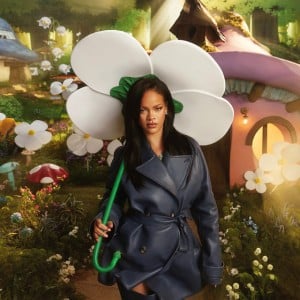
Rihanna
Artist
Among the most popular and acclaimed artists in postmillennial contemporary music, Rihanna is also uncommonly dynamic, having mixed and matched pure pop, dancehall, R&B, EDM, and adult contemporary material throughout her career. She went supernova in 2005 with her boisterous debut single, "Pon de Replay," a worldwide hit, and was a near-constant presence in the upper reaches of global pop charts until she took a break from releasing music in the late 2010s. Through 2017, the native Barbadian headlined 11 number one hits, including "Umbrella" and "Only Girl (In the World)," singles that earned her two of her nine Grammy Awards. More than just a singles artist, Rihanna continually pushed ahead stylistically with her LPs, highlighted by the bold Good Girl Gone Bad (2007), the steely Rated R (2009), and the composed Anti (2016), all of which confounded expectations and placed within the Top Ten of the Billboard 200 with eventual multi-platinum certifications. Rihanna studded her secondary discography as a featured artist during this period with major crossover pop hits headlined by the likes of <a href="spotify:artist:3nFkdlSjzX9mRTtwJOzDYB">Jay-Z</a> ("Run This Town"), <a href="spotify:artist:7dGJo4pcD2V6oG8kP0tJRR">Eminem</a> ("Love the Way You Lie"), and <a href="spotify:artist:2YZyLoL8N0Wb9xBt1NhZWg">Kendrick Lamar</a> ("LOYALTY."). She returned to the Top Ten in 2022 with the understated ballad "Lift Me Up," her first solo release in six years, recorded for the soundtrack of Black Panther: Wakanda Forever. Born Robyn Rihanna Fenty in Saint Michael, Barbados, Rihanna exhibited star quality as a child, often winning beauty and talent contests. Because she lived on a fairly remote island in the West Indies, however, she didn't foresee the global stardom she later attained. Her break came courtesy of a fateful meeting with <a href="spotify:artist:0kbIz7wAczMyXXs9tfdDNE">Evan Rogers</a>, writer and producer of pop hits for such big names as <a href="spotify:artist:6Ff53KvcvAj5U7Z1vojB5o">*NSYNC</a>, <a href="spotify:artist:1l7ZsJRRS8wlW3WfJfPfNS">Christina Aguilera</a>, <a href="spotify:artist:2tFN9ubMXEhdAQvdQxcsma">Jessica Simpson</a>, and <a href="spotify:artist:2y8Jo9CKhJvtfeKOsYzRdT">Rod Stewart</a>. The New Yorker was vacationing in Barbados with his wife, an island native, when he was introduced to an aspiring singing group that featured Rihanna. The trio performed for <a href="spotify:artist:0kbIz7wAczMyXXs9tfdDNE">Rogers</a>, who was then eager to work with Rihanna as a solo artist. After the fledgling singer recorded material with <a href="spotify:artist:0kbIz7wAczMyXXs9tfdDNE">Rogers</a> in the U.S. and signed with <a href="spotify:search:label%3A%22SRP%22">SRP</a> (Syndicated Rhythm Productions), operated by <a href="spotify:artist:0kbIz7wAczMyXXs9tfdDNE">Rogers</a> and partner Carl Sturken, she sparked the interest of the Carter Administration -- that is, the newly appointed <a href="spotify:search:label%3A%22Def+Jam%22">Def Jam</a> president <a href="spotify:artist:3nFkdlSjzX9mRTtwJOzDYB">Shawn "Jay-Z" Carter</a>. Following an audition, Rihanna accepted an on-the-spot offer to sign with the major label. Come May 2005, <a href="spotify:search:label%3A%22Def+Jam%22">Def Jam</a> rolled out "Pon de Replay," Rihanna's first single and the lively introduction to the full-length Music of the Sun. Produced almost entirely by <a href="spotify:artist:0kbIz7wAczMyXXs9tfdDNE">Rogers</a> and Sturken, the song synthesized Caribbean rhythms with pop-R&B songwriting. "Pon de Replay" caught fire almost immediately and peaked at number two on the Billboard Hot 100, denied the top spot by <a href="spotify:artist:4iHNK0tOyZPYnBU7nGAgpQ">Mariah Carey</a>'s "We Belong Together." Music of the Sun, released that August, spawned a Top 40 placement with "If It's Lovin' That You Want" and ranged stylistically from a remake of <a href="spotify:artist:6mLXvSt7Xxy2r9uBba1O6Z">Dawn Penn</a>'s rocksteady-styled crossover hit "You Don't Love Me (No, No, No)" (featuring dancehall star <a href="spotify:artist:2NUz5P42WqkxilbI8ocN76">Vybz Kartel</a>) to the <a href="spotify:artist:6vWDO969PvNqNYHIOW5v0m">Beyoncé</a>-like "Let Me" (co-produced by emergent duo <a href="spotify:artist:7KUri7klyLaIFXLcuuOMCd">Stargate</a>). Music of the Sun was only eight months old when Rihanna followed up in April 2006 with A Girl Like Me. It showed that the singer wasn't a fluke success and could also stretch out, laced with three dissimilar hits. "SOS," high-gloss dance-pop with a sample of <a href="spotify:artist:6aq8T2RcspxVOGgMrTzjWc">Soft Cell</a>'s version of "Tainted Love," topped the Hot 100. "Unfaithful," her first big ballad, and "Break It Off," an electro-dancehall hybrid (with <a href="spotify:artist:3Isy6kedDrgPYoTS1dazA9">Sean Paul</a>), became her third and fourth Top Ten pop singles. Superstar status was attained with Good Girl Gone Bad, an album that built on Rihanna's commercial momentum and developed into a blockbuster. Released in May 2007 and "reloaded" with additional material the following June, its lengthy promotional campaign yielded several chart-topping singles and boasted collaborations with A-listers such as <a href="spotify:artist:3nFkdlSjzX9mRTtwJOzDYB">Jay-Z</a>, <a href="spotify:artist:21E3waRsmPlU7jZsS13rcj">Ne-Yo</a>, <a href="spotify:artist:5Y5TRrQiqgUO4S36tzjIRZ">Timbaland</a>, and <a href="spotify:artist:31TPClRtHm23RisEBtV3X7">Justin Timberlake</a>. Lead single "Umbrella," co-written by <a href="spotify:artist:1W3FSF1BLpY3hlVIgvenLz">the-Dream</a> and Christopher "Tricky" Stewart, sounded like nothing else on the airwaves and shot to number one, as did "Take a Bow" and "Disturbia," while "Hate That I Love You" and "Don't Stop the Music" added to the tally of Top Ten entries. "Umbrella" gave Rihanna her first Grammy win for Best Rap/Sung Collaboration. The album was on its way to triple-platinum status by October 2009, when Rihanna set the dark and provocative tone for fourth album Rated R with "Russian Roulette," another <a href="spotify:artist:21E3waRsmPlU7jZsS13rcj">Ne-Yo</a> collaboration and Top Ten single. Abused lover, dominatrix, and murderer were among the perspectives Rihanna offered throughout the album, released that November. Even the additional Top Ten hits "Hard" and "Rude Boy" -- the latter her fifth number one -- were stern in demeanor, making the early hits sound like the work of a significantly more complex artist. While Rated R was riding high, <a href="spotify:artist:3nFkdlSjzX9mRTtwJOzDYB">Jay-Z</a>'s "Run This Town," with Rihanna on the intro and hook, won Grammys for Best Rap Song and Best Rap/Sung Collaboration. Annual studio albums, each one with a November release date and a broad range of light and dark material covering EDM, contemporary R&B, adult contemporary, dancehall, and straight-up pop, continued well into the following decade. In 2010, just after <a href="spotify:artist:7dGJo4pcD2V6oG8kP0tJRR">Eminem</a> featured her on the diamond platinum "Love the Way You Lie," there was Loud. Led by the <a href="spotify:artist:7KUri7klyLaIFXLcuuOMCd">Stargate</a>-produced "Only Girl (In the World)," eventually a Grammy winner for Best Dance Recording, it was sustained with additional Hot 100 toppers "What's My Name?" (featuring <a href="spotify:artist:3TVXtAsR1Inumwj472S9r4">Drake</a>) and "S&M." Talk That Talk was heralded in 2011 with Rihanna's most triumphant single, "We Found Love," on which she collaborated with <a href="spotify:artist:7CajNmpbOovFoOoasH2HaY">Calvin Harris</a>. After she nabbed yet another Best Rap/Sung Collaboration Grammy, this time for her role on <a href="spotify:artist:5K4W6rqBFWDnAN6FQUkS6x">Kanye West</a>'s "All of the Lights," the streak concluded, and culminated, with the 2012 set Unapologetic. Her first LP to top the Billboard 200 (after all of the previous six had gone Top Ten), it also became her first to win a Grammy for Best Urban Contemporary Album. "Diamonds," the anthemic and inspirational standout among some of Rihanna's brashest moments, became her tenth number one pop hit and 18th to peak within the Top Ten. Within a span of three years, Rihanna had released her fourth through seventh albums. An equal amount of time passed prior to the release of her eighth full-length. In 2013, she lengthened her list of chart accolades as a featured artist with an assist on <a href="spotify:artist:7dGJo4pcD2V6oG8kP0tJRR">Eminem</a>'s "The Monster," which became her 25th Top Ten hit as a lead or featured artist, went to number one, and led to her fourth Best Rap/Sung Collaboration Grammy. No longer with <a href="spotify:search:label%3A%22Def+Jam%22">Def Jam</a> -- a deal had been signed with <a href="spotify:search:label%3A%22Roc+Nation%22">Roc Nation</a> via <a href="spotify:artist:3nFkdlSjzX9mRTtwJOzDYB">Jay-Z</a>, who left <a href="spotify:search:label%3A%22Def+Jam%22">Def Jam</a> several years earlier -- Rihanna released non-album singles throughout 2015, beginning with the unembellished "FourFiveSeconds," an unlikely matchup with <a href="spotify:artist:4STHEaNw4mPZ2tzheohgXB">Paul McCartney</a> and <a href="spotify:artist:5K4W6rqBFWDnAN6FQUkS6x">Kanye West</a> that reached number four. "American Oxygen" didn't flourish as much from a commercial standpoint but upon release became one of her most remarkable recordings, a dignified ballad with a personal, pro-immigration theme. Album eight, the strikingly composed Anti, became Rihanna's second consecutive number one album following its January 2016 arrival. She partnered again with <a href="spotify:artist:3TVXtAsR1Inumwj472S9r4">Drake</a>, resulting in another number one hit with "Work." "Needed Me," a buzzing slow jam cooked up with a production team including <a href="spotify:artist:0YinUQ50QDB7ZxSCLyQ40k">DJ Mustard</a> and <a href="spotify:artist:6cKkRS7JwVT2K3rCCnOHyk">Kuk Harrell</a>, and "Love on the Brain," a throwback soul belter involving <a href="spotify:artist:6cKkRS7JwVT2K3rCCnOHyk">Harrell</a> and Fred Ball, entered the Top Ten as well. Those who missed the comparative lack of high-spirited exuberance in Anti were placated across 2016 and 2017 with Rihanna's guest appearances on <a href="spotify:artist:7CajNmpbOovFoOoasH2HaY">Calvin Harris</a>' "This Is What You Came For" and <a href="spotify:artist:5wPoxI5si3eJsYYwyXV4Wi">N.E.R.D.</a>'s "Lemon." Meanwhile, <a href="spotify:artist:3TVXtAsR1Inumwj472S9r4">Drake</a>, <a href="spotify:artist:1RyvyyTE3xzB2ZywiAwp0i">Future</a>, <a href="spotify:artist:0QHgL1lAIqAw0HtD7YldmP">DJ Khaled</a>, and <a href="spotify:artist:2YZyLoL8N0Wb9xBt1NhZWg">Kendrick Lamar</a> likewise profited from Rihanna's featured spots. <a href="spotify:artist:2YZyLoL8N0Wb9xBt1NhZWg">Lamar</a>'s "LOYALTY." made Rihanna a five-time winner of the Grammy for Best Rap/Sung Collaboration, setting a record for women artists in that category. Apart from a featured appearance on <a href="spotify:artist:2HPaUgqeutzr3jx5a9WyDV">PartyNextDoor</a>'s 2020 single "Believe It," Rihanna wasn't behind any new music for several years, as she focused her efforts on her Fenty cosmetics and fashion empire and started a family. She returned in October 2022 with "Lift Me Up" from the soundtrack of Ryan Coogler's Black Panther: Wakanda Forever. The ballad, written by Rihanna with producer <a href="spotify:artist:24eDfi2MSYo3A87hCcgpIL">Ludwig Göransson</a>, <a href="spotify:artist:687cZJR45JO7jhk1LHIbgq">Tems</a>, and Coogler, entered the Hot 100 at number two. ~ Andy Kellman & Jason Birchmeier, Rovi
Billie Eilish
Artist
Billie Eilish remains one of the biggest stars to emerge in the 21st century. Her third studio album, HIT ME HARD AND SOFT features 10 tracks written and recorded in her hometown of Los Angeles, with her brother and producer FINNEAS. In 2019, her debut album WHEN WE ALL FALL ASLEEP, WHERE DO WE GO? debuted at No. 1 in 18 countries, and was the most streamed album of that year. In 2021, her sophomore album 'Happier Than Ever’ debuted at #1 in 20 countries. Both albums were critically acclaimed worldwide and were written, produced, and recorded entirely by Billie Eilish and FINNEAS. 9-time GRAMMY® Award-winning Billie Eilish has made history as the youngest artist to receive nominations and win in all the major GRAMMY® categories, receiving an award for Best New Artist, Album of the Year, Record of the Year, Song of the Year, and Best Pop Vocal Album, and is the youngest artist to write and record an official James Bond theme song, ‘No Time To Die,’ which won an Academy Award for Best Original Song in 2022. In 2023, Eilish also wrote and released the critically acclaimed song “What Was I Made For?” for the Greta Gerwig-directed motion picture Barbie, which also won Academy and Golden Globe Award for Best Original Song, two GRAMMY® Awards for Song of the Year and Best Song Written For Visual Media, and has solidified Billie Eilish yet again in the history books as the youngest person ever to win two Academy Awards.
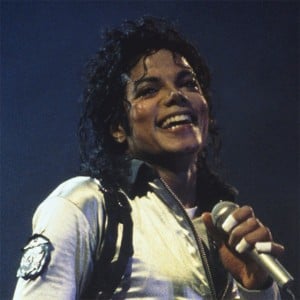
Michael Jackson
Artist
Michael Jackson wasn't merely the biggest pop star of his era, shaping the sound and style of the '70s and '80s; he was one of the defining stars of the 20th century, a musician who changed the contours of American culture. A preternaturally gifted singer and dancer, Jackson first rose to stardom in 1969 as the 11-year-old frontman for his family's band, the Jackson 5. As remarkable a run as the Jackson 5 had -- at the dawn of the '70s, each of their first four singles went to number one and they stayed near the top of the charts for the next five years -- it all served as a preamble to Jackson's solo career. Off the Wall, the dazzling 1979 album co-produced by Quincy Jones, announced Jackson as a mature talent, and the singles "Don't Stop 'til You Get Enough" and "Rock with You" turned it into a blockbuster. Despite its success, Jackson believed Off the Wall was pigeonholed as an R&B record. Determined to break through this glass ceiling, he reunited with Jones to create Thriller, the 1982 album that shattered every music record on the books. Thriller was designed to appeal to every audience and its diversity was evident by its guests: he enlisted Eddie Van Halen to play guitar on the hard rock of "Beat It" while inviting Paul McCartney to duet on the chipper soft pop tune "The Girl Is Mine." Jackson also expanded the horizons of soul and dance music, producing pioneering masterpieces like "Billie Jean." This single provided Thriller with its 1983 breakthrough, thanks in part to its groundbreaking music video, which became the first clip from a black artist to enter steady rotation on the fledgling MTV. Jackson's smashing of the network's racial barriers was only one aspect of Thriller's unprecedented crossover. Seven of its nine songs were Top 10 hits, it earned eight Grammy awards, and topped the Billboard charts for 37 weeks, matching its American success internationally to become the biggest-selling album of all time, earning 32 platinum certifications in the US and moving over 100 million albums worldwide. Such a phenomenal triumph pushed Jackson into the stratosphere and Bad -- the eagerly-anticipated 1987 sequel to Thriller, co-produced once again with Quincy Jones -- kept him there, generating five number one singles on the Billboard charts and selling 30 million copies internationally, two thirds of which were outside of the US. Jackson parted ways with Jones for 1991's Dangerous, another global blockbuster. HIStory, a 1995 double-disc set that paired a disc of hits with a new album, produced a couple of international number one singles. Invincible, his 2001 album, turned out to be his last. Health problems culminated in his untimely death in the summer of 2009, but at that point Jackson's legend was safe: he stood alongside Louis Armstrong, Frank Sinatra, Hank Williams, Elvis Presley, Miles Davis, and Bob Dylan as one of the musicians that created the sound of America in the 20th century. Such heights came from modest beginnings. Michael was born in Gary, Indiana on August 29, 1958, the fifth son of Katherine and Joe Jackson. His mother was a Jehovah's Witness and his father a former boxer-turned-steelworker who played guitar on the side. Harboring aspirations of musical stardom, Joe shepherded his sons into a musical act around 1962. At that point, it was just the three eldest children -- Tito, Jackie, and Jermaine -- but Michael joined them in 1964 and soon dominated the group. Stealing moves from James Brown and Jackie Wilson, Michael became the epicenter of the Jackson 5 as they earned accolades at local talent shows and went on to play soul clubs throughout the Midwest, working their way toward the east coast in 1967 where they won an amateur contest at the Apollo Theater. Returning to Gary, the group cut a pair of singles for the local imprint Steeltown in 1968 -- "(I'm A) Big Boy," "We Don't Have to Be Over 21" -- but their big break arrived when they opened for Bobby Taylor & the Vancouvers at Chicago's Regal Theater. Impressed, Taylor brought them to the attention of Berry Gordy, Jr., who signed the group to Motown in March of 1969 and then sent them out to Los Angeles, where he helped mastermind their national launch. "I Want You Back," a song written and produced by Motown's new crew the Corporation, saw release in October 1968 when Michael Jackson was just 11 years old. By January 1970, "I Want You Back" rocketed to number one on both the pop and R&B charts, and the Jackson 5 became a sensation, crossing over from R&B to AM pop radio with ease. Two more hits followed --" ABC" and "The Love You Save," both exuberant bubblegum soul -- before "I'll Be There" revealed Michael's facility with ballads. All three of these sequels went to number one and, striking while the iron was hot, Motown spun Michael off into a solo act. His first solo single, "Got to Be There," arrived at the end of 1971, reaching number four on the Billboard Hot 100, and then a cover of Bobby Day's chestnut "Rockin' Robin" peaked at two in early 1972. Later that year, "Ben," the title theme ballad to an exploitation movie about a killer rat, earned Jackson his first Oscar nomination for Best Original Song (he would lose). Not long afterward, the careers of both Michael and the Jackson 5 slowed, victims of shifting tastes, adolescence, and creative battles with their label. One last hit for Motown arrived in 1974 -- "Dancing Machine," a single that brought the group in line with the disco explosion -- before the group departed Motown for Epic in 1975. With the new label came a new name, along with a slight lineup change: Jermaine stayed at Motown to pursue a solo career and younger brother Randy took his place. Following a pair of albums produced by Philly soul mainstays Gamble & Huff, Michael emerged as the group's creative director on 1978's Destiny, co-writing their 1979 smash "Shake Your Body (Down to the Ground)" with Randy. By that point, Michael had already made a considerable solo impression by starring as the Scarecrow in The Wiz, Sidney Lumet's 1978 musical adaptation of The Wizard of Oz. Working on the soundtrack -- a record highlighted by his duet with Diana Ross on "Ease on Down the Road" -- he met producer Quincy Jones, a titan of jazz and pop in the '50s and '60s who had yet to score a smash in the '70s. The pair hit it off and decided to work on Jackson's next solo endeavor, but first the Jackson 5 released Destiny, which raised the profile of both the band and Michael himself. All this was preamble to Off the Wall, the 1979 album that definitively established Michael Jackson as a force of his own. Collaborating with producer Jones and songwriter Rod Temperton, Jackson consciously attempted to appeal to multiple audiences with Off the Wall, turning the album into a dazzling showcase of all his different sounds and skills. Anchored by a pair of number one hits -- the incandescent "Don't Stop 'til You Get Enough" and "Rock with You" -- the record turned into a smash, peaking at four on the Billboard 200, selling millions of copies as it raked in awards, but losing the grand prize of Album of the Year at the Grammys, leaving Jackson with the lingering impression that he needed to cross over into the pop mainstream with greater force. Before he could do that, he had to complete one more Jackson 5 album: 1980's Triumph, a record with three hit singles ("Lovely One," "This Place Hotel," "Can You Feel It") whose title seemed to allude to Michael's solo success and certainly benefitted from his heightened stardom. After Triumph, Jackson reunited with producer Jones and songwriter Temperton to create the sequel to Off the Wall, crafting a record that deliberately hit every mark in the musical mainstream. Paul McCartney was brought in to underscore Michael's soft rock leanings, Eddie Van Halen pushed Jackson into metallic hard rock, and the remainder of the album glided from disco to pop to soul in an effortless display of his range. "The Girl Is Mine," the first single from Thriller, didn't suggest its adventure -- Jackson played it safe by releasing the McCartney duet as the album's lead -- but the second single, "Billie Jean," forged ahead into new, unnamable territory. "Billie Jean" was a pop explosion, topping the charts in the U.S., U.K., Australia, and Canada. Some of its success can no doubt be credited to its striking music video, the first to break the fledgling MTV's then-unspoken racial barrier; after Jackson, the network began playing more black acts. Some of the single's success is due to his sensational performance on Motown's 25th Anniversary Special in 1983, a performance aired on May 16, 1983 where Jackson unveiled his signature moonwalk dance -- a move that made it appear as if he was gliding backward -- and announced himself to the world as a mature talent. "Beat It," accompanied by an equally cinematic video, turned into an equally huge smash on MTV and helped push Thriller into the stratosphere. "Wanna Be Startin' Somethin'," "Human Nature," and "P.Y.T. (Pretty Young Thing)" kept Thriller at number one and its last single was an extravaganza, with Jackson letting director John Landis turn the song into a short musical horror film. By the time the album wrapped up its two-year run on the charts, it had racked up 37 weeks at number one and sold 29 million copies, becoming the biggest-selling album ever. Even as Thriller was something of a pop perpetual motion machine, selling records of its own accord, Jackson worked hard. He once again teamed with Paul McCartney, singing "Say Say Say" for McCartney's 1983 album Pipes of Peace, and he reunited with the Jackson 5 for 1984's Victory, supporting the album with an international tour. Prior to its launch, Jackson suffered a serious accident while filming a Pepsi commercial designed to accompany the tour. During the shoot, pyrotechnics burned Jackson's head, sending him to the hospital with second degree burns to his scalp; as he recovered, he started using pain killers for the first time. Jackson earned accolades for his philanthropic work, especially his collaboration with Lionel Richie on the 1985 charity single "We Are the World," but along with these positive notes, wild stories began to circulate in the tabloids. Some further bad press accompanied his acquisition of the Lennon and McCartney songwriting catalog in 1985, a move that severed his partnership with Paul McCartney. Jackson also flirted with becoming a movie star, working with George Lucas and Francis Ford Coppola on the 3D film Captain Eo, shown only at Disney's IMAX theaters starting in 1986. Once this appeared, he started work on the task of following up Thriller. Working once again with Quincy Jones, Jackson refined the Thriller template for 1987's Bad. Like Thriller, the first single was an adult contemporary number -- "I Just Can't Stop Loving You," a duet with then unknown Siedah Garrett -- before it cranked out hits: "Bad," "The Way You Make Me Feel," "Man in the Mirror," and "Dirty Diana" all reached number one on the Billboard Hot 100 between 1987 and 1988, with "Another Part of Me" just missing the Top 10 and "Smooth Criminal" peaking at seven. Bad didn't dominate the charts in other countries but its singles reached the Top 10 internationally with some regularity, aided in part with a globe-spanning tour -- the first solo tour of Michael Jackson's career. The Bad World Tour broke records across the globe and in its wake, he started calling himself "The King of Pop," a nickname that was something of a retort to Elvis Presley being known as "The King of Rock & Roll." Once the tour wrapped up, Jackson returned to his new home -- a Santa Ynez ranch that he purchased in March of 1988 and renamed Neverland, playing up his Peter Pan fixation Jackson renewed his deal with Sony -- the corporation that purchased Epic/CBS -- in 1991 and then set to work on his next album. This time, he decided to part ways with Quincy Jones, choosing to work with a variety of collaborators, chief among them Teddy Riley, who helped usher Michael into the realm of New Jack Swing. "Black or White," the album's first video, caused some controversy, which helped generate initial press and sales and sent the single to number one. "Remember the Time" and "In the Closet" also made it into the Billboard Top 10 in early 1992, but subsequent singles "Jam" and "Heal the World" stalled in the low 20s, while "Who Is It" made it to 14. Jackson's period of massive success was starting to end and, as it did, Jackson entered a rough personal period. In 1993, a 13-year-old boy accused Jackson of molestation. Over the next two years, the case played out in public and in the justice system, eventually settling out of court for undisclosed terms in 1995; no charges were ever filed. During all this, Jackson married Lisa Marie Presley in May of 1994; their marriage lasted just 19 months. Jackson rebooted his career in 1995 with HIStory: Past, Present & Future, Book 1, a double-disc set divided into an album of hits and an album of new material. Preceded by a double-A-sided single containing the ballad "Childhood" and "Scream," a duet with his sister Janet, the album underperformed compared to its predecessors but still generated big hits, highlighted by "You Are Not Alone," the first single to debut at number one on the Billboard Hot 100. The subsequent singles "They Don't Care About Us" and "Stranger in Moscow" underperformed in the U.S. but were Top 10 singles in the U.K., and HIStory also did well in other global international markets, aided in part by the lengthy accompanying global tour. In 1997, Jackson followed HIStory with Blood on the Dance Floor, an album that topped the U.K. charts but only reached 24 in the U.S. By that point, Jackson had married his nurse, Debbie Rowe, who would soon become to the mother of two children: Prince Michael Jackson, Jr. and Paris Michael Katherine Jackson. Over the next couple of years, Jackson raised his family and performed at charitable events, starting work on a comeback planned for 2001. He was inducted into the Rock & Roll Hall of Fame as a solo act that year (the Jackson 5 had previously been inducted) and he staged two major 30th Anniversary concerts in September 2001 to kick off the promo campaign for his new album, Invincible. Produced in large part by Rodney Jerkins, Invincible consciously evoked Off the Wall with its single "You Rock My World," which reached 10 prior to the album's October release. Invincible entered the charts at number one in the U.S. and U.K., but it didn't have staying power and never generated another hit single. Soon, music took a backseat to Jackson's personal life. He had a third child, Prince Michael Jackson II in 2002, but the birth was overshadowed by erratic public appearances and legal problems, including an arrest in November 2003 for child molestation; in June of 2005 he was acquitted on all counts. As the case played out, Sony released the first-ever single-disc collection of Jackson's peak, Number Ones, in 2003; it had a new song, "One More Chance." Over the next few years, many catalog releases materialized: the 2004 box set The Ultimate Collection, the 2006 double-disc set The Essential Michael Jackson, a collectors box called Visionary in 2006, and his catalog saw deluxe reissues in 2008. Jackson planned a major comeback for 2009 with a major tour called This Is It featuring a long run of shows at London's O2 Arena. As he was in the midst of rehearsals in Los Angeles, he collapsed at home on the afternoon of June 25, 2009. Rushed to the UCLA Medical Center, Jackson was pronounced dead of a cardiac arrest at the age of 50. An extensive investigation later named his death a homicide due to prescription drugs; Dr. Conrad Murray was convicted of involuntary manslaughter. It didn't take long for posthumous releases to begin to hit the shelves. Motown released The Remix Suite in October of 2009, and then a film documenting the 2009 concert rehearsals was released as This Is It, along with a soundtrack. Next came a DVD set called Vision, and 2010 brought Michael, a collection of outtakes, most dating from Invincible. In 2012, the 25th anniversary of Bad brought an expanded reissue of the 1987 album. Epic released Xscape in 2014, a record where L.A. Reid and Timbaland reworked demos recorded between Thriller and Invincible. Preceded by the single "Love Never Felt So Good" -- an electronic duet with Justin Timberlake that went to The Top 10 -- Xscape earned Gold certification. In 2016, Off the Wall received a deluxe reissue highlighted by an accompanying documentary directed by Spike Lee. Scream, a loosely Halloween-themed compilation, followed in 2017. ~ Stephen Thomas Erlewine
Rock
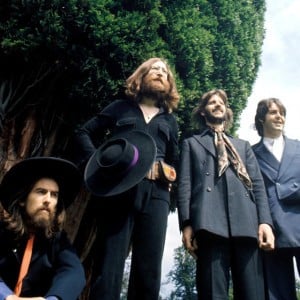
The Beatles
Artist
The Beatles recorded together for a little over seven years. Between October 1962 and May 1970, they released thirteen albums and a number of tracks issued on standalone singles. The catalogue created in that short period has sold more than that of any other group in history and its commercial success continues - the world’s best selling album during the first decade of the 21st century was a collection of The Beatles’ chart-topping singles called 1. But the group’s significance stems not just from huge sales figures. Their music has inspired generation upon generation of musicians, songwriters and producers. As Mark Ronson put it: ‘Everything we take for granted - they absolutely invented it.’ Tom Petty was a teenager during the years The Beatles’ records appeared in quick succession: ‘They were just out in front. There was The Beatles …and then there was everyone else. And everyone else could be great, but The Beatles were leading the way and that’s just irrefutably true.’ The Beatles’ story began in Liverpool in March 1957, when <a href="spotify:artist:4x1nvY2FN8jxqAFA0DA02H">John Lennon</a> (born 9 October 1940) formed a group named The Quarry Men. His life was changed by the excitement of rock ’n’ roll music - heralded by Bill Haley and His Comets, but taken to another level when Elvis Presley stormed the charts during 1956. The next year saw the arrival in the UK of hits by Little Richard, Buddy Holly and The Crickets, the Everly Brothers and, in movie theatres, the exciting rock film The Girl Can’t Help It!, featuring Eddie Cochran singing ‘Twenty Flight Rock’. Introduced to John on 6 July 1957 at a church fete in Woolton, Liverpool, <a href="spotify:artist:4STHEaNw4mPZ2tzheohgXB">Paul McCartney</a> (born 18 June 1942) sang Eddie’s song word perfect. Impressed, John invited the fifteen-year old to join his group. In February 1958, Paul’s younger school pal <a href="spotify:artist:7FIoB5PHdrMZVC3q2HE5MS">George Harrison</a> (born 25 February 1943) won his place in The Quarry Men when he impressed the others with his guitar skills, especially on the current hit instrumental ‘Raunchy’ by Bill Justis. With a constant nucleus of John, Paul and George, the group underwent a series of line-up changes and names. Having gained a dependable drummer - Pete Best - in August 1960, The Beatles made their first visit to West Germany to perform in the clubs of Hamburg. Playing long sets through the night, they spent hundreds of hours onstage during five visits to the city. Back home in Liverpool, their regular stomping ground was The Cavern Club, where they played nearly 300 times. The experience gained in Hamburg and at The Cavern helped to make The Beatles the most proficient and popular group on Merseyside. At this time, a group from Liverpool had the odds stacked against them when trying to gain a foothold in a record business focused on London. In early 1962, they had acquired an ambitious and rather refined manager, record shop boss Brian Epstein. He faced regular rejection from music companies until George Martin signed the group to EMI’s Parlophone label. By fate, The Beatles had found both the ideal manager and perfect producer. The last piece of the picture slotted into place just three weeks before recording their first single on 4 September 1962. <a href="spotify:artist:6DbJi8AcN5ANdtvJcwBSw8">Ringo Starr</a> (born 7 July 1940) was asked to take over as drummer. He had been playing with Rory Storm & The Hurricanes - another Liverpool group who played long stints in the clubs of Hamburg. Ringo’s personality, sense of humour and rock solid, inventive drumming proved to be just right for The Beatles. Their first Parlophone single was released on 5 October 1962. Both sides of the disc were original compositions - a remarkable statement of intent from a group making their first steps in the music business. In fact, George Martin had urged them to record Mitch Murray’s ‘How Do You Do It?’, which he felt was a sure-fire hit. They had reluctantly agreed, but were able to persuade George to shelve the recording in favour of their own songs ‘Love Me Do’ and ‘P.S. I Love You’. Just one example of how The Beatles’ story might have been very different with a less open-minded record producer. George Martin’s faith in The Beatles, and in John and Paul as songwriters, was soon vindicated by the release of ‘Please Please Me’ in January 1963. The single reached the top of all but one of the UK charts. It was followed by the number one ‘From Me To You’ and their first album Please Please Me, which topped the chart for 30 weeks until their next LP replaced it at number one. The debut album featured eight Lennon/McCartney compositions and six cover versions of recent American Rhythm and Blues records. The selection, a result of The Beatles’ constant search for the unusual, showed their impeccable taste. Compared to the sophisticated arrangement of an R&B original like ‘Twist And Shout’, their versions were stripped down reinventions for a four-piece beat group. George Martin has confirmed that ‘it was primarily the American Rhythm and Blues sound that was their inspiration. It’s probably what the so-called Beatles sound was, because all the black music was a tremendous influence on them.’ However, that source was unknown to the majority of their British fans. The super-confident second album With The Beatles was issued in November 1963 when the single ‘She Loves You’ was at number one. Once more, it featured eight original compositions - including ‘All My Loving’ and George Harrison’s first recorded song ‘Don’t Bother Me’ - and six cover versions. A week later, ‘I Want To Hold Your Hand’ was released and also reached number one. The group had become the biggest musical phenomenon in British show business - ever. Among the key factors that led to this success were the chemistry between the four personalities in the group, their immense charm and a daring image - nobody had worn their hair that long. Their interviews were funny and articulate, they had a charismatic presence when performing, and girls screamed and swooned over them. The term ‘Beatlemania’ was coined by the press to describe the hysteria aroused by the group but, as an appearance on The Royal Variety Show demonstrated, their popularity stretched way beyond the teenage market. What The Beatles did next was extraordinary for a British act. In February 1964, they arrived in the USA to appear on the Ed Sullivan Show. They performed to 73 million viewers, the biggest television audience to date, and with ‘I Want To Hold Your Hand’ at the top of the charts, America was suddenly held spellbound by The Beatles. As their success spread across the world, almost everything the group did from then on was unprecedented. In addition to unparalleled success on record - they held all top five positions in the American chart in the first week of April - their first movie A Hard Day’s Night was a box office hit and acclaimed for its wit, invention and unbeatable self-composed songs. Premiered in July 1964, it was perfectly timed to capitalise on their international breakthrough. They rounded off the year with Beatles For Sale and the massive hit single ‘I Feel Fine’. In 1965, they starred in the film Help!. Like their first movie, it was directed by Richard Lester and featured a brilliant batch of songs on its accompanying album. Tucked away towards the end of the LP was a performance by Paul McCartney of his composition ‘Yesterday’. Not even released as a single in the UK, it was a number one in America. It quickly became - and remains - the most covered song of all time. ‘Yesterday’ is an example of how The Beatles and their producer did not compromise; whatever best served the song was always pursued. In the case of ‘Yesterday’, the bold choice was a classical arrangement for string quartet. For the next album Rubber Soul, more studio time was made available to try out unusual instrumentation and adventurous recording techniques. The words of the songs were more mature and the vocal blend, heard on tracks such as ‘Nowhere Man’ and ‘Michelle’, is one of the album’s most distinctive qualities. The Beatles’ sound is, of course, distinguished by the character of their voices. Few groups were blessed with two powerful lead singers as versatile as John Lennon and Paul McCartney. Furthermore, George Harrison not only contributed at least one lead vocal to every album, his voice was integral to the intricate harmony vocals on many Beatles tracks. Ringo Starr usually sang a solo on albums, making such Lennon/McCartney songs as ‘Yellow Submarine’ and ‘With A Little Help From My Friends’ unimaginable without his voice. Released on the same day as Rubber Soul, 5 December 1965, ‘We Can Work It Out’/‘Day Tripper’ was the first of The Beatles’ double A-Sides. They ended another frantically busy year with their final British tour. There was a deadline to complete their next album, because concerts had been scheduled for the summer of 1966 all over the world. But this did not affect their approach to recording at all. The Revolver sessions saw the group reach a new peak of creativity in performance, songwriting and innovative studio techniques. In addition to the songwriting mastery displayed by John and Paul, the LP contained the biggest contribution to date from George with three songs. His caustic ‘Taxman’ was given the status of the album’s opening track. ‘Eleanor Rigby’ is now regarded as a fully realised masterpiece, but when released in August 1966 on Revolver and as a single coupled with ‘Yellow Submarine’, its solemn subject matter and stark arrangement were radically different. A year before, in August 1965, their appearance in front of 55,600 fans at Shea Stadium in New York had broken the record for concert attendance and box-office revenue. But live performance had become an unsatisfying charade ...and dangerous too. Who cares how lucrative it was? That had to stop. The Beatles’ final concert for a paying audience took place at Candlestick Park, San Francisco on 29 August 1966. At the end of 1966, The Beatles started work on ‘Strawberry Fields Forever’. Its long evolution showed the musical imagination and technical experimentation heard on Revolver would be continued. To stop the long wait for new material, ‘Strawberry Fields Forever’ and ‘Penny Lane’ were released in February 1967. Although songs were always credited to Lennon and McCartney, it soon became clear that whoever sang the lead vocal was usually the main composer. The double A-sided single shows how their different stylistic approaches established a perfect counterbalance. Having set themselves a task of writing about their Liverpool childhoods, John’s song is dreamy and steeped in melancholy, while Paul’s is uplifting and brimming with brilliantly observed vignettes. Many were shocked when the unconventional promotional films for both songs were broadcast. Even their moustaches and John’s spectacles were considered to be evidence of how weird The Beatles had become. The square world worried. Everyone else listened over and over until they ‘got it’. Released on 1 June 1967, the immediate artistic and commercial success of Sgt. Pepper’s Lonely Hearts Club Band vindicated the new approach taken by The Beatles. It was the album that provided the soundtrack to the so-called ‘summer of love’, but its appeal is ageless. The Beatles performed their next single ‘All You Need Is Love’ for the first time on the TV programme Our World - broadcast live to an audience of 350 million around the globe. Their place at the top of contemporary pop music was indisputable. Sadly, soon afterwards, The Beatles were shaken by the sudden death of their manager Brian Epstein in August 1967. They rallied to write and direct Magical Mystery Tour - a film shown on television in the UK at Christmas. Some of the millions who saw it, did not like it. As Paul McCartney remembered: ‘They were looking for the plum-pudding special. That’s what they were expecting, and they very much didn’t get it! We were giving it to the young kids. Why shouldn’t they see something far out?’ The music was as successful as ever. The six new songs in the film and the number one ‘Hello, Goodbye’ completed a momentous year of recording. Three more tracks from 1967 remained unreleased until they were heard in the movie Yellow Submarine premiered in 1968. The film’s imaginative animation evoked the ‘psychedelic’ spirit of Sgt. Pepper to reveal the triumph of Love over Evil. Nowadays, following a year as busy as The Beatles had in 1967, an artist would take an extended break. In fact, the group did allow themselves a little time off. The first music of 1968 came in March on their seventeenth single ‘Lady Madonna’. Soon after it was recorded, The Beatles flew to Rishikesh, India for several weeks of meditation with Maharishi Mahesh Yogi. At this remote and peaceful location, they enjoyed a prolific period of songwriting. As George Harrison explained: ‘When we came back, it became apparent that there were more songs than would make up a single album.’ Recorded in five months, the double LP The Beatles was soon known as ‘The White Album’ because of its plain white cover. ‘Hey Jude’ and ‘Revolution’ were the first songs to be heard from the sessions when they were released as a single on 30 August 1968 - the first Beatles record to be pressed with the Apple label. Never interested in repeating themselves, The Beatles took a different approach in the studio in 1968. Ringo Starr remembered: ‘On “The White Album” we ended up being a band again and that’s what I always love. I love being in a band.’ Discussing his songwriting, John Lennon reflected: ‘It was a complete reversal from Sgt. Pepper. My songs on the double album were fairly simple and basic.’ It is still astonishing to hear The Beatles moving through every style of popular music imaginable, including a pastiche of a Hollywood musical number (‘Honey Pie’), an intense blues (‘Yer Blues’) and heavy rock (‘Helter Skelter’). As with Sgt. Pepper, no singles were released from ‘The White Album’ in the UK and USA during the 1960s. But it is full of tracks that could have been huge hits, such as ‘Back In The USSR’, ‘Ob-la-di, Ob-la-da’ and ‘While My Guitar Gently Weeps’. In January 1969, while ‘The White Album’ was still at number one, The Beatles assembled to write and rehearse brand new songs for a televised live concert. The plan changed so that, in the end, their work was documented in a movie released over a year later. Its final scene showed The Beatles performing on the roof of their Apple office building in Savile Row, London with most of the audience gathered in the street below. ‘Get Back’, a number one single from the sessions at Apple, was swiftly followed by ‘The Ballad Of John And Yoko’ - a chronicle of John’s marriage to Yoko Ono and their honeymoon/‘Bed-In’ for peace in Amsterdam. Recorded mostly during the summer of 1969, the last album The Beatles made together was named after the street where EMI’s studios are located. It was a fitting tribute to the place where the majority of their songs had been recorded. The Beatles’ collaboration with producer George Martin and the engineers at Abbey Road had challenged the way that popular music was created. On many occasions this team re-wrote the rule book and set a new standard to which their contemporaries had to aspire. In contrast to the January recordings at Apple, which were ‘as live’ with no overdubs, their return to Abbey Road studios with George Martin resulted in carefully crafted tracks with ambitious musical arrangements. The album’s varied highlights include ‘Come Together’ and two songs that showed George Harrison’s songwriting had hit a peak - ‘Something’ and ‘Here Comes The Sun’. However, the character of Abbey Road is dominated by the sophisticated medley the group called ‘The Long One’. It brought the album, and The Beatles’ recording career, to an impressive conclusion. What a farewell. Measured in terms of its enormous popularity and musical ingenuity, Abbey Road now challenges the status of Sgt. Pepper Lonely Hearts Club Band as The Beatles’ greatest achievement. When the earlier set of recordings from 1969 was finally released as Let It Be in May 1970, news had already broken that the group had split up. The album’s title track and ‘The Long And Winding Road’ took the total of American number ones by The Beatles to twenty in six years - a feat unequalled by any other artist. When The Beatles began making records, no one anticipated that they would be listened to far into the future. Pop music was regarded as disposable. But the timeless appeal of The Beatles’ catalogue ensured it was built to last and highly valued. In 1979, the distinguished conductor and composer Leonard Bernstein wrote: ‘Three bars of “A Day In The Life” still sustain me, rejuvenate me, inflame my senses and sensibilities.’ There is also another dimension to the seductive power of The Beatles’ music. Filled with the spirit of the era in which it was born, it is joyous and generous. ‘All You Need Is Love’. ‘With our love - we could save the world.’ ‘The love you take is equal to the love you make.’ Tom Petty felt it: ‘We grew up with The Beatles and grew up trusting them. They could have chosen to do anything and they chose to do good, which is a great example for the rest of us.’ Kevin Howlett
The Police
Artist
Nominally, the Police were punk rock, but that's only in the loosest sense of the term. The trio's nervous, reggae-injected pop/rock was punky, but it wasn't necessarily punk. All three members were considerably more technically proficient than the average punk or new wave band. Andy Summers had a precise guitar attack that created dense, interlocking waves of sounds and effects. Stewart Copeland could play polyrhythms effortlessly. And Sting, with his high, keening voice, was capable of constructing infectiously catchy pop songs. While they weren't punk, the Police certainly demonstrated that the punk spirit could have a future in pop music. As their career progressed, the Police grew considerably more adventurous, experimenting with jazz and various world musics. All the while, the band's tight delivery and mastery of the pop single kept their audience increasing, and by 1983, they were the most popular rock & roll band in the world. Though they were at the height of their fame, internal tensions caused the band to splinter apart in 1984, with Sting picking up the majority of the band's audience to become an international superstar. Stewart Copeland and Sting (born Gordon Sumner) formed the Police in 1977. Prior to the band's formation, Copeland, the son of a CIA agent, had attended college in California, before he moved to England and joined the progressive rock band Curved Air. Sting was a teacher and a ditch digger who played in jazz-rock bands, including Last Exit, on the side. The two musicians met at a local jazz club and decided to form a progressive pop band with guitarist Henri Padovani. For the first few months, the group played local London pubs. Soon, they were hired to appear as a bleached-blonde punk band in a chewing gum commercial. While the commercial provided exposure, it drew the scorn of genuine punkers. Late in 1977, the band released its first single, "Fall Out," on IRS, an independent label Stewart Copeland founded with his brother Miles, who was also the manager of the Police. The single was a sizable hit for an independent release, selling about 70,000 copies. Padovani was replaced by Andy Summers, a veteran of the British Invasion, following the release of "Fall Out." Summers had previous played with Eric Burdon's second lineup of the Animals, the Zoot Money's Big Roll Band, the Kevin Ayers Band, and Neil Sedaka. The Police signed with A&M by the spring of 1978, committing to a contract that gave the group a higher royalty rate in lieu of a large advance. A&M released "Roxanne" in the spring of 1978, but it failed to chart. The Police set out on a tour of America in the summer of 1978 without any record to support, traveling across the country in a rented van and playing with rented equipment. Released in the fall of 1978, Outlandos d'Amour began a slow climb into the British Top Ten and American Top 30. Immediately after its release, the group began a U.K. tour supporting Alberto y los Trios Paranoias and released the "So Lonely" single. By the spring of 1979, the re-released "Roxanne" had climbed to number 12 on the U.K. charts, taking Outlandos d'Amour to number six. In the summer of 1979, Sting appeared in Quadrophenia, a British film based on the Who album of the same name; later that year, he acted in Radio On. Preceded by the number one British single "Message in a Bottle," Reggatta de Blanc (fall 1979) established the group as stars in England and Europe, topping the U.K. charts for four weeks. Following its release, Miles Copeland had the band tour several countries that rarely received concerts from foreign performers, including Thailand, India, Mexico, Greece, and Egypt. Zenyatta Mondatta, released in the fall of 1980, became the Police's North American breakthrough, reaching the Top Ten in the U.S. and Canada; in England, the album spent four weeks at number one. "Don't Stand So Close to Me," the album's first single, became the group's second number one single in the U.K.; in America, the single became their second Top Ten hit in the spring of 1981, following the number ten placing of "De Do Do Do, De Da Da Da" in the winter. By the beginning of 1981, the Police were able to sell out Madison Square Garden. Capitalizing on their success, the band returned to the studio in the summer of 1981 to record their fourth album with producer Hugh Padgham. The sessions, which were filmed for a BBC documentary hosted by Jools Holland, were completed within a couple months, and the album, Ghost in the Machine, appeared in the fall of 1981. Ghost in the Machine became an instant hit, reaching number one in the U.K. and number two in the U.S. as "Every Little Thing She Does Is Magic" became their biggest hit to date. Following their whirlwind success of 1980 and 1981, in which they were named the Best British Group at the first Brit Awards and won three Grammys, the band took a break in 1982. Though they played their first arena concerts and headlined the U.S. Festival, each member pursued side projects during the course of the year. Sting acted in Brimstone and Treacle, releasing a solo single, "Spread a Little Happiness," from the soundtrack; the song became a British hit. Copeland scored Francis Ford Coppola's Rumble Fish, as well as the San Francisco Ballet's King Lear, and released an album under the name Klark Kent; he also played on several sessions for Peter Gabriel. Summers recorded an instrumental album, I Advance Masked, with Robert Fripp. The Police returned in the summer of 1983 with Synchronicity, which entered the U.K. charts at number one and quickly climbed to the same position in the U.S., where it would stay for 17 weeks. Synchronicity became a blockbuster success on the strength of the ballad "Every Breath You Take." Spending eight weeks at the top of the U.S. charts, "Every Breath You Take" became one of the biggest American hits of all time; it spent four weeks at the top of the U.K. charts. "King of Pain" and "Wrapped Around Your Finger" became hits over the course of 1983, sending Synchronicity to multi-platinum status in America and Britain. The Police supported the album with a blockbuster, record-breaking world tour that set precedents for tours for the remainder of the '80s. Once the tour was completed, the band announced they were going on "sabbatical" in order to pursue outside interests. The Police never returned from sabbatical. During the Synchronicity tour, personal and creative tensions between the bandmembers had escalated greatly, and they had no desire to work together for a while. Sting began working on a jazz-tinged solo project immediately, releasing The Dream of the Blue Turtles in 1985. The album became an international hit, establishing him as a commercial force outside of the band. Copeland and Summers demonstrated no inclination to follow their bandmate's path. Copeland recorded the worldbeat exploration The Rhythmatist in 1985, and continued to compose scores for film and television; he later formed the prog rock band Animal Logic. With his solo career -- which didn't officially begin until the release of 1987's XYZ -- Summers continued his art rock and jazz fusion experiments; he also occasionally collaborated Fripp and John Etheridge. During 1986, the Police made a few attempts to reunite, playing an Amnesty International concert and attempting to record a handful of new tracks for a greatest-hits album in the summer. As the studio session unraveled, it became apparent that Sting had no intention of giving the band his new songs to record, so the group re-recorded a couple of old songs, but even those were thrown off track after Copeland suffered a polo injury. Featuring a new version of "Don't Stand So Close to Me," the compilation Every Breath You Take: The Singles was released for the 1986 Christmas season, becoming the group's fifth straight British number one and their fourth American Top Ten. A few more quiet years passed, but 1992 found Summers taking the helm as musical director for Dennis Miller's late-night show and Sting taking his vows with Trudie Styler. At the wedding, the three Policemen hopped on-stage for a very impromptu set, then, just as quickly, dismissed any rumors of an official Police reunion in the future. That same year a Greatest Hits album was released in the U.K., and in 1994 the box set Message in a Box: The Complete Recordings was released, followed in 1995 by the double album Live. Things again went quite on the Police front as the millennium rolled around. Then, in 2003, the Rock and Roll Hall of Fame inducted the group into its pantheon. The band did reorganize enough to perform three tunes at the induction ceremony, but again, it looked as if that single show was going to be the extent of their collaboration. There was a brief reunion of sorts with original Police guitarist Henri Padovani, on his 2004 album A Croire Que C'Etait Pour la Vie, where Copeland and Sting appeared on one track together -- but still no signs of a full-blown reunion. Sting released his autobiography, Broken Music, in 2003, and by 2006 Copeland's documentary, Everyone Stares: The Police Inside Out, and Summers' autobiography, One Train Later, had joined the ranks. Odd side projects and collaborations with other musicians continued, but the real Police news came in conjunction with another seemingly one-off reunion gig -- this time for the 49th Annual Grammy Awards. Amid the hoopla, it was announced that the Police would indeed be embarking on a world tour, beginning on May 28, 2007, in Vancouver. ~ Stephen Thomas Erlewine
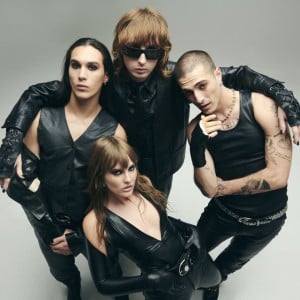
Måneskin
Artist
With their raw, energetic and distorted sound Måneskin are meeting contemporary tastes and bringing back rock’n’roll at the top of international charts. They started as buskers playing in the streets of Rome in 2015 and, within a few years, made it to be the first Italian artist to spread worldwide. Victoria (bass), Damiano (lead singer), Thomas (guitar) and Ethan (drums), all in their twenties, are rebooting rock ‘n’ roll for a new generation of listeners.
Guns N’ Roses
Artist
Guns N' Roses are the bridge separating 1980s and 1990s hard rock, the band responsible for ushering in an era of grim, gritty rock & roll. Where such peers as <a href="spotify:artist:0cc6vw3VN8YlIcvr1v7tBL">Mötley Crüe</a> reveled in the decadence of Sunset Strip sleaze, Guns N' Roses focused on the grimy underbelly of the urban jungle, with guitarists <a href="spotify:artist:4Cqia9vrAbm7ANXbJGXsTE">Slash</a> and <a href="spotify:artist:6EZFa5zhajrKobEc3uePtM">Izzy Stradlin</a> cranking out mean riffs that matched the dark fantasies of <a href="spotify:artist:6lig3yUbu7r6VhnB8YGSlF">Axl Rose</a>, the vocalist who led GNR with a serpentine charm. <a href="spotify:artist:6lig3yUbu7r6VhnB8YGSlF">Rose</a> countered his nasty tendencies with a romantic side, one that flourished on "Sweet Child O' Mine," the soaring ballad that went to number one in 1988, turning the band into superstars in the process. Over the next few years, GNR's 1987 debut album, Appetite for Destruction, sold in monstrous numbers, with "Welcome to the Jungle" and "Paradise City" both reaching Billboard's Top Ten and "Patience," from the 1989 EP GNR Lies, also reaching that exalted position. During this peak, Guns N' Roses were lightning rods for controversy, so they avoided trouble by whiling away in the studio crafting their sequel to Appetite for Destruction, the sprawling twin albums Use Your Illusion I and Use Your Illusion II. Released simultaneously in September 1991, the Illusions still were rooted in hard rock, but <a href="spotify:artist:6lig3yUbu7r6VhnB8YGSlF">Rose</a> also pursued majestic, melodramatic balladry, a trait that reached its apotheosis in "November Rain," a ballad that became their last Top Ten hit in 1992. By that point, Guns N' Roses were no longer the paragons of grubby hard rock, not after <a href="spotify:artist:6olE6TJLqED3rqDCT0FyPh">Nirvana</a> ushered in the grunge revolution of the early '90s. The rise of alternative rock coincided with the erosion of the original GNR lineup, a slow attrition that left <a href="spotify:artist:6lig3yUbu7r6VhnB8YGSlF">Axl Rose</a> as the lone remaining founding member by the end of the '90s. He spent much of the 2000s working on his magnum opus Chinese Democracy, which he delivered in 2008, by which point the group were so out of the mainstream that they weren't even considered retro-hip. The situation would eventually change. By 2015, <a href="spotify:artist:4Cqia9vrAbm7ANXbJGXsTE">Slash</a> and bassist <a href="spotify:artist:3KEe5d2p5jKihMMvuXVhr1">Duff McKagan</a> rejoined Guns N Roses, providing the band with a core of original members that would help this be a stable lineup into the 2020s, when the group showed signs of returning to active recording status via the 2022 EP Hard Skool. Guns N' Roses released their first EP in 1986, which led to a contract with <a href="spotify:search:label%3A%22Geffen%22">Geffen</a>; the following year, the band released their debut album, Appetite for Destruction. They started to build a following with their numerous live shows, but the album didn't start selling until almost a year later, when MTV began playing "Sweet Child O' Mine." Soon, both the album and single shot to number one, and Guns N' Roses became one of the biggest bands in the world. Their debut single, "Welcome to the Jungle," was re-released and shot into the Top Ten, and "Paradise City" followed in its footsteps. By the end of 1988, they released G N' R Lies, which paired four new, acoustic-based songs (including the Top Five hit "Patience") with their first EP. G N' R Lies' inflammatory closer, "One in a Million," sparked intense controversy, as <a href="spotify:artist:6lig3yUbu7r6VhnB8YGSlF">Rose</a> slipped into misogyny, bigotry, and pure violence; essentially, he somehow managed to distill every form of prejudice and hatred into one five-minute tune. Guns N' Roses began work on the long-awaited follow-up to Appetite for Destruction at the end of 1990. In October of that year, the band fired <a href="spotify:artist:1bqTpELuDurfcMOGKvJXzl">Adler</a>, claiming that his drug dependency caused him to play poorly; he was replaced by <a href="spotify:artist:1icjlI6iYtR1JjXTJLf4gG">Matt Sorum</a> from <a href="spotify:artist:49DW3KvkyjHO35mK1JnSyS">the Cult</a>. During recording, the band added Dizzy Reed on keyboards. By the time the sessions were finished, the new album had become two new albums. After being delayed for nearly a year, the albums Use Your Illusion I and Use Your Illusion II were released in September 1991. Messy but fascinating, the records showcased a more ambitious band; while there were still a fair number of full-throttle guitar rockers, there were stabs at <a href="spotify:artist:3PhoLpVuITZKcymswpck5b">Elton John</a>-style balladry, acoustic blues, horn sections, female backup singers, ten-minute art rock epics with several different sections, and a good number of introspective, soul-searching lyrics. In short, Guns N' Roses were now making art; amazingly, they were successful at it. The albums sold very well initially, but while they had seemed destined to set the pace for the decade to come, that turned out not to be the case at all. <a href="spotify:artist:6olE6TJLqED3rqDCT0FyPh">Nirvana</a>'s Nevermind hit number one in early 1992, suddenly making Guns N' Roses -- with all of their pretensions, impressionistic videos, models, and rock star excesses -- seem very uncool. <a href="spotify:artist:6lig3yUbu7r6VhnB8YGSlF">Rose</a> handled the change by becoming a dictator, or at least a petty tyrant; his in-concert temper tantrums became legendary, even going so far as to incite a riot in Montreal. <a href="spotify:artist:6EZFa5zhajrKobEc3uePtM">Stradlin</a> left by the end of 1991, and with his departure the band lost their best songwriter; he was replaced by ex-<a href="spotify:artist:2kKd8kwqemHlbIWZ3eTgf5">Kills for Thrills</a> guitarist <a href="spotify:artist:6Ya7kAthUWvVuSQBX0oIMx">Gilby Clarke</a>. GNR didn't fully grasp the shift in hard rock until 1993, when they released an album of punk covers, The Spaghetti Incident?; it received some good reviews, but the band failed to capture the reckless spirit of not only the original versions but their own Appetite for Destruction. By the middle of 1994, there were rumors flying that GNR were about to break up, since <a href="spotify:artist:6lig3yUbu7r6VhnB8YGSlF">Rose</a> wanted to pursue a new, more industrial direction and <a href="spotify:artist:4Cqia9vrAbm7ANXbJGXsTE">Slash</a> wanted to stick with their blues-inflected hard rock. The band remained in limbo for several more years, and <a href="spotify:artist:4Cqia9vrAbm7ANXbJGXsTE">Slash</a> resurfaced in 1995 with the side project <a href="spotify:artist:4Ros83hWMCi68biw25Xyxg">Slash's Snakepit</a> and an LP, It's Five O'Clock Somewhere. <a href="spotify:artist:6lig3yUbu7r6VhnB8YGSlF">Rose</a> remained out of the spotlight, becoming a virtual recluse and doing nothing but tinkering in the studio; he also recruited various musicians -- including <a href="spotify:artist:3JTMBiL0Bmrxv41WJ8V8cu">Dave Navarro</a>, <a href="spotify:artist:0o1eC2L6gOIyKwkAtxVAWH">Tommy Stinson</a>, and ex-<a href="spotify:artist:0X380XXQSNBYuleKzav5UO">Nine Inch Nails</a> guitarist Robin Finck -- for informal jam sessions. Remaining members were infuriated by <a href="spotify:artist:6lig3yUbu7r6VhnB8YGSlF">Rose</a>'s inclusion of childhood friend Paul Huge in the new sessions when both <a href="spotify:artist:6EZFa5zhajrKobEc3uePtM">Stradlin</a> and <a href="spotify:artist:6Ya7kAthUWvVuSQBX0oIMx">Clarke</a> were excluded from rejoining the band. And a remake of <a href="spotify:artist:22bE4uQ6baNwSHPVcDxLCe">the Rolling Stones</a>' "Sympathy for the Devil" was essentially the straw that broke the camel's back, as <a href="spotify:artist:6lig3yUbu7r6VhnB8YGSlF">Rose</a> cut out some of the other members' contributions and pasted Huge over the song without consulting anyone else. By 1996, <a href="spotify:artist:4Cqia9vrAbm7ANXbJGXsTE">Slash</a> was officially out of Guns N' Roses, leaving <a href="spotify:artist:6lig3yUbu7r6VhnB8YGSlF">Rose</a> the lone remaining survivor from the group's heyday; rumors continued to swirl, and still no new material was forthcoming, though <a href="spotify:artist:6lig3yUbu7r6VhnB8YGSlF">Rose</a> did re-record Appetite for Destruction with a new lineup for rehearsal purposes. The first new original GNR song in eight years, the industrial metal track "Oh My God" finally appeared on the soundtrack to the 1999 Arnold Schwarzenegger film End of Days. Soon after, <a href="spotify:search:label%3A%22Geffen%22">Geffen</a> issued the two-disc Live Era: '87-'93. The year 2000 brought the addition of guitarists Robin Finck (of <a href="spotify:artist:0X380XXQSNBYuleKzav5UO">Nine Inch Nails</a>) and <a href="spotify:artist:0fDF0jjmdouCIeWhNnblwV">Buckethead</a>, and 2001 was greeted with Guns N' Roses' first live dates in nearly seven years, as the band (which consisted of <a href="spotify:artist:6lig3yUbu7r6VhnB8YGSlF">Rose</a> plus guitarists Finck and <a href="spotify:artist:0fDF0jjmdouCIeWhNnblwV">Buckethead</a>, bassist <a href="spotify:artist:0o1eC2L6gOIyKwkAtxVAWH">Stinson</a>, former <a href="spotify:artist:64mPnRMMeudAet0E62ypkx">Primus</a> drummer Brian "Brain" Mantia, childhood friend and guitarist Paul Huge, and longtime GNR keyboardist Dizzy Reed) played a show on New Year's Eve 2000 in Las Vegas; they also performed at the mammoth Rock in Rio festival the following month. On New Year's Eve 2001, the band played almost the exact same set as the year before. An appearance at MTV's 2002 Video Music Awards helped garner interest in the new lineup, but a rusty performance from <a href="spotify:artist:6lig3yUbu7r6VhnB8YGSlF">Rose</a> and an interview where he said his new album wasn't coming out anytime soon didn't do much to further their cause. That summer, GNR started on their first tour in almost eight years, and they managed to fulfill all of their commitments in Europe and Asia. Sadly, they caused a violent and destructive riot in Vancouver when <a href="spotify:artist:6lig3yUbu7r6VhnB8YGSlF">Rose</a> failed to show up for the first date of their North American tour. While he was up to his old shenanigans with the retooled lineup, former <a href="spotify:artist:2UazAtjfzqBF0Nho2awK4z">Stone Temple Pilots</a> vocalist <a href="spotify:artist:0RMOWaq3zw0fdgvaGRMcdA">Scott Weiland</a>, <a href="spotify:artist:4Cqia9vrAbm7ANXbJGXsTE">Slash</a>, <a href="spotify:artist:1icjlI6iYtR1JjXTJLf4gG">Sorum</a>, and <a href="spotify:artist:3KEe5d2p5jKihMMvuXVhr1">McKagan</a> formed the successful <a href="spotify:artist:7CHilrn81OdYjkh4uSVnYM">Velvet Revolver</a> in spring 2002. And so years passed and still no new GNR album, to the point where it became one joke too many. The album was long billed as Chinese Democracy, and occasionally session recordings would leak and make their way onto Internet file-sharing networks. A fascinating article written by Jeff Leeds for The New York Times, published in March 2005, revealed how tangled and costly the making of the album had become. According to the article, titled "The Most Expensive Album Never Released," <a href="spotify:artist:6lig3yUbu7r6VhnB8YGSlF">Rose</a> began work on the album in 1994 and racked up production costs of at least 13 million dollars. Producers involved with the album at one time or another included <a href="spotify:artist:71qdlkRTIt3NCSzshqqL4W">Mike Clink</a>, <a href="spotify:artist:1zf3mY5ZJ69hlt5W24EvYq">Youth</a>, Sean Beavan, and even <a href="spotify:artist:5UnZl2Izl86NC6yfVwG0CT">Roy Thomas Baker</a>. (Curiously, <a href="spotify:artist:3OsRAKCvk37zwYcnzRf5XF">Moby</a> claimed to have been offered the job as well.) <a href="spotify:artist:7yAPsqNhqqsTGsuOSZJg0i">Marco Beltrami</a> and <a href="spotify:artist:3SwPvWceyvNGebkPe2yPKD">Paul Buckmaster</a> were allegedly brought in for orchestral arrangements, and there was a revolving door of guitarists; <a href="spotify:artist:0fDF0jjmdouCIeWhNnblwV">Buckethead</a> left the band in 2004, and <a href="spotify:artist:1pfObbpsH1DmojbIUv2qfs">Ron "Bumblefoot" Thal</a> eventually took his place. In 2006, the record seemed closer to release, as <a href="spotify:artist:6lig3yUbu7r6VhnB8YGSlF">Rose</a> began surfacing in public and even took his band on the road for some shows. The music industry's biggest boondoggle finally bore fruit in 2008, when <a href="spotify:artist:6lig3yUbu7r6VhnB8YGSlF">Axl</a> unveiled an album that was well over a decade in the making. While Chinese Democracy received many rave reviews, and the critical response was positive overall, the record underperformed (its almost impossible) expectations, debuting at number three on the Billboard 200 when it came out in November. A worldwide tour followed. Guitarist <a href="spotify:artist:0eJ47F21cSoOL7T8yieuHh">DJ Ashba</a> of <a href="spotify:artist:3886aFez2HDLkio5tUzmP6">Sixx:A.M.</a> joined Guns N' Roses in 2009, and the band continued working on new material and playing shows, with some of the group's former members occasionally dropping in for guest appearances. In 2012, GNR's classic lineup was inducted into the Rock & Roll Hall of Fame, and <a href="spotify:artist:4Cqia9vrAbm7ANXbJGXsTE">Slash</a>, <a href="spotify:artist:3KEe5d2p5jKihMMvuXVhr1">McKagan</a>, <a href="spotify:artist:6Ya7kAthUWvVuSQBX0oIMx">Clarke</a>, <a href="spotify:artist:1bqTpELuDurfcMOGKvJXzl">Adler</a>, and <a href="spotify:artist:1icjlI6iYtR1JjXTJLf4gG">Sorum</a> reunited and performed a few Appetite-era songs with vocalist <a href="spotify:artist:2YZOQlBE1v44RxPEAVSdVR">Myles Kennedy</a> replacing <a href="spotify:artist:6lig3yUbu7r6VhnB8YGSlF">Rose</a>, who had declined to participate. <a href="spotify:artist:1KGFAcP7ovMYuoQuloDhOj">Bumblefoot</a> left the group in 2014, and in July 2015, <a href="spotify:artist:0eJ47F21cSoOL7T8yieuHh">Ashba</a> announced that he had departed from the band as well. In 2016, GNR embarked on the Not in This Lifetime... Tour, which featured <a href="spotify:artist:6lig3yUbu7r6VhnB8YGSlF">Rose</a> alongside a reunited lineup with guitarist <a href="spotify:artist:4Cqia9vrAbm7ANXbJGXsTE">Slash</a>, bassist <a href="spotify:artist:3KEe5d2p5jKihMMvuXVhr1">Duff McKagan</a>, and several longtime touring members. The tour, whose title was a reference to a quote <a href="spotify:artist:6lig3yUbu7r6VhnB8YGSlF">Rose</a> gave in 2012, also found original drummer <a href="spotify:artist:1bqTpELuDurfcMOGKvJXzl">Steven Adler</a> joining the band for several stops. A remastered version of Appetite for Destruction arrived in 2018 and included a previously unreleased single, "Shadow of Your Love," recorded by the original lineup. The group continued to tour throughout 2020 and 2021, debuting several songs, including "Absurd" and "Hard Skool," the latter of which worked as the title track to the 2022 EP Hard Skool. Another GNR single, "Perhaps," appeared a year later in August 2023. ~ Stephen Thomas Erlewine, Rovi
Queen
Artist
Queen epitomize all the glittery excess of album-oriented rock in the 1970s, marrying the crunch of heavy metal to the pomp of prog rock then leavening the heady mixture with camp humor. It's an eccentric blend that proves to be surprisingly versatile, allowing for the mock-operatic "Bohemian Rhapsody," soaring arena rock like "Somebody to Love," thumping rockers like "Fat Bottomed Girls," the neo-rockabilly "Crazy Little Thing Called Love," and the disco excursion "Another One Bites the Dust." Queen's range proves that they were a deceptively egalitarian band: they're the only classic rock group where each member wrote at least one of the group's signature songs. Despite this division of labor, frontman <a href="spotify:artist:4M1FpEWs2PeYfJe7xxJfhH">Freddie Mercury</a> commanded attention both during his life and after his death. A powerful singer with a penchant for drama, <a href="spotify:artist:4M1FpEWs2PeYfJe7xxJfhH">Mercury</a> possessed an exaggerated charisma and a devilish sense of humor, qualities that made him one of the great rock stars of his generation. Queen's reign began in earnest with 1975's A Night at the Opera and lasted through The Game in 1980, a half-decade filled with big hits that turned into enduring standards. Although the hits weren't as big in the '80s, the group retained its international popularity through <a href="spotify:artist:4M1FpEWs2PeYfJe7xxJfhH">Mercury</a>'s death in 1991. After his passing, Queen's original LPs found a new audience, partially cultivated by surviving members <a href="spotify:artist:2NcbLU1bW55eahD0UgD7U3">Brian May</a> and <a href="spotify:artist:2PZEd7yktruWruOqORRChA">Roger Taylor</a> tending to archival releases and staying on the road, either with <a href="spotify:artist:2gaWNB3YrlTc0KRlHNqhol">Paul Rodgers</a> or <a href="spotify:artist:6prmLEyn4LfHlD9NnXWlf7">Adam Lambert</a> as <a href="spotify:artist:4M1FpEWs2PeYfJe7xxJfhH">Mercury</a>'s replacement. Queen's legacy also was assisted by the 2018 release of Bohemian Rhapsody, a biopic of the band featuring Rami Malek in an Oscar-winning turn as <a href="spotify:artist:4M1FpEWs2PeYfJe7xxJfhH">Freddie Mercury</a>. The origins of Queen lay in the hard rock psychedelic group Smile, which guitarist <a href="spotify:artist:2NcbLU1bW55eahD0UgD7U3">Brian May</a> and drummer <a href="spotify:artist:2PZEd7yktruWruOqORRChA">Roger Taylor</a> joined in 1967. Following the departure of Smile's lead vocalist, <a href="spotify:artist:6EtRaGeodP9stdGz92vPtB">Tim Staffell</a>, in 1971, <a href="spotify:artist:2NcbLU1bW55eahD0UgD7U3">May</a> and <a href="spotify:artist:2PZEd7yktruWruOqORRChA">Taylor</a> formed a group with <a href="spotify:artist:4M1FpEWs2PeYfJe7xxJfhH">Freddie Mercury</a>, the former lead singer for Wreckage. Within a few months, bassist <a href="spotify:artist:6KrRVxAW7yvCYrO1ALqPG5">John Deacon</a> joined them, and they began rehearsing. Over the next two years, as all four members completed college, they simply rehearsed, playing just a handful of gigs. By 1973, they had begun to concentrate on their career, releasing their debut album, Queen, that year and setting out on their first tour. Produced by the band, along with <a href="spotify:artist:5UnZl2Izl86NC6yfVwG0CT">Roy Thomas Baker</a> and John Anthony, Queen was more or less a straight metal album and drew favorable comparisons to <a href="spotify:artist:36QJpDe2go2KgaRleHCDTp">Led Zeppelin</a>. However, it was with their sophomore album, Queen II, that the band unexpectedly broke through in Britain in early 1974. Before its release, the band played Top of the Pops, performing "Seven Seas of Rhye." Both the song and the performance were smash successes, and the single rocketed into the Top Ten, setting the stage for Queen II to reach number five. Following its release, the group embarked on its first American tour, supporting <a href="spotify:artist:6ysQi6NI88X627t2srsWz6">Mott the Hoople</a>. On the strength of their campily dramatic performances, the album climbed to number 43 in the States. Queen released their third album, Sheer Heart Attack, before the end of 1974. The music hall-meets-<a href="spotify:artist:36QJpDe2go2KgaRleHCDTp">Zeppelin</a> "Killer Queen" climbed to number two on the U.K. charts, taking the album to number two as well. Sheer Heart Attack made some inroads in America, setting the stage for the breakthrough of 1975's A Night at the Opera. Queen labored long and hard over the record; according to many reports, it was the most expensive rock record ever made at the time of its release. The first single, "Bohemian Rhapsody," became Queen's signature song, and with its bombastic, mock-operatic structure punctuated by heavy metal riffing, encapsulated their ambitious, genre-bending musical vision. To support "Bohemian Rhapsody," Queen shot one of the first conceptual music videos, and the gamble paid off as the single spent nine weeks at number one in England, breaking the record for the longest run at number one. The song and A Night at the Opera were equally successful in America, as the album climbed into the Top Ten and quickly went platinum. Following A Night at the Opera, Queen were established as superstars, yet they continued to work at a rapid rate. In the summer of 1976, they performed a free concert at London's Hyde Park that broke attendance records, and they released the hit single "Somebody to Love" a few months later. It was followed by A Day at the Races, which was essentially a scaled-down version of A Night at the Opera that reached number one in the U.K. and number five in the U.S. They continued to pile up hit singles in both Britain and America over the next five years, as each of their albums went into the Top Ten, always going gold and usually platinum in the process. Featuring the Top Five double-A-sided single "We Are the Champions"/"We Will Rock You," News of the World became a Top Ten hit in 1977. The following year, Jazz nearly replicated that success, with the single "Fat Bottomed Girls"/"Bicycle Race" becoming an international hit. Queen were at the height of their popularity as they entered the '80s, releasing The Game, their most diverse album to date, in 1980. On the strength of two number one singles -- the rockabilly-inspired "Crazy Little Thing Called Love" and the disco-fied "Another One Bites the Dust" -- The Game became the group's first American number one album. Their largely instrumental soundtrack to Flash Gordon arrived later that same year. With the help of <a href="spotify:artist:0oSGxfWSnnOXhD2fKuz2Gy">David Bowie</a>, Queen were able to successfully compete with new wave with the 1981 hit single "Under Pressure" -- their first U.K. number one since "Bohemian Rhapsody" -- which was included both on 1981's Greatest Hits and 1982's Hot Space. Hot Space proved a moderate hit and paved the way for the more rock-oriented The Works, which arrived in 1984. Also a minor hit, it was buoyed the singles "Radio Ga Ga," "Hammer to Fall," and "I Want to Break Free." Shortly afterward, Queen left <a href="spotify:search:label%3A%22Elektra%22">Elektra</a> and signed with <a href="spotify:search:label%3A%22Capitol%22">Capitol</a>. During this period, Queen began touring foreign markets, cultivating a large, dedicated fan base in Latin America, Asia, and Africa. In 1985, they returned to renewed popularity in Britain in the wake of their show-stopping performance at Live Aid. The following year, they released A Kind of Magic to strong European sales. It debuted at number one in the U.K. and remained there for over 60 weeks, spawning the singles "A Kind of Magic," "One Vision," "Friends Will Be Friends," and "Who Wants to Live Forever." The Miracle followed in 1989 and proved similarly successful, debuting at number one in the U.K. and cracking the Top 30 of the Billboard 200. The group's 14th studio album, 1991's Innuendo, was greeted even more favorably, going gold and peaking at number 30 in the U.S. It was a far bigger success in Europe, entering the U.K. charts at number one. However, by 1991, Queen had drastically scaled back their activity, causing rumors to circulate about <a href="spotify:artist:4M1FpEWs2PeYfJe7xxJfhH">Freddie Mercury</a>'s health. On November 23, the singer issued a statement confirming that he had AIDS. <a href="spotify:artist:4M1FpEWs2PeYfJe7xxJfhH">Mercury</a> died the next day from bronchial pneumonia resulting from his illness. The following spring, the remaining members of Queen held a memorial concert at Wembley Stadium that was broadcast to an international audience of more than one billion. Featuring such guest artists as <a href="spotify:artist:0oSGxfWSnnOXhD2fKuz2Gy">David Bowie</a>, <a href="spotify:artist:3PhoLpVuITZKcymswpck5b">Elton John</a>, <a href="spotify:artist:5MspMQqdVbdwP6ax3GXqum">Annie Lennox</a>, <a href="spotify:artist:6H1RjVyNruCmrBEWRbD0VZ">Def Leppard</a>, and <a href="spotify:artist:3qm84nBOXUEQ2vnTfUTTFC">Guns N' Roses</a>, the concert raised millions for the Mercury Phoenix Trust, which was established for AIDS awareness. The concert coincided with a revival of interest in "Bohemian Rhapsody," which climbed to number two in the U.S. and number one in the U.K. in the wake of its appearance in the Mike Myers comedy Wayne's World. Following <a href="spotify:artist:4M1FpEWs2PeYfJe7xxJfhH">Mercury</a>'s death, the remaining members of Queen were fairly quiet. <a href="spotify:artist:2NcbLU1bW55eahD0UgD7U3">Brian May</a> released his second solo album, Back to the Light, in 1993, ten years after the release of his first record. <a href="spotify:artist:2PZEd7yktruWruOqORRChA">Roger Taylor</a> cut a few albums with the Cross, which he had been playing with since 1987, while <a href="spotify:artist:6KrRVxAW7yvCYrO1ALqPG5">Deacon</a> essentially retired. The three reunited in 1994 to record backing tapes for vocal tracks <a href="spotify:artist:4M1FpEWs2PeYfJe7xxJfhH">Mercury</a> recorded on his deathbed. The resulting album, Made in Heaven, was released in 1995 to strong sales, particularly in Europe. Crown Jewels, a box set repackaging their first eight LPs, followed in 1998. Archival live recordings, DVDs, and compilations continued to appear into the new millennium. The Queen name was revived in 2005, but this time with "+ <a href="spotify:artist:2gaWNB3YrlTc0KRlHNqhol">Paul Rodgers</a>" appended to it. <a href="spotify:artist:2gaWNB3YrlTc0KRlHNqhol">Rodgers</a>, the former lead singer of <a href="spotify:artist:2e53aHBQdCMKWqHDuyJsjC">Free</a> and <a href="spotify:artist:5AEG63ajney2BoDXi0Vb84">Bad Company</a>, joined <a href="spotify:artist:2NcbLU1bW55eahD0UgD7U3">Brian May</a> and <a href="spotify:artist:2PZEd7yktruWruOqORRChA">Roger Taylor</a> (<a href="spotify:artist:6KrRVxAW7yvCYrO1ALqPG5">John Deacon</a> remained retired) for several live shows, one of which was documented on 2005's Return of the Champions, a double-disc release issued by the <a href="spotify:search:label%3A%22Hollywood%22">Hollywood</a> label. International touring continued, as did a new studio album featuring <a href="spotify:artist:2gaWNB3YrlTc0KRlHNqhol">Rodgers</a>' vocals. Released under the "Queen + <a href="spotify:artist:2gaWNB3YrlTc0KRlHNqhol">Paul Rodgers</a>" tag, The Cosmos Rocks appeared in September 2008, followed by an American release one month later. Reception was decidedly mixed. <a href="spotify:artist:2gaWNB3YrlTc0KRlHNqhol">Rodgers</a> departed Queen in 2009 and in his wake came a new compilation called Absolute Greatest. TV appearances followed over the next two years, including a spot on the 2009 American Idol finale where they performed with <a href="spotify:artist:6prmLEyn4LfHlD9NnXWlf7">Adam Lambert</a>, and in 2010 Queen wound up leaving their home of <a href="spotify:search:label%3A%22EMI%22">EMI</a> for <a href="spotify:search:label%3A%22Island%22">Island</a>, which brought all of the group's recordings to <a href="spotify:search:label%3A%22Universal+Records%22">Universal Records</a>. A new round of reissues followed in 2011, along with a performance with <a href="spotify:artist:6prmLEyn4LfHlD9NnXWlf7">Lambert</a> at the MTV Europe Music Awards, and the vocalist soon became a fixture with the band, as Queen performed several big concerts and television performances in 2012 and 2013, followed by a full tour in 2014. Also that year, Queen released another compilation, Queen Forever, which was anchored by reworked versions of three old songs, including a solo number by <a href="spotify:artist:4M1FpEWs2PeYfJe7xxJfhH">Mercury</a> where he duetted with <a href="spotify:artist:3fMbdgg4jU18AjLCKBhRSm">Michael Jackson</a>. The archival live album, A Night at the Odeon, featuring the band's 1975 Christmas Eve performance at London's Hammersmith Odeon, appeared in 2015. Over the next two years, the band stayed active, appearing live with <a href="spotify:artist:6prmLEyn4LfHlD9NnXWlf7">Lambert</a>. In 2018, Queen was the subject of the biopic Bohemian Rhapsody, which starred Rami Malek as <a href="spotify:artist:4M1FpEWs2PeYfJe7xxJfhH">Freddie Mercury</a>. The band contributed to the soundtrack, which featured classic tracks as well as live recordings and several songs reworked for the film. Bohemian Rhapsody became an international hit and took home four Academy Awards, including Malek's award for Best Actor. A concert collection featuring <a href="spotify:artist:6prmLEyn4LfHlD9NnXWlf7">Lambert</a>, Live Around the World, arrived in October 2020 but the next major Queen project was an elaborate Collector's Edition reissue of The Miracle. The 1989 album was expanded into a five-CD set containing additional Blu-Rays, DVDs and LPs, all featuring previously unheard material, such as the <a href="spotify:artist:4M1FpEWs2PeYfJe7xxJfhH">Mercury</a>-sung "Face It Alone," which was released as a single prior to the box's October 2022 release. The band continued to tour semi-regularly with <a href="spotify:artist:6prmLEyn4LfHlD9NnXWlf7">Lambert</a> as vocalist, hitting North America in 2023 and Japan in early 2024.~ Stephen Thomas Erlewine
Red Hot Chili Peppers
Artist
We went in search of ourselves as the band that we have somehow always been. Just for the fun of it we jammed and learned some old songs. Before long we started the mysterious process of building new songs. A beautiful bit of chemistry meddling that had befriended us hundreds of times along the way. Once we found that slip stream of sound and vision, we just kept mining. With time turned into an elastic waist band of oversized underwear, we had no reason to stop writing and rocking. It felt like a dream. When all was said and done, our moody love for each other and the magic of music had gifted us with more songs than we knew what to do with. Well we figured it out. 2 double albums released back to back. The second of which is easily as meaningful as the first or should that be reversed. 'Return of the Dream Canteen' is everything we are and ever dreamed of being. It’s packed. Made with the blood of our hearts, yours truly, the Red Hot Chili Peppers.
Horror punk
Misfits
Artist
The Misfits
Post-punk
The Cure
Artist
THE CURE - FEELS LIKE A HUNDRED WORDS BIOGRAPHY >FORMED IN CRAWLEY, SUSSEX, ENGLAND. PLAYED IT'S FIRST SHOW IN 1978. HAS PERFORMED AROUND 1,500 CONCERTS TO DATE >HAS RELEASED 13 STUDIO ALBUMS. SEVERAL CONCERT FILMS. A FEW LIVE ALBUMS. SOME SOUNDTRACK SONGS. MORE THAN 40 SINGLES. A COUPLE OF BOX SETS. A COUPLE OF BOOKS. A GREATEST HITS THING. A HANDFUL OF COVERS. AND VARIOUS OTHER STUFF >2019 ROCK’N’ROLL HALL OF FAMER HAS HAD 13 MEMBERS IN 42 YEARS. 2020 FEATURES 5 OF THEM: ROBERT SMITH (VOICE & GUITARS) / SIMON GALLUP (BASS) / JASON COOPER (DRUMS) / ROGER O'DONNELL (KEYBOARDS) / REEVES GABRELS (GUITARS) >PLEASE SEE THIS BIOGRAPHY FOR A LONGER STORY http://www.thecure.com/bio/
Interpol
Artist
Interpol began in New York in 1997, when guitarist Daniel Kessler recruited bassist Carlos Dengler and singer/guitarist Paul Banks to form a band. In 2002, with Sam Fogarino on drums, the band signed to Matador records and released <a href="spotify:album:4sW8Eql2e2kdRP1A1R1clG" data-name="Turn On The Bright Lights">Turn On The Bright Lights</a> which made it to 10th position on NME’s list of 2002’s top releases and Pitchfork named it the year’s #1 album. Over the next decade and a half Interpol would go on to wide critical and commercial acclaim, with five subsequent high charting records on the Billboard 200; earning rave reviews across the map from Rolling Stone to TIME; performing on late night television shows including The Late Show with David Letterman and Conan and playing major festivals like Coachella and Glastonbury and headlining Mexico’s Corona Capital. The band (Banks, Kessler and Fogarino) have just finished recording 'The Other Side of Make-Believe,' their latest studio album with legendary production duo Flood & Moulder, out on Matador Records, worldwide, July 15th. Pre-save the new album here: https://interpol.ffm.to/tosomb
Lebanon Hanover
Artist
An ice cold reply to the alienated world coming from two warm beating hearts. The duo of Larissa Iceglass and William Maybelline appear as true romantics of the modern age, admiring William Wordsworth, fascinated by the beauty of art nouveau aesthetics, exploring British seashores and forests at night as well as inspired by the urbanism of Berlin. official page www.lebanonhanover.com https://lebanonhanover.bandcamp.com/ https://music.apple.com/us/artist/lebanon-hanover/639573641 http://fabrikarecords.com/
The Smiths
Artist
The Smiths were the definitive British indie rock band of the '80s, marking the end of synth-driven new wave and the beginning of the guitar rock that dominated English rock into the '90s. Sonically, the group was indebted to the British Invasion, crafting ringing, melodic three-minute pop singles, even for their album tracks. But their scope was far broader than that of a revivalist band. The group's core members, vocalist Morrissey and guitarist Johnny Marr, were obsessive rock fans inspired by the D.I.Y. ethics of punk, but they also had a fondness for girl groups, pop, and rockabilly. Morrissey and Marr also represented one of the strangest teams of collaborators in rock history. Marr was the rock traditionalist, looking like an elegant version of Keith Richards during the Smiths' heyday and meticulously layering his guitar tracks in the studio. Morrissey, on the other hand, broke from rock tradition by singing in a keening, self-absorbed croon, embracing the forlorn, romantic poetry of Oscar Wilde, publicly declaring his celibacy, and making no secret of his disgust for most of his peers. While it eventually led to the Smiths' early demise, the friction between Morrissey and Marr resulted in a flurry of singles and albums over the course of three years that provided the blueprint for British guitar rock in the following decade. Before forming the Smiths in 1982, Johnny Marr (born John Maher, October 31, 1963; guitar) had played in a variety of Manchester-based rock & roll bands, including Sister Ray, Freaky Part, White Dice, and Paris Valentinos. On occasion, Marr had come close to a record contract -- one of his bands won a competition Stiff Records held to have Nick Lowe "produce your band" -- but he never quite made the leap. Though Morrissey (born Steven Patrick Morrissey, May 22, 1959; vocals) had sung for a few weeks with the Nosebleeds and auditioned for Slaughter & the Dogs, he had primarily contented himself to being a passionate, vocal fan of both music and film. During his teens, he wrote the Melody Maker frequently, often getting his letters published. He had written the biography/tribute James Dean Isn't Dead, which was published by the local Manchester publishing house Babylon Books in the late '70s, as well as another book on the New York Dolls; he was also the president of the English New York Dolls fan club. Morrissey met Marr, who was then looking for a lyricist, through mutual friends in the spring of 1982. The pair began writing songs, eventually recording some demos with the Fall's drummer, Simon Wolstencroft. By the fall, the duo had settled on the name the Smiths and recruited Marr's schoolmate Andy Rourke as their bassist and Mike Joyce as their drummer. The Smiths made their live debut late in 1982, and by the spring of 1983, the group had earned a small but loyal following in their hometown of Manchester and had begun to make inroads in London. Rejecting a record deal with the Mancunian Factory Records, the band signed with Rough Trade for a one-off single, "Hand in Glove." With its veiled references to homosexuality and its ringing riffs, "Hand in Glove" became an underground sensation in the U.K., topping the independent charts and earning the praise of the U.K. music weeklies. Soon, Morrissey's performances became notorious as he appeared on-stage wearing a hearing aid and with gladioli stuffed in his back pockets. His interviews were becoming famous for his forthright, often contrary opinions, which helped the band become a media sensation. By the time of the group's second single, "This Charming Man," in late 1983, the Smiths had already been the subject of controversy over "Reel Around the Fountain," a song that had been aired on a BBC radio session and was alleged to condone child abuse. It was the first time that Morrissey's detached, literary, and ironic lyrics were misinterpreted and it wouldn't be the last. "This Charming Man" reached number 25 on the British charts in December of 1983, setting the stage for "What Difference Does It Make"'s peak of number 12 in February. The Smiths' rise to the upper reaches of the British charts was swift, and the passion of their fans, as well as the U.K. music press, indicated that the group had put an end to the synth-powered new wave that dominated Britain in the early '80s. After rejecting their initial stab at a first album, they released their debut, The Smiths, in the spring of 1984 to strong reviews and sales -- it peaked at number two. A few months later, the group backed '60s pop vocalist Sandie Shaw -- who Morrissey had publicly praised in an article -- on a version of "Hand in Glove" that was released and reached the Top 40. "Heaven Knows I'm Miserable Now" reached number ten, becoming their highest-charting single amid a storm of controversy about its B-side, "Suffer Little Children," which was about the notorious Moors Murders. More controversy appeared when Morrissey denounced the hunger-relief efforts of Band Aid, but the group's popularity was not affected. Though the Smiths had become the most popular new rock & roll group in Britain, the group failed to make it outside of underground and college radio in the U.S., partially because they never launched a full-scale tour. At the end of the year, "William It Was Really Nothing" became a Top 20 hit and Hatful of Hollow, a collection of B-sides, BBC sessions, and non-LP singles, went to the Top Ten, followed shortly by "How Soon Is Now," which peaked at number 24. Meat Is Murder, the band's second proper studio album, entered the British charts at number one in February of 1985, despite some criticism that it was weaker than The Smiths. Around the time of the release of Meat Is Murder, Morrissey's interviews were becoming increasingly political as he trashed the Thatcher administration and campaigned for vegetarianism; he even claimed that the Smiths were all vegetarians, and he forbade the remaining members to be photographed eating meat, even though they were still carnivores. Marr, for his part, was delving deeply into the rock & roll lifestyle and looked increasingly like a cross between Keith Richards and Brian Jones. By the time the non-LP "Shakespeare's Sister" reached number 26 in the spring of 1985, the Smiths had spawned a rash of soundalike bands, including James, who opened for the group on their spring 1985 tour, most of whom Morrissey supported. However, all of the media attention on the Smiths launched a mild backlash later in 1985, when "That Joke Isn't Funny Anymore" was pulled from Meat Is Murder and failed to reach the Top 40. "The Boy with the Thorn in His Side" revived the band's fortunes in the fall of 1985, and their third album, The Queen Is Dead, confirmed their popularity upon its release in the spring of 1986. Greeted with enthusiastic reviews and peaking at number two on the U.K. charts, The Queen Is Dead also expanded their cult following in the U.S., cracking the Top 100. Shortly before the album was completed, former Aztec Camera guitarist Craig Gannon became the band's rhythm guitarist, and he played with the band throughout their 1986 international tour, including a botched American tour. The non-LP "Panic," which was criticized as racist by some observers for its repeated refrain of "Burn down the disco...hang the DJ," reached number 11 late in the summer. A few months after its release, Marr was seriously injured in a car crash. During his recuperation, Gannon was fired from the band, as was Rourke, who was suffering from heroin addiction. Though Rourke was later reinstated, Gannon was never replaced. The Smiths may have been at the height of their popularity in early 1987, with the non-LP singles "Shoplifters of the World" and "Sheila Take a Bow" reaching number 11 and ten respectively, and the singles and B-sides compilation The World Won't Listen (revamped for U.S. release as Louder Than Bombs later in 1987) debuting at number two, but Marr was growing increasingly disenchanted with the band and the music industry. Over the course of the year, Morrissey and Marr became increasingly irritated with each other. The singer wished that Marr would stop playing with other artists like Bryan Ferry and Billy Bragg, while the guitarist was frustrated with Morrissey's devotion to '60s pop and his hesitancy to explore new musical directions. A few weeks before the fall release of Strangeways, Here We Come, Marr announced that he was leaving the Smiths. Morrissey disbanded the group shortly afterward and began a solo career, signing with Parlophone in the U.K. and staying with the Smiths' U.S. label, Reprise. Marr played as a sideman with a variety of artists, eventually forming Electronic with New Order frontman Bernard Sumner. Rourke retired from recording and Joyce became a member of the reunited Buzzcocks in 1991. Rank, a live album recorded on the Queen Is Dead tour, was released in the fall of 1988. It debuted at number two in the U.K. A widely criticized, two-part The Best of the Smiths compilation was released in 1992; the praised Singles compilation was released in 1995. Joyce and Rourke sued Morrissey and Marr in 1991, claiming they received only ten percent of the group's earnings while the songwriters received 40 percent. Rourke eventually settled out of court, but Joyce won his case in late 1996. ~ Stephen Thomas Erlewine
Bauhaus
Artist
Bauhaus are the founding fathers of goth rock, creating a minimalistic, overbearingly gloomy style of post-punk rock driven by jagged guitar chords and cold, distant synthesizers. Throughout their brief career, the band explored all the variations on their bleak musical ideas, adding elements of glam rock, experimental electronic rock, funk, and heavy metal. While their following has never expanded beyond a cult, they kept their cult alive well into the '90s, a full decade after they disbanded. The group formed in 1978 in Northampton, England. Guitarist/vocalist <a href="spotify:artist:0L4nRBwqdugqIWCpAzjB9g">Daniel Ash</a>, bassist/vocalist <a href="spotify:artist:2EftfRcBC3whzGDBGOwIVG">David J</a> (born <a href="spotify:artist:2EftfRcBC3whzGDBGOwIVG">David Jay Haskins</a>), and drummer <a href="spotify:artist:3iEq4H8y3Xk5lGAqVLePw1">Kevin Haskins</a> had played together as a trio called <a href="spotify:artist:40WVkG2uC7KGLhXdaKQLx2">the Craze</a> before forming Bauhaus with vocalist <a href="spotify:artist:7zeHJIIfNStVfxlbT72UwY">Peter Murphy</a>. Originally, the band was called Bauhaus 1919 after the German art movement; by 1979, they had dropped the 1919 from their name. In August of 1979, the group released their debut single, "Bela Lugosi's Dead," on the independent record label Small Wonder Records. Although it did not make the pop charts, it became the de facto goth rock anthem, staying in the U.K. independent charts for years. Three months later, the group signed with Beggars Banquet's subsidiary label, 4AD. The group's second single, "Dark Entries," was released in January 1980. Following their first European tour, Bauhaus released their third single, "Terror Couple Kill Colonel," in the summer of that year, which became a hit on the indie charts. After touring America for the first time in September, the group released a version of <a href="spotify:artist:3dBVyJ7JuOMt4GE9607Qin">T. Rex</a>'s "Telegram Sam." In October, they released their debut album, In the Flat Field, which reached number one on the independent charts and number 72 on the pop charts. The success of the album led to their first hits on the pop charts; both "Kick in the Eye" and "The Passion of Lovers" made the U.K. Top 60 in 1981. In October, they released their second album, Mask, which revealed a more ambitious musical direction; the new direction, which featured elements of metal and electronic sonic textures, made the music more accessible without abandoning the dark, foreboding core of their music. Mask was a commercial success, peaking at number 30 on the U.K. charts. In March of 1982, Bauhaus released the EP Searching for Satori, which reached number 45 on the U.K. charts; another successful single, "Spirit," followed in the summer. That fall, the group had a number 15 hit with their version of <a href="spotify:artist:0oSGxfWSnnOXhD2fKuz2Gy">David Bowie</a>'s "Ziggy Stardust." The success of the single propelled their third album, The Sky's Gone Out, to number four on the album charts. <a href="spotify:artist:7zeHJIIfNStVfxlbT72UwY">Murphy</a> contracted pneumonia at the beginning of 1983, which prevented him from participating in the recording sessions for Bauhaus' fourth album, Burning From the Inside. Consequently, the record featured substantial contributions from <a href="spotify:artist:0L4nRBwqdugqIWCpAzjB9g">Ash</a> and <a href="spotify:artist:2EftfRcBC3whzGDBGOwIVG">J</a>, who both pursued more personal and atmospheric directions. After <a href="spotify:artist:7zeHJIIfNStVfxlbT72UwY">Murphy</a> recovered, the band toured Japan and then returned to the U.K. to promote the summer release of Burning From the Inside. The album was another hit, peaking at number 13. In July, Bauhaus split up. After Bauhaus' breakup, <a href="spotify:artist:7zeHJIIfNStVfxlbT72UwY">Murphy</a> formed <a href="spotify:artist:26K835MEHI621LFChKL16Z">Dali's Car</a> with <a href="spotify:artist:7vPXrGlSGukcwpaPxUfKKR">Japan</a>'s <a href="spotify:artist:3Un3HwgAkcv3McRBMnwytr">Mick Karn</a> and then pursued a solo career. <a href="spotify:artist:0L4nRBwqdugqIWCpAzjB9g">Ash</a> continued with <a href="spotify:artist:5aBEGOeWQCJfptic9xyaAb">Tones on Tail</a>, a project he began in 1981; <a href="spotify:artist:3iEq4H8y3Xk5lGAqVLePw1">Kevin Haskins</a> also joined the band after Bauhaus' split. <a href="spotify:artist:2EftfRcBC3whzGDBGOwIVG">J</a> made some solo records and joined <a href="spotify:artist:7zi9v3F5KzAuS3MkJtm5dc">the Jazz Butcher</a> briefly. <a href="spotify:artist:0L4nRBwqdugqIWCpAzjB9g">Ash</a>, <a href="spotify:artist:3iEq4H8y3Xk5lGAqVLePw1">Haskins</a>, and <a href="spotify:artist:2EftfRcBC3whzGDBGOwIVG">J</a> formed <a href="spotify:artist:09mvgMBvJkxarNIDGdwPWg">Love and Rockets</a> in 1985 after a proposed Bauhaus reunion fell apart because <a href="spotify:artist:7zeHJIIfNStVfxlbT72UwY">Peter Murphy</a> wasn't interested in the project. More than a decade later, however, with the careers of both <a href="spotify:artist:09mvgMBvJkxarNIDGdwPWg">Love and Rockets</a> and <a href="spotify:artist:7zeHJIIfNStVfxlbT72UwY">Peter Murphy</a> at a standstill, Bauhaus re-formed for several live dates in Los Angeles, mounting a full-blown tour in 1998; the two-disc Gotham documented the reunited group's performance at New York's Hammerstein Ballroom. In 2008, the band resurfaced again with Go Away White, a studio album they promised as their last statement. ~ Stephen Thomas Erlewine, Rovi
Siouxsie and the Banshees
Artist
Siouxsie and the Banshees were among the longest-lived and most successful acts to emerge from the London punk community; over the course of a career that lasted two decades, they evolved from an abrasive, primitive art punk band into a stylish, sophisticated unit that notched 18 Top 40 hits in the U.K. as well as a left-field Top 40 hit in the U.S. Throughout its numerous lineup changes and textural shifts, the group remained under the leadership of vocalist Siouxsie Sioux, born Susan Dallion on May 27, 1958. She and the Banshees' initial lineup emerged from the Bromley Contingent, a notorious group of rabid Sex Pistols fans; inspired by the growing punk movement, Dallion adopted the name Siouxsie and formed the Banshees in September 1976. In addition to bassist Steven Severin and guitarist Marco Pirroni, the band included drummer John Simon Ritchie, who assumed the name Sid Vicious; they debuted later that year at the legendary Punk Festival held at London's 100 Club, where their entire set consisted of a savage, 20-minute rendition of "The Lord's Prayer." Soon after, Vicious joined the Sex Pistols, while Pirroni went on to join Adam and the Ants. The core duo of Sioux and Severin, along with new guitarist John McKay and drummer Kenny Morris, reached the U.K. Top Ten with their 1978 debut single, "Hong Kong Garden"; their grim, dissonant first LP, The Scream, followed later in the year. Two days into a tour for their 1979 follow-up, Join Hands, both McKay and Morris abruptly departed, and guitarist Robert Smith of the Cure (the tour's opening act) and ex-Slits and Big in Japan drummer Budgie were enlisted to fill the void; although Smith returned to the Cure soon after, Budgie became a permanent member of the group, and remained with the Banshees throughout the duration of their career. With ex-Magazine guitarist John McGeoch on board, the band returned to the studio for 1980's Kaleidoscope, a subtler and more melodic effort than their prior records; on the strength of the U.K. Top 20 smash "Happy House," the album reached the Top Five. A year later, the Banshees released the psychedelic Juju, along with Once Upon a Time, a collection of singles; at the same time, Sioux and Budgie formed the Creatures, an ongoing side project. Following 1982's experimental A Kiss in the Dreamhouse, McGeoch fell ill, and Smith temporarily rejoined for the group's planned tour; a pair of 1983 performances at London's Royal Albert Hall were recorded and later issued as Nocturne. Also in 1983, Severin and Smith teamed as the one-off project the Glove for the LP Blue Sunshine. After his recovery, McGeoch opted not to return, so the Banshees recruited former Clock DVA guitarist John Carruthers after Smith exited following the sessions for 1984's dark, atmospheric Hyaena. With 1986's Tinderbox, Siouxsie and the Banshees finally reached the U.S. Top 100 album charts, largely on the strength of the excellent single "Cities in Dust." After 1987's all-covers collection Through the Looking Glass, Carruthers took his leave and was replaced by ex-Specimen guitarist Jon Klein and keyboardist Martin McCarrick for 1988's Peepshow, a techno-inspired outing that gave the group its first U.S. chart single with "Peek-a-Boo." In 1991 -- the year in which Sioux and Budgie married -- the Banshees performed on the inaugural Lollapalooza tour; their concurrent LP, Superstition, was their most commercially successful, spawning their lone U.S. Top 40 hit, "Kiss Them for Me." Another singles collection, Twice Upon a Time, followed in 1992 before the group returned after a long absence with 1995's stylish The Rapture, produced in part by John Cale. A year later, the nostalgia surrounding the reunion of their former heroes the Sex Pistols prompted Siouxsie and the Banshees to finally call it quits; Siouxsie and Budgie turned to the Creatures as their primary project, while Severin composed the score for the controversial film Visions of Ecstasy. In 2002 Siouxsie, Severin, and Budgie reunited, joined by guitarist Knox Chandler, for the so-called Seven Year Itch tour, eventually leading to a live album, Seven Year Itch, and a DVD concert film in 2003. Universal Music began releasing the band's albums remastered with bonus tracks in 2006. Voices on the Air: The Peel Sessions, drawn from live recordings made for the John Peel radio show between 1978 and 1986, appeared that same year. ~ Jason Ankeny
Joy Division
Artist
Formed in the wake of the punk explosion in England, Joy Division became the first band in the post-punk movement by later emphasizing not anger and energy but mood and expression, pointing ahead to the rise of melancholy alternative music in the '80s. Though the group's raw initial sides fit the bill for any punk band, Joy Division later incorporated synthesizers (taboo in the low-tech world of '70s punk) and more haunting melodies, emphasized by the isolated, tortured lyrics of its lead vocalist, Ian Curtis. While the British punk movement shocked the world during the late '70s, Joy Division's quiet storm of musical restraint and emotive power proved to be just as important to independent music in the 1980s. The band was founded in 1976, soon after <a href="spotify:artist:1u7kkVrr14iBvrpYnZILJR">the Sex Pistols</a> had made their first appearance in Manchester. Guitarist Bernard Albrecht (b. Bernard Dicken, January 4, 1956) and bassist <a href="spotify:artist:7yE0pgnhHPnPk4GZVuEpZM">Peter Hook</a> (b. February 13, 1956) had met while at the show and later formed a band called the Stiff Kittens; after placing an ad through a Manchester record store, they added vocalist Ian Curtis (b. July 15, 1956) and drummer Steve Brotherdale. Renamed <a href="spotify:artist:71fREgcpSGwfeKqPitTf3t">Warsaw</a> (from David Bowie's "Warszawa"), the band made its live debut the following May, supporting <a href="spotify:artist:2DxlS3lTLFIq70S7ap5H3y">the Buzzcocks</a> and <a href="spotify:artist:0XLpzWw7BLdlsf32qlMXKV">Penetration</a> at Manchester's Electric Circus. After the recording of several demos, Brotherdale quit the group in August 1977, prompting the hire of Stephen Morris (b. October 28, 1957). A name change to Joy Division in late 1977 -- necessitated by the punk band <a href="spotify:artist:7FYWZx1rlDCaE5FNJqNC0E">Warsaw Pakt</a> -- was inspired by Karol Cetinsky's World War II novel The House of Dolls. (In the book, the term "joy division" was used as slang for concentration camp units wherein female inmates were forced to prostitute themselves for the enjoyment of Nazi soldiers.) Playing frequently in the north country during early 1978, the quartet gained the respect of several influential figures: Rob Gretton, a Manchester club DJ who became the group's manager; Tony Wilson, a TV/print journalist and owner of the Factory Records label; and Derek Branwood, a record executive with RCA Northwest, who recorded sessions in May 1978, for what was planned to be Joy Division's self-titled debut LP. Though several songs bounded with punk energy, the rest of the album showed at an early age the band's later trademarks: Curtis' themes of post-industrial restlessness and emotional despair, <a href="spotify:artist:5WQy6bD9vgxC50XWhnqIy8">Hook</a>'s droning bass lines, and the jagged guitar riffs of <a href="spotify:artist:0JLWCJW5fXlpK5FujWv1N3">Albrecht</a>. The album should have been hailed as a punk classic, but when a studio engineer added synthesizers to several tracks -- believing that the punk movement had to move on and embrace new sounds -- Joy Division scrapped the entire LP. (Titled Warsaw for a 1982 bootleg, the album was finally given wide issue ten years later.) The first actual Joy Division release came in June 1978, when the initial mid-1977 demos were released as the EP An Ideal for Living, on the band's own Enigma label. Early in 1979, the buzz surrounding Joy Division increased with a session recorded for John Peel's BBC radio show. The group began recording with producer <a href="spotify:artist:0K0Cb0h8kpL0AsoxRGTcNb">Martin Hannett</a> and released Unknown Pleasures on old friend Tony Wilson's Factory label in July 1979. The album enjoyed immense critical acclaim and a long stay on the U.K.'s independent charts. Encouraged by the punk buzz, the American Warner Bros. label offered a large distribution contract that fall. The band ignored it but did record another radio session for John Peel on November 26th. (Both sessions were later collected on the Peel Sessions album.) During late 1979, Joy Division's manic live show gained many converts, partly due to rumors of Curtis' ill health. An epilepsy sufferer, he was prone to breakdowns and seizures while on stage -- it soon grew difficult to distinguish the fits from his usual on-stage jerkiness and manic behavior. As the live dates continued and the new decade approached, Curtis grew weaker and more prone to seizures. After a short rest over the Christmas holiday, Joy Division embarked on a European tour during January, though several dates were cancelled because of Curtis. The group began recording its second LP after the tour ended (again with <a href="spotify:artist:0K0Cb0h8kpL0AsoxRGTcNb">Hannett</a>), and released "Love Will Tear Us Apart" in April. The single was again praised but failed to move beyond the independent charts. After one gig in early May, the members of Joy Division were given two weeks of rest before beginning the group's first U.S. tour. Two days before the scheduled flight, however, Curtis was found dead in his home, the victim of a self-inflicted hanging. Before Curtis' death, the band had agreed that Joy Division would cease to exist if any member left, for any reason. Ironically though, the summer of 1980 proved to be the blooming of the band's commercial status, when a re-release of "Love Will Tear Us Apart" rose to number 13 on the British singles chart. In August, the release of Closer finally united critics' positivity with glowing sales, as the album peaked at number six. Before the end of the summer, Unknown Pleasures was charting as well. By January of the following year, <a href="spotify:artist:5WQy6bD9vgxC50XWhnqIy8">Hook</a>, Morris, and <a href="spotify:artist:0JLWCJW5fXlpK5FujWv1N3">Albrecht</a> (now <a href="spotify:artist:0JLWCJW5fXlpK5FujWv1N3">Bernard Sumner</a>) had formed <a href="spotify:artist:0yNLKJebCb8Aueb54LYya3">New Order</a>, with <a href="spotify:artist:0JLWCJW5fXlpK5FujWv1N3">Sumner</a> taking over vocal duties. Also in 1981, the posthumous release of Still -- including two sides of rare tracks and two of live songs -- rose to number five on the British charts. As <a href="spotify:artist:0yNLKJebCb8Aueb54LYya3">New Order</a>'s star began to shine during the '80s, the group had trouble escaping the long shadow of Curtis and Joy Division. "Love Will Tear Us Apart" charted for the third time in 1983, and 1988 also proved a big year for the defunct band: the reissued single "Atmosphere" hit number 34 and a double-album compilation entitled Substance reached number seven in the album charts. Seven years later, the 15th anniversary of Curtis' death was memorialized with a new JD compilation (Permanent: Joy Division 1995), a tribute album (A Means to an End), and a biography of his life (Touching From a Distance) written by his widow, Deborah Curtis. In 1999, the Factory label began a program of concert-performance reissues -- all overseen by the remainder of the original lineup -- with Preston Warehouse 28 February 1980. ~ John Bush, Rovi
Glam metal

Europe
Artist

Def Leppard
Artist

Mötley Crüe
Artist
Punk rock
Sex Pistols
Artist
Ramones
Artist
The Ramones may or may not have invented punk rock, but they were inarguably the most important band in punk history, creating the stylistic prototype that would be followed by countless bands who emerged in their wake. They were informed by the thunder and flash of <a href="spotify:artist:67ea9eGLXYMsO2eYQRui3w">the Who</a> and <a href="spotify:artist:4WquJweZPIK9qcfVFhTKvf">the MC5</a>, the speed and primitivism of Iggy and the Stooges, and the alternately sullen and goofy musings of '60s garage rock, but the Ramones synthesized their influences into something raw and revolutionary, a fury of pounding rhythms and downstroked guitars married to rudimentary melodies and comically absurd lyrics that both mocked and celebrated popular culture and teenage life. The Ramones were tuneful, aggressive, and challenging in their embrace of minimalist fury, and while bands from <a href="spotify:artist:3RGLhK1IP9jnYFH4BRFJBS">the Clash</a> and <a href="spotify:artist:1u7kkVrr14iBvrpYnZILJR">the Sex Pistols</a> to <a href="spotify:artist:6xTk3EK5T9UzudENVvu9YB">Rancid</a> and <a href="spotify:artist:7oPftvlwr6VrsViSDV7fJY">Green Day</a> would build on their formula, it's essentially impossible to imagine any of those bands, or punk as we know it, without the Ramones' guiding example. Their first four albums -- Ramones (1976), Leave Home (1977), Rocket to Russia (1978), and Road to Ruin (1979) -- were defining works for the band and the movement they helped inspire, and songs like "Blitzkrieg Bop," "Now I Wanna Sniff Some Glue," "Pinhead," "Rockaway Beach," and "I Wanna Be Sedated" would become anthems even if they were never embraced by radio. From 1980 onward, the Ramones recorded a long series of albums in which they often toyed with their formula in an effort to attract a larger audience (working with legendary producer <a href="spotify:artist:3jVMgT4X7YeuYE4aludcmE">Phil Spector</a> on 1980's End of the Century, adding keyboard accents on 1986's Animal Boy, recording a batch of covers on 1993's Acid Eaters), though their best work of this era (especially 1984's Too Tough to Die) was usually their most elemental, as they focused on what they did first and best. Based in the Forest Hills section of Queens, New York, the Ramones formed in 1974. Originally, the band was a trio consisting of <a href="spotify:artist:7dxF7y4hlGFazdArMsxbEx">Joey Ramone</a> (vocals, drums; born <a href="spotify:artist:7dxF7y4hlGFazdArMsxbEx">Jeffrey Hyman</a>, May 19, 1951), <a href="spotify:artist:3wP4BDQqjhbH5LyJ40Bvrr">Johnny Ramone</a> (guitar; born <a href="spotify:artist:3wP4BDQqjhbH5LyJ40Bvrr">John Cummings</a>, October 8, 1951), and <a href="spotify:artist:1GhAsqSOsQVkFtJZ4XriSC">Dee Dee Ramone</a> (bass; born <a href="spotify:artist:1GhAsqSOsQVkFtJZ4XriSC">Douglas Colvin</a>, September 18, 1951), with Tommy Ramone (born Tom Erdelyi, January 29, 1952) acting as the group's manager. All of the group's members adopted the last name "Ramone" and dressed in torn blue jeans and leather jackets, in homage to '50s greaser rockers. The group played their first concert on March 30, 1974, at New York's Performance Studio. Two months after the show, <a href="spotify:artist:7dxF7y4hlGFazdArMsxbEx">Joey</a> switched to vocals and Tommy became the band's drummer. By the end of the summer, the Ramones had earned a residency at CBGB. For the next year, they played regularly at the nightclub, earning a dedicated cult following and inspiring several other artists to form bands with similar ideals. All of the Ramones sets clocked in at about 20 minutes, featuring an unrelenting barrage of short, barely two-minute songs. By the end of 1975, the Ramones secured a recording contract with <a href="spotify:search:label%3A%22Sire%22">Sire</a>; discounting <a href="spotify:artist:0vYkHhJ48Bs3jWcvZXvOrP">Patti Smith</a>, they were the first New York punk band to sign a contract. Early in 1976, the Ramones recorded their debut album for just over $6,000.00. The resulting album, Ramones, was released in the spring, gained some critical attention, and managed to climb to 111 on the U.S. album charts. On July 4, the band made their debut appearance in Britain, where their records were becoming a big influence on a new generation of bands. Throughout 1976, the Ramones toured constantly, inaugurating nearly 20 years of relentless touring. By the end of the year, the group released their second album, Ramones Leave Home. While the album just scraped the U.S. charts, Leave Home became a genuine hit in England in the spring of 1977, peaking at number 48. By the summer of 1977, <a href="spotify:artist:1u7kkVrr14iBvrpYnZILJR">the Sex Pistols</a> and the Ramones were seen as the two key bands in the punk rock revolution, but where <a href="spotify:artist:1u7kkVrr14iBvrpYnZILJR">the Pistols</a> imploded, the Ramones kept on rolling. Following the U.K. Top 40 hit "Sheena Is a Punk Rocker," the Ramones released their third album, Rocket to Russia, in the fall of 1977. Tommy Ramone left the band in the spring of 1977, although he produced the group's subsequent album. He was replaced by former Voidoid <a href="spotify:artist:32a9EW1q6Wwx4SBdrNETpI">Marc Bee</a>, who immediately changed his name to <a href="spotify:artist:32a9EW1q6Wwx4SBdrNETpI">Marky Ramone</a>. With their new drummer in place, the Ramones recorded their fourth album, Road to Ruin, which was released in the fall. Road to Ruin marked the band's first significant attempt to change their sound; not only were there stronger bubblegum, girl group, surf, and '60s pop influences on the music, it was the first of their albums to run over a half-hour. Although their sound was more accessible, it didn't gain the band a noticeably larger following. Neither did Rock N' Roll High School, the 1979 Roger Corman film in which the Ramones had a pivotal part. The soundtrack to Rock N' Roll High School and the U.K.-only live album It's Alive were the band's only releases of 1979. For most of the year, they were in the studio recording their fifth album with legendary '60s pop producer <a href="spotify:artist:3jVMgT4X7YeuYE4aludcmE">Phil Spector</a>. The title song to the Corman movie was the first track released from the sessions, although the soundtrack album did feature a number of older Ramones songs remixed by <a href="spotify:artist:3jVMgT4X7YeuYE4aludcmE">Spector</a>. End of the Century, the <a href="spotify:artist:3jVMgT4X7YeuYE4aludcmE">Spector</a>-produced Ramones album, finally appeared in January of 1980 to mixed reviews. Despite the lukewarm reception to the album, the record's cover of <a href="spotify:artist:7CyeXFnOrfC1N6z4naIpgo">the Ronettes</a>' "Baby I Love You" became their only Top Ten British hit; in America, none of the singles made an impact, although the record became their biggest hit, peaking at number 44. The Ramones continued their attempts at crossover success with their sixth album, Pleasant Dreams, which was released in 1981. Featuring a production by former <a href="spotify:artist:6waa8mKu91GjzD4NlONlNJ">Hollies</a> and <a href="spotify:artist:6i6WlGzQtXtz7GcC5H5st5">10cc</a> member <a href="spotify:artist:5Z6IqCEJ0aYRpxd5moXnQL">Graham Gouldman</a>, the record was a commercial disappointment in both America and England. The band was relatively quiet during 1982, spending most of their time touring. In the spring of 1983, the band returned with Subterranean Jungle, which was produced by Ritchie Cordell and Glen Koltkin, the heads of the American indie label <a href="spotify:search:label%3A%22Beserkley+Records%22">Beserkley Records</a>. Not only did Subterranean Jungle fail to gain the band the larger audience they desired, it continued the erosion of the band's die-hard fan base, as well as their decline in the eyes of many rock critics. Following the album's release, <a href="spotify:artist:32a9EW1q6Wwx4SBdrNETpI">Marky Ramone</a> left the band; he was replaced by Richard Beau, a former member of the Velveteens, who changed his name to <a href="spotify:artist:29zdX5JthMX1KYNwlYaoug">Richie Ramone</a>. With 1984's Too Tough to Die, the Ramones delivered a belated response to America's burgeoning hardcore punk scene that was largely produced by Tommy Erdelyi. The album helped restore their artistic reputation, as did the 1985 single "Bonzo Goes to Bitburg," an attack on <a href="spotify:artist:0zHF6HanMFdEcjjrZGlEs6">President Ronald Reagan</a>'s 1985 visit to Germany. Instead of continuing with the sound of Too Tough to Die, the Ramones began pursuing a more streamlined, stylized, and conventional take on their songwriting formula with 1986's Animal Boy. This was a direction the group followed for the remaining ten years of their career. Following the release of 1987's Halfway to Sanity, <a href="spotify:artist:29zdX5JthMX1KYNwlYaoug">Richie Ramone</a> left the band and <a href="spotify:artist:32a9EW1q6Wwx4SBdrNETpI">Marky Ramone</a> re-joined the group. In 1988, the career retrospective Ramones Mania appeared. In 1989, the Ramones contributed the theme song to the <a href="spotify:artist:6cXlNJGEwzOrgajIqpUUcg">Stephen King</a> movie Pet Semetary, and the track was included on Brain Drain, which was released in the summer of that year. After its release, the group's bassist, <a href="spotify:artist:1GhAsqSOsQVkFtJZ4XriSC">Dee Dee Ramone</a>, left the band to pursue a career as a rapper called <a href="spotify:artist:37VdrHc9Dy2VYjZgjyUcGl">Dee Dee King</a>; after his debut rap recording failed miserably, he formed the band Chinese Dragons. <a href="spotify:artist:1GhAsqSOsQVkFtJZ4XriSC">Dee Dee</a> was replaced by <a href="spotify:artist:3jVd6Z5yEh5SSdvzkzUbUp">C.J. Ramone</a> (born <a href="spotify:artist:3jVd6Z5yEh5SSdvzkzUbUp">Christopher John Ward</a>). In the early '90s, the Ramones sobered up, with both <a href="spotify:artist:7dxF7y4hlGFazdArMsxbEx">Joey</a> and <a href="spotify:artist:32a9EW1q6Wwx4SBdrNETpI">Marky</a> undergoing treatment for alcoholism. The band returned to recording in 1992, first releasing the live Loco Live and then Mondo Bizarro, their first studio album in three years. Mondo Bizarro turned out to be a commercial failure, as did their 1994 covers album, Acid Eaters. Following the release of Acid Eaters, the mainstream guitar rock audience in America finally embraced punk rock in the form of young bands like <a href="spotify:artist:7oPftvlwr6VrsViSDV7fJY">Green Day</a> and <a href="spotify:artist:5LfGQac0EIXyAN8aUwmNAQ">the Offspring</a>. Sensing that the climate may have been right for the crossover success they had desired for so many years, the Ramones immediately followed Acid Eaters with Adios Amigos, claiming that unless the new album sold in substantial numbers, the band would call it quits after a final farewell tour. Adios Amigos only spent two weeks in the charts. Nevertheless, the Ramones embarked on a long farewell tour that ran throughout the rest of 1995. The band was set to split in the beginning of 1996 when they were offered a slot on the sixth Lollapalooza, and they toured with the festival that summer. Following the completion of the tour, the Ramones parted ways, 20 years after the release of their first album. Just a few years later, <a href="spotify:artist:7dxF7y4hlGFazdArMsxbEx">Joey Ramone</a> passed away on April 15, 2001, at age 49, the victim of lymphoma. Little more than a year after <a href="spotify:artist:7dxF7y4hlGFazdArMsxbEx">Joey</a>'s death, <a href="spotify:artist:1GhAsqSOsQVkFtJZ4XriSC">Dee Dee Ramone</a> was found dead in his home in Los Angeles on June 5, 2002. <a href="spotify:artist:3wP4BDQqjhbH5LyJ40Bvrr">Johnny Ramone</a> passed away two years later on September 15, 2004 after a long battle with cancer. Ten years later, on July 11, 2014, Tommy Ramone -- the last remaining member of the original Ramones foursome -- died of cancer at his home in Queens, New York. Despite the passing of all four original members, the Ramones' legacy continued to be celebrated in a series of new archival projects. In 2016, <a href="spotify:search:label%3A%22Rhino+Records%22">Rhino Records</a> coordinated a Super Deluxe 40th Anniversary Edition of the band's 1976 debut, featuring a wealth of alternate takes, an unreleased live concert, and an LP featuring a newly created mono mix of the album. Similarly expanded versions of Leave Home and Rocket to Russia followed in 2017, and a Super Deluxe Road to Ruin appeared in 2018. ~ Stephen Thomas Erlewine & Mark Deming, Rovi
The Clash
Artist
The Clash was one of the first and most important British punk bands. In the 1970s, they were <a href="spotify:artist:3WrFJ7ztbogyGnTHbHJFl2">the Beatles</a> to the <a href="spotify:artist:1u7kkVrr14iBvrpYnZILJR">Sex Pistols</a>' <a href="spotify:artist:22bE4uQ6baNwSHPVcDxLCe">Stones</a> and went on to incorporate elements from all the roots music they loved -- reggae, rockabilly, soul, blues -- without ever straying too far from their punk roots and their political commitment. Their landmark 1979 double album, London Calling, stands as one of rock music's finest and most ambitious achievements. <a href="spotify:artist:6QFIIkwi4R2erQsIp0TDSb">Mick Jones</a>, <a href="spotify:artist:62bYKAZ5EdmG5Aca9dtVan">Paul Simonon</a>, and <a href="spotify:artist:2A09V0kHlETOFfT8Hz8oba">Joe Strummer</a> all went on to other projects after the Clash (<a href="spotify:artist:7hqZBHSgDs1odG9aupMzEI">Big Audio Dynamite</a>, <a href="spotify:artist:5LMqGAPnXjYBwv4CmaWQTG">Havana 3 AM</a>, <a href="spotify:artist:2A09V0kHlETOFfT8Hz8oba">Strummer</a>'s solo albums). Plans to reunite for their induction to the Rock & Roll Hall of Fame were pre-empted by <a href="spotify:artist:2A09V0kHlETOFfT8Hz8oba">Strummer</a>'s death in December of 2002. For a band that constantly sang about revolution and the working class, the Clash had surprisingly traditional roots. <a href="spotify:artist:2A09V0kHlETOFfT8Hz8oba">Joe Strummer</a> had spent most of his childhood in boarding school. By the time he was in his early twenties, he had busked on the streets of London and had formed a pub rock band called <a href="spotify:artist:75s7RfViwIXirjnRYkZWPe">the 101'ers</a>. Around the same time, <a href="spotify:artist:6QFIIkwi4R2erQsIp0TDSb">Mick Jones</a> was leading a hard rock group called the London SS. Unlike <a href="spotify:artist:2A09V0kHlETOFfT8Hz8oba">Strummer</a>, <a href="spotify:artist:6QFIIkwi4R2erQsIp0TDSb">Jones</a> came from a working-class background in Brixton. Throughout his teens, he was fascinated with rock & roll, and he had formed the London SS with the intent of replicating the hard-driving sound of <a href="spotify:artist:6ysQi6NI88X627t2srsWz6">Mott the Hoople</a> and <a href="spotify:artist:3v4feUQnU3VEUqFrjmtekL">Faces</a>. <a href="spotify:artist:6QFIIkwi4R2erQsIp0TDSb">Jones</a>' childhood friend <a href="spotify:artist:62bYKAZ5EdmG5Aca9dtVan">Paul Simonon</a> joined the group as a bassist in 1976 after hearing the <a href="spotify:artist:1u7kkVrr14iBvrpYnZILJR">Sex Pistols</a>; he replaced <a href="spotify:artist:7qLiVFiF7qR2cYynxyv7pv">Tony James</a>, who would later join <a href="spotify:artist:1inWec2E2UgfzMAhwjgTXe">Generation X</a> and <a href="spotify:artist:6GKVXdXGEOPzpilArcqBun">Sigue Sigue Sputnik</a>. At the time, the band also featured drummer Tory Crimes, who had recently replaced Topper Headon. After witnessing <a href="spotify:artist:1u7kkVrr14iBvrpYnZILJR">the Sex Pistols</a> in concert, <a href="spotify:artist:2A09V0kHlETOFfT8Hz8oba">Joe Strummer</a> decided to break up <a href="spotify:artist:75s7RfViwIXirjnRYkZWPe">the 101'ers</a> in early 1976 in order to pursue a new, harder-edged musical direction. He left the band just before their first single, "Keys to Your Heart," was released. Along with fellow <a href="spotify:artist:75s7RfViwIXirjnRYkZWPe">101'er</a> guitarist <a href="spotify:artist:18dpDwVQHRruFad7SBmFQc">Keith Levene</a>, <a href="spotify:artist:2A09V0kHlETOFfT8Hz8oba">Strummer</a> joined the revamped London SS, now renamed the Clash. The Clash performed its first concert in the summer of 1976, supporting <a href="spotify:artist:1u7kkVrr14iBvrpYnZILJR">the Sex Pistols</a> in London. <a href="spotify:artist:18dpDwVQHRruFad7SBmFQc">Levene</a> left the band shortly afterward. Hiring Bernard Rhodes -- a former business associate of <a href="spotify:artist:1u7kkVrr14iBvrpYnZILJR">Sex Pistols</a> manager <a href="spotify:artist:4ihCM8I0fpWodgjo0mTlhZ">Malcolm McLaren</a> -- as their manager, the Clash set out on <a href="spotify:artist:1u7kkVrr14iBvrpYnZILJR">the Pistols</a>' notorious Anarchy Tour late in 1976. Though only three concerts were performed, it nevertheless raised the Clash's profile and the band secured a record contract in February of 1977 with British <a href="spotify:search:label%3A%22CBS%22">CBS</a>. Over the course of three weekends, they recorded their debut album. Once the sessions were completed, Terry Chimes left the group, and Headon came aboard as the band's drummer. In the spring, the Clash's first single, "White Riot," and eponymous debut album were released to great critical acclaim and sales in the U.K., peaking at number 12 on the charts. The American division of <a href="spotify:search:label%3A%22CBS%22">CBS</a> thought The Clash wasn't fit for radio play, so it decided not to release the album. The import of the record became the largest-selling import of all time. Shortly after the U.K. release of The Clash, the band set out on the whirlwind White Riot tour supported by <a href="spotify:artist:66U6cJ3kDBat0jS42Jkp9q">the Jam</a> and <a href="spotify:artist:2DxlS3lTLFIq70S7ap5H3y">the Buzzcocks</a>; the tour was highlighted by a date at London's Rainbow Theatre, where the audience tore the seats out of the venue. During the White Riot tour, <a href="spotify:search:label%3A%22CBS%22">CBS</a> pulled "Remote Control" off the album as a single, and as a response, the Clash recorded "Complete Control" with reggae icon <a href="spotify:artist:1TsG4AumsMt1Tcq2nHpov9">Lee "Scratch" Perry</a>. Throughout 1977, <a href="spotify:artist:2A09V0kHlETOFfT8Hz8oba">Strummer</a> and <a href="spotify:artist:6QFIIkwi4R2erQsIp0TDSb">Jones</a> were in and out of jail for myriad minor indiscretions, ranging from vandalism to stealing a pillowcase, while <a href="spotify:artist:62bYKAZ5EdmG5Aca9dtVan">Simonon</a> and Headon were arrested for shooting racing pigeons with an air gun. The Clash's outlaw image was bolstered considerably by such events, but the band also began to branch out into social activism, such as headlining a Rock Against Racism concert. Released in the summer of 1978, the single "(White Man) In Hammersmith Palais" demonstrated the band's growing social consciousness. Shortly after the single peaked at number 32, the Clash began working on their second album with producer Sandy Pearlman, a former member of <a href="spotify:artist:00tVTdpEhQQw1bqdu8RCx2">Blue Öyster Cult</a>. Pearlman gave Give 'Em Enough Rope a clean but powerful sound designed to break the American market. While that didn't happen -- the album peaked at 128 on the U.S. charts in the spring of 1979 -- the record became an enormous hit in Britain, debuting at number two on the charts. Early in 1979, the Clash began their first American tour, calling it "Pearl Harbor '79." That summer, the band released the U.K.-only EP The Cost of Living, which featured a cover of <a href="spotify:artist:5XoM6cP8fQykllfuK5V5TR">the Bobby Fuller Four</a>'s "I Fought the Law." Following the later summer release of The Clash in America, the group set out on its second U.S. tour, hiring Mickey Gallagher of <a href="spotify:artist:7r993rArgKraCkh8w4Wszl">Ian Dury's Blockheads</a> as a keyboardist. On both of their U.S. tours, the Clash had R&B acts like <a href="spotify:artist:2bmixwMZXlkl2sbIbOfviq">Bo Diddley</a>, <a href="spotify:artist:2BVYdY4PyfCF9z4NrkhEB2">Sam & Dave</a>, <a href="spotify:artist:0En4EEcDMJ5kaUCf1aZ9js">Lee Dorsey</a>, and <a href="spotify:artist:3VBpsrUi2vV7Uj87ONHu7Z">Screamin' Jay Hawkins</a> support them, as well as neo-traditionalist country-rocker <a href="spotify:artist:388Y4nUQbYSyonhNlBEypT">Joe Ely</a> and the punk rockabilly band <a href="spotify:artist:4lYtGx5NZQJHsMyhHc5iz3">the Cramps</a>. The choice of supporting acts indicated that the Clash were becoming fascinated with older rock & roll and all of its legends. That fascination became the driving force behind their breakthrough double album, London Calling. Produced by Guy Stevens, who'd formerly worked with <a href="spotify:artist:6ysQi6NI88X627t2srsWz6">Mott the Hoople</a>, London Calling boasted an array of styles, ranging from rockabilly and New Orleans R&B to anthemic hard rock and reggae. Retailing at the price of a single album, the record debuted at number nine on the U.K. charts in late 1979 and climbed to number 27 on the U.S. charts in the spring of 1980. The Clash successfully toured the U.S., the U.K., and Europe in early 1980, during which time the pseudo-documentary Rude Boy was released in England. During the summer, the band released the Dutch-only, dub-inflected single "Bankrobber," which they recorded with DJ <a href="spotify:artist:6xKQ3GOnt3gjzja4IcLyg4">Mikey Dread</a>; by the fall, the British branch of <a href="spotify:search:label%3A%22CBS%22">CBS</a> was forced to release the single due to popular demand. Shortly afterward, the band went to New York to begin the tension-filled, self-produced sessions for their follow-up to London Calling. In November, a U.S.-only EP of odds and ends entitled Black Market Clash was released. The following month, the triple-record set Sandinista! appeared in the U.K. and the U.S. The critical reaction to the album was decidedly mixed, with American critics reacting more favorably than their British counterparts. Furthermore, the band's audience in the U.K. was shrinking slightly -- Sandinista! was the first record the group released that sold more copies in the U.S. than the U.K. After spending much of 1981 touring and resting, the Clash reconvened late in the year to record their fifth album with producer Glyn Johns, a former engineer/producer for <a href="spotify:artist:22bE4uQ6baNwSHPVcDxLCe">the Rolling Stones</a> and <a href="spotify:artist:36QJpDe2go2KgaRleHCDTp">Led Zeppelin</a>. Headon left the band shortly after the sessions finished; the press statement said he parted with the group due to political differences, but it was later revealed that the split was due to his heavy drug use. Headon was replaced with their old drummer, Terry Chimes, around the spring release of Combat Rock. The album was the Clash's most commercially successful effort, entering the U.K. charts at number two and climbing into the American Top Ten in early 1983, thanks to the Top Ten hit single "Rock the Casbah." During the fall of 1982, the Clash opened for <a href="spotify:artist:67ea9eGLXYMsO2eYQRui3w">the Who</a> on their farewell tour. Though the tour helped Combat Rock scale the U.S. charts, the Clash were routinely booed off the stage on every date of the tour. Although the Clash were at the height of their commercial powers in 1983, they were beginning fall apart. Chimes was fired in the spring and replaced by Pete Howard, formerly of Cold Fish. During the summer, the band headlined the U.S. Festival in California; it would be their last major appearance. In September, <a href="spotify:artist:2A09V0kHlETOFfT8Hz8oba">Joe Strummer</a> and <a href="spotify:artist:62bYKAZ5EdmG5Aca9dtVan">Paul Simonon</a> fired <a href="spotify:artist:6QFIIkwi4R2erQsIp0TDSb">Mick Jones</a> because he "drifted apart from the original idea of the Clash." <a href="spotify:artist:6QFIIkwi4R2erQsIp0TDSb">Jones</a> formed <a href="spotify:artist:7hqZBHSgDs1odG9aupMzEI">Big Audio Dynamite</a> the following year, while the Clash hired guitarists Vince White and <a href="spotify:artist:5YIlRo3qv10N4YjLl4s3Io">Nick Sheppard</a> to fill his vacancy. Throughout 1984, the band toured America and Europe, testing the new lineup. The revamped Clash finally released their first album, Cut the Crap, in November. The album was greeted with overwhelmingly poor reviews and sales; it would later be disowned by <a href="spotify:artist:2A09V0kHlETOFfT8Hz8oba">Strummer</a> and <a href="spotify:artist:62bYKAZ5EdmG5Aca9dtVan">Simonon</a>. Early in 1986, <a href="spotify:artist:2A09V0kHlETOFfT8Hz8oba">Strummer</a> and <a href="spotify:artist:62bYKAZ5EdmG5Aca9dtVan">Simonon</a> decided to permanently disband the Clash. Several years later, <a href="spotify:artist:62bYKAZ5EdmG5Aca9dtVan">Simonon</a> formed the roots rock band <a href="spotify:artist:5LMqGAPnXjYBwv4CmaWQTG">Havana 3 A.M.</a>, which released only one album, in 1991; following the record's release, he concentrated on painting. After reuniting with <a href="spotify:artist:6QFIIkwi4R2erQsIp0TDSb">Jones</a> to write songs for <a href="spotify:artist:7hqZBHSgDs1odG9aupMzEI">Big Audio Dynamite</a>'s second album, 1986's No. 10 Upping Street, <a href="spotify:artist:2A09V0kHlETOFfT8Hz8oba">Strummer</a> drifted between a musical and film career, appearing in Alex Cox's Straight to Hell (1986) and <a href="spotify:artist:7uwCnAgRDUzftIAkJDFfdy">Jim Jarmusch</a>'s Mystery Train (1989). He also scored Permanent Record (1988) and Cox's Walker (1987). <a href="spotify:artist:2A09V0kHlETOFfT8Hz8oba">Strummer</a> released a solo album, Earthquake Weather, in 1989. Shortly afterward, he joined <a href="spotify:artist:2wzMOQwNT6ZvVB4amvhFAH">the Pogues</a> as a touring rhythm guitarist and vocalist. By 1991, he had quietly drifted away from the spotlight. For the remainder of the decade, <a href="spotify:artist:2A09V0kHlETOFfT8Hz8oba">Strummer</a> was quiet, appearing on only one other recording -- <a href="spotify:artist:147FGf3bdxV1L0mmVtgaJR">Black Grape</a>'s 1996 Top Ten hit "England's Irie." Though <a href="spotify:artist:2A09V0kHlETOFfT8Hz8oba">Strummer</a> and <a href="spotify:artist:62bYKAZ5EdmG5Aca9dtVan">Simonon</a> were both quiet and <a href="spotify:artist:6QFIIkwi4R2erQsIp0TDSb">Jones</a> was busy with various incarnations of <a href="spotify:artist:7hqZBHSgDs1odG9aupMzEI">Big Audio Dynamite</a>, rumors of a reunion continued to circulate throughout the '90s. When "Should I Stay or Should I Go?" appeared in a Levi's television commercial in 1992, the song was re-released in the U.K. by <a href="spotify:search:label%3A%22CBS%22">CBS</a>, and it shot to number one, fueling even more reunion speculation. The rumors appeared again in 1995 and 1996, when <a href="spotify:artist:1u7kkVrr14iBvrpYnZILJR">the Sex Pistols</a> decided to reunite, but the Clash remained quiet. Live: From Here to Eternity, assembling material recorded between 1978 and 1982, was released in 1999, shortly followed by the documentary film Westway to the World! The Clash were elected for induction into the Rock & Roll Hall of Fame in November 2002 and were making plans to reunite to commemorate the event that following spring when <a href="spotify:artist:2A09V0kHlETOFfT8Hz8oba">Strummer</a> suddenly died from a congenital heart defect on December 22, 2002. In the wake of his passing, the remaining members of the band attended the induction ceremony in March of 2003, then quietly tabled any plans for a reunion. Over the next decade, both <a href="spotify:artist:6QFIIkwi4R2erQsIp0TDSb">Jones</a> and <a href="spotify:artist:62bYKAZ5EdmG5Aca9dtVan">Simonon</a> were musically active. <a href="spotify:artist:6QFIIkwi4R2erQsIp0TDSb">Jones</a> produced both albums by the acclaimed rock group <a href="spotify:artist:4fSPtBgFPZzygkY6MehwQ7">the Libertines</a> -- who themselves bore a distinct debt to the Clash -- and <a href="spotify:artist:62bYKAZ5EdmG5Aca9dtVan">Simonon</a> teamed with <a href="spotify:artist:7MhMgCo0Bl0Kukl93PZbYS">Blur</a>'s <a href="spotify:artist:0O98jlCaPzvsoei6U5jfEL">Damon Albarn</a> for the 2007 band <a href="spotify:artist:6iy8nrBbtL57i4eUttHTww">The Good, The Bad & The Queen</a>. This project led to a <a href="spotify:artist:6QFIIkwi4R2erQsIp0TDSb">Jones</a> and <a href="spotify:artist:62bYKAZ5EdmG5Aca9dtVan">Simonon</a> reunion under the auspices of <a href="spotify:artist:0O98jlCaPzvsoei6U5jfEL">Albarn</a>'s group <a href="spotify:artist:3AA28KZvwAUcZuOKwyblJQ">Gorillaz</a>; the pair both performed on the 2010 album Plastic Beach and they both appeared on the supporting tour, marking the first time they'd shared the stage since the Clash. In 2013, the group released a major archival project called Sound System containing new remasters of the band's first five albums, three additional CDs of rarities, singles, and demos, plus a DVD. Along with the box set came a new compilation called The Clash Hits Back, which mimicked the sequence of their July 19, 1982 set list at the Brixton Fair Deal. Things were quiet on the reissue front until the 2022 release of Combat Rock: The People's Hall Special Edition, which added a bonus disc of tracks that included a handful from the rejected <a href="spotify:artist:6QFIIkwi4R2erQsIp0TDSb">Mick Jones</a> "Rat Patrol from Fort Bragg" mix of the album. ~ Stephen Thomas Erlewine, Rovi
Hard rock
Led Zeppelin
Artist
For more than forty years, Led Zeppelin have continued to inspire generations with their groundbreaking blues-infused, guitar-driven rock ’n’ roll. The biggest rock band in the world throughout their 12-year reign, they remain one of the most influential and innovative groups in music history. With well over 200 million albums sold worldwide, their catalogue is one of the most enduring bodies of musical composition to come out of the 20th century, and it has influenced countless bands along the way. They had the biggest tours; the biggest sound; the biggest record sales; the biggest reputation. Quite simply Led Zeppelin was the ultimate rock band.
Deep Purple
Artist
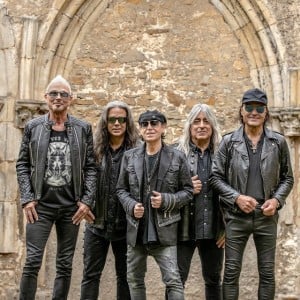
Scorpions
Artist
Known best for their 1984 anthem "Rock You Like a Hurricane" & the 1990 ballad "Wind of Change," German rockers Scorpions have sold over 100 million records, making them one of the most successful rock bands to ever come out of Europe. In over 50years, they have become Continental Europe’s most successful rock band, the living proof that not only VW, Mercedes or BMW are able to compete internationally, but classic rock music made in Germany as well. Countless bands, including the Smashing Pumpkins as well as Green Day, Korn, System Of A Down or Queensryche have covered their songs throughout the years. However, countless silver, gold and platinum awards are only one side of the Scorpions’ history. Another is their unabated desire to travel. No other rock band of their caliber after so many years takes to the stage as often as the Hannover natives. They have played thousands of concerts in all corners of the planet: in Rio, Tokyo, Moscow, Washington, Dubai, Paris or Berlin. In 1988, they were the first Western rock band to play soldout shows 5 days in a row in the then still Soviet Leningrad. Pioneering achievements elsewhere as well: through very early concerts in China and Southeast Asia, they have opened doors for many other Western bands. There were many magic live moments; some of them are captured on live albums, others on film & video recordings. These are the moments, which have cemented the Scorpions’ reputation as one of the rare bands rising far above the crowd!
Metal industrial

Rammstein
Artist
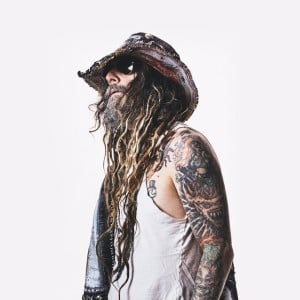
Rob Zombie
Artist
The longtime frontman for '90s industrial superstars <a href="spotify:artist:0CF71zaDOJWCynIkW9bSK8">White Zombie</a>, New England-bred multi-hyphenate Rob Zombie went on to forge a highly successful solo career and later branched off into the world of film. A lover of B-movie camp, horror nostalgia, and psychedelic imagery, his enduring 1998 debut Hellbilly Deluxe set him apart from contemporaries by balancing brutal metal power with a tongue-in-cheek sense of humor and sexiness that never took itself too seriously. Over the decades, he remained a fixture in the U.S. Top Ten, scoring additional hits with 2001's The Sinister Urge and 2006's Educated Horses. As his film career took off, he released cult favorites such as 2003's House of 1000 Corpses, 2005's The Devil's Rejects, and a pair of big-budget reboots for the Halloween series. In 2021, he issued his seventh set, The Lunar Injection Kool Aid Eclipse Conspiracy, and in 2022 he appeared on the soundtrack for the film The Munsters, which he also wrote and directed. Born Robert Bartleh Cummings on January 12, 1966, in Haverhill, Massachusetts, his eclectic style was solidified early on: not only was he raised by parents who had worked in a carnival, but he was fascinated with horror movies from a young age. In addition to fostering his creative abilities in art school, he worked as a bike messenger, porn magazine art director, and production assistant for the classic children's TV series Pee Wee's Playhouse. Around this time, he founded the band <a href="spotify:artist:0CF71zaDOJWCynIkW9bSK8">White Zombie</a> with bassist Sean Yseult. They remained an underground act for much of the late '80s through a series of cult-favorite indie releases. It wasn't until the success of their 1992 major-label debut, La Sexorcisto: Devil Music, Vol. 1, that Zombie was launched to new prominence within the music industry, allowing him to try his hand at animation (most notably a hallucinatory sequence of the feature film Beavis & Butt-Head Do America) and directing (he was slated to helm a third chapter of The Crow franchise, working from his own screenplay, but the studio eventually pulled out of the deal). In 1998, three years after the release of <a href="spotify:artist:0CF71zaDOJWCynIkW9bSK8">White Zombie</a>'s final studio album Astro-Creep: 2000, Zombie made his solo debut with the album Hellbilly Deluxe. When it sold more copies in its first week of release than any <a href="spotify:artist:0CF71zaDOJWCynIkW9bSK8">White Zombie</a> record before it, he disbanded the group to move on as a full-time solo act, quickly issuing Hellbilly remix album American Made Music to Strip By in the fall of 1999. Starting his own label, <a href="spotify:search:label%3A%22Zombie-a-Go-Go+Records%22">Zombie-a-Go-Go Records</a>, he gave bands like <a href="spotify:artist:2dOGUGTTR0vKcexJaOOLMy">the Ghastly Ones</a> a home while creating demented mix CDs like Halloween Hootenanny. He delivered remixes to a number of soundtracks while recording a new song for the Mission Impossible: 2 soundtrack, and rounded out his first major solo run with a Rob Zombie toy produced by Todd McFarlane. He began to work on a feature film in April of 2000, funded by Universal Studios after he designed a horror display for their amusement parks. The film, House of 1000 Corpses, was produced and edited, but the studio backed out due to its own corporate standards. Zombie wrangled the rights to the film from the studio while taking out his frustrations on his next solo record, The Sinister Urge. Again working with collaborator Scott Humphrey (who had produced his first record), he drafted in a metal superstar cast including <a href="spotify:artist:6ZLTlhejhndI4Rh53vYhrY">Ozzy Osbourne</a>, <a href="spotify:artist:1IQ2e1buppatiN1bxUVkrk">Slayer</a> guitarist Kerry King, <a href="spotify:artist:0cc6vw3VN8YlIcvr1v7tBL">Mötley Crüe</a>/<a href="spotify:artist:0AnjaOjAt53Ej9223SQv2p">Methods of Mayhem</a> drummer <a href="spotify:artist:4b9L0p4cMof32XvjwT9YrX">Tommy Lee</a>, and <a href="spotify:artist:165ZgPlLkK7bf5bDoFc6Sb">Limp Bizkit</a>'s <a href="spotify:artist:2ajHgsmpiyhXrx3JoigTO2">DJ Lethal</a>. The record was another success, leading to a huge Christmas tour with <a href="spotify:artist:6ZLTlhejhndI4Rh53vYhrY">Osbourne</a> at the end of 2001 and another solo tour in the spring of 2002. Zombie sold House of 1000 Corpses to MGM for a Halloween release, although offers from several smaller studios had to be refused because of the financial loss he would have taken. The film was a cult hit, prompting Zombie to begin work on his next piece of celluloid, 2005's Devil's Rejects. He returned to the recording studio in 2006 for Educated Horses, which veered down a more experimental path that included blues guitar, acoustic tracks, and even a sitar. Despite debuting in the Top Ten of the Billboard album charts and receiving a Grammy nomination for "The Lords of Salem," it was his first album not to receive certification from the RIAA. A pair of best-of collections -- including hits from both <a href="spotify:artist:0CF71zaDOJWCynIkW9bSK8">White Zombie</a> and his solo discography -- were released that year. After a stint as director and co-writer of the 2007 remake of Halloween, Zombie Live, his first live album, was released in October 2007, the same month that he began an arena tour with <a href="spotify:artist:6ZLTlhejhndI4Rh53vYhrY">Ozzy Osbourne</a>. The release of his next studio album was pushed back due to Zombie's involvement with Halloween II and in 2010, Zombie released Hellbilly Deluxe 2, his first solo album written with the help of his band (which featured <a href="spotify:artist:7mAqCk75DUBWgcC0sqhzwX">John 5</a> and <a href="spotify:artist:77qohgrDf7G6hqpgV0kBK8">Piggy D.</a>). Intended as a sequel to his breakout solo debut, it was supported by Zombie's first world tour in a decade. Another remix album, Mondo Sex Head, arrived in 2012 and included reworkings from his back catalog by producers like <a href="spotify:artist:3hXDMlrPegHRO0zUvBsRSI">Photek</a> and <a href="spotify:artist:0QJKELJZZuLAjqLOOixJm5">the Bloody Beetroots</a>. In early 2013, Zombie returned with his fifth studio album, Venomous Rat Regeneration Vendor, which would be Zombie's lowest-selling album to date, despite its Top Ten Billboard debut. Months later, his film The Lords of Salem was released in theaters, accompanied by a soundtrack featuring songs by Zombie, <a href="spotify:artist:2Hkut4rAAyrQxRdof7FVJq">Rush</a>, and <a href="spotify:artist:1nJvji2KIlWSseXRSlNYsC">the Velvet Underground</a>. In the years that followed, he returned his focus to his horror empire, creating the Great American Nightmare haunted house attraction, which incorporated characters from his cult films. He also began work on another movie, the crowd-funded killer clown flick 31 (which premiered at Sundance in 2016). He also released his first concert film, The Zombie Horror Picture Show, in 2014, followed by his second live album, Spookshow International Live, in 2015. Zombie's sixth studio LP, The Electric Warlock Acid Witch Satanic Orgy Celebration Dispenser, was released in April 2016. Featuring an abrasive, industrial edge that hadn't been heard since Sinister Urge, Electric Warlock was produced by Zeuss and recorded at Goathouse Studios by Zombie and his band, which included former <a href="spotify:artist:2VYQTNDsvvKN9wmU5W7xpj">Marilyn Manson</a> bandmates <a href="spotify:artist:7mAqCk75DUBWgcC0sqhzwX">John 5</a> and Ginger Fish, as well as bassist <a href="spotify:artist:77qohgrDf7G6hqpgV0kBK8">Piggy D</a>. That year, he also released the film 31 and recorded his band's set from Riot Fest for Astro Creep: 2000 Live, which arrived in 2018. Months later, he reunited with <a href="spotify:artist:2VYQTNDsvvKN9wmU5W7xpj">Marilyn Manson</a> for a joint headlining summer tour, which was kicked off by their collaborative cover of "Helter Skelter." Zombie closed the decade with the final installment of his Firefly family film trilogy, 3 from Hell, which was released in late 2019. On Halloween weekend 2020, the next album era was launched with "The Triumph of King Freak (A Crypt of Preservation and Superstition)," the Grammy-nominated single from 2021's The Lunar Injection Kool Aid Eclipse Conspiracy. Issued in March, the album became Zombie's seventh consecutive Top Ten on the Billboard 200. In 2022, he produced, wrote, and directed the horror comedy film The Munsters and appeared on the soundtrack. ~ Neil Z. Yeung & Jason Ankeny, Rovi
Heavy metal
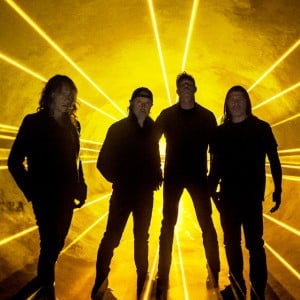
Metallica
Artist
Metallica formed in 1981 by drummer Lars Ulrich and guitarist and vocalist James Hetfield and has become one of the most influential and commercially successful rock bands in history, having sold 120 million albums worldwide and generating more than 15 billion streams while playing to millions of fans on literally all seven continents. They have scored several multi-platinum albums, including 1991’s Metallica (commonly referred to as The Black Album), with sales of nearly 18 million copies in the United States alone, making it the best-selling album in the history of Soundscan. Metallica has also garnered numerous awards and accolades, including nine Grammy Awards, two American Music Awards, and multiple MTV Video Music Awards, and were inducted into the Rock and Roll Hall of Fame and Museum in 2009. In December 2013, Metallica made history when they performed a rare concert in Antarctica, becoming the first act to ever play all seven continents all within a year, and earning themselves a spot in the Guinness Book of World Records. Metallica’s twelfth studio album <a href="spotify:album:70uejEPPRPSLBrTRdfghP5" data-name="72 Seasons">72 Seasons</a> was released on April 14, 2023 on Metallica’s own Blackened Recordings record label, and the band is currently on the M72 Tour—a 2-year, continent spanning tour with two nights in each market and no repeat sets.

White Zombie
Artist
Pop punk
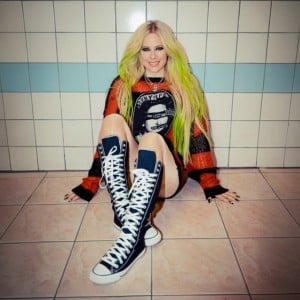
Avril Lavigne
Artist
Avril Lavigne has made history, smashed records, and consistently blazed a trail of her own as an uncompromising force in music and culture. Beyond selling over 50 million albums worldwide, she has notched eight GRAMMY® Award nominations in categories such as “Best New Artist” and “Song of the Year.” In addition, she has received eight Juno Awards, including “Artist of the Year.” Her catalog comprises the septuple platinum Let Go [2002], triple-platinum Under My Skin [2004], double-platinum The Best Damn Thing [2007], gold-selling Goodbye Lullaby [2011], gold-selling Avril Lavigne [2013], Head Above Water [2019]. As such, she remains of “one of the Soundscan-era’s top-selling artists releasing albums in the U.S." and “the third bestselling Canadian female artist of all-time.” She holds a Guinness World Record as “the youngest female solo artist to top the UK chart,” while “Girlfriend” emerged as “first music video to reach 100 million views on YouTube.” She has earned multiple #1's around the globe and her social media following notably exceeds 95 million fans worldwide. In February 2022, Avril released her seventh studio album Love Sux that debuted in the top 10 on Billboard’s Top 200 Chart, amassed over 12 million streams in its first week. In 2025, Avril Lavigne has officially been ranked the #19 biggest female artist of the 21st century by Billboard. Now embarking on the 2025 leg of her Greatest Hits Tour, Avril is poised once again to prove she's 100% Rock N Roll!
Simple Plan
Artist
Indie pop

Djo
Artist
Clairo
Artist
American indie luminary Clairo has spearheaded new pop conventions and upended them all the same. Her soft rock intimations, interwoven with tendrils of ‘70s soul and lush R&B, have spellbound listeners of all ages, and landed her on the stages of Coachella, the Newport Folk Festival and The Tonight Show Starring Jimmy Fallon. Born Claire Cottrill in Atlanta, GA, the artist began self-recording songs and music videos at the age of 13, which amassed a huge fanbase on YouTube. Released in 2017, her lo-fi pop confessional “Pretty Girl” went viral, earning her a joint record deal with Fader Label. Since then, her albums Immunity (2019) and Sling (2021) have traversed the Billboard charts and garnered critical acclaim from Rolling Stone, Pitchfork, the New York Times and more. For each of her full-length projects Clairo collaborated on production with legendary names like Vampire Weekend artist Rostam Batmanglij (Immunity), Jack Antonoff (Sling), and now partners with Leon Michels for her new era. Her soul-baring third studio album, Charm, comes out July 12.
girl in red
Artist
i’m marie and i’m a one girl band making tunes ;)
Mac DeMarco
Artist
Mac DeMarco is a Canadian self-produced multi-instrumentalist, songwriter, and recording artist. Raised in Edmonton, Alberta, and currently residing in Los Angeles, California.
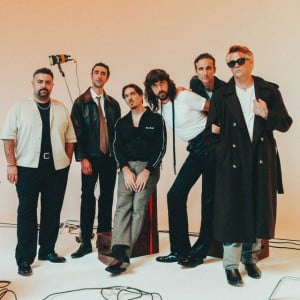
Indios
Artist
Indios es una banda de rock formada en 2009 en Rosario, Argentina. Con cuatro álbumes de estudio y numerosos sencillos exitosos, Indios se ha convertido en un referente del rock argentino contemporáneo, reconocido por su sonido distintivo y su enérgica presencia en el escenario. Con un estilo único que fusiona el rock alternativo con toques de pop y psicodelia, lograron cautivar a una vasta audiencia y ser aclamados por la crítica especializada gracias a canciones como “Jullie”, “Ya Pasó”, “Vení” o “Lucidez” que formaron parte de sus tres álbumes y un EP: “Indios” (2013), “Asfalto” (2017), “Auxilio” (2018) y “Besos En La Espalda” (2019). Actualmente cuentan con casi un millón de oyentes mensuales en Spotify donde se destaca el single recientemente viralizado en TikTok, “Tu Geografía” que suma más de 45 millones de reproducciones.
J-rock

PENICILLIN
Artist
A vital part of the '90s visual kei scene, J-rockers Penicillin outlived the style they helped to promote, keeping up a steady flow of releases despite changing labels more often than <a href="spotify:artist:568ZhdwyaiCyOGJRtNYhWf">Deep Purple</a> changed vocalists. Penicillin were formed in 1992 by several university students in Kanagawa, and for a while their lineup even included the guitarist Shaisuke, later of another group of visual kei biggies, Baiser. But in the end Penicillin stabilized as a quartet made up of Hakuei (vocals), Gisho (bass), O-jiro (drums), and Chisato (guitar). They debuted in 1994 with the EP Penicillin Shock (the only one to feature Shaisuke), followed by the debut album Missing Link (1994) and two EPs (Earth and Into the Valley of the Dolls, both 1995). That got them a short deal with Pioneer, which released their instrumental album Indwell (1996), accompanied by a VHS of promo videos for each track, and then followed by a couple of more conventionally styled releases, namely albums Vibe (1996) and Limelight (1997). One of the singles of this period, Romance (1998), sold 900,000 copies. Since 1996, Penicillin's members have also made sporadic creative detours for solo projects. In 1998, Penicillin switched to East West Japan, which didn't have its life made easy by the band: at this point Penicillin wrote, filmed, and sang a rock opera based on <a href="spotify:artist:0xZ9fVp0OnYjYPeX9Z3c8x">Shakespeare</a>'s Hamlet. The group also recorded two non-conceptual albums -- Ultimate Velocity (1998) and Union Jap (2000) -- and released two compilations, but by then the popularity of visual kei was on the wane, and in 2001 they were dropped by the label. Unperturbed, Penicillin went indie and kept on recording music, which proved to be the right move, as in 2002 they were picked by the indie subsidiary of Avex, going to Avex proper in 2005. They had five more studio albums up until 2005, not counting smaller and supporting releases, which they have always produced in heaps. In 2007, at the band's 15th anniversary and after another LP (Blue Heaven), bassist Gisho announced that he was leaving Penicillin, who continued on as a trio and moved to Nippon Crown in February 2008. ~ Alexey Eremenko, Rovi
V-kei
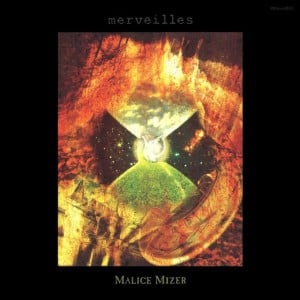
Malice Mizer
Artist
kaneto-juusei
Artist
kaneto-juusei
Psycho le Cému
Artist
The visual kei rock band Psycho le Cému formed in Himeji, Japan, in 1999. Dressed in outfits inspired by video games and anime characters, bandmates Daishi, Aya, Lida, Yura-sama, and Seek began playing local shows in 2000. The group's debut single, "Kronos," was released that same year. The debut album Doppelganger followed in 2001, with the sophomore year Prism appearing in 2002. Both albums were released by indie labels. Psycho le Cému signed with a major label, Crown, in late 2002, and reached the Top 10 for the first time with the single "Song of Love." "Super Love Merry-Go-Round" followed in early 2003 and also reached the Top 10, where it peaked at number 8. Before 2003 came to a close, Psycho le Cému reached number 6 on the Oricon Albums chart with album Frontiers and earned additional hits with "Romantic Flight" (which charted at number 11) and "Miracle High Tension!" (which peaked at number 34). The success continued in 2004 with "Memories of the Book," "The Sky of the Road," and "Dream Windmill," all three of which were Top 40 hits on the Oricon chart. After releasing the album ~Epilogue~ A Story That Is Handed Down in 2006, the band embarked upon a long hiatus from the recording studio. "Akiramenai Days," Psycho le Cému's reunion single, was released in 2015 and charted at number 26, with the full-length album NOW AND THEN ~ THE WORLD ~ following in 2016. Another hiatus occurred during the final years of the 2010s, then came to a close with the release of Resistance — a Top 40 success that debuted at number 34 — in 2023.
DADAROMA
Artist
DADAROMA
X JAPAN
Artist
X Japan is one of the most successful rock groups in Japanese history. Led by composer, drummer, and pianist YOSHIKI, the band has sold more than 30 million albums, singles, and videos combined, and played to millions of fans around the world. In 1997, at the height of their success, the band broke up. In early 2007, YOSHIKI and vocalist Toshl reunited, and later that year X Japan officially reformed. The band launched its reunion in 2008 with 3 nights at the Tokyo Dome. In 2010, X Japan performed for the first time at Lollapalooza in Chicago. Immediately following the festival, X Japan played the biggest concert in its history, selling out two consecutive shows at Japan’s Nissan Stadium, filling 140,000 seats. The band then launched their first North American tour, selling out across the U.S. and Canada. X Japan has achieved legendary status among rock fans worldwide, making a buzz at Coachella, headlining major venues such as Wembley Arena and Madison Square Garden, and selling out Japan’s 55,000-seat Tokyo Dome a record 18 times. The critically-acclaimed documentary film about the band – We Are X – was released in 2018 in 30 countries, winning awards at the SXSW and Sundance Film Festivals. The current line-up of X Japan is YOSHIKI (drums/piano/composer), TOSHI (vocals), PATA (guitar), HEATH (bass), SUGIZO (violin/guitar).
Plastic Tree
Artist
Though they formed in 1993, the group Plastic Tree only began making waves by 1995 or so, signing with a major label by 1997. The group was built on a collection of influences, most notably British alternative bands but also including elements of the visual kei movement (characterized mostly by a touch of androgyny and heavy makeup, not unrelated to the goth, glam, or eventually emo movements in U.S. rock). Through a series of singles on a series of labels throughout the '90s and beyond, the band proved to be versatile, showing off elements of goth rock, slow ballads, power pop, metal, and punk, all with just a bit of a hook to get the attention of mainstream listeners. Consistently touching the Oricon charts with each successive album (including nearly as many compilations as originals, thanks to the label-jumping early in their career), Plastic Tree again hit the Top 10 with 2008's Utsusemi. ~ Adam Greenberg, Rovi
Rock alternativo
Pixies
Artist
Pixies have been acclaimed as the most influential, pioneering band of the late 80s alt/rock movement, having served as a major influence for artists like Nirvana, Pearl Jam, Radiohead, the Strokes, Weezer, and many more. And today, a whole new generation of music fans has been discovering and embracing the band’s “loudquietloud” signature sound. Quirky, catchy melodies have always been Pixies’ calling card; seven genre-defining studio albums, including the Gold-certified Surfer Rosa, and the iconic Platinum Doolittle, considered one of the all-time, quintessential alt/rock albums. Sell-out crowds all over the globe, Pixies’ live shows are unadulterated magic, simultaneously electrifying and lo-fi. Seventy-five minutes of the band playing anything they want, in whatever order they want, the classics and the new gems. And no two Pixies shows are ever the same. 2024 is a momentous year for Pixies. 35 years since Doolittle catapulted the band into the UK Top Ten, and 20 years since their celebrated reformation at Coachella, Pixies are deep into their second act. Bigger than ever, playing to fans spanning multiple generations, and in the midst of their most creative purple patch. Black Francis, Joey Santiago, David Lovering and British bassist Emma Richardson are as busy as ever.

My Chemical Romance
Artist
Formed in NJ, My Chemical Romance made its debut in 2002 with the independently released album I Brought You My Bullets, You Brought Me Your Love. The band signed to Reprise Records the following year and made its major label debut with 2004’s Three Cheers for Sweet Revenge, now 3x certified Platinum. The album contained the Platinum hit "I'm Not Okay (I Promise)," the Gold-certified "Helena," and "The Ghost of You." Rolling Stone hailed the 3x Platinum The Black Parade as one of the top albums of 2006. Lead single “Welcome to the Black Parade” topped both Billboard’s Alternative Songs tally and the UK Official Singles chart and is now 3x Platinum. The band toured extensively behind the album – appearing as characters from The Black Parade – and released the live album The Black Parade is Dead! in 2008. Danger Days: The True Lives of the Fabulous Killjoys was released in 2010 and topped Billboard’s Alternative Albums and Top Rock Albums charts. It was followed by a series of singles later released as Conventional Weapons in 2013. My Chemical Romance’s songs continue to rack up half a billion cumulative global streams each year. The band’s top three music videos have amassed more than 100 million views each on VEVO. My Chemical Romance will be touring in Europe and North America in 2022, and in Australia and Japan in 2023.
The Cranberries
Artist
Combining the melodic jangle of post-<a href="spotify:artist:3yY2gUcIsjMr8hjo51PoJ8">Smiths</a> indie guitar pop with the lilting, trance-inducing sonic textures of late-'80s dream pop and adding a slight Celtic tint, the Cranberries became one of the more successful groups to emerge from the pre-Brit-pop indie scene of the early '90s. Led by vocalist <a href="spotify:artist:55s643XPig11NyYM8do64C">Dolores O'Riordan</a>, whose keening, powerful voice was the most distinctive element of the group's sound, they initially had little impact in the United Kingdom. It wasn't until the lush ballad "Linger" became a worldwide hit in 1993 that the band achieved mass success. Following "Linger," the Cranberries quickly became international stars, as both their 1993 debut album, Everybody Else Is Doing It, So Why Can't We?, and its 1994 follow-up, No Need to Argue, sold millions of copies and produced a string of hit singles. By the time of their third album, 1996's To the Faithful Departed, they had added distorted guitars to their sonic palette and began crafting more socially conscious music. They continued down this path into the 21st century before taking an extended hiatus in 2003 to pursue solo efforts. After nearly a decade, the quartet returned with 2012's Roses and 2017's Something Else. However, in early 2018, <a href="spotify:artist:55s643XPig11NyYM8do64C">O'Riordan</a> died from an accidental drowning in London. Her last vocal recordings were used to construct the Cranberries' final work, 2019's Grammy-nominated In the End, a goodbye to <a href="spotify:artist:55s643XPig11NyYM8do64C">O'Riordan</a>, fans, and the band itself. Originally, the Cranberries were a band called the Cranberry Saw Us. Brothers Noel and <a href="spotify:artist:467JmWxc2Gap3uh2d7qTgx">Mike Hogan</a> (guitar and bass, respectively) formed the band in Limerick, Ireland, with drummer Fergal Lawler in 1990. Following the departure of the group's original singer, Niall Quinn, the trio placed an advertisement for a female singer. <a href="spotify:artist:55s643XPig11NyYM8do64C">Dolores O'Riordan</a> responded to the advertisement and auditioned by writing lyrics and melodies to some of the band's existing demos. When she returned with a rough version of "Linger," the group hired her on the spot. Shortly after she joined, the band recorded a demo tape and sold it in record stores throughout Ireland. After the original run of 300 copies sold out, the group truncated its name to the Cranberries and sent another demo tape, which featured early versions of both "Linger" and "Dreams," to record companies throughout the U.K. The tape was made at Xeric Studios, which was run by Pearse Gilmore, who would later become their manager. At the time the tape was made, all of the members were still in their late teens. The demo tape earned the attention of both the U.K. press and record industry, and there was soon a bidding war between major British record labels. Eventually, the group signed with <a href="spotify:search:label%3A%22Island%22">Island</a>. The Cranberries headed into the studio with Gilmore as their producer to record their first single, "Uncertain." The title proved to be prophetic, as the band did indeed sound ill at ease on the single, leading to poor reviews in the press in addition to tensions between the group and Gilmore. Before they were scheduled to record their debut in 1992, the Cranberries discovered that Gilmore had signed a secret deal with <a href="spotify:search:label%3A%22Island%22">Island</a> to improve his studios. The tensions within the band became so great they nearly broke up. Instead, the Cranberries severed all relations with Gilmore, hired Geoff Travis of <a href="spotify:search:label%3A%22Rough+Trade%22">Rough Trade</a> as their new manager, and hired Stephen Street, who had previously worked with <a href="spotify:artist:3yY2gUcIsjMr8hjo51PoJ8">the Smiths</a>, as their new producer. The band's debut album, Everybody Else Is Doing It, So Why Can't We?, was released in the spring of 1993, followed by a single of "Dreams." Neither the album nor the single gained much attention, nor did the second single, "Linger." In the summer and fall of 1993, the band toured the United States, opening for <a href="spotify:artist:7cKtqv9cYVlOwnuCFH95ce">The The</a> and <a href="spotify:artist:6PHIK3kjWggLtVygsOtpqS">Suede</a>, respectively; frequently, the Cranberries were given a friendlier reception than either of the headliners. Their strong live shows led MTV to put "Linger" into heavy rotation. By the end of the year, the single was on its way to becoming a crossover hit. Eventually, the single reached number eight on the U.S. charts, while the album went double platinum. Everybody Else and "Linger" began to take off in Britain in early 1994; the album eventually peaked at number one during the summer. <a href="spotify:artist:55s643XPig11NyYM8do64C">O'Riordan</a> married the band's tour manager, Don Burton, in a much-publicized ceremony in July 1994. The marriage, as well as the group's videos, emphasized the singer as the focal point of the band. <a href="spotify:artist:55s643XPig11NyYM8do64C">O'Riordan</a>'s position in the group continued to rise with the fall release of the group's second album, No Need to Argue. Boasting a slightly harder, more streamlined sound, yet still produced by Stephen Street, the record debuted at number six on the U.S. charts and eventually outsold its predecessor; within a year it went triple platinum, spawning the enduring modern rock hit "Zombie" and "Ode to My Family." During the tour for No Need to Argue, rumors began to circulate that <a href="spotify:artist:55s643XPig11NyYM8do64C">O'Riordan</a> was going to leave the band to pursue a solo career, all of which the band vehemently denied. Nevertheless, the rumors persisted until the Cranberries began recording their next album with producer Bruce Fairbairn, who had previously worked with <a href="spotify:artist:7Ey4PD4MYsKc5I2dolUwbH">Aerosmith</a>. The resulting effort, To the Faithful Departed, was a tougher, more rock-oriented affair that centered upon loss and the pitfalls of fame. Released in April 1996, it rose to number 4 in the U.S., a chart peak, and shot to number one in Australasia. Lead single "Salvation" became their second U.S. Alternative chart-topper, with "Free to Decide" and "When You're Gone" charting across the globe. During the fall of 1996, the group canceled its Australian and European tours, sparking another round of rumors about <a href="spotify:artist:55s643XPig11NyYM8do64C">O'Riordan</a> launching a solo career. Yet, in 1999, the group released Bury the Hatchet, their last album to top multiple charts. The platinum-certified set featured more pop-oriented fare than its predecessor, spawning modest hits "Promises," "Animal Instinct," and the MTV favorite "Just My Imagination." The band quickly followed with 2001's Wake Up and Smell the Coffee, home to "Analyse" and "Time Is Ticking Out." Shortly after the release of a greatest-hits compilation in 2003, Stars: The Best of 1992-2002, the Cranberries officially declared that they were taking a break. This finally gave <a href="spotify:artist:55s643XPig11NyYM8do64C">O'Riordan</a> the time she needed to work on her long-teased solo album, Are You Listening?, which hit shelves in 2007. In 2009, <a href="spotify:artist:55s643XPig11NyYM8do64C">O'Riordan</a> released her second solo album, No Baggage. Around the same time, the Cranberries reunited for a North American tour that continued throughout Europe in 2010. Several live sets also appeared at the turn of the decade, including Bualadh Bos - The Cranberries Live, which charted in Europe and North America. In 2011, the band began work on a new album in Toronto with longtime producer Street. Released nearly a decade after the start of their extended hiatus, the resulting album, Roses, arrived in March 2012. A supporting tour followed, recorded for posterity on London 2012: Live at The Hammersmith Apollo. At the end of 2013, <a href="spotify:artist:55s643XPig11NyYM8do64C">O'Riordan</a> performed a New Year's Eve concert in Limerick with a string quartet from <a href="spotify:artist:5BEsC9s9MiyK1GKlef4TMN">the Irish Chamber Orchestra</a>. Inspired by the classical interpretation of the Cranberries sound, she approached the band with an idea to celebrate their silver anniversary. The result was a full album comprising string quartet renditions of the band's biggest hits. Something Else arrived in the spring of 2017, featuring their ten most successful singles culled from their first four albums, as well as three new songs. The band kicked off a tour in support of the album, but it was cut short due to <a href="spotify:artist:55s643XPig11NyYM8do64C">O'Riordan</a>'s ongoing back problems. On January 15, 2018, <a href="spotify:artist:55s643XPig11NyYM8do64C">O'Riordan</a> died of an accidental drowning at the age of 46 in London. At the time of her death, the Cranberries were in the middle of recording a new effort. After taking some time to process the tragedy, the remaining bandmembers decided to finish the project. Along with Stephen Street, they completed the LP using <a href="spotify:artist:55s643XPig11NyYM8do64C">O'Riordan</a>'s demo vocals. Released in April 2019, In the End featured the single "All Over Now" and served as the Cranberries' final album. Peaking in the Top Ten across Europe and in the U.S. side charts, the farewell set was later nominated for a Grammy for Best Rock Album. In the years that followed her passing, the band continued efforts to honor <a href="spotify:artist:55s643XPig11NyYM8do64C">O'Riordan</a>, issuing Remembering Dolores, a 2021 compilation of favorites that was released on what would have been her 50th birthday, and a 2023 deluxe reissue of To the Faithful Departed, which included the original album-era B-sides, outtakes, and demos recorded in Paris, as well as live recordings from 1996 shows at Molson Amphitheatre in Toronto and Pine Knob in Clarkston, Michigan. ~ Stephen Thomas Erlewine & Neil Z. Yeung, Rovi
Oasis
Artist
Oasis shot from obscurity to stardom in 1994, becoming one of Britain's most popular and critically acclaimed bands of the decade in the process. Along with <a href="spotify:artist:7MhMgCo0Bl0Kukl93PZbYS">Blur</a> and <a href="spotify:artist:6PHIK3kjWggLtVygsOtpqS">Suede</a>, they were responsible for returning British guitar pop to the top of the charts. Led by guitarist/songwriter <a href="spotify:artist:6IRQd80VHepXiTXdmBzk6l">Noel Gallagher</a>, the Manchester quintet adopted the rough, thuggish image of <a href="spotify:artist:22bE4uQ6baNwSHPVcDxLCe">the Stones</a> and <a href="spotify:artist:67ea9eGLXYMsO2eYQRui3w">the Who</a>, crossed it with "<a href="spotify:artist:3WrFJ7ztbogyGnTHbHJFl2">Beatlesque</a>" melodies and hooks, injected distinctly British lyrical themes and song structures like <a href="spotify:artist:66U6cJ3kDBat0jS42Jkp9q">the Jam</a> and <a href="spotify:artist:1SQRv42e4PjEYfPhS0Tk9E">the Kinks</a>, and tied it all together with a massive guitar roar, as well as a defiant sneer that drew equally from <a href="spotify:artist:1u7kkVrr14iBvrpYnZILJR">the Sex Pistols</a>' rebelliousness and <a href="spotify:artist:1lYT0A0LV5DUfxr6doRP3d">the Stone Roses</a>' cocksure arrogance. <a href="spotify:artist:6sN51vEARnAAdBw1IKZ8Q9">Gallagher</a>'s songs frequently reworked previous hits from <a href="spotify:artist:3dBVyJ7JuOMt4GE9607Qin">T. Rex</a> ("Cigarettes and Alcohol" borrows the riff from "Bang a Gong") to <a href="spotify:artist:5lpH0xAS4fVfLkACg9DAuM">Wham!</a> ("Fade Away" takes the melody from "Freedom"), yet the group always put the hooks in different settings, updating past hits for a new era. Originally, the group was formed by schoolmates <a href="spotify:artist:6sN51vEARnAAdBw1IKZ8Q9">Liam Gallagher</a> (vocals), Paul "Bonehead" Arthurs (guitar), Paul McGuigan (bass), and Tony McCaroll (drums). After spending several years as the guitar technician for a <a href="spotify:artist:1lYT0A0LV5DUfxr6doRP3d">Stone Roses</a>-inspired group named <a href="spotify:artist:66GWpx9iLxrvvfhDsG9STP">the Inspiral Carpets</a>, <a href="spotify:artist:6IRQd80VHepXiTXdmBzk6l">Noel Gallagher</a> returned to Manchester to find that his brother had formed a band. <a href="spotify:artist:6IRQd80VHepXiTXdmBzk6l">Noel</a> agreed to join if he could have complete control of the group, including contributing all the songs; the rest of the band agreed and adopted a new name, Oasis, before launching a year of intensive rehearsals. After playing a handful of small club gigs, the band cornered Alan McGee, the head of Creation Records, and forced him to listen to their demo. Impressed, he signed the band and helped them ready their debut album. The group released their first single, "Supersonic," in the spring of 1994; it edged its way into the charts on the back of positive reviews. With a melody adapted from "I'd Like to Teach the World to Sing," "Shakermaker" became a bigger hit in the early summer. Released a month before their debut album's arrival, the soaring ballad "Live Forever" became a major hit in England and helped make Definitely Maybe the fastest-selling debut in British history. The record entered the charts at number one and eventually sold over seven million copies. Oasis mania continued throughout 1994, as the group began playing larger theaters and watched each new single outperform the last. However, tensions in the group began to build -- <a href="spotify:artist:6sN51vEARnAAdBw1IKZ8Q9">Liam</a> and <a href="spotify:artist:6IRQd80VHepXiTXdmBzk6l">Noel</a> refused to do joint interviews because they always fought -- and <a href="spotify:artist:6IRQd80VHepXiTXdmBzk6l">Noel Gallagher</a> briefly left the band at the end of a difficult fall American tour. However, he quickly re-joined and the band headed back to England. As "Supersonic" began to climb the U.S. album rock and modern rock charts, the string-laden "Whatever" (a non-album single) hit number two over the British Christmas season. At the beginning of 1995, the group set their sights on America by promoting the single "Live Forever." The song became a major hit on MTV and modern rock radio stations, peaking at number two, and Definitely Maybe soon climbed to gold status in the U.S. Returning to England after a sold-out American tour, the group recorded a new single, "Some Might Say." Drummer Tony McCaroll parted ways with the band on the eve of the single's May release, with Alan White taking his place. "Some Might Say" entered the charts at number one, and its success led to all of Oasis' previous singles reentering the indie charts. Oasis spent the rest of the summer completing their second album, (What's the Story) Morning Glory?, which was released in October of 1995. Upon its release, the album shot to number one in England, becoming the fastest-selling album in the U.K. since <a href="spotify:artist:3fMbdgg4jU18AjLCKBhRSm">Michael Jackson</a>'s Bad. The band continued to set records during the following years. Over the course of 1996, (What's the Story) Morning Glory? became the second-biggest British album in history. On the strength of the iconic single "Wonderwall," Morning Glory also became a Top Ten success in America, where it reached quintuple platinum status; it also cracked the Top Ten throughout countries in Europe and Asia. During 1996, the <a href="spotify:artist:6IRQd80VHepXiTXdmBzk6l">Gallaghers</a>' combative relationship was frequently detailed in newspapers and gossip columns, particularly when they suddenly pulled out of their late summer U.S. tour. This followed the group's two concerts at Knebworth, which broke records for being the biggest outdoor concert in England. After Oasis abandoned their American tour, they concentrated on recording their third album. While the band's first two LPs were quickly recorded, they took several months to record the third, which finally saw completion during the spring of 1997. The resulting album, Be Here Now, was released in late August, one month after the arrival of the single "D'You Know What I Mean." Greeted with generally enthusiastic reviews and robust sales, Be Here Now shattered sales records in the U.K. and nearly topped the U.S. charts, positioning the quintet as the de facto rulers of rock. However, a backlash set in among both critics and record buyers over the album's perceived excesses, which meant that Be Here Now lacked the shelf life of its predecessors. Not long afterward, typical infighting unraveled the band's tour, and the group disappeared from the spotlight for a time -- although a collection of B-sides, Masterplan, did follow in 1998. As the band was recording their fourth album in the summer of 1999, Bonehead left Oasis, claiming that he wanted to spend more time with his family. Interviewed by NME on August 11, the day after the departure was made public, <a href="spotify:artist:6IRQd80VHepXiTXdmBzk6l">Noel Gallagher</a> seemed unfazed, stating "It's hardly <a href="spotify:artist:4STHEaNw4mPZ2tzheohgXB">Paul McCartney</a> leaving <a href="spotify:artist:3WrFJ7ztbogyGnTHbHJFl2">the Beatles</a>." Ex-<a href="spotify:artist:0WPY9nnBy01s5QOt4o4oQX">Ride</a> guitarist <a href="spotify:artist:3FTxQTEzrX6tcJYSlsdUle">Andy Bell</a> and onetime <a href="spotify:artist:3dTQACulfQtyV7ouHBHHTl">Heavy Stereo</a> guitarist Gem Archer signed on after the recording of 2000's Standing on the Shoulder of Giants was completed. In fall 2000, the band celebrated their monumental world tour success with the release of their first-ever live record, Familiar to Millions. The album highlights Oasis' July 2000 gig at Wembley Stadium and was released on six different formats including CD and cassette, DVD, VHS, triple vinyl, and mini-disc. Two years later, Oasis surfaced with Heathen Chemistry. Worldwide dates coincided the release of Oasis' fifth studio album; however, problems loomed ahead. While touring America in late summer, <a href="spotify:artist:6IRQd80VHepXiTXdmBzk6l">Noel Gallagher</a>, <a href="spotify:artist:3FTxQTEzrX6tcJYSlsdUle">Andy Bell</a>, and touring keyboardist Jay Darlington were injured in Indianapolis after their taxi collided with another vehicle. The band bounced back soon, returning to the road in two weeks time after canceling shows in Indianapolis, Boston, and Philadelphia. In America, however, the album wasn't faring as well as Oasis' tour sales, and the leadoff single "Hindu Times" barely made a mark on MTV. More trouble arrived in December, when <a href="spotify:artist:6sN51vEARnAAdBw1IKZ8Q9">Liam Gallagher</a> and several members of the Oasis entourage were involved in a street scuffle in Munich; the younger <a href="spotify:artist:6sN51vEARnAAdBw1IKZ8Q9">Gallagher</a> sustained facial injuries and was later arrested while two of the band's security guards sought serious medical attention. Despite such setbacks -- which also included mixed reviews for the album -- Heathen Chemistry nevertheless sold several million copies at home and charted four U.K. singles. Additionally, <a href="spotify:artist:6sN51vEARnAAdBw1IKZ8Q9">Liam</a>'s own composition, "Songbird," marked the first time Oasis had released a single penned by anyone other than <a href="spotify:artist:6IRQd80VHepXiTXdmBzk6l">Noel</a>. The song fared well on U.K. charts and paved the way for a new collaborative approach to songwriting. Oasis' next album suffered delays, as initial sessions with the electronica duo <a href="spotify:artist:5aj3LEYRbuaabjjHkj5oE1">Death in Vegas</a> (who had been recruited to produce the record) were scrapped. Additionally, drummer Alan White made his exit from the band in early 2004, and <a href="spotify:artist:6DbJi8AcN5ANdtvJcwBSw8">Ringo Starr</a>'s son <a href="spotify:artist:4h4l0uPYNCYJQZF4ZzugIy">Zak Starkey</a> climbed aboard to take his place. Don't Believe the Truth eventually saw a worldwide release in May 2005. Featuring songwriting contributions from every bandmember, the record represented a new approach from the previously <a href="spotify:artist:6IRQd80VHepXiTXdmBzk6l">Noel</a>-dominated group. "Lyla," "The Importance of Being Idle," and "Let There Be Love" all contributed to the album's success, and Don't Believe the Truth soon became the band's highest-selling effort since Be Here Now. The band quickly returned to the studio in mid-2007, halting production several months later to allow <a href="spotify:artist:6IRQd80VHepXiTXdmBzk6l">Noel</a> to spend time with his newborn child. Sessions resumed in November and wrapped up in 2008, with Dig Out Your Soul receiving a release date later that year. In 2009, after a typically heated, backstage sibling altercation, <a href="spotify:artist:6IRQd80VHepXiTXdmBzk6l">Noel</a> left the group for good, prompting <a href="spotify:artist:6sN51vEARnAAdBw1IKZ8Q9">Liam</a> (and the rest of the band) to change the name to <a href="spotify:artist:5yBDILLJyNFAjFpECkk7ys">Beady Eye</a>, with plans to release a debut single in 2010. ~ Stephen Thomas Erlewine, Rovi

Weezer
Artist · Weezer
El Cuarteto de Nos
Artist
EL CUARTETO DE NOS es una banda de rock única que cuenta con múltiples trabajos discográficos, que se han convertido debido a las ventas en disco de Oro, Platino y Triple Platino. Su principal distintivo, son sus letras afiladas, el manejo de la ironía, la crudeza y la autocrítica del ser, pasando también por los sentimientos más básicos como el amor, la conciencia del paso del tiempo, la vejez y otras emociones. Las constantes giras anuales por Latinoamérica han llevado a que EL CUARTETO DE NOS, sea una de las bandas rioplatenses más reconocidas y seguidas en América. Presentes en los principales festivales de cada país, con shows propios masivos en las capitales y distintas ciudades, la banda se afianza en los oídos Hispanoparlantes, con miles de seguidores activos.
Gorillaz
Artist
Created by musician Damon Albarn and artist Jamie Hewlett, Gorillaz is singer 2D, bassist Murdoc Niccals, drummer Russel Hobbs and guitarist Noodle. The BRIT and Grammy-winning virtual band formed following a collision of mishaps, meetings and pure luck to blow up a pre-digital world with their colourful backstory and ground-breaking virtual ways. Based at Kong Studios in West London, Gorillaz settled into a life of musical innovation with an eye-wateringly exciting roster of collaborators, a list that includes musical legends, geniuses and future stars from Elton John to Little Simz, MF Doom to Jean-Michel Jarre, Grace Jones to Bad Bunny, Kali Uchis to Sidiki Diabaté, plus so many more. Gorillaz (2001), Demon Days (2005), Plastic Beach (2010), The Fall (2011), Humanz (2017), The Now Now (2018), Song Machine: Season One – Strange Timez (2020) and Cracker Island (2023), Gorillaz is a truly global phenomenon, achieving success in entirely new and unique ways, touring the world and winning numerous awards including the coveted Jim Henson Creativity Honor, along the way. Cracker Island, their latest album, is an energetic, upbeat, genre-expanding collection of 10 tracks featuring yet another stellar line-up of artist collaborators: Stevie Nicks, Adeleye Omotayo, Thundercat, Tame Impala, Bad Bunny, Bootie Brown and Beck. The band is recognised by The Guinness Book Of World Records as the planet’s Most Successful Virtual Act www.gorillaz.com
Nu metal
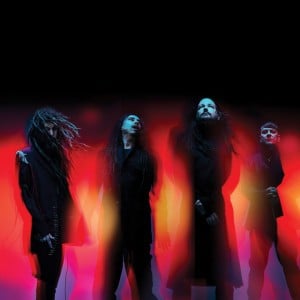
Korn
Artist
KORN changed the world with the release of their self-titled debut album. It was a record that would pioneer a genre, while the band’s enduring success points to a larger cultural moment. The FADER notes, “There was an unexpected opening in the pop landscape and KORN articulated a generational coming-of-angst for a claustrophobic, self-surveilled consciousness. KORN became the soundtrack for a generation’s arrival as a snarling, thrashing, systemically-restrained freak show.” Since forming, KORN has sold 40 million albums worldwide, collected two GRAMMYS, toured the world countless times, and set many records in the process that will likely never be surpassed. Vocalist Jonathan Davis, guitarists James “Munky” Shaffer and Brian “Head” Welch, bassist Reginald “Fieldy” Arvizu, and drummer Ray Luzier, have continued to push the limits of the rock, alternative and metal genres, while remaining a pillar of influence for legions of fans and generations of artists around the globe. The level of KORN’s reach transcends accolades and platinum certifications. They are “a genuine movement in a way bands cannot be now,” attests The Ringer. They represent a new archetype and radical innovation, their ability to transcend genre makes barriers seem irrelevant.

Slipknot
Artist · Slipknot
Limp Bizkit
Artist
Limp Bizkit is an infectious spirit. Any other details are merely salad dressing.
Electropop
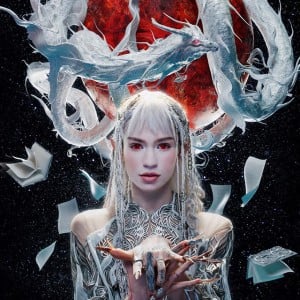
Grimes
Artist
Grimes started producing music when she had to learn the program Logic for her neuroscience class. Shortly thereafter she had a viral myspace page, which allowed her to start booking shows and focus full-time on music. She lived in a crack den In Montreal with no heat (where she got frostbite twice and her neighbor was bludgeoned to death in the hallway), playing raves until her 2012 breakout, Visions, which was recorded during a 2 week speed binge wherein she did not leave her bedroom. Upon the success of this album, Grimes attempted to enter society as a regular human, which has clearly not gone super well but has nonetheless been entertaining. She’s since become an award winning music video director as well as music composer, producer, engineer and singer-songwriter. She’s toured globally to sold out crowds, headlined festivals, and is now moving into the space of corporate surrealism. She recently had experimental eye surgery only available to the upper class. She put out her final earth album in 2020.
Grunge
Nirvana
Artist · Nirvana
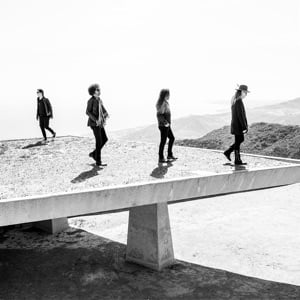
Alice In Chains
Artist · Alice In Chains
Metal gótico
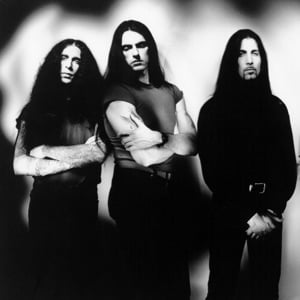
Type O Negative
Artist · Type O Negative
Metal progresivo
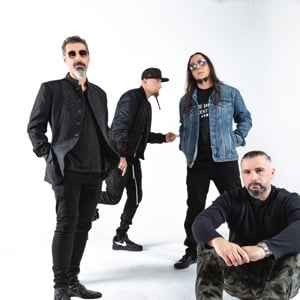
System Of A Down
Artist · System Of A Down
Love metal

HIM
Artist · HIM
Rock en español
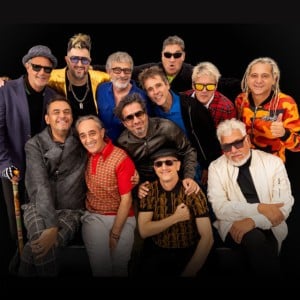
Los Auténticos Decadentes
Artist
Los Auténticos Decadentes es una de las bandas de rock más queridas y respetadas de América Latina. Formada en Buenos Aires en 1986, su música abraza una fusión de ritmos bajo el sello del rock. A lo largo de su recorrido artístico la banda editó 10 discos de estudio, 2 álbumes y dos DVD en vivo. 10 estudio, 1 unplugged y 3 cd dvd en vivo (Somos, Palacio Deportes y Foro Sol) El show más grande de su carrera ha sido el del 17 de Noviembre de 2017 en el Foro Sol de CDMX ante 65 mil personas en un sold out histórico como cierre de su gira 30 Aniversario. Luego, el concierto completo llegó a tiendas en formato de álbum en vivo. Anteriormente, la banda había lanzado su aclamado MTV Unplugged Fiesta Nacional (Mtv Unplugged) (2018) que fue Doble Platino en Argentina, Oro en México y Chile, además de completar una impresionante gira internacional que arrasó con la crítica especializada. En el marco de su 35 Aniversario, Los Auténticos Decadentes dedicaron tres álbums en homenaje a los artistas e intérpretes que con su obra les alumbraron el camino. El material lleva por título A D N. A, el primero de la trilogía cuenta con singles como Golpes en el Corazón, el éxito de Los Tigres del Norte, junto a Natalia Lafourcade. Luego fue el turno de D, el segundo disco que cuenta con singles como Jurabas Tú ft Los Palmeras y Oro junto a Bronco. Y recientemente presentaron N, el capítulo que completa la trilogía, que cuenta con invitados como Andres Calamaro, Diego Verdaguer y Andrea Echeverri
Los Enanitos Verdes
Artist
Argentinian pop/rock band los Enanitos Verdes was formed in the late '70s by singer/bassist Marciano Cantero, guitarist Felipe Staiti, and drummer Daniel Piccolo. After moving from Mendoza to Buenos Aires, the band started touring the local club circuit. In 1984, guitarist Sergio Embrioni and keyboardist Tito Dávila joined, and los Enanitos Verdes' first album was recorded and released, followed by Contra Reloj, produced by <a href="spotify:artist:3tAICgiSR5PfYY4B8qsoAU">Andrés Calamaro</a>, in 1986. Soon after issuing Carrousel, the band began touring South America, becoming one of the favorite acts at the prestigious Viña del Mar Festival. Around the same time, "La Muralla Verde" started climbing the most important Latin rock charts. In 1989, los Enanitos Verdes successfully toured Central America, and reached the U.S. while participating in the Billboard Latin Forum Showcase in 1995. After performing at some North American venues, the original trio lineup recorded 1998's Tracción Acústica and 1999's Grammy-nominated Nectar. Co-founder Marciano Cantero died on September 8, 2022 after being hospitalized for renal failure. He was 62 years old. ~ Drago Bonacich, Rovi
Rata Blanca
Artist
Rata Blanca was the first Argentine act ever to gain international exposure playing heavy metal music. The band's composer and backbone Walter Giardino has been pointed out as one of the finest guitarists within the history of the genre in Latin America, with a style often compared to <a href="spotify:artist:5DpSoH5zCXNRqYai7pmcGG">Yngwie Malmsteen</a>'s. In 1988, Rata Blanca landed a deal with Polygram to release its debut album. Two years later, Magos, Espadas y Rosas came out with major hits such as the soft metal ballad "Mujer Amante," which has sold over one million copies to date. Rata Blanca has headlined several heavy metal gatherings, like the renowned Monsters of Rock and Rock in Rio, sharing the stage with <a href="spotify:artist:6ZLTlhejhndI4Rh53vYhrY">Ozzy Osbourne</a>, <a href="spotify:artist:3MomZRiJwdZmYnysgtF4Ey">Therapy?</a>, and <a href="spotify:artist:3EhbVgyfGd7HkpsagwL9GS">Alice Cooper</a>. In 2005, the Argentine act released the DVD En Vivo: Teatro Gran Rex, which captured a live Buenos Aires gig alongside former <a href="spotify:artist:568ZhdwyaiCyOGJRtNYhWf">Deep Purple</a> and <a href="spotify:artist:5M52tdBnJaKSvOpJGz8mfZ">Black Sabbath</a> bassist <a href="spotify:artist:50FDiYHYqGJkaCuK4JhAYw">Glenn Hughes</a>. ~ Roman Kutnowski, Rovi
Hombres G
Artist
Resumir en unas líneas la dilatada carrera de Hombres G es harto complicado cuando estamos hablando de un grupo con más de 35 años de éxitos y que continúa al pie del cañón. Desde sus orígenes en 1983, el grupo madrileño formado por David Summers, Dani Mezquita, Rafa Gutiérrez y Javi Molina no ha dejado de cosechar logros a este y el otro lado del Atlántico. Ventas millonarias, giras multitudinarias por Europa y América, dos películas, un musical en la Gran Vía madrileña, media docena de libros biográficos publicados, Grammy honorífico de la academia y Medalla de Oro al mérito de las bellas artes en España podría resumir alguno de sus mejores logros. Pero indiscutiblemente su mayor logro es que estos 4 amigos, que comenzaron muy jovencitos tocando sus canciones en pequeñas salas como el Rock-ola en Madrid para terminar llenando estadios como el Calderón, auditorios míticos como Hollywood Bowl en LA y el Radio City NY, siguen disfrutando juntos con la música y su amistad. Prueba de ello es su nuevo disco 'La esquina de Rowland', un trabajo muy especial en su carrera. Mientras el mundo se paraba debido a una terrible pandemia, Hombres G aprovecharon para reunirse en casa y grabar las 14 canciones que lo forman, siendo uno de los álbumes más emocionantes y bonitos de toda su trayectoria musical.
Café Tacvba
Artist
Since their beginnings in Ciudad Satélite, Mexico, in the early 90s, Café Tacvba has been much more than just a rock band. Comprised of Rubén Albarrán, Emmanuel del Real, Joselo Rangel, and Enrique Rangel, this pioneering band has defied norms and transcended the boundaries of genre, style, and expectations, becoming a cultural and musical icon in Latin America and beyond. Café Tacvba's self-titled debut album in 1992 revolutionized the music scene, markeing the beginning of a career spanning more than 3 decades, during which the band has released a series of critically acclaimed albums worldwide. With landmark albums like "Re," "Revés/Yo Soy," "Cuatro Caminos," "Sino," and "Jei Beibi," Café Tacvba has cemented its reputation as an unparalleled force in the Latin American music scene. Their deep and poetic lyrics, combined with innovative musicality and an energetic, unmatched stage presence, have captivated generations of fans and inspired a legion of emerging artists. An unwavering advocate for cultural diversity and a voice for the marginalized and underprivileged, they have addressed social and political issues with frankness and courage, challenging injustices and promoting inclusion and equality. Café Tacvba remains an unstoppable creative force, exploring new sounds and challenging conventions with every project they undertake. Their music continues to resonate with audiences of all ages and continues to inspire a new generation of artists and listeners.

Los Fabulosos Cadillacs
Artist
The internationally renowned and versatile Argentine band Los Fabulosos Cadillacs have been thrilling audiences with their eclectic mixture of rock, rap, ska, reggae, and traditional South American sounds for over ten years. The nine-piece band began in 1985 and chose the name Los Fabulosos Cadillacs only because they thought it sounded good. Then as now, the band is run democratically and there is no single leader; the bandmembers play whatever style most appeals to them at the moment and each of their ten albums is different from the last. In 1995 they recorded the album Rey Azucar for S.D.I./Sony and featured guest appearances from <a href="spotify:artist:7FxMjqH6DH056sdsstGeVl">Debbie Harry</a> and <a href="spotify:artist:6QFIIkwi4R2erQsIp0TDSb">Mick Jones</a>, the ex-guitarist from <a href="spotify:artist:3RGLhK1IP9jnYFH4BRFJBS">the Clash</a>. According to the bandmembers, working with <a href="spotify:artist:6QFIIkwi4R2erQsIp0TDSb">Jones</a> was a dream come true. One of their biggest commercial hits in South America is "Matador," which -- with its uptempo samba and reggae-inspired beat -- appeared as a bonus track on their 1995 greatest-hits album, Vasos Vacíos. Los Fabulosos Cadillacs have extensively toured Latin America, and in 1995 they appeared in Anaheim, CA, where they knocked 'em dead with their lively performance. Though the Cadillacs were in a slump during the early '90s, their greatest-hits album revitalized their career. Marcha del Golazo Solitario followed in 1999 and two live albums, Hola and Chau, were issued in early 2001. The band officially called in quits a year later in 2002, only to reunite following the death of percussionist Gerardo Toto Rotblat in 2008, releasing a new album, Luz del Ritmo, that same year. El Arte de la Elegancia de LFC followed in 2009. ~ Sandra Brennan, Rovi
Panteón Rococó
Artist
Panteón Rococó es una historia musical que surge bajo el grito de Paz, Baile y Resistencia. Ocho músicos mexicanos anhelando llevar nuestra música a cualquier parte del mundo desde 1995. Nuestro primer material, “A la izquierda de la Tierra” (1999), nos posicionó gracias a canciones como “La Dósis Perfecta”, “Marcos Hall” y “Cúrame”. Hemos compartido camino y escenario con grandes compañeros musicales como Tijuana No!, Santa Sabina, Manu Chao, Los Fabulosos Cadillacs, Café Tacvba, Auténticos Decadentes, La Maldita Vecindad y los Hijos del Quinto Patio entre muchos otros queridos amigos. “Compañeros Musicales” en 2002, “Tres Veces Tres” en 2004, “Panteón Rococó” en 2007, “Ejército de Paz” en 2009, "Ni Carne Ni Pescado" en 2012, "Infiernos" en 2019 y dos discos en vivo por nuestro 10 y 20 aniversario componen nuestra trayectoria musical. Ocho veces participantes del Festival "Vive Latino" más diversas giras a nivel mundial que incluyen ciudades de Estados Unidos y Europa, nos han permitido difundir el mensaje de paz, baile y resistencia.
Los Abuelos de la Nada
Artist
Los Abuelos de la Nada fueron una de las grandes bandas del rock argentino liderada por Miguel Abuelo durante la década del 60, 70 y 80. Los Abuelos de la Nada siempre fueron una escuela de rock en Argentina. Por el grupo nacieron y pasaron artistas de la talla de Claudio Gabis, Andres Calamaro, Cachorro Lopez, Daniel Melingo, entre otros. Creadores de grandes canciones del rock en español como Mil Horas, Lunes por la madrugada, Cosas Mias, Costumbres Argentina e Himno de mi corazón entre otras. En el año 2020 la banda regreso con ex integrantes de la ultima formación (Del Barrio, Kubero Diaz, Jorge Polanuer y el hijo de Abuelo, Gato Azul Peralta). Editaron un disco en estudio llamado Los Abuelos y Amigos, dejando grandes reversiones junto a El Kuelgue, Benjamin Amadeo, Hilda Lizarazu, Javier Malosetti y Natalie Perez, entre otros. El disco fue bien criticado y contó con la producción de Juan Manuel Almada.
Jaguares
Artist
In 1995, Jaguares was formed out of the skeleton of Califanes, a Mexico City rock group. The name change was due to a dream had by lead singer <a href="spotify:artist:3VdwsMY5MqUl5WCw7SqnRG">Saul Hernandez</a>, who dreamt that he was playing inside a Jaguar's mouth. Shortly after the name change, Jaguares took off in popularity, becoming one of Mexico's most loved rock bands. Their first album, El Equilibrio de los Jaguares, released in 1996 by RCA International, built a solid fan base in a time when it was difficult for Mexican rock bands to get airplay or venues to play in: the genre was frowned upon because of violence during the late '60s at Woodstock-like events. Their second release in 1999, a double album called Bajo de Azul de Tu Misterio, was put together by bandmembers <a href="spotify:artist:1CcEgi464SWZsKY5579u7z">Hernandez</a>, Sabo Romo on bass, <a href="spotify:artist:5Ycbygh3IB5aqbNRcMYPkV">Cesar Lopez</a> on guitar, Jarris Margalli on guitar, and <a href="spotify:artist:0wkPNedbUJATaDya9lweyp">Alfonso Andre</a> on drums, as well as a number of supporting musicians including a string section. The album enjoyed remarkable commercial success and helped them fill stadium-sized venues in both Mexico and the U.S. An EP, Saul Hernandez, Compositor, arrived in 2000. ~ Stacia Proefrock, Rovi
Héroes del Silencio
Artist
Between 1987 and 1995, Spain's Héroes del Silencio were the very definition of rock en español. Fronted by the enigmatic singer/songwriter <a href="spotify:artist:4uqzzJg3ww5eH7IgGV7DMT">Enrique Bunbury</a>, their sound was defined by the inventive guitar playing of Juan Valdivia, bassist Joaquin Cardiel, and virtuoso drummer Pedro Andreu. Their music evolved from an atmospheric, complex meld of post-punk, Gothic, Celtic, and folkloric Spanish influences (including flamenco) during their earliest years to post-punk, riff-heavy hard rock later on. Their first EP, 1987's Héroe de Leyenda, sold more than 30,000 copies. Their 1988 debut album, El Mar No Cesa, was certified platinum a week after its release. The band toured Europe and the Americas relentlessly. They enlisted <a href="spotify:artist:3fhOTtm0LBJ3Ojn4hIljLo">Roxy Music</a>'s <a href="spotify:artist:48NRGRV9MmSBScnKTLztSt">Phil Manzanera</a> as producer for 1990's Senderos de Traició and 1993's El Espíritu del Vino -- both went multi-platinum and topped the charts. In the aftermath, touring rhythm guitarist <a href="spotify:artist:5d3AlzznSQWqCWBDUPzIpm">Alan Boguslavsky</a> joined the lineup as a full-time member. Avalancha, their final studio outing, was cut in Los Angeles with producer Bob Ezrin and showcased a much more riff-centric, metallic sound, and fans ate it up. They split in 1996 but reunited for a ten-show tour in 2007 resulting in a live album. In 2021, Netflix aired director Alexis Morante's documentary film Heroes: Silencio y Rock and Roll with participation from the original quartet and others. The first seeds of Héroes del Silencio were planted in the group Zumo de Vidrio, formed by guitarist Juan Valdiva with family members. <a href="spotify:artist:4uqzzJg3ww5eH7IgGV7DMT">Enrique Bunbury</a> later became its bassist. When Valdiva heard <a href="spotify:artist:4uqzzJg3ww5eH7IgGV7DMT">Bunbury</a> sing a <a href="spotify:artist:0oSGxfWSnnOXhD2fKuz2Gy">David Bowie</a> cover, however, he moved him into the lead vocal spot and changed their name to Héroes del Silencio in 1985. The new lineup included bassist Joaquin Cardiel and drummer Pedro Andreu. With <a href="spotify:artist:4uqzzJg3ww5eH7IgGV7DMT">Bunbury</a> and Valdiva writing the songs, they gelled quickly, cutting demos that amounted to little but quickly establishing themselves as a high-energy live act with an unusual sound. Word of mouth ensured they were selling out most shows by late 1986. In 1987 they took second place in a battle of the bands in Salamanca. <a href="spotify:artist:7qHvHD5y98by1dMKGHT1kY">Ole Ole</a> member and <a href="spotify:search:label%3A%22EMI%22">EMI</a> producer/A&R man Gustavo Montesano was in the audience. Impressed, he caught another show a few weeks later and, convinced of his original impressions, signed them to the label. In late 1987, Héroes del Silencio issued their debut EP, Héroe de Leyenda; it sold more than 320,000 copies due to the band's burgeoning live reputation. They followed by playing dozens of shows across Spain. Their full-length debut, 1988's El Mar No Cesa, was co-produced by Montesano and Roberto Durruty. The set was greeted with enthusiasm when radio picked up the single "Mar Adentro." The album was certified platinum within a week of its release. The band were delighted but slightly concerned as the album offered a softer, more pop-oriented sound than their live shows did. To that end, they released the live outing En Directo in 1989. The band enlisted fan and <a href="spotify:artist:3fhOTtm0LBJ3Ojn4hIljLo">Roxy Music</a> guitarist <a href="spotify:artist:48NRGRV9MmSBScnKTLztSt">Phil Manzanera</a> to produce their second long-player, 1990's Senderos de Traicion. Recording in London, he brought out their post-punk roots, highlighting the interplay between Valdiva's increasingly inventive guitar playing that drew on Celtic, Gothic, and flamenco root sources, driving hard rock rhythms, and <a href="spotify:artist:4uqzzJg3ww5eH7IgGV7DMT">Bunbury</a>'s forceful presence as both singer and lyricist. The set topped the Spanish charts and was certified triple platinum. In Germany it peaked inside the Top 20 and went platinum, and registered another platinum certification in Switzerland where it reached inside the Top 40. The support tour took Héroes del Silencio to North America. While playing in Mexico., they met future rhythm guitarist <a href="spotify:artist:5d3AlzznSQWqCWBDUPzIpm">Alan Boguslavsky</a>. The band also sold out concerts in various European countries including Germany (where their appearance at a Rock Against Racism benefit concert won them a legion of new fans) and Belgium. A subsequent live document entitled Senda 91' resulted from this tour. Héroes del Silencio stuck with <a href="spotify:artist:48NRGRV9MmSBScnKTLztSt">Manzanera</a> as producer for 1993's double-length El Espiritu del Vino. It netted five charting singles, including two number ones in "Nuestros Nombres" and "La Herida." The album topped the chart in Spain and landed inside the Top Ten in Germany, Austria, and Switzerland on its way to multi-platinum certification. Naming their support tour El Camino del Exceso, the band hired <a href="spotify:artist:5d3AlzznSQWqCWBDUPzIpm">Boguslavsky</a> as a touring (and then permanent) rhythm guitarist and sold out shows in Germany, Austria, Portugal, Italy, Mexico, Argentina, U.S.A, Chile, Finland, and Hungary. Héroes del Silencio's constant cycle of activity over the previous six years had taken its toll on individual members. Pressures mounted and tensions between <a href="spotify:artist:4uqzzJg3ww5eH7IgGV7DMT">Bunbury</a> and Valdiva emerged. External events such as the deaths of their road manager Martin Druille in 1993 and <a href="spotify:artist:4uqzzJg3ww5eH7IgGV7DMT">Bunbury</a>'s brother, Rafael, in 1994 contributed to the pressure. In 1995 the group traveled to Los Angeles, enlisted noted rock producer Bob Ezrin, and cut their final studio outing, Avalancha, in several area studios. New member <a href="spotify:artist:5d3AlzznSQWqCWBDUPzIpm">Boguslavsky</a> co-composed several songs for the date. With Ezrin helming the album sessions, hard rock was the album's dominant flavor. Its two advance singles, "Iberia Sumergida" and "La Chispa Adecuada," topped the Spanish charts, while the title track went into top rotation on MTV Europe. The finished album entered the Spanish charts at number one and placed in the Top 40 in several European countries. With the album certified triple platinum, the band undertook an 18-month tour of Europe and the Americas, resulting in more than 150 shows. The video single for "La Chispa Adecuada" won video of the year at the Billboard Latin Music Awards, but the writing was on the wall. Collective exhaustion took its toll and conflicts between members became more frequent and personal. During the tour, <a href="spotify:artist:4uqzzJg3ww5eH7IgGV7DMT">Bunbury</a> wrote songs for a solo album. Shortly before the tour's conclusion, the band held a press conference and announced a temporary split. It was much more than that; <a href="spotify:artist:4uqzzJg3ww5eH7IgGV7DMT">Bunbury</a> and Valdiva were barely speaking to one another. After the announcement, a final show in Los Angeles was canceled. The double-live LP Para Siempre was released, drawn from two 1993 concerts in Spain. In 1997, <a href="spotify:artist:4uqzzJg3ww5eH7IgGV7DMT">Bunbury</a> issued his solo debut, Radical Sonora, with <a href="spotify:search:label%3A%22Chrysalis%22">Chrysalis</a>. The following year, Rarezas, a collection of rare and unreleased tracks, was issued by <a href="spotify:search:label%3A%22EMI%22">EMI</a> under protest from virtually all the members of Héroes del Silencio. In 2005, the audio/video package El Ruido y la Furia was released, documenting a 1993 concert in Madrid. It topped the Spanish album charts and was followed by the 2006 retrospective multi-CD/DVD package Héroes del Silencio: The Platinum Collection. Buoyed by the continued success of their catalog and the sales of the previous year's live album, Héroes del Silencio reunited in 2007 for a ten-date stadium tour, playing Guatemala City, Buenos Aires, Monterrey, Mexico City, Los Angeles, Sevilla, Zaragoza, and Valencia, with Valdiva's brother Gonzalo as rhythm guitarist. They sold out every venue -- the smallest had 20,000 seats. Upon their return, they issued Tour 2007 as a deluxe package containing two CDs and two DVDs along with other tour memorabilia. It peaked at three in Spain but went to number one in Mexico. In 2011, <a href="spotify:search:label%3A%22EMI%22">EMI</a> issued the audio/video package Live in Germany, which included selections performed on their 1993 tour. In 2021, Netflix acquired Alexis Morante's documentary film Heroes: Silencio y Rock and Roll that charted the rise of Héroes del Silencio with participation from all four original members. <a href="spotify:search:label%3A%22WEA+Spain%22">WEA Spain</a> released a 30-cut soundtrack of the same title. ~ Thom Jurek, Rovi
Los Prisioneros
Artist
Chilean los Prisioneros became the most influential local band during the 1980s and one of the most popular Latin rock acts ever. Singer and bassist <a href="spotify:artist:1yebGfaci7Kf2rCIkyLRAQ">Jorge González</a>, guitarist <a href="spotify:artist:5CjS7mlKNA0G9mTLr1oOnV">Claudio Narea</a>, and drummer <a href="spotify:artist:1SxSnAcLNUMHtgZR3H4s3d">Miguel Tapia</a> decided to start their own band while still high school students. Inexperienced but enthusiastic, los Prisioneros were able to reach a new generation of rock fanatics with their message. In 1984, the band's debut album was released, with the hit song "La Voz De Los '80s," and they performed for the first time the following year. In 1986, their album Pateando Piedras went double platinum in Chile. By that time, the group was invited to perform at Argentina's Chateau Rock Festival and later to a similar event in Montevideo, Uruguay. After four months of recording sessions, La Cultura de la Basura was released in 1987. Later their song called "We Are Sudamerican Rockers" made history when its video was the first one broadcast by MTV Latino. In 1990, los Prisioneros moved to the U.S. to make their following record. Soon after Corazones came out, its song "Tren Al Sur" became a huge success. Due to internal discrepancies, the group decided to break up, playing for the last time on December 21, 1991. ~ Drago Bonacich, Rovi
El Tri
Artist
Mexican el Tri started playing in the late '60s under the name of Three Souls in My Mind, singing in the English language until they released their third album. The band, led by Alejandro Lora, has been considered a Latin rock pioneer. In 1971, Three Souls in My Mind joined the Avándano Festival, known as the Mexican Woodstock, playing in front of their largest audience ever. El Tri achieved a gold record after releasing Simplemente el Tri in 1985 which featured the hit singles "Triste Canción de Amor" and "Vicioso del Rocanrol." The group toured the U.S. after participating in a Hispanic rock festival in Madrid. El Tri's discography includes three successful live albums recorded in Santa Martha, Hollywood's Palladium, and Mexico City. The group achieved an award from the Mexican Cinematographic Academy for their contribution to the local movie Un Año Perdido. Grammy-nominated Cuando Tú No Estas followed in 1998. On October 12, 1968, Three Souls in My Mind performed live for the first time. To celebrate their 33rd anniversary, Sinfónico, Vol. 2 was released. In addition, a festival called El Tri-Fest was held at Mountain View's Shoreline Amphitheater. ~ Drago Bonacich, Rovi
Fobia
Artist
Dueños de una extensa y reconocida trayectoria musical respaldada por 30 años de carrera, ocho discos y numerosos reconocimientos, Fobia es ampliamente reconocido por su profesionalismo, calidad y energía en todas sus presentaciones. En 1990, Fobia lanza su disco homónimo del cual se desprende una de las canciones más importantes del rock mexicano: "Microbito" que, a pesar de la censura de la época, logro convertirse en un éxito, siguieron sencillos como "La Iguana" y "El crucifijo". Su segundo álbum llegaría en 1991 bajo el nombre de "Mundo Feliz" incluyendo los temas "Camila" y "El Diablo" mientras que en 1993 aparecería el disco "Leche" con canciones como "Plástico" y "Miel del Escorpión". Después de 3 años, Fobia lanzaría "Amor Chiquito" en 1996 un álbum que sería un gran éxito para la banda al tener canciones como "Revolución sin manos", "Hipnotízame", "Descontrol", "Veneno Vil" y "Vivo" entre otros Tras un periodo de receso, Fobia lanza el disco "Wow" que incluye 2 temas inéditos "Hoy Tengo Miedo" y "Más Caliente Que El Sol" y tras los grandes reconocimientos que generó este material Fobia regresó a los estudios para grabar "Rosa Venus" un álbum que muestra a Fobia mucho más maduro y que de nuevo genera grandes éxitos para la banda que en 2012 lanzaría "Destruye Hogares" su último álbum de estudio. Leo, Paco, Iñaki, Chá! y Jay de la Cueva regresan con más fuerza que nunca para celebrar 30 años de historia musical.
Maná
Artist
Latin rock superstars Maná are one of the best-selling recording and touring acts in Latin music history. In their native Mexico, they have netted hundreds of gold and platinum records and over 50 number one hits globally, and won many dozens of awards at the Grammys, Latin Grammys, Billboard Awards, and MTV Video Music Awards. In addition, they have won the Premio los Nuestro 15 times and sold over 40 million records. Maná got their start in the Mexican city of Guadalajara in 1986 when singer Fher Olvero, guitarist Ulises Calleros, bassist Juan Diego Calleros (Ulises' brother), and Cuban-Colombian drummer Alex González came together, initially signing with <a href="spotify:search:label%3A%22Polygram%22">Polygram</a>. Unsatisfied with the direction the label wanted to take them, they switched to <a href="spotify:search:label%3A%22Warner+Music%22">Warner Music</a> by the time their debut, Falta Amor, was released in 1992. Shortly afterward, however, Ulises left and was replaced by keyboardist Iván González and guitarist <a href="spotify:artist:5Ycbygh3IB5aqbNRcMYPkV">Cesar Lopez</a>, who remained with Maná only for their seminal 1994 album, Donde Jugaran los Niños?, the record that propelled them into the ranks of Latin rock stardom. En Vivo, which captured the energy of Maná's live show, was released in 1995, the same year that new guitarist <a href="spotify:artist:7ddlkMDmMXjqlrTdnglBST">Sergio Vallin</a> made his first appearance with the band, on the Cuando los Angeles Lloren album. After Sueños Liquidos came out in 1997, Maná began to receive heavy global attention (particularly in the U.S.), which was solidified after the release of MTV Unplugged in 1999 and an appearance on <a href="spotify:artist:7yGQgQiiKpg2k00JXf8hJk">Carlos Santana</a>'s Supernatural album with the song "Corazón Espinado." The legendary guitarist returned the favor when he performed on Maná's 2002 Revolución de Amor, the record that definitively showed them for the stars they were and earned them a Grammy for Best Latin Rock/Alternative Album. Four years later, the band's sixth studio album, Amar Es Combatir, recorded at Miami's Hit Factory, was released. In its first week, Amar Es Combatir became the highest-charting debut for a Spanish-language album by a group on the Billboard 200. Fans would wait a further five long years for another studio album from Maná, although they did release a live album, Arde el Cielo, in 2008. Delayed several times, Drama y Luz was finally released in 2011, and was again a big success, cracking the Billboard Top Five and eventually reaching the top spot. After a world tour that saw them sell 12 million tickets -- including seven consecutive sold-out nights at the Los Angeles Staples Center (a record) -- they took a well-deserved break and issued a handful of singles over the ensuing four years. They re-emerged with the pre-release single "Mi Verdad," featuring <a href="spotify:artist:0EmeFodog0BfCgMzAIvKQp">Shakira</a> in duet with Olvero. Upon release, it topped several charts simultaneously. The ensuing studio album, Cama Incendiada, marked the first time the group had worked with an outside producer, George Noriega. Released in April 2015, it hit number one in Spain, plus Billboard's Top Latin Albums and Latin Pop Albums charts. The band collaborated with Dhruv Kumar in 2017 on "Creatures of Habit" from the Pieces That Do Not Fit EP. In 2018, the band teamed up with virtuosic steel guitarist <a href="spotify:artist:2rbFaTvgnFOxX6NI64AgMp">Kay Das</a> for the LP Awapuhi Ginger Blossom. ~ Marisa Brown, Rovi
Jarabe de Palo
Artist
The Latin rock group Jarabe de Palo (strictly translated as "wood syrup" in English) was formed in Barcelona in the early '90s by vocalist and guitarist Pau Donés with guitarist Jordi Mena, drummer Alex Tenas, percussionist Dani Forcada, and bassist Joan Gené. Donés, an early fan of <a href="spotify:artist:3WrFJ7ztbogyGnTHbHJFl2">the Beatles</a> and <a href="spotify:artist:2QsynagSdAqZj3U9HgDzjD">Bob Marley</a>, formed his first band with his brother, but found another lineup for the newly named Jarabe de Palo. The group's 1997 album, La Flaca, did well on the charts in the group's native land. De Vuelta y Vuelta was issued four years later and placed inside the Top 50 at Top Latin Albums. As Spain's appetite for various forms of Latin, African, and Anglo music increased, Jarabe de Palo accommodated them by creating original music where rock, funk, jazz, and blues were fused with flamenco, Afro-Caribbean, Cuban, and Brazilian styles. 2003's Bonito mixed them all up and offered a kaleidoscopic portrait of the band's sonic palette. In 2009 they formed their own label, <a href="spotify:search:label%3A%22Tronco%22">Tronco</a>, and christened it with the release of Orquesta Reciclando. In 2014, Jarabe de Palo issued the rock-funk offering Somos, followed by a global tour that took them through the Americas, Europe, and of course, Spain. Critically, the album was universally acclaimed and earned them three of their 12 Latin Grammy nominations, including album of the year, best pop/rock album, and song of the year for the title track. The tour was documented by a live offering, Americas 14-15, before the band re-emerged with the double-length studio date 50 Palos in 2017, titled for lead vocalist Pau Donés' 50th birthday. ~ John Bush, Rovi
Maldita Vecindad y Los Hijos del 5to Patio
Artist
Los Hijos Del Quinto Patio
Porter
Artist
Porter es una banda originaria de Guadalajara, México, formada en el año 2004. Su música puede definirse a través de tres conceptos: Rock - Mexica - Experimental. Esta banda pertenece al surgimiento de la escena Indie en México, destacándose por su propuesta vanguardista y siendo una de las principales bandas en el rock de habla hispana. Su música se inclinan hacia tendencias experimentales influenciadas por diversos géneros que van desde el Noise Pop, Post Rock, Indie Electrónico, Pop e incluso Soundtracks Cinematográficos. Han sido nominados en tres ocasiones al Latin Grammy por "Disco alternativo del año" y "Video del Año"; además, han sido nominados y ganadores en premios como MTV Millenials Awards, las Lunas del Auditorio y los IMAS. La banda está actualmente conformada por: David Velasco (Voz), Diego Bacter (Bajo, Sintetizadores y Secuencias), Fernando de la Huerta (guitarra), Víctor Valverde (guitarra y teclados). En estos más de 15 años de carrera, han vendido más de 180 mil copias físicas, más de 50 millones de reproducciones en YouTube y se han presentado en festivales de la talla de Coachella, SXSW y Vive Latino; ya en estos años han lanzado un disco de larga duración, presentandose en el Auditorio Nacional y el Palacio de los Deportes. En este momento estan de gira y próximos a ir a España para la edición 2024 del Vive Latino en Zaragoza.
Vilma Palma e Vampiros
Artist
Argentinean rock band formed in 1991. Their first hit came out the following year. The Sony Music album La Pachanga, which includes a song by the same name, sold more than 100,000 copies and its main title was an instant hit in South America. Vocalist Mario Gómez and guitarist Jorge Risso were previously playing in a band called Identikit. The group didn't get the good reviews they were expecting, so they decided to start a new project along with drummer Carlos González, bassist Gerardo Pugliani, keyboardist Gustavo Sacchetti, and singers Karina Di Lorenzo and Natalia Moscariello. Vilma Palma e Vampiros recorded 3980 in 1993, reaching platinum status in their country and touring around Latin America. In 1994, Fondo Profundo proved their popularity in the Latin market. The album was followed by 1995's Sepia, Blanco y Negro, 1996's En Vivo, 1997's Angeles y Demonios, and 15 Grandes Exitos, a compilation of their greatest hits. In 1998, Vilma Palma e Vampiros released Hecatombe Disco and, with the beginning of the new millennium, the album 7. ~ Drago Bonacich, Rovi
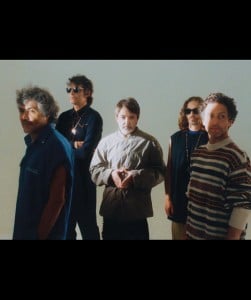
Babasónicos
Artist
Durante más de tres décadas, Babasónicos se ha encargado de desestabilizar al rock argentino desde el mismísimo corazón de la bestia. Pocas bandas han logrado que canciones tan incorrectas se conviertan en hits radiales y que estadios enteros, en toda América latina, canten verdaderas barrabasadas como si se tratara de dulces e inofensivas cancioncitas pop. Con determinación, talento e inteligencia, el grupo sostuvo una trayectoria ascendente, desde los sótanos en los que se gestó el Nuevo Rock Argentino de los ’90 hasta ámbitos que albergan a decenas de miles de personas. Luego de 13 discos oficiales editados y más de 23 años de giras constantes, la búsqueda continua.
Molotov
Artist
The rap-metal band Molotov formed in 1995 in Mexico City, comprising singer/guitarist Tito Fuentes, bassists Mickey "Huidos" Huidobro and <a href="spotify:artist:2PQW0MnXmZd19XKZQyoPgu">Jay de la Cueva</a>, and a drummer known as "La Quesadillera." By 1996, Paco Ayala had replaced <a href="spotify:artist:2PQW0MnXmZd19XKZQyoPgu">de la Cueva</a> and Randy "El Gringo Loco" Ebright became the band's new drummer. Molotov's 1997 debut LP, Donde Jugaran Las Ninas?, was a hit with both Spanish- and English-speaking audiences, earning a Grammy nomination for best Latin rock-alternative performance. The remix collection Molomix followed a year later, and in 1999 the group returned with Apocalypshit, produced and recorded by Mario Caldato, Jr. (<a href="spotify:artist:03r4iKL2g2442PT9n2UKsx">the Beastie Boys</a>). Molotov followed with their third album, Dance and Dense Denso, in 2020. ~ Jason Ankeny, Rovi

Zoé
Artist
A Grammy- and Latin Grammy-winning five-piece band from Mexico with a hook-laden, psychedelic rock style and infectious rock and pop songs, Zoé are regarded as one of the most important groups of the indie rock era. The band rose to the top of the rock en español scene during the late 2000s, and their third album, the chart-topping breakout smash Memo Rex Commander y el Corazón Atómico de la Vía Láctea (2006), earned them an array of award nominations and the first of many Premio Oye! wins. In 2011, they won three Latin Grammys. They took home prizes for Best Alternative Album, Best Long Form Video for the album MTV Unplugged/Música de Fondo, and Rock Song of the Year for the live version of the song "Labios Rotos." In 2018, they won another Grammy for Best Latin Rock, Urban or Alternative Album for Aztlán, a sweeping, lush collection of romantic psychedelic pop and sociologically topical songs. Founded in Mexico City in 1994, Zoé underwent a few years of lineup changes before solidifying into a quintet comprised of <a href="spotify:artist:4ClsVDy2g7RKSSlvq8cF6d">León Larregui</a> (vocals/songwriting), <a href="spotify:artist:76yOiYbsm9mQ9cPFUKWNFw">Sergio Acosta</a> (lead guitar), Jesús Báez (keyboards), Angel Mosqueda (bass), and Beto Cabrera (drums). In association with Sony Music, Zoé made their eponymous full-length debut in 2001. The album was largely unsuccessful despite the release of multiple singles. Looking to a make a change with their second album, the band got together with Phil Vinall, who had mixed their full-length debut. A veteran British producer whose credits include albums by <a href="spotify:artist:6RZUqkomCmb8zCRqc9eznB">Placebo</a>, Gene, and <a href="spotify:artist:5EtBXjUUyPJmiljpRdN6RJ">the Auteurs</a>, in addition to work with <a href="spotify:artist:4Z8W4fKeB5YxbusRsdQVPb">Radiohead,</a> <a href="spotify:artist:3l14gV4hIMAjmo7KUvEWTx">Elastica</a>, and <a href="spotify:artist:36E7oYfz3LLRto6l2WmDcD">Pulp</a>, Vinall's experience in the mid-'90s British scene was well-suited to the group's alternative rock influences. Zoé's second album, Rocanlover (2003), was an improvement over the first, with the band's style more fully realized. After a few years of modest if not major success, Zoé and Sony Music parted ways. In 2005, faced with limited resources, the group put out The Room, an independently released eight-track EP featuring the smash-hit single "Dead." In association with EMI and once again with Vinall in the production seat, Zoé skyrocketed to the top of the rock en español scene in 2006 with their critically acclaimed third album, Memo Rex Commander y el Corazón Atómico de la Vía Láctea. Similar in style and likewise impressive, the certified platinum follow-up effort Reptilectric (2008) was another blockbuster hit. An MTV Unplugged album titled Música de Fondo arrived in 2011, followed by the experimental Prográmaton, their fifth studio long-player, in 2013. The concert LP called 8.11.14 followed two years later. In 2017, the band were the subject of the documentary film Zoé: Panoramas, for which they also released an accompanying soundtrack. In the aftermath, Zoé took a short hiatus as lead vocalist <a href="spotify:artist:4ClsVDy2g7RKSSlvq8cF6d">León Larregui</a> issued Metrópolis, his third solo album. After headlining and international festival tours of Spain, Mexico, and the U.S., the group immediately returned to the studio. Zoé released the single "Azul" on March 1, 2018. Two more singles, "Temor y Temblor" and "Clarividad," followed before the April 20 release of the full-length Aztlán, which was again produced by Vinall. Critics and fans alike responded with enthusiasm to the band's back-to-psychedelia approach. The set was certified gold, and nominated for three Latin Grammys for Best Alternative Song ("Azul"), Best Long Form Video ("Panoramas"), and Best Alternative Music Album. In 2019, Aztlán won the Grammy Award for Best Latin Rock, Urban or Alternative Album. ~ Jason Birchmeier, Rovi
Música electrónica
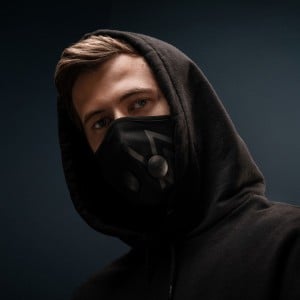
Alan Walker
Artist
Music has been my passion since I was young, and it still amazes me how far it’s taken me. Honestly, the fact that "<a href="spotify:album:5HMjpBO0v78ayq5lreAyDd" data-name="Faded">Faded</a>" has over 2 billion streams is something I never could have imagined. What truly drives me is the connection I share with my fans, <a href="spotify:artist:3o6ANFc1elhbAeqRYphStE" data-name="The Walkers">The Walkers</a>. It’s been incredible to see so many of you creating and sharing content inspired by my music. Since 2015, we’ve built the World of Walker together, forming one of the most incredible creative communities in the planet. In November last year I released the first part of my album, <a href="spotify:album:2pElzwHGoJr3zPA05onhr0" data-name="Walkerworld">Walkerworld</a>, giving you a multi-layered themepark experience, a world tour, Fortnite map, and a new song every month for all of 2024. This year I’ll release the complete version of the album, with lots of new songs. I’m calling it Walkerworld 2.0, and I can’t wait for you guys to hear it. Thank you for being a part of my journey. While waiting, check out some of my tracks here <a href="spotify:playlist:37i9dQZF1DZ06evO4rvWRa" data-name="This Is Alan Walker">This Is Alan Walker</a>!
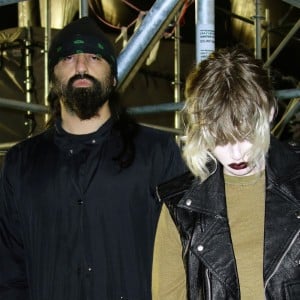
Crystal Castles
Artist
Fusing lo-res electronic noise and pop hooks so effortlessly that it can seem accidental, Crystal Castles began as producer/multi-instrumentalist Ethan Kath's solo project in late 2003. Kath got the moniker from the name of She-Ra's dwelling in the He-Man and Masters of the Universe cartoon series; it's also the name of a 1983 Atari video game, which is oddly appropriate, considering that one component of the band's distinctive sound comes from a keyboard modified with an Atari 5200 sound chip. When Kath collaborated with singer <a href="spotify:artist:4ukk0IyB7vL97QirpOcNr3">Alice Glass</a> on some songs in 2006, Crystal Castles' lineup was complete. One of the songs the pair recorded, "Alice Practice," was something of an accident: it was intended to be a demo of <a href="spotify:artist:4ukk0IyB7vL97QirpOcNr3">Glass</a> testing out a microphone, but its presence on MySpace piqued record labels' interest. "Alice Practice" was released as a limited-edition 7" on <a href="spotify:search:label%3A%22Merok+Records%22">Merok Records</a>, also home to <a href="spotify:artist:2qlAMLpUyBjZgnzuFXXZXI">Klaxons</a>; its 500-copy run sold out in three days. Kath and <a href="spotify:artist:4ukk0IyB7vL97QirpOcNr3">Glass</a> worked on their own songs and also honed their remixing skills, tweaking songs for <a href="spotify:artist:2qlAMLpUyBjZgnzuFXXZXI">Klaxons</a> as well as <a href="spotify:artist:0pwItbAKmeSTovWzxzkkbg">GoodBooks</a>, <a href="spotify:artist:2s6lxOYvvCvzpHtd3VyuMj">Uffie</a>, <a href="spotify:artist:6FfjnGXMhxSsJTuGLWBDth">Health</a>, and <a href="spotify:artist:3MM8mtgFzaEJsqbjZBSsHJ">Bloc Party</a>. Tours with <a href="spotify:artist:1zTAQ6zkGz2L2i6lfR30EX">the Presets</a> and <a href="spotify:artist:1rCIEwPp5OnXW0ornlSsRl">Metric</a> in 2007 set the stage for the release of Crystal Castles' self-titled debut album, which <a href="spotify:search:label%3A%22Last+Gang%22">Last Gang</a> released early in 2008. The duo returned in 2010 with another self-titled album; when it leaked onto the Internet in late April of that year, the band released it digitally soon after, with a physical release following that May. For 2012's more streamlined III, the duo decamped to Warsaw, where they recorded direct to tape, eschewing any computer-assisted recording. <a href="spotify:artist:4ukk0IyB7vL97QirpOcNr3">Glass</a> left the project in October 2014 to pursue a solo career; in April 2015, Kath resurfaced with a new Crystal Castles track, "Frail," which featured new vocalist Edith Frances. Another new song, "Deicide," surfaced that July, a few months before the new lineup's live debut at the Soundswild Festival in Johannesburg, South Africa that November. The duo debuted more new material in early 2016, and Crystal Castles' fourth album Amnesty appeared that August. ~ Heather Phares, Rovi
Indie rock
Siddhartha
Artist
Después de meses de intenso trabajo de composición y grabación, Siddhartha nos revela "Miel de Azar", una obra cargada de emotividad, texturas y sonidos innovadores. Este EP, compuesto por seis canciones, incluye la colaboración con Emmanuel Horvilleur en el tema "Acapulco", "Diamantes" junto al Dúo argentino El Zar y el tema "Nada Por Hecho". "Miel de Azar" incluye tres temas inéditos (Aurora, Día tras Día y Cómo Queremos) que exploran la temática del amor desde una perspectiva diferente al tradicional romanticismo. Tras el éxito de su álbum "00:00" lanzado en 2022, Siddhartha emprendió una gira de dos años y más de 120 conciertos en México, Estados Unidos, España y Latinoamérica. La creación de "Miel de Azar" comenzó a mediados de 2023, con el lanzamiento del sencillo "Acapulco". "Como Queremos" es una producción conjunta de Siddhartha, Alex Pérez, Rul Velázquez y Didi Gutman, productor del aclamado álbum "Únicos".
Arctic Monkeys
Artist
With their nervy and literate indie rock sound, Arctic Monkeys are a respected, adventurous, and successful group that could easily be called Britain's biggest band of the early 21st century. The band arrived with a blast in 2005, assisted by rave reviews and online word of mouth (they were one of the first bands to benefit from social media). They quickly became a sensation in the United Kingdom, where they were seen as the heir apparent to the throne left vacant by <a href="spotify:artist:2DaxqgrOhkeH0fpeiQq2f4">Oasis</a> and <a href="spotify:artist:4fSPtBgFPZzygkY6MehwQ7">the Libertines</a>. Buoyed by the single "I Bet You Look Good on the Dancefloor," their 2006 debut Whatever People Say I Am, That's What I'm Not briefly grabbed the title of fastest-selling album in British history. It landed on top of both the U.K. and U.S. rock album charts and took home the Mercury Prize. What set the group apart was <a href="spotify:artist:1ctkBmvz80MGyi72Ix055S">Alex Turner</a>, a singer/songwriter with a biting wit and grasp of English vernacular (not dissimilar to <a href="spotify:artist:7Lf3LOZp3U3u2f6cWMd3AH">Paul Weller</a>, the godfather of modern British rock). However, driven by their maverick creative spirit, Arctic Monkeys have proven highly unpredictable, reworking classic rock traditions on 2007's Favourite Worst Nightmare and beefing up their guitars with the assistance of <a href="spotify:artist:4pejUc4iciQfgdX6OKulQn">Queens of the Stone Age</a>'s <a href="spotify:artist:03xb2BUdIFzuRQ6o88yfCB">Josh Homme</a> on 2009's Humbug. Eventually, they also laced in some of the louche lounge aspects of <a href="spotify:artist:1ctkBmvz80MGyi72Ix055S">Turner</a>'s swinging side project <a href="spotify:artist:2Z7UcsdweVlRbAk5wH5fsf">the Last Shadow Puppets</a>, an evolution that began on 2018's arty Tranquility Base Hotel + Casino and deepened on its 2022 follow-up The Car. By that point, the band was a staple throughout the world. <a href="spotify:artist:1ctkBmvz80MGyi72Ix055S">Alex Turner</a> and guitarist Jamie Cook began their music careers in 2001, when the friends both received guitars for Christmas. Two years later, they began performing shows around their native Sheffield with drummer Matt Helders and bassist Andy Nicholson, two fellow students at Stocksbridge High School. A series of demo recordings followed, and Arctic Monkeys' audience swelled as fans circulated those recordings via the Internet. The musicians soon found themselves at the center of a growing media circus, with such outlets as BBC Radio examining the band's music and mounting hype. By distributing their homemade material on the Internet, Arctic Monkeys were able to build a sizable fan base without the help of a record label, effectively circumventing the usual road to superstardom. They continued to buck tradition by signing with <a href="spotify:search:label%3A%22Domino+Records%22">Domino Records</a> in 2005, eschewing a major-label's budget for <a href="spotify:search:label%3A%22Domino%22">Domino</a>'s D.I.Y. cred and hip roster (which also included <a href="spotify:artist:0XNa1vTidXlvJ2gHSsRi4A">Franz Ferdinand</a>, a touchstone for the band's sound). The smart moves paid off as Arctic Monkeys' first two singles -- "I Bet You Look Good on the Dancefloor" and "When the Sun Goes Down" -- both topped the U.K. charts. Critical reception was similarly favorable, but few could have predicted the whirlwind success of the band's debut album, which ousted <a href="spotify:artist:2DaxqgrOhkeH0fpeiQq2f4">Oasis</a>' Definitely Maybe as the fastest-selling debut in British history (a record that was broken one year later by <a href="spotify:artist:5lKZWd6HiSCLfnDGrq9RAm">Leona Lewis</a>' Spirit). Whatever People Say I Am, That's What I'm Not sold 363,735 copies during its first week alone, transforming Arctic Monkeys from underground stars into mainstream figures. Arctic Monkeys' debut sold approximately 300,000 total copies in America -- enough to warrant more media coverage. Their success continued as they released a spring EP, Who the F**k Are Arctic Monkeys, and prepared for a stateside tour. Temporary bassist Nick O'Malley was brought aboard for the band's American shows, while a fatigued Nicholson stayed at home. Nicholson then announced his official departure when the band returned home in June 2006, and O'Malley remained with Arctic Monkeys as a permanent member. That fall, the guys received the 2006 Mercury Prize and donated the accompanying money to an undisclosed charity. Additional accolades included Best British Breakthrough Act at the BRIT Awards and Best New Band at the NME Awards. NME also made a bold assertion by deeming the group's debut one of the Top Five British albums ever released. Released in April 2007, Favourite Worst Nightmare updated Arctic Monkeys' sound with louder instruments and faster tempos. The bandmates had recorded the sophomore album quickly, wishing to return to the road as soon as possible, and the speedy turnaround between records helped maintain the group's popularity at home. Favourite Worst Nightmare sold 85,000 copies during its first day of release, and all 12 tracks entered the Top 200 of the U.K. singles charts. As <a href="spotify:artist:1ctkBmvz80MGyi72Ix055S">Alex Turner</a> briefly turned his attention to a side project, <a href="spotify:artist:2Z7UcsdweVlRbAk5wH5fsf">the Last Shadow Puppets</a>, Arctic Monkeys received another Mercury Prize nomination and took home two titles at the 2008 BRIT Awards. Recording sessions for a third album commenced in early 2008 and lasted throughout the year, with producers James Ford (who previously worked with <a href="spotify:artist:1ctkBmvz80MGyi72Ix055S">Turner</a> on <a href="spotify:artist:2Z7UcsdweVlRbAk5wH5fsf">the Last Shadow Puppets</a>' album) and <a href="spotify:artist:03xb2BUdIFzuRQ6o88yfCB">Josh Homme</a> (frontman of <a href="spotify:artist:4pejUc4iciQfgdX6OKulQn">Queens of the Stone Age</a>) adding some newfound heft to the band's sound. Meanwhile, Arctic Monkeys released a concert album entitled At the Apollo -- with accompanying video footage captured on 35mm film -- before unveiling Humbug in August 2009. Humbug went platinum in the U.K. with the singles "Crying Lightning" peaking at number 12 and "Cornerstone" topping out at 94. The band hit the road that February, kicking off a multi-leg tour that ran through the rest of the year. After playing another handful of shows in early 2010, the guys took a short hiatus before reconvening with James Ford for their fourth album. Sessions began that fall, and the resulting Suck It and See arrived in spring 2011, topping the U.K. album chart and landing at number 14 on the Billboard 200. Meanwhile, <a href="spotify:artist:1ctkBmvz80MGyi72Ix055S">Turner</a> also wrote music for a Richard Ayoade film, Submarine, whose soundtrack doubled as the frontman's first solo release. In February 2012, Arctic Monkeys released a song entitled "R U Mine?" on their YouTube channel, which indicated that an album was on the way. A few months later, the band played at the London Summer Olympics opening ceremony, performing "I Bet You Look Good on the Dancefloor" and <a href="spotify:artist:3WrFJ7ztbogyGnTHbHJFl2">the Beatles</a>' "Come Together," but it wasn't until the summer of 2013 that the group's fifth album was to be revealed. Entitled AM, the record was released in September, a few months after a triumphant headlining performance at Glastonbury 2013, which was opened with the new song "Do I Wanna Know?" Both a critical and commercial success, AM topped the British charts and reached number six on the Billboard 200. It also earned the group a Mercury Prize nomination and won British Album of the Year at the BRIT Awards. Following the end of their tour in 2014, the band entered an extended hiatus, during which time the individual members pursued solo projects. In 2016, <a href="spotify:artist:1ctkBmvz80MGyi72Ix055S">Turner</a> released his second album with <a href="spotify:artist:2Z7UcsdweVlRbAk5wH5fsf">the Last Shadow Puppets</a> and toured. Arctic Monkeys resurfaced in April 2018 with the loungey Tranquility Base Hotel & Casino, a softer affair than their previous albums. Along with topping the U.K. album chart and Billboard Top Rock Albums chart, the LP became the group's fourth to earn a Mercury Prize nomination. Later that year, the band issued the TBH&C B-side "Anyways" as a single. A concert album, Live at the Royal Albert Hall, recorded during the Tranquility Base Hotel & Casino tour arrived in November 2020, with all proceeds going to benefit the War Child U.K. charity organization. Arctic Monkeys began their seventh album cycle by releasing the single "There’d Better Be a Mirrorball" in August 2022, delivering the full-length The Car in October. Continuing the slow, stylish vibe of Tranquility Base Hotel + Casino, the album was cut in a monastery on the coast of Suffolk. It hit number six on the Billboard 200, number two in the U.K., and picked up three Grammy nominations, including for Best Alternative Music Album. ~ Andrew Leahey & Stephen Thomas Erlewine, Rovi
Art pop
AURORA
Artist
🫀“Though its precise function and anatomy were not clearly understood, the heart was believed to be the centre of the soul. Of intuition. Of emotion and intention. Until we decided these were qualifications of the mind. Emotion overpowered by logic. And with the world being so corrupted by money, power and selfishness you cannot help but ask yourself - What Happened To The Heart?” 🫀 07.06.24
Mitski
Artist
Sometimes Mitski feels life would be easier without hope or a soul or love. But when she closes her eyes and thinks about what’s truly hers, what can’t be repossessed or demolished, she sees love. “The best thing I ever did in my life was to love people,” she says. “I wish I could leave behind all the love I have after I die, so I can shine all this goodness, all this love that I’ve created onto other people.” She hopes her newest album, The Land Is Inhospitable and So Are We, will shine love long after she’s gone. That’s precisely how it feels: like a love that’s haunting the land. “This is my most American album,” she says. The music feels like a profound act of witnessing this country, in all its private sorrows and contradictions. Sonically Mitski’s most epic and wise album, it introduces wounds and then actively heals them. Here, love is time-traveling to bless our tender days, like light from a distant star. It's full of the ache of the grown-up, seemingly mundane heartbreaks and joys that are often unsung but feel enormous. It’s a tiny epic. From the bottom of a glass, to a driveway slushy with memory and snow, to a freight train barreling through the Midwest, all the way to the moon, it feels like everything and everyone is crying out in pain, arching towards love. Love is that inhospitable land, beckoning and then rejecting us. To love this place, this earth, this America, this body takes work. It might be impossible. The best things are. Written by Will Arbery
Kate Bush
Artist
Throughout the entirety of a one-of-a-kind creative journey, Kate Bush has achieved the rare feat of making innovative, fearlessly experimental work that's also wildly successful. From the start, Bush's music was ambitious and strange, and her mélange of art rock, pop hooks, theatrical twists, fantastical vocal performances, and complex musicianship resulted in hits. She became an immediate star in the U.K. in 1978 with the release of her debut single, "Wuthering Heights," and the subsequent album The Kick Inside, when she was just 19. While the crystal-clear high notes and lush instrumentation of "Wuthering Heights" set the scene for her star to rise, Bush expanded her vision rapidly with the subsequent self-produced albums The Dreaming (1982) and Hounds of Love (1985), both of which saw her embracing rudimentary electronic music production along with more personal lyrical themes and an unflinching commitment to conceptual presentation that put her at high risk for commercial failure. Quite the opposite played out, however, as these visionary albums broke through worldwide. Always working at a deliberate pace, Bush took a hiatus between 1993's The Red Shoes and 2005's Aerial, and from there sporadically released new material like 2011's 50 Words for Snow. The impact of Bush's music, aesthetic, and approach to art cannot be understated. Along with the impression her sound made on peers like <a href="spotify:artist:7C4sUpWGlTy7IANjruj02I">Peter Gabriel</a>, <a href="spotify:artist:0NKDgy9j66h3DLnN8qu1bB">Eurythmics</a>, <a href="spotify:artist:0z5DFXmhT4ZNzWElsM7V89">Erasure</a>, <a href="spotify:artist:5a2EaR3hamoenG9rDuVn8j">Prince</a>, and others, echoes of Bush's reality-bending vocal style and imaginative sound sculpting have appeared perennially in every generation of new artists that followed her. While a direct resemblance can be heard to stars like <a href="spotify:artist:1KsASRNugxU85T0u6zSg32">Tori Amos</a>, <a href="spotify:artist:7w29UYBi0qsHi5RTcv3lmA">Björk</a>, <a href="spotify:artist:4fxp616ALtFWnXfwxnjLzW">Antony and the Johnsons</a>, or <a href="spotify:artist:6nB0iY1cjSY1KyhYyuIIKH">FKA Twigs</a>, the totality of her influence is much deeper, with everyone from <a href="spotify:artist:3qeZ2Y7fOYRAVJzOJxp1e2">John Lydon</a> to <a href="spotify:artist:053q0ukIDRgzwTr4vNSwab">Grimes</a> to <a href="spotify:artist:1G9G7WwrXka3Z1r7aIDjI7">OutKast</a>'s <a href="spotify:artist:2ht3wxeT69CzyKFChNnNAB">Big Boi</a> citing Bush as a guiding force for their music. Kate Bush was born Catherine Bush in 1958. She studied piano and violin while attending the St. Joseph's Convent Grammar School in Abbey Wood in South London. By the time she was a teenager, she was writing songs of her own. A family friend brought her to the attention of <a href="spotify:artist:0k17h0D3J5VfsdmQ1iZtE9">Pink Floyd</a> lead guitarist <a href="spotify:artist:2FcC4sDMXme2ziI7tGKMK8">David Gilmour</a>, who arranged for the 15-year-old to record her first demo. With <a href="spotify:artist:2FcC4sDMXme2ziI7tGKMK8">Gilmour</a>'s help, Bush was signed to <a href="spotify:search:label%3A%22EMI+Records%22">EMI Records</a> at age 16, though the company made the decision to break her in slowly. She studied dance, mime, and voice, and continued writing. She also began thinking in terms of which of the 200 or so songs she'd written would be on her first recording, and by 1977, she was ready to begin her formal career, which she did with an original song, "Wuthering Heights," based on material from Emily Bronte's novel (and more directly inspired by Bush's seeing the 1970 film directed by Robert Fuest and starring Timothy Dalton and Anna Caulder Marshall). "Wuthering Heights" hit number one on the British charts when it was released in 1978, and Bush immediately arrived. Her debut album, The Kick Inside, a collection of material that she had written from the age of 15 and onward -- some of it displaying extremely provocative and sophisticated sexual references and images -- reached number three and sold over a million copies in the U.K. Bush's second album, Lionheart, reached number six but didn't achieve anything like the sales totals or critical acclaim of its predecessor, and in later years, Bush regretted the rush in planning and recording that album to capitalize on the success of her debut. In England during the spring of 1979, she embarked on what proved to be the only concert tour of the first 37 years of her career, playing a series of shows highlighted by 17 costume changes, lots of dancing, and complex lighting. Bush was also one of the first rock performers to use a wireless microphone, which freed her up to move around the stage as few singers before her had been capable of doing. The tour proved both exhausting and financially disastrous, and she limited her live performances for many years afterward. By the start of the '80s, Bush was established as one of the most challenging and eccentric artists ever to have achieved success in rock music, with a range of sounds and thematic content that constantly challenged her audiences. "Babooshka" (1980) became her first Top Five single since "Wuthering Heights," and her subsequent album, Never for Ever, entered the British charts at number one in September of 1980. During this period, Bush began co-producing her own work, a decisive step toward refining her sound and also establishing her independence from her record company. Her 1982 album The Dreaming was her first completely self-produced LP, and included some of her most experimental and adventurous work up to that point. Bush had been inspired by seeing a <a href="spotify:artist:7guDJrEfX3qb6FEbdPA5qi">Stevie Wonder</a> concert where <a href="spotify:artist:7guDJrEfX3qb6FEbdPA5qi">Wonder</a> used a Fairlight CMI synthesizer (an early digital synth), and she experimented heavily with the Fairlight throughout The Dreaming, with its cold and futuristic sounds blending around Bush's unorthodox songwriting. The Dreaming peaked at number three in the U.K. From that point forward, Bush produced all of her albums herself. In August of 1985, Bush released "Running Up That Hill," which became her second biggest-selling single. The accompanying album, Hounds of Love, the first record made in her home studio, debuted on the British charts at the number one position in September of 1985 and remained there for a full month, and soon after "Running Up That Hill" broke through in the U.S., it reached number 30 on Billboard's charts. By this time in England, Bush ranked alongside <a href="spotify:artist:6tbjWDEIzxoDsBA1FuhfPW">Madonna</a> in terms of her musical impact, "Running Up That Hill" having bumped "Like a Virgin" out of the number one chart position. The changes in her sound and her development as a writer/performer were showcased in the January 1987 best-of collection The Whole Story, for which she also re-recorded the lead vocal for "Wuthering Heights" to bring the song more in line with her sound at the time. The album also featured her latest single, "Experiment IV," whose lyrics were built on a science fiction story line that was echoed in the video, which Bush directed with a cast of familiar movie performers, and which came out like a miniaturized musical version of a <a href="spotify:artist:6ypM98YOKaS2MFL4JLkb6b">Quatermass</a>-like chiller. That same year, Bush won the Best British Female Artist award at the sixth annual BRIT Awards in London. In October of 1989, Bush's sixth album, The Sensual World, reached the British number two spot and received an unprecedented promotional push in America, where she signed with <a href="spotify:search:label%3A%22Columbia+Records%22">Columbia Records</a> for her future releases. Bush's next album, The Red Shoes (1993), inspired by the 1948 film by Michael Powell and Emeric Pressburger, debuted in the American Top 30, the first time one of her albums had ever charted that high -- Bush made a rare personal appearance in New York that December for an autograph signing at Tower Records on the Lower East Side, and the line of admirers stretched almost six blocks and required her to extend her appearance by several hours. It would be another 12 years before Bush would resume her recording career. Rumors of a new album began circulating in the late '90s. During this time, Bush became a mother and quietly retreated to her countryside home in Berkshire, Reading, England. In 2005, Bush finally released her follow-up to The Red Shoes, the double-disc set Aerial. After another six-year silence, Bush released The Director's Cut in 2011. It was a collection of 11 redone songs taken from 1989's The Sensual World and 1993's The Red Shoes. Bush claimed she was never quite satisfied with what was released, and therefore decided to rework elements in the chosen songs -- she recut all of her vocals and drums, and left virtually everything else unchanged. That said, the title of the song "The Sensual World" was renamed "Flower of the Mountain," because she also changed the words. Bush proved somewhat prolific in 2011 when she released 50 Words for Snow on <a href="spotify:search:label%3A%22Anti-%22">Anti-</a> in November, an all-new concept recording containing seven long tracks. Jazz drummer <a href="spotify:artist:42zoEf7IcpDSvdQjcrSpHl">Steve Gadd</a> played throughout, with Bush's son Bertie guesting on one track and <a href="spotify:artist:3PhoLpVuITZKcymswpck5b">Sir Elton John</a> duetting with Bush on "Snowed in at Wheeler Street." In March 2014, Bush shocked her fans by announcing she would be returning to the stage for the first time in 35 years. She revealed she would perform a series of concerts at London's Hammersmith Apollo Theatre in August and September of that year. Bush initially booked 15 shows, all of which sold out after just 15 minutes of the tickets going on sale. Another seven nights were soon added, which were also immediate sellouts. Bush's concerts, featuring an ambitious blend of music, dance, and drama, received enthusiastic reviews, and the show received the Editor's Award at the London Theatre Awards. In late 2016, Bush released an album drawn from the London performances. Titled Before the Dawn, the live album was released by Bush's own <a href="spotify:search:label%3A%22Fish+People%22">Fish People</a> label, distributed by <a href="spotify:search:label%3A%22Rhino+Records%22">Rhino Records</a> in Europe and the U.K. and by <a href="spotify:search:label%3A%22Concord+Music%22">Concord Music</a> in the United States. In November 2018, Bush released a series of box sets -- two on CD and four on vinyl -- that featured remastered versions of her entire back catalog, with the new mastering overseen by Bush and James Guthrie. The second CD set included four bonus discs that featured rare and unreleased material, including demos, 12" mixes, alternate versions, and interpretations of other artists' songs. The four rarities discs were given a stand-alone release in March 2019 as a box set titled Other Sides. Around the same time, Bush published her first book, How to Be Invisible, a collection of lyrics. In 2022, she was nominated for a third time as a potential inductee to the Rock & Roll Hall of Fame. While she was not included in that year's class, Bush experienced a surprising cultural revival that May thanks to the inclusion of "Running Up That Hill" on the fourth season of the series Stranger Things. The viral popularity of the track introduced her to a new generation of fans and pushed the song (and Hounds of Love) back onto multiple international charts. ~ Bruce Eder & Fred Thomas, Rovi
Björk
Artist
A visionary artist who effortlessly blends avant-garde and pop elements, Björk makes music that is as innovative as it is emotional. When the Icelandic singer, songwriter, producer, composer, and multi-instrumentalist launched her solo career, she traded the arty guitar rock of her former group <a href="spotify:artist:1G0Xwj8mza6b03iYkVdzDP">the Sugarcubes</a> for dance music and worked with some of the genre's biggest names, including <a href="spotify:artist:1l7aiSjBGkQiyTuQYTigAP">Nellee Hooper</a>, <a href="spotify:artist:1PXHzxRDiLnjqNrRn2Xbsa">Underworld</a>, and <a href="spotify:artist:6hhA8TKRNryM8FNzqCqdDO">Tricky</a>. She established her new artistic direction with 1993's Debut, an international, multi-platinum hit that she followed with two equally groundbreaking albums: 1995's Post, another wildly successful work that reflected her style at its poppiest even as it fused jazz, industrial, and different flavors of electronic music, and 1997's Homogenic, an uncompromising fusion of strings and fractured beats that foreshadowed her increasingly experimental direction in the years to come. She swung from the daring softness of 2001's Vespertine to the primal vocal textures of 2004's Medúlla, and found new ways to connect humanity, technology, and music on 2011's Biophilia. Later in the 2010s and into the next decade, Björk delivered powerful expressions of loss and renewal with albums including 2015's Vulnicura and 2022's Fossora, both of which reaffirmed her as one of the most influential and distinctively creative talents of her times. Born in Reykjavik in 1965 to activist Hildur Rúna Hauksdóttir, Björk spent her early years living in a commune with her mother and stepfather Sævar Árnason, who was a guitarist in the band Pops. She studied piano and flute at the Reykjavik school Barnamúsíkskóli; when she sang <a href="spotify:artist:7Jbs4wPCLaKXPxrTxZ2zaa">Tina Charles</a>' "I Love to Love" at a recital, her teachers sent a recording to Iceland's Radio One that was then broadcast across the nation. A contract with the Fálkinn record label followed, and Björk recorded her self-titled debut album when she was 11. Released in Iceland in December 1977, Björk became a hit within Iceland and contained covers of several pop songs, including <a href="spotify:artist:3WrFJ7ztbogyGnTHbHJFl2">the Beatles</a>' "Fool on the Hill." As the '70s came to a close, the punk revolution changed Björk's musical tastes. She formed the post-punk group <a href="spotify:artist:76S65NHJHrNy4JTrXHP2BH">Exodus</a> in 1979 and sang in Jam 80 the following year. In 1981, Björk and <a href="spotify:artist:76S65NHJHrNy4JTrXHP2BH">Exodus</a> bassist <a href="spotify:artist:7pQYUlV0pHGolqqTepsuxu">Jakob Magnusson</a> formed Tappi Tikarrass, which released an EP, Bitid Fast I Vitid, on <a href="spotify:search:label%3A%22Spor%22">Spor</a> later that year; it was followed by the full-length Miranda in 1983. Following Tappi Tikarrass, she formed the goth-tinged post-punk group <a href="spotify:artist:1Kuzl5TprdfmyLnBlZiYVn">KUKL</a> with Einar Orn Benediktsson. <a href="spotify:artist:1Kuzl5TprdfmyLnBlZiYVn">KUKL</a> released two albums, The Eye (1984) and Holidays in Europe (1986), on <a href="spotify:search:label%3A%22Crass+Records%22">Crass Records</a>. During this time, Björk published a book of poetry, 1984's Um Úrnat frá Björk and appeared in her first film, The Juniper Tree (which was released in 1990). When Kukl dissolved in mid-1986, Björk, Benediktsson, and other former members founded the <a href="spotify:search:label%3A%22Smekkleysa%22">Smekkleysa</a> ("Bad Taste") arts collective, which included <a href="spotify:artist:1G0Xwj8mza6b03iYkVdzDP">the Sugarcubes</a> among its projects. <a href="spotify:artist:1G0Xwj8mza6b03iYkVdzDP">The Sugarcubes</a> quickly became stars within their homeland and were also one of the rare Icelandic bands to achieve international success when their debut album, Life's Too Good, became a British and American hit in 1988. While the band was on hiatus following the Here Today, Tomorrow Next Week! tour, Björk pursued other projects, including Gling-Gló, a 1990 set of jazz standards and originals with an Icelandic bebop group called Trio Gudmundar Ingolfssonar, and a collaboration with <a href="spotify:artist:7vF3DcPluq6lZI36VniagW">Current 93</a>. She also wrote her own songs and appeared on two songs on <a href="spotify:artist:7hFdUW64G4iU1tz46ITRfN">808 State</a>'s 1991 album ex:el, an experience that sparked her love of house music. After recording and touring in support of <a href="spotify:artist:1G0Xwj8mza6b03iYkVdzDP">the Sugarcubes</a>' final album, 1992's Stick Around for Joy, Björk moved to London and embarked on her solo career. Working with <a href="spotify:artist:6FXMGgJwohJLUSr5nVlf9X">Massive Attack</a>'s <a href="spotify:artist:1l7aiSjBGkQiyTuQYTigAP">Nellee Hooper</a> as her co-producer, she combined new compositions with songs she had written as a teenager and drew from influences such as Bollywood, exotica, and jazz as well as electronic music. Featuring contributions from <a href="spotify:artist:30Y7JOpiNgAGEhnkYPdI1P">Talvin Singh</a>, jazz harpist <a href="spotify:artist:7B20tHBVKVg3b6K3W1OKwo">Corky Hale</a> and reedist <a href="spotify:artist:3y58dknRdBENZ8oVErWu9B">Oliver Lake</a>, Debut -- so named by Björk to underscore its musical fresh start -- appeared in June 1993. It quickly became her most successful project to date: the album earned widespread critical acclaim and reached number two on the charts in Iceland and number three on the U.K. Album Charts. Debut went double platinum in the U.K. and platinum in four other countries, including the U.S., and was certified gold in five other countries. Boosted by an eye-catching Michel Gondry video, the single "Human Behaviour" became a Top 40 hit in the U.K., followed by "Venus as a Boy," "Big Time Sensuality," and "Violently Happy." At the end of the year, NME magazine named Debut the album of the year, while she won International Female Solo Artist and Newcomer at the BRIT Awards; at the 1994 Grammy Awards, Gondry's video was nominated for Best Short Form Music Video. Björk followed Debut's success with a number of collaborations. "Play Dead," a collaboration with <a href="spotify:artist:6xpxzGS2J2tijVVWp2RY0j">David Arnold</a> recorded for the film The Young Americans, appeared shortly after the album's release and was included as a bonus track on a rerelease. In 1994, she lent her vocals to <a href="spotify:artist:5akVqMzdZOdbMYbE4vNZWD">Plaid</a>'s album Not for Threes, co-wrote <a href="spotify:artist:6tbjWDEIzxoDsBA1FuhfPW">Madonna</a>'s "Bedtime Stories," and appeared in an uncredited role in Robert Altman's film Prêt-à-Porter. She also worked on her second album with <a href="spotify:artist:1l7aiSjBGkQiyTuQYTigAP">Hooper</a>, <a href="spotify:artist:6hhA8TKRNryM8FNzqCqdDO">Tricky</a>, <a href="spotify:artist:7hFdUW64G4iU1tz46ITRfN">808 State</a>'s Graham Massey, and <a href="spotify:artist:1DAJPl1Q9bNwPGUqL08nzG">Howie B</a> of <a href="spotify:search:label%3A%22Mo%27+Wax+Records%22">Mo' Wax Records</a>; as her co-producers; her other collaborators included <a href="spotify:artist:30Y7JOpiNgAGEhnkYPdI1P">Talvin Singh</a> and Brazilian composer and conductor <a href="spotify:artist:0hE3uA2w3guHeKvuc7BpRr">Eumir Deodato</a>. Recorded in Nassau and London, June 1995's Post further broadened Björk's musical horizons, incorporating industrial, ambient, IDM, trip-hop, and jazz into its bustling portrait of her life after moving to London. Hailed for its fusion of pop and experimental music, the album was another critical success as well as on the charts. Post was a Top Ten hit in over 20 countries (including the U.K., where it reached number two) and peaked at number 32 in the U.S. It was certified platinum in four countries, including the U.K. and the U.S., and was certified gold in four more. Post yielded the singles "Army of Me," "Isobel," "Hyperballad" and "It's Oh So Quiet," the latter of which topped the Icelandic charts and was a Top Ten hit in four other countries. The album's accolades included the Icelandic Music Award for Album of the Year and the Grammy nomination for Best Alternative Music Album, while Björk won the Icelandic Music Awards for Artist of the Year, Female Singer of the Year, and Composer of the Year, and won her second Brit Award for Best International Female Solo artist. Additionally, Spike Jonze's vivid music video for "It's Oh So Quiet," which took inspiration from vintage Hollywood musicals, was nominated for the Best Music Video Grammy award. To support the album, Björk embarked on her first official tour of North America with <a href="spotify:artist:6kBDZFXuLrZgHnvmPu9NsG">Aphex Twin</a>, and chronicled the European leg of the tour as well as the making of the album in the book Post. November 1996 saw the release of Telegram, a collection of remixes featuring contributions from <a href="spotify:artist:2M0T4a1pkOC5nifN9W6e9e">LFO</a>, Massey, Deodato, <a href="spotify:artist:5CDTMeaU6dnv24n6e4uAtk">Dillinja</a>, and percussionist <a href="spotify:artist:6MYiQGy8MIcBps6Ez0IQA8">Evelyn Glennie</a>. The album reached number 66 on the U.S. charts and peaked at 59 in the U.K. After the lengthy Post tour and an attempt on her life by an obsessed fan, Björk decamped to Málaga, Spain to work on her next album. Seeking a more cohesive approach inspired by Iceland's landscapes, she combined crunchy beats with sweeping strings and worked with co-producers Mark Bell, <a href="spotify:artist:0uQWT7X0I9Y7zM7WWexpAj">Guy Sigsworth</a>, <a href="spotify:artist:1DAJPl1Q9bNwPGUqL08nzG">Howie B</a>, and Markus Dravs, the Icelandic String Octet, and Deodato, who contributed additional string arrangements. Arriving in September 1997, the moody, forceful Homogenic was another triumph: Reaching the Top Ten in 15 countries, it was also certified gold in six countries, including the U.S. Along with earning Björk her third Brit Award for International Female Solo Artist, Homogenic was nominated for the Best Alternative Music Performance Grammy Award, while Gondry's video for the single "Bachelorette" and Chris Cunningham's video for "All Is Full of Love" were nominated for the Best Short Form Music Video Grammy Award in 1999 and 2000, respectively. Early in 1999, Björk started work on Lars von Trier's film Dancer in the Dark, in which she played the main character Selma and wrote and produced the score. At the 2000 Cannes Film Festival, Dancer in the Dark won the Palme d'Or, while Björk was named Best Actress. Later that year, her score for the film appeared as Selmasongs, which included contributions from Homogenic collaborator Bell and "I've Seen It All," a duet with <a href="spotify:artist:4Z8W4fKeB5YxbusRsdQVPb">Radiohead</a>'s <a href="spotify:artist:4CvTDPKA6W06DRfBnZKrau">Thom Yorke</a> that earned an Academy Award nomination for Best Original Song. During the challenging Dancer in the Dark shoot, Björk composed quiet, intricate songs that provided a respite as well as a way to celebrate her relationship with artist Matthew Barney. Written and recorded in Spain, Denmark, Iceland, and New York, Vespertine appeared in August 2001 and included contributions from Barney, Jake Davies, <a href="spotify:artist:4MEZhJCV2uLCrhZoCzfjVs">Marius de Vries</a>, Thomas Knak, <a href="spotify:artist:0xBkYJzwFzcIYev4fOkvk0">Matmos</a>, and harpist <a href="spotify:artist:3KI6JsmaN8xyYUq8Tf9Lle">Zeena Parkins</a>. Winning critical acclaim for its delicate sonics and sensual, vulnerable songwriting, the album topped the charts in five countries including Iceland and was certified gold in six countries; in the U.S., it reached number one on the Top Electronic Albums chart. Vespertine was nominated for the Best Alternative Album Grammy Award and the Icelandic Music Award for Album of the Year, while Björk was nominated for the Best International Female Solo Artist Brit Award. She brought <a href="spotify:artist:3KI6JsmaN8xyYUq8Tf9Lle">Parkins</a>, <a href="spotify:artist:0xBkYJzwFzcIYev4fOkvk0">Matmos</a>, and a choir of Inuit women with her on the Vespertine tour, chronicling its smaller-scale performances with the 2002 DVD Live at Royal Opera House and the following year's Miniscule. During this time, she also released Family Tree, a box set gathering rarities and previously unreleased material; Greatest Hits, which collected songs chosen by Björk's fans on her website; and Live Box, a set of live recordings and videos from each of her albums. For her next album, Björk moved away from Vespertine's detailed electronics to focus on the primal power of the human voice. Collaborating with <a href="spotify:artist:5iksmHDN2qZQcgFfXqIXtT">Robert Wyatt</a>, <a href="spotify:artist:34Ai24gPz5YJ8NbksiNFef">Mike Patton</a>, <a href="spotify:artist:6vunRaBya0Sx6CMJZAlHTZ">Rahzel</a>, Japanese beatboxer <a href="spotify:artist:3dsLTMrREVSyX9PRuDibeS">Dokaka</a>, Inuit throat singer <a href="spotify:artist:2WIb75pwIt78VCAhAtPObY">Tanya Tagaq</a> (who also performed on the Vespertine tour) the Icelandic and London Choirs, <a href="spotify:artist:2vObsQCPsbVfkqHlQOu2zc">Nico Muhly</a> and <a href="spotify:artist:0xBkYJzwFzcIYev4fOkvk0">Matmos</a> among many others, she released Medúlla in August 2004. With a title based on the Latin word for "marrow," the largely acapella album earned praise for its experimental approach to the essential qualities of music and vocals. Its global success included placing in the Top Ten of the charts in 19 countries; gold certifications in France and Russia, and silver certification in the U.K.; hitting number one on the Top Dance/Electronic Albums chart in the U.S.; and an Icelandic Music Award nomination for Pop Album of the Year. Björk also received Grammy nominations for Best Alternative Album and Best Female Pop Vocal Performance for the track "Oceania," which she performed at the opening ceremony for the 2004 Summer Olympics in Athens, Greece. The following year, she worked with Barney on his film Drawing Restraint 9, acting in it as well as composing its soundtrack. She also appeared in Screaming Masterpiece, a 2005 documentary about Iceland's musical community. Late in 2006, she and the rest of <a href="spotify:artist:1G0Xwj8mza6b03iYkVdzDP">the Sugarcubes</a> reunited for a performance benefitting the band's former label <a href="spotify:search:label%3A%22Smekkleysa%22">Smekkleysa</a>. In 2007, Björk's cover of <a href="spotify:artist:5hW4L92KnC6dX9t7tYM4Ve">Joni Mitchell</a>'s "The Boho Dance," which appeared on A Tribute to Joni Mitchell, preceded the May release of her sixth album Volta. A percussive, playful work, its contributors included <a href="spotify:artist:5Y5TRrQiqgUO4S36tzjIRZ">Timbaland</a>, <a href="spotify:artist:2nCACYdIndYchzX4bxLcTW">Toumani Diabaté</a>, Antony Hegarty, <a href="spotify:artist:6Sr77iisVrcSg7bQfqqRHk">Konono No. 1</a>, and an all-female Icelandic brass section. Reaching the Top Ten in 18 countries (including the U.S., making it her highest-placing album there), it was certified silver in the U.K. Like its predecessor, the album was nominated for Grammy and Icelandic Music Awards. Björk toured in support of Volta for a year and a half, with the 2009 set Voltaic, which was released in sets ranging from a CD/DVD to limited multi-disc and vinyl editions, capturing select performances. During the Volta tour, Björk continued to work on music, releasing the single "Náttúra" in October 2008. In 2010, she worked with <a href="spotify:artist:5VF0YkVLeVD4ytyiyVSIiF">Dirty Projectors</a> on the Mount Wittenberg Orca EP, appeared on albums by <a href="spotify:artist:4S3XJRZ2bToEYIH1slOdl5">Ólöf Arnalds</a> and <a href="spotify:artist:6VJZYivuYJGCrPuOAnI7Qo">Anohni</a>, and paid tribute to her late collaborator and friend Alexander McQueen by performing at the designer's funeral and contributing the previously unreleased song "Trance" to the short film To Lee, With Love. That year, she also received the Polar Music Prize from the Royal Swedish Academy of Music along with <a href="spotify:artist:1nIUhcKHnK6iyumRyoV68C">Ennio Morricone</a>. Björk's next project, Biophilia, was one of her most ambitious. An interactive exploration of humanity's relationships to sound and the universe that educated its audience about music theory and science, it took shape with the help of engineers, scientists, custom-built instruments, and video game designers. Released as a suite of apps for the iPad and iPhone and on CD, Biophilia arrived in October 2011. A Top Ten hit in six countries, the album once again topped the Top Dance/Electronic Albums chart in the U.S. and was nominated for the Best Alternative Album Grammy Award and several Icelandic Music Awards. Bastards, a collection of Biophilia remixes featuring <a href="spotify:artist:5RADpgYLOuS2ZxDq7ggYYH">Death Grips</a> and <a href="spotify:artist:11dMqVZY4PHgVL80tejvHK">Omar Souleyman</a>, was released in Europe in late 2012 and in the U.S. in early 2013. The Biophilia apps were translated to Android in July 2013, the same month that When Björk Met Attenborough, a BBC Channel 4 documentary with <a href="spotify:artist:4QJpMVEZA1B0MkdW0jDMX4">Sir David Attenborough</a> and scientist Oliver Sacks that related Biophilia to humanity's relationship with music, premiered. In 2014, Björk contributed vocals to <a href="spotify:artist:5RADpgYLOuS2ZxDq7ggYYH">Death Grips</a>' album Niggas on the Moon. She also continued the Biophilia project with a live concert film, Biophilia Live. Filmed at London's Alexandra Palace and featuring spectacular visuals, it was released theatrically and in DVD and Blu-ray sets that included the live audio on CD. That year, the Biophilia apps were added to the Museum of Modern Art's permanent collection. By late 2014, Björk was putting the finishing touches on her next album. Featuring collaborations with <a href="spotify:artist:4SQdUpG4f7UbkJG3cJ2Iyj">Arca</a> and <a href="spotify:artist:543jOiqi5zLNZIOv7rA6rg">the Haxan Cloak</a>, Vulnicura was released in January 2015 after it leaked ahead of its scheduled March release date. Tracing the aftermath of Björk's relationship with Barney and harking back to the string and beat-heavy sounds of Vespertine and Homogenic, the album earned rave reviews for its powerful emotional impact. Topping the Icelandic charts and reaching number 11 in the U.K., Vulnicura also charted throughout Europe and was a Top 20 hit in the U.S. It won Best Album at the Icelandic Music Awards, and Björk won the awards for Best Female Artist, Best Songwriter, and Best Producer. At that year's Brit Awards, she was named International Female Solo Artist (marking her fifth Brit Award), and Vulnicura was nominated for the Best Alternative Music Grammy Award, her seventh nomination in that category. In March 2015, the Museum of Modern Art launched a multimedia exhibit documenting Björk's career from Debut through Vulnicura. It presented her notebooks, costumes, the instruments created for Biophilia, and videos, including a film for the Vulnicura song "Black Lake" by director Andrew Thomas Huang commissioned by the museum. The book Björk: Archives chronicled the exhibition. That March, Björk also embarked on the Vulnicura world tour, backed by <a href="spotify:artist:3FivPgIIWpeGTnTx5PrpCX">Alarm Will Sound</a> and percussionist <a href="spotify:artist:08LrhaMKwKuGbB9XHBEjXF">Manu Delago</a>, with <a href="spotify:artist:4SQdUpG4f7UbkJG3cJ2Iyj">Arca</a> joining on theater dates and <a href="spotify:artist:543jOiqi5zLNZIOv7rA6rg">the Haxan Cloak</a> on festival shows. A series of Vulnicura remixes kicked off in July, with <a href="spotify:artist:7o2Y6TQr9B0ynZGhUDAkyj">Lotic</a>, <a href="spotify:artist:6FP6ynzSPeBFX46vkI1OsW">Katie Gately</a>, <a href="spotify:artist:29LOCR81IrdEJjCAeCEOU3">Mica Levi</a>, <a href="spotify:artist:2X3e2rDdxibDfJGv0CwS7A">Rabit</a>, Juliana Huxtable, and Björk herself among the artists reworking the album's tracks. <a href="spotify:search:label%3A%22One+Little+Indian%22">One Little Indian</a> gathered all 12 remixes in a limited edition vinyl set that December, the same month that "Stonemilker" was released as a VR app including a 360-degree video and a string-based mix of the song. An acoustic version of Vulnicura, Vulnicura Strings, arrived at the end of 2015 and featured the viola organista, a keyboard-driven string instrument designed by Leonardo da Vinci. Vulnicura Live, which featured Björk's favorite performances of the album's songs as well as some chosen from her other albums, was given a limited release; wider distribution followed in 2016. That June saw the premiere of Björk Digital, a touring exhibit collecting the VR videos created for Vulnicura (one of the videos, "Notget VR," won the Cannes Lions Grand Prix Award for Real Time Virtual Reality Experience). At the exhibit's Tokyo date, Björk performed "Quicksand" during YouTube's first ever virtual reality live stream broadcast. Starting in September, she performed a small acoustic tour with stops including London's Royal Albert Hall and Los Angeles' Walt Disney Concert Hall. In 2017, Björk reunited with <a href="spotify:artist:4SQdUpG4f7UbkJG3cJ2Iyj">Arca</a> for the follow-up to Vulnicura. The lighter but still complex Utopia, which featured Icelandic and Venezuelan birdsong, an all-female flute section, and lyrics inspired by science fiction and folklore, arrived in November 2017. Charting globally, the album reached number 25 on the U.K. Albums Chart and number 75 on the Billboard 200 in the U.S. Utopia was nominated for Best Alternative Music Album at the 61st Annual Grammy Awards, becoming her eighth consecutive nomination in that category and her 15th nomination overall. The album spawned several singles and EPs: 2017's Blissing Me EP featured a collaboration with <a href="spotify:artist:1O9iHQjrVuiAYOJFCBeFSl">serpentwithfeet</a>; 2018's Arisen My Senses EP included remixes by <a href="spotify:artist:02fDf7HEPtBZLtPzCyxSR2">Lanark Artefax</a>, <a href="spotify:artist:23QKqAkKwti9zBiac6RFBA">Jlin</a>, and <a href="spotify:artist:5eitAUlYmlha3LLWg7aBn5">Kelly Lee Owens</a>; and the following year's Country Creatures EP collected remixes of "Creatures Features" by <a href="spotify:artist:5hE6NCoobhyEu6TRSbjOJY">Fever Ray</a> and <a href="spotify:artist:7eQZTqEMozBcuSubfu52i4">the Knife</a> along with Björk's remix of the <a href="spotify:artist:5hE6NCoobhyEu6TRSbjOJY">Fever Ray</a> song "This Country." Following the initial run of dates in support of the album, in 2019 Björk launched the Cornucopia tour, an ambitious live experience that combined imagery and projections by director Tobias Gremmler and the choir that performed on the album with other musical and visual artists. That year, Björk also shared the stage with <a href="spotify:artist:4SQdUpG4f7UbkJG3cJ2Iyj">Arca</a>, performing "Afterwards," a song that appeared on <a href="spotify:artist:4SQdUpG4f7UbkJG3cJ2Iyj">Arca</a>'s 2020 album KiCk 1. She then appeared in Robert Eggers' 2022 film The Northman, marking her first film appearance since Drawing Restraint 9. That September saw the release of her tenth album Fossora. Named for a Latin word meaning "digging" and informed by the 2018 death of her mother, the album combined clarinets, flutes, and strings with choral vocals as well as performances by <a href="spotify:artist:1O9iHQjrVuiAYOJFCBeFSl">serpentwithfeet</a> and <a href="spotify:artist:4cXE1g28uYrIaUisUx5cJt">Emilie Nicolas</a>. The album reached number four on the Icelandic charts and number 11 in the U.K.; in the U.S., it peaked at 100 on the 200 Albums chart and number two on the Top Dance/Electronic Albums chart. Another nominee for the Best Alternative Music Album Grammy Award, Fossora took home the Alternative Album of the Year and Recording Direction of the Year prizes at the Icelandic Music Awards. ~ Heather Phares & Stephen Thomas Erlewine, Rovi
R&B

Kali Uchis
Artist
Raised between Virginia and Colombia, Kali Uchis is a Grammy, Billboard Latin Music, Billboard Music, American Music, Premios Nuestra Tierra and Univision Premios Juventud award winner and Variety Hitmakers honoree. Alternating between English and Spanish-language projects with unparalleled fluidity, she has released several of the most lauded albums of the past decade: her breakout 2015 mixtape Por Vida, her massively acclaimed 2018 debut album Isolation, 2020’s Grammy-nominated Sin Miedo (del Amor y Otros Demonios) ∞—featuring her smash hit “telepatía” which has been streamed more than 2 billion times to date and is the Billboard Hot 100’s longest running Spanish song by a solo act this decade with a 23-week streak—last year’s Red Moon In Venus and most recently Orquídeas, her critically acclaimed second Spanish-language LP. Kali has collaborated and shared stages with today’s biggest artists in both the English and Latin music spaces, toured the world over, selling out arenas and playing much-lauded sets at festivals including Tropicalia, Coachella, Governors Ball, Bonnaroo, Austin City Limits, Lollapalooza and many others.
The Weeknd
Artist
The Weeknd is the alias of alternative R&B enigma-turned-pop star Abel Tesfaye, whose aching accounts of emotionally and physically toxic indulgences have translated to multi-platinum sales and Grammy recognition. The singer and songwriter made his early-2010s breakthrough with morose ballads that seemed to have no designs on mainstream appeal. Within a few years, however, Tesfaye had scored Top Ten hits with an Ariana Grande duet ("Love Me Harder"), the lead single from a major motion picture ("Earned It"), and a retro-contemporary disco-funk single ("I Can't Feel My Face"), the last of which was nominated for a Nickelodeon Kids' Choice Award despite its subject (cocaine). Tesfaye received early support from Drake and scored his first Top Ten R&B/hip-hop placement as the featured artist on the fellow Torontonian's "Crew Love," but he swiftly outgrew his status as a Drake affiliate with his own hits and a streak of appearances on high-profile tracks by Wiz Khalifa, Future, Beyoncé, and Lana Del Rey. Tesfaye debuted the Weeknd in late 2010 with three songs uploaded to YouTube. Made with producer Jeremy Rose, they served as a low-key prelude to three mixtapes self-released as free digital downloads the following year. First was with House of Balloons (March), where clear traces of radio-friendly contemporary R&B à la Trey Songz, Jeremih, the-Dream, and Drake were synthesized with the progressive left-of-center likes of Spacek and Sa-Ra. Recorded in collaboration with producers Doc McKinney and Illangelo, among others, the set garnered widespread coverage within days of its release. A similar second mixtape, Thursday (August), preceded several appearances on Drake's album Take Care. Featuring a cover of Michael Jackson's "Dirty Diana," Echoes of Silence (December) completed the trilogy just before the end of the year. The following June, "Crew Love," off Take Care, reached the Top Ten of Billboard's Hot R&B/Hip-Hop chart. A few months later, Tesfaye was featured on another charting single, Wiz Khalifa's "Remember You." After Tesfaye signed with Universal Republic, the three Weeknd mixtapes were remastered and bundled with three new songs for Trilogy, issued in November 2012. Despite consisting of material previously available for free, the set debuted at number four on the Billboard 200 chart. The following April, Tesfaye won Juno Awards in the categories of Breakthrough Artist of the Year and R&B/Soul Recording of the Year. Trilogy was certified platinum by the RIAA the next month. Kiss Land, much darker in tone than its title implied, followed in September 2013 and debuted at number two. Out of its several singles, only "Live For," featuring Drake, touched the Hot R&B/Hip-Hop chart. Tesfaye had much more success with a series of non-album singles that followed. "Often," released in 2014, was a Top Ten R&B/Hip-Hop hit. He was featured on Ariana Grande's "Love Me Harder," which reached the Top Ten of the Hot 100 and went platinum in the U.S. "Earned It," featured in Fifty Shades of Grey, repeated the same feats. In 2015, Tesfaye issued "The Hills," a booming, nightmarish ballad co-produced by Illangelo, and "Can't Feel My Face," an upbeat Max Martin collaboration, as the first two singles from Beauty Behind the Madness. Both songs topped the Hot 100. The album was issued that August and debuted at the same position. At the 58th Annual Grammy Awards, it won in the category of Best Urban Contemporary Album, while "Earned It" received the nod for Best R&B Performance. Through the end of 2015 and into 2016, Tesfaye was featured on Disclosure's "In the Night," Kanye West's "FML," Future's "Low Life," and Beyoncé's "6 Inch." "Starboy," produced by Daft Punk, was released in September 2016 as the lead single from Tesfaye's album of the same title. It became the singer's fifth Top Ten pop single prior to the November arrival of Starboy, which landed on top of the Billboard 200. The album's success was sustained with the second single, its other Daft Punk production, "I Feel It Coming." Appearances on singles by Nav, Lana Del Rey, and French Montana were scattered through 2017. The following year saw the Weeknd appear on the track "Pray for Me," with Kendrick Lamar -- one of the lead singles from the official soundtrack for Marvel's Black Panther movie. In March of 2018 he dropped a surprise EP titled My Dear Melancholy,. The release marked a return to the darker sound and aesthetic of Trilogy and featured contributions from Gesaffelstein, Skrillex, and Mike WiLL Made-It. ~ Andy Kellman
Pop rock
David Bowie
Artist
Everyone has a David Bowie that they fell in love with first—the otherworldly outsider Ziggy Stardust, the electronic adventurer, the wild-eyed glam pioneer, the enigmatic storyteller. But it was Bowie's ability to reinvent himself so vividly that captivated us again and again. Driven by boundless imagination, David Bowie was a multifaceted music icon, a social provocateur, a force in fashion, and a gifted actor whose unique personas and perspectives traveled with him through the decades. From the moment his homesick astronaut captured the spotlight in the late ‘60s to his exploratory, jazz-influenced <i>Blackstar</i> almost 50 years later, he excelled and innovated with turns in pop, glam, punk, soul, hard rock, and electronic music. And even though Bowie released vital albums throughout his life—and will forever embody the most artful edge of rock ’n’ roll—he was more than just the music he made. Bowie's fearlessness inspired us to celebrate the complexity and beauty of being completely ourselves.
Folk
Natalia Lafourcade
Artist
Natalia Lafourcade is one of the most acclaimed musical artists, songwriters, singers, and producers of Mexico and Latin America. With over 23 years in the industry, 17 Latin Grammys, 4 Grammy Awards, a Billboard award and 3 MTV Awards, among other recognitions, her talent and compositions have set her apart in the music scene. Her unique style reflects a constant exploration within pop, jazz, and Mexican/Latin American folklore, giving life to hits such as "En el 2000," "Hasta la Raíz," “Nunca es suficiente” and "De Todas las Flores." Natalia has participated in prominent events, from Person of the Year by the Latin Recording Academy honoring Gilberto Gil, Caetano Veloso, Miguel Bosé, and Alejandro Sanz, to performances at the Academy Awards , Grammy Awards, and the Goya Awards. Natalia supports various humanitarian causes and institutions, such as the UN Refugee Agency, Earth’s Call and Save the Children. In addition Natalia has spearheaded altruistic projects, including the reconstruction of the Son Jarocho Documentation Center in Jaltipán, Veracruz after the 2017 earthquakes. In 2022 she released her new album De Todas las Flores presented at the Carnegie Hall in NYC and following the success of her previous albums: Un Canto por México Vol I y II, Musas, Hasta la Raíz, Mujer Divina, Hu-Hu-Hu and Natalia Lafourcade.

Mon Laferte
Artist
Cantautora y artista plástica.
K-pop
Stray Kids
Artist
Wonder Girls
Artist
BLACKPINK
Artist
TWICE
Artist
Hip-Hop/Rap
Residente
Artist
Residente (René Pérez Joglar) is a rapper, singer, writer, producer, film director, and, with his stepbrother Visitante (Eduardo José Cabra Martínez) co-founder of the award-winning rap group Calle 13. They have won 24 Latin Grammys, the most awarded to a single group in Latin music history. Residente possesses a Fine Arts degree and is known for his social and humanitarian work on behalf of UNICEF and Amnesty International. The son of an actress, Residente grew up in a middle class neighborhood. He began studying music and art as a child. His first obsession was baseball (one that continues), but he learned to play guitar and drums; he was largely self-taught. In high school he was a drummer in the school band. After graduation, he studied Fine Arts at Escuela de Artes Plásticas, and upon completing his Bachelor's degree, he won a scholarship to Georgia's Savannah College of Arts & Design for post-graduate work. To relieve the pressure of school, he began to write poems and rap songs, choosing his stage name, "Residente Calle 13", during those years. After receiving his Master's degree, he moved to Barcelona where he studied and made films before returning to Puerto Rico. He earned his living for a time doing illustrations, but grew bored. With reggaeton exploding in Puerto Rico, he eventually found his way into the music business by editing and directing videos. In 2004 he formed Calle 13 with Visitante. After struggling for a number of years, the pair signed to White Lion Records, which issued their controversial singles "Querido F.B.I." (the first track Residente sent them as a demo) and "Se Vale To-To" (their breakthrough hit) and got them a deal with Sony. Calle 13 went on to become one of the best-selling groups in Puerto Rican music history, and influential far beyond its borders, throughout Latin America, the United States, Europe, and even Asia with their distinctive, socially conscious, and utterly musical brand of hip-hop. They inspired and influenced an entire generation of rappers and musicians with their recordings, concerts, and videos. Though their music initially came under fire from journalists and politicians, it was the Puerto Rican governor himself, Anibal Acevedo Vilá, who in 2005 admitted listening to them and having his eyes opened by their music. Their reputation became one of artists, statesmen, and national heroes. Calle 13 began a series of collaborations with other artists including Nelly Furtado, Alejandro Sanz, and Cuba's Orishas, to name a few. As their fame grew and awards were bestowed, the band's artistic ambitions knew no bounds and they added elements of bomba plena, salsa, funk, rock, and jazz to their sound. From their self-titled debut in 2005 to 2013's Multi_Viral, each recording went platinum; all have placed on the rap charts -- internationally -- three made the pop Top 200, and all have made the Top 25 on the Latin albums and Tropical charts. Various singles have hit the top spot on several charts simultaneously. Calle 13 went on hiatus after Multi_Viral's world tour. Residente almost immediately announced a solo album and began traveling and recording in various countries including China, Russia, Spain, Ghana, and even Siberia. He appeared with K'naan, Snow Tha Product, and Riz MC on the track "Immigrants (We Get the Job Done)," which was featured on the Hamilton Mixtape. In December of 2016, Residente launched a website for his upcoming album that teased songs, offered video clips, and provided documentary information about his travels and recording. He dropped a pre-release video single in January entitled "Somos Anomales" -- the provocative document was directed by Argentine film director Alejandro Agresti and garnered over four-and-a-half-million views within a few weeks of its release. His self-titled full-length album was issued by Sony in the spring of 2017. The high-charting release took home the Latin Grammy for Best Urban Music album. It was nominated for Best Latin Rock, Urban or Alternative Album at the 2018 Grammy Awards. July 2019 saw Residente issue the high-energy single "Bellacosa." ~ Thom Jurek
Calle 13
Artist
Calle 13 is an alternative hip-hop group from Puerto Rico. Composed of step-brothers Residente (René Pérez Joglar; lead singer, lyricist) and Visitante (Eduardo José Cabra Martínez; multi-instrumentalist, vocals, producer), and sister <a href="spotify:artist:1CztIa6fCQ0WmVPidXuwSs">iLe</a> (Ileana Cabra Joglar aka PG-13; vocals), their sound juxtaposes hip-hop, dembow, EDM, jazz, bossa, samba, and salsa, politics, and social consciousness, changed the face of Latin pop music. Their 2005 platinum self-titled debut was deeply influenced by reggaeton, but they changed directions on 2007's Grammy-winning Residente o Visitante, creatively exploring and implementing all the aforementioned styles. 2008’s gold-certified Los De Atrás Vienen Conmigo added even more tango and cumbia to the mix. 2014's Multi-Viral won a Grammy for Best Latin Rock, Urban or Alternative Album and platinum certification. In addition to plaudits, Calle 13 has won more Latin Grammys than any other group, and multiple prizes from the Latin music industry. While on hiatus, each of its members enjoyed a successful solo career. Pérez and Cabra met at the tender age of two, when the former's mother married the latter's father. Their parents later divorced, but the step-brothers remained close. Their moniker, Calle 13 (meaning "13th Street"), along with their newly coined Residente and Visitante aliases, arose from their living situation: since Cabra visited his brother regularly at Pérez's residence (on 13th Street), rather than vice-versa, he was the "visitor," whereas Pérez was the "resident." Residente earned a master's degree in fine arts stateside, while Visitante studied music formally from age six. They began recording music together in 2004, with the idea of hosting their work on a website, beginning with two demos ("La Tripleta" and "La Aguacatona"). Within a year's time, however, they began shopping for a record label to release their music commercially. <a href="spotify:search:label%3A%22White+Lion%22">White Lion</a> was a logical choice (it was the home of <a href="spotify:artist:3SUT1jjM5hzZj9TLfLZGIP">Tego Calderón</a>, whom the two admired). Elias de León, the owner of <a href="spotify:search:label%3A%22White+Lion%22">White Lion</a>, was forwarded the tape and realized immediately that there was something special about the music. He called Residente, who was working as an architectural draftsman at the time, and the two men met the following day. <a href="spotify:search:label%3A%22White+Lion%22">White Lion</a> signed Calle 13 soon afterward, and the label financed the duo's first video, for "Se Vale To-To," which Residente shot and edited himself with the help of his cousin at the cost of $14,000. Furthermore, de León hooked Residente up with established reggaeton vocalist <a href="spotify:artist:0eHWAfgyxZWAKR6NZ8nsd9">Julio Voltio</a>, who was also signed to <a href="spotify:search:label%3A%22White+Lion%22">White Lion</a>, and the two collaborated on the song "Chulín Culín Chunlfy," which became a sizable hit. After generating some buzz on Puerto Rico radio with lead single "Se Vale To-To," <a href="spotify:search:label%3A%22White+Lion%22">White Lion</a> released Calle 13 in November 2005. It did well, landing at number six on Billboard's Top Latin Albums chart; however, the sales were heavily Puerto Rican-based (the self-governing island is a U.S. commonwealth and therefore eligible for Soundscan computation) and subsequently languished until late summer 2006, when a second single, "¡Atrévete Te, Te!," began getting stateside airplay in Southern California. Another boost came when <a href="spotify:artist:2jw70GZXlAI8QzWeY2bgRc">Nelly Furtado</a>, concurrently riding high on the chart-topping success of "Promiscuous Girl," invited Residente to collaborate with her on a new version of "No Hay Igual" that would be released to Latino markets as a single and video. The buzz continued to build month by month, partly fueled by the September 2006 announcement that the duo had netted three Latin Grammy nominations for Best New Artist, Best Short-Form Video, and Best Urban Album -- all of which were later won. In addition, there was the announcement of three nominations for MTV Latin America Awards; the duo was invited to perform with <a href="spotify:artist:2jw70GZXlAI8QzWeY2bgRc">Furtado</a> on the awards show, too. In fact, the <a href="spotify:artist:2jw70GZXlAI8QzWeY2bgRc">Furtado</a> affiliation proved quite fortuitous, as MTV also invited Calle 13 to accompany the pop singer for the world premiere of the new MTV Tr3s channel targeting Latinos and acculturated Americans in the age 13-25 demographic. Toward the end of 2006, the duo was the hottest new group in popular Latin music. Calle 13's year-old debut album had become a Top Ten success, as the pace of its sales grew week by week, and their videos were exceptionally popular Internet streams. All the while, Calle 13 continued to gain recognition in additional Latin markets such as Mexico and Spain. Residente and Visitante released their second album, Residente o Visitante, in 2007. It garnered a good deal of attention, dethroning <a href="spotify:artist:2DlGxzQSjYe5N6G9nkYghR">Jennifer Lopez</a> from the number one spot on the Latin album chart. By this point, critics were well-attuned to the group, and on another front, MTV Tr3s supported Calle 13 passionately, continuously airing the video for lead single "Tango del Pecado," among other promotional spots. In effect, the release of Residente o Visitante became an event, one that was observed closely by many in the Latin music industry. Los de Atrás Vienen Conmigo followed closely behind, arriving in October 2008 and expanding the group's stylistic cache with elements of candombe and banda. Their 2010 effort, Entren los Que Quieran, found them collaborating with the experimental metal group <a href="spotify:artist:75U40yZLLPglFgXbDVnmVs">the Mars Volta</a> on its lead single "Calma Pueblo." The set was nominated for 11 Latin Grammy awards and took home nine, including prizes for Album of the Year, Best Urban Music album, Record of the Year, Song of the Year (both for the smash single "Latinoamérica," featuring <a href="spotify:artist:26BL0aeVS96sje8JfCNfUk">Totó la Momposina</a>, <a href="spotify:artist:1DiaZsjdOzFCdk7Dw9KIs0">Susana Baca</a>, and <a href="spotify:artist:1C8UBSZs5rOPfxuxTMS6OI">Maria Rita</a>), and best Tropical Song ("Vamo' a Portarnos Mal"). Following extensive, sold-out tours of the Caribbean, the U.S., and Central and South America, Calle 13 went on an extended hiatus while its members pursued solo careers. <a href="spotify:artist:1CztIa6fCQ0WmVPidXuwSs">iLe</a> was first out of the gate with 2016's iLevitable. Issued by <a href="spotify:search:label%3A%22Sony%22">Sony</a>, the date was co-produced by the artist and Visitante and was mixed by <a href="spotify:artist:560GMyzlOxLgjvQdFjaHh8">Noah Georgeson</a>. It peaked at number five on the Latin albums charts. That same year Residente appeared alongside <a href="spotify:artist:7pGyQZx9thVa8GxMBeXscB">K'naan</a>, <a href="spotify:artist:3p3jPcp8b7WL9XYj4xlsWj">Snow Tha Product</a>, and <a href="spotify:artist:24q2TiIrnSTrlxwQjImeZT">Riz MC</a> on the smash single "Immigrants (We Get the Job Done)" in response to Donald Trump's presidential candidacy. Residente followed it with a self-titled debut album in 2017, and the adventurous long-player peaked at three on the Latin albums charts. Visitante went down a studio rabbit hole for a few years, producing albums by his sister, <a href="spotify:artist:36KsCCwgI0Dep97yVJWmkK">Monsieur Periné</a>, and <a href="spotify:artist:5gs7iemsrjIJbz0ryFcy79">La Vida Boheme</a>. He won a 2017 Latin Grammy for Producer of the Year. In 2018 he issued Trending Topics in collaboration with songwriter/rapper <a href="spotify:artist:2Otnykd696YidQYfEGVmNq">Vicente Garcia</a>. Its loosely linked songs probe the dominant ways in which technology interacts with reality in the 21st century culture, and often supplants it. <a href="spotify:artist:1CztIa6fCQ0WmVPidXuwSs">iLe</a> struck again in 2019 with the full-length Almadura, a 12-song set co-produced with Calle 13 drummer Ismael Cancel. Deeply reliant on Latin American rhythms, it criss-crossed styles from bomba and plena to son and cumbia. The legendary pianist and composer <a href="spotify:artist:2VviFtXYreO6Zn9n8Ibk6C">Eddie Palmieri</a> guested on two tracks: his classic "Mi Novia" and "Dejame Dicirte," which he co-wrote with <a href="spotify:artist:1CztIa6fCQ0WmVPidXuwSs">iLe</a> and Cancel. In September 2021, Colombian reggaetonero and pop star <a href="spotify:artist:1vyhD5VmyZ7KMfW5gqLgo5">J Balvin</a> proposed a boycott of the Latin Grammys because of what he perceived as a lack of urban representation in award nominations. Residente quickly responded with a tweet accusing him of hypocrisy. In March 2022, he agitated <a href="spotify:artist:1vyhD5VmyZ7KMfW5gqLgo5">Balvin</a> further with a three-part, eight-minute diss track titled "Sesión 49" recorded in collaboration with Argentine producer <a href="spotify:artist:716NhGYqD1jl2wI1Qkgq36">DJ Bizarrap</a>. The title of each section references Spanish novelist Miguel de Cervantes' 16th-century novel Don Quixote de la Mancha. Residente sees himself as a Don Quixote-esque figure who safeguards the historical integrity of urban Latin music, and <a href="spotify:artist:1vyhD5VmyZ7KMfW5gqLgo5">Balvin</a> as one of the genre's problems. <a href="spotify:artist:1vyhD5VmyZ7KMfW5gqLgo5">Balvin</a> accused the Colombian of many terrible things, including racism and misogyny, after an industry-deleted <a href="spotify:artist:1vyhD5VmyZ7KMfW5gqLgo5">Balvin</a> video single, "Perro." In March 2022, Residente issued the polemic single "This Is Not America" with vocal assistance from <a href="spotify:artist:5Q8NEHGX70m1kkojbtm8wa">Ibeyi</a>. During interviews, Residente is consistently asked if Calle 13 has permanently split ; his firm response is "no," that they are still very much a group and are merely on hiatus. ~ Thom Jurek & Jason Birchmeier, Rovi