ᴹᵘˢⁱᶜ
Items in this hypelist
♡Morning lovely☀️
My One And Only Love
Track · John Coltrane, Johnny Hartman
Call Me Maybe
Track · Carly Rae Jepsen
You Rock My World - Radio Edit
Track · Michael Jackson
Besos, Limón y Miel
Track · Santi Muk
Walk With Me
Track · Taba Chake
UWU
Track · Chevy
At My Worst
Track · Pink Sweat$
Gingerbread Lover
Track · Ivoris, Chevy
Get Happy - Remastered 1998
Track · Frank Sinatra
THE SHADE
Track · Rex Orange County
Morning Coffee
Track · Chevy, Nalba
ONLY
Track · LeeHi
Isn't She Lovely
Track · Stevie Wonder
I Wish You Love
Track · Laufey
Love
Track · Keyshia Cole
Canciones para despertar con calma, amor y luz suave entrando por la ventana. Nada de prisa, solo sentir bonito.
That hurt💔
I'm A Fool To Want You - Remastered 1999
Track · Frank Sinatra
Historias de amor que dolieron... pero se cantaron bonito. Porque sentir también es arte.
Artista
Metallica
Artist
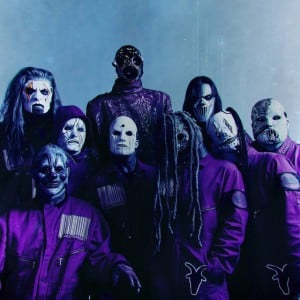
Slipknot
Slipknot
There was never a band like SLIPKNOT, and there will never be another. Like a spore out of the Midwest, they’ve quietly bloomed into the most uncompromising, undeniable, and unique presence on the planet whose influence transcends genres and generations. Since sowing the seeds for revolution in Iowa during 1999, these musical outliers have captured a GRAMMY Award alongside 10 nominations, scored 12 Platinum / 41 Gold album certifications around the world, and logged over 8.5 billion global streams and 3.5 billion video views to date - unprecedented for a rock act in this generation or any other. Rolling Stone cited the seminal platinum-selling 2001 album Iowa among “The 100 Greatest Metal Albums of All Time,” while The Ringer attested, “They’re the most important heavy band of their era.” In addition to marking the group’s third consecutive #1 debut on the Billboard Top 200, their sixth full-length album, WE ARE NOT YOUR KIND, bowed at #1 in twelve countries worldwide in 2019. Selling out shows on multiple continents, they deliver an irreplicable multi-sensory experience on tour and through their own festival KNOTFEST. With their seventh album THE END, SO FAR, SLIPKNOT are back, and nothing will be the same again.
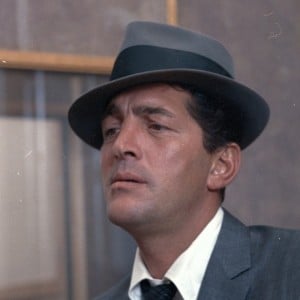
Dean Martin
Artist
Enjoying great success in music, film, television, and the stage, Dean Martin was less an entertainer than an icon, the eternal essence of cool. A member of the legendary Rat Pack, he lived and died the high life of booze, broads and bright lights, always projecting a sense of utter detachment and serenity; along with Frank Sinatra, Sammy Davis, Jr. and the other chosen few who breathed the same rarefied air, Martin -- highball and cigarette always firmly in hand -- embodied the glorious excess of a world long gone, a world without rules or consequences. Throughout it all, he remained just outside the radar of understanding, the most distant star in the firmament; as his biographer Nick Tosches once noted, Martin was what the Italians called a menefreghista -- "one who simply does not give a f***." Dino Paul Crocetti was born on June 7, 1917 in Steubenville, Ohio; the son of an immigrant barber, he spoke only Italian until the age of five, and at school was the target of much ridicule for his broken English. He ultimately quit school at the age of 16, going to work in the steel mills; as a boxer named Kid Crochet, he also fought a handful of amateur bouts, and later delivered bootleg liquor. After landing a job as a croupier in a local speakeasy, he made his first connections with the underworld, bringing him into contact with club owners all over the Midwest; initially rechristening himself Dean Martini, he had a nose job and set out to become a crooner, modeling himself after his acknowledged idol, Bing Crosby. Hired by bandleader Sammy Watkins, he dropped the second "i" from his stage name and eventually enjoyed minor success on the New York club circuit, winning over audiences with his loose, mellow vocal style. Despite his good looks and easygoing charm, Martin's early years as an entertainer were largely unsuccessful. In 1946 -- the year he issued his first single, "Which Way Did My Heart Go?" -- he first met another struggling performer, a comic named Jerry Lewis; later that year, while Lewis was playing Atlantic City's 500 Club, another act abruptly quit the show, and the comedian suggested Martin to fill the void. Initially, the two performed separately, but one night they threw out their routines and teamed on-stage, a Mutt-and-Jeff combo whose wildly improvisational comedy quickly made them a star attraction along the Boardwalk. Within months, Martin and Lewis' salaries rocketed from $350 to $5000 a week, and by the end of the 1940s they were the most popular comedy duo in the nation. In 1949, they made their film debut in My Friend Irma, and their supporting work proved so popular with audiences that their roles were significantly expanded for the sequel, the following year's My Friend Irma Goes West. With 1951's At War with the Army, Martin and Lewis earned their first star billing. The picture established the basic formula of all of their subsequent movie work, with Martin the suave straight man forced to suffer the bizarre antics of the manic fool Lewis. Critics often loathed the duo, but audiences couldn't get enough -- in all, they headlined 13 comedies for Paramount, among them 1952's Jumping Jacks, 1953's Scared Stiff and 1955's Artists and Models, a superior effort directed by Frank Tashlin. For 1956's Hollywood or Bust, Tashlin was again in the director's seat, but the movie was the team's last; after Martin and Lewis' relationship soured to the point where they were no longer even speaking to one another, they announced their breakup following the conclusion of their July 25, 1956 performance at the Copacabana, which celebrated to the day the tenth anniversary of their first show. While most onlookers predicted continued superstardom for Lewis, the general consensus was that Martin would falter as a solo act; after all, outside of the 1953 smash "That's Amore," his solo singing career had never quite hit its stride, and in light of the continued ascendancy of rock & roll, his future looked dim. After suffering a failure with Ten Thousand Bedrooms, Martin's next move was to appear in the 1958 drama The Young Lions, starring alongside Montgomery Clift and Marlon Brando; that same year he also hosted The Dean Martin Show, the first of his color specials for NBC television. Both projects were successful, as were his live appearances at the Sands Hotel in Las Vegas; in particular, The Young Lions proved him a highly capable dramatic actor. Combined with another hit single, "Volare," Martin was everywhere that year, and with the continued success of his many TV specials, he effectively conquered movies, music, television and the stage all at the same time -- a claim no other entertainer, not even Sinatra, could make. Even at the peak of his fame, however, Martin remained strangely contemptuous of stardom; for a man whose presence in the public eye was almost constant, he was utterly elusive, beyond the realm of mortal understanding. As his celebrity and power grew, he slipped even further away: in early 1959, his movie with Sinatra, Some Came Running, hit theaters, and with it came the dawning of the Rat Pack. Together, Sinatra and Martin -- in tandem with their acolytes Sammy Davis, Jr., Peter Lawford, Joey Bishop and Shirley MacLaine -- set new standards of celebrity hipsterdom, becoming avatars of the good life; flexing their muscle not only in show business but also in politics -- their ties to John F. Kennedy, Lawford's brother-in-law and an honorary Rat Packer code-named "Chicky Baby," are now legend -- they were the new American gods, and Las Vegas was their Mount Olympus. Martin -- who continued to impress critics in films like the 1959 Howard Hawks classic Rio Bravo -- was Sinatra's right-hand man, the drunkest and most enigmatic member of the Rat Pack (so named in homage to the Holmby Hills Rat Pack, a bygone drinking circle that had once gathered around Humphrey Bogart); his allegiance to Sinatra was total, and Martin even left his longtime label Capitol to record for and financially back Sinatra's own Reprise imprint. In 1960, the Rat Pack starred in Ocean's Eleven, filming in Las Vegas during the day and then taking over the Sands each night; two years later, they reconvened for Sergeants 3. However, in late 1963 -- while filming the third Rat Pack opus, Robin and the Seven Hoods -- the news came that Kennedy had been assassinated; in effect, as America struggled to pick up the pieces, the Rat Pack's reign was over. With Vietnam and the civil rights movement looming on the horizon, there was no longer room for the boozy, happy-go-lucky lifestyle of before -- the fun was truly over. Yet somehow Martin forged on; in 1964, at the peak of Beatlemania, he knocked the Fab Four out of the top spot on the charts with his single "Everybody Loves Somebody," and that same year starred in Billy Wilder's acrid Kiss Me, Stupid, a film which crystallized his persona as the lecherous but lovable lush. In 1965, after years of overtures from NBC, Martin finally agreed to host his own weekly variety series; The Dean Martin Show was an enormous hit, running for nine seasons before later spawning a number of hit Celebrity Roast specials during the 1970s. In films, he also remained successful, starring in a series of spy spoofs as secret agent Matt Helm. However, by the late '70s, Martin's health began to fail, and his career was primarily confined to casino club stages; in 1987, his son Dean Paul died in an airplane crash, a blow from which he never recovered. After bailing out of a 1988 reunion tour with Sinatra and Davis, Martin spent his final years in solitude; he died on Christmas Day, 1995. ~ Jason Ankeny
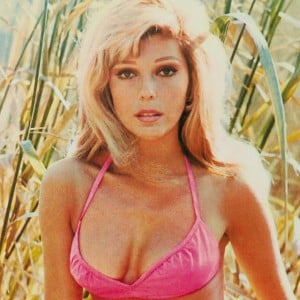
Nancy Sinatra
Artist
Best known for the empowering 1966 chart-topper "These Boots Are Made for Walkin'," Nancy Sinatra managed to create a sound and style all her own, fully separate from that of her famous father. She returned to the singles chart with her fusion of rock, country, and pop over a dozen more times, mostly with further <a href="spotify:artist:2aVHDjRHRM7dcFkGwahXLG">Lee Hazlewood</a>-penned tunes recorded with arranger/conductor <a href="spotify:artist:4q3t7t2bWgFdiYgfXyj0It">Billy Strange</a>. Though Sinatra last reached the U.S. Hot 100 in 1969, her strong-willed, go-go boots-wearing persona endured through acting roles alongside <a href="spotify:artist:43ZHCT0cAZBISjO8DG9PnE">Elvis Presley</a> and Peter Fonda, a 1981 country album with <a href="spotify:artist:5DWq2OARZMu64IqyWZ2xpb">Mel Tillis</a> (Mel and Nancy), a memoir (1985's Frank Sinatra, My Father), and a 1995 Playboy shoot just a month shy of her 55th birthday. That year, she released One More Time, her first solo album in more than 20 years, marking a resumption of recording activity that stretched into the 2010s. Following the archival 2013 release Shifting Gears, she charted in Europe with the retrospective Start Walkin' 1965–1976. Nancy Sandra Sinatra was born in June 1940 while her father, <a href="spotify:artist:1Mxqyy3pSjf8kZZL4QVxS0">Frank</a>, was singing with the Tommy Dorsey Orchestra. As the daughter of show business royalty, Nancy grew up in the spotlight and made her first appearance on television with her father in 1957. It wasn't long before she developed aspirations of her own as a performer -- she had studied music, dancing, and voice for most of her youth -- and in 1960, she made her debut as a professional performer on a television special hosted by her father and featuring guest star <a href="spotify:artist:43ZHCT0cAZBISjO8DG9PnE">Elvis Presley</a>, then fresh out of the Army. After appearing in a number of movies and guest starring on various television episodes, Nancy was eager to break into music, and she signed a deal with her father's record label, <a href="spotify:search:label%3A%22Reprise%22">Reprise</a>. However, the second single from her 1966 debut album, Boots, "These Boots Are Made for Walkin'," made it clear she had the talent and the moxie to make it without her father's help. Belting out a definitive tough-as-nails lyric over a brassy arrangement by <a href="spotify:artist:4q3t7t2bWgFdiYgfXyj0It">Bill Strange</a> (and with the cream of L.A.'s session players behind her), "These Boots Are Made for Walkin'" took the "tough girl" posturing of <a href="spotify:artist:1WvziZcLLYLoMMdmQx7qcN">the Shangri-Las</a> and <a href="spotify:artist:7CyeXFnOrfC1N6z4naIpgo">the Ronettes</a> to a whole new level on its way to number one in places including the U.S., U.K., Australia, and South Africa. A number of hits followed, including "How Does That Grab You," "Sugar Town," and the theme song to the James Bond picture You Only Live Twice. Nancy also teamed up with her father for the single "Somethin' Stupid," which raced to the top of the charts in 1967. Most of her hits were produced by <a href="spotify:artist:2aVHDjRHRM7dcFkGwahXLG">Lee Hazlewood</a>, who went on to become a cult hero in his own right and recorded a number of memorable duets with her, including "Sand," "Summer Wine," and the one-of-a-kind epic "Some Velvet Morning." Nancy reinforced her "tough girl" persona in 1966, co-starring in a role opposite Peter Fonda in The Wild Angels, the Roger Corman film that helped kick off the biker flick cycle of the 1960s and early '70s. She also teamed up with <a href="spotify:artist:43ZHCT0cAZBISjO8DG9PnE">Elvis Presley</a> in the 1968 movie Speedway. Sinatra continued to record into the early '70s, but in 1970, she married dancer Hugh Lambert (a brief marriage to British singer and actor <a href="spotify:artist:651IBnnG9nIIXO4N40bR6c">Tommy Sands</a> ended in 1965), and devoted most of her time to her new life as a wife and mother, as well as working with a number of charitable causes. In 1981, she teamed up with country star <a href="spotify:artist:5DWq2OARZMu64IqyWZ2xpb">Mel Tillis</a> for the <a href="spotify:search:label%3A%22Elektra%22">Elektra</a> album Mel and Nancy, which spawned a pair of minor country hits, and in 1985, she published the book Frank Sinatra: My Father, and became increasingly active in looking after her family's affairs. She published a second book on her father in 1998 and later oversaw the Sinatra Family website. In 1995, Nancy returned to the recording studio with a country-flavored album called One More Time, and she helped publicize it by posing for a photo spread in Playboy magazine. She launched a concert tour in support of the album, and in 2003 teamed up with <a href="spotify:artist:2aVHDjRHRM7dcFkGwahXLG">Hazlewood</a> to record an album, Nancy & Lee 3, which saw a U.S. release in 2004. Nancy soon returned to the recording studio at the urging of longtime fan <a href="spotify:artist:3iTsJGG39nMg9YiolUgLMQ">Morrissey</a>, and in September 2004, she issued a full-length simply titled Nancy Sinatra, an ambitious set which included contributions from members of <a href="spotify:artist:51Blml2LZPmy7TTiAg47vQ">U2</a>, <a href="spotify:artist:36E7oYfz3LLRto6l2WmDcD">Pulp</a>, <a href="spotify:artist:1OmdWpAh1pucAuZPzJaxIJ">Calexico</a>, <a href="spotify:artist:5UqTO8smerMvxHYA5xsXb6">Sonic Youth</a>, <a href="spotify:artist:2NOhotupwYbKRNJF7LMDPG">Jon Spencer Blues Explosion</a>, and other contemporary rock performers. The album's release was followed by more live work, including a memorable appearance at <a href="spotify:artist:4Pmlf0hZYXcoDSuaNrw23E">Little Steven</a>'s International Underground Garage Rock Festival 2004, at which she performed songs from her new album and "These Boots Are Made for Walkin'" backed by an all-star band (including a horn section) and flanked by dozens of frugging go-go dancers. Over the next two decades, Sinatra would continue to make appearances on-stage and onscreen while turning her attention to archival recording projects. She released Shifting Gears, a collection of 15 unreleased <a href="spotify:artist:4q3t7t2bWgFdiYgfXyj0It">Billy Strange</a>-produced recordings of show tunes, all excavated from her personal vaults, on her Boots Enterprises imprint in 2013. <a href="spotify:search:label%3A%22Light+in+the+Attic%22">Light in the Attic</a> released the compilation Start Walkin' 1965-1976 in 2021; it was the first in the label's reissue campaign called the Nancy Sinatra Archival Series. Later that same year, <a href="spotify:search:label%3A%22LITA%22">LITA</a> brought out a reissue of her 1966 debut LP Boots, enhanced with a pair of bonus tracks. ~ Mark Deming & Marcy Donelson, Rovi
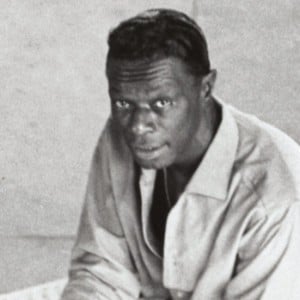
Nat King Cole
Artist
For a mild-mannered man whose music was always easy on the ear, Nat King Cole managed to be a figure of considerable controversy during his 30 years as a professional musician. From the late '40s to the mid-'60s, he was a massively successful pop singer who ranked with such contemporaries as Frank Sinatra, Perry Como, and Dean Martin. He shared with those peers a career that encompassed hit records, international touring, radio and television shows, and appearances in films. But unlike them, he had not emerged from a background as a band singer in the swing era. Instead, he had spent a decade as a celebrated jazz pianist, leading his own small group. Oddly, that was one source of controversy. For some reason, there seem to be more jazz critics than fans of traditional pop among music journalists, and Cole's transition from jazz to pop during a period when jazz itself was becoming less popular was seen by them as a betrayal. At the same time, as a prominent African-American entertainer during an era of tumultuous change in social relations among the races in the U.S., he sometimes found himself out of favor with different warring sides. His efforts at integration, which included suing hotels that refused to admit him and moving into a previously all-white neighborhood in Los Angeles, earned the enmity of racists; once, he was even physically attacked on-stage in Alabama. But civil rights activists sometimes criticized him for not doing enough for the cause. Such controversies do not obscure his real talent as a performer, however. The dismay of jazz fans at his abandonment of jazz must be measured against his accomplishments as a jazz musician. An heir of Earl Hines, whom he studied closely as a child in Chicago, Cole was an influence on such followers as Oscar Peterson. And his trio, emerging in the dying days of the swing era, helped lead the way in small-band jazz. The rage felt by jazz fans as he moved primarily to pop singing is not unlike the anger folk music fans felt when Bob Dylan turned to rock in the mid-'60s; in both cases, it was all the more acute because fans felt one of their leaders, not just another musician, was going over to the enemy. Less well remembered, however, are Cole's accomplishments during and after the transition. His rich, husky voice and careful enunciation, and the warmth, intimacy, and good humor of his approach to singing, allowed him to succeed with both ballads and novelties such that he scored over 100 pop chart singles and more than two dozen chart albums over a period of 20 years, enough to rank him behind only Sinatra as the most successful pop singer of his generation. Nat King Cole was born Nathaniel Adams Coles on Montgomery, AL, on March 17, 1919. (In his early years of music-making, he dispensed with the "s" at the end of his name.) As a black child born to a poor family in the American South at that time, he did not have a birth certificate; his March 17 birthday was recalled because it was also St. Patrick's Day. He listed conflicting years of birth on legal documents during his life; most sources give the year as 1917. (Biographer Daniel Mark Epstein, for his 1999 book Nat King Cole, consulted the 1920 census to determine that the Coles household had a male infant at that time and confirm the birth year as 1919.) Cole's father was a butcher who aspired to the Baptist ministry, and when Cole was four the family moved to Chicago, where his father eventually succeeded in becoming a preacher. Like his older brother Eddie, who became a bass player, Cole showed an early interest in music. He was taught piano by his mother as a child and later took lessons. Also like his brother, he turned professional early; by his teens, he was leading a band, called either the Royal Dukes or the Rogues of Rhythm, and he dropped out of high school at 15 to go into music full-time. The following year, Eddie, who had been touring with Noble Sissle's band, returned to Chicago and the brothers organized their own sextet. On July 28, 1936, as Eddie Cole's Swingsters, they recorded two singles for Decca Records, Nat King Cole's recording debut. That fall, they were hired to perform in a revival of the all-black Broadway musical revue Shuffle Along. Unlike his brother, Cole remained with the show when it went on tour, in part because his girlfriend, dancer Nadine Robinson, stayed with it as well. The two married in Michigan on January 27, 1937, even though Cole was only 17 years old. The tour made its way around the country, finally closing in Los Angeles in May. Cole and his wife remained there, living at first with her aunt, while Cole sought employment as a musician. He briefly led a big band, then played solo piano in clubs. While performing at the Café Century during the summer of 1937, Cole was approached by the manager of the Swanee Inn, who invited him to put together a small band to play in the club. With guitarist Oscar Moore and bassist Wesley Prince, the act debuted that fall, drawing upon the children's nursery rhyme ("Old King Cole was a merry old soul...") for the name the King Cole Swingsters, later simply the King Cole Trio. The group gradually built up a following, with Cole emerging as a singer as well as a pianist. By September 1938, they had begun making radio transcriptions, originally not intended for commercial release, though they have since been issued. In 1939 and 1940, they made occasional recordings for small labels while expanding their live performing to include appearances across the country and radio work. In late 1940 they were contracted by Decca. Their 1941 recording of Cole's composition "That Ain't Right" hit number one on Billboard magazine's Harlem Hit Parade (i.e., R&B) chart on January 30, 1943, Cole's first successful record. By that time, Prince had left the group to work for the war effort, replaced by Johnny Miller. The King Cole Trio's contract with Decca expired before "That Ain't Right" became a hit. Their next single, "All for You," was recorded for the tiny Excelsior label in October 1942. After its initial release, it was purchased by Capitol Records and reissued. On November 20, 1943, it became the group's second number one hit on the Harlem Hit Parade. It also crossed over to the pop chart. With that, Capitol signed Cole directly. The trio's first Capitol session produced both the Cole composition "Straighten Up and Fly Right," which topped the black chart for the first of ten weeks on April 29, 1944, spent six weeks at the top of the folk (i.e., country) chart, and reached the Top Ten of the pop chart, and "Gee Baby, Ain't I Good to You," which topped the black chart on October 21 and also crossed over to the pop chart. The trio placed another four titles in the black chart during 1944, and Capitol released its debut album, The King Cole Trio (catalog number BD-8) that fall. The collection of four 78 rpm discs contained eight tracks, only three of them featuring Cole vocals. When Billboard instituted its first album chart on March 24, 1945, The King Cole Trio was ranked at number one, a position it held for 12 weeks. At the same time, big-band swing music was declining in popularity, and many jazz fans were beginning to turn to the emerging style of bebop, a development that, whatever its artistic significance, spelled the end of jazz as a broadly popular style of music. The King Cole Trio -- and particularly the singer/pianist then known as "King Cole" -- on the other hand, was going in exactly the opposite direction, as its success on records and at clubs and theaters around the country led to appearances in films and on radio. After numerous guest-star stints on Bing Crosby's Kraft Music Hall radio series, the trio, along with pianist Eddy Duchin, was hired to host the show's summer replacement program for 13 weeks beginning May 16, 1946. During that run, on August 17, The King Cole Trio, Vol. 2 (Capitol BD-29), another set of four 78s, hit number one. Over the next five days, the trio recorded two songs that would add to their pop success. Mel Tormé and Robert Wells' "The Christmas Song (Merry Christmas to You)" (better known by its opening line, "Chestnuts roasting on an open fire"), recorded August 19, was Cole's first disc to feature strings. "(I Love You) For Sentimental Reasons," though it only featured the trio, demonstrated that Cole was more than capable of handling a straight romantic ballad, not just the uptempo novelties with which he and the group had succeeded up until this point. "(I Love You) For Sentimental Reasons" became Cole's first number one pop single on December 28, 1946; "The Christmas Song (Merry Christmas to You)" peaked at number three, going on to become a holiday perennial and million seller. While these hits were developing, the trio went from its summer replacement berth to its own network radio series, King Cole Trio Time, a 15-minute Saturday afternoon program that debuted on October 19, 1946, and ran until April 1948. The group's recording schedule during the first half of 1947 was relatively light, but the pace picked up considerably starting in August, in anticipation of the musicians' strike called for January 1, 1948. On August 22, 1947, with an orchestral backing, Cole recorded "Nature Boy," an unusual philosophical ballad. Released March 29, 1948, and credited to "King Cole," it hit number one for the first of eight weeks on May 8, becoming a gold record. Oscar Moore, the trio's original guitarist, left the group in October 1947 after ten years and was replaced by Irving Ashby. In March 1948, Cole divorced his wife and married singer Marie Ellington. Among the couple's children was Natalie Cole, who became a singer. Bass player Johnny Miller quit the trio in August 1948 and was replaced by Joe Comfort. In February 1949, Cole added percussionist Jack Costanzo to the group, which thereafter was billed as "Nat 'King' Cole & the Trio." As of the spring of 1950, Cole's recordings were being credited simply to "Nat 'King' Cole." On July 8 of that year, his recording of the wistful movie theme "Mona Lisa," featuring a string chart arranged by Nelson Riddle, became Cole's third number one pop hit and gold record. That September, he traveled to Europe for his first international tour, beginning a pattern that would find him giving concerts almost continually in a combination of top nightclubs in major cities and concert halls around the U.S., with occasional trips to Europe, the Far East, and Latin America and extended stays at Las Vegas casinos. In these appearances, he stood for most of the show, only occasional sitting down to play a number or two at the piano. Ashby and Comfort left in 1951, and an announcement was made that the trio was officially dissolved, but that simply meant that Cole henceforth would be billed as a solo act. In practice, he continued to carry a guitarist, John Collins, and a bassist, Charles Harris, along with Costanzo (until he left in 1953 and was replaced by drummer Lee Young), while often augmenting them with an orchestra. Cole scored his fourth number one pop hit and gold record with "Too Young," which topped the charts on June 23, 1951. His recording of "Unforgettable" peaked at only number 12 on February 2, 1952, but it went on to become one of his better remembered recordings; in 1991, a version of the song by Natalie Cole with the Nat King Cole recording dubbed onto it became a gold record and won the Grammy Award for Record of the Year. With his 1952 LP Penthouse Serenade, Cole showed that he was not yet ready to dispense with his jazz chops entirely. The disc was an instrumental collection that spent one week at number ten in the album chart in October. Meanwhile, he was also looking for new challenges, taking on small acting roles in the films The Blue Gardenia and Small Town Girl and the television drama Song for a Banjo in 1953. His 1953 album Nat King Cole Sings for Two in Love, arranged and conducted by Nelson Riddle, was a Top Ten hit in early 1954 that predated similar "concept" albums by Frank Sinatra. Although Cole did not score a number one hit in 1953 ("Pretend" peaked at number two), his seven chart entries were enough to rank him among the ten most successful singles artists of the year. His five chart singles in 1954, among them the gold-selling Top Ten hit "Answer Me, My Love," allowed him to repeat this ranking the following year, and he did the same thing in 1955 with another eight chart entries, including the Top Ten hits "Darling Je Vous Aime Beaucoup," "A Blossom Fell," and "If I May." Nine more chart entries allowed him to stay among the most successful singles artists in 1956, even though none of them reached the Top Ten, and he maintained his rank for the fifth straight year in 1957, reaching the Top Ten (and the top of the R&B chart) with "Send for Me." Though he managed one more Top Ten hit, "Looking Back," in 1958, the rise of rock & roll diminished his success on the singles chart. Meanwhile, he returned to a jazz approach on his 1957 LP After Midnight, which paired his backup group with jazz musicians Harry "Sweets" Edison, Stuff Smith, Willie Smith, and Juan Tizol. It was a modest commercial success, quickly followed by the ballad album Love Is the Thing, arranged and conducted by Gordon Jenkins, which hit number one for the first of eight weeks on May 27, 1957, and eventually was certified platinum. Meanwhile, in the fall of 1956, Cole became the first African-American host of a network television series when The Nat "King" Cole Show debuted as a 15-minute weekly program on November 5. The show was expanded to a half-hour in July 1957 and ran until December of that year, though it never attracted a national sponsor that might have made it an ongoing success. Cole attributed advertisers' reticence to racism. He returned to his acting career during 1957, appearing in Istanbul and China Gate, and got his most substantial role in 1958 playing blues musician W.C. Handy in a film biography, St. Louis Blues. His last acting role came in Night of the Quarter Moon in 1959. In 1960, he turned his attention to the theater, putting together a musical revue intended for Broadway. The songs were by Dotty Wayne and Ray Rasch, and the album Cole made of them, Wild Is Love, became his first Top Ten LP in three years. The corresponding stage show, I'm With You, was not as successful, opening what was intended to be a pre-Broadway tour in Denver on October 17, 1960, but closing in Detroit on November 26. Cole, however, salvaged the concept of the show for a stage production he called Sights and Sounds: The Merry World of Nat King Cole, featuring a group of dancers and singers, with which he toured regularly from 1961 to 1964. Cole returned to the Top Ten of the singles chart for the first time in four years with the country-tinged "Ramblin' Rose" in 1962; his album of the same name also reached the Top Ten and eventually was certified platinum. "Those Lazy-Hazy-Crazy Days of Summer" became his last Top Ten hit in the summer of 1963. In December 1964, he was diagnosed with lung cancer. Two months later, he died of it at the age of 45. After his death, Cole continued to appeal to the two almost mutually exclusive audiences that had appreciated him during his life. Jazz fans continued to treasure his recordings of the 1930s and 1940s and to dismiss the non-jazz recordings he had made later. (In 1994, German discographer Klaus Teubig compiled Straighten Up and Fly Right: A Chronology and Discography of Nat "King" Cole, which pointedly cut off in the early '50s.) Pop fans clamored for reissues of Cole's 1950s and '60s music, awarding gold record status to compilations that Capitol continued to assemble, without much worrying about the singer's talent as a piano player. (And, as his recordings fell into the public domain in Europe, where there is a 50-year copyright limit, a spate of low-quality reissues assumed flood levels.) But the ongoing debate was only testament to Cole's ongoing attraction for music lovers, which, in the decades following his untimely end, showed no signs of abating. ~ William Ruhlmann
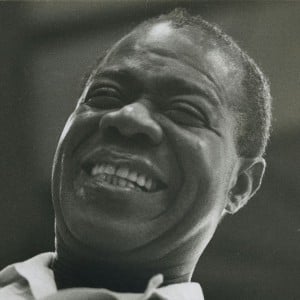
Louis Armstrong
Artist
A jazz pioneer, Louis Armstrong was the first important soloist to emerge in jazz, and he became the most influential musician in the music's history. As a trumpet virtuoso, his playing, beginning with the 1920s studio recordings he made with his Hot Five and Hot Seven ensembles, charted a future for jazz in highly imaginative, emotionally charged improvisation. For this, he is revered by jazz fans. But Armstrong also became an enduring figure in popular music due to his distinctively phrased baritone singing and engaging personality, which were on display in a series of vocal recordings and film roles. He weathered the bebop period of the '40s, growing ever more beloved worldwide. By the '50s, Armstrong was widely recognized, even traveling the globe for the US. .State Department and earning the nickname "Ambassador Satch." His resurgence in the '60s with hit recordings like 1965's Grammy-winning "Hello Dolly" and 1968's classic "What a Wonderful World" solidified his legacy as a musical and cultural icon. In 1972, a year after his death, he received a Grammy Lifetime Achievement Award. Similarly, many of his most influential recordings, like 1928's "West End Blues" and 1955's "Mack the Knife," have been inducted into the Grammy Hall of Fame. Born in 1901 in New Orleans, Louisiana, Armstrong had a difficult childhood. William Armstrong, his father, was a factory worker who abandoned the family soon after the boy's birth. Armstrong was brought up by his mother, Mary (Albert) Armstrong, and his maternal grandmother. He showed an early interest in music, and a junk dealer for whom he worked as a grade-school student helped him buy a cornet, which he taught himself to play. He dropped out of school at 11 to join an informal group, but on December 31, 1912, he fired a gun during a New Year's Eve celebration, and was sent to reform school. He studied music there and played cornet and bugle in the school band, eventually becoming its leader. He was released on June 16, 1914, and did manual labor while trying to establish himself as a musician. He was taken under the wing of cornetist Joe "King" Oliver, and when Oliver moved to Chicago in June 1918, Armstrong replaced him in the Kid Ory Band. He moved to the Fate Marable band in the spring of 1919, staying with Marable until the fall of 1921. Armstrong moved to Chicago to join Oliver's band in August 1922 and made his first recordings as a member of the group in the spring of 1923. He married Lillian Harden, the pianist in the Oliver band, on February 5, 1924. (She was the second of his four wives.) With her encouragement, he left Oliver and joined Fletcher Henderson's band in New York, staying for a year and then going back to Chicago in November 1925 to join the Dreamland Syncopators, his wife's group. During this period, he switched from cornet to trumpet. Armstrong had gained sufficient individual notice to make his recording debut as a leader on November 12, 1925. Contracted to OKeh Records, he began to make a series of recordings with studio-only groups called the Hot Fives or the Hot Sevens. For live dates, he appeared with the orchestras led by Erskine Tate and Carroll Dickerson. The Hot Fives' recording of "Muskrat Ramble" gave Armstrong a Top Ten hit in July 1926, the band for the track featuring Kid Ory on trombone, Johnny Dodds on clarinet, Lillian Harden Armstrong on piano, and Johnny St. Cyr on banjo. By February 1927, Armstrong was well-enough known to front his own group, Louis Armstrong & His Stompers, at the Sunset Café in Chicago. (Armstrong did not function as a bandleader in the usual sense, but instead typically lent his name to established groups.) In April, he reached the charts with his first vocal recording, "Big Butter and Egg Man," a duet with May Alix. He took a position as star soloist in Carroll Dickerson's band at the Savoy Ballroom in Chicago in March 1928, later taking over as the band's frontman. "Hotter Than That" was in the Top Ten in May 1928, followed in September by "West End Blues," which later became one of the first recordings named to the Grammy Hall of Fame. Armstrong returned to New York with his band for an engagement at Connie's Inn in Harlem in May 1929. He also began appearing in the orchestra of Hot Chocolates, a Broadway revue, and was given a featured spot singing "Ain't Misbehavin'." In September, his recording of that song entered the charts, becoming a Top Ten hit. Armstrong fronted the Luis Russell Orchestra for a tour of the South in February 1930, and in May went to Los Angeles, where he led a band at Sebastian's Cotton Club for the next ten months. He made his film debut in Ex-Flame, released at the end of 1931. By the start of 1932, he had switched from the "race"-oriented OKeh label to its pop-oriented big sister Columbia, for which he recorded two Top Five hits, "Chinatown, My Chinatown" and "You Can Depend on Me" before scoring a number one hit with "All of Me" in March 1932; another Top Five hit, "Love, You Funny Thing," hit the charts the same month. He returned to Chicago in the spring of 1932 to front a band led by Zilner Randolph; the group toured around the country. In July, Armstrong sailed to England for a tour. He spent the next several years in Europe, his American career maintained by a series of archival recordings, including the Top Ten hits "Sweethearts on Parade" (August 1932; recorded December 1930) and "Body and Soul" (October 1932; recorded October 1930). His Top Ten version of "Hobo, You Can't Ride This Train," in the charts in early 1933, was on Victor Records; when he returned to the U.S. in 1935, he signed to the recently formed Decca Records and quickly scored a double-sided Top Ten hit, "I'm in the Mood for Love"/"You Are My Lucky Star." Armstrong's new manager, Joe Glaser, organized a big band for him that had its premiere in Indianapolis on July 1, 1935; for the next several years, he toured regularly. He also took a series of small parts in motion pictures, beginning with Pennies from Heaven in December 1936, and he continued to record for Decca, resulting in the Top Ten hits "Public Melody Number One" (August 1937), "When the Saints Go Marching In" (April 1939), and "You Won't Be Satisfied (Until You Break My Heart)" (April 1946), the last a duet with Ella Fitzgerald. He returned to Broadway in the short-lived musical Swingin' the Dream in November 1939. With the decline of swing music in the post-World War II years, Armstrong broke up his big band and put together a small group dubbed His All-Stars, which made its debut in Los Angeles on August 13, 1947. He embarked on his first European tour since 1935 in February 1948, and thereafter toured regularly around the world. In June 1951 he reached the Top Ten of the LP charts with Satchmo at Symphony Hall ("Satchmo" being his nickname), and he scored his first Top Ten single in five years with "(When We Are Dancing) I Get Ideas" later in the year. The single's B-side, and also a chart entry, was "A Kiss to Build a Dream On," sung by Armstrong in the film The Strip. In 1993, it gained renewed popularity when it was used in the film Sleepless in Seattle. Armstrong completed his contract with Decca in 1954, after which his manager made the unusual decision not to sign him to another exclusive contract but instead have him freelance for different labels. Satch Plays Fats, a tribute to Fats Waller, became a Top Ten LP for Columbia in October 1955, and Verve Records contracted Armstrong for a series of recordings with Ella Fitzgerald, beginning with the chart LP Ella and Louis in 1956. Armstrong continued to tour extensively, despite a heart attack in June 1959. In 1964, he scored a surprise hit with his recording of the title song from the Broadway musical Hello, Dolly!, which reached number one in May, followed by a gold-selling album of the same name. It won him a Grammy for best vocal performance. This pop success was repeated internationally four years later with "What a Wonderful World," which hit number one in the U.K. in April 1968. It did not gain as much notice in the U.S. until 1987, when it was used in the film Good Morning, Vietnam, after which it became a Top 40 hit. Armstrong was featured in the 1969 film of Hello, Dolly!, performing the title song as a duet with Barbra Streisand. He performed less frequently in the late '60s and early '70s, and died of a heart ailment in 1971 at the age of 69. A year later, he was honored with a Grammy Lifetime Achievement Award. As an artist, Armstrong was embraced by two distinctly different audiences: jazz fans who revered him for his early innovations as an instrumentalist but were occasionally embarrassed by his lack of interest in later developments in jazz, especially his willingness to serve as a light entertainer; and pop fans, who delighted in his joyous performances, particularly as a vocalist, but were largely unaware of his significance as a jazz musician. Given his popularity, his long career, and the extensive label-jumping he did in his later years, as well as the differing jazz and pop sides of his work, his recordings are extensive and diverse, with parts of his catalog owned by numerous companies. But many of his recorded performances are masterpieces, and none are less than entertaining. ~ William Ruhlmann
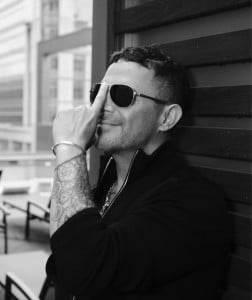
Alejandro Sanz
Alejandro Sanz
The most commercially successful Spanish singer of all time, Alejandro Sanz earned a reputation as an industrious hitmaker in his native country during the 1990s, and by the decade's end, he'd expanded his fan base internationally, broadening his style beyond romantic ballads and collaborating with fellow Latin superstars, most memorably <a href="spotify:artist:0EmeFodog0BfCgMzAIvKQp">Shakira</a>. A talented and charismatic performer, Sanz proved immensely popular even with his debut album, 1991's Viviendo de Prisa, which was a number one hit in Spain. However, it wasn't until several albums later, 1997's Más, that he was able to break into the international market, thanks to a key hit single, "Corazón Partío," that transcended his core female audience. He began focusing on the Americas during the early 2000s, beginning in 2001 with MTV Unplugged, which was recorded in Miami and subsequently released as an album intended to showcase the highlights of his back catalog as well as a newly written single, "Y Sólo Se Me Ocurre Amarte." Sanz then retreated to his studio to record his most broadly appealing album yet. Released in 2003, No Es Lo Mismo found him breaking away from audience expectations and exploring his own musical interests. He did much the same on his next album, 2006's El Tren de los Momentos, which was highlighted by "Te Lo Agradezco, Pero No," a passionate duet with <a href="spotify:artist:0EmeFodog0BfCgMzAIvKQp">Shakira</a>, whom he'd collaborated with the previous year on her massive Grammy-winning hit "La Tortura." He took a small detour into relatively straight pop with 2015's smash-hit Sirope, which netted him his 15th Latin Grammy, this one for Best Contemporary Pop Vocal Album. More Latin Grammys followed for 2019's #ElDisco, which also topped the charts in Spain, as did 2021's Sanz. Born in Madrid, on December 18, 1968, Alejandro Sánchez Pizarro was the youngest son of María Pizarro and Jesús Sánchez, both of whom were Andalusian. His father played guitar professionally and was a significant influence on Alejandro, who learned to play guitar as a boy. As a teenager, Sanz performed at local venues and eventually became acquainted with Miguel Angel Arenas, a music industry maven perhaps best known at the time for his association with <a href="spotify:artist:5BMgsAFg8rZQc3tqs5BB8G">Mecano</a>, a successful Spanish pop/rock group of the '80s. Arenas helped Sanz find work in the recording industry, and the young performer initially signed a contract with the Spanish label <a href="spotify:search:label%3A%22Hispavox%22">Hispavox</a>, which issued Los Chulos Son Pa' Cuidarlos (1989), an album that was met with indifference upon its release and is now a curious collector's item. Sanz was billed as Alejandro Magno on the album. Remaining aligned with Arenas, Sanz subsequently moved to <a href="spotify:search:label%3A%22WEA+Latina%22">WEA Latina</a>, where he began recording music under his present billing. His early albums -- 1991's Viviendo de Prisa, 1993's Si Tu Me Miras and Basico, and 1995's 3 -- were loaded with hit singles and consequently were all successful, each reaching platinum status many times over in Spain. Comprised largely of romantic songs, these early albums connected well with sentimental listeners, particularly women, who tended to be as taken aback by the music as they were by Sanz's looks. "La Fuerza del Corazón," from 3, was his first major hit to have an international reach, opening a door to greener pastures. The stage was now set for the breakthrough success of 1997's Más, which boasted "Corazón Partío," a hit so big it changed the course of Sanz's career. Driven by the across-the-board appeal of "Corazón Partío," as well as additional singles "Y, ¿Si Fuera Ella?," "Amiga Mía," "Aquello Que Me Diste," and "Siempre Es de Noche," Más became the most successful Spanish pop record ever, selling millions worldwide. El Alma al Aire, released in 2000, was a comparable commercial success, selling well internationally. However, the album wasn't as solid as its predecessor and accordingly spawned fewer hits: "Cuando Nadie Me Ve," "Quisiera Ser...," and "El Alma el Aire," each of which was a big hit nonetheless. By this point, Sanz had garnered a sizable following across the Atlantic, and his next recording, 2001's MTV Unplugged, was a clear effort to further his growing popularity in the Americas. The intimate concert performance featured a newly written single, "Y Sólo Se Me Ocurre Amarte," which became a hit, as did "Aprendiz," a song written by Sanz previously recorded by <a href="spotify:artist:3TLGNOdp1UWYMnV5XG9HkR">Malú</a> in 1998. MTV Unplugged moreover showcased the bounty of career highlights Sanz now had to his credit, as one hit after another was performed during the concert. When Sanz returned to the studio to begin recording his next album, No Es Lo Mismo, he decided to broaden his musical style to reflect his own interests. Released in 2003, the album was harder-hitting and more street-savvy than past ones, even including a bit of rap and touches of electronica. The romantic songs were still front and center, granted, but Sanz wrote an album far from generic, illustrating his growing reluctance to cater to the expectations of his audience; for the first time, he co-produced the album himself. Though bolder than before, No Es Lo Mismo was yet another international smash success, reaching number 128 on the all-inclusive Billboard 200 album chart -- a notably high ranking for a Latin pop album circa 2003 -- and generating several hits, none bigger than the title track. "No Es Lo Mismo" hit the Top Five on the Hot Latin Tracks chart (the first time Sanz did so since 1998) and was licensed by Coca-Cola for a promotional campaign in Latin America. Furthermore, the album won a Latin Grammy in 2003 for Best Latin Pop Album, and <a href="spotify:search:label%3A%22Warner+Music+Latina%22">Warner Music Latina</a> issued a special audio/video edition of the album the following year in commemoration of Sanz's Latin American tour. In 2004, <a href="spotify:search:label%3A%22Warner%22">Warner</a> also released a pair of greatest-hits compilations, Grandes Éxitos 91_96 and Grandes Éxitos 97_04, as well as a three-disc package, Grandes Éxitos 91_04, that included a disc of rarities. Sanz didn't return with his follow-up, El Tren de los Momentos, until late 2006, but in the meantime, he was featured on the biggest Latin hit of 2005, <a href="spotify:artist:0EmeFodog0BfCgMzAIvKQp">Shakira</a>'s "La Tortura." He co-wrote the Grammy-winning song and co-starred in its heavily aired pair of videos, which featured the two Latin pop stars in some rather sultry positions. "La Tortura" exposed Sanz to an even greater audience, and when he finally released the lead single to El Tren de los Momentos, "A la Primera Persona," the reception was rapturous. The song was among his biggest hits yet, his first to break into the all-inclusive Hot 100 chart, and El Tren de los Momentos was likewise well received. Stylistically similar to No Es Lo Mismo yet significantly more refined, El Tren de los Momentos is notable for its several superstar features, which include collaborations with <a href="spotify:artist:0EmeFodog0BfCgMzAIvKQp">Shakira</a>, <a href="spotify:artist:0UWZUmn7sybxMCqrw9tGa7">Juanes</a>, Alex González of <a href="spotify:artist:7okwEbXzyT2VffBmyQBWLz">Maná</a>, and Residente of <a href="spotify:artist:0yNSzH5nZmHzeE2xn6Xshb">Calle 13</a>. Sanz returned three years later with 2009's Paraiso Express. Considered a return to form by critics, the album saw Sanz relying on the more melodic sound of his earlier work. The single "Looking for Paradise" (featuring <a href="spotify:artist:3DiDSECUqqY1AuBP8qtaIa">Alicia Keys</a>) reached the number one spot on the Billboard Hot Latin Songs chart. The album hit number one in Spain and Mexico, and the following year was nominated for Album of the Year at the Latin Grammy Awards. After some 20 years with <a href="spotify:search:label%3A%22Warner%22">Warner</a>, Sanz signed a new contract with Universal Music at the beginning of 2011. In 2012, Sanz released his ninth studio album, La Música No Se Toca. Driven by the singles "No Me Compares" and "Se Vende," the album became one of the biggest hits of his career, spending nearly a month at the top of the Spanish and Mexican charts. The next year was relatively quiet for Sanz, although he did hit the Top Ten in Spain with a non-album single, "This Game Is Over," featuring <a href="spotify:artist:7sfgqEdoeBTjd8lQsPT3Cy">Emeli Sandé</a> and <a href="spotify:artist:7LnaAXbDVIL75IVPnndf7w">Jamie Foxx</a>. Sanz returned in March of 2015 with the pre-release single "Un Zombie a la Intemperie." The tune topped various song charts in Spain and 27 Latin American countries. The subsequent album, Sirope, issued in early May, made its debut at number one on many Latin album charts. A follow-up concert album, Sirope Vivo, was released near the end of the year and also hit the top spot on various Latin albums charts. Another concert album, +Es+ el Concierto, arrived in December 2017, and showcased Sanz's performance earlier in the year at Spain's Vicente Calderon Stadium. December 2018 saw Sanz issue the emotional single "No Tengo Nada" ahead of the release of 2019's #ElDisco, which again reached number one in Spain and two on the Latin charts in both Mexico and the United States. The album also netted him three Latin Grammys, including two for the chart-topping single "My Personal Favorita" (Record of the Year and Best Pop Song). He followed it at the end of the year with the live #ElGira de #ElDisco, a document from a sold-out concert in Madrid that topped the Spanish album charts in advance of a world tour. In October 2021, he received his own star on the Hollywood Walk of Fame before returning that December with the full-length Sanz, which again topped the charts in Spain. More standalone tracks followed, including 2022's "Nasa" with <a href="spotify:artist:28gNT5KBp7IjEOQoevXf9N">Camilo</a> and 2023's "Correcaminos" with <a href="spotify:artist:5H1nN1SzW0qNeUEZvuXjAj">Danny Ocean</a>. ~ Jason Birchmeier, Rovi

System of a Down
System of a Down
Striking a balance between '80s underground thrash metal and metallic early-'90s alternative rock, Armenian-American quartet System of a Down effectively pushed their socially conscious, politically charged messages into the mosh pits during the turn of the century's nu-metal wave. Their dark and wild style led them from a cult following to a full-blown movement with breakout hit Toxicity, which debuted at number one in 2001 and planted them at the top of the charts through the early 2000s with a pair of related albums, Mezmerize and Hypnotize. Soon afterward, the band took an extended hiatus, branching off into various solo projects while maintaining a cultural presence with sporadic concerts and continued efforts to spread awareness of the Armenian genocide. They would not return until 2020 when they released their first fresh material in 15 years, "Protect the Land" b/w "Genocidal Humanoidz," the proceeds of which went to the humanitarian needs of families displaced by the 2020 Nagorno-Karabakh war. Vocalist <a href="spotify:artist:0BEI7i5sgUuivcfwXLzFmM">Serj Tankian</a>, guitarist <a href="spotify:artist:2MqLs2L4iNhAUNwJQwjmdm">Daron Malakian</a>, bassist Shavo Odadjian, and drummer John Dolmayan formed System of a Down in Southern California in the mid-'90s. They quickly earned a strong following in Los Angeles, largely based on strong word of mouth. A three-song demo began circulating through metal collectors, and their fan base soon spread throughout not only America, but Europe and New Zealand. By the end of 1997 the group had signed to <a href="spotify:search:label%3A%22American%22">American</a>, distributed by <a href="spotify:search:label%3A%22Columbia+Records%22">Columbia Records</a>. <a href="spotify:search:label%3A%22American%22">American</a>/<a href="spotify:search:label%3A%22Columbia%22">Columbia</a> released the group's eponymous debut in the summer of 1998, securing the band opening spots on the <a href="spotify:artist:1IQ2e1buppatiN1bxUVkrk">Slayer</a> and Ozzfest tours. Carried by alternative radio hits "Sugar" and "Spiders," System eventually went platinum, leading to the September 2001 release of the even more ambitious Toxicity. Their first chart-topper, System's second effort was another heavy music triumph, shaming the majority of their nu-metal competition and running away with multi-platinum honors around the world. Featuring the singles "Chop Suey!" and "Aerials," the album would become a landmark release for the period and their defining statement. Without losing momentum, <a href="spotify:artist:2MqLs2L4iNhAUNwJQwjmdm">Malakian</a> started the <a href="spotify:search:label%3A%22eatURmusic%22">eatURmusic</a> imprint, and <a href="spotify:artist:0BEI7i5sgUuivcfwXLzFmM">Tankian</a> founded a label called <a href="spotify:search:label%3A%22Serjical+Strike%22">Serjical Strike</a>; <a href="spotify:artist:0BEI7i5sgUuivcfwXLzFmM">Tankian</a> also collaborated with Armenian avant-garde folk musician <a href="spotify:artist:13TxYlQsBj3sUlIuyqMz6g">Arto Tuncboyaciyan</a> in a project called <a href="spotify:artist:5KcAXbeH3b692beV9FSWzy">Serart</a>. In November 2002 System issued the bare-bones but no less powerful odds-n-ends set Steal This Album!, culled from the Toxicity sessions. By 2004, System of a Down was back in the studio with <a href="spotify:artist:1EpmQFTiJbcxzwbLpuUL8L">Rick Rubin</a>. The bold result of those sessions was a single epic album released in two parts. Mezmerize/Hypnotize kept System's furious creativity alive, incorporating the wild vocal melodies, lyrical passion, and rabid structural shifts that had become their trademark. Mezmerize (Pt. 1) appeared in May 2005, while Hypnotize (Pt. 2) appeared later in the year, and both hit the top of the album charts. The following year, the group went on hiatus, with <a href="spotify:artist:2MqLs2L4iNhAUNwJQwjmdm">Malakian</a> forming <a href="spotify:artist:2BUrLolMFK48vn3scYOSMf">Scars on Broadway</a>; Dolmayan opening an online comic book store and forming the group Indicator (he also briefly played with <a href="spotify:artist:2BUrLolMFK48vn3scYOSMf">Scars on Broadway</a>); Odadjian working with <a href="spotify:artist:4iCwCMnqsNZ6atvRiADgtn">RZA</a>, AcHoZeN, and <a href="spotify:artist:2GVBp7QyHckoOg7rYkLvrA">George Clinton</a>, and <a href="spotify:artist:0BEI7i5sgUuivcfwXLzFmM">Tankian</a> embarking on a solo career. While they toured off-and-on throughout the 2010s, the foursome remained split, working on their personal musical projects while continuing to raise awareness for Armenian causes. One of those -- the 2020 Nagorno-Karabakh war -- prompted System to reunite for the charity single "Protect the Land" b/w "Genocidal Humanoidz," which raised over half-a-million dollars for families displaced by the fighting. ~ Stephen Thomas Erlewine & Neil Z. Yeung, Rovi
Frank Sinatra
Frank Sinatra
Frank Sinatra was arguably the most important musical figure of the 20th century, his only real rivals for the title being Elvis Presley and the Beatles. In a professional career lasting 60 years, he demonstrated a remarkable ability to maintain his appeal and pursue his musical goals despite countervailing trends. He came to the fore during the swing era of the 1930s and '40s, helped to define the "sing era" of the '40s and '50s, and continued to attract listeners during the rock era that began in the mid-'50s. He scored his first number one hit in 1940 and was still making million-selling recordings in 1994. This popularity was a mark of his success at singing and promoting the American popular song as it was written, particularly in the 1920s, '30s, and '40s. He was able to take the work of great theater composers of that period, such as Jerome Kern, Irving Berlin, George Gershwin, Cole Porter, and Richard Rodgers, and reinterpret their songs for later audiences in a way that led to their rediscovery and their permanent enshrinement as classics. On records and in live performances, on film, radio, and television, he consistently sang standards in a way that demonstrated their perennial appeal. The son of a fireman, Sinatra dropped out of high school in his senior year to pursue a career in music. In September 1935, he appeared as part of the vocal group the Hoboken Four on Major Bowes' Original Amateur Hour. The group won the radio show contest and toured with Bowes. Sinatra then took a job as a singing waiter and MC at the Rustic Cabin in Englewood, NJ. He was still singing there in the spring of 1939, when he was heard over the radio by trumpeter Harry James, who had recently organized his own big band after leaving Benny Goodman. James hired Sinatra, and the new singer made his first recordings on July 13, 1939. At the end of the year, Sinatra accepted an offer from the far more successful bandleader Tommy Dorsey, jumping to his new berth in January 1940. Over the next two and a half years, he was featured on 16 Top Ten hits recorded by Dorsey, among them the chart-topper "I'll Never Smile Again," later inducted into the Grammy Hall of Fame. During this period, he also performed on various radio shows with Dorsey and appeared with the band in the films Las Vegas Nights (1941) and Ship Ahoy (1942). In January 1942, he tested the waters for a solo career by recording a four-song session arranged and conducted by Axel Stordahl that included Cole Porter's "Night and Day," which became his first chart entry under his own name in March 1942. Soon after, he gave Dorsey notice. Sinatra left the Dorsey band in September 1942. The recording ban called by the American Federation of Musicians, which had begun the previous month, initially prevented him from making records, but he appeared on a 15-minute radio series, Songs By Sinatra, from October through the end of the year and also did a few live dates. His big breakthrough came due to his engagement as a support act to Benny Goodman at the Paramount Theatre in New York, which began on New Year's Eve. It made him a popular phenomenon, the first real teen idol, with school girls swooning in the aisles. RCA Victor, which had been doling out stockpiled Dorsey recordings during the strike, scored with "There Are Such Things," which had a Sinatra vocal; it hit number one in January 1943, as did "In the Blue of the Evening," another Dorsey record featuring Sinatra, in August, while a third Dorsey/Sinatra release, "It's Always You," hit the Top Five later in the year, and a fourth, "I'll Be Seeing You," reached the Top Ten in 1944. Columbia, which controlled the Harry James recordings, reissued the four-year-old "All or Nothing at All," re-billed as being by Frank Sinatra with Harry James & His Orchestra, and it hit number one in September. Meanwhile, the label had signed Sinatra as a solo artist, and in a temporary loophole to the recording ban, put him in the studio to record a cappella, backed only by a vocal chorus. This resulted in four Top Ten hits in 1943, among them "People Will Say We're in Love" from Richard Rodgers and Oscar Hammerstein II's musical Oklahoma!, and a fifth in early 1944 ("I Couldn't Sleep a Wink Last Night") before protests from the musicians union ended a cappella recording. In February 1943, Sinatra was hired by the popular radio series Your Hit Parade, on which he performed through the end of 1944. Adding to his radio duties, he appeared from June through October on Broadway Bandbox and in the fall again took up the Songs by Sinatra show, which ran through December. In January, it was expanded to a half-hour as The Frank Sinatra Show, which ran for a year and a half. In April 1943, he made his first credited appearance in a motion picture, singing "Night and Day" in Reveille with Beverly. This was followed by Higher and Higher, released in December, in which he had a small acting role, playing himself, and by Step Lively, released in July 1944, which gave him a larger part. MGM was sufficiently impressed by these performances to put him under contract. The recording ban was lifted in November 1944, and Sinatra returned to making records, beginning with a cover of Irving Berlin's "White Christmas" that was in the Top Ten before the end of the year. Among his eight recordings to peak in the Top Ten in 1945 were Jule Styne and Sammy Cahn's "Saturday Night (Is the Loneliest Night of the Week)," Johnny Mercer's "Dream," Styne and Cahn's "I Should Care," and "If I Loved You" and "You'll Never Walk Alone" from the Rodgers & Hammerstein musical Carousel. Sinatra insisted that Styne and Cahn be hired to write the songs for his first MGM musical, Anchors Aweigh, and over the course of his career, the singer recorded more songs by Cahn (a lyricist who worked with several composers) than by any other songwriter. Anchors Aweigh, in which Sinatra was paired with Gene Kelly, was released in July 1945 and went on to become the most successful film of the year. Sinatra returned to radio in September with a new show bearing an old name, Songs by Sinatra. It ran weekly for the next two seasons, concluding in June 1947. Among his eight Top Ten hits in 1946 were two that hit number one ("Oh! What It Seemed to Be" and Styne and Cahn's "Five Minutes More"), as well as "They Say It's Wonderful" and "The Girl That I Marry" from Irving Berlin's musical Annie Get Your Gun, Jerome Kern's "All Through the Day," and Kurt Weill's "September Song." He also topped the album charts with the collection The Voice of Frank Sinatra. His only film appearance for the year came in Till the Clouds Roll By, a biography of the recently deceased Kern, in which he sang "Ol' Man River." By 1947, Sinatra's early success had crested, though he continued to work steadily in several media. On radio, he returned to the cast of Your Hit Parade in September 1947, appearing on the series for the next two seasons, then had his own 15-minute show, Light-Up Time, during 1949-1950. On film, he appeared in five more movies through the end of the decade, including both big-budget MGM musicals like On the Town and minor efforts such as The Kissing Bandit. He scored eight Top Ten hits in 1947-1949, including "Mam'selle," which hit number one in May 1947, and "Some Enchanted Evening," from the Rodgers & Hammerstein musical South Pacific. He also hit the Top Ten of the album charts with 1947's Songs by Sinatra and 1948's Christmas Songs by Sinatra. Sinatra's career was in decline by the start of the '50s, but he was far from inactive. He entered the fall of 1950 with both a new radio show and his first venture into television. On radio, there was Meet Frank Sinatra, which found the singer acting as a disc jockey; it ran through the end of the season. On TV, there was The Frank Sinatra Show, a musical-variety series; it lasted until April 1952. His film work had nearly subsided, though in March 1952 came the drama Meet Danny Wilson, which tested his acting abilities and gave him the opportunity to sing such songs as Harold Arlen and Johnny Mercer's "That Old Black Magic," "I've Got a Crush on You" by George and Ira Gershwin, and "How Deep Is the Ocean?" by Irving Berlin. At Columbia Records, Sinatra came into increasing conflict with musical director Mitch Miller, who was finding success for his singers by using novelty material and gimmicky arrangements. Sinatra resisted this approach, and though he managed to score four more Top Ten hits during 1950-1951 -- among them an unlikely reading of the folk standard "Goodnight Irene" -- he and Columbia parted ways. Thus, ten years after launching his solo career, he ended 1952 without a record, film, radio, or television contract. Then he turned it all around. The first step was recording. Sinatra agreed to a long-term, boilerplate contract with Capitol Records, which had been co-founded by Johnny Mercer a decade earlier and had a roster full of faded '40s performers. In June 1953, he scored his first Top Ten hit in a year and a half with "I'm Walking Behind You." Then in August, he returned to film, playing a non-singing, featured role in the World War II drama From Here to Eternity, a performance that earned respect for his acting abilities, to the extent that he won the Academy Award for Best Supporting Actor for the part on March 25, 1954. In the fall of 1953, Sinatra began two new radio series: Rocky Fortune, a drama on which he played a detective, ran from October to March 1954; and The Frank Sinatra Show was a 15-minute, twice-a-week music series that ran for two seasons, concluding in July 1955. Meanwhile, Sinatra had begun working with arranger/conductor Nelson Riddle, a pairing that produced notable chart entries in February 1954 on both the singles and albums charts. "Young-at-Heart," which just missed hitting number one, was the singer's biggest single since 1947, and the song went on to become a standard. (The title was used for a 1955 movie in which Sinatra starred.) Then there was the 10" LP Songs for Young Lovers, the first of Sinatra's "concept" albums, on which he and Riddle revisited classic songs by Cole Porter, the Gershwins, and Rodgers and Hart in contemporary arrangements with vocal interpretations that conveyed the wit and grace of the lyrics. The album lodged in the Top Five. In July, Sinatra had another Top Ten single with Styne and Cahn's "Three Coins in the Fountain," and in September Swing Easy! matched the success of its predecessor on the LP chart. By the middle of the '50s, Sinatra had reclaimed his place as a star singer and actor; in fact, he had taken a more prominent place than he had had in the heady days of the mid-'40s. In 1955, he hit number one with the single "Learnin' the Blues" and the 12" LP In the Wee Small Hours, a ballad collection later inducted into the Grammy Hall of Fame. On September 15, 1955, he appeared in a television production of Our Town and sang "Love and Marriage" (specially written by Sammy Cahn and his new partner James Van Heusen), which became a Top Five hit. Early in 1956, he was back in the Top Ten with Cahn and Van Heusen's "(Love Is) The Tender Trap," the theme song from his new film, The Tender Trap. As part of his thematic concepts for his albums of the '50s, Sinatra alternated between records devoted to slow arrangements (In the Wee Small Hours) and those given over to dance charts (Swing Easy). By the late winter of 1956, the schedule called for another dance album, and Songs for Swingin' Lovers!, released in March, filled the bill, stopping just short of number one and going gold. The rise of rock & roll and Elvis Presley began to make the singles charts the almost-exclusive province of teen idols, but Sinatra's "Hey! Jealous Lover" (by Sammy Cahn, Kay Twomey, and Bee Walker), released in October, gave him another Top Five hit in 1957. Meanwhile, he ruled the LP charts. The Capitol singles compilation This Is Sinatra!, released in November, hit the Top Ten and went gold. Sinatra began 1957 by releasing Close to You, a ballad album with accompaniment by a string quartet, in February. It hit the Top Five, followed in May by A Swingin' Affair!, which went to number one, and another ballad album, Where Are You?, a Top Five hit after release in September. He was also represented in the LP charts in November by the soundtrack to his film Pal Joey (based on a Rodgers & Hart musical), which hit the Top Five, and by the seasonal collection A Jolly Christmas From Frank Sinatra, which eventually was certified platinum. The Joker Is Wild, another of his 1957 films, featured the Cahn-Van Heusen song "All the Way," which became a Top Five single. In October, he returned to prime time television with another series called The Frank Sinatra Show, but it lasted only one season, and subsequently he restricted his TV appearances largely to specials (of which he made many). In February 1958, Sinatra reached the Top Ten with "Witchcraft," his last single to perform that well for the next eight years. That month, Capitol released Come Fly with Me, a travel-themed rhythm album, which hit number one. The year's ballad album, Frank Sinatra Sings for Only the Lonely, released in September, also topped the charts, and it went gold. In between, Capitol released the compilation This Is Sinatra, Vol. 2, which hit the Top Ten. 1959 followed a similar pattern. Come Dance with Me! appeared in January and became a gold-selling Top Ten hit. It also won Sinatra Grammy Awards for Album of the Year and for vocal performance. Look to Your Heart, a compilation, was released in the spring and reached the Top Ten. And No One Cares, the year's ballad collection, appeared in the summer and just missed topping the charts. Sinatra gradually did less singing in his movies of the '50s, but in March 1960, he appeared in a movie version of Cole Porter's musical Can-Can, and the resulting soundtrack album hit the Top Ten. Meanwhile, Sinatra was beginning to think about the approaching end of his Capitol Records contract and to enter the studio less frequently for the company. His next regular album was a year in coming, and when it did, Nice 'n' Easy was a mid-tempo collection, breaking his pattern of alternating fast and slow albums. The wait may have caused pent-up demand; the album spent many weeks at number one and went gold. Although Sinatra had not yet completed his recording commitment to Capitol, he began in December 1960 to make recordings for his own label, which he called Reprise Records. As a result, record stores were deluged with five new Sinatra albums in 1961: in January, Capitol had Sinatra's Swingin' Session!!!; in April, Reprise was launched with the release of Ring-a-Ding Ding!; in July, Reprise followed with Sinatra Swings the same week that Capitol released Come Swing with Me!; and in October, Reprise had I Remember Tommy..., an album of songs Sinatra had sung with the Tommy Dorsey band. There was also the March compilation All the Way on Capitol, making for six releases in one year. Remarkably, they all reached the Top Ten. Meanwhile, Reprise's first single, "The Second Time Around," a song written by Cahn and Van Heusen for Bing Crosby, won Sinatra the Grammy for Record of the Year. By 1962, the market was glutted. Capitol released its last new Sinatra album, Point of No Return, as well as a compilation, and Reprise put out three new LPs, but only Reprise's Sinatra & Strings reached the Top Ten. In 1963, however, all three Reprise releases, Sinatra-Basie, The Concert Sinatra, and the gold-selling Sinatra's Sinatra, made the Top Ten. The onset of the Beatles in 1964 began to do to the LP charts what Elvis Presley had done to the singles charts in 1956, but Sinatra continued to reach the Top Ten with his albums of the mid-'60s, albeit not as consistently. Days of Wine and Roses, Moon River, and Other Academy Award Winners hit that ranking in May 1964, as did Sinatra '65 in August 1965. That same month, Sinatra mounted a commercial comeback by emphasizing his own advancing age. Nearing 50, he released September of My Years, a ballad collection keyed to the passage of time. After "It Was a Very Good Year" was drawn from the album as a single and rose into the Top 40, the LP took off for the Top Five and went gold. It was named 1965 Album of the Year at the Grammy Awards, and Sinatra also picked up a trophy for best vocal performance for "It Was a Very Good Year." In November 1965, Sinatra starred in a retrospective TV special, A Man and His Music, and released a corresponding double-LP, which reached the Top Ten and went gold. It won the 1966 Grammy for Album of the Year. Sinatra returned to number one on the singles charts for the first time in 11 years with the million-selling "Strangers in the Night" in July 1966; the song won him Grammys for Record of the Year and best vocal performance. A follow-up album named after the single topped the LP charts and went platinum. Before the end of the year, Sinatra had released two more Top Ten, gold-selling albums, Sinatra at the Sands and That's Life, the latter anchored by the title song, a Top Five single. In April 1967, Sinatra was back at number one on the singles charts with the million-selling "Somethin' Stupid," a duet with his daughter Nancy. By the late '60s, even Sinatra had trouble resisting the succeeding waves of youth-oriented rock music that topped the charts. But Frank Sinatra's Greatest Hits!, a compilation of his '60s singles successes released in August 1968, was a million-seller, and Cycles, an album of songs by contemporary writers like Joni Mitchell and Jimmy Webb, released that fall, went gold. In March 1969, Sinatra released "My Way," with a lyric specially crafted for him by Paul Anka. It quickly became a signature song for him. The single reached the Top 40, and an album of the same name hit the Top Ten and went gold. In the spring of 1971, at the age of 55, Sinatra announced his retirement. But he remained retired only until the fall of 1973, when he returned to action with a new gold-selling album and a TV special both called Ol' Blue Eyes Is Back. In this late phase of his career, Sinatra cut back on records, movies, and television in favor of live performing, particularly in Las Vegas, but also in concert halls, arenas, and stadiums around the world. He refrained from making any new studio albums for six years, then returned in March 1980 with a three-LP set, Trilogy: Past, Present, Future. The most memorable track from the gold-selling set turned out to be "Theme From New York, New York," the title song from the 1977 movie, which Sinatra's recording belatedly turned into a standard. By the early '90s, the CD era had inaugurated a wave of box set reissues, and the 1990 Christmas season found Capitol and Reprise marking Sinatra's 75th birthday by competing with the three-disc The Capitol Years and the four-disc The Reprise Collection. Both went gold, as did Reprise's one-disc highlights version, Sinatra Reprise -- The Very Good Years. Sinatra himself, meanwhile, while continuing to tour, had not made a new recording since his 1984 LP L.A. Is My Lady. In 1993, he re-signed to Capitol Records and recorded Duets, on which he re-recorded his old favorites, joined by other popular singers ranging from Tony Bennett to Bono of U2 (none of whom actually performed in the studio with him). It became his biggest-selling album, with sales over 3,000,000 copies, and was followed in 1994 by Duets II, which won the 1995 Grammy Award for Traditional Pop Performance. Sinatra finally retired from performing in his 80th year in 1995, and he died of a heart attack less than three years later. Anyone will be astonished at the sheer extent of Sinatra's success as a recording artist over 50 years, due to the changes in popular taste during that period. His popularity as a singer and his productivity has resulted in an overwhelming discography. Its major portions break down into the Columbia years (1943-1952), the Capitol years (1953-1962), and the Reprise years (1960-1981), but airchecks, film and television soundtracks, and other miscellaneous recordings swell it massively. As a movie star and as a celebrity of mixed reputation, Sinatra is so much of a 20th century icon that it is easy to overlook his real musical talents, which are the actual source of his renown. As an artist, he worked to interpret America's greatest songs and to preserve them for later generations. On his recordings, his success is apparent. ~ William Ruhlmann
Metal
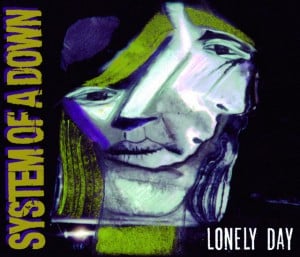
Lonely Day
System Of A Down
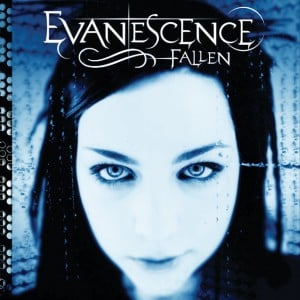
Bring Me To Life
Evanescence
Cigaro
System Of A Down
Chop Suey!
System Of A Down
Sugar
System Of A Down
B.Y.O.B.
B.Y.O.B.
Canciones
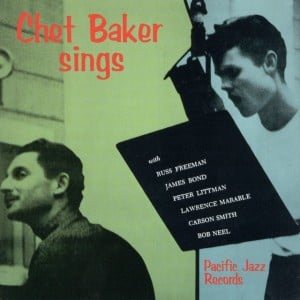
Chet Baker Sings
Chet Baker
Jazz
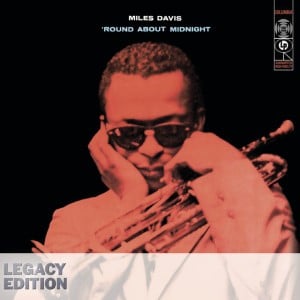
’Round About Midnight
Miles Davis
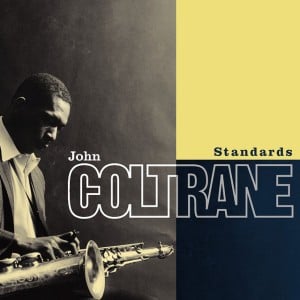
Autumn Serenade
John Coltrane & Johnny Hartman
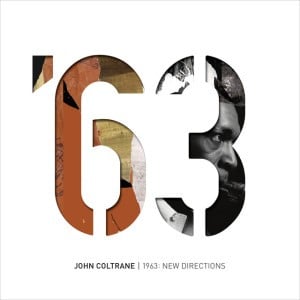
Dedicated to You
John Coltrane & Johnny Hartman
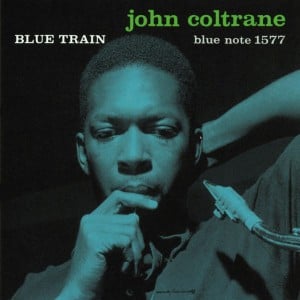
Blue Train
John Coltrane
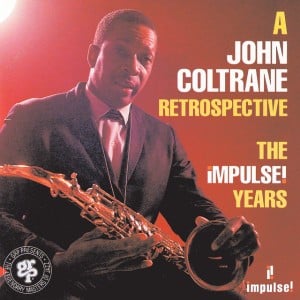
My One and Only Love
John Coltrane & Johnny Hartman
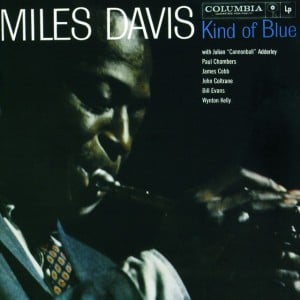
Blue in Green
Miles Davis & John Coltrane & Bill Evans
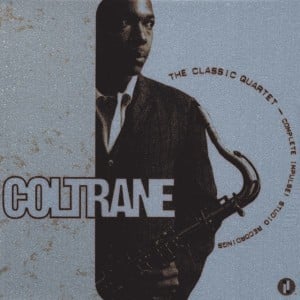
It's Easy to Remember
John Coltrane Quartet
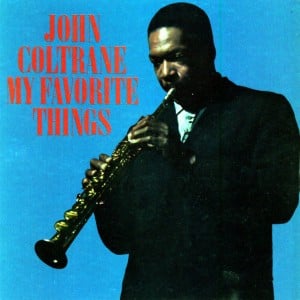
My Favorite Things
John Coltrane
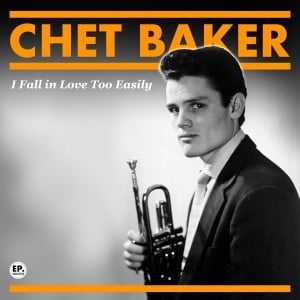
Time After Time
Chet Baker
Back to Black
Amy Winehouse
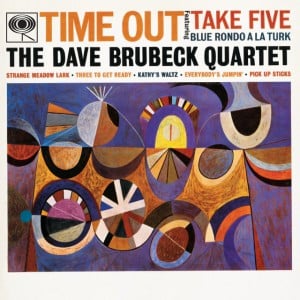
Take Five
The Dave Brubeck Quartet
Uncategorized

Ultimate Sinatra
Album · Frank Sinatra

Appetite For Destruction
Album · Guns N' Roses
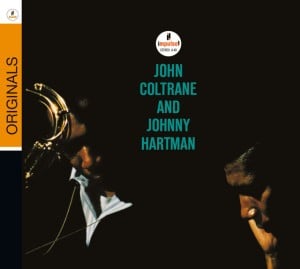
John Coltrane And Johnny Hartman
John Coltrane And Johnny Hartman
