music

Items in this hypelist
italian
Era già tutto previsto
Era già tutto previsto
Gino Paoli
Artist
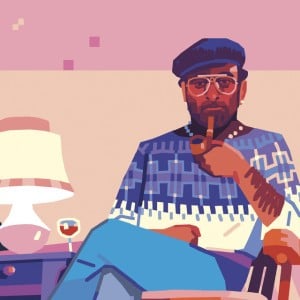
Lucio Dalla
Lucio Dalla
As the title of one of his most famous songs states, Lucio Dalla was born on March 4, 1943, and became one of the most important, as well as most popular, figures in Italian pop music of the second half of the 20th century. Dalla's career was a fascinating musical rollercoaster through several distinct periods. More than once he managed to enrapture and then enrage fans and critics with his sudden changes of musical direction, which were, as is often the case in Italy, invariably perceived as sheer ideological betrayals. Still, at the same time that he was alienating one audience, he was attracting a new and often bigger one. Typically unfazed by controversy, Dalla never let criticism get behind his perennial sad buffoon façade, and kept doing things his way, even at the risk of self-parody. By the early 21st century, Dalla had long become an untouchable icon of Italian pop culture as everybody's favorite mischievous uncle. Lucio Dalla was born in Bologna, and spent most of his childhood summers on Italy's Southern coast and islands. In his songs, he often looked for inspiration to both his hometown and the sea. A third key element in Dalla's artistic development was his early and lifelong infatuation with American big-band jazz music and vocalists. Ever since his thirteenth birthday, when his mother offered him a clarinet, young Dalla only had music on his mind. After playing around town with several amateur ensembles, he joined the Rheno Dixieland Band in 1960 and won an award at the first European Jazz Festival in Antibes, France. He subsequently moved to the bigger Second Roman New Orleans Jazz Band, with whom he first entered a studio to record an instrumental 45. By 1962, Dalla was a member of the Flippers, and to his clarinet or saxophone duties he added singing in a humorous scat style that would soon become his vocal trademark. The Flippers were also the studio and tour backing band for <a href="spotify:artist:1HGnzMzxvfaSkMi98DLkgo">Edoardo Vianello</a>, a novelty singer who scored several monster hits in the 1960s, such as "I Watussi." At the 1963 Cantagiro Festival, <a href="spotify:artist:2taCySpDIEEa2mvo2k7xkH">Gino Paoli</a> (the most important songwriter of the period and a highly influential voice in Italy's music scene) was impressed with Dalla's unique talents and convinced him to leave Flippers for a solo career. In 1964 at only 21 years old, Dalla released his first single, " "Lei," (written by <a href="spotify:artist:2taCySpDIEEa2mvo2k7xkH">Paoli</a>), with a <a href="spotify:artist:2AV6XDIs32ofIJhkkDevjm">Curtis Mayfield</a> cover on the B-side illuminating Dalla's admiration for African-American soul singers, notably <a href="spotify:artist:7GaxyUddsPok8BuhxN6OUW">James Brown</a>. Dalla's first solo steps were anything but encouraging. His single flopped, his performances often met with a hostile reception -- if not with tomatoes flying at his face -- due to his impromptu vocal stylings that sounded downright bizarre in the context of traditional Italian pop music. His ungainly physical appearance (short, thickset, deliberately unkempt) did not help him win over a mainstream audience, either. Dalla, however, was determined to succeed. He formed a backing band, Gli Idoli, and recorded his first album, which went largely unnoticed upon its release in 1966. It was followed by a string of singles and appearances at song festivals, such as Cantagiro and San Remo, where he performed his debut album's single "Paff...Bum!" with none other than the <a href="spotify:artist:2lxX1ivRYp26soIavdG9bX">Yardbirds</a>! At the same time, Dalla branched out into a movie career, landing several minor roles. In fact, while he did not release another album until 1970, he appeared in no less than ten films between 1965 and 1969. Most of these were bit parts or second-string musicals or comedies for the likes of <a href="spotify:artist:3xc8CD41vwsoBNkGXL3pS7">Rita Pavone</a> or Franco Franchi and Ciccio Ingrassia. Still, Dalla's most important role came in the political allegory I Sovversivi by brothers Paolo & Vittorio Taviani, who were among the finest and most militant Italian filmmakers of the period. Dalla was even nominated for the best actor award at the 1967 Venice Film Festival. Interestingly, this dichotomy between light, goofy entertainment, and stringent political messages would become an integral, and paradoxical, part of Dalla's artistic persona until at least 1980. Around 1970, Dalla went back to concentrate on music as his career was finally picking up. He released two more albums with Gli Idoli, Terra di Gaibola and Storie di Casa Mia, as well as a few non-LP singles. Thus Dalla's first period effectively covers the years 1966-1972, when the singer was trying to find his voice. He composed most of the music for his songs, but relied on several lyricists for the text, most famously Gianfranco Baldazzi, Sergio Bardotti, and Paola Pallotino. Dalla's songs of the period were split between attempts at fitting into the Italian pop canon (either with introspective ballads in the style of <a href="spotify:artist:2taCySpDIEEa2mvo2k7xkH">Gino Paoli</a> and <a href="spotify:artist:4F9VFl80sWpvTfXwLJZbhK">Luigi Tenco</a> or with romping, silly ditties), and finding a way to channel his jazz influences and penchant for vocal experimentation into song format. These first albums were inevitably uneven, yet still contained a fair amount of outstanding tracks destined to become classics of '70s Italian music, such as "4 Marzo 1943" (truly a world-wide success, covered by Brazil's <a href="spotify:artist:6tOsSffQQIXmK8TqsDck8t">Chico Buarque</a> and France's <a href="spotify:artist:04aQfpx1U1WQEJkrvGs4ig">Dalida</a>, among others), and the magnificent single-only "Piazza Grande." This tender ode to a proudly independent hobo's longing for companionship was written together with Ron, another upcoming songwriter who would become a star on his own, and an assiduous Dalla collaborator. Indeed, Ron participated on several Dalla records and tours, and it was also rumored they were partners at the time. Dalla's alleged homosexuality has never been confirmed (or denied) by the singer, but the question never affected his career since such matters tended to be tacitly accepted in Italy as long as they remain private. In 1973 Dalla's career took a surprising left turn when he began a collaboration with Bolognese Marxist poet Roberto Roversi. Over the next four years, the duo completed a trilogy of albums, Il Giorno Aveva Cinque Teste, Anidride Solforosa, and Automobili, that is often regarded as a cornerstone of modern Italian pop music. Roversi's sprawling texts, largely about the environmental and societal decay at the hands of industry, painted a nightmarish, surrealist vision of Italy, unfolding a gallery of memorable characters that could be depicted with scathing irony (Gianni Agnelli's send-up of "Intervista con L'avvocato"), but also deep compassion (the destitute family of "L'auto Targata To"). Dalla's composition and singing had never sounded this ambitious or self-assured before: free-form structures, multi-part songs, elements or instruments borrowed from electronic or avant-garde music, all the stops were pulled in a creative whirlwind capped by his histrionic vocal experiments. These fascinating records were by no means inaccessible, and gained Dalla considerable clout among critics and colleagues. Tracks from this period, however, rarely find their way into greatest-hits compilations, since these veritable concept albums demand to be listened to in their entirety. Dalla and Roversi had a falling out over the selection of material for Automobili when Dalla complied with his record company's wishes to leave out a few of the more politicized songs. This sent Roversi into such a fury that he only consented to sign his name to the final version of the album under a pseudonym, effectively ending their collaboration in 1976. At this point, Dalla was bursting with confidence, so much so that he finally decided to write his own lyrics and become the sole author of his music. The Roversi trilogy was to be superceded by the even better "Dalla Trilogy," the three successive masterpieces of 1977's Come E Prefondo il Mare, 1979's Lucio Dalla, and 1980s Dalla. These albums found Dalla at the absolute peak of his songwriting powers, reaching a perfect balance between his idiosyncratic vision and commercial appeal. From the somber foreboding of "Come Prefondo il Mare" to the hopeful joy of "Futura," most of Dalla's greatest songs sprang from the years 1977-1980: "Disperato Erotico Stomp," "Anna e Marco," "L'anno Che Verrà," and "Cara," among many others. This period also saw the culmination of Dalla's collaboration with legendary fellow cantautore <a href="spotify:artist:16FJYC4FqKhZXiXIzMI4ul">Francesco De Gregori</a>. Dalla had helped <a href="spotify:artist:16FJYC4FqKhZXiXIzMI4ul">De Gregori</a> craft his breakthrough album, Rimmel, in 1975, and in 1978 they released a single together, followed by a joint tour that became the biggest sensation of the year in Italy. Their live joint album, Banana Republic, was soon released and became another huge seller. In spite of their contrasting personalities, Dalla the exuberant clown and <a href="spotify:artist:16FJYC4FqKhZXiXIzMI4ul">De Gregori</a> the haughty intellectual, the work of each songwriters between 1975-1980 bears close resemblance to the other's, and it yielded many of the golden moments of 1970s Italian music. Dalla entered the 1980s as a true superstar, having achieved critical and commercial consensus. As the decade unfolded, however, his songwriting took a noticeable dip. Flashes of his best work appeared on the Q Disc EP and 1983, but successive albums were hampered by misguided attempts to fit into the synth and dance oriented sounds of the time, as well as by uninspiring material. Still, Dalla always managed to deliver the right singles, and his records were selling more than ever. The 1986 live album, DallAmeriCaruso, culled from a tour of the United States, was not only a terrific summary of Dalla's work, but introduced the new studio song "Caruso," about the famous tenor's last days. Perhaps Dalla's finest song, it sold more than nine million copies worldwide and was covered by just about every singer on both sides of the pop/classical spectrum, most notably <a href="spotify:artist:0Y8KmFkKOgJybpVobn1onU">Luciano Pavarotti</a>. Similarly, Dalla's 1990 LP Cambio became the biggest seller of his career on the strength of the Ron-penned "Attenti al Lupo," a childlike lullaby that had global audiences humming but Italian critics tearing their hair out and using adjectives such as "senile" to describe Dalla's latest productions. In truth, some critics and colleagues had already begun to accuse Dalla of selling out after he quit working with Roversi, but the obvious quality of Dalla's albums until 1980 made such commentaries sound hurried and irrelevant. This was no longer the case by 1990. As if to reinforce his critics' opinions, Dalla's last major collaboration was with none other than eternal goody goody 1960s teen idol <a href="spotify:artist:15FrhfFYJIx7Ijltkpjbsr">Gianni Morandi</a>. Their 1988 studio album was, predictably, a huge success, only to be surpassed by their European tour and the obligatory live album of the following year, but the artistic results were little more than a comforting and calculated exercise in nostalgia, a far cry from his work with Roversi or <a href="spotify:artist:16FJYC4FqKhZXiXIzMI4ul">De Gregori</a>. Thus, in little more than a decade, Dalla seemed to make a 180-degree turn from quirky leftist to squarely middle of the road. The typically engaged Italian intelligentsia never quite forgave him for it. Dalla's popularity waned in the 1990s due to his inability to attract younger audiences, although his visibility remained high thanks to his numerous appearances in TV, both in variety shows and sitcoms. He had also been involved in composing film scores and launching the career of new artists, in pop as well as classical music projects, and his tours were guaranteed crowd pleasers. Unsurprisingly, his greatest-hits compilations and live albums became more frequent and were better received than his new studio albums. This was indeed a pity, since his late records evidenced a late creative renaissance. Comfortably adjusted to his role as a living legend, Dalla's inimitable verve positively sparkled through collections such as 1996's Canzoni, 2001's Luna Matana, and 2007's Il Contrario di Me. Just before his 69th birthday, in March of 2012, he died of a heart attack, just the morning after a performance in Montreux. ~ Mariano Prunes, Rovi

Luigi Tenco
Artist

Lucio Battisti
Artist
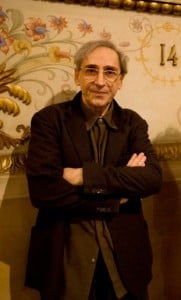
Franco Battiato
Franco Battiato
Longtime Italian superstar Franco Battiato developed from a prog-psych singer/songwriter in the early '70s to one of the biggest pop stars in Europe, even as he pursued his recording interests in a variety of genres including but not limited to pop, electronic, and opera in which rock and classical music connect. In addition, he was a visual artist and filmmaker who worked under the pseudonym Süphan Barzani to keep his film work separate from his musical persona. Born in 1945 in the village of Ionia in Sicily and moving first to Rome, and then Milan in 1964, Battiato's initial stabs into musical work in the '60s amounted to the single "La Torre," which he performed on TV. He did better at radio with the romantic follow-up "È L'amore." But after more covers of pop songs went nowhere, he met the experimental musician <a href="spotify:artist:1zyN21R5gAOKv3hRy7itfh">Juri Camisasca</a> in 1970 and collaborated with <a href="spotify:artist:3HJXb8BKYt2RBeBq76PTkM">Osage Tribe</a>, an Italian psychedelic-progressive rock band. As a solo artist, he released the science-fiction single "La Convenzione" (The Convention), one of the finest Italian prog rock songs of the '70s. He began recording a series of albums for the underground label <a href="spotify:search:label%3A%22Bla+Bla%22">Bla Bla</a>. Starting with Fetus in 1971 (named one of the most important records of the decade by <a href="spotify:artist:5sMku8iI6FH3ypZTErz4kv">Julian Cope</a>) and concluding with L'Egitto Prima Delle Sabbie (Egypt Before the Sands) in 1978, he staked out his own claim in the highly fermented world of Italian prog rock. Musically accomplished if sometimes poorly recorded, and unafraid to indulge in more than a little whimsy, these records ran the gamut from extreme experimentalism to more song-focused efforts; the two most notable were 1972's Pollution and 1973's Sulle Corde Di Aries (On the Ropes of Aries). Compared to other bands like <a href="spotify:artist:3ipAHAOfoiZaIHgzOK9uXx">Area</a> and PFM, however, Battiato and his band were cult figures loved more abroad than at home. They opened for <a href="spotify:artist:7MSUfLeTdDEoZiJPDSBXgi">Brian Eno</a> and <a href="spotify:artist:0IwlY33zbBXN7zlS9DP2Cj">Nico</a> in France and Germany and were welcomed by audiences. Battiato's often extravagant appearance at this time made him something of an Italian <a href="spotify:artist:7C4sUpWGlTy7IANjruj02I">Peter Gabriel</a>, while his lyrics eschewed then-fashionable Maoist/terrorist posing in favor of a deep but humorous combination of Asian philosophies and literary reflection. Switching labels to <a href="spotify:search:label%3A%22EMI%22">EMI</a>'s Italian branch, his fortunes improved (also in an uncanny parallel with Gabriel) in the '80s, specifically with 1981's La Voce del Padrone (The Voice of the Master). Embracing a more direct synth pop style -- not too surprising given that keyboards were always his primary musical instrument -- Battiato found himself rewarded with an Italian smash, enabling his star to rise both at home and elsewhere in Europe. Since then, while he has not specifically revisited that style in full, but has continued to explore any number of musical directions and approaches in the present day. His first opera, Genisi, was released in 1987. A number of collaborations with orchestras and multimedia touring followed -- notably a visit with <a href="spotify:artist:1k1AM2ESRQseVAj6rvBdtx">Virtuosi Italiani</a> in 1993 to Baghdad to collaborate with Iraq's national orchestra -- as well as works commissioned by his native Sicily to celebrate that island's rich history. His second opera, Gilgamesh, appeared in 1992, followed almost immediately by Messa Arcaica. In 1994, Battiato began collaborating with Sicilian philosopher <a href="spotify:artist:4CFR9Rqy3YIAK9JuKUMzIa">Manlio Sgalambro</a>, who would eventually write almost all the lyrics on his following albums. After the tentative L'ombrello e la Macchina da Cucire in 1995, the duo published what is considered their masterpiece, L'imboscata, in 1996, containing the romantic hit "La Cura" (The Care), which was chosen as best Italian song of the year. 1998's Gommalacca shocked fans with its reliance on hard rock and even metal. It was followed by the softer, more focused Fleurs, a chart-topping smash. At the turn of the millennium, Battiato issued Ferro Battuto (2000) and the opera Campi Magnetici, followed by the rock album Dieci Stratagemmi in 2004. All three of these recordings used conventional pop and rock forms as jumping-off points for sometimes radical experimentation. In 2003, Battiato released his first feature film, Perduto Amor, under the Süphan Barzani moniker. Battiato (under his own name) also composed the soundtrack. The movie won the Silver Ribbon for best new director. His second cinematic effort, Musikanten, a rather experimental work about Beethoven's last four years of life, didn't fare as well with critics. In fact, it was panned as much as for casting Chilean director <a href="spotify:artist:4TGSVQrvG9M0uUuXD1dNrM">Alejandro Jodorowsky</a> in the lead role as the strange pace of the narrative. His next two films, Niente è Come Sembra (2007) and the controversial Auguri Don Gesualdo (2010), both received critical acclaim and did well at art house box offices. Between the two, Battiato released Fleurs 2 in 2008; the sequel attained triple-platinum status in Italy. The following year, Inneres Auge: Il Tutto è Più Della Somma Delle Sue Parti, another experimental pop album, topped the charts and achieved platinum sales status. In 2011, Battiato issued another opera, Telesio, inspired by the work of the Cosenza philosopher Bernardino Telesio, one of Italy's greatest naturalists from the 16th century. It was commissioned by the city of Cosenza on the occasion of the 500th anniversary of the birth of the opera's namesake and was performed at the Teatro Rendano of Cosenza in early May of 2011, and released at the end of the year. In November of 2012, Battiato accepted an offer from newly elected Sicilian regional president Rosario Crocetta to become the new Regional Minister for Tourism and Culture, and announced he would not take a salary. Unfortunately, he was dismissed from the position soon after for controversial comments about Parliament. Telesis Sesamo was released during his government tenure. The following year, Battiato collaborated with Antony Hegarty (now <a href="spotify:artist:6VJZYivuYJGCrPuOAnI7Qo">Anohni</a>) on Del Suo Veloce Volo. In 2014, another collaboration was released, this one with Italian sound engineer <a href="spotify:artist:2NVb7GC3o79zsHW1Rfhp8l">Pinaxa</a> (<a href="spotify:artist:2NVb7GC3o79zsHW1Rfhp8l">Pino Pischetola</a>) and titled Joe Patti's Experimental Group. In 2016, he cut a live album with singer/songwriter <a href="spotify:artist:2TlfkFQCyy0D3MRcLNOE2L">Alice</a> (Carla Bissi, a longtime friend, contemporary, and occasional collaborator since the '80s) and Tuscany's Ensemble Symphony Orchestra for <a href="spotify:search:label%3A%22Universal%22">Universal</a>. In his later years, Battiato oversaw a comprehensive remastering and reissue program of his catalog. In 2019, after releasing Torneremo ancora with the Royal Philharmonic, he announced that he would be retiring from music for health reasons. Battiato died on May 18, 2021 at his home in Milo, Catania. He was 76. ~ Ned Raggett, Rovi
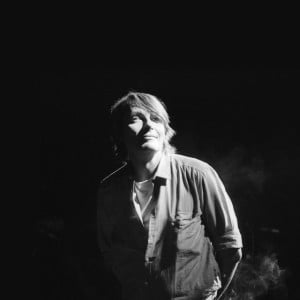
Fabrizio De André
Fabrizio De André
Fabrizio Cristiano De André (Genova, 18 febbraio 1940 – Milano, 11 gennaio 1999) è stato un cantautore italiano. Considerato da gran parte della critica uno dei più grandi cantautori italiani di tutti i tempi, è conosciuto anche con l'appellativo di Faber che gli dette l'amico d'infanzia Paolo Villaggio, con riferimento alla sua predilezione per i pastelli e le matite della Faber-Castell, oltre che per l'assonanza con il suo nome. In quasi quarant'anni di attività artistica, De André ha inciso tredici album in studio, più alcune canzoni pubblicate solo come singoli e poi riedite in antologie. Molti testi delle sue canzoni raccontano storie di emarginati, ribelli, prostitute, e sono considerate da alcuni critici come vere e proprie poesie, tanto da essere inserite in varie antologie scolastiche di letteratura già dai primi anni settanta e da ricevere gli elogi anche di grandi nomi della poesia come Mario Luzi. Di simpatie anarchiche, libertarie e pacifiste, è stato anche uno degli artisti che maggiormente hanno valorizzato la lingua ligure. Ha affrontato, inoltre, in misura minore e differente, altri idiomi come il gallurese e il napoletano. Insieme a Bruno Lauzi, Gino Paoli, Umberto Bindi e Luigi Tenco è uno degli esponenti della cosiddetta Scuola genovese, un nucleo di artisti che rinnovò profondamente la musica leggera italiana. È l'artista con il maggior numero di riconoscimenti da parte del Club Tenco, con sei Targhe e un Premio Tenco. [fonte: Wikipedia]
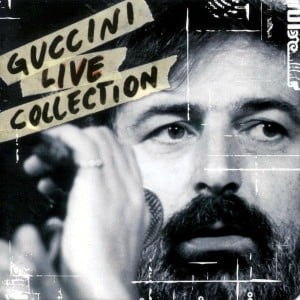
Eskimo
Eskimo
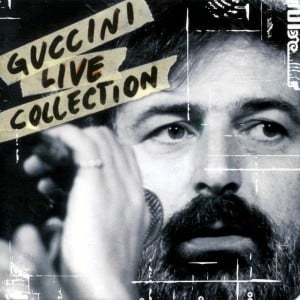
La Locomotiva - Live From Kiwi Di Piumazzo,Italy/1984 / Edit
La Locomotiva - Live From Kiwi Di Piumazzo,Italy/1984 / Edit
the smiths
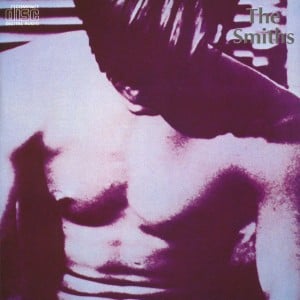
Pretty Girls Make Graves - 2011 Remaster
Pretty Girls Make Graves - 2011 Remaster
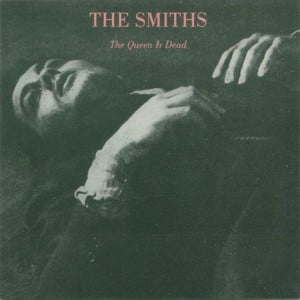
Bigmouth Strikes Again (2011 Remaster)
Bigmouth Strikes Again (2011 Remaster)
I Know It's Over (2011 Remaster)
I Know It's Over (2011 Remaster)
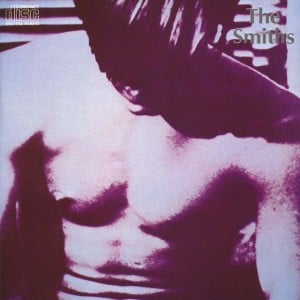
This Charming Man (2011 Remastered Version)
This Charming Man (2011 Remastered Version)
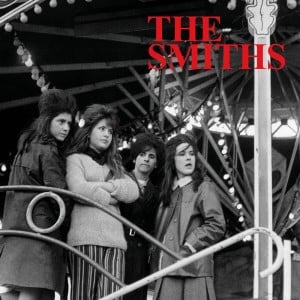
Heaven Knows I'm Miserable Now - 2011 Remaster
Heaven Knows I'm Miserable Now - 2011 Remaster
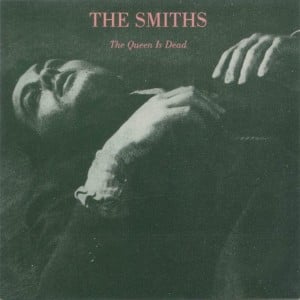
There Is a Light That Never Goes Out (2011 Remaster)
There Is a Light That Never Goes Out (2011 Remaster)
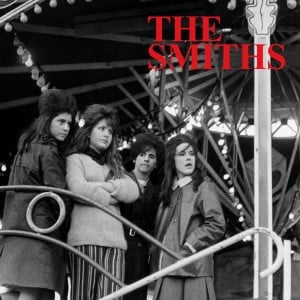
This Night Has Opened My Eyes - 2011 Remaster
This Night Has Opened My Eyes - 2011 Remaster
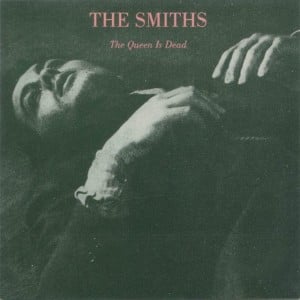
The Queen Is Dead
The Queen Is Dead

Back to the Old House - 2011 Remaster
Song · The Smiths
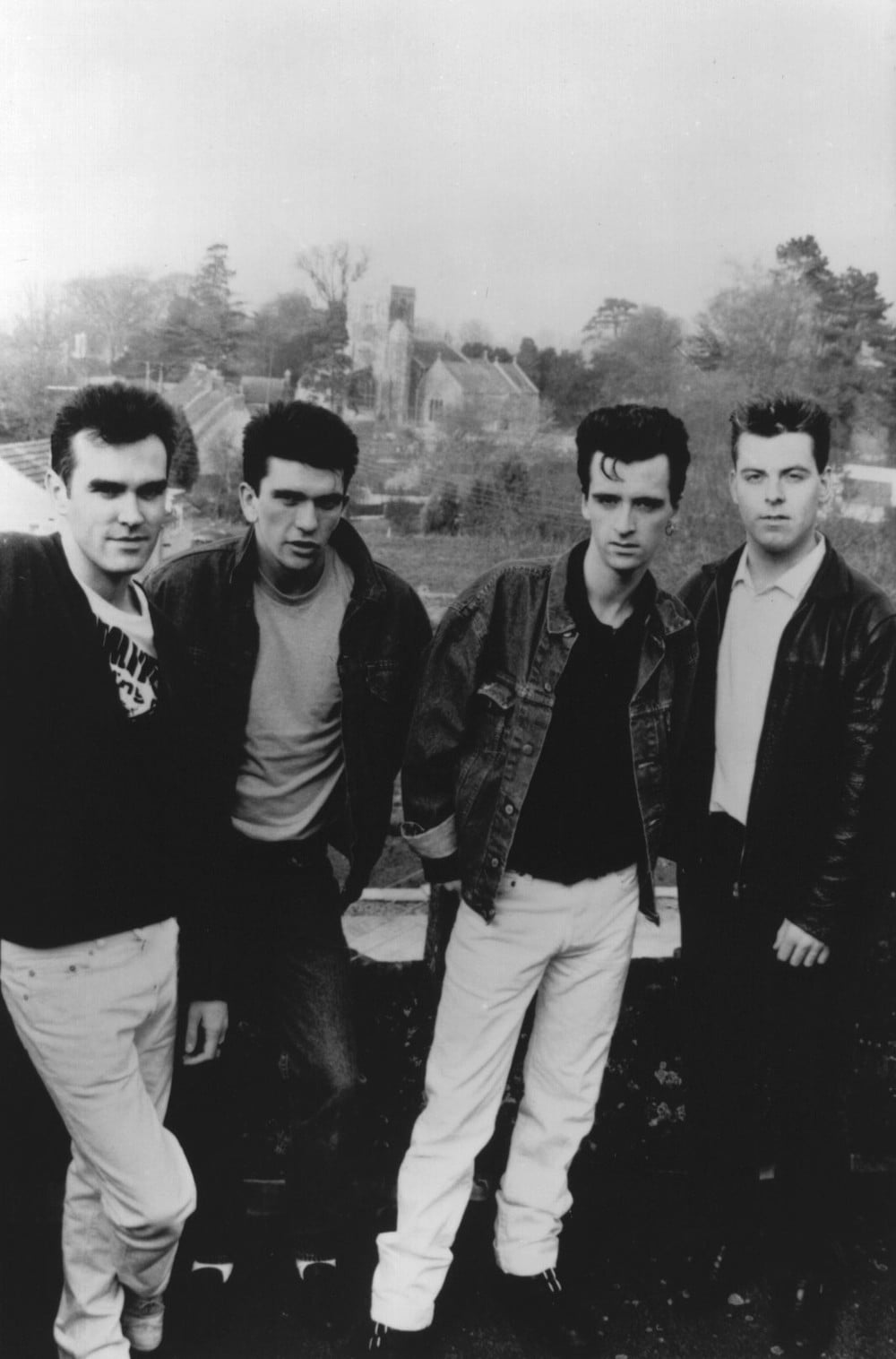
The Smiths
Artist