Music 🍸🌧️

Items in this hypelist
Solistas
kets4eki
kets4eki
instagram.com/kets4eki
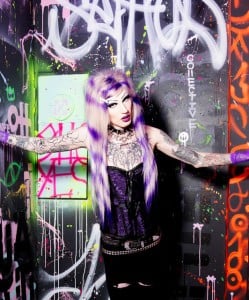
6arelyhuman
6arelyhuman
Hey slaybot’s it’s 6arelyhuman the hottest alien in the club! All I really do is sit on a computer, and wait for the extraterrestrials to ping data into my brain to make bops like <a href="spotify:track:7jUN7seFj8TkcstWHLEuoP" data-name="Death city">Death city</a> , <a href="spotify:track:4Qnd54jYaUZjBXnoAaAb8i" data-name="scene high">scene high</a> , <a href="spotify:track:08cn8abD29e1XlABXCHFJW" data-name="Eyelashes on">Eyelashes on</a> , and <a href="spotify:track:04gSLX5nUhkKiMe1geeqnA" data-name="Hands up!">Hands up!</a> just to name a few. I was born in Texas, and somehow haven’t become a robot cowboy just yet. I love to play with my gender expression, and don’t like to follow labels. I created my own genre #sassyscene, but let’s just say I make sassy music e.g. <a href="spotify:track:4XKWA2VL4hn7asOfFi6PUq" data-name="Disgusting">Disgusting</a> , <a href="spotify:album:6pce7GJXdGTl2A3s3mBHAF" data-name="XXXTRA">XXXTRA</a> , <a href="spotify:track:27fjeQncsCptMg0wTOsaCs" data-name="ur my heroin">ur my heroin</a> , <a href="spotify:track:2ZnwrWdklah3ep5iMFDKjY" data-name="drama queenz">drama queenz</a> , <a href="spotify:track:5skJtQ9wGjAegPvaWlvXTz" data-name="don't touch my hair">don't touch my hair</a> , and <a href="spotify:track:7ezCLOpKZ2mg5FBLpWtsvg" data-name="XOXO (Kisses Hugs)">XOXO (Kisses Hugs)</a> . Really I just want to unleash everyone’s inner diva. I hope that when people listen to my music they forget about all there problems, and teleport into a new dimension with me. <3
Chris Grey
Chris Grey
THE CASTLE NEVER FALLS ⚔️🥀🏰🖤 TikTok/Insta: @chrisgreymusic
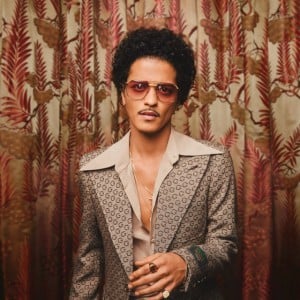
Bruno Mars
Bruno Mars
15x time GRAMMY Award winner Bruno Mars is one of the best-selling artists of all time. DOO-WOPS & HOOLIGANS marked the landmark debut of a remarkable new artist. The album – which peaked at #3 on the Billboard 200 – has gone on to achieve global album equivalent sales of 15.5 million. Now boasting more than 7.8 billion total streams, DOO-WOPS & HOOLIGANS is certified RIAA 6X platinum, the longest-charting debut album on Top 200 and #4 longest-running of all time. His most recent album, the critically acclaimed, 3x platinum-certified 24K MAGIC, made an impressive debut atop Billboard’s “Top Digital Albums” and “Top R&B/Hip-Hop Albums” charts upon its 2016 arrival. The album includes the 7x platinum-certified, #1 single, “That’s What I Like” – Mars’ seventh “Hot 100” chart-topper and first-ever #1 on the “Hot R&B Songs” chart, affirming him as one of the few artists to have written and produced each of his #1 hits as well as to have a #1 song on the “Hot 100” from each of his first three studio albums. Among his truly countless accolades, Mars is a 4x Guinness World Record holder, with his milestone 2015 NFL Super Bowl Halftime Show drawing a record-breaking total viewership of over 115.3 million. Mars also holds the world record as the “First Male Artist to Achieve Three 10 Million Selling Singles”, while 2016’s 2x GRAMMY® Award-winning, worldwide #1 collaboration with Mark Ronson, “Uptown Funk,” made history for the “Most Weeks at #1 on the U.S. Digital Song Sales” chart.
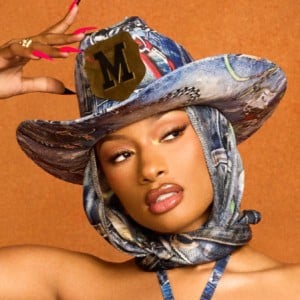
Megan Thee Stallion
Megan Thee Stallion
Hailing from Houston, Megan Thee Stallion is a three-time GRAMMY-winning recording artist, actor, philanthropist and entrepreneur. From earning two Billboard Hot 100 No. 1 hits with the “Savage (Remix)” featuring Beyoncé, and “WAP” with Cardi B to releasing her dynamic album “Traumazine,” Megan has proven unstoppable. Megan has been recognized for her musical achievements, including three GRAMMY wins, nine BET Awards and back-to-back Billboard Music Awards for “Top Rap Female Artist.” Additionally, she has been honored for her advocacy efforts, having received the 2022 Special Achievement Award at The Webby Awards and the Trailblazer Award at the iHeartRadio Music Awards. Most recently, Megan made history in Nov. 2022, becoming the first Black woman to appear on the cover of Forbes’ prestigious Under 30 issue. She was previously recognized as one of TIME’s 100 Most Influential People of 2020 after publishing her monumental “Why I Speak Up For Black Women” op-ed for The New York Times.
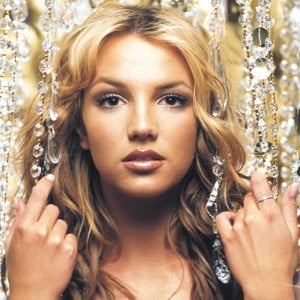
Britney Spears
Britney Spears
Multi-platinum, Grammy Award-winning pop icon Britney Spears is one of the most successful and celebrated entertainers in pop history with nearly 150 million records worldwide. In the U.S. alone, she has sold more than 70 million albums, singles and songs, according to Nielsen Music. Born in Mississippi and raised in Louisiana, Spears became a household name as a teenager when she released her first single “…Baby One More Time,” a Billboard Hot 100 No. 1 smash and international hit that broke sales records with more than 20 million copies sold worldwide and is currently 14x Platinum in the U.S. Her musical career boasts countless awards and accolades, including six Billboard Music Awards and Billboard’s Millennium Award, which recognizes outstanding career achievements and influence in the music industry as well as an American Music Award and the 2011 MTV Video Vanguard Award. So far, Spears has earned a total of six No.1-debuting albums on the Billboard 200 chart and 22 top 40 hit singles on the Billboard Hot 100 — four of which went to No. 1. Spears has been nominated for eight Grammy Awards and won for Best Dance Recording in 2005. Her cutting-edge pop concert Las Vegas residency, “Britney: Piece of Me,” at Planet Hollywood Resort & Casino has been voted “Best Show in Las Vegas” and “Best Bachelorette Show in Las Vegas.” Spears also has been creating fragrances for over ten years, and currently has over 20 fragrances available in over 85 countries around the world.
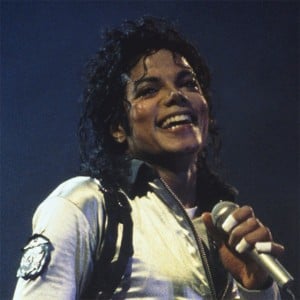
Michael Jackson
Michael Jackson
Michael Jackson wasn't merely the biggest pop star of his era, shaping the sound and style of the '70s and '80s; he was one of the defining stars of the 20th century, a musician who changed the contours of American culture. A preternaturally gifted singer and dancer, Jackson first rose to stardom in 1969 as the 11-year-old frontman for his family's band, the Jackson 5. As remarkable a run as the Jackson 5 had -- at the dawn of the '70s, each of their first four singles went to number one and they stayed near the top of the charts for the next five years -- it all served as a preamble to Jackson's solo career. Off the Wall, the dazzling 1979 album co-produced by Quincy Jones, announced Jackson as a mature talent, and the singles "Don't Stop 'til You Get Enough" and "Rock with You" turned it into a blockbuster. Despite its success, Jackson believed Off the Wall was pigeonholed as an R&B record. Determined to break through this glass ceiling, he reunited with Jones to create Thriller, the 1982 album that shattered every music record on the books. Thriller was designed to appeal to every audience and its diversity was evident by its guests: he enlisted Eddie Van Halen to play guitar on the hard rock of "Beat It" while inviting Paul McCartney to duet on the chipper soft pop tune "The Girl Is Mine." Jackson also expanded the horizons of soul and dance music, producing pioneering masterpieces like "Billie Jean." This single provided Thriller with its 1983 breakthrough, thanks in part to its groundbreaking music video, which became the first clip from a black artist to enter steady rotation on the fledgling MTV. Jackson's smashing of the network's racial barriers was only one aspect of Thriller's unprecedented crossover. Seven of its nine songs were Top 10 hits, it earned eight Grammy awards, and topped the Billboard charts for 37 weeks, matching its American success internationally to become the biggest-selling album of all time, earning 32 platinum certifications in the US and moving over 100 million albums worldwide. Such a phenomenal triumph pushed Jackson into the stratosphere and Bad -- the eagerly-anticipated 1987 sequel to Thriller, co-produced once again with Quincy Jones -- kept him there, generating five number one singles on the Billboard charts and selling 30 million copies internationally, two thirds of which were outside of the US. Jackson parted ways with Jones for 1991's Dangerous, another global blockbuster. HIStory, a 1995 double-disc set that paired a disc of hits with a new album, produced a couple of international number one singles. Invincible, his 2001 album, turned out to be his last. Health problems culminated in his untimely death in the summer of 2009, but at that point Jackson's legend was safe: he stood alongside Louis Armstrong, Frank Sinatra, Hank Williams, Elvis Presley, Miles Davis, and Bob Dylan as one of the musicians that created the sound of America in the 20th century. Such heights came from modest beginnings. Michael was born in Gary, Indiana on August 29, 1958, the fifth son of Katherine and Joe Jackson. His mother was a Jehovah's Witness and his father a former boxer-turned-steelworker who played guitar on the side. Harboring aspirations of musical stardom, Joe shepherded his sons into a musical act around 1962. At that point, it was just the three eldest children -- Tito, Jackie, and Jermaine -- but Michael joined them in 1964 and soon dominated the group. Stealing moves from James Brown and Jackie Wilson, Michael became the epicenter of the Jackson 5 as they earned accolades at local talent shows and went on to play soul clubs throughout the Midwest, working their way toward the east coast in 1967 where they won an amateur contest at the Apollo Theater. Returning to Gary, the group cut a pair of singles for the local imprint Steeltown in 1968 -- "(I'm A) Big Boy," "We Don't Have to Be Over 21" -- but their big break arrived when they opened for Bobby Taylor & the Vancouvers at Chicago's Regal Theater. Impressed, Taylor brought them to the attention of Berry Gordy, Jr., who signed the group to Motown in March of 1969 and then sent them out to Los Angeles, where he helped mastermind their national launch. "I Want You Back," a song written and produced by Motown's new crew the Corporation, saw release in October 1968 when Michael Jackson was just 11 years old. By January 1970, "I Want You Back" rocketed to number one on both the pop and R&B charts, and the Jackson 5 became a sensation, crossing over from R&B to AM pop radio with ease. Two more hits followed --" ABC" and "The Love You Save," both exuberant bubblegum soul -- before "I'll Be There" revealed Michael's facility with ballads. All three of these sequels went to number one and, striking while the iron was hot, Motown spun Michael off into a solo act. His first solo single, "Got to Be There," arrived at the end of 1971, reaching number four on the Billboard Hot 100, and then a cover of Bobby Day's chestnut "Rockin' Robin" peaked at two in early 1972. Later that year, "Ben," the title theme ballad to an exploitation movie about a killer rat, earned Jackson his first Oscar nomination for Best Original Song (he would lose). Not long afterward, the careers of both Michael and the Jackson 5 slowed, victims of shifting tastes, adolescence, and creative battles with their label. One last hit for Motown arrived in 1974 -- "Dancing Machine," a single that brought the group in line with the disco explosion -- before the group departed Motown for Epic in 1975. With the new label came a new name, along with a slight lineup change: Jermaine stayed at Motown to pursue a solo career and younger brother Randy took his place. Following a pair of albums produced by Philly soul mainstays Gamble & Huff, Michael emerged as the group's creative director on 1978's Destiny, co-writing their 1979 smash "Shake Your Body (Down to the Ground)" with Randy. By that point, Michael had already made a considerable solo impression by starring as the Scarecrow in The Wiz, Sidney Lumet's 1978 musical adaptation of The Wizard of Oz. Working on the soundtrack -- a record highlighted by his duet with Diana Ross on "Ease on Down the Road" -- he met producer Quincy Jones, a titan of jazz and pop in the '50s and '60s who had yet to score a smash in the '70s. The pair hit it off and decided to work on Jackson's next solo endeavor, but first the Jackson 5 released Destiny, which raised the profile of both the band and Michael himself. All this was preamble to Off the Wall, the 1979 album that definitively established Michael Jackson as a force of his own. Collaborating with producer Jones and songwriter Rod Temperton, Jackson consciously attempted to appeal to multiple audiences with Off the Wall, turning the album into a dazzling showcase of all his different sounds and skills. Anchored by a pair of number one hits -- the incandescent "Don't Stop 'til You Get Enough" and "Rock with You" -- the record turned into a smash, peaking at four on the Billboard 200, selling millions of copies as it raked in awards, but losing the grand prize of Album of the Year at the Grammys, leaving Jackson with the lingering impression that he needed to cross over into the pop mainstream with greater force. Before he could do that, he had to complete one more Jackson 5 album: 1980's Triumph, a record with three hit singles ("Lovely One," "This Place Hotel," "Can You Feel It") whose title seemed to allude to Michael's solo success and certainly benefitted from his heightened stardom. After Triumph, Jackson reunited with producer Jones and songwriter Temperton to create the sequel to Off the Wall, crafting a record that deliberately hit every mark in the musical mainstream. Paul McCartney was brought in to underscore Michael's soft rock leanings, Eddie Van Halen pushed Jackson into metallic hard rock, and the remainder of the album glided from disco to pop to soul in an effortless display of his range. "The Girl Is Mine," the first single from Thriller, didn't suggest its adventure -- Jackson played it safe by releasing the McCartney duet as the album's lead -- but the second single, "Billie Jean," forged ahead into new, unnamable territory. "Billie Jean" was a pop explosion, topping the charts in the U.S., U.K., Australia, and Canada. Some of its success can no doubt be credited to its striking music video, the first to break the fledgling MTV's then-unspoken racial barrier; after Jackson, the network began playing more black acts. Some of the single's success is due to his sensational performance on Motown's 25th Anniversary Special in 1983, a performance aired on May 16, 1983 where Jackson unveiled his signature moonwalk dance -- a move that made it appear as if he was gliding backward -- and announced himself to the world as a mature talent. "Beat It," accompanied by an equally cinematic video, turned into an equally huge smash on MTV and helped push Thriller into the stratosphere. "Wanna Be Startin' Somethin'," "Human Nature," and "P.Y.T. (Pretty Young Thing)" kept Thriller at number one and its last single was an extravaganza, with Jackson letting director John Landis turn the song into a short musical horror film. By the time the album wrapped up its two-year run on the charts, it had racked up 37 weeks at number one and sold 29 million copies, becoming the biggest-selling album ever. Even as Thriller was something of a pop perpetual motion machine, selling records of its own accord, Jackson worked hard. He once again teamed with Paul McCartney, singing "Say Say Say" for McCartney's 1983 album Pipes of Peace, and he reunited with the Jackson 5 for 1984's Victory, supporting the album with an international tour. Prior to its launch, Jackson suffered a serious accident while filming a Pepsi commercial designed to accompany the tour. During the shoot, pyrotechnics burned Jackson's head, sending him to the hospital with second degree burns to his scalp; as he recovered, he started using pain killers for the first time. Jackson earned accolades for his philanthropic work, especially his collaboration with Lionel Richie on the 1985 charity single "We Are the World," but along with these positive notes, wild stories began to circulate in the tabloids. Some further bad press accompanied his acquisition of the Lennon and McCartney songwriting catalog in 1985, a move that severed his partnership with Paul McCartney. Jackson also flirted with becoming a movie star, working with George Lucas and Francis Ford Coppola on the 3D film Captain Eo, shown only at Disney's IMAX theaters starting in 1986. Once this appeared, he started work on the task of following up Thriller. Working once again with Quincy Jones, Jackson refined the Thriller template for 1987's Bad. Like Thriller, the first single was an adult contemporary number -- "I Just Can't Stop Loving You," a duet with then unknown Siedah Garrett -- before it cranked out hits: "Bad," "The Way You Make Me Feel," "Man in the Mirror," and "Dirty Diana" all reached number one on the Billboard Hot 100 between 1987 and 1988, with "Another Part of Me" just missing the Top 10 and "Smooth Criminal" peaking at seven. Bad didn't dominate the charts in other countries but its singles reached the Top 10 internationally with some regularity, aided in part with a globe-spanning tour -- the first solo tour of Michael Jackson's career. The Bad World Tour broke records across the globe and in its wake, he started calling himself "The King of Pop," a nickname that was something of a retort to Elvis Presley being known as "The King of Rock & Roll." Once the tour wrapped up, Jackson returned to his new home -- a Santa Ynez ranch that he purchased in March of 1988 and renamed Neverland, playing up his Peter Pan fixation Jackson renewed his deal with Sony -- the corporation that purchased Epic/CBS -- in 1991 and then set to work on his next album. This time, he decided to part ways with Quincy Jones, choosing to work with a variety of collaborators, chief among them Teddy Riley, who helped usher Michael into the realm of New Jack Swing. "Black or White," the album's first video, caused some controversy, which helped generate initial press and sales and sent the single to number one. "Remember the Time" and "In the Closet" also made it into the Billboard Top 10 in early 1992, but subsequent singles "Jam" and "Heal the World" stalled in the low 20s, while "Who Is It" made it to 14. Jackson's period of massive success was starting to end and, as it did, Jackson entered a rough personal period. In 1993, a 13-year-old boy accused Jackson of molestation. Over the next two years, the case played out in public and in the justice system, eventually settling out of court for undisclosed terms in 1995; no charges were ever filed. During all this, Jackson married Lisa Marie Presley in May of 1994; their marriage lasted just 19 months. Jackson rebooted his career in 1995 with HIStory: Past, Present & Future, Book 1, a double-disc set divided into an album of hits and an album of new material. Preceded by a double-A-sided single containing the ballad "Childhood" and "Scream," a duet with his sister Janet, the album underperformed compared to its predecessors but still generated big hits, highlighted by "You Are Not Alone," the first single to debut at number one on the Billboard Hot 100. The subsequent singles "They Don't Care About Us" and "Stranger in Moscow" underperformed in the U.S. but were Top 10 singles in the U.K., and HIStory also did well in other global international markets, aided in part by the lengthy accompanying global tour. In 1997, Jackson followed HIStory with Blood on the Dance Floor, an album that topped the U.K. charts but only reached 24 in the U.S. By that point, Jackson had married his nurse, Debbie Rowe, who would soon become to the mother of two children: Prince Michael Jackson, Jr. and Paris Michael Katherine Jackson. Over the next couple of years, Jackson raised his family and performed at charitable events, starting work on a comeback planned for 2001. He was inducted into the Rock & Roll Hall of Fame as a solo act that year (the Jackson 5 had previously been inducted) and he staged two major 30th Anniversary concerts in September 2001 to kick off the promo campaign for his new album, Invincible. Produced in large part by Rodney Jerkins, Invincible consciously evoked Off the Wall with its single "You Rock My World," which reached 10 prior to the album's October release. Invincible entered the charts at number one in the U.S. and U.K., but it didn't have staying power and never generated another hit single. Soon, music took a backseat to Jackson's personal life. He had a third child, Prince Michael Jackson II in 2002, but the birth was overshadowed by erratic public appearances and legal problems, including an arrest in November 2003 for child molestation; in June of 2005 he was acquitted on all counts. As the case played out, Sony released the first-ever single-disc collection of Jackson's peak, Number Ones, in 2003; it had a new song, "One More Chance." Over the next few years, many catalog releases materialized: the 2004 box set The Ultimate Collection, the 2006 double-disc set The Essential Michael Jackson, a collectors box called Visionary in 2006, and his catalog saw deluxe reissues in 2008. Jackson planned a major comeback for 2009 with a major tour called This Is It featuring a long run of shows at London's O2 Arena. As he was in the midst of rehearsals in Los Angeles, he collapsed at home on the afternoon of June 25, 2009. Rushed to the UCLA Medical Center, Jackson was pronounced dead of a cardiac arrest at the age of 50. An extensive investigation later named his death a homicide due to prescription drugs; Dr. Conrad Murray was convicted of involuntary manslaughter. It didn't take long for posthumous releases to begin to hit the shelves. Motown released The Remix Suite in October of 2009, and then a film documenting the 2009 concert rehearsals was released as This Is It, along with a soundtrack. Next came a DVD set called Vision, and 2010 brought Michael, a collection of outtakes, most dating from Invincible. In 2012, the 25th anniversary of Bad brought an expanded reissue of the 1987 album. Epic released Xscape in 2014, a record where L.A. Reid and Timbaland reworked demos recorded between Thriller and Invincible. Preceded by the single "Love Never Felt So Good" -- an electronic duet with Justin Timberlake that went to The Top 10 -- Xscape earned Gold certification. In 2016, Off the Wall received a deluxe reissue highlighted by an accompanying documentary directed by Spike Lee. Scream, a loosely Halloween-themed compilation, followed in 2017. ~ Stephen Thomas Erlewine
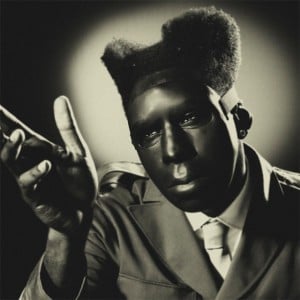
Tyler, the Creator
Tyler, the Creator
One of the more fascinating artistic evolutions since the late 2000s has been that of Tyler, The Creator. The rapper and producer surfaced as a founding member of <a href="spotify:artist:5xpkLC1MxiPRiIJUDEzuVm">Odd Future</a>, an outlandish alternative rap crew that gradually permeated the mainstream as it begat a multitude of related projects. A high percentage of these recordings, including <a href="spotify:artist:3A5tHz1SfngyOZM2gItYKu">Earl Sweatshirt</a>'s Earl (2010), <a href="spotify:artist:5xpkLC1MxiPRiIJUDEzuVm">Odd Future</a>'s The OF Tape, Vol. 2 (2012), and <a href="spotify:artist:2h93pZq0e7k5yf4dywlkpM">Frank Ocean</a>'s Grammy-winning Channel Orange (2012), have been made with Tyler's deep involvement. As a solo artist, Tyler's output has gleefully swung from purposefully distasteful and crude to charming and sophisticated, sometimes blurring the distinction between the extremes. His first four solo albums -- Goblin (2011), Wolf (2013), Cherry Bomb (2015), and Flower Boy (2017) -- debuted within the Top Five of the Billboard 200, distinguished above all other unique qualities by his gravelly voice and an irascible disposition befitting a collision-shop owner. The widespread embrace of the kaleidoscopic Flower Boy, a number two hit nominated for a Grammy in the category of Best Rap Album, has led to a pair of subsequent number one albums: IGOR (2019), another Grammy-nominated recording, and CALL ME IF YOU GET LOST (2021), which expanded the artist's stylistic reach while reaffirming his devotion to hip-hop with a raw lyrical approach. Tyler Okonma was born and raised in Los Angeles County, splitting time in Ladera Heights and nearby Hawthorne. He got his first taste of fame when the Los Angeles Times ran a "teen on the street"-type story on the then-16-year-old skateboarding enthusiast, who was also interested in music and fashion. Around this time, Tyler began making music with <a href="spotify:artist:5xpkLC1MxiPRiIJUDEzuVm">Odd Future</a>'s other core members, and in 2009 released a solo mixtape titled Bastard. By the end of the following year, <a href="spotify:artist:5xpkLC1MxiPRiIJUDEzuVm">OF</a>'s surreal and filthy material, epitomized by <a href="spotify:artist:3A5tHz1SfngyOZM2gItYKu">Earl Sweatshirt</a>'s mixtape Earl -- most of which Tyler produced -- had earned them a loyal following. It was during that year that a video Tyler directed for the <a href="spotify:artist:5xpkLC1MxiPRiIJUDEzuVm">OF</a> track "French" took off, topping a million views by December and drawing attention to a slew of additional crew-related mixtapes that followed. Signed as a solo artist to a one-album deal with <a href="spotify:search:label%3A%22XL+Recordings%22">XL Recordings</a>, Tyler made his proper solo debut with Goblin. Upon its May 2011 arrival, the album became the first <a href="spotify:artist:5xpkLC1MxiPRiIJUDEzuVm">Odd Future</a>-related product to be released through the traditional music-industry channels, and debuted at number five on the Billboard 200. Meanwhile, Tyler continued to produce for <a href="spotify:artist:5xpkLC1MxiPRiIJUDEzuVm">OF</a> and its affiliates, most notably on The OF Tape, Vol. 2 and a later 2012 release, <a href="spotify:artist:2h93pZq0e7k5yf4dywlkpM">Frank Ocean</a>'s Channel Orange, which won a Grammy for Best Urban Contemporary Album. Tyler's second LP, Wolf, followed on the <a href="spotify:artist:5xpkLC1MxiPRiIJUDEzuVm">Odd Future</a> label in April 2013. It entered the Billboard 200 at number three with an expansive list of guests -- including <a href="spotify:artist:7IfculRW2WXyzNQ8djX8WX">Erykah Badu</a>, <a href="spotify:artist:2RdwBSPQiwcmiDo9kixcl8">Pharrell</a>, <a href="spotify:artist:3Rj0tDHoX7C5NFq5DKIpHt">Stereolab</a>'s <a href="spotify:artist:5s8mrbpjYHWIuGYUzNTpEb">Laetitia Sadier</a>, and <a href="spotify:artist:3GhVFlFT3pagjVkslQPqoJ">Quadron</a>'s <a href="spotify:artist:4cc6PmIfhsUCGJUU9QsxEy">Coco O</a> -- reflective of Tyler's aesthetic. Tyler's third proper album, Cherry Bomb, another <a href="spotify:artist:5xpkLC1MxiPRiIJUDEzuVm">Odd Future</a> label offering, leaked to online streaming services before its official April 2015 release date. It nonetheless became the artist's third consecutive Top Ten entry, enhanced with uncredited guest appearances from <a href="spotify:artist:5K4W6rqBFWDnAN6FQUkS6x">Kanye West</a> and <a href="spotify:artist:55Aa2cqylxrFIXC767Z865">Lil Wayne</a>. Tyler's number of productions and guest appearances subsequently continued to increase through collaborations with <a href="spotify:artist:2h93pZq0e7k5yf4dywlkpM">Ocean</a>, fellow <a href="spotify:artist:5xpkLC1MxiPRiIJUDEzuVm">OF</a> associates <a href="spotify:artist:7GN9PivdemQRKjDt4z5Zv8">the Internet</a> and <a href="spotify:artist:6vHBuUxrcpn1do5UaEJ7g6">Domo Genesis</a>, and <a href="spotify:artist:7yO4IdJjCEPz7YgZMe25iS">A$AP Mob</a>. Flower Boy, his acclaimed fourth solo album, was issued through <a href="spotify:search:label%3A%22Columbia%22">Columbia</a> in July 2017. The LP landed at number two on the Billboard 200 and was later nominated for Best Rap Album at the 60th Annual Grammy Awards. The following year, Tyler released a small batch of non-album singles, as well as the EP-length and unsurprisingly animated Music Inspired by Illumination & Dr. Seuss' the Grinch. The proper follow-up to Flower Boy, the thoroughly heartsick IGOR, arrived in May 2019. It debuted on the Billboard 200 at number one and earned Tyler his second nomination for Best Rap Album. Collaborations in 2020 with <a href="spotify:artist:0ABk515kENDyATUdpCKVfW">Westside Gunn</a>, <a href="spotify:artist:0Y4inQK6OespitzD6ijMwb">Freddie Gibbs</a>, and <a href="spotify:artist:6icQOAFXDZKsumw3YXyusw">Lil Yachty</a> set the stage for his sixth solo LP. CALL ME IF YOU GET LOST, hosted by Gangsta Grillz mixtape don <a href="spotify:artist:5oNgAs7j5XcBMzWv3HAnHG">DJ Drama</a>, offered some of Tyler's toughest beats and rhymes while incorporating synth pop and reggae deviations. Issued in June 2021, the album put Tyler back on top of the Billboard 200 and spawned the Hot 100 hit "WusYaName," featuring <a href="spotify:artist:7wlFDEWiM5OoIAt8RSli8b">YoungBoy Never Broke Again</a> and <a href="spotify:artist:7c0XG5cIJTrrAgEC3ULPiq">Ty Dolla $ign</a>. It also won Best Rap Album at the 2022 Grammy Awards. ~ Andy Kellman, Rovi
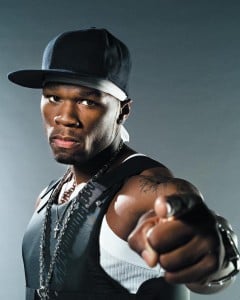
50 Cent
50 Cent
Though he would later struggle with the nature of his fame as well as market expectations, 50 Cent endured substantial obstacles throughout his young yet remarkably dramatic life before becoming the most discussed figure in rap, if not pop music in general, circa 2003. Following an unsuccessful late-'90s run at mainstream success (foiled by an attempt on his life in 2000) and a successful run on the New York mixtape circuit (driven by his early-2000s bout with <a href="spotify:artist:1J2VVASYAamtQ3Bt8wGgA6">Ja Rule</a>), <a href="spotify:artist:7dGJo4pcD2V6oG8kP0tJRR">Eminem</a> signed 50 Cent to a seven-figure contract in 2002 and helmed his quick rise toward crossover success in 2003. The product of a broken home in the rough Jamaica neighborhood of Queens and, in turn, the storied hood's hustling streets themselves, 50 Cent lived everything most rappers write rhymes about but not all actually experience: drugs, crimes, imprisonments, stabbings, and most infamously of all, shootings. Of course, such experiences became 50 Cent's rhetorical stock-in-trade. He reveled in his oft-told past, he called out wannabe gangstas, and he made headlines. He even looked like the ideal East Coast hardcore rapper: big-framed with oft-showcased biceps, abs, and tattoos as well as his trademark bulletproof vest, pistol, and iced crucifix. But all-importantly, 50 Cent may have fit the mold of a prototypical hardcore rapper, but he could also craft a catchy hook. As a result, his music crossed over to the pop market, appealing to both those who liked his roughneck posturing and rags-to-riches story as well as those who liked his knack for churning out naughty singalong club tracks. And too, 50 Cent didn't forget about his posse. He helped his <a href="spotify:artist:6evKD5JWJON3qPBJtUEmtY">G-Unit</a> crew grow into a successful franchise, spawning platinum-selling solo albums for his group members, lucrative licensing deals for the brand name, and sell-out arena tours to promote the franchise internationally. By the time of his third album (Curtis, 2007), however, 50 Cent faced a formidable backlash, particularly among hip-hop purists, who were displeased by his turn toward crossover pop-rap and thus away from street-level credibility. Born Curtis James Jackson III on July 6, 1975, and raised in Southside Jamaica, Queens, New York City, 50 Cent grew up in a broken home. His hustler mother passed away when he was only eight, and his father departed soon after, leaving his grandmother to parent him. As a teen, he followed the lead of his mother and began hustling. The crack trade proved lucrative for 50 Cent, until he eventually encountered the law, that is, and got arrested repeatedly in 1994. It's around this point in time that he traded crime for hip-hop. His break came in 1996 when he met <a href="spotify:artist:3CQIn7N5CuRDP8wEI7FiDA">Run-D.M.C.</a>'s <a href="spotify:artist:0Y3Tob92UZ433hcWRUnKp9">Jam Master Jay</a>, who gave him a tape of beats and asked him to rap over it. Impressed by what he heard, <a href="spotify:artist:0Y3Tob92UZ433hcWRUnKp9">Jay</a> signed the aspiring rapper to his <a href="spotify:search:label%3A%22JMJ+Records%22">JMJ Records</a> label. Not much resulted from the deal, though, and 50 Cent affiliated himself with Trackmasters, a commercially successful New York-based production duo known for their work with such artists as <a href="spotify:artist:20qISvAhX20dpIbOOzGK3q">Nas</a> and <a href="spotify:artist:3nFkdlSjzX9mRTtwJOzDYB">Jay-Z</a>. Trackmasters signed the rapper to their <a href="spotify:search:label%3A%22Columbia%22">Columbia</a> sublabel and began work on his debut album, Power of the Dollar. A trio of singles preceded the album's proposed release: "Your Life's on the Line," "Thug Love" (featuring <a href="spotify:artist:1Y8cdNmUJH7yBTd9yOvr5i">Destiny's Child</a>), and "How to Rob." The latter generated a significant buzz, attracting a lot of attention for its baiting lyrics, which detail how 50 Cent would rob specific big-name rappers. This willingness to rap openly and brashly and the attention it attracted came back to haunt him, however. His first post-success brush with death came shortly after the release of "How to Rob," when he was stabbed at the Hit Factory studio on West 54th Street in Manhattan. Shortly afterward came his most storied incident. On May 24, 2000, just before <a href="spotify:search:label%3A%22Columbia%22">Columbia</a> was set to release Power of the Dollar, an assassin attempted to take 50 Cent's life on 161st Street in Jamaica, Queens (near where <a href="spotify:artist:0Y3Tob92UZ433hcWRUnKp9">Jam Master Jay</a> would later be fatally shot two and half years later), shooting him nine times with a 9mm pistol while the rapper sat helpless in the passenger seat of a car. One shot pierced his cheek, another his hand, and the seven others his legs and thighs, yet he survived, barely. Even so, <a href="spotify:search:label%3A%22Columbia%22">Columbia</a> wanted nothing to do with 50 Cent when they heard the news, shelving Power of the Dollar and parting ways with the now-controversial rapper. During the next two years, 50 Cent returned to the rap underground where he began. He formed a collective (<a href="spotify:artist:6evKD5JWJON3qPBJtUEmtY">G-Unit</a>, which also featured <a href="spotify:artist:3vDUJHQtqT3jFRZ2ECXDTi">Lloyd Banks</a> and <a href="spotify:artist:50UMTib697JJ44le8DO2Va">Tony Yayo</a>), worked closely with producer Sha Money XL (who had also been signed to <a href="spotify:search:label%3A%22JMJ%22">JMJ</a> around the same time that 50 Cent had), and began churning out mixtapes (selections from which were later compiled on Guess Who's Back? in 2002). These mixtape recordings (many of which were hosted by <a href="spotify:artist:75rSoy9VvZ5fhmAE2O4KL5">DJ Whoo Kid</a> on CDs such as No Mercy, No Fear and Automatic Gunfire), earned the rapper an esteemed reputation on the streets of New York. Some of them featured 50 Cent and his <a href="spotify:artist:6evKD5JWJON3qPBJtUEmtY">G-Unit</a> companions rapping over popular beats, others mocked popular rappers (namely <a href="spotify:artist:1J2VVASYAamtQ3Bt8wGgA6">Ja Rule</a>, who quickly became an arch-rival), and a few discussed his shooting. This constant mixtape presence throughout 2000-2002 garnered industry attention as well as street esteem, particularly when <a href="spotify:artist:7dGJo4pcD2V6oG8kP0tJRR">Eminem</a> declared on a radio show his admiration for 50 Cent. A bidding war ensued, driving up the signing price into the million-plus figures in the process and slowly moving the rapper into the up-and-coming spotlight once again as word spread. Despite the bidding war, <a href="spotify:artist:7dGJo4pcD2V6oG8kP0tJRR">Eminem</a> indeed got his man, signing 50 Cent to a joint deal with <a href="spotify:search:label%3A%22Shady%22">Shady</a>/<a href="spotify:search:label%3A%22Aftermath%22">Aftermath</a> -- the former label <a href="spotify:artist:7dGJo4pcD2V6oG8kP0tJRR">Em</a>'s, the latter <a href="spotify:artist:6DPYiyq5kWVQS4RGwxzPC7">Dr. Dre</a>'s. During the successive months, 50 Cent worked closely with <a href="spotify:artist:7dGJo4pcD2V6oG8kP0tJRR">Eminem</a> and <a href="spotify:artist:6DPYiyq5kWVQS4RGwxzPC7">Dre</a>, who were both credited as executive produced on his upcoming debut, Get Rich or Die Tryin', each of them producing a few tracks for the highly awaited album. Before Get Rich dropped, though, <a href="spotify:artist:7dGJo4pcD2V6oG8kP0tJRR">Eminem</a> debuted 50 Cent on the 8 Mile soundtrack. The song "Wanksta," previously released on the No Mercy, No Fear mixtape, became a runaway hit in late 2002, setting the stage for "In da Club," the <a href="spotify:artist:6DPYiyq5kWVQS4RGwxzPC7">Dre</a>-produced lead single from Get Rich. The two singles became sizable crossover hits -- the former peaking at number 13 on Billboard's Hot 100 chart, the latter at number one -- and <a href="spotify:search:label%3A%22Interscope%22">Interscope</a> (<a href="spotify:search:label%3A%22Shady%22">Shady</a>/<a href="spotify:search:label%3A%22Aftermath%22">Aftermath</a>'s parent company) consequently had to move up Get Rich's release date to combat bootlegging. Amid all this, 50 Cent made headlines repeatedly. Most notably, he was tied to <a href="spotify:artist:0Y3Tob92UZ433hcWRUnKp9">Jam Master Jay</a>'s shooting in October 2002, the F.B.I.'s investigation of Murder Inc's relationship to former drug dealer Kenneth "Supreme" McGriff, and a shooting incident at the offices of Violator Management. Furthermore, he made more headlines when he was jailed on New Year's Eve 2002 for gun possession. The media recounted his life story ad nauseum, particularly his storied brush with death -- and not just the expected media outlets like MTV -- even such unlikely mainstream publications as The New York Times ran feature stories ("Amid Much Anticipation, a Rapper Makes a Debut"). By the time Get Rich finally hit the streets on February 6, 2003, 50 Cent had become the most discussed figure in the music industry, and bootlegged or not, his initial sales figures reflected this (a record-breaking 872,000 units moved in five days, the best-selling debut album since SoundScan started its tracking system in May 1991), as did his omnipresence in the media. Late in the year, following another round of popular hits, "21 Questions" (which charted number one on the Hot 100) and "P.I.M.P." (number three), 50 Cent made his group debut with <a href="spotify:artist:6evKD5JWJON3qPBJtUEmtY">G-Unit</a>, Beg for Mercy. The album charted at number two and spawned a couple Top 15 hits, "Stunt 101" and "Wanna Get to Know You." In 2004, 50 Cent stayed on the sidelines for the most part as <a href="spotify:artist:6evKD5JWJON3qPBJtUEmtY">G-Unit</a> affiliates <a href="spotify:artist:3vDUJHQtqT3jFRZ2ECXDTi">Lloyd Banks</a> and <a href="spotify:artist:4pr7J7wzgObkE3DD3Izi7q">Young Buck</a> released popular solo albums. Another <a href="spotify:artist:6evKD5JWJON3qPBJtUEmtY">G-Unit</a> affiliate, <a href="spotify:artist:0NbfKEOTQCcwd6o7wSDOHI">the Game</a>, released his debut in January 2005, and it proved the most successful among these solo spin-offs, in particular the singles "How We Do" and "Love It or Hate It," both Top Five hits that prominently featured 50 Cent. As these singles were riding high on the charts, however, 50 Cent and <a href="spotify:artist:0NbfKEOTQCcwd6o7wSDOHI">the Game</a> were feuding, and the latter was acrimoniously booted out of <a href="spotify:artist:6evKD5JWJON3qPBJtUEmtY">G-Unit</a>. There were also feuds with <a href="spotify:artist:3ScY9CQxNLQei8Umvpx5g6">Fat Joe</a> and <a href="spotify:artist:5pnbUBPifNnlusY8kTBivi">Jadakiss</a> (instigated by the song "Piggy Bank") during the run-up to the March 2005 release of The Massacre, 50 Cent's second album. Nearly as popular as Get Rich or Die Tryin', The Massacre debuted at number one, sold millions (over ten million worldwide), and spawned a series of smash hits ("Disco Inferno," "Candy Shop," "Just a Lil Bit"). By this point in time, 50 Cent's fame overshadowed his music, thereby predicating "street" credibility issues that would haunt him in the years to follow. For instance, the marketing rollout of The Massacre carried over into ventures such as the video game 50 Cent: Bulletproof, the semi-autobiographical film Get Rich or Die Tryin', and the soundtrack to that film -- all released in 2005, along with other product. The fallout from 50 Cent's overexposure was evident via the singles from the film soundtrack ("Hustler's Ambition," "Window Shopper," "Best Friend," "Have a Party"), which failed to gain much traction in the marketplace, charting modestly relative to past singles. The next round of <a href="spotify:artist:6evKD5JWJON3qPBJtUEmtY">G-Unit</a> solo releases (<a href="spotify:artist:50UMTib697JJ44le8DO2Va">Tony Yayo</a>'s Thoughts of a Predicate Felon, 2005; <a href="spotify:artist:6O2zJ0tId7g07yzHtX0yap">Mobb Deep</a>'s Blood Money, 2005; <a href="spotify:artist:3vDUJHQtqT3jFRZ2ECXDTi">Lloyd Banks</a>' Rotten Apple, 2006; <a href="spotify:artist:4pr7J7wzgObkE3DD3Izi7q">Young Buck</a>'s Buck the World, 2007) didn't perform well commercially either, and it wasn't entirely surprising when plans for another, <a href="spotify:artist:5YBSzuCs7WaFKNr7Bky0Uf">Olivia</a>'s Behind Closed Doors, were shelved. The grim outlook didn't bode well for 50 Cent's next album, which was pushed back repeatedly and retitled a couple times. The final title, Curtis, was inspired by yet another feud, this one with <a href="spotify:artist:7iMvwE8qANp3aIfAGKEAwS">Cam'ron</a>, who taunted 50 Cent, somewhat oddly, by addressing him by his birth name. After a pair of lead singles, "Straight to the Bank" and "Amusement Park," failed to connect in the marketplace, Curtis was reworked one last time and pushed back from a summer release date to a fall one (i.e., the memorable date September 11, which -- to the glee of industry observers -- pitted the album against <a href="spotify:artist:5K4W6rqBFWDnAN6FQUkS6x">Kanye West</a>'s Graduation). A second round of singles, "I Get Money" and "Ayo Technology," was released in the latter half of the summer, while the video for a fifth single, "Follow My Lead," was leaked to the Internet -- to the frustration of 50 Cent, who reportedly cursed out <a href="spotify:search:label%3A%22Interscope%22">Interscope</a> for endangering the commercial prospects of his album -- over a month before street date. In 2012 he left the label over creative differences, taking an unreleased album, Street King Immortal, with him. While he still intended to release Immortal eventually, he compiled a set of new tracks and released them as his fifth proper LP, Animal Ambition: An Untamed Desire to Win. The album featured guest appearances from <a href="spotify:artist:2iojnBLj0qIMiKPvVhLnsH">Trey Songz</a> (on the <a href="spotify:artist:6DPYiyq5kWVQS4RGwxzPC7">Dr. Dre</a>-produced "Smoke"), <a href="spotify:artist:6Ha4aES39QiVjR0L2lwuwq">Yo Gotti</a>, <a href="spotify:artist:5pnbUBPifNnlusY8kTBivi">Jadakiss</a> and <a href="spotify:artist:2x8KDZdSONA3872CnhaAlX">Styles P</a>, and <a href="spotify:artist:33W1pnW9zScZtYTnAoWnOT">Mr. Probz</a>, peaking at number four on the Billboard album chart and topping the independent and R&B/hip-hop charts. Days after the release of Animal Ambition, the premier episode of the crime drama Power -- produced by and starring 50 Cent -- made its television debut. However, despite this busy and seemingly successful period, he would declare bankruptcy the following summer. By early 2017 -- while still tinkering with Immortal -- he issued Best of 50 Cent (<a href="spotify:search:label%3A%22BMG%22">BMG</a>), which featured his biggest hits and a trio of non-album cuts ("Get Up," "I Get It In," and "How to Rob"). ~ Jason Birchmeier, Rovi
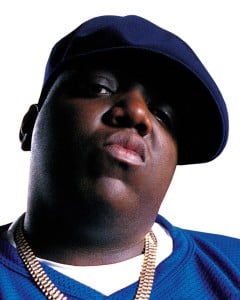
The Notorious B.I.G.
The Notorious B.I.G.
In just a few short years, the Notorious B.I.G. went from a Brooklyn street hustler to the savior of East Coast hip-hop to a tragic victim of the culture of violence he depicted so realistically on his records. His all-too-brief odyssey almost immediately took on mythic proportions, especially since his murder followed the shooting of rival <a href="spotify:artist:1ZwdS5xdxEREPySFridCfh">Tupac Shakur</a> by only six months. In death, the man also known as Biggie Smalls became a symbol of the senseless violence that plagued inner-city America in the waning years of the 20th century. Whether or not his death was really the result of a much-publicized feud between the East and West Coast hip-hop scenes, it did mark the point where both sides stepped back from a rivalry that had gone too far. Hip-hop's self-image would never quite be the same, and neither would public perception. The aura of martyrdom that surrounds the Notorious B.I.G. sometimes threatens to overshadow his musical legacy, which was actually quite significant. Aided by Sean "Puffy" Combs' radio-friendly sensibility, Biggie reestablished East Coast rap's viability by leading it into the post-<a href="spotify:artist:6DPYiyq5kWVQS4RGwxzPC7">Dr. Dre</a> gangsta age. Where fellow East Coasters <a href="spotify:artist:34EP7KEpOjXcM2TCat1ISk">the Wu-Tang Clan</a> slowly built an underground following, Biggie crashed onto the charts and became a star right out of the box. In the process, he helped Combs' <a href="spotify:search:label%3A%22Bad+Boy%22">Bad Boy</a> label supplant <a href="spotify:search:label%3A%22Death+Row%22">Death Row</a> as the biggest hip-hop imprint in America, and also paved the way to popular success for other East Coast talents like <a href="spotify:artist:3nFkdlSjzX9mRTtwJOzDYB">Jay-Z</a> and <a href="spotify:artist:20qISvAhX20dpIbOOzGK3q">Nas</a>. Biggie was a gifted storyteller with a sense of humor and an eye for detail, and his narratives about the often-violent life of the streets were rarely romanticized; instead, they were told with a gritty, objective realism that won him enormous respect and credibility. The general consensus in the rap community was that when his life was cut short, Biggie was just getting started. The Notorious B.I.G. was born Christopher Wallace on May 21, 1972, and grew up in Brooklyn's Bedford-Stuyvesant neighborhood. He was interested in rap from a young age, performing with local groups like the Old Gold Brothers and the Techniques, the latter of whom brought the teenaged Wallace his first trip to a recording studio. He had already adopted the name Biggie Smalls at this point, a reference to his ample frame: he would grow to be over six feet tall and nearly 400 pounds. Although he was a good student, he dropped out of high school at age 17 to live life on the streets. Attracted by the money and flashy style of local drug dealers, he started selling crack for a living. He got busted on a trip to North Carolina and spent nine months in jail, and upon his release, he made some demo recordings on a friend's four-track. The resulting tape fell into the hands of Mister Cee, a DJ working with <a href="spotify:artist:6futYSDVulYR2PktBjTB5W">Big Daddy Kane</a>; Cee in turn passed the tape on to hip-hop magazine The Source, which gave Biggie a positive write-up in a regular feature on unsigned artists. Thanks to the publicity, Biggie caught the attention of <a href="spotify:search:label%3A%22Uptown+Records%22">Uptown Records</a> producer Sean "Puffy" Combs, who signed him immediately. With his new daughter in need of immediate financial support, Biggie kept dealing drugs for a short time until Combs found out and laid down the law. Not long after Biggie's signing, Combs split from <a href="spotify:search:label%3A%22Uptown%22">Uptown</a> to form his own label, <a href="spotify:search:label%3A%22Bad+Boy%22">Bad Boy</a>, and took Biggie with him. Changing his primary stage name from Biggie Smalls to the Notorious B.I.G., the newly committed rapper made his recording debut on a 1993 remix of <a href="spotify:artist:1XkoF8ryArs86LZvFOkbyr">Mary J. Blige</a>'s single "Real Love." He soon guested on another <a href="spotify:artist:1XkoF8ryArs86LZvFOkbyr">Blige</a> remix, "What's the 411?," and contributed his first solo cut, "Party and Bullshit," to the soundtrack of the film Who's the Man? Now with a considerable underground buzz behind him, the Notorious B.I.G. delivered his debut album, Ready to Die, in September 1994. Its lead single, "Juicy," went gold, and the follow-up smash, "Big Poppa," achieved platinum sales and went Top Ten on the pop and R&B charts. Biggie's third single, "One More Chance," tied <a href="spotify:artist:3fMbdgg4jU18AjLCKBhRSm">Michael Jackson</a>'s "Scream" for the highest debut ever on the pop charts; it entered at number five en route to an eventual peak at number two, and went all the way to number one on the R&B side. By the time the dust settled, Ready to Die had sold over four million copies and turned the Notorious B.I.G. into a hip-hop sensation -- the first major star the East Coast had produced since the rise of <a href="spotify:artist:6DPYiyq5kWVQS4RGwxzPC7">Dr. Dre</a>'s West Coast G-funk. Not long after Ready to Die was released, Biggie married R&B singer and <a href="spotify:search:label%3A%22Bad+Boy%22">Bad Boy</a> labelmate <a href="spotify:artist:5NDMothbpdpq2xHqSjrrWn">Faith Evans</a>. In November 1994, West Coast gangsta star <a href="spotify:artist:1ZwdS5xdxEREPySFridCfh">Tupac Shakur</a> was shot several times in the lobby of a New York recording studio and robbed of thousands of dollars in jewelry. <a href="spotify:artist:1ZwdS5xdxEREPySFridCfh">Shakur</a> survived and accused Combs and his onetime friend Biggie of planning the attack, a charge both of them fervently denied. The ill will gradually snowballed into a heated rivalry between West and East Coast camps, with upstart <a href="spotify:search:label%3A%22Bad+Boy%22">Bad Boy</a> now challenging Suge Knight's <a href="spotify:search:label%3A%22Death+Row%22">Death Row</a> empire for hip-hop supremacy. Meanwhile, Biggie turned his energies elsewhere. He shepherded the career of <a href="spotify:artist:3r0OeTcOw37N9juMYyyw39">Junior M.A.F.I.A.</a>, a group consisting of some of his childhood rap partners, and guested on their singles "Player's Anthem" and "Get Money." He also boosted several singles by his labelmates, such as <a href="spotify:artist:1urjDGTd4iBze91Z1W1gu7">Total</a>'s "Can't You See" and <a href="spotify:artist:7urq0VfqxEYEEiZUkebXT4">112</a>'s "Only You," and worked with superstars like <a href="spotify:artist:3fMbdgg4jU18AjLCKBhRSm">Michael Jackson</a> (HIStory) and <a href="spotify:artist:2mxe0TnaNL039ysAj51xPQ">R. Kelly</a> ("[You to Be] Happy," from R. Kelly). With the singles from Ready to Die still burning up the airwaves as well, Biggie ended 1995 as not only the top-selling rap artist, but also the biggest solo male act on both the pop and R&B charts. He also ran into trouble with the law on more than one occasion. A concert promoter accused him and members of his entourage of assaulting him when he refused to pay the promised fee after a concert cancellation. Later in the year, Biggie pled guilty to criminal mischief after attacking two harassing autograph seekers with a baseball bat. The year 1996 was even more tumultuous. More legal problems ensued after police found marijuana and weapons in a raid on Biggie's home in Teaneck, New Jersey. Meanwhile, <a href="spotify:artist:3r0OeTcOw37N9juMYyyw39">Junior M.A.F.I.A.</a> member <a href="spotify:artist:5tth2a3v0sWwV1C7bApBdX">Lil' Kim</a> released her first solo album under Biggie's direction, and the two made little effort to disguise their concurrent love affair. <a href="spotify:artist:1ZwdS5xdxEREPySFridCfh">2Pac</a>, still nursing a grudge against Biggie and Combs, recorded a vicious slam on the East Coast scene called "Hit 'Em Up," in which he taunted Biggie about having slept with <a href="spotify:artist:5NDMothbpdpq2xHqSjrrWn">Faith Evans</a> (who was by now estranged from her husband). What was more, during the recording sessions for Biggie's second album, he suffered rather serious injuries in a car accident and was confined to a wheelchair for a time. Finally, in September 1996, <a href="spotify:artist:1ZwdS5xdxEREPySFridCfh">Tupac Shakur</a> was murdered in a drive-by shooting on the Las Vegas strip. Given their very public feud, it didn't take long for rumors of Biggie's involvement to start swirling, although none were substantiated. Biggie was also criticized for not attending an anti-violence hip-hop summit held in Harlem in the wake of <a href="spotify:artist:1ZwdS5xdxEREPySFridCfh">Shakur</a>'s death. Observers hoped that <a href="spotify:artist:1ZwdS5xdxEREPySFridCfh">Shakur</a>'s murder would serve as a wake-up call for gangsta rap in general, that on-record boasting had gotten out of hand and spilled into reality. Sadly, it would take another tragedy to drive that point home. In the early morning hours of March 9, 1997, the Notorious B.I.G. was leaving a party at the Petersen Automotive Museum in Los Angeles thrown by Vibe magazine in celebration of the Soul Train Music Awards. He sat in the passenger side of his SUV, with his bodyguard in the driver's seat and <a href="spotify:artist:3r0OeTcOw37N9juMYyyw39">Junior M.A.F.I.A.</a> member <a href="spotify:artist:6V4zyNV40Zyu5MGlhD0i8g">Lil' Cease</a> in the back. According to most witnesses, another vehicle pulled up on the right side of the SUV while it was stopped at a red light, and six to ten shots were fired. Biggie's bodyguard rushed him to the nearby Cedars-Sinai Medical Center, but it was already too late. As much as <a href="spotify:artist:1ZwdS5xdxEREPySFridCfh">Shakur</a> was mourned, Biggie's death was perhaps even more shocking; it meant that <a href="spotify:artist:1ZwdS5xdxEREPySFridCfh">Shakur</a>'s death was not an isolated incident, and that hip-hop's highest-profile talents might be caught in the middle of an escalating war. Naturally, speculation ran rampant that Biggie's killers were retaliating for <a href="spotify:artist:1ZwdS5xdxEREPySFridCfh">Shakur</a>'s death, and since the case remains unsolved, the world may never know. In the aftermath of the tragedy, the release of the Notorious B.I.G.'s second album went ahead as planned at the end of March. The eerily titled Life After Death was a sprawling, guest-laden double-disc set that seemed designed to compete with <a href="spotify:artist:1ZwdS5xdxEREPySFridCfh">2Pac</a>'s All Eyez on Me in terms of ambition and epic scope. Unsurprisingly, it entered the charts at number one, selling nearly 700,000 copies in its first week of release and spending a total of four weeks on top. The first single, "Hypnotize," went platinum and hit number one on the pop chart, and its follow-up, "Mo Money Mo Problems," duplicated both feats, making the Notorious B.I.G. the first artist ever to score two posthumous number one hits. A third single, "Sky's the Limit," went gold, and Life After Death was certified ten-times platinum approximately two years after its release. Plus, Combs -- now rechristened <a href="spotify:artist:59wfkuBoNyhDMQGCljbUbA">Puff Daddy</a> -- and <a href="spotify:artist:5NDMothbpdpq2xHqSjrrWn">Faith Evans</a> scored one of 1997's biggest singles with their tribute "I'll Be Missing You." In 1999, an album of previously unreleased B.I.G. material, Born Again, was released and entered the charts at number one. It eventually went double platinum. Six years later, Duets: The Final Chapter (studio scraps paired with new verses from several MCs and vocalists) surfaced and reached number three on the album chart. In the years following Christopher Wallace's death, little official progress was made in the LAPD's murder investigation, and it began to look as if the responsible parties would never be brought to justice. The <a href="spotify:artist:1ZwdS5xdxEREPySFridCfh">2Pac</a> retaliation theory still holds sway in many quarters, and it has also been speculated that members of the Crips gang murdered Wallace in a dispute over money owed for security services. In an article for Rolling Stone, and later a full-length book titled Labyrinth, journalist Randall Sullivan argued that Suge Knight hired onetime LAPD officer David Mack -- a convicted bank robber with ties to the Bloods -- to arrange a hit on Wallace, and that the gunman was a hitman and mortgage broker named Amir Muhammad. Sullivan further argued that when it became clear how many corrupt LAPD officers were involved with <a href="spotify:search:label%3A%22Death+Row+Records%22">Death Row Records</a>, the department hushed up as much as it could and all but abandoned detective Russell Poole's investigation recommendations. Documentary filmmaker Nick Broomfield used Labyrinth as a basis for 2002's Biggie and Tupac, which featured interviews with Poole and Knight, among others. In April 2002, <a href="spotify:artist:5NDMothbpdpq2xHqSjrrWn">Faith Evans</a> and Voletta Wallace (Biggie's mother) filed a civil suit against the LAPD alleging wrongful death, among other charges. In September of that year, the Los Angeles Times published a report alleging that the Notorious B.I.G. had paid members of the Crips one million dollars to murder <a href="spotify:artist:1ZwdS5xdxEREPySFridCfh">2Pac</a>, and even supplied the gun used. Several of Biggie's relatives and friends stepped forward to say that the rapper had been recording in New Jersey, not masterminding a hit in Las Vegas; the report was also roundly criticized in the hip-hop community, which was anxious to avoid reopening old wounds. Outside legal matters, the B.I.G. legacy continued to be burnished with the 2007 compilation Greatest Hits, the 2009 biopic Notorious, and 2017's The King & I. The third posthumous duets album, The King & I was co-credited to <a href="spotify:artist:5NDMothbpdpq2xHqSjrrWn">Evans</a>, whose new vocals were combined with a mix of familiar and previously unreleased verses from Biggie. In 2019, to mark the 25th anniversary of his landmark Ready to Die, <a href="spotify:search:label%3A%22Rhino%22">Rhino</a> reissued the set as a deluxe box set that included photos and stories from the era. ~ Steve Huey, Rovi
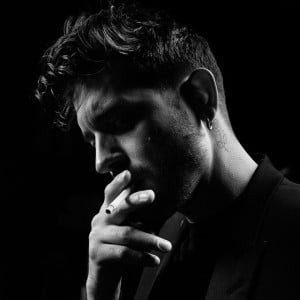
G-EAZY
G-EAZY
With his slicked-back hair and leather jacket, G-Eazy was known as "the James Dean of rap" when he debuted in the late 2000s. Armed with bars that detailed hedonistic excess and conflicted inner turmoil, he steadily climbed the charts in the 2010s on the strength of his hit duet with <a href="spotify:artist:64M6ah0SkkRsnPGtGiRAbb">Bebe Rexha</a>, "Me, Myself & I," from his major-label debut, 2014's These Things Happen. He repeated that success in 2017 with his third album, The Beautiful & Damned, which paired him with <a href="spotify:artist:26VFTg2z8YR0cCuwLzESi2">Halsey</a> on the platinum "Him & I," and guests <a href="spotify:artist:13ubrt8QOOCPljQ2FL1Kca">A$AP Rocky</a> and <a href="spotify:artist:4kYSro6naA4h99UJvo89HB">Cardi B</a> on the Top Four hit "No Limit." Without losing any of his swagger, G-Eazy has matured, even singing and exploring a more introspective sound, as on the 2020 side project Everything's Strange Here and the 2021 full-length These Things Happen Too. Following a hiatus, the single "Femme Fatale," heralded the rapper's seventh album, 2024's Freak Show. Born Gerald Earl Gillum in Oakland, California, G-Eazy launched his career while still in college at Loyola University in New Orleans, heading up a hip-hop crew named the Bay Boyz while releasing his solo debut, The Epidemic LP, in 2009. Two years later, his mixtape The Endless Summer landed with the hit redo of <a href="spotify:artist:15FyiY3ChN0QRspHIQYq0W">Dion</a>'s "Runaround Sue." In 2012 he released his second LP, Must Be Nice, hitting the road with <a href="spotify:artist:382aq8Pij5V2nE2JMHMoxl">Hoodie Allen</a> and joining the Vans Warped Tour. In 2014 he returned with his first major-label release, These Things Happen (<a href="spotify:search:label%3A%22RCA%22">RCA</a>). As his popularity grew in the following year, he embarked on an extensive international tour and recorded his fourth album. When It's Dark Out was released in late 2015 and included a hit duet with <a href="spotify:artist:64M6ah0SkkRsnPGtGiRAbb">Bebe Rexha</a>, "Me, Myself & I." Dark would go on to peak at number five on the Billboard 200 and top the R&B/Hip-Hop chart. In the summer of 2016, while on tour with <a href="spotify:artist:4xRYI6VqpkE3UwrDrAZL8L">Logic</a>, <a href="spotify:artist:0A0FS04o6zMoto8OKPsDwY">YG</a>, and <a href="spotify:artist:6Ha4aES39QiVjR0L2lwuwq">Yo Gotti</a>, Eazy appeared on <a href="spotify:artist:26dSoYclwsYLMAKD3tpOr4">Britney Spears</a>' comeback single "Make Me," which entered the Top 20 of the Hot 100. "Some Kind of Drug," his single featuring <a href="spotify:artist:3tQx1LPXbsYjE9VwN1Peaa">Marc E. Bassy</a>, arrived at the end of the year and would enter the singles charts in early 2017. At the beginning of the year, G-Eazy also teamed up with <a href="spotify:artist:7CCjtD0hCK005Bvg2WG1a7">Carnage</a> for the EP Step Brothers. By mid-year, he released the single "No Limit," which featured <a href="spotify:artist:13ubrt8QOOCPljQ2FL1Kca">A$AP Rocky</a> and <a href="spotify:artist:4kYSro6naA4h99UJvo89HB">Cardi B</a>. The multi-platinum track climbed into the Top Five of the Hot 100, becoming his highest-charting single to date. This was followed by a second platinum chart hit, "Him & I," which featured his then-girlfriend <a href="spotify:artist:26VFTg2z8YR0cCuwLzESi2">Halsey</a>. Both tracks were included on his fifth studio album, The Beautiful & Damned, which was released in December 2017. The double-disc set peaked at number three on the Billboard 200. In 2018 Eazy teamed up with <a href="spotify:artist:6Ha4aES39QiVjR0L2lwuwq">Yo Gotti</a> and <a href="spotify:artist:3gGUMEwIX6XodWsYEvKSal">YBN Nahmir</a> for the single "1942," which appeared on the Uncle Drew soundtrack. Eazy's 2019 output included the EP B-Sides, the single "West Coast" featuring <a href="spotify:artist:3Fl1V19tmjt57oBdxXKAjJ">Blueface</a>, and a bevy of features on tracks by <a href="spotify:artist:7bXgB6jMjp9ATFy66eO08Z">Chris Brown</a>, <a href="spotify:artist:7CCjtD0hCK005Bvg2WG1a7">Carnage</a>, and <a href="spotify:artist:3aQeKQSyrW4qWr35idm0cy">T-Pain</a>. He closed the year with a second EP, Scary Nights, which recruited <a href="spotify:artist:3tJoFztHeIJkJWMrx0td2f">Moneybagg Yo</a>, <a href="spotify:artist:6vXTefBL93Dj5IqAWq6OTv">French Montana</a>, <a href="spotify:artist:360IAlyVv4PCEVjgyMZrxK">Miguel</a>, and others. In 2020, Eazy found inspiration in quarantine during the COVID-19 pandemic, taking the opportunity to try new things and reflect. The results wound up on Everything's Strange Here, a drastic shift in style that set his rap braggadocio aside in favor of introspective indie alternative pop. Singing instead of rapping, he covered <a href="spotify:artist:69zRcOlNdSZ17VfIZe4VU3">the Korgis</a> and <a href="spotify:artist:0oSGxfWSnnOXhD2fKuz2Gy">David Bowie</a>, while also sampling <a href="spotify:artist:6zvul52xwTWzilBZl6BUbT">Pixies</a>. By the end of the year, he had also collaborated with <a href="spotify:artist:2cFrymmkijnjDg9SS92EPM">Blackbear</a> on the song "Hate the Way," before releasing his sixth studio album, 2021's These Things Happen Too. Included on the record was the Hot 100 single "Running Wild (Tumblr Girls 2)" featuring <a href="spotify:artist:3TmVOBZL0RYrAAF3f2QSGq">Kossisko</a>. There were also guest appearances by <a href="spotify:artist:6S2OmqARrzebs0tKUEyXyp">Demi Lovato</a>, <a href="spotify:artist:55Aa2cqylxrFIXC767Z865">Lil Wayne</a>, <a href="spotify:artist:3tQx1LPXbsYjE9VwN1Peaa">Marc E. Bassy</a>, and others. It reached number 11 on the Top R&B/Hip-Hop Albums chart and number 19 on the Billboard 200. After a year-long hiatus, Eazy returned in 2023 with the reflective single "Tulips & Roses." Another song, "Femme Fatale" featuring <a href="spotify:artist:6AMd49uBDJfhf30Ak2QR5s">Coi Leray</a> and Kaliii, arrived in April 2024 as the lead single off the rapper's seventh studio album, Freak Show. Released that June along with the second single "Anxiety," the set found the rapper ruminating on his feelings over fame and celebrity, as well as the death of his mother and struggles with mental health and addiction. Primarily produced by <a href="spotify:artist:5v0XTlB9FqNvfBfnw8n5b0">Statik Selektah</a> with additional contributions from Alvin Ford, Jr., Ambezza, and Andrew Cedar, it also showcased more guest appearances from <a href="spotify:artist:6vXTefBL93Dj5IqAWq6OTv">French Montana</a>, <a href="spotify:artist:3E6TQHXjqR21vX9H0c5mOv">Annika Rose</a>, and <a href="spotify:artist:3qnGvpP8Yth1AqSBMqON5x">Leon Bridges</a>. Two non-album tracks -- "Nada" and "Vampires," featuring <a href="spotify:artist:0fs8oBR1rx7JIXZi75h7Uu">Bahari</a> -- appeared in November 2024. ~ David Jeffries & Neil Z. Yeung, Rovi
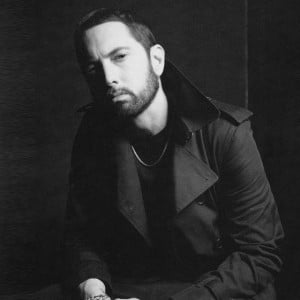
Eminem
Eminem
Apart from being one of the best-selling artists in music history, Eminem is one of the greatest rappers of his generation. He's effortlessly fast, fluid, dexterous, and unpredictable, capable of pulling off long-form narratives or withering asides. And thanks to his mentor <a href="spotify:artist:6DPYiyq5kWVQS4RGwxzPC7">Dr. Dre</a>, he's had music to match with thick, muscular loops evoking the terror and paranoia conjured by his lyrics. To be certain, a great deal of the controversy Eminem courted came through in how his violent fantasias, often directed at his mother or his wife, intertwined with flights of absurdity that appealed to listeners too young to absorb the psychodramas explored on his breakthrough albums The Slim Shady LP and The Marshall Mathers LP. Eminem's commercial peak came around the time of his 2002 album The Eminem Show (which went platinum 27 times over) and with his crossover onto the big screen that same year with 8 Mile, a film that earned him acclaim for his performance and an Oscar for the film's anthem, "Lose Yourself." Eminem's journey as a living rap legend included struggles with addiction, near-constant feuding with other artists, and a celebrity status that shifted as the years went on. Through all his various changes, however, he continued growing as an artist as well as consistently hitting high commercial marks. Though critics could be unkind to efforts like 2009's Relapse or 2017's Revival, fans made sure that each new album sold at least platinum numbers and topped the charts. Instead of recycling old ideas, the rapper experimented with new production approaches, faster flows, and increasingly complex multisyllabic wordplay on projects like 2020's Music to Be Murdered By and the 2024 concept album The Death of Slim Shady (Coup de Grâce), in which he confronted and killed his alter ego. Born Marshall Mathers in the Kansas City, Missouri suburb of St. Joseph, Eminem spent his childhood between Missouri and Michigan, settling in Detroit in his teens. At the age of 14, he began rapping with a high school friend, the two adopting the names "Manix" and "M&M," which soon morphed into Eminem. Under this name, Mathers entered battle rapping, a struggle dramatized in the fictionalized 8 Mile. Initially, the predominantly Black audience didn't embrace him, but soon his skills earned him a reputation, and he was recruited to join several rap groups. The first of these was the New Jacks, and after they disbanded, he joined Soul Intent, who released a single in 1995. This track also featured <a href="spotify:artist:1W7G3vXPeISR3Oi9ggVfyE">Proof</a>, and the two rappers broke off on their own to form <a href="spotify:artist:5Qi4Bb7a8C0a00NZcA77L0">D-12</a>, a six-member crew that functioned more as a <a href="spotify:artist:34EP7KEpOjXcM2TCat1ISk">Wu-Tang</a>-styled collective than a regularly performing group. As he was struggling to establish his career, Eminem and his girlfriend Kim had a daughter, Hailey, forcing him to spend less time rapping and more time providing for his family. He assembled his first album, Infinite, which received some underground attention in 1996, not all of it positive. After its release, Eminem developed his Slim Shady alter ego, a persona that freed him to dig deep into his dark id, something he needed as he faced a number of personal upheavals, beginning with a bad split with Kim, which led him to move in with his mother and increase his use of drugs and alcohol, capped off by an unsuccessful suicide attempt. All this sturm und drang was channeled into The Slim Shady EP, which is where he first demonstrated many of the quirks that became his trademark, including his twitchy, nasal rhyming and disturbingly violent imagery. The Slim Shady EP opened many doors, the most notable being a contract with <a href="spotify:search:label%3A%22Interscope+Records%22">Interscope Records</a>. After Eminem came in second at the 1997 Rap Olympics MC Battle in Los Angeles, <a href="spotify:search:label%3A%22Interscope%22">Interscope</a> head Jimmy Iovine sought him out, giving the EP to <a href="spotify:artist:6DPYiyq5kWVQS4RGwxzPC7">Dr. Dre</a>, who proved eager to work with Eminem. They quickly cut Em's <a href="spotify:search:label%3A%22Interscope%22">Interscope</a> debut in the fall of 1998 -- during which time Marshall reconciled with Kim and married her -- and The Slim Shady LP appeared early in 1999, preceded by the single "My Name Is." Both were instant blockbusters and Eminem became a lightning rod for attention, earning praise and disdain for his violent, satirical fantasias. He quickly followed The Slim Shady LP with The Marshall Mathers LP in the summer of 2000. By this point, there was little doubt that Eminem was one of the biggest stars in pop music: the album sold almost two million copies within the first two weeks of release, but Mathers felt compelled to tweak other celebrities, provoking pop stars in his lyrics, and <a href="spotify:artist:4xtWjIlVuZwTCeqVAsgEXy">Insane Clown Posse</a>'s entourage in person, providing endless fodder for the tabloids. This gossip blended with growing criticism about his violent and homophobic lyrics, and under this fire, he reunited his old crew, <a href="spotify:artist:5Qi4Bb7a8C0a00NZcA77L0">D-12</a>, releasing an album in 2001, then touring with the group. During this furor, he had his biggest hit in the form of the moody ballad "Stan." Performed at the Grammys as a duet with <a href="spotify:artist:3PhoLpVuITZKcymswpck5b">Elton John</a>, thereby undercutting some accusations of homophobia, the song helped Eminem cross over to a middlebrow audience, setting the stage for the ultimate crossover of 2001's 8 Mile. Directed by Curtis Hanson, best known as the Oscar-nominated director of L.A. Confidential, the gritty drama fictionalized Eminem's pre-fame Detroit days and earned considerable praise, culminating in one of his biggest hits with the theme "Lose Yourself," which won Mathers an Oscar. After all this, he retreated from the spotlight to record his third album, The Eminem Show. Preceded by the single "Without Me," it turned into another huge hit, albeit not quite as strong as its predecessor, and there were some criticisms suggesting that Eminem wasn't expanding his horizons much. Encore, released late in 2004, did reach into more mature territory, notably on the anti-<a href="spotify:artist:2JZbcOAw67koOHlFTjMeGX">George W. Bush</a> "Mosh," but most of the controversy generated by the album was for behind-the-scenes events: a bus crash followed by canceled dates and a stint in rehab. Rumors of retirement flew, and the 2005 appearance of Curtain Call: The Hits did nothing to dampen them, nor did the turmoil of 2006, a year that saw Mathers remarrying and divorcing Kim within a matter of four months, as well as the shooting death of <a href="spotify:artist:1W7G3vXPeISR3Oi9ggVfyE">Proof</a> at a Detroit club. During all this, Em did some minor studio work, but he soon dropped off the radar completely, retreating to his Detroit home. He popped up here and there, most notably debuting the hip-hop channel Shade 45 for Sirius Satellite Radio in September 2008, but it wasn't until early 2009 that he mounted a comeback with Relapse, an album whose very title alluded to some of Mathers' struggles with prescription drugs, but it also announced that after an extended absence, Slim Shady was back. While not quite a blockbuster, the album went platinum, and Eminem followed it at the end of the year with an expanded version of Relapse (dubbed Relapse: Refill) that added outtakes and new recordings. Recovery, initially titled Relapse 2, was issued in June 2010. The album debuted on top of the Billboard 200 chart, where it remained for five consecutive weeks, while its leadoff single, "Not Afraid," debuted on top of the magazine's Hot 100 singles chart. The year 2010 also brought Eminem back together with <a href="spotify:artist:6DVipHzYsPlIoA0DW8Gmns">Royce da 5'9"</a> under the <a href="spotify:artist:77IURH5NC56Jn09QHi76is">Bad Meets Evil</a> moniker. In turn, June 2011's Hell: The Sequel marked the release of their first EP as a duo (barring the previous month's release of key EP track "Fastlane" as a single) and was their first batch of new material since a 1999 double A-side. After an intense period of recording, Eminem announced in August 2013 that his next solo album would be a nostalgically themed set of new material entitled The Marshall Mathers LP 2, which landed in early November. The album featured the singles "Berzerk," "Rap God," and "Survival," plus the chart-topping hit "The Monster" with <a href="spotify:artist:5pKCCKE2ajJHZ9KAiaK11H">Rihanna</a>. In 2014, new tracks landed on the double-disc set Shady XV, which celebrated the <a href="spotify:search:label%3A%22Shady%22">Shady</a> label's 15th birthday. The singles "Phenomenal" and "Kings Never Die" featuring <a href="spotify:artist:4yiQZ8tQPux8cPriYMWUFP">Gwen Stefani</a> arrived a year later, both taken from the Southpaw soundtrack. Eminem resurfaced in October 2017 with a freestyle anti-Trump rap, which didn't appear on Revival, the December 2017 album that was filled with cameos, including appearances by <a href="spotify:artist:6vWDO969PvNqNYHIOW5v0m">Beyoncé</a> ("Walk on Water"), <a href="spotify:artist:6eUKZXaKkcviH0Ku9w2n3V">Ed Sheeran</a> ("River"), and <a href="spotify:artist:1KCSPY1glIKqW2TotWuXOR">P!nk</a> ("Need Me"). His seventh straight chart-topper, it ultimately failed to match the sales heights of past efforts, despite the international success of the "River" single. The next year, without warning, Eminem issued his surprise tenth album, Kamikaze. The set featured appearances by <a href="spotify:artist:6C1ohJrd5VydigQtaGy5Wa">Joyner Lucas</a>, <a href="spotify:artist:6DVipHzYsPlIoA0DW8Gmns">Royce da 5'9"</a>, and <a href="spotify:artist:3KedxarmBCyFBevnqQHy3P">Jessie Reyez</a>, as well as "Venom," from the film of the same name. In January 2020, he repeated this surprise-release approach with 11th studio album Music to Be Murdered By. The album featured production from <a href="spotify:artist:6DPYiyq5kWVQS4RGwxzPC7">Dr. Dre</a> and cameos from the now-usual host of special guests, this time featuring <a href="spotify:artist:3ZotbHeyVQKxQCPDJuQ4SU">Q-Tip</a>, <a href="spotify:artist:6eUKZXaKkcviH0Ku9w2n3V">Ed Sheeran</a>, <a href="spotify:artist:3jK9MiCrA42lLAdMGUZpwa">Anderson .Paak</a>, and the late <a href="spotify:artist:4MCBfE4596Uoi2O4DtmEMz">Juice Wrld</a>, among many others. The set debuted at number one on the Billboard charts and was re-released in expanded form in December under the title Music to Be Murdered By: Side B. In 2021, Eminem appeared on the <a href="spotify:artist:4utLUGcTvOJFr6aqIJtYWV">Skylar Grey</a> song "Last One Standing" along with <a href="spotify:artist:6AgTAQt8XS6jRWi4sX7w49">Polo G</a> and <a href="spotify:artist:4AA474G2hRfrHyGrfyDseO">Mozzy</a>. The track was featured on the soundtrack for the film Venom: Let There Be Carnage and cracked the Top 100 of the Billboard charts. 2021 also saw Eminem opening a spaghetti restaurant in Detroit, named Mom's Spaghetti after a line from "Lose Yourself." In February 2022, he performed alongside <a href="spotify:artist:6DPYiyq5kWVQS4RGwxzPC7">Dr. Dre</a>, <a href="spotify:artist:1XkoF8ryArs86LZvFOkbyr">Mary J. Blige</a>, <a href="spotify:artist:2YZyLoL8N0Wb9xBt1NhZWg">Kendrick Lamar</a>, and others at the half-time show of Super Bowl LVI. That June, Eminem released "The King and I," a track he recorded with <a href="spotify:artist:5nLYd9ST4Cnwy6NHaCxbj8">CeeLo Green</a> for the soundtrack of <a href="spotify:artist:7HhTERkBV4Ot14KphgBfSh">Baz Luhrmann</a>'s <a href="spotify:artist:43ZHCT0cAZBISjO8DG9PnE">Elvis Presley</a> biopic, Elvis. "The King and I" was one of three new songs on Curtain Call 2, a 2022 compilation covering the singles Eminem had released since Curtain Call: The Hits. "From the D to the LBC," a collaboration with <a href="spotify:artist:7hJcb9fa4alzcOq3EaNPoG">Snoop Dogg</a>, was also featured on Curtain Call 2. In June of 2024, Eminem released his 12th studio LP The Death of Slim Shady (Coup de Grâce). The album largely centered around the concept of Marshall Mathers being kidnapped by his alter ego Slim Shady and fighting internally between these two sides of his personality. The album included production work from <a href="spotify:artist:6DPYiyq5kWVQS4RGwxzPC7">Dr. Dre</a>, <a href="spotify:artist:6GEykX11lQqp92UVOQQCC7">DJ Premier</a>, and <a href="spotify:artist:5CiGnKThu5ctn9pBxv7DGa">Benny Blanco</a>, as well as rap cameos from <a href="spotify:artist:0c173mlxpT3dSFRgMO8XPh">Big Sean</a>, <a href="spotify:artist:0sKsReKseslDlhxmbN6wLk">BabyTron</a>, <a href="spotify:artist:6U3ybJ9UHNKEdsH7ktGBZ7">JID</a>, and others. ~ Stephen Thomas Erlewine, Rovi
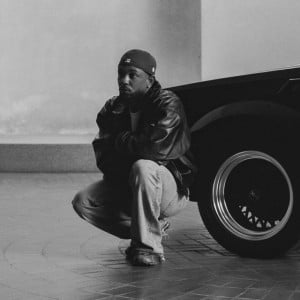
Kendrick Lamar
Kendrick Lamar
One of the most acclaimed artists of his generation, hip-hop or otherwise, Kendrick Lamar is known for his top-tier lyricism, virtuosic microphone command, and sharp conceptual vision. His talents have translated to a rare combination of continuous chart feats and critical acclaim, plus respect and support from the rappers who paved the way for his advancement. The Compton native started in his teens and hit his creative and commercial stride in the 2010s, during which he authored the multi-platinum good kid, m.A.A.d city (2012), followed up with the Grammy-winning To Pimp a Butterfly (2015), and scaled another new height with the Grammy- and Pulitzer Prize-winning DAMN. (2017). All three displayed an unmatched mix of inventive wordplay and riveting narratives with an assertion of artistic dominance, examination of internal conflict, and upliftment of community all centered. Those qualities were also exemplified in seven concurrent Top 40 singles that included "Swimming Pools (Drank)," "i," and the Hot 100-topping "HUMBLE." Lamar's screenplay-level detail on those recordings was enriched by a shifting collective of associates, many of whom -- from inspirations <a href="spotify:artist:6DPYiyq5kWVQS4RGwxzPC7">Dr. Dre</a> and <a href="spotify:artist:4XqfpACObRB5AsBcUYjL8X">MC Eiht</a> to peers such as Sounwave, <a href="spotify:artist:7MNEVabc4cs19CbzAFZmXz">Terrace Martin</a>, and <a href="spotify:artist:4frXpPxQQZwbCu3eTGnZEw">Thundercat</a> -- likewise represent Los Angeles. The rapper's cinematic and collaborative inclinations inevitably attracted the mainstream film industry, leading to an executive-production role on Black Panther: The Album (2018), the source of three additional Top 40 hits. Mr. Morale & the Big Steppers (2022), fueled by intense self-analysis, became Lamar's sixth number one on the Billboard 200 despite containing his most challenging and confrontational work. The lean surprise release GNX (2024) capped a year in which Lamar topped the Hot 100 again with "Like That" (a collaboration with <a href="spotify:artist:1RyvyyTE3xzB2ZywiAwp0i">Future</a> and <a href="spotify:artist:0iEtIxbK0KxaSlF7G42ZOp">Metro Boomin</a>) and the Grammy-sweeping "Not Like Us" (the peak of a public feud with <a href="spotify:artist:3TVXtAsR1Inumwj472S9r4">Drake</a>). Compton, California native Kendrick Lamar Duckworth grew up immersed in hip-hop culture and surrounded by gang activity. As a youngster, he gradually discovered an aptitude for writing stories, poems, and lyrics, which naturally led to rapping. He made a name for himself as K. Dot. At the age of 16 in 2003, he issued his debut mixtape, The Hub City Threat: Minor of the Year. While it merely hinted at the potential of the then-teenager, it was impressive enough to catch the attention of <a href="spotify:search:label%3A%22Top+Dawg+Entertainment%22">Top Dawg Entertainment</a> and led to a long-term association with the label that steadily propelled his career. Training Day, the <a href="spotify:artist:28ExwzUQsvgJooOI0X1mr3">Jay Rock</a> collaboration No Sleep 'til NYC, and C4, issued from 2005 through 2009, likewise preceded Lamar's decision to go by his first and middle names. The last of the three was issued the same year he became part of <a href="spotify:artist:7a9KRWdaSZktpGGnWndzbC">Black Hippy</a>, a group whose members -- including fellow <a href="spotify:search:label%3A%22TDE%22">TDE</a> artists <a href="spotify:artist:0g9vAlRPK9Gt3FKCekk4TW">Ab-Soul</a>, <a href="spotify:artist:28ExwzUQsvgJooOI0X1mr3">Jay Rock</a>, and <a href="spotify:artist:5IcR3N7QB1j6KBL8eImZ8m">ScHoolboy Q</a> -- frequently appeared on one another's mixtapes and albums. The first tape credited to Kendrick Lamar was Overly Dedicated, released in September 2010. Also the rapper's first commercial release, it reached enough listeners to enter Billboard's R&B/Hip-Hop Albums chart. After XXL magazine selected him for the 2011 Freshman Class feature, Lamar released his first official album, Section.80, that July, and crossed into the Billboard 200, reaching number 113. With deeper conceptual narratives and sharpened melodic hooks, as well as comparative multidimensional development from primary producer Sounwave, the set acted as a kind of warning flare for Lamar's mainstream rap dominance. In addition to the dozens of tracks he had appeared on by then, Lamar had the support of veteran West Coast stars as well. During a concert later in 2011, <a href="spotify:artist:6DPYiyq5kWVQS4RGwxzPC7">Dr. Dre</a>, <a href="spotify:artist:7hJcb9fa4alzcOq3EaNPoG">Snoop Dogg</a>, and <a href="spotify:artist:0NbfKEOTQCcwd6o7wSDOHI">Game</a> dubbed him "The New King of the West Coast," a notion <a href="spotify:artist:6DPYiyq5kWVQS4RGwxzPC7">Dre</a> endorsed more significantly by signing Lamar to his <a href="spotify:search:label%3A%22Interscope%22">Interscope</a>-affiliated <a href="spotify:search:label%3A%22Aftermath%22">Aftermath</a> label. Lamar's major-label debut, good kid, m.A.A.d city, was released in October 2012 and entered the Billboard 200 at number two. Three of its singles -- "Swimming Pools (Drank)," "Poetic Justice," and "Bitch Don't Kill My Vibe" -- reached the Top Ten of Billboard's Hot R&B/Hip-Hop chart and went Top 40 pop. More significantly, the album showcased Lamar as an exceptional storyteller capable of making compelling concept albums. It led to Grammy nominations in four categories: Best New Artist, Album of the Year, Best Rap Album, and Best Rap/Sung Collaboration (for "Now or Never," a deluxe edition bonus cut featuring <a href="spotify:artist:1XkoF8ryArs86LZvFOkbyr">Mary J. Blige</a>). <a href="spotify:artist:360IAlyVv4PCEVjgyMZrxK">Miguel</a>'s "How Many Drinks?" and <a href="spotify:artist:13ubrt8QOOCPljQ2FL1Kca">A$AP Rocky</a>'s "Fuckin' Problems," two tracks on which Lamar made guest appearances, were nominated as well. Rather than rest, Lamar remained active during 2013-2014, touring as well as appearing on tracks by the likes of <a href="spotify:artist:5INjqkS1o8h1imAzPqGZBb">Tame Impala</a>, <a href="spotify:artist:0A0FS04o6zMoto8OKPsDwY">YG</a>, and fellow <a href="spotify:search:label%3A%22Top+Dawg%22">Top Dawg</a> affiliate <a href="spotify:artist:7tYKF4w9nC0nq9CsPZTHyP">SZA</a>. The proud single "i" was released in September of the latter year, became Lamar's fourth Top 40 single, and won Grammys for Best Rap Performance and Best Rap Song. Still rolling, he announced in early 2015 that his third album, To Pimp a Butterfly, would be out in March with tracks featuring <a href="spotify:artist:7hJcb9fa4alzcOq3EaNPoG">Snoop Dogg</a>, <a href="spotify:artist:4jCbgl5Dmt3uOh8WRQfpPs">Bilal</a>, <a href="spotify:artist:4frXpPxQQZwbCu3eTGnZEw">Thundercat</a>, and <a href="spotify:artist:2GVBp7QyHckoOg7rYkLvrA">George Clinton</a>. A technical error caused the digital version to be released eight days early, but the LP nonetheless topped the Billboard 200 with sales of 325,000 copies within its first week. It made numerous best-of lists at the end of the year and won the Grammy for Best Rap Album. The defiant and life-affirming "Alright," which was quickly adopted by the Black Lives Matter activist movement, along with another single, "These Walls," took awards for Best Rap Performance, Best Rap Song, and Best Rap/Sung Collaboration. Riding high on his wins and a striking Grammy ceremony performance, Lamar followed up in March 2016 with untitled unmastered., consisting of demos recorded during the previous three years. Like the preceding release, it debuted at number one, and seamlessly synthesized beatmaking and traditional musicianship from the likes of Sounwave, <a href="spotify:artist:7MNEVabc4cs19CbzAFZmXz">Terrace Martin</a>, and <a href="spotify:artist:4frXpPxQQZwbCu3eTGnZEw">Thundercat</a>. Within a month, Lamar added to his ever-lengthening discography of featured appearances with his contribution to <a href="spotify:artist:6vWDO969PvNqNYHIOW5v0m">Beyoncé</a>'s "Freedom." Led by "HUMBLE.," his first number one pop hit, DAMN. arrived in April 2017 and likewise entered the Billboard 200 at the top. Remarkably, all 14 of the album's songs entered the Hot 100, and it was certified multi-platinum within three months. Among the contributors were <a href="spotify:artist:5pKCCKE2ajJHZ9KAiaK11H">Rihanna</a> and <a href="spotify:artist:51Blml2LZPmy7TTiAg47vQ">U2</a>, but at this point, the supporting roles were beneficial more for the guest artists than they were for Lamar, whose artistic clout was unrivaled. He snagged five more Grammys: DAMN. won Best Rap Album; "HUMBLE." took Best Rap Performance, Best Rap Song, and Best Video; and Best Rap/Sung Performance went to "LOYALTY.," the <a href="spotify:artist:5pKCCKE2ajJHZ9KAiaK11H">Rihanna</a> collaboration. Another number one hit followed in February 2018. The soundtrack Black Panther: The Album featured Lamar on every track. Its three singles -- "All the Stars" (with <a href="spotify:artist:7tYKF4w9nC0nq9CsPZTHyP">SZA</a>), "King's Dead" (with <a href="spotify:artist:28ExwzUQsvgJooOI0X1mr3">Jay Rock</a> and <a href="spotify:artist:1RyvyyTE3xzB2ZywiAwp0i">Future</a>), and "Pray for Me" (with <a href="spotify:artist:1Xyo4u8uXC1ZmMpatF05PJ">the Weeknd</a>) -- eventually hit the Top 40. That April, DAMN. won the Pulitzer Prize for Music. It was the first time the judges recognized a work outside the genres of classical and jazz. Months later, "King's Dead" made Lamar a 13-time Grammy winner when it took the award for Best Rap Performance. "All the Stars" alone was nominated in four categories, while Black Panther was up for Album of the Year. The film itself was nominated for the Academy Award for Best Picture. After some time away from music that included an acting role in the fifth season of the Starz network series Power, Lamar resurfaced in August 2021 on cousin <a href="spotify:artist:5SXuuuRpukkTvsLuUknva1">Baby Keem</a>'s "Family Ties." The single, a highlight of The Melodic Blue, <a href="spotify:artist:5SXuuuRpukkTvsLuUknva1">Keem</a>'s album debut for Lamar and Dave Free's new <a href="spotify:search:label%3A%22pgLang%22">pgLang</a> label, won Best Rap Performance at the following Grammys. Lamar then performed at the Super Bowl LVI halftime show alongside hip-hop royalty that included <a href="spotify:artist:6DPYiyq5kWVQS4RGwxzPC7">Dr. Dre</a>, <a href="spotify:artist:7dGJo4pcD2V6oG8kP0tJRR">Eminem</a>, <a href="spotify:artist:7hJcb9fa4alzcOq3EaNPoG">Snoop Dogg</a>, and <a href="spotify:artist:1XkoF8ryArs86LZvFOkbyr">Mary J. Blige</a>. In May 2022, Lamar issued "The Heart, Pt. 5" as a ruminative prelude to his fifth full-length. An emotionally complex and raw double album, Mr. Morale & The Big Steppers landed later that month and went straight to the top of the Billboard 200. In addition to <a href="spotify:artist:5SXuuuRpukkTvsLuUknva1">Keem</a>, the likes of <a href="spotify:artist:2WoVwexZuODvclzULjPQtm">Sampha</a>, <a href="spotify:artist:46SHBwWsqBkxI7EeeBEQG7">Kodak Black</a>, and <a href="spotify:artist:6liAMWkVf5LH7YR9yfFy1Y">Portishead</a>'s <a href="spotify:artist:6Lt6KFXX3P0v6vfrynQAMo">Beth Gibbons</a> made featured appearances. It was named Best Rap Album at the 65th Annual Grammy Awards, where "The Heart, Pt. 5" took the awards for Best Rap Song and Best Rap Performance. Also in 2023, he was featured on <a href="spotify:artist:6vWDO969PvNqNYHIOW5v0m">Beyoncé</a>'s single "America Has a Problem." In 2024, Lamar was part of a well-publicized feud with <a href="spotify:artist:3TVXtAsR1Inumwj472S9r4">Drake</a> and <a href="spotify:artist:6l3HvQ5sa6mXTsMTB19rO5">J. Cole</a>. After <a href="spotify:artist:6l3HvQ5sa6mXTsMTB19rO5">Cole</a> had named the three as the "big three" greatest rappers in modern hip-hop, Lamar asserted that he was the only one during his guest verse on <a href="spotify:artist:1RyvyyTE3xzB2ZywiAwp0i">Future</a> and <a href="spotify:artist:0iEtIxbK0KxaSlF7G42ZOp">Metro Boomin</a>'s song "Like That," which topped the Billboard Hot 100. <a href="spotify:artist:6l3HvQ5sa6mXTsMTB19rO5">Cole</a> then criticized Lamar on his song "7 Minute Drill," which was met with a poor reception; <a href="spotify:artist:6l3HvQ5sa6mXTsMTB19rO5">Cole</a> apologized for the song and removed it from streaming services. In April, <a href="spotify:artist:3TVXtAsR1Inumwj472S9r4">Drake</a> released two diss tracks against Lamar, who responded with the vitriolic "Euphoria" and "6:16 in L.A." After another exchange of diss tracks, Lamar again returned fire with "Not Like Us," a collaboration with <a href="spotify:artist:0YinUQ50QDB7ZxSCLyQ40k">Mustard</a> that broke single-day streaming records, topped the Hot 100, and earned Grammy nominations in five categories. That November, with no advance notice, Lamar released his sixth album, GNX. Sounwave and <a href="spotify:artist:414TS3VqZf1XPCBixdmX9n">Jack Antonoff</a> co-produced each track with variable assistance from the likes of <a href="spotify:artist:6HQYnRM4OzToCYPpVBInuU">Kamasi Washington</a>, <a href="spotify:artist:7MNEVabc4cs19CbzAFZmXz">Terrace Martin</a>, and <a href="spotify:artist:0YinUQ50QDB7ZxSCLyQ40k">Mustard</a>. At the 2025 Grammy Awards, he swept his five nominated categories, taking home Record of the Year and Song of the Year. A week after that ceremony, he headlined the Super Bowl LIX halftime show. ~ Andy Kellman, Rovi
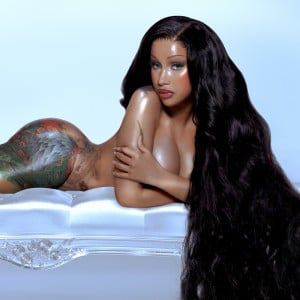
Cardi B
Cardi B
Cardi B’s come-up reads like a 2010s Cinderella story. In just a handful of years, the sharp-tongued New Yorker went from viral Instagram phenom to one of hip-hop’s most exciting voices, establishing herself as a bossed-up feminist icon along the way. Born Belcalis Almanzar in the South Bronx in 1992, Cardi got a job as a stripper at 19, quickly building a social media following—in addition to her devotees at the club—for her viral videos and hilarious catchphrases. In 2015, she scored a spot on VH1’s drama-filled reality show <i>Love & Hip Hop: New York</i>, where her brash personality turned her into an immediate fan favorite among her more established costars. That same over-the-top charisma made Cardi a natural fit for rap dominance; witty, unfiltered, and totally fearless, her early tracks doubled as mantras for self-made women who put themselves first. But it was “Bodak Yellow” that launched Cardi into superstardom; a trap anthem that rang out from cars and clubs throughout 2017, it begging you to shout along. Her 2018 debut album, <i>Invasion of Privacy</i>, fused the Latin music of her childhood with hardcore New York hustlers' anthems, and squashed any doubts as to whether Cardi was here to stay. Meanwhile, her scene-stealing guest verses span the pop charts, from Bruno Mars (“Finesse [Remix]”) to Ozuna (“La Modelo”) to Maroon 5 (“Girls Like You”). Not bad for a self-proclaimed regular girl from The Bronx.
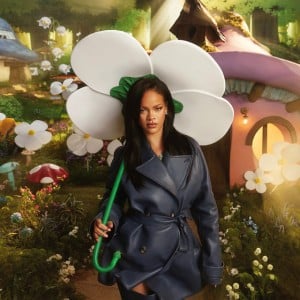
Rihanna
Rihanna
Among the most popular and acclaimed artists in postmillennial contemporary music, Rihanna is also uncommonly dynamic, having mixed and matched pure pop, dancehall, R&B, EDM, and adult contemporary material throughout her career. She went supernova in 2005 with her boisterous debut single, "Pon de Replay," a worldwide hit, and was a near-constant presence in the upper reaches of global pop charts until she took a break from releasing music in the late 2010s. Through 2017, the native Barbadian headlined 11 number one hits, including "Umbrella" and "Only Girl (In the World)," singles that earned her two of her nine Grammy Awards. More than just a singles artist, Rihanna continually pushed ahead stylistically with her LPs, highlighted by the bold Good Girl Gone Bad (2007), the steely Rated R (2009), and the composed Anti (2016), all of which confounded expectations and placed within the Top Ten of the Billboard 200 with eventual multi-platinum certifications. Rihanna studded her secondary discography as a featured artist during this period with major crossover pop hits headlined by the likes of <a href="spotify:artist:3nFkdlSjzX9mRTtwJOzDYB">Jay-Z</a> ("Run This Town"), <a href="spotify:artist:7dGJo4pcD2V6oG8kP0tJRR">Eminem</a> ("Love the Way You Lie"), and <a href="spotify:artist:2YZyLoL8N0Wb9xBt1NhZWg">Kendrick Lamar</a> ("LOYALTY."). She returned to the Top Ten in 2022 with the understated ballad "Lift Me Up," her first solo release in six years, recorded for the soundtrack of Black Panther: Wakanda Forever. Born Robyn Rihanna Fenty in Saint Michael, Barbados, Rihanna exhibited star quality as a child, often winning beauty and talent contests. Because she lived on a fairly remote island in the West Indies, however, she didn't foresee the global stardom she later attained. Her break came courtesy of a fateful meeting with <a href="spotify:artist:0kbIz7wAczMyXXs9tfdDNE">Evan Rogers</a>, writer and producer of pop hits for such big names as <a href="spotify:artist:6Ff53KvcvAj5U7Z1vojB5o">*NSYNC</a>, <a href="spotify:artist:1l7ZsJRRS8wlW3WfJfPfNS">Christina Aguilera</a>, <a href="spotify:artist:2tFN9ubMXEhdAQvdQxcsma">Jessica Simpson</a>, and <a href="spotify:artist:2y8Jo9CKhJvtfeKOsYzRdT">Rod Stewart</a>. The New Yorker was vacationing in Barbados with his wife, an island native, when he was introduced to an aspiring singing group that featured Rihanna. The trio performed for <a href="spotify:artist:0kbIz7wAczMyXXs9tfdDNE">Rogers</a>, who was then eager to work with Rihanna as a solo artist. After the fledgling singer recorded material with <a href="spotify:artist:0kbIz7wAczMyXXs9tfdDNE">Rogers</a> in the U.S. and signed with <a href="spotify:search:label%3A%22SRP%22">SRP</a> (Syndicated Rhythm Productions), operated by <a href="spotify:artist:0kbIz7wAczMyXXs9tfdDNE">Rogers</a> and partner Carl Sturken, she sparked the interest of the Carter Administration -- that is, the newly appointed <a href="spotify:search:label%3A%22Def+Jam%22">Def Jam</a> president <a href="spotify:artist:3nFkdlSjzX9mRTtwJOzDYB">Shawn "Jay-Z" Carter</a>. Following an audition, Rihanna accepted an on-the-spot offer to sign with the major label. Come May 2005, <a href="spotify:search:label%3A%22Def+Jam%22">Def Jam</a> rolled out "Pon de Replay," Rihanna's first single and the lively introduction to the full-length Music of the Sun. Produced almost entirely by <a href="spotify:artist:0kbIz7wAczMyXXs9tfdDNE">Rogers</a> and Sturken, the song synthesized Caribbean rhythms with pop-R&B songwriting. "Pon de Replay" caught fire almost immediately and peaked at number two on the Billboard Hot 100, denied the top spot by <a href="spotify:artist:4iHNK0tOyZPYnBU7nGAgpQ">Mariah Carey</a>'s "We Belong Together." Music of the Sun, released that August, spawned a Top 40 placement with "If It's Lovin' That You Want" and ranged stylistically from a remake of <a href="spotify:artist:6mLXvSt7Xxy2r9uBba1O6Z">Dawn Penn</a>'s rocksteady-styled crossover hit "You Don't Love Me (No, No, No)" (featuring dancehall star <a href="spotify:artist:2NUz5P42WqkxilbI8ocN76">Vybz Kartel</a>) to the <a href="spotify:artist:6vWDO969PvNqNYHIOW5v0m">Beyoncé</a>-like "Let Me" (co-produced by emergent duo <a href="spotify:artist:7KUri7klyLaIFXLcuuOMCd">Stargate</a>). Music of the Sun was only eight months old when Rihanna followed up in April 2006 with A Girl Like Me. It showed that the singer wasn't a fluke success and could also stretch out, laced with three dissimilar hits. "SOS," high-gloss dance-pop with a sample of <a href="spotify:artist:6aq8T2RcspxVOGgMrTzjWc">Soft Cell</a>'s version of "Tainted Love," topped the Hot 100. "Unfaithful," her first big ballad, and "Break It Off," an electro-dancehall hybrid (with <a href="spotify:artist:3Isy6kedDrgPYoTS1dazA9">Sean Paul</a>), became her third and fourth Top Ten pop singles. Superstar status was attained with Good Girl Gone Bad, an album that built on Rihanna's commercial momentum and developed into a blockbuster. Released in May 2007 and "reloaded" with additional material the following June, its lengthy promotional campaign yielded several chart-topping singles and boasted collaborations with A-listers such as <a href="spotify:artist:3nFkdlSjzX9mRTtwJOzDYB">Jay-Z</a>, <a href="spotify:artist:21E3waRsmPlU7jZsS13rcj">Ne-Yo</a>, <a href="spotify:artist:5Y5TRrQiqgUO4S36tzjIRZ">Timbaland</a>, and <a href="spotify:artist:31TPClRtHm23RisEBtV3X7">Justin Timberlake</a>. Lead single "Umbrella," co-written by <a href="spotify:artist:1W3FSF1BLpY3hlVIgvenLz">the-Dream</a> and Christopher "Tricky" Stewart, sounded like nothing else on the airwaves and shot to number one, as did "Take a Bow" and "Disturbia," while "Hate That I Love You" and "Don't Stop the Music" added to the tally of Top Ten entries. "Umbrella" gave Rihanna her first Grammy win for Best Rap/Sung Collaboration. The album was on its way to triple-platinum status by October 2009, when Rihanna set the dark and provocative tone for fourth album Rated R with "Russian Roulette," another <a href="spotify:artist:21E3waRsmPlU7jZsS13rcj">Ne-Yo</a> collaboration and Top Ten single. Abused lover, dominatrix, and murderer were among the perspectives Rihanna offered throughout the album, released that November. Even the additional Top Ten hits "Hard" and "Rude Boy" -- the latter her fifth number one -- were stern in demeanor, making the early hits sound like the work of a significantly more complex artist. While Rated R was riding high, <a href="spotify:artist:3nFkdlSjzX9mRTtwJOzDYB">Jay-Z</a>'s "Run This Town," with Rihanna on the intro and hook, won Grammys for Best Rap Song and Best Rap/Sung Collaboration. Annual studio albums, each one with a November release date and a broad range of light and dark material covering EDM, contemporary R&B, adult contemporary, dancehall, and straight-up pop, continued well into the following decade. In 2010, just after <a href="spotify:artist:7dGJo4pcD2V6oG8kP0tJRR">Eminem</a> featured her on the diamond platinum "Love the Way You Lie," there was Loud. Led by the <a href="spotify:artist:7KUri7klyLaIFXLcuuOMCd">Stargate</a>-produced "Only Girl (In the World)," eventually a Grammy winner for Best Dance Recording, it was sustained with additional Hot 100 toppers "What's My Name?" (featuring <a href="spotify:artist:3TVXtAsR1Inumwj472S9r4">Drake</a>) and "S&M." Talk That Talk was heralded in 2011 with Rihanna's most triumphant single, "We Found Love," on which she collaborated with <a href="spotify:artist:7CajNmpbOovFoOoasH2HaY">Calvin Harris</a>. After she nabbed yet another Best Rap/Sung Collaboration Grammy, this time for her role on <a href="spotify:artist:5K4W6rqBFWDnAN6FQUkS6x">Kanye West</a>'s "All of the Lights," the streak concluded, and culminated, with the 2012 set Unapologetic. Her first LP to top the Billboard 200 (after all of the previous six had gone Top Ten), it also became her first to win a Grammy for Best Urban Contemporary Album. "Diamonds," the anthemic and inspirational standout among some of Rihanna's brashest moments, became her tenth number one pop hit and 18th to peak within the Top Ten. Within a span of three years, Rihanna had released her fourth through seventh albums. An equal amount of time passed prior to the release of her eighth full-length. In 2013, she lengthened her list of chart accolades as a featured artist with an assist on <a href="spotify:artist:7dGJo4pcD2V6oG8kP0tJRR">Eminem</a>'s "The Monster," which became her 25th Top Ten hit as a lead or featured artist, went to number one, and led to her fourth Best Rap/Sung Collaboration Grammy. No longer with <a href="spotify:search:label%3A%22Def+Jam%22">Def Jam</a> -- a deal had been signed with <a href="spotify:search:label%3A%22Roc+Nation%22">Roc Nation</a> via <a href="spotify:artist:3nFkdlSjzX9mRTtwJOzDYB">Jay-Z</a>, who left <a href="spotify:search:label%3A%22Def+Jam%22">Def Jam</a> several years earlier -- Rihanna released non-album singles throughout 2015, beginning with the unembellished "FourFiveSeconds," an unlikely matchup with <a href="spotify:artist:4STHEaNw4mPZ2tzheohgXB">Paul McCartney</a> and <a href="spotify:artist:5K4W6rqBFWDnAN6FQUkS6x">Kanye West</a> that reached number four. "American Oxygen" didn't flourish as much from a commercial standpoint but upon release became one of her most remarkable recordings, a dignified ballad with a personal, pro-immigration theme. Album eight, the strikingly composed Anti, became Rihanna's second consecutive number one album following its January 2016 arrival. She partnered again with <a href="spotify:artist:3TVXtAsR1Inumwj472S9r4">Drake</a>, resulting in another number one hit with "Work." "Needed Me," a buzzing slow jam cooked up with a production team including <a href="spotify:artist:0YinUQ50QDB7ZxSCLyQ40k">DJ Mustard</a> and <a href="spotify:artist:6cKkRS7JwVT2K3rCCnOHyk">Kuk Harrell</a>, and "Love on the Brain," a throwback soul belter involving <a href="spotify:artist:6cKkRS7JwVT2K3rCCnOHyk">Harrell</a> and Fred Ball, entered the Top Ten as well. Those who missed the comparative lack of high-spirited exuberance in Anti were placated across 2016 and 2017 with Rihanna's guest appearances on <a href="spotify:artist:7CajNmpbOovFoOoasH2HaY">Calvin Harris</a>' "This Is What You Came For" and <a href="spotify:artist:5wPoxI5si3eJsYYwyXV4Wi">N.E.R.D.</a>'s "Lemon." Meanwhile, <a href="spotify:artist:3TVXtAsR1Inumwj472S9r4">Drake</a>, <a href="spotify:artist:1RyvyyTE3xzB2ZywiAwp0i">Future</a>, <a href="spotify:artist:0QHgL1lAIqAw0HtD7YldmP">DJ Khaled</a>, and <a href="spotify:artist:2YZyLoL8N0Wb9xBt1NhZWg">Kendrick Lamar</a> likewise profited from Rihanna's featured spots. <a href="spotify:artist:2YZyLoL8N0Wb9xBt1NhZWg">Lamar</a>'s "LOYALTY." made Rihanna a five-time winner of the Grammy for Best Rap/Sung Collaboration, setting a record for women artists in that category. Apart from a featured appearance on <a href="spotify:artist:2HPaUgqeutzr3jx5a9WyDV">PartyNextDoor</a>'s 2020 single "Believe It," Rihanna wasn't behind any new music for several years, as she focused her efforts on her Fenty cosmetics and fashion empire and started a family. She returned in October 2022 with "Lift Me Up" from the soundtrack of Ryan Coogler's Black Panther: Wakanda Forever. The ballad, written by Rihanna with producer <a href="spotify:artist:24eDfi2MSYo3A87hCcgpIL">Ludwig Göransson</a>, <a href="spotify:artist:687cZJR45JO7jhk1LHIbgq">Tems</a>, and Coogler, entered the Hot 100 at number two. ~ Andy Kellman & Jason Birchmeier, Rovi
Lady Gaga
Lady Gaga
Academy Award and 14-time GRAMMY-winner Lady Gaga is a one-of-a-kind artist and performer. She has amassed an outstanding 110 million global album sales, 175 billion streams, and 758 million song consumption units, making her one of the best-selling musicians of all time. Her most recent pop album, Chromatica, became her sixth consecutive #1 on the Billboard 200 chart, making her the first female artist to achieve this over a ten-year period (2011-2020). Gaga's collaboration with Ariana Grande on “Rain On Me” had the biggest Spotify debut of 2020, reaching #1 on the Global and US Spotify Charts. In 2023, her debut single “Just Dance” became her third diamond-certified single by the RIAA, joining "Bad Romance" and "Poker Face." In 2018, she won an Academy Award for Best Original Song for “Shallow,” featured on the soundtrack of Best Picture nominee A Star is Born (2018), in addition to claiming a Golden Globe, a Critics’ Choice Award, and four GRAMMYs for both “Shallow” and “I’ll Never Love Again,” also from the same soundtrack. Lady Gaga knows no bounds, from producing her classic pop hits to exploring the classic American Songbook with her albums Cheek to Cheek and Love For Sale with Tony Bennett, both #1 albums. Beyond music, she excels in business as the founder of Haus Labs and thrives as an actress (A Star Is Born, House of Gucci, Joker: Folie à Deux), as well as a passionate activist for mental health and LGBTQ+ rights through her Born This Way Foundation.
Ariana Grande
Ariana Grande
Armed with a mesmerizing, nimble soprano—and a vocal register often likened to Mariah Carey’s and Christina Aguilera’s—Ariana Grande began her career as a child star on Broadway and Nickelodeon before transforming into a pop and R&B powerhouse. Instantly recognizable thanks to her signature ponytail, cat ears, babydoll dresses, and breezy self-confidence, her slyly sexual personal brand has, like that of the Spice Girls before her, become an iconic image of young female power. But Grande is more than a symbol: Over the course of several albums and scores of hit singles—beginning with 2013’s “The Way” (featuring Mac Miler) through The Weeknd-assisted “Love Me Harder” and “Break Free” (featuring Zedd)—she has consistently outshined her male collaborators and deftly parlayed her stardom into activism. An LGBTQ advocate and outspoken feminist (“I’m tired of living in a world where women are mostly referred to as a man’s past, present, or future PROPERTY,” she tweeted in 2016), she uses her platform to confront issues like misogyny, sexism, homophobia, and bullying, spreading a message of love over all. Nowhere was this more clear than in May 2017: After terrorists attacked her concert in Manchester, England, killing 22 and injuring hundreds, Grande continued her tour. "Perspective changes your life,” she told Beats 1’s Ebro Darden. "You want to stay in the moment and try not to give into fear, because obviously the whole point of finishing the tour was being there for my fans. You want to set the same example and keep going.” And that she did: Her Max Martin-produced smash “No Tears Left to Cry,” an escapist dance-floor triumph released a year after the attack, sends a message of hope and healing, with a dose of hear-me-roar attitude.
SZA
SZA
SZA (Solána Imani Rowe) is a global icon reshaping the landscape of modern music. SZA has become a defining artist of her generation; born in St. Louis and raised in New Jersey. She first captured the world’s attention with her groundbreaking debut album Ctrl (2017), in which she earned acclaim for blending vulnerability with genre-blurring melodies. In 2022, her chart-topping sophomore album SOS pushed boundaries, and its deluxe edition, SOS Deluxe: LANA (2024), solidified her place among music’s greats with 15 new tracks showcasing her evolution. From Grammy wins to sold-out tours and iconic collaborations with Kendrick Lamar, Doja Cat, and Travis Scott, SZA continues to inspire and connect deeply with fans worldwide through her music about love, self-discovery, and empowerment.
Doja Cat
Doja Cat
Los Angeles' Doja Cat rose from viral novelty track buzz to mainstream superstar with her smooth, hypnotic, R&B-flecked pop songs of sexuality, friendship, and personal power. She gained some significant attention with her early releases, but it was her 2019 sophomore effort, Hot Pink, that took her to the top of the Hot 100. Subsequent charting singles and collaborations with <a href="spotify:artist:7tYKF4w9nC0nq9CsPZTHyP">SZA</a> and <a href="spotify:artist:6cK3NBO6uP7hh0oyuVELFl">Saweetie</a> further solidified her star power, and made the arrival of her 2021 album Planet Her all the more hotly anticipated. A number two Billboard 200 hit, Planet Her also earned several Grammy nominations. Singles followed, including her savvy 2022 cover of <a href="spotify:artist:5SHQUMAmEK5KmuSb0aDvsn">Hole</a>'s "Celebrity Skin," 2022's "Vegas" off the Elvis soundtrack, and 2023's trip-hop-inflected "Attention," all of which spotlighted Doja's adventurous, genre-crossing sensibilities. The latter track and "Paint the Town Red" appeared on her fourth album, 2023's Scarlet, which found her digging deep into her rap and hip-hop roots and became her third consecutive album to hit the Top Ten of the Billboard 200. Doja Cat was born Amala Zandile Dlamini in 1995 in Tarzana, California, the daughter of South African actor Dumisani Dlamini and painter Deborah Elizabeth Sawyer. After moving to New York for a few years, she returned to California with her mother. As a child, she studied piano and took tap, ballet, and jazz dance lessons. She also discovered surfing and breakdancing. By her teens, she was teaching herself to sing and listening to an eclectic mix of hip-hop, indie rock, R&B, and electronic music. Doja also began recording songs on her computer and in 2014 released her debut EP, Purrr! She quickly found herself with a viral hit with the track "So High." More singles followed, including the languid "Nunchucks" and "No Police," each one grabbing attention online. Another single, "Mooo!," arrived in 2018 and quickly went viral. On the heels of that success, Doja Cat issued her full-length debut album, Amala, which found her expanding upon her dreamy, meme-friendly sound with more hip-hop-, pop-, and R&B-infused tracks, including "Candy" and "Roll with Us." In 2019, she issued an expanded version of Amala that added the singles "Juicy" and "Tia Tamara," featuring <a href="spotify:artist:2OaHYHb2XcFPvqL3VsyPzU">Rico Nasty</a>. Her sophomore album, Hot Pink, was quick to follow; with features from <a href="spotify:artist:1ybINI1qPiFbwDXamRtwxD">Smino</a>, <a href="spotify:artist:13y7CgLHjMVRMDqxdx0Xdo">Gucci Mane</a>, and <a href="spotify:artist:5LHRHt1k9lMyONurDHEdrp">Tyga</a>, the 2019 LP leaned more into the sexually wry aspects of her ever-shifting persona. A Top Ten hit on the Billboard 200, the album's fifth single, "Say So," pushed her even further up the charts. After making a steady rise in the Hot 100 at the start of 2020, the multi-platinum track finally hit number one in May, boosted by a <a href="spotify:artist:0hCNtLu0JehylgoiP8L4Gh">Nicki Minaj</a> remix. After picking up a couple of American Music Awards, Doja carried the momentum from her breakout year into 2021. She began appearing alongside established celebrities more frequently, adding a guest feature to <a href="spotify:artist:6cK3NBO6uP7hh0oyuVELFl">Saweetie</a>'s single "Best Friend," contributing to an <a href="spotify:artist:66CXWjxzNUsdJxJ2JdwvnR">Ariana Grande</a> remix with <a href="spotify:artist:181bsRPaVXVlUKXrxwZfHK">Megan Thee Stallion</a>, and releasing the <a href="spotify:artist:7tYKF4w9nC0nq9CsPZTHyP">SZA</a>-assisted single "Kiss Me More." All of this led up to the June 2021 release of her third full-length studio album, Planet Her. It featured guest spots from <a href="spotify:artist:50co4Is1HCEo8bhOyUWKpn">Young Thug</a>, <a href="spotify:artist:1Xyo4u8uXC1ZmMpatF05PJ">the Weeknd</a>, <a href="spotify:artist:6U3ybJ9UHNKEdsH7ktGBZ7">JID</a>, and others, and its cover art was shot by photographer David LaChapelle. The album, which reached number two on the Billboard 200 and topped the R&B albums chart, also garnered Grammy nominations for Album of the Year and Best Pop Vocal Album. In February 2022, Doja hit number 18 on the Hot Rock & Alternative Songs chart with a cover of <a href="spotify:artist:5SHQUMAmEK5KmuSb0aDvsn">Hole</a>'s "Celebrity Skin," which featured lyrics reworked by her and <a href="spotify:artist:4vI0xGbQl2cMnMiagUEBOj">Courtney Love</a>. That same year, she reached the Top Ten of the Hot 100 with "Vegas," her contribution to the soundtrack to director <a href="spotify:artist:7HhTERkBV4Ot14KphgBfSh">Baz Luhrmann</a>'s Elvis biopic. In June 2023, she debuted the '90s trip-hop-inspired "Attention" as the first track released off her fourth studio album, Scarlet. Another song, "Paint the Town Red," followed that August as the official first single. Arriving that September, the album found Doja balancing her pop-R&B style with tracks that embraced her rap and hip-hop roots. It featured production by a handful of artists, including <a href="spotify:artist:7CMiGl0n1pZ9D3PXg6uww7">Earl on the Beat</a>, <a href="spotify:artist:2WQGobWliVRQ38PSa42BSy">D.A. Got That Dope</a>, and <a href="spotify:artist:18EIYewhtDyX8JII7u6LM2">Y2K</a>, among others. A Top Five album on both the Billboard 200 and Rap Albums charts, Scarlet also earned several Grammy nominations, including Best Pop Solo Performance for "Paint the Town Red" and Best Rap Song for "Attention." ~ Matt Collar
Bandas
Evanescence
Evanescence
Evanescence will release the 20th anniversary edition of their multi-platinum debut album Fallen on November 17th. The anniversary will see remastered tracks from the original album, previously unheard demos, and alternate versions of some of their most iconic songs. In Amy’s words, “20 years later, this album has never meant more. Fallen has been the soundtrack to first loves, epic heartbreak, self-realization, wedding days, last goodbyes, friendships, and countless other moments in so many lives…not to mention my own. I am forever humbled and grateful to be a part of it.”
Slipknot
Slipknot
There was never a band like SLIPKNOT, and there will never be another. Like a spore out of the Midwest, they’ve quietly bloomed into the most uncompromising, undeniable, and unique presence on the planet whose influence transcends genres and generations. Since sowing the seeds for revolution in Iowa during 1999, these musical outliers have captured a GRAMMY Award alongside 10 nominations, scored 12 Platinum / 41 Gold album certifications around the world, and logged over 8.5 billion global streams and 3.5 billion video views to date - unprecedented for a rock act in this generation or any other. Rolling Stone cited the seminal platinum-selling 2001 album Iowa among “The 100 Greatest Metal Albums of All Time,” while The Ringer attested, “They’re the most important heavy band of their era.” In addition to marking the group’s third consecutive #1 debut on the Billboard Top 200, their sixth full-length album, WE ARE NOT YOUR KIND, bowed at #1 in twelve countries worldwide in 2019. Selling out shows on multiple continents, they deliver an irreplicable multi-sensory experience on tour and through their own festival KNOTFEST. With their seventh album THE END, SO FAR, SLIPKNOT are back, and nothing will be the same again.

Rammstein
Rammstein
Rammstein are one of rock’s most individual and successful names, a multiple award-winning outfit with a vision that continues to evolve. Since forming in 1994, the six East Berliners have headlined the world’s major festivals and stadiums, selling millions of albums, and topping charts worldwide. For the Rammstein kollektiv, and it’s the same line-up now as at the start, it’s always been a case of marching to their own beat; they sing in German, side-step those visuals typical of the metal world, and present an incendiary live experience that touches all of the senses – an experience underpinned by cultural and artistic weight. To date, there are seven studio albums under the Rammstein banner, the most recent being 2019’s untitled release – a body of work that headed the charts in 14 countries and went Top 10 in the US, breaking new ground. Produced by the band with Olsen Involtini, this 11-tracker (double platinum in Germany) was preceded by lead single ‘Deutschland’, a domestic No. 1 supported by a nine-minute movie – an epic, unflinching look at German history directed by Specter Berlin. Not only was this album a decade in the making, it also saw the musicians taking their legendary live show into Stadiums, selling 800,000 tickets immediately and eventually playing to over 1.2 million fans across 17 countries. The next leg of the European Stadium Tour takes place in spring / summer 2021, with most venues sold out. Dante Bonutto, 2020
Iron Maiden
Iron Maiden
Iron Maiden are an institution. Over 50 years they’ve come to embody a spirit of fearless creative independence, spectacular live shows, ferocious dedication to their fans, and a cheerful indifference to their critics that’s won them a colossal worldwide following. Their epic discography includes the studio albums ‘Iron Maiden, ‘Killers’, ‘The Number Of The Beast’, ‘Piece Of Mind’, ‘Powerslave, ‘Somewhere In Time’, and ‘Seventh Son Of A Seventh Son’ right up to their 17th outing – ‘Senjutsu.’ That celebrated catalogue has inspired many classic such as ‘The Trooper’, ‘Wasted Years’, ‘Hallowed Be Thy Name’, ‘The Number Of The Beast’, ‘Wasting Love’, ‘Run To The Hills’, ‘Aces High’, ‘Rime Of The Ancient Mariner’ and ‘2 Minutes to Midnight’. 2024 sees the conclusion of their The Future Past world tour ahead of their newly announced Run For Your Lives tour in 2025/26, celebrating the group’s 50th anniversary. It will include some of the largest venues the band has ever played.
Metallica
Metallica
Metallica formed in 1981 by drummer Lars Ulrich and guitarist and vocalist James Hetfield and has become one of the most influential and commercially successful rock bands in history, having sold 120 million albums worldwide and generating more than 15 billion streams while playing to millions of fans on literally all seven continents. They have scored several multi-platinum albums, including 1991’s Metallica (commonly referred to as The Black Album), with sales of nearly 18 million copies in the United States alone, making it the best-selling album in the history of Soundscan. Metallica has also garnered numerous awards and accolades, including nine Grammy Awards, two American Music Awards, and multiple MTV Video Music Awards, and were inducted into the Rock and Roll Hall of Fame and Museum in 2009. In December 2013, Metallica made history when they performed a rare concert in Antarctica, becoming the first act to ever play all seven continents all within a year, and earning themselves a spot in the Guinness Book of World Records. Metallica’s twelfth studio album <a href="spotify:album:70uejEPPRPSLBrTRdfghP5" data-name="72 Seasons">72 Seasons</a> was released on April 14, 2023 on Metallica’s own Blackened Recordings record label, and the band is currently on the M72 Tour—a 2-year, continent spanning tour with two nights in each market and no repeat sets.
AC/DC
AC/DC
With a limitless supply of dirty riffs, snarling vocals, and timelessly catchy, anthemic choruses, AC/DC is one of the most important and most lasting forces in hard rock. Founded in the early '70s by Scottish-born brothers <a href="spotify:artist:635QWlHZJK2tyDEadZc6TF">Malcolm</a> and <a href="spotify:artist:6pGWDT5CTFv5uhYFPGhjmy">Angus Young</a>, the Aussie band exploded onto the international stage in 1979 with the release of their multi-platinum-selling sixth album, Highway to Hell. The death of charismatic frontman <a href="spotify:artist:62OSqVRTfWPbv9EovmbH4l">Bon Scott</a> in 1980 threatened to derail the group, but AC/DC powered through. They recruited <a href="spotify:artist:0IzJYdxaNLwrC7diSCu0iY">Geordie</a> vocalist <a href="spotify:artist:0TJOVQKoS7sbGVn8RkkvPI">Brian Johnson</a> and unleashed their most successful effort to date, Back in Black, which has become the second best-selling album in history. The band continued to help define the sound of hard rock and metal throughout the '80s, '90s, and beyond, spawning countless imitators and enjoying steady, consistent commercial success. They also became one of the best examples of arena rock, playing to enormous crowds as the years went on, and rocking as hard as ever on studio albums like 1990's pop-glinted The Razor's Edge and 2020's Power Up, both of which reached the upper tiers of multiple charts. AC/DC were formed in 1973 in Australia by guitarist <a href="spotify:artist:635QWlHZJK2tyDEadZc6TF">Malcolm Young</a> after his previous band, the Velvet Underground, collapsed (no relation to the seminal American group). With his younger brother Angus serving as lead guitarist, the band played some gigs around Sydney. Angus was only 18 at the time, and his sister suggested that he wear his school uniform on-stage; the look became the band's visual trademark. While still in Sydney, the original lineup featuring singer Dave Evans cut a single called "Can I Sit Next to You," with ex-<a href="spotify:artist:1pJEZXU2hJApJW3rM7LmMu">Easybeats</a> Harry Vanda and George Young (<a href="spotify:artist:635QWlHZJK2tyDEadZc6TF">Malcolm</a> and Angus' older brother) producing. The band moved to Melbourne the following year, where drummer <a href="spotify:artist:5XcpgxdFA6sz6lvUvzmygg">Phil Rudd</a> (formerly of <a href="spotify:artist:6MtPZrbhMjrrvDqlgPVBPU">the Coloured Balls</a>) and bassist Mark Evans joined the lineup. The band's chauffeur, <a href="spotify:artist:62OSqVRTfWPbv9EovmbH4l">Bon Scott</a>, became the lead vocalist when singer Dave Evans refused to go on-stage. Previously, <a href="spotify:artist:62OSqVRTfWPbv9EovmbH4l">Scott</a> had been vocalist for the Australian prog rock bands <a href="spotify:artist:5ni5xInnnn7IRxv2rjM91W">Fraternity</a> and <a href="spotify:artist:6gO9O0Iss2ipZuskVnmA9a">the Valentines</a>. More importantly, he helped cement the group's image as brutes -- he had several convictions for minor criminal offenses and was rejected by the Australian Army for being "socially maladjusted." AC/DC were socially maladjusted. Throughout their career they favored crude double entendres and violent imagery, all spiked with a mischievous sense of fun. The group released two albums -- High Voltage and T.N.T. -- in Australia in 1974 and 1975. Material from the two records comprised the 1976 release High Voltage in the U.S. and U.K.; the group also toured both countries. Dirty Deeds Done Dirt Cheap followed at the end of the year. In the fall of 1977, AC/DC released Let There Be Rock, which became their first album to chart in the U.S. Mark Evans left the band soon after, with <a href="spotify:artist:6DdTBSwbXwaEFZxDBXFhoO">Cliff Williams</a> taking his place. Powerage, released in spring of 1978, expanded their audience even further, thanks in no small part to their dynamic live shows (which were captured on 1978's live If You Want Blood You've Got It). What really broke the doors down for the band was the following year's Highway to Hell, which hit number 17 in the U.S. and number eight in the U.K., becoming the group's first million-seller. AC/DC's train was derailed when <a href="spotify:artist:62OSqVRTfWPbv9EovmbH4l">Bon Scott</a> died on February 19, 1980. The official coroner's report stated he had "drunk himself to death." In March, the band replaced <a href="spotify:artist:62OSqVRTfWPbv9EovmbH4l">Scott</a> with <a href="spotify:artist:0TJOVQKoS7sbGVn8RkkvPI">Brian Johnson</a>. The following month, they recorded Back in Black, which would prove to be their biggest album, selling over ten million copies in the U.S. alone. For the next few years, they were one of the largest rock bands in the world, with For Those About to Rock We Salute You topping the charts in the U.S. In 1983, <a href="spotify:artist:5XcpgxdFA6sz6lvUvzmygg">Rudd</a> left after the recording of Flick of the Switch; he was replaced by Simon Wright. With Flick of the Switch, AC/DC's commercial standing began to slip, and they weren't able to reverse their slide until 1990's The Razor's Edge, which spawned the hit "Thunderstruck." While not the commercial powerhouse they were during the late '70s and early '80s, the '90s saw AC/DC maintain their status as a top international concert draw. In the fall of 1995, their 16th album, Ballbreaker, was released. Produced by <a href="spotify:artist:1EpmQFTiJbcxzwbLpuUL8L">Rick Rubin</a>, the album received some of the most positive reviews of AC/DC's career; it also entered the American charts at number four and sold over a million copies in its first six months of release. Stiff Upper Lip followed in early 2000 with similar results. AC/DC signed a multi-album deal with <a href="spotify:search:label%3A%22Sony%22">Sony</a> in 2001 that resulted in a slew of reissues and DVDs, and they returned to the studio in 2008 for Black Ice, an all-new collection of songs that topped charts in numerous countries (including Australia, the U.S., and the U.K.) and was followed by the group's first world tour since 2001. Two years later, the band's music was featured heavily in the action movie Iron Man 2, and a compilation was released in conjunction with the film under the title Iron Man 2. As AC/DC began work on a new album with producer <a href="spotify:artist:0BG5aq4J5LuJV8kQcGJ336">Brendan O'Brien</a> in 2014, they announced that <a href="spotify:artist:635QWlHZJK2tyDEadZc6TF">Malcolm Young</a> was suffering from dementia and had left the band; his nephew <a href="spotify:artist:6IGnhji6bgknxTTpyGzK1v">Stevie Young</a> took his place at recording sessions and the accompanying 40th anniversary tour, and subsequently joined the group full-time. Just prior to the December release of Rock or Bust, drummer <a href="spotify:artist:5XcpgxdFA6sz6lvUvzmygg">Phil Rudd</a> was arrested under charges of attempting to procure a murder, threatening to kill, and possession of cannabis and methamphetamine. Although the arranged murder charges were dropped, the others remained and the drummer's future with the band was uncertain. Nevertheless, AC/DC marched forward with the release of Rock or Bust and plans for a tour in 2015. In 2017, <a href="spotify:artist:635QWlHZJK2tyDEadZc6TF">Malcolm Young</a> died in November at the age of 64. Following a two-year hiatus, the band reunited with producer <a href="spotify:artist:0BG5aq4J5LuJV8kQcGJ336">Brendan O'Brien</a> for their 17th studio album, Power Up, which became their third consecutive number one album in Australia and their third chart-topper in the U.S. ~ Stephen Thomas Erlewine, Rovi