𝐿𝑎𝑢'𝑠 𝑚𝑢𝑠𝑖𝑐
Items in this hypelist
Favorites
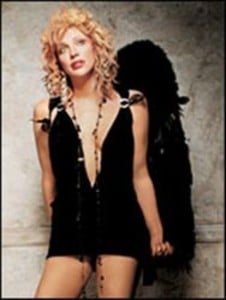
Courtney Love
Courtney Love
Love her or loathe her, the opinionated, brutally straightforward, and seemingly always controversial Courtney Love is one of the most notable figures in alternative rock. Born on July 9, 1964 in San Francisco, CA, Love was raised in Oregon. As a teen, Love began listening to new wave and punk, musical styles that would influence her band <a href="spotify:artist:5SHQUMAmEK5KmuSb0aDvsn">Hole</a>. After traveling to countries like Ireland, Japan, and England, Love moved to Los Angeles, CA. In 1986, Love appeared as Nancy Spungen's best friend in Sid and Nancy, director Alex Cox's film about <a href="spotify:artist:1u7kkVrr14iBvrpYnZILJR">Sex Pistols</a> bassist <a href="spotify:artist:1YnxVTLZQkk6KJI2c5sBqU">Sid Vicious</a> and his lover Spungen. Love was also cast in Cox's Straight to Hell. Neither picture brought Love the stardom that she craved. Love then relocated to Minneapolis, MN, and formed the all-female post-punk group <a href="spotify:artist:3Xdna5z74yNICNKqdaNX9z">Babes in Toyland</a> with Kat Bjelland. Bjelland eventually tossed her out of the band. After working as a stripper in Alaska, Love returned to Los Angeles and started <a href="spotify:artist:5SHQUMAmEK5KmuSb0aDvsn">Hole</a> in 1989 with Eric Erlandson (guitar), Jill Emery (bass), and Caroline Rue (drums). <a href="spotify:artist:5SHQUMAmEK5KmuSb0aDvsn">Hole</a> released their debut album, Pretty on the Inside, in 1991. A year later, Love married <a href="spotify:artist:6olE6TJLqED3rqDCT0FyPh">Nirvana</a> frontman <a href="spotify:artist:6pAuTi6FXi6qFQJ1dzMXQs">Kurt Cobain</a>. Rumors of drug use between the two began surfacing in the press, and a Vanity Press article revealed that Love was using heroin while she was pregnant with their daughter, Frances Bean Cobain. In April 1994, <a href="spotify:artist:6pAuTi6FXi6qFQJ1dzMXQs">Kurt Cobain</a> committed suicide; two months later, new <a href="spotify:artist:5SHQUMAmEK5KmuSb0aDvsn">Hole</a> bassist Kristen M. Pfaff died from a heroin overdose. Although it was recorded before those personal tragedies, <a href="spotify:artist:5SHQUMAmEK5KmuSb0aDvsn">Hole</a>'s second album, the ironically titled Live Through This, captured the searing pain and violent anger of somebody undergoing a tragic loss. Rumors persisted that <a href="spotify:artist:6pAuTi6FXi6qFQJ1dzMXQs">Cobain</a> co-wrote a large portion of the album, a claim that Love vehemently denied despite claims to the contrary by many of <a href="spotify:artist:6pAuTi6FXi6qFQJ1dzMXQs">Cobain</a>'s closest friends. No concrete evidence was ever released to back those claims, and she maintained a semi-professional relationship with his former bandmates by forming a partnership with them called <a href="spotify:artist:6olE6TJLqED3rqDCT0FyPh">Nirvana</a> L.L.C. The organization would control all <a href="spotify:artist:6olE6TJLqED3rqDCT0FyPh">Nirvana</a>-related releases and try to protect the interests of the three parties, but strife between Love and the rest of the band developed through nasty press comments made by both sides. Meanwhile, <a href="spotify:artist:5SHQUMAmEK5KmuSb0aDvsn">Hole</a> released Celebrity Skin in 1998, but the album came nowhere near the popularity of her previous effort. Despite the band's best promotional efforts (which Courtney dove headfirst into, as always), sales were discouraging enough for bandmembers to start dropping off, essentially dissolving the group while her acting career was taking off. In 1999, Love was nominated for a Golden Globe for her performance in the movie The People vs. Larry Flynt. She would stay relatively quiet for a few years, making a few film appearances and bragging up various projects with <a href="spotify:artist:3u1RBHEOlOkV5E3mihCQ4z">Louise Post</a> and Kat Bjelland that never surfaced. But when former <a href="spotify:artist:6olE6TJLqED3rqDCT0FyPh">Nirvana</a> members <a href="spotify:artist:4BZKfXia2RPZnzCgQ2fG8M">Krist Novoselic</a> and <a href="spotify:artist:7mRVAzlt1fAAR9Cut6Rq8c">Dave Grohl</a> announced a 45-song <a href="spotify:artist:6olE6TJLqED3rqDCT0FyPh">Nirvana</a> retrospective that would include two never released tracks, Love immediately brought them to court in an attempt to wrestle away the rights to the material. Manager/boyfriend Paul Barber tried to become the peacekeeper in the situation, even showing up at the studio for the mixdown of one of the unreleased songs. But Love moved to dissolve <a href="spotify:artist:6olE6TJLqED3rqDCT0FyPh">Nirvana</a> L.L.C. and managed to stop the release of the album until the matter could be brought to court. The box set was aborted and the three individuals began to hype the upcoming court hearings like a boxing match, inviting the press out and making sharp barbs at one another in interviews. She announced her intentions to spearhead a <a href="spotify:artist:6olE6TJLqED3rqDCT0FyPh">Nirvana</a> "greatest-hits" album à la <a href="spotify:artist:3WrFJ7ztbogyGnTHbHJFl2">the Beatles</a>' 1, and claimed that she had hundreds of home tapes to go through and a journal that she planned on publishing. Love also began to speak out on musicians' rights, suing her record company and bringing to light unfair business practices on the part of the industry. She began making her interviews and speeches platforms for her newfound cause, and created quite a stir at the South by Southwest Music Conference in the spring of 2002 when she directly announced her intentions of starting a music industry revolution. All that was forthcoming, however (beside more eccentric publicity), was a solo album, 2004's America's Sweetheart, released on <a href="spotify:search:label%3A%22Virgin%22">Virgin</a>. The following year she began working on new songs, despite battling an alleged eating disorder and a stay in rehab after violating her probation by using drugs. Working with artists including producer <a href="spotify:artist:5tfiJ40SRxluWNgA6ruvSo">Linda Perry</a>, <a href="spotify:artist:12B5JK11NOP7OQ9Fxjrpx2">Billy Corgan</a>, and guitarist Micko Larkin, formerly of <a href="spotify:artist:1MgvsJla47xsnYySv4nJU5">Larrikin Love</a>, the album Nobody's Daughter began to take shape over 2006 and 2007. In mid-2009, Love announced that Nobody's Daughter would in fact be a <a href="spotify:artist:5SHQUMAmEK5KmuSb0aDvsn">Hole</a> album. She began promoting the album in earnest in early 2010, performing shows in Europe and the U.S. -- including gigs at SXSW and on The Late Show with David Letterman -- before its release. ~ Michael Sutton & Bradley Torreano, Rovi
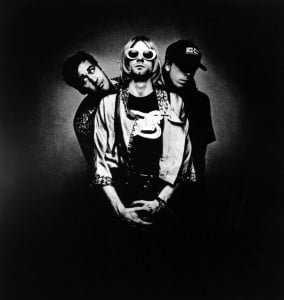
Nirvana
Nirvana
Nothing was ever quite the same after Nirvana. The band's second album, 1991's Nevermind, revolutionized popular music by bringing alternative rock above ground, introducing mainstream audiences to sounds and concepts that had previously existed only in shadowy record store corners and on low-frequency college radio airwaves. Nevermind's noisy, dissonant guitar rock, mumbled or howled surrealistic lyrics, and generally angsty punk attitudes were unlikely candidates for chart success, but the band undercut their grungy songs with enough pop melodicism to create a sound unlike anything average listeners had ever heard before, striking at the exact right moment to become an unprecedented success. Since Nirvana were rooted in an indie aesthetic but loved pop music, they fought their stardom while courting it, becoming some of the most notorious anti-rock stars in history. They consciously attempted to shed their audience with 1993's abrasive, <a href="spotify:artist:52ZFTGbQ9miWMX8JYBvtOO">Steve Albini</a>-produced third album In Utero, but vocalist/guitarist/songwriter <a href="spotify:artist:6pAuTi6FXi6qFQJ1dzMXQs">Kurt Cobain</a>'s growing mental health and substance abuse issues led to his death by suicide in 1994. Though Nirvana's story was cut tragically short, their legacy stands as one of the most influential in rock & roll history. <a href="spotify:artist:6pAuTi6FXi6qFQJ1dzMXQs">Kurt Cobain</a> (vocals, guitar) met <a href="spotify:artist:4BZKfXia2RPZnzCgQ2fG8M">Chris Novoselic</a> (born <a href="spotify:artist:4BZKfXia2RPZnzCgQ2fG8M">Krist Novoselic</a>) (bass) in 1985 in Aberdeen, Washington, a small logging town 100 miles away from Seattle. While <a href="spotify:artist:4BZKfXia2RPZnzCgQ2fG8M">Novoselic</a> came from a relatively stable background, <a href="spotify:artist:6pAuTi6FXi6qFQJ1dzMXQs">Cobain</a>'s childhood had been thrown into turmoil when his parents divorced when he was eight. Following the divorce, he lived at the homes of various relatives, developing a love for <a href="spotify:artist:3WrFJ7ztbogyGnTHbHJFl2">the Beatles</a> and then heavy metal in the process. Eventually, American hardcore punk worked its way into dominating his listening habits and he met <a href="spotify:artist:6aVjo0xHSiuW5hkasoYSR3">the Melvins</a>, an Olympia-based underground heavy punk band. <a href="spotify:artist:6pAuTi6FXi6qFQJ1dzMXQs">Cobain</a> began playing in punk bands like Fecal Matter, often with <a href="spotify:artist:6aVjo0xHSiuW5hkasoYSR3">the Melvins</a>' bassist <a href="spotify:artist:4IRzt4Zde0xpbbc2BtsRGm">Dale Crover</a>. Through <a href="spotify:artist:6aVjo0xHSiuW5hkasoYSR3">the Melvins</a>' leader, Buzz Osborne, <a href="spotify:artist:6pAuTi6FXi6qFQJ1dzMXQs">Cobain</a> met <a href="spotify:artist:4BZKfXia2RPZnzCgQ2fG8M">Novoselic</a>, who also had an intense interest in punk, which meant that he, like <a href="spotify:artist:6pAuTi6FXi6qFQJ1dzMXQs">Cobain</a>, felt alienated from the macho, redneck population of Aberdeen. The duo decided to form a band called the Stiff Woodies, with <a href="spotify:artist:6pAuTi6FXi6qFQJ1dzMXQs">Cobain</a> on drums, <a href="spotify:artist:4BZKfXia2RPZnzCgQ2fG8M">Novoselic</a> on bass, and a rotating cast of guitarists and vocalists. The group went through name changes as quickly as guitarists, before deciding that <a href="spotify:artist:6pAuTi6FXi6qFQJ1dzMXQs">Cobain</a> would play guitar and sing. Renamed <a href="spotify:artist:4opTS86dN9uO313J9CE8xg">Skid Row</a>, the new trio featured drummer Aaron Burkhart, who left the band by the end of 1986 and was replaced by Chad Channing. By 1987, the band was called Nirvana. Nirvana began playing parties in Olympia, gaining a cult following. Around 1987, the band made ten demos with producer <a href="spotify:artist:5WPz1DmtxRJBajeTYGiftU">Jack Endino</a>, who played the recordings to Jonathan Poneman, one of the founders of the Seattle-based indie label <a href="spotify:search:label%3A%22Sub+Pop%22">Sub Pop</a>. Poneman signed Nirvana, and in December of 1988, the band released its first single, a cover of <a href="spotify:artist:5WimOFbBnCU5wI6t5PPpEk">Shocking Blue</a>'s "Love Buzz." <a href="spotify:search:label%3A%22Sub+Pop%22">Sub Pop</a> orchestrated an effective marketing scheme, which painted the band as backwoods, logging-town hicks, which irritated <a href="spotify:artist:6pAuTi6FXi6qFQJ1dzMXQs">Cobain</a> and <a href="spotify:artist:4BZKfXia2RPZnzCgQ2fG8M">Novoselic</a>. While "Love Buzz" was fairly well-received, the band's debut album, Bleach, was what got the ball rolling. Recorded for just over $600 and released in June 1989, Bleach slowly became a hit on college radio, due to the group's consistent touring. Though Jason Everman was credited as a second guitarist on the sleeve of Bleach, he didn't appear on the record; he only toured in support of the album before leaving the band at the end of the year to join <a href="spotify:artist:5xUf6j4upBrXZPg6AI4MRK">Soundgarden</a> and then Mindfunk. Bleach sold 35,000 copies and Nirvana became favorites of college radio, the British weekly music press, and <a href="spotify:artist:5UqTO8smerMvxHYA5xsXb6">Sonic Youth</a>, <a href="spotify:artist:7LuYiSXiWs86rwWJjEEgB9">Mudhoney</a>, and <a href="spotify:artist:267VY6GX5LyU5c9M85ECZQ">Dinosaur Jr.</a>, which was enough to attract the attention of major labels. In July 1990, Nirvana recorded "Sliver"/"Dive" with <a href="spotify:artist:7LuYiSXiWs86rwWJjEEgB9">Mudhoney</a> drummer Dan Peters on drums and producer <a href="spotify:artist:0gTi2zsOHn6wtlkx66uxXM">Butch Vig</a>. The band also made a six-song demo with <a href="spotify:artist:0gTi2zsOHn6wtlkx66uxXM">Vig</a>, which was shopped to major labels, who soon began competing to sign the group. In August, they hit the road with <a href="spotify:artist:5UqTO8smerMvxHYA5xsXb6">Sonic Youth</a>'s Goo tour (including <a href="spotify:artist:4IRzt4Zde0xpbbc2BtsRGm">Crover</a> on drums). That September, <a href="spotify:artist:7mRVAzlt1fAAR9Cut6Rq8c">Dave Grohl</a>, formerly of the D.C.-based hardcore band <a href="spotify:artist:0wIhCBrT02x0GG5bKqcSAh">Scream</a>, became Nirvana's drummer and the band signed with <a href="spotify:search:label%3A%22DGC%22">DGC</a> for $287,000. Nirvana recorded their second album with <a href="spotify:artist:0gTi2zsOHn6wtlkx66uxXM">Vig</a>, completing the record in June of 1991. Nevermind was released in September, supported by a quick American tour. While <a href="spotify:search:label%3A%22DGC%22">DGC</a> was expecting a moderately successful release, in the neighborhood of 100,000 copies, Nevermind immediately became a smash hit, quickly selling out its initial shipment of 50,000 copies and creating a shortage across America. What helped the record become a success was "Smells Like Teen Spirit," a blistering four-chord rocker that was accompanied by a video that shot into heavy MTV rotation. By the beginning of 1992, "Smells Like Teen Spirit" had climbed into the American Top Ten and Nevermind bumped <a href="spotify:artist:3fMbdgg4jU18AjLCKBhRSm">Michael Jackson</a>'s much-touted comeback album Dangerous off the top of the album charts; it reached the British Top Ten shortly afterward. By February, the album had been certified triple platinum. Nirvana's success took the music industry by surprise, Nirvana included. From the moment Nirvana were met with mainstream visibility, <a href="spotify:artist:6pAuTi6FXi6qFQJ1dzMXQs">Cobain</a> used his newfound fame to relentlessly push his favorite independent artists as if their music was more important than his own. This took the form of bringing Japanese alt-pop trio <a href="spotify:artist:4ukJlDdlvuQOHZdD2NVsFD">Shonen Knife</a> on tour, covering lesser-known but formative artists like <a href="spotify:artist:0sTTw3dw3EA0c7NaZnrJd2">the Wipers</a>, <a href="spotify:artist:4wWQkHhmUNlXvhbHRUSqZW">the Vaselines</a>, and <a href="spotify:artist:2h9yQhKyqOMex3QFMVeq7F">Meat Puppets</a>, or wearing a homemade <a href="spotify:artist:1jeYbk5eqo6wgsQPjLeU5w">Daniel Johnston</a> t-shirt during television appearances and high-profile concerts. <a href="spotify:artist:6pAuTi6FXi6qFQJ1dzMXQs">Cobain</a>'s enthusiastic fandom introduced untold numbers of Nirvana fans to artists they most likely wouldn't have known to seek out on their own, and in the process, energized those artists' careers. It soon became apparent that Nirvana wasn't quite sure how to handle its success. Around the time of Nevermind's release, <a href="spotify:artist:6pAuTi6FXi6qFQJ1dzMXQs">Cobain</a> appeared on MTV's Headbangers Ball in drag; the group mocked the tradition of miming on the BBC's Top of the Pops, with <a href="spotify:artist:4BZKfXia2RPZnzCgQ2fG8M">Novoselic</a> constantly throwing his bass into the air and <a href="spotify:artist:6pAuTi6FXi6qFQJ1dzMXQs">Cobain</a> singing his live vocals in the style of Ian Curtis; and their traditional live destruction of instruments was immortalized on a Saturday Night Live performance that ended with <a href="spotify:artist:4BZKfXia2RPZnzCgQ2fG8M">Novoselic</a> and <a href="spotify:artist:7mRVAzlt1fAAR9Cut6Rq8c">Grohl</a> sharing a kiss. By early 1992, questions began to arise about the band's stability. <a href="spotify:artist:6pAuTi6FXi6qFQJ1dzMXQs">Cobain</a> married <a href="spotify:artist:4vI0xGbQl2cMnMiagUEBOj">Courtney Love</a>, the leader of the indie rock/foxcore band <a href="spotify:artist:5SHQUMAmEK5KmuSb0aDvsn">Hole</a>, in February of 1992, announcing that the couple was expecting a child. A few months later, Nirvana canceled several concerts and refused to mount a full-scale American tour during the summer. <a href="spotify:artist:6pAuTi6FXi6qFQJ1dzMXQs">Cobain</a> complained that he was suffering from chronic stomach troubles, which seemed to be confirmed when he was admitted to a Belfast hospital after a June concert. While he went through these problems,<a href="spotify:search:label%3A%22DGC%22">DGC</a> released the odds-and-ends compilation Incesticide late in 1992; the album reached number 39 U.S. and number 14 U.K. As Nirvana prepared to make their third album, they released "Oh, the Guilt" as a split single with <a href="spotify:artist:6r26MaDr8bqNALjXgYPXMa">the Jesus Lizard</a> on <a href="spotify:search:label%3A%22Touch+%26+Go+Records%22">Touch & Go Records</a>. Choosing <a href="spotify:artist:52ZFTGbQ9miWMX8JYBvtOO">Steve Albini</a> (<a href="spotify:artist:6zvul52xwTWzilBZl6BUbT">Pixies</a>, <a href="spotify:artist:1xgFexIwrf2QjbU0buCNnp">the Breeders</a>, <a href="spotify:artist:5EYkvHZuGM3pwU3DZUrrZ3">Big Black</a>, <a href="spotify:artist:6r26MaDr8bqNALjXgYPXMa">the Jesus Lizard</a>) as their producer, they recorded In Utero, in two weeks during. Februrary 1993. Later in the year, reports, including an article in Newsweek, circulated that DGC was unhappy with the forthcoming album, and making accusations that Nirvana deliberately made an uncommercial record. Both the band and the label denied such allegations. Deciding that <a href="spotify:artist:52ZFTGbQ9miWMX8JYBvtOO">Albini</a>'s production was too flat, Nirvana decided to remaster the album with <a href="spotify:artist:4KWTAlx2RvbpseOGMEmROg">R.E.M.</a> producer <a href="spotify:artist:1jBYxrGP7Ev7Qs0X5qJdDM">Scott Litt</a>, who also remixed the singles "Heart Shaped Box" and "All Apologies." In Utero was released in September of 1993 to positive reviews and strong initial sales, debuting at the top of the U.S. and U.K. charts. Nirvana supported it with an American tour, hiring former <a href="spotify:artist:39zgKjGWsiZzJ9h6gbrPFY">Germs</a> member <a href="spotify:artist:36AOO7vOYRSjm2nVgvu63E">Pat Smear</a> as an auxiliary guitarist. While the album and the tour were both successful, sales weren't quite as strong as expected, with several shows not selling out until the week of the concert. As a result, the group agreed to play MTV's acoustic Unplugged show at the end of the year, and sales of In Utero picked up after its December airing. After wrapping up their U.S. tour on January 8, 1994 with a show at Center Arena in Seattle, Nirvana embarked on a European tour in February. Following a concert in Munich on February 29, <a href="spotify:artist:6pAuTi6FXi6qFQJ1dzMXQs">Cobain</a> stayed in Rome to vacation with <a href="spotify:artist:4vI0xGbQl2cMnMiagUEBOj">Love</a>. On March 4, she awakened to find that <a href="spotify:artist:6pAuTi6FXi6qFQJ1dzMXQs">Cobain</a> had attempted suicide. When he returned to Seattle, his mental illness grew worse. <a href="spotify:artist:4vI0xGbQl2cMnMiagUEBOj">Love</a> and Nirvana's management organized an intervention program that resulted in <a href="spotify:artist:6pAuTi6FXi6qFQJ1dzMXQs">Cobain</a>'s admission to the Exodus Recovery Center in L.A. on March 30, but he left the clinic on April 1, returning to Seattle. His mother filed a missing persons report on April 4. On April 5, <a href="spotify:artist:6pAuTi6FXi6qFQJ1dzMXQs">Cobain</a> died by suicide at his Seattle home.After his death, <a href="spotify:artist:6pAuTi6FXi6qFQJ1dzMXQs">Kurt Cobain</a> was quickly anointed as a spokesman for Generation X, as well as a symbol of its tortured angst. <a href="spotify:artist:4BZKfXia2RPZnzCgQ2fG8M">Novoselic</a> and <a href="spotify:artist:7mRVAzlt1fAAR9Cut6Rq8c">Grohl</a> planned to release a double-disc live album at the end of 1994, but sorting through the tapes proved to be too painful, so MTV Unplugged in New York appeared in its place. The album debuted at the top of the British and American charts, as a home video comprised of live performances and interviews from the band's Nevermind era, titled Live! Tonight! Sold Out!, was issued at the same time (the project began prior to <a href="spotify:artist:6pAuTi6FXi6qFQJ1dzMXQs">Cobain</a>'s passing and was completed by surviving bandmembers). In 1996, MTV Unplugged in New York's electric counterpart, From the Muddy Banks of the Wishkah, was released, debuting at the top of the U.S. charts. Following <a href="spotify:artist:6pAuTi6FXi6qFQJ1dzMXQs">Cobain</a>'s death, <a href="spotify:artist:7mRVAzlt1fAAR9Cut6Rq8c">Grohl</a> formed <a href="spotify:artist:7jy3rLJdDQY21OgRLCZ9sD">the Foo Fighters</a>, releasing their self-titled debut album in 1995, followed by The Colour and the Shape in 1997 and There Is Nothing Left to Lose in 1999. <a href="spotify:artist:4BZKfXia2RPZnzCgQ2fG8M">Novoselic</a> formed the trio Sweet 75, releasing their debut in the spring of 1997, and also appeared along with former <a href="spotify:artist:30U8fYtiNpeA5KH6H87QUV">Dead Kennedys</a> frontman <a href="spotify:artist:1ddbFlSqbqp2vuJd5CuRcE">Jello Biafra</a> and former <a href="spotify:artist:5xUf6j4upBrXZPg6AI4MRK">Soundgarden</a> guitarist Kim Thayil on the 2000 live set Live from the Battle in Seattle under the name <a href="spotify:artist:0l6DIGXp0GGVDEieOA0D0P">the No W.T.O. Combo</a>. By the late '90s, <a href="spotify:artist:4BZKfXia2RPZnzCgQ2fG8M">Novoselic</a> began research for a proposed box set of previously unreleased songs from throughout Nirvana's career. The project was supposed to surface in the fall of 2001 (to coincide with the tenth anniversary release of Nevermind), but legal issues delayed its release. Finally, the Nirvana LLC partnership -- which included <a href="spotify:artist:7mRVAzlt1fAAR9Cut6Rq8c">Grohl</a>, <a href="spotify:artist:4BZKfXia2RPZnzCgQ2fG8M">Novoselic</a>, and <a href="spotify:artist:4vI0xGbQl2cMnMiagUEBOj">Love</a> -- came to an agreement and the album-length compilation Nirvana was released in October of 2002. Although that release included only one unreleased song, the long-awaited box set, titled With the Lights Out, appeared in late 2004, including three discs of rare and unreleased material plus a live DVD that featured material filmed as early as 1988. The band's 1992 set at the Reading Festival was released in 2009 as Live at Reading. The same year, <a href="spotify:search:label%3A%22Sub+Pop%22">Sub Pop</a> began a Nirvana studio album reissue campaign with Bleach; special 20th-anniversary editions of Nevermind and In Utero followed in 2011 and 2013, respectively. In 2014, Nirvana was inducted into the Rock & Roll Hall of Fame by <a href="spotify:artist:4KWTAlx2RvbpseOGMEmROg">R.E.M.</a>'s <a href="spotify:artist:2G1Lyk7bWbBBrtwyl3obNB">Michael Stipe</a>. <a href="spotify:artist:6pAuTi6FXi6qFQJ1dzMXQs">Cobain</a>'s place in the induction performance was taken by several vocalists, including Joan Jett and <a href="spotify:artist:3n8qeKQViV1waeCzZmS4Tx">Kim Gordon</a>. ~ Stephen Thomas Erlewine & Greg Prato, Rovi
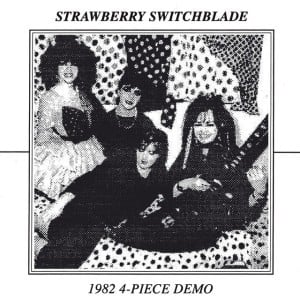
Strawberry Switchblade
Strawberry Switchblade
From the ominous shadows of goth suddenly appeared two young girls in polka-dot dresses, flaming red lipstick, and hair ribbons. Looking like the brides of <a href="spotify:artist:6G7P2EzH5A36ujN9VPm4B0">Robert Smith</a>, Strawberry Switchblade made a brief splash on the U.K. charts and then abruptly vanished in the mid-‘80s, leaving their fans with a handful of collectible singles and one LP of deceptively sweet-sounding dance-pop. The duo of <a href="spotify:artist:7nB7XApMlQSTSJHA3so0tX">Rose McDowall</a> and Jill Bryson first met in 1977 in Glasgow, Scotland, united by their love for punk and new wave. The pair became friends with <a href="spotify:artist:1QAg7aI3yz2PxD6AQnPSwi">James Kirk</a> of <a href="spotify:artist:2u7xZP39dtED9EuRX9MUwu">Orange Juice</a>, who encouraged them to start their own group. In 1981, the new act named themselves after a fanzine devoted to the legendary Postcard Records in Scotland: Strawberry Switchblade. The band originally consisted of four members, but the two other women eventually split from the group, leaving <a href="spotify:artist:7nB7XApMlQSTSJHA3so0tX">McDowall</a> and Bryson on their own. Strawberry Switchblade became the opening act for <a href="spotify:artist:2u7xZP39dtED9EuRX9MUwu">Orange Juice</a>. Signed to Postcard Records, the band didn't record their first single, "Trees and Flowers," until they were picked up by Zoo. <a href="spotify:artist:0fgYKF9Avljex0L9Wt5b8Z">Echo & the Bunnymen</a>'s manager Bill Drummond became a fan of the group and convinced <a href="spotify:artist:5KGqHVetCqZiKRRgjrUBdq">Ian McCulloch</a> to pay for the manufacturing costs of "Trees and Flowers." The song, which featured <a href="spotify:artist:7sbwBqdkynNUDgiWU3TQ5J">Aztec Camera'</a>s <a href="spotify:artist:3XdsvDqukVnHTVUhI3cB2c">Roddy Frame</a> on guitar, was released in July 1983 and sold 10,000 copies. Strawberry Switchblade gained mainstream attention by performing on BBC DJ Janice Long's radio program. Drummond then signed the group to <a href="spotify:search:label%3A%22Warner+Bros.%22">Warner Bros.</a> Their next single, "Since Yesterday," hit number five on the British charts in 1984, providing a sneak preview for their self-titled debut album a year later. However, the LP never made it to the U.S. Saturated with colorful, jubilant keyboards that disguised the sadness in the songs' lyrics, the hook-laden Strawberry Switchblade didn't achieve the commercial success that the popularity of "Since Yesterday" promised. Subsequent singles such as "Let Her Go" and "Who Knows What Love Is?" did well in the Philippines -- played heavily on the country's new wave radio stations -- but weren't as warmly embraced in the U.K. The band covered <a href="spotify:artist:32vWCbZh0xZ4o9gkz4PsEU">Dolly Parton</a>'s "Jolene," their last futile stab at mass acceptance. Strawberry Switchblade broke up in 1986, burned out from the pressure of having to sell records. <a href="spotify:artist:7nB7XApMlQSTSJHA3so0tX">McDowall</a> collaborated with various dark, experimental acts like <a href="spotify:artist:7BqVdvWeMLlWkZAOGRPe0I">Nurse with Wound</a> and <a href="spotify:artist:7vF3DcPluq6lZI36VniagW">Current 93</a>; she also briefly played guitar for <a href="spotify:artist:3BqAAo5E60L15TcFgWI8xH">Felt</a>. Although short-lived, Strawberry Switchblade developed a worldwide cult following years after they quit recording, and their only full-length was reissued on CD in Japan in the early ‘90s. ~ Michael Sutton, Rovi
Bikini Kill
Bikini Kill
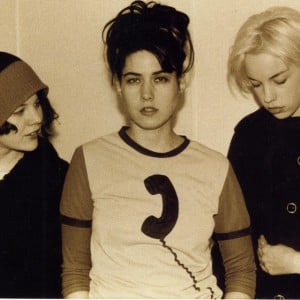
Bikini Kill is a feminist punk band that was based in Olympia, WA and Washington, DC, forming in 1990 and breaking up in 1997. Kathleen Hanna sang, Tobi Vail played drums, Billy Karren (a.k.a. Billy Boredom) played guitar and Kathi Wilcox played bass. Sometimes they switched instruments. Bikini Kill is credited with instigating the Riot Grrrl movement in the early 90's via their political lyrics, zines and confrontational live show. The band started touring in June 1991. In addition to touring the US several times, they also toured Europe, Australia and Japan. Bikini Kill recorded and released a demo tape, two EP's, two LP's and three singles. Their demo tape was self-released,while their first two records came out as a full length CD/Tape and their singles were posthumously collected on CD. Bikini Kill believed that if all girls started bands the world would change. They actively encouraged women and girls to start bands as a means of cultural resistance. Bikini Kill was inspired by seeing Babes in Toyland play live and attempted to incite female participation and build feminist community via the punk scene. They used touring as a way to create an underground network between girls who played music, put on shows and made fanzines. This independent media making and informal network created a forum for multiple female voices to be heard.
Babes in Toyland
Babes in Toyland
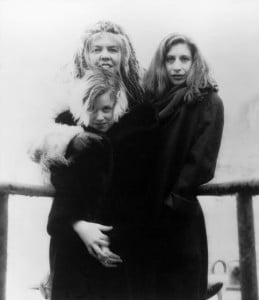
Babes in Toyland is about as harsh as rock music gets -- guitarist Kat Bjelland screams and thrashes her guitar to the gut-pounding, throttling beat of bassist Maureen Herman and drummer Lori Barbero. Over their two albums and two EPs, the all-female trio offer no escape from their strongly female-oriented, but not necessarily feminist, rock. Bjelland formed Babes in Toyland in 1987 in Minneapolis, after playing around San Francisco for several years in various bands that featured, at various times, Jennifer Finch of <a href="spotify:artist:2zMQOJ4Cyl4BYbw6WqaO3h">L7</a> and <a href="spotify:artist:4vI0xGbQl2cMnMiagUEBOj">Courtney Love</a> of <a href="spotify:artist:5SHQUMAmEK5KmuSb0aDvsn">Hole</a>. After releasing a single on <a href="spotify:search:label%3A%22Sub+Pop%22">Sub Pop</a>'s singles club, Babes in Toyland came to the attention of <a href="spotify:artist:5UqTO8smerMvxHYA5xsXb6">Sonic Youth</a>, who took them on a tour of Europe. Soon, they recorded their abrasive debut, Spanking Machine, with producer <a href="spotify:artist:5WPz1DmtxRJBajeTYGiftU">Jack Endino</a>; one more independent EP followed before they signed to <a href="spotify:search:label%3A%22Reprise%22">Reprise</a>. Between labels, original bassist Michelle Leon left the group. <a href="spotify:artist:5UqTO8smerMvxHYA5xsXb6">Sonic Youth</a>'s <a href="spotify:artist:4tXPSo0qk91VMP3wFxL0Fo">Lee Ranaldo</a> produced their second album, Fontanelle, which showed no signs of concession to a major label. In early 1993, the band broke up for several days before re-forming to record the Painkillers EP and hitting the road with Lollapalooza 1993. Even though Lollapalooza offered the group a boost in public exposure, they chose not to capitalize on it; instead, it took them nearly two years before they released a new record, Nemesisters, in 1995. With Babes in Toyland on hiatus, Bjelland formed <a href="spotify:artist:1s8XBVqlB7YqaI84vI8j4Q">Katastrophy Wife</a> with husband Glen Mattson; in the spring of 2000, <a href="spotify:search:label%3A%22Reprise%22">Reprise</a> issued the Babes collection Lived. The band limped on for a few years, hinting at a possible fourth record, but were often distracted by consistently breaking up and then re-forming. The group played their last official show in November 2001, and subsequently released a live recording of the gig called Minneapolism. Babes in Toyland got back together in 2014 and promised new material alongside some live shows. In the group's usual fashion, the reunion did not run smoothly, and bassist Maureen Herman was fired from the band in 2015. Although any new material failed to appear, 2016 saw the release of Redeux, a career-spanning collection that was compiled by the band themselves. ~ Stephen Thomas Erlewine, Rovi
L7
L7
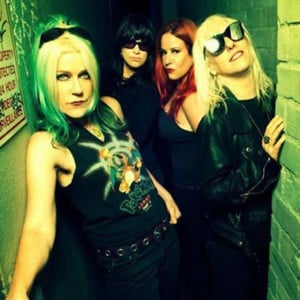
Often lumped in with the Seattle scene of the early '90s, raucous punk rock band L7 emerged from the streets of Los Angeles in 1985. Owing as much to the hard-charging metal of <a href="spotify:artist:1DFr97A9HnbV3SKTJFu62M">Motörhead</a> as the no-frills punk of <a href="spotify:artist:1co4F2pPNH8JjTutZkmgSm">Ramones</a> and <a href="spotify:artist:4I37MmXKpdVBFzHXaqCGv6">Frightwig</a>, the band's sound was a collision of throat-shredding vocals, crunchy riffs, chugging rhythms, and a ferocious attitude that would influence a range of bands from <a href="spotify:artist:6olE6TJLqED3rqDCT0FyPh">Nirvana</a> to <a href="spotify:artist:7MlyHuGRHi31yYlrttDqgT">the Distillers</a>. After their first two releases, they made a break into the mainstream with 1992's <a href="spotify:artist:0gTi2zsOHn6wtlkx66uxXM">Butch Vig</a>-produced Bricks Are Heavy, which garnered L7 critical acclaim and a Top 10 single ("Pretend We're Dead"). At the end of the decade, following the release of their sixth effort, Slap-Happy, they entered an extended hiatus, returning two decades later with 2019's Scatter the Rats. The seeds for L7 (whose name was taken from a slang term in the '50s that meant someone who was a "square") were planted in 1985, when a pair of guitarist/singers, Suzi Gardner and Donita Sparks, decided to start a band. Over the next few years, the group extended their lineup to include bassist Jennifer Finch and drummer Dee Plakas, as their sound grew more and more metallic yet never lost the attack and simplicity of punk. In 1988, L7 were signed by the <a href="spotify:search:label%3A%22Epitaph%22">Epitaph</a> label, which issued their self-titled debut the same year, and the group spent the better part of the next few years touring the world. The band issued Smell the Magic for the <a href="spotify:search:label%3A%22Sub+Pop%22">Sub Pop</a> label in 1991, and formed the Rock for Choice nonprofit organization the same year. Raising money and awareness for the pro-choice movement, the organization put on several benefit shows over the years, featuring such noted performers as <a href="spotify:artist:6olE6TJLqED3rqDCT0FyPh">Nirvana</a>, <a href="spotify:artist:5SHQUMAmEK5KmuSb0aDvsn">Hole</a>, <a href="spotify:artist:1w5Kfo2jwwIPruYS2UWh56">Pearl Jam</a>, and <a href="spotify:artist:6v8FB84lnmJs434UJf2Mrm">Neil Young</a>, among others. With <a href="spotify:artist:6olE6TJLqED3rqDCT0FyPh">Nirvana</a> bringing a punk spirit to the mainstream via grunge, bands such as L7 suddenly became in demand and the quartet was signed to <a href="spotify:search:label%3A%22Slash%22">Slash</a>/<a href="spotify:search:label%3A%22Reprise%22">Reprise</a>, issuing their best-known album with the <a href="spotify:artist:0gTi2zsOHn6wtlkx66uxXM">Butch Vig</a>-produced Bricks Are Heavy (which spawned their highest charting single, "Pretend We're Dead") in April 1992. While L7's follow-up, 1994's Hungry for Stink, failed to expand the group's following, they joined the 1994 installment of U.S. alt-rock festival Lollapalooza and made cameos in <a href="spotify:artist:3qeoYI3u0hMmvcmZGvZNcx">John Waters</a>' cult film Serial Mom, delivering "Gas Chamber" as the fictional band Camel Lips. Bassist Finch left the group shortly thereafter (eventually replaced by former <a href="spotify:artist:3h1HOgVmvPlhqjz8o3LglL">Belly</a> bassist Gail Greenwood), and the group issued such further releases as 1997's The Beauty Process: Triple Platinum, 1998's Live: Omaha to Osaka, and 1999's Slap-Happy, while the band was also the subject of a 1998 concert film made by former <a href="spotify:artist:6olE6TJLqED3rqDCT0FyPh">Nirvana</a> bassist <a href="spotify:artist:4BZKfXia2RPZnzCgQ2fG8M">Krist Novoselic</a>, also titled The Beauty Process. In 2000, a 12-track retrospective collection was issued, Best of L7: The Slash Years, but for all intents and purposes the band were no longer touring and were widely believed to have ceased operations. Indeed, the following year saw L7 announce, via their website, that they would be going on "indefinite hiatus." The members continued to be musically active, however, with Sparks pursuing a solo career, with help from Plakas, under the moniker Donita Sparks & the Stellar Moments and Finch playing with the punk unit <a href="spotify:artist:6cmE6CP0FC98YMy396wIK3">the Shocker</a>. In 2014, Sparks, Gardner, Finch, and Plakas announced that the group would be reuniting. L7 played their first show in 18 years together at the Echo in Los Angeles on May 23, 2015, followed by an international tour. A crowd-funded documentary -- L7: Pretend We're Dead -- debuted in 2016, further fueling their comeback effort. Following the release of a pair of non-album singles, they issued their seventh set, 2019's Scatter the Rats. Released via Joan Jett's <a href="spotify:search:label%3A%22Blackheart+Records%22">Blackheart Records</a>, the album included the singles "Burn Baby" and "Stadium West." ~ Greg Prato & Neil Z. Yeung
Lunachicks
Lunachicks
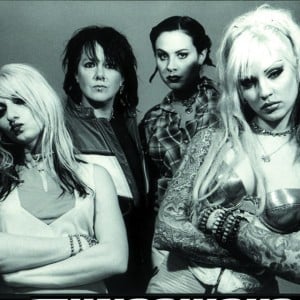
As teenagers, NYC’s legendary punk band, Lunachicks, made a name for themselves in hallowed local clubs like CBGB and The Limelight, where they caught the attention of Kim Gordon and Thurston Moore of Sonic Youth. In 1990, London-based record label Blast First released the Lunachicks’ debut album, Babysitters on Acid. Five studio CDs, a live album and countless singles later the ever touring Lunachicks saw themselves sharing the stage with such bands as The Ramones, The Offspring, Marilyn Manson, Rancid, NOFX, and The Go-Go’s and playing festivals such as The Reading festival and Warped Tour. Since the departure of rhythm guitarist Sindi in 1997, the Lunachicks have remained a quartet. Theo, Gina, Squid, and Chip (their drummer since 1994) honed their skills and matured into a tight sonic outfit without ever losing their satirical edge. The Lunachicks’ touring days ended in 2001 reuniting once in 2004 to play with Joan Jett in DC for “The March For Women’s Lives”. Since their hiatus, the band members have kept busy Theo recorded and toured with her band, "Theo and the Skyscrapers.” <a href="spotify:artist:1qjFulvl5PLIjSoCihFBvG" data-name="Gina Volpe">Gina Volpe</a> formed and fronted her power trio <a href="spotify:artist:29GuADF2SELvCfkCoAifmT" data-name="Bantam">Bantam</a>, then continued on as a solo artist who is currently releasing new music. In early 2020 Lunachicks announced a reunion but their plans for playing live again were sidelined by the pandemic and their shows were rescheduled for 2021 and 2022. Lunachicks have also recently published a memoir entitled, "Fallopian Rhapsody" (Hachette Books).
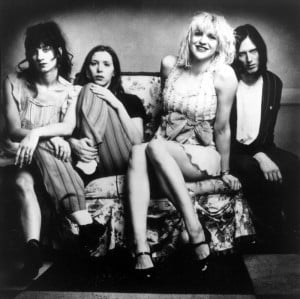
Hole
Hole
Throughout Hole's career, vocalist/guitarist Courtney Love's notorious public image has overshadowed her band's music. In their original incarnation, Hole was one of the noisiest, most abrasive alternative bands performing in the early '90s. By the time of their second album, 1994's Live Through This, the band had smoothed out many of their rougher edges, also adding more melodies and hooks to their songwriting. Through both versions of Hole, Love's combative, assaultive persona permeated the group's music and lyrics, giving the band a tense, unpredictable edge even at their quietest moments. Love formed Hole in Los Angeles in 1989, recruiting guitarist Eric Erlandson through a newspaper ad. Love had played with numerous bands before Hole, including early versions of both Babes in Toyland and Faith No More. Erlandson and Love eventually drafted bassist Jill Emery and drummer Caroline Rue into the band, recording their first album with producer Kim Gordon, the bassist for Sonic Youth. The violent and uncompromising Pretty on the Inside, Hole's debut record, was released on Caroline Records in 1991 to numerous positive reviews, especially in the British weekly music press. In early 1992, Courtney Love married Kurt Cobain, the lead singer/songwriter of Nirvana. For a couple of months, the couple was the king and queen of the new rock world; soon, that world came crashing in. Cobain became addicted to heroin and the couple fought to keep custody of their baby after a piece in Vanity Fair accused Love of shooting heroin while pregnant, charges which she vehemently denied at the time; she would later admit that she had taken small quantities of the drug. By 1993, their private world had settled down somewhat, with Cobain and Love recording new albums with their respective bands. Halfway through 1993, Love reassembled Hole with Erlandson, adding bassist Kristen M. Pfaff and drummer Patty Schemel. Hole was set to release their first major-label album, the more pop-oriented Live Through This, on DGC Records in April of 1994. Advance word on the album was overwhelmingly positive, with many critics calling it one of the best records of the year. Four days before the album was released, Kurt Cobain's body was discovered in the couple's Seattle home; he had died of a self-inflicted shotgun wound three days before. Two months after Cobain's death, Kristen M. Pfaff was found dead of a heroin overdose in a Seattle apartment, with rumors swirling that Love (understandably distraught over the recent tragedies) was abusing the drug as well. Two months later, Hole began touring again, with bassist Melissa Auf Der Maur taking Pfaff's place. "Doll Parts" was released as a single late in 1994, climbing into the Top 60 by the beginning of 1995. Live Through This topped many critics' polls at the end of the year, including Rolling Stone and the Village Voice. Shortly thereafter, Hole toured with the fifth Lollapalooza tour, staying on the road for the remainder of the year. Despite all the hardships, the album became the group's commercial breakthrough, spawning several MTV/radio hits and being certified platinum early the following year. The band went on an extended hiatus afterwards, during which time many assumed the band had broken up when it appeared that Love was focusing more on her burgeoning acting career (Feeling Minnesota, The People vs. Larry Flynt) than music. To satisfy their fans' demand for new music, two rarities collections were issued -- the 1995 EP Ask for It and the 1997 import My Body, the Hand Grenade. After numerous delays, the band finally regrouped to work on a follow-up to Live Through This, with longtime friend Billy Corgan signed on to be a musical consultant. The album was finally issued in September of 1998 to favorable reviews, but Schemel left the band (for reasons unknown) around the same time. Former drummer for New York City alt-rockers Shift, Samantha Maloney, filled the vacant slot as the group embarked on their first substantial tour in two years. By the tour's completion, Auf Der Maur had left to join the Smashing Pumpkins, while Maloney eventually served as a stand-in drummer for Mötley Crüe. Even though Skin was certified platinum shortly after its release, Love was unhappy with the way the album was handled by her record company and felt stifled by her contract, eventually bringing a lawsuit against the Universal Music Group trying to terminate her contract (she still owes five more albums under her current agreement), so she can release music via the Internet. The future of Hole became even more uncertain in early 2001, when Love announced plans to launch a new outfit, called Bastard. Signing with Epitaph, the band consisted of Love, former Veruca Salt guitarist Louise Post, former Rockit Girl bassist Gina Crosley, and to the delight of longtime Hole fans, Schemel is back on drums. In typical Love style, this lineup eventually dissolved into only her and Schemel and the group essentially broke up before it even began. Despite the lack of any substancial project, Love finally announced the end of Hole in May of 2002. Unlike her often bitter press situations, she claimed that the situation was friendly and she would still remain friends with the previous members of the band. Love released her first solo album, America's Sweetheart, in 2004. The following year she began working on new songs, despite battling an alleged eating disorder and a stay in rehab after violating her probation by using drugs. Working with artists including producer Linda Perry, Billy Corgan and guitarist Micko Larkin, formerly of Larrikin Love, the album Nobody's Daughter began to take shape over 2006 and 2007. In mid-2009, Love announced that Nobody's Daughter would in fact be a Hole album. She began promoting the album in earnest in early 2010, performing shows in Europe and the U.S. -- including gigs at the South by Southwest Festival and on The Late Show with David Letterman -- before its release. ~ Stephen Thomas Erlewine & Greg Prato, Rovi
Uncategorized
The Runaways
Artist
Joan Jett & the Blackhearts
Artist
Bratmobile
Artist
Jeff Buckley
Artist
Rose McDowall
Artist
Siouxsie and the Banshees
Artist
mis amigas fuman todas
Artist
Oingo Boingo
Artist