MUSIQUEEEE

Items in this hypelist
ARTISTESSS ( I LOVEEEE )
Clairo
Clairo
American indie luminary Clairo has spearheaded new pop conventions and upended them all the same. Her soft rock intimations, interwoven with tendrils of ‘70s soul and lush R&B, have spellbound listeners of all ages, and landed her on the stages of Coachella, the Newport Folk Festival and The Tonight Show Starring Jimmy Fallon. Born Claire Cottrill in Atlanta, GA, the artist began self-recording songs and music videos at the age of 13, which amassed a huge fanbase on YouTube. Released in 2017, her lo-fi pop confessional “Pretty Girl” went viral, earning her a joint record deal with Fader Label. Since then, her albums Immunity (2019) and Sling (2021) have traversed the Billboard charts and garnered critical acclaim from Rolling Stone, Pitchfork, the New York Times and more. For each of her full-length projects Clairo collaborated on production with legendary names like Vampire Weekend artist Rostam Batmanglij (Immunity), Jack Antonoff (Sling), and now partners with Leon Michels for her new era. Her soul-baring third studio album, Charm, comes out July 12.
Lana Del Rey
Lana Del Rey
.
Billie Eilish
Billie Eilish
Billie Eilish remains one of the biggest stars to emerge in the 21st century. Her third studio album, HIT ME HARD AND SOFT features 10 tracks written and recorded in her hometown of Los Angeles, with her brother and producer FINNEAS. In 2019, her debut album WHEN WE ALL FALL ASLEEP, WHERE DO WE GO? debuted at No. 1 in 18 countries, and was the most streamed album of that year. In 2021, her sophomore album 'Happier Than Ever’ debuted at #1 in 20 countries. Both albums were critically acclaimed worldwide and were written, produced, and recorded entirely by Billie Eilish and FINNEAS. 9-time GRAMMY® Award-winning Billie Eilish has made history as the youngest artist to receive nominations and win in all the major GRAMMY® categories, receiving an award for Best New Artist, Album of the Year, Record of the Year, Song of the Year, and Best Pop Vocal Album, and is the youngest artist to write and record an official James Bond theme song, ‘No Time To Die,’ which won an Academy Award for Best Original Song in 2022. In 2023, Eilish also wrote and released the critically acclaimed song “What Was I Made For?” for the Greta Gerwig-directed motion picture Barbie, which also won Academy and Golden Globe Award for Best Original Song, two GRAMMY® Awards for Song of the Year and Best Song Written For Visual Media, and has solidified Billie Eilish yet again in the history books as the youngest person ever to win two Academy Awards.
Laufey
Laufey
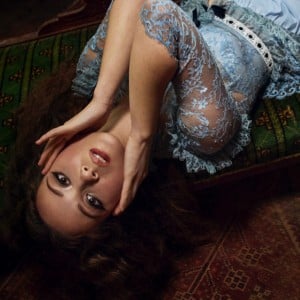
“As a musician, my goal is to bring jazz and classical music to my generation,” declares GRAMMY-winning composer, singer, producer, and multi-instrumentalist Laufey. In 2022, the Icelandic-Chinese artist’s trailblazing approach paid off, with a performance on Jimmy Kimmel LIVE! in support of her debut album Everything I Know About Love, sold out tours of North America, Asia, and Australia, and she was the most streamed jazz artist on Spotify. The Los Angeles-based Laufey (pronounced lāy-vāy) continued her story by writing and recording Bewitched, her second album. Inspired by jazz greats and classical masters while possessing a point of view that could only be conveyed by a 21st-century twentysomething, Bewitched represents an expansion of Laufey’s sonic palette. Tracks like the breezy bossa nova cut “From the Start” and the smoldering string-assisted ballad “Promise” have classic songcraft and intricate arrangements that make them feel instantly timeless, while Laufey’s conversational lyrics give her music a relatability to the next generation of jazz and classical aficionados. The album has gone on to break the record as the biggest debut for a jazz album on Spotify in history and earned a 2024 GRAMMY win for "Best Traditional Pop Vocal Album." Laufey’s self-assured musicianship and deeply felt lyrics take the idea of “classic” music, whether it’s slotted as classical or jazz—or even chart-topping pop—and humanize it, creating a deep-seated connection.
Radiohead
Radiohead
Radiohead are a touchstone for all that is fearless and adventurous in rock, evolving from self-loathing anthems to moody prog rock suites to weathered, if shimmering ballads. Inheritors of a throne previously occupied by <a href="spotify:artist:0oSGxfWSnnOXhD2fKuz2Gy">David Bowie</a>, <a href="spotify:artist:0k17h0D3J5VfsdmQ1iZtE9">Pink Floyd</a>, and <a href="spotify:artist:2x9SpqnPi8rlE9pjHBwmSC">Talking Heads</a> (from whom they took their name), the British band spliced <a href="spotify:artist:0k17h0D3J5VfsdmQ1iZtE9">Floyd</a>'s spaciness with <a href="spotify:artist:51Blml2LZPmy7TTiAg47vQ">U2</a>'s messianic arena rock heft and bridged the gap with guitar skronk borrowed from the '80s American underground. The jagged interjections on "Creep," the band's Top Ten U.K., Top 40 U.S. breakthrough from their debut album Pablo Honey (1993), recalled <a href="spotify:artist:6zvul52xwTWzilBZl6BUbT">Pixies</a> and <a href="spotify:artist:6olE6TJLqED3rqDCT0FyPh">Nirvana</a>, but in the throes of the alternative rock explosion, Radiohead were the odd band out, seen as dour art-rock students at home and as one-hit wonders in the States. During the peak of Brit-pop, Radiohead released The Bends (1995), a leap forward that gained them some traction, but it was OK Computer (1997), a bold set fueled by film music, Krautrock, and electronica, that broke down doors for the band upon its entry at the top of the U.K. and U.S. charts. Soon, whenever rock bands dabbled in electronics, it was derived not from tightly sequenced rhythms, but rather, from glassy textures and introspection, a sensibility pioneered by the quintet. Radiohead doubled down on this aesthetic with Kid A (2000) and Amnesiac (2001), favoring minimal arrangements and elements of avant-garde jazz over concise hooks. From that point on, Radiohead have occasionally worked with conventional song structures but have been drawn toward unusual paths heard on Hail to the Thief (2003) and In Rainbows (a surprise, pay-what-you-want 2007 release), followed the next decade by The King of Limbs (2011) and A Moon Shaped Pool (2016). Inducted into the Rock & Roll Hall of Fame in 2019, Radiohead have focused primarily on catalog releases, side projects, and solo pursuits during the 2020s. Every member of Radiohead was a pupil at Oxfordshire's Abingdon School. <a href="spotify:artist:3E7aH1Yv84NoaP9JWcrMpE">Ed O'Brien</a> (guitar) and <a href="spotify:artist:2A59wav3PGiJij2rK7HQYH">Phil Selway</a> (drums) were the eldest, followed by a year by <a href="spotify:artist:4CvTDPKA6W06DRfBnZKrau">Thom Yorke</a> (vocals, guitar, piano) and <a href="spotify:artist:6bdotkIeFswBydfQqzHnKS">Colin Greenwood</a> (bass). These four musicians began playing in 1985, dubbing themselves On a Friday, and before long they added <a href="spotify:artist:6bdotkIeFswBydfQqzHnKS">Colin</a>'s younger brother <a href="spotify:artist:0z9s3P5vCzKcUBSxgBDyLU">Jonny</a>, who'd previously played in Illiterate Hands with <a href="spotify:artist:4CvTDPKA6W06DRfBnZKrau">Yorke</a>'s brother <a href="spotify:artist:6CbjCavKWLrR6J3FzUwwJI">Andy</a> and Nigel Powell. <a href="spotify:artist:0z9s3P5vCzKcUBSxgBDyLU">Jonny</a> started on keyboards but moved to guitar, yet this incarnation proved short-lived. By 1987, everyone but <a href="spotify:artist:0z9s3P5vCzKcUBSxgBDyLU">Jonny</a> left for university, where many members pursued music, but it wasn't until 1991 that the quintet regrouped and started gigging regularly in Oxford. Eventually, they came to the attention of Chris Hufford -- then best-known as the producer of shoegaze stars <a href="spotify:artist:72X6FHxaShda0XeQw3vbeF">Slowdive</a> -- who offered the group the chance to record a demo along with his partner Bryce Edge; the two soon became the band's managers. <a href="spotify:search:label%3A%22EMI%22">EMI</a> bit at the group's demo, signing them in 1991 and suggesting they change their name. On a Friday became Radiohead and they recorded their debut EP, Drill, with Hufford and Edge, releasing the record in May 1992. Next, the group entered the studio with producers Paul Kolderie and <a href="spotify:artist:1pYe8ZSmmg4LJDdLDlVh9b">Sean Slade</a> to record their full-length debut. The first fruit from these sessions was "Creep," a single released in the U.K. in September of 1992. "Creep" didn't go anywhere at first. The British music weeklies slagged it, radio didn't play it, and it limped to number 78 on the charts. Pablo Honey, the band's full-length debut, appeared in February 1993, supported by the single "Anyone Can Play Guitar," but neither release gained much traction in their native U.K. and that May's non-LP single, "Pop Is Dead," didn't help matters much, either. By that point, however, "Creep" started to gain attention in other territories. First, the song became a hit in Israel, but the bigger waves came from the United States, which was in the throes of the alternative rock revolution. Influential San Francisco radio station KITS added "Creep" to their playlist and it spread along the west coast and onto MTV as it became a genuine hit, nearly topping Billboard's Modern Rock chart and reaching 34 on the Hot 100, a big achievement for a British guitar band. A re-released "Creep" turned into a British Top Ten hit, peaking at number seven in the autumn of 1993. The band who'd had no success suddenly had more than it could handle. Radiohead kept touring Pablo Honey into 1994, but no subsequent hits were forthcoming, raising the specter of the band as a possible one-hit wonder -- a criticism that weighed heavily on the group, who were anxious to record their new songs. They received the opportunity early in 1994, entering the studio to work with producer John Leckie -- then best-known for his work with <a href="spotify:artist:1lYT0A0LV5DUfxr6doRP3d">the Stone Roses</a> -- with My Iron Lung, an EP released in late 1994, being the first music released from the sessions. Muscular and ambitious, the EP provided a good indication of what would come on 1995's The Bends. Released in March 1995, The Bends not only found Radiohead growing musically -- it was dense and expansive, without skimping on songs -- but also in reputation, as critics in the U.K. embraced the band with the audience eventually following: none of the first three singles ("High and Dry," "Fake Plastic Trees," "Just") rose above 17 on the U.K. charts but the final single, "Street Spirit (Fade Out)," wound up reaching five in early 1996. Radiohead's rise may have been assisted by the mania cultivated by Brit-pop, a term that didn't quite suit the band -- they were far artier and rock-oriented -- but nevertheless stoked interest in indie guitar bands, which the quintet certainly was. Over in the U.S., The Bends stalled out at 88 on the Billboard charts but the record gained a cult following among listeners and the band never stopped touring, taking North American opening slots for <a href="spotify:artist:4KWTAlx2RvbpseOGMEmROg">R.E.M.</a> in 1995 and <a href="spotify:artist:6ogn9necmbUdCppmNnGOdi">Alanis Morissette</a> in 1996. During 1995 and 1996, the group recorded new material with <a href="spotify:artist:0g7gHEXKEHU4snTwOZSxNO">Nigel Godrich</a> -- an engineer on The Bends sessions who was now the band's producer -- with songs slowly creeping out during the course of the year. "Lucky" showed up on War Child's 1995 charity LP The Help Album, "Talk Show Host" appeared on a B-side, and "Exit Music (For a Film)" showed up on the soundtrack to <a href="spotify:artist:7HhTERkBV4Ot14KphgBfSh">Baz Luhrmann</a>'s Romeo & Juliet. The latter showed up on OK Computer, the June 1997 album that proved pivotal in Radiohead's career. "Paranoid Android," a twitchy suite released as a single in May of that year, suggested the ambition of OK Computer -- and by reaching number three, it was the band's biggest hit to date in the U.K., placing them on the cusp of a breakthrough. A breakthrough is precisely what OK Computer turned out to be, a record that proved pivotal not just for Radiohead but for the direction of '90s rock. Greeted with enthusiastic reviews and corresponding strong sales, OK Computer closed the doors on the hedonism of Brit-pop and the dour after-effects of grunge while opening a new path to sober, adventurous art-rock where electronics co-existed with guitars. Over the next few years, the band's influence would become readily apparent, but the album made a sizable impact upon its release, too, debuting at number one in the U.K. and earning a Grammy for Best Alternative Album. Radiohead supported it with an international tour, documented in Meeting People Is Easy. By the time Meeting People Is Easy showed up in theaters, the group began work on their fourth album, once again reuniting with producer <a href="spotify:artist:0g7gHEXKEHU4snTwOZSxNO">Godrich</a>. The resulting Kid A doubled down on the experimentalism of OK Computer, embracing electronics and threading in jazz. Appearing in October in 2000, Kid A was one of the first major albums to be pirated through file-sharing services, but this bootlegging had no apparent effect on the sales of the record: it debuted at number one in the U.K. and the U.S., becoming their first American chart-topper. Once again, the album took home the prize for Best Alternative Album at the Grammys and although it didn't produce any hit singles -- indeed, no singles were released from the record -- it was certified platinum in several territories. Amnesiac, a collection of new material initiated during the Kid A sessions, appeared in June of 2001, topping the U.K. charts and reaching two in the U.S. Two singles were pulled from the album -- "Pyramid Song" and "Knives Out" -- a signal that the album was more commercially accessible than its predecessor. At the end of the year, the band issued I Might Be Wrong: Live Recordings, and by the summer of 2002, they turned their attention to recording a new album with <a href="spotify:artist:0g7gHEXKEHU4snTwOZSxNO">Godrich</a>. The resulting Hail to the Thief appeared in June of 2003, once again debuting in the upper reaches of the international charts -- number one in the U.K. and number three in the U.S. -- and the group supported the album with live dates culminating in a headlining appearance at the 2004 Coachella Festival that coincided with the release of the B-sides and remix collection COM LAG, a record that helped close out their contract with <a href="spotify:search:label%3A%22EMI%22">EMI</a>. Over the next couple of years, Radiohead entered a hiatus as individual members pursued solo projects. <a href="spotify:artist:4CvTDPKA6W06DRfBnZKrau">Yorke</a> released the heavily electronic solo collection The Eraser in 2006, and <a href="spotify:artist:0z9s3P5vCzKcUBSxgBDyLU">Jonny Greenwood</a> embarked on a side career as a composer, beginning with 2004's Bodysong and then striking a fruitful collaboration with Paul Thomas Anderson for 2007's There Will Be Blood; <a href="spotify:artist:0z9s3P5vCzKcUBSxgBDyLU">Greenwood</a> would also work on Anderson's subsequent films The Master and Inherent Vice. During all this, the group tentatively chipped away at their first post-<a href="spotify:search:label%3A%22EMI%22">EMI</a> album. Some unsuccessful sessions with Spike Stent led the band back to <a href="spotify:artist:0g7gHEXKEHU4snTwOZSxNO">Godrich</a> by the end of 2006, and the group completed recording in June of 2007. Still without a record label, they decided to release the album digitally through their official website, letting users pay whatever they wanted for a download of the album. This novel strategy acted as the album's own promotion -- most of the articles about the release claimed it was revolutionary -- and In Rainbows allegedly moved over a million downloads on the first day of its release in October 2007. In December, the album received a physical release in the U.K., followed by a January 2008 physical release in the U.S.; the record sold well, debuting at number one in the U.K., and it earned Grammys for Best Alternative Music Album and Best Boxed or Special Limited Edition Package. Radiohead toured in support of In Rainbows into 2009, during which time <a href="spotify:search:label%3A%22EMI%22">EMI</a> released Radiohead: The Best Of in June of 2008. The band took time off in 2010, which allowed <a href="spotify:artist:4CvTDPKA6W06DRfBnZKrau">Yorke</a> to form a band called <a href="spotify:artist:7tA9Eeeb68kkiG9Nrvuzmi">Atoms for Peace</a> with producer <a href="spotify:artist:0g7gHEXKEHU4snTwOZSxNO">Godrich</a> and <a href="spotify:artist:0Xl5J6iOgiQHFqgri7TF8j">Flea</a> from the <a href="spotify:artist:0L8ExT028jH3ddEcZwqJJ5">Red Hot Chili Peppers</a>. During this time, drummer <a href="spotify:artist:2A59wav3PGiJij2rK7HQYH">Phil Selway</a> released his debut solo album, Familial. By early 2011, the group finished a new album and, like In Rainbows before it, Radiohead initially released The King of Limbs digitally through their website. The downloads appeared in February, with the physical copies appearing in March; the album reportedly shifted upwards of 400,000 digital copies upon its release. That autumn brought the release of the remix album TKOL RMX 1234567, and the band continued to tour The King of Limbs material into 2012. Once the tour wrapped up, the group took some quiet time as a new round of solo projects appeared. <a href="spotify:artist:7tA9Eeeb68kkiG9Nrvuzmi">Atoms for Peace</a> released Amok in February 2013 and <a href="spotify:artist:4CvTDPKA6W06DRfBnZKrau">Yorke</a> put out Tomorrow's Modern Boxes in September 2014, just a month before <a href="spotify:artist:2A59wav3PGiJij2rK7HQYH">Selway</a> issued his second album, Weatherhouse. In the autumn of 2014, the band began work on a new album and continued to record throughout 2015, releasing only "Spectre" -- a proposed James Bond theme rejected by the filmmakers -- that year. The ninth Radiohead album, A Moon Shaped Pool, appeared on May 8, 2016, preceded earlier in the week by the singles "Burn the Witch" and "Daydreaming." Radiohead supported A Moon Shaped Pool with an international tour, and in June 2017 they celebrated the 20th anniversary of OK Computer with a double-disc reissue dubbed OK Computer: OKNOTOK 1997 2017. Featuring a host of bonus cuts and previously unreleased material, its number two showing on the U.K. chart was bolstered by a major televised live performance at Glastonbury. Over the next year, <a href="spotify:artist:2A59wav3PGiJij2rK7HQYH">Selway</a>, <a href="spotify:artist:4CvTDPKA6W06DRfBnZKrau">Yorke</a>, and <a href="spotify:artist:0z9s3P5vCzKcUBSxgBDyLU">Greenwood</a> each issued film soundtracks with the latter earning an Oscar nomination for his score to Phantom Thread. Radiohead were inducted into the Rock & Roll Hall of Fame in 2019, honored with a speech from <a href="spotify:artist:2x9SpqnPi8rlE9pjHBwmSC">Talking Heads</a>' <a href="spotify:artist:20vuBdFblWUo2FCOvUzusB">David Byrne</a>. <a href="spotify:artist:4CvTDPKA6W06DRfBnZKrau">Yorke</a> released his third solo album, Anima, that June. Two years later, Radiohead issued Kid A Mnesia, a collection of previously unreleased material from the Kid A and Amnesiac sessions. It was promoted with the singles "If You Say the Word" and "Follow Me Around." All bandmembers were active during the first half the 2020s. <a href="spotify:artist:3E7aH1Yv84NoaP9JWcrMpE">Ed O'Brien</a> released Earth under the alias <a href="spotify:artist:4CX6yOoTFQeiwL5yxuFuIG">EOB</a> in 2020. <a href="spotify:artist:4CvTDPKA6W06DRfBnZKrau">Yorke</a> and <a href="spotify:artist:0z9s3P5vCzKcUBSxgBDyLU">Jonny Greenwood</a> performed and recorded (with drummer <a href="spotify:artist:6U9Bsog9PLNE5hrw45ecDm">Tom Skinner</a>) as <a href="spotify:artist:6styCzc1Ej4NxISL0LiigM">the Smile</a> and continued separate soundtrack work. <a href="spotify:artist:6bdotkIeFswBydfQqzHnKS">Colin Greenwood</a> toured with <a href="spotify:artist:1RM5gp0RFfjpJhCYFPB30p">Nick Cave</a> and <a href="spotify:artist:0A8tch4LePxVn1Cn60wGXu">Warren Ellis</a>, and <a href="spotify:artist:2A59wav3PGiJij2rK7HQYH">Phil Selway</a> released Strange Dance, his third solo album. ~ Stephen Thomas Erlewine, Rovi
Arctic Monkeys
Arctic Monkeys
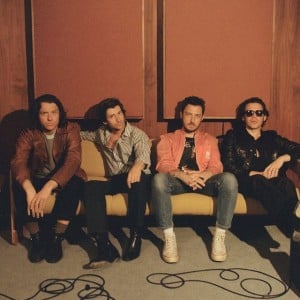
With their nervy and literate indie rock sound, Arctic Monkeys are a respected, adventurous, and successful group that could easily be called Britain's biggest band of the early 21st century. The band arrived with a blast in 2005, assisted by rave reviews and online word of mouth (they were one of the first bands to benefit from social media). They quickly became a sensation in the United Kingdom, where they were seen as the heir apparent to the throne left vacant by <a href="spotify:artist:2DaxqgrOhkeH0fpeiQq2f4">Oasis</a> and <a href="spotify:artist:4fSPtBgFPZzygkY6MehwQ7">the Libertines</a>. Buoyed by the single "I Bet You Look Good on the Dancefloor," their 2006 debut Whatever People Say I Am, That's What I'm Not briefly grabbed the title of fastest-selling album in British history. It landed on top of both the U.K. and U.S. rock album charts and took home the Mercury Prize. What set the group apart was <a href="spotify:artist:1ctkBmvz80MGyi72Ix055S">Alex Turner</a>, a singer/songwriter with a biting wit and grasp of English vernacular (not dissimilar to <a href="spotify:artist:7Lf3LOZp3U3u2f6cWMd3AH">Paul Weller</a>, the godfather of modern British rock). However, driven by their maverick creative spirit, Arctic Monkeys have proven highly unpredictable, reworking classic rock traditions on 2007's Favourite Worst Nightmare and beefing up their guitars with the assistance of <a href="spotify:artist:4pejUc4iciQfgdX6OKulQn">Queens of the Stone Age</a>'s <a href="spotify:artist:03xb2BUdIFzuRQ6o88yfCB">Josh Homme</a> on 2009's Humbug. Eventually, they also laced in some of the louche lounge aspects of <a href="spotify:artist:1ctkBmvz80MGyi72Ix055S">Turner</a>'s swinging side project <a href="spotify:artist:2Z7UcsdweVlRbAk5wH5fsf">the Last Shadow Puppets</a>, an evolution that began on 2018's arty Tranquility Base Hotel + Casino and deepened on its 2022 follow-up The Car. By that point, the band was a staple throughout the world. <a href="spotify:artist:1ctkBmvz80MGyi72Ix055S">Alex Turner</a> and guitarist Jamie Cook began their music careers in 2001, when the friends both received guitars for Christmas. Two years later, they began performing shows around their native Sheffield with drummer Matt Helders and bassist Andy Nicholson, two fellow students at Stocksbridge High School. A series of demo recordings followed, and Arctic Monkeys' audience swelled as fans circulated those recordings via the Internet. The musicians soon found themselves at the center of a growing media circus, with such outlets as BBC Radio examining the band's music and mounting hype. By distributing their homemade material on the Internet, Arctic Monkeys were able to build a sizable fan base without the help of a record label, effectively circumventing the usual road to superstardom. They continued to buck tradition by signing with <a href="spotify:search:label%3A%22Domino+Records%22">Domino Records</a> in 2005, eschewing a major-label's budget for <a href="spotify:search:label%3A%22Domino%22">Domino</a>'s D.I.Y. cred and hip roster (which also included <a href="spotify:artist:0XNa1vTidXlvJ2gHSsRi4A">Franz Ferdinand</a>, a touchstone for the band's sound). The smart moves paid off as Arctic Monkeys' first two singles -- "I Bet You Look Good on the Dancefloor" and "When the Sun Goes Down" -- both topped the U.K. charts. Critical reception was similarly favorable, but few could have predicted the whirlwind success of the band's debut album, which ousted <a href="spotify:artist:2DaxqgrOhkeH0fpeiQq2f4">Oasis</a>' Definitely Maybe as the fastest-selling debut in British history (a record that was broken one year later by <a href="spotify:artist:5lKZWd6HiSCLfnDGrq9RAm">Leona Lewis</a>' Spirit). Whatever People Say I Am, That's What I'm Not sold 363,735 copies during its first week alone, transforming Arctic Monkeys from underground stars into mainstream figures. Arctic Monkeys' debut sold approximately 300,000 total copies in America -- enough to warrant more media coverage. Their success continued as they released a spring EP, Who the F**k Are Arctic Monkeys, and prepared for a stateside tour. Temporary bassist Nick O'Malley was brought aboard for the band's American shows, while a fatigued Nicholson stayed at home. Nicholson then announced his official departure when the band returned home in June 2006, and O'Malley remained with Arctic Monkeys as a permanent member. That fall, the guys received the 2006 Mercury Prize and donated the accompanying money to an undisclosed charity. Additional accolades included Best British Breakthrough Act at the BRIT Awards and Best New Band at the NME Awards. NME also made a bold assertion by deeming the group's debut one of the Top Five British albums ever released. Released in April 2007, Favourite Worst Nightmare updated Arctic Monkeys' sound with louder instruments and faster tempos. The bandmates had recorded the sophomore album quickly, wishing to return to the road as soon as possible, and the speedy turnaround between records helped maintain the group's popularity at home. Favourite Worst Nightmare sold 85,000 copies during its first day of release, and all 12 tracks entered the Top 200 of the U.K. singles charts. As <a href="spotify:artist:1ctkBmvz80MGyi72Ix055S">Alex Turner</a> briefly turned his attention to a side project, <a href="spotify:artist:2Z7UcsdweVlRbAk5wH5fsf">the Last Shadow Puppets</a>, Arctic Monkeys received another Mercury Prize nomination and took home two titles at the 2008 BRIT Awards. Recording sessions for a third album commenced in early 2008 and lasted throughout the year, with producers James Ford (who previously worked with <a href="spotify:artist:1ctkBmvz80MGyi72Ix055S">Turner</a> on <a href="spotify:artist:2Z7UcsdweVlRbAk5wH5fsf">the Last Shadow Puppets</a>' album) and <a href="spotify:artist:03xb2BUdIFzuRQ6o88yfCB">Josh Homme</a> (frontman of <a href="spotify:artist:4pejUc4iciQfgdX6OKulQn">Queens of the Stone Age</a>) adding some newfound heft to the band's sound. Meanwhile, Arctic Monkeys released a concert album entitled At the Apollo -- with accompanying video footage captured on 35mm film -- before unveiling Humbug in August 2009. Humbug went platinum in the U.K. with the singles "Crying Lightning" peaking at number 12 and "Cornerstone" topping out at 94. The band hit the road that February, kicking off a multi-leg tour that ran through the rest of the year. After playing another handful of shows in early 2010, the guys took a short hiatus before reconvening with James Ford for their fourth album. Sessions began that fall, and the resulting Suck It and See arrived in spring 2011, topping the U.K. album chart and landing at number 14 on the Billboard 200. Meanwhile, <a href="spotify:artist:1ctkBmvz80MGyi72Ix055S">Turner</a> also wrote music for a Richard Ayoade film, Submarine, whose soundtrack doubled as the frontman's first solo release. In February 2012, Arctic Monkeys released a song entitled "R U Mine?" on their YouTube channel, which indicated that an album was on the way. A few months later, the band played at the London Summer Olympics opening ceremony, performing "I Bet You Look Good on the Dancefloor" and <a href="spotify:artist:3WrFJ7ztbogyGnTHbHJFl2">the Beatles</a>' "Come Together," but it wasn't until the summer of 2013 that the group's fifth album was to be revealed. Entitled AM, the record was released in September, a few months after a triumphant headlining performance at Glastonbury 2013, which was opened with the new song "Do I Wanna Know?" Both a critical and commercial success, AM topped the British charts and reached number six on the Billboard 200. It also earned the group a Mercury Prize nomination and won British Album of the Year at the BRIT Awards. Following the end of their tour in 2014, the band entered an extended hiatus, during which time the individual members pursued solo projects. In 2016, <a href="spotify:artist:1ctkBmvz80MGyi72Ix055S">Turner</a> released his second album with <a href="spotify:artist:2Z7UcsdweVlRbAk5wH5fsf">the Last Shadow Puppets</a> and toured. Arctic Monkeys resurfaced in April 2018 with the loungey Tranquility Base Hotel & Casino, a softer affair than their previous albums. Along with topping the U.K. album chart and Billboard Top Rock Albums chart, the LP became the group's fourth to earn a Mercury Prize nomination. Later that year, the band issued the TBH&C B-side "Anyways" as a single. A concert album, Live at the Royal Albert Hall, recorded during the Tranquility Base Hotel & Casino tour arrived in November 2020, with all proceeds going to benefit the War Child U.K. charity organization. Arctic Monkeys began their seventh album cycle by releasing the single "There’d Better Be a Mirrorball" in August 2022, delivering the full-length The Car in October. Continuing the slow, stylish vibe of Tranquility Base Hotel + Casino, the album was cut in a monastery on the coast of Suffolk. It hit number six on the Billboard 200, number two in the U.K., and picked up three Grammy nominations, including for Best Alternative Music Album. ~ Andrew Leahey & Stephen Thomas Erlewine, Rovi
The Beatles
Artist
Tyler, The Creator
Artist
Iliona
Artist

Amy Winehouse
Artist

Frank Zappa
Artist
emory
Artist

Red Hot Chili Peppers
Artist

Esha Tewari
Artist

Paramore
Artist

Oklou
Artist
Spacey Jane
Artist
Blur
Artist
Gorillaz
Artist
Miles Davis
Artist

Françoise Hardy
Artist
Captain Beefheart & His Magic Band
Artist
The Marías
Artist

Alex G
Artist

Lamp
Artist
Mariae Cassandra
Artist

Cocteau Twins
Artist
Deftones
Artist

Pinegrove
Artist

The Cure
Artist
The Sundays
Artist
Carpenters
Artist

Alice Phoebe Lou
Artist
Hope Sandoval
Artist

George Harrison
Artist

Oasis
Artist

The Smashing Pumpkins
Artist

Sting
Artist

The Police
Artist
Frank Ocean
Artist

Fiona Apple
Artist

Elton John
Artist
Leonie Biney
Artist

Them & I
Artist
Steve Lacy
Artist
Fleetwood Mac
Artist
Tame Impala
Artist
Searows
Artist

Stevie Wonder
Artist

Kate Bush
Artist

Men I Trust
Artist

The Cranberries
Artist

The Japanese House
Artist
Pixies
Artist
The Strokes
Artist

David Bowie
Artist
ABBA
Artist
Adrianne Lenker
Artist

Aretha Franklin
Artist

Astrud Gilberto
Artist
The Backseat Lovers
Artist

The Bangles
Artist

Beach House
Artist
Bee Gees
Artist

Billy Joel
Artist
Black Country, New Road
Artist
Led Zeppelin
Artist
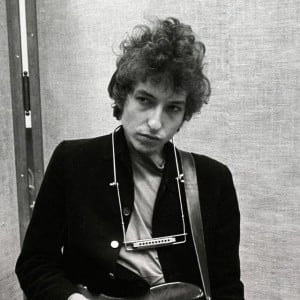
Bob Dylan
Bob Dylan
One of the greatest figures of the 20th century, Bob Dylan helped shape the sound and form of popular music in the rock & roll era. Dylan emerged from the Greenwich Village folk scene in the early 1960s, earning a reputation as a perceptive, powerful songwriter, equally capable of penning a protest anthem or a romantic love song. His flair for impressionistic, stream-of-conscious lyrics marked a shift within folk music, an evolution Dylan also introduced to rock & roll when he picked up an electric guitar in 1965. Over the course of 18 months, he released Bringing It All Back Home, Highway 61 Revisited and Blonde on Blonde, a trio of records that broadened the vocabulary of rock & roll, placing Dylan at the cutting edge of popular culture. Although he subsequently stepped away from the zeitgeist, his restless, occasionally messy work of the '70s and the '80s expanded his formidable songbook through a combination of classic albums (Blood on the Tracks) and intriguing detours (Empire Burlesque). By the end of the '90s, Dylan established himself as a road warrior -- his ceaseless concerts were unofficially dubbed "the Never-Ending Tour" -- and righted his recording career, developing a raucous, robust blend of roadhouse blues, rockabilly, torch songs, and folk showcased on the Grammy-winning albums Love and Theft and Modern Times, as well as his acclaimed 2020 record Rough and Rowdy Ways. For a figure of such substantial influence, Dylan came from humble beginnings. Born in Duluth, Minnesota, Bob Dylan (born Robert Allen Zimmerman, May 24, 1941) was raised in Hibbing, Minnesota, from the age of six. As a child he learned how to play guitar and harmonica, forming a rock & roll band called the Golden Chords when he was in high school. Following his graduation in 1959, he began studying art at the University of Minnesota in Minneapolis. While at college, he began performing folk songs at coffee houses under the name Bob Dylan, taking his last name from the poet <a href="spotify:artist:33PtzSjT25Ve4MwKu3xNff">Dylan Thomas</a>. Already inspired by <a href="spotify:artist:1FClsNYBUoNFtGgzeG74dW">Hank Williams</a> and <a href="spotify:artist:4rAgFKtlTr66ic18YZZyF1">Woody Guthrie</a>, Dylan began listening to blues in college, and the genre wove its way into his music. He spent the summer of 1960 in Denver, where he met bluesman <a href="spotify:artist:4YlupUs1jsfZzwXRGmVlX8">Jesse Fuller</a>, the inspiration behind the songwriter's signature harmonica rack and guitar. By the time he returned to Minneapolis in the fall, he had grown substantially as a performer and was determined to become a professional musician. Dylan made his way to New York City in January of 1961, immediately making a substantial impression on the folk community of Greenwich Village. He began visiting his idol <a href="spotify:artist:4rAgFKtlTr66ic18YZZyF1">Guthrie</a> in the hospital, where he was slowly dying from Huntington's chorea. Dylan also began performing in coffee houses, and his rough charisma won him a significant following. In April, he opened for <a href="spotify:artist:1yNOfXGQNGjAynk77wv85x">John Lee Hooker</a> at Gerde's Folk City. Five months later, Dylan performed another concert at the venue, which was reviewed positively by Robert Shelton in The New York Times. <a href="spotify:search:label%3A%22Columbia%22">Columbia</a> A&R man John Hammond sought Dylan out on the strength of the review, and signed the songwriter in the fall of 1961. Hammond produced Dylan's eponymous debut album (released in March 1962), a collection of folk and blues standards that boasted only two original songs. Over the course of 1962, Dylan began to write a large batch of originals, many of which were political protest songs in the vein of his Greenwich Village contemporaries. These songs were showcased on his second album, The Freewheelin' Bob Dylan. Before its release, Freewheelin' went through several incarnations. Dylan had recorded a rock & roll single, "Mixed Up Confusion," at the end of 1962, but his manager, Albert Grossman, made sure the record was deleted because he wanted to present him as an acoustic folkie. Similarly, several tracks with a full backing band that were recorded for Freewheelin' were scrapped before the album's release. Furthermore, several tracks recorded for the album -- including "Talking John Birch Society Blues" -- were eliminated from the album before its release. Comprised entirely of original songs, The Freewheelin' Bob Dylan made a huge impact in the U.S. folk community, and many performers began covering songs from the album. Of these, the most significant were <a href="spotify:artist:6yrBBtqX2gKCHCrZOYBDrB">Peter, Paul and Mary</a>, who made "Blowin' in the Wind" into a huge pop hit in the summer of 1963, thereby making Bob Dylan a household name. On the strength of <a href="spotify:artist:6yrBBtqX2gKCHCrZOYBDrB">Peter, Paul and Mary</a>'s cover and his opening gigs for popular folkie <a href="spotify:artist:1EevBGfUh3RSQSGpluxgBm">Joan Baez</a>, Freewheelin' became a hit in the fall of 1963, climbing to number 23 on the charts. By that point, <a href="spotify:artist:1EevBGfUh3RSQSGpluxgBm">Baez</a> and Dylan had become romantically involved, and she was recording his songs frequently. Dylan was writing just as fast. By the time The Times They Are A-Changin' was released in early 1964, Dylan's songwriting had developed far beyond that of his New York peers. Heavily inspired by poets like <a href="spotify:artist:4vx0JjaytbaSQXvUDhxf2y">Arthur Rimbaud</a> and John Keats, his writing took on a more literate and evocative quality. Around the same time, he began to expand his musical boundaries, adding more blues and R&B influences to his songs. Released in the summer of 1964, Another Side of Bob Dylan made these changes evident. However, Dylan was moving faster than his records could indicate. By the end of 1964, he had ended his romantic relationship with <a href="spotify:artist:1EevBGfUh3RSQSGpluxgBm">Baez</a> and had begun dating a former model named Sara Lowndes, whom he subsequently married. Simultaneously, he gave <a href="spotify:artist:1PCZpxHJz7WAMF8EEq8bfc">the Byrds</a> "Mr. Tambourine Man" to record for their debut album. <a href="spotify:artist:1PCZpxHJz7WAMF8EEq8bfc">The Byrds</a> gave the song a ringing, electric arrangement, but by the time the single became a hit, Dylan was already exploring his own brand of folk-rock. Inspired by the British Invasion, particularly <a href="spotify:artist:3ICflSq6ZgYAIrm2CTkfVP">the Animals</a>' version of "House of the Rising Sun," Dylan recorded a set of original songs backed by a loud rock & roll band for his next album. While Bringing It All Back Home (March 1965) still had a side of acoustic material, it made it clear that Dylan had turned his back on folk music. For the folk audience, the true breaking point arrived a few months after the album's release, when he played electric at the Newport Folk Festival supported by <a href="spotify:artist:6kz7WuPaUa4QVreP27I33i">the Paul Butterfield Blues Band</a>. The audience greeted him with vicious derision, but he had already been accepted by the growing rock & roll community. Dylan's spring tour of Britain was the basis for D.A. Pennebaker's documentary Don't Look Back, a film that captures the songwriter's edgy charisma and charm. Dylan made his breakthrough to the pop audience in the summer of 1965, when "Like a Rolling Stone" became a number two hit. Driven by a circular organ riff and a steady beat, the six-minute song broke the barrier of the three-minute pop single. Dylan became the subject of innumerable articles, and his lyrics became the subject of literary analyses across the U.S. and U.K. Well over 100 artists covered his songs between 1964 and 1966; <a href="spotify:artist:1PCZpxHJz7WAMF8EEq8bfc">the Byrds</a> and <a href="spotify:artist:2VIoWte1HPDbZ2WqHd2La7">the Turtles</a>, in particular, had big hits with his compositions. Highway 61 Revisited, his first full-fledged rock & roll album, became a Top Ten hit shortly after its summer 1965 release. "Positively 4th Street" and "Rainy Day Women #12 & 35" became Top Ten hits in the fall of 1965 and spring of 1966, respectively. Following the May 1966 release of the double album Blonde on Blonde, he had sold over ten million records around the world. During the fall of 1965, Dylan hired <a href="spotify:artist:7wngg77nJAFHLvmvGnlE2g">the Hawks</a>, formerly <a href="spotify:artist:2viYME3n7SlMsIOEqWmEHv">Ronnie Hawkins</a>' backing group, as his touring band. <a href="spotify:artist:7wngg77nJAFHLvmvGnlE2g">The Hawks</a>, who changed their name to <a href="spotify:artist:4vpDg7Y7fU982Ds30zawDA">the Band</a> in 1968, would become Dylan's most famous backing band, primarily because of their intuitive chemistry and "wild, thin mercury sound," but also because of their British tour in the spring of 1966. The tour was the first time the British had heard the electric Dylan, and their reaction was disagreeable and violent. At the Manchester concert (long mistakenly identified as the show from London's Royal Albert Hall), an audience member called Dylan "Judas," inspiring a positively vicious version of "Like a Rolling Stone" from Dylan and the band. The performance was immortalized on countless bootleg albums (an official release finally surfaced in 1998), and it indicates the intensity of Dylan in the middle of 1966. He had assumed control of Pennebaker's second Dylan documentary, Eat the Document, and was under deadline to complete his book Tarantula, as well as to record a new record. Following the British tour, he returned to America. On July 29, 1966, he was injured in a motorcycle accident outside of his home in Woodstock, New York, suffering injuries to his neck vertebrae and a concussion. Details of the accident remain elusive -- he was reportedly in critical condition for a week and had amnesia -- and some biographers have questioned its severity, but the event was a pivotal turning point in his career. After the accident, Dylan became a recluse, disappearing into his home in Woodstock and raising his family with his wife Sara. After a few months, he retreated with <a href="spotify:artist:4vpDg7Y7fU982Ds30zawDA">the Band</a> to a rented house, subsequently dubbed Big Pink, in West Saugerties to record a number of demos. For several months, Dylan and <a href="spotify:artist:4vpDg7Y7fU982Ds30zawDA">the Band</a> recorded an enormous amount of material, ranging from old folk, country, and blues songs to newly written originals. The songs indicated that Dylan's songwriting had undergone a metamorphosis, becoming streamlined and more direct. Similarly, his music had changed, owing less to traditional rock & roll, and demonstrating heavy country, blues, and traditional folk influences. None of the Big Pink recordings were intended for release, but tapes from the sessions were circulated by Dylan's music publisher with the intent of generating cover versions. Copies of these tapes, as well as other songs, were available on illegal bootleg albums by the end of the '60s; it was the first time that bootleg copies of unreleased recordings became widely circulated. Portions of the tapes were officially released in 1975 as the double album The Basement Tapes. While Dylan was in seclusion, rock & roll had become heavier and artier in the wake of the psychedelic revolution. When he returned with John Wesley Harding in December of 1967, its quiet, country ambience was a surprise to the general public, but it was a significant hit, peaking at number two in the U.S. and number one in the U.K. Furthermore, the record arguably became the first significant country-rock record to be released, setting the stage for efforts by <a href="spotify:artist:1PCZpxHJz7WAMF8EEq8bfc">the Byrds</a> and <a href="spotify:artist:0rESpKEusFHxhW59MIf7eM">the Flying Burrito Brothers</a> later in 1969. Dylan followed his country inclinations on his next album, 1969's Nashville Skyline, which was recorded in Nashville with several of the country industry's top session men. While the album was a hit, spawning the Top Ten single "Lay Lady Lay," it was criticized in some quarters for its uneven material. The mixed reception was the beginning of a full-blown backlash that arrived with the double album Self Portrait. Released early in June of 1970, it was a hodgepodge of covers, live tracks, reinterpretations, and new songs, and was greeted with negative reviews from all quarters of the press. Dylan followed the album quickly with New Morning, which was hailed as a comeback. Following the release of New Morning, Dylan began to wander restlessly. He moved back to Greenwich Village, he finally published Tarantula in November of 1970, and he performed at the Concert for Bangladesh in August 1971. During 1972, he began his acting career by playing Alias in Sam Peckinpah's Pat Garrett and Billy the Kid, which was released in 1973. He also wrote the soundtrack for the film, which featured "Knockin' on Heaven's Door," his biggest hit since "Lay Lady Lay." The Pat Garrett soundtrack was the final record released under his <a href="spotify:search:label%3A%22Columbia%22">Columbia</a> contract before he moved to David Geffen's fledgling <a href="spotify:search:label%3A%22Asylum+Records%22">Asylum Records</a>. As retaliation, <a href="spotify:search:label%3A%22Columbia%22">Columbia</a> assembled Dylan, a collection of Self Portrait outtakes, for release at the end of 1973. Dylan only recorded two albums -- including 1974's Planet Waves, coincidentally his first number one album -- before he moved back to <a href="spotify:search:label%3A%22Columbia%22">Columbia</a>. <a href="spotify:artist:4vpDg7Y7fU982Ds30zawDA">The Band</a> supported Dylan on Planet Waves and its accompanying tour, which became the most successful tour in rock & roll history; it was captured on 1974's double-live album Before the Flood. Dylan's 1974 tour was the beginning of a comeback culminating with 1975's Blood on the Tracks. Largely inspired by the disintegration of his marriage, Blood on the Tracks was hailed as a return to form by critics and it became his second number one album. After jamming with folkies in Greenwich Village, Dylan decided to launch a gigantic tour, loosely based on traveling medicine shows. Lining up an extensive list of supporting musicians -- including <a href="spotify:artist:1EevBGfUh3RSQSGpluxgBm">Joan Baez</a>, <a href="spotify:artist:5hW4L92KnC6dX9t7tYM4Ve">Joni Mitchell</a>, <a href="spotify:artist:6iuM8yp1x2N0l6SONhyq4b">Ramblin' Jack Elliott</a>, <a href="spotify:artist:0B6QEFtRnneEzb4iqjI0Nw">Arlo Guthrie</a>, <a href="spotify:artist:2jzjxYOe3G5aeucbMg0Smp">Mick Ronson</a>, <a href="spotify:artist:3ExrAwcOqgGjt9kFRwdM76">Roger McGuinn</a>, and poet <a href="spotify:artist:1yA9QiqL6p9Qo3nHFb8DkT">Allen Ginsberg</a> -- Dylan dubbed the tour the Rolling Thunder Revue and set out on the road in the fall of 1975. For the next year, the Rolling Thunder Revue toured on and off, with Dylan filming many of the concerts for a future film. During the tour, Desire was released to considerable acclaim and success, spending five weeks on the top of the charts. Throughout the Rolling Thunder Revue, Dylan showcased "Hurricane," a protest song he had written about boxer Rubin Carter, who had been unjustly imprisoned for murder. The live album Hard Rain was released at the end of the tour. Dylan released Renaldo and Clara, a four-hour film based on the Rolling Thunder tour, to poor reviews in early 1978. Early in 1978, Dylan set out on another extensive tour, this time backed by a band that resembled a Las Vegas lounge act. The group was featured on the 1978 album Street Legal and the 1979 live album At Budokan. At the conclusion of the tour in late 1978, Dylan announced that he was a born-again Christian, and he launched a series of Christian albums the following summer with Slow Train Coming. Though the reviews were mixed, the album was a success, peaking at number three and going platinum. His supporting tour for Slow Train Coming featured only his new religious material, much to the bafflement of his long-term fans. Two other religious albums -- Saved (1980) and Shot of Love (1981) -- followed, both to poor reviews. In 1982, Dylan traveled to Israel, sparking rumors that his conversion to Christianity was short-lived. He returned to secular recording with 1983's Infidels, which was greeted with favorable reviews. Dylan returned to performing in 1984, releasing the live album Real Live at the end of the year. Empire Burlesque followed in 1985, but its odd mix of dance tracks and rock & roll won few fans. However, the five-album/triple-disc retrospective box set Biograph appeared that same year to great acclaim. In 1986, Dylan hit the road with <a href="spotify:artist:4tX2TplrkIP4v05BNC903e">Tom Petty & the Heartbreakers</a> for a successful and acclaimed tour, but his album that year, Knocked Out Loaded, was received poorly. The following year, he toured with <a href="spotify:artist:4TMHGUX5WI7OOm53PqSDAT">the Grateful Dead</a> as his backing band; two years later, the souvenir album Dylan & the Dead appeared. In 1988, Dylan embarked on what became known as "the Never-Ending Tour" -- a constant stream of shows that ran on and off into the late '90s. That same year, he appeared on The Traveling Wilburys, Vol. 1 -- by the supergroup also featuring <a href="spotify:artist:7FIoB5PHdrMZVC3q2HE5MS">George Harrison</a>, <a href="spotify:artist:0JDkhL4rjiPNEp92jAgJnS">Roy Orbison</a>, <a href="spotify:artist:2UZMlIwnkgAEDBsw1Rejkn">Tom Petty</a>, and <a href="spotify:artist:3bTAaMx9nf237AkBnGw3vL">Jeff Lynne</a> -- and released his own Down in the Groove, an album largely comprising covers. The Never-Ending Tour received far stronger reviews than Down in the Groove (the <a href="spotify:artist:2hO4YtXUFJiUYS2uYFvHNK">Traveling Wilburys</a>' album fared much better), but 1989's Oh Mercy was his most acclaimed album since 1975's Blood on the Tracks, due in part to <a href="spotify:artist:5S0AJvE9NB1kGrXRfYh690">Daniel Lanois</a>' strong production. However, Dylan's 1990 follow-up, Under the Red Sky (issued the same year as the second album by <a href="spotify:artist:2hO4YtXUFJiUYS2uYFvHNK">the Traveling Wilburys</a>, now a quartet following the death of <a href="spotify:artist:0JDkhL4rjiPNEp92jAgJnS">Roy Orbison</a> shortly after the release of <a href="spotify:artist:2hO4YtXUFJiUYS2uYFvHNK">the Wilburys</a>' first long-player in 1988), was received poorly, especially when compared to the enthusiastic reception of the 1991 box set The Bootleg Series, Vols. 1-3 (Rare & Unreleased), a collection of previously unreleased outtakes and rarities. For the remainder of the '90s, Dylan divided his time between live concerts, painting, and studio projects. He returned to recording in 1992 with Good as I Been to You, an acoustic collection of traditional folk songs. It was followed in 1993 by another folk record, World Gone Wrong, which won the Grammy for Best Traditional Folk Album. After the release of World Gone Wrong, he released a greatest-hits album and a live record. Dylan released Time Out of Mind, his first album of original material in seven years, in the fall of 1997. Time Out of Mind received his strongest reviews in years and unexpectedly debuted in the Top Ten, eventually climbing to platinum certification. Such success sparked a revival of interest in Dylan, who appeared on the cover of Newsweek and began selling out concerts once again. Early in 1998, Time Out of Mind received three Grammy Awards: Album of the Year, Best Contemporary Folk Album, and Best Male Rock Vocal. Another album of original material, Love and Theft, followed in 2001 and went gold. Soon after its release, Dylan announced that he was making his own film, starring <a href="spotify:artist:266j9hfnayXOZhRRi0sTOu">Jeff Bridges</a>, Penelope Cruz, John Goodman, Val Kilmer, and many more. The accompanying soundtrack, Masked and Anonymous, was released in July 2003. Dylan opted to self-produce his new studio album, Modern Times, which topped the Billboard charts and went platinum in both America and the U.K. It was Dylan's third consecutive album to receive praise from critics and support from consumers, and it was followed three years later in 2009 by Together Through Life, another self-produced effort (as Jack Frost) that also featured contributions from <a href="spotify:artist:4pp6PKB7hDh3LqQVuSrHTD">David Hidalgo</a> of <a href="spotify:artist:6OWapcJm9xd55ci9CYbAuT">Los Lobos</a> and Mike Campbell of <a href="spotify:artist:4tX2TplrkIP4v05BNC903e">Tom Petty & the Heartbreakers</a>. He capped off the year with an old-fashioned holiday effort, Christmas in the Heart. Proceeds from the album were donated to various charities around the world. Dylan released the self-produced (again as Jack Frost) Tempest on September 11, 2012; it debuted at three on both the Billboard 200 and the U.K. charts. The next two years brought acclaimed entries in the ongoing Bootleg Series -- 2013 saw the release of Another Self Portrait (1969-1971), which restored the reputation of a much-maligned era, and 2014 saw the long-awaited appearance of The Basement Tapes Complete -- and then Dylan threw a curve ball for his next studio album. Released in February 2015, Shadows in the Night found the singer/songwriter devoting himself to selections from the Great American Songbook in the pre-rock & roll era. Every one of the ten songs had previously been recorded by <a href="spotify:artist:1Mxqyy3pSjf8kZZL4QVxS0">Frank Sinatra</a>, and Dylan's album was made up of his versions of <a href="spotify:artist:1Mxqyy3pSjf8kZZL4QVxS0">Sinatra</a>'s saloon songs, arranged by his own touring band. Shadows in the Night debuted at seven in the U.S. and at number one in the U.K. It was followed in the autumn by the next installment in The Bootleg Series, The Cutting Edge 1965-1966. Available in three editions -- a double-disc distillation, a comprehensive six-disc box, and a complete, limited-edition 18-CD set -- The Cutting Edge 1965-1966 collected unreleased (and unbootlegged) outtakes from the recording of Bringing It All Back Home, Highway 61 Revisited, and Blonde on Blonde. In May 2016, Dylan returned with Fallen Angels, his second <a href="spotify:artist:1Mxqyy3pSjf8kZZL4QVxS0">Sinatra</a>-inspired collection of songs from the Great American Songbook; it debuted at number seven on the Billboard charts. Later that year, <a href="spotify:search:label%3A%22Columbia%22">Columbia</a>/<a href="spotify:search:label%3A%22Legacy%22">Legacy</a> released The 1966 Live Recordings, a 36-disc box set containing every known recording from that pivotal year, but its release was overshadowed by Dylan winning the Nobel Prize for Literature in the autumn of 2016. Dylan continued his exploration of the Great American Songbook with the March 2017 release of Triplicate, a triple album containing three thematically arranged collections of pop standards. Entitled Trouble No More 1979-1981, the 13th volume of The Bootleg Series spotlighted Dylan's Christian era in the early '80s and arrived in November 2017. Live 1962-1966: Rare Performances from the Copyright Collections, a double-disc set of highlights culled from previously released rarities collections, appeared in July 2018. Four months later, the six-disc deluxe version of More Blood, More Tracks: The Bootleg Series, Vol. 14 appeared. It contained all known studio recordings -- full and partial -- that eventually resulted in the classic Blood on the Tracks in 1975. Dylan further explored his 1975 archives in 2019, teaming with director Martin Scorsese for the documentary Rolling Thunder Revue: A Bob Dylan Story by Martin Scorsese. The film appeared in June, accompanied by a 14-disc box called The Rolling Thunder Revue: The 1975 Live Recordings. Later in 2019, The Bootleg Series, Vol. 15: Travelin' Thru -- a triple-disc set concentrating on Dylan's Nashville recordings of the late '60s, highlighted by his sessions with <a href="spotify:artist:6kACVPfCOnqzgfEF5ryl0x">Johnny Cash</a> -- was released. Dylan released "Murder Most Foul," a nearly 17-minute track about the JFK assassination, on March 27, 2020. It was his first original song in eight years, and it was quickly followed by "I Contain Multitudes" and "False Prophet," a pair of singles that announced the arrival of his 39th studio album, Rough and Rowdy Ways, on June 19, 2020. Rough and Rowdy Ways debuted at number one on Billboard upon its release; it entered the U.K. charts at number one. The outtakes collection 1970 -- a set featuring unreleased material from the Self Portrait and New Morning sessions, including recordings with <a href="spotify:artist:7FIoB5PHdrMZVC3q2HE5MS">George Harrison</a> -- appeared in February 2021, followed that July by Shadow Kingdom: The Early Songs of Bob Dylan, an in-studio concert film shot in moody black & white; the soundtrack to the film would arrive in 2023. In September, Springtime in New York: The Bootleg Series, Vol. 16 (1980-1985) was released. Easily one of the artist's most provocative periods, it focused on the years that birthed Shot of Love, Infidels, and Empire Burlesque, with numerous unreleased outtakes, alternate takes, rehearsal recordings, and live performances. Dylan's book The Philosophy of Modern Song, a collection of essays about songs by other artists, was published in November 2022. Containing a remixed version of the original 1997 album along with outtakes, The Bootleg Series, Vol. 17: Fragments--Time Out of Mind Sessions (1996--1997) appeared in January 2023. ~ Stephen Thomas Erlewine, Rovi
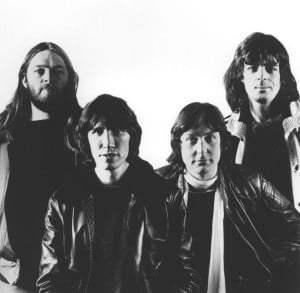
Pink Floyd
Pink Floyd
Pink Floyd are one of the most successful and influential rock groups in history. The members of the group to become known as Pink Floyd came together in London, but the band’s roots were in Cambridge, in the East of England, in the early 1960s. Roger ‘Syd’ Barrett, Roger Waters and David Gilmour all grew up in Cambridge, (Roger Waters having moved there from Surrey at the age of 2), and got into music as part of the folk and beat boom of the time. Young Roger Barrett was actively encouraged in his music and art by his parents, and was successful at both while in school. He knew Roger Waters from school and met David Gilmour as a teenager, so their friendships were established long before the formation of Pink Floyd. Roger Barrett acquired the nickname 'Syd' around the ageof 14, in a reference to local bass player Sid Barrett, hence the ‘Syd’ spelling for differentiation. The Barrett family home had hosted musical collaborations from 1962 onwards, the first fruits of which became Geoff Mott and the Mottoes, including Syd on rhythm guitar. In September 1962, Roger Waters left Cambridge for London to study architecture. Syd meanwhile had won a 2-year scholarship to Cambridge School of Art, where he re-established contact with David Gilmour, swapping guitar chords at lunchtime sessions. London’s Regent Street Polytechnic had by now welcomed not only Roger Waters but Richard Wright, a Londoner, and Nick Mason, who was born in Birmingham but relocated to Hampstead at age 2. Roger and Nick responded to a college advert recruiting band members, and duly formed Sigma 6, playing guitar and drums respectively. Richard Wright also joined, playing guitar, various brass instruments and keyboards, depending on whether a piano was available. As well as Polytechnic studies, Richard was taking private lessons in musical theory and composition at the Eric Gilder School of Music, and in fact left architectural studies (and the band, now called The Abdabs) at the end of his first year, to go travelling. In Autumn 1964 Syd Barrett moved to London to attend Camberwell Art College, hooking up with Roger Waters and the Abdabs. Two of the band had just left, which left space for two guitarists: Syd, and fellow Cambridge friend Rado (‘Bob’) Klose, Roger Waters having switched to bass guitar. Originally Leonard’s Lodgers, The Spectrum Five, and latterly The Tea Set, the band finally became Pink Floyd when Richard Wright rejoined, having returned to the UK to enroll in the Royal College of Music. The new name was suggested by Syd, and was derived from two US bluesmen: Pink (born Pinkney) Anderson and Floyd Council. The 5-piece played intermittently in early 1965 as both The Tea Set and The Pink Floyd (or The Pink Floyd Sound), with the departure of Rado ‘Bob’ Klose creating the first 4-man (Barrett / Mason / Waters / Wright) lineup at live shows from May onwards, although the band continued to alternate the use of the Tea Set / Pink Floyd designation right up until March 1966. They were still a part-time band, allowing Syd to take off to France in August with David Gilmour, the pair being briefly detained by the St. Tropez police for busking (performing in the street). Pink Floyd / Tea Set’s original style was based on American blues and r’n’b, but the birth of a UK psychedelic music scene allowed them to develop Syd’s performance-based ideas into something unique. Throughout 1966 they honed their live performance skills, often developing songs into long jamming sequences, and by the end of the year Pink Floyd had become the pre-eminent ‘underground’ band. They picked up management too, and their first recordings were songs by Syd, who had established himself as the band’s creative innovator. Pink Floyd signed to EMI Records in 1967, releasing the singles Arnold Layne and See Emily Play, both written by Syd, and the album The Piper At The Gates Of Dawn, again mostly composed by Syd and considered to be one of the greatest British psychedelic albums. Arnold Layne reached No. 20 in the UK Singles Chart, and See Emily Play reached No. 6, while The Piper At The Gates Of Dawn also entered the album charts at No. 6, the first of a long line of Pink Floyd album chart successes. However, as the band began to attract a large fanbase, it became clear that Syd's fluid approach to writing, performing and recording - spontaneous, one take only, nothing repeated - was increasingly at odds with the expectations of a musical scene that was still very conservative, especially outside London. Possibly exacerbated by Syd’s frequent experimentation with psychedelic drugs, his behaviour became more erratic, to the point that the band decided to add a second guitarist for live performances. They hoped to call on Syd’s compositional abilities for studio work, similar to Brian Wilson’s role in the Beach Boys, while David Gilmour would bolster the band in live shows. David Gilmour had gigged regularly around Cambridge with various outfits, including The Ramblers, Chris Ian & The Newcomers and Jokers Wild, his first professional outfit. David moved to London in Summer 1966, and the band, now a trio, played extensively around Europe. Renamed Bullitt, they then re-invented themselves as Flowers in 1967. Already known as the best guitarist on the Cambridge scene, David had been very impressed with seeing Jimi Hendrix in a small club, and had been inspired to work even harder on his technique. The new 5-man Floyd experiment didn’t really work, and in January 1968, after a handful of shows, the band elected not to pick Syd up on the way to a Southampton University gig. Syd and Floyd officially parted company in March 1968, with the band’s management Blackhill Enterprises deciding to stick with Syd as a solo artist. The band appointed Steve O'Rourke as manager, and he remained with Pink Floyd until his death in 2003. Whilst Syd Barrett had written the bulk of the first album, only one composition by him, Jugband Blues, appeared on the second Floyd album. A Saucerful Of Secrets was released in June 1968, reaching Number 9 in the UK. Point Me At The Sky, a Waters/Gilmour composition released in December 1968, was to be the band’s last single release until Money from The Dark Side Of The Moon. The soundtrack to the film More, another UK Top 10 album in July 1969, was the band’s first collaboration with film director Barbet Schroeder. The next record, the double album Ummagumma in November 1969, was a mix of live recordings and studio experimentation by the band members, with each member recording half a side of a vinyl record as a solo project. Meanwhile, over the course of a year, Syd Barrett had recorded The Madcap Laughs, released in January 1970, with some production help from David and Roger. Atom Heart Mother, in October 1970, was Pink Floyd's first recording with an orchestra, the title track suite taking up a full vinyl LP side. Their first UK No. 1 album, staying on the charts for 18 weeks, the title was taken from a London Evening Standard headline. Roger Waters’ first work outside the band appeared in November 1970. A collaboration with Ron Geesin, (with whom Floyd had worked on Atom Heart Mother), The Body formed the soundtrack to the film of the same name. Pink Floyd appear anonymously on the track Give Birth To A Smile. November 1970 also saw the release of Barrett, the second and last album of all-original Syd Barrett songs. It was produced by David Gilmour and included Richard Wright on keyboards. Before the next album of original material, a Pink Floyd compilation album, Relics, was released in May 1971, containing several early singles and B-sides, plus one previously unreleased song Biding My Time. The band also contributed three tracks to the soundtrack of Michelangelo Antonioni’s film, Zabriskie Point. In October 1971 the band allowed director Adrian Maben to film them performing live in the amphitheatre at Pompeii. After more filming, including interviews and more performances in a Paris studio, the Pink Floyd Live At Pompeii film was finally premiered at the Edinburgh Festival in September 1972. Meddle was Pink Floyd’s longest UK chart performer to date, maintaining 82 weeks on the chart from its No. 3 debut in November 1971. It contained the LP side-long Echoes, to many the perfect encapsulation of all Floyd’s disparate elements. Nick Mason considered it "the first real Pink Floyd album. It introduced the idea of a theme that can be returned to". Developing the idea of thematic pieces, the band began to work on what would become The Dark Side of The Moon, presenting the songs from the album in concert throughout 1972. However, even though they were yet to enter the studio to record Dark Side as an album, the band took a detour to make another soundtrack album in just two weeks for Barbet Schroeder – Obscured By Clouds, to accompany the film La Vallee. The release of Pink Floyd's massively successful 1973 album, The Dark Side Of The Moon, was a watershed moment in the band's popularity. Pink Floyd had stopped issuing singles after 1968's Point Me At The Sky and was never a hit single-driven group, but Money was released as a single from The Dark Side Of The Moon, going Top 20 in the U.S. The album became the band's first No. 1 on the U.S. Charts and is one of the biggest-selling ever, worldwide. The Piper At The Gates Of Dawn and A Saucerful Of Secrets were re-presented to the public in December 1973 as a 2-LP set, A Nice Pair, repackaged in a gatefold sleeve. 1975’s Wish You Were Here is well-known for its popular title track, but also the largely instrumental song suite Shine On You Crazy Diamond, an overt tribute to Syd Barrett. It bookends the album, the recording of which was made poignant for the band by Syd’s surprise appearance in the studio. He turned up unannounced at Abbey Road studios while the group were working on Shine On, leaving his former bandmates bemused. For most of the band, it was their last meeting with Syd; Roger Waters subsequently viewed him in Harrods department store, but the two didn’t speak. The years between 1976 and 1985 saw Roger Waters asserting more control over Pink Floyd's output, concentrating on thematic albums like Animals, released in January 1977. One of the many iconic Pink Floyd images is that of an inflatable pig flying over Battersea Power Station; the pig, 'Algie', escaped during the cover shoot, subsequently coming to earth in the Kent countryside. As a side project, David released his first solo album, David Gilmour, in May 1978. Featuring Rick Wills on bass and Willie Wilson on drums and percussion, the album charted in the UK at No. 17 and the U.S. at No. 29. Using material that was extraneous to the Animals album, Richard released his first solo project, Wet Dream, in September 1978. The next Floyd release was the hugely successful The Wall. Preceded by the surprise UK & US No. 1 hit Another Brick In The Wall Part 2, the double album chronicling a rock star’s increasing alienation from the world of stardom was an instant hit. Roger Waters’ album concept extended to the stage presentation and the short run of live shows in the US and UK in 1980 (repeated in 1981 in the UK and Germany) remains in many peoples’ minds as the quintessential melding of music and theatrics in the rock idiom. Roger had written almost all of the songs, although one of them, destined to be a future Floyd classic, was a Waters / Gilmour collaboration: Comfortably Numb. The music was based on an outtake from David’s first solo album, which he tailored to fit Roger’s lyrics. Richard Wright’s relationship with Roger Waters had become increasingly rocky, and he left Pink Floyd during the Wall sessions. However, he was keen to complete the album’s live shows, so was retained as a salaried session musician during the subsequent live concerts in 1980 and 1981. The Wall became a feature film, directed by Alan Parker and starring Bob Geldof. Some of the material was re-recorded or remixed, and the movie was premiered in May 1982 at Cannes, becoming a steady seller on VHS and subsequently DVD. Pink Floyd The Wall won two BAFTA Awards in 1983 – Best Sound and Best Original Song (Another Brick In The Wall). Nick Mason’s first album under his own name was Fictitious Sports, released in 1981. A mixture of jazz and rock, the compositions were by Carla Bley, who also played keyboards. Other contributors included Robert Wyatt, Mike Mantler and Chris Spedding. In March 1983, Pink Floyd released the only album on which Richard does not appear - The Final Cut, once more a Roger Waters conceptual piece, and the band’s third UK No. 1. David's second solo album, About Face, was released in March 1984, hitting No. 21 in the UK and No. 32 in the US, going Gold. In April 1984, Richard formed a new musical duo with Dave Harris (from the band Fashion) called Zee. They signed a record deal with Atlantic Records and released one album, Identity. Roger went on to work on a further concept album, this time as a solo artist: The Pros And Cons Of Hitch Hiking. Released in May 1984, the album was followed by a 9-date solo tour of the UK and Continental Europe. One year after his bandmates' projects, Nick Mason released the album Profiles, a collaboration with Rick Fenn of 10CC. David Gilmour contributes vocals to one track. In December 1985 Roger Waters wrote to EMI and CBS (now Sony) Records, resigning from Pink Floyd. Nevertheless, when in 1986 David Gilmour and Nick Mason began recording a new Pink Floyd album, a legal dispute ensued, eventually settled out of court. After considering and rejecting many other titles, the new Pink Floyd album was released as A Momentary Lapse Of Reason in September 1987. Richard Wright contributed to the album, rejoining the band after the subsequent tour. A year later, the band released a double live album and a concert video taken from its 1988 Long Island shows, entitled Delicate Sound Of Thunder, and later recorded some instrumentals for a classic-car racing film, La Carrera Panamericana, set in Mexico and featuring David andNick as participating drivers. During the race, David and manager Steve O'Rourke (acting as his map-reader) crashed. Steve suffered a broken leg; David walked away with a few bruises. 1992 saw the box set release of Shine On. The 9-disc set included re-releases of the studio albums A Saucerful Of Secrets, Meddle, The Dark Side Of The Moon, Wish You Were Here, Animals, The Wall, and A Momentary Lapse Of Reason. A bonus disc entitled The Early Singles was also included. The band's 1994 next album, The Division Bell, the title suggested by David's friend Douglas Adams, returned Pink Floyd to the No. 1 position in the UK & US, remaining on the charts in each country for 51 weeks. The album contained Marooned, composed by David and Richard, for which the band received their first and only Grammy Award in 1995 (Best Rock Instrumental Performance). The lengthy Division Bell tour, playing to more than 5 million people, engendered the live album P*U*L*S*E in 1995, featuring songs from concerts in London, Rome, Hanover, and Modena. On January 17, 1996, the band was inducted into the Rock and Roll Hall of Fame by The Smashing Pumpkins frontman Billy Corgan. Roger Waters did not attend. Richard Wright released his second solo album, Broken China, in September 1996. Richard sings throughout, with Momentary Lapse collaborator Anthony Moore providing some lyrics, and Sinead O’Connor guesting on vocals for two tracks. A live recording of The Wall appeared in 2000, compiled from the 1980-1981 London concerts, entitled Is There Anybody Out There? The Wall Live 1980-81. In 2001, a remastered two-disc set of the band's best-known tracks entitled Echoes was released. In 2003, The Dark Side Of The Moon was issued as an SACD, featuring new cover artwork. The album was also re-released as a 180-gram, virgin vinyl pressing, including all the original album art from the original release of the album, plus a new poster. Nick Mason's book, Inside Out: A Personal History Of Pink Floyd was published in 2004 in Europe and 2005 in the U.S. Nick made public promotional appearances in a few European and American cities, giving interviews and meeting fans at book signings. Longtime Pink Floyd manager Steve O'Rourke died on October 30, 2003. David, Nick, and Richard joined together at his funeral service in Chichester Cathedral to perform Fat Old Sun and The Great Gig In The Sky. Two years later, on July 2, 2005, the Gilmour / Mason / Waters / Wright lineup took to the stage for the first time in 24 years in a one-off performance at the London Live 8 concert. Their four-song set included Breathe (plus reprise), Money, Wish You Were Here, and Comfortably Numb, with David and Roger sharing lead vocals. At the end of the band’s performance, their group hug became one of the most famous images of Live 8. Subsequent to the post-Live 8 sales boom for the participating artists, David Gilmour declared that he would donate his share of profits to charity, urging other artists and record companies to do the same. On November 16, 2005, Pink Floyd were inducted into the UK Music Hall of Fame by Pete Townshend. David and Nick attended in person; Richard was in hospital following eye surgery and Roger appeared on a video screen, from Rome. On March 6, 2006, David Gilmour released his third solo album, On An Island, which entered the charts at No. 1 in the UK and No. 6 in the US. A 3-month sold-out tour of concert venues in Europe, Canada, and the U.S. followed, performed with a band that included Richard Wright, plus Floyd regulars Dick Parry, Jon Carin, and Guy Pratt. Nick Mason joined the band for encores of Arnold Layne and Comfortably Numb at one of the Royal Albert Hall shows, which were filmed for the subsequent DVD / Blu-ray release Remember That Night. Roger ‘Syd’ Barrett died of pancreatic cancer on July 7, 2006 at Addenbrooke's Hospital in Cambridge, having suffered from diabetes for some time. His funeral was a private family affair, but his enduring influence was marked by the many heartfelt tributes recorded by fans and stars, touched by his idiosyncratic genius. On July 10, 2006, the P*U*L*S*E DVD was released, launched with a media showing and Q&A session with David, Nick and Richard. A tribute concert for Syd was held at the Barbican Centre in London on May 10, 2007. Madcap’s Last Laugh featured entertaining performances from Barrett fans such as Chrissie Hynde, Mike Heron and Nick Laird-Clowes, while an unbilled Roger Waters played an acoustic Flickering Flame. Roger had to leave before the end of the show, so was unavailable for a further surprise performance - David, Richard and Nick performing Arnold Layne to rapturous applause and a standing ovation. September 2007 saw the 40th anniversary of Pink Floyd's signing to EMI, marked by the release of a 2-CD set containing mono and stereo mixes of The Piper At The Gates Of Dawn, and a 3-CD version including the related singles, B sides and other rare recordings. On December 10 (UK) and 11 (U.S.), 2007, Pink Floyd released a new CD box set, OH BY THE WAY, containing all fourteen studio albums with original vinyl artwork plus new artwork from Storm Thorgerson. Two albums (The Dark Side Of The Moon and A Momentary Lapse Of Reason) boast remastered versions. In 2008, Sweden’s Polar Music Prize was awarded to Pink Floyd for “their monumental contribution over the decades to the fusion of art and music in the development of popular culture. Through extensive sonic experimentation, they captured the mood and spirit of a whole generation in their reflections and attitudes. When rock'n'roll developed, Pink Floyd was foremost in shaping the sounds that would influence artists for ever." Richard Wright died on September 15th had been in September 2007 with David Gilmour, at the premiere of David’s concert DVD, Remember That Night. In January 2010 the artwork for The Division Bell was used in a series of Royal Mail stamps. In March Royal Mail created a unique page of Division Bell-only stamps on their own dedicated gummed sheet, including artwork from the album. On 10th July, 2010, David Gilmour and Roger Waters played some songs together in aid of the Hoping Foundation charity, at a private concert in Kiddington, Oxfordshire, UK. Backed by a band that included Guy Pratt, Harry Waters and Andy Newmark, David and Roger performed To Know Him Is To Love Him, Wish You Were Here, Comfortably Numb, and Another Brick In The Wall, Part 2. In September 2010, Roger Waters started an 11-month long live world tour of The Wall, with a high-tech stage production that received rapturous reviews. In 2011, under the banner Why Pink Floyd?, the Pink Floyd catalogue was re-released, packaged in gatefold digipaks including new Storm Thorgerson artwork and completely remastered by James Guthrie. Three expanded versions were released, with The Dark Side Of The Moon, Wish You Were Here and The Wall receiving bonus tracks including previously unissued live recordings or demo tracks. Three multi-disc box sets were also released, again with one each dedicated to The Dark Side Of The Moon, Wish You Were Here and The Wall, all containing bonus material, surround sound mixes, new booklets and art pieces produced by Storm Thorgerson’s StormStudios. A new single-CD compilation album A Foot In The Door - The Best Of Pink Floyd –was also released. Storm Thorgerson, Pink Floyd’s longtime visual collaborator and co-founder of the Hipgnosis art studio (with Aubrey ‘Po’ Powell) died on 18th April, 2013. His visual legacy lives on in the continuing popularity of many iconic Pink Floyd images. In 2013, Roger Waters continued to present The Wall live around the world, having expanded the production to include stadiums. It played to sold-out audiences and universal acclaim.
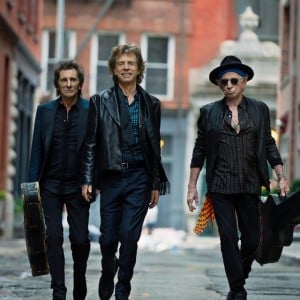
The Rolling Stones
The Rolling Stones
By the time the Rolling Stones began calling themselves the World's Greatest Rock & Roll Band in the late '60s, they had already staked out an impressive claim on the title. As the self-consciously dangerous alternative to the bouncy Merseybeat of <a href="spotify:artist:3WrFJ7ztbogyGnTHbHJFl2">the Beatles</a> in the British Invasion, the Stones had pioneered the gritty, hard-driving blues-based rock & roll that came to define hard rock. With his preening machismo and latent maliciousness, <a href="spotify:artist:3d2pb1dHTm8b61zAGVUVvO">Mick Jagger</a> became the prototypical rock frontman, tempering his macho showmanship with a detached, campy irony while <a href="spotify:artist:08avsqaGIlK2x3i2Cu7rKH">Keith Richards</a> and Brian Jones wrote the blueprint for sinewy, interlocking rhythm guitars. Backed by the strong yet subtly swinging rhythm section of bassist <a href="spotify:artist:5TKEKLhk0wTKM5m61BtKQC">Bill Wyman</a> and drummer <a href="spotify:artist:5e50biMeBYtqgeMAAMPi9k">Charlie Watts</a>, the Stones became the breakout band of the British blues scene, eclipsing such contemporaries as <a href="spotify:artist:3ICflSq6ZgYAIrm2CTkfVP">the Animals</a> and <a href="spotify:artist:5BaHqGtf6UAZnHfqdPaTDA">Them</a>. Over the course of their career, the Stones never really abandoned blues, but as soon as they gained popularity in the U.K., they began experimenting musically, incorporating the British pop of contemporaries like <a href="spotify:artist:3WrFJ7ztbogyGnTHbHJFl2">the Beatles</a>, <a href="spotify:artist:1SQRv42e4PjEYfPhS0Tk9E">the Kinks</a>, and <a href="spotify:artist:67ea9eGLXYMsO2eYQRui3w">the Who</a> into their sound. After a brief dalliance with psychedelia, the Stones re-emerged in the late '60s as a jaded, blues-soaked hard rock quintet. They had always flirted with the seedy side of rock & roll, but as the hippie dream began to break apart, they exposed and reveled in the new rock culture. It wasn't without difficulty, of course. Shortly after he was fired from the group, Jones was found dead in a swimming pool, while at a 1969 free concert at Altamont, a concertgoer was brutally killed during a Stones show. But the Stones never stopped going. For the next 50-plus years, they continued to record and perform, and while their albums weren't always blockbusters, they were never less than the most visible band of their era; certainly, none of their British peers continued to be as popular or productive as the Stones. No band since has proven to have such a broad fan base or such far-reaching popularity, and it is impossible to hear any of the groups that followed them without detecting some sort of influence, whether it was musical or aesthetic. Throughout their career, <a href="spotify:artist:3d2pb1dHTm8b61zAGVUVvO">Mick Jagger</a> (vocals) and <a href="spotify:artist:08avsqaGIlK2x3i2Cu7rKH">Keith Richards</a> (guitar, vocals) remained at the core of the Rolling Stones. The pair initially met as children at Dartford Maypole County Primary School. They drifted apart over the next ten years, eventually making each other's acquaintance again in 1960, when they met through a mutual friend, Dick Taylor, who was attending Sidcup Art School with <a href="spotify:artist:08avsqaGIlK2x3i2Cu7rKH">Richards</a>. At the time, <a href="spotify:artist:3d2pb1dHTm8b61zAGVUVvO">Jagger</a> was studying at the London School of Economics and playing with Taylor in the blues band Little Boy Blue & the Blue Boys. Shortly afterward, <a href="spotify:artist:08avsqaGIlK2x3i2Cu7rKH">Richards</a> joined the band. Within a year, they had met Brian Jones (guitar, vocals), a Cheltenham native who had dropped out of school to play saxophone and clarinet. By the time he became a fixture on the British blues scene, Jones already had a wild life. He ran away to Scandinavia when he was 16 and had already fathered two children. He returned to Cheltenham after a few months, where he began playing with <a href="spotify:artist:2QjZJgbOdNOYLnMLhuQsg2">the Ramrods</a>. Shortly afterward, he moved to London, where he played in <a href="spotify:artist:385tW2q0gMaQTkswc9lMSe">Alexis Korner</a>'s group, Blues Inc. Jones quickly decided he wanted to form his own group and advertised for members; among those he recruited was blues pianist <a href="spotify:artist:0VqVMPh99YLcMyJSNuhMZ9">Ian Stewart</a>. As he played with his group, Jones also moonlighted under the name Elmo Jones at the Ealing Blues Club. At the pub, he became reacquainted with Blues, Inc., which now featured drummer <a href="spotify:artist:5e50biMeBYtqgeMAAMPi9k">Charlie Watts</a>, and, on occasion, cameos by <a href="spotify:artist:3d2pb1dHTm8b61zAGVUVvO">Jagger</a> and <a href="spotify:artist:08avsqaGIlK2x3i2Cu7rKH">Richards</a>. Jones became friends with <a href="spotify:artist:3d2pb1dHTm8b61zAGVUVvO">Jagger</a> and <a href="spotify:artist:08avsqaGIlK2x3i2Cu7rKH">Richards</a>, and they soon began playing together with Taylor and <a href="spotify:artist:0VqVMPh99YLcMyJSNuhMZ9">Stewart</a>; during this time, <a href="spotify:artist:3d2pb1dHTm8b61zAGVUVvO">Jagger</a> was elevated to the status of Blues, Inc.'s lead singer. With the assistance of drummer <a href="spotify:artist:5AnIOBsnbRrmFIfaovZHMd">Tony Chapman</a>, the fledgling band recorded a demo tape. After it was rejected by <a href="spotify:search:label%3A%22EMI%22">EMI</a>, Taylor left the band to attend the Royal College of Art; he would later form <a href="spotify:artist:5U16QlMnlSAhkQxBZpLyLO">the Pretty Things</a>. Before Taylor's departure, the group named itself the Rolling Stones, borrowing the moniker from a <a href="spotify:artist:4y6J8jwRAwO4dssiSmN91R">Muddy Waters</a> song. The Rolling Stones gave their first performance at the Marquee Club in London on July 12, 1962. At the time, the group consisted of <a href="spotify:artist:3d2pb1dHTm8b61zAGVUVvO">Jagger</a>, <a href="spotify:artist:08avsqaGIlK2x3i2Cu7rKH">Richards</a>, Jones, pianist <a href="spotify:artist:0VqVMPh99YLcMyJSNuhMZ9">Ian Stewart</a>, drummer <a href="spotify:artist:15wnTd7xDnWW5YLlY4YjEc">Mick Avory</a>, and Dick Taylor, who had briefly returned to the fold. Weeks after the concert, Taylor left again and was replaced by <a href="spotify:artist:5TKEKLhk0wTKM5m61BtKQC">Bill Wyman</a>, formerly of the Cliftons. <a href="spotify:artist:15wnTd7xDnWW5YLlY4YjEc">Avory</a> also left the group -- he would later join <a href="spotify:artist:1SQRv42e4PjEYfPhS0Tk9E">the Kinks</a> -- and the Stones hired <a href="spotify:artist:5AnIOBsnbRrmFIfaovZHMd">Tony Chapman</a>, who proved to be unsatisfactory. After a few months of persuasion, the band recruited <a href="spotify:artist:5e50biMeBYtqgeMAAMPi9k">Charlie Watts</a>, who had quit Blues, Inc. to work at an advertising agency once that group's schedule became too hectic. By 1963, the band's lineup was set, and the Stones began an eight-month residency at the Crawdaddy Club, which proved to substantially increase their fan base. It also attracted the attention of <a href="spotify:artist:7osQlIEugmCDo8AXAyzlqq">Andrew Loog Oldham</a>, who became the Stones' manager, signing them from underneath the Crawdaddy Club's Giorgio Gomelsky. Although <a href="spotify:artist:7osQlIEugmCDo8AXAyzlqq">Oldham</a> didn't know much about music, he was gifted at promotion, and he latched upon the idea of fashioning the Stones as the bad-boy opposition to the clean-cut <a href="spotify:artist:3WrFJ7ztbogyGnTHbHJFl2">Beatles</a>. At his insistence, the heavyset yet meek <a href="spotify:artist:0VqVMPh99YLcMyJSNuhMZ9">Stewart</a> was forced out of the group, since his appearance contrasted with the rest of the bandmembers'. <a href="spotify:artist:0VqVMPh99YLcMyJSNuhMZ9">Stewart</a> didn't disappear from the Stones, though; he became one of their key roadies and played on their albums and tours until his death in 1985. With <a href="spotify:artist:7osQlIEugmCDo8AXAyzlqq">Oldham</a>'s help, the Rolling Stones signed with <a href="spotify:search:label%3A%22Decca+Records%22">Decca Records</a>, and that June released their debut single, a cover of <a href="spotify:artist:293zczrfYafIItmnmM3coR">Chuck Berry</a>'s "Come On." The single became a minor hit, reaching number 21, and the group supported it with appearances on festivals and package tours. At the end of the year, they released a version of <a href="spotify:artist:4x1nvY2FN8jxqAFA0DA02H">Lennon</a>-McCartney's "I Wanna Be Your Man" that soared into the Top 15. Early in 1964, they released a cover of <a href="spotify:artist:3wYyutjgII8LJVVOLrGI0D">Buddy Holly</a>'s "Not Fade Away," which shot to number three. "Not Fade Away" became their first American hit, reaching number 48 that spring. By that time, the Stones were notorious in their homeland. Considerably rougher and sexier than <a href="spotify:artist:3WrFJ7ztbogyGnTHbHJFl2">the Beatles</a>, the Stones were the subject of numerous sensationalized articles in the British press, culminating in a story about them urinating in public. All of these stories cemented the group as a dangerous, rebellious band in the minds of the public, and had the effect of beginning a manufactured rivalry between them and <a href="spotify:artist:3WrFJ7ztbogyGnTHbHJFl2">the Beatles</a>, which helped the group rocket to popularity in the U.S. In the spring of 1964, the Stones released their eponymous debut album, which was followed by "It's All Over Now," their first U.K. number one. That summer, they toured America to riotous crowds, recording the Five by Five EP at <a href="spotify:search:label%3A%22Chess+Records%22">Chess Records</a> in Chicago in the midst of the tour. By the time it was over, they had another number one U.K. single with <a href="spotify:artist:0Wxy5Qka8BN9crcFkiAxSR">Howlin' Wolf</a>'s "Little Red Rooster." Although the Stones had achieved massive popularity, <a href="spotify:artist:7osQlIEugmCDo8AXAyzlqq">Oldham</a> decided to push <a href="spotify:artist:3d2pb1dHTm8b61zAGVUVvO">Jagger</a> and <a href="spotify:artist:08avsqaGIlK2x3i2Cu7rKH">Richards</a> into composing their own songs, since they -- and his publishing company -- would receive more money that away. In June of 1964, the group released their first original single, "Tell Me (You're Coming Back)," which became their first American Top 40 hit. Shortly afterward, a version of <a href="spotify:artist:01Z8Z9K54zewyP04ZfGLSv">Irma Thomas</a>' "Time Is on My Side" became their first U.S. Top Ten. It was followed by "The Last Time" in early 1965, a number one U.K. and Top Ten U.S. hit that began a virtually uninterrupted string of <a href="spotify:artist:3d2pb1dHTm8b61zAGVUVvO">Jagger</a>-<a href="spotify:artist:08avsqaGIlK2x3i2Cu7rKH">Richards</a> hit singles. Still, it wasn't until the group released "(I Can't Get No) Satisfaction" in the summer of 1965 that they were elevated to superstars. Driven by a fuzz-guitar riff designed to replicate the sound of a horn section, "Satisfaction" signaled that <a href="spotify:artist:3d2pb1dHTm8b61zAGVUVvO">Jagger</a> and <a href="spotify:artist:08avsqaGIlK2x3i2Cu7rKH">Richards</a> had come into their own as songwriters, breaking away from their blues roots and developing a signature style of big, bluesy riffs and wry, sardonic lyrics. It stayed at number one for four weeks and began a string of Top Ten singles that ran for the next two years, including such classics as "Get Off My Cloud," "19th Nervous Breakdown," "As Tears Go By," and "Have You Seen Your Mother, Baby, Standing in the Shadow?" By 1966, the Stones had decided to respond to <a href="spotify:artist:3WrFJ7ztbogyGnTHbHJFl2">the Beatles</a>' increasingly complex albums with their first album of all-original material, Aftermath. Due to Brian Jones' increasingly exotic musical tastes, the record boasted a wide range of influences, from the sitar-drenched "Paint It, Black" to the Eastern drones of "I'm Going Home." These eclectic influences continued to blossom on Between the Buttons (1967), the most pop-oriented album the group ever made. Ironically, the album's release was bookended by two of the most notorious incidents in the band's history. Before the record was released, the Stones performed the suggestive "Let's Spend the Night Together," the B-side to the medieval ballad "Ruby Tuesday," on The Ed Sullivan Show, which forced <a href="spotify:artist:3d2pb1dHTm8b61zAGVUVvO">Jagger</a> to alter the song's title to an incomprehensible mumble, or else face being banned. In February of 1967, <a href="spotify:artist:3d2pb1dHTm8b61zAGVUVvO">Jagger</a> and <a href="spotify:artist:08avsqaGIlK2x3i2Cu7rKH">Richards</a> were arrested for drug possession, and within three months, Jones was arrested on the same charge. All three were given suspended jail sentences, and the group backed away from the spotlight as the summer of love kicked into gear in 1967. <a href="spotify:artist:3d2pb1dHTm8b61zAGVUVvO">Jagger</a>, along with his then-girlfriend <a href="spotify:artist:7mlge4peaoNgzTsY6M32RB">Marianne Faithfull</a>, went with <a href="spotify:artist:3WrFJ7ztbogyGnTHbHJFl2">the Beatles</a> to meet the Maharishi Mahesh Yogi; they were also prominent in the international broadcast of <a href="spotify:artist:3WrFJ7ztbogyGnTHbHJFl2">the Beatles</a>' "All You Need Is Love." Appropriately, the Stones' next single, "Dandelion"/"We Love You," was a psychedelic pop effort, and it was followed by their response to Sgt. Pepper's, Their Satanic Majesties Request, which was greeted with lukewarm reviews. The Stones' infatuation with psychedelia was brief. By early 1968, they had fired <a href="spotify:artist:7osQlIEugmCDo8AXAyzlqq">Andrew Loog Oldham</a> and hired Allen Klein as their manager. The move coincided with their return to driving rock & roll, which happened to coincide with <a href="spotify:artist:08avsqaGIlK2x3i2Cu7rKH">Richards</a>' discovery of open tunings, a move that gave the Stones their distinctively fat, powerful sound. The revitalized Stones were showcased on the malevolent single "Jumpin' Jack Flash," which climbed to number three in May 1968. Their next album, Beggar's Banquet, was finally released in the fall, after being delayed for five months due its controversial cover art of a dirty, graffiti-laden restroom. An edgy record filled with detours into straight blues and campy country, Beggar's Banquet was hailed as a masterpiece among the fledgling rock press. Although it was seen as a return to form, few realized that while it opened a new chapter of the Stones' history, it was also the end of their time with Brian Jones. Throughout the recording of Beggar's Banquet, Jones was on the sidelines due to his deepening drug addiction and his resentment of the dominance of <a href="spotify:artist:3d2pb1dHTm8b61zAGVUVvO">Jagger</a> and <a href="spotify:artist:08avsqaGIlK2x3i2Cu7rKH">Richards</a>. Jones left the band on June 9, 1969, claiming to be suffering from artistic differences between himself and his bandmembers. On July 3, 1969 -- less than a month after his departure -- Jones was found dead in his swimming pool. The coroner ruled that it was "death by misadventure," yet his passing was the subject of countless rumors over the next two years. By the time of his death, the Stones had already replaced Jones with <a href="spotify:artist:4tkgLX1wdWoOu2lyeQNYAi">Mick Taylor</a>, a former guitarist for <a href="spotify:artist:2ScuQMRWThcifBRIvNDFDC">John Mayall's Bluesbreakers</a>. He wasn't featured on "Honky Tonk Women," a number one single released days after Jones' funeral, and he contributed only a handful of leads on their next album, Let It Bleed. Released in the fall of 1969, Let It Bleed comprised sessions with Jones and Taylor, yet it continued the direction of Beggar's Banquet, signaling that a new era in the Stones' career had begun, one marked by ragged music and an increasingly wasted sensibility. Following <a href="spotify:artist:3d2pb1dHTm8b61zAGVUVvO">Jagger</a>'s filming of Ned Kelly in Australia during the first part of 1969, the group launched its first American tour in three years. Throughout the tour -- the first where they were billed as the World's Greatest Rock & Roll Band -- the group broke attendance records, but it was given a sour note when they staged a free concert at Altamont Speedway. On the advice of <a href="spotify:artist:4TMHGUX5WI7OOm53PqSDAT">the Grateful Dead</a>, the Stones hired Hell's Angels as security, but that plan backfired tragically. The entire show was unorganized and in shambles, and it turned tragic when the Angels killed a young Black man, <a href="spotify:artist:4bE2H74WOY1CAAzliJUBys">Meredith Hunter</a>, during the Stones' performance. In the wake of the public outcry, the Stones again retreated from the spotlight and dropped "Sympathy for the Devil," which some critics ignorantly claimed incited the violence, from their set. As the group entered a hiatus, they released the live Get Yer Ya-Ya's Out! in the fall of 1970. It was their last album for <a href="spotify:search:label%3A%22Decca%2FLondon%22">Decca/London</a>, and they formed <a href="spotify:search:label%3A%22Rolling+Stones+Records%22">Rolling Stones Records</a>, which became a subsidiary of <a href="spotify:search:label%3A%22Atlantic%22">Atlantic</a>. During 1970, <a href="spotify:artist:3d2pb1dHTm8b61zAGVUVvO">Jagger</a> starred in Nicolas Roeg's cult film Performance and married Nicaragua model Bianca Perez Morena de Macias; the couple quickly entered high society. As <a href="spotify:artist:3d2pb1dHTm8b61zAGVUVvO">Jagger</a> was jet-setting, <a href="spotify:artist:08avsqaGIlK2x3i2Cu7rKH">Richards</a> was slumming, hanging out with country-rock pioneer <a href="spotify:artist:1KA3WXYMPLxomNuoE22LYd">Gram Parsons</a>. <a href="spotify:artist:08avsqaGIlK2x3i2Cu7rKH">Keith</a> wound up having more musical influence on 1971's Sticky Fingers, the first album the Stones released through their new label. Following its release, the band retreated to France in tax exile, where they shared a house and recorded a double album, Exile on Main St. Upon its May 1972 release, Exile on Main St. was widely panned, but over time it came to be considered one of the group's defining moments. Following Exile, the Stones began to splinter in two, as <a href="spotify:artist:3d2pb1dHTm8b61zAGVUVvO">Jagger</a> concentrated on being a celebrity and <a href="spotify:artist:08avsqaGIlK2x3i2Cu7rKH">Richards</a> sank into drug addiction. The band remained popular throughout the '70s, but their critical support waned. Goats Head Soup, released in 1973, reached number one, as did 1974's It's Only Rock 'n' Roll, but neither record was particularly well-received. Taylor left the band after It's Only Rock 'n' Roll, and the group recorded their next album as they auditioned new lead guitarists, including <a href="spotify:artist:0AD4odMWVQ2wUSlgxOB5Rl">Jeff Beck</a>. They finally settled on <a href="spotify:artist:5HFtQOrPHOFptM1WF9xPuK">Ron Wood</a>, former lead guitarist for <a href="spotify:artist:3v4feUQnU3VEUqFrjmtekL">the Faces</a> and <a href="spotify:artist:2y8Jo9CKhJvtfeKOsYzRdT">Rod Stewart</a>, in 1976, the same year they released Black n' Blue, which only featured <a href="spotify:artist:5HFtQOrPHOFptM1WF9xPuK">Wood</a> on a handful of cuts. During the mid- and late '70s, all the Stones pursued side projects, with both <a href="spotify:artist:5TKEKLhk0wTKM5m61BtKQC">Wyman</a> and <a href="spotify:artist:5HFtQOrPHOFptM1WF9xPuK">Wood</a> releasing solo albums with regularity. <a href="spotify:artist:08avsqaGIlK2x3i2Cu7rKH">Richards</a> was arrested in Canada in 1977 with his common-law wife Anita Pallenberg for heroin possession. After his arrest, he cleaned up and was given a suspended sentence the following year. The band reconvened in 1978 to record Some Girls, an energetic response to punk, new wave, and disco. The record and its first single, the thumping disco-rocker "Miss You," both reached number one, and the album restored the group's image. However, the band squandered that goodwill with the follow-up, Emotional Rescue, a number one record that nevertheless received lukewarm reviews upon its 1980 release. Tattoo You, released the following year, fared better both critically and commercially, as the singles "Start Me Up" and "Waiting on a Friend" helped the album spend nine weeks at number one. The Stones supported Tattoo You with an extensive stadium tour captured in Hal Ashby's movie Let's Spend the Night Together and the 1982 live album Still Life. Tattoo You proved to be the last time the Stones completely dominated the charts and the stadiums. Although they continued to sell out concerts in the '80s and '90s, their records didn't sell as well as previous efforts, partially because the albums suffered due to <a href="spotify:artist:3d2pb1dHTm8b61zAGVUVvO">Jagger</a> and <a href="spotify:artist:08avsqaGIlK2x3i2Cu7rKH">Richards</a>' notorious mid-'80s feud. Starting with 1983's Undercover, the duo were conflicted about which way the band should go, with <a href="spotify:artist:3d2pb1dHTm8b61zAGVUVvO">Jagger</a> wanting the Stones to follow contemporary trends and <a href="spotify:artist:08avsqaGIlK2x3i2Cu7rKH">Richards</a> wanting them to stay true to their rock roots. As a result, Undercover was a mean-spirited, unfocused record that had relatively weak sales and mixed reviews. Released in 1986, Dirty Work suffered a worse fate, since <a href="spotify:artist:3d2pb1dHTm8b61zAGVUVvO">Jagger</a> was preoccupied with his fledgling solo career. Once <a href="spotify:artist:3d2pb1dHTm8b61zAGVUVvO">Jagger</a> decided that the Stones would not support Dirty Work with a tour, <a href="spotify:artist:08avsqaGIlK2x3i2Cu7rKH">Richards</a> decided to make his own solo record with 1988's Talk Is Cheap. Appearing a year after <a href="spotify:artist:3d2pb1dHTm8b61zAGVUVvO">Jagger</a>'s failed second solo album, Talk Is Cheap received good reviews and went gold, prompting <a href="spotify:artist:3d2pb1dHTm8b61zAGVUVvO">Jagger</a> and <a href="spotify:artist:08avsqaGIlK2x3i2Cu7rKH">Richards</a> to reunite late in 1988. The following year, the Stones released Steel Wheels, which was received with good reviews, but the record was overshadowed by its supporting tour, which grossed over 140 million dollars and broke many box office records. In 1991, the live album Flashpoint, which was culled from the Steel Wheels shows, was released. Following the release, <a href="spotify:artist:5TKEKLhk0wTKM5m61BtKQC">Bill Wyman</a> left the band; he published a memoir, Stone Alone, within a few years of leaving. The Stones didn't immediately replace <a href="spotify:artist:5TKEKLhk0wTKM5m61BtKQC">Wyman</a>, since they were all working on solo projects; this time, there was none of the animosity surrounding their mid-'80s projects. The group reconvened in 1994 with bassist Darryl Jones, who had previously played with <a href="spotify:artist:0kbYTNQb4Pb1rPbbaF0pT4">Miles Davis</a> and <a href="spotify:artist:0Ty63ceoRnnJKVEYP0VQpk">Sting</a>, to record and release the Don Was-produced Voodoo Lounge. The album received the band's strongest reviews in years, and its accompanying tour was even more successful than the Steel Wheels tour. On top of being more successful than its predecessor, Voodoo Lounge also won the Stones their first Grammy for Best Rock Album. Upon the completion of the Voodoo Lounge tour, the Stones released the live "unplugged" album Stripped in the fall of 1995. Similarly, after wrapping up their tour in support of 1997's Bridges to Babylon, the group issued yet another live set, No Security, the following year. A high-profile greatest-hits tour in 2002 was launched despite the lack of a studio album to support, and its album document, Live Licks, appeared in 2004. A year later, the group issued A Bigger Bang, their third effort with producer Don Was. In 2006, Martin Scorsese filmed two of the group's performances at New York City's Beacon Theatre. The resulting Shine a Light, which included guest appearances from <a href="spotify:artist:2gCsNOpiBaMNh20jQ5prf0">Buddy Guy</a>, <a href="spotify:artist:4FZ3j1oH43e7cukCALsCwf">Jack White</a>, and <a href="spotify:artist:1l7ZsJRRS8wlW3WfJfPfNS">Christina Aguilera</a>, was released in theaters in 2008. The accompanying soundtrack reached the number two spot on the U.K. charts. Following Shine a Light, the Stones turned their attention toward their legacy. For <a href="spotify:artist:08avsqaGIlK2x3i2Cu7rKH">Keith Richards</a>, this meant delving into writing his autobiography, Life -- the memoir was published to acclaim in the fall of 2010 and generated some controversy due to comments <a href="spotify:artist:08avsqaGIlK2x3i2Cu7rKH">Keith</a> made about <a href="spotify:artist:3d2pb1dHTm8b61zAGVUVvO">Mick</a> -- but the Stones in general spent time mining their archives, something they'd previously avoided. In 2010, they released a super-deluxe edition of Exile on Main St. that contained a bonus disc of rarities and outtakes, including a few newly finished songs like "Plundered My Soul." This was followed in 2011 by a super-deluxe edition of Some Girls that also contained unheard songs and outtakes. That same year, the Stones opened up their Rolling Stones Archive, which offered official digital releases of classic live bootlegs like 1973's The Brussels Affair. All this was a prelude to their 50th anniversary in 2012, which the group celebrated with a hardcover book, a documentary called Crossfire Hurricane, and a new compilation called GRRR! The Stones also played a handful of star-studded concerts at the end of the year and in the first half of 2013, several of which featured guest spots from the long-departed <a href="spotify:artist:4tkgLX1wdWoOu2lyeQNYAi">Mick Taylor</a>. These live shows culminated with a headlining spot at Glastonbury and two July 2013 concerts at Hyde Park; highlights from the Hyde Park shows were released that July and, later in the year, there was a home video/CD release of the concert called Sweet Summer Sun: Live in Hyde Park. Over the next few years, the Stones played concerts regularly -- a highlight was a March 2016 concert in Havana, Cuba -- and slowly worked on an album that was teased in September 2016, the same week their <a href="spotify:search:label%3A%22Decca%2FLondon%22">Decca/London</a> works were released as the box set The Rolling Stones in Mono. On December 2, 2016, the Stones released Blue & Lonesome, a collection of Chicago blues covers that was their first studio album in 11 years. The band had two major archival projects released in the last quarter of 2017: a 50th anniversary edition of Their Satanic Majesties Request and On Air, the first official release of their '60s BBC recordings. The band's 2018 No Filter tour of Europe spilled over into 2019 when they announced it would include a massive stadium tour of the U.S. The tour was delayed due to <a href="spotify:artist:3d2pb1dHTm8b61zAGVUVvO">Jagger</a>'s need for emergency heart surgery -- he recovered successfully, and the band returned to the road -- but the release of the new compilation Honk was undisturbed. Concentrating on music made since 1971, Honk appeared in April 2019. Later that year came the arrival of the live LP/concert film Bridges to Bremen, which captured the group performing in the German city on September 2, 1998, in support of the Bridges to Babylon album. A 50th anniversary edition of Let It Bleed also appeared in 2019. In April 2020, the Stones released the single "Living in a Ghost Town." It was their first new material since 2012, taken from sessions for a studio album that the band had been working toward since 2015. Later that year, they released a deluxe reissue of Goats Head Soup. On August 5, 2021, the Rolling Stones announced that <a href="spotify:artist:5e50biMeBYtqgeMAAMPi9k">Watts</a> would be unable to appear with the band on an upcoming United States tour (already postponed because of the COVID-19 pandemic) due to health concerns, and that <a href="spotify:artist:53XJ4BIv6iblv2Osdpp5ls">Steve Jordan</a> (who had worked with <a href="spotify:artist:08avsqaGIlK2x3i2Cu7rKH">Keith Richards</a> on a number of projects) would be taking his place. Less than three weeks later, <a href="spotify:artist:5e50biMeBYtqgeMAAMPi9k">Charlie Watts</a> died in a London hospital on August 24, 2021; he was 80 years old. The Rolling Stones resumed their No Filter tour in September 2021, staying on the road through the end of the year. <a href="spotify:artist:53XJ4BIv6iblv2Osdpp5ls">Jordan</a> remained in the drummer's seat for the celebratory Sixty Tour in 2022. During that year, the Stones also dug into their archive for Live at the El Mocambo, presenting the first official release of a heavily bootlegged pair of small club dates from 1977. After many years of work, <a href="spotify:artist:3d2pb1dHTm8b61zAGVUVvO">Mick Jagger</a> pushed the band to complete the recordings for their first album of original material since 2005 and they finally finished work in early 2023. Largely produced by <a href="spotify:artist:4olE3I5QU0dvSR7LIpqTXc">Andrew Watt</a>, the resulting Hackney Diamonds was released in October and contained two songs from <a href="spotify:artist:5e50biMeBYtqgeMAAMPi9k">Charlie Watts</a>' last sessions with the band, as well as cameos by <a href="spotify:artist:4STHEaNw4mPZ2tzheohgXB">Paul McCartney</a>, <a href="spotify:artist:3PhoLpVuITZKcymswpck5b">Elton John</a>, <a href="spotify:artist:1HY2Jd0NmPuamShAr6KMms">Lady Gaga</a>, <a href="spotify:artist:7guDJrEfX3qb6FEbdPA5qi">Stevie Wonder</a>, and, in his first contribution to a Stones album since 1989, the band's original bassist, <a href="spotify:artist:5TKEKLhk0wTKM5m61BtKQC">Bill Wyman</a>. Along with reaching number three on the Billboard 200 and number one in the U.K., Hackney Diamonds took home the award for Best Rock Album at the 2025 Grammy Awards ceremony. ~ Stephen Thomas Erlewine, Rovi
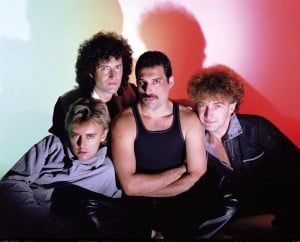
Queen
Queen
Queen epitomize all the glittery excess of album-oriented rock in the 1970s, marrying the crunch of heavy metal to the pomp of prog rock then leavening the heady mixture with camp humor. It's an eccentric blend that proves to be surprisingly versatile, allowing for the mock-operatic "Bohemian Rhapsody," soaring arena rock like "Somebody to Love," thumping rockers like "Fat Bottomed Girls," the neo-rockabilly "Crazy Little Thing Called Love," and the disco excursion "Another One Bites the Dust." Queen's range proves that they were a deceptively egalitarian band: they're the only classic rock group where each member wrote at least one of the group's signature songs. Despite this division of labor, frontman <a href="spotify:artist:4M1FpEWs2PeYfJe7xxJfhH">Freddie Mercury</a> commanded attention both during his life and after his death. A powerful singer with a penchant for drama, <a href="spotify:artist:4M1FpEWs2PeYfJe7xxJfhH">Mercury</a> possessed an exaggerated charisma and a devilish sense of humor, qualities that made him one of the great rock stars of his generation. Queen's reign began in earnest with 1975's A Night at the Opera and lasted through The Game in 1980, a half-decade filled with big hits that turned into enduring standards. Although the hits weren't as big in the '80s, the group retained its international popularity through <a href="spotify:artist:4M1FpEWs2PeYfJe7xxJfhH">Mercury</a>'s death in 1991. After his passing, Queen's original LPs found a new audience, partially cultivated by surviving members <a href="spotify:artist:2NcbLU1bW55eahD0UgD7U3">Brian May</a> and <a href="spotify:artist:2PZEd7yktruWruOqORRChA">Roger Taylor</a> tending to archival releases and staying on the road, either with <a href="spotify:artist:2gaWNB3YrlTc0KRlHNqhol">Paul Rodgers</a> or <a href="spotify:artist:6prmLEyn4LfHlD9NnXWlf7">Adam Lambert</a> as <a href="spotify:artist:4M1FpEWs2PeYfJe7xxJfhH">Mercury</a>'s replacement. Queen's legacy also was assisted by the 2018 release of Bohemian Rhapsody, a biopic of the band featuring Rami Malek in an Oscar-winning turn as <a href="spotify:artist:4M1FpEWs2PeYfJe7xxJfhH">Freddie Mercury</a>. The origins of Queen lay in the hard rock psychedelic group Smile, which guitarist <a href="spotify:artist:2NcbLU1bW55eahD0UgD7U3">Brian May</a> and drummer <a href="spotify:artist:2PZEd7yktruWruOqORRChA">Roger Taylor</a> joined in 1967. Following the departure of Smile's lead vocalist, <a href="spotify:artist:6EtRaGeodP9stdGz92vPtB">Tim Staffell</a>, in 1971, <a href="spotify:artist:2NcbLU1bW55eahD0UgD7U3">May</a> and <a href="spotify:artist:2PZEd7yktruWruOqORRChA">Taylor</a> formed a group with <a href="spotify:artist:4M1FpEWs2PeYfJe7xxJfhH">Freddie Mercury</a>, the former lead singer for Wreckage. Within a few months, bassist <a href="spotify:artist:6KrRVxAW7yvCYrO1ALqPG5">John Deacon</a> joined them, and they began rehearsing. Over the next two years, as all four members completed college, they simply rehearsed, playing just a handful of gigs. By 1973, they had begun to concentrate on their career, releasing their debut album, Queen, that year and setting out on their first tour. Produced by the band, along with <a href="spotify:artist:5UnZl2Izl86NC6yfVwG0CT">Roy Thomas Baker</a> and John Anthony, Queen was more or less a straight metal album and drew favorable comparisons to <a href="spotify:artist:36QJpDe2go2KgaRleHCDTp">Led Zeppelin</a>. However, it was with their sophomore album, Queen II, that the band unexpectedly broke through in Britain in early 1974. Before its release, the band played Top of the Pops, performing "Seven Seas of Rhye." Both the song and the performance were smash successes, and the single rocketed into the Top Ten, setting the stage for Queen II to reach number five. Following its release, the group embarked on its first American tour, supporting <a href="spotify:artist:6ysQi6NI88X627t2srsWz6">Mott the Hoople</a>. On the strength of their campily dramatic performances, the album climbed to number 43 in the States. Queen released their third album, Sheer Heart Attack, before the end of 1974. The music hall-meets-<a href="spotify:artist:36QJpDe2go2KgaRleHCDTp">Zeppelin</a> "Killer Queen" climbed to number two on the U.K. charts, taking the album to number two as well. Sheer Heart Attack made some inroads in America, setting the stage for the breakthrough of 1975's A Night at the Opera. Queen labored long and hard over the record; according to many reports, it was the most expensive rock record ever made at the time of its release. The first single, "Bohemian Rhapsody," became Queen's signature song, and with its bombastic, mock-operatic structure punctuated by heavy metal riffing, encapsulated their ambitious, genre-bending musical vision. To support "Bohemian Rhapsody," Queen shot one of the first conceptual music videos, and the gamble paid off as the single spent nine weeks at number one in England, breaking the record for the longest run at number one. The song and A Night at the Opera were equally successful in America, as the album climbed into the Top Ten and quickly went platinum. Following A Night at the Opera, Queen were established as superstars, yet they continued to work at a rapid rate. In the summer of 1976, they performed a free concert at London's Hyde Park that broke attendance records, and they released the hit single "Somebody to Love" a few months later. It was followed by A Day at the Races, which was essentially a scaled-down version of A Night at the Opera that reached number one in the U.K. and number five in the U.S. They continued to pile up hit singles in both Britain and America over the next five years, as each of their albums went into the Top Ten, always going gold and usually platinum in the process. Featuring the Top Five double-A-sided single "We Are the Champions"/"We Will Rock You," News of the World became a Top Ten hit in 1977. The following year, Jazz nearly replicated that success, with the single "Fat Bottomed Girls"/"Bicycle Race" becoming an international hit. Queen were at the height of their popularity as they entered the '80s, releasing The Game, their most diverse album to date, in 1980. On the strength of two number one singles -- the rockabilly-inspired "Crazy Little Thing Called Love" and the disco-fied "Another One Bites the Dust" -- The Game became the group's first American number one album. Their largely instrumental soundtrack to Flash Gordon arrived later that same year. With the help of <a href="spotify:artist:0oSGxfWSnnOXhD2fKuz2Gy">David Bowie</a>, Queen were able to successfully compete with new wave with the 1981 hit single "Under Pressure" -- their first U.K. number one since "Bohemian Rhapsody" -- which was included both on 1981's Greatest Hits and 1982's Hot Space. Hot Space proved a moderate hit and paved the way for the more rock-oriented The Works, which arrived in 1984. Also a minor hit, it was buoyed the singles "Radio Ga Ga," "Hammer to Fall," and "I Want to Break Free." Shortly afterward, Queen left <a href="spotify:search:label%3A%22Elektra%22">Elektra</a> and signed with <a href="spotify:search:label%3A%22Capitol%22">Capitol</a>. During this period, Queen began touring foreign markets, cultivating a large, dedicated fan base in Latin America, Asia, and Africa. In 1985, they returned to renewed popularity in Britain in the wake of their show-stopping performance at Live Aid. The following year, they released A Kind of Magic to strong European sales. It debuted at number one in the U.K. and remained there for over 60 weeks, spawning the singles "A Kind of Magic," "One Vision," "Friends Will Be Friends," and "Who Wants to Live Forever." The Miracle followed in 1989 and proved similarly successful, debuting at number one in the U.K. and cracking the Top 30 of the Billboard 200. The group's 14th studio album, 1991's Innuendo, was greeted even more favorably, going gold and peaking at number 30 in the U.S. It was a far bigger success in Europe, entering the U.K. charts at number one. However, by 1991, Queen had drastically scaled back their activity, causing rumors to circulate about <a href="spotify:artist:4M1FpEWs2PeYfJe7xxJfhH">Freddie Mercury</a>'s health. On November 23, the singer issued a statement confirming that he had AIDS. <a href="spotify:artist:4M1FpEWs2PeYfJe7xxJfhH">Mercury</a> died the next day from bronchial pneumonia resulting from his illness. The following spring, the remaining members of Queen held a memorial concert at Wembley Stadium that was broadcast to an international audience of more than one billion. Featuring such guest artists as <a href="spotify:artist:0oSGxfWSnnOXhD2fKuz2Gy">David Bowie</a>, <a href="spotify:artist:3PhoLpVuITZKcymswpck5b">Elton John</a>, <a href="spotify:artist:5MspMQqdVbdwP6ax3GXqum">Annie Lennox</a>, <a href="spotify:artist:6H1RjVyNruCmrBEWRbD0VZ">Def Leppard</a>, and <a href="spotify:artist:3qm84nBOXUEQ2vnTfUTTFC">Guns N' Roses</a>, the concert raised millions for the Mercury Phoenix Trust, which was established for AIDS awareness. The concert coincided with a revival of interest in "Bohemian Rhapsody," which climbed to number two in the U.S. and number one in the U.K. in the wake of its appearance in the Mike Myers comedy Wayne's World. Following <a href="spotify:artist:4M1FpEWs2PeYfJe7xxJfhH">Mercury</a>'s death, the remaining members of Queen were fairly quiet. <a href="spotify:artist:2NcbLU1bW55eahD0UgD7U3">Brian May</a> released his second solo album, Back to the Light, in 1993, ten years after the release of his first record. <a href="spotify:artist:2PZEd7yktruWruOqORRChA">Roger Taylor</a> cut a few albums with the Cross, which he had been playing with since 1987, while <a href="spotify:artist:6KrRVxAW7yvCYrO1ALqPG5">Deacon</a> essentially retired. The three reunited in 1994 to record backing tapes for vocal tracks <a href="spotify:artist:4M1FpEWs2PeYfJe7xxJfhH">Mercury</a> recorded on his deathbed. The resulting album, Made in Heaven, was released in 1995 to strong sales, particularly in Europe. Crown Jewels, a box set repackaging their first eight LPs, followed in 1998. Archival live recordings, DVDs, and compilations continued to appear into the new millennium. The Queen name was revived in 2005, but this time with "+ <a href="spotify:artist:2gaWNB3YrlTc0KRlHNqhol">Paul Rodgers</a>" appended to it. <a href="spotify:artist:2gaWNB3YrlTc0KRlHNqhol">Rodgers</a>, the former lead singer of <a href="spotify:artist:2e53aHBQdCMKWqHDuyJsjC">Free</a> and <a href="spotify:artist:5AEG63ajney2BoDXi0Vb84">Bad Company</a>, joined <a href="spotify:artist:2NcbLU1bW55eahD0UgD7U3">Brian May</a> and <a href="spotify:artist:2PZEd7yktruWruOqORRChA">Roger Taylor</a> (<a href="spotify:artist:6KrRVxAW7yvCYrO1ALqPG5">John Deacon</a> remained retired) for several live shows, one of which was documented on 2005's Return of the Champions, a double-disc release issued by the <a href="spotify:search:label%3A%22Hollywood%22">Hollywood</a> label. International touring continued, as did a new studio album featuring <a href="spotify:artist:2gaWNB3YrlTc0KRlHNqhol">Rodgers</a>' vocals. Released under the "Queen + <a href="spotify:artist:2gaWNB3YrlTc0KRlHNqhol">Paul Rodgers</a>" tag, The Cosmos Rocks appeared in September 2008, followed by an American release one month later. Reception was decidedly mixed. <a href="spotify:artist:2gaWNB3YrlTc0KRlHNqhol">Rodgers</a> departed Queen in 2009 and in his wake came a new compilation called Absolute Greatest. TV appearances followed over the next two years, including a spot on the 2009 American Idol finale where they performed with <a href="spotify:artist:6prmLEyn4LfHlD9NnXWlf7">Adam Lambert</a>, and in 2010 Queen wound up leaving their home of <a href="spotify:search:label%3A%22EMI%22">EMI</a> for <a href="spotify:search:label%3A%22Island%22">Island</a>, which brought all of the group's recordings to <a href="spotify:search:label%3A%22Universal+Records%22">Universal Records</a>. A new round of reissues followed in 2011, along with a performance with <a href="spotify:artist:6prmLEyn4LfHlD9NnXWlf7">Lambert</a> at the MTV Europe Music Awards, and the vocalist soon became a fixture with the band, as Queen performed several big concerts and television performances in 2012 and 2013, followed by a full tour in 2014. Also that year, Queen released another compilation, Queen Forever, which was anchored by reworked versions of three old songs, including a solo number by <a href="spotify:artist:4M1FpEWs2PeYfJe7xxJfhH">Mercury</a> where he duetted with <a href="spotify:artist:3fMbdgg4jU18AjLCKBhRSm">Michael Jackson</a>. The archival live album, A Night at the Odeon, featuring the band's 1975 Christmas Eve performance at London's Hammersmith Odeon, appeared in 2015. Over the next two years, the band stayed active, appearing live with <a href="spotify:artist:6prmLEyn4LfHlD9NnXWlf7">Lambert</a>. In 2018, Queen was the subject of the biopic Bohemian Rhapsody, which starred Rami Malek as <a href="spotify:artist:4M1FpEWs2PeYfJe7xxJfhH">Freddie Mercury</a>. The band contributed to the soundtrack, which featured classic tracks as well as live recordings and several songs reworked for the film. Bohemian Rhapsody became an international hit and took home four Academy Awards, including Malek's award for Best Actor. A concert collection featuring <a href="spotify:artist:6prmLEyn4LfHlD9NnXWlf7">Lambert</a>, Live Around the World, arrived in October 2020 but the next major Queen project was an elaborate Collector's Edition reissue of The Miracle. The 1989 album was expanded into a five-CD set containing additional Blu-Rays, DVDs and LPs, all featuring previously unheard material, such as the <a href="spotify:artist:4M1FpEWs2PeYfJe7xxJfhH">Mercury</a>-sung "Face It Alone," which was released as a single prior to the box's October 2022 release. The band continued to tour semi-regularly with <a href="spotify:artist:6prmLEyn4LfHlD9NnXWlf7">Lambert</a> as vocalist, hitting North America in 2023 and Japan in early 2024.~ Stephen Thomas Erlewine
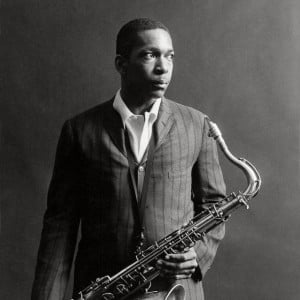
John Coltrane
John Coltrane
A towering musical figure of the 20th century, saxophonist John Coltrane reset the parameters of jazz during his decade as a leader. At the outset, he was a vigorous practitioner of hard bop, gaining prominence as a sideman for <a href="spotify:artist:0kbYTNQb4Pb1rPbbaF0pT4">Miles Davis</a> before setting out as a leader in 1957, when he released Coltrane on <a href="spotify:search:label%3A%22Prestige%22">Prestige</a> and Blue Train on <a href="spotify:search:label%3A%22Blue+Note%22">Blue Note</a>. Coltrane quickly expanded his horizons, pioneering a technique critic Ira Gitler dubbed "sheets of sound," consisting of the saxophonist playing a flurry of notes on his tenor within the confines of a few chords. During his last days with <a href="spotify:artist:0kbYTNQb4Pb1rPbbaF0pT4">Davis</a>, along with his earliest records for <a href="spotify:search:label%3A%22Atlantic%22">Atlantic</a>, Coltrane leaned into this technique, but as he developed his career as a leader in the early '60s, he also turned lyrical. His sweet, fluid soprano sax distinguished My Favorite Things, which helped turn the album into a standard upon its release in 1961, but Coltrane soon backed away from mainstream acceptance. Working with pianist <a href="spotify:artist:2EsmKkHsXK0WMNGOtIhbxr">McCoy Tyner</a>, drummer <a href="spotify:artist:4dUMhhUjQ2YcNTvab29hYF">Elvin Jones</a>, and bassist <a href="spotify:artist:5EwMPIB049C7NXsU4yG2xu">Jimmy Garrison</a> -- a band that would be labeled the "Classic Quartet" -- Coltrane entered a fearless exploratory phase, explicitly incorporating his spiritual quest into his experimental music. A Love Supreme, an album released on <a href="spotify:search:label%3A%22Impulse%21%22">Impulse!</a> in 1965, marked the popular height of this period, but Coltrane continued to voyage to the outer edges of jazz in his final years, collaborating with <a href="spotify:artist:7C2DSqaNkh0w77O5Jz1FKh">Archie Shepp</a> and <a href="spotify:artist:3JLUCojZaHrX2LaUkSj7Ud">Pharoah Sanders</a>. Liver cancer ended his life prematurely: he died at the age of 40 in 1967, just ten years after his first LP as a leader -- but Coltrane's legacy was so varied and rich, he remained the touchstone for creativity in jazz for decades after his passing. Coltrane was the son of John R. Coltrane, a tailor and amateur musician, and Alice (Blair) Coltrane. Two months after his birth, his maternal grandfather, the Reverend William Blair, was promoted to presiding elder in the A.M.E. Zion Church and moved his family, including his infant grandson, to High Point, North Carolina, where Coltrane grew up. Shortly after he graduated from grammar school in 1939, his father, his grandparents, and his uncle died, leaving him to be raised in a family consisting of his mother, his aunt, and his cousin. His mother worked as a domestic to support the family. The same year, he joined a community band in which he played clarinet and E flat alto horn; he took up the alto saxophone in his high school band. During World War II, Coltrane's mother, aunt, and cousin moved north to New Jersey to seek work, leaving him with family friends; in 1943, when he graduated from high school, he too headed north, settling in Philadelphia. Eventually, the family was reunited there. While taking jobs outside music, Coltrane briefly attended the Ornstein School of Music and studied at Granoff Studios. He also began playing in local clubs. In 1945, he was drafted into the navy and stationed in Hawaii. He never saw combat, but he continued to play music and, in fact, made his first recording with a quartet of other sailors on July 13, 1946. A performance of <a href="spotify:artist:4w8eKJO83kKgKRLbMKM2zB">Tadd Dameron</a>'s "Hot House," it was released in 1993 on the Rhino Records anthology The Last Giant. Coltrane was discharged in the summer of 1946 and returned to Philadelphia. That fall, he began playing in the Joe Webb Band. In early 1947, he switched to the King Kolax Band. During the year, he switched from alto to tenor saxophone. One account claims that this was as the result of encountering alto saxophonist <a href="spotify:artist:4Ww5mwS7BWYjoZTUIrMHfC">Charlie Parker</a> and feeling the better-known musician had exhausted the possibilities on the instrument; another says that the switch occurred simply because Coltrane next joined a band led by <a href="spotify:artist:0R3bGv703d8JFKdZxsHr58">Eddie "Cleanhead" Vinson</a>, who was an alto player, forcing Coltrane to play tenor. He moved on to <a href="spotify:artist:5GX8UFlG4vXVXDv8KqDLvk">Jimmy Heath</a>'s group in mid-1948, staying with the band, which evolved into <a href="spotify:artist:3z4qqrJqPWfTl9CSUNxb93">the Howard McGhee All Stars</a> until early 1949, when he returned to Philadelphia. That fall, he joined a big band led by <a href="spotify:artist:5RzjqfPS0Bu4bUMkyNNDpn">Dizzy Gillespie</a>, remaining until the spring of 1951, by which time the band had been trimmed to a septet. On March 1, 1951, he took his first solo on record during a performance of "We Love to Boogie" with <a href="spotify:artist:5RzjqfPS0Bu4bUMkyNNDpn">Gillespie</a>. At some point during this period, Coltrane became a heroin addict, which made him more difficult to employ. He played with various bands, mostly around Philadelphia, during the early '50s, his next important job coming in the spring of 1954, when <a href="spotify:artist:7lRFrrINQTY35g8hq0kXY5">Johnny Hodges</a>, temporarily out of the <a href="spotify:artist:4F7Q5NV6h5TSwCainz8S5A">Duke Ellington</a> band, hired him. But he was fired because of his addiction in September 1954. He returned to Philadelphia, where he was playing when he was hired by <a href="spotify:artist:0kbYTNQb4Pb1rPbbaF0pT4">Miles Davis</a> a year later. His association with <a href="spotify:artist:0kbYTNQb4Pb1rPbbaF0pT4">Davis</a> was the big break that finally established him as an important jazz musician. <a href="spotify:artist:0kbYTNQb4Pb1rPbbaF0pT4">Davis</a>, a former drug addict himself, had kicked his habit and gained recognition at the Newport Jazz Festival in July 1955, resulting in a contract with <a href="spotify:search:label%3A%22Columbia+Records%22">Columbia Records</a> and the opportunity to organize a permanent band, which, in addition to him and Coltrane, consisted of pianist <a href="spotify:artist:35iymrFS4VnsKn35ebHKX9">Red Garland</a>, bassist <a href="spotify:artist:0M1UOBJZ9tcKJbrbnVlHZG">Paul Chambers</a>, and drummer <a href="spotify:artist:4WhH68K75YKSAwHAqWFpi1">"Philly" Joe Jones</a>. This unit immediately began to record extensively, not only because of the <a href="spotify:search:label%3A%22Columbia%22">Columbia</a> contract, but also because <a href="spotify:artist:0kbYTNQb4Pb1rPbbaF0pT4">Davis</a> had signed with the major label before fulfilling a deal with jazz independent <a href="spotify:search:label%3A%22Prestige+Records%22">Prestige Records</a> that still had five albums to run. The trumpeter's <a href="spotify:search:label%3A%22Columbia%22">Columbia</a> debut, 'Round About Midnight, which he immediately commenced recording, did not appear until March 1957. The first fruits of his association with Coltrane came in April 1956 with the release of The New Miles Davis Quintet (aka Miles), recorded for <a href="spotify:search:label%3A%22Prestige%22">Prestige</a> on November 16, 1955. During 1956, in addition to his recordings for <a href="spotify:search:label%3A%22Columbia%22">Columbia</a>, <a href="spotify:artist:0kbYTNQb4Pb1rPbbaF0pT4">Davis</a> held two marathon sessions for <a href="spotify:search:label%3A%22Prestige%22">Prestige</a> to fulfill his obligation to the label, which released the material over a period of time under the titles Cookin' (1957), Relaxin' (1957), Workin' (1958), and Steamin' (1961). Coltrane's association with <a href="spotify:artist:0kbYTNQb4Pb1rPbbaF0pT4">Davis</a> inaugurated a period when he began to frequently record as a sideman. <a href="spotify:artist:0kbYTNQb4Pb1rPbbaF0pT4">Davis</a> may have been trying to end his association with <a href="spotify:search:label%3A%22Prestige%22">Prestige</a>, but Coltrane began appearing on many of the label's sessions. After he became better known in the '60s, <a href="spotify:search:label%3A%22Prestige%22">Prestige</a> and other labels began to repackage this work under his name, as if he had been the leader, a process that has continued to the present day. (<a href="spotify:search:label%3A%22Prestige%22">Prestige</a> was acquired by <a href="spotify:search:label%3A%22Fantasy+Records%22">Fantasy Records</a> in 1972, and many of the recordings in which Coltrane participated have been reissued on Fantasy's <a href="spotify:search:label%3A%22Original+Jazz+Classics%22">Original Jazz Classics</a> [<a href="spotify:search:label%3A%22OJC%22">OJC</a>] imprint.) Coltrane tried and failed to kick heroin in the summer of 1956, and in October, <a href="spotify:artist:0kbYTNQb4Pb1rPbbaF0pT4">Davis</a> fired him, though the trumpeter had relented and taken him back by the end of November. Early in 1957, Coltrane formally signed with <a href="spotify:search:label%3A%22Prestige%22">Prestige</a> as a solo artist, though he remained in the <a href="spotify:artist:0kbYTNQb4Pb1rPbbaF0pT4">Davis</a> band and also continued to record as a sideman for other labels. In April, <a href="spotify:artist:0kbYTNQb4Pb1rPbbaF0pT4">Davis</a> fired him again. This may have given him the impetus to finally kick his drug habit, and freed of the necessity of playing gigs with <a href="spotify:artist:0kbYTNQb4Pb1rPbbaF0pT4">Davis</a>, he began to record even more frequently. On May 31, 1957, he finally made his recording debut as a leader, putting together a pickup band consisting of trumpeter Johnny Splawn, baritone saxophonist <a href="spotify:artist:5bvUxCgdZnoa2bxxTx0G6f">Sahib Shihab</a>, pianists <a href="spotify:artist:4cP0bprQSFtZdI9QEKKZA3">Mal Waldron</a> and <a href="spotify:artist:35iymrFS4VnsKn35ebHKX9">Red Garland</a> (on different tracks), bassist <a href="spotify:artist:0M1UOBJZ9tcKJbrbnVlHZG">Paul Chambers</a>, and drummer <a href="spotify:artist:53yX28INJxLAZYpUbANw3K">Al "Tootie" Heath</a>. They cut an album <a href="spotify:search:label%3A%22Prestige%22">Prestige</a> simply titled Coltrane upon release in September 1957. (It has since been reissued under the title First Trane.) In June 1957, Coltrane joined <a href="spotify:artist:4PDpGtF16XpqvXxsrFwQnN">the Thelonious Monk Quartet</a>, consisting of <a href="spotify:artist:4PDpGtF16XpqvXxsrFwQnN">Monk</a> on piano, <a href="spotify:artist:4NWHLPe11EOyvjbxXprtzK">Wilbur Ware</a> on bass, and <a href="spotify:artist:03dISoKvlChFOGWAnmS6uG">Shadow Wilson</a> on drums. During this period, he developed a technique of playing several notes at once, and his solos began to go on longer. In August, he recorded material belatedly released on the <a href="spotify:search:label%3A%22Prestige%22">Prestige</a> albums Lush Life (1960) and The Last Trane (1965), as well as the material for John Coltrane with the Red Garland Trio, released later in the year. (It was later reissued under the title Traneing In.) But Coltrane's second album to be recorded and released contemporaneously under his name alone was cut in September for <a href="spotify:search:label%3A%22Blue+Note+Records%22">Blue Note Records</a>. This was Blue Train, featuring trumpeter <a href="spotify:artist:38C3okxv3fyyOIQUVPCdGX">Lee Morgan</a>, trombonist <a href="spotify:artist:2Ma7hbsouPDXerzHHcfnVK">Curtis Fuller</a>, pianist <a href="spotify:artist:65uKPt40QH8dMBLuoJHPVY">Kenny Drew</a>, and the <a href="spotify:artist:0kbYTNQb4Pb1rPbbaF0pT4">Miles Davis</a> rhythm section of <a href="spotify:artist:5tdGXBxRVers4lWxUqRMzn">Chambers</a> and <a href="spotify:artist:4WhH68K75YKSAwHAqWFpi1">"Philly" Joe Jones</a>; it was released in December 1957. That month, Coltrane rejoined <a href="spotify:artist:0kbYTNQb4Pb1rPbbaF0pT4">Davis</a>, playing in what was now a sextet that also featured <a href="spotify:artist:5v74mT11KGJqadf9sLw4dA">Cannonball Adderley</a>. In January 1958, he led a recording session for <a href="spotify:search:label%3A%22Prestige%22">Prestige</a> that produced tracks later released on Lush Life, The Last Trane, and The Believer (1964). In February and March, he recorded <a href="spotify:artist:0kbYTNQb4Pb1rPbbaF0pT4">Davis</a>' album Milestones, released later in 1958. In between the sessions, he cut his third album to be released under his name alone, Soultrane, issued in September by <a href="spotify:search:label%3A%22Prestige%22">Prestige</a>. Also in March 1958, he cut tracks as a leader that would be released later on the <a href="spotify:search:label%3A%22Prestige%22">Prestige</a> collection Settin' the Pace (1961). In May, he again recorded for <a href="spotify:search:label%3A%22Prestige%22">Prestige</a> as a leader, though the results would not be heard until the release of Black Pearls in 1964. Coltrane appeared as part of the <a href="spotify:artist:0kbYTNQb4Pb1rPbbaF0pT4">Miles Davis</a> group at the Newport Jazz Festival in July 1958. The band's set was recorded and released in 1964 on an LP also featuring a performance by <a href="spotify:artist:4PDpGtF16XpqvXxsrFwQnN">Thelonious Monk</a> as Miles & Monk at Newport. In 1988, <a href="spotify:search:label%3A%22Columbia%22">Columbia</a> reissued the material on an album called Miles & Coltrane. The performance inspired a review in Down Beat, the leading jazz magazine, that was an early indication of the differing opinions on Coltrane that would be expressed throughout the rest of his career and long after his death. The review referred to his "angry tenor," which, it said, hampered the solidarity of the <a href="spotify:artist:0kbYTNQb4Pb1rPbbaF0pT4">Davis</a> band. The review led directly to an article published in the magazine on October 16, 1958, in which critic Ira Gitler defended the saxophonist and coined the much-repeated phrase "sheets of sound" to describe his playing. Coltrane's next <a href="spotify:search:label%3A%22Prestige%22">Prestige</a> session as a leader occurred in July 1958 and resulted in tracks later released on the albums Standard Coltrane (1962), Stardust (1963), and Bahia (1965). All of these tracks were later compiled on a reissue called The Stardust Session. He did a final session for <a href="spotify:search:label%3A%22Prestige%22">Prestige</a> in December 1958, recording tracks later released on The Believer, Stardust, and Bahia. This completed his commitment to the label, and he signed to <a href="spotify:search:label%3A%22Atlantic+Records%22">Atlantic Records</a>, making his first recording for his new employers on January 15, 1959 with a session on which he was co-billed with vibes player <a href="spotify:artist:23i8EixXKG0EWGRCfHlUGN">Milt Jackson</a>, though it did not appear until 1961 with the LP Bags and Trane. In March and April 1959, Coltrane participated with the <a href="spotify:artist:0kbYTNQb4Pb1rPbbaF0pT4">Davis</a> group on the album Kind of Blue. Released on August 17, 1959, this landmark album known for its "modal" playing (improvisations based on scales or "modes," rather than chords) became one of the best-selling and most-acclaimed recordings in the history of jazz. By the end of 1959, Coltrane had recorded what would be his <a href="spotify:search:label%3A%22Atlantic%22">Atlantic</a> debut, Giant Steps, released in early 1960. The album, consisting entirely of Coltrane compositions, in a sense marked his real debut as a leading jazz performer, even though the 33-year-old musician had released three previous solo albums and made numerous other recordings. His next <a href="spotify:search:label%3A%22Atlantic%22">Atlantic</a> album, Coltrane Jazz, was mostly recorded in November and December 1959 and released in February 1961. In April 1960, he finally left the <a href="spotify:artist:0kbYTNQb4Pb1rPbbaF0pT4">Davis</a> band and formally launched his solo career, beginning an engagement at the Jazz Gallery in New York, accompanied by pianist <a href="spotify:artist:6KEBRNgSvb95hjK9Nh0tzt">Steve Kuhn</a> (soon replaced by <a href="spotify:artist:2EsmKkHsXK0WMNGOtIhbxr">McCoy Tyner</a>), bassist <a href="spotify:artist:37SVnwHrnnfBR1Gb0Yq7GD">Steve Davis</a>, and drummer <a href="spotify:artist:5HWSWx1uHCqorf70HByfjW">Pete La Roca</a> (later replaced by <a href="spotify:artist:6FmHMrX0jETx6WNGzyZKRs">Billy Higgins</a> and then <a href="spotify:artist:4dUMhhUjQ2YcNTvab29hYF">Elvin Jones</a>). During this period, he increasingly played soprano saxophone as well as tenor. In October 1960, Coltrane recorded a series of sessions for <a href="spotify:search:label%3A%22Atlantic%22">Atlantic</a> that would produce material for several albums, including a final track used on Coltrane Jazz and tunes used on My Favorite Things (March 1961), Coltrane Plays the Blues (July 1962), and Coltrane's Sound (June 1964). His soprano version of "My Favorite Things," from the <a href="spotify:artist:4IbAZwt75dpehMOgcC3GnP">Richard Rodgers</a>/<a href="spotify:artist:1DsYsmAtNbrMkoyrIXP6HU">Oscar Hammerstein II</a> musical The Sound of Music, would become a signature song for him. During the winter of 1960-1961, bassist <a href="spotify:artist:3mBoT9nTZ12JQPfrOrwD3p">Reggie Workman</a> replaced <a href="spotify:artist:37SVnwHrnnfBR1Gb0Yq7GD">Steve Davis</a> in his band, and saxophone and flute player <a href="spotify:artist:6rxxu32JCGDpKKMPHxnSJp">Eric Dolphy</a> gradually became a member of the group. In the wake of the commercial success of "My Favorite Things," Coltrane's star rose, and he was signed away from <a href="spotify:search:label%3A%22Atlantic%22">Atlantic</a> as the flagship artist of the newly formed <a href="spotify:search:label%3A%22Impulse%21+Records%22">Impulse! Records</a> label, an imprint of <a href="spotify:search:label%3A%22ABC-Paramount%22">ABC-Paramount</a>, though in May he cut a final album for <a href="spotify:search:label%3A%22Atlantic%22">Atlantic</a>, Olé (February 1962). The following month, he completed his <a href="spotify:search:label%3A%22Impulse%21%22">Impulse!</a> debut, Africa/Brass. By this time, his playing was frequently in a style alternately dubbed "avant-garde," "free," or "The New Thing." Like <a href="spotify:artist:47odibUtrN3lnWx0p0pk2P">Ornette Coleman</a>, he played seemingly formless, extended solos that some listeners found tremendously impressive, and others decried as noise. In November 1961, John Tynan, writing in Down Beat, referred to Coltrane's playing as "anti-jazz." That month, however, Coltrane recorded one of his most celebrated albums, Live at the Village Vanguard, an LP paced by the 16-minute improvisation "Chasin' the Trane." Between April and June 1962, Coltrane cut his next <a href="spotify:search:label%3A%22Impulse%21%22">Impulse!</a> studio album, another release called simply Coltrane when it appeared later in the year. Working with producer <a href="spotify:artist:1wYPhZg9lFjhOWiCXd9023">Bob Thiele</a>, he began to do extensive studio sessions, far more than <a href="spotify:search:label%3A%22Impulse%21%22">Impulse!</a> could profitably release at the time, especially with <a href="spotify:search:label%3A%22Prestige%22">Prestige</a> and <a href="spotify:search:label%3A%22Atlantic%22">Atlantic</a> still putting out their own archival albums. But the material would serve the label well after the saxophonist's untimely death. <a href="spotify:artist:1wYPhZg9lFjhOWiCXd9023">Thiele</a> acknowledged that Coltrane's next three <a href="spotify:search:label%3A%22Impulse%21%22">Impulse!</a> albums to be released, Ballads, Duke Ellington and John Coltrane, and John Coltrane with Johnny Hartman (all 1963), were recorded at his behest to quiet the critics of Coltrane's more extreme playing. Impressions (1963), drawn from live and studio recordings made in 1962 and 1963, was a more representative effort, as was 1964's Live at Birdland, also a combination of live and studio tracks, despite its title. But Crescent, also released in 1964, seemed to find a middle ground between traditional and free playing, and was welcomed by critics. This trend was continued with 1965's A Love Supreme, one of Coltrane's best-loved albums, which earned him two Grammy nominations, for Jazz Composition and Performance, and became his biggest-selling record. Also during the year, <a href="spotify:search:label%3A%22Impulse%21%22">Impulse!</a> released the standards collection The John Coltrane Quartet Plays... and another album of "free" playing, Ascension, as well as New Thing at Newport, a live album consisting of one side by Coltrane and the other by <a href="spotify:artist:7C2DSqaNkh0w77O5Jz1FKh">Archie Shepp</a>. The year 1966 saw the release of the albums Kulu Se Mama and Meditations, Coltrane's last recordings to appear during his lifetime, though he had finished and approved release for his next album, Expression, the Friday before his death in July 1967. He died suddenly of liver cancer, entering the hospital on a Sunday and expiring in the early morning hours of the next day. He had left behind a considerable body of unreleased work that came out in subsequent years, including "Live" at the Village Vanguard Again! (1967), Om (1967), Cosmic Music (1968), Selflessness (1969), Transition (1969), Sun Ship (1971), Africa/Brass, Vol. 2 (1974), Interstellar Space (1974), and First Meditations (For Quartet) (1977), all on <a href="spotify:search:label%3A%22Impulse%21%22">Impulse!</a> Compilations and releases of archival live recordings brought him a series of Grammy nominations, including Best Jazz Performance for the <a href="spotify:search:label%3A%22Atlantic%22">Atlantic</a> album The Coltrane Legacy in 1970; Best Jazz Performance, Group, and Best Jazz Performance, Soloist, for "Giant Steps" from the <a href="spotify:search:label%3A%22Atlantic%22">Atlantic</a> album Alternate Takes in 1974; and Best Jazz Performance, Group, and Best Jazz Performance, Soloist, for Afro Blue Impressions in 1977. He won the 1981 Grammy for Best Jazz Performance, Soloist, for Bye Bye Blackbird, an album of recordings made live in Europe in 1962, and he was given the Grammy Lifetime Achievement Award in 1992, 25 years after his death. Even more previously unreleased material has surfaced since then, including the discovery of the <a href="spotify:artist:4PDpGtF16XpqvXxsrFwQnN">Monk</a> and Coltrane live concert At Carnegie Hall and a complete version of his 1966 Seattle concert, Offering: Live at Temple University. The saxophonist was also the subject of director John Scheinfeld's acclaimed 2017 film Chasing Trane: The John Coltrane Documentary. In 2018, <a href="spotify:search:label%3A%22Impulse%21%22">Impulse!</a> released Both Directions at Once: The Lost Album, an archival release documenting a previously unheard session from 1963. The next year brought another unreleased album, Blue World, which dated from a June 1964 session recorded in between the sessions for Crescent and A Love Supreme. John Coltrane is sometimes described as one of jazz's most influential musicians, and certainly there are other artists whose playing is heavily indebted to him. Perhaps more to the point, Coltrane is influential by example, inspiring musicians to experiment, take chances, and devote themselves to their craft. The controversy about his work has never died down, but partially as a result, his name lives on and his recordings continue to remain available and to be reissued frequently. ~ William Ruhlmann, Rovi
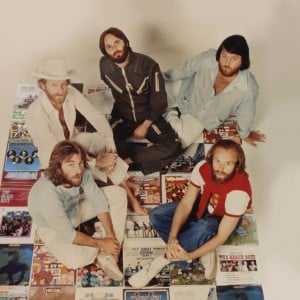
The Beach Boys
The Beach Boys
For nearly six decades, The Beach Boys’ music has been an indelible part of American history. Their brilliant harmonies conveyed simple truths through sophisticated, pioneering musical arrangements. They transcended their music & have come to represent Californian culture. They provided fans around the world with a passport to experience love, youthful exuberance and surf culture. Founded in Hawthorne, California, The Beach Boys were originally comprised of brothers: <a href="spotify:artist:4Q82S0VzF8qlCb4PnSDurj" data-name="Brian Wilson">Brian Wilson</a>, <a href="spotify:artist:04zDwTMN8SPPydYIfSeFYf" data-name="Carl Wilson">Carl Wilson</a> & <a href="spotify:artist:5gl6pfPwJ1coivVUMZPiS9" data-name="Dennis Wilson">Dennis Wilson</a>, their cousin <a href="spotify:artist:7lIlJTlWaSIBTMJxpIvd8f" data-name="Mike Love">Mike Love</a> and friend <a href="spotify:artist:1kqh7mzo24yFoDNBgDP3j5" data-name="Al Jardine">Al Jardine</a>. The Beach Boys signed with Capitol Records in 1962 & released their first album that same year. The Beach Boys are one of the most critically acclaimed and commercially successful bands of all time, with over 100 million records sold worldwide. They have had over 80 songs chart, 36 of them in the US Top 40 (the most by a US rock band), and 4 topping the Billboard Hot 100. Their influence on other artists spans musical genres & movements. Countless artists have cited as their inspiration for creating their own musical masterpieces. Rolling Stone ranked Pet Sounds No. 2 on its list of the “500 Greatest Albums of All Time,” and the Beach Boys No. 12 on its list of the "100 Greatest Artists of All Time." Inducted into the Rock & Roll Hall of Fame in 1988 and recipients of The Recording Academy’s Lifetime Achievement GRAMMY Award®, The Beach Boys are a beloved American institution that remains iconic around the world.
Louis Armstrong
Louis Armstrong
A jazz pioneer, Louis Armstrong was the first important soloist to emerge in jazz, and he became the most influential musician in the music's history. As a trumpet virtuoso, his playing, beginning with the 1920s studio recordings he made with his Hot Five and Hot Seven ensembles, charted a future for jazz in highly imaginative, emotionally charged improvisation. For this, he is revered by jazz fans. But Armstrong also became an enduring figure in popular music due to his distinctively phrased baritone singing and engaging personality, which were on display in a series of vocal recordings and film roles. He weathered the bebop period of the '40s, growing ever more beloved worldwide. By the '50s, Armstrong was widely recognized, even traveling the globe for the US. .State Department and earning the nickname "Ambassador Satch." His resurgence in the '60s with hit recordings like 1965's Grammy-winning "Hello Dolly" and 1968's classic "What a Wonderful World" solidified his legacy as a musical and cultural icon. In 1972, a year after his death, he received a Grammy Lifetime Achievement Award. Similarly, many of his most influential recordings, like 1928's "West End Blues" and 1955's "Mack the Knife," have been inducted into the Grammy Hall of Fame. Born in 1901 in New Orleans, Louisiana, Armstrong had a difficult childhood. William Armstrong, his father, was a factory worker who abandoned the family soon after the boy's birth. Armstrong was brought up by his mother, Mary (Albert) Armstrong, and his maternal grandmother. He showed an early interest in music, and a junk dealer for whom he worked as a grade-school student helped him buy a cornet, which he taught himself to play. He dropped out of school at 11 to join an informal group, but on December 31, 1912, he fired a gun during a New Year's Eve celebration, and was sent to reform school. He studied music there and played cornet and bugle in the school band, eventually becoming its leader. He was released on June 16, 1914, and did manual labor while trying to establish himself as a musician. He was taken under the wing of cornetist Joe "King" Oliver, and when Oliver moved to Chicago in June 1918, Armstrong replaced him in the Kid Ory Band. He moved to the Fate Marable band in the spring of 1919, staying with Marable until the fall of 1921. Armstrong moved to Chicago to join Oliver's band in August 1922 and made his first recordings as a member of the group in the spring of 1923. He married Lillian Harden, the pianist in the Oliver band, on February 5, 1924. (She was the second of his four wives.) With her encouragement, he left Oliver and joined Fletcher Henderson's band in New York, staying for a year and then going back to Chicago in November 1925 to join the Dreamland Syncopators, his wife's group. During this period, he switched from cornet to trumpet. Armstrong had gained sufficient individual notice to make his recording debut as a leader on November 12, 1925. Contracted to OKeh Records, he began to make a series of recordings with studio-only groups called the Hot Fives or the Hot Sevens. For live dates, he appeared with the orchestras led by Erskine Tate and Carroll Dickerson. The Hot Fives' recording of "Muskrat Ramble" gave Armstrong a Top Ten hit in July 1926, the band for the track featuring Kid Ory on trombone, Johnny Dodds on clarinet, Lillian Harden Armstrong on piano, and Johnny St. Cyr on banjo. By February 1927, Armstrong was well-enough known to front his own group, Louis Armstrong & His Stompers, at the Sunset Café in Chicago. (Armstrong did not function as a bandleader in the usual sense, but instead typically lent his name to established groups.) In April, he reached the charts with his first vocal recording, "Big Butter and Egg Man," a duet with May Alix. He took a position as star soloist in Carroll Dickerson's band at the Savoy Ballroom in Chicago in March 1928, later taking over as the band's frontman. "Hotter Than That" was in the Top Ten in May 1928, followed in September by "West End Blues," which later became one of the first recordings named to the Grammy Hall of Fame. Armstrong returned to New York with his band for an engagement at Connie's Inn in Harlem in May 1929. He also began appearing in the orchestra of Hot Chocolates, a Broadway revue, and was given a featured spot singing "Ain't Misbehavin'." In September, his recording of that song entered the charts, becoming a Top Ten hit. Armstrong fronted the Luis Russell Orchestra for a tour of the South in February 1930, and in May went to Los Angeles, where he led a band at Sebastian's Cotton Club for the next ten months. He made his film debut in Ex-Flame, released at the end of 1931. By the start of 1932, he had switched from the "race"-oriented OKeh label to its pop-oriented big sister Columbia, for which he recorded two Top Five hits, "Chinatown, My Chinatown" and "You Can Depend on Me" before scoring a number one hit with "All of Me" in March 1932; another Top Five hit, "Love, You Funny Thing," hit the charts the same month. He returned to Chicago in the spring of 1932 to front a band led by Zilner Randolph; the group toured around the country. In July, Armstrong sailed to England for a tour. He spent the next several years in Europe, his American career maintained by a series of archival recordings, including the Top Ten hits "Sweethearts on Parade" (August 1932; recorded December 1930) and "Body and Soul" (October 1932; recorded October 1930). His Top Ten version of "Hobo, You Can't Ride This Train," in the charts in early 1933, was on Victor Records; when he returned to the U.S. in 1935, he signed to the recently formed Decca Records and quickly scored a double-sided Top Ten hit, "I'm in the Mood for Love"/"You Are My Lucky Star." Armstrong's new manager, Joe Glaser, organized a big band for him that had its premiere in Indianapolis on July 1, 1935; for the next several years, he toured regularly. He also took a series of small parts in motion pictures, beginning with Pennies from Heaven in December 1936, and he continued to record for Decca, resulting in the Top Ten hits "Public Melody Number One" (August 1937), "When the Saints Go Marching In" (April 1939), and "You Won't Be Satisfied (Until You Break My Heart)" (April 1946), the last a duet with Ella Fitzgerald. He returned to Broadway in the short-lived musical Swingin' the Dream in November 1939. With the decline of swing music in the post-World War II years, Armstrong broke up his big band and put together a small group dubbed His All-Stars, which made its debut in Los Angeles on August 13, 1947. He embarked on his first European tour since 1935 in February 1948, and thereafter toured regularly around the world. In June 1951 he reached the Top Ten of the LP charts with Satchmo at Symphony Hall ("Satchmo" being his nickname), and he scored his first Top Ten single in five years with "(When We Are Dancing) I Get Ideas" later in the year. The single's B-side, and also a chart entry, was "A Kiss to Build a Dream On," sung by Armstrong in the film The Strip. In 1993, it gained renewed popularity when it was used in the film Sleepless in Seattle. Armstrong completed his contract with Decca in 1954, after which his manager made the unusual decision not to sign him to another exclusive contract but instead have him freelance for different labels. Satch Plays Fats, a tribute to Fats Waller, became a Top Ten LP for Columbia in October 1955, and Verve Records contracted Armstrong for a series of recordings with Ella Fitzgerald, beginning with the chart LP Ella and Louis in 1956. Armstrong continued to tour extensively, despite a heart attack in June 1959. In 1964, he scored a surprise hit with his recording of the title song from the Broadway musical Hello, Dolly!, which reached number one in May, followed by a gold-selling album of the same name. It won him a Grammy for best vocal performance. This pop success was repeated internationally four years later with "What a Wonderful World," which hit number one in the U.K. in April 1968. It did not gain as much notice in the U.S. until 1987, when it was used in the film Good Morning, Vietnam, after which it became a Top 40 hit. Armstrong was featured in the 1969 film of Hello, Dolly!, performing the title song as a duet with Barbra Streisand. He performed less frequently in the late '60s and early '70s, and died of a heart ailment in 1971 at the age of 69. A year later, he was honored with a Grammy Lifetime Achievement Award. As an artist, Armstrong was embraced by two distinctly different audiences: jazz fans who revered him for his early innovations as an instrumentalist but were occasionally embarrassed by his lack of interest in later developments in jazz, especially his willingness to serve as a light entertainer; and pop fans, who delighted in his joyous performances, particularly as a vocalist, but were largely unaware of his significance as a jazz musician. Given his popularity, his long career, and the extensive label-jumping he did in his later years, as well as the differing jazz and pop sides of his work, his recordings are extensive and diverse, with parts of his catalog owned by numerous companies. But many of his recorded performances are masterpieces, and none are less than entertaining. ~ William Ruhlmann
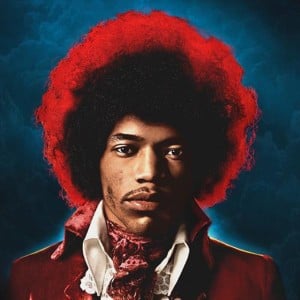
Jimi Hendrix
Jimi Hendrix
In his brief four-year reign as a superstar, Jimi Hendrix expanded the vocabulary of the electric rock guitar more than anyone before or since. Hendrix was a master at coaxing all manner of unforeseen sonics from his instrument, often with innovative amplification experiments that produced astral-quality feedback and roaring distortion. His frequent hurricane blasts of noise and dazzling showmanship -- he could and would play behind his back and with his teeth and set his guitar on fire -- has sometimes obscured his considerable gifts as a songwriter, singer, and master of a gamut of blues, R&B, and rock styles. When Hendrix became an international superstar in 1967, it seemed as if he'd dropped out of a Martian spaceship, but in fact he'd served his apprenticeship the long, mundane way in numerous R&B acts on the chitlin circuit. During the early and mid-'60s, he worked with such R&B/soul greats as Little Richard, the Isley Brothers, and King Curtis as a backup guitarist. Occasionally, he recorded as a sessionman (the Isley Brothers' 1964 single "Testify" is the only one of these early tracks that offers even a glimpse of his future genius). But the stars didn't appreciate his show-stealing showmanship, and Hendrix was straitjacketed by sideman roles that didn't allow him to develop as a soloist. The logical step was for Hendrix to go out on his own, which he did in New York in the mid-'60s, playing with various musicians in local clubs, and joining white blues-rock singer John Hammond, Jr.'s band for a while. It was in a New York club that Hendrix was spotted by Animals bassist Chas Chandler. The first lineup of the Animals was about to split, and Chandler, looking to move into management, convinced Hendrix to move to London and record as a solo act in England. There a group was built around Jimi, also featuring Mitch Mitchell on drums and Noel Redding on bass, that was dubbed the Jimi Hendrix Experience. The trio became stars with astonishing speed in the U.K., where "Hey Joe," "Purple Haze," and "The Wind Cries Mary" all made the Top Ten in the first half of 1967. These tracks were also featured on their debut album, Are You Experienced, a psychedelic masterwork that became a huge hit in the U.S. after Hendrix created a sensation at the Monterey Pop Festival in June of 1967. Are You Experienced was an astonishing debut, particularly from a young R&B veteran who had rarely sung, and apparently never written his own material before the Experience formed. What caught most people's attention at first was his virtuosic guitar playing, which employed an arsenal of devices, including wah-wah pedals, buzzing feedback solos, crunching, distorted riffs, and lightning, liquid runs up and down the scales. But Hendrix was also a first-rate songwriter, melding cosmic imagery with some surprisingly pop-savvy hooks and tender sentiments. He was also an excellent blues interpreter and a passionate, engaging singer (although his gruff, throaty vocal pipes were not nearly as great an asset as his instrumental skills). Are You Experienced was psychedelia at its most eclectic, synthesizing mod pop, soul, R&B, Dylan, and the electric guitar innovations of British pioneers like Jeff Beck, Pete Townshend, and Eric Clapton. Amazingly, Hendrix would only record three fully conceived studio albums in his lifetime. Axis: Bold as Love and the double-LP Electric Ladyland were more diffuse and experimental than Are You Experienced. On Electric Ladyland in particular, Hendrix pioneered the use of the studio itself as a recording instrument, manipulating electronics and devising overdub techniques (with the help of engineer Eddie Kramer in particular) to plot uncharted sonic territory. Not that these albums were perfect, as impressive as they were; the instrumental breaks could meander, and Hendrix's songwriting was occasionally half-baked, never matching the consistency of Are You Experienced (although he exercised greater creative control over the later albums). The final two years of Hendrix's life were turbulent ones musically, financially, and personally. He was embroiled in enough complicated management and record company disputes (some dating from ill-advised contracts he'd signed before the Experience formed) to keep the lawyers busy for years. He disbanded the Experience in 1969, forming Band of Gypsies with drummer Buddy Miles and bassist Billy Cox to pursue funkier directions. He closed Woodstock with a sprawling, shaky set, redeemed by his famous machine-gun interpretation of "The Star Spangled Banner." The rhythm section of Mitchell and Redding were underrated keys to Jimi's best work, and Band of Gypsies ultimately couldn't measure up to the same standard, although Hendrix did record an erratic live album with them. In early 1970, the Experience re-formed and disbanded again shortly afterward. At the same time, Hendrix felt torn in many directions by various fellow musicians, record company expectations, and management, all of whom had their own ideas of what Hendrix should be doing. Almost two years since Electric Ladyland, a new studio album had yet to appear, although Hendrix was recording constantly during the period. While outside parties did contribute to bogging down Hendrix's studio work, it also seems likely that Hendrix himself was partly responsible for the stalemate, unable to form a permanent lineup of musicians, unable to decide what musical direction to pursue, unable to bring himself to complete another album despite endless jamming. A few months into 1970, Mitchell -- Hendrix's most valuable musical collaborator -- came back into the fold, replacing Miles in the drum chair, although Cox stayed in place. It was this trio that toured the world during Hendrix's final months. It's extremely difficult to separate the facts of Hendrix's life from rumors and speculation. Everyone who knew him well, or claimed to know him well, has different versions of his state of mind in 1970. Critics have variously mused that he was going to go into jazz, that he was going to get deeper into the blues, that he was going to continue doing what he was doing, or that he was too confused to know what he was doing at all. The same confusion holds true for his death: Contradictory versions of his final days have been given by his closest acquaintances of the time. He'd been working intermittently on a new album, tentatively titled First Ray of the New Rising Sun, when he died in London on September 18, 1970, from a drug-related overdose. Hendrix recorded a massive amount of unreleased studio material during his lifetime. Much of this (as well as entire live concerts) was issued posthumously; several of the live concerts were excellent, but the studio tapes have been the focus of enormous controversy for over 20 years. These initially came out in haphazard drabs and drubs (the first, The Cry of Love, was easily the most outstanding of the lot). In the mid-'70s, producer Alan Douglas took control of these projects, overdubbing many of Hendrix's tapes with additional parts by studio musicians. In the eyes of many Hendrix fans, this was sacrilege, destroying the integrity of the work of a musician known to exercise meticulous care over the final production of his studio recordings. Even as late as 1995, Douglas was having ex-Knack drummer Bruce Gary record new parts for the typically misbegotten compilation Voodoo Soup. After a lengthy legal dispute, the rights to Hendrix's estate, including all of his recordings, returned to Al Hendrix, the guitarist's father, in July of 1995. With the help of Jimi's step-sister Janie, Al set up Experience Hendrix to begin to get Jimi's legacy in order. They began by hiring John McDermott and Jimi's original engineer, Eddie Kramer, to oversee the remastering process. They were able to find all the original master tapes, which had never been used for previous CD releases, and in April of 1997, Hendrix's first three albums were reissued with drastically improved sound. Accompanying those reissues was a posthumous compilation album (based on Jimi's handwritten track listings) called First Rays of the New Rising Sun, made up of tracks from the Cry of Love, Rainbow Bridge and War Heroes. Later in 1997, another compilation called South Saturn Delta showed up, collecting more tracks from posthumous LPs like Crash Landing, War Heroes, and Rainbow Bridge (without the terrible '70s overdubs), along with a handful of never-before-heard material that Chas Chandler had withheld from Alan Douglas for all those years. More archival material followed. Radio One was basically expanded to the two-disc BBC Sessions (released in 1998), and 1999 saw the release of the full show from Woodstock as well as additional concert recordings from Band of Gypsies shows entitled Live at the Fillmore East. 2000 saw the release of the Jimi Hendrix Experience four-disc box set, which compiled remaining tracks from In the West, Crash Landing, and Rainbow Bridge, along with more rarities and alternates from the Chandler cache. The family also launched Dagger Records, essentially an authorized bootleg label to supply hardcore Hendrix fans with material that would be of limited commercial appeal. Dagger released several live concerts (of shows in Oakland, Ottawa, Clark University in Massachusetts, Paris, San Francisco, Woburn in Bedfordshire, and Cologne) and a collection of studio jams and demos called Morning Symphony Ideas. Mainstream Hendrix reissue activity continued during the 2000s and 2010s, spotlighted by major live albums originally recorded at the Isle of Wight (2002), Berkeley (2003), Monterey (2007), Winterland (2011), and the Miami Pop Festival (2013). In 2010, Sony issued a four-disc set titled West Coast Seattle Boy: The Jimi Hendrix Anthology, which offered a full disc of recordings from Hendrix's time as a backing guitarist. That same year, Legacy, an imprint of Sony, released Valleys of Neptune. The compilation contained 12 previously unreleased tracks, and was the first of further such releases. In 2013, a second compilation appeared. People, Hell and Angels again contained 12 never-before-released songs, which in this case were recorded while Hendrix was working on the follow-up to Electric Ladyland. The final release in this series was put out in 2018, and its ten unreleased tracks also featured guest appearance from Stephen Stills and Johnny Winter. ~ Richie Unterberger & Sean Westergaard
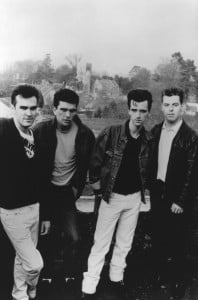
The Smiths
The Smiths
The Smiths were the definitive British indie rock band of the '80s, marking the end of synth-driven new wave and the beginning of the guitar rock that dominated English rock into the '90s. Sonically, the group was indebted to the British Invasion, crafting ringing, melodic three-minute pop singles, even for their album tracks. But their scope was far broader than that of a revivalist band. The group's core members, vocalist Morrissey and guitarist Johnny Marr, were obsessive rock fans inspired by the D.I.Y. ethics of punk, but they also had a fondness for girl groups, pop, and rockabilly. Morrissey and Marr also represented one of the strangest teams of collaborators in rock history. Marr was the rock traditionalist, looking like an elegant version of Keith Richards during the Smiths' heyday and meticulously layering his guitar tracks in the studio. Morrissey, on the other hand, broke from rock tradition by singing in a keening, self-absorbed croon, embracing the forlorn, romantic poetry of Oscar Wilde, publicly declaring his celibacy, and making no secret of his disgust for most of his peers. While it eventually led to the Smiths' early demise, the friction between Morrissey and Marr resulted in a flurry of singles and albums over the course of three years that provided the blueprint for British guitar rock in the following decade. Before forming the Smiths in 1982, Johnny Marr (born John Maher, October 31, 1963; guitar) had played in a variety of Manchester-based rock & roll bands, including Sister Ray, Freaky Part, White Dice, and Paris Valentinos. On occasion, Marr had come close to a record contract -- one of his bands won a competition Stiff Records held to have Nick Lowe "produce your band" -- but he never quite made the leap. Though Morrissey (born Steven Patrick Morrissey, May 22, 1959; vocals) had sung for a few weeks with the Nosebleeds and auditioned for Slaughter & the Dogs, he had primarily contented himself to being a passionate, vocal fan of both music and film. During his teens, he wrote the Melody Maker frequently, often getting his letters published. He had written the biography/tribute James Dean Isn't Dead, which was published by the local Manchester publishing house Babylon Books in the late '70s, as well as another book on the New York Dolls; he was also the president of the English New York Dolls fan club. Morrissey met Marr, who was then looking for a lyricist, through mutual friends in the spring of 1982. The pair began writing songs, eventually recording some demos with the Fall's drummer, Simon Wolstencroft. By the fall, the duo had settled on the name the Smiths and recruited Marr's schoolmate Andy Rourke as their bassist and Mike Joyce as their drummer. The Smiths made their live debut late in 1982, and by the spring of 1983, the group had earned a small but loyal following in their hometown of Manchester and had begun to make inroads in London. Rejecting a record deal with the Mancunian Factory Records, the band signed with Rough Trade for a one-off single, "Hand in Glove." With its veiled references to homosexuality and its ringing riffs, "Hand in Glove" became an underground sensation in the U.K., topping the independent charts and earning the praise of the U.K. music weeklies. Soon, Morrissey's performances became notorious as he appeared on-stage wearing a hearing aid and with gladioli stuffed in his back pockets. His interviews were becoming famous for his forthright, often contrary opinions, which helped the band become a media sensation. By the time of the group's second single, "This Charming Man," in late 1983, the Smiths had already been the subject of controversy over "Reel Around the Fountain," a song that had been aired on a BBC radio session and was alleged to condone child abuse. It was the first time that Morrissey's detached, literary, and ironic lyrics were misinterpreted and it wouldn't be the last. "This Charming Man" reached number 25 on the British charts in December of 1983, setting the stage for "What Difference Does It Make"'s peak of number 12 in February. The Smiths' rise to the upper reaches of the British charts was swift, and the passion of their fans, as well as the U.K. music press, indicated that the group had put an end to the synth-powered new wave that dominated Britain in the early '80s. After rejecting their initial stab at a first album, they released their debut, The Smiths, in the spring of 1984 to strong reviews and sales -- it peaked at number two. A few months later, the group backed '60s pop vocalist Sandie Shaw -- who Morrissey had publicly praised in an article -- on a version of "Hand in Glove" that was released and reached the Top 40. "Heaven Knows I'm Miserable Now" reached number ten, becoming their highest-charting single amid a storm of controversy about its B-side, "Suffer Little Children," which was about the notorious Moors Murders. More controversy appeared when Morrissey denounced the hunger-relief efforts of Band Aid, but the group's popularity was not affected. Though the Smiths had become the most popular new rock & roll group in Britain, the group failed to make it outside of underground and college radio in the U.S., partially because they never launched a full-scale tour. At the end of the year, "William It Was Really Nothing" became a Top 20 hit and Hatful of Hollow, a collection of B-sides, BBC sessions, and non-LP singles, went to the Top Ten, followed shortly by "How Soon Is Now," which peaked at number 24. Meat Is Murder, the band's second proper studio album, entered the British charts at number one in February of 1985, despite some criticism that it was weaker than The Smiths. Around the time of the release of Meat Is Murder, Morrissey's interviews were becoming increasingly political as he trashed the Thatcher administration and campaigned for vegetarianism; he even claimed that the Smiths were all vegetarians, and he forbade the remaining members to be photographed eating meat, even though they were still carnivores. Marr, for his part, was delving deeply into the rock & roll lifestyle and looked increasingly like a cross between Keith Richards and Brian Jones. By the time the non-LP "Shakespeare's Sister" reached number 26 in the spring of 1985, the Smiths had spawned a rash of soundalike bands, including James, who opened for the group on their spring 1985 tour, most of whom Morrissey supported. However, all of the media attention on the Smiths launched a mild backlash later in 1985, when "That Joke Isn't Funny Anymore" was pulled from Meat Is Murder and failed to reach the Top 40. "The Boy with the Thorn in His Side" revived the band's fortunes in the fall of 1985, and their third album, The Queen Is Dead, confirmed their popularity upon its release in the spring of 1986. Greeted with enthusiastic reviews and peaking at number two on the U.K. charts, The Queen Is Dead also expanded their cult following in the U.S., cracking the Top 100. Shortly before the album was completed, former Aztec Camera guitarist Craig Gannon became the band's rhythm guitarist, and he played with the band throughout their 1986 international tour, including a botched American tour. The non-LP "Panic," which was criticized as racist by some observers for its repeated refrain of "Burn down the disco...hang the DJ," reached number 11 late in the summer. A few months after its release, Marr was seriously injured in a car crash. During his recuperation, Gannon was fired from the band, as was Rourke, who was suffering from heroin addiction. Though Rourke was later reinstated, Gannon was never replaced. The Smiths may have been at the height of their popularity in early 1987, with the non-LP singles "Shoplifters of the World" and "Sheila Take a Bow" reaching number 11 and ten respectively, and the singles and B-sides compilation The World Won't Listen (revamped for U.S. release as Louder Than Bombs later in 1987) debuting at number two, but Marr was growing increasingly disenchanted with the band and the music industry. Over the course of the year, Morrissey and Marr became increasingly irritated with each other. The singer wished that Marr would stop playing with other artists like Bryan Ferry and Billy Bragg, while the guitarist was frustrated with Morrissey's devotion to '60s pop and his hesitancy to explore new musical directions. A few weeks before the fall release of Strangeways, Here We Come, Marr announced that he was leaving the Smiths. Morrissey disbanded the group shortly afterward and began a solo career, signing with Parlophone in the U.K. and staying with the Smiths' U.S. label, Reprise. Marr played as a sideman with a variety of artists, eventually forming Electronic with New Order frontman Bernard Sumner. Rourke retired from recording and Joyce became a member of the reunited Buzzcocks in 1991. Rank, a live album recorded on the Queen Is Dead tour, was released in the fall of 1988. It debuted at number two in the U.K. A widely criticized, two-part The Best of the Smiths compilation was released in 1992; the praised Singles compilation was released in 1995. Joyce and Rourke sued Morrissey and Marr in 1991, claiming they received only ten percent of the group's earnings while the songwriters received 40 percent. Rourke eventually settled out of court, but Joyce won his case in late 1996. ~ Stephen Thomas Erlewine
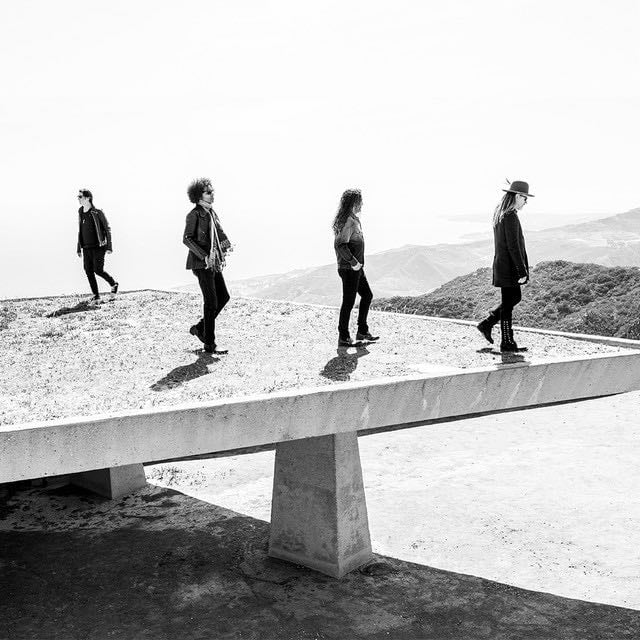
Alice In Chains
Artist
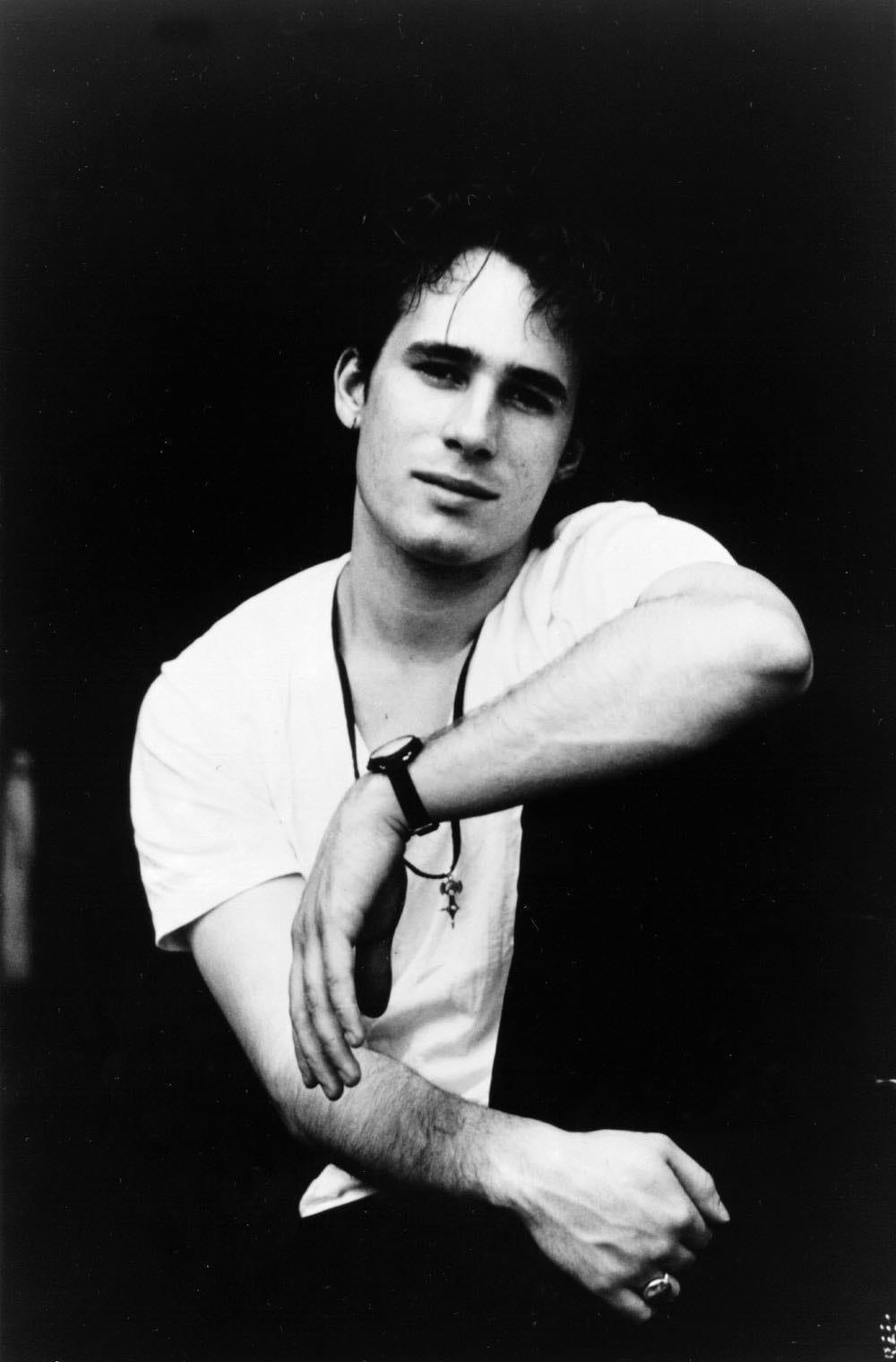
Jeff Buckley
Artist
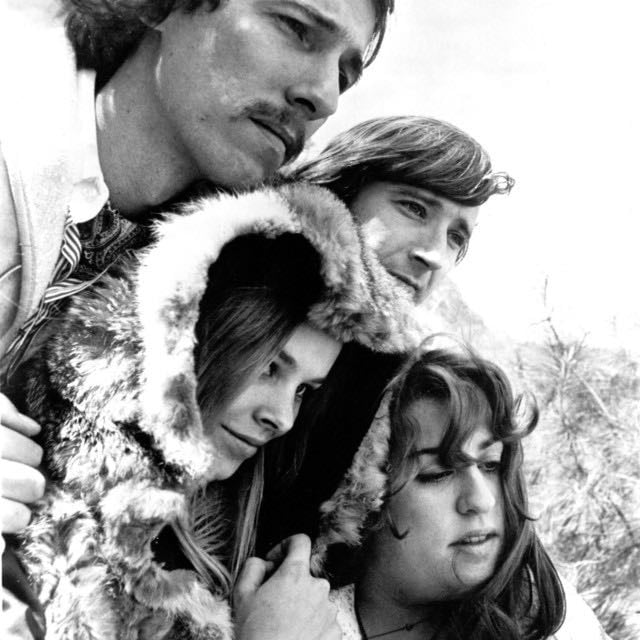
The Mamas & The Papas
Artist

Franz Ferdinand
Artist

Frank Sinatra
Artist

Mazzy Star
Artist

Earth, Wind & Fire
Artist