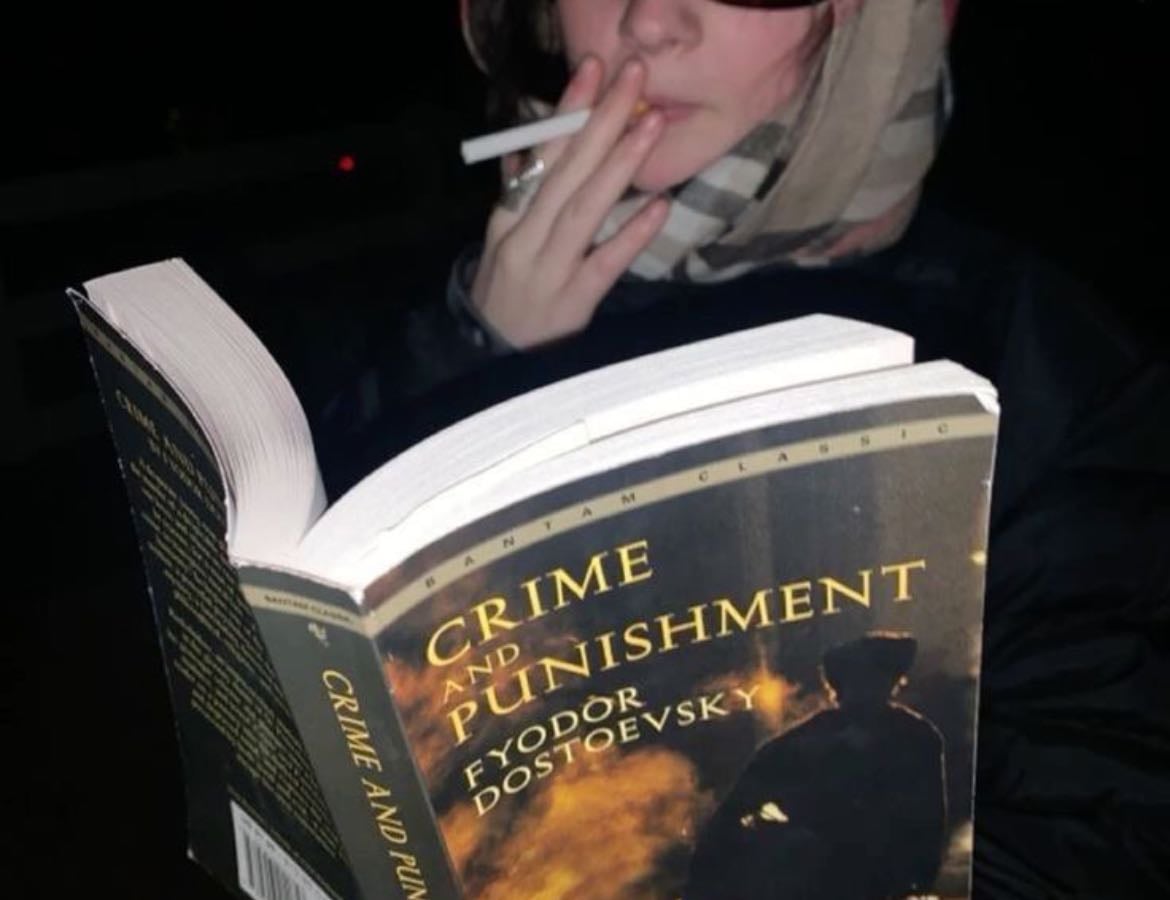
My TBR
Items in this hypelist
Fiction
The Idiot (Vintage Classics)
Fyodor Dostoevsky • 2003
No Longer Human
Osamu Dazai • 1973
<p> Mine has been a life of much shame. I can't even guess myself what it must be to live the life of a human being. </p><p>Portraying himself as a failure, the protagonist of Osamu Dazai's No Longer Human narrates a seemingly normal life even while he feels himself incapable of understanding human beings. His attempts to reconcile himself to the world around him begin in early childhood, continue through high school, where he becomes a "clown" to mask his alienation, and eventually lead to a failed suicide attempt as an adult. Without sentimentality, he records the casual cruelties of life and its fleeting moments of human connection and tenderness.</p><p>Still one of the ten bestselling books in Japan, No Longer Human is an important and unforgettable modern classic: "The struggle of the individual to fit into a normalizing society remains just as relevant today as it was at the time of writing." (The Japan Times)</p>
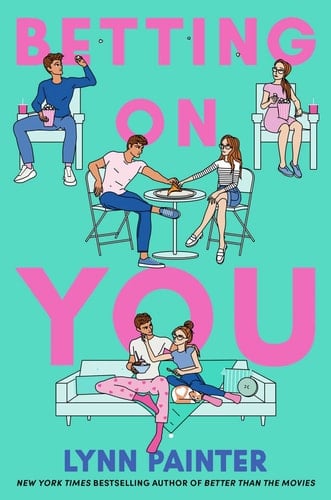
Betting on You
Lynn Painter • 2023
Letters to Milena
Franz Kafka • 2018
Babel
R. F. Kuang • 2022
Instant #1 New York Times Bestseller from the author of The Poppy War “Absolutely phenomenal. One of the most brilliant, razor-sharp books I've had the pleasure of reading that isn't just an alternative fantastical history, but an interrogative one; one that grabs colonial history and the Industrial Revolution, turns it over, and shakes it out.” -- Shannon Chakraborty, bestselling author of The City of Brass From award-winning author R. F. Kuang comes Babel, a thematic response to The Secret History and a tonal retort to Jonathan Strange & Mr. Norrell that grapples with student revolutions, colonial resistance, and the use of language and translation as the dominating tool of the British empire. Traduttore, traditore: An act of translation is always an act of betrayal. 1828. Robin Swift, orphaned by cholera in Canton, is brought to London by the mysterious Professor Lovell. There, he trains for years in Latin, Ancient Greek, and Chinese, all in preparation for the day he’ll enroll in Oxford University’s prestigious Royal Institute of Translation—also known as Babel. Babel is the world's center for translation and, more importantly, magic. Silver working—the art of manifesting the meaning lost in translation using enchanted silver bars—has made the British unparalleled in power, as its knowledge serves the Empire’s quest for colonization. For Robin, Oxford is a utopia dedicated to the pursuit of knowledge. But knowledge obeys power, and as a Chinese boy raised in Britain, Robin realizes serving Babel means betraying his motherland. As his studies progress, Robin finds himself caught between Babel and the shadowy Hermes Society, an organization dedicated to stopping imperial expansion. When Britain pursues an unjust war with China over silver and opium, Robin must decide… Can powerful institutions be changed from within, or does revolution always require violence?
Foster
Claire Keegan • 2022
Dubliners
James Joyce • 2019
Underworld A Novel
Don DeLillo • 2007
Notes from Underground
Fyodor Dostoevsky • 1994
The Picture of Dorian Gray
Oscar Wilde • 1993
A Love Letter to Whiskey
Kandi Steiner • 2021
The Island of Missing Trees
Elif Shafak • 2021
A Good Girl's Guide to Murder
Holly Jackson • 2021
The Housemaid
Freida McFadden • 2022
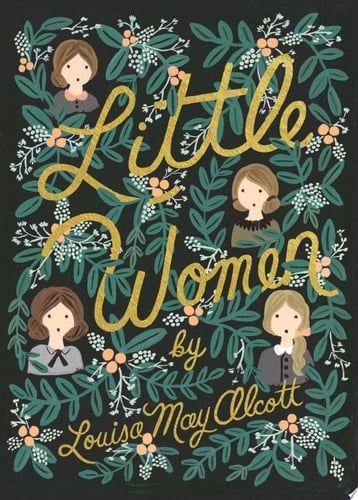
Little Women
Louisa May Alcott • 2014
Days at the Morisaki Bookshop A Novel
Satoshi Yagisawa • 2023
1984
George Orwell · 1949
75th ANNIVERSARY EDITION “Orwell saw, to his credit, that the act of falsifying reality is only secondarily a way of changing perceptions. It is, above all, a way of asserting power.”—The New Yorker In 1984, London is a grim city in the totalitarian state of Oceania where Big Brother is always watching you and the Thought Police can practically read your mind. Winston Smith is a man in grave danger for the simple reason that his memory still functions. Drawn into a forbidden love affair, Winston finds the courage to join a secret revolutionary organization called The Brotherhood, dedicated to the destruction of the Party. Together with his beloved Julia, he hazards his life in a deadly match against the powers that be. Lionel Trilling said of Orwell’s masterpiece “1984 is a profound, terrifying, and wholly fascinating book. It is a fantasy of the political future, and like any such fantasy, serves its author as a magnifying device for an examination of the present.” Though the year 1984 now exists in the past, Orwell’s dystopian classic remains an urgent call for the individual willing to speak truth to power.
Frankenstein
Mary Shelley • 2003
The Nightingale
Kristin Hannah • 2015
The Master and Margarita
Mikhail Bulgakov • 2021
The Goldfinch
Donna Tartt • 2014
The Book Thief
Markus Zusak • 2007
The Catcher in the Rye
J. D. Salinger • 2001
Wuthering Heights
Emily Bronte • 2002
<b>Coming soon to the big screen is Emerald Fennell’s feature film “<i>Wuthering Heights</i>,” which captures the spirit of this epic love story and stars Margot Robbie and Jacob Elordi as Catherine and Heathcliff.<br></b><br>Emily Brontë's only novel endures as a work of tremendous and far-reaching influence. The Penguin Classics edition is the definitive version of the text, edited with an introduction by Pauline Nestor.<br><br>Lockwood, the new tenant of Thrushcross Grange, situated on the bleak Yorkshire moors, is forced to seek shelter one night at Wuthering Heights, the home of his landlord. There he discovers the history of the tempestuous events that took place years before. What unfolds is the tale of the intense love between the gypsy foundling Heathcliff and Catherine Earnshaw. Catherine, forced to choose between passionate, tortured Heathcliff and gentle, well-bred Edgar Linton, surrendered to the expectations of her class. As Heathcliff's bitterness and vengeance at his betrayal is visited upon the next generation, their innocent heirs must struggle to escape the legacy of the past. <br><br>In this edition, a new preface by Lucasta Miller, author of <i>The Brontë Myth</i>, looks at the ways in which the novel has been interpreted, from Charlotte Brontë onwards. This complements Pauline Nestor's introduction, which discusses changing critical receptions of the novel, as well as Emily Brontë's influences and background.
Dead Poets Society
N. H. Kleinbaum • 2006
East of Eden
John Steinbeck • 2003
Non-fiction

The Second Sex
Simone De Beauvoir • 2012