【 ˳˳ non-fiction books 】 . ㅤ ♱
Items in this hypelist
Series
Welcome to the Museum Series
Jenny Broom • 2014
The Library of Esoterica
Jessica Hundley • 2025
DK Children's Anthologies
Ben Hoare • 2019
Baby University Board Book Set
Chris Ferrie • 2017
The Adams 101 Series
Carolyn Collins Petersen • 2024
Ology Series
Dugald A. Steer • 2015
Psychology
Psychological Types
C. G. Jung • 2016
Physics
Alice in Quantumland An Allegory of Quantum Physics
Robert Gilmore • 1995
Biographies/Autobiographies
Vincent Van Gogh
Mike Venezia • 2014
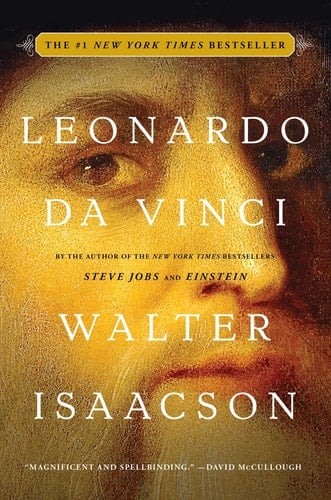
Leonardo da Vinci
Walter Isaacson • 2018
Law
Legal Kit ni Juan
Atty. Christian D. Sorongon
Have you ever wondered why that 13-digit number on the back of a book costs $125 in the United States but is completely free in Canada and India? This book, The Global ISBN Handbook, is your 2025 guide to the International Standard Book Number. It explains everything about this global "fingerprint" for books. The ISBN is the most important cornerstone of the publishing industry. It started as a simple warehouse tool in the 1960s. Now, it is a complex digital identifier used in over 200 countries. This handbook deconstructs the entire system. It uses 15 distinct national case studies to do this. You will learn how the old 10-digit system changed to the new 13-digit one. We break down the five parts of the ISBN, from the "Bookland" prefix to the final check digit. The book explores the global governance framework, starting with the International ISBN Agency. Then, it dives deep into how different countries run their systems. You'll see the privatized, high-cost model in the United States. You'll compare it to Canada's free, government-run system. We explore the industry-led models in Brazil and Germany. We look at government-run systems in Mexico and India. We even cover the unique case of China, where the ISBN is not a simple identifier but a state-controlled publication license. The book also examines the systems in the UK , France , Russia , Japan , Australia , South Africa , Nigeria , and Egypt. Many books and websites can tell you how to get an ISBN. This handbook is the only resource that explains why the process is so different everywhere you look. It moves beyond a simple "how-to" and provides a true global analysis. It directly compares the privatized, for-profit models in the US and UK against the free, public-good systems in Canada and South Africa. You won't just learn the price; you will understand the cultural policies, market structures, and legal philosophies that shape that price. This book shows how the ISBN is a "global mirror". It reveals how a simple number can be a commercial product in one nation , a tool of cultural policy in another , and an instrument of state control in a third. This comparative insight is the missing piece for any author, publisher, or researcher trying to navigate the complex international publishing market. Disclaimer: This handbook is an independently produced resource for commentary and analysis. The author has no affiliation with the International ISBN Agency, R.R. Bowker, Library and Archives Canada, the National Press and Publication Administration, or any other national ISBN agency. This work is independently produced under the principle of nominative fair use.
Memos

Letters to Theo
Vincent van Gogh • 2023
Memoirs
Wired Differently: A psychological profile written by its subject
Anonymous Author • 2025
Some People Need Killing
Patricia Evangelista • 2024
Mythology
Mga Nilalang na Kagila-gilalas
Edgar Calabia Samar
Have you ever wondered why that 13-digit number on the back of a book costs $125 in the United States but is completely free in Canada and India? This book, The Global ISBN Handbook, is your 2025 guide to the International Standard Book Number. It explains everything about this global "fingerprint" for books. The ISBN is the most important cornerstone of the publishing industry. It started as a simple warehouse tool in the 1960s. Now, it is a complex digital identifier used in over 200 countries. This handbook deconstructs the entire system. It uses 15 distinct national case studies to do this. You will learn how the old 10-digit system changed to the new 13-digit one. We break down the five parts of the ISBN, from the "Bookland" prefix to the final check digit. The book explores the global governance framework, starting with the International ISBN Agency. Then, it dives deep into how different countries run their systems. You'll see the privatized, high-cost model in the United States. You'll compare it to Canada's free, government-run system. We explore the industry-led models in Brazil and Germany. We look at government-run systems in Mexico and India. We even cover the unique case of China, where the ISBN is not a simple identifier but a state-controlled publication license. The book also examines the systems in the UK , France , Russia , Japan , Australia , South Africa , Nigeria , and Egypt. Many books and websites can tell you how to get an ISBN. This handbook is the only resource that explains why the process is so different everywhere you look. It moves beyond a simple "how-to" and provides a true global analysis. It directly compares the privatized, for-profit models in the US and UK against the free, public-good systems in Canada and South Africa. You won't just learn the price; you will understand the cultural policies, market structures, and legal philosophies that shape that price. This book shows how the ISBN is a "global mirror". It reveals how a simple number can be a commercial product in one nation , a tool of cultural policy in another , and an instrument of state control in a third. This comparative insight is the missing piece for any author, publisher, or researcher trying to navigate the complex international publishing market. Disclaimer: This handbook is an independently produced resource for commentary and analysis. The author has no affiliation with the International ISBN Agency, R.R. Bowker, Library and Archives Canada, the National Press and Publication Administration, or any other national ISBN agency. This work is independently produced under the principle of nominative fair use.
Personal development

The Four Agreements A Practical Guide to Personal Freedom
Don Miguel Ruiz • 1997
Anthropology

Sapiens A Brief History of Humankind
Yuval Noah Harari • 2018
Religion
The Great Cosmic Mother
Monica Sjoo • 2013
Astronomy

The End of Everything: (Astrophysically Speaking)
Katie Mack · 2021
True crime

The Stranger Beside Me
Ann Rule • 2018
Philosophy
The Gay Science
Friedrich Nietzsche • 2010
Entertainment Industry
Creating a Role
Konstantin Stanislavsky • 2008
An Actor Prepares
Konstantin Stanislavsky • 2008
Building a Character
Konstantin Stanislavsky • 2008
Spirituality

Becoming Supernatural: How Common People Are Doing the Uncommon
Dr. Joe Dispenza • 2019
Military
All Hell Let Loose: The World at War 1939-1945
Hastings,Max • 2011
The Art of War
Sunzi • 2006
A History of Warfare
John Keegan • 2012
Divination
Calculating the BaZi
Karin Taylor Wu • 2017
Be Your Own Saju Master: A Primer Of The Four Pillars Method
Sarah Kim • 2024
BaZi - The Destiny Code
Joey Yap • 2005
Uncategorized
The Prince
Niccolò Machiavelli • 2021

The Logic Manual
Volker Halbach • 2010
