Non-Fiction Books
Items in this hypelist
To Read
Los Simpson y la filosofía
Diana Hernández Aldana • 2009
¿Acaso Nietzsche justificaría las gamberradas de Bart? Y Lisa, por socrática, ¿debería caernos mal? ¿Se puede ser virtuoso y ofrecer la propia familia a los extraterrestres para salvar el pellejo, como Homer? ¿Tal vez Marge nos haga sentir en casa porque, en realidad, se trata de una madre y ama de casa machista? ¿Como la propia serie, por otra parte? ¿Se puede aprender algo sobre la felicidad gracias a las miserias del señor Burns? ¿Es un disparate considerarse de izquierdas y reírse de las miserias de los demás, aunque se trate de personajes animados? ¿Acaso estas preguntas tienen trampa? ¿Quién decide si Los Simpson es una obra incorrecta y hasta combativa o el poder también se esconde bajo el monopatín de Bart? ¿Quién es el listillo que sentencia si Springfield es fruto de un enfoque deconstruccionista del mundo o si Derrida se revuelca en la tumba? ¿Acaso, como han sospechado siempre algunos friquis, Los Simpson es el mayor logro inopinado del pensamiento contemporáneo precisamente porque plantea estas preguntas, un secreto a voces que se impone sobre tanta cháchara vacua a propósito de la cultura popular? ¿Estamos hablando de esa misma serie que algunos tienen por antipedagógica o directamente estúpida? El propio Homer Simpson afirma que «las series animadas no tienen significado profundo. Sólo son unos dibujos estúpidos para pasar el rato». En este volumen, dieciocho ensayos interrogan a su vez la serie y plantean interpretaciones posibles, conciliadoras o abiertamente discordantes de los personajes, el lenguaje o la potencia política de una producción difícil de agotar desde la risa e incluso desde el intelecto, y ello al aplicar las armas de la dialéctica (aunque quien no sepa lo que eso significa lo encontrará en el libro) a la cultura pop, para intentar arrojar luz sobre cuestiones como el sentido de la vida, el valor de la ironía y la rebelión existencialista. Los editores de este volumen advierten, sin embargo, que no se trata de una «filosofía de Los Simpson», ni tampoco de «Los Simpson como filosofía», es decir, que no pretenden revelar algún mensaje Matt Groening y la legión de guionistas y artistas responsables de la serie haya querido comunicar. Con todo, este libro no sólo tiene mucho que decir sobre ese gran artefacto cultural de nuestro tiempo que es Los Simpson a entusiastas y detractores de la serie por igual, sino que es una introducción entretenida y al mismo tiempo rigurosa a la obra de pensadores como Aristóteles, Kant, Heidegger o Sartre, entre muchos otros.
Neurodivergency
Autismo en Femenino
Caren Rodriguez y Gretel Martinez
Have you ever wondered why that 13-digit number on the back of a book costs $125 in the United States but is completely free in Canada and India? This book, The Global ISBN Handbook, is your 2025 guide to the International Standard Book Number. It explains everything about this global "fingerprint" for books. The ISBN is the most important cornerstone of the publishing industry. It started as a simple warehouse tool in the 1960s. Now, it is a complex digital identifier used in over 200 countries. This handbook deconstructs the entire system. It uses 15 distinct national case studies to do this. You will learn how the old 10-digit system changed to the new 13-digit one. We break down the five parts of the ISBN, from the "Bookland" prefix to the final check digit. The book explores the global governance framework, starting with the International ISBN Agency. Then, it dives deep into how different countries run their systems. You'll see the privatized, high-cost model in the United States. You'll compare it to Canada's free, government-run system. We explore the industry-led models in Brazil and Germany. We look at government-run systems in Mexico and India. We even cover the unique case of China, where the ISBN is not a simple identifier but a state-controlled publication license. The book also examines the systems in the UK , France , Russia , Japan , Australia , South Africa , Nigeria , and Egypt. Many books and websites can tell you how to get an ISBN. This handbook is the only resource that explains why the process is so different everywhere you look. It moves beyond a simple "how-to" and provides a true global analysis. It directly compares the privatized, for-profit models in the US and UK against the free, public-good systems in Canada and South Africa. You won't just learn the price; you will understand the cultural policies, market structures, and legal philosophies that shape that price. This book shows how the ISBN is a "global mirror". It reveals how a simple number can be a commercial product in one nation , a tool of cultural policy in another , and an instrument of state control in a third. This comparative insight is the missing piece for any author, publisher, or researcher trying to navigate the complex international publishing market. Disclaimer: This handbook is an independently produced resource for commentary and analysis. The author has no affiliation with the International ISBN Agency, R.R. Bowker, Library and Archives Canada, the National Press and Publication Administration, or any other national ISBN agency. This work is independently produced under the principle of nominative fair use.
Autismo guia para padres y profesionales
Matías Cadaveria y Claudio Waisburg
Have you ever wondered why that 13-digit number on the back of a book costs $125 in the United States but is completely free in Canada and India? This book, The Global ISBN Handbook, is your 2025 guide to the International Standard Book Number. It explains everything about this global "fingerprint" for books. The ISBN is the most important cornerstone of the publishing industry. It started as a simple warehouse tool in the 1960s. Now, it is a complex digital identifier used in over 200 countries. This handbook deconstructs the entire system. It uses 15 distinct national case studies to do this. You will learn how the old 10-digit system changed to the new 13-digit one. We break down the five parts of the ISBN, from the "Bookland" prefix to the final check digit. The book explores the global governance framework, starting with the International ISBN Agency. Then, it dives deep into how different countries run their systems. You'll see the privatized, high-cost model in the United States. You'll compare it to Canada's free, government-run system. We explore the industry-led models in Brazil and Germany. We look at government-run systems in Mexico and India. We even cover the unique case of China, where the ISBN is not a simple identifier but a state-controlled publication license. The book also examines the systems in the UK , France , Russia , Japan , Australia , South Africa , Nigeria , and Egypt. Many books and websites can tell you how to get an ISBN. This handbook is the only resource that explains why the process is so different everywhere you look. It moves beyond a simple "how-to" and provides a true global analysis. It directly compares the privatized, for-profit models in the US and UK against the free, public-good systems in Canada and South Africa. You won't just learn the price; you will understand the cultural policies, market structures, and legal philosophies that shape that price. This book shows how the ISBN is a "global mirror". It reveals how a simple number can be a commercial product in one nation , a tool of cultural policy in another , and an instrument of state control in a third. This comparative insight is the missing piece for any author, publisher, or researcher trying to navigate the complex international publishing market. Disclaimer: This handbook is an independently produced resource for commentary and analysis. The author has no affiliation with the International ISBN Agency, R.R. Bowker, Library and Archives Canada, the National Press and Publication Administration, or any other national ISBN agency. This work is independently produced under the principle of nominative fair use.
Restricted interests as Motivators
Richmond Mancil y Cynthia E Pearl
Have you ever wondered why that 13-digit number on the back of a book costs $125 in the United States but is completely free in Canada and India? This book, The Global ISBN Handbook, is your 2025 guide to the International Standard Book Number. It explains everything about this global "fingerprint" for books. The ISBN is the most important cornerstone of the publishing industry. It started as a simple warehouse tool in the 1960s. Now, it is a complex digital identifier used in over 200 countries. This handbook deconstructs the entire system. It uses 15 distinct national case studies to do this. You will learn how the old 10-digit system changed to the new 13-digit one. We break down the five parts of the ISBN, from the "Bookland" prefix to the final check digit. The book explores the global governance framework, starting with the International ISBN Agency. Then, it dives deep into how different countries run their systems. You'll see the privatized, high-cost model in the United States. You'll compare it to Canada's free, government-run system. We explore the industry-led models in Brazil and Germany. We look at government-run systems in Mexico and India. We even cover the unique case of China, where the ISBN is not a simple identifier but a state-controlled publication license. The book also examines the systems in the UK , France , Russia , Japan , Australia , South Africa , Nigeria , and Egypt. Many books and websites can tell you how to get an ISBN. This handbook is the only resource that explains why the process is so different everywhere you look. It moves beyond a simple "how-to" and provides a true global analysis. It directly compares the privatized, for-profit models in the US and UK against the free, public-good systems in Canada and South Africa. You won't just learn the price; you will understand the cultural policies, market structures, and legal philosophies that shape that price. This book shows how the ISBN is a "global mirror". It reveals how a simple number can be a commercial product in one nation , a tool of cultural policy in another , and an instrument of state control in a third. This comparative insight is the missing piece for any author, publisher, or researcher trying to navigate the complex international publishing market. Disclaimer: This handbook is an independently produced resource for commentary and analysis. The author has no affiliation with the International ISBN Agency, R.R. Bowker, Library and Archives Canada, the National Press and Publication Administration, or any other national ISBN agency. This work is independently produced under the principle of nominative fair use.
Guia Dislexia Andalucia
Have you ever wondered why that 13-digit number on the back of a book costs $125 in the United States but is completely free in Canada and India? This book, The Global ISBN Handbook, is your 2025 guide to the International Standard Book Number. It explains everything about this global "fingerprint" for books. The ISBN is the most important cornerstone of the publishing industry. It started as a simple warehouse tool in the 1960s. Now, it is a complex digital identifier used in over 200 countries. This handbook deconstructs the entire system. It uses 15 distinct national case studies to do this. You will learn how the old 10-digit system changed to the new 13-digit one. We break down the five parts of the ISBN, from the "Bookland" prefix to the final check digit. The book explores the global governance framework, starting with the International ISBN Agency. Then, it dives deep into how different countries run their systems. You'll see the privatized, high-cost model in the United States. You'll compare it to Canada's free, government-run system. We explore the industry-led models in Brazil and Germany. We look at government-run systems in Mexico and India. We even cover the unique case of China, where the ISBN is not a simple identifier but a state-controlled publication license. The book also examines the systems in the UK , France , Russia , Japan , Australia , South Africa , Nigeria , and Egypt. Many books and websites can tell you how to get an ISBN. This handbook is the only resource that explains why the process is so different everywhere you look. It moves beyond a simple "how-to" and provides a true global analysis. It directly compares the privatized, for-profit models in the US and UK against the free, public-good systems in Canada and South Africa. You won't just learn the price; you will understand the cultural policies, market structures, and legal philosophies that shape that price. This book shows how the ISBN is a "global mirror". It reveals how a simple number can be a commercial product in one nation , a tool of cultural policy in another , and an instrument of state control in a third. This comparative insight is the missing piece for any author, publisher, or researcher trying to navigate the complex international publishing market. Disclaimer: This handbook is an independently produced resource for commentary and analysis. The author has no affiliation with the International ISBN Agency, R.R. Bowker, Library and Archives Canada, the National Press and Publication Administration, or any other national ISBN agency. This work is independently produced under the principle of nominative fair use.
Seres Humanos Unicos
Barry M Prizant y Tom Fields-Meyer
Have you ever wondered why that 13-digit number on the back of a book costs $125 in the United States but is completely free in Canada and India? This book, The Global ISBN Handbook, is your 2025 guide to the International Standard Book Number. It explains everything about this global "fingerprint" for books. The ISBN is the most important cornerstone of the publishing industry. It started as a simple warehouse tool in the 1960s. Now, it is a complex digital identifier used in over 200 countries. This handbook deconstructs the entire system. It uses 15 distinct national case studies to do this. You will learn how the old 10-digit system changed to the new 13-digit one. We break down the five parts of the ISBN, from the "Bookland" prefix to the final check digit. The book explores the global governance framework, starting with the International ISBN Agency. Then, it dives deep into how different countries run their systems. You'll see the privatized, high-cost model in the United States. You'll compare it to Canada's free, government-run system. We explore the industry-led models in Brazil and Germany. We look at government-run systems in Mexico and India. We even cover the unique case of China, where the ISBN is not a simple identifier but a state-controlled publication license. The book also examines the systems in the UK , France , Russia , Japan , Australia , South Africa , Nigeria , and Egypt. Many books and websites can tell you how to get an ISBN. This handbook is the only resource that explains why the process is so different everywhere you look. It moves beyond a simple "how-to" and provides a true global analysis. It directly compares the privatized, for-profit models in the US and UK against the free, public-good systems in Canada and South Africa. You won't just learn the price; you will understand the cultural policies, market structures, and legal philosophies that shape that price. This book shows how the ISBN is a "global mirror". It reveals how a simple number can be a commercial product in one nation , a tool of cultural policy in another , and an instrument of state control in a third. This comparative insight is the missing piece for any author, publisher, or researcher trying to navigate the complex international publishing market. Disclaimer: This handbook is an independently produced resource for commentary and analysis. The author has no affiliation with the International ISBN Agency, R.R. Bowker, Library and Archives Canada, the National Press and Publication Administration, or any other national ISBN agency. This work is independently produced under the principle of nominative fair use.
So You Think You're Autistic A Workbook for the Confused Person Who's Just Trying to Figure Things Out
Samantha Stein • 2022
The ADHD Field Guide for Adults
Erik Gude • 2026
Autism in Adulthood
Susan Lowinger • 2020
Repetitive and Restricted Behaviors and Interests in Autism Spectrum Disorders
Author • 2021
The Other Half of Asperger Syndrome (Autism Spectrum Disorder)
Maxine Aston • 2014
Navigating College A Handbook on Self Advocacy Written for Autistic Students from Autistic Adults
Elesia Ashkenazy • 2013
Mujeres Autistas: Desde dentro del espectro: El autismo femenino visto por las mujeres autistas (Spanish Edition)
Carmen Molina Villalba • 2020
Mujeres y autismo la identidad camuflada
María Martínez Merino • 2022
Handbook of Suicidal Behaviour
Updesh Kumar • 2018
Guía Autista Consejos para Sobrevivir en el Loco Mundo de Los Neurotípicos
Daniel Millán López • 2021
El síndrome de Asperger intervenciones psicoeducativas
Carmen Cobos Gonzáles y Eva Morán Velasco
Have you ever wondered why that 13-digit number on the back of a book costs $125 in the United States but is completely free in Canada and India? This book, The Global ISBN Handbook, is your 2025 guide to the International Standard Book Number. It explains everything about this global "fingerprint" for books. The ISBN is the most important cornerstone of the publishing industry. It started as a simple warehouse tool in the 1960s. Now, it is a complex digital identifier used in over 200 countries. This handbook deconstructs the entire system. It uses 15 distinct national case studies to do this. You will learn how the old 10-digit system changed to the new 13-digit one. We break down the five parts of the ISBN, from the "Bookland" prefix to the final check digit. The book explores the global governance framework, starting with the International ISBN Agency. Then, it dives deep into how different countries run their systems. You'll see the privatized, high-cost model in the United States. You'll compare it to Canada's free, government-run system. We explore the industry-led models in Brazil and Germany. We look at government-run systems in Mexico and India. We even cover the unique case of China, where the ISBN is not a simple identifier but a state-controlled publication license. The book also examines the systems in the UK , France , Russia , Japan , Australia , South Africa , Nigeria , and Egypt. Many books and websites can tell you how to get an ISBN. This handbook is the only resource that explains why the process is so different everywhere you look. It moves beyond a simple "how-to" and provides a true global analysis. It directly compares the privatized, for-profit models in the US and UK against the free, public-good systems in Canada and South Africa. You won't just learn the price; you will understand the cultural policies, market structures, and legal philosophies that shape that price. This book shows how the ISBN is a "global mirror". It reveals how a simple number can be a commercial product in one nation , a tool of cultural policy in another , and an instrument of state control in a third. This comparative insight is the missing piece for any author, publisher, or researcher trying to navigate the complex international publishing market. Disclaimer: This handbook is an independently produced resource for commentary and analysis. The author has no affiliation with the International ISBN Agency, R.R. Bowker, Library and Archives Canada, the National Press and Publication Administration, or any other national ISBN agency. This work is independently produced under the principle of nominative fair use.
Dyslexia Toolkit
Indiana Department of Education
Cómo ser humano
Dr Camilla Pang
Have you ever wondered why that 13-digit number on the back of a book costs $125 in the United States but is completely free in Canada and India? This book, The Global ISBN Handbook, is your 2025 guide to the International Standard Book Number. It explains everything about this global "fingerprint" for books. The ISBN is the most important cornerstone of the publishing industry. It started as a simple warehouse tool in the 1960s. Now, it is a complex digital identifier used in over 200 countries. This handbook deconstructs the entire system. It uses 15 distinct national case studies to do this. You will learn how the old 10-digit system changed to the new 13-digit one. We break down the five parts of the ISBN, from the "Bookland" prefix to the final check digit. The book explores the global governance framework, starting with the International ISBN Agency. Then, it dives deep into how different countries run their systems. You'll see the privatized, high-cost model in the United States. You'll compare it to Canada's free, government-run system. We explore the industry-led models in Brazil and Germany. We look at government-run systems in Mexico and India. We even cover the unique case of China, where the ISBN is not a simple identifier but a state-controlled publication license. The book also examines the systems in the UK , France , Russia , Japan , Australia , South Africa , Nigeria , and Egypt. Many books and websites can tell you how to get an ISBN. This handbook is the only resource that explains why the process is so different everywhere you look. It moves beyond a simple "how-to" and provides a true global analysis. It directly compares the privatized, for-profit models in the US and UK against the free, public-good systems in Canada and South Africa. You won't just learn the price; you will understand the cultural policies, market structures, and legal philosophies that shape that price. This book shows how the ISBN is a "global mirror". It reveals how a simple number can be a commercial product in one nation , a tool of cultural policy in another , and an instrument of state control in a third. This comparative insight is the missing piece for any author, publisher, or researcher trying to navigate the complex international publishing market. Disclaimer: This handbook is an independently produced resource for commentary and analysis. The author has no affiliation with the International ISBN Agency, R.R. Bowker, Library and Archives Canada, the National Press and Publication Administration, or any other national ISBN agency. This work is independently produced under the principle of nominative fair use.
Cómo superar la ansiedad
Enrique Rojas • 2022
Ansiedad, TOC y conductas problemáticas en autismo
María Belén Prieto • 2019
Teaching University Students with Autism Spectrum Disorder A Guide to Developing Academic Capacity and Proficiency
Kimberley McMahon-Coleman • 2016
Autism, Pedagogy and Education Critical Issues for Value-based Teaching
Carmel Conn • 2019
HOW NOT TO FIT IN EB
Jess Joy • 2024
Autism Feels... An Earthling's Guide
Orion Kelly • 2023
All Cats Are on the Autism Spectrum An Affirming Introduction to Autism
Kathy Hoopmann • 2020
El Imperio de la normalidad neurodiversidad y capitalismo
Robert Chapman • 2025
The Neuroscience of You
Chantel Prat • 2022
What I Mean When I Say I'm Autistic Unpuzzling a Life on the Autism Spectrum
Annie Kotowicz • 2022
Cara a cara con el psicópata
Vicente Garrido Genovés • 2004
This Is Dyslexia
Kate Griggs • 2021
The Dyslexic Advantage (Revised and Updated) Unlocking the Hidden Potential of the Dyslexic Brain
Brock L. Eide M.D., M.A. • 2023
The Dyslexia Empowerment Plan
Ben Foss • 2013
Overcoming Dyslexia
Sally E. Shaywitz • 2020
OCD Treatment Through Storytelling
Allen H. Weg • 2011
Life on the Bridge Linking My World to Yours as an Autistic Therapist
Kaelynn Partlow • 2024
RAZON POR LA QUE SALTO,LA
Higashida • 2014
The Autistic Brain
Temple Grandin • 2013
Pues no se te nota Camuflaje en autismo, altas capacidades intelectuales y TDAH
Bea Sánchez • 2025
How to ADHD
Jessica McCabe • 2024
Unmasking Autism
Devon Price, PhD • 2022
Unmasked The Ultimate Guide to ADHD, Autism and Neurodivergence
Ellie Middleton • 2023
Enemy For A Brain
Zara Beth • 2025
But Everyone Feels This Way
Paige Layle • 2024
NeuroTribes
Steve Silberman • 2015

Neuroqueer Heresies Notes on the Neurodiversity Paradigm, Autistic Empowerment, and Postnormal Possibilities
Nick Walker • 2021
Neurodivina y punto
Sara Codina • 2023
Divergent Mind
Jenara Nerenberg • 2020
Different, Not Less
Chloé Hayden • 2022
Giftedness and Talent What Educators and Psychologists Need to Know
Franzis Preckel • 2024
La superdotación
Amparo Acereda • 1998
Suicide Among Gifted Children and Adolescents
Tracy L. Cross • 2021
Autism in Heels The Untold Story of a Female Life on the Spectrum
Jennifer Cook O'Toole • 2018
Brain Lock
Jeffrey M. Schwartz • 2016
Social, Emotional, and Psychosocial Development of Gifted and Talented Individuals
Anne N. Rinn • 2020
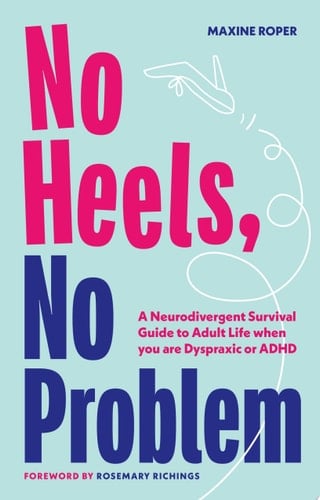
No Heels, No Problem
Maxine Roper • 2025
Friendship Skills for Neurodivergent Adults A Guide for the Anxious, Uniquely Wired, and Easily Distracted
Caroline Maguire • 2026

¿Yo? ¿Autista? (Spanish Edition)
Alejandra Aceves • 2024

El autismo a través de mis ojos: Más allá de un diagnóstico
María de Santos Romero • 2025
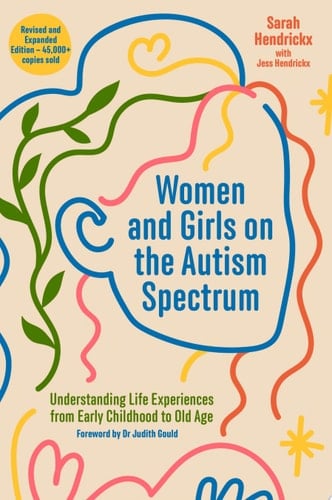
Women and Girls on the Autism Spectrum
Sarah Hendrickx • 2024

¿Demasiado inteligente para ser feliz?
Jeanne Siaud-Facchin • 2023

La revolución neurodivergente
Erik Aostri • 2025

Raro Un libro urgente sobre autismo
Agustín Barovero • 2025
Uniquely Human A Different Way of Seeing Autism - Revised and Expanded
Barry M. Prizant • 2022
La integración sensorial y el niño
A. Jean Ayres • 2007

Self-Care for Autistic People
Megan Anna Neff • 2024

Living with Inattentive ADHD
Cynthia Hammer • 2023

Nature's Gambit Child Prodigies and the Development of Human Potential
David Henry Feldman • 1991
Explorations in Giftedness
Robert J. Sternberg • 2010
Respuestas Educativas para Alumnos Superdotados y Talentosos
Antonio Sipán Compañé • 1999
All Dogs Have ADHD An Affirming Introduction to ADHD
Kathy Hoopmann • 2020
Psicobiología de las Altas Capacidades Intelectuales (De la Neurociencia al aula) (Spanish Edition)
Dra. M.Isabel Gómez-León • 2021
Educación de la alta capacidad intelectual
Antoni Castelló Tarrida • 2020
Disabled
Esto va de respeto: Guia de lenguaje anticapacitista para contextos educativos
Raquel Sánchez Padilla e Irene García Molina
Have you ever wondered why that 13-digit number on the back of a book costs $125 in the United States but is completely free in Canada and India? This book, The Global ISBN Handbook, is your 2025 guide to the International Standard Book Number. It explains everything about this global "fingerprint" for books. The ISBN is the most important cornerstone of the publishing industry. It started as a simple warehouse tool in the 1960s. Now, it is a complex digital identifier used in over 200 countries. This handbook deconstructs the entire system. It uses 15 distinct national case studies to do this. You will learn how the old 10-digit system changed to the new 13-digit one. We break down the five parts of the ISBN, from the "Bookland" prefix to the final check digit. The book explores the global governance framework, starting with the International ISBN Agency. Then, it dives deep into how different countries run their systems. You'll see the privatized, high-cost model in the United States. You'll compare it to Canada's free, government-run system. We explore the industry-led models in Brazil and Germany. We look at government-run systems in Mexico and India. We even cover the unique case of China, where the ISBN is not a simple identifier but a state-controlled publication license. The book also examines the systems in the UK , France , Russia , Japan , Australia , South Africa , Nigeria , and Egypt. Many books and websites can tell you how to get an ISBN. This handbook is the only resource that explains why the process is so different everywhere you look. It moves beyond a simple "how-to" and provides a true global analysis. It directly compares the privatized, for-profit models in the US and UK against the free, public-good systems in Canada and South Africa. You won't just learn the price; you will understand the cultural policies, market structures, and legal philosophies that shape that price. This book shows how the ISBN is a "global mirror". It reveals how a simple number can be a commercial product in one nation , a tool of cultural policy in another , and an instrument of state control in a third. This comparative insight is the missing piece for any author, publisher, or researcher trying to navigate the complex international publishing market. Disclaimer: This handbook is an independently produced resource for commentary and analysis. The author has no affiliation with the International ISBN Agency, R.R. Bowker, Library and Archives Canada, the National Press and Publication Administration, or any other national ISBN agency. This work is independently produced under the principle of nominative fair use.

Criterios para la accesibilidad de las personas con discapacidad
Instituto Mexicano del Seguro Social. Seguridda y Solidaridad Social • 2000
Demystifying Disability What to Know, What to Say, and How to Be an Ally
Emily Ladau • 2021
Unseen How I Lost My Vision But Found My Voice
Molly Burke • 2025
Cine
Save the Cat! The Last Book on Screenwriting You'll Ever Need
Blake Snyder • 2005
Screenplay
Syd Field • 2007
Story Robert McKee ; traduit de l'américain par Brigitte Gauthier
Robert McKee • 2001
Damas, villanas y Lolitas una mirada feminista al cine con el que crecimos
Sandra Miret • 2025
Meditaciones Del Cine / Cinema Speculation
Quentin Tarantino • 2023
Historia del cine
Román Gubern • 2016
El héroe de las mil caras
Joseph Campbell • 2020
El Cine Segun Hitchcock
François Truffaut • 1996
El libro del cine (The Movie Book)
DK • 2017
Chica contra chica: Cómo la cultura pop enfrentó a una generación de mujeres contra sí mismas
Sophie Gilbert • 2025
Feminism
Invisibilidad de la mujer en la historia
Mary Nash
Have you ever wondered why that 13-digit number on the back of a book costs $125 in the United States but is completely free in Canada and India? This book, The Global ISBN Handbook, is your 2025 guide to the International Standard Book Number. It explains everything about this global "fingerprint" for books. The ISBN is the most important cornerstone of the publishing industry. It started as a simple warehouse tool in the 1960s. Now, it is a complex digital identifier used in over 200 countries. This handbook deconstructs the entire system. It uses 15 distinct national case studies to do this. You will learn how the old 10-digit system changed to the new 13-digit one. We break down the five parts of the ISBN, from the "Bookland" prefix to the final check digit. The book explores the global governance framework, starting with the International ISBN Agency. Then, it dives deep into how different countries run their systems. You'll see the privatized, high-cost model in the United States. You'll compare it to Canada's free, government-run system. We explore the industry-led models in Brazil and Germany. We look at government-run systems in Mexico and India. We even cover the unique case of China, where the ISBN is not a simple identifier but a state-controlled publication license. The book also examines the systems in the UK , France , Russia , Japan , Australia , South Africa , Nigeria , and Egypt. Many books and websites can tell you how to get an ISBN. This handbook is the only resource that explains why the process is so different everywhere you look. It moves beyond a simple "how-to" and provides a true global analysis. It directly compares the privatized, for-profit models in the US and UK against the free, public-good systems in Canada and South Africa. You won't just learn the price; you will understand the cultural policies, market structures, and legal philosophies that shape that price. This book shows how the ISBN is a "global mirror". It reveals how a simple number can be a commercial product in one nation , a tool of cultural policy in another , and an instrument of state control in a third. This comparative insight is the missing piece for any author, publisher, or researcher trying to navigate the complex international publishing market. Disclaimer: This handbook is an independently produced resource for commentary and analysis. The author has no affiliation with the International ISBN Agency, R.R. Bowker, Library and Archives Canada, the National Press and Publication Administration, or any other national ISBN agency. This work is independently produced under the principle of nominative fair use.
Historia de Mujeres y de Genero
Vasquez María Gabriela y García Adriana Aida
Have you ever wondered why that 13-digit number on the back of a book costs $125 in the United States but is completely free in Canada and India? This book, The Global ISBN Handbook, is your 2025 guide to the International Standard Book Number. It explains everything about this global "fingerprint" for books. The ISBN is the most important cornerstone of the publishing industry. It started as a simple warehouse tool in the 1960s. Now, it is a complex digital identifier used in over 200 countries. This handbook deconstructs the entire system. It uses 15 distinct national case studies to do this. You will learn how the old 10-digit system changed to the new 13-digit one. We break down the five parts of the ISBN, from the "Bookland" prefix to the final check digit. The book explores the global governance framework, starting with the International ISBN Agency. Then, it dives deep into how different countries run their systems. You'll see the privatized, high-cost model in the United States. You'll compare it to Canada's free, government-run system. We explore the industry-led models in Brazil and Germany. We look at government-run systems in Mexico and India. We even cover the unique case of China, where the ISBN is not a simple identifier but a state-controlled publication license. The book also examines the systems in the UK , France , Russia , Japan , Australia , South Africa , Nigeria , and Egypt. Many books and websites can tell you how to get an ISBN. This handbook is the only resource that explains why the process is so different everywhere you look. It moves beyond a simple "how-to" and provides a true global analysis. It directly compares the privatized, for-profit models in the US and UK against the free, public-good systems in Canada and South Africa. You won't just learn the price; you will understand the cultural policies, market structures, and legal philosophies that shape that price. This book shows how the ISBN is a "global mirror". It reveals how a simple number can be a commercial product in one nation , a tool of cultural policy in another , and an instrument of state control in a third. This comparative insight is the missing piece for any author, publisher, or researcher trying to navigate the complex international publishing market. Disclaimer: This handbook is an independently produced resource for commentary and analysis. The author has no affiliation with the International ISBN Agency, R.R. Bowker, Library and Archives Canada, the National Press and Publication Administration, or any other national ISBN agency. This work is independently produced under the principle of nominative fair use.
Feminismo para principiantes
Nuria Varela • 2019
Una habitación propia
Virginia Woolf • 2016
Androcentrismo Cientifico y Escuela
Sánchez Bello Ana
Have you ever wondered why that 13-digit number on the back of a book costs $125 in the United States but is completely free in Canada and India? This book, The Global ISBN Handbook, is your 2025 guide to the International Standard Book Number. It explains everything about this global "fingerprint" for books. The ISBN is the most important cornerstone of the publishing industry. It started as a simple warehouse tool in the 1960s. Now, it is a complex digital identifier used in over 200 countries. This handbook deconstructs the entire system. It uses 15 distinct national case studies to do this. You will learn how the old 10-digit system changed to the new 13-digit one. We break down the five parts of the ISBN, from the "Bookland" prefix to the final check digit. The book explores the global governance framework, starting with the International ISBN Agency. Then, it dives deep into how different countries run their systems. You'll see the privatized, high-cost model in the United States. You'll compare it to Canada's free, government-run system. We explore the industry-led models in Brazil and Germany. We look at government-run systems in Mexico and India. We even cover the unique case of China, where the ISBN is not a simple identifier but a state-controlled publication license. The book also examines the systems in the UK , France , Russia , Japan , Australia , South Africa , Nigeria , and Egypt. Many books and websites can tell you how to get an ISBN. This handbook is the only resource that explains why the process is so different everywhere you look. It moves beyond a simple "how-to" and provides a true global analysis. It directly compares the privatized, for-profit models in the US and UK against the free, public-good systems in Canada and South Africa. You won't just learn the price; you will understand the cultural policies, market structures, and legal philosophies that shape that price. This book shows how the ISBN is a "global mirror". It reveals how a simple number can be a commercial product in one nation , a tool of cultural policy in another , and an instrument of state control in a third. This comparative insight is the missing piece for any author, publisher, or researcher trying to navigate the complex international publishing market. Disclaimer: This handbook is an independently produced resource for commentary and analysis. The author has no affiliation with the International ISBN Agency, R.R. Bowker, Library and Archives Canada, the National Press and Publication Administration, or any other national ISBN agency. This work is independently produced under the principle of nominative fair use.
Querida Ijeawele
Chimamanda Ngozi Adichie • 2015
EL MOVIMIENTO FEMINISTA
unknown author • 2009
Feminismo para torpes
Nerea Pérez de las Heras • 2019
PELIGRO DE LA HISTORIA UNICA, EL
Chimamanda Ngozi Adichie • 2019
EL FEMINISMO ES PARA TODO EL MUNDO
bell hooks • 2014
Género y Violencia Contra las Mujeres
Alvarez Ofelia
Have you ever wondered why that 13-digit number on the back of a book costs $125 in the United States but is completely free in Canada and India? This book, The Global ISBN Handbook, is your 2025 guide to the International Standard Book Number. It explains everything about this global "fingerprint" for books. The ISBN is the most important cornerstone of the publishing industry. It started as a simple warehouse tool in the 1960s. Now, it is a complex digital identifier used in over 200 countries. This handbook deconstructs the entire system. It uses 15 distinct national case studies to do this. You will learn how the old 10-digit system changed to the new 13-digit one. We break down the five parts of the ISBN, from the "Bookland" prefix to the final check digit. The book explores the global governance framework, starting with the International ISBN Agency. Then, it dives deep into how different countries run their systems. You'll see the privatized, high-cost model in the United States. You'll compare it to Canada's free, government-run system. We explore the industry-led models in Brazil and Germany. We look at government-run systems in Mexico and India. We even cover the unique case of China, where the ISBN is not a simple identifier but a state-controlled publication license. The book also examines the systems in the UK , France , Russia , Japan , Australia , South Africa , Nigeria , and Egypt. Many books and websites can tell you how to get an ISBN. This handbook is the only resource that explains why the process is so different everywhere you look. It moves beyond a simple "how-to" and provides a true global analysis. It directly compares the privatized, for-profit models in the US and UK against the free, public-good systems in Canada and South Africa. You won't just learn the price; you will understand the cultural policies, market structures, and legal philosophies that shape that price. This book shows how the ISBN is a "global mirror". It reveals how a simple number can be a commercial product in one nation , a tool of cultural policy in another , and an instrument of state control in a third. This comparative insight is the missing piece for any author, publisher, or researcher trying to navigate the complex international publishing market. Disclaimer: This handbook is an independently produced resource for commentary and analysis. The author has no affiliation with the International ISBN Agency, R.R. Bowker, Library and Archives Canada, the National Press and Publication Administration, or any other national ISBN agency. This work is independently produced under the principle of nominative fair use.
Todos deberíamos ser feministas
Chimamanda Ngozi Adichie • 2015
Psicology
El Síndrome de la Impostura Cómo Identificarlo Y Superarlo
Valerie Young • 2025
History
De América a Europa cuando los indígenas descubrieron el Viejo Mundo (1493-1892)
Eric Taladoire • 2017
Art

Cuándo empieza el arte contemporáneo?
Andrea Giunta • 2014

Estetica de la incertidumbre el arte despues del fin del arte
Jorge López Anaya • 1999
Crafting
Hecho a mano: Lecciones de vida que me enseñó el crochet
Alimaravillas • 2025

Knitted Animal Toys
Louise Crowther • 2023

Crochet Knitting Handbook: Find Out More about Crochet Knitting Art Knitting for Beginners
Jewel Heidebrink • 2021
The New Bohemians Handbook Come Home to Good Vibes
Justina Blakeney • 2017
52 Weeks of Socks, Vol. II More Beautiful Patterns for Year-Round Knitting
Laine Laine Laine • 2024

52 Weeks of Easy Knits Beautiful Patterns for Year-Round Knitting
Laine • 2023
Diseña tus paletas de color para bordar
Karen Barbé • 2019
LA PALETA PERFECTA
Lauren Wager • 2022
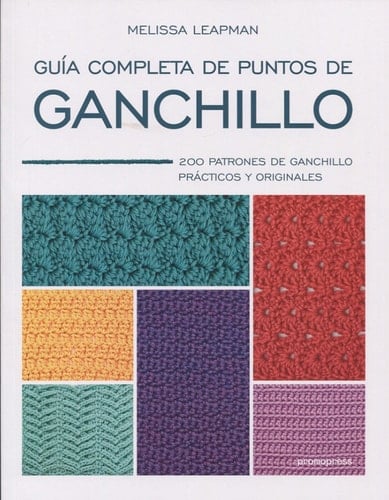
Guía completa de puntos de ganchillo : 200 patrones de ganchillo prácticos y originales
Melissa Leapman • 2020
Manual de ganchillo
Sarah Hazell • 2014