
Nonfiction

Items in this hypelist
To Read

A Swim in a Pond in the Rain: In Which Four Russians Give a Master Class on Writing, Reading, and Life
George Saunders · 2022
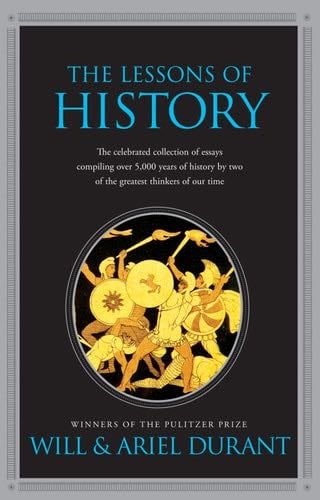
The Lessons of History
Will Durant, Ariel Durant · 2012
A concise survey of the culture and civilization of mankind, The Lessons of History is the result of a lifetime of research from Pulitzer Prize–winning historians Will and Ariel Durant. With their accessible compendium of philosophy and social progress, the Durants take us on a journey through history, exploring the possibilities and limitations of humanity over time. Juxtaposing the great lives, ideas, and accomplishments with cycles of war and conquest, the Durants reveal the towering themes of history and give meaning to our own.

From Third World to First: The Singapore Story: 1965-2000
Lee Kuan Yew · 2000
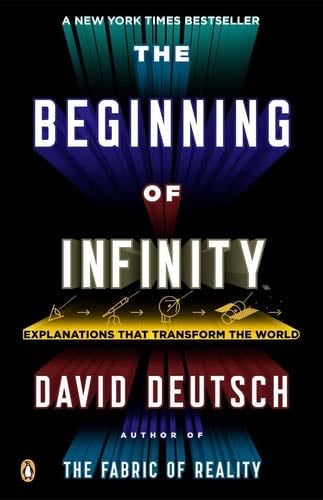
The Beginning of Infinity: Explanations That Transform the World
David Deutsch · 2012

Blue Ocean Strategy, Expanded Edition: How to Create Uncontested Market Space and Make the Competition Irrelevant
W. Chan Kim, Renée Mauborgne · 2015
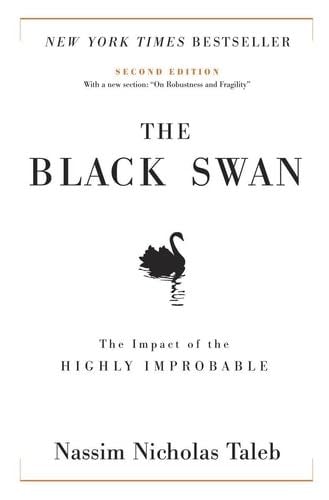
The Black Swan: The Impact of the Highly Improbable (Incerto)
Nassim Nicholas Taleb · 2007
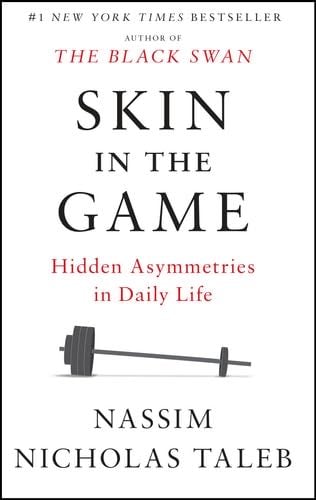
Skin in the Game: Hidden Asymmetries in Daily Life (Incerto)
Nassim Nicholas Taleb · 2020
#1 NEW YORK TIMES BESTSELLER • A bold work from the author of The Black Swan that challenges many of our long-held beliefs about risk and reward, politics and religion, finance and personal responsibility<br/><br/>In his most provocative and practical book yet,one of the foremost thinkers of our time redefines what it means to understand the world, succeed in a profession, contribute to a fair and just society, detect nonsense, and influence others. Citing examples ranging from Hammurabi to Seneca, Antaeus the Giant to Donald Trump, Nassim Nicholas Taleb shows how the willingness to accept one’s own risks is an essential attribute of heroes, saints, and flourishing people in all walks of life.<br/><br/>As always both accessible and iconoclastic, Taleb challenges long-held beliefs about the values of those who spearhead military interventions, make financial investments, and propagate religious faiths. Among his insights:<br/><br/>• For social justice, focus on symmetry and risk sharing. You cannot make profits and transfer the risks to others, as bankers and large corporations do. You cannot get rich without owning your own risk and paying for your own losses. Forcing skin in the game corrects this asymmetry better than thousands of laws and regulations.<br/>• Ethical rules aren’t universal. You’re part of a group larger than you, but it’s still smaller than humanity in general.<br/>• Minorities, not majorities, run the world. The world is not run by consensus but by stubborn minorities imposing their tastes and ethics on others.<br/>• You can be an intellectual yet still be an idiot. “Educated philistines” have been wrong on everything from Stalinism to Iraq to low-carb diets.<br/>• Beware of complicated solutions (that someone was paid to find). A simple barbell can build muscle better than expensive new machines.<br/>• True religion is commitment, not just faith. How much you believe in something is manifested only by what you’re willing to risk for it.<br/><br/>The phrase “skin in the game” is one we have often heard but rarely stopped to truly dissect. It is the backbone of risk management, but it’s also an astonishingly rich worldview that, as Taleb shows in this book, applies to all aspects of our lives. As Taleb says, “The symmetry of skin in the game is a simple rule that’s necessary for fairness and justice, and the ultimate BS-buster,” and “Never trust anyone who doesn’t have skin in the game. Without it, fools and crooks will benefit, and their mistakes will never come back to haunt them.”

Zero to One: Notes on Startups, or How to Build the Future
Peter Thiel, Blake Masters · 2014

Antifragile: Things That Gain from Disorder (Incerto)
Nassim Nicholas Nicholas Taleb · 2014

Cases in International Relations
Donald M. Snow · 20191209
