
Nonfiction books
Items in this hypelist
Books
In the Dream House
Carmen Maria Machado • 2019
This Here Flesh Spirituality, Liberation, and the Stories That Make Us
Cole Arthur Riley • 2023
The Making of Biblical Womanhood
Beth Allison Barr • 2021
Men who Hate Women The Extremism Nobody is Talking about
Laura Bates • 2021
Dear America
Jose Antonio Vargas • 2018
Wordslut A Feminist Guide to Taking Back the English Language
Amanda Montell • 2020
"Prisons Make Us Safer"
Victoria Law • 2021
Tomorrow Sex Will Be Good Again
Katherine Angel • 2021
Nothing Personal
James Baldwin • 2021
How Elites Ate the Social Justice Movement
Fredrik deBoer • 2023
Invisible Women
Caroline Criado Perez • 2019
We Are the Weather
Jonathan Safran Foer • 2019
Jesus and John Wayne
Kristin Kobes Du Mez • 2020

Orientalism
Edward W. Said · 1979

The Wretched of the Earth
Frantz Fanon · 2021
<p><b>"This century's most compelling theorist of racism and colonialism."--Angela Davis</b></p> <p><b>The sixtieth anniversary edition of Frantz Fanon's landmark text, now with a new introduction by Cornel West</b></p> <p>First published in 1961, and reissued in this sixtieth anniversary edition with a powerful new introduction by Cornel West, Frantz Fanon's <i>The Wretched of the Earth</i> is a masterful and timeless interrogation of race, colonialism, psychological trauma, and revolutionary struggle, and a continuing influence on movements from Black Lives Matter to decolonization. A landmark text for revolutionaries and activists, <i>The Wretched of the Earth</i> is an eternal touchstone for civil rights, anti-colonialism, psychiatric studies, and Black consciousness movements around the world.</p> <p>Alongside Cornel West's introduction, the book features critical essays by Jean-Paul Sartre and Homi K. Bhabha. This sixtieth anniversary edition of Fanon's most famous text stands proudly alongside such pillars of anti-colonialism and anti-racism as Edward Said's <i>Orientalism</i> and <i>The Autobiography of Malcolm X</i>.</p>

Power The Essential Works of Michel Foucault 1954-1984
Michel Foucault · 2020
<p><b>'Who since Weber, or perhaps even Hobbes, has done as much to show why power is such a profound, elusive and treacherous presence throughout our experience?' <i>The Times Higher Education</i><br></b><br>The third and final volume of the <i>Essential Works</i> of Foucault series, <i>Power</i> brings together his writings on the issues that he helped make the core agenda of Western political culture: medicine, prisons, psychiatry, government and sexuality, in particular showing his concerns with human rights, discrimination and exclusion. It also includes articles and open letters published directly in response to the issues of the time, calling for reform in abortion, asylum and the death penalty. All the pieces here bring a new sense of Foucault's huge influence on the politics of personal freedom. <p>Edited by James D. Faubion<br>Translated by Robert Hurley and Others</p>
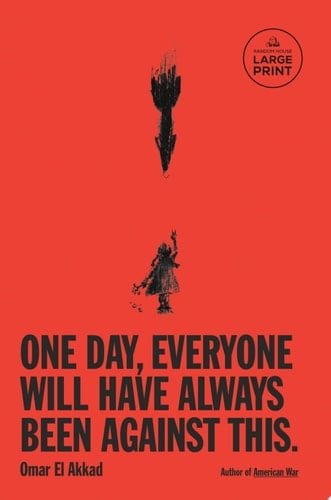
One Day, Everyone Will Have Always Been Against This
Omar El Akkad · 2025
<b>From award-winning novelist and journalist Omar El Akkad comes a powerful reckoning with what it means to live in the heart of an empire that doesn’t consider you fully human.</b><br><br>On October 25th, 2023, after just three weeks of the bombardment of Gaza, Omar El Akkad put out a tweet: “One day, when it's safe, when there's no personal downside to calling a thing what it is, when it's too late to hold anyone accountable, everyone will have always been against this.” This tweet was viewed more than ten million times.<br> <br><i>One Day Everyone Will Have Always Been Against This</i> chronicles the deep fracture that has occurred for Black, brown, Indigenous Americans, as well as the upcoming generation, many of whom had clung to a thread of faith in Western ideals, in the idea that their countries, or the countries of their adoption, actually attempted to live up to the values they espouse.<br>This book is a reckoning with what it means to live in the West, and what it means to live in a world run by a small group of countries—America, the UK, France, and Germany. It will be<i> The Fire Next Time</i> for a generation that understands we're undergoing a shift in the so-called “rules-based order,” a generation that understands the West can no longer be trusted to police and guide the world, or its own cities and campuses. It draws on intimate details of Omar's own story as an emigrant who grew up believing in the Western project, who was catapulted into journalism by the rupture of 9/11.<br>This book is El Akkad's heartsick breakup letter with the West. It is a breakup we are watching all over the United States, on college campuses, on city streets, and the consequences of this rupture will be felt by all of us. His book is for all the people who want something better than what the West has served up. This is the book for our time.

Freedom Is a Constant Struggle
Angela Y. Davis · 2016
In this collection of essays, interviews, and speeches, the renowned activist examines today's issues—from Black Lives Matter to prison abolition and more. Activist and scholar Angela Y. Davis has been a tireless fighter against oppression for decades. Now, the iconic author of Women, Race, and Class offers her latest insights into the struggles against state violence and oppression throughout history and around the world. Reflecting on the importance of black feminism, intersectionality, and prison abolitionism, Davis discusses the legacies of previous liberation struggles, from the Black Freedom Movement to the South African anti-Apartheid movement. She highlights connections and analyzes today's struggles against state terror, from Ferguson to Palestine. Facing a world of outrageous injustice, Davis challenges us to imagine and build a movement for human liberation. And in doing so, she reminds us that "freedom is a constant struggle." This edition of Freedom Is a Constant Struggle includes a foreword by Dr. Cornel West and an introduction by Frank Barat.
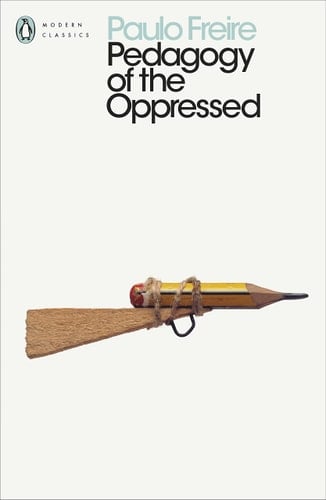
Pedagogy of the Oppressed
Paulo Freire · 2017
The methodology of the late Paulo Freire, once considered such a threat to the established order that he was "invited" to leave his native Brazil, has helped to empower countless impoverished and illiterate people throughout the world. Freire's work has taken on special urgency in the United States and Western Europe, where the creation of a permanent underclass among the underprivileged and minorities in cities and urban centers is increasingly accepted as the norm.<p>With a substantive new introduction to Freire's life and the remarkable impact of this book by writer and Freire confidant and authority Donaldo Macedo, this anniversary edition of Pedagogy of the Oppressed will inspire a new generation of educators, students, and general readers for years to come.

Caliban and the Witch Women, the Body and Primitive Accumulation
Silvia Federici · 2021
<p><b>'A groundbreaking work </b>. . . <b>Federici has become a crucial figure</b> <b>for . . .</b> <b>a new generation of feminists'</b> Rachel Kushner, author of <i>The Mars Room <p></i>A cult classic since its publication in the early years of this century, <i>Caliban and the Witch</i> is Silvia Federici's history of the body in the transition to capitalism. Moving from the peasant revolts of the late Middle Ages through the European witch-hunts, the rise of scientific rationalism and the colonisation of the Americas, it gives a panoramic account of the often horrific violence with which the unruly human material of pre-capitalist societies was transformed into a set of predictable and controllable mechanisms. It Is a study of indigenous traditions crushed, of the enclosure of women's reproductive powers within the nuclear family, and of how our modern world was forged in blood. <p>'Rewarding . . . allows us to better understand the intimate relationship between modern patriarchy, the rise of the nation state and the transition from feudalism to capitalism' <i>Guardian</i></p>
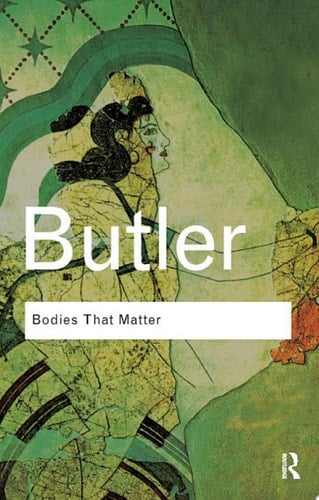
Bodies That Matter
Judith Butler · 2011
In Bodies That Matter, renowned theorist and philosopher Judith Butler argues that theories of gender need to return to the most material dimension of sex and sexuality: the body. Butler offers a brilliant reworking of the body, examining how the power of heterosexual hegemony forms the "matter" of bodies, sex, and gender. Butler argues that power operates to constrain sex from the start, delimiting what counts as a viable sex. She clarifies the notion of "performativity" introduced in Gender Trouble and via bold readings of Plato, Irigaray, Lacan, and Freud explores the meaning of a citational politics. She also draws on documentary and literature with compelling interpretations of the film Paris is Burning, Nella Larsen's Passing, and short stories by Willa Cather.

Regarding the Pain of Others
Susan Sontag · 2013

Notes of a Native Son
James Baldwin · 2012
In an age of Black Lives Matter, James Baldwin's essays on life in Harlem, the protest novel, movies, and African Americans abroad are as powerful today as when they were first written. With documentaries like I Am Not Your Negro bringing renewed interest to Baldwin's life and work, Notes of a Native Son serves as a valuable introduction. Written during the 1940s and early 1950s, when Baldwin was only in his twenties, the essays collected in Notes of a Native Son capture a view of black life and black thought at the dawn of the civil rights movement and as the movement slowly gained strength through the words of one of the most captivating essayists and foremost intellectuals of that era. Writing as an artist, activist, and social critic, Baldwin probes the complex condition of being black in America. With a keen eye, he examines everything from the significance of the protest novel to the motives and circumstances of the many black expatriates of the time, from his home in “The Harlem Ghetto” to a sobering “Journey to Atlanta.” Notes of a Native Son inaugurated Baldwin as one of the leading interpreters of the dramatic social changes erupting in the United States in the twentieth century, and many of his observations have proven almost prophetic. His criticism on topics such as the paternalism of white progressives or on his own friend Richard Wright’s work is pointed and unabashed. He was also one of the few writing on race at the time who addressed the issue with a powerful mixture of outrage at the gross physical and political violence against black citizens and measured understanding of their oppressors, which helped awaken a white audience to the injustices under their noses. Naturally, this combination of brazen criticism and unconventional empathy for white readers won Baldwin as much condemnation as praise. Notes is the book that established Baldwin’s voice as a social critic, and it remains one of his most admired works. The essays collected here create a cohesive sketch of black America and reveal an intimate portrait of Baldwin’s own search for identity as an artist, as a black man, and as an American.
