peak poetry :

Items in this hypelist
Finished

crush
richard siken

The Rose that Grew from Concrete
Tupac Shakur · 2009
A collection of deeply personal poems by Tupac Shakur - a mirror into his enigmatic world and its many contradicitions written from the time he was nineteen.

Brute: Poems
Emily Skaja · 2019
Selected by Joy Harjo as the winner of the Walt Whitman Award of the Academy of American Poets<br/><br/>Emily Skaja’s debut collection is a fiery, hypnotic book that confronts the dark questions and menacing silences around gender, sexuality, and violence. Brute arises, brave and furious, from the dissolution of a relationship, showing how such endings necessitate self-discovery and reinvention. The speaker of these poems is a sorceress, a bride, a warrior, a lover, both object and agent, ricocheting among ways of knowing and being known. Each incarnation squares itself up against ideas of feminine virtue and sin, strength and vulnerability, love and rage, as it closes in on a hard-won freedom.<br/><br/>Brute is absolutely sure of its capacity to insist not only on the truth of what it says but on the truth of its right to say it. “What am I supposed to say: I’m free?” the first poem asks. The rest of the poems emphatically discover new ways to answer. This is a timely winner of the Walt Whitman Award, and an introduction to an unforgettable voice.
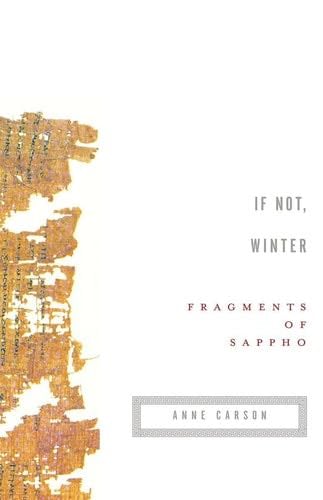
If Not, Winter: Fragments of Sappho
Sappho · 2003
In this "gorgeous translation" (The New York Times), one of our most fearless and original poets provides a tantalizing window onto the genius of a woman whose lyric power spans millennia.<br/><br/>Of the nine books of lyrics the ancient Greek poet Sappho is said to have composed, only one poem has survived complete. The rest are fragments. In this miraculous new translation, acclaimed poet and classicist Anne Carson presents all of Sappho’s fragments, in Greek and in English, as if on the ragged scraps of papyrus that preserve them, inviting a thrill of discovery and conjecture that can be described only as electric—or, to use Sappho’s words, as “thin fire ... racing under skin.”<br/><br/>"Carson is in many ways [Sappho's] ideal translator.... Her command of language is hones to a perfect edge and her approach to the text, respectful yet imaginative, results in verse that lets Sappho shine forth." —Los Angeles Times

No Confession, No Mass
Jennifer Perrine · 2015
<p>Whether exploring the porous borders between sin and virtue or examining the lives of saints and mystics to find the human experiences in stories of the divine, the poems in No Confession, No Mass move toward restoration and reunion.<br></p><p>Jennifer Perrine's poems ask what healing might be possible in the face of sexual and gendered violence worldwide—in New Delhi, in Steubenville, in Juárez, and in neighborhoods and homes never named in the news. The book reflects on our own complicity in violence, "not confessing, but unearthing" former selves who were brutal and brutalized—and treating them with compassion. As the poems work through these seeming paradoxes, they also find joy, celebrating transformations and second chances, whether after the failure of a marriage, the return of a reluctant soldier from war, or the everyday passage of time.<br></p><p>Through the play of language in received forms—abecedarian, sonnet, ballad, ghazal, villanelle, ballade—and in free verse buzzing with assonance, alliteration, and rhyme, these poems sing their resistance to violence in all its forms.<br></p>

Basho: The Complete Haiku
Matsuo Basho · 2013
Basho stands today as Japan’s most renowned writer, and one of the most revered. Wherever Japanese literature, poetry or Zen are studied, his oeuvre carries weight. Every new student of haiku quickly learns that Basho was the greatest of the Old Japanese Masters.<br/><br/>Yet despite his stature, Basho’s complete haiku have not been collected into a single volume. Until now.<br/><br/>To render the writer’s full body of work into English, Jane Reichhold, an American haiku poet and translator, dedicated over ten years of work. In Basho: The Complete Haiku, she accomplishes the feat with distinction. Dividing his creative output into seven periods of development, Reichhold frames each period with a decisive biographical sketch of the poet’s travels, creative influences and personal triumphs and defeats. Scrupulously annotated notes accompany each poem; and a glossary and two indexes fill out the volume.<br/><br/>Reichhold notes that, "Basho was a genius with words." He obsessively sought out the right word for each phrase of the succinct seventeen-syllable haiku, seeking the very essence of experience and expression. With equal dedication, Reichhold sought the ideal translations. As a result, Basho: The Complete Haiku is likely to become the essential work on this brilliant poet and will stand as the most authoritative book on the subject for many years to come. Original sumi-e ink drawings by artist Shiro Tsujimura complement the haiku throughout the book.

Mercy
Róisín Kelly · 2020
Róisín Kelly's Mercy is an attempt to reconcile her Irish Catholic background with her pagan heritage, transcending the limits of a world in which everything is connected. Both intimate and political, this powerful debut collection combines a passionate exploration of self with an awestruck confrontation of wilderness. Róisín Kelly lives in Cork.
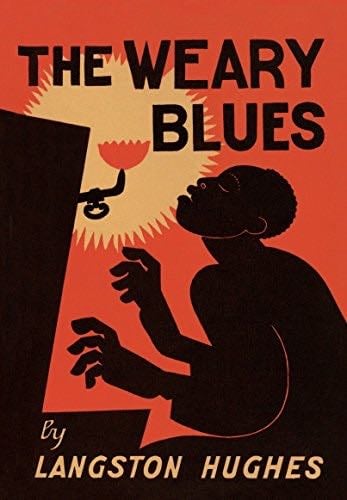
The Weary Blues
Langston Hughes · 2015
This celebratory edition of the classic poetry collection reminds us of Hughes's stunning achievement, speaking directly, intimately, and powerfully of Black experiences at a time when Black voices were newly being heard in American literature. • With an introduction by poet Kevin Young.<br/><br/>Beginning with the opening “Proem” (prologue poem) Huges writes, “I am a Negro: / Black as the night is black, / Black like the depths of my Africa."<br/><br/>As the legendary Carl Van Vechten wrote in a brief introduction to the original 1926 edition, “His cabaret songs throb with the true jazz rhythm; his sea-pieces ache with a calm, melancholy lyricism; he cries bitterly from the heart of his race...Always, however, his stanzas are subjective, personal,” and, he concludes, they are the expression of “an essentially sensitive and subtly illusive nature.” That illusive nature darts among these early lines and begins to reveal itself, with precocious confidence and clarity.<br/><br/>In a new introduction to the work, the poet and editor Kevin Young suggests that Hughes, who was 24 at the time of the original publication, from this very first moment is “celebrating, critiquing, and completing the American dream,” and that he manages to take Walt Whitman’s American “I” and write himself into it.<br/><br/>We find here not only such classics as “The Negro Speaks of Rivers” and the great twentieth-century anthem that begins “I, too, sing America,” but also the poet’s shorter lyrics and fancies, which dream just as deeply. “Bring me all of your / Heart melodies,” the young Hughes offers, “That I may wrap them / In a blue cloud-cloth / Away from the too-rough fingers / Of the world.”

Content Warning: Everything
Akwaeke Emezi · 2022
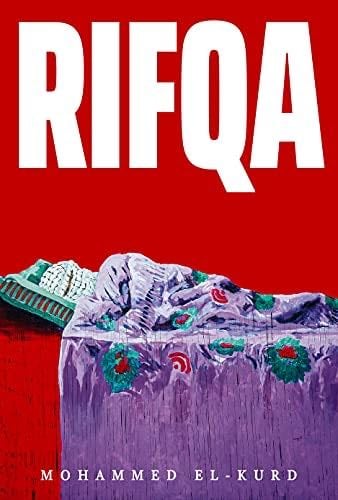
Rifqa
Mohammed El-Kurd · 2021

Left-Handed Wolf: Poems
Adam Day · 2020

Mural
Mahmoud Darwish · 2017
Flèche
Mary Jean Chan · 2019